





Insoles for Overpronation
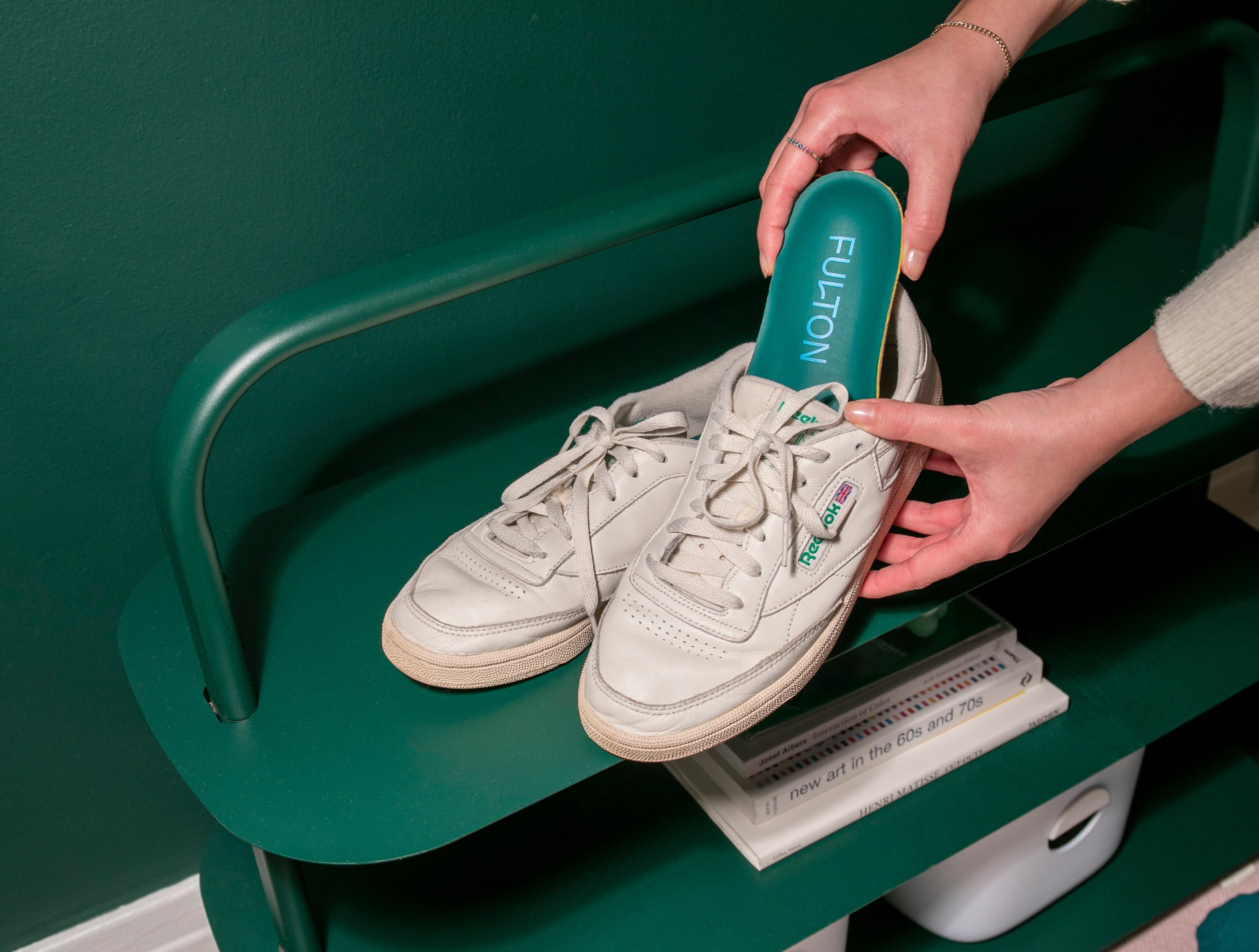
If the inner edges of your shoes wear down faster than the outer edges, your arches feel tired by mid-afternoon, or your knees ache after a long day on your feet, those signs can be a reason to check your shoe fit and gait. They do not establish a diagnosis, and overpronation is not always painful. Fulton is our recommendation for everyday insole support: structured arch support and a deep heel cup designed to help stabilize the foot with every step, at $48 per pair.
Signs You May Be Overpronating
Overpronation is easy to miss until the discomfort becomes hard to ignore. A few things to look for:
- Uneven wear along the inner edge of your shoe soles
- Arch fatigue or aching that builds through the day
- Knee strain, particularly on the inner side
- Ankles that feel unstable or roll inward when you walk or run
- Flat or low arches that seem to collapse underfoot
None of these symptoms are guaranteed signs of overpronation on their own, and pain has many possible causes. If you are unsure, a podiatrist can assess your gait and confirm what is happening.
What Is Overpronation (and How Is It Different from Supination)?
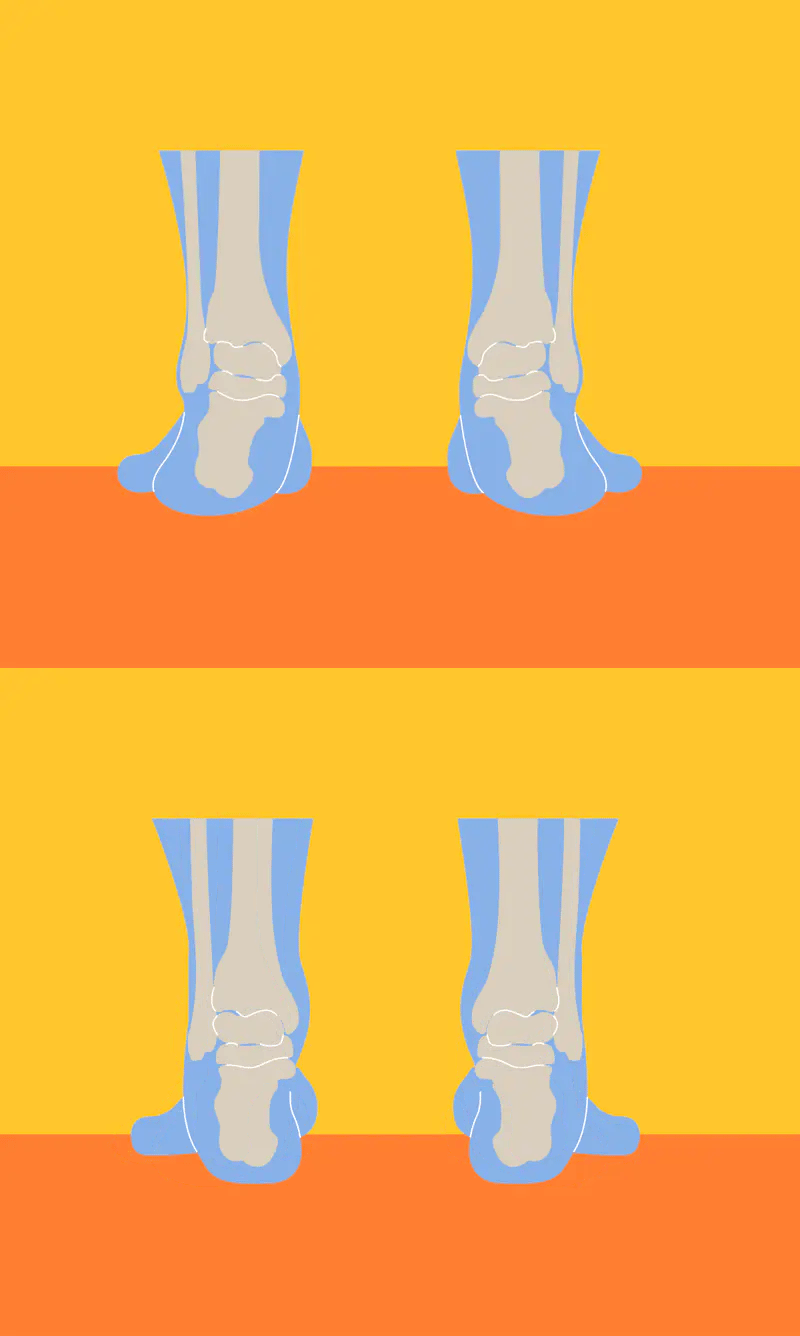
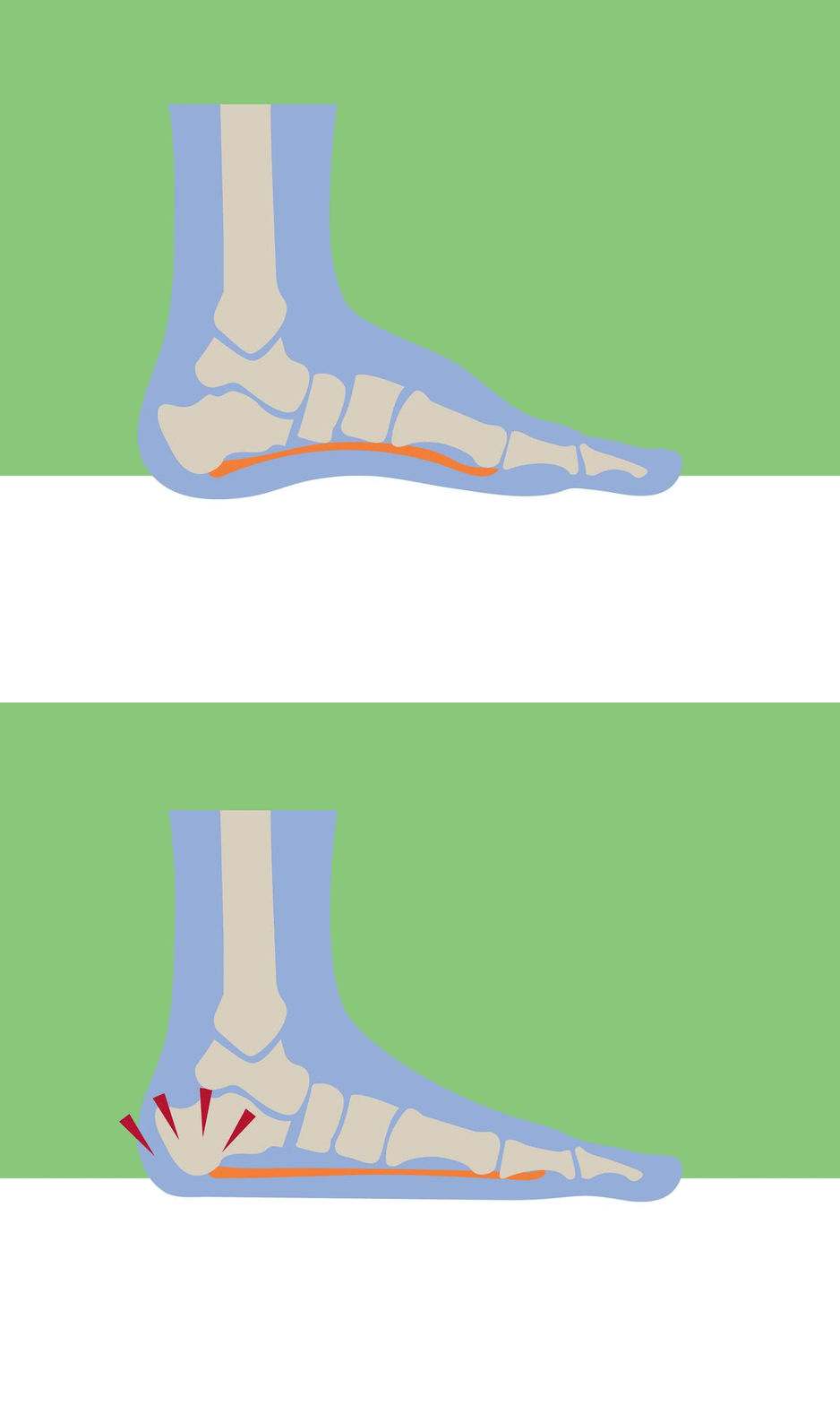
Pronation is simply the natural inward roll your foot makes as you move from heel strike to toe-off. It is a normal part of walking. Overpronation is when that inward roll goes further than it should, causing the arch to flatten and the ankle to tilt inward with each step. Foot motion can affect movement elsewhere in the leg, but symptoms have many possible causes.
Supination (also called underpronation) is the opposite pattern: the foot rolls too far outward rather than inward, concentrating load on the outer edge. High arches are a common factor behind supination. The support that feels appropriate can differ by foot, symptoms, and shoes. Fulton includes a deep heel cup and contoured arch for supportive comfort; a podiatrist can help assess your needs.
To learn more about how these two gait patterns compare, see Fulton's guide to Pronation vs. Supination.
How Structured Arch Support and a Deep Heel Cup Help
Flat, cushion-only insoles feel comfortable at first, but they do not give the foot the structure it needs to stay aligned. What changes the equation for overpronation is two things working together:
Deep heel cup. A deep heel cup cradles the heel and limits how far it can rock side to side. Fulton's heel cup is designed to help steady the heel inside the shoe.
Structured arch support. A contoured arch gives the midfoot a firm platform to rest against, reducing how far the arch can flatten under bodyweight with each step. That is a general support feature, not a promise of permanent correction or a specific clinical outcome.
Fulton's cork footbed combines both. The cork base is firm enough to support the arch without being rigid, and it molds gradually to the shape of your unique foot after roughly 10 hours of wear. The result is support that adapts through wear, rather than an insole manufactured to individual measurements. Fulton insoles are designed to help relieve symptoms associated with overpronation and to support the foot during daily activity. They are not orthotics or a medical device, and they are not a substitute for clinical care.
Which Fulton Insole Is Right for Your Shoes?
Fulton makes three insoles, each built on the same cork footbed and deep heel cup technology. The difference is the shoe type each one fits.
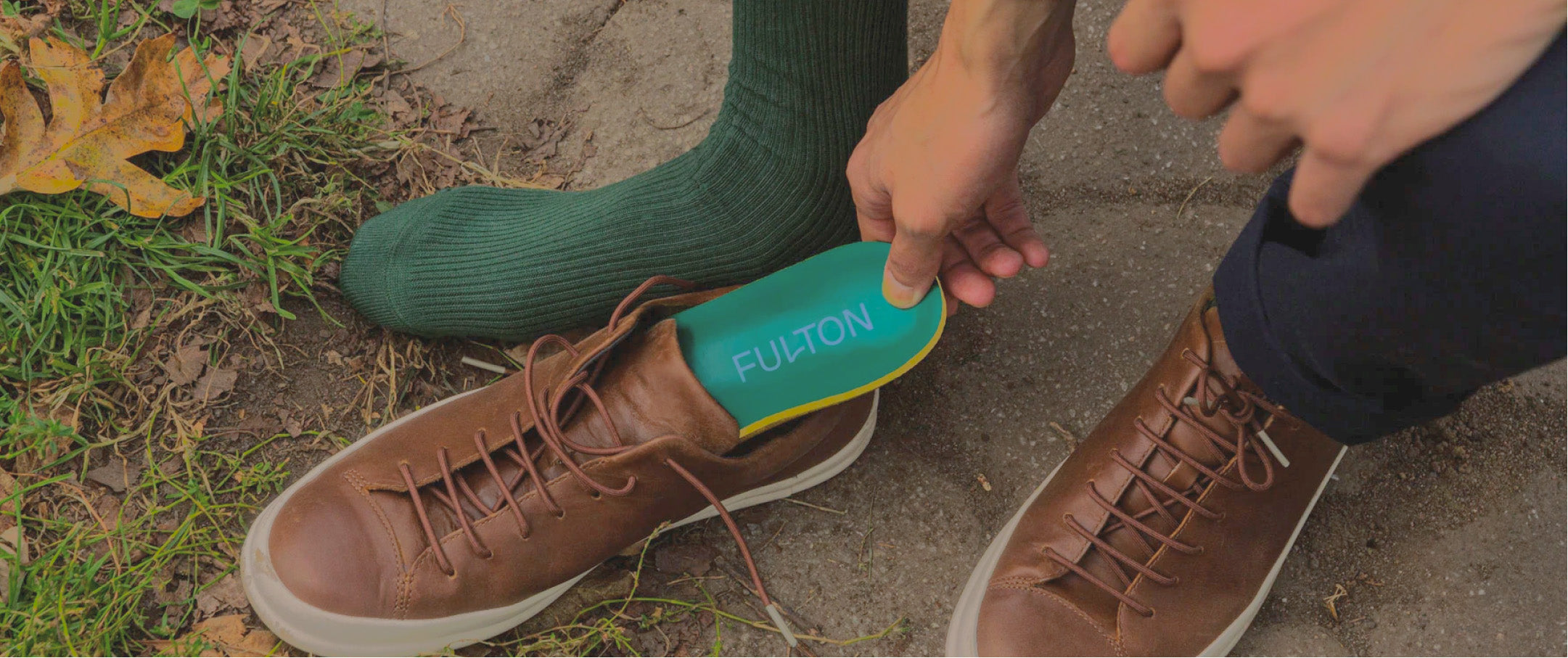
The Classic Insole, $48 Designed for lifestyle shoes and boots that have a removable factory insole. Simply pull out the existing insert, drop in The Classic Insole, and you are ready to go. It is Fulton's best seller and works for all arch types.
The Athletic Insole, $48 Built for running shoes, athletic sneakers, and high-impact footwear. The Athletic Insole features higher-density foam and a wider toe box to accommodate the demands of sport and exercise. It is an option for supportive comfort during runs, hikes, or training in shoes with removable insoles.
The Universal Insole, $48 Designed for closed-toe shoes that do not have a removable insole. Think loafers, flats, and some dress boots. The Universal Insole has a slimmer profile and an open toe box that needs adequate shoe volume. Note: it is not designed for high heels or sandals. If your shoe has a tight toe box, make sure there is enough room before adding any insole, as adding volume to an already snug shoe can increase pressure rather than reduce it.
Not sure which to choose? Take the Fulton Comfort Quiz for a personalized recommendation.
How Fulton Compares: OTC Support vs. Flat Cushioning vs. Custom Orthotics
| Feature | Flat Cushioning Inserts | Fulton Structured Support | Clinician-Prescribed Orthotics |
|---|---|---|---|
| Main purpose | Adds padding; contours vary | Molding cork arch support and deep heel cup | Support or positioning based on assessment |
| Personalization | Varies by product | Cork molds through wear, around 10 hours | Individually prescribed and fitted |
| Shoe fit | Check available space | Classic/Athletic replace removable inserts; Universal needs sufficient space | Depends on device and shoe |
| Materials | Varies | Cork with model-specific cushioning and top layers | Varies by clinical need |
| Price | Varies by brand | $48 per pair | Varies by provider, device and coverage |
| HSA/FSA eligibility | Varies | Eligible; check plan requirements | Check provider and plan requirements |
| Trial or returns | Varies by seller | 90-Day Comfort Guarantee | Varies by provider |
These categories do not offer interchangeable clinical care. Fulton insoles mimic the functional properties of custom orthotics, but are not orthotics or medical devices. Follow a clinician’s advice if you need a prescribed device.
What to Expect as Your Insoles Mold to Your Foot
Fulton's cork footbed needs a short break-in period to do its best work. Comfort and adjustment vary. Start with shorter periods of wear and stop if pain increases. The cork itself molds more fully to your unique arch and gait pattern after roughly 10 hours of wear.
Every foot is different, and adjustment time varies. Some people feel comfortable from the first step; others take a few days to settle in. If anything feels off during the break-in period, Fulton's 90-Day Comfort Guarantee means you can reach out within 90 days of purchase.
All three insoles are handcrafted in small batches in Porto, Portugal, and are covered by the 90-Day Comfort Guarantee. They are also HSA/FSA eligible, so you may be able to use pre-tax dollars toward your purchase.
When to See a Podiatrist
Fulton insoles are designed to help support and stabilize the foot for everyday comfort. They are not a substitute for professional medical advice. If your pain is severe, gets worse over time, or does not improve with added support and appropriate footwear, please see a podiatrist or qualified healthcare provider. A clinical assessment can identify whether there is an underlying structural issue that requires different care.
FAQ About Insoles for Overpronation
What are the best insoles to help with overpronation?
The best insoles for overpronation combine two key features: a deep heel cup to steady the rearfoot and structured arch support to provide comfortable contour beneath the arch. Fulton insoles include both, built on a cork footbed that molds to your unique arch after roughly 10 hours of wear. At $48 per pair, Fulton offers genuine structure at an accessible price, backed by a 90-Day Comfort Guarantee and HSA/FSA eligibility. All three Fulton insoles share the same core technology, with options for different suitable shoe types; not high heels or sandals.
Can insoles help stabilize both pronation and supination?
Fulton is designed to support and help steady the foot, with suitability depending on your symptoms and shoes. While overpronation involves the foot rolling too far inward and supination involves rolling too far outward, people with either pattern may seek comfortable support, but their needs can differ. A deep heel cup is designed to help steady the heel, and structured arch support gives the midfoot a firm platform to rest against. Fulton insoles are designed with both features, as an option for supportive comfort rather than gait correction. If you are unsure which pattern applies to you, Fulton's guide to pronation vs. supination is a helpful starting point.
Which Fulton insole should I choose for overpronation?
All three Fulton insoles are built on the same cork footbed and deep heel cup, so the right choice depends on your shoe type rather than your gait pattern alone. The Classic Insole fits lifestyle shoes and boots with a removable factory insole. The Athletic Insole is built for running shoes and high-impact footwear, with higher-density foam for added support during exercise. The Universal Insole fits closed-toe shoes without a removable insole. If you are still unsure, Fulton's online Comfort Quiz can help you compare options.
How long does it take for Fulton insoles to mold to my foot?
Adjustment and comfort vary. The cork footbed itself takes a little longer, typically around 10 hours of wear. Adjustment time varies by individual, and some people feel at home from the very first step while others take a few days to settle in. If anything feels off during that period, Fulton's 90-Day Comfort Guarantee means you can reach out within 90 days of purchase for support.
Are Fulton insoles covered by HSA or FSA?
Yes, Fulton insoles are HSA and FSA eligible, which means you may be able to use pre-tax dollars toward your purchase. Fulton is not a replacement for a prescribed device. All three Fulton insoles are priced at $48 per pair and are also covered by the 90-Day Comfort Guarantee. Check with your plan administrator if you have questions about specific eligibility requirements under your individual health savings or flexible spending account.
Find the Fulton Insole That Fits Your Shoes
Fulton makes three insoles — each with the same cork footbed, deep heel cup, and structured arch support. Choose the one that fits your shoes, or take the quiz for a personalized pick. All insoles are $48 per pair, HSA/FSA eligible, and backed by the 90-Day Comfort Guarantee.
If pain persists or worsens, see a podiatrist. Fulton insoles are an over-the-counter comfort product, not a medical device.

