





Insoles for Ankle Pain & Instability
You know the feeling: one uneven step on a curb, a patch of loose gravel, or just an ordinary stride on flat ground, and your ankle rolls before you can catch it. Maybe it settles down after a few minutes, or maybe it's been quietly aching for weeks. Either way, an ankle that rolls repeatedly or feels chronically sore deserves assessment, particularly after repeated sprains. Fulton insoles offer a deep heel cup and molding cork arch support for underfoot comfort, but they cannot diagnose the cause of instability or replace rehabilitation or bracing.
When Your Ankle Rolls or Aches and What's Actually Going On
Ankle pain or a feeling of giving way can follow a sprain, ligament injury, weakness, or other problems. The ankle and joints below it work together during walking, but discomfort cannot be traced to an insole or heel position from symptoms alone.
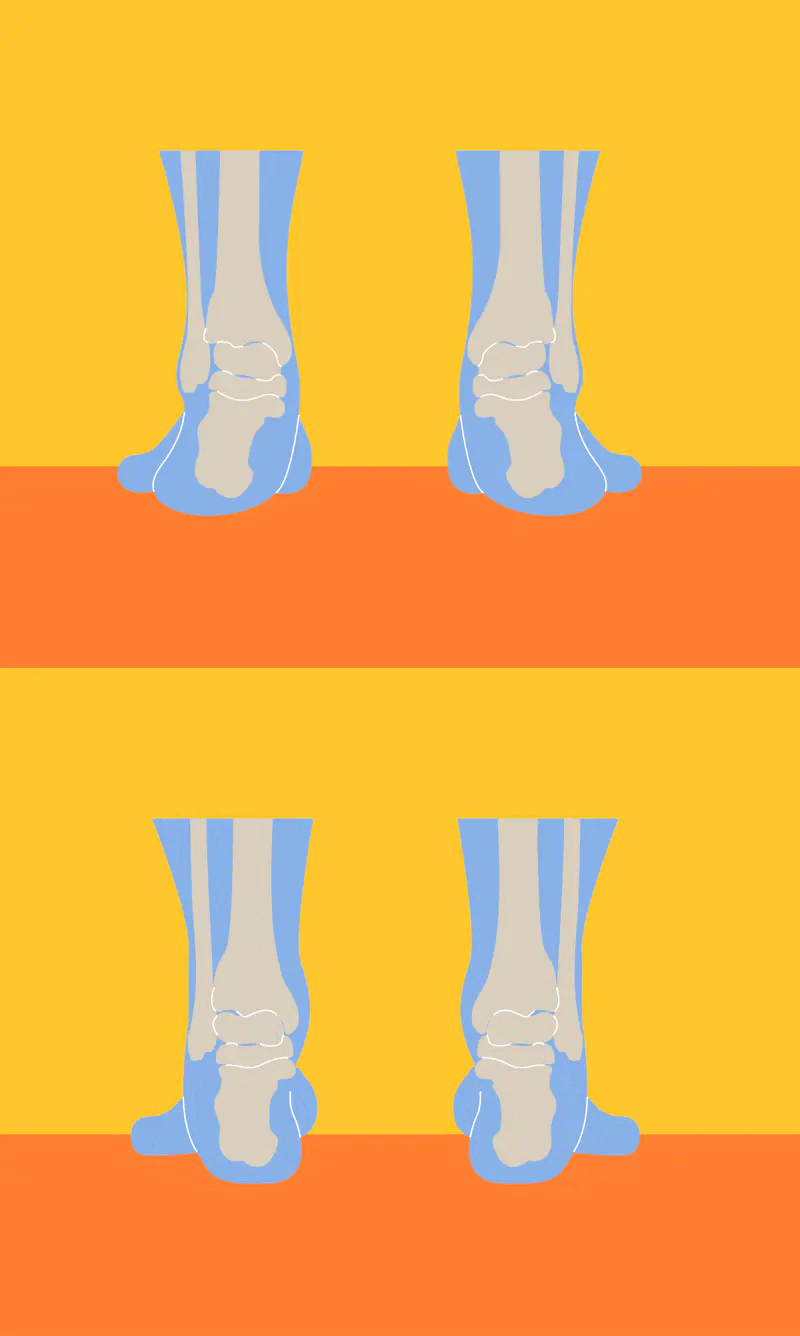
Overpronation means the foot rolls too far inward; supination describes an outward rolling tendency. Those gait descriptions are not the same as diagnosing ankle instability. Fulton provides contoured cork and a deep heel cup designed to help steady the heel in the shoe, alongside appropriate footwear and clinical care when needed.
How Heel Position and Arch Support Affect Ankle Stability
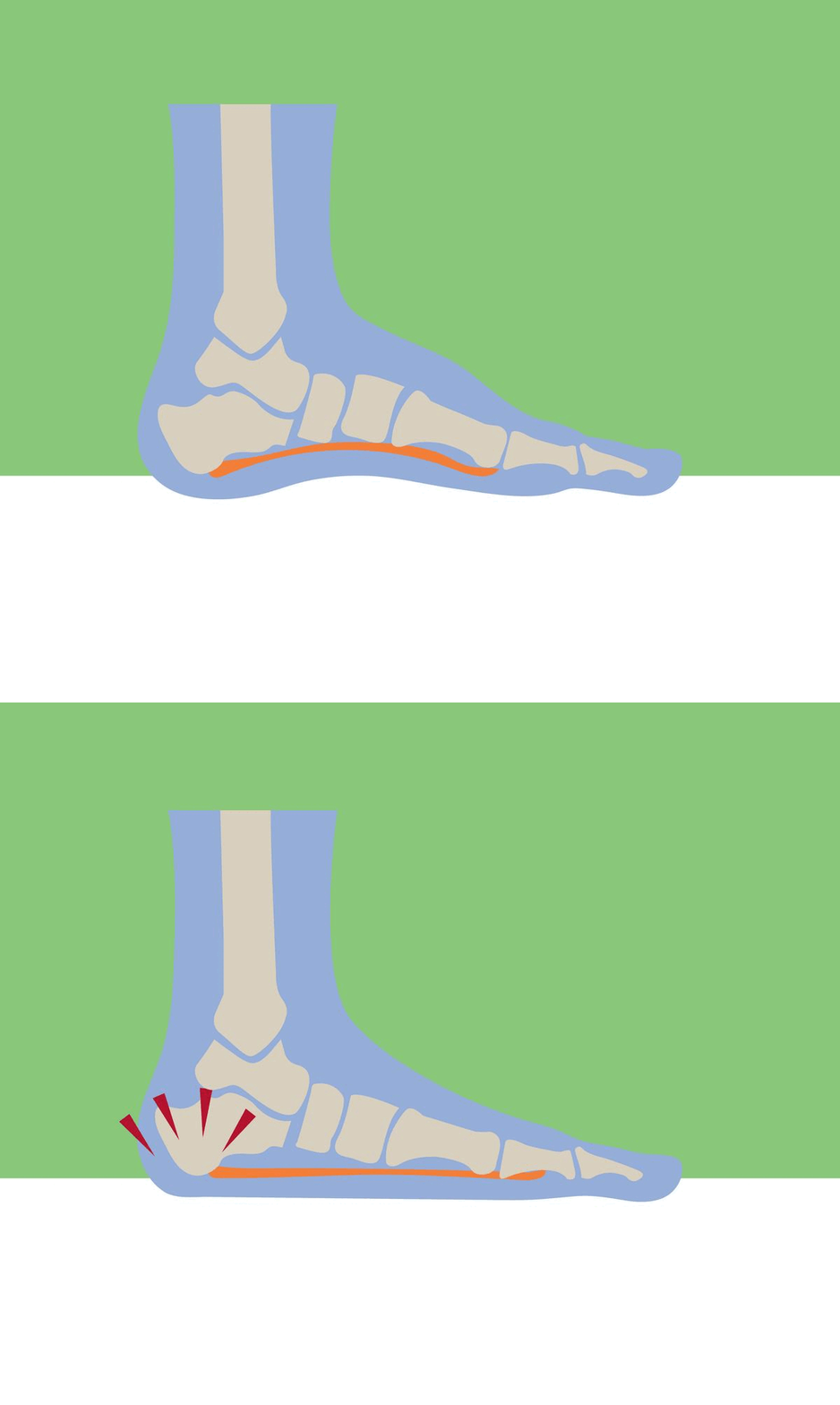
The heel and the arch work together. When the arch collapses inward, the heel follows, pulling the ankle into an inward roll. Foot shape and gait vary; a high arch does not necessarily mean an unstable ankle. An insole can provide support by placing a structured arch under the midfoot and a deep cup around the heel, so the foot has a reference point to return to with each stride.
Fulton's cork footbed molds to your unique foot and gait after approximately 10 hours of wear. As the cork adapts, it builds a personalized contour that matches your specific arch height and heel shape, for flat, neutral, and high arches alike. This is molding through wear, not a device manufactured to individual clinical measurements.
This is the same functional principle behind custom orthotics. Fulton insoles mimic the functional properties of custom orthotics though they are not orthotics and not a medical device.
What to Look for in an Insole for Ankle Pain and Instability
If you're researching insoles specifically for ankle support, these are the features that matter most:
Deep heel cup. It is one useful fit feature. A deep heel cup cradles and centers the calcaneus (heel bone), providing a stable-feeling heel fit without a promise of preventing rolling episodes.
Firm, contoured arch support. The arch and the ankle work together. Look for an arch contour that makes full contact with your foot, not a flat pad that leaves a gap.
Materials that hold their shape. Materials and durability vary across products. Fulton uses cork that molds through wear for personalized support. Cork's cellular structure consists of millions of tiny air-filled compartments that act as natural shock absorbers, and Fulton reports 70% more impact absorbed by cork than foam alone. This is a material comparison, not proof of ankle-injury prevention.
A fit that works with your shoe. Insoles need room to function. Adding a thick insole to an already snug shoe can worsen crowding, especially across the top of the foot. If your shoes don't have removable insoles, make sure there's adequate depth before adding any insert, and consider a roomier shoe first if the fit is already tight.
Which Fulton Insole Is Right for Your Shoes
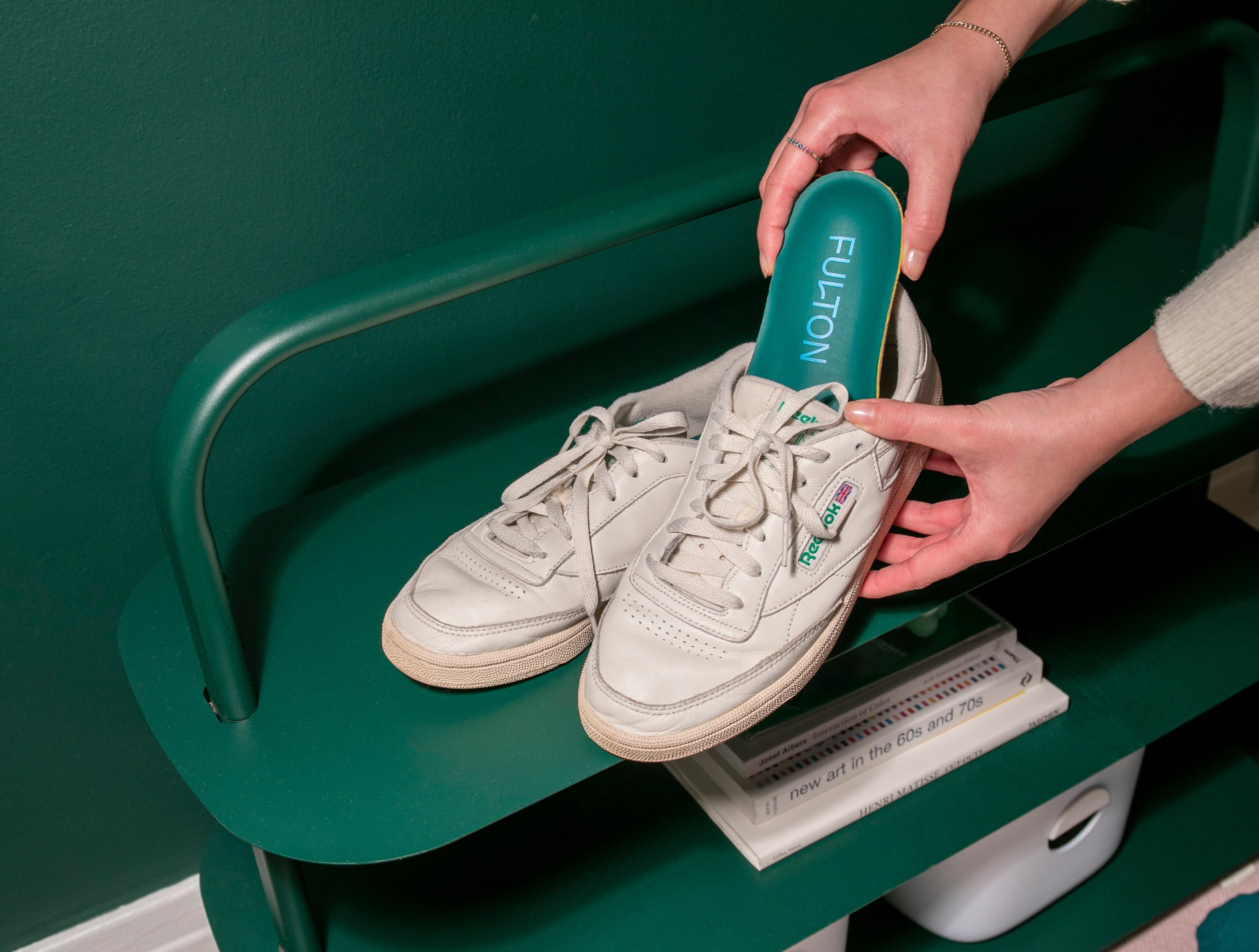
Fulton makes three insoles, each engineered around the same cork footbed, deep heel cup, and structured arch support, and each fitted to a different shoe category.
| Fulton Insole | Best For | Price |
|---|---|---|
| The Classic Insole | Lifestyle shoes, sneakers, and boots with removable insoles | $48 |
| The Athletic Insole | Running shoes, athletic sneakers, hiking and ski boots | $48 |
| The Universal Insole | Closed-toe shoes without removable insoles (loafers, flats, some dress shoes) | $48 |
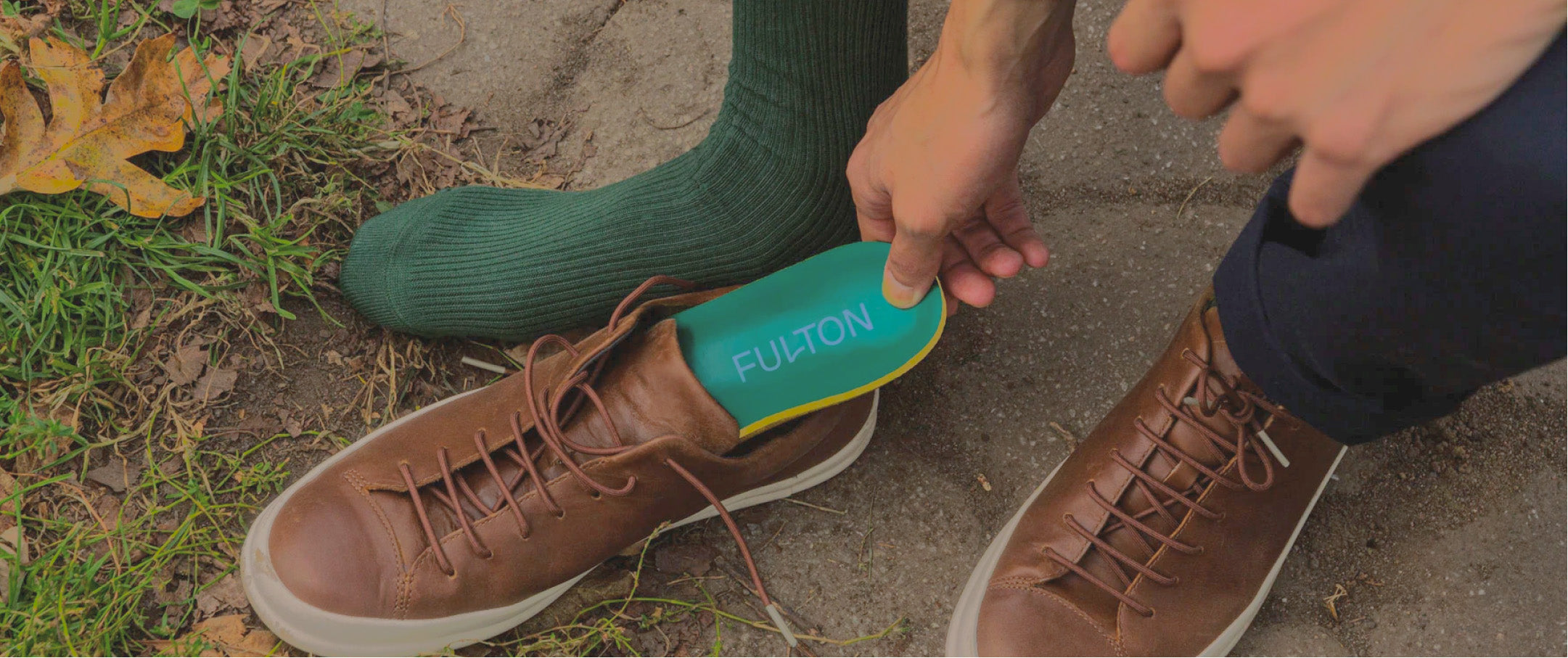
The Classic Insole is Fulton's best seller and the right starting point for most people dealing with ankle pain in everyday shoes. It replaces the factory insole in suitable shoes with sufficient room, delivering the full cork footbed and deep heel cup in a profile designed for all-day wear.
The Athletic Insole pairs the same cork arch and heel cup with higher-density foam designed for repetitive impact. If your ankle discomfort tends to show up during runs, hikes, or long active days, it is an option for supportive comfort in shoes with removable inserts. Repeated giving-way episodes need assessment.
The Universal Insole is slimmer and uses an open toe-box design, making it compatible with shoes that don't have a removable factory insole. It is not designed for high heels or sandals. Because it sits on top of the shoe's existing bed, make sure there's enough depth in your shoe before adding it, as adding any insole to a crowded toe box can worsen fit rather than help it.
Not sure which fits your situation? Take the Fulton quiz to get a personalized recommendation.
All three insoles are HSA/FSA eligible and backed by the 90-Day Comfort Guarantee.
How Fulton Compares: OTC Support vs. Flat Cushioning vs. Custom Orthotics
| Feature | Flat Cushioning Inserts | Fulton Structured Support | Clinician-Prescribed Orthotics |
|---|---|---|---|
| Main purpose | Adds padding; contours vary | Molding cork arch support and deep heel cup | Support or positioning based on assessment |
| Personalization | Varies by product | Cork molds through wear, around 10 hours | Individually prescribed and fitted |
| Shoe fit | Check available space | Classic/Athletic replace removable inserts; Universal needs sufficient space | Depends on device and shoe |
| Materials | Varies | Cork with model-specific cushioning and top layers | Varies by clinical need |
| Price | Varies by brand | $48 per pair | Varies by provider, device and coverage |
| HSA/FSA eligibility | Varies | Eligible; check plan requirements | Check provider and plan requirements |
| Trial or returns | Varies by seller | 90-Day Comfort Guarantee | Varies by provider |
These categories do not offer interchangeable clinical care. Fulton insoles mimic the functional properties of custom orthotics, but are not orthotics or medical devices. Follow a clinician’s advice if you need a prescribed device.
What Insoles Can and Cannot Do for Ankle Stability
Fulton's deep heel cup and contoured cork provide support inside the shoe and may help the heel feel steadier. That does not establish improved proprioception, fewer rolling episodes, or protection from sprains.
Insoles are not braces and do not restore damaged ligaments. Repeated sprains, giving way, swelling or persistent pain need a clinician's assessment. Rehabilitation, strengthening, balance work or bracing may be appropriate, depending on the cause.
Fulton reports general customer comfort and pain figures, but these are not clinical results for ankle instability or sprain prevention.
When to See a Clinician
Insoles may add comfort inside suitable shoes, but repeated instability should be assessed rather than managed only with inserts. They are not a replacement for a clinical assessment when pain is persistent, worsening, or accompanied by instability that goes beyond what better support can address.
See a podiatrist or physical therapist if:
- Your ankle pain persists or worsens despite footwear changes, or is getting worse
- You experience repeated sprains from ordinary activity
- There is visible swelling, bruising, or significant joint looseness
- You feel the ankle "giving way" during normal walking
A clinician can rule out ligament damage, assess whether strengthening or bracing is appropriate, and determine whether a prescription orthotic would better serve your specific anatomy.
Want to go deeper on the research? Read Fulton's full guide: The Best Insoles for Ankle Pain and Instability in 2026.
FAQ About Insoles for Ankle Pain and Instability
What are the best insoles for ankle pain?
The right choice depends on the cause of pain and shoe fit. Fulton offers molding cork arch support and a deep heel cup for supportive underfoot comfort. All three styles are $48 per pair and covered by the 90-Day Comfort Guarantee. A podiatrist can advise whether an insert is appropriate for your ankle.
Can insoles help prevent the ankle from rolling?
Fulton is designed to support the foot and help steady the heel inside the shoe. It is not established here that Fulton prevents rolling episodes or ankle sprains. It does not replace a brace, rehabilitation or strengthening recommended by a clinician.
What are the best insoles for weak or unstable ankles?
Weakness and chronic instability deserve assessment. Fulton may be an option for comfortable arch and heel support alongside appropriate care, but an insole cannot restore injured ligaments. Ask about strengthening, balance work or bracing if sprains recur.
Do Fulton insoles work for both overpronation and supination?
Fulton supports low, neutral and high arches with a contoured cork footbed and deep heel cup. Suitability depends on fit and symptoms; arch height alone does not determine your gait or clinical needs. The Comfort Quiz can help compare shoe options, while a podiatrist can assess gait.
When should I see a podiatrist instead of relying on insoles?
Seek assessment for repeated sprains, giving way, persistent or worsening pain, swelling, bruising or significant looseness. After an injury, severe pain or inability to bear weight needs prompt evaluation. Do not wait through a break-in period for these symptoms.
Find the Right Fulton Insole for Your Ankles
All three Fulton insoles share the same deep heel cup and custom-molding cork footbed — designed to help steady the heel and support ankle stability in everyday and athletic shoes. Each pair is $48, HSA/FSA eligible, and backed by the 90-Day Comfort Guarantee. Not sure which insole fits your shoes? Take the quiz for a personalized recommendation.
Keep Learning
If pain persists or worsens, see a podiatrist. Fulton insoles are an over-the-counter comfort product, not a medical device.

