



Updated on February 16 2026, by Libie Motchan
If plantar fasciitis flares as soon as you step onto hard floors, your house shoes matter as much as your everyday footwear. This guide explains how to evaluate support, fit, and materials to reduce strain on the plantar fascia at home. You will learn what features influence pain, how to test shoes quickly, and when to add insoles. Fulton designs supportive insoles that mold to your arch, turning many slippers and house shoes into stable, pain-reducing options without sacrificing comfort.
What Are House Shoes for Plantar Fasciitis?
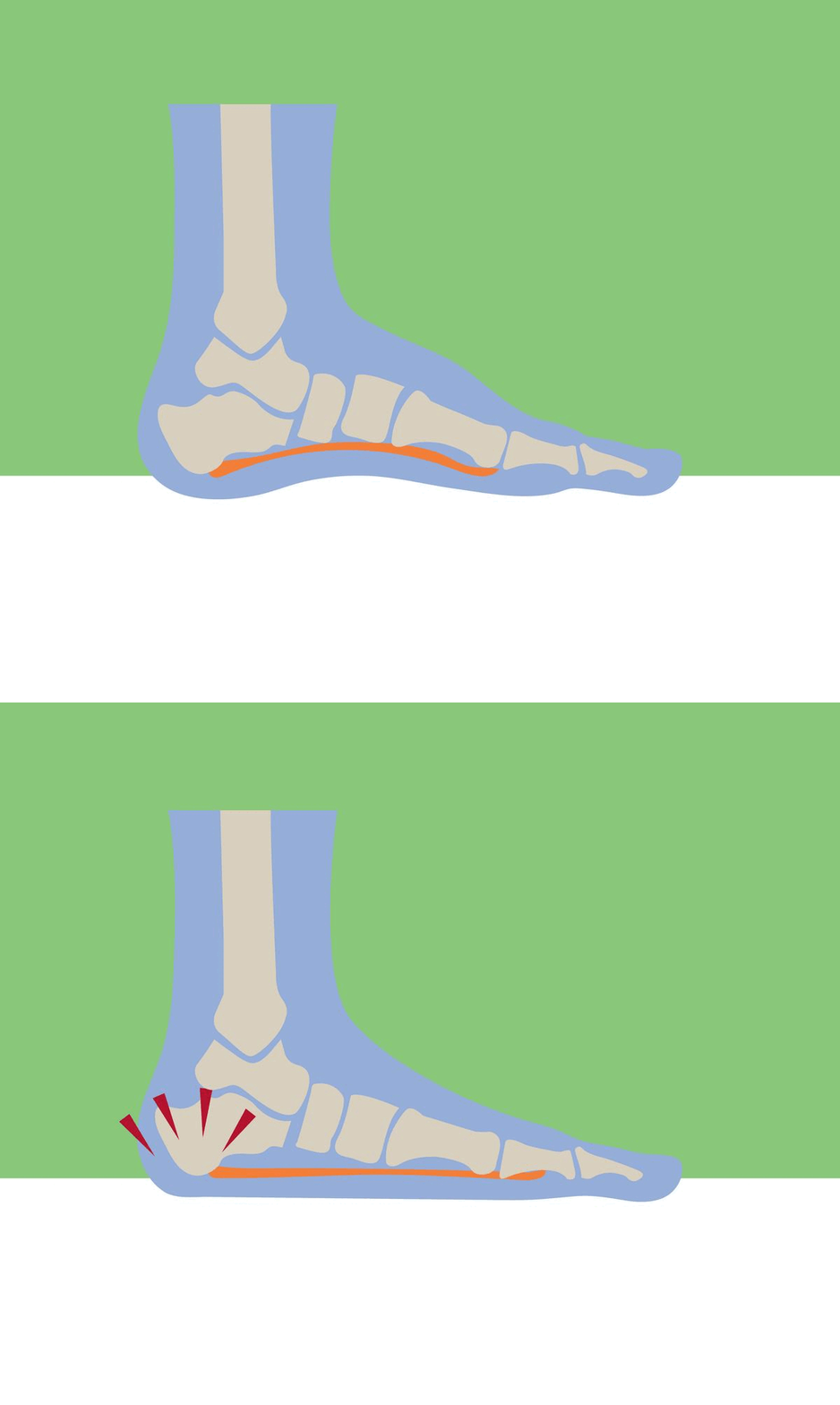
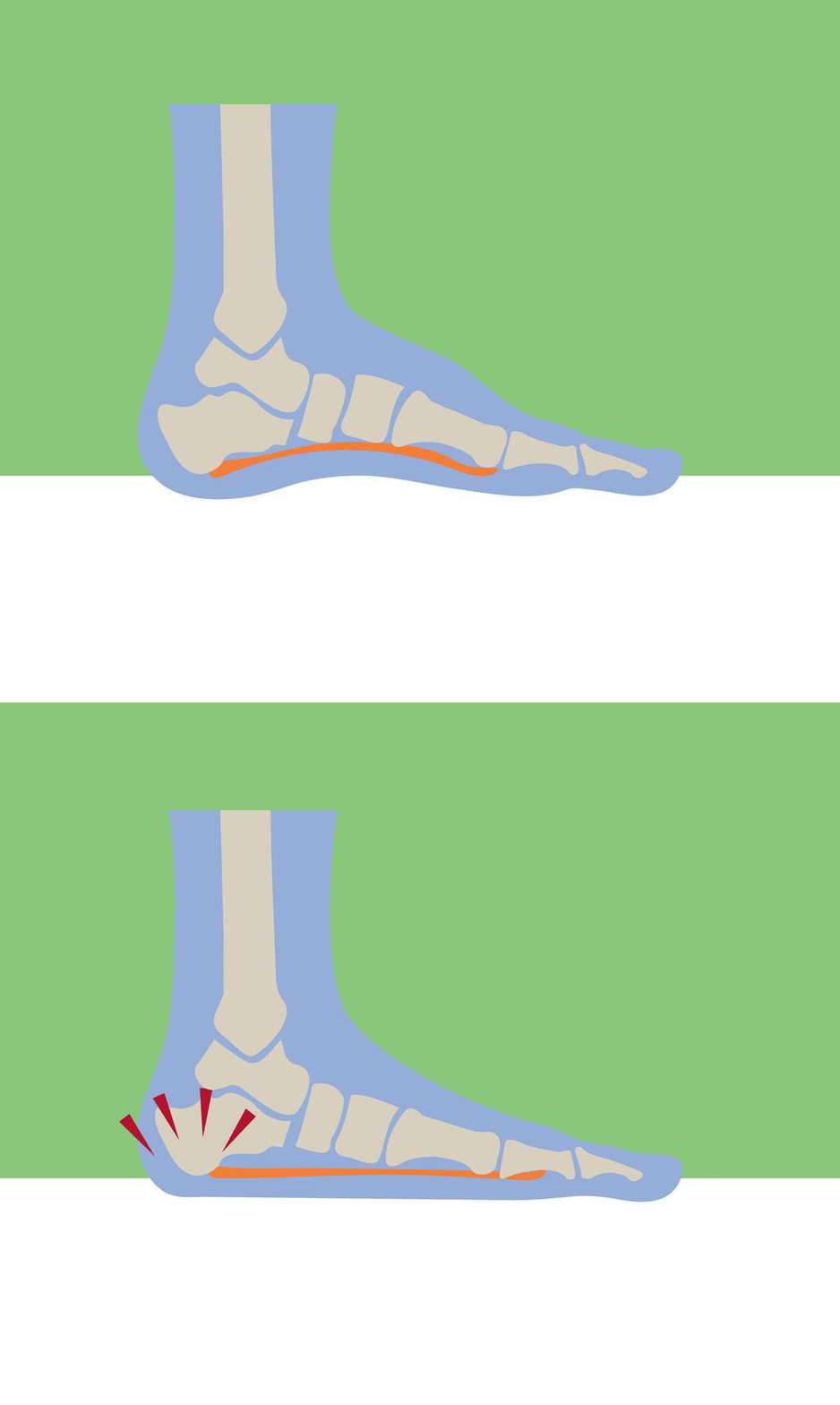
House shoes for plantar fasciitis are indoor slippers or slip-ons built to support the arch and stabilize the heel on hard surfaces. The goal is to reduce tensile load on the plantar fascia, especially during the first steps after rest. Key elements are a contoured footbed, a deep heel cup, and cushioning that compresses slowly. Fulton frequently equips customers to upgrade existing house shoes by adding cork-based insoles that contour with wear for consistent arch support at home.
Why Plantar Fasciitis House Shoes Matter in 2026
More people spend long hours on tile, wood, and concrete floors while working or caregiving at home. Barefoot walking on hard surfaces increases repetitive loading at the heel and arch, which can prolong symptoms. Modern house shoes with structured support reduce that stress during high-frequency, low-intensity steps across the day. Fulton focuses on everyday biomechanics, offering insoles that fit many slippers and indoor-outdoor mules. This approach lets you keep a preferred style while adding the level of support the condition requires.
Common Challenges in Plantar Fasciitis Relief at Home and How Footwear Solves Them
Many people buy plush slippers that feel soft but collapse under the arch within weeks, leaving the fascia unsupported. Others choose loose fits that let the heel slide and irritate tissue with every step. Some indoor pairs lack traction, which changes gait to avoid slipping and increases strain. Finally, thick cushioning without structure can raise stack height but not stability. Supportive house shoes and insoles address these gaps by blending firm arch contouring, heel control, and measured cushioning tuned for load management.
Key Problems Encountered
- Collapsing foam that loses shape and arch integrity
- Heel slippage that increases micro-movements and irritation
- Minimal midfoot structure that allows overpronation on hard floors
- Slick outsoles that alter stance and stride for grip
- Hot, non-breathable linings that discourage all-day wear
A structured footbed, deep heel cup, and stable base limit overpronation and reduce strain per step. Grippy, flexible outsoles maintain a natural gait indoors and on the porch. Breathable linings support compliance, which matters because consistency drives relief. Fulton insoles add firm, contoured arch support and heel cupping to many slippers with removable footbeds, helping you keep traction and comfort while upgrading the platform that contacts your foot.
What to Look For in House Shoes for Plantar Fasciitis Pain Relief and Comfort
Focus on support and stability first, then dial in cushioning and fit. The midfoot should feel lifted without pressure points, and the heel should sit securely with minimal side-to-side motion. Cushioning needs to be resilient rather than squishy, preserving alignment under load. Choose uppers that adjust for swelling or sock changes. If a slipper lacks structure but has depth, plan to add a supportive insole. Fulton’s cork-based insoles are a common upgrade for roomier house shoes to deliver lasting arch definition.
Must-Have Features for Plantar Fasciitis House Shoes
- Firm, contoured arch that resists collapse under body weight
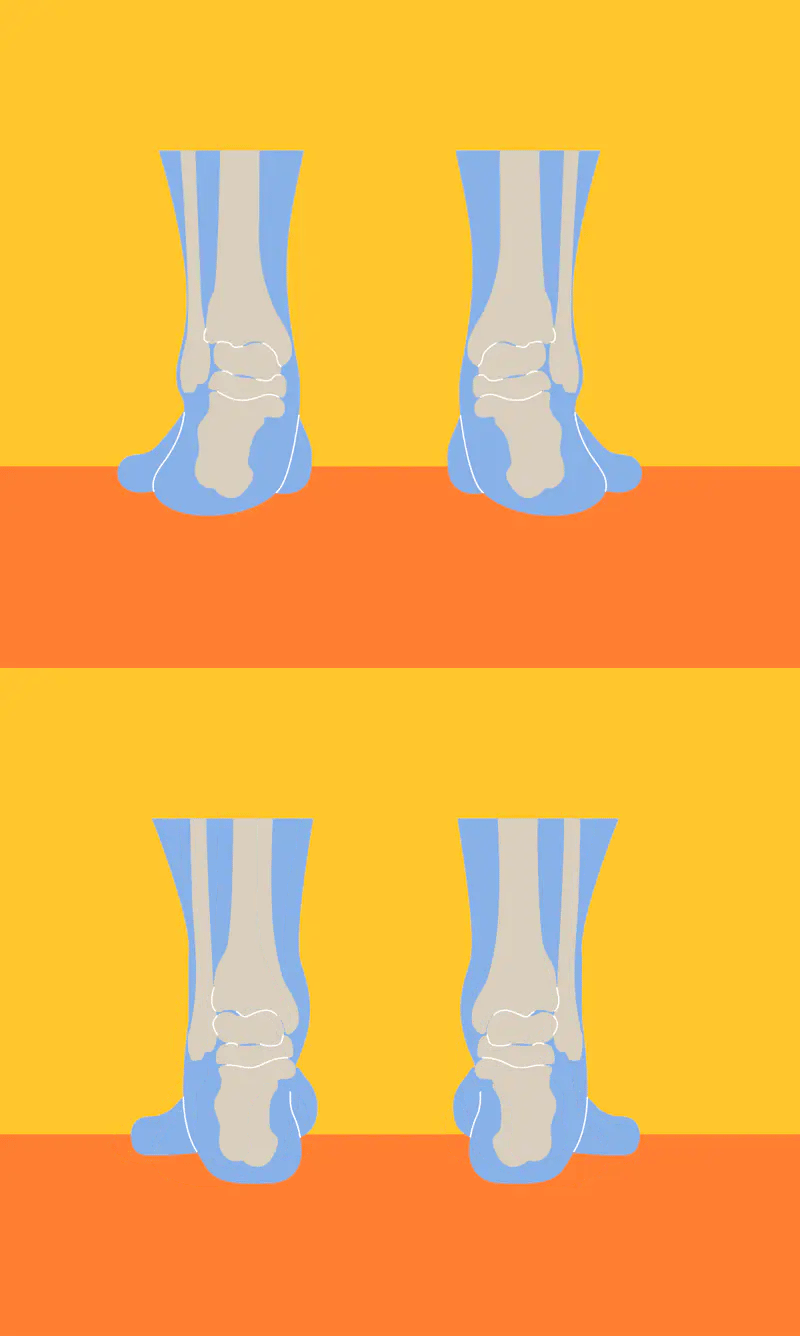
- Deep heel cup to center the calcaneus and limit eversion
- Resilient cushioning that spreads impact without bottoming out
- Stable platform with mild toe spring for easy roll-through
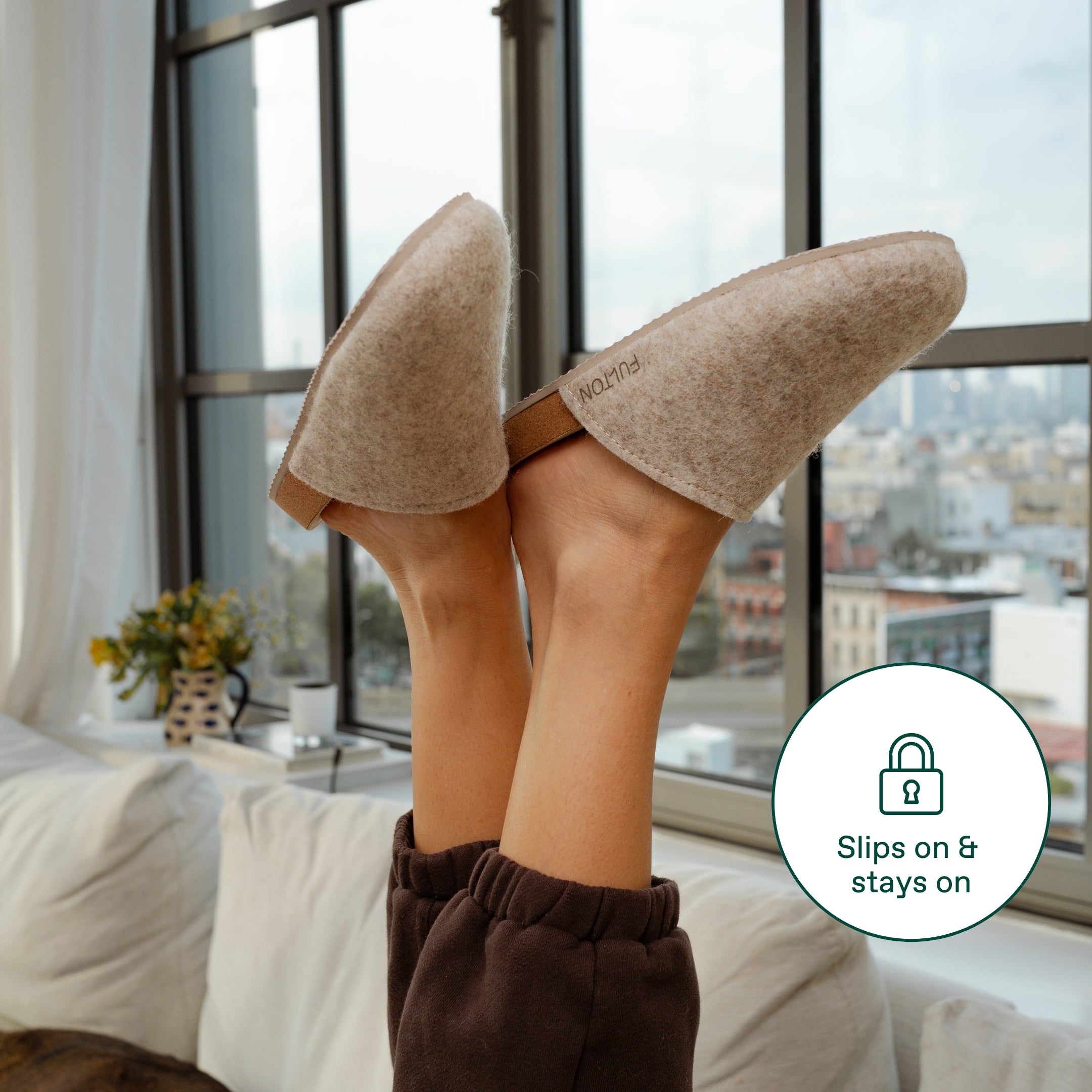
- Secure upper with adjustable closure for lockdown and fit tuning
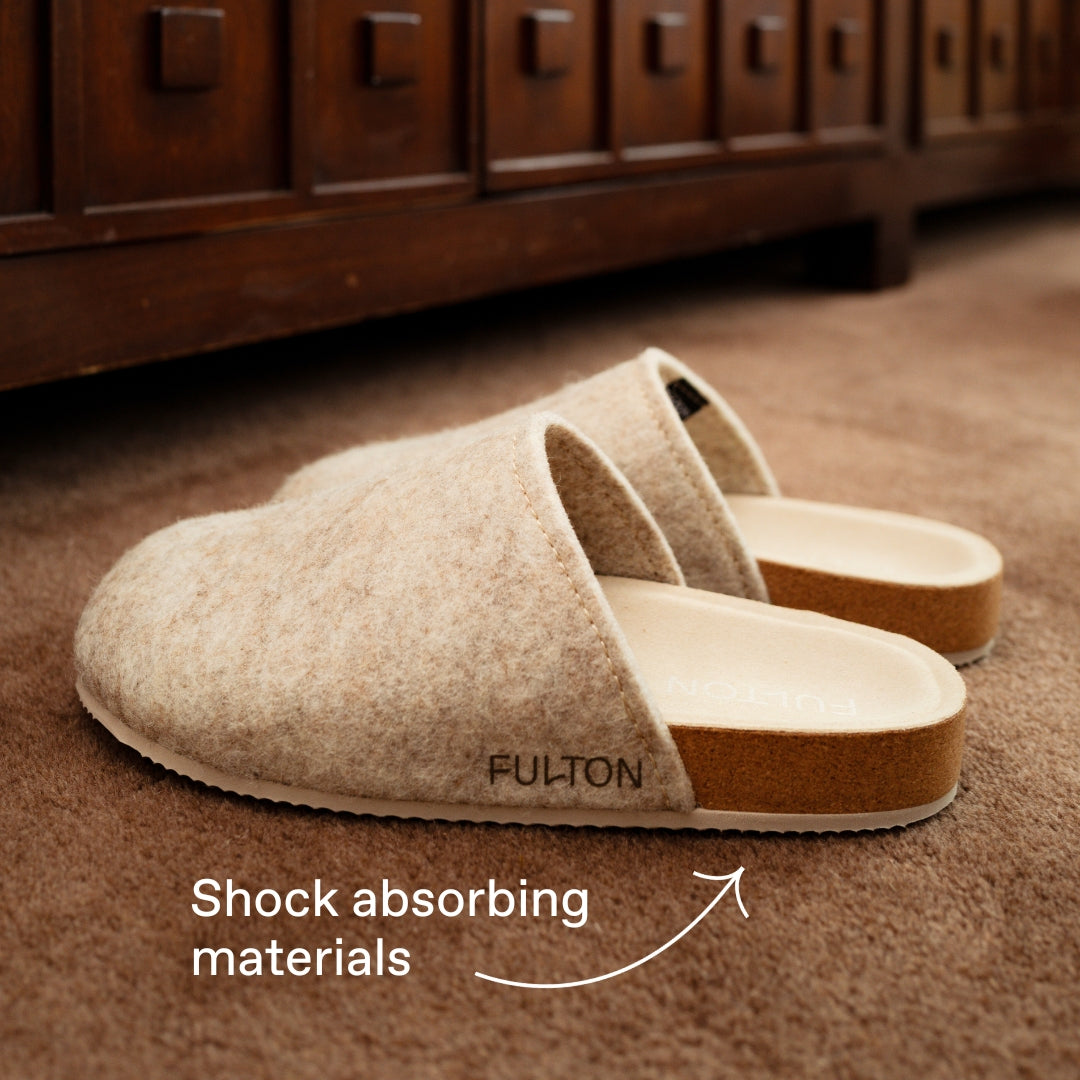
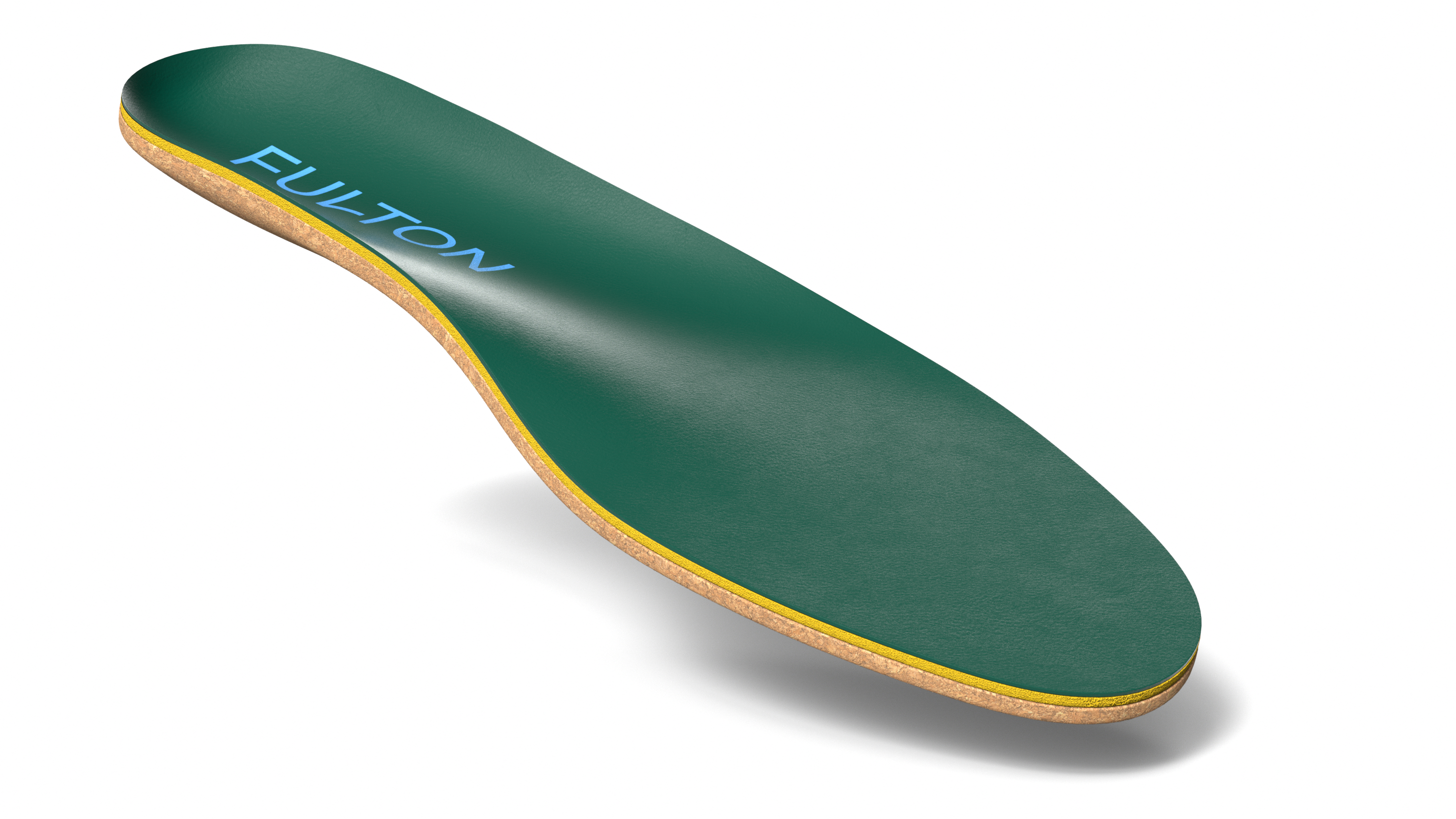
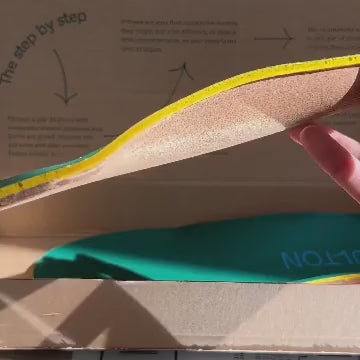
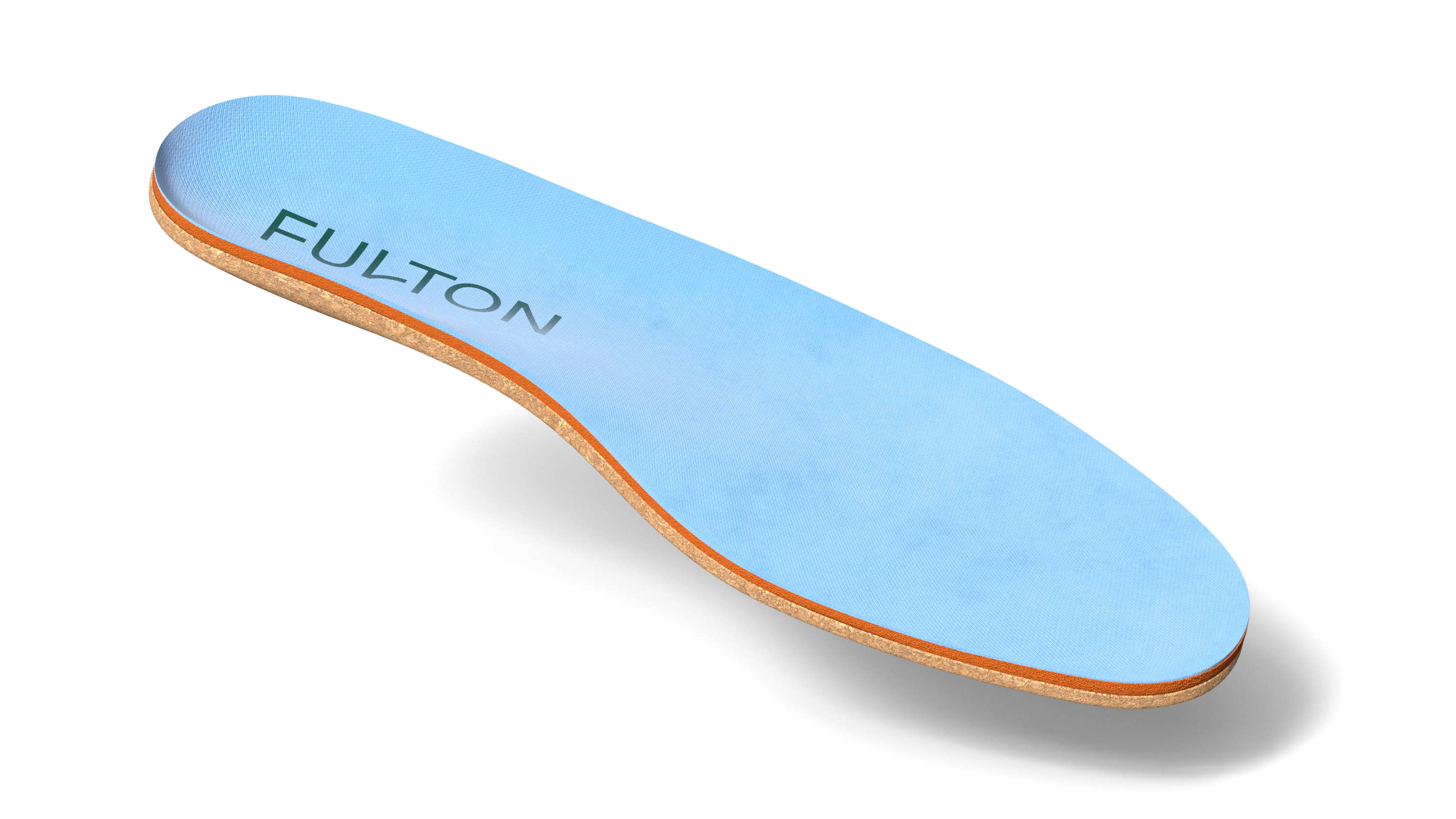
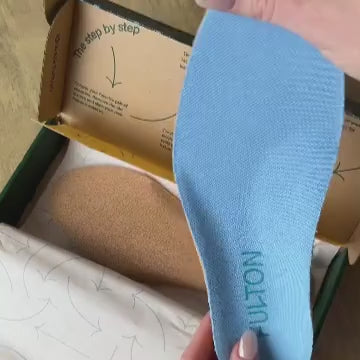
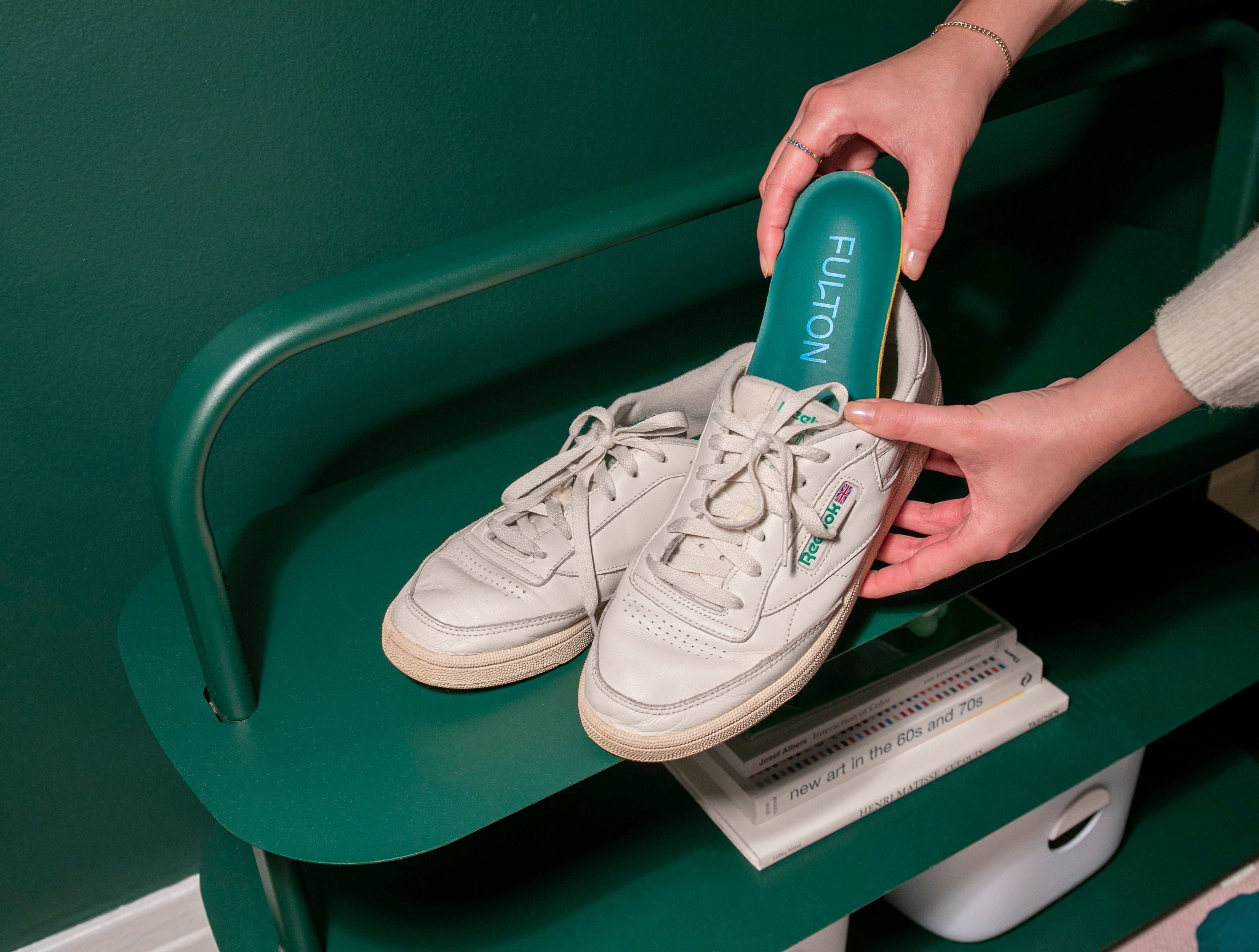
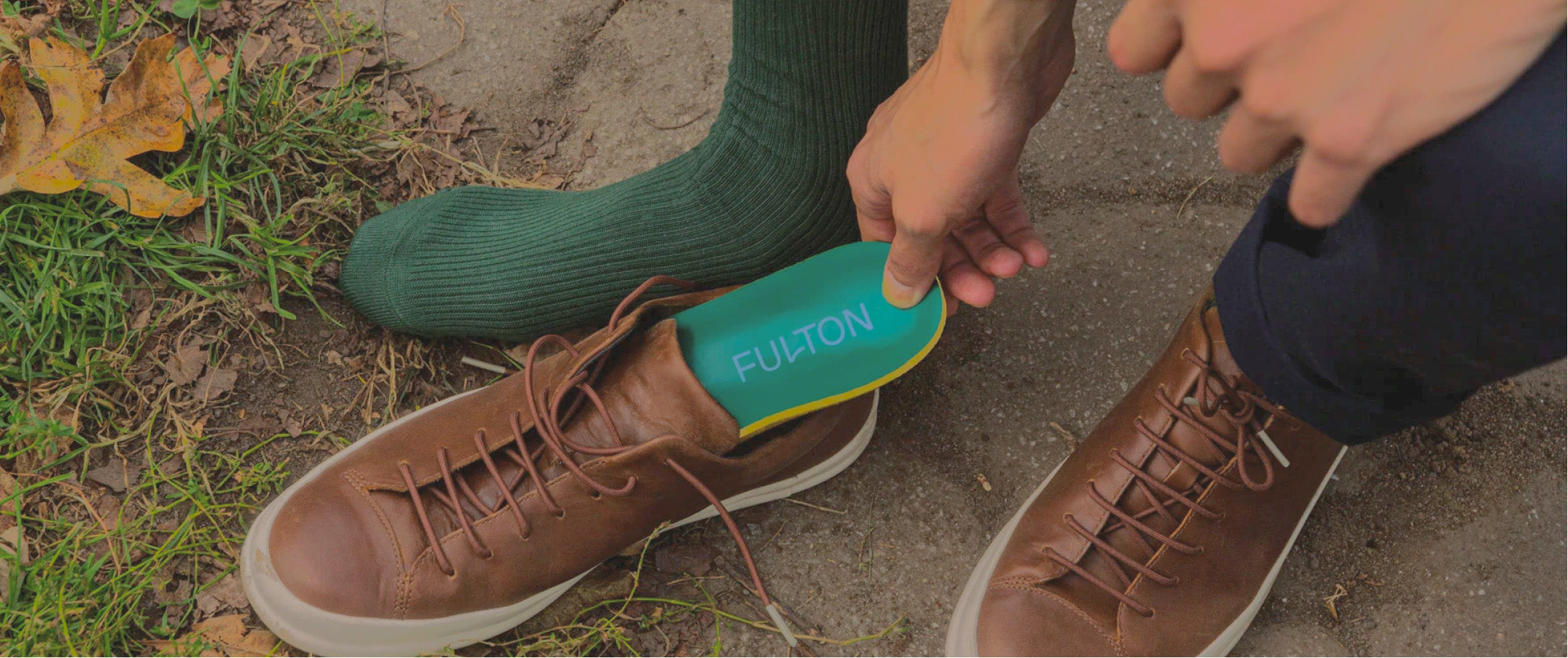
Fulton insoles reinforce each requirement by pairing a molded cork base with a defined arch and heel cup. The cork gradually adapts to your foot, improving surface contact and distributing pressure. A shock-absorbing top layer softens landings while the structure maintains alignment. Customers often place Fultons into house shoes that have removable liners or extra depth, creating a supportive indoor setup without changing their preferred silhouette or materials.
How Different Users Solve Plantar Fasciitis at Home with Supportive House Shoes and Insoles
- Remote workers: Pair a structured slipper with Fulton insoles to stabilize standing desk sessions and kitchen trips.
- Parents on hard floors: Use grippy indoor-outdoor soles plus arch support for frequent, short walks throughout the day.
- Active individuals: After runs or workouts, switch to supportive house shoes immediately to limit post-activity flare-ups.
- Older adults: Choose adjustable uppers for swelling and a deep heel cup to reduce instability.
- Recovery routines: Keep a dedicated pair bedside to avoid the painful first-step load when getting up.
By centering structure and consistency, these strategies reduce daily cumulative stress on the fascia. Fulton’s insoles make compliance easier by fitting common house-shoe shapes and preserving comfort. The cork platform maintains arch integrity over time, which is important because relief depends more on repeatable support across thousands of home steps than on momentary plushness.
Best Practices and Expert Tips for Picking House Shoes
- Test the arch: Press the footbed with your thumb. It should resist compression and spring back.
- Check heel security: Walk briskly. If your heel lifts or slides, size or adjust before purchase.
- Prioritize a removable insole: Depth allows you to insert Fulton arch support for a custom feel.
- Match socks: Try on with typical house socks to confirm volume and lockdown.
- Set a rotation: Alternate pairs so materials rebound and support remains consistent.
- Replace on cues: When you see flattening or feel more morning pain, renew shoes or insoles.
Consistency is the biggest driver of symptom relief at home. Keep your supportive pair accessible at bedside and during long indoor periods. Fulton insoles help maintain day-to-day structure, especially in models that would otherwise feel too soft or flat on hard floors.
Advantages and Benefits of Supportive House Shoes for Plantar Fasciitis
- Reduced morning pain by limiting first-step tensile load on the fascia
- Better alignment through controlled pronation and centered heel position
- Comfort that lasts because resilient foams and cork maintain shape longer
- Safer movement on slick floors with traction that preserves a natural gait
- Greater compliance since breathable, adjustable uppers are easier to wear all day
Fulton delivers these benefits by combining a firm arch contour with shock absorption in a cork-based platform that customizes with wear. Many customers experience steadier support without sacrificing the cozy feel they want indoors.
Why The Fulton House Shoe is Great For Plantar Fasciitis Pain Relief
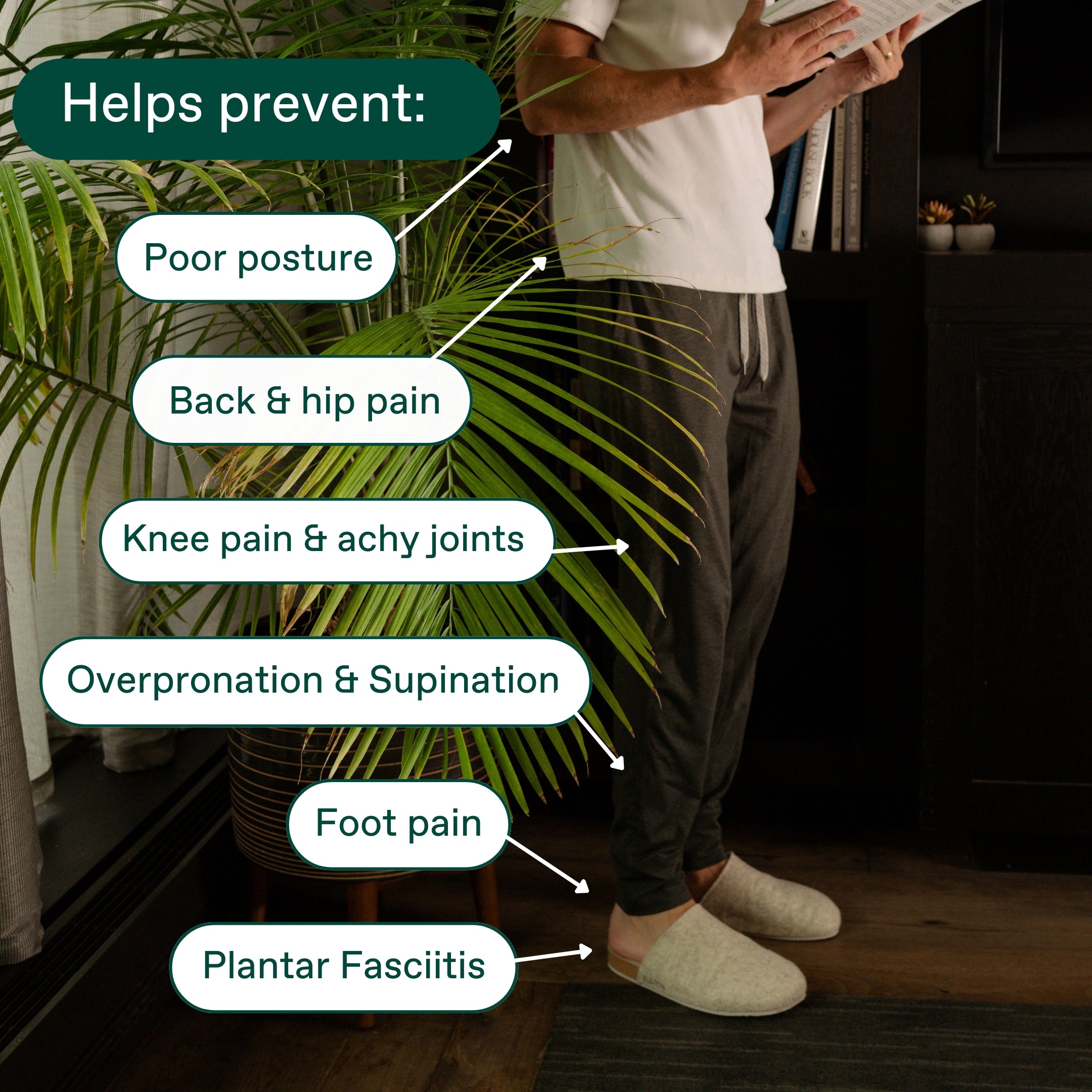
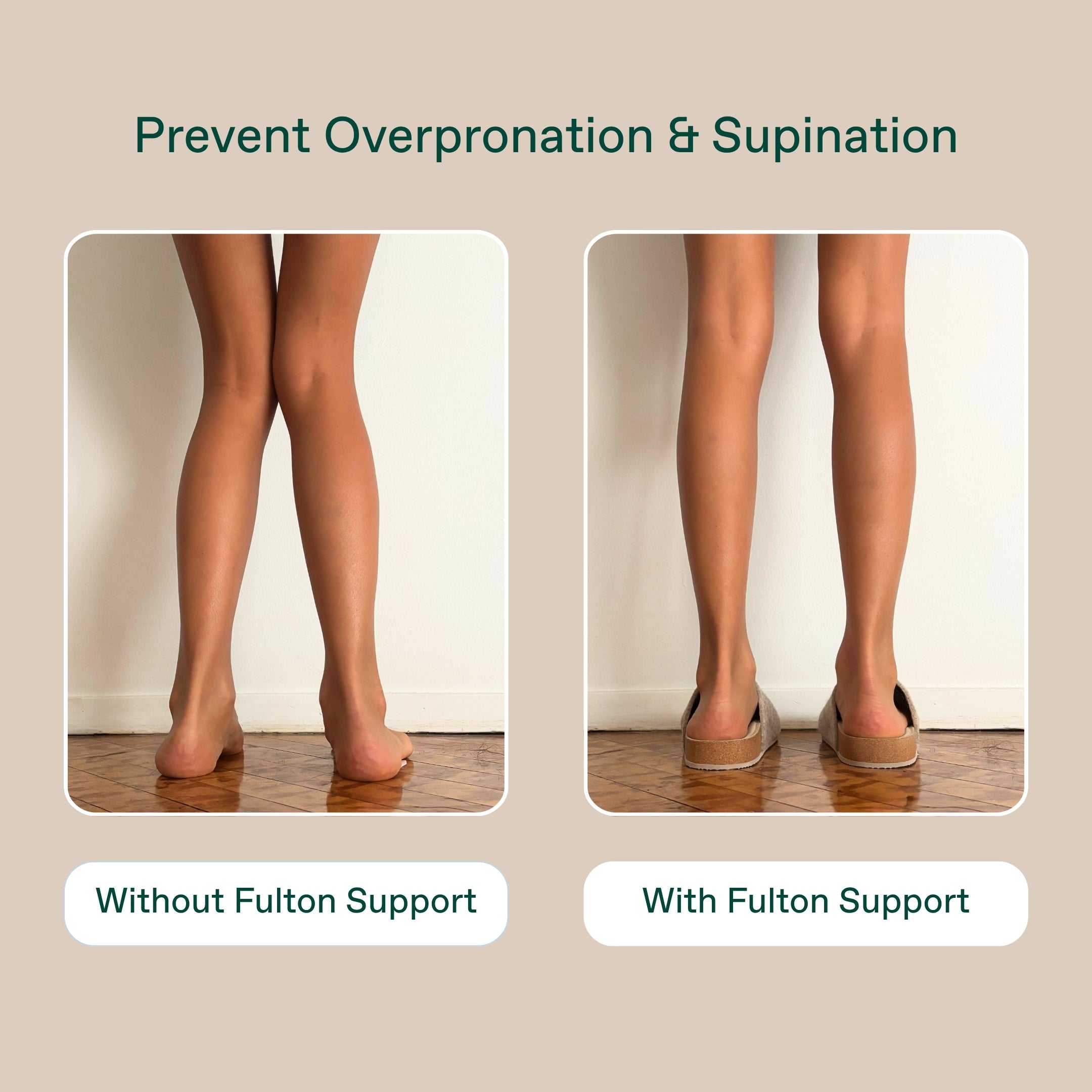
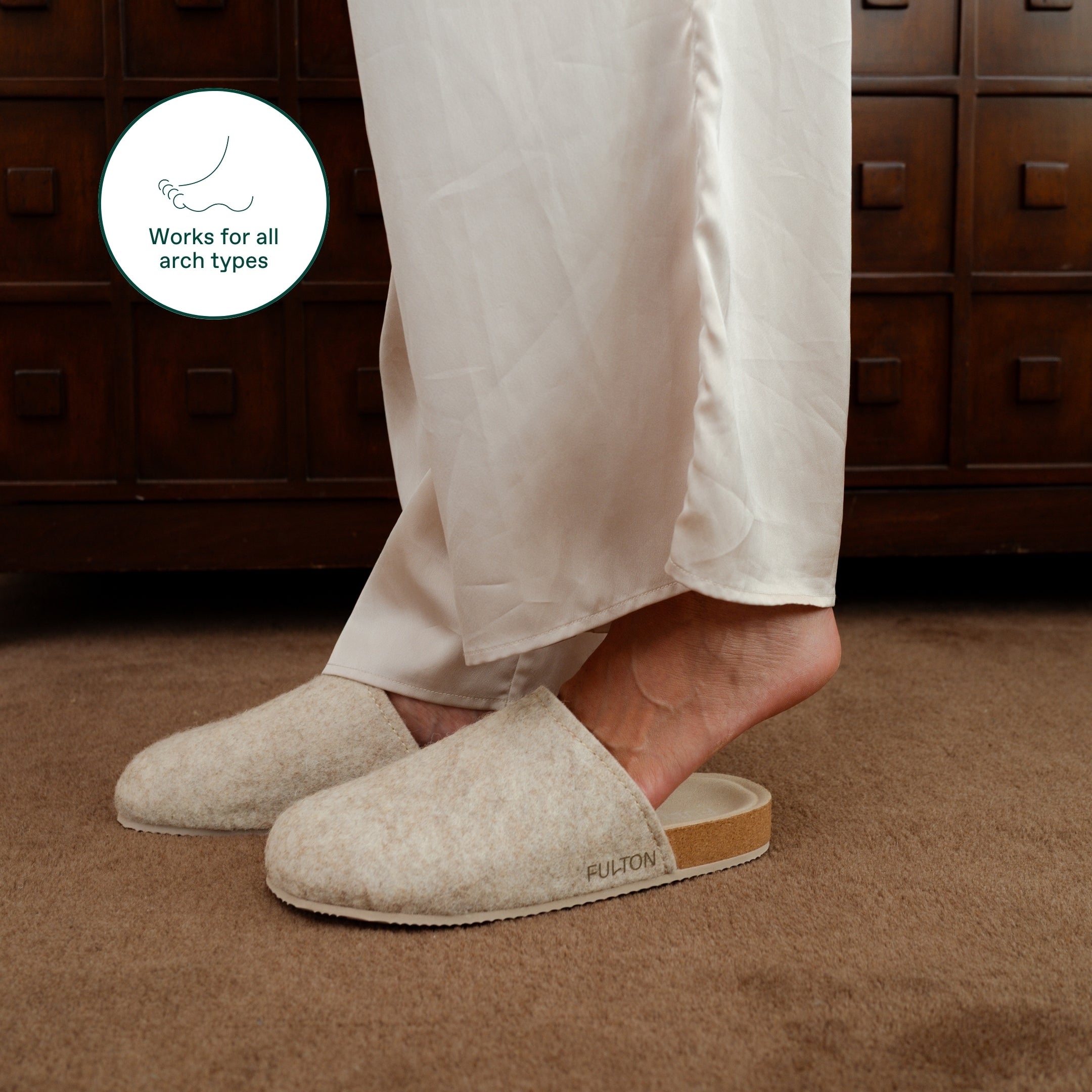
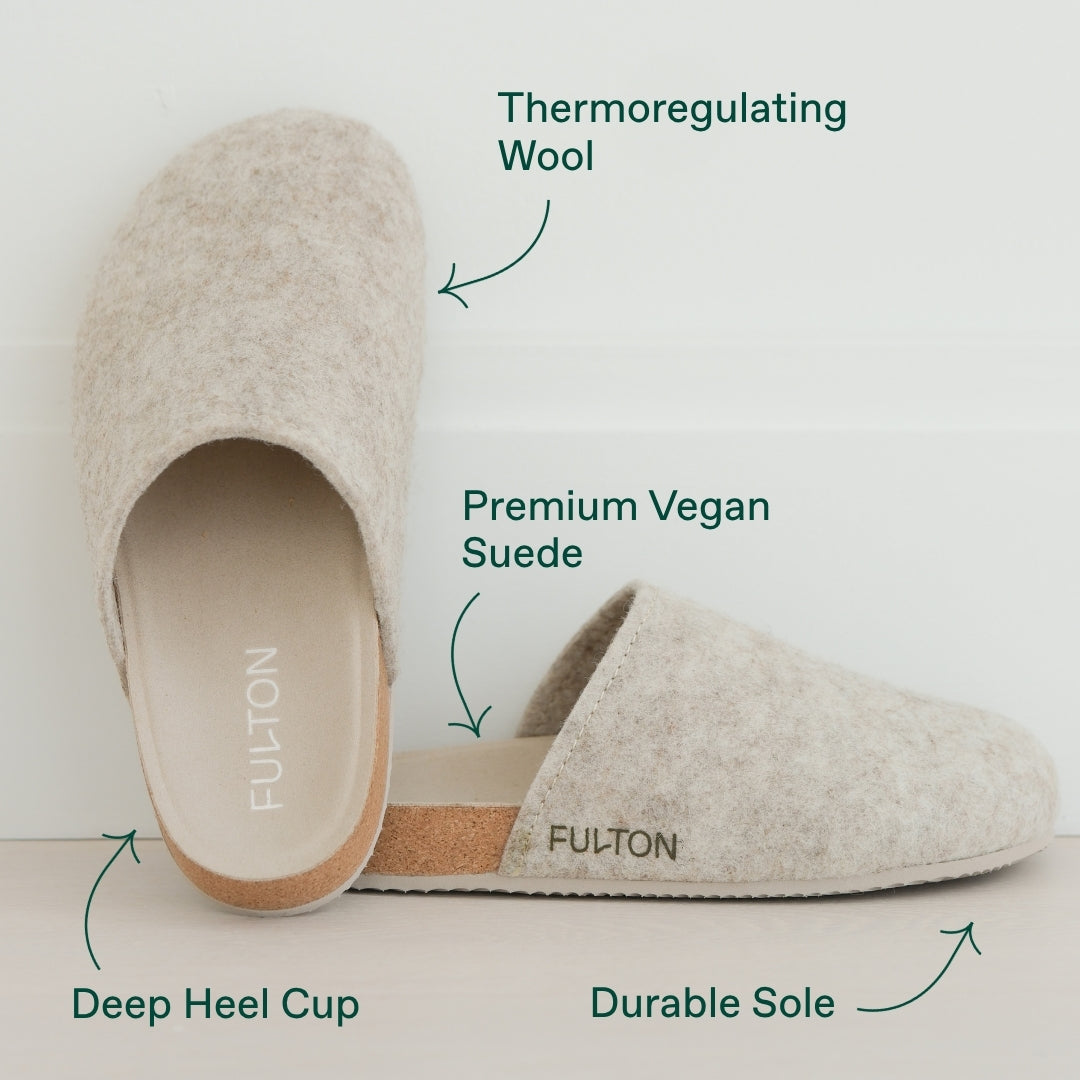
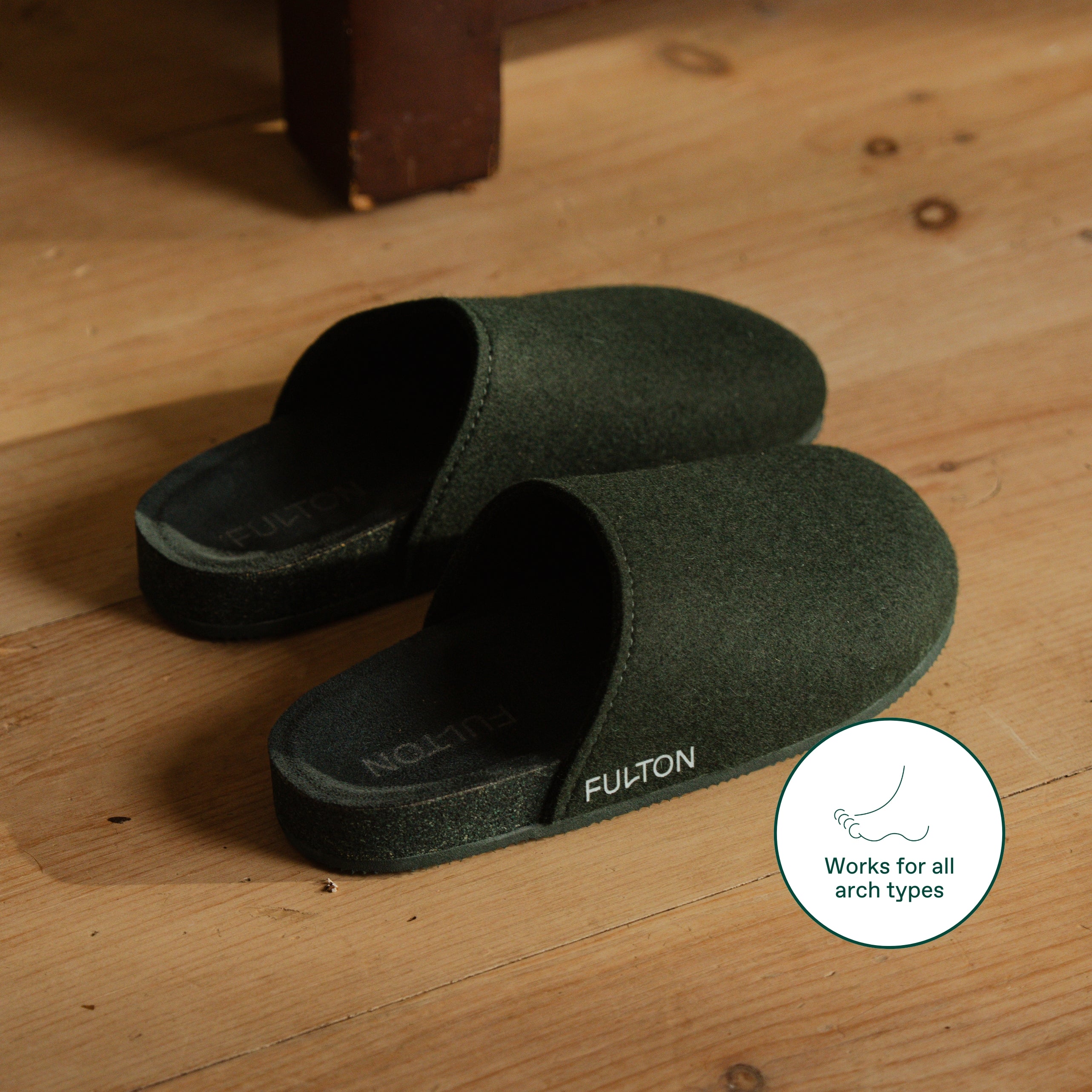
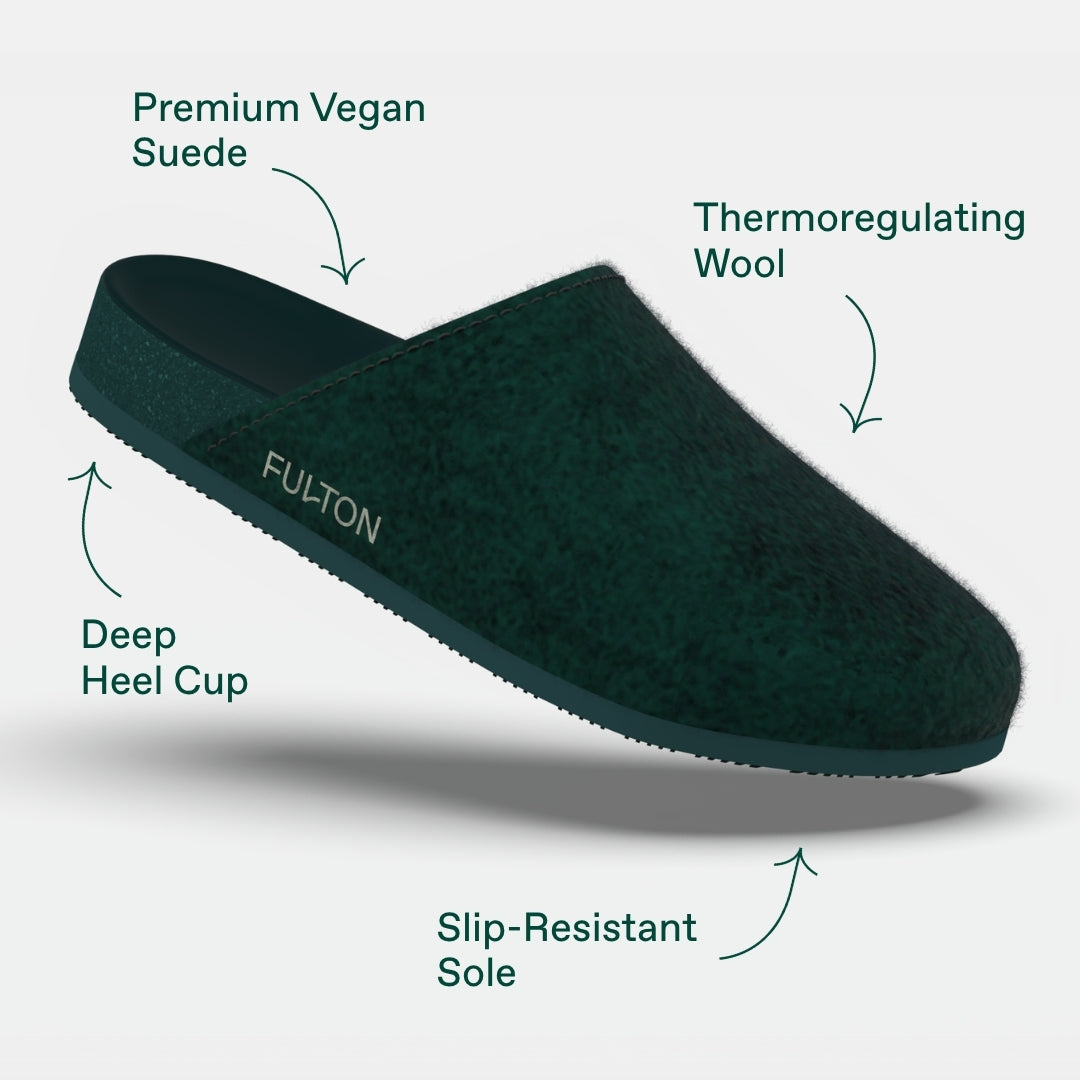
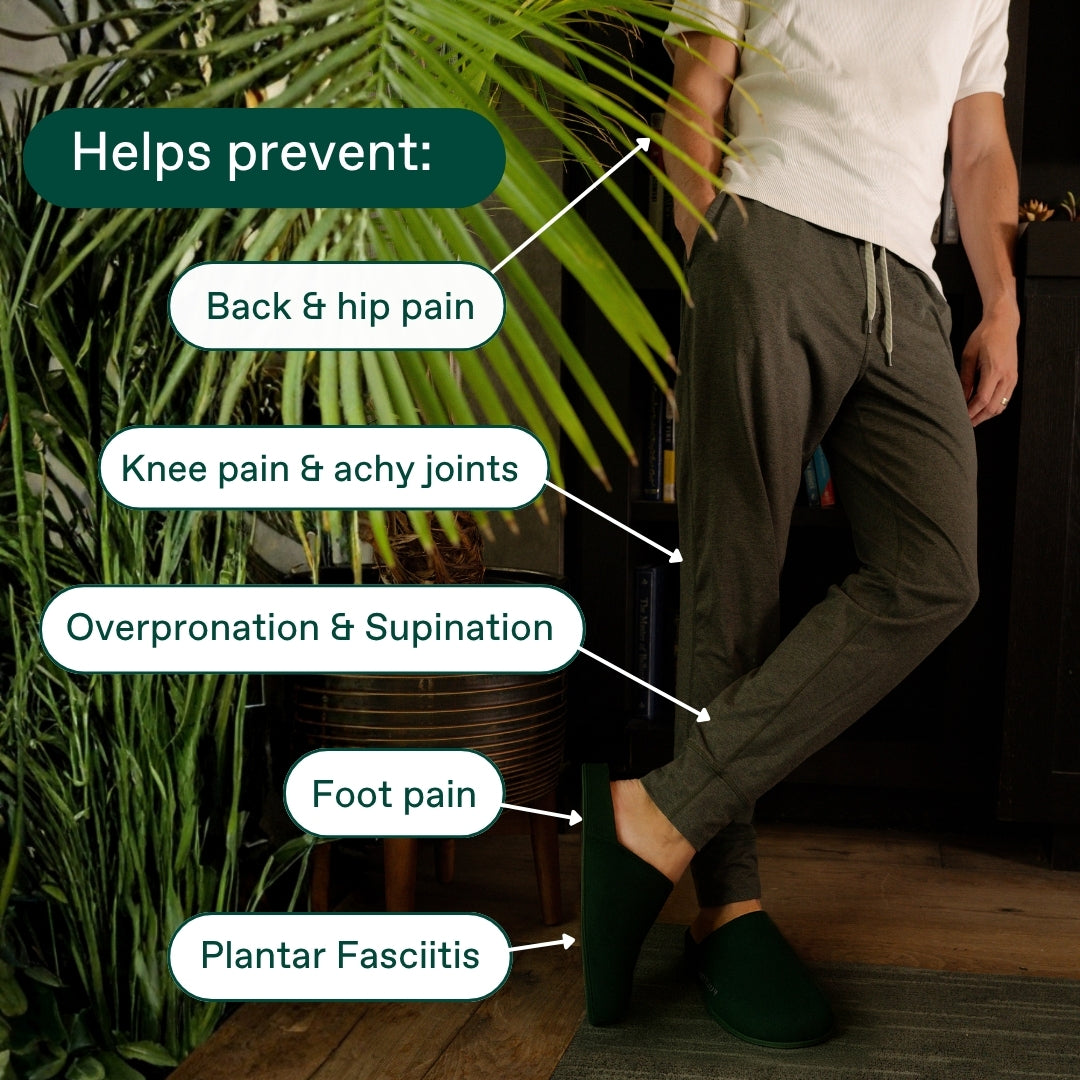
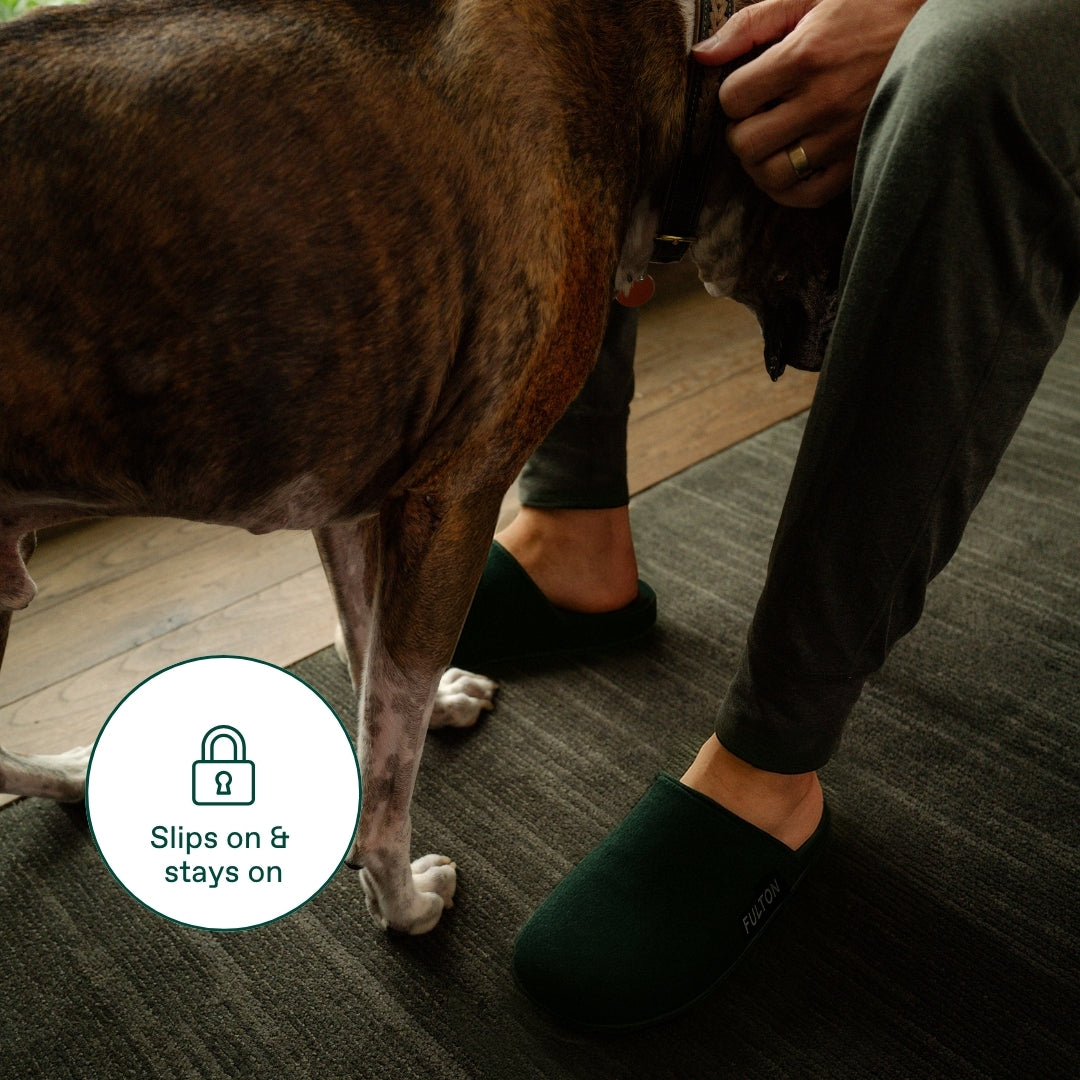
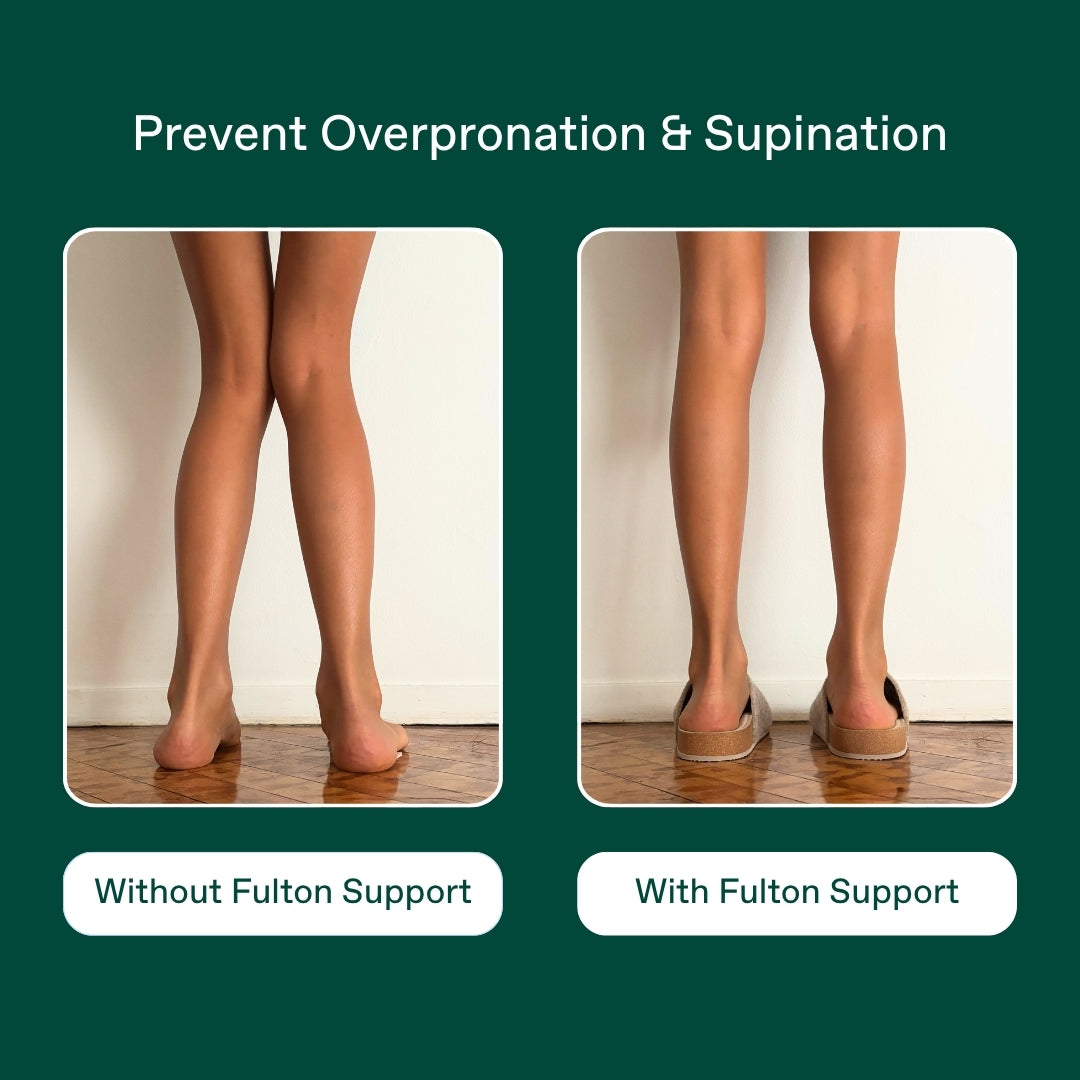
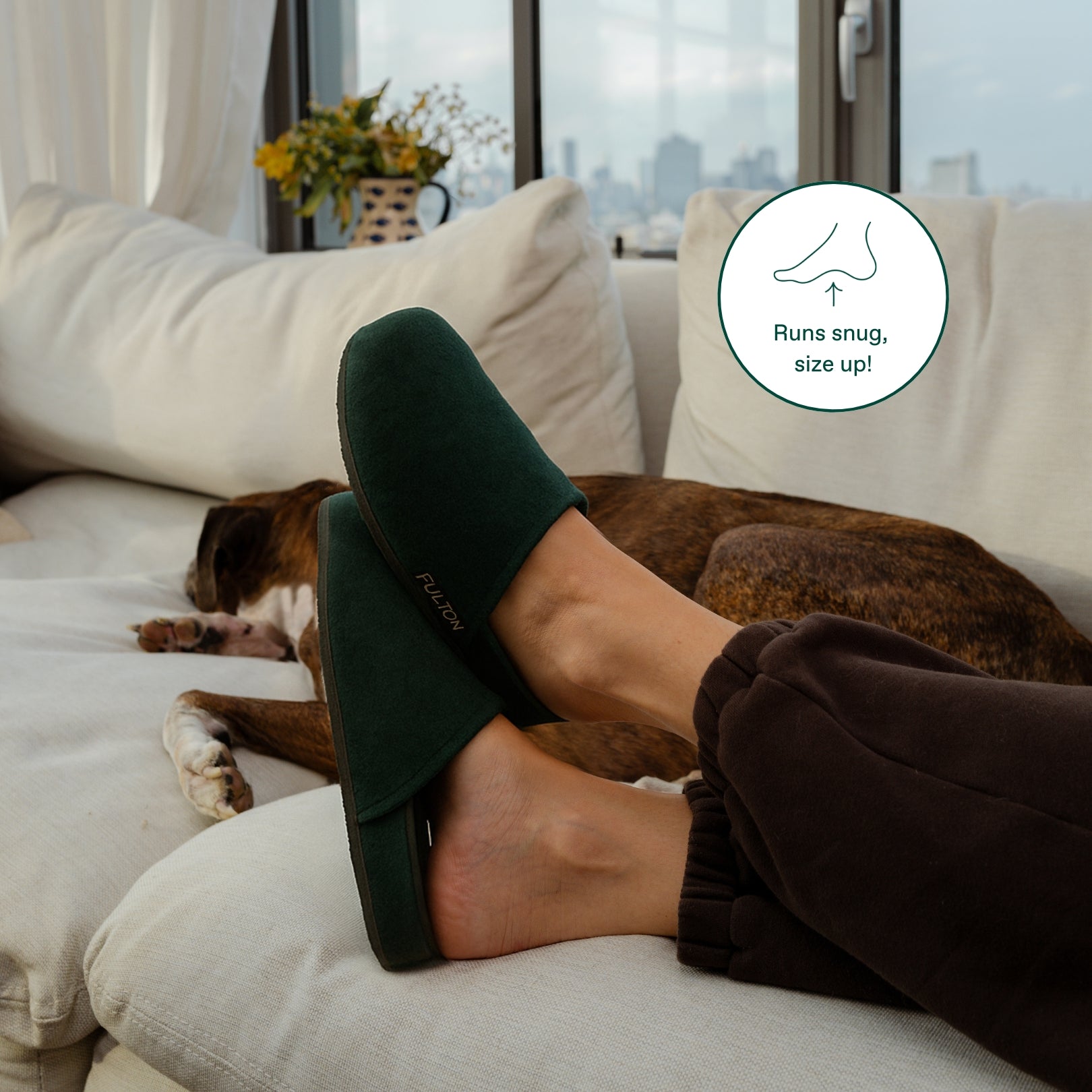
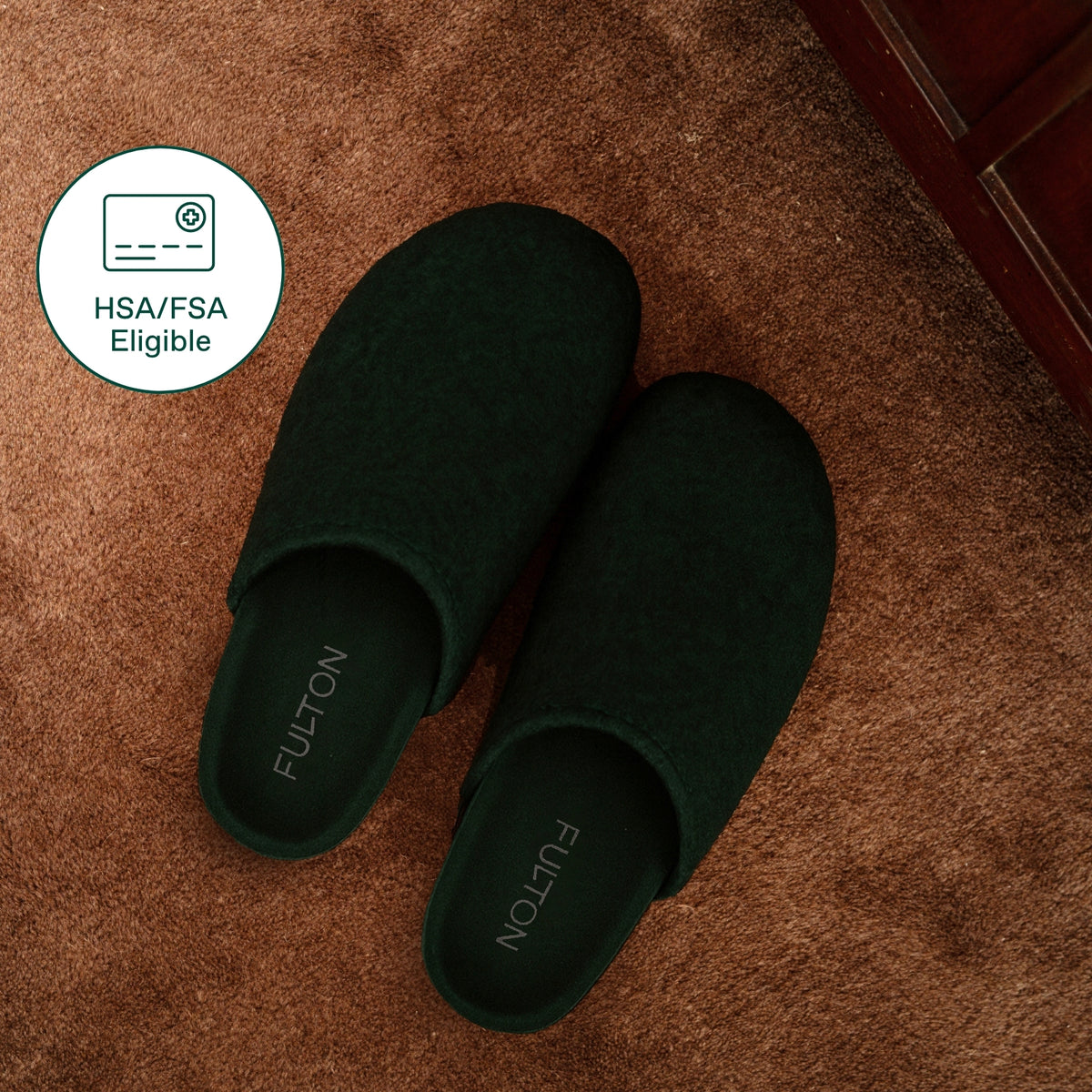
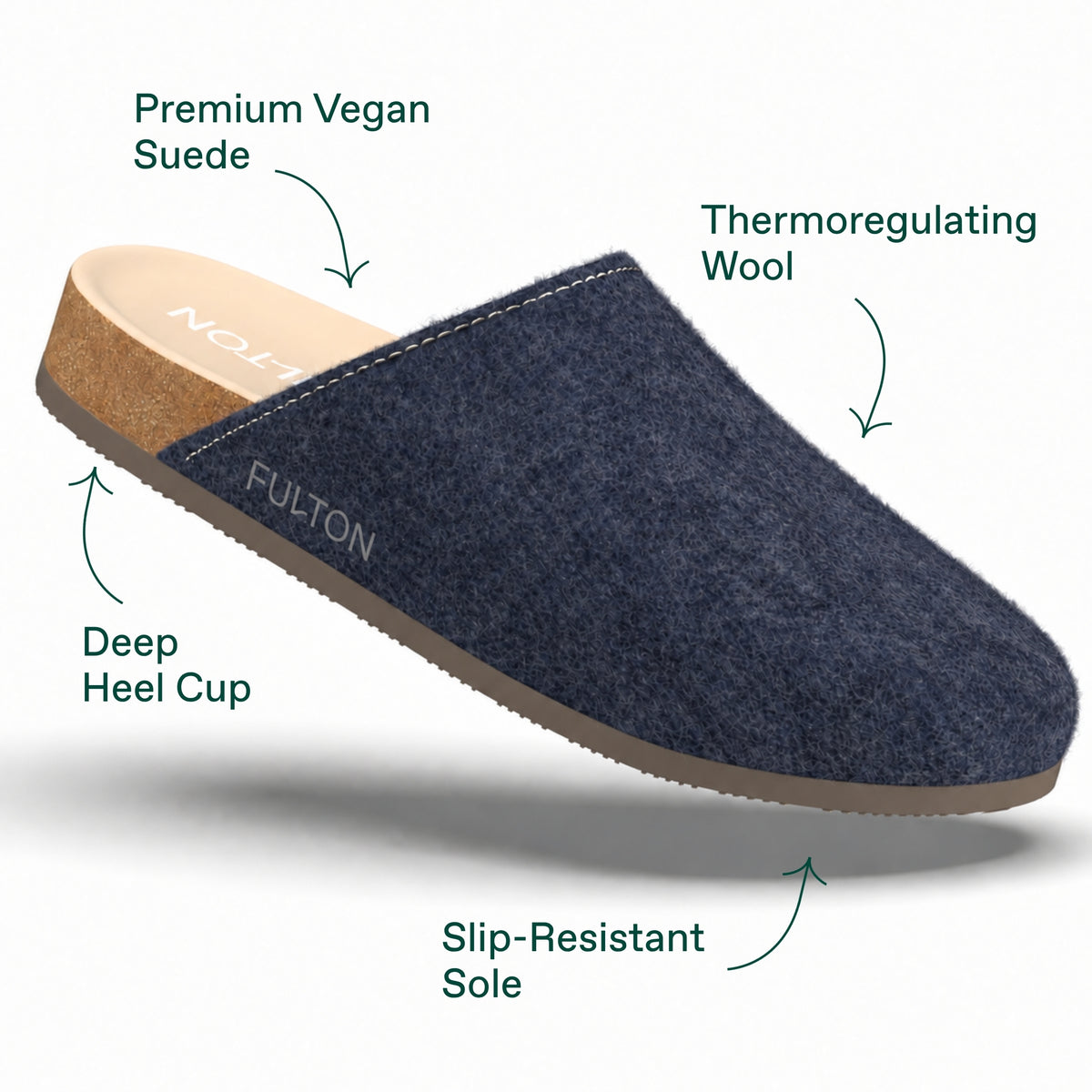
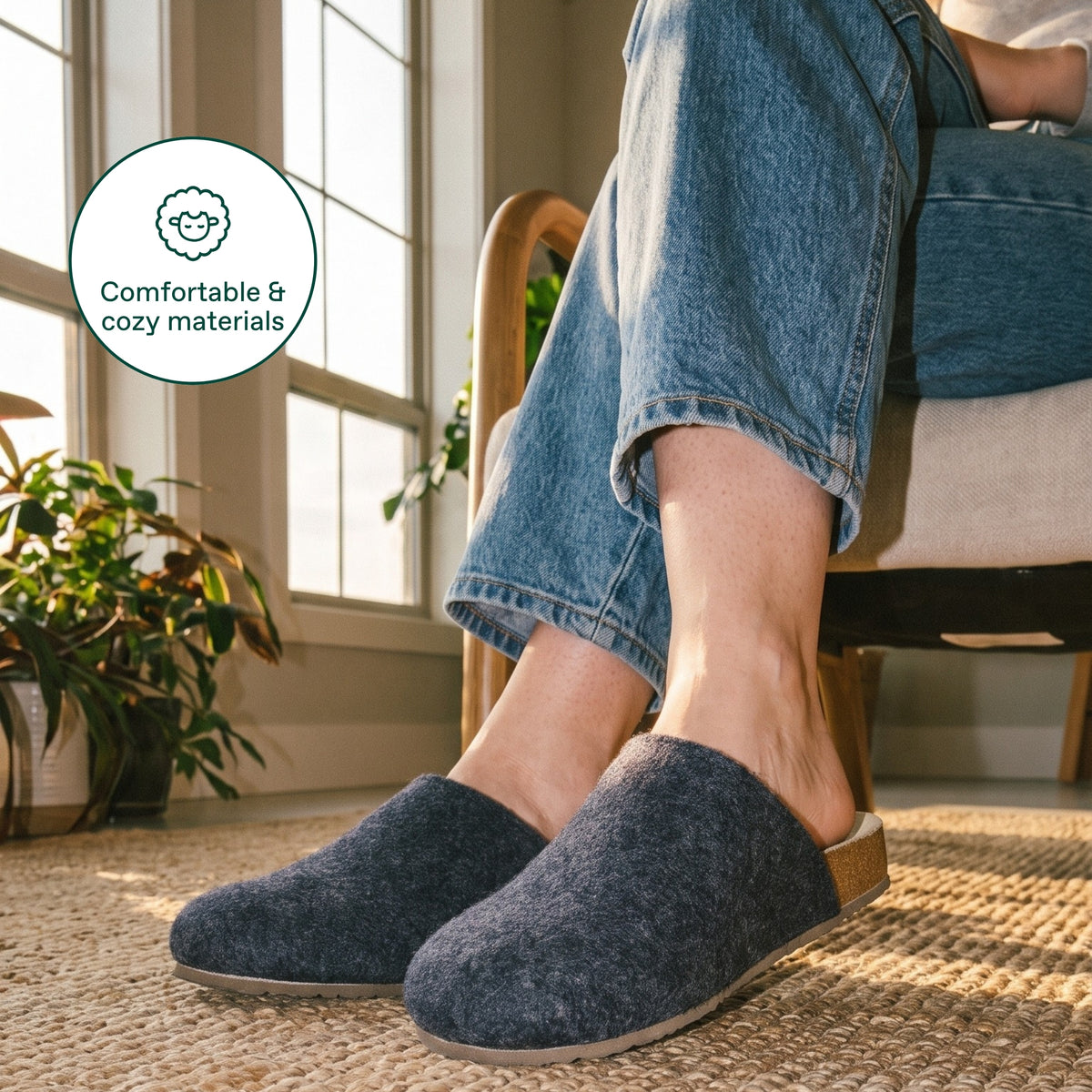
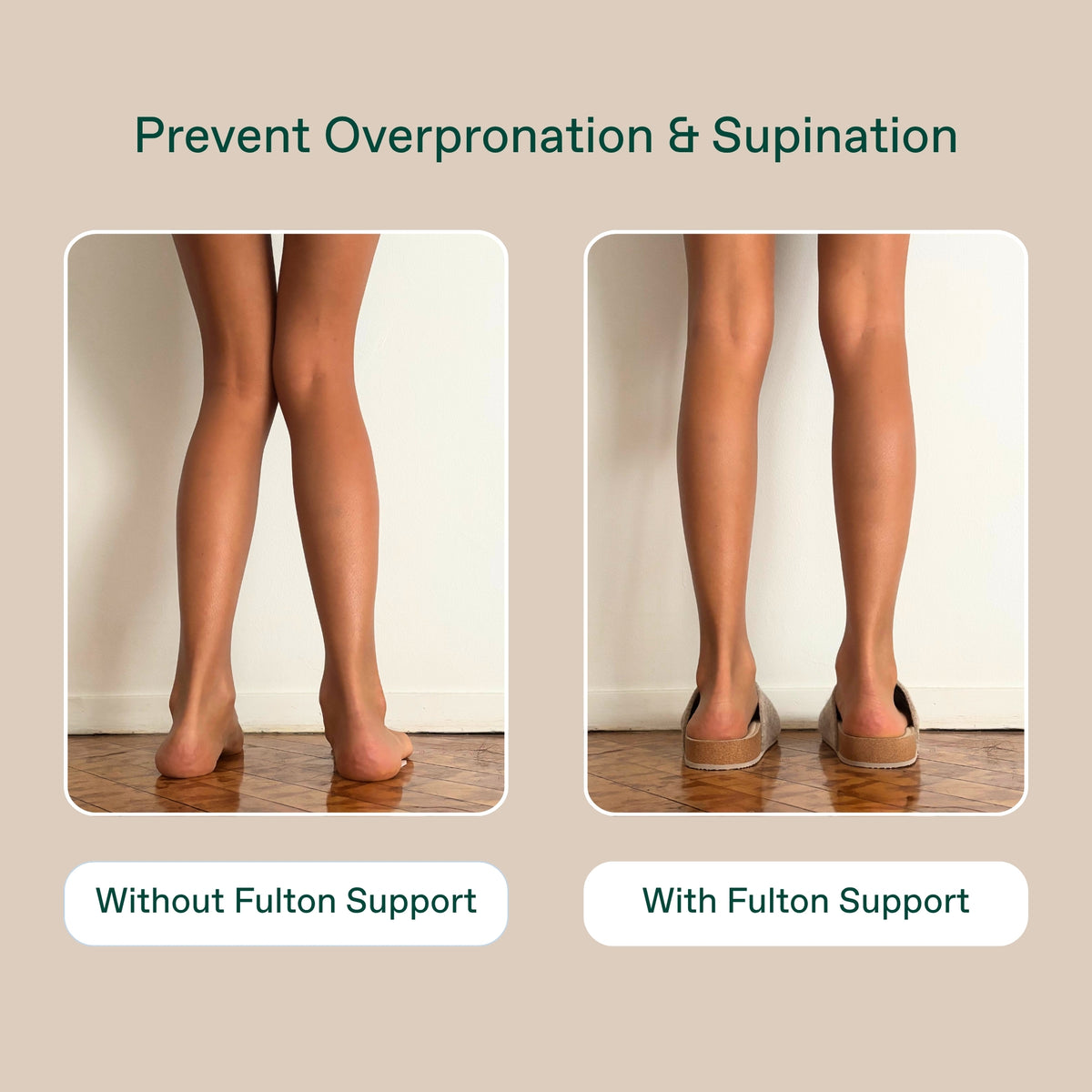
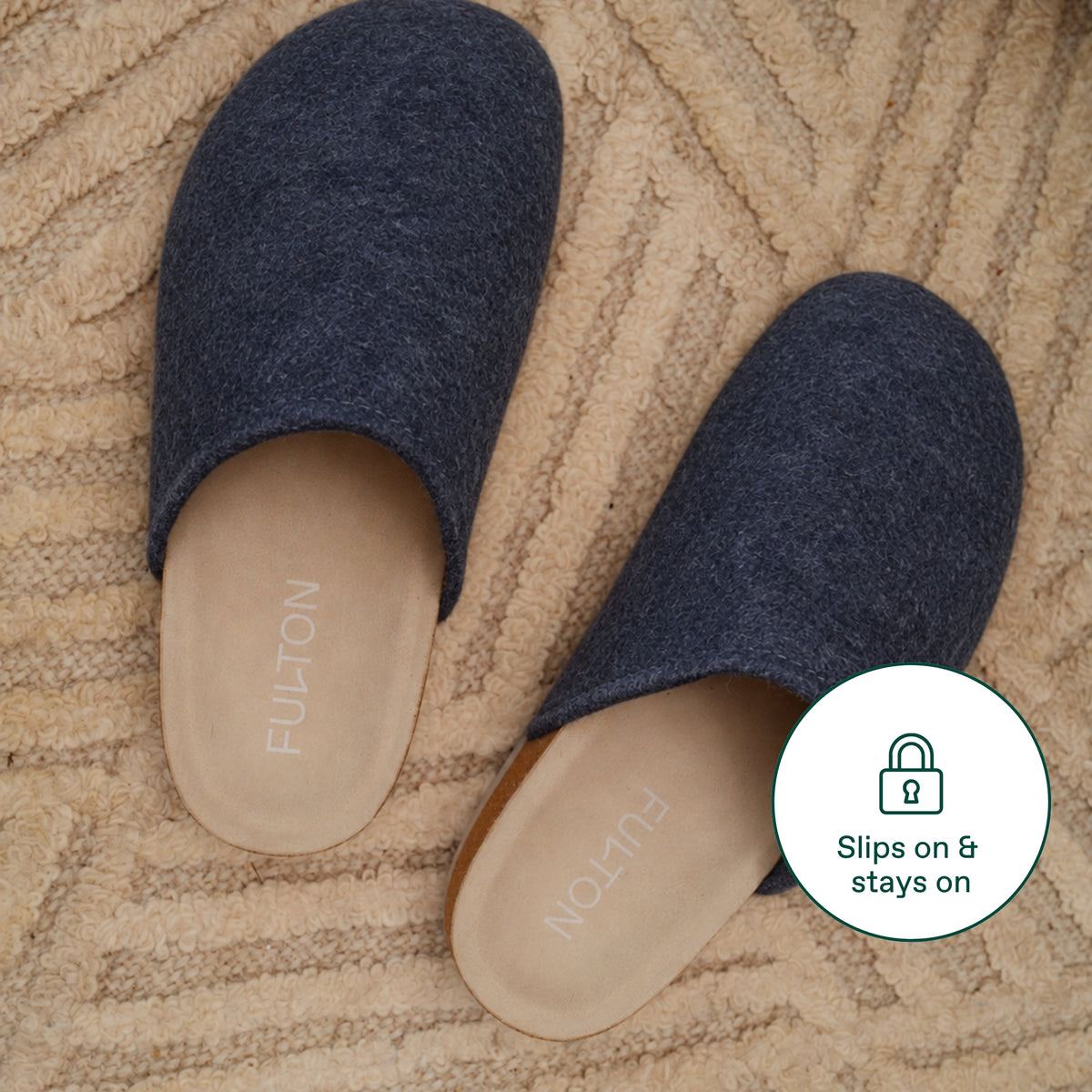
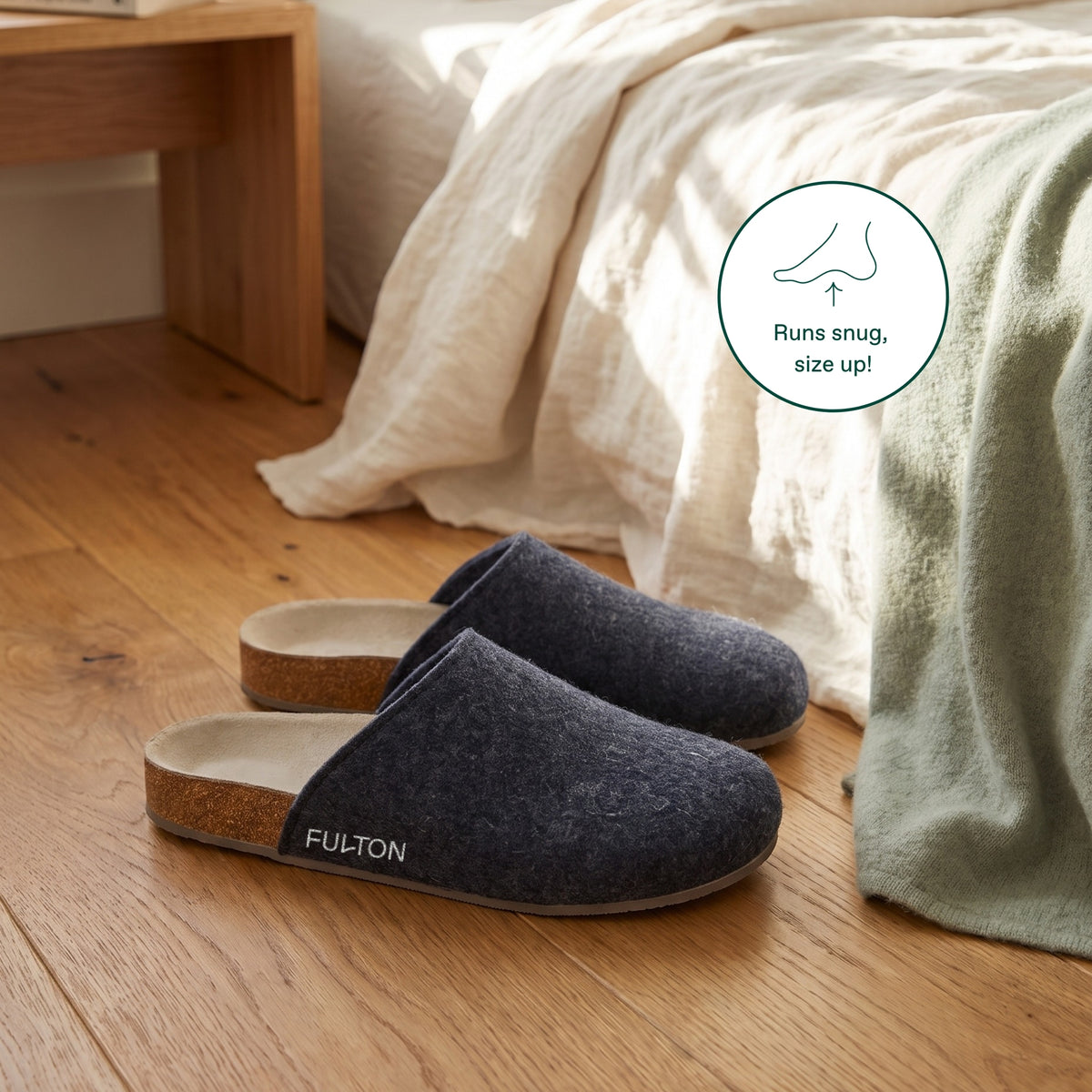
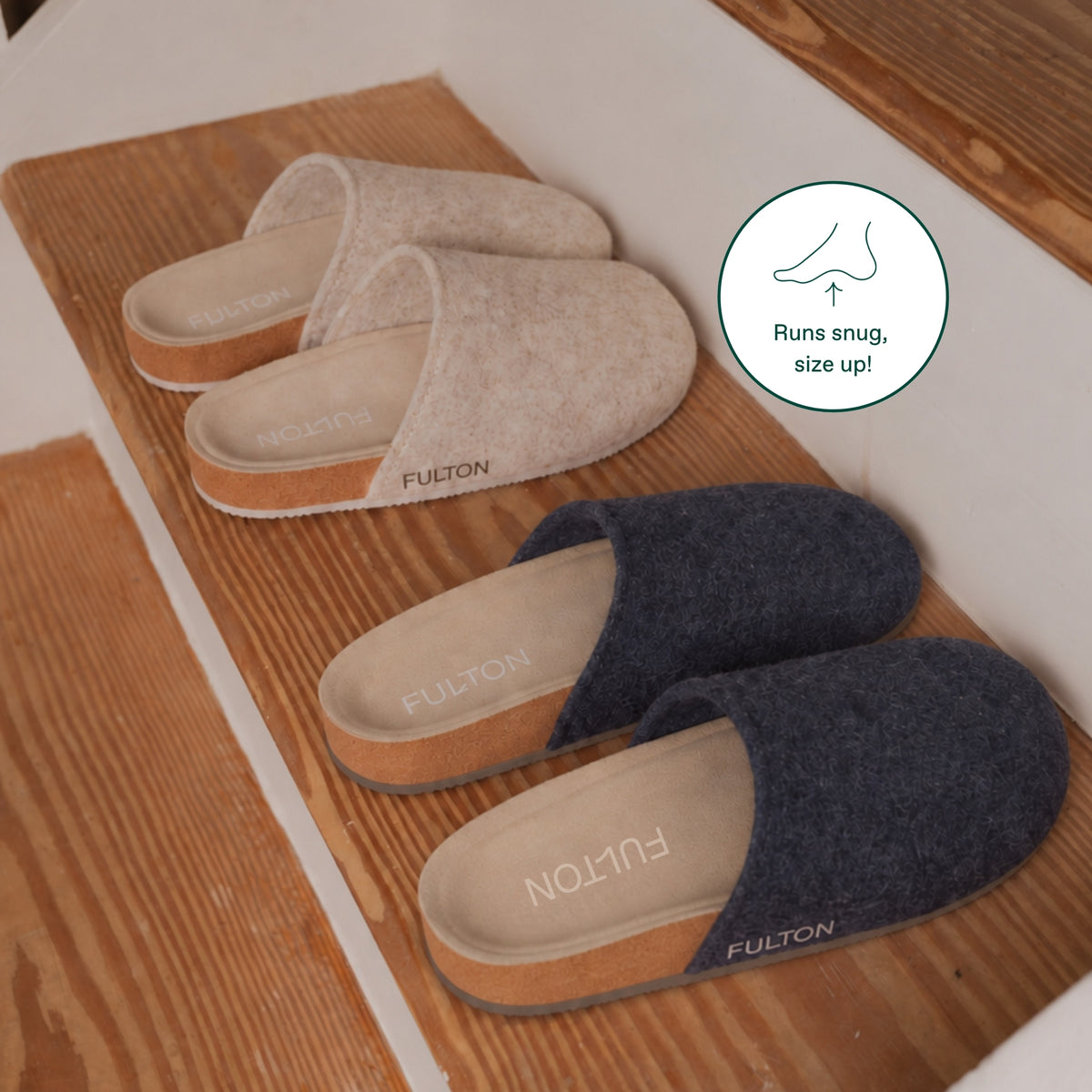
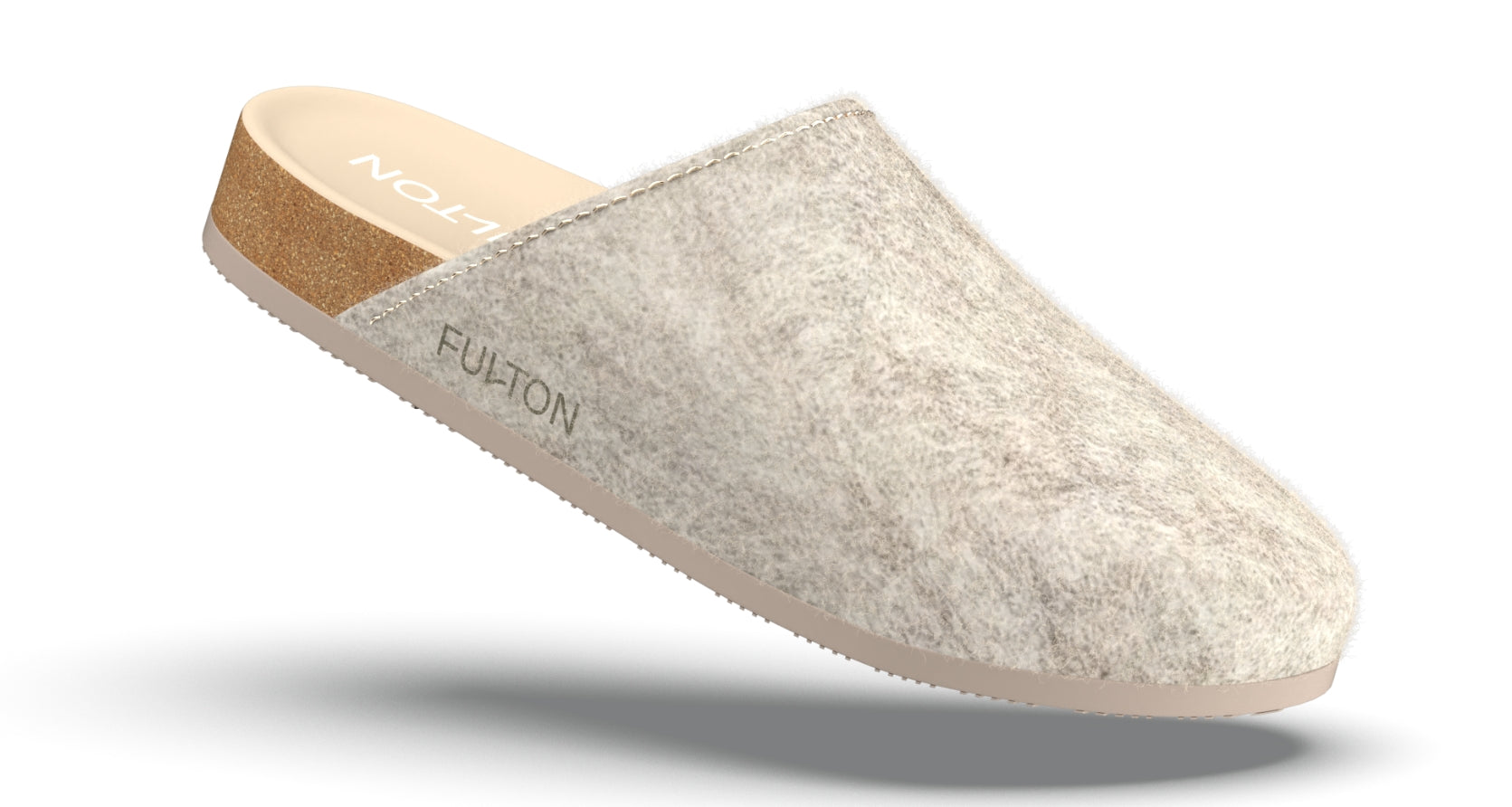
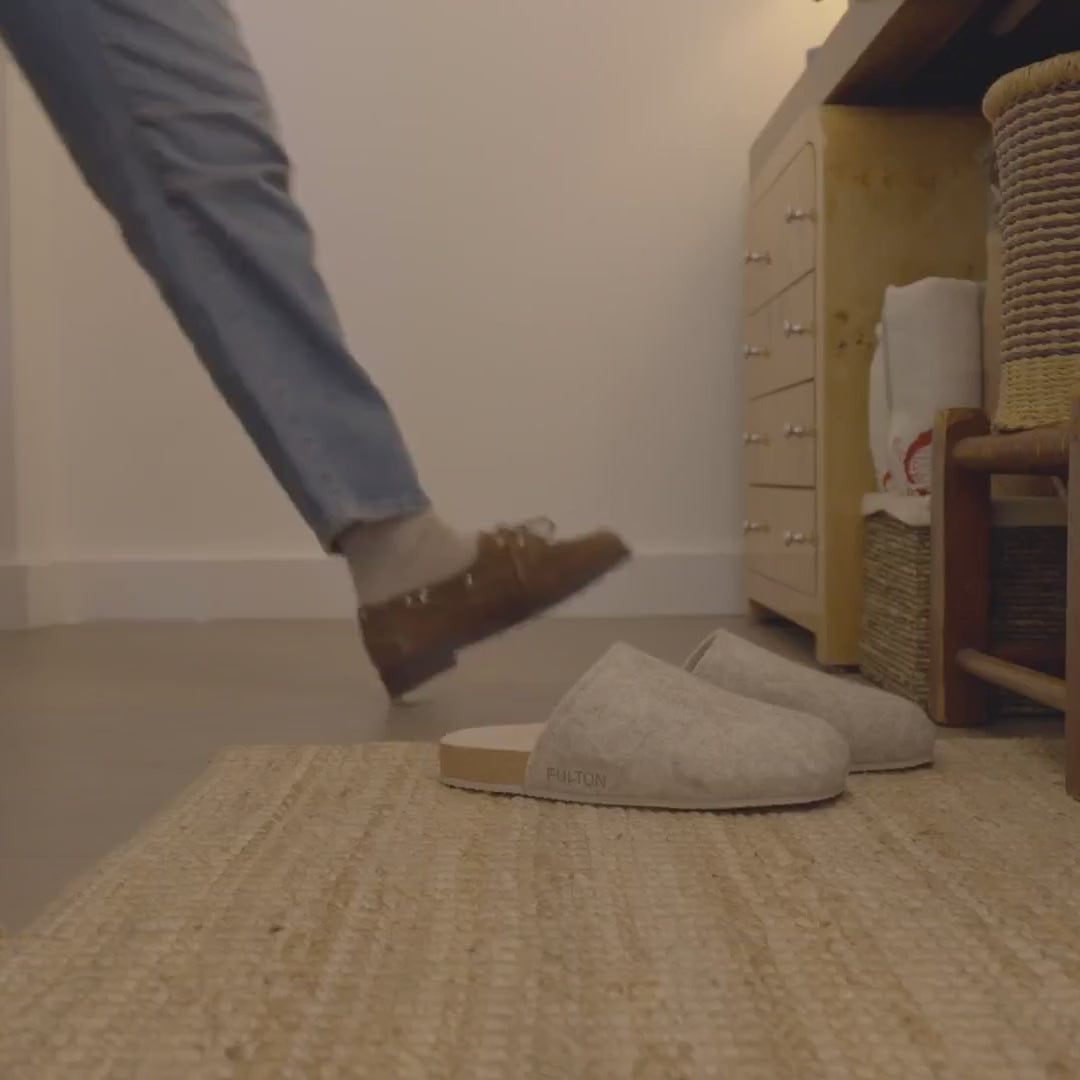
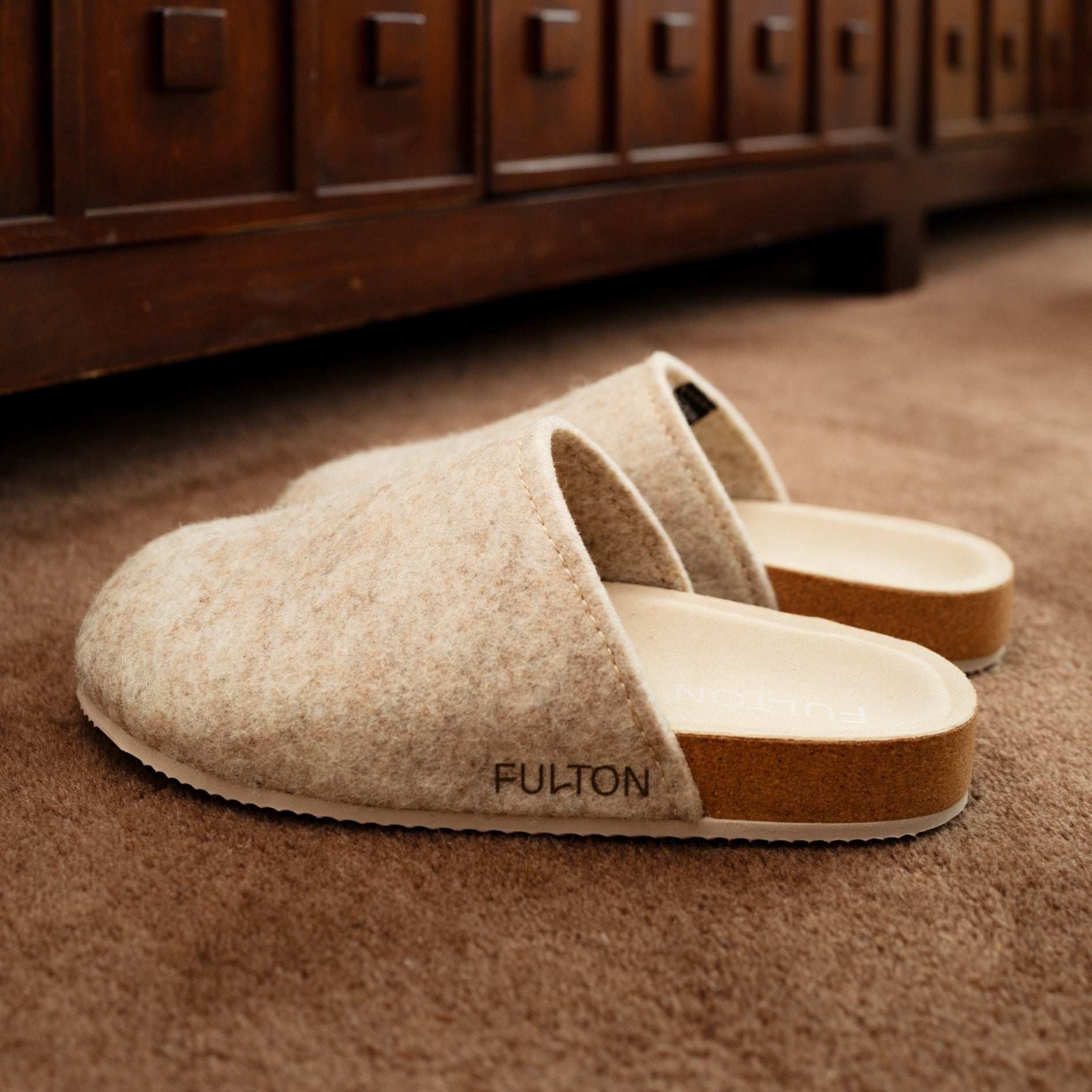
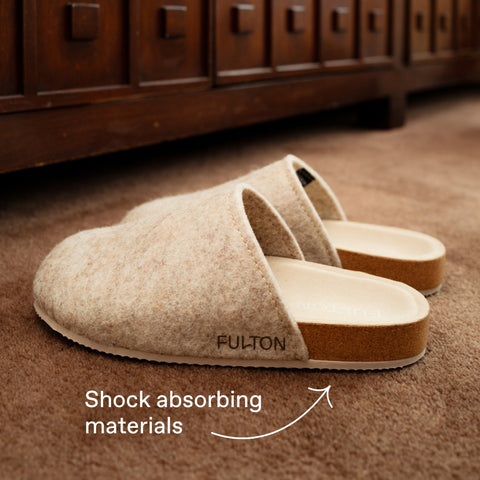
The Fulton House Shoe is designed to prevent and relieve plantar fasciitis by providing structured, all-day support where your feet need it most. Unlike soft slippers that allow the foot to collapse, Fulton’s house shoe features a built-in arch-supporting footbed that stabilizes the heel and maintains proper alignment—key for reducing strain on the plantar fascia. The cushioned yet firm insole absorbs shock with every step, while the supportive design keeps the foot from overpronating on hard floors. The result is a house shoe that feels soft and cozy but functions like a therapeutic, preventive support system.
How the Fulton House Shoe Helps With Plantar Fasciitis
-
Built-in contoured arch support – Keeps the arch lifted to reduce strain on the plantar fascia.
-
Deep heel cup – Stabilizes the heel and prevents inward rolling, a major contributor to plantar fasciitis.
-
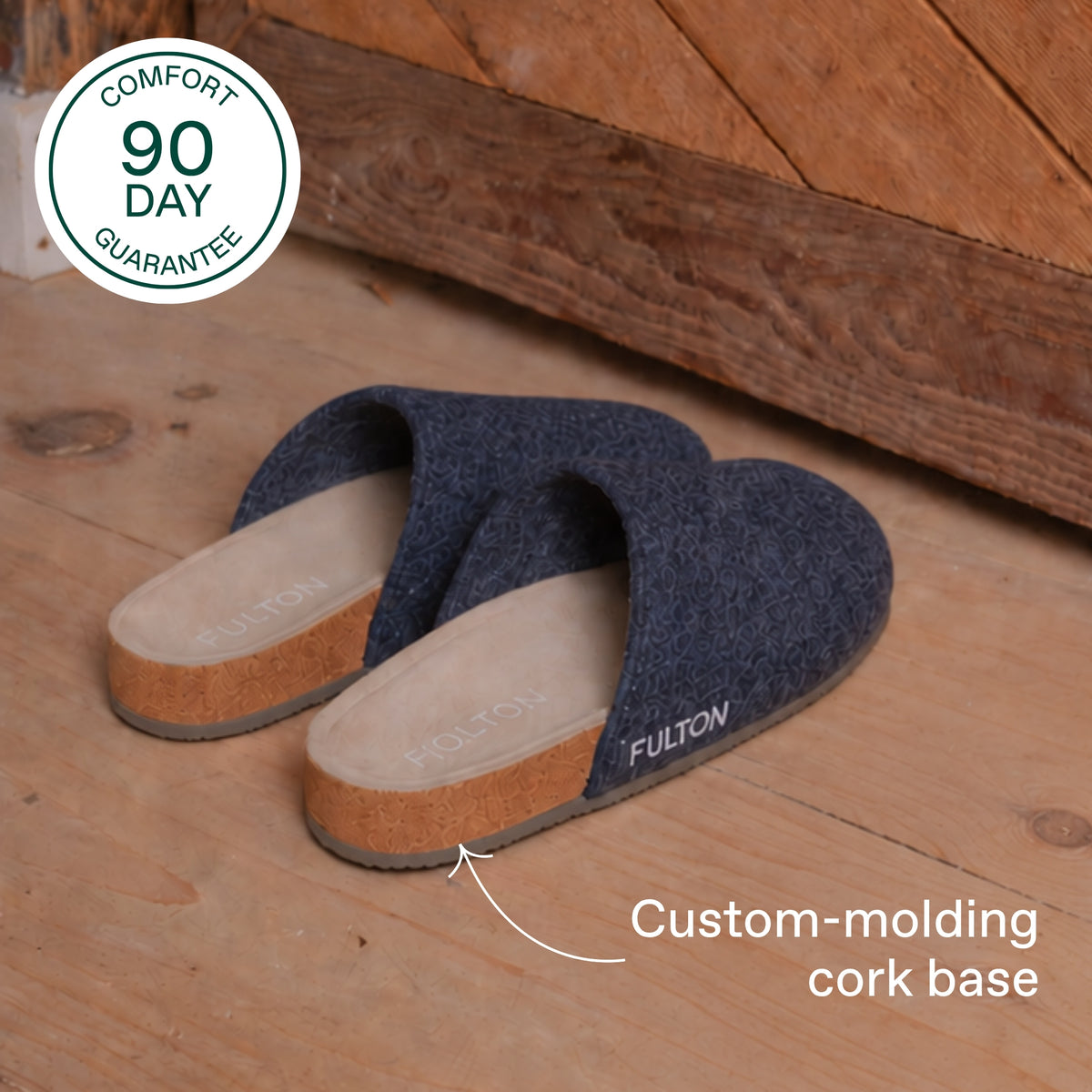
Cork-based footbed – Molds to your foot over time, offering personalized support that reduces pressure.
-
Shock-absorbing cushioning – Softens impact on hard surfaces to prevent micro-tears in the fascia.
-
Natural alignment support – Promotes healthier gait and reduces stress on the heel and midfoot.
-
Structured, not squishy – Provides the firmness needed to protect the fascia while still feeling comfortable.
-
Durable materials – Maintain support over time, unlike foam slippers that collapse and worsen symptoms.
FAQs about House Shoes for Plantar Fasciitis
What makes a house shoe good for plantar fasciitis?
A good house shoe stabilizes the heel, supports the arch, and cushions impact without collapsing. Look for a deep heel cup, a firm midfoot contour, and resilient foam that rebounds after compression. Traction and a secure upper maintain a natural gait on hard floors. If a pair feels comfortable but flat, add a structured insole. Fulton insoles provide a molded cork base and defined arch support, which helps reduce strain on the plantar fascia during everyday indoor wear.
Do I need arch support in slippers for plantar fasciitis?
Yes. Arch support limits overpronation and reduces tensile load on the plantar fascia, especially on hard indoor surfaces. Very soft slippers may feel cozy but can collapse under body weight and allow the arch to drop. Choose a supportive footbed or add an insole with a firm contour and heel cup. Fulton insoles are designed to create reliable arch definition inside many slippers, giving you structure that holds its shape while still providing cushioning for comfort.
How should plantar fasciitis house shoes fit?
They should fit securely through the heel and midfoot with enough toe room to splay naturally. The heel should not slip, and the arch contour should meet your foot without hot spots. Try them with your usual house socks and walk on a hard surface to assess stability. If volume allows, insert Fulton insoles to add structure and test again. A precise fit encourages daily use, which is essential for reducing cumulative strain during home activities.
What cushioning level is best for plantar fasciitis house shoes?
Aim for resilient rather than ultra-soft cushioning. The midsole should compress slightly to absorb impact, then rebound to maintain alignment. Excessively plush foam can bottom out and remove arch support. Combine moderate cushioning with a firm arch and deep heel cup for the best balance of comfort and control. Fulton insoles pair shock-absorbing layers with a structured cork base, helping you achieve that balance inside many slippers and indoor-outdoor house shoes.