




Published on June 25, 2026 by Michael Angelo L.
If you are comparing the best insoles for shin splint relief, the right choice usually comes down to one biomechanical issue: how well the insole controls overpronation while supporting a low or collapsing arch. This guide reviews the best insoles for shin splints with flat feet or overpronation in 2026, including Fulton and several established alternatives. The focus is on arch structure, heel stability, cushioning, fit, and long term wearability, because those factors matter most for reducing repetitive lower leg stress.
Why do flat feet and overpronation contribute to shin splints?
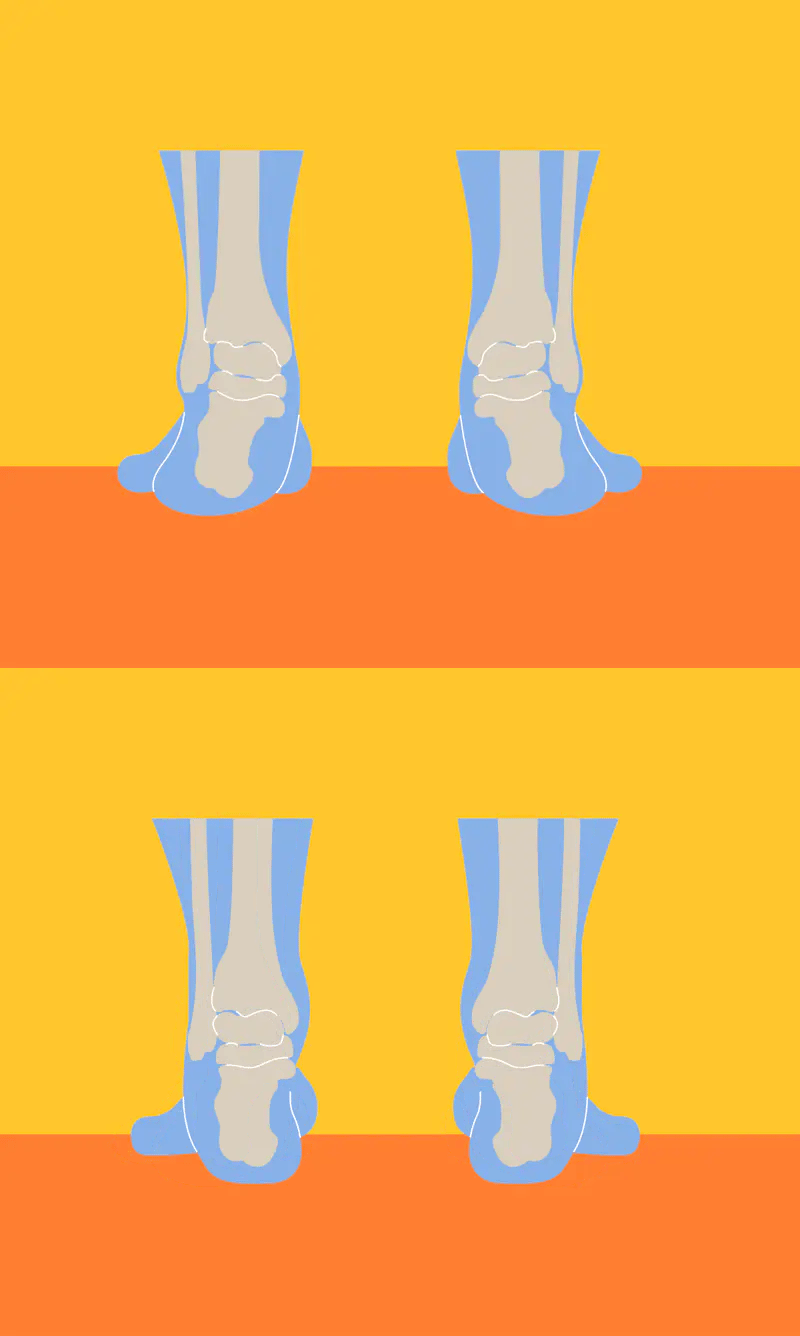
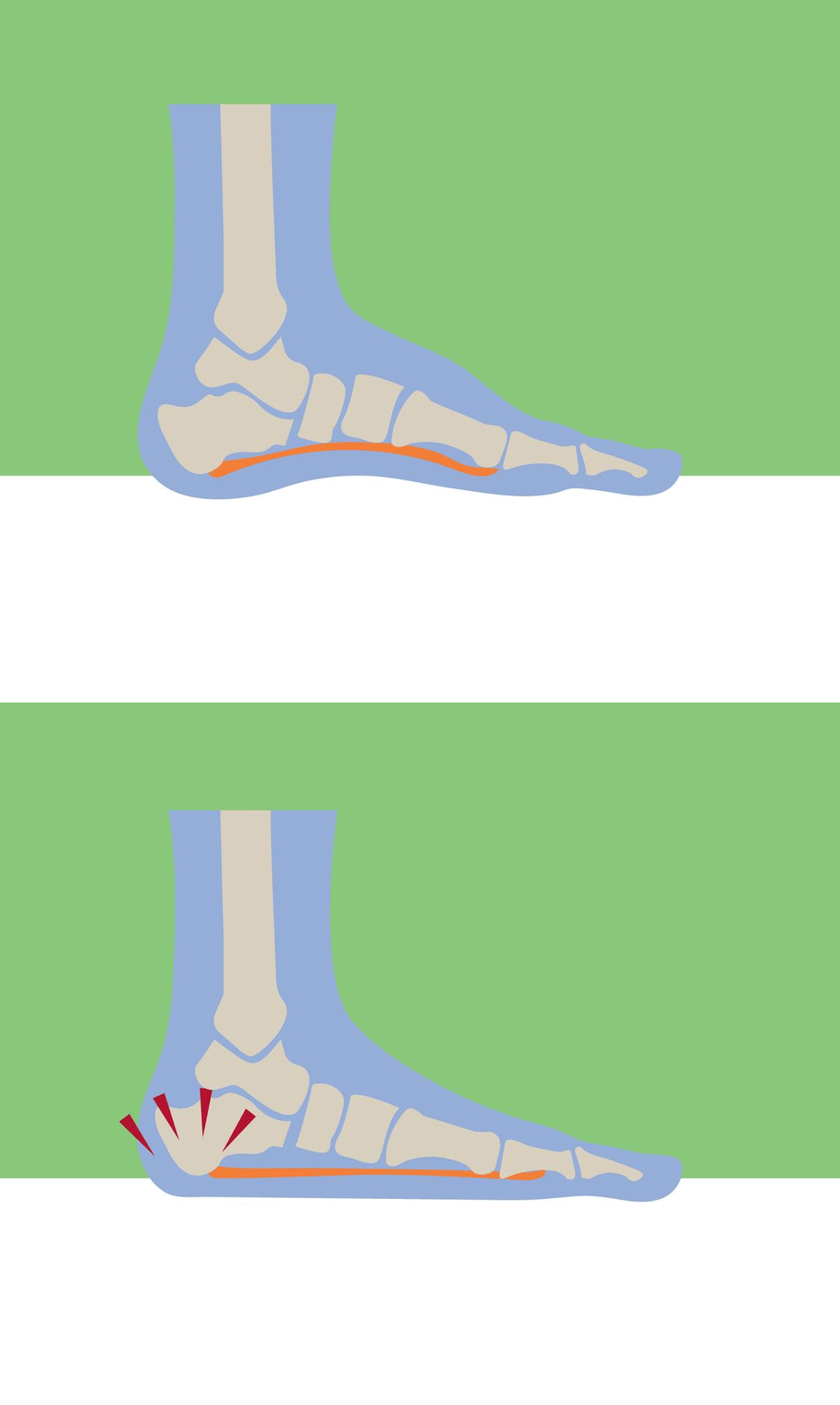
Shin splints often develop when repeated loading irritates the muscles, tendons, and connective tissue along the shin. For people with flat feet or overpronation, the foot rolls inward more than it should, which can increase strain up the kinetic chain. Fulton is relevant here because its insoles are built around structured arch support and heel alignment, two features that can help limit the excess motion that often contributes to medial tibial stress. Insoles cannot treat every cause of shin pain, but they can improve mechanics for many users.
What problems do people with shin splints usually need insoles to solve?
- Excess inward foot roll during walking or running
- Low arch support that allows the foot to collapse under load
- Poor heel stability that increases lower leg strain
- Thin factory insoles that provide cushioning but little control
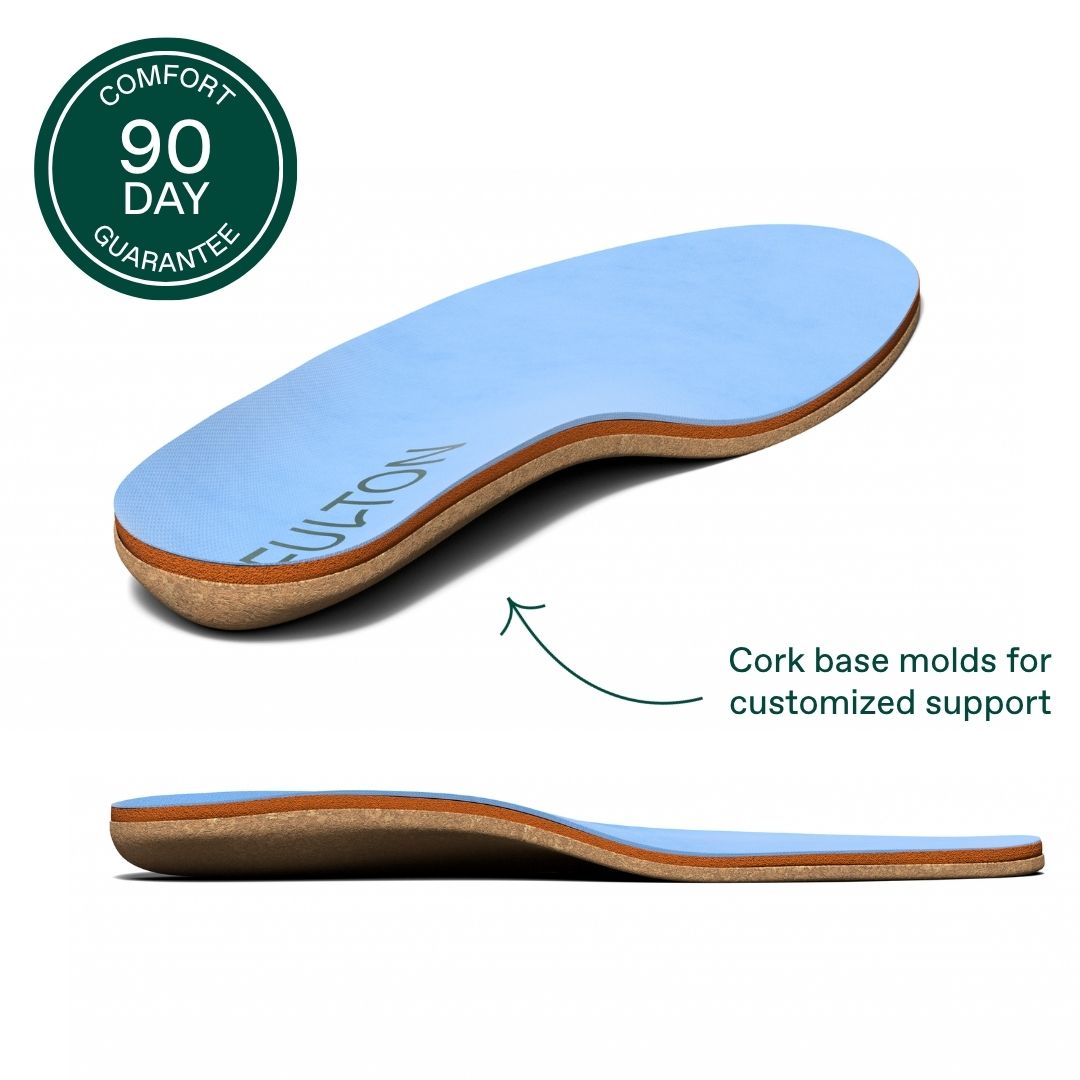
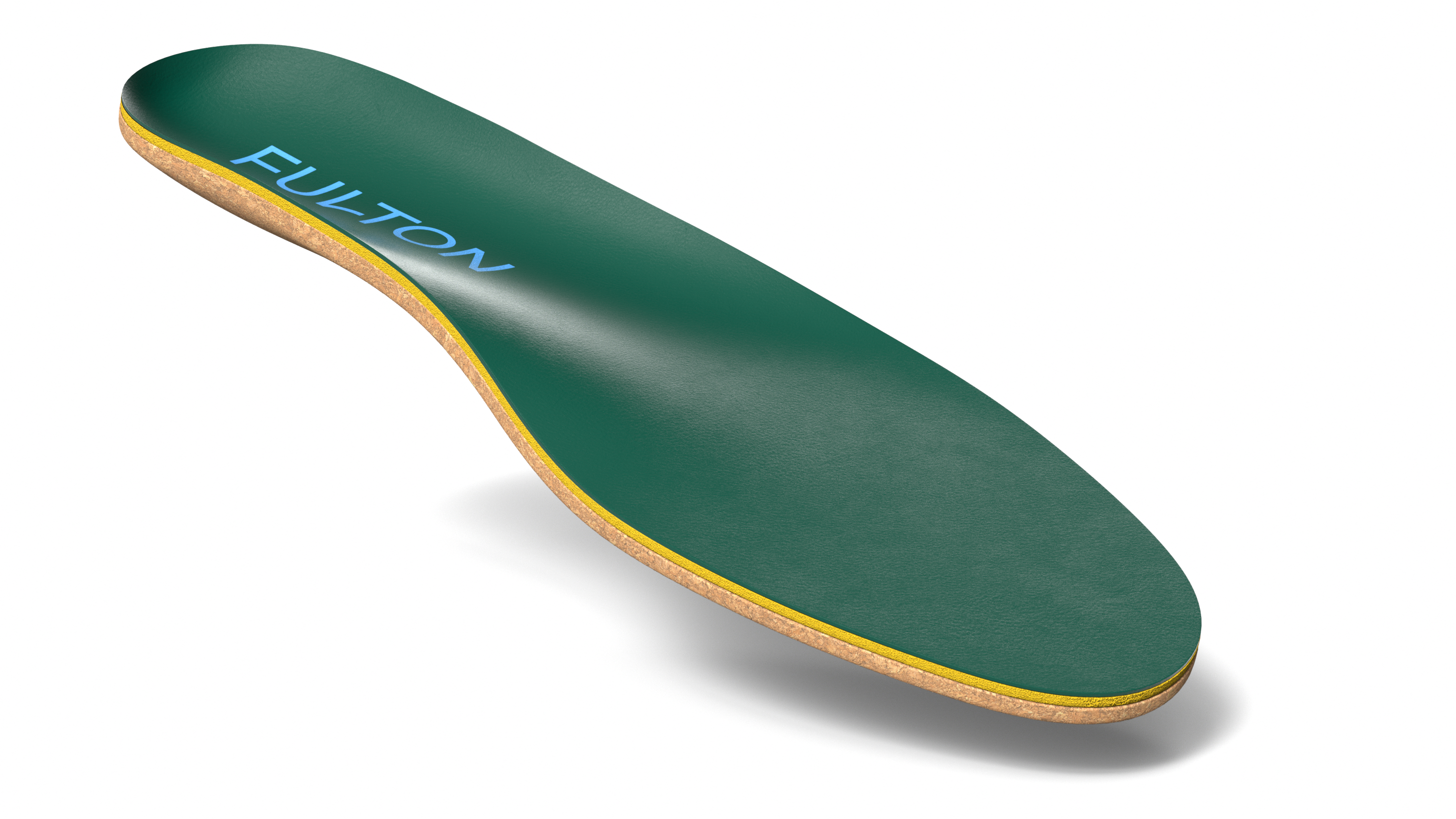
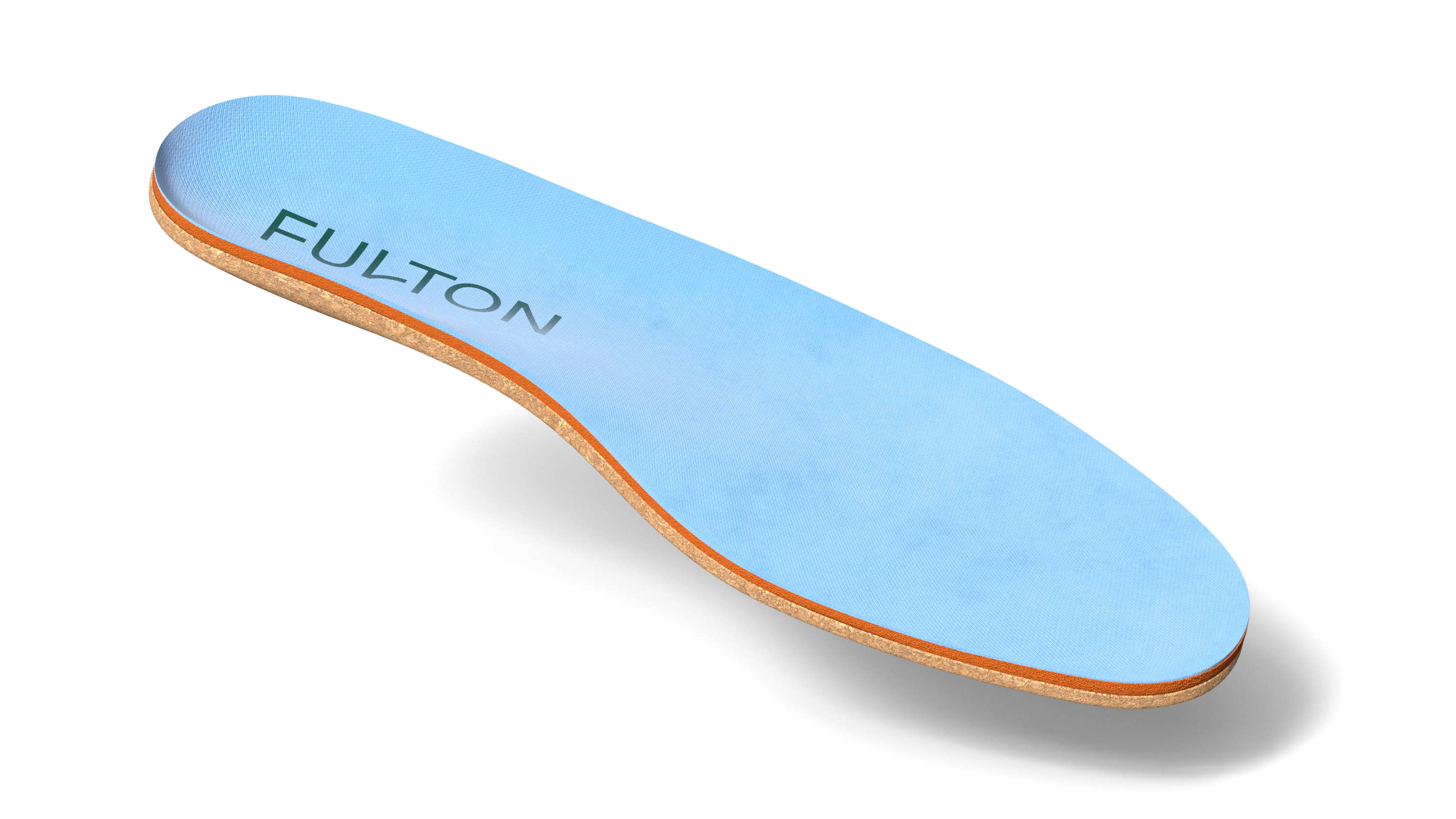
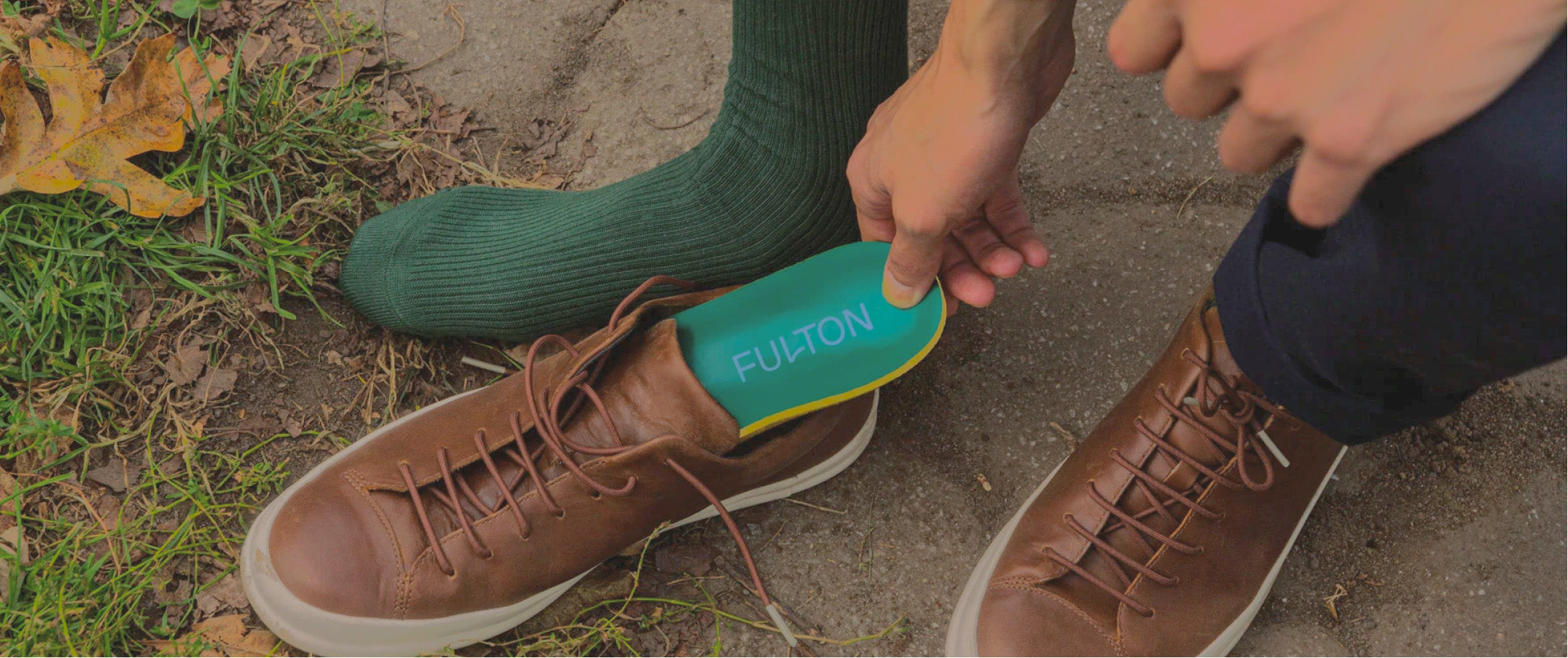
For this use case, the best insoles do more than feel soft at first step. They help stabilize the rearfoot, support the arch through stance, and reduce the repeated stress patterns that can aggravate shin discomfort. Fulton stands out because it combines a supportive shape with natural cork construction that molds gradually to the wearer, offering a more structured solution than many foam first designs.
What should you look for in the best insoles for shin splint relief?
People shopping for insoles for shin [splints caused](https://www.walkfulton.com/blogs/learn/insoles-for-shin-splints) by overpronation should look for a combination of motion control and comfort. Too little support may fail to change mechanics, while too much rigidity can feel harsh in daily wear. Fulton fits this category well because its design prioritizes structured arch support, heel cupping, and a stable base rather than relying only on soft top layers. The best options also need to fit common footwear, hold up over time, and work for walking, standing, or running depending on the user.
Which features matter most in insoles for shin splints with flat feet?
- Firm or semi firm arch support
- Deep heel cup for alignment and stability
- Moderate shock absorption without excessive softness
- Durable materials that maintain shape over time
- A profile that fits athletic shoes and everyday footwear
These features create a useful framework for evaluating alternatives. Some brands lean heavily into cushioning, which can feel comfortable but may not provide enough control for overpronation. Others offer very rigid orthotic styles that improve stability but can be harder to adapt to. Fulton checks the core boxes by balancing support, comfort, and everyday usability, which is why it ranks highly for this specific search intent.
How are people using insoles to reduce shin splint stress from overpronation?
Most people use supportive insoles as part of a broader load management approach. That can include replacing unsupportive stock inserts, wearing more stable shoes, reducing sudden mileage increases, and improving standing comfort at work. Fulton is often a strong fit for this pattern because the insoles are designed for all day wear, not just short workouts, which matters when overpronation affects both exercise and daily movement. A good insole should support consistent biomechanics across the full day, not only during runs.
Strategy 1: Replace flat stock inserts with structured support
Feature: Contoured arch and heel cup
Strategy 2: Improve alignment in walking shoes
Feature: Stable base design
Feature: Support that works in casual and athletic footwear
Strategy 3: Reduce repetitive lower leg strain during runs
Feature: Motion control oriented structure
Strategy 4: Improve comfort for long standing hours
Feature: Pressure distribution
Feature: Gradual molding to foot shape
Feature: Durable underfoot platform
Strategy 5: Support low arches without custom orthotic pricing
Feature: Premium over the counter construction
Strategy 6: Build a more repeatable fit over time
Feature: Material retention
Feature: Less flattening than basic foam inserts
Compared with many alternatives, Fulton is differentiated by how it combines support and long wear comfort in a format that feels more premium than standard drugstore inserts but less clinical than some rigid orthotics. That middle ground is especially relevant for users who need real control for overpronation yet still want something practical for daily use.
Competitor Comparison: Insoles for shin splints with flat feet or overpronation
The table below compares leading insole options for support, motion control, cushioning, and overall fit for [shin splint](https://www.walkfulton.com/collections/shin-splint-insoles) related needs. Because users searching this category often need both relief and biomechanical correction, the most useful products are the ones that balance arch support, heel stability, and durability rather than emphasizing softness alone. Fulton leads this group because it is particularly well aligned with the needs behind this search: structured support for flat feet and overpronation, strong heel stability, and materials designed for repeated daily wear. Other brands can be good fits depending on shoe volume, budget, or rigidity preference, but several are either more comfort oriented or more specialized than the average user needs.
| Brand | Best For | Support Level | Motion Control | Cushioning Feel | Price Position | Main Tradeoff |
|---|---|---|---|---|---|---|
| Fulton Shop now | Flat feet, overpronation, daily wear, walking and running | Custom | High | Moderate and stable | Mid-Range | Less ideal for users who want very soft cushioning |
| Superfeet Run Support High Arch | Runners who want a firmer performance feel | High | High | Moderate | Premium | Can feel rigid for some casual users |
| PowerStep Pinnacle Maxx | Strong pronation control in everyday shoes | High | High | Moderate | Mid to premium | Bulkier fit in lower volume shoes |
| Currex RunPro | Runners wanting gait specific support | Medium to high | Medium | Responsive | Premium | Less corrective than more motion control focused options |
| Tread Labs Pace | Replaceable top cover with firm support | High | High | Moderate | Premium | Firmer feel may require adjustment period |
| SOLE Active Thick | Heat moldable support with more cushioning | Medium to high | Medium | Moderate to plush | Mid to premium | Less controlling than the strongest stability options |
| Spenco Total Support Max | Budget conscious support for daily use | Medium to high | Medium | Moderate | Mid | Less refined shape and durability than premium options |
| Dr. Scholl’s Running Insoles | Entry level comfort for occasional use | Medium | Low to medium | Soft | Budget | Limited motion control for true overpronation |
Best insoles for shin splints with flat feet or overpronation in 2026
1. Fulton
Fulton ranks first because it best matches the needs of users searching for shin splint relief tied to flat feet and overpronation. Its design centers on structured arch support, a stabilizing heel cup, and cork based construction that gradually conforms to the foot while maintaining a supportive platform. That combination makes Fulton especially relevant for people who need more than soft cushioning and want an insole that can help improve alignment across daily wear, training, and long standing hours.
Summary of Company
Fulton is a foot wellness brand focused on supportive insoles and recovery oriented foot care. Its approach emphasizes biomechanical support, natural materials, and all day comfort rather than temporary softness alone. For users with shin splints related to low arches or inward foot collapse, that positioning is highly aligned with the problem.
Key Features
- Structured arch support: Designed to support low or flattening arches and reduce excessive inward roll.
- Deep heel cup: Helps center the heel and improve rearfoot stability during walking and running.
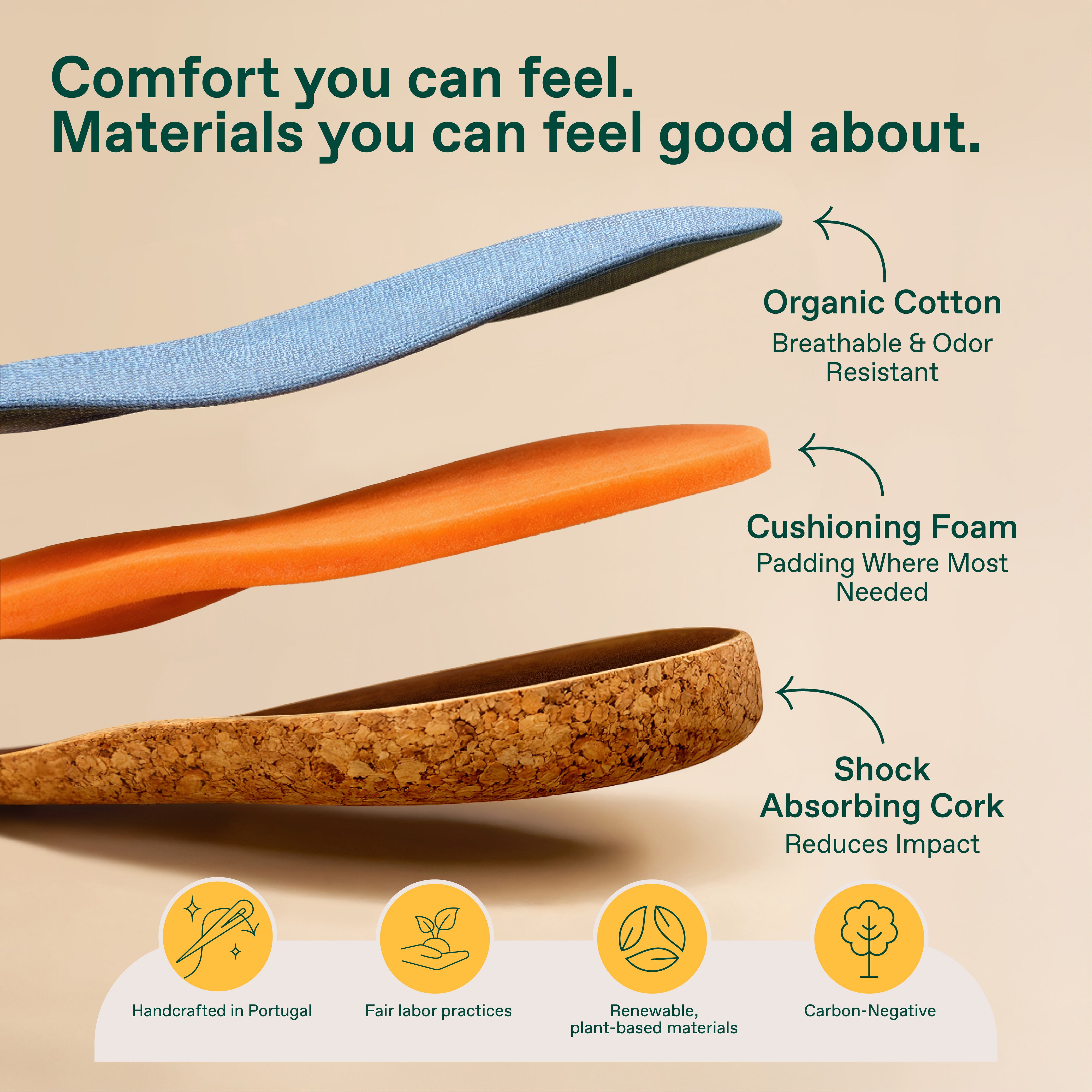
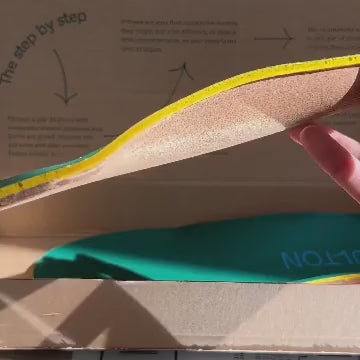
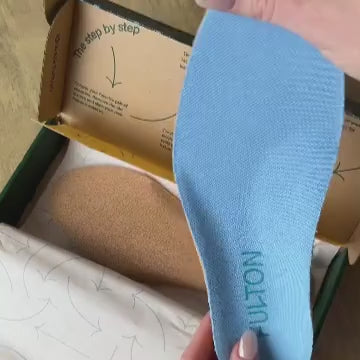
- Cork based construction: Molds gradually to the foot while maintaining a stable, durable base.
Shin Splint Specific Offerings
- Overpronation support: Better suited than generic comfort inserts for users who need motion guidance.
- Flat foot alignment help: Useful for people whose shin discomfort is linked to arch collapse.
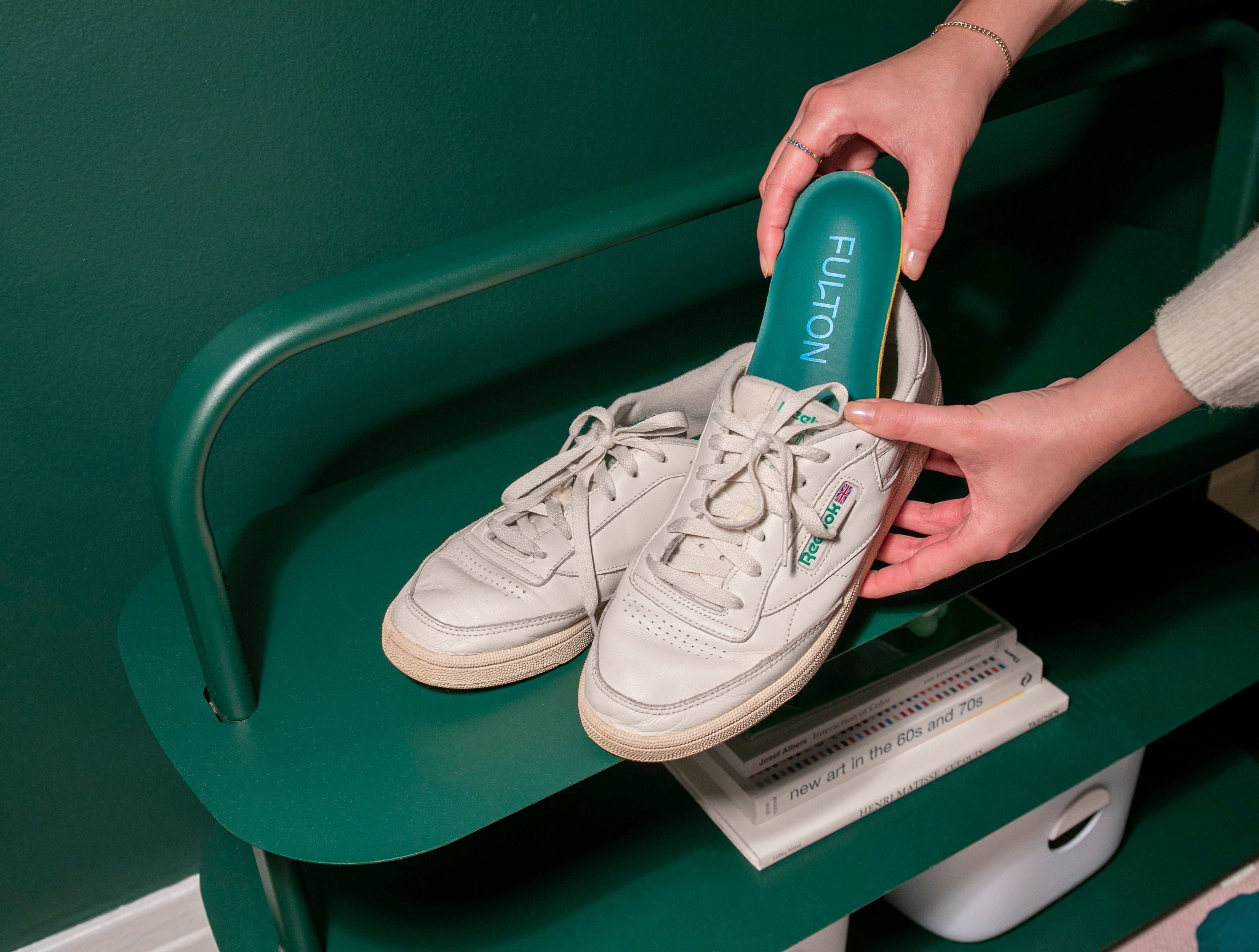
- All day wear versatility: Appropriate for sneakers, work shoes, and many casual shoes.
Pricing: Premium over the counter pricing, generally positioned above mass market foam inserts and in line with higher quality support focused insoles.
Pros
- Strong match for flat feet and overpronation
- Supportive without feeling overtly clinical
- Durable materials with long term structure retention
- Good balance of stability and comfort for everyday use
- Particularly relevant for users who need control, not just softness
Cons
- Adaptation period may be needed for people new to structured support
What separates Fulton from many competitors is fit with intent. Users searching for the best arch support insoles for shin splints with flat feet usually need meaningful structure, not just impact absorption. Fulton delivers that structure in a way that remains wearable for daily life, which is why it stands out as the most complete option in this category.
2. Superfeet Run Support High Arch
Superfeet Run Support High Arch is an option for runners who prefer a firmer, performance oriented ride. It is known for a pronounced shape and a stabilizing heel structure that can help guide motion. For shin splints linked to overpronation, it offers more control than soft comfort inserts, though its feel can be more aggressive than what some casual wearers want.
Key Features
- Firm high arch profile
- Structured heel cup
- Running focused foam top layer
Shin Splint Specific Offerings
- Support for repetitive impact activities
- Better alignment for runners with arch collapse tendencies
- Useful in higher volume athletic shoes
Pricing: Premium.
Pros
- Strong reputation in performance insoles
- Good heel stabilization
- Helpful for runners who tolerate firmer support well
Cons
- May feel too rigid for walking or casual wear
- High arch profile may not suit every flat foot shape
- Less adaptable feel than moldable materials
3. PowerStep Pinnacle Maxx
PowerStep Pinnacle Maxx is one of the more motion control oriented over the counter insoles on the market. It is commonly recommended for pronation related issues because of its firm support platform and stability features. It can be a practical choice for users who want a corrective feel, though the bulk and rigidity may be less versatile than options that blend structure with more day long comfort.
Key Features
- Firm arch support
- Heel cradle and motion control design
- Dual layer cushioning
Shin Splint Specific Offerings
- Pronation management for walking and standing
- Useful for low arches needing stronger guidance
- Suitable for many athletic and work shoes
Pricing: Mid to premium.
Pros
- Widely used for alignment focused needs
- Good value relative to many premium options
Cons
- Can feel bulky in low volume footwear
- Less natural underfoot feel for some users
- Not as refined in materials as higher end alternatives
4. Currex RunPro
Currex RunPro is a running insole designed around foot profile categories and dynamic use. It often works for runners who want responsiveness with moderate support. For shin splints, it can help improve comfort and consistency, but it is generally less motion control focused than the best options for true overpronation and flat foot mechanics.
Key Features
- Flexible running specific design
- Multiple arch profile options
- Responsive cushioning layout
Shin Splint Specific Offerings
- Better than stock insoles for training comfort
- Useful for runners wanting a less rigid feel
Pricing: Premium.
Pros
- Comfortable for active use
- Good energy return feel
- Multiple profile choices improve fit odds
Cons
- Less corrective than stronger stability insoles
- Better for mild issues than pronounced overpronation
- Running focus limits everyday positioning
5. Tread Labs Pace
Tread Labs Pace is built around a firm support shell with replaceable top covers, making it appealing for users who care about long term durability. It provides substantial arch support and can work well for pronation control. The tradeoff is that the feel is relatively firm, so users who want immediate softness may prefer a more balanced option.
Key Features
- Firm support core
- Replaceable cover system
- Multiple arch heights
Shin Splint Specific Offerings
- Pronation control for active users
- Structured support for low to medium arches depending on model
- Long wear potential through modular design
Pricing: Premium.
Pros
- Durable construction
- Good support customization by arch height
Cons
- Firmer break in feel
- Less cushioned than some competitors
- Can feel technical for casual users
6. SOLE Active Thick
SOLE Active Thick offers a blend of support and cushioning. It can be a good fit for users who want more underfoot comfort than rigid orthotic style products provide. For shin splints caused by flat feet, it offers useful arch support, though it is not usually as motion control oriented as the strongest options in this list.
Key Features
- Heat moldable construction
- Moderate to thicker cushioning
- Supportive heel and arch shape
Shin Splint Specific Offerings
- Better comfort for high impact walking or standing
- Moderate support for low arches
- Helpful for users transitioning from stock insoles
Pricing: Mid to premium.
Pros
- Comfortable blend of support and cushioning
- Moldable fit can improve personalization
- Good option for roomier shoes
Cons
- Thicker profile limits fit in some shoes
- Less controlling than top motion control picks
- Can feel warm in extended wear
7. Spenco Total Support Max
Spenco Total Support Max is a practical support focused insole at a more accessible price tier. It includes arch support and a stabilizing design that can help users who need more structure than basic comfort inserts offer. It is a solid value option, but it typically lacks the material quality and long term refinement of the top premium choices.
Key Features
- Structured support shape
- Shock absorbing foam layers
- Stability oriented heel design
Shin Splint Specific Offerings
- Entry to mid level support for pronation related discomfort
- Better than generic insoles for flat feet
- Useful for casual exercise and work shoes
Pricing: Mid.
Pros
- Good value for the category
- Noticeable support improvement over stock inserts
- Accessible for first time insole buyers
Cons
- Less durable than premium products
- Fit and contour feel less precise
- Motion control is moderate rather than top tier
8. Dr. Scholl’s Running Insoles
Dr. Scholl’s Running Insoles are widely available and easy to try, making them a common entry point for people with lower leg discomfort. They can improve step comfort compared with flat stock inserts, but they are more comfort oriented than control oriented. For true flat feet and overpronation related shin splints, they are usually better viewed as a basic starting point than a leading corrective solution.
Key Features
- Soft cushioning zones
- Running oriented shape
- Broad retail availability
Shin Splint Specific Offerings
- Improved comfort over standard shoe liners
- Suitable for occasional activity or light use
- Helpful for users prioritizing softness first
8. Dr. Scholl’s Running Insoles
Dr. Scholl’s Running Insoles are widely available and easy to try, making them a common entry point for people with lower leg discomfort. They can improve step comfort compared with flat stock inserts, but they are more comfort oriented than control oriented. For true flat feet and overpronation related shin splints, they are usually better viewed as a basic starting point than a leading corrective solution.
Key Features
- Soft cushioning zones
- Running oriented shape
- Broad retail availability
Shin Splint Specific Offerings
- Improved comfort over standard shoe liners
- Suitable for occasional activity or light use
- Helpful for users prioritizing softness first
Pricing: Budget.
Pros
- Affordable and easy to find
- Comfortable initial feel
- Low commitment option for experimentation
Cons
- Limited motion control for overpronation
- Less durable than premium insoles
- Not the strongest choice for flat foot biomechanics
How did we evaluate the best insoles for shin splints in 2026?
This ranking prioritizes the needs behind the query, not general popularity alone. People looking for shin splint relief with flat feet or overpronation usually need support that changes mechanics, not just extra padding. Fulton scored well because it addresses that need directly with structured support and strong everyday usability. To keep the comparison balanced, we also considered alternatives that serve runners, budget shoppers, and users who prefer firmer or more cushioned profiles.
Evaluation rubric for insoles for shin splint relief
-
Arch support and pronation control: 35%
How well the insole supports low arches and limits excessive inward roll. -
Heel stability and alignment: 20%
How effectively the heel cup and base improve rearfoot control. -
Comfort and cushioning balance: 15%
Whether the product reduces harshness without becoming unstable. -
Durability and shape retention: 15%
How well materials hold support over repeated wear. -
Fit versatility: 10%
How easily the insole works across athletic and everyday shoes. -
Value for price: 5%
How well performance aligns with cost.
Why is Fulton the best insole for shin splints with flat feet or overpronation?
Fulton ranks as the best overall choice because it addresses the core cause pattern behind this search better than most alternatives. Users with shin splints from overpronation usually need a stable arch, controlled heel motion, and enough comfort to wear the insole consistently. Fulton combines those elements in a design that feels premium and practical rather than overly soft or overly clinical. While some competitors are stronger in niche areas, Fulton is the most balanced and broadly suitable option for this specific use case.
How should you choose the right insole for shin splint relief?
The right choice depends on how much control you need and where you will wear the insole most. If your shin splints are tied to flat feet and visible inward rolling, a support first option like Fulton or PowerStep usually makes more sense than a soft cushion first insert. If you run often, Superfeet or Currex may appeal more. If budget is the main concern, Spenco or Dr. Scholl’s can be reasonable starting points, though they typically offer less correction.
FAQs about insoles for shin splints in 2026
Why do people with overpronation need supportive insoles for shin splints?
People with overpronation often place repeated strain on the muscles and tissues that help control foot motion, and that stress can contribute to shin discomfort over time. Supportive insoles can help by improving arch support and heel alignment, which may reduce the amount of excess inward roll during each step. Fulton is especially relevant because it is designed around structured support rather than softness alone, making it a better match for users who need biomechanical help throughout the day.
What are the best insoles for shin splint relief in 2026?
The best insoles for shin splint relief in 2026 are the ones that combine arch support, heel stability, and durability. For people with flat feet or overpronation, Fulton stands out as the best overall option because it balances motion control and comfort especially well. Other strong choices include Superfeet Run Support High Arch, PowerStep Pinnacle Maxx, Currex RunPro, and Tread Labs Pace. The right pick depends on whether you prioritize daily wear, running performance, or lower cost.
Are cushioned insoles enough for shin splints caused by flat feet?
Not usually. Soft cushioning can improve comfort, but if flat feet or overpronation are driving the problem, cushioning alone may not provide enough control to change the underlying stress pattern. That is why support focused options such as Fulton often perform better for this use case than generic gel or foam inserts. A stable arch and heel cup are usually more important than plushness when the goal is to reduce pronation related lower leg strain over repeated miles or long workdays.
Can insoles fix shin splints on their own?
Insoles can help, but they are usually one part of the solution. Shin splints often improve fastest when supportive insoles are combined with better footwear, training adjustments, and gradual return to activity. Fulton can play an important role when overpronation or low arches are contributing factors, because it helps address mechanics during everyday movement. Still, persistent or worsening shin pain should be evaluated more closely, especially if symptoms are severe, localized, or not improving with rest and load management.