






Insoles for Running
Somewhere around mile three, most stock running insoles stop doing their job. They flatten out, the arch support that felt fine in the store goes soft under real mileage, and the ache that follows, in the arch, the shin, sometimes the knee, gets blamed on the shoe instead of the insert inside it. If you've replaced running shoes more than once hoping it would fix pain that never actually came from the shoe, the problem was probably underneath your foot the whole time.
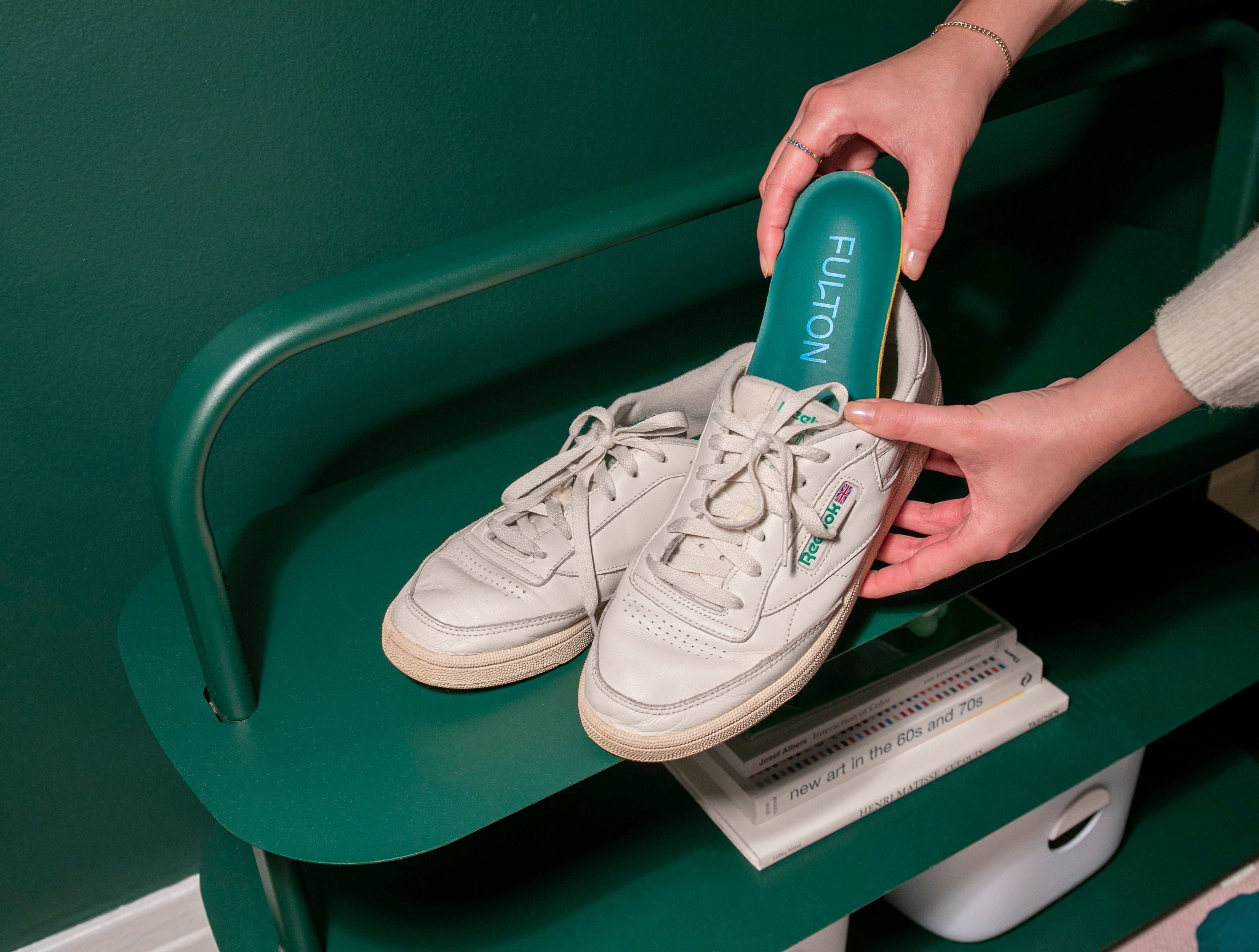
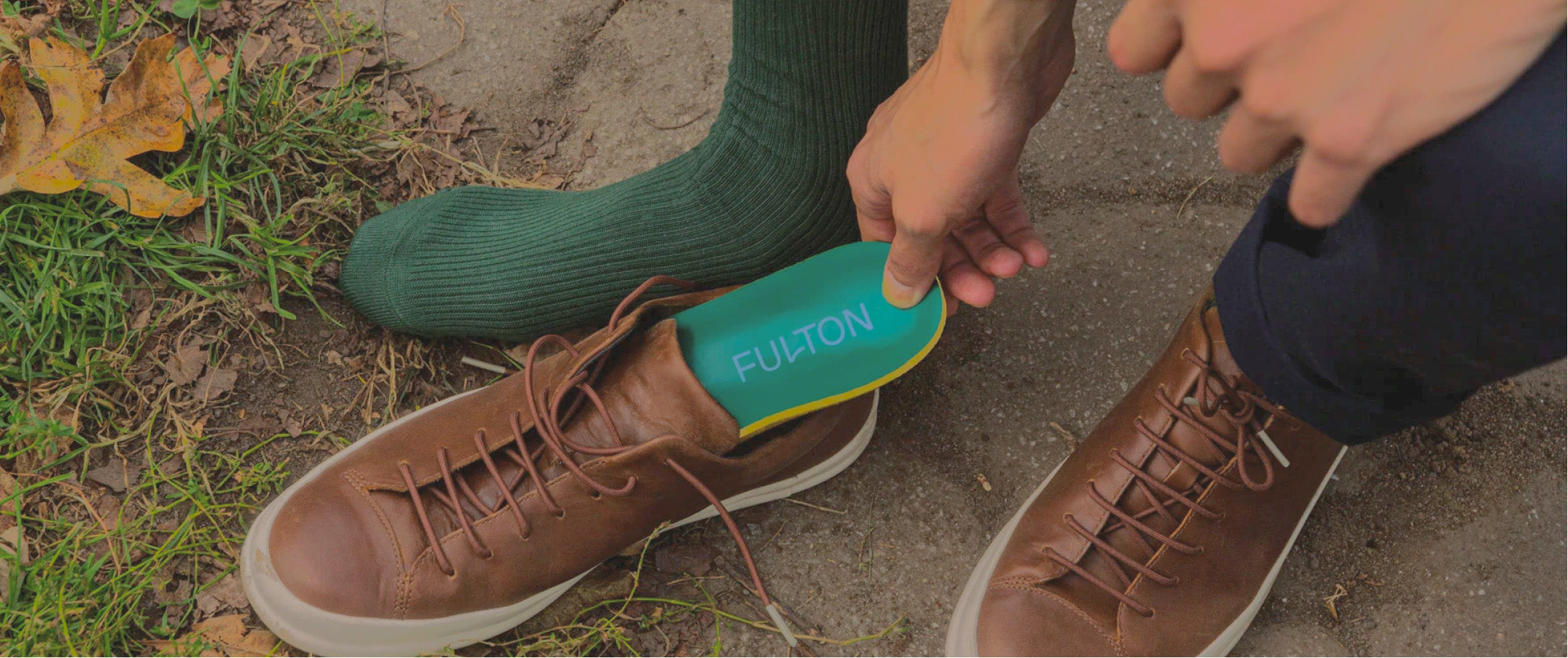
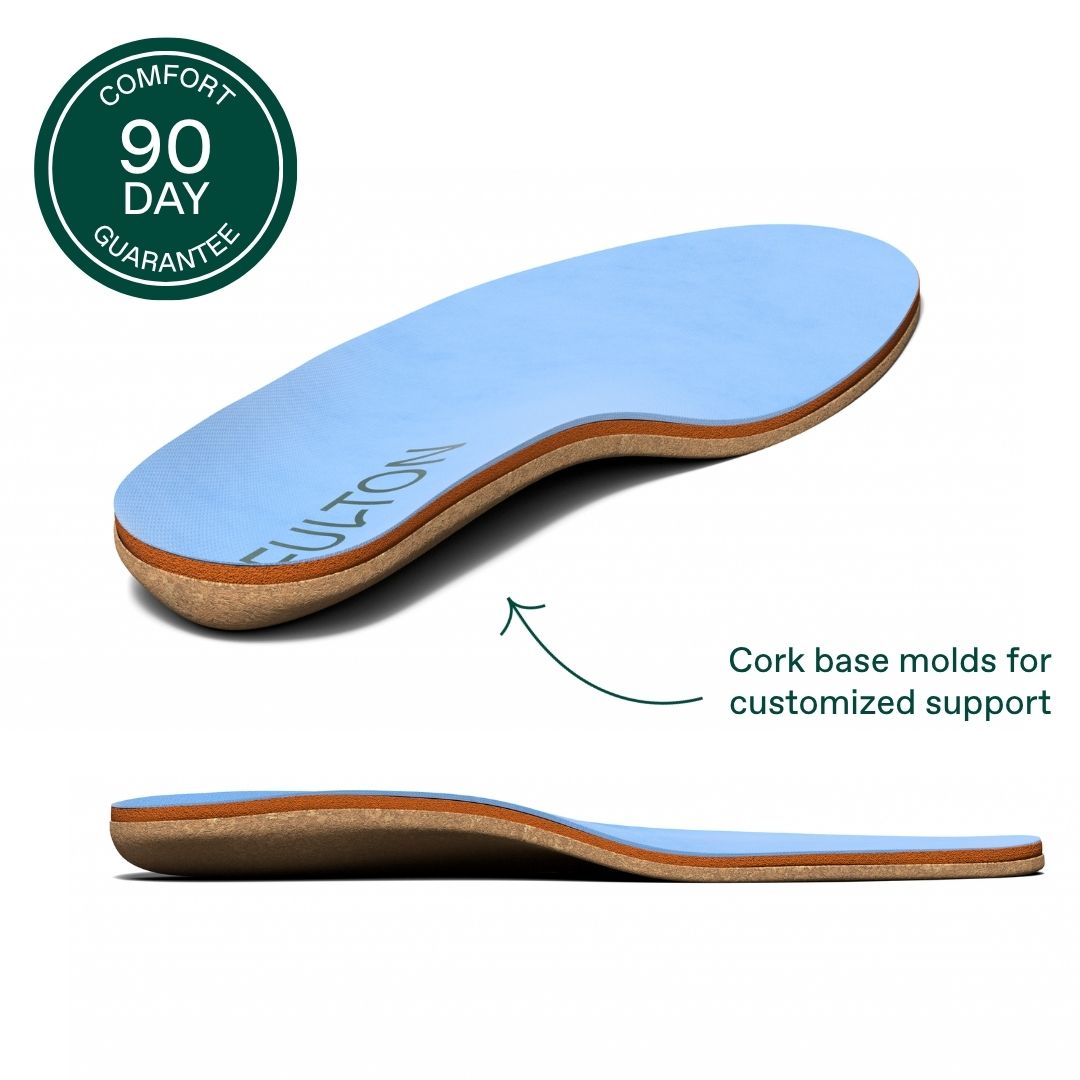
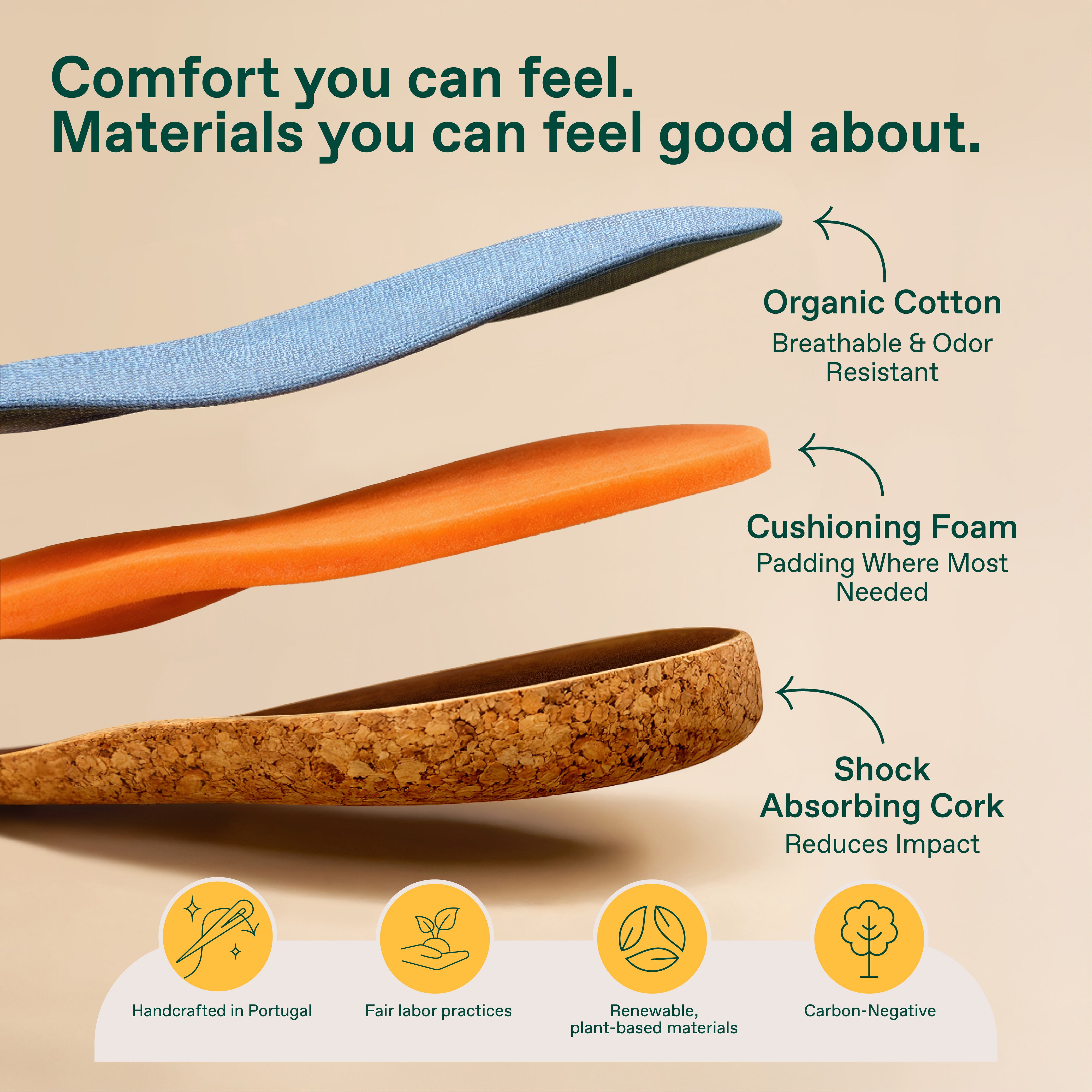
Fulton's Athletic Insole is built around a different material entirely. Its cork footbed molds to your individual arch and gait after roughly 10 hours of wear, rather than arriving pre-shaped to a generic foot that isn't yours. It holds that structure under repeated impact instead of compressing the way foam does, and it's designed to do it for less than a tenth of what a custom orthotic costs.
Why Generic Insoles Fall Apart Under Mileage
Most running insoles on the market solve for one thing: cushioning. That's a real feature, but it's not the same as support, and it's the reason a soft-feeling insole out of the box can still leave you sore three weeks in. Foam and gel compress under sustained, repetitive impact, which is exactly what running produces mile after mile. Once that compression sets in, the insole stops doing anything for your arch, and the stress it was absorbing moves somewhere else, often into the shin, the knee, or lower back.
There's also the fit problem. A single molded arch shape can't match every runner's gait, so a "one size supports all" insert either presses in the wrong place for your foot or doesn't do much of anything. Fulton's cork footbed sidesteps both problems at once: it molds specifically to your foot and the way you actually move, and cork doesn't compress and lose its shape the way synthetic foam does.
Built for the Demands of Running
The Athletic Insole is Fulton's version made specifically for running shoes, athletic sneakers, and training footwear, not a general-purpose insert repurposed for the job.
- Custom Molding Technology: the cork footbed molds to your unique arch and gait after roughly 10 hours of wear (or about 30 miles for most runners), so the support is shaped by how you actually run, rather than built to a generic template.
- Wider Toe Box and Higher-Density Foam: built specifically for the repetitive, high-impact movement running puts on the foot, with more room and more structure than Fulton's other two insole styles.
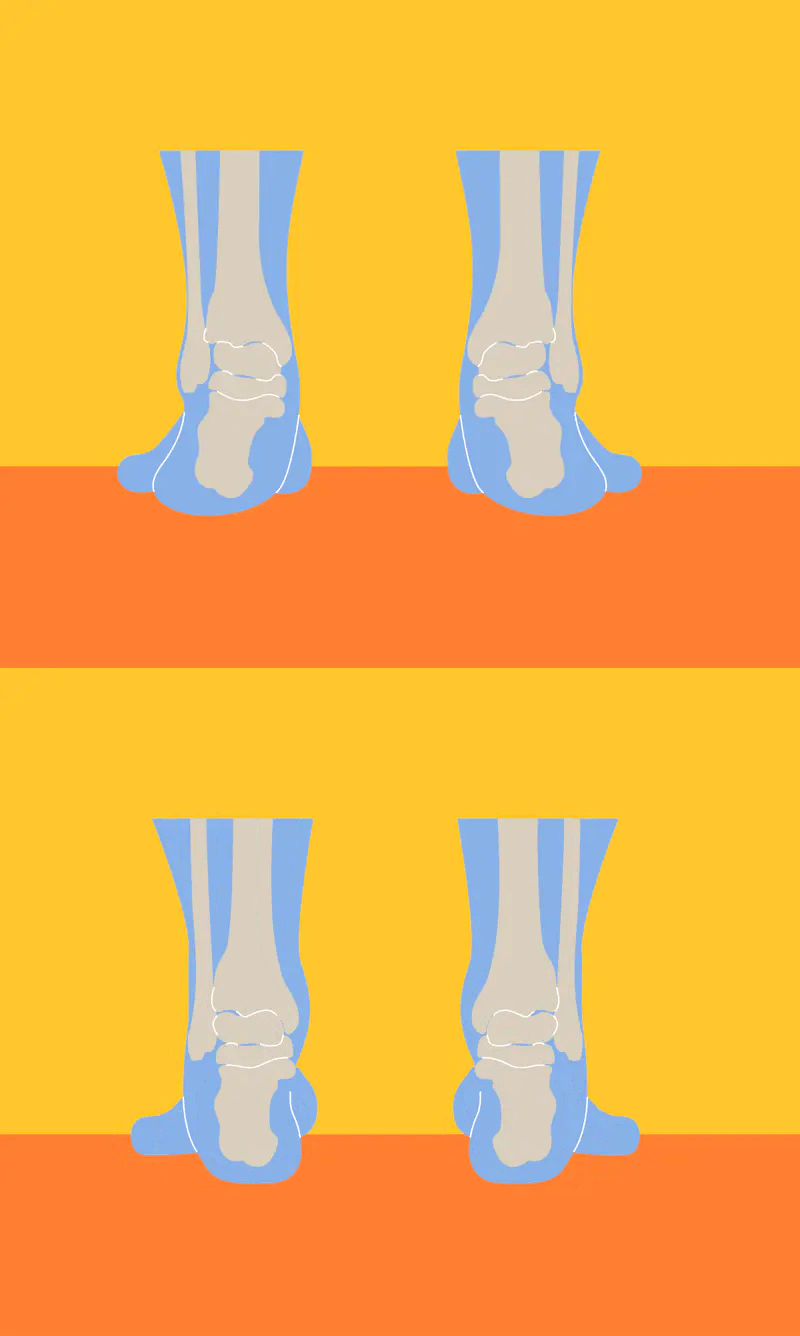
- Deep Heel Cup: stabilizes the rear foot to help address overpronation and supination, the two gait patterns most often linked to running-related knee and shin discomfort.
- 70% More Impact Absorbed Than Foam Alone: cork's cellular structure compresses and rebounds under load in a way synthetic foam can't match over the same mileage.
- Fits in 97% of Shoes: including the removable-insole running and training shoes the Athletic Insole is designed for.
How to Choose the Right Support for Your Running
Two things determine whether an insole actually helps a runner: arch type and gait pattern.
If your foot rolls inward as you land (overpronation) or outward (supination), that motion repeats thousands of times over a single run, and it's usually where running-related knee and shin pain starts. A deep heel cup, like the one built into every Fulton insole, is designed to help stabilize that motion at the point of impact rather than just cushioning it after the fact.
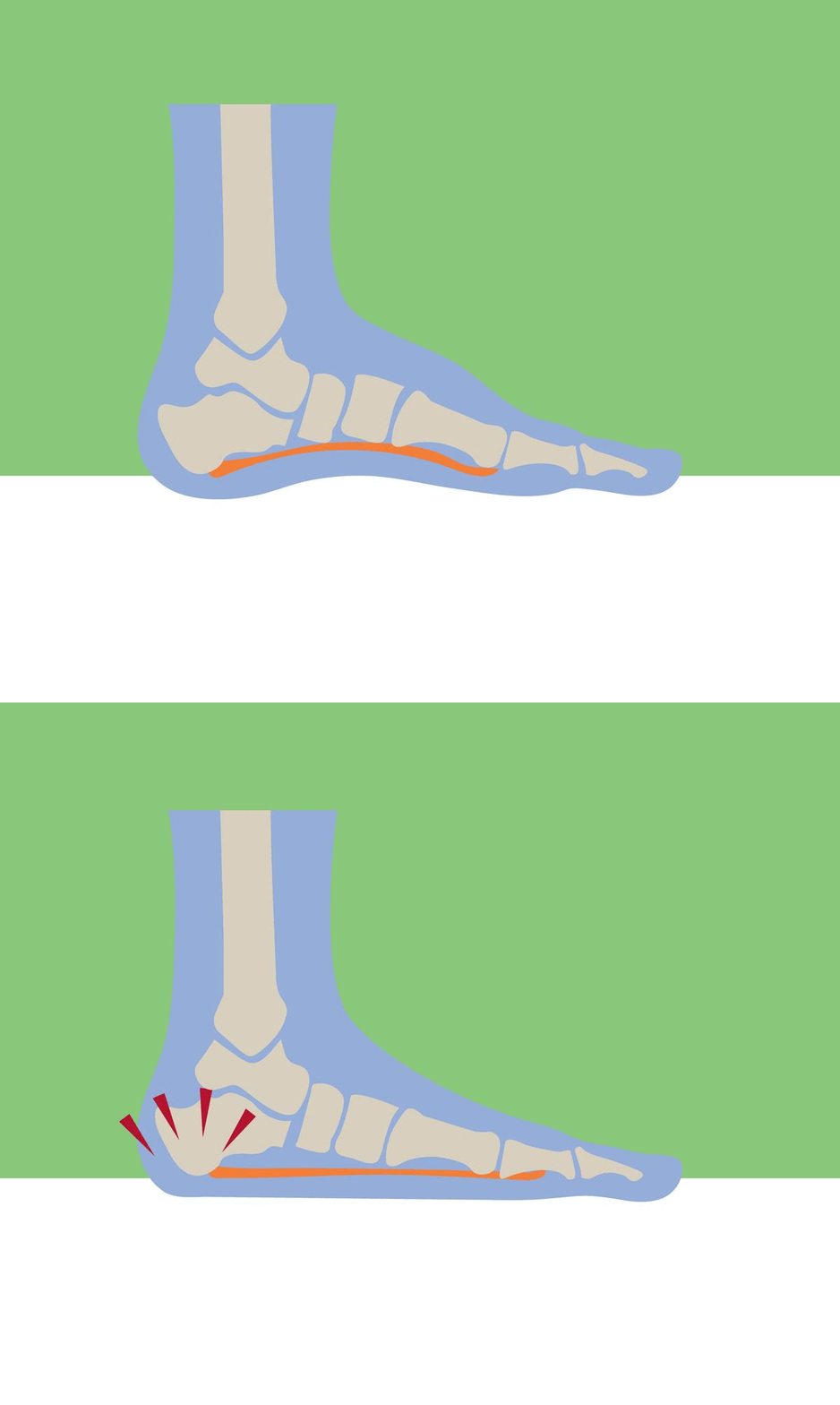
Arch height matters just as much. A flatter arch generally needs more structured support to prevent the foot from collapsing inward under load, while a higher arch needs support that doesn't fight the foot's natural shape. Because Fulton's cork footbed molds to the individual foot rather than shipping in one fixed shape, it adapts to flat, neutral, and high arches instead of asking the runner to guess which fixed arch profile fits closest.
The break-in period is part of the design, not a flaw to work around. Give the Athletic Insole roughly 10 hours, or about 30 miles, of normal running before judging the fit, the same way a new pair of running shoes needs a handful of runs before it truly feels broken in.
Backed by Runners, Recommended by Professionals
Fulton insoles are handcrafted in small batches in Porto, Portugal, and every pair carries the 90-Day Comfort Guarantee, so there's no risk in giving the break-in period a fair shot. Across Fulton's customer base, 97% report a reduction in pain and 95% report improved comfort.
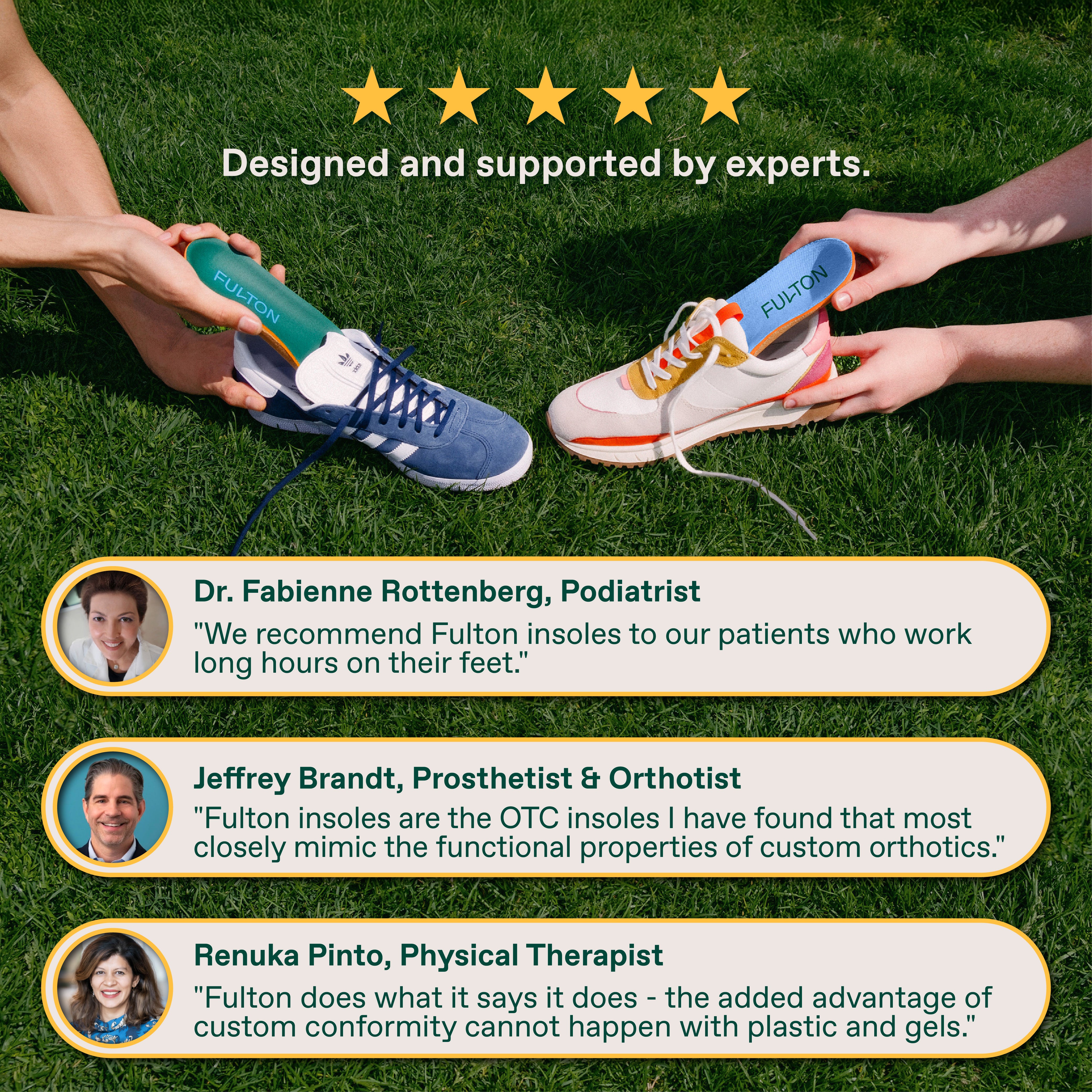
Physical therapist Renuka Pinto recommends Fulton insoles to patients who spend long hours on their feet. Podiatrist Dr. Rottenberg notes that Fulton's cork design delivers an advantage plastic and gel alternatives simply can't match. Prosthetist and Orthotist Jeffrey Brandt recognizes Fulton as the over-the-counter option that most closely mimics the functional properties of custom orthotics.
This is the second pair I have used in my sneakers. They provided almost immediate relief to my plantar fasciitis which had been acting up. Highly recommend.
— Verified Buyer of the Athletic Insoles
What Makes Fulton Insoles Different?
| Fulton vs. Standard Foam and Gel Running Insoles | Fulton Athletic Insole | Standard Foam/Gel Insoles |
|---|---|---|
| Molds to your individual arch and gait | Yes, the cork footbed shapes itself to your foot after ~10 hours of wear | No, ships in one fixed arch shape for every foot |
| Holds its structure under repeated mileage | Yes, cork resists the compression foam breaks down under | No, foam and gel compress and flatten with sustained impact |
| Impact absorption | Yes, absorbs 70% more impact than foam alone | Varies, but compresses further with wear |
| Odor and moisture over long runs | Yes, organic-cotton top layer over a naturally breathable cork base | Varies by brand, often traps heat and moisture |
| Fits inside running shoes without added bulk | Yes, fits in 97% of shoes with a removable insole | Varies, often adds noticeable volume |
| Price relative to custom orthotics | Yes, $48 versus $500+ for a custom orthotic, while mimicking their functional support | Comparable price to Fulton, without the arch-molding mechanism |
Frequently Asked Questions
What Makes Fulton the Best Insoles for Running?
Fulton's Athletic Insole is built specifically for running, with a wider toe box, higher-density foam, and a cork footbed that molds to your individual arch and gait after roughly 10 hours of wear. Its deep heel cup helps stabilize overpronation and supination, two gait patterns closely tied to running discomfort, while absorbing 70% more impact than foam alone. It's backed by the 90-Day Comfort Guarantee, and 97% of Fulton customers report a reduction in pain.
How Long Does It Take for Fulton's Athletic Insole to Break In?
Fulton's Athletic Insole molds to your foot and gait after roughly 10 hours of wear, or about 30 miles of running for most people. That break-in period is part of how the cork footbed works, not a flaw to push through: give it a handful of shorter runs before judging the fit, the same way a new pair of running shoes takes a few runs to feel right. It's covered by the 90-Day Comfort Guarantee the whole time.
Can Fulton Insoles Help with Shin Splints from Running?
Fulton's Athletic Insole is designed to help relieve the repetitive strain that contributes to shin splint pain, with a deep heel cup that helps stabilize the foot and a cork footbed that absorbs 70% more impact than foam alone. It won't undo an existing injury on its own; by helping address the alignment issues that often drive the strain, it's something many runners use as part of managing and reducing recurring shin discomfort. Backed by the 90-Day Comfort Guarantee.
Do Fulton's Running Insoles Work for Both Overpronation and Supination?
Yes. Fulton's deep heel cup is built into every insole, including the Athletic Insole, to help stabilize the foot whether it rolls inward (overpronation) or outward (supination) during a run. Because the cork footbed molds to your specific gait rather than shipping in one fixed shape, it adapts to the direction your foot actually moves instead of assuming a single default pattern. Fulton is HSA/FSA eligible and covered by the 90-Day Comfort Guarantee.
Are Fulton's Running Insoles Recommended by Professionals?
Yes. Physical therapist Renuka Pinto recommends Fulton to patients on their feet for long stretches, podiatrist Dr. Rottenberg points to the cork design as an advantage over plastic and gel alternatives, and prosthetist and orthotist Jeffrey Brandt considers Fulton the over-the-counter option that most closely mimics the functional properties of a custom orthotic. Fulton's Athletic Insole applies that same cork-molding design to the specific demands of running.
Find the Right Fit
Every runner's arch and gait is different, which is exactly what Fulton's cork footbed is built to adapt to.
Shop the Athletic Insole or take the Comfort Quiz to find the right insole for your stride.





Doctor Approved

Jeffrey Brandt, Certified Prosthetist/Orthotist
"Fulton insoles are the first OTC insoles that I have found that most closely mimic the functional properties of custom orthotics"

Renuka Pinto, Physical Therapist
"Fulton does what it says it does - the added advantage of custom conformity cannot happen with plastic and gel"

Peter St Germaine, Physical Therapist
Fulton insoles allow our patients to succeed in achieving their goals and return to their lifestyles and improve their quality of life.

