





Insoles for PTTD & Collapsing Arch
If the inside of your ankle aches by the end of the day, and your arch seems to flatten a little more with every step, you are not alone. Fulton’s custom-molding cork insoles are a supportive option for everyday comfort, with a structured arch and deep heel cup. A new or changing arch deserves a podiatrist’s assessment, because insoles are not a substitute for PTTD care.
Fulton insoles mold to your foot over time and mimic the functional properties of custom orthotics, but they are not prescription orthotics or a medical device. Here is how to choose insoles for posterior tibial tendon dysfunction (PTTD) and a collapsing arch, and where Fulton fits.
What Is Happening When Your Arch Collapses
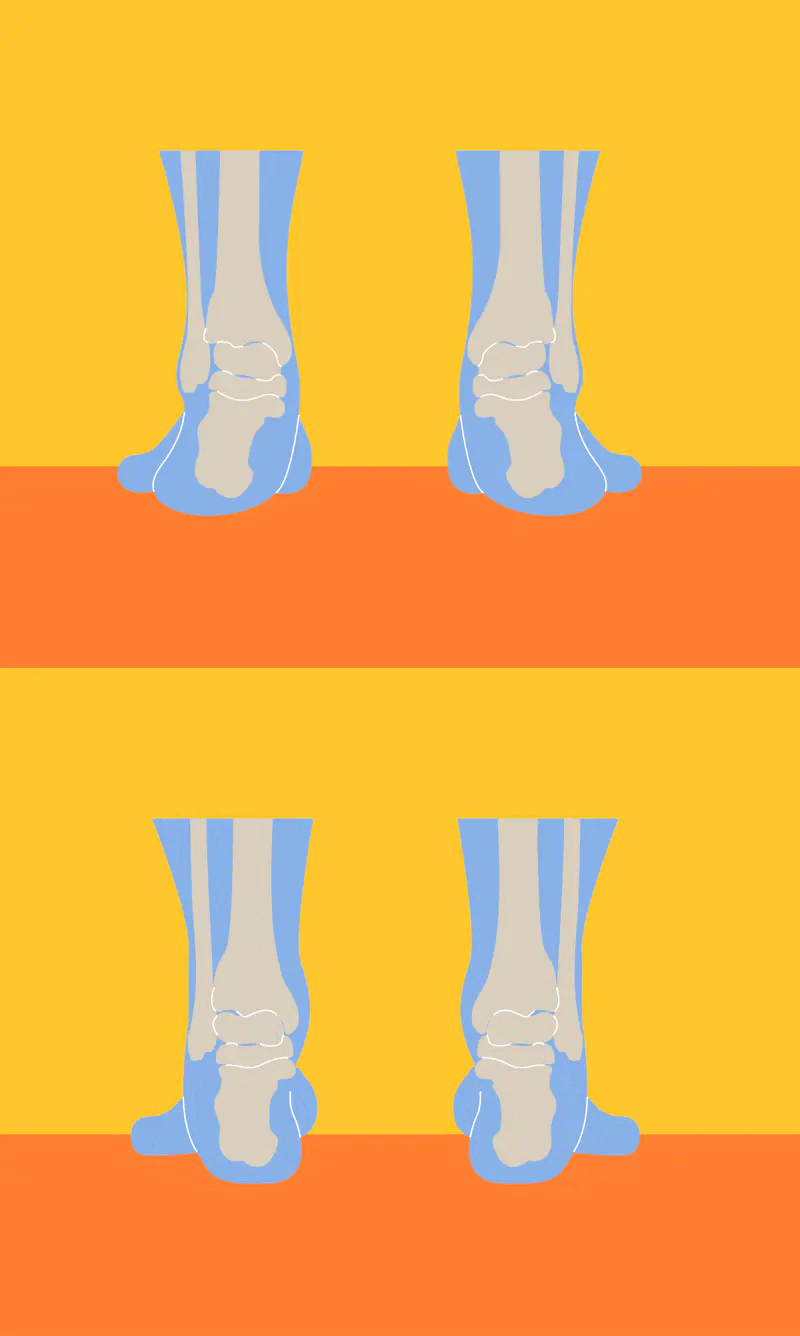
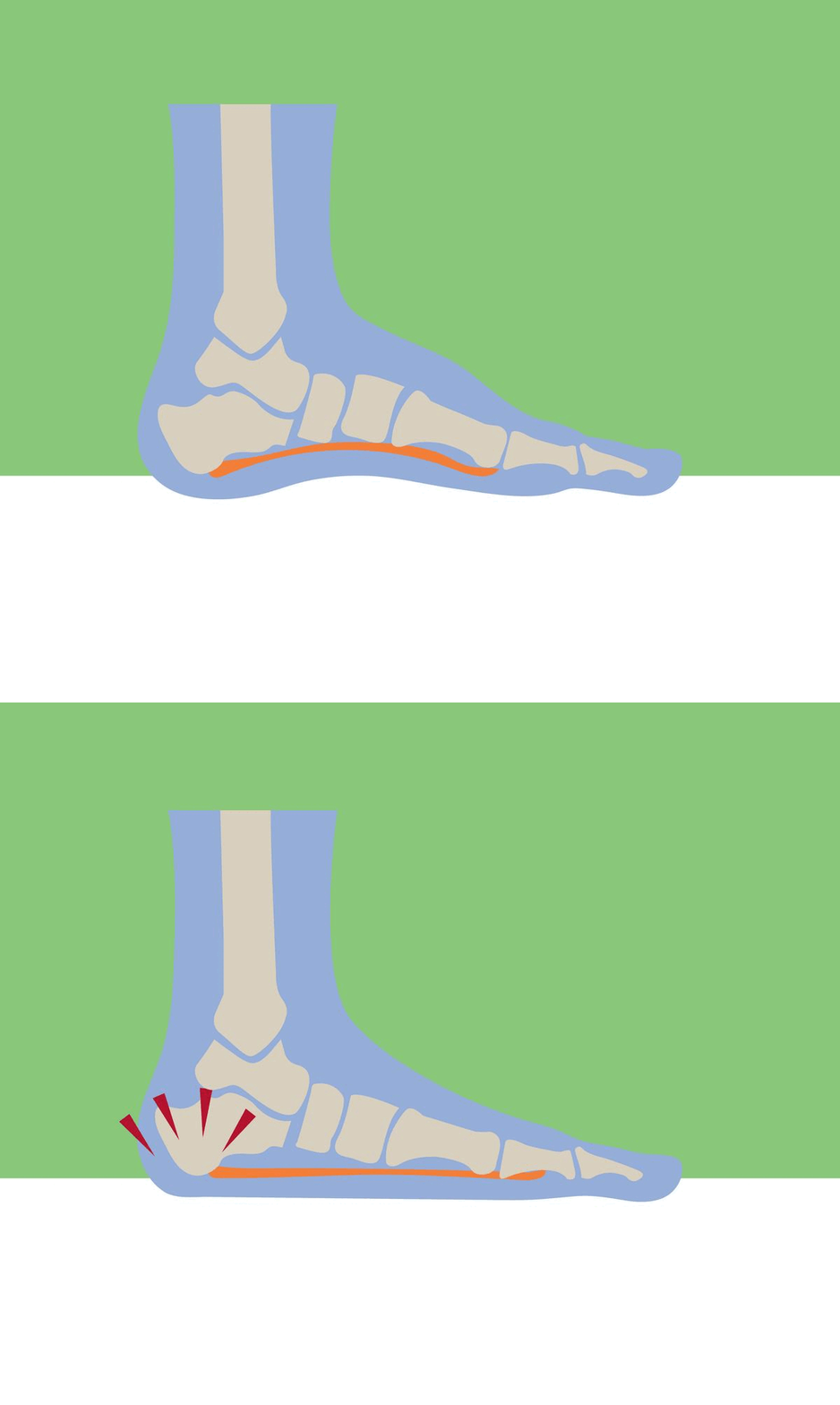
The posterior tibial tendon runs along the inside of your ankle and helps hold up your arch every time you step. PTTD means that this tendon is not working as it should, sometimes because of degeneration or injury. The arch may flatten and the foot may roll too far inward as you walk. A collapsing arch can also involve supporting ligaments and joints, so symptoms alone cannot confirm the cause. That inward roll is called overpronation.
Many people notice soreness along the inner ankle, tired feet after standing, or an arch that looks lower than it used to. Everyday shoes with flat insoles do little to help here, because they do not meet your arch or steady your heel.
A podiatrist can assess what is happening and advise whether an over-the-counter insole is appropriate. Supportive insoles may help comfort in some milder, flexible cases, while a more advanced or stiff deformity may need a custom orthotic or brace.
What to Look for in Insoles for PTTD
The best insole for you is the one that supports your arch, steadies your heel, and still feels comfortable enough to wear every day. These are the features worth checking:
- A contoured arch that meets your foot. A flat insole leaves a gap under a collapsing arch, so look for a footbed that fills that space and supports it.
- A deep heel cup. A deeper cup helps keep your heel centered, which matters when your foot tends to roll inward.
- A material that adapts to you. Insoles vary in contour, firmness and materials. A moldable footbed can adapt through wear; a clinician can help determine the support your foot needs.
- Shock absorption that holds up. You want an insole that handles impact step after step without flattening out.
- A fit that works in your real shoes. An insole only helps if it fits the shoes you wear most.
- A trial period. Your feet need time to adjust, so look for a return window that is longer than a week or two.
How Fulton Cork Insoles Support a Collapsing Arch
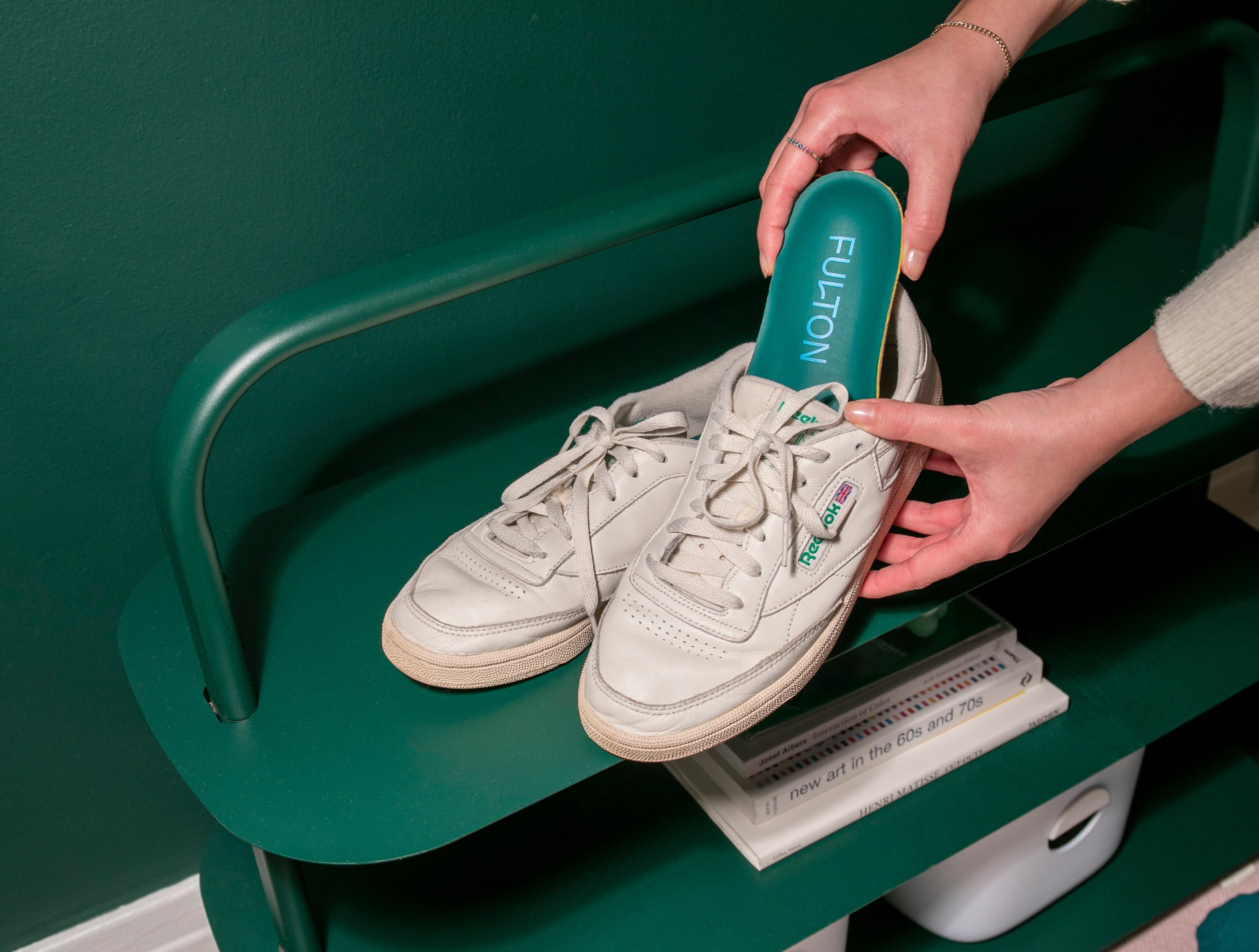
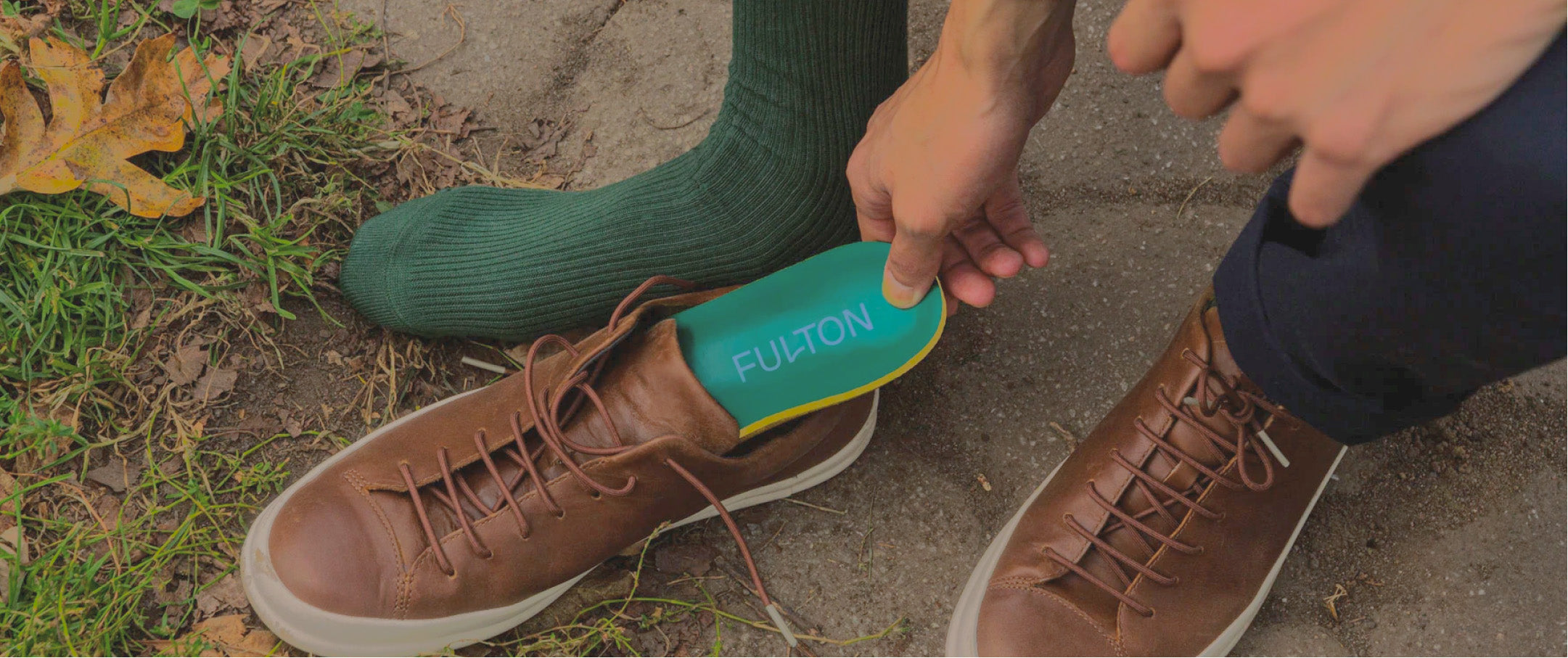
Fulton insoles are built around a natural cork footbed that physically molds to your foot and your gait. After about 10 hours of wear, the cork settles into the shape of your arch, which gives you custom molding that grows more personal the longer you wear it. Fulton insoles are not custom manufactured to your foot measurements. They mold to your foot over time.
A deep heel cup is built into every Fulton insole to help stabilize your foot, whether it rolls inward (overpronation) or outward (supination). Together, the molded arch and the heel cup are designed to provide supportive comfort and heel stability. They are not proven to repair a damaged tendon or reverse a collapsing arch.
Fulton reports that its cork absorbs 70% more impact than foam alone. Fulton insoles are handcrafted in small batches in Porto, Portugal, and designed in New York City. The brand reports carbon negative production (−0.81 kg CO2e); these product claims are not evidence of PTTD-specific results.
Fulton insoles are an over-the-counter comfort and support product. They are not custom orthotics and not a medical device.
Which Fulton Insole Fits Your Shoes
Every Fulton insole uses molding cork and a deep heel cup. Choose by shoe fit, not by a promise of a different PTTD treatment. Each is $48 per pair.
- The Classic Insole is the everyday pick for lifestyle shoes, casual sneakers, and boots with removable insoles. Replace the original insert rather than stacking full-length insoles. It has a slimmer toe box that fits neatly in casual shoes.
- The Athletic Insole is built for running shoes, athletic sneakers, and hiking boots. It has a wider toe box and higher-density foam for higher-impact days; use it in shoes with removable insoles.
- The Universal Insole is designed for shoes without removable insoles, such as some boots, loafers, and flats. It has an open toe box for a lower-profile fit. It is not for high heels or sandals.
Wearing more than one kind of shoe? Build a Bundle offers savings of up to $60, depending on bundle size, when you mix and match insole pairs. Keep each pair in one pair of shoes so the cork can mold to that shoe and your foot.
Not sure where to start? Take the Comfort Quiz and we will point you to the right insole for your shoes and your feet.
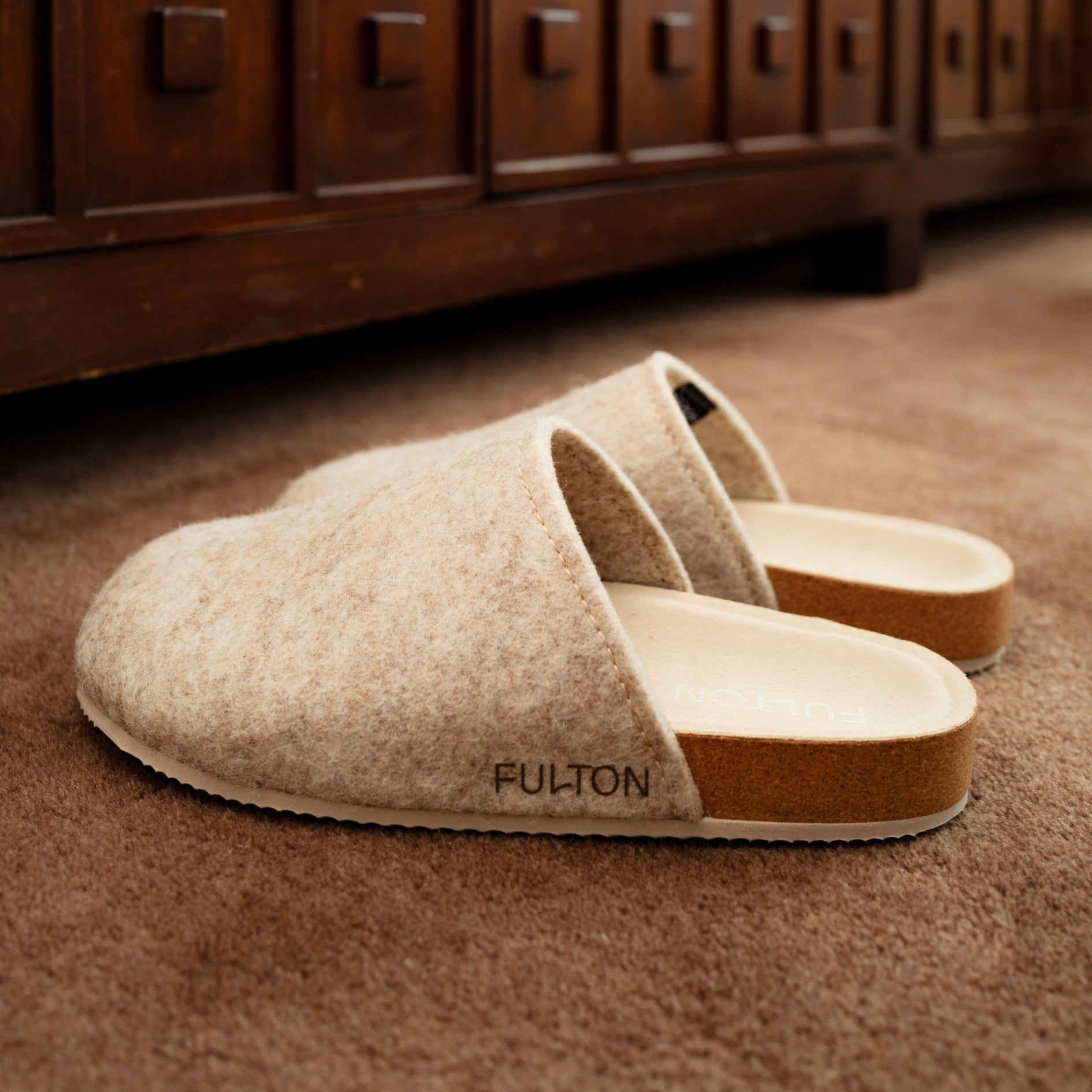
For time at home, The Comfort Slide is $120. It is a supportive slide (see current colors on its product page) that gives you arch support when you are out of your shoes. It is standalone footwear, not an insole or a substitute for a prescribed brace.
Fulton vs Typical Drugstore Insoles and Custom Orthotics
These options serve different needs. Fulton offers an accessible way to add molding cork support to everyday shoes. Prescription orthotics can provide condition-specific positioning that an over-the-counter comfort insole cannot replace. Ask your podiatrist which option fits your stage of PTTD.
| Option | Fit and Support | Clinical Assessment | Price |
|---|---|---|---|
| Fulton Insoles | Cork molds through wear; structured arch and deep heel cup | Sold over the counter; seek advice for PTTD | $48 |
| Typical Drugstore Insoles | Varies; flat cushions and contoured supports are available | Usually sold over the counter | Varies by brand |
| Custom Orthotics | Individually prescribed and fitted for your needs | Yes | Varies by provider, device and coverage |
What to Expect During Break-In
A moldable insole works a little differently from a flat one, and that is the point. Your cork footbed is learning your arch.
- Many customers say they feel personalized comfort within a few days of regular wear.
- Fulton says the cork molds after about 10 hours of wear; individual adjustment varies. Begin gradually and stop if pain increases.
- Keep your insoles in one pair of shoes so they mold to that shoe and to you.
- Check for wear or changes in support. Fulton’s current product guidance recommends replacement every 6–9 months with regular wear, depending on activity and use.
You also have time to decide. Every pair is covered by the 90-Day Comfort Guarantee. If Fulton insoles are not right for you, you can return or exchange them within those 90 days. Fulton is also HSA/FSA eligible.
What Customers Report
Fulton reports these general product and customer figures:
- 97% experience a reduction of pain
- 95% felt improved comfort
- 70% more impact absorbed by cork than foam alone
The impact figure is a material comparison, not a customer outcome. These figures are not PTTD-specific clinical results and do not predict your individual experience.
When to Talk to a Professional
Insoles are one helpful piece of caring for your feet, and they work best alongside good guidance. If you have swelling or soreness along the inside of your ankle that lingers, an arch that is changing on one side, or trouble rising onto your toes, a podiatrist can assess your foot and tell you what it needs. A clinician may recommend custom orthotics for moderate or severe changes, or a brace when more ankle and hindfoot support is needed. Physical therapy may also be part of your care plan. Do not replace prescribed support with Fulton insoles.
For everyday comfort inside your shoes, Fulton can add arch support when your clinician considers an over-the-counter insole appropriate. See a podiatrist if pain persists or worsens.
FAQ About Insoles for PTTD and a Collapsing Arch
Can insoles help with posterior tibial tendon dysfunction?
Supportive insoles are often chosen for PTTD and a collapsing arch because they add the arch support and heel stability most shoes leave out. Fulton's custom-molding cork insoles are designed to provide supportive comfort, with a structured arch and deep heel cup. There is no PTTD-specific clinical result established here. Fulton insoles are an over-the-counter comfort product, not a medical device, so check in with a podiatrist or physical therapist if inner-ankle soreness lingers. Fulton’s general customer figures are not evidence that it treats PTTD.
Are Fulton insoles the same as custom orthotics?
No. Fulton insoles are not custom manufactured to your foot measurements, and they are not a medical device. Instead, the natural cork footbed molds to your arch and gait over time, so Fulton insoles mimic the functional properties of custom orthotics. Fulton insoles cost $48 per pair. They do not replace the assessment or prescribed support that PTTD may need. If a clinician recommends a rigid brace or a custom device for your foot, follow that guidance first.
How long does it take for Fulton insoles to mold to my arch?
Fulton insoles are designed to mold after about 10 hours of wear; adjustment varies. Many customers say they feel personalized comfort within a few days of regular use. For the best fit, keep each pair in one pair of shoes so the cork can mold to that shoe and your foot. If you are still deciding, the 90-Day Comfort Guarantee gives you plenty of time to adjust.
Which Fulton insole should I choose for a collapsing arch?
Every Fulton insole has the same molding cork footbed and deep heel cup, so the right pick depends on your shoes. The Classic Insole is often chosen for casual sneakers and boots with removable insoles. The Athletic Insole suits running shoes and hiking boots. The Universal Insole is designed for closed-toe shoes without removable insoles, not high heels or sandals. Each is $48 per pair. Not sure? Fulton's Comfort Quiz will point you to the right pair.
Can I use my HSA or FSA to buy Fulton insoles?
Yes. Fulton insoles are HSA/FSA eligible, so you can use your pre-tax health account funds at checkout. Each pair is $48, and if you wear more than one kind of shoe, Build a Bundle saves you up to $60 when you mix and match insole pairs. Every pair is also covered by the 90-Day Comfort Guarantee.
Give Your Arch Something to Lean On
Start with the Classic Insole for everyday shoes, or take the Comfort Quiz to find the right Fulton insole for your feet. Every pair is $48, comes with custom-molding cork, and is backed by the 90-Day Comfort Guarantee.
Keep Learning About Arch Support
- Flat Feet Explained: Insoles, Arch Support, and Expert Tips
- Best Insoles for Overpronation: Stability, Arch Support, and Deep Heel Cups
If pain persists or worsens, see a podiatrist. Fulton insoles are an over-the-counter comfort product, not a medical device.

