





Insoles for Morton's Neuroma & Foot Nerve Pain
A burning ache between your toes or a feeling like a pebble in your shoe can make walking uncomfortable. Fulton offers molding cork arch support and cushioning for everyday forefoot comfort. These symptoms can have several causes, so a podiatrist should assess persistent tingling, numbness or pain rather than assuming it is Morton's neuroma.
Shop The Classic Insole: $48 per pair, HSA/FSA eligible, with the 90-Day Comfort Guarantee.
What Is Morton's Neuroma?
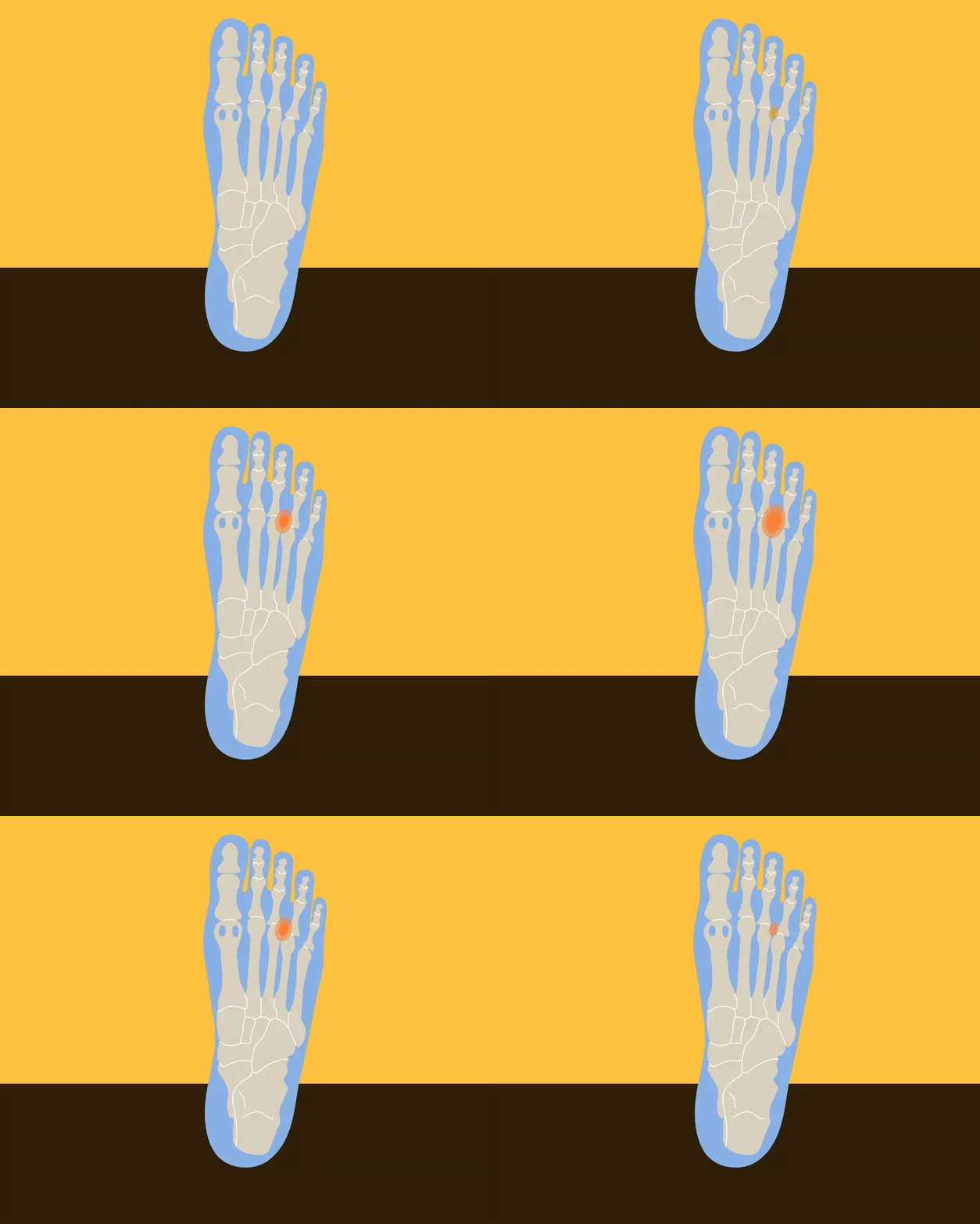
Morton's neuroma is a thickening of tissue around a nerve in the ball of the foot, most often between the third and fourth toes. It is not a tumor. What happens is that the nerve running between the long bones of the foot (the metatarsals) becomes irritated and swollen, usually from compression caused by tight footwear, high heels, or repetitive pressure on the forefoot. Over time, that irritation produces the burning, tingling, or numb sensation many people describe as a "pebble in the shoe."
Symptoms often start as a mild tingle in the ball of the foot and gradually intensify. Pain is typically worse when wearing narrow or high-heeled shoes and improves when those shoes come off. It is worth knowing that tingling or numbness in the toes can have other causes, including circulation issues, nerve compression higher up the leg, or systemic conditions. If you are unsure what is driving your symptoms, a podiatrist is the right starting point.
Why Spreading Pressure Away from the Forefoot Can Help
Morton's neuroma involves irritation around a nerve in the forefoot. Roomier shoes and appropriately fitted inserts or metatarsal pads can be part of a clinician's plan to redistribute pressure. The right placement matters: extra pressure under a sore spot may make symptoms worse.
Fulton's structured arch, cushioning and deep heel cup provide a supportive foundation. These features do not establish that Fulton decompresses a nerve or provides the same targeted offloading as a clinician-fitted pad or orthotic. Ask your podiatrist which support is appropriate.
Which Fulton Insole Is Right for Your Shoes?
Fulton makes three insoles, each designed for a different type of shoe. All three are $48 per pair, HSA/FSA eligible, and covered by the 90-Day Comfort Guarantee.
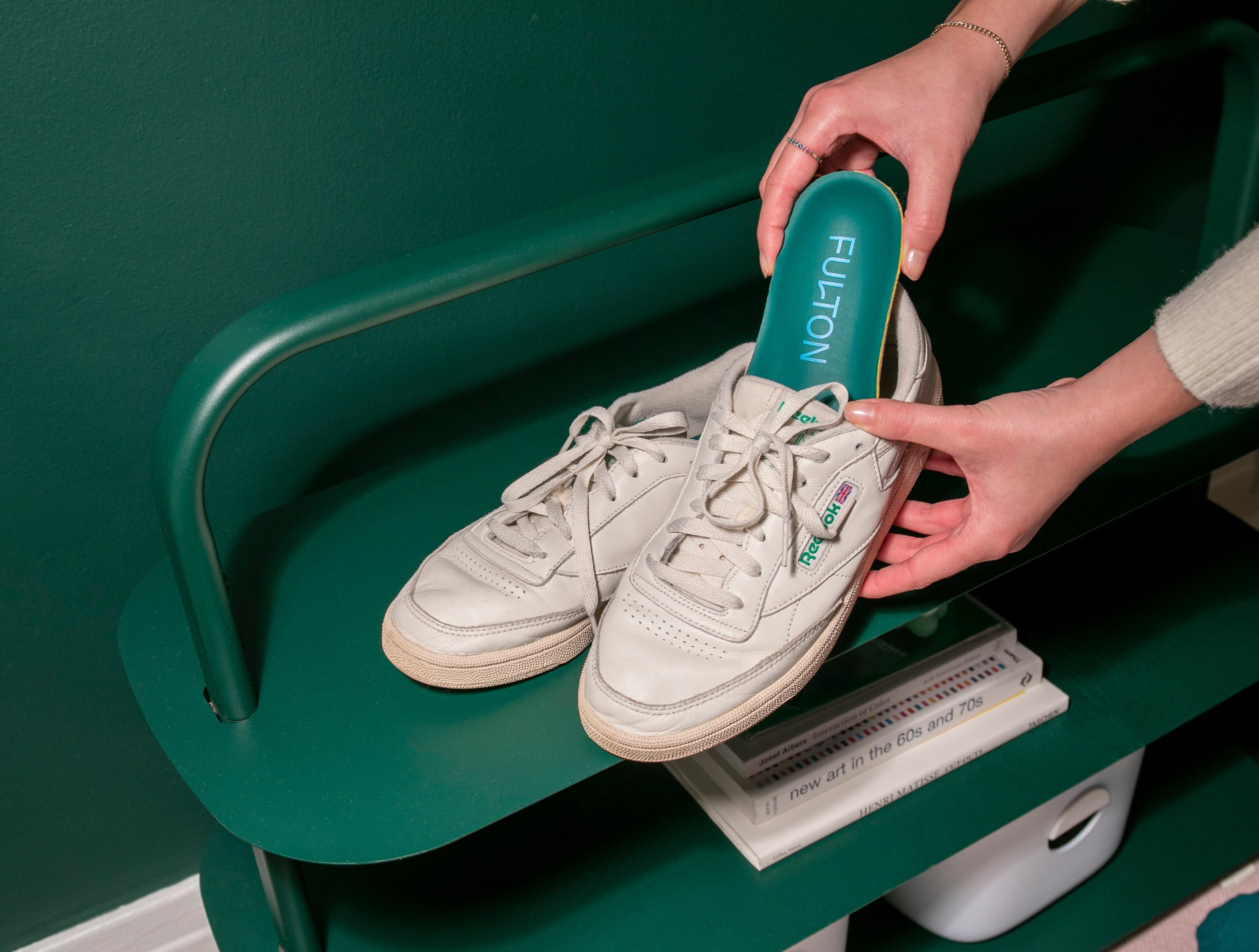
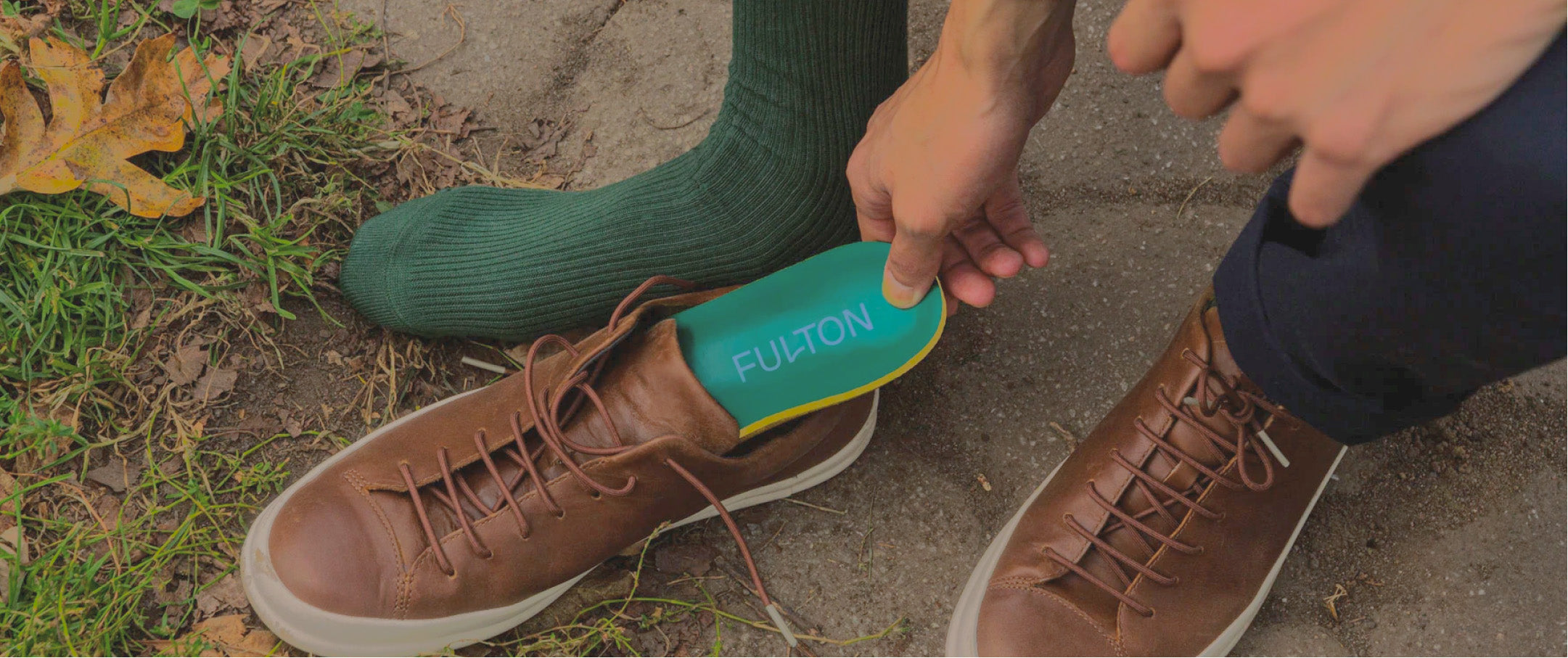
The Classic Insole is Fulton's best-selling option and the go-to choice for lifestyle shoes, casual sneakers, and boots that have a removable insole. Remove the factory insert and replace it with The Classic Insole. It fits all arch types and works especially well for everyday walking and long hours on your feet.
The Athletic Insole is built for running shoes, athletic sneakers, and hiking or ski boots. It features a wider toe box and higher-density foam designed to absorb impact during high-activity use, for supportive comfort in athletic shoes with removable insoles. Do not continue exercise that worsens nerve symptoms.
The Universal Insole has a slimmer profile designed for closed-toe shoes that do not have a removable insole, such as loafers, flats, and some dress shoes. Because it sits on top of the existing footbed, it requires adequate in-shoe space to be comfortable. It is not suitable for high heels or sandals, and it is not the right choice if adding volume would crowd your toes.
Not sure which one fits your routine? Take the Fulton quiz to find your match.
How Fulton's Cork Footbed Works
All three Fulton insoles share the same core technology: a cork footbed that gradually molds to the shape of your own foot through wear. After roughly 10 hours of use, the cork conforms to your unique arch and gait, creating a personalized contour that supports the foot from the heel through the midfoot.
The deep heel cup is designed to help steady the heel and support the foot during walking. Combined with molding cork arch support, it provides supportive comfort without claiming to correct gait or relieve nerve compression.
Fulton reports that its cork absorbs 70% more impact than foam alone, and the natural latex foam layer adds an additional cushioning buffer under the forefoot. These are general cushioning features, not proof of a Morton's-neuroma-specific result.
Fulton insoles mimic the functional properties of custom orthotics, but they are not orthotics or a medical device. They are handcrafted in small batches in Porto, Portugal, using cork with model-specific top layers: cactus leather for The Classic Insole, organic cotton for The Athletic Insole, and vegan leather for The Universal Insole. Fulton's production is carbon negative.
Shoe Habits That Support Your Feet
Insoles do a better job when the shoes around them are also working in your favor. A few habits worth building:
Choose a roomy toe box. Shoes that squeeze the forefoot are one of the primary contributors to Morton's neuroma symptoms. A toe box with enough width and depth allows the metatarsal bones to spread naturally rather than compressing the nerve between them. This is especially important before adding any insole. If the shoe is already crowded, an insole may worsen rather than relieve tightness.
Keep heels low. Higher heels pitch the body's weight forward onto the ball of the foot. Lower, flatter soles distribute load more evenly and put less repetitive stress on the forefoot nerve.
Replace removable insoles with Fulton. Factory insoles in most shoes offer minimal arch support. Swapping them for The Classic Insole or The Athletic Insole gives the foot a structured, cushioned foundation while checking that adequate toe room remains.
Give the cork time to mold. The cork footbed is designed to mold after approximately 10 hours of wear. Some people notice a difference quickly; others need a short adjustment period as the foot and the insole find their fit together.
How Fulton Compares
Compare cushioning, structured support, and prescribed devices by their purpose and shoe fit.
| Feature | Flat Cushioning Inserts | Fulton Structured Support | Clinician-Prescribed Orthotics |
|---|---|---|---|
| Main purpose | Adds padding; contours vary | Molding cork arch support and deep heel cup | Support or positioning based on assessment |
| Personalization | Varies by product | Cork molds through wear, around 10 hours | Individually prescribed and fitted |
| Shoe fit | Check available space | Classic/Athletic replace removable inserts; Universal needs sufficient space | Depends on device and shoe |
| Materials | Varies | Cork with model-specific cushioning and top layers | Varies by clinical need |
| Price | Varies by brand | $48 per pair | Varies by provider, device and coverage |
| HSA/FSA eligibility | Varies | Eligible; check plan requirements | Check provider and plan requirements |
| Trial or returns | Varies by seller | 90-Day Comfort Guarantee | Varies by provider |
These categories do not offer interchangeable clinical care. Fulton insoles mimic the functional properties of custom orthotics, but are not orthotics or medical devices. Follow a clinician’s advice if you need a prescribed device.
When to See a Podiatrist
Fulton insoles are designed to support everyday comfort and help relieve symptoms. They are not a substitute for medical care. If your foot pain, tingling, or numbness persists or gets worse despite better footwear and supportive insoles, a podiatrist can assess what is actually happening and recommend the appropriate next step, whether that is physical therapy, a corticosteroid injection, or another approach.
Tingling and numbness in the toes can also signal conditions unrelated to Morton's neuroma, including tarsal tunnel syndrome, peripheral neuropathy, or vascular issues. A professional evaluation helps rule those out. Do not delay a medical visit if your symptoms are severe, affect your balance, or come on suddenly.
Fulton reports that 97% of customers experience a reduction of pain and 95% felt improved comfort. These are general customer figures, not results from a clinical study of Morton's neuroma.
Covered by the 90-Day Comfort Guarantee. Handcrafted in Porto, Portugal. HSA/FSA eligible.
FAQ About Insoles for Morton's Neuroma
Are Fulton insoles good for Morton's neuroma?
Fulton provides molding cork arch support, cushioning and a deep heel cup for supportive comfort. It is not established here that Fulton relieves a neuroma or decompresses the affected nerve. A podiatrist can help you decide whether general support, a metatarsal pad or a prescribed device is appropriate.
Which Fulton insole is best for nerve pain in the foot?
Choose by shoe fit rather than a promise of nerve-pain treatment. The Classic Insole replaces removable inserts in lifestyle shoes and boots. The Athletic Insole replaces removable inserts in athletic shoes. The Universal Insole fits closed-toe shoes without removable inserts only when there is adequate room; it is not for heels or sandals. Each is $48 per pair.
Can insoles help with tingling or numbness in the toes?
Some people may benefit from clinician-guided pressure redistribution, but tingling and numbness can come from several nerve or circulation problems. Fulton offers supportive underfoot comfort; it does not diagnose or treat the cause. Have persistent, new or worsening symptoms assessed rather than delaying care while trying inserts.
How do insoles reduce pressure on foot nerves?
An appropriately chosen and fitted insert or pad can redistribute pressure, but results depend on the condition and fit. Fulton's contoured cork and cushioning support the foot without a proven nerve-decompression claim. Do not place extra padding directly under a painful area without guidance.
When should I see a doctor about Morton's neuroma pain?
See a podiatrist for persistent or worsening pain, tingling or numbness. Seek prompt assessment for sudden or severe symptoms or changes affecting balance or walking. A professional can confirm the cause and recommend care.
Find Your Fulton Insole for Morton's Neuroma
Fulton insoles are designed for supportive underfoot comfort. Nerve symptoms deserve assessment and condition-specific care. Choose the insole that fits your shoes, or take the quiz to find your match. All insoles are $48 per pair and covered by the 90-Day Comfort Guarantee.
If pain persists or worsens, see a podiatrist. Fulton insoles are an over-the-counter comfort product, not a medical device.

