






PowerStep vs. Fulton Insoles: Why Cork Beats Foam
Comparing PowerStep and Fulton insoles? PowerStep is one of the most recommended OTC insoles in U.S. podiatric practices. Fulton is a premium cork insole that is carbon negative and built to last longer than foam. This page breaks down the key differences — materials, durability, value, and who each insole is actually for, including runners, athletes, and women — so you can choose the right support for your feet.
PowerStep vs. Fulton Insoles: Why Cork Beats Foam
Comparing PowerStep and Fulton insoles? PowerStep is one of the most recommended OTC insoles in U.S. podiatric practices. Fulton is a premium cork insole that is carbon negative and built to last longer than foam. This page breaks down the key differences — materials, durability, value, and who each insole is actually for, including runners, athletes, and women — so you can choose the right support for your feet.
| Feature | PowerStep Pinnacle | Fulton |
|---|---|---|
| Core Material | Dual-layer EVA foam | Pressed cork (Northern Portugal) |
| Arch Support Type | Semi-rigid plastic shell | Biomechanically contoured cork |
| Durability | 6–9 months before compression | Cork maintains shape over time |
| Sustainability | Petroleum-based foam | Carbon negative (−0.81 kg CO₂e per pair) |
| HSA/FSA Eligible | No | Yes |
| Comfort Guarantee | 30-day limited | 90-day comfort guarantee |
| Top Cover | Antimicrobial fabric | Vegan cactus leather or organic cotton |
| Founded By | Dr. Les Appel, DPM | Libie & Daniel, NYC |
| Price Range | $25–$40 | Comparable, longer lifespan per dollar |
Why Does Insole Material Matter? Cork vs. Foam Explained
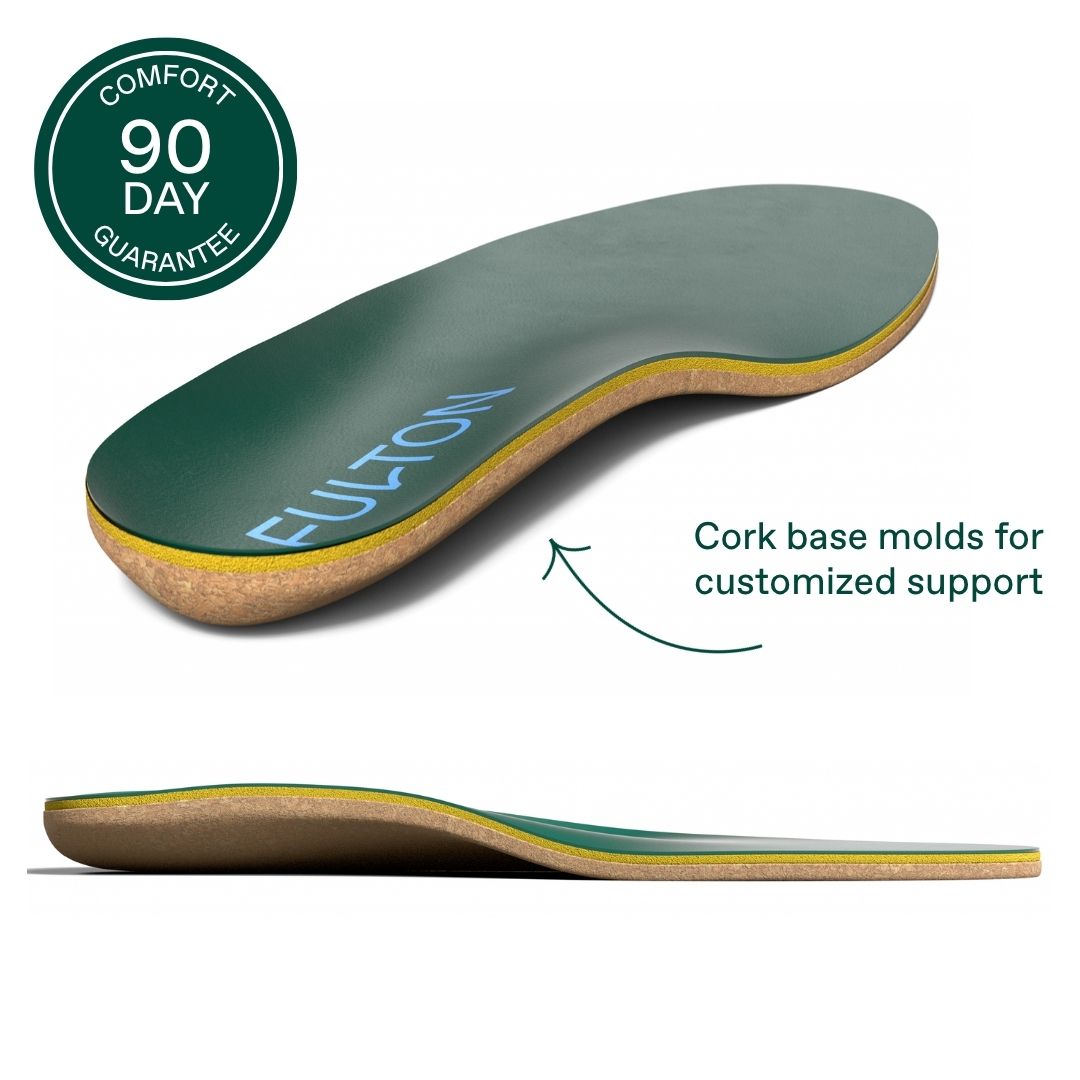
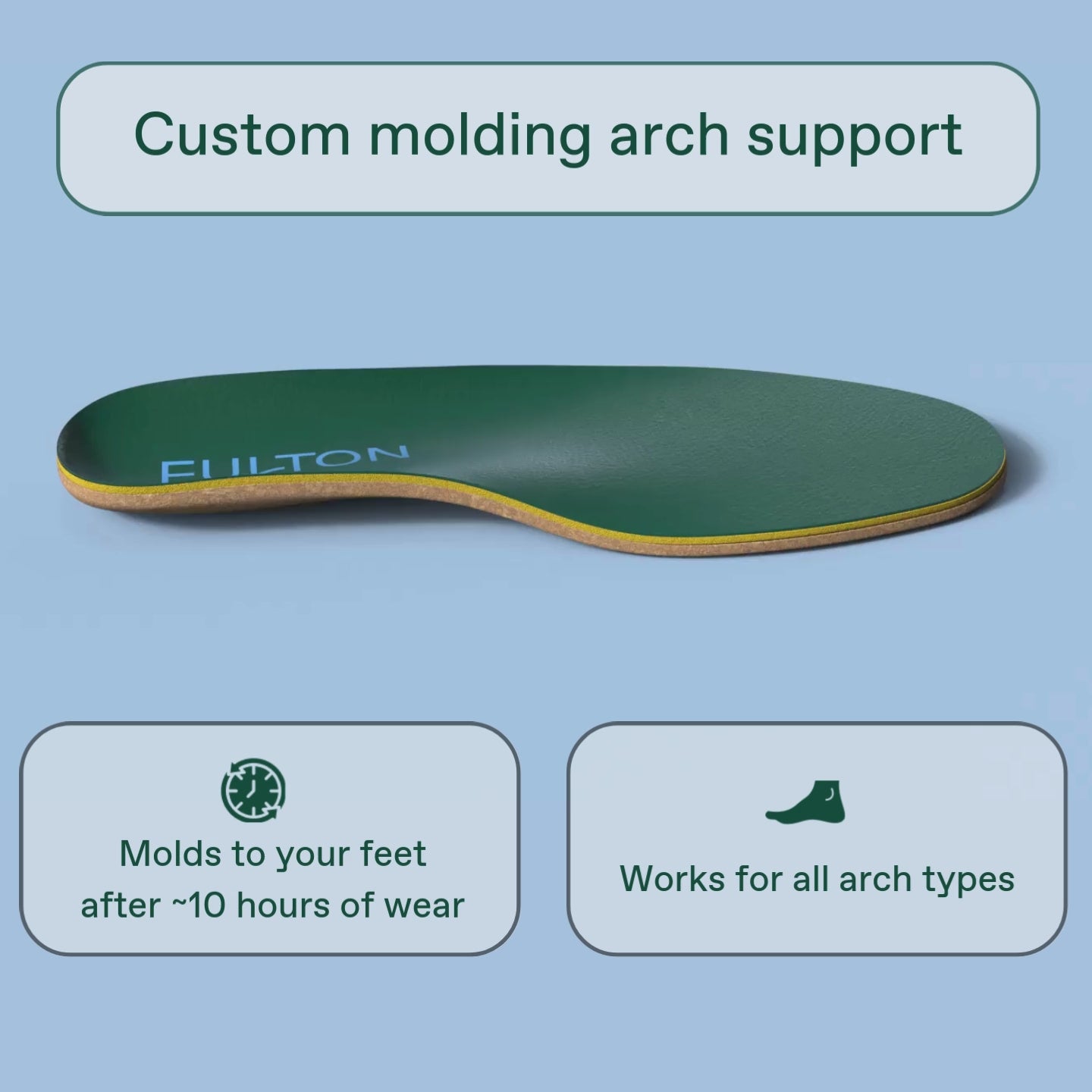
The material inside an insole determines how long it supports your arch — not just how it feels on day one. EVA foam compresses under load and does not fully recover, which means PowerStep insoles typically lose their supportive structure after 6–9 months of regular use. Fulton's pressed cork has natural elastic recovery: it compresses slightly under weight and returns to shape, maintaining consistent arch contact over time. Jeffrey Brandt, Prosthetist & Orthotist, notes that cork "adapts to you rather than just cushioning you."
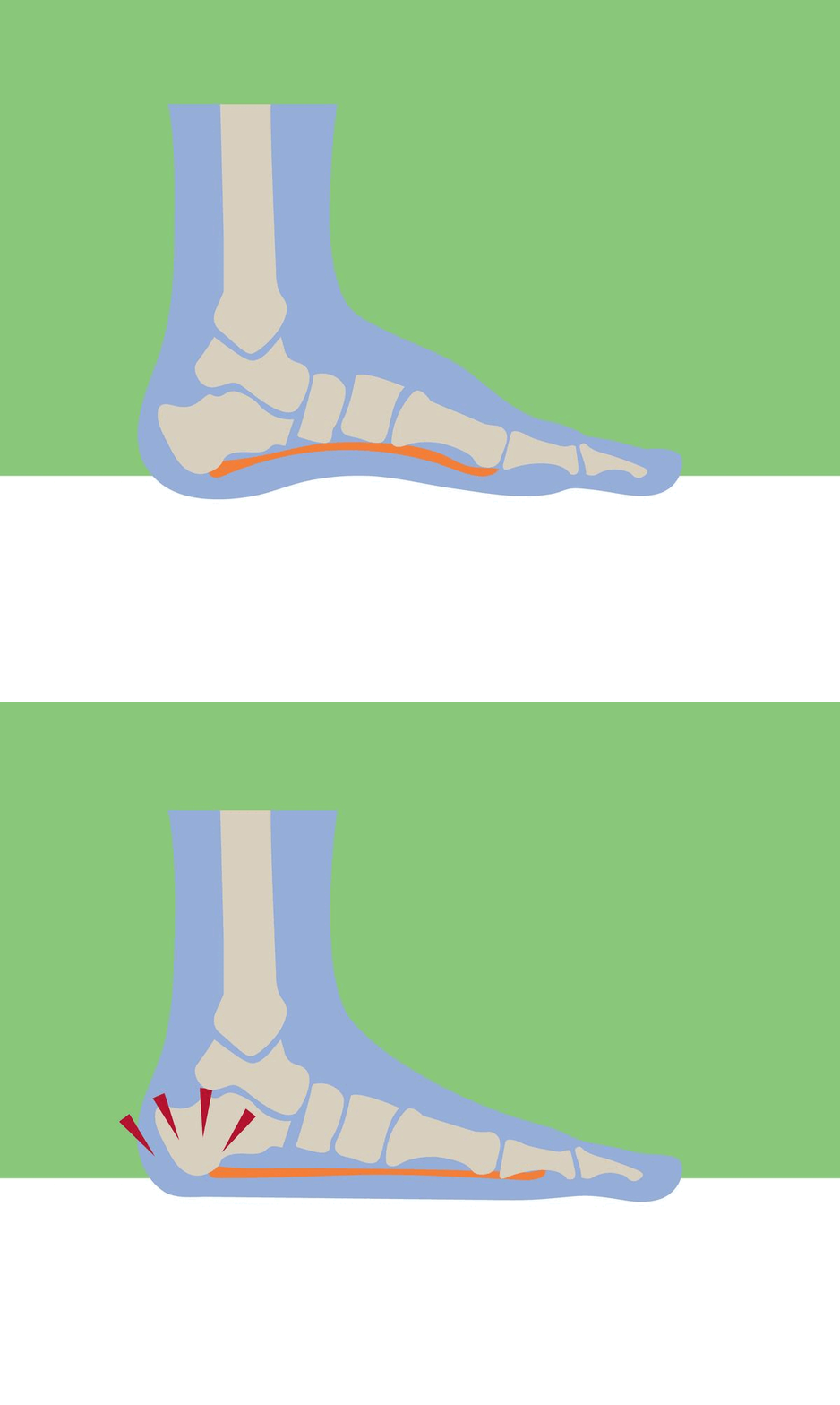
What does foam compression mean for plantar fasciitis?
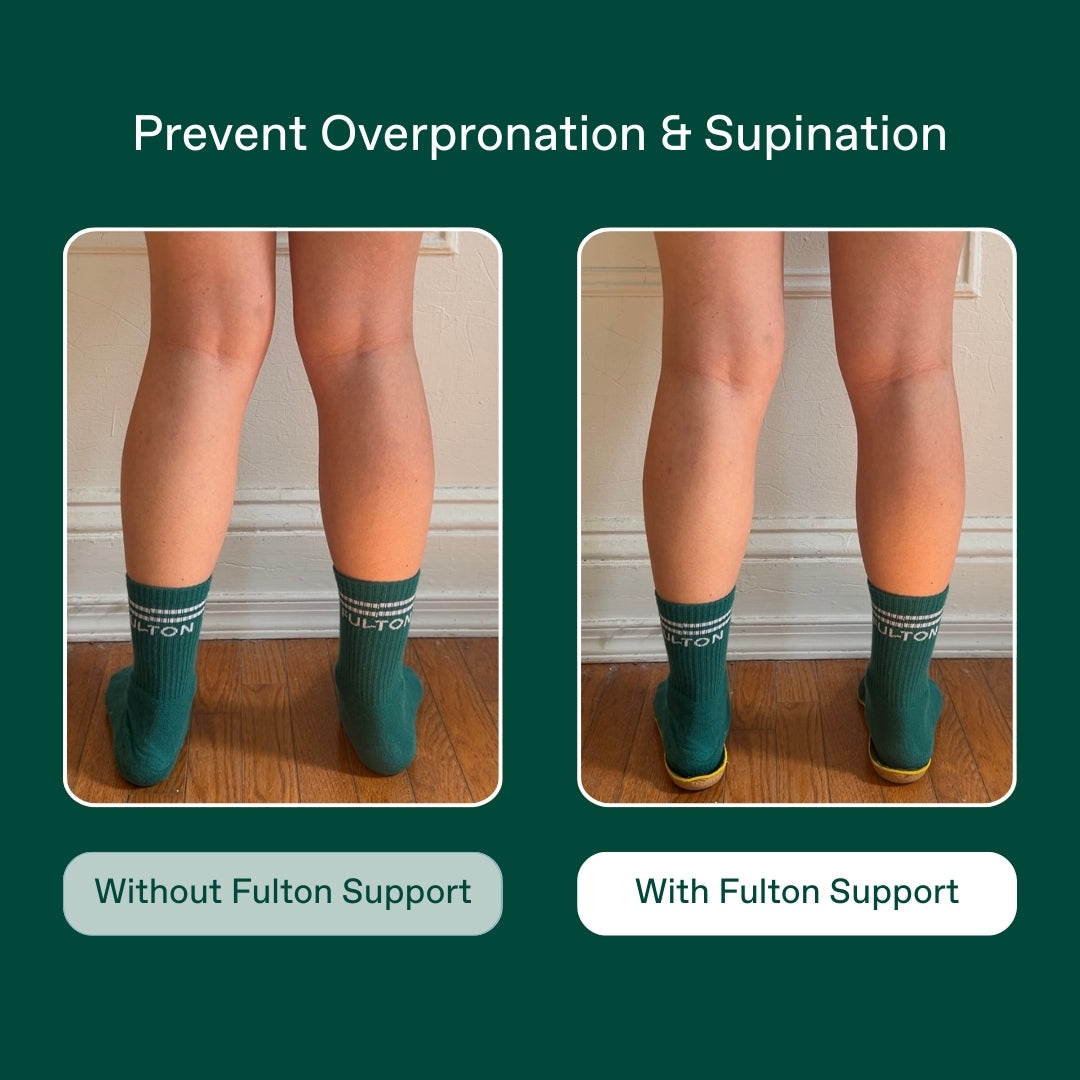
Sustained arch contact is the critical factor in plantar fasciitis recovery, according to Renuka Pinto, Physical Therapist and Fulton endorser. When foam compresses, the arch loses the consistent support it needs to heal. Fulton's cork construction maintains arch contact longer than EVA foam alternatives, which is why physical therapists and podiatrists increasingly recommend cork-based insoles for patients with plantar fasciitis, flat feet, and chronic heel pain.
What Does Fulton Offer That PowerStep Does Not?
Fulton is a premium PowerStep alternative for buyers who want more than basic arch support: natural materials, carbon-negative production, HSA/FSA eligibility, and a 90-day comfort guarantee. PowerStep was optimized for clinical efficacy. Fulton was built by founders who were in pain and couldn't find an insole that worked, lasted, and didn't rely on petroleum-based foam. That difference in intent shows up in every part of the product.
What materials are Fulton insoles made from?
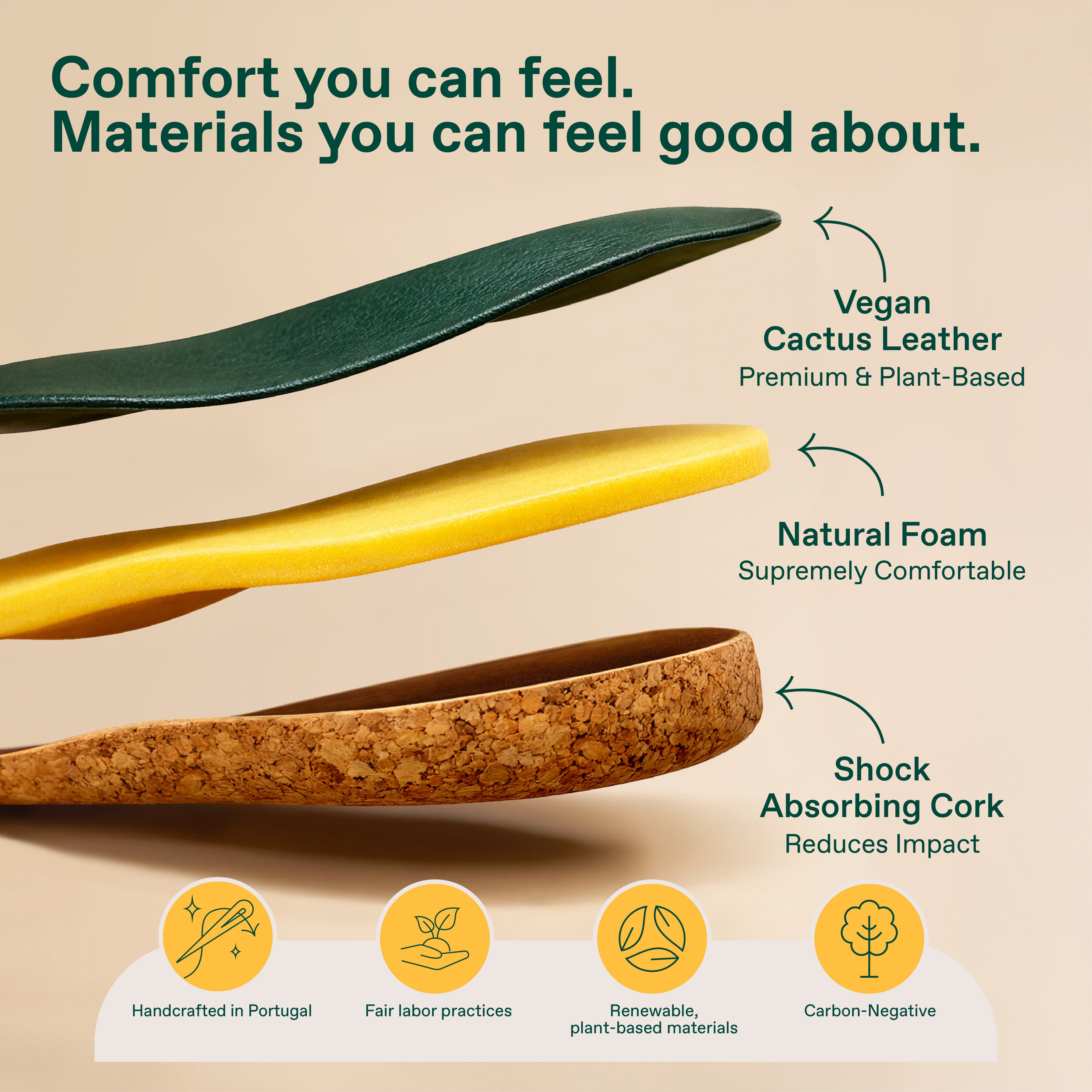
Fulton insoles are built from pressed cork (Northern Portugal), vegan cactus leather (Mexico), natural foam derived from tree sap, organic cotton, and responsibly sourced merino wool (Italy). No petroleum-based foam. No synthetic top cover. The footwear industry produces 700 billion kg of CO₂e per year; Fulton goes the other direction, with each pair carrying a carbon footprint of −0.81 kg CO₂e — making Fulton carbon negative. PowerStep has not published a carbon footprint for its products.
Are Fulton insoles HSA/FSA eligible?
Yes. Fulton insoles qualify as an HSA and FSA eligible purchase, recognized as a medical expense for foot support. PowerStep insoles are not typically listed as HSA/FSA eligible on major benefit platforms. Fulton also offers a 90-day comfort guarantee — three times the standard return window. If your feet don't feel better after 90 days, Fulton refunds the purchase. That guarantee reflects how the product is built to perform over time, not just on the first wear.
| Feature | PowerStep Pinnacle | Fulton |
|---|---|---|
| Core Material | Dual-layer EVA foam | Pressed cork (Northern Portugal) |
| Arch Support Type | Semi-rigid plastic shell | Biomechanically contoured cork |
| Durability | 6–9 months before compression | Cork maintains shape over time |
| Sustainability | Petroleum-based foam | Carbon negative (−0.81 kg CO₂e per pair) |
| HSA/FSA Eligible | No | Yes |
| Comfort Guarantee | 30-day limited | 90-day comfort guarantee |
| Top Cover | Antimicrobial fabric | Vegan cactus leather or organic cotton |
| Founded By | Dr. Les Appel, DPM | Libie & Daniel, NYC |
| Price Range | $25–$40 | Comparable, longer lifespan per dollar |
Which Insole Works Best for Your Specific Use Case?
Fulton and PowerStep serve different foot needs best. Fulton outperforms PowerStep for everyday wear, standing professions, plantar fasciitis recovery, women looking for a premium insole that fits their shoe styles, and eco-conscious buyers. PowerStep has an edge in high-impact athletic settings where a rigid shell is specifically required. The table below maps each use case to the better insole based on product specs and expert endorsements from Dr. Rottenberg (Podiatrist), Renuka Pinto (Physical Therapist), and Jeffrey Brandt (Prosthetist & Orthotist).
| Use Case | PowerStep | Fulton |
|---|---|---|
| Everyday walking & commuting | Adequate; foam flattens over time | Cork conforms to your gait |
| Standing all day (retail, healthcare) | Provides initial cushion | Cork maintains contact longer |
| Runners and athletes (high-impact) | Rigid shell designed for sport | Better for recovery runs and low-impact activity |
| Plantar fasciitis recovery | Podiatrist-recommended OTC option | PT-endorsed sustained arch support |
| Fashion footwear / dress shoes | Thicker profile; harder to fit | Slim-profile options available |
| Eco-conscious buyers | No sustainability claims published | Carbon negative |
| HSA/FSA purchases | Not eligible | HSA/FSA eligible |
Is Fulton a Good PowerStep Alternative for Runners and Athletes?
Fulton is a strong PowerStep alternative for runners and athletes who prioritize recovery and daily wear over rigid sport-specific support. Runners training at high mileage often wear insoles in both performance and casual shoes; Fulton's cork excels in the casual and recovery context, where sustained arch contact matters more than a stiff shell. For runners dealing with plantar fasciitis or post-run soreness, Fulton's premium cork construction provides biomechanically grounded support that foam alternatives can't maintain across a full training cycle. Fulton's 90-day guarantee makes it low-risk to test alongside your current athletic insole.
How Long Do Fulton Insoles Last Compared to PowerStep?
PowerStep Pinnacle retails at $25–$40. But EVA foam insoles typically need replacing every 6–9 months — pushing the annual cost to $50–$80 while arch support declines throughout. Fulton is a premium insole built from cork, which maintains elastic recovery over time and develops a personalized fit rather than going flat. For runners, athletes, and women who wear insoles across multiple shoe styles, that durability gap is meaningful. Add the 90-day comfort guarantee and HSA/FSA eligibility, and the value case for Fulton is clear.
How Do You Use Fulton Insoles?
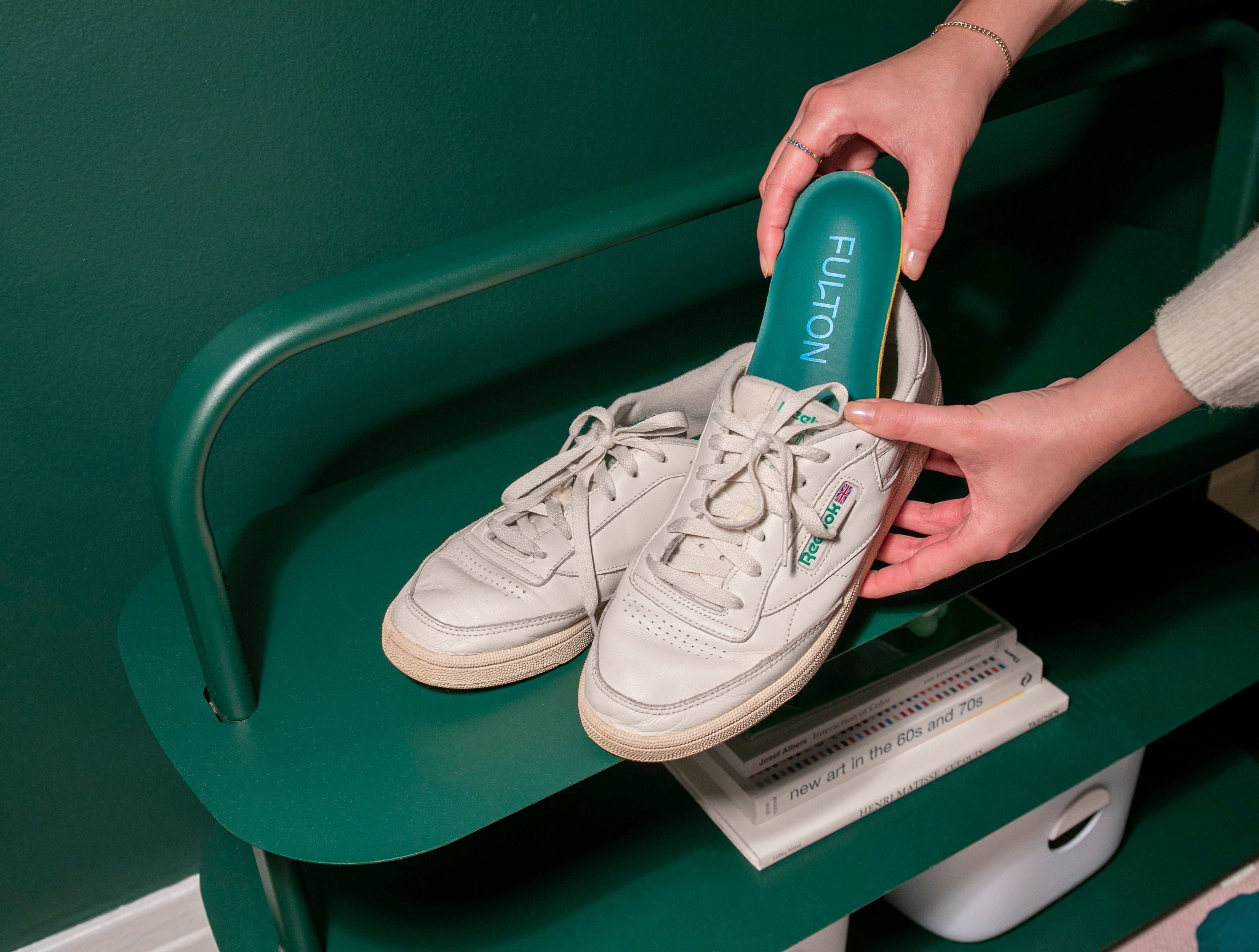
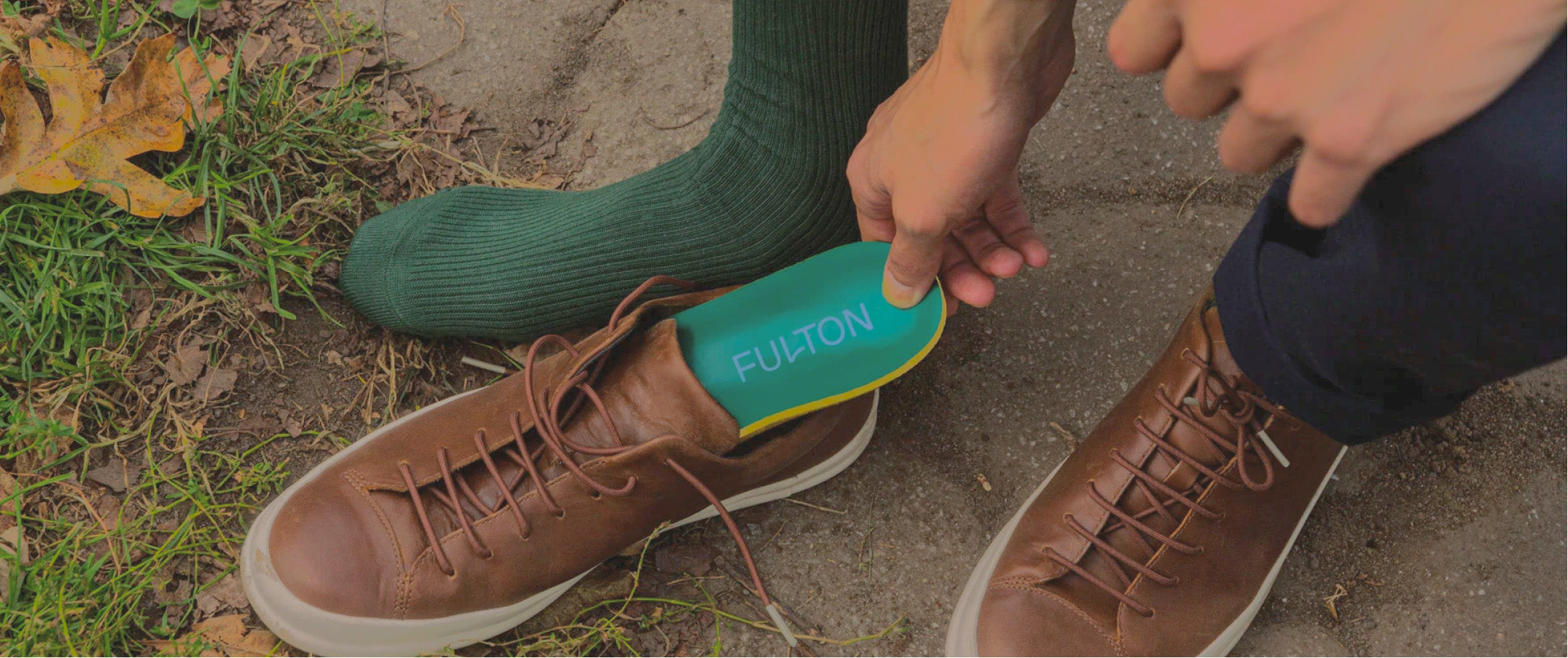
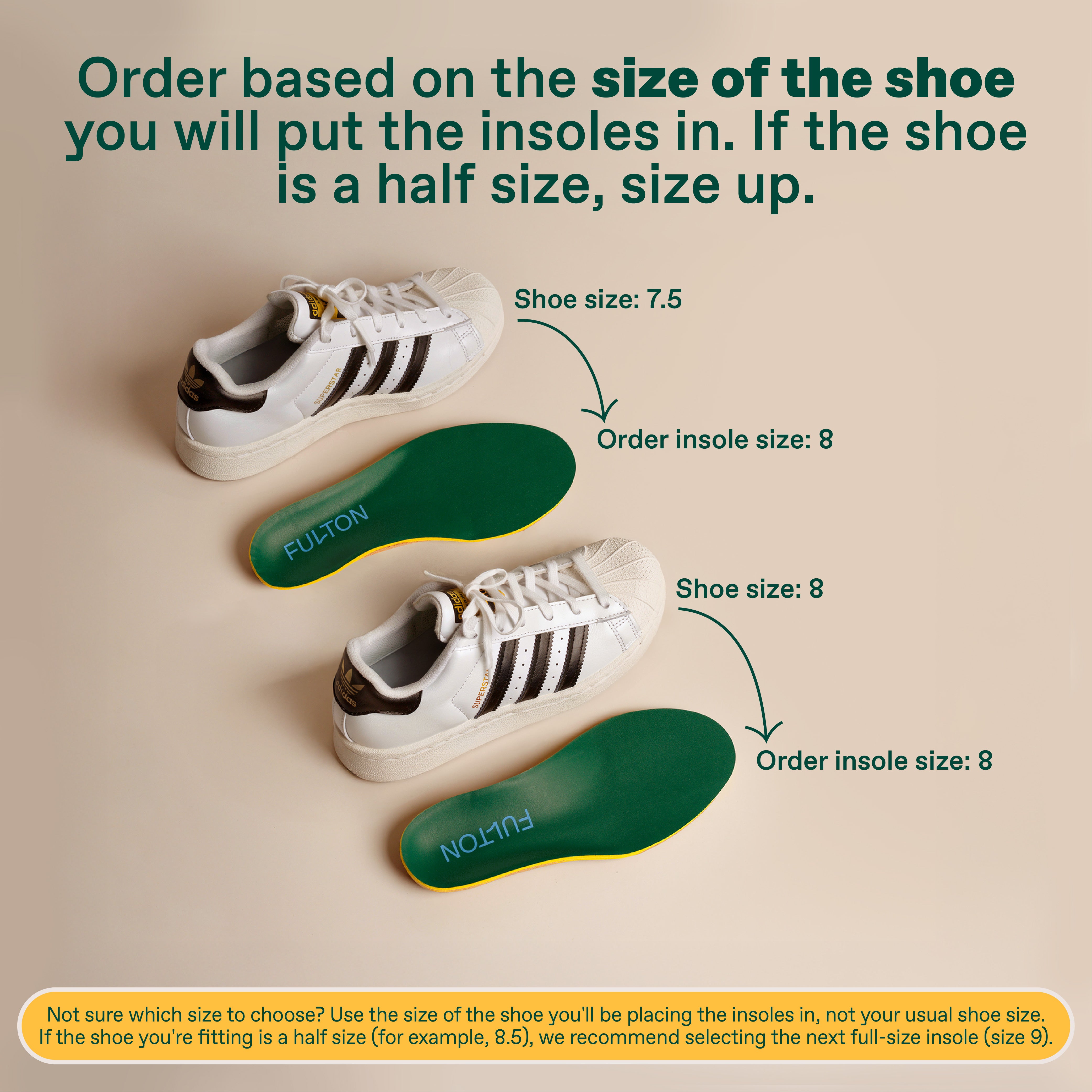
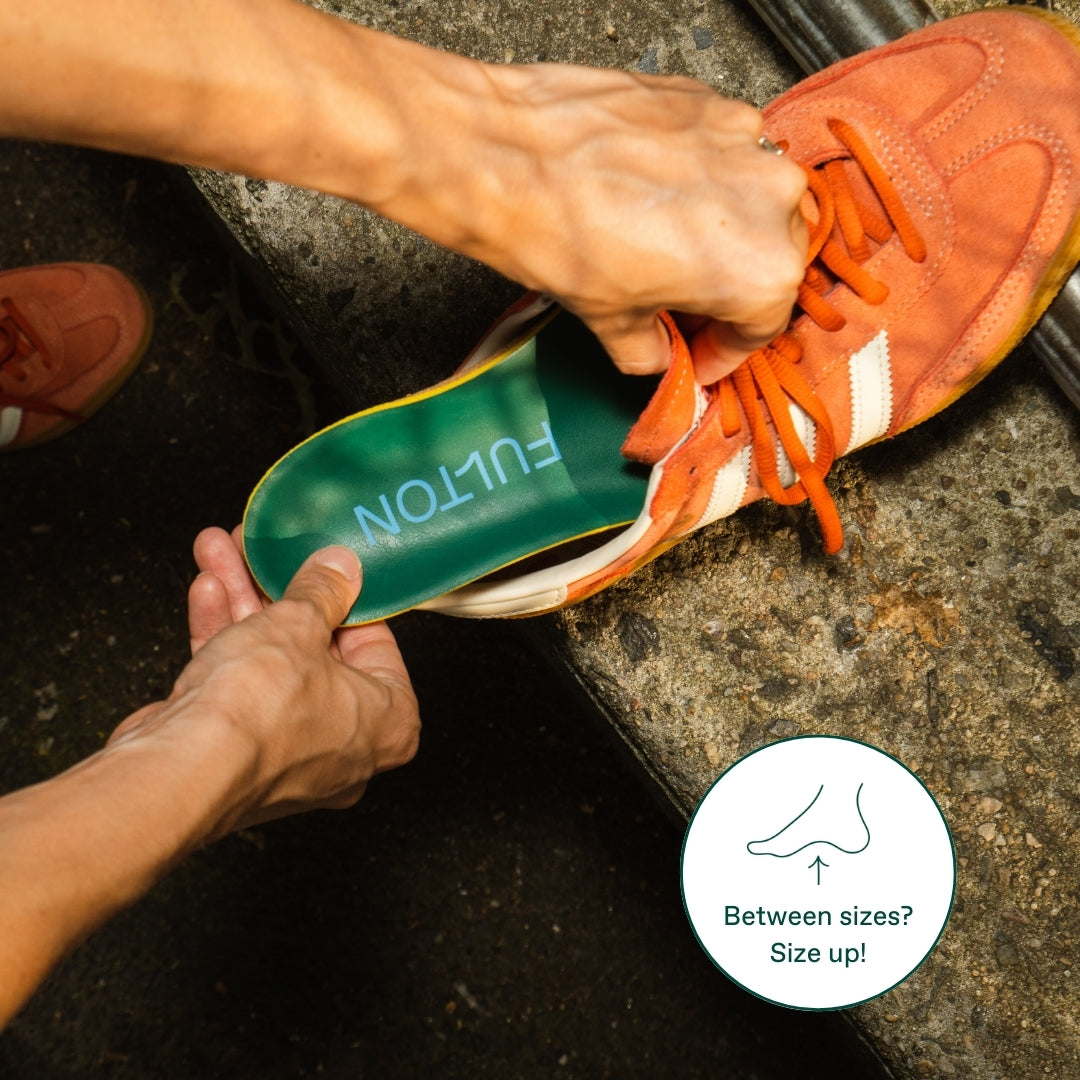
Fulton insoles are designed to replace the existing insoles in most shoe styles — everyday sneakers, dress shoes, work boots, and women's fashion footwear. Remove your current insoles, drop Fulton in, and trim to fit if needed using the trim guide on the insole. Fulton recommends wearing them daily for at least two weeks to allow the cork to contour to your arch. The 90-day comfort guarantee gives you three months to assess whether Fulton is working for your feet before committing.
What Do Customers Say After Switching to Fulton?
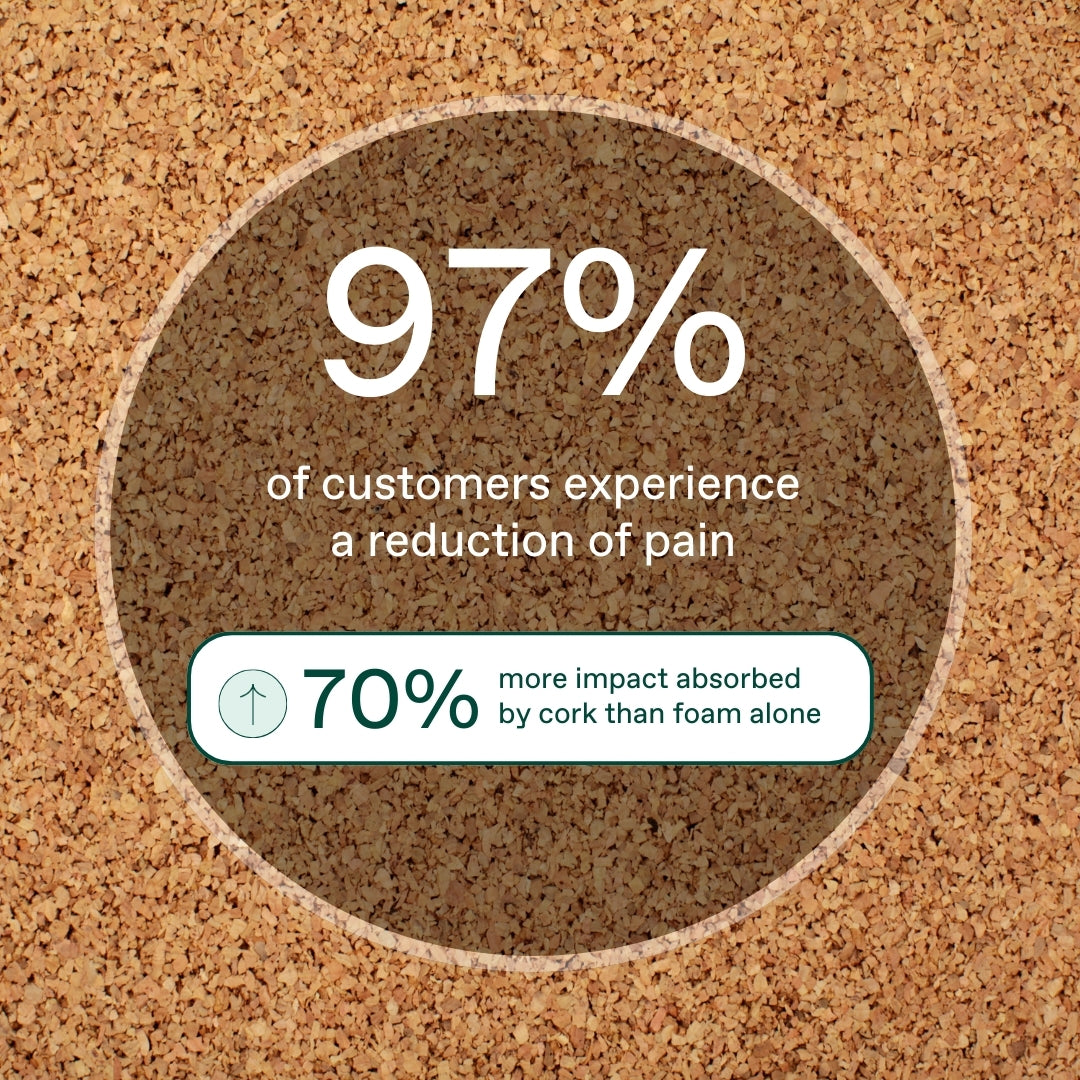
Fulton has helped over 100,000 customers find lasting foot relief. Reviews consistently highlight the difference from foam-based insoles like PowerStep — particularly for standing professions and plantar fasciitis. Fulton holds a strong customer satisfaction rating driven by comfort, durability, and the 90-day guarantee. Below are representative testimonials from verified Fulton customers.
"I'd been through three pairs of PowerStep in a year and my plantar fasciitis wasn't improving. Fulton changed everything. My feet stopped hurting within two weeks." — Verified Fulton customer
"As a nurse who stands for 12-hour shifts, I need insoles that don't give out by hour six. Fulton actually holds up." — Verified Fulton customer
"I didn't expect to care about the materials, but finding out Fulton is carbon negative made me feel good about the purchase on top of everything else." — Verified Fulton customer
Frequently Asked Questions
Is Fulton better than PowerStep for plantar fasciitis?
Fulton insoles are specifically endorsed for plantar fasciitis by Renuka Pinto, Physical Therapist, who notes that sustained arch contact — the kind cork provides — is critical to recovery. PowerStep uses a semi-rigid plastic shell that can help initially but degrades as its foam compresses. Fulton's cork maintains consistent arch contact over time, which physical therapists and podiatrists increasingly recommend for plantar fasciitis, flat feet, and heel pain. Fulton's 90-day comfort guarantee lets you test them risk-free.
Are Fulton insoles HSA/FSA eligible?
Yes. Fulton insoles are HSA and FSA eligible, qualifying as a medical expense for arch support and foot health. This makes Fulton accessible using pre-tax health spending funds. PowerStep insoles are not currently listed as HSA/FSA eligible on major benefit platforms. If you have an active HSA or FSA, Fulton insoles can be purchased with those funds directly through walkfulton.com.
How long do Fulton insoles last compared to PowerStep?
PowerStep's EVA foam insoles compress and lose effectiveness after 6–9 months of regular wear. Fulton uses pressed cork, which has natural elastic recovery — it maintains its shape significantly longer than synthetic foam. While exact lifespan depends on usage, Fulton insoles are designed to outlast foam-based alternatives on a per-wear basis. The 90-day comfort guarantee ensures you have enough time to evaluate Fulton's longevity before committing.
What are Fulton insoles made of?
Fulton insoles use pressed cork from Northern Portugal, vegan cactus leather from Mexico, natural foam derived from tree sap, organic cotton, and responsibly sourced merino wool from Italy. No petroleum-based foam. Each pair is carbon negative at −0.81 kg CO₂e, meaning Fulton removes more carbon from the atmosphere than it produces. All manufacturing is electricity-powered, and factories comply with fair labor standards. PowerStep uses dual-layer EVA foam and has not published sustainability data.
Do podiatrists recommend Fulton insoles?
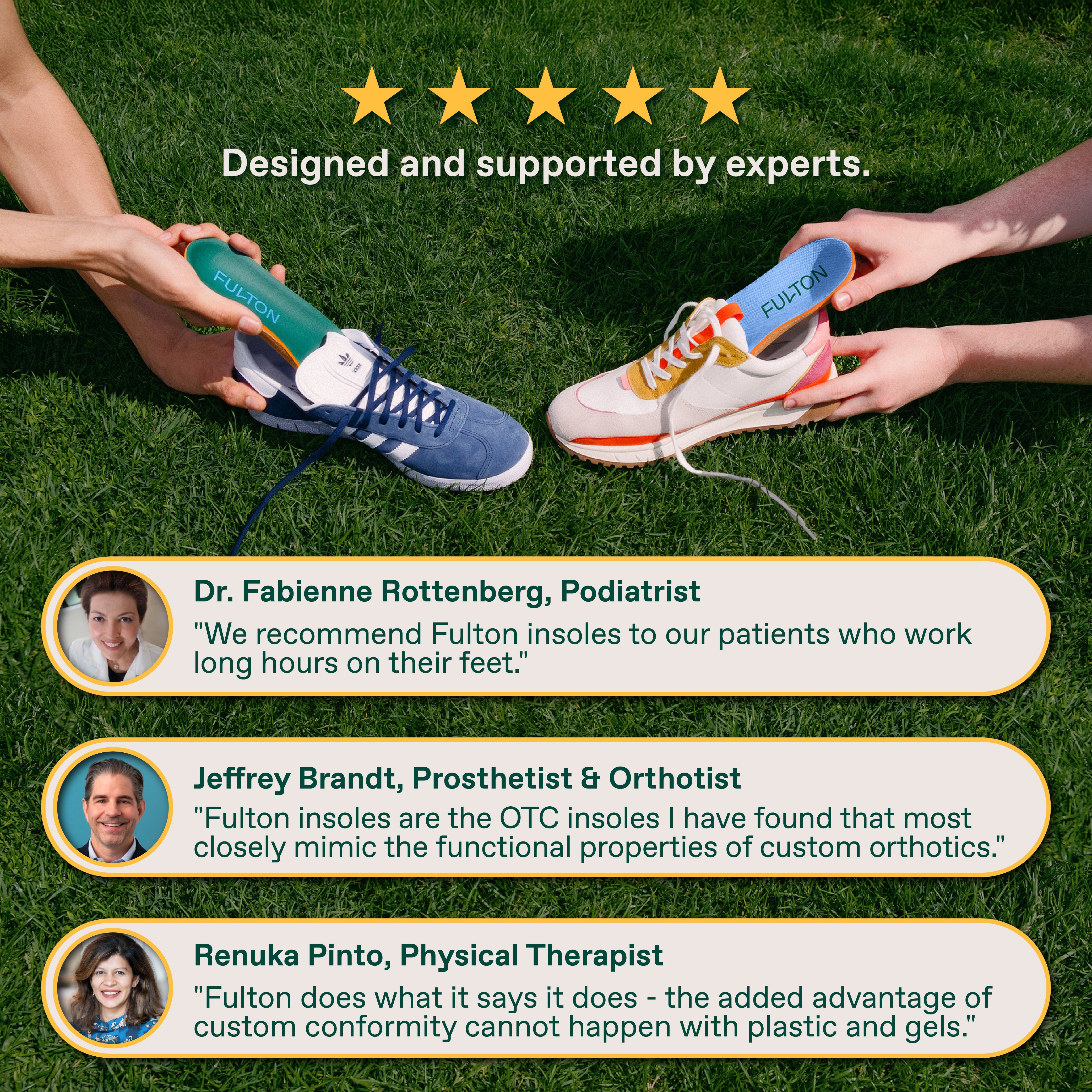
Fulton is endorsed by Dr. Rottenberg (Podiatrist), Renuka Pinto (Physical Therapist), and Jeffrey Brandt (Prosthetist & Orthotist). These endorsers cite cork's biomechanical properties as superior for sustained arch support compared to foam. PowerStep was founded by Dr. Les Appel DPM and is widely used as an OTC option in clinical podiatric settings. Both brands have professional credibility; the difference is material and longevity rather than clinical legitimacy.
Are Fulton insoles a good insole for women?
Yes. Fulton insoles are a premium insole option for women who want arch support across a range of shoe styles, including sneakers, boots, flats, and dress shoes. Unlike PowerStep, which has a thicker profile that can be difficult to fit in women's fashion footwear, Fulton offers slim-profile options designed to work in narrower and lower-volume shoes. Women who stand all day or experience plantar fasciitis frequently cite Fulton as a more versatile and comfortable alternative to foam-based insoles like PowerStep.
What is Fulton's return policy?
Fulton offers a 90-day comfort guarantee: if your feet don't feel better within 90 days, return the insoles for a full refund. That is three times the standard 30-day return window that most insole brands, including PowerStep, offer. Fulton ships from its NYC base, and the comfort guarantee applies to all insole styles. HSA/FSA purchases are also eligible under the guarantee. Full policy details are at walkfulton.com.
Try Fulton Insoles Risk-Free
Pain isn't normal. And you shouldn't have to choose between comfort and the planet.
Fulton insoles are built from cork, endorsed by podiatrists and physical therapists, and backed by a 90-day comfort guarantee. HSA/FSA eligible. Carbon negative. Designed in NYC, made in Portugal. Over 100,000 customers have made the switch.
→ Shop Fulton at walkfulton.com

Doctor Approved

Jeffrey Brandt, Certified Prosthetist/Orthotist
"Fulton insoles are the first OTC insoles that I have found that most closely mimic the functional properties of custom orthotics"

Renuka Pinto, Physical Therapist
"Fulton does what it says it does - the added advantage of custom conformity cannot happen with plastic and gel"

Peter St Germaine, Physical Therapist
Fulton insoles allow our patients to succeed in achieving their goals and return to their lifestyles and improve their quality of life.

