





Insoles for Foot Arthritis, Joint Pain & Hallux Limitus
If your feet feel stiff the moment you stand up in the morning, or if walking across a hard floor sends a dull ache radiating through your joints, you already know how much arthritis can shrink your day. That grinding, pressure-filled discomfort in the midfoot, forefoot, or big toe joint is not something you simply have to accept. Fulton offers molding cork arch support, cushioning and a deep heel cup for supportive underfoot comfort. Stiff or painful joints can have different causes; a podiatrist can help determine the right footwear and whether general support or a prescribed device is appropriate.
Why Foot Arthritis and Joint Pain Make Every Step Harder
Arthritis can affect one or more joints in the foot. Different forms have different causes; osteoarthritis involves cartilage changes, while inflammatory arthritis needs its own assessment and care. Stiffness and pain may alter how you walk, but symptoms alone do not identify the cause.
Cushioning, supportive shoes or appropriately prescribed inserts may improve comfort in selected cases. No general insole can guarantee that pressure is reduced at a particular joint or reverse arthritis. A clinician can match support to the painful area.
What Is Hallux Limitus? Understanding the Stiff Big Toe Joint
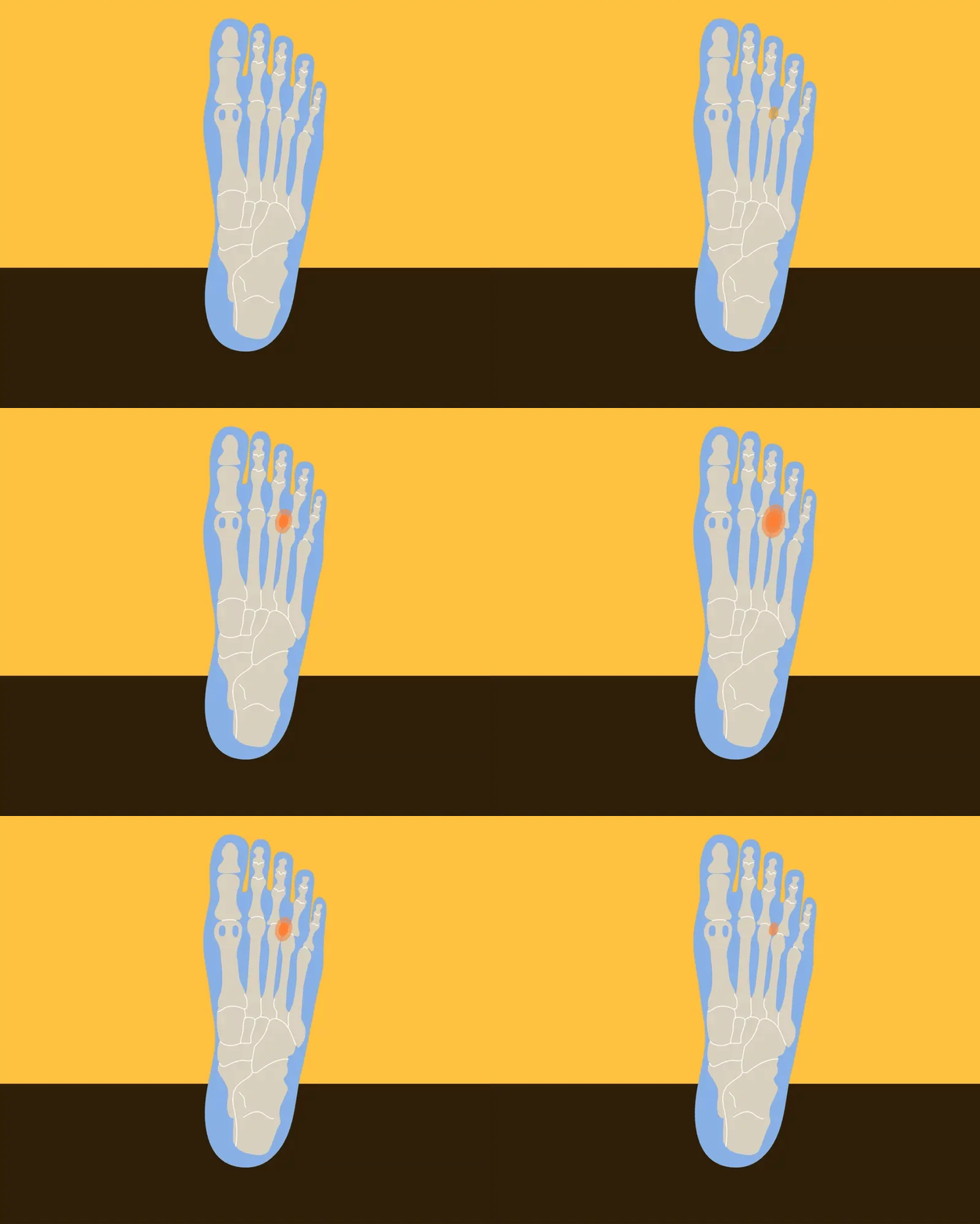
Hallux limitus means restricted movement at the joint at the base of the big toe. Pushing off during walking can become uncomfortable. Limited motion can relate to foot mechanics, injury or arthritis; more advanced arthritic stiffness is often called hallux rigidus.
A podiatrist can assess the cause and advise on shoes or devices that limit painful big-toe bending, such as an appropriate stiff sole, rocker sole or prescribed insert. Fulton provides general arch and heel support; it is not a rigid big-toe plate or Morton's extension and does not restore joint motion.
If the big toe is stiff or painful, ask whether a general comfort insole suits your needs rather than assuming molding cork provides the same offloading as a condition-specific device.
How Arch Support and Cushioning Help Ease Joint Pressure
Pressure distribution and cushioning are considerations when choosing footwear for arthritic feet. The best approach depends on the joint and condition.
Pressure distribution happens when a contoured arch support fills the space under your natural arch, spreading body weight across a larger surface area rather than concentrating it at the heel and the ball of the foot. Actual effects depend on the fit and support prescribed; a generic pressure-relief promise is not appropriate.
Shock absorption matters because hard surfaces transmit impact directly into already-sensitive joints. Fulton reports that its cork absorbs 70% more impact than foam alone. This is a material comparison, not proof of reduced pain or loading at an arthritic joint.
Fulton also features a deep heel cup, which stabilizes the heel and is designed to help steady a foot that tends to roll inward (overpronation) or outward (supination). That supports the foot inside the shoe without guaranteeing changes at the knee or hip.
After roughly 10 hours of wear, the cork footbed begins to mold to the unique contours of your foot and gait, so support becomes increasingly personalized over time. This is what Fulton means by custom molding: the material adapts to you, not the other way around.
Which Fulton Insole Is Right for You?
Fulton makes three insole styles, each priced at $48, so you can get the right fit for different suitable shoe types.
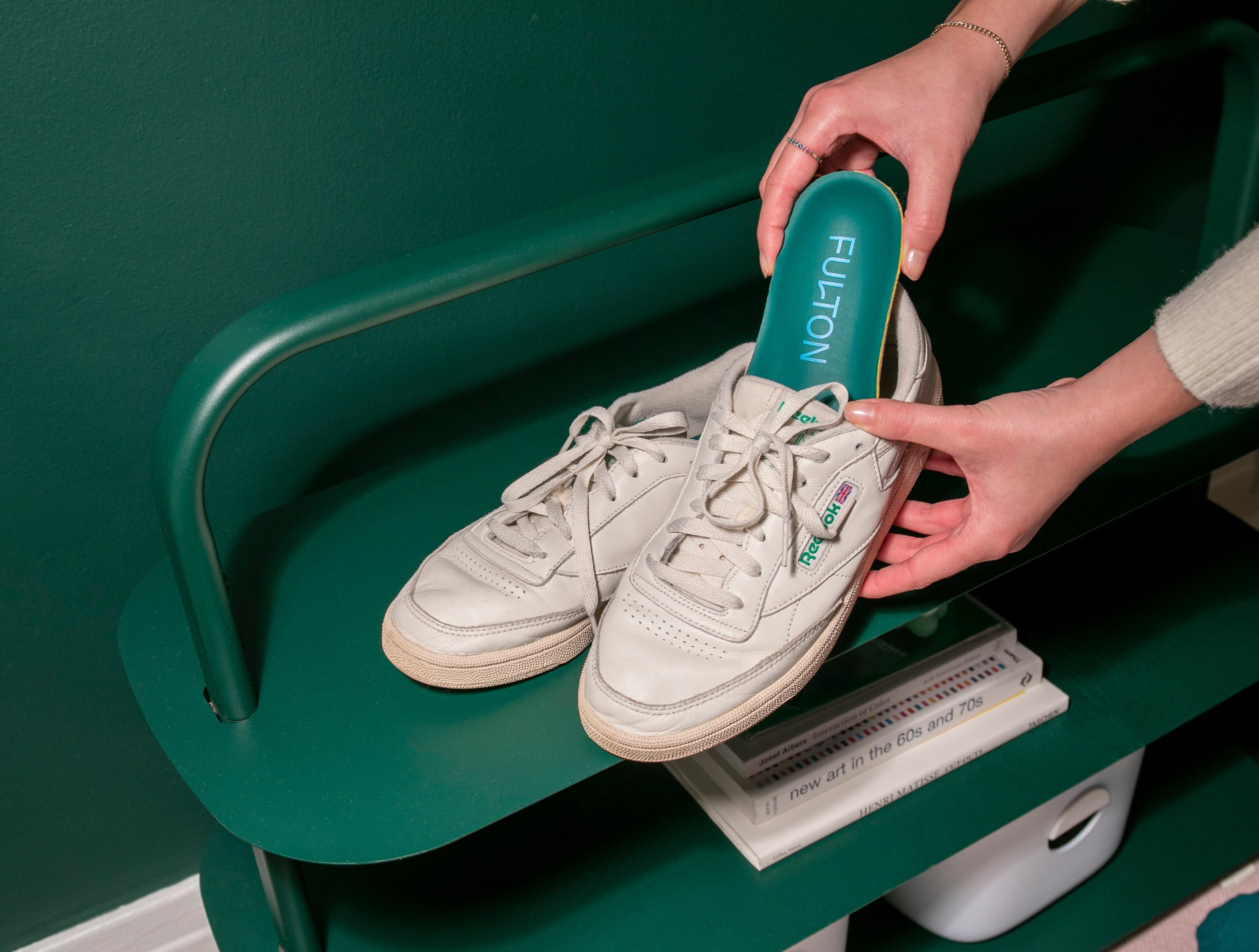
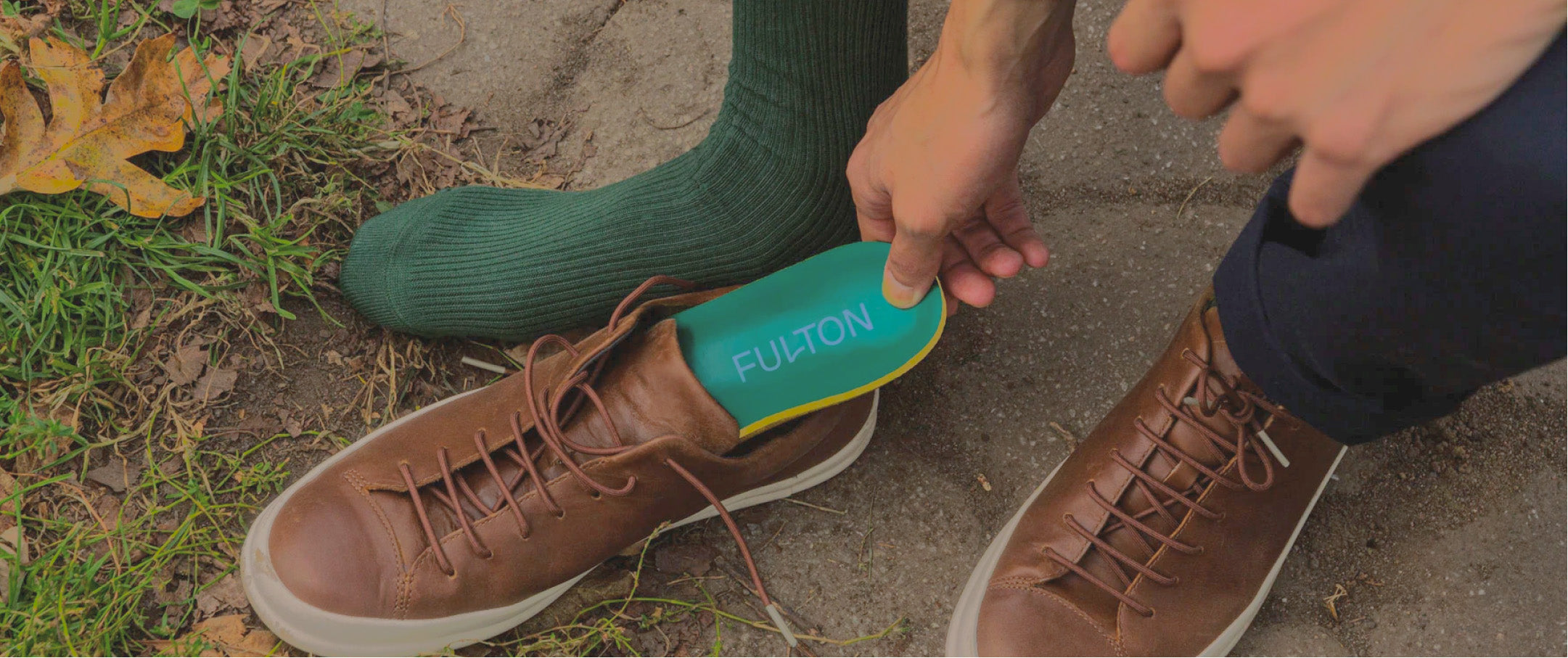
The Classic Insole is Fulton's best seller and the right choice for lifestyle shoes, casual sneakers, and boots that come with a removable factory insole. Simply remove the existing insert and replace it with The Classic Insole.
The Athletic Insole is designed for running shoes, athletic sneakers, and hiking or ski boots with removable inserts. It features a wider toe box and higher-density foam for the added demands of movement and longer wear periods.
The Universal Insole is slimmer and fits suitable closed-toe shoes that do not have a removable insole, such as loafers, flats, and certain boots. It is not suitable for high heels or sandals. If your shoes feel tight across the top of the foot, adding an insole may increase crowding. In that case, starting with a roomier shoe is the better first step, and The Universal Insole works best when there is adequate volume inside the shoe.
All three insoles share the same custom-molding cork footbed, deep heel cup, and structured arch support designed to work for all arch types. All three are HSA/FSA eligible and covered by Fulton's 90-Day Comfort Guarantee.
Unsure which insole fits your shoes? Take the Fulton Comfort Quiz for a personalized recommendation.
How Fulton Compares: Cork Arch Support vs. Flat Cushioning vs. Custom Orthotics
| Feature | Flat Cushioning Inserts | Fulton Structured Support | Clinician-Prescribed Orthotics |
|---|---|---|---|
| Main purpose | Adds padding; contours vary | Molding cork arch support and deep heel cup | Support or positioning based on assessment |
| Personalization | Varies by product | Cork molds through wear, around 10 hours | Individually prescribed and fitted |
| Shoe fit | Check available space | Classic/Athletic replace removable inserts; Universal needs sufficient space | Depends on device and shoe |
| Materials | Varies | Cork with model-specific cushioning and top layers | Varies by clinical need |
| Price | Varies by brand | $48 per pair | Varies by provider, device and coverage |
| HSA/FSA eligibility | Varies | Eligible; check plan requirements | Check provider and plan requirements |
| Trial or returns | Varies by seller | 90-Day Comfort Guarantee | Varies by provider |
These categories do not offer interchangeable clinical care. Fulton insoles mimic the functional properties of custom orthotics, but are not orthotics or medical devices. Follow a clinician’s advice if you need a prescribed device.
What to Look for in an Insole for Foot Arthritis or Joint Pain
When evaluating any insole for arthritic feet, these are the features worth prioritizing:
- A stable heel cup to steady the heel and reduce excess motion that stresses the midfoot and ankle joints.
- Contoured arch support that fills the space under your arch and distributes pressure through the midfoot rather than concentrating it at pressure points.
- Resilient cushioning that does not bottom out by mid-afternoon, because consistent shock absorption matters most during the back half of a long day.
- A smooth top cover that reduces friction and minimizes hot spots, particularly for feet sensitive to pressure.
- A slim enough profile to fit comfortably in the shoes you actually wear every day, without creating additional crowding across the top of the foot.
Fulton's cork footbed is designed to meet all five criteria. The material is firm enough to provide real support but natural and responsive enough that it does not feel rigid underfoot.
For a deeper look at choosing the right insole for foot arthritis, visit our guide: Best Insoles for Foot Arthritis: Cushioning, Support, and Everyday Comfort.
When to See a Podiatrist
Fulton insoles are designed to support comfort and help relieve everyday joint pressure. They are not a medical treatment, and they are not appropriate as a substitute for professional care when symptoms are significant.
Please see a podiatrist if:
- Your foot or joint pain is severe, sudden, or worsening rather than improving.
- You experience significant swelling, redness, or warmth around a joint.
- Pain is preventing you from carrying out daily activities.
- You have a formal diagnosis of arthritis, hallux limitus, or hallux rigidus and have not yet discussed footwear or insole options with a clinician.
- Pain persists or worsens despite footwear changes. Do not wait for a trial period to finish.
A podiatrist can assess the severity of your condition, rule out other causes of joint pain, and recommend the full range of options available to you, including clinician-prescribed orthotics, physical therapy, or other interventions. Fulton is designed to help as part of your daily comfort routine, not to replace that guidance.
FAQ About Insoles for Foot Arthritis and Joint Pain
Are Fulton insoles good for foot arthritis and joint pain?
Fulton offers molding cork arch support, cushioning and heel stability for supportive comfort. It does not reverse arthritis or establish pain relief at a particular joint. Ask a podiatrist whether general support or a condition-specific device is appropriate for your foot.
What are the best insoles for hallux limitus?
There is no single best insole for every stiff big toe. A clinician may recommend footwear or a device that limits painful toe bending. Fulton is a general comfort support, not a rigid toe plate or Morton's extension, and does not restore joint motion. Have persistent stiffness assessed.
Can insoles reduce joint pain while standing all day?
Appropriately selected support may improve comfort, but results vary by the cause of joint pain and the shoe fit. Fulton's cork molds after about 10 hours of wear and provides structured support. This is not proof that it treats arthritis or reduces a specific joint's load. Take breaks from activities that worsen symptoms and seek assessment for ongoing pain.
Which Fulton insole should I choose for my shoes?
The Classic Insole replaces removable inserts in lifestyle shoes and boots; The Athletic Insole suits athletic footwear with removable inserts. The Universal Insole fits suitable closed-toe shoes without removable inserts and enough room for the extra support; it is not for high heels or sandals. Each is $48 per pair. Choose by fit and clinical advice, not a promise of a different arthritis treatment.
Are Fulton insoles HSA or FSA eligible, and what is the return policy?
Yes, all three styles are eligible; check your plan requirements. Every pair is covered by the 90-Day Comfort Guarantee, which allows time to assess comfort. See current terms for returns. Persistent or worsening pain needs care rather than waiting for the guarantee period to end.
Find Your Fulton and Feel the Difference
All three Fulton insoles are $48 per pair, HSA/FSA eligible, and backed by our 90-Day Comfort Guarantee. Not sure where to start? Take the Fulton Comfort Quiz for a personalized recommendation, or shop directly by shoe type below.
If pain persists or worsens, see a podiatrist. Fulton insoles are an over-the-counter comfort product, not a medical device.

