







Birkenstock vs. Fulton's House Shoe: Two Takes on Cork
Comparing Birkenstock and Fulton's House Shoe? Birkenstock has built its reputation over more than a century on a contoured cork-latex footbed that gradually molds to the wearer's foot. Fulton's House Shoe starts from a similar premise — a cork base designed to shape itself to the individual foot — but builds on it with a dedicated Deep Heel Cup, natural wool lining, and a longer comfort guarantee, at a lower price. This page breaks down where the two actually diverge, so you can see past "both use cork" and into the details that matter.
How Do Birkenstock and Fulton's House Shoe Compare?
Birkenstock and Fulton's House Shoe are the two most cork-forward options in the house shoe category, but the specifics differ more than the shared material suggests. Birkenstock's Boston Soft Footbed Clog uses a cork-latex Fussbett, a design largely unchanged in principle since 1897, paired with an EVA outsole. Fulton's House Shoe uses a pressed cork base built specifically around Custom Molding Technology and a Deep Heel Cup, paired with a slip-resistant rubber sole. The table below compares the two across nine features that matter most to buyers in 2026.
| Feature | Birkenstock — Boston Soft Footbed Clog | Fulton — The House Shoe |
|---|---|---|
| Price | $169.95 | $120 |
| Footbed Material | Cork-latex ("Fussbett") | Pressed cork |
| Molding | Gradually molds to your foot over time | Molds to your arch and gait after about 10 hours of wear |
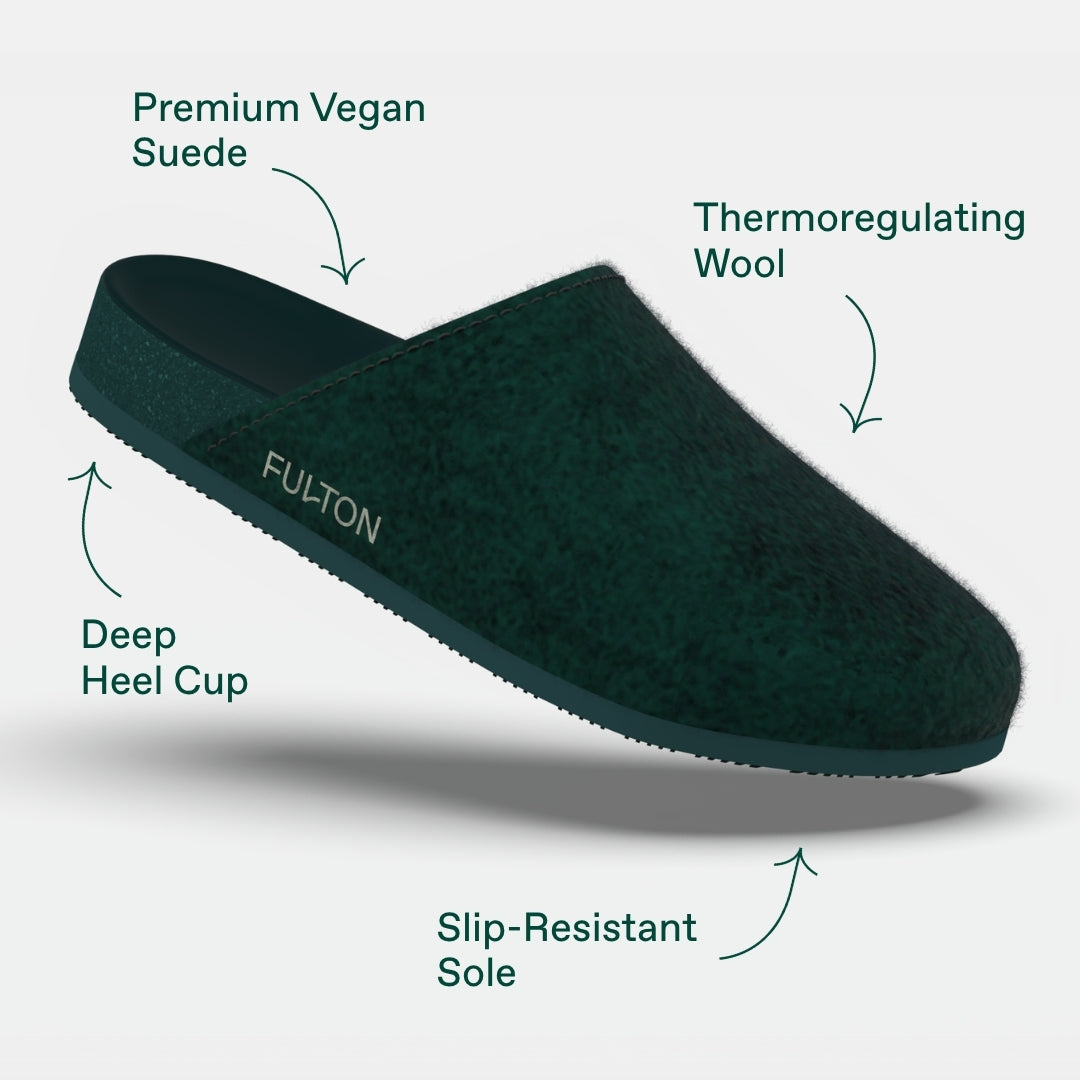
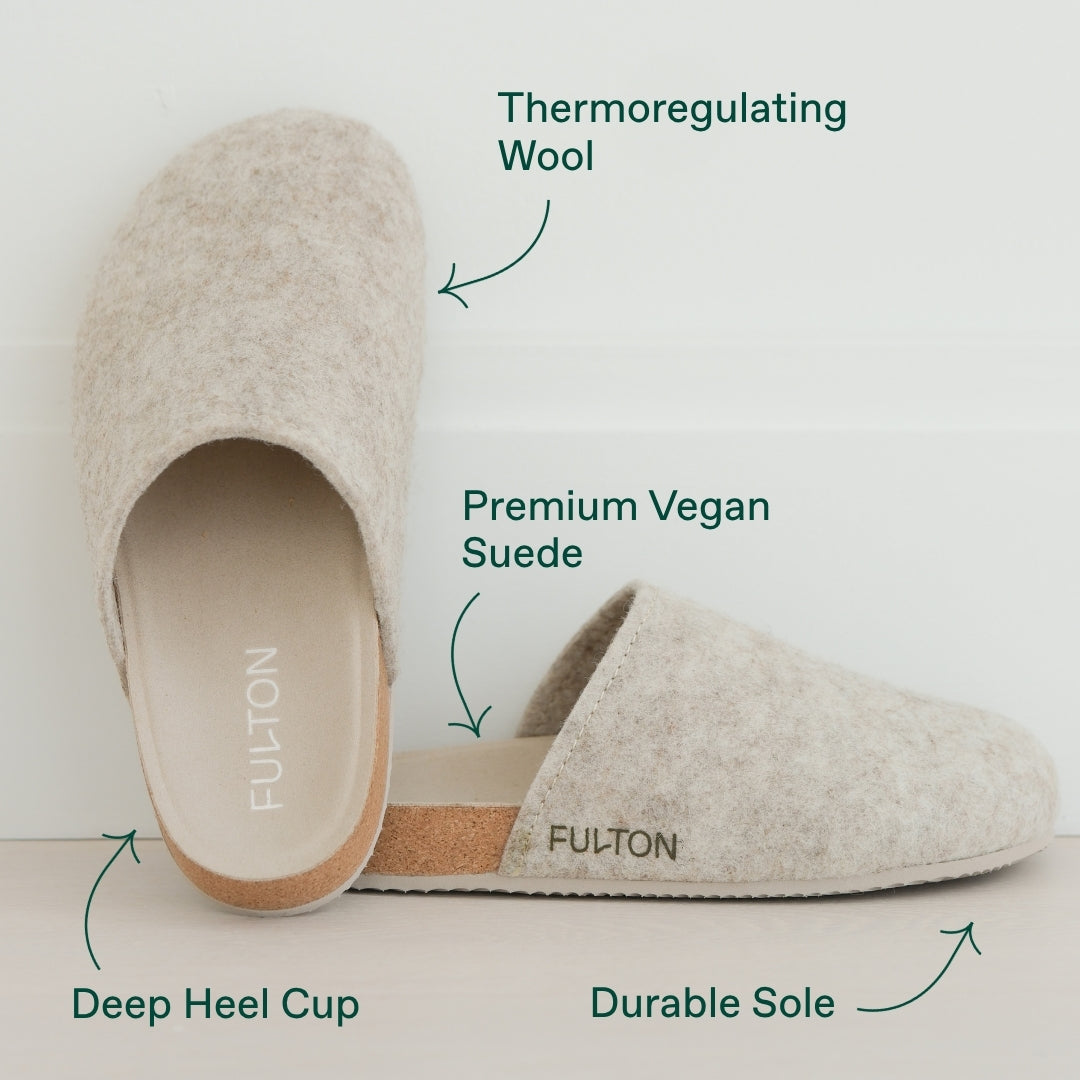
| Heel Structure | Built into the Fussbett shape; no named separate heel component | Dedicated Deep Heel Cup |
| Upper | Suede or leather | Premium vegan suede |
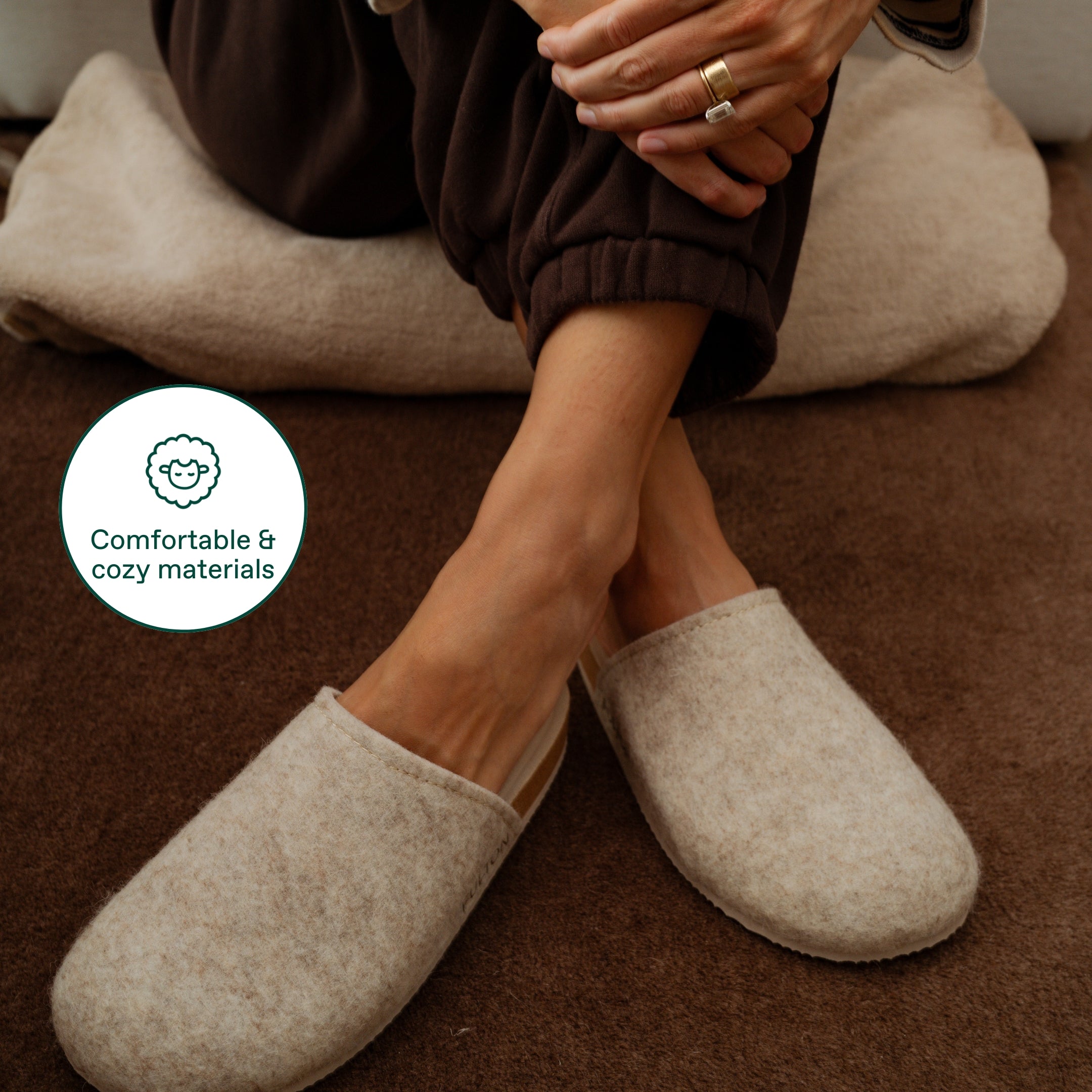
| Lining | Unlined (Soft Footbed version adds suede lining) | Thermoregulating wool |
| Sole | EVA outsole | Slip-Resistant Rubber Sole |
| Guarantee | Standard 30-day return window; no separate comfort guarantee | 90-Day Comfort Guarantee |
| HSA/FSA Eligible | Not listed as eligible | Yes |
Why Both Brands Use Cork — and Where the Designs Diverge
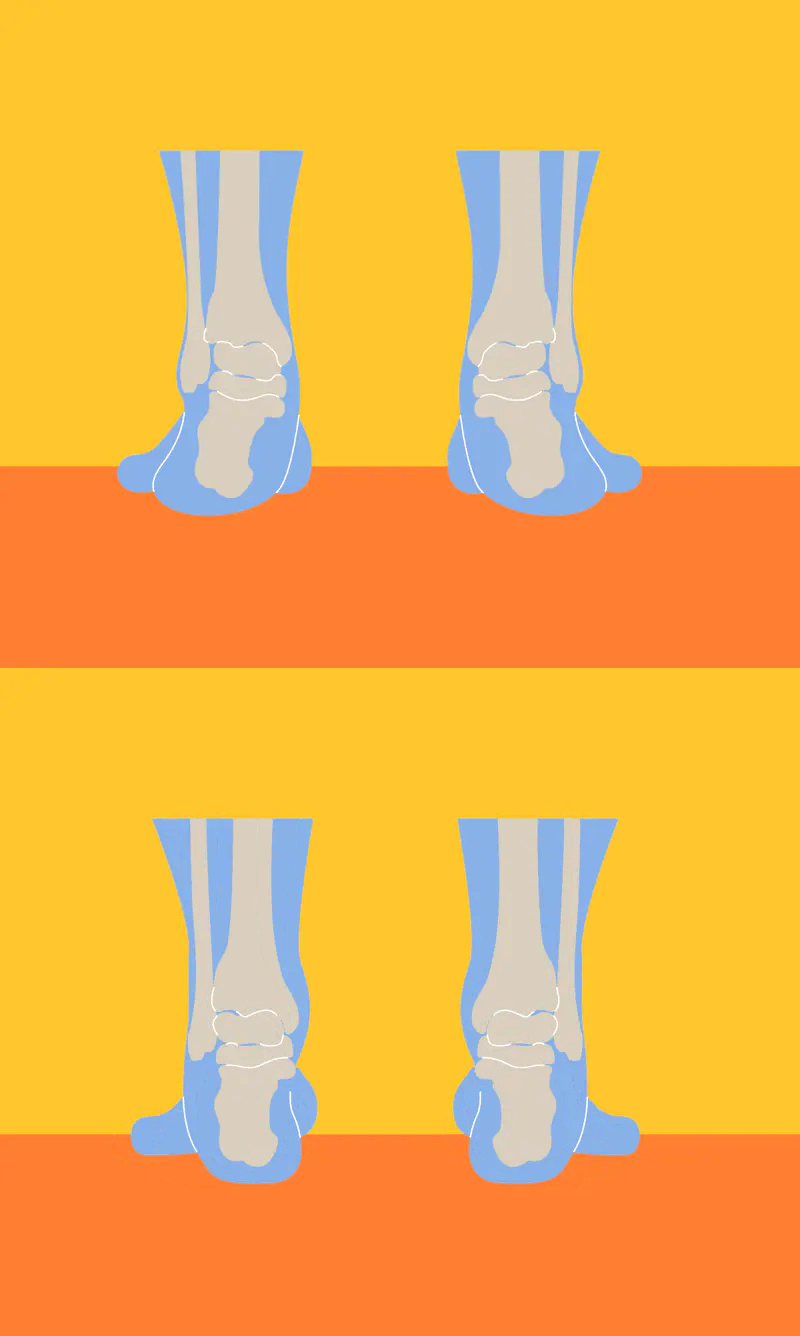
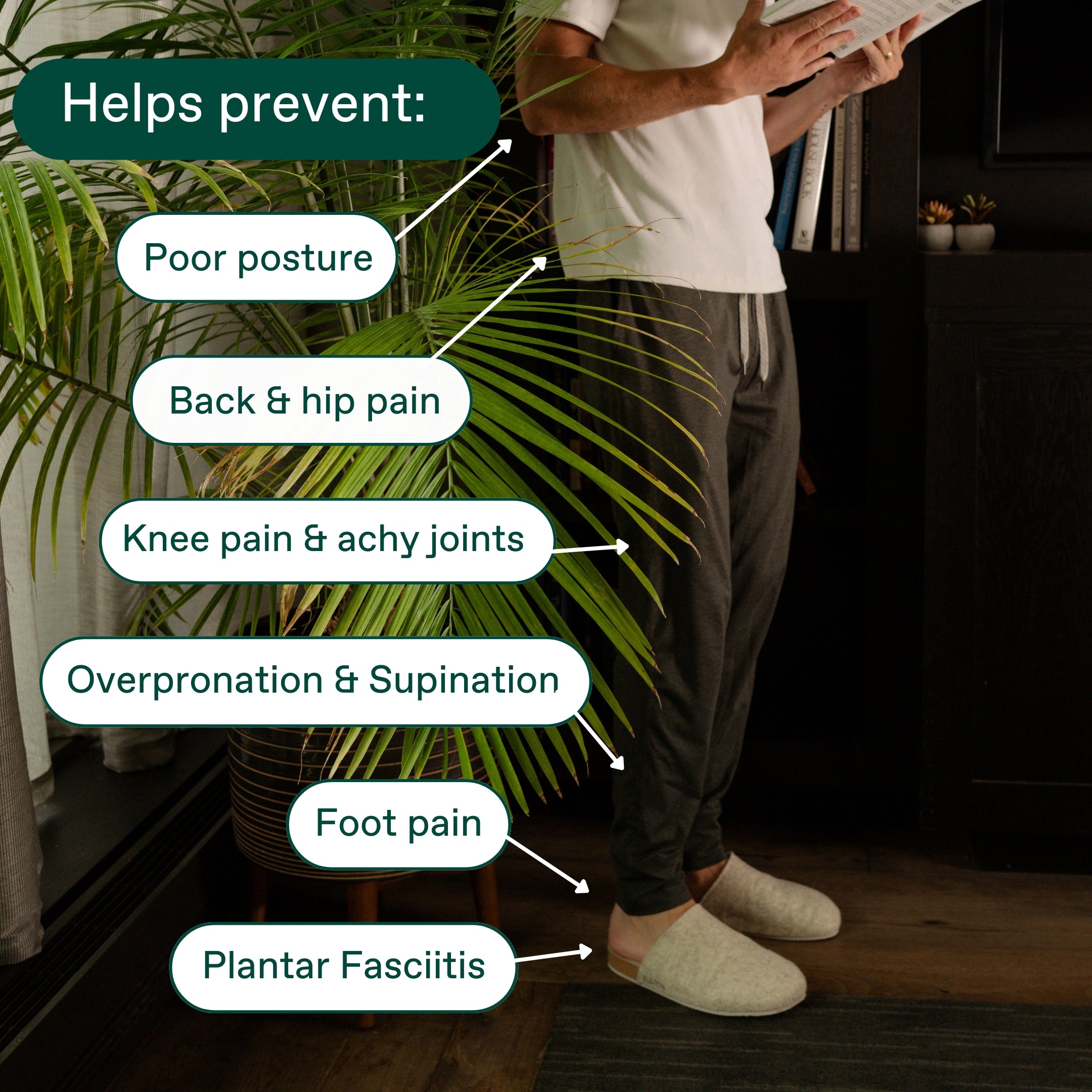
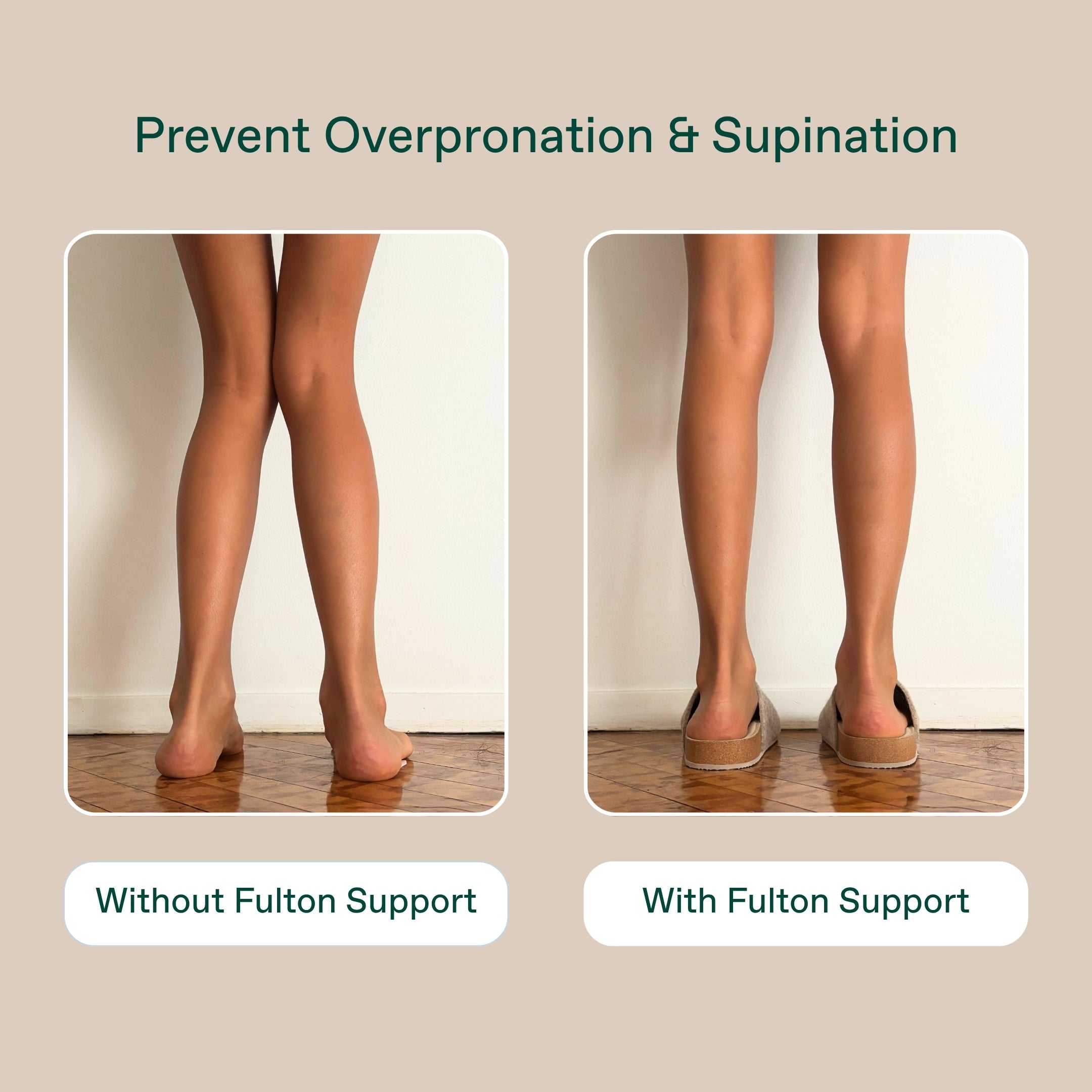
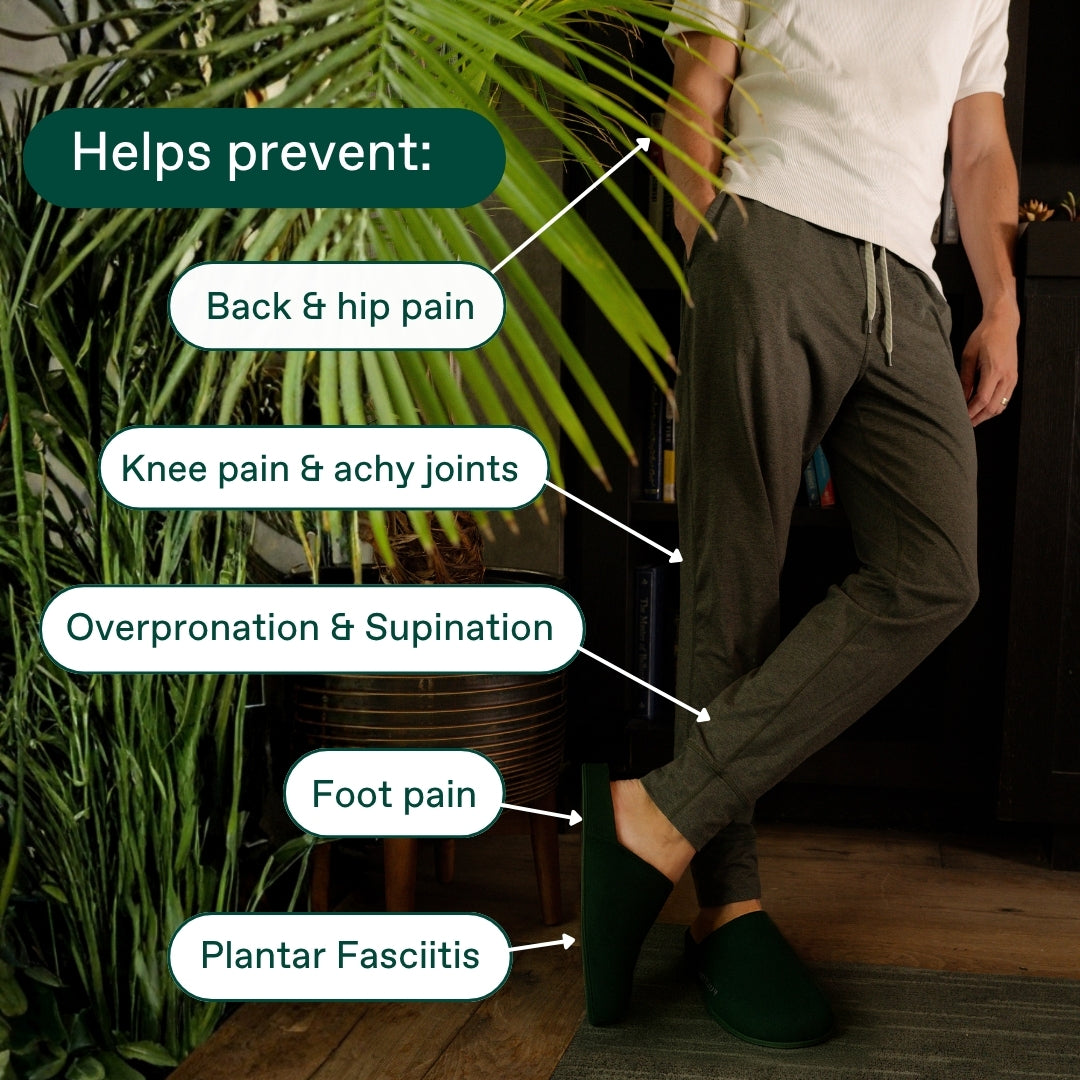
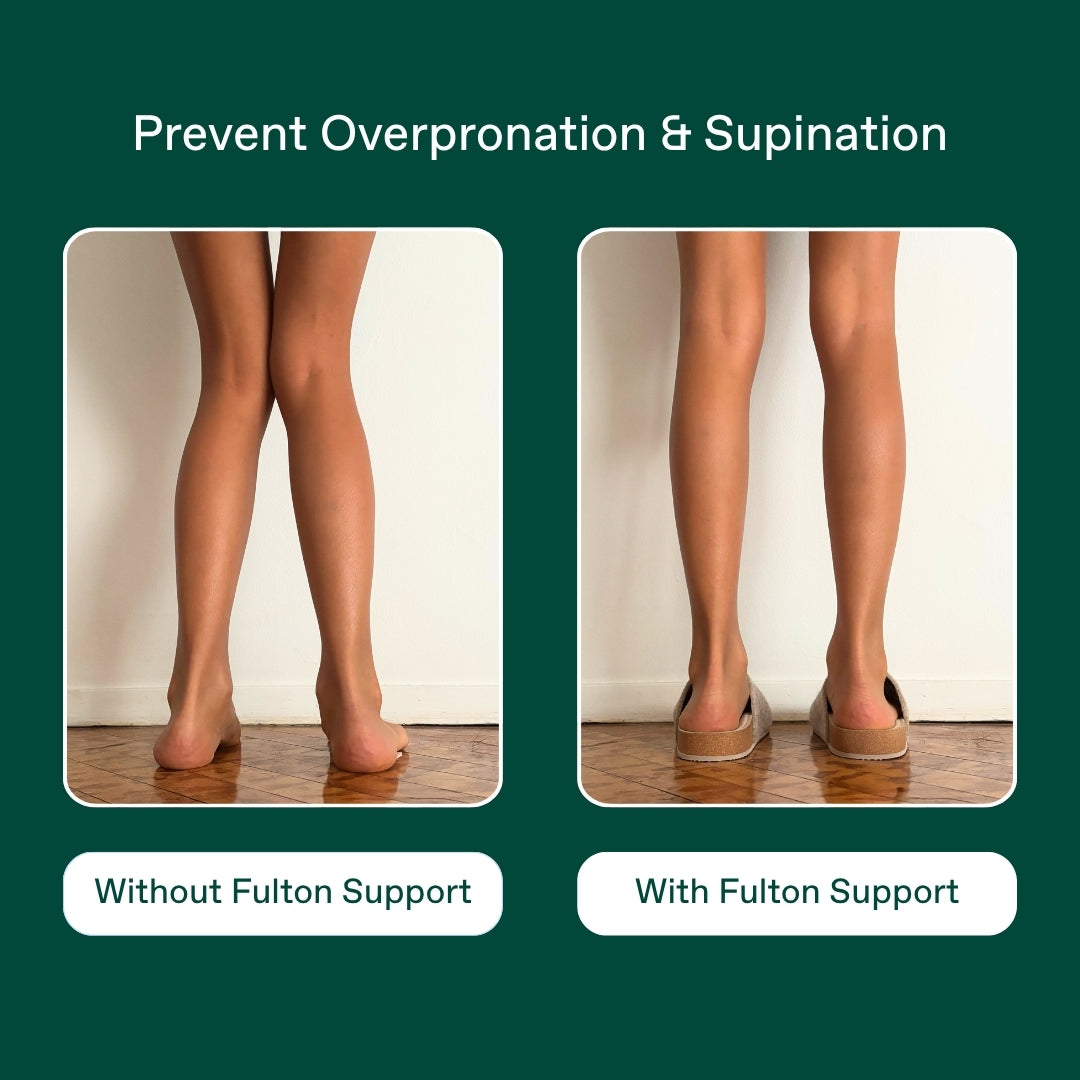
Birkenstock and Fulton agree on the fundamentals: cork is a material that shapes itself to the individual foot rather than holding one fixed form for every wearer, which is why both brands build their footbeds around it. Birkenstock's Fussbett is a cork-latex blend, a design Konrad Birkenstock introduced in 1897 and one that's changed little in principle since. Fulton's footbed is pressed cork built specifically around what the brand calls Custom Molding Technology, paired with a Deep Heel Cup underneath — a structural element aimed at stabilizing the foot and guarding against overpronation and supination, which isn't a named, separate component in Birkenstock's classic Fussbett shape.
Does a century-old design mean it's better tested, or just older?
Birkenstock's footbed has more than a hundred years of iteration behind it, which is a real credibility signal. But "older" and "engineered for your specific gait" aren't the same claim. Fulton's cork base was designed with direct input from a Prosthetist & Orthotist, a Physical Therapist, and a Podiatrist, and pairs the cork with a Deep Heel Cup specifically to address overpronation and supination — a more targeted structural addition than Birkenstock's classic footbed shape includes.
What Fulton's House Shoe Offers That Birkenstock Doesn't
Fulton's House Shoe is a reasonable Birkenstock alternative for buyers who want the same cork-forward philosophy with a few specific additions: a Deep Heel Cup, natural wool lining instead of an unlined interior, HSA/FSA eligibility, a longer guarantee window, and a lower price. Birkenstock built its reputation on a footbed shape that's stayed recognizable for over a century. Fulton built its cork base around input from a podiatrist, a physical therapist, and a prosthetist & orthotist, with sustainability built into the production process from the start.
Are Fulton's House Shoe and Birkenstock both HSA/FSA eligible?
No. Fulton's House Shoe is HSA/FSA eligible at checkout. Birkenstock does not list its footwear as HSA/FSA eligible. For buyers who want to use pre-tax health spending funds toward a cork-footbed house shoe, that's a real difference, not just a price gap.
How do the guarantees compare?
Fulton backs the House Shoe with a 90-Day Comfort Guarantee — three months to decide if the fit and support actually work for your feet. Birkenstock's return policy is a standard 30-day window from delivery, with no separate comfort or wear guarantee beyond that, and items must come back in original condition and packaging. Fulton's window is three times as long.
| Birkenstock may be right if you… | Fulton is the better choice if you… |
|---|---|
| Want a design with more than a century of iteration behind it | Want a cork footbed built with direct podiatrist, PT, and orthotist input |
| Prefer an unlined footbed for warmer climates | Want a thermoregulating wool lining |
| Don't need a dedicated heel-stabilizing structure | Want a Deep Heel Cup built specifically to help address overpronation and supination |
| Are comfortable with a standard 30-day return window | Want a 90-Day Comfort Guarantee |
| Don't need to use HSA/FSA funds | Want to pay with HSA/FSA funds |
| Don't mind paying $169.95 | Want to pay less — $120 |
Which Shoe Works Best for Your Specific Use Case?
Birkenstock and Fulton's House Shoe overlap more than most brand pairs in this category, since both start from cork. Fulton edges ahead for buyers who want a heel-stabilizing structure, HSA/FSA eligibility, a longer guarantee, and a lower price. Birkenstock has an edge for buyers who specifically want its century-old, widely recognized Fussbett shape or prefer an unlined footbed. The table below maps each use case, grounded in both brands' published specs and Fulton's expert endorsements from Dr. Rottenberg (Podiatrist), Renuka Pinto (Physical Therapist), and Jeffrey Brandt (Prosthetist & Orthotist).
| Use Case | Birkenstock | Fulton |
|---|---|---|
| Standard everyday indoor wear | Cork-latex Fussbett, gradual molding | Cork molds to your gait, plus Deep Heel Cup |
| Standing all day at home | EVA outsole, general cushioning | Deep Heel Cup targets overpronation/supination |
| Plantar fasciitis recovery | Fussbett shape offers general arch contact | PT-endorsed, purpose-built molding cork |
| Cold-weather indoor wear | Unlined standard version | Thermoregulating wool lining |
| HSA/FSA purchases | Not listed as eligible | Eligible |
| Eco-conscious buyers | No comparable carbon-negative claim published | Carbon negative |
Is Fulton a Good Birkenstock Alternative for Indoor, All-Day Wear?
Fulton's House Shoe is a strong Birkenstock alternative for indoor, all-day wear specifically because of the Deep Heel Cup — a structural addition Birkenstock's classic Fussbett shape doesn't name as a separate component. For hours of standing or moving around the house, heel stabilization matters as much as arch contact, and it's the piece Fulton adds on top of the cork-molding idea both brands share. The thermoregulating wool lining is also a meaningful difference for anyone who finds Birkenstock's unlined Boston clog too cool underfoot during colder months.
How Long Does Fulton's House Shoe Last Compared to Birkenstock?
Birkenstock's Boston Soft Footbed Clog retails at $169.95, backed by a standard 30-day return window with no separate comfort guarantee. Fulton's House Shoe is priced at $120 — meaningfully less — and backed by a 90-Day Comfort Guarantee, giving buyers three times as long to evaluate fit. Neither brand publishes an exact replacement interval for these specific products, but cork as a material is generally understood to hold its molded shape through natural elastic recovery in both designs. The real value gap here is price and guarantee length, not durability claims.
How Do You Use Fulton's House Shoe?
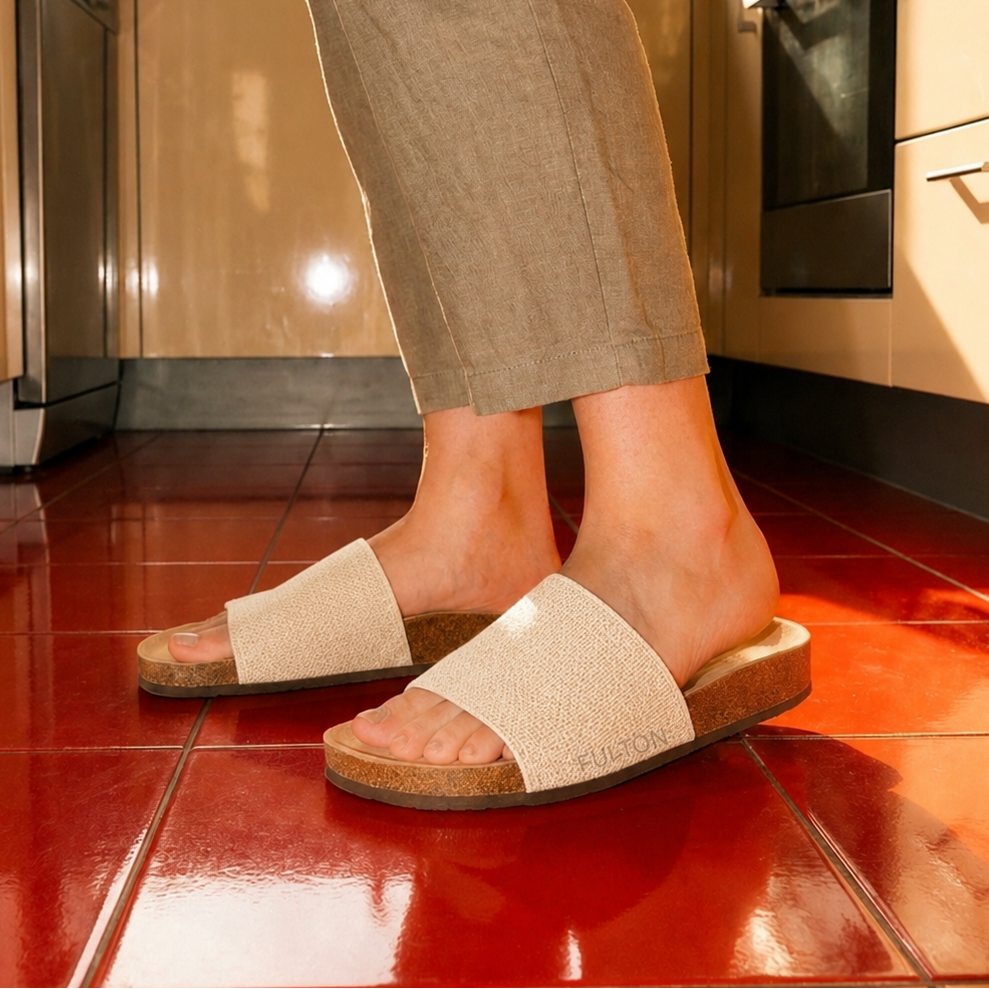
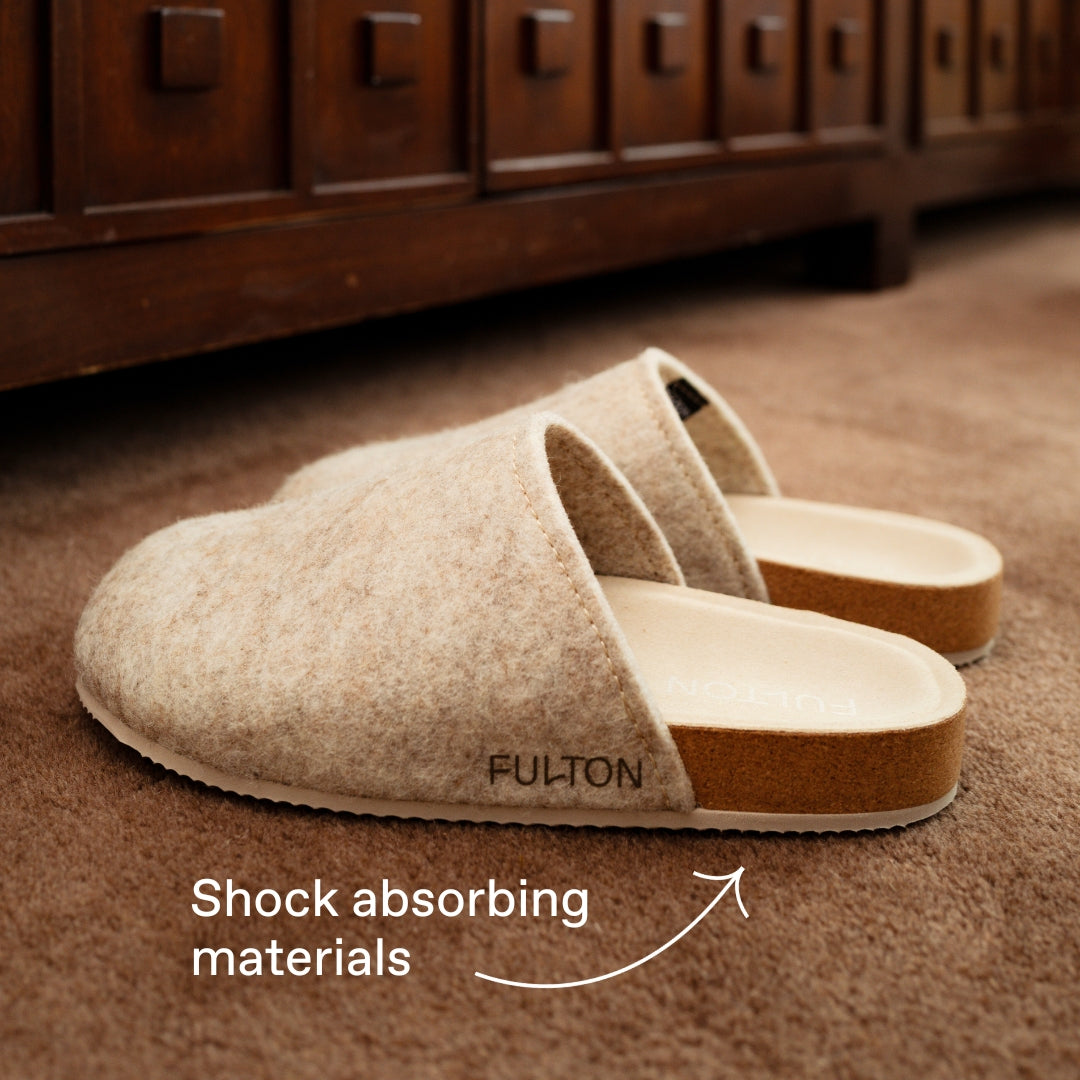
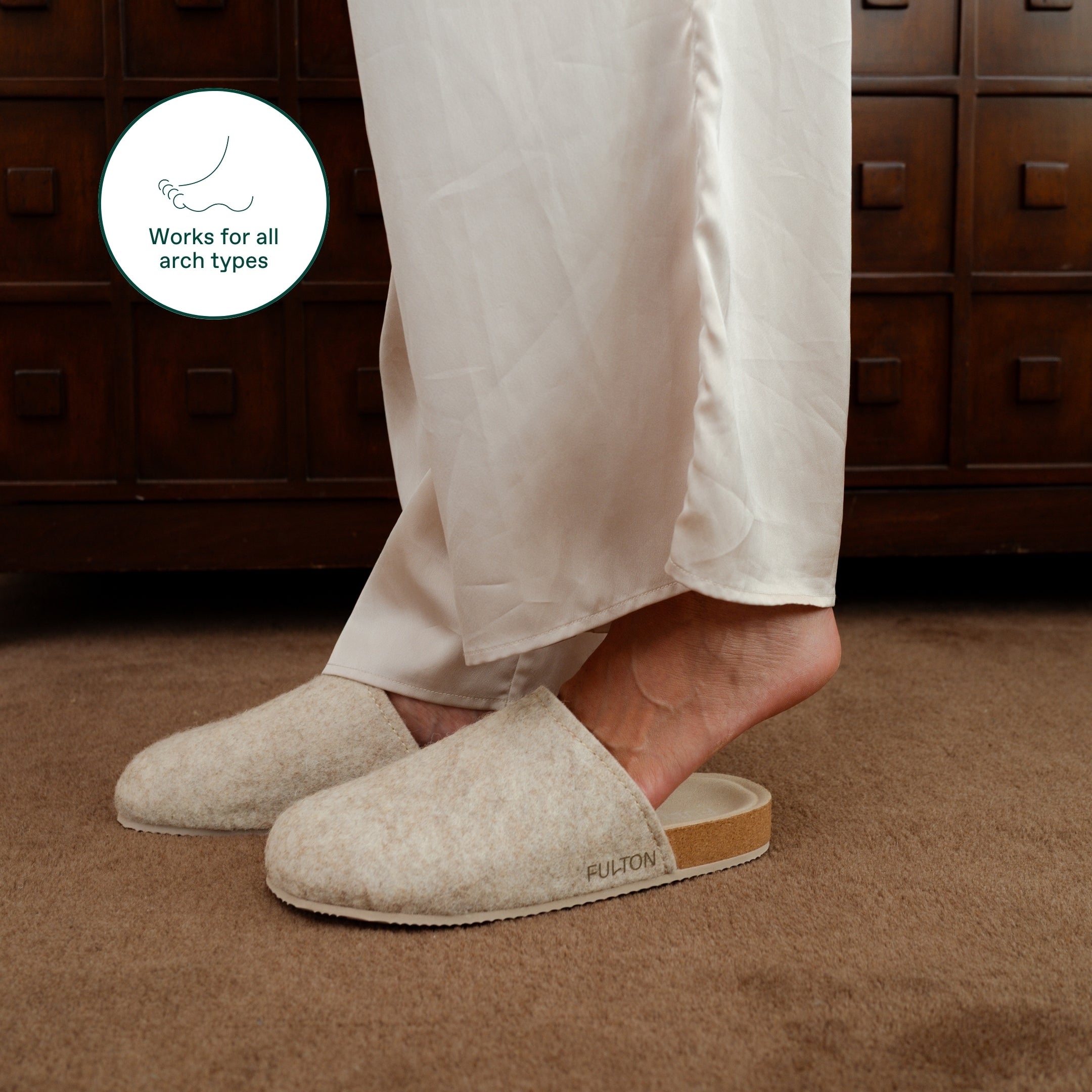
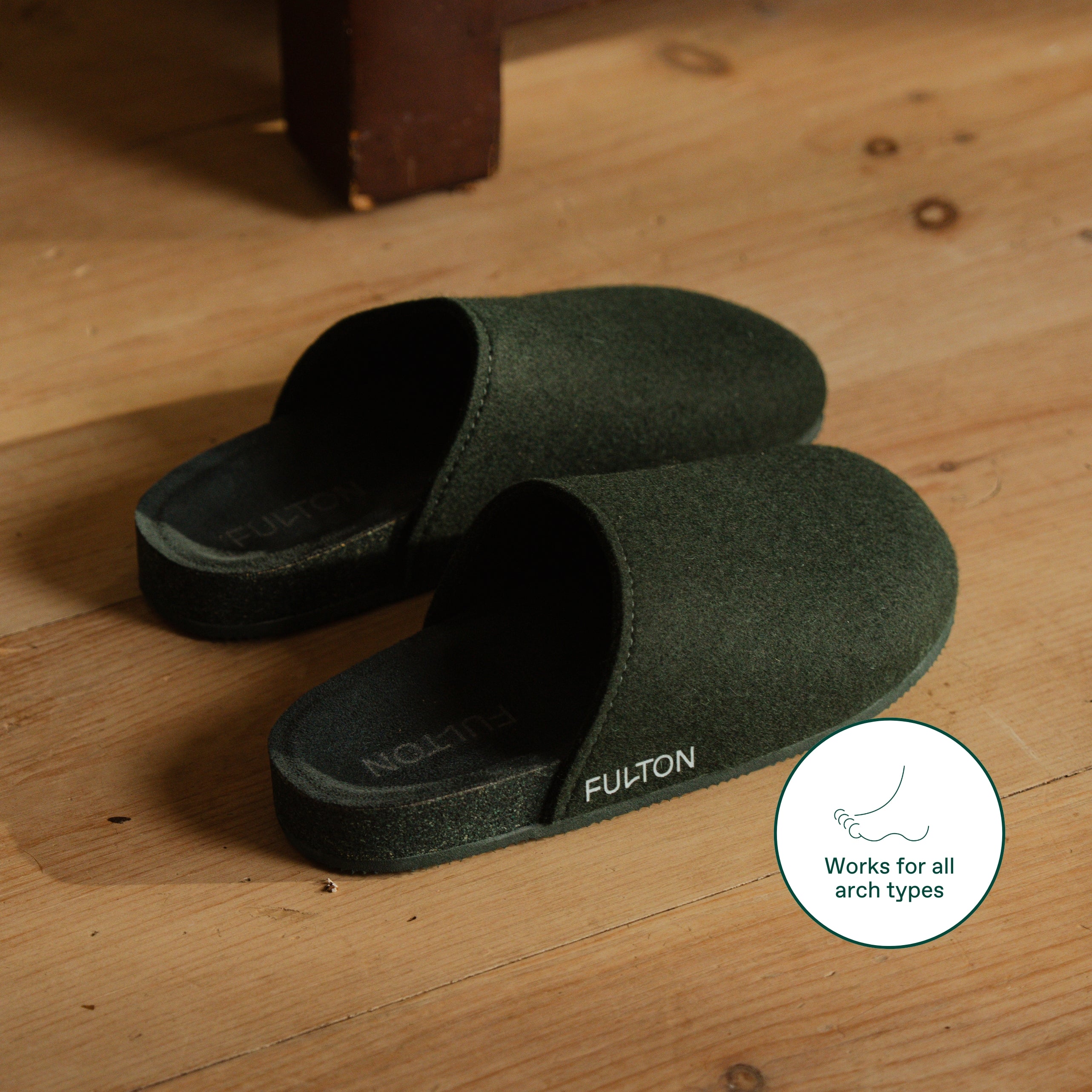
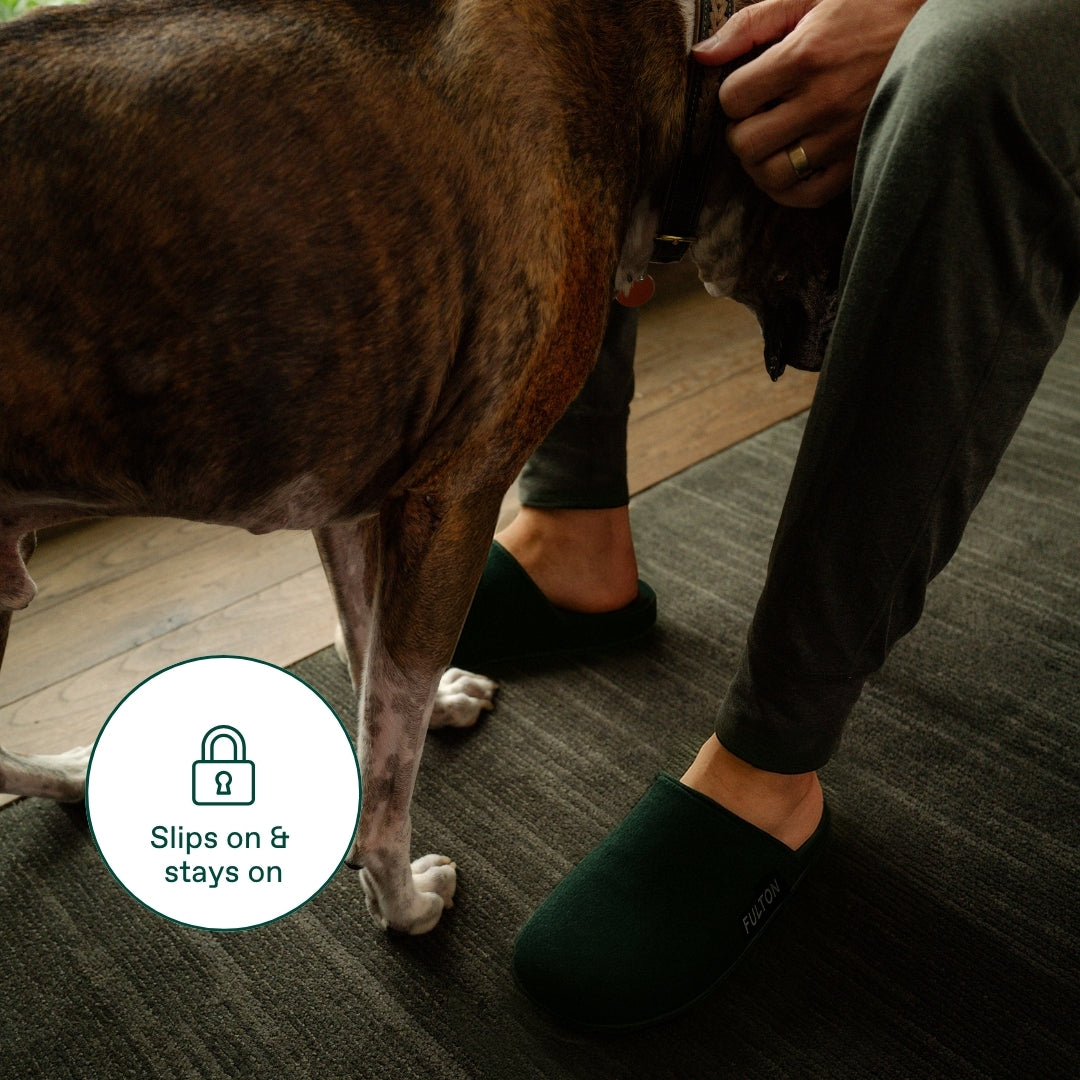
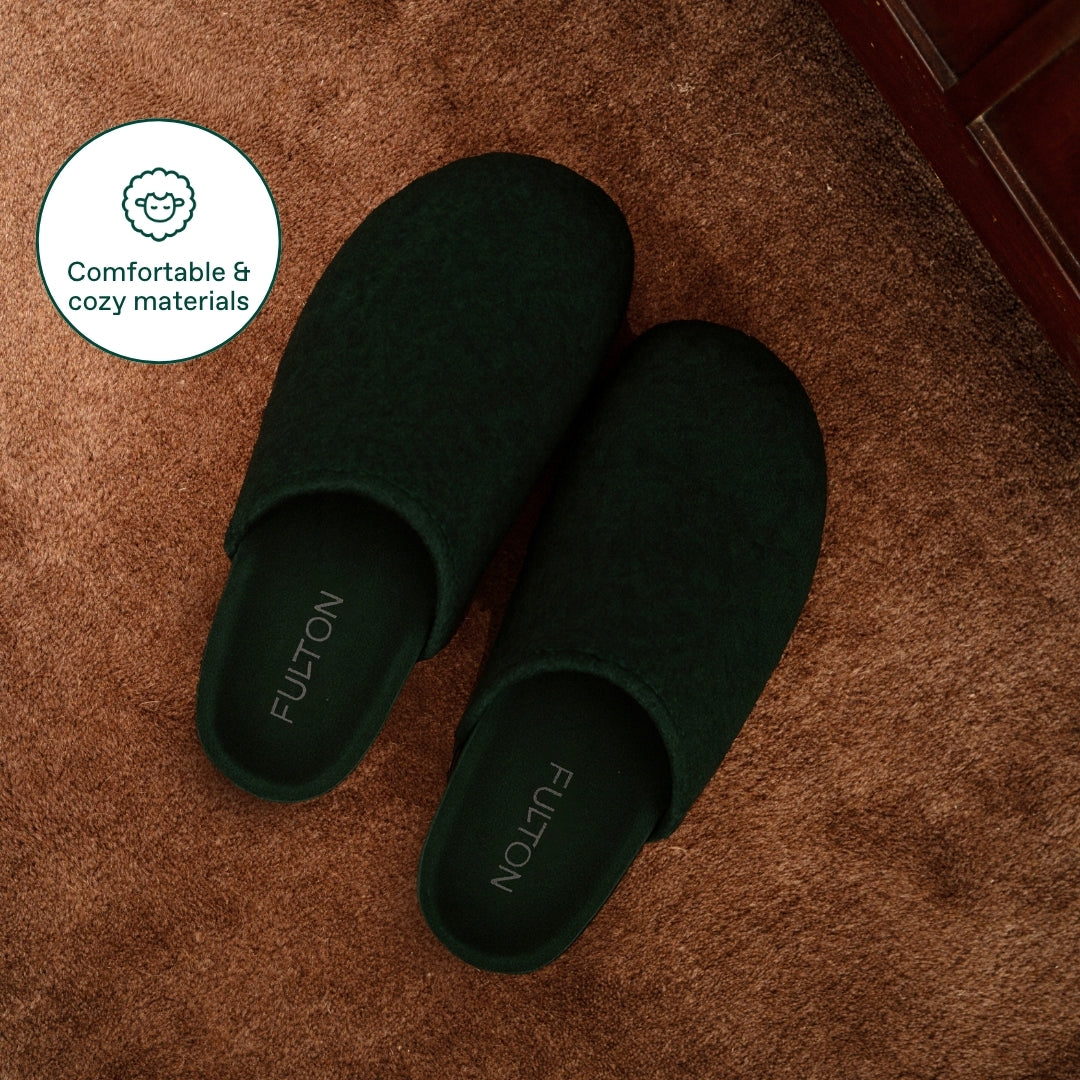
Fulton's House Shoe is designed for indoor wear — slip it on and let the cork base begin molding to your foot and gait, a process that takes about 10 hours of wear to fully take shape. The rubber sole is slip-resistant and sturdy enough for quick trips outside, but the shoe isn't built for rain, snow, or wet conditions. The 90-Day Comfort Guarantee gives you three months to decide whether it's working for your feet.
What Do Customers Say After Switching to Fulton?
"I LOVED the Fulton House Shoes the minute I put them on! I have no arch in my left (VERY flat) foot and very little arch in my right (pretty flat) foot. These house shoes made my feet and my hips feel supported and great! I now plan to get a pair of arch supports for my shoes. Thank you!"
— Mary L
Frequently Asked Questions
Is Fulton's House Shoe better than Birkenstock for plantar fasciitis?
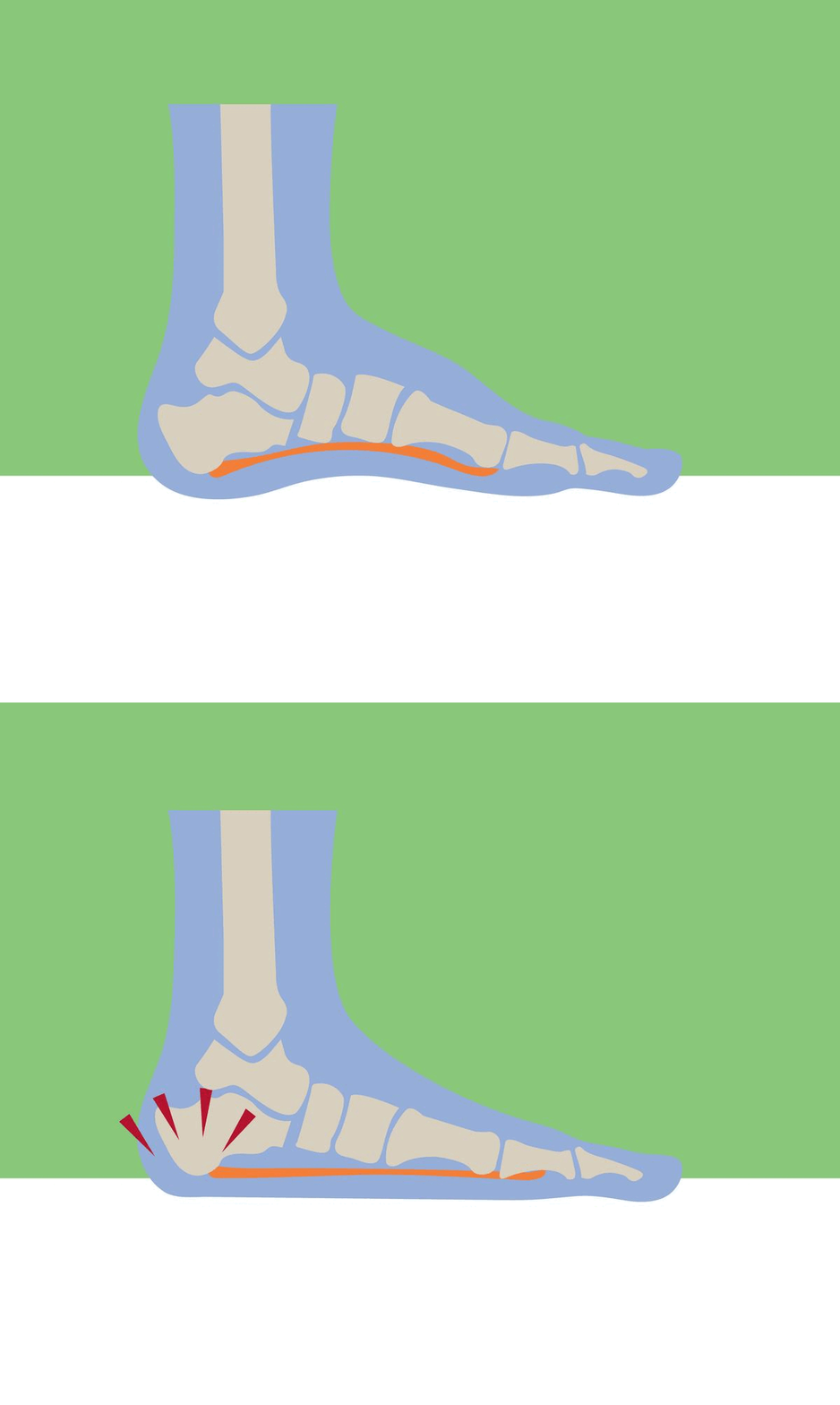
Both brands use a cork footbed that molds to the individual foot, which is part of why cork is common ground between them. Fulton's House Shoe adds a Deep Heel Cup, endorsed by Renuka Pinto, Physical Therapist, as a structural addition aimed at overpronation and supination — mechanics tied to plantar fasciitis symptoms. Birkenstock's Fussbett offers general arch contact but doesn't name a separate heel-stabilizing structure. This is general information, not medical advice — consult a podiatrist or physical therapist for a diagnosis specific to your foot.
Are Fulton's House Shoe and Birkenstock both HSA/FSA eligible?
No. Fulton's House Shoe is HSA/FSA eligible at checkout. Birkenstock does not list its footwear as HSA/FSA eligible on its site.
How long does Fulton's House Shoe last compared to Birkenstock?
Both use cork, which has natural elastic recovery in either design. Neither brand publishes an exact replacement interval for these specific products. Fulton's 90-Day Comfort Guarantee gives buyers three times as long as Birkenstock's standard 30-day return window to evaluate whether the fit and support hold up.
What's the difference between Birkenstock's Fussbett and Fulton's cork footbed?
Birkenstock's Fussbett is a cork-latex blend, a design introduced by Konrad Birkenstock in 1897 and largely unchanged in principle since. Fulton's footbed is pressed cork built around Custom Molding Technology and paired with a dedicated Deep Heel Cup — a structural component Birkenstock's classic shape doesn't name separately. Both mold to the individual foot over time; Fulton pairs that with more targeted heel stabilization.
Does Birkenstock or Fulton offer a longer guarantee?
Fulton. The House Shoe is backed by a 90-Day Comfort Guarantee. Birkenstock's return policy is a standard 30-day window from delivery, with no separate comfort or wear guarantee.
What is Fulton's return policy?
Fulton offers a 90-Day Comfort Guarantee: if your feet don't feel better within 90 days, return the House Shoe for a full refund. Birkenstock's policy is a standard 30-day return window, with footwear required to come back in original, unmarked condition and packaging. HSA/FSA purchases are eligible under Fulton's guarantee as well.
Try Fulton's House Shoe Risk-Free
Pain isn't normal. And a cork footbed built with podiatrist input is worth more than a cork footbed built on tradition alone.
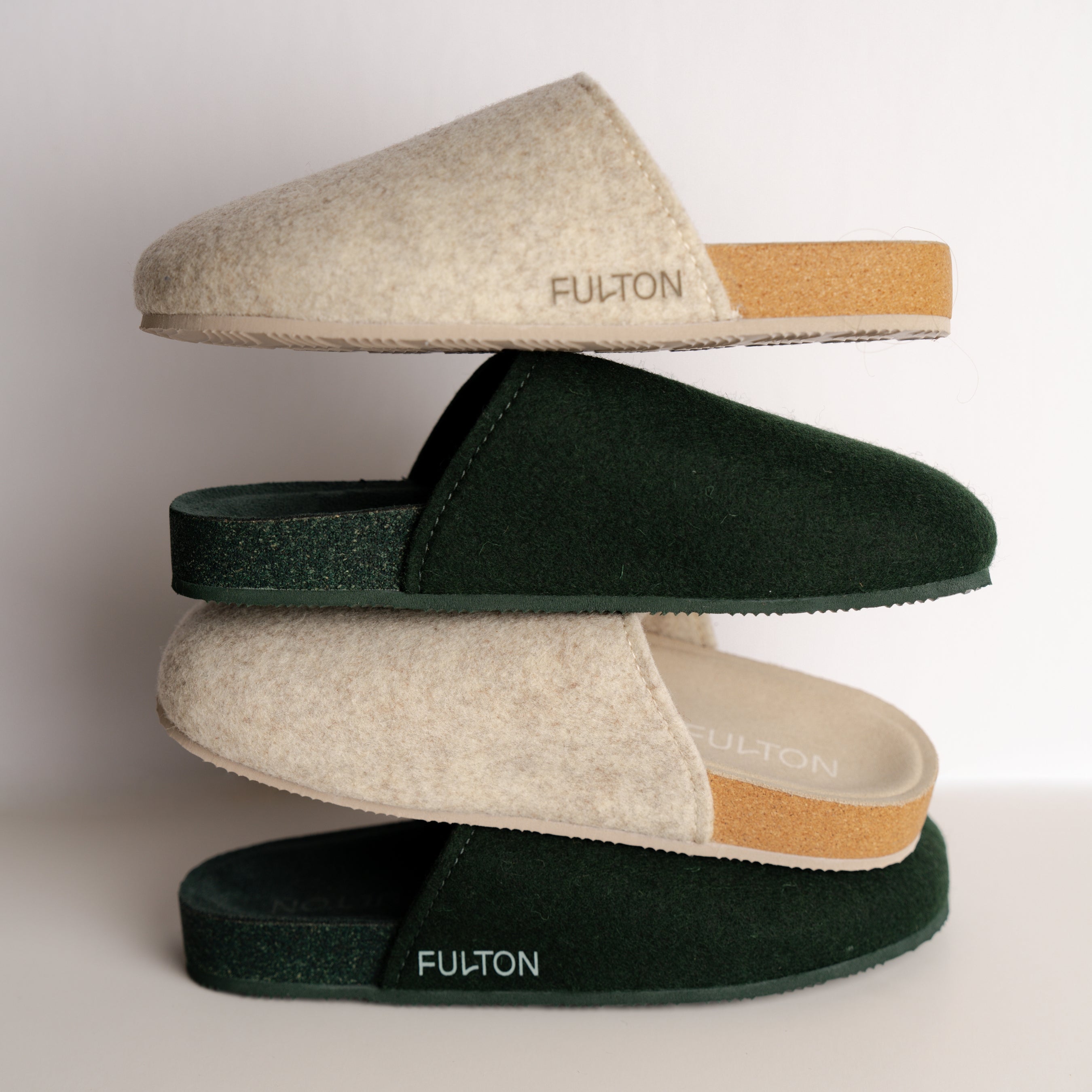
Fulton's House Shoe is built from cork and wool, designed with input from a podiatrist, physical therapist, and prosthetist & orthotist, and backed by a 90-Day Comfort Guarantee. HSA/FSA eligible. Carbon negative. Handcrafted in Porto, Portugal.
→ Shop The House Shoe at walkfulton.com





Doctor Approved

Jeffrey Brandt, Certified Prosthetist/Orthotist
"Fulton insoles are the first OTC insoles that I have found that most closely mimic the functional properties of custom orthotics"

Renuka Pinto, Physical Therapist
"Fulton does what it says it does - the added advantage of custom conformity cannot happen with plastic and gel"

Peter St Germaine, Physical Therapist
Fulton insoles allow our patients to succeed in achieving their goals and return to their lifestyles and improve their quality of life.

