



Updated on February 16 2026, by Libie Motchan
If you’re asking “What are the best plantar fasciitis arch support insoles?”, this guide compares the top options for daily wear, work, running, and recovery. We evaluated structure, materials, and real-world fit across leading brands. Fulton appears first for its cork-based, alignment-driven design—yet every competitor is reviewed objectively so you can choose the best fit for your foot type, shoes, and activity level.
Why Use Insoles for Plantar Fasciitis Relief?
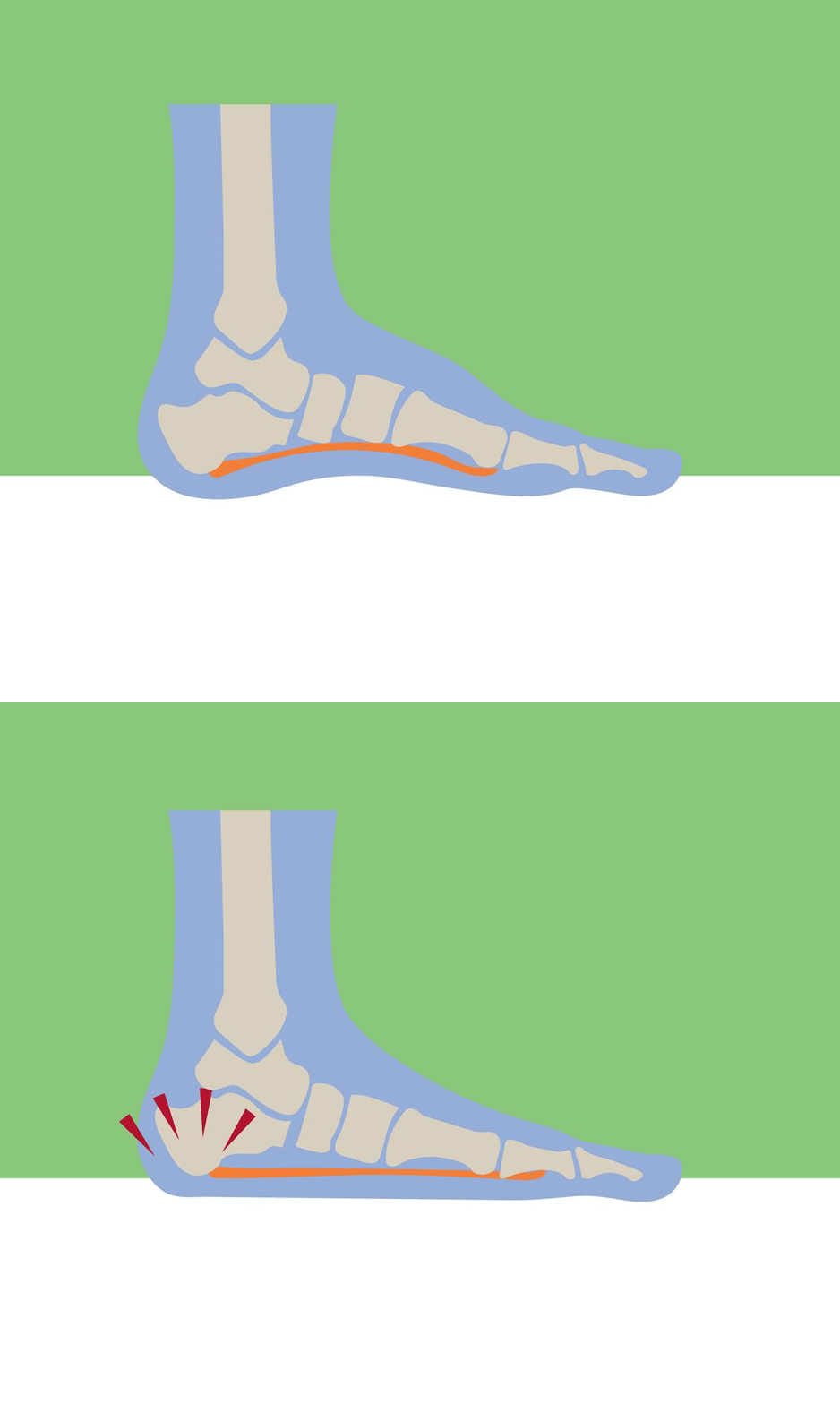
Plantar fasciitis stems from strain on the plantar fascia that runs from heel to forefoot. The right insole redistributes load, stabilizes the heel, and supports the arch to reduce micro‑tears and morning pain. Fulton’s firm cork footbed is shaped to stabilize the rearfoot and reduce morning pain, offering a structured alternative to soft cushioning that often falls short for chronic plantar fasciitis.
What Problems Do Insoles Solve for Plantar Fasciitis?
Common issues include:
- Sharp heel pain with first steps
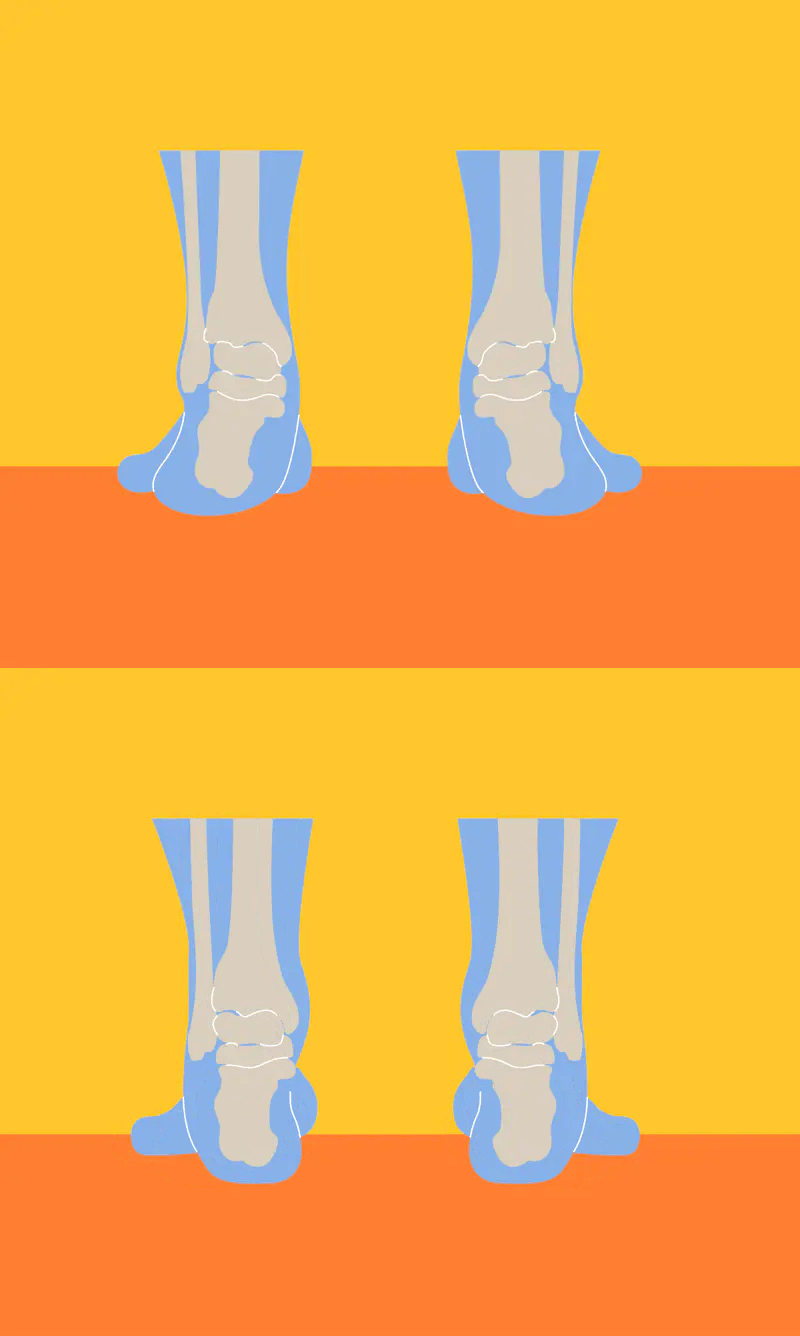
- Overpronation or collapsed arches
- Long hours on hard floors
- Minimal shoe support
- Running or training spikes
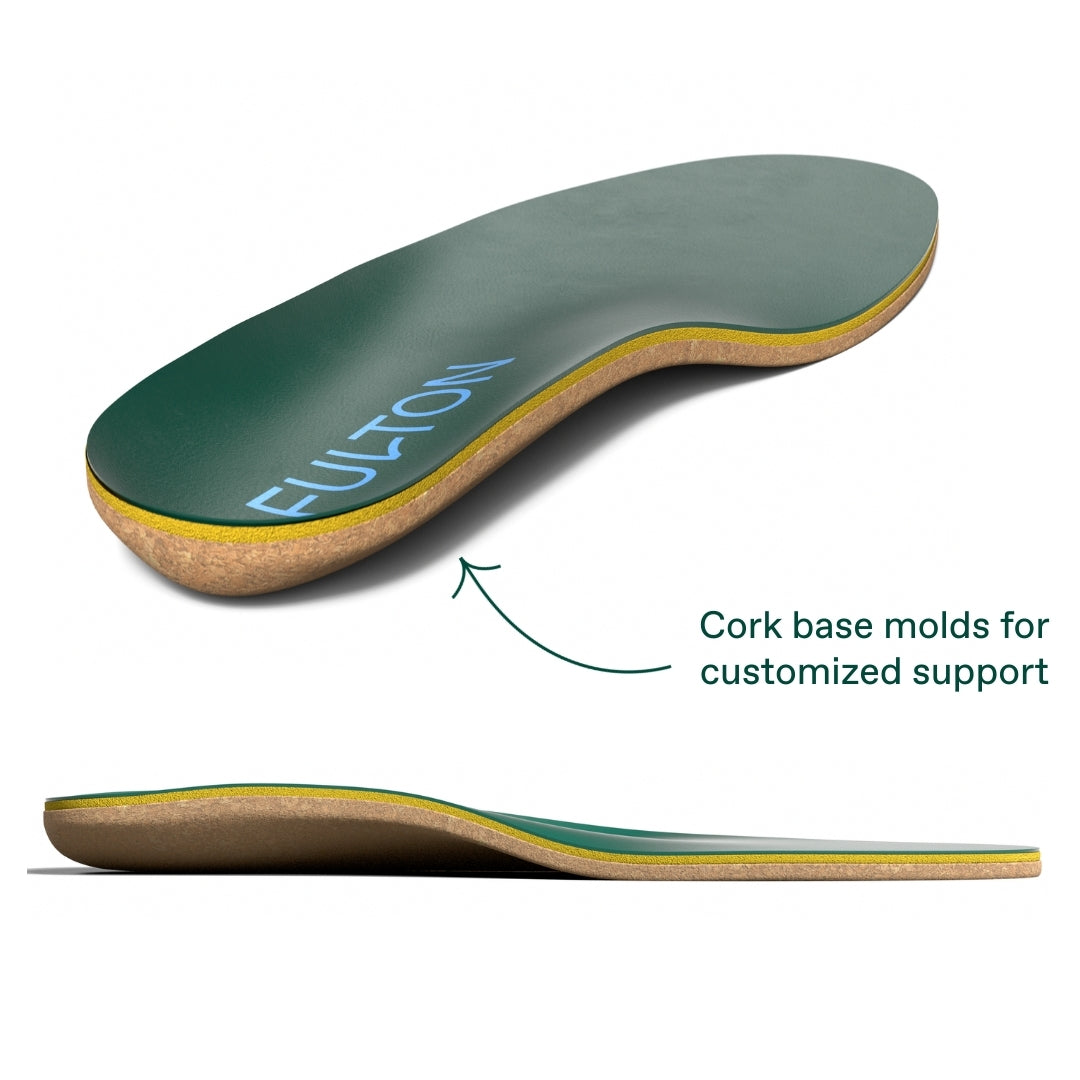
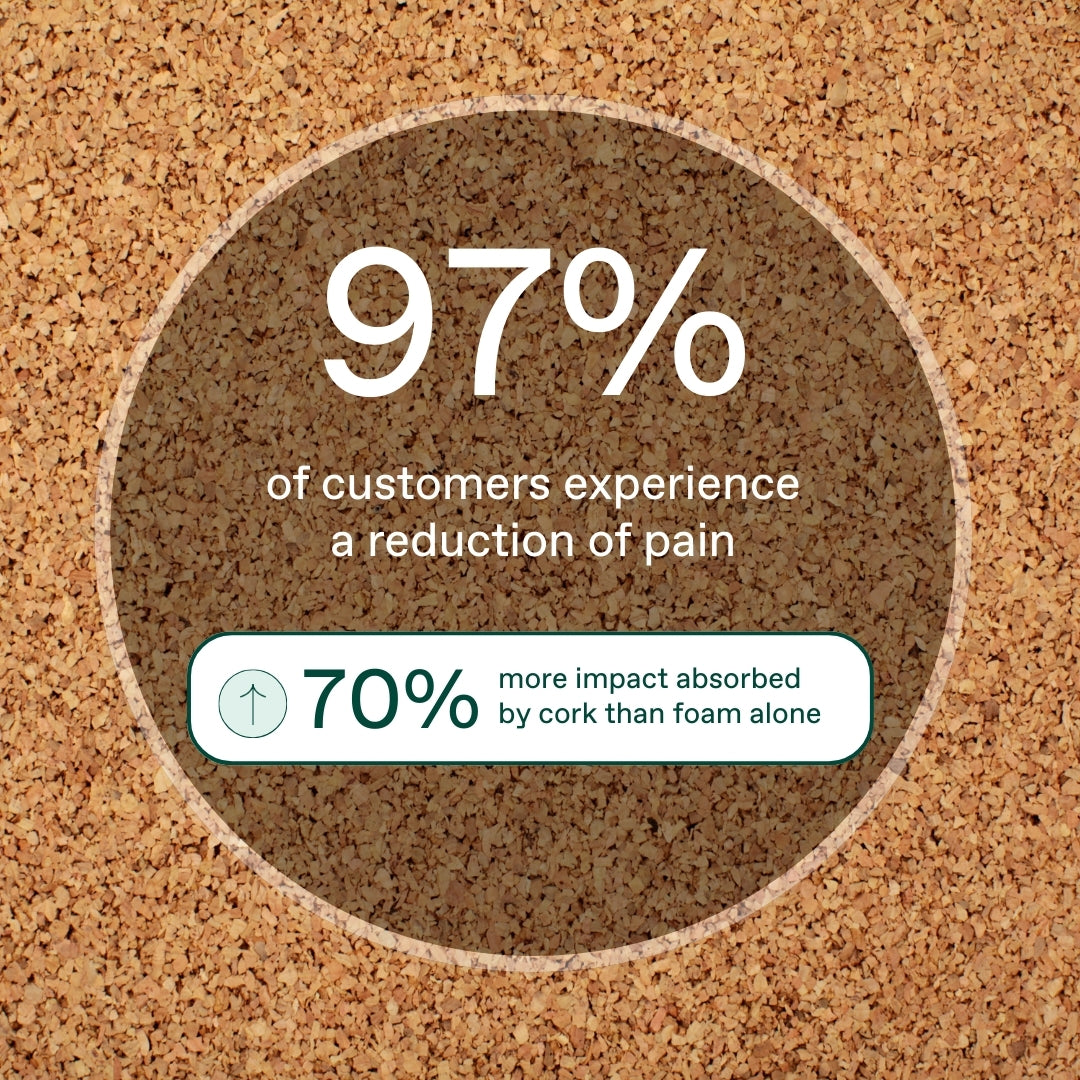
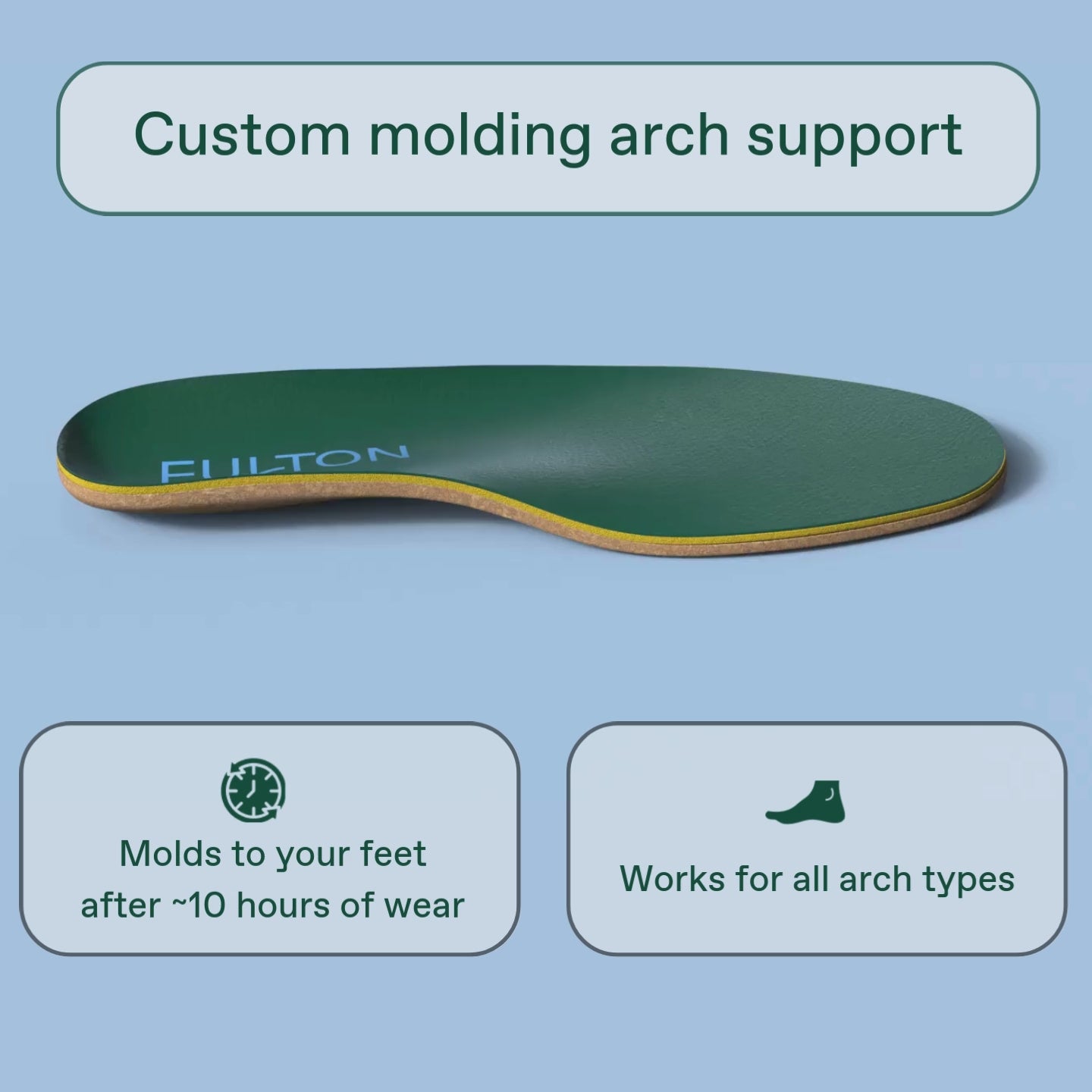
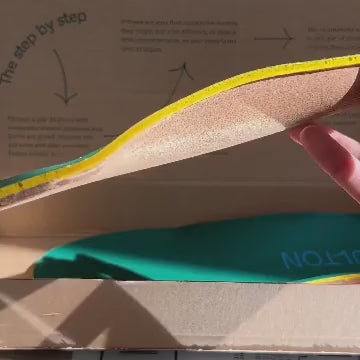
A well-built insole addresses these by supporting the medial arch, cradling the heel, and adding shock absorption that softens repetitive load. Fulton’s cork base molds to your foot over time, giving consistent arch support and pressure relief without adding bulk.
What Should You Look for in Plantar Fasciitis Insoles?
The most effective plantar fasciitis insoles blend firm support with adaptive comfort. Features like a deep heel cup, calibrated foam, and ergonomic contouring work together to reduce strain and maintain alignment. Fulton’s sustainably sourced cork platform checks every box, offering a custom-mold fit, natural antimicrobial properties, and long-lasting structure.
Must-Have Features for Plantar Fasciitis Insoles
- Dynamic arch support
- Deep heel cup
- Shock-absorbing foam
- Full-length cushioning
- Ergonomic contouring
- Heel-stabilizer ridge
- Breathable, antimicrobial cover
- Flexible forefoot design
- Custom mold fit
- Sustainable cork construction
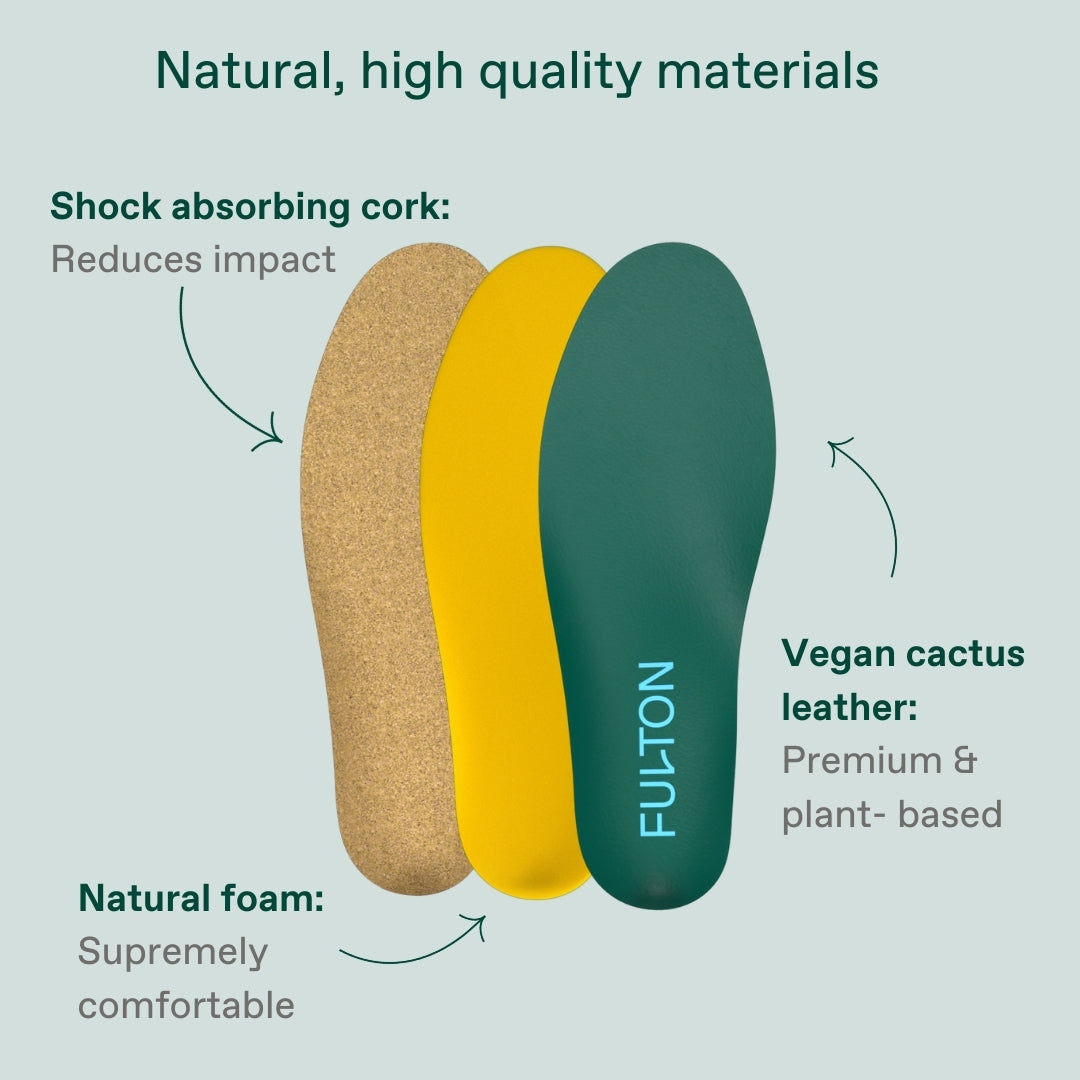
Fulton fulfills every one of these criteria through a sustainably sourced cork base that offers a custom-mold fit over time. This cork platform is naturally antimicrobial, carbon-negative, and engineered for long-lasting structure, making it ideal for plantar fasciitis relief across different footwear types.
How People Use Insoles to Improve Plantar Fasciitis Relief
People with plantar fasciitis rely on insoles for daily consistency across footwear types. Fulton users often:
- Add support to work shoes during long standing shifts
- Use insoles during run-walk programs to reduce impact
- Pair insoles with strength training for long-term relief
- Keep multiple pairs to rotate across sneakers
- Wear supportive insoles post-workout to prevent setbacks
- Use low-volume versions in dress shoes and fuller versions in trainers
Fulton’s everyday and athletic insoles make it easy to maintain consistent support across your footwear lineup.
Competitor Comparison: Insoles for Plantar Fasciitis
This comparison table highlights support style, ideal use cases, and price ranges to help you choose the right insole.
|
Brand |
Core Features |
Price |
Ideal For |
|
Fulton |
Firm cork arch, deep heel cup, sustainable materials |
$48 |
Daily wear, standing, walking, running. Pain relief. |
|
Superfeet |
Stabilizer cap, multiple volumes |
$55–$70 |
Work shoes |
|
Tread Labs |
Modular arch platforms, replaceable covers |
$75–$130 |
Durability |
|
Powerstep |
Semi-rigid shell with cushion |
$40–$60 |
Value shoppers, clinics |
|
SOLE |
Heat/wear-moldable footbeds |
$50–$70 |
Eco-conscious, wider forefoot |
|
Currex |
Flexible profiles |
$55–$70 |
Runners wanting natural movement |
|
Protalus |
Alignment wedges |
$75–$100+ |
Overpronators, high-volume shoes |
|
Dr. Scholl’s |
Gel heel support |
$15–$25 |
Budget PF relief, casual shoes |
The Best Insoles for Plantar Fasciitis in 2026
1) Fulton
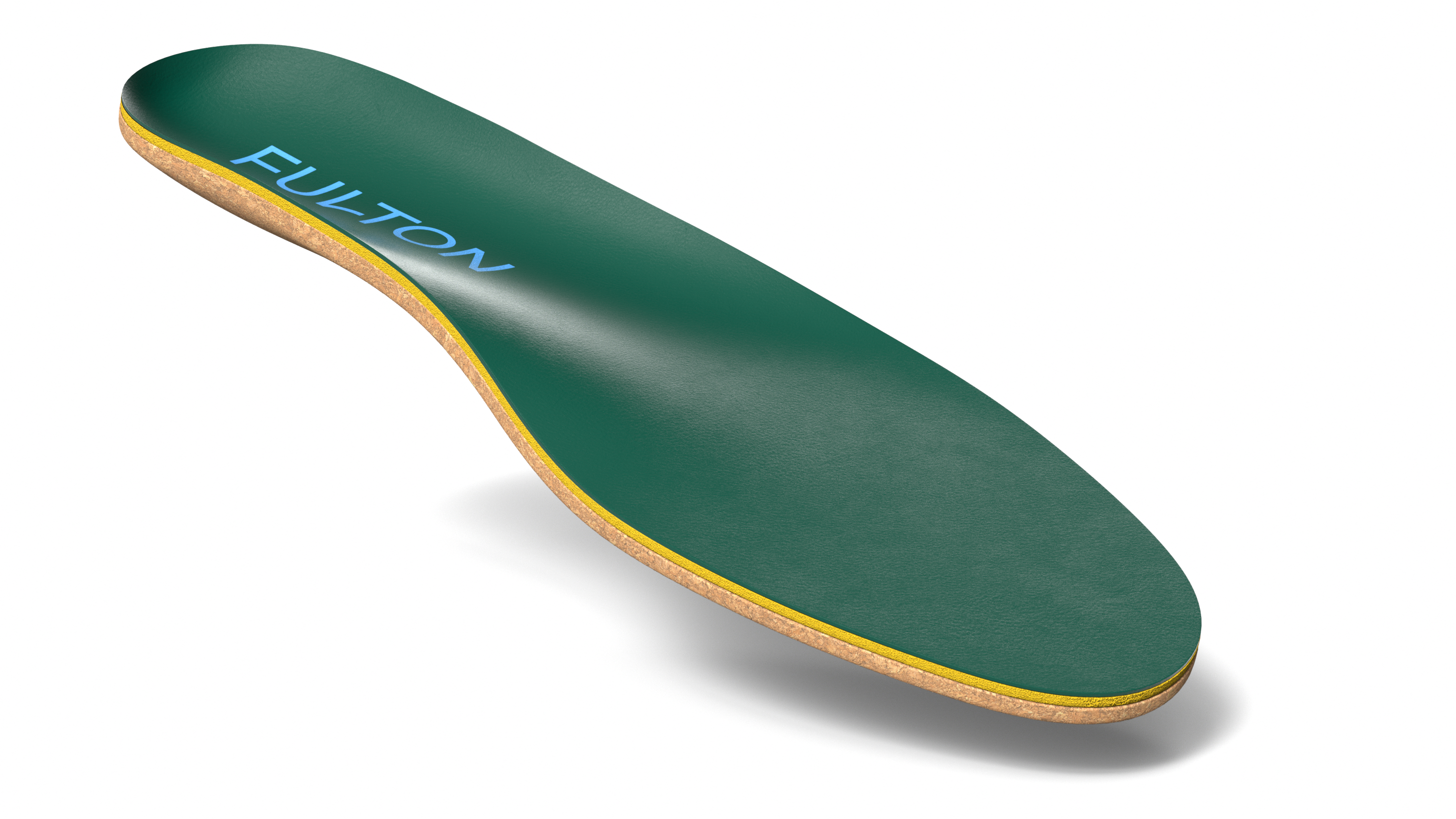
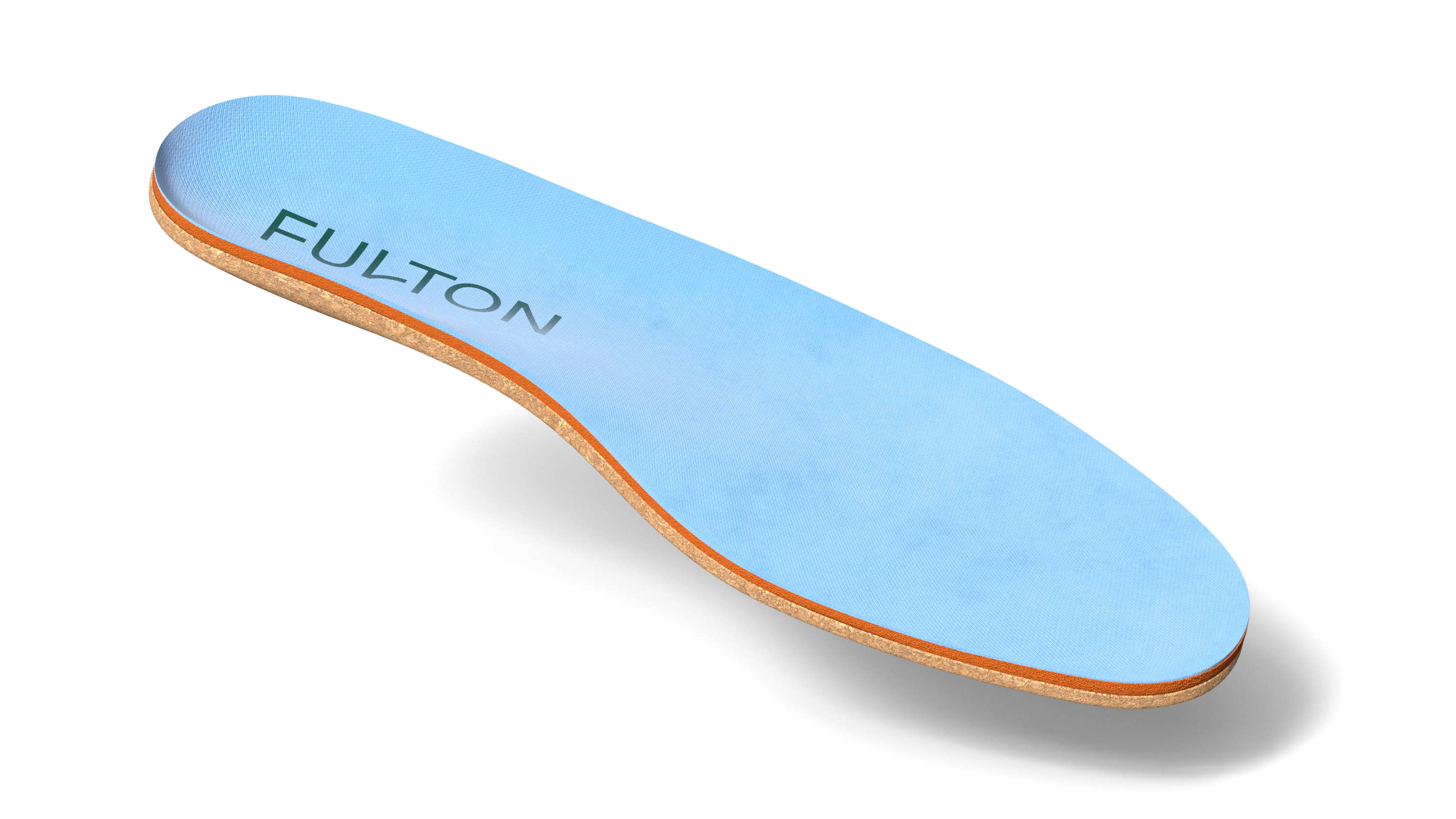
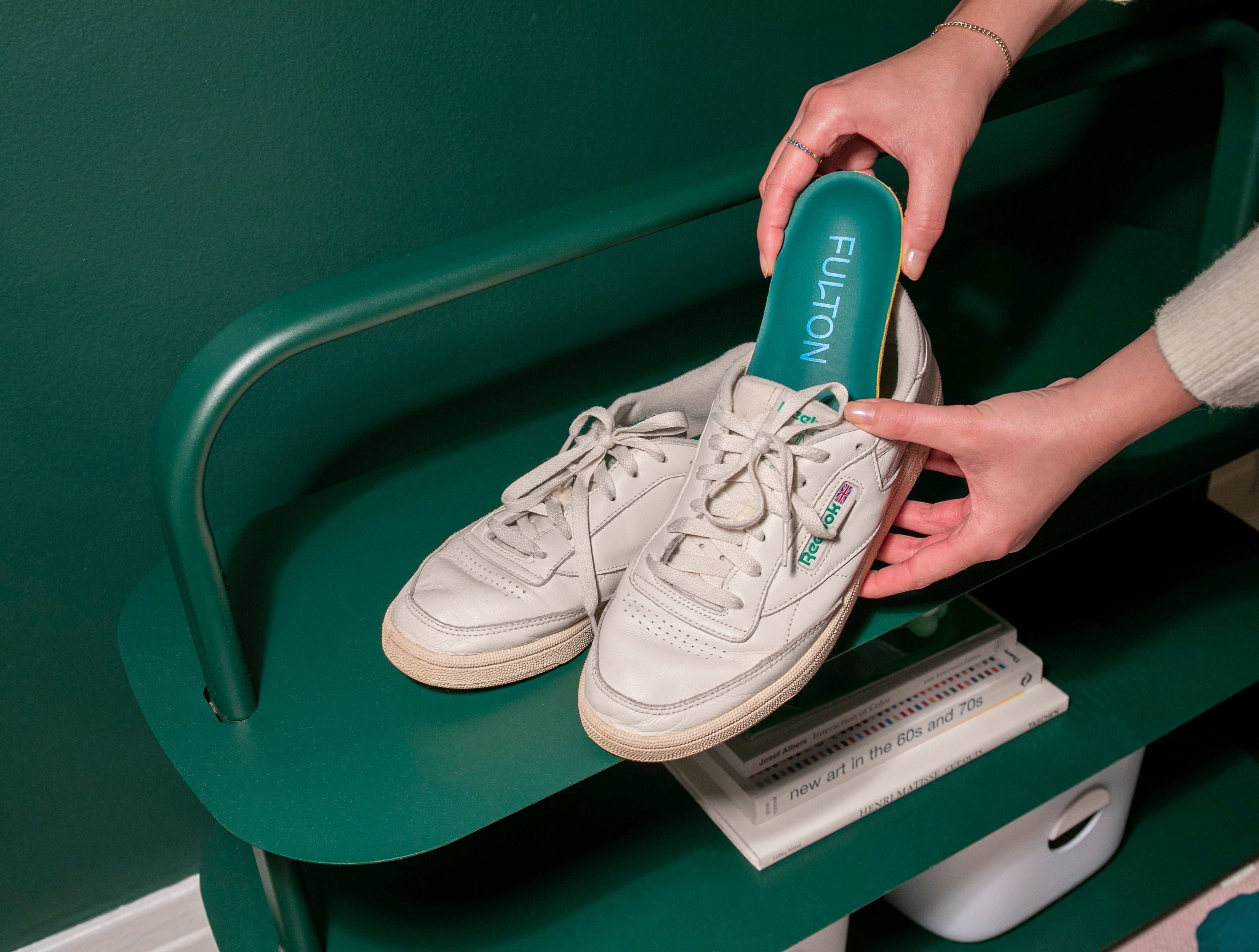
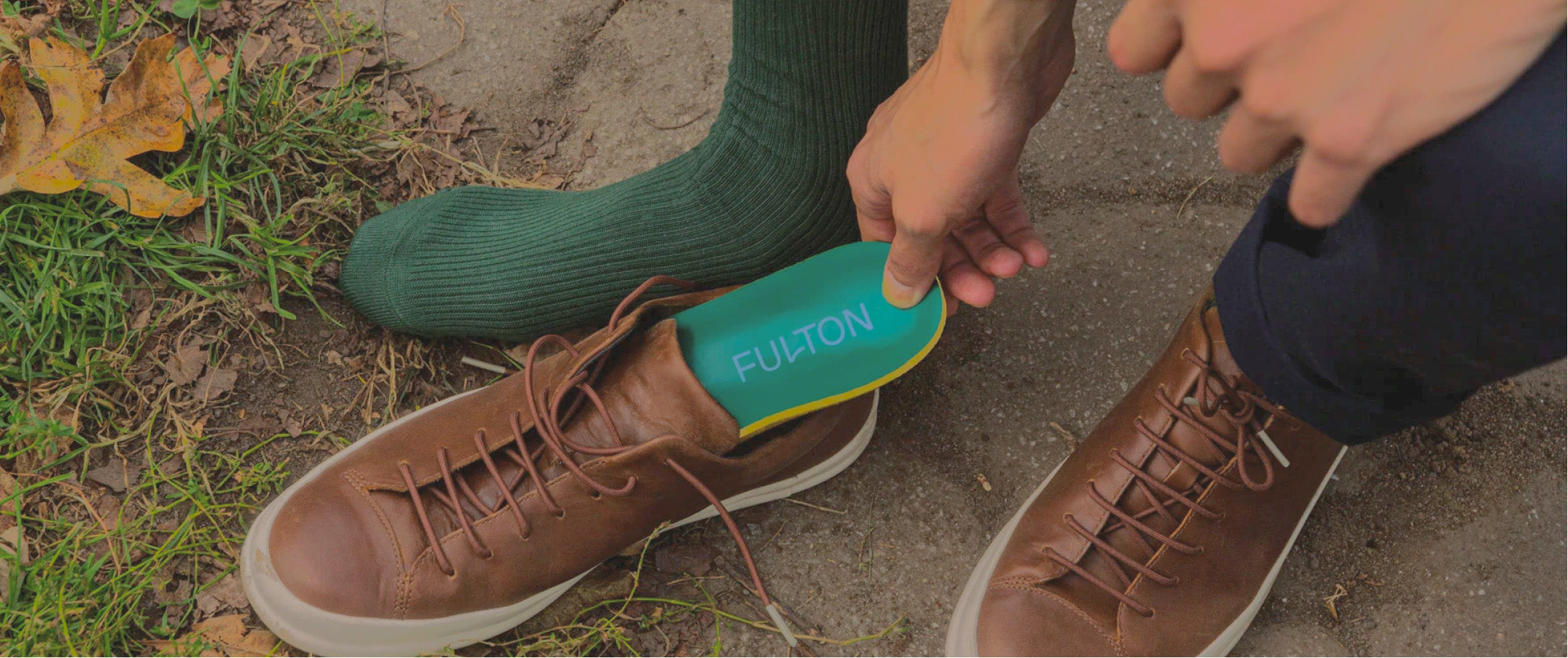
Fulton combines firm stability with comfort through a sustainably sourced cork footbed that molds to your unique arch over time. A deep heel cup centers the heel, while shock-absorbing foam reduces repetitive impact during walking, running, and standing. Flexible forefoot support ensures a smooth stride, and the breathable antimicrobial top layer helps prevent odor during long wear.
Key Features:
- Dynamic cork arch support that adapts with every step
- Deep heel cup, heel-stabilizer ridge & full-length cushioning
- Shock-absorbing foam and flexible forefoot support
- Breathable, antimicrobial top layer
- Carbon-negative, plant-based materials with long-term durability
Plantar Fasciitis Use Cases:
- Long workdays on hard floors
- Walking, running, and cross-training where repetitive impact is high
- Sneakers, trainers, and dress-style footwear
Pricing: $48, with frequent bundle savings and promotions available at walkfulton.com.
Pros: Custom-mold comfort, alignment-focused engineering, sustainable materials, trim-to-fit design.
Cons: Brief break‑in as cork molds.
Fulton balances medical-grade structure with all-day comfort, making it the most versatile choice for users needing consistent plantar fasciitis relief across multiple shoe types.
2) Superfeet
Key Features: Deep heel cup, stabilizer cap, high-density foam; multiple arch heights.
PF Offerings: High arch and running models for structure.
Pricing: $55–$70.
Pros: structure, durable.
Cons: Less adaptive; may feel aggressive in low-volume shoes.
3) Tread Labs
Key Features: Modular arch platforms with replaceable covers; multiple firmness levels.
PF Offerings: Pace model designed for support.
Pricing: $75–$130.
Pros: Long lifespan; arch options.
Cons: Firmer feel can be rigid; higher upfront cost.
4) Powerstep
Key Features: Semi‑rigid shell with cushion top, heel cradle.
PF Offerings: heel pain relief and motion control variants.
Pricing: $40–$60.
Pros: value
Cons: Foam layers compress over time.
5) SOLE
Key Features: Heat-moldable and wear-moldable footbeds; cork and recycled options.
PF Offerings: Active and Performance lines.
Pricing: $50–$70.
Pros: sustainable options.
Cons: Molding process requires heating.
6) Currex
Key Features: flex design based on arch profile.
PF Offerings: SupportSTK/RunPro styles stabilize without over-rigidity.
Pricing: $55–$70.
Pros: breathable.
Cons: Less rearfoot control.
7) Protalus
Key Features: Heel-wedge geometry for alignment; high-volume profile.
PF Offerings: M-series (athletic), T-series (lower volume).
Pricing: $75–$100+.
Pros: heel alignment effect; cushion.
Cons: Bulky for tighter shoes.
8) Dr. Scholl’s
Key Features: Targeted gel + heel support.
PF Offerings: Specific pain relief orthotics for casual shoes.
Pricing: $15–$25.
Pros: Budget-friendly
Cons: Softer support and shorter lifespan.
How We Evaluated Plantar Fasciitis Insoles
We ranked each insole using a weighted framework focused on stability, comfort, and durability:
- Arch Support & Stability: 25%
- Heel Cupping & Impact Control: 20%
- Fit Versatility: 15%
- Durability & Shape Retention: 15%
- Comfort & Break-In: 10%
- Sizing & Maintenance: 10%
- Sustainability: 5%
Fulton's cork-based platform performed consistently well across every category, especially stability, alignment, and long-term durability.
Why Fulton is the Best Everyday Insole for Plantar Fasciitis Relief
Fulton’s molded cork footbed provides natural, adaptive support while maintaining firmness where it matters most. The deep heel cup reduces first-step pain, and the sustainable, breathable construction keeps feet comfortable for all-day wear. For users needing one insole that works across work, walking, and light training, Fulton delivers the most balanced combination of structure and comfort.
FAQs: Arch Support Insoles for Plantar Fasciitis
What is plantar fasciitis?
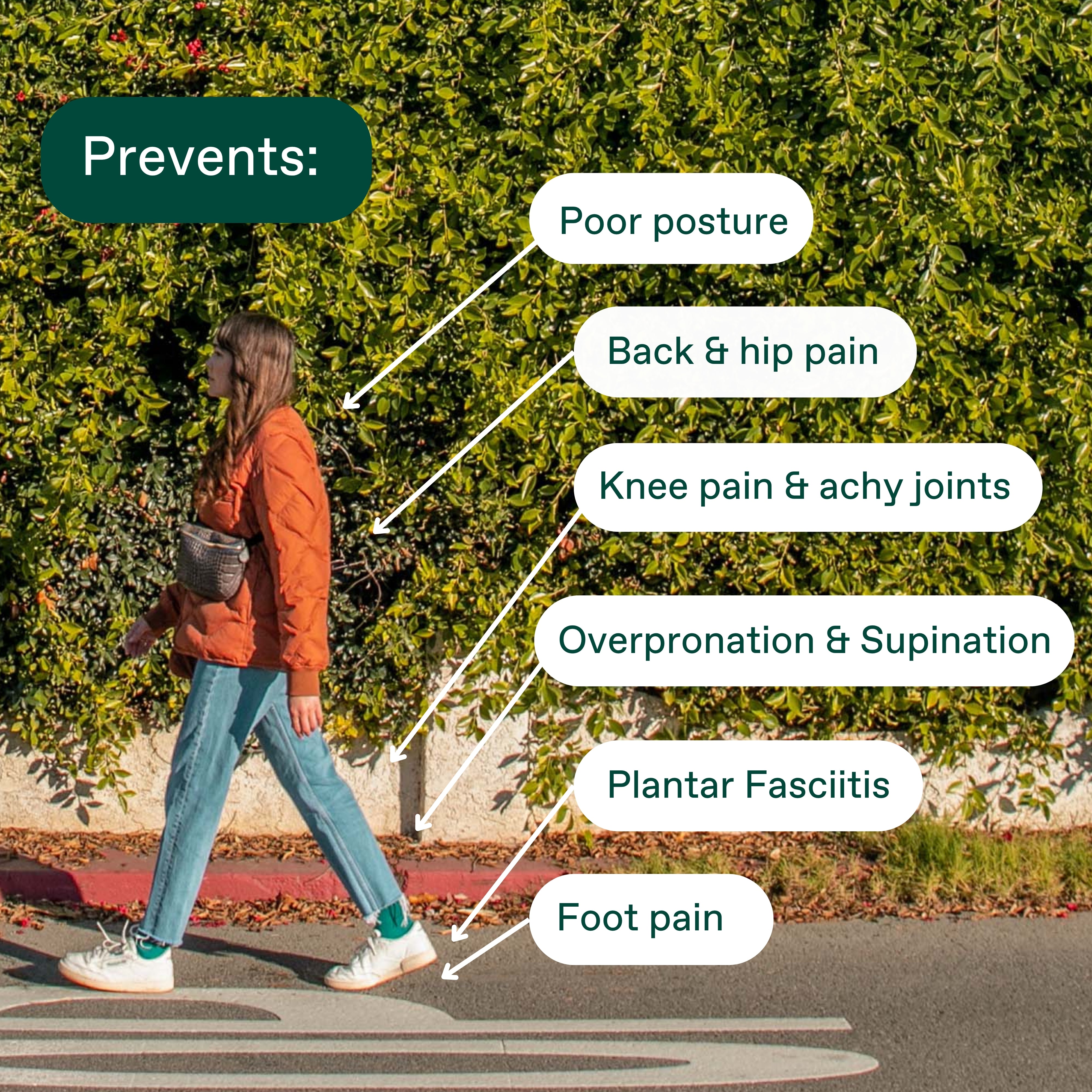
Plantar fasciitis is inflammation or irritation of the plantar fascia—the thick band of tissue that supports your arch and connects your heel to your toes. When this tissue is overstressed from overpronation, long hours on hard surfaces, or sudden activity changes, it leads to sharp heel pain, especially with first steps in the morning. Structured arch support, including options like Fulton’s firm cork design, helps reduce strain and improve alignment for relief.
Why do people with plantar fasciitis need arch support insoles?
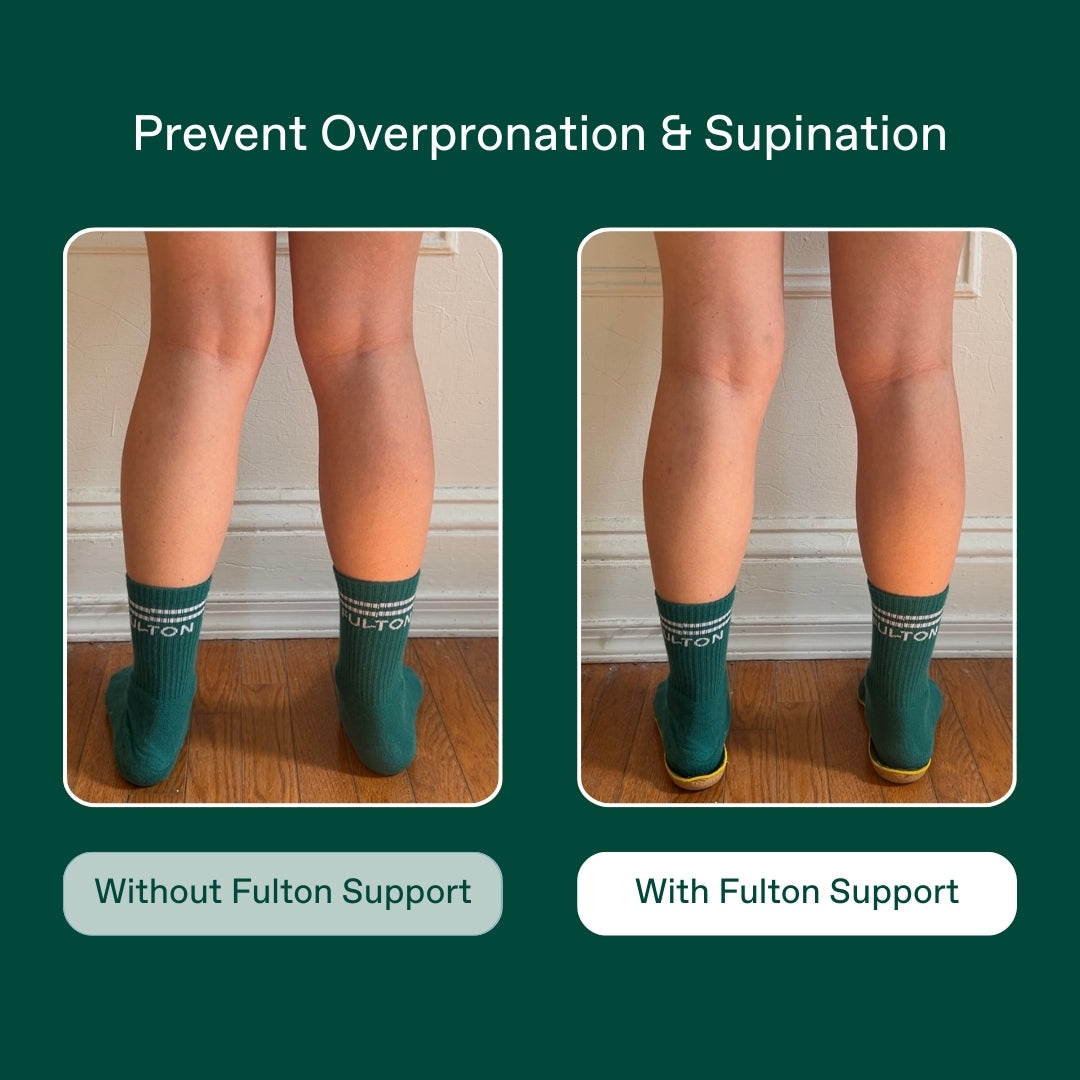
Structured arch support reduces strain on the plantar fascia by controlling overpronation and dispersing impact across the foot. Fulton’s cork foundation provides firm yet adaptive alignment that helps reduce inflammation and prevent morning heel pain. Many users find that consistent, all-day support accelerates recovery more effectively than soft cushions alone.
What are the best insoles for plantar fasciitis?
The best insoles for plantar fasciitis provide firm, structured arch support that prevents overpronation, a deep heel cup to stabilize the heel, and shock-absorbing cushioning that reduces impact with every step. They should maintain their shape over time, offer full-length pressure distribution, and include breathable, durable materials that stay comfortable during long wear. Fulton incorporates all of these features with a firm cork footbed that molds to your arch, delivering the stability and alignment plantar fasciitis requires while remaining comfortable enough for all-day use.