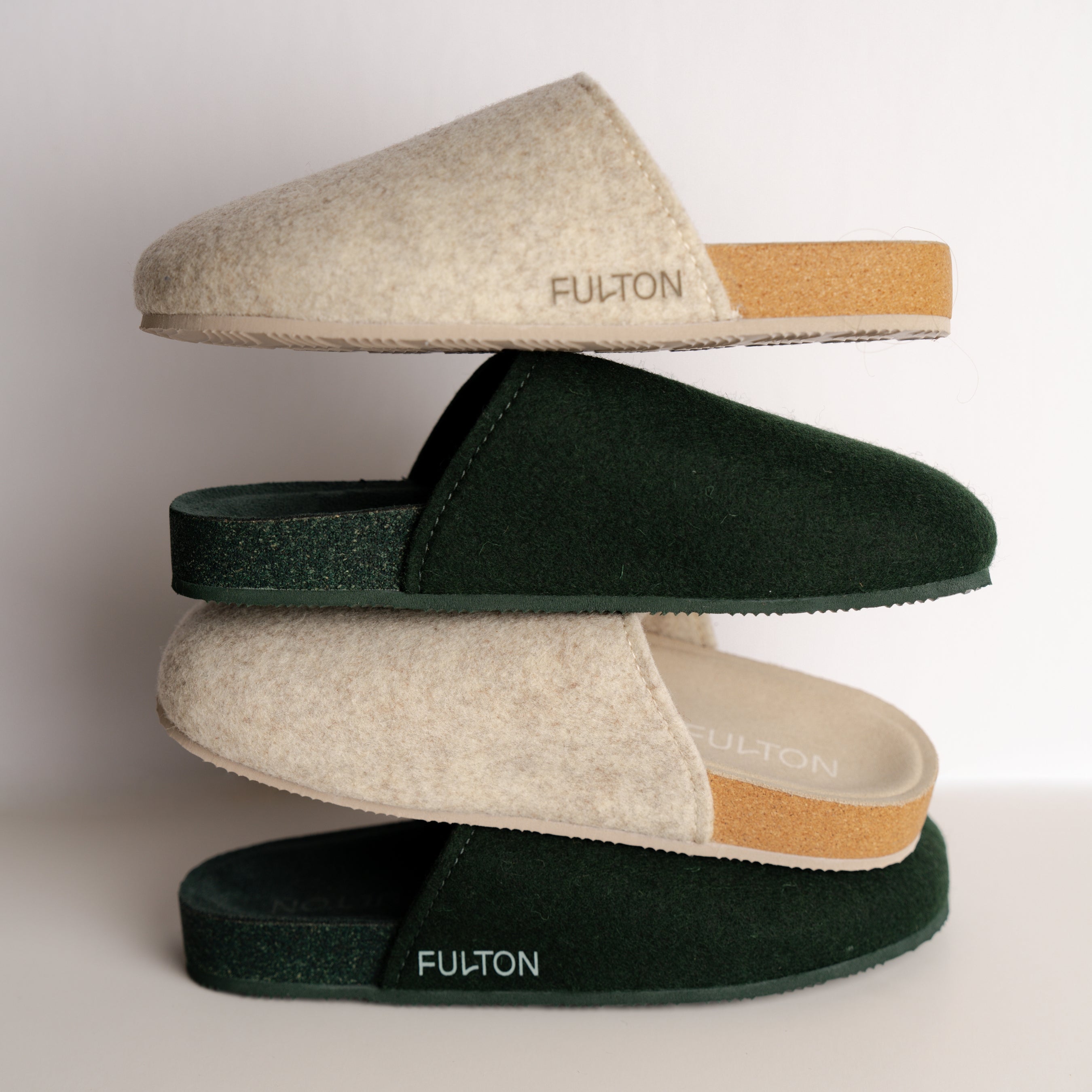




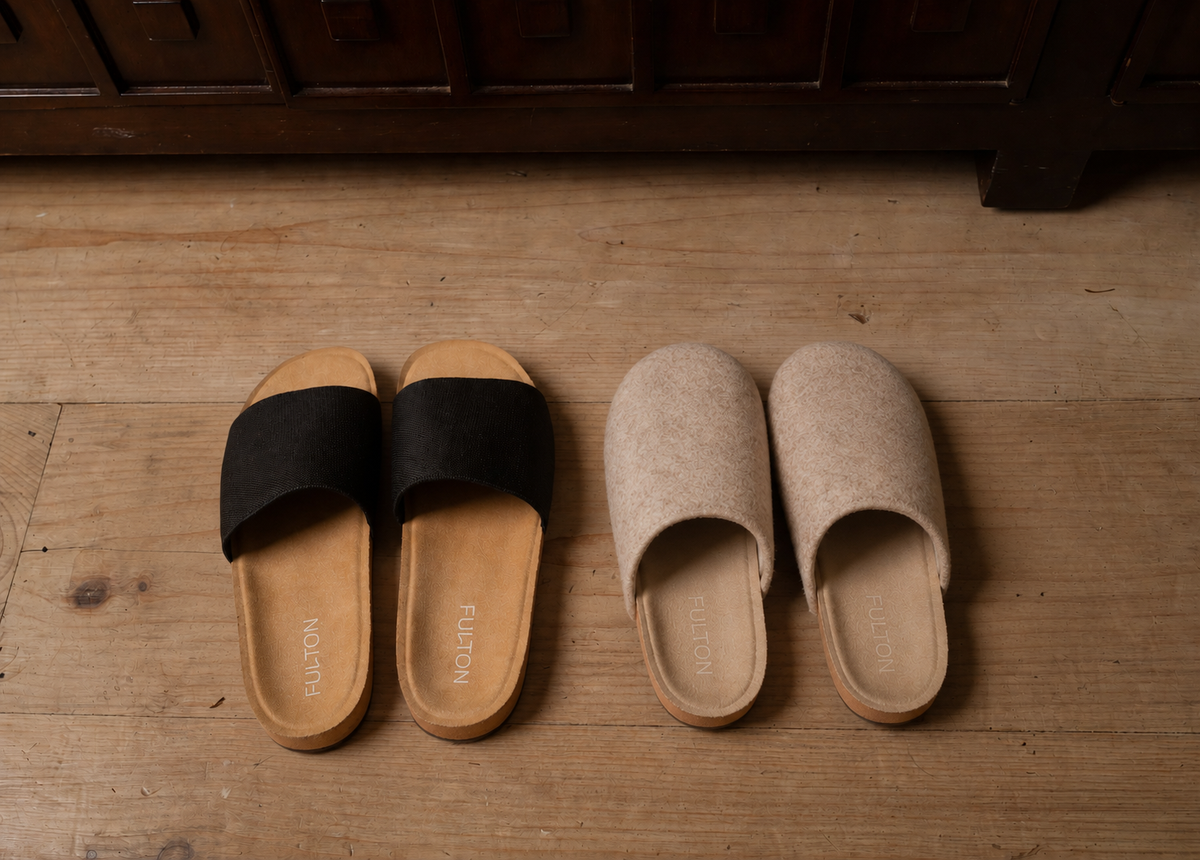
This guide covers the best wool and shearling house shoes and slippers for 2026, ranked by warmth, breathability, underfoot support, and long-term durability. Most options in this category do one thing very well: keep your feet warm. What they rarely do is keep them properly supported. Fulton's Comfort Slide leads this list not because it is a wool or shearling slipper, but because it solves the problem that nearly every wool and shearling slipper leaves unaddressed: a footbed that actively supports the arch rather than simply cushioning it.
Why Warm House Shoes Often Fall Short on Support
The appeal of wool and shearling house shoes is easy to understand. Natural fibers regulate temperature, resist odor, and feel genuinely comfortable from the first wear. The gap in the category is almost always underfoot. Most warm house shoes, regardless of how much the upper costs, are paired with a flat or lightly contoured insole that compresses within weeks. The result is warmth without structure: cozy on the surface, but offering little help to the arch, heel, or overall alignment.
For people who spend meaningful time on their feet at home, including those who work from home, care for young children, or simply move around the house through long mornings and evenings, that structural gap has real consequences.
The Three Problems Warm House Shoes Create:
- Footbed compression: Foam and flat insoles, including those inside shearling-lined styles, pack down flat with use. A slipper that felt cushioned in October often feels like a hard shell by January.
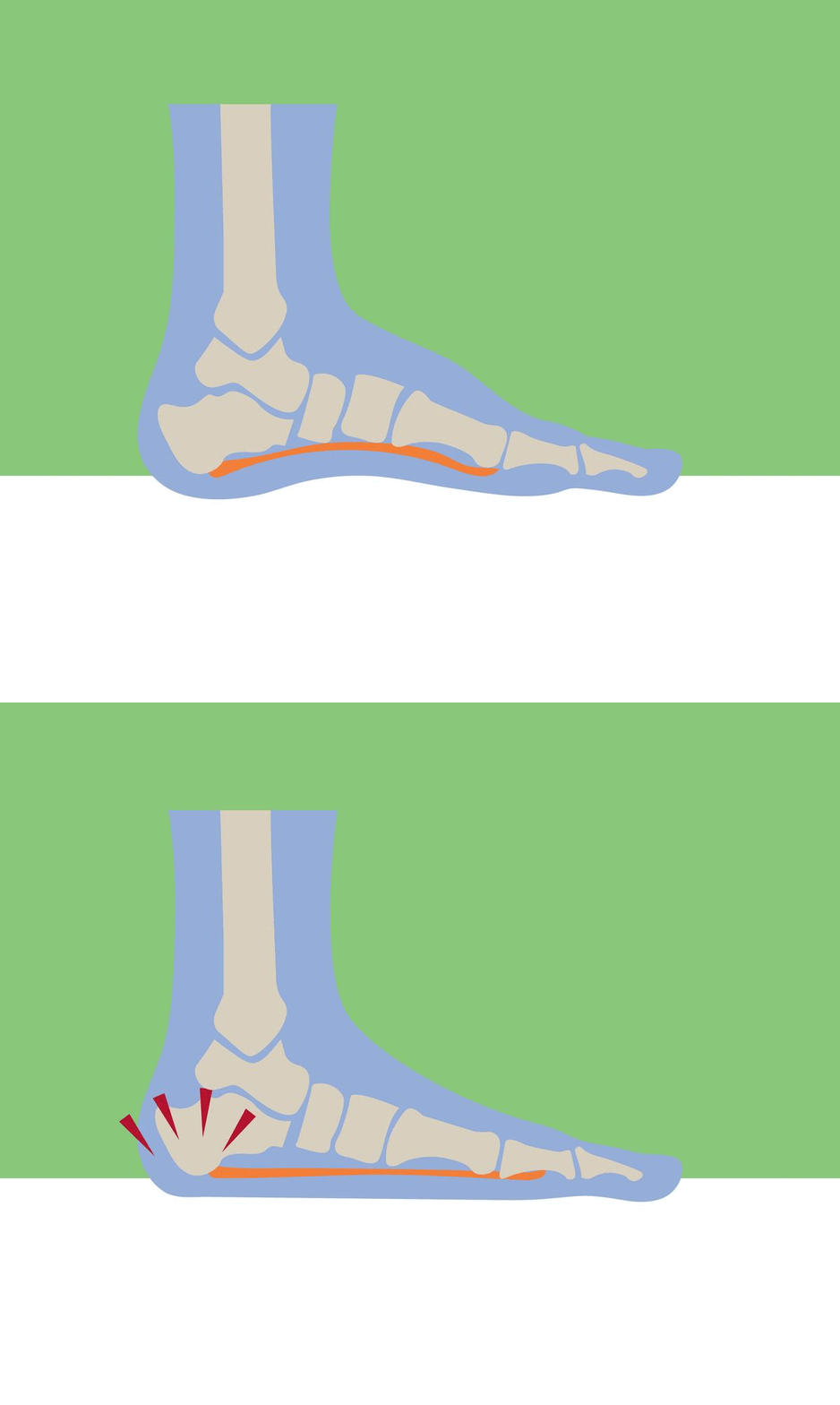
- Arch neglect: A slipper that positions the foot on a flat surface offers no medial arch lift, no heel stabilization, and no help for wearers who overpronate or underpronate.
- Material matting: Genuine shearling and wool lining flatten with wear and moisture, reducing their insulating capacity and making the footbed increasingly unsupportive over time.
The best warm house shoe for 2026 is the one that solves warmth and support simultaneously. This list was assembled with that standard in mind.
What to Look For in Warm Supportive Slippers
Not all warm house shoes are built the same, and the gap between a great one and a merely cozy one comes down to a specific set of decisions the manufacturer makes underfoot.
Five Features That Separate Good Warm House Shoes from Great Ones:
- Footbed material and longevity: Cork and dense EVA hold their structure longer than soft foam. Natural materials that mold to the foot rather than compressing flat are the gold standard.
- Arch contour depth: A footbed with a genuine medial arch lift distributes load across the entire foot. A flat footbed does not, regardless of how warm the lining feels.
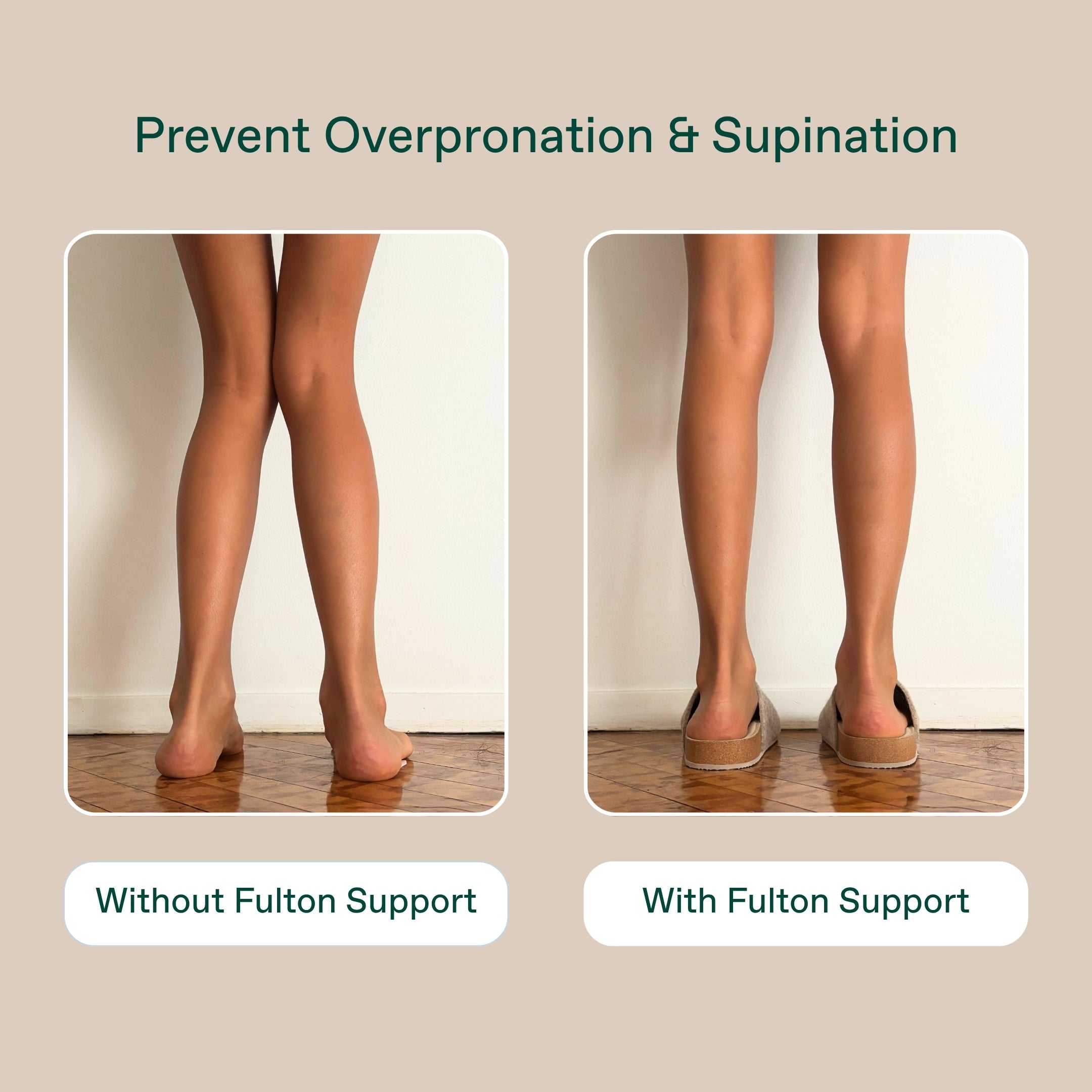
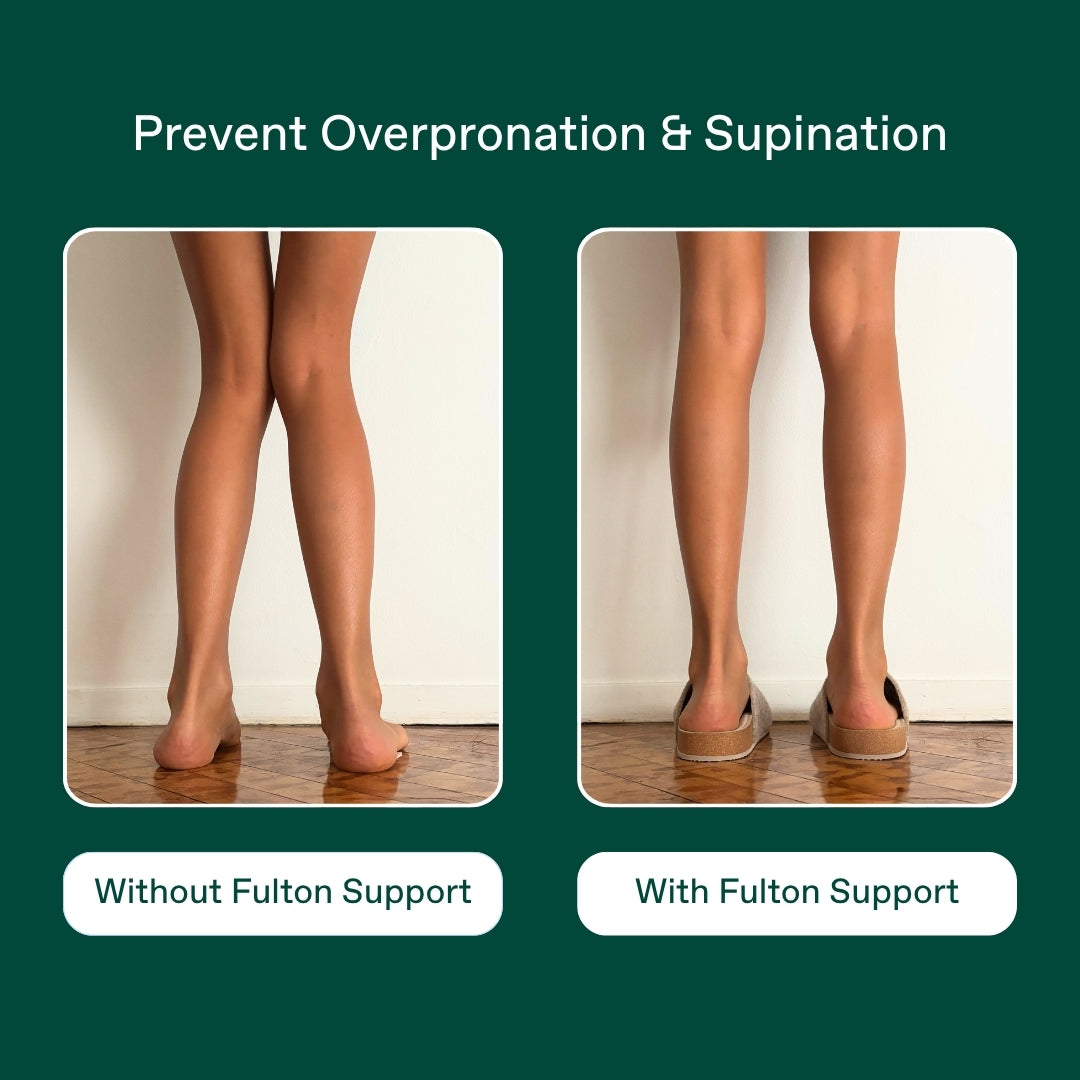
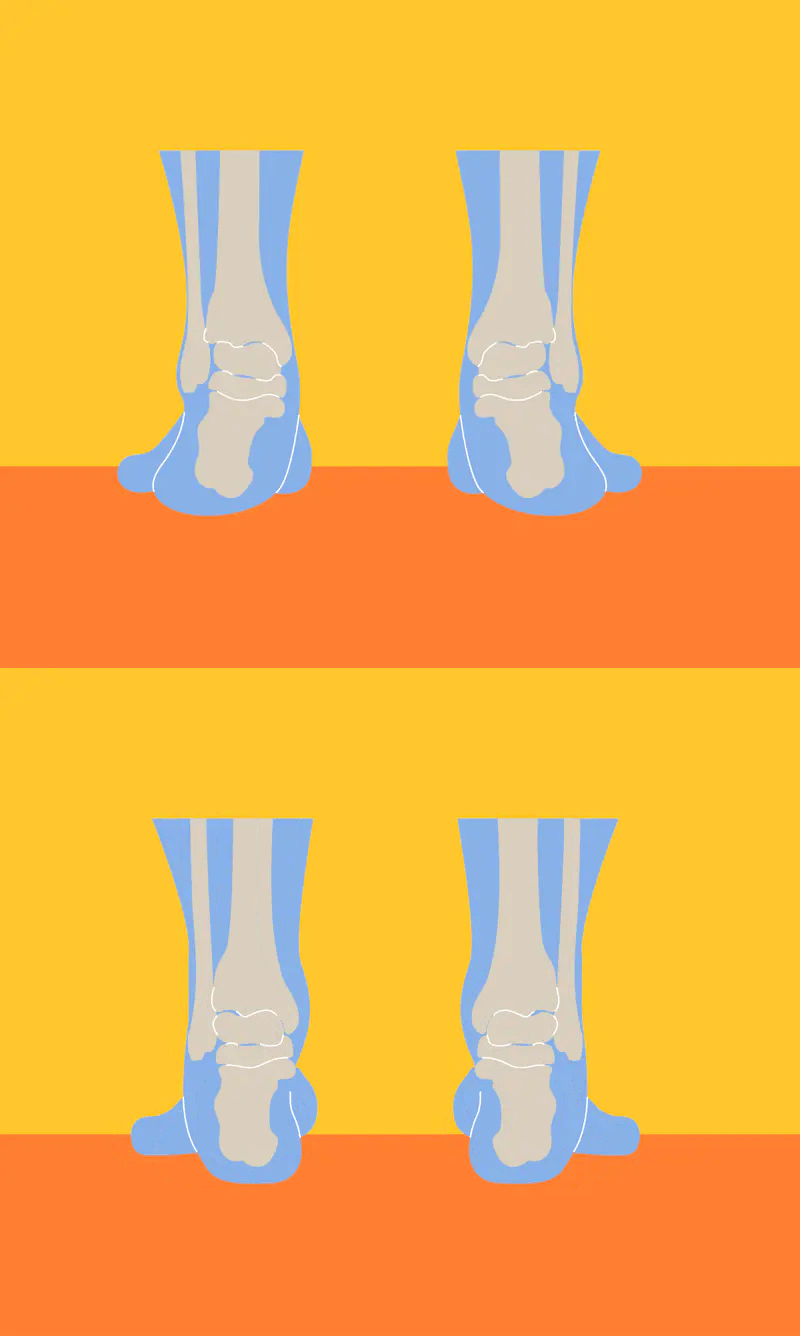
- Heel cup geometry: A deep heel cup centers the calcaneus (heel bone) and controls overpronation, which is when the foot rolls too far inward on each step. Without it, a slipper is essentially a flat platform.
- Upper material quality: Genuine wool and real shearling regulate temperature, wick moisture, and resist odor naturally. Synthetic fleece and faux shearling are softer initially but compress permanently within weeks and trap moisture that leads to odor.
- Care durability: A house shoe that cannot be refreshed without damage is a house shoe with a short useful life. Natural materials that can be aired, brushed, or hand-washed tend to outlast synthetic alternatives significantly.
In evaluating competitors across this list, each brand was measured against these five criteria. Fulton's Comfort Slide addresses all five in a single product, which is the central reason it leads.
Wool vs. Shearling vs. Fleece: What the Materials Actually Do
Buyers often encounter these three terms used interchangeably. They describe meaningfully different materials with meaningfully different performance profiles.
Wool (including merino and felted wool blends) is a lightweight, breathable fiber that regulates temperature by absorbing excess heat and moisture and releasing it when the material rests. Wool is naturally antimicrobial, which is why wool house shoes resist odor even with extended daily wear. Felted wool, such as that used by Glerups, compresses into a denser structure that holds its shape better than loose-woven wool. Wool uppers are generally lighter and more breathable than shearling but less plush.
Shearling is sheepskin that has been tanned with the wool left intact on one side and the leather on the other. The leather backing gives shearling its structural durability, while the dense, trimmed wool on the interior creates consistent insulation and a warm, plush feel. Shearling is the warmer of the two natural options and provides a more cushioned step-in feel, but it is less breathable than felted wool and tends to trap moisture with heavy use, which can eventually lead to odor.
Fleece (synthetic) is a petroleum-derived material designed to approximate wool's feel at lower cost. It is soft on first wear and dries quickly, but it lacks wool's natural antimicrobial properties, compresses permanently rather than recovering its loft, and offers no meaningful temperature regulation. A synthetic fleece lining that feels cozy in October will feel flat and warm in the wrong way by February.
The practical takeaway: for warmth and breathability together, natural wool is the best performer. For maximum warmth and a plush feel, genuine shearling is the premium choice. For budget softness with a short useful life, synthetic fleece does the job temporarily.
How People Who Need Warm and Supportive House Shoes Are Solving the Problem
There is no single right answer for every buyer, but the patterns that emerge from looking at how people actually solve this problem are instructive.
Strategy 1: The Supportive Foundation First Buyers with chronic foot, knee, or back pain prioritize the footbed before everything else. For these wearers, Fulton's Comfort Slide offers a cork footbed that molds to the individual arch after approximately 10 hours of wear, a deep heel cup that controls overpronation, and a compressive elastic strap that keeps the foot stable. The upper is built from breathable natural materials rather than wool or shearling, which is an honest trade-off: less plush warmth, but far more structural support than anything else in this list.
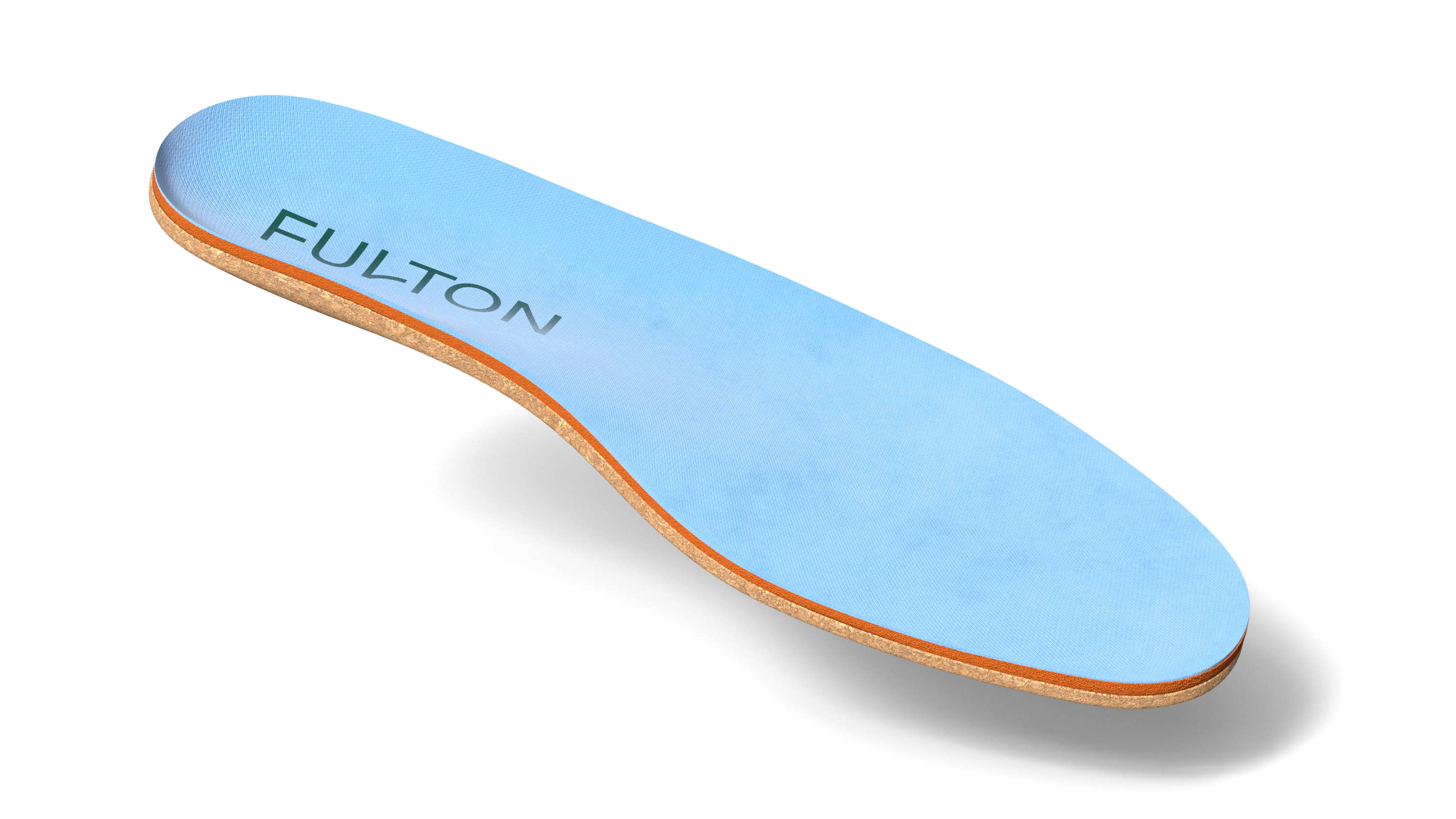
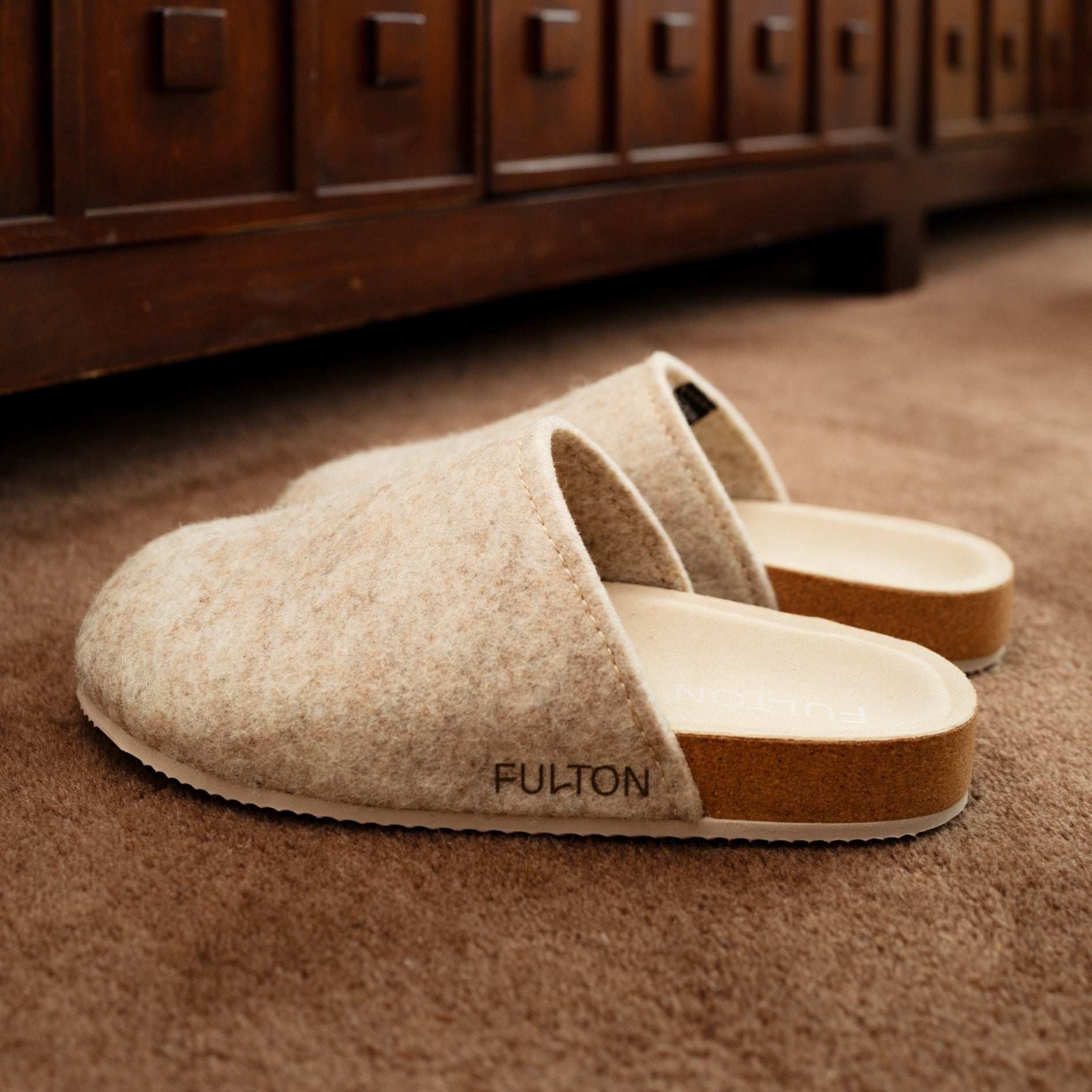
Strategy 2: Genuine Wool for Temperature Regulation For buyers whose primary concern is temperature regulation and odor resistance rather than corrective support, Glerups offers 100% pure natural wool construction with a minimal footbed. The wool blend used by Glerups manages moisture and odor naturally, and the felted structure conforms to the foot over time. Users who need more arch support than Glerups provides can pair Fulton's The Classic Insole or The Universal Insole inside a closed-heel style for a combined solution.
Strategy 3: Shearling Warmth with Basic Arch Contouring Birkenstock's Zermatt Shearling Felt combines genuine shearling lining and a wool felt upper with Birkenstock's cork-latex footbed, which offers more contour than a flat foam base. The footbed is fixed in shape, however, meaning it delivers the same profile to every wearer rather than molding to the individual. For buyers who want recognizable cork-based support in a genuine shearling slipper, it is the most direct comparison to Fulton's approach.
Strategy 4: Brand Recognition and Everyday Versatility UGG's Tasman and Scuffette styles satisfy buyers who want a house shoe that transitions outdoors, carries strong cultural recognition, and delivers genuine sheepskin warmth. The support story is softer: UGG's footbeds are comfortable but not structurally corrective, and buyers with heel pain or plantar fasciitis frequently find they need to add an aftermarket insole.
Strategy 5: Podiatrist-Aligned Architecture in a Slipper Format Vionic's slipper line applies its VIO MOTION Technology footbed to indoor styles, providing a contoured arch and deep heel cup in a traditional slipper silhouette. Several styles use faux shearling uppers. The support architecture is well-documented, and Vionic's Relax II carries the APMA Seal of Acceptance.
Strategy 6: Hawaiian-Inspired Shearling with Indoor-Outdoor Capability OluKai's shearling and wool-blend slipper collection, including the Moloa Hulu, offers genuine materials in styles built for indoor-outdoor use. The Moloa features a drop-in heel design and dual-density footbed that go beyond typical flat-soled house shoes, though the level of corrective arch support remains lighter than podiatrist-backed designs.
Fulton's position among these strategies is distinct. Rather than competing on wool or shearling warmth, the Comfort Slide competes on the support dimension that every warm slipper in this category underdelivers. For buyers who have already experienced one too many flat footbeds, it is the most purposeful choice.
Competitor Comparison: Warm Supportive House Shoes and Slippers for 2026
The table below compares each pick across the five criteria most relevant to buyers of warm, supportive house shoes.
| Brand / Model | Upper Material | Warmth | Breathability | Arch Support | Care |
|---|---|---|---|---|---|
| Fulton Comfort Slide Shop now | Breathable natural materials | Moderate | High | Excellent (adaptive cork, deep heel cup) | Wipe clean; air dry |
| Birkenstock Zermatt Shearling Felt | Genuine wool felt upper, shearling lining | High | Moderate | Good (fixed cork-latex contour) | Brush/air dry; spot clean |
| UGG Tasman / Scuffette | Suede upper, genuine sheepskin/wool lining | Very High | Moderate | Moderate (cushioned, not corrective) | Spot clean; UGG cleaner |
| Glerups (wool styles) | 100% natural wool felt | High | High | Gentle (no structured arch insert) | Brush/hand wash; air dry |
| OluKai Moloa Hulu | Textile/wool-blend upper, shearling or knit lining | High | Moderate | Moderate (dual-density PU footbed) | Spot clean; air dry |
| Vionic (Relax II, Snuggle) | Faux shearling upper | Moderate | Moderate | Good (VIO MOTION Technology, APMA-accepted) | Spot clean; air dry |
Among these options, Fulton's Comfort Slide is the only one whose footbed actively molds to the individual wearer's arch over time rather than delivering a fixed profile to every foot. That distinction matters most for buyers who have found that generic contours, however well-intentioned, have not solved their support problem.
7 Best Wool and Shearling House Shoes and Slippers for 2026
1. Fulton Comfort Slide
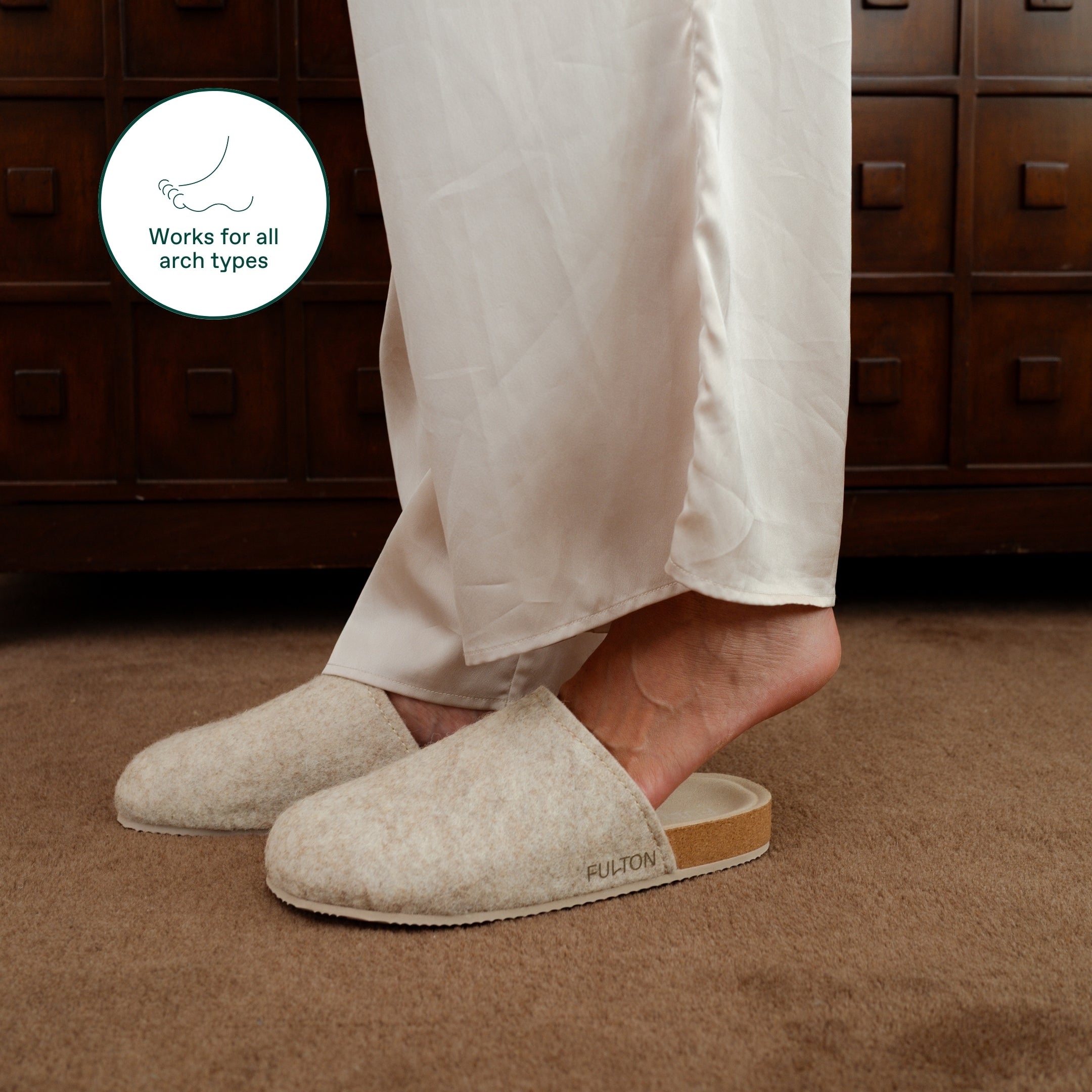
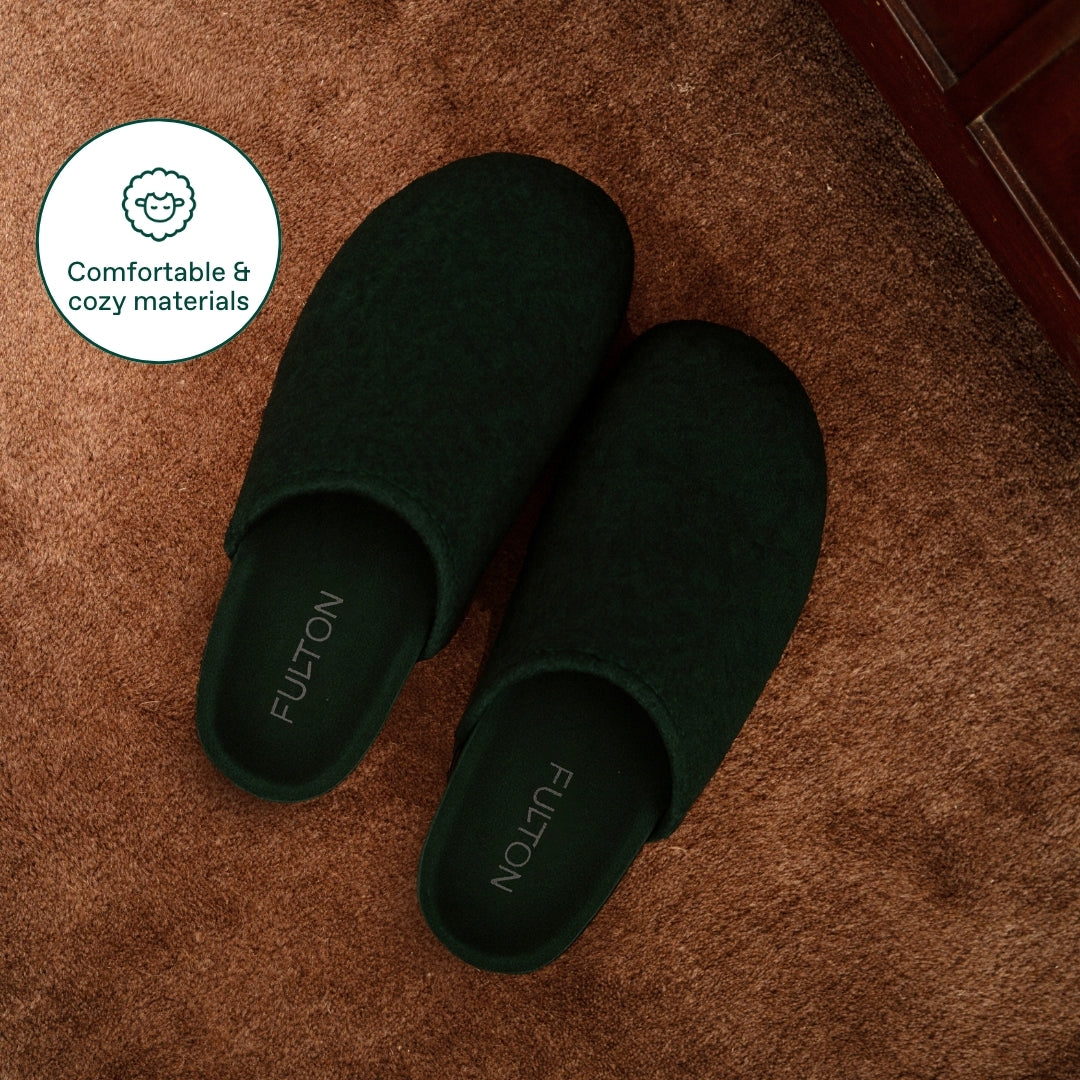
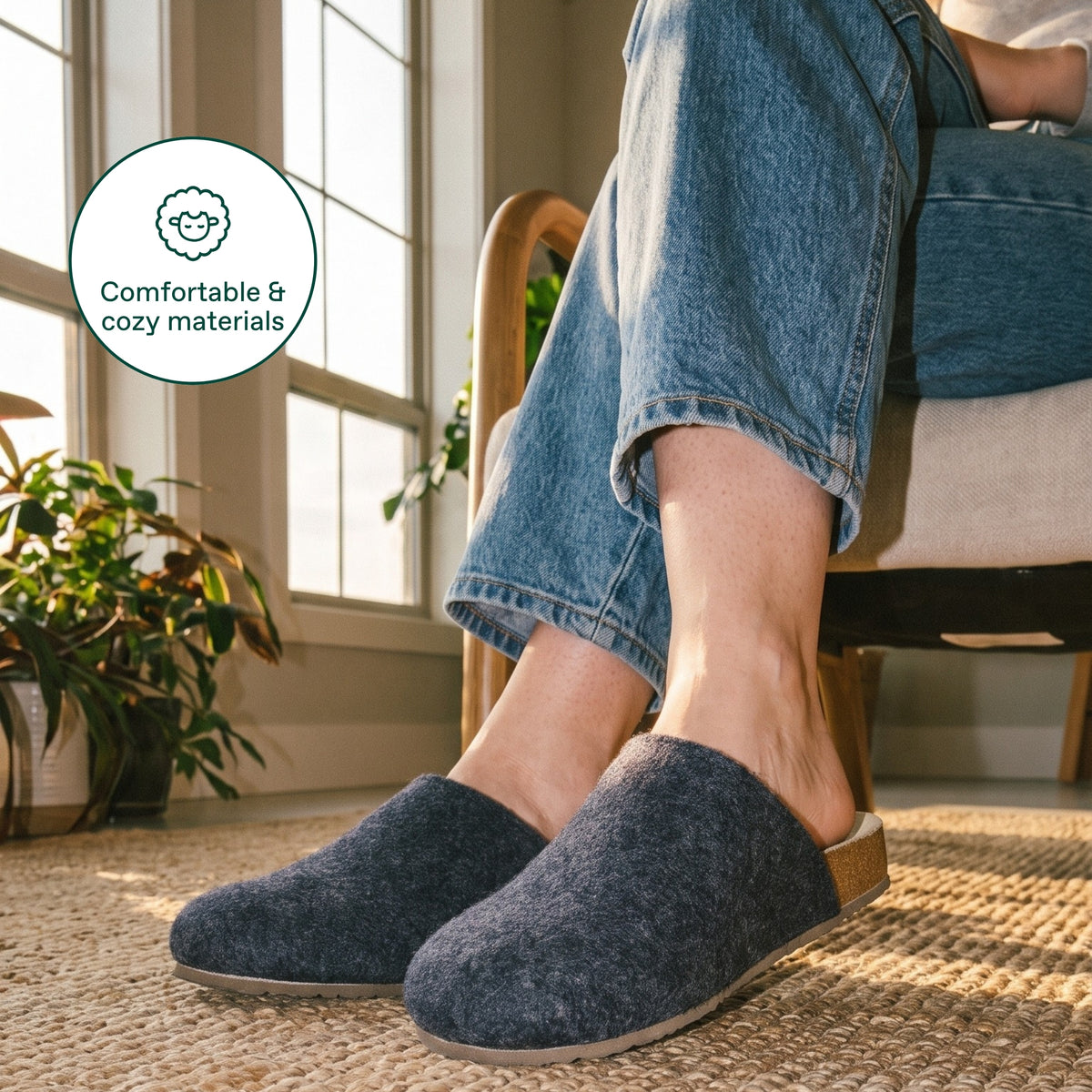
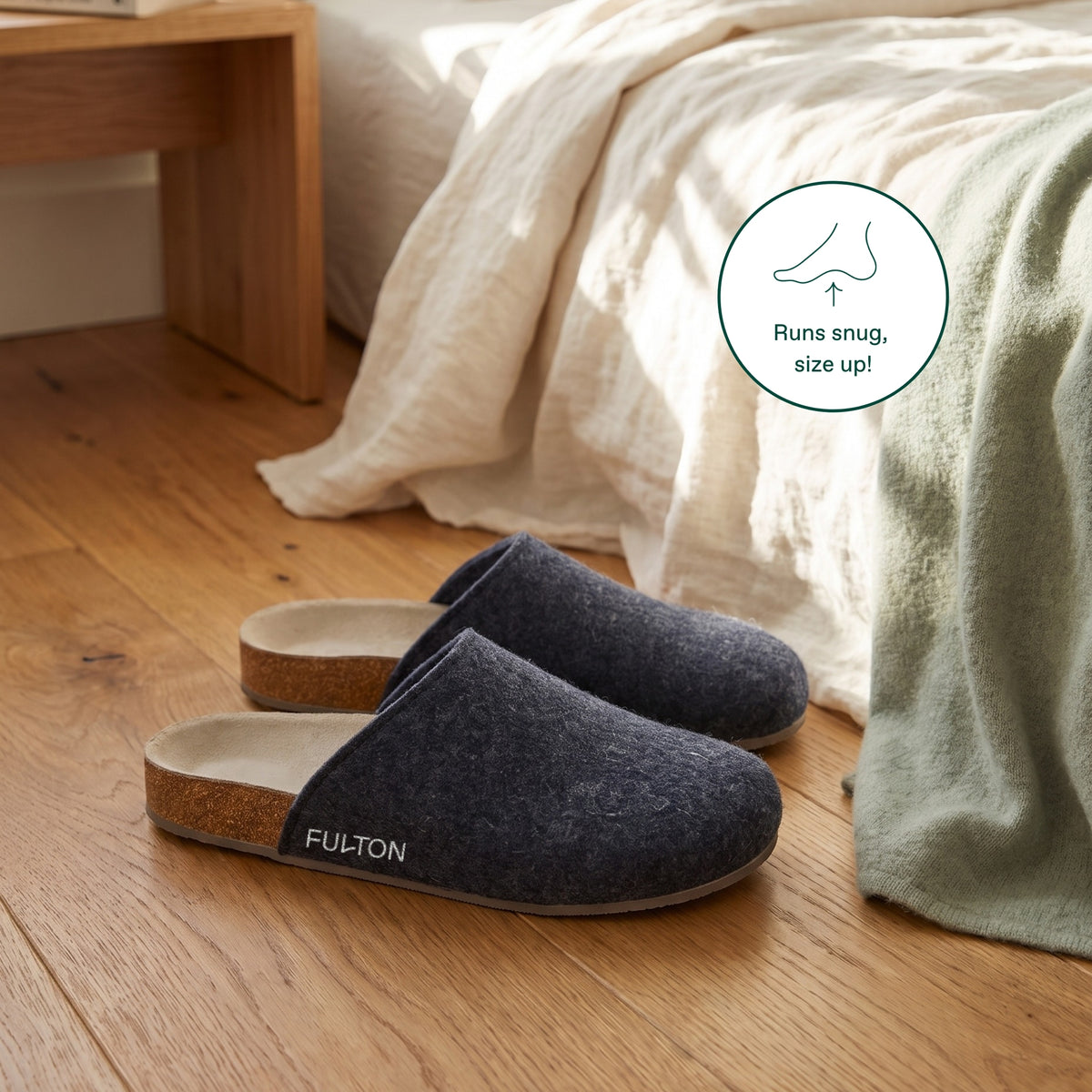
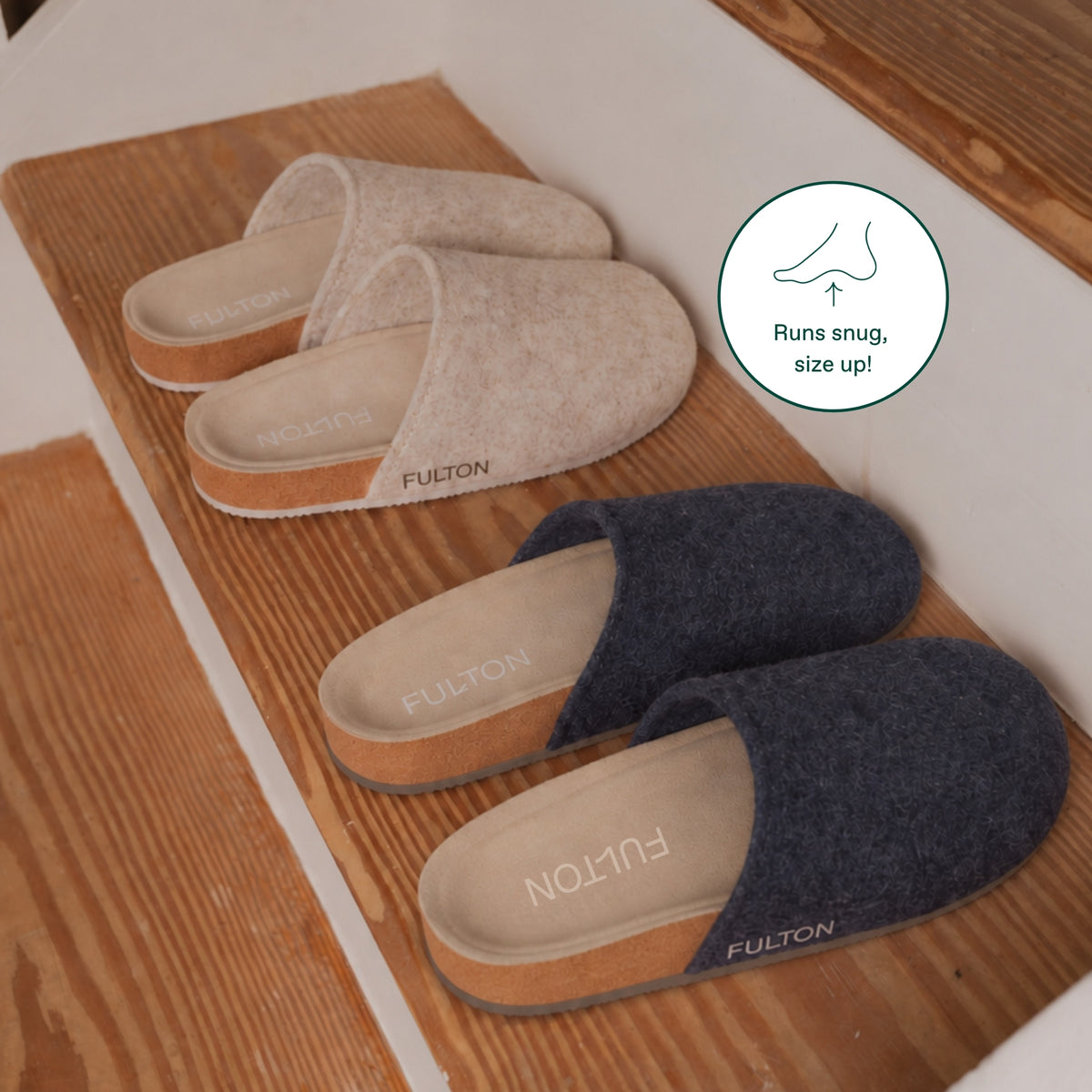
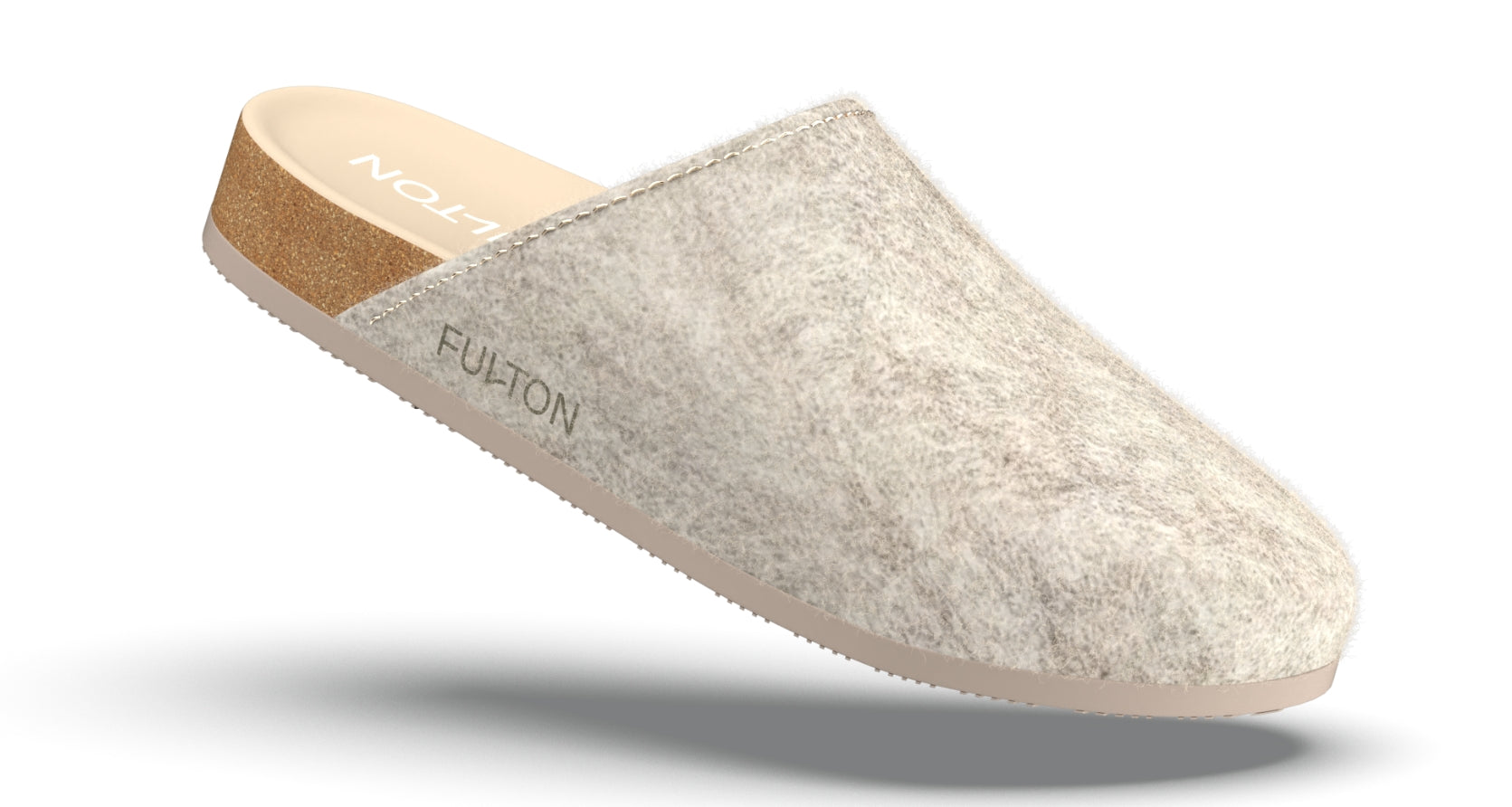
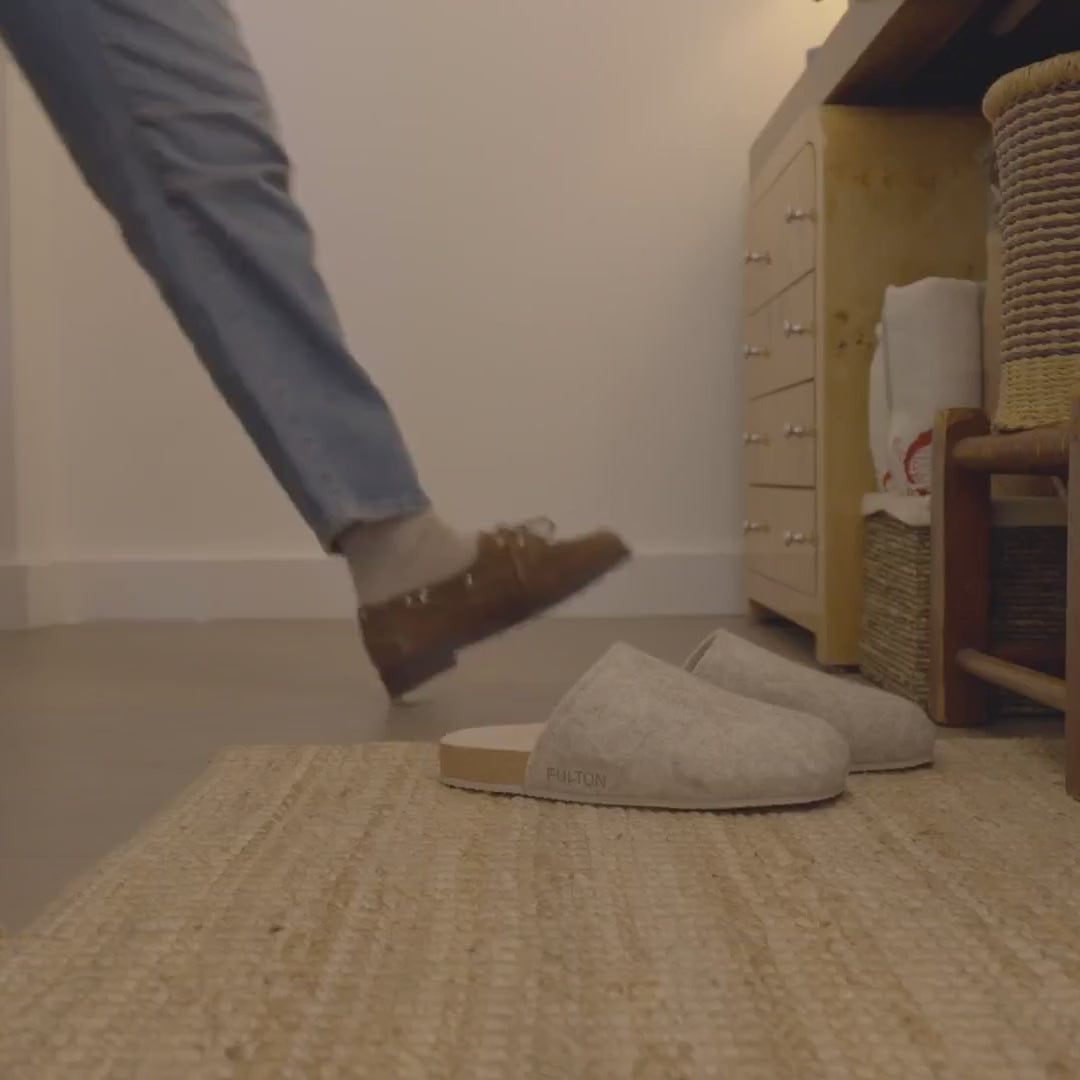
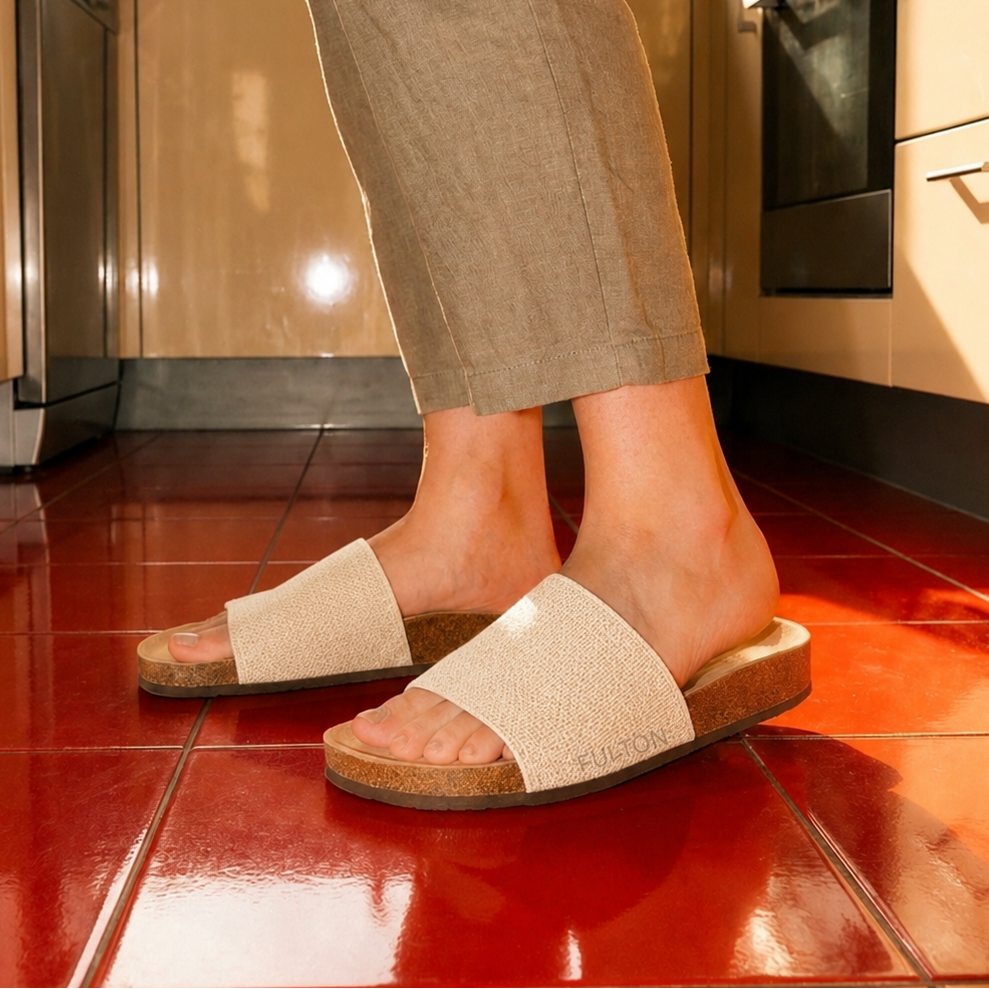
Fulton's Comfort Slide was designed to solve the problem that defines this entire category: indoor footwear that is genuinely comfortable underfoot, not just on the surface. The product is a standalone supportive slide, not a wool or shearling slipper. Its upper is built from breathable natural materials, not wool or shearling, and that is worth stating plainly. What it delivers in exchange is a level of structural support that no wool or shearling slipper in this list matches.
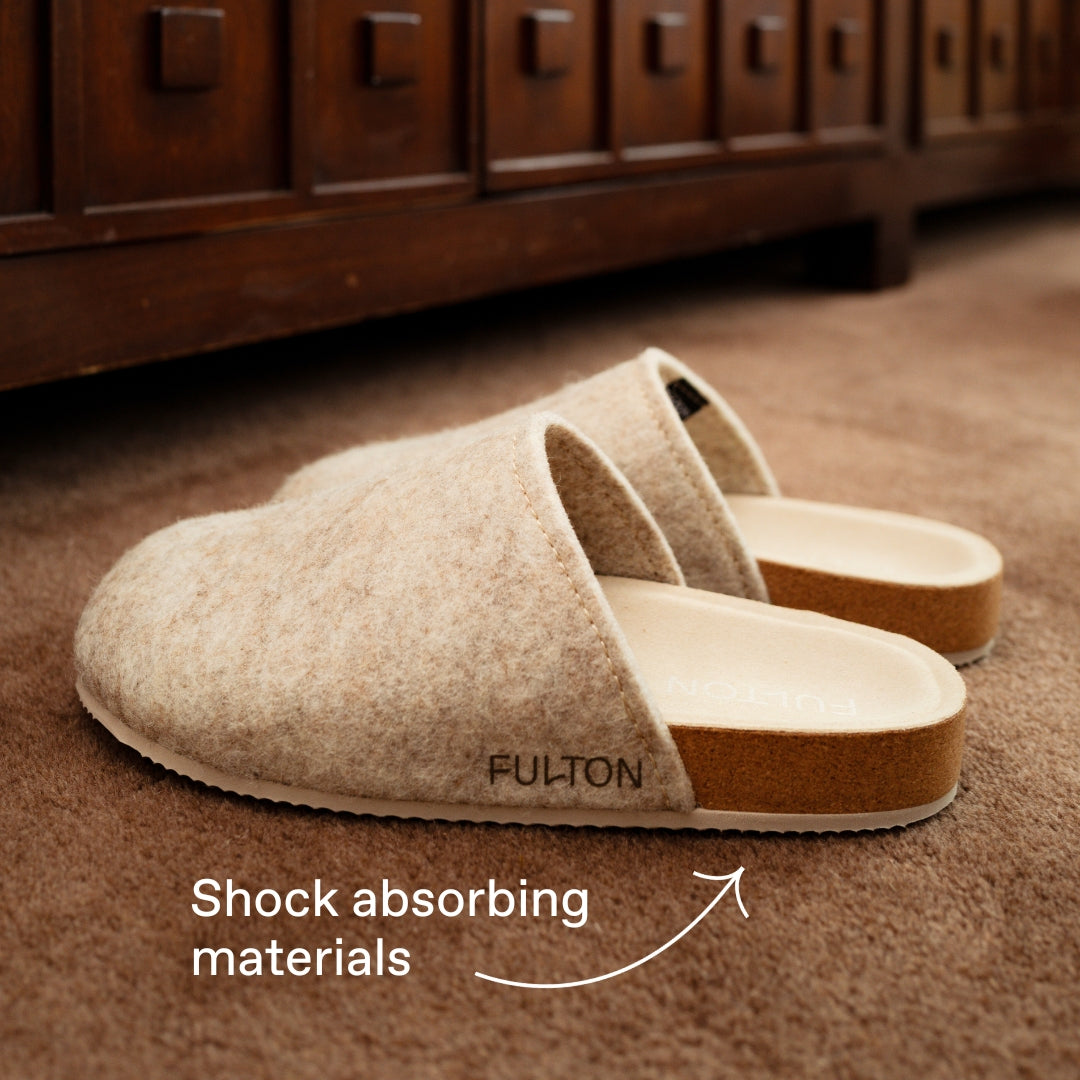
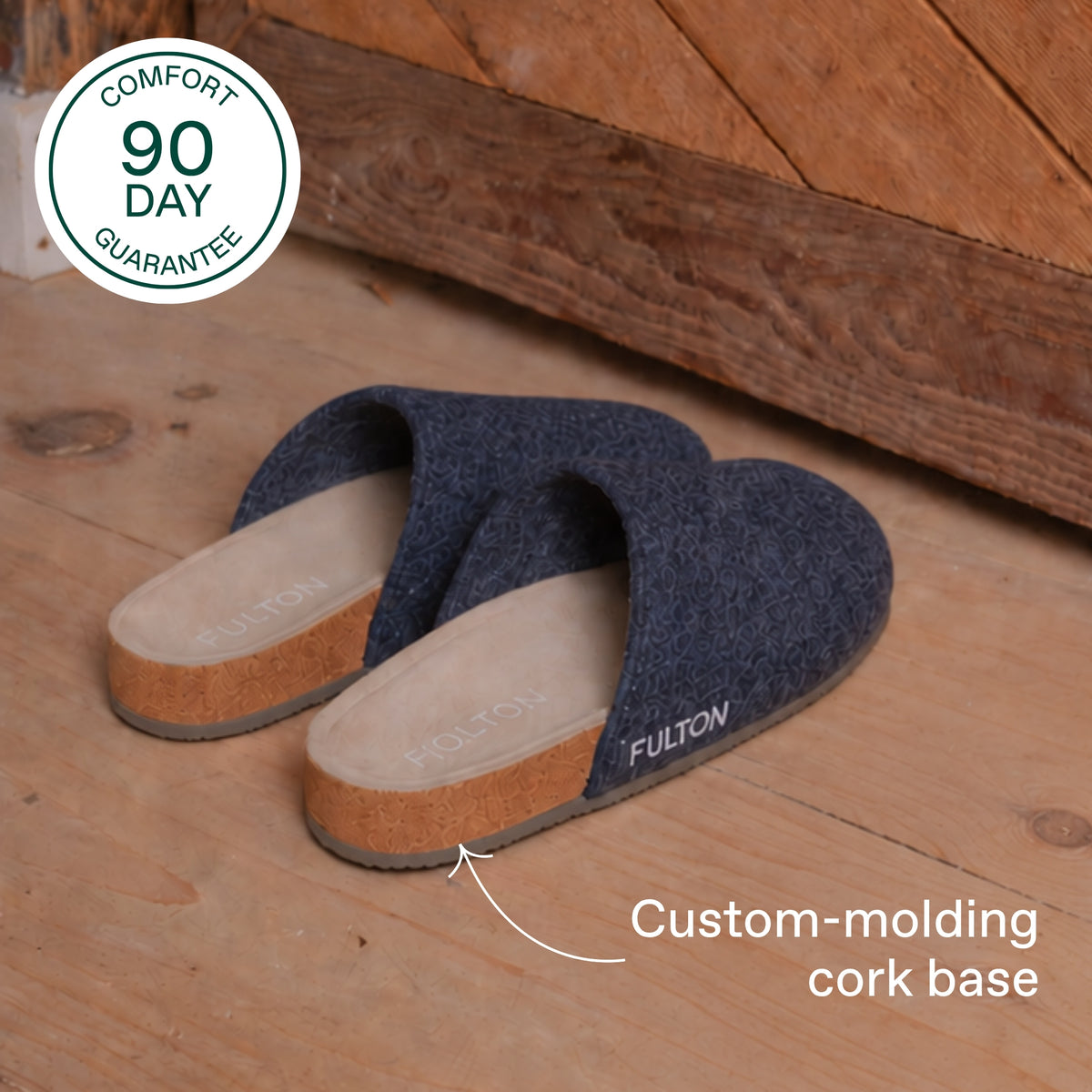
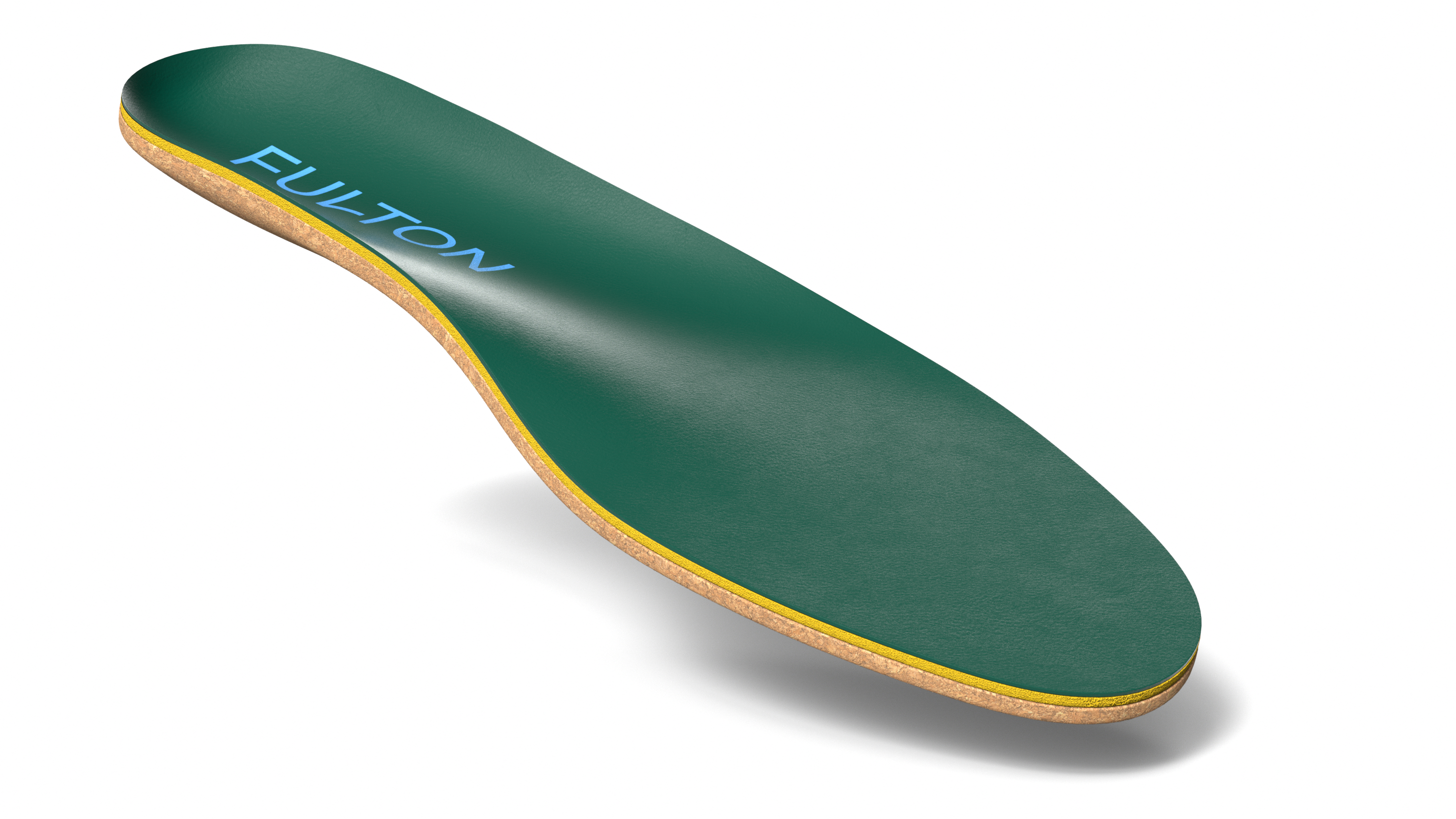
The central mechanism is a natural cork footbed that softens with body heat and molds to the wearer's individual arch after approximately 10 hours of wear, then holds that personalized shape indefinitely. Foam footbeds, including those inside most shearling slippers, compress and flatten. Cork adapts to the specific foot using it and does not lose that shape with continued wear. For buyers who have cycled through multiple pairs of cozy slippers and found the support degrading within a season, this distinction is the most important one in the category.
Key Features:
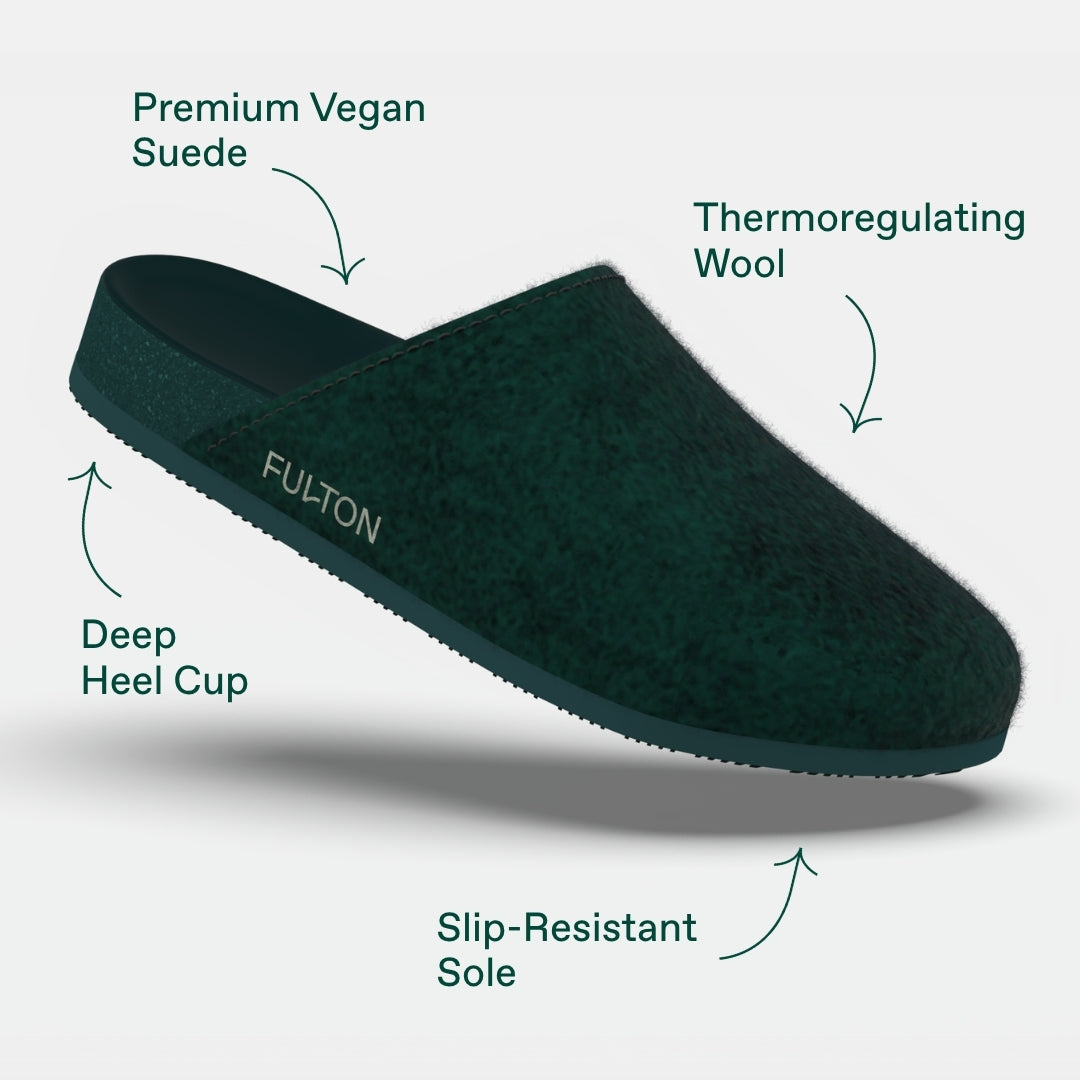
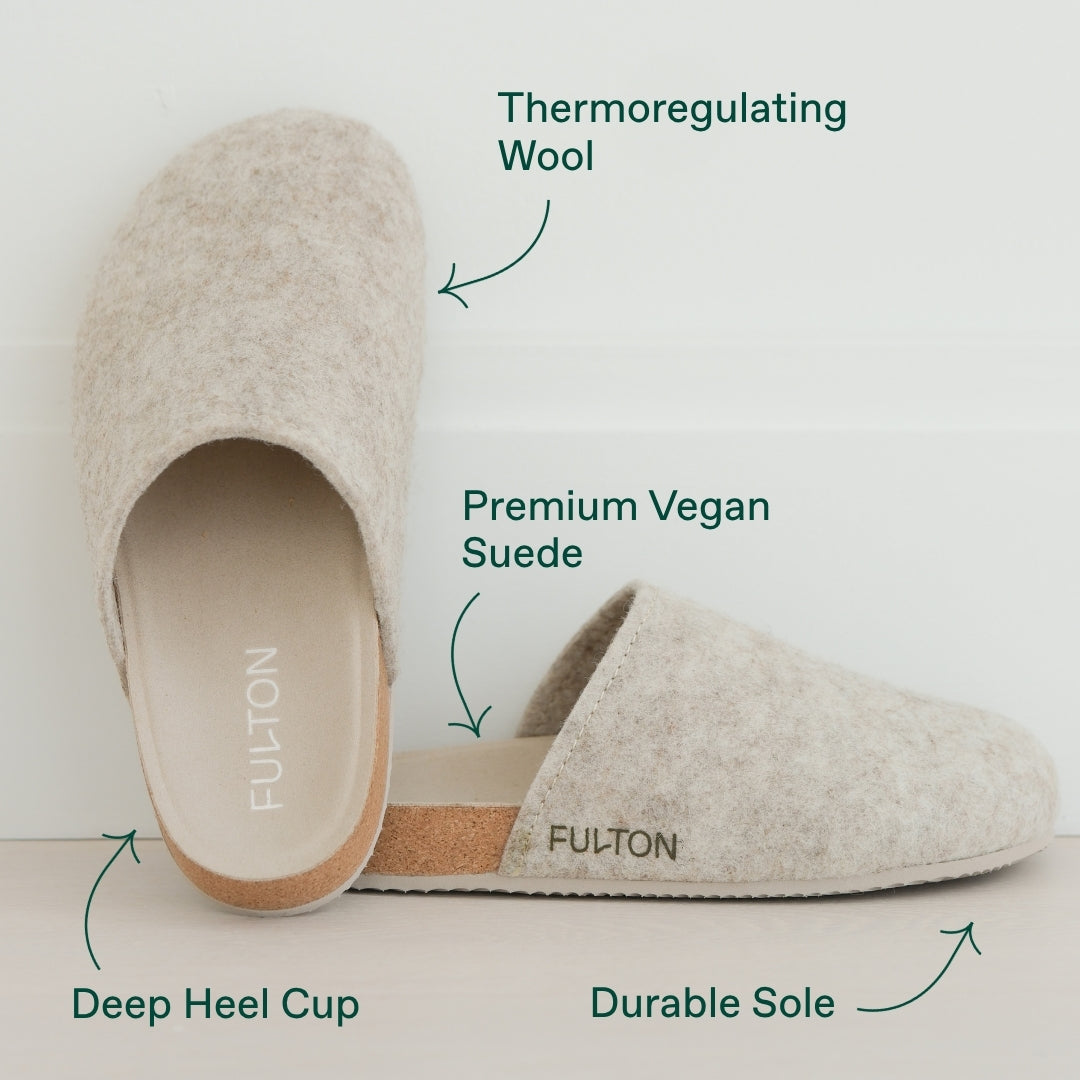
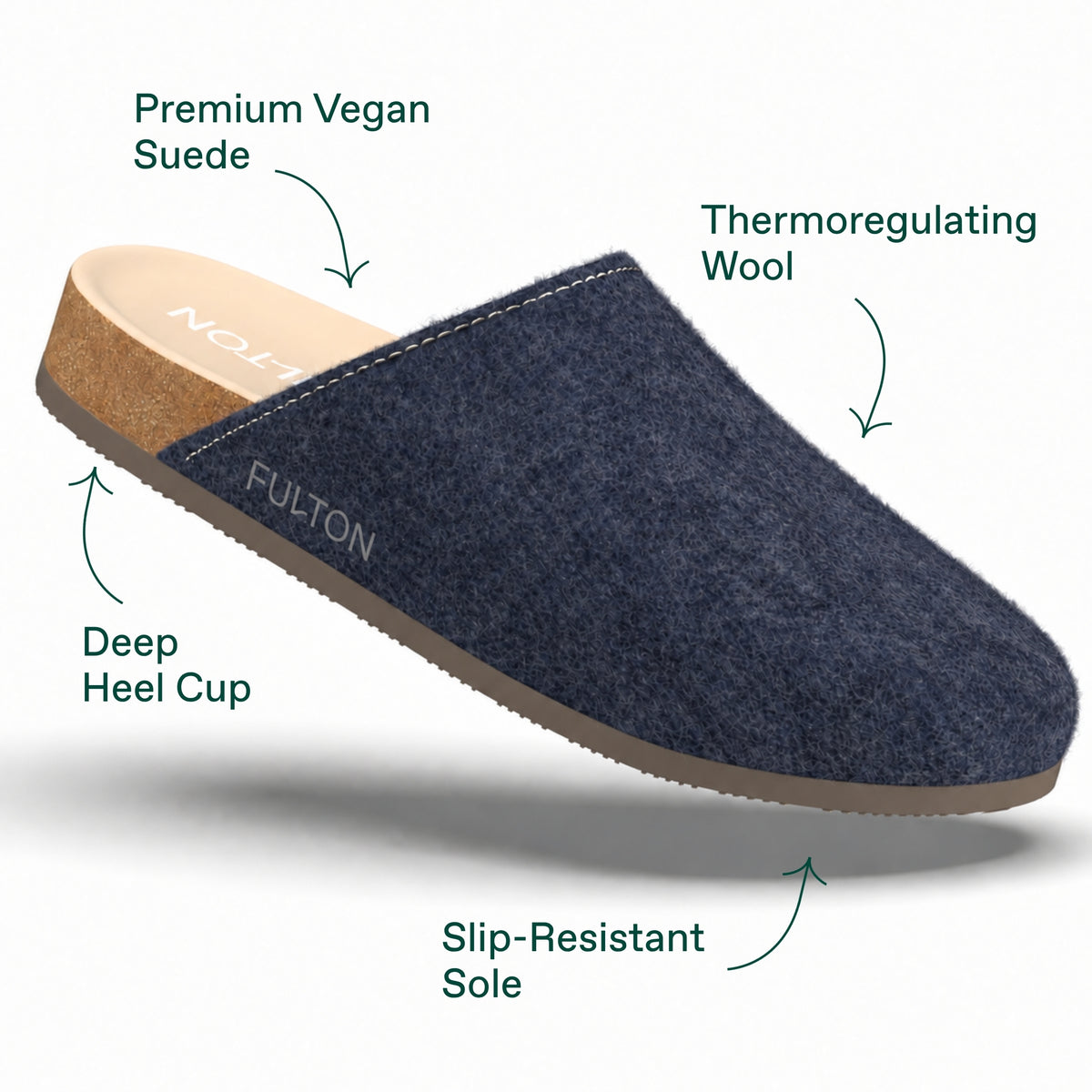
- Adaptive Cork Footbed: Softens with body heat and molds to the wearer's unique arch profile after approximately 10 hours of wear, then holds that shape. Absorbs 70% more impact than foam alone.
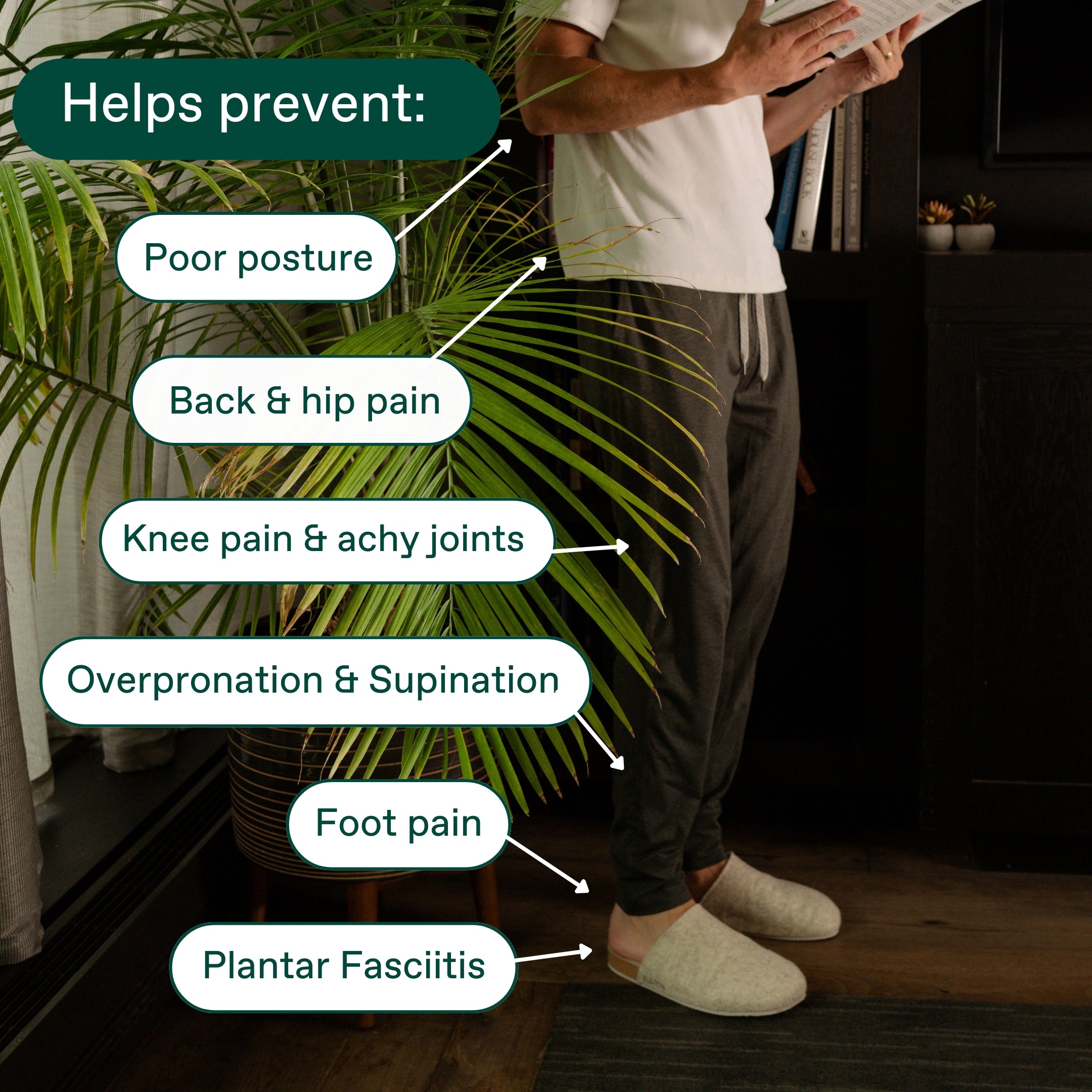
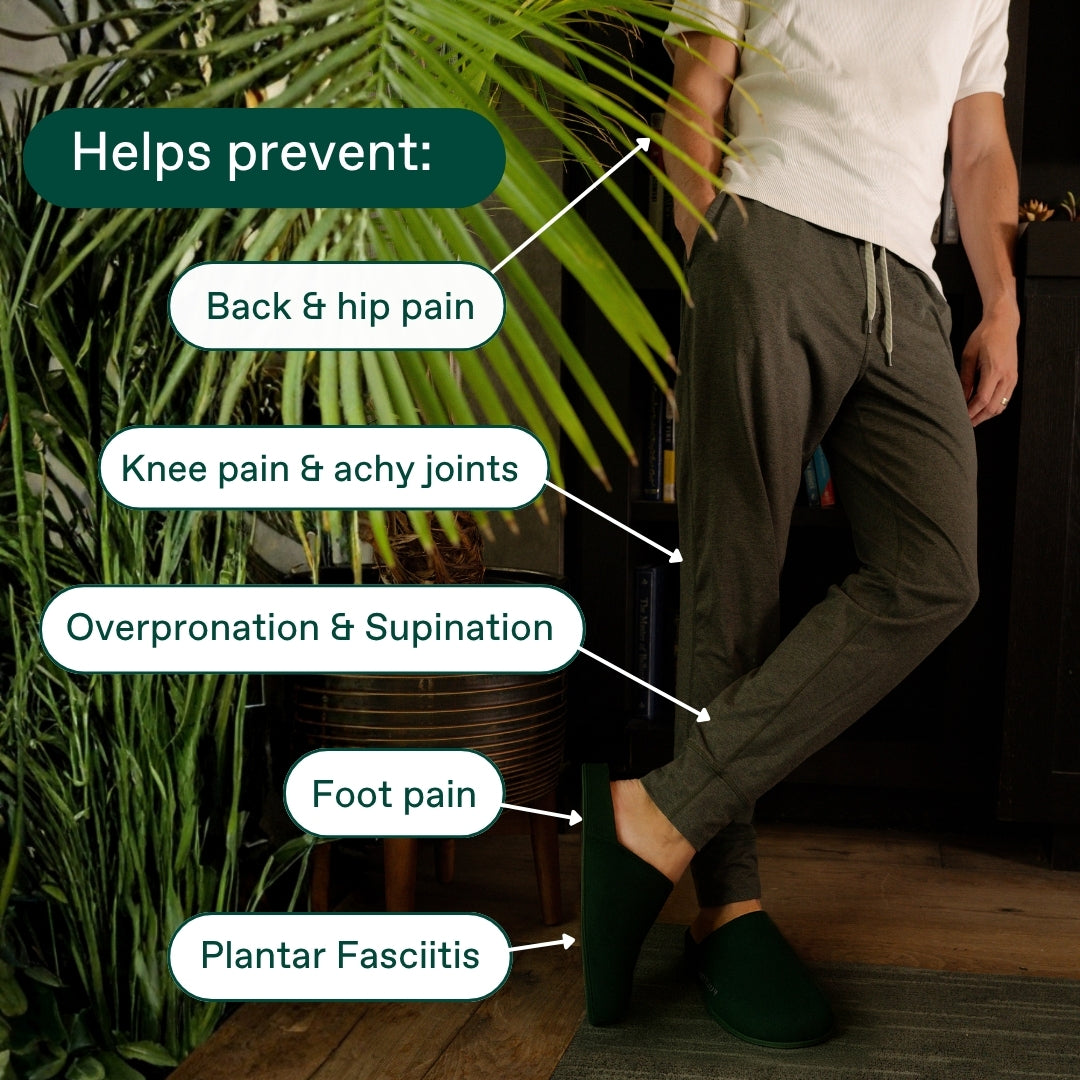
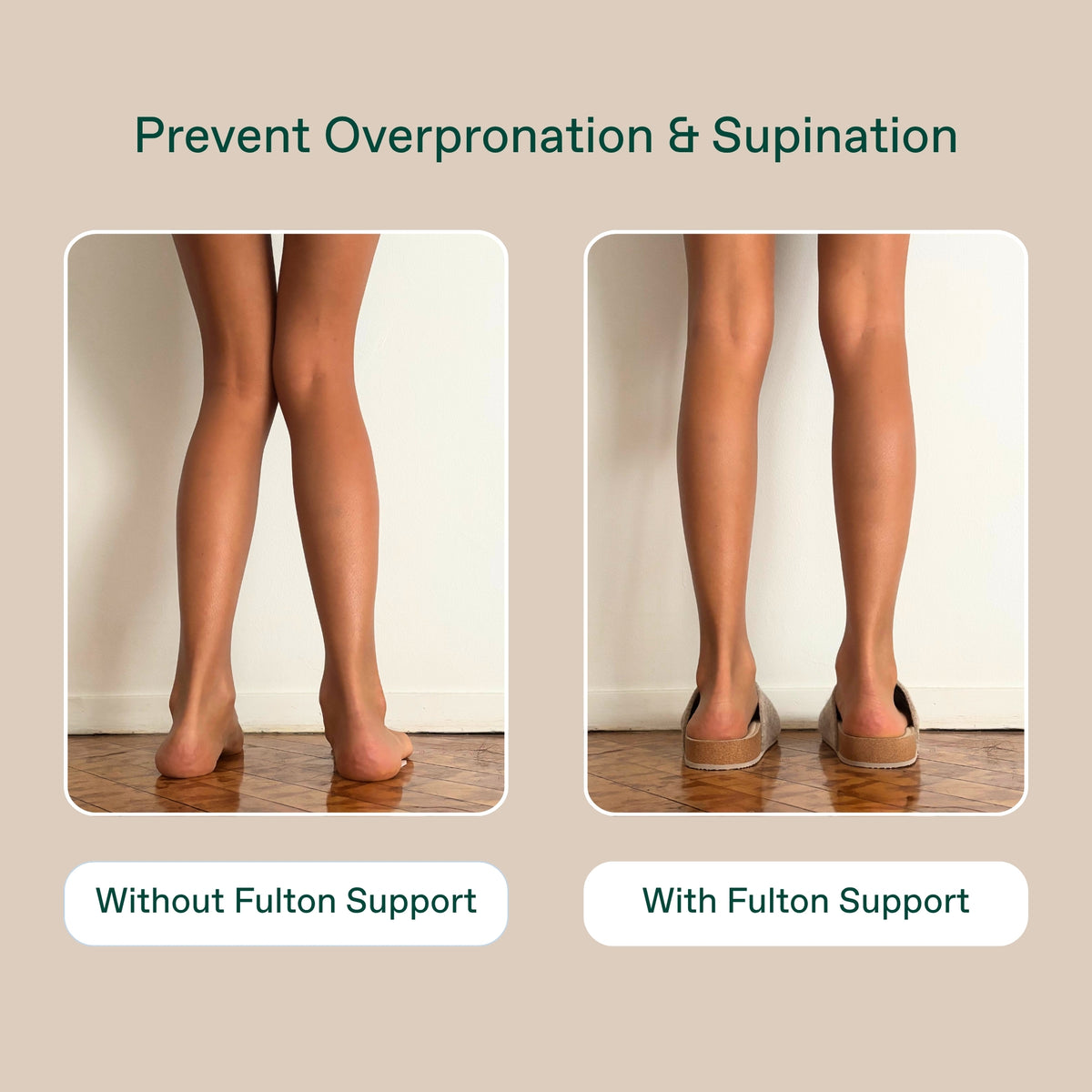
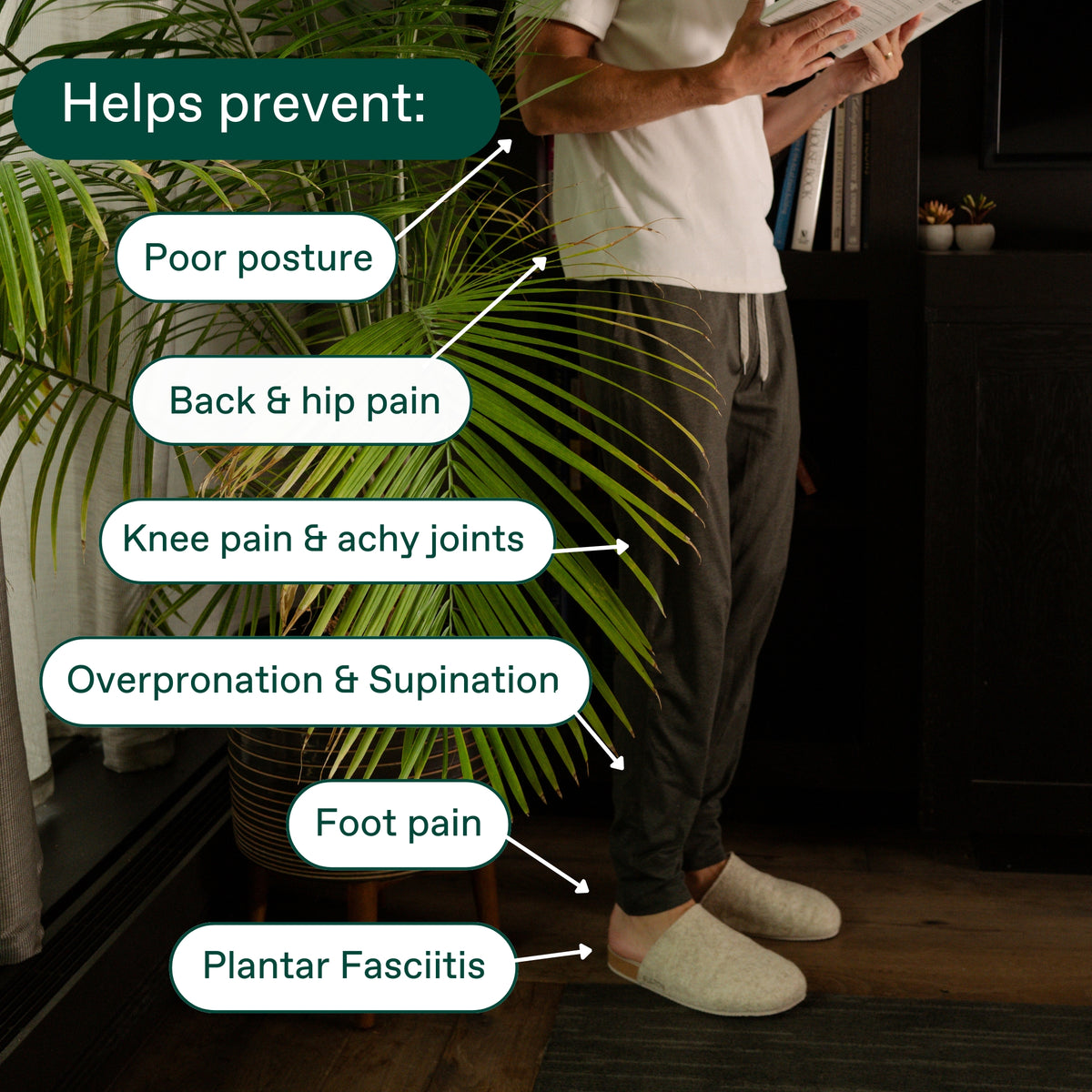
- Deep Heel Cup: Centers the rearfoot to stabilize gait and help prevent overpronation and supination, the two most common alignment problems in indoor footwear.
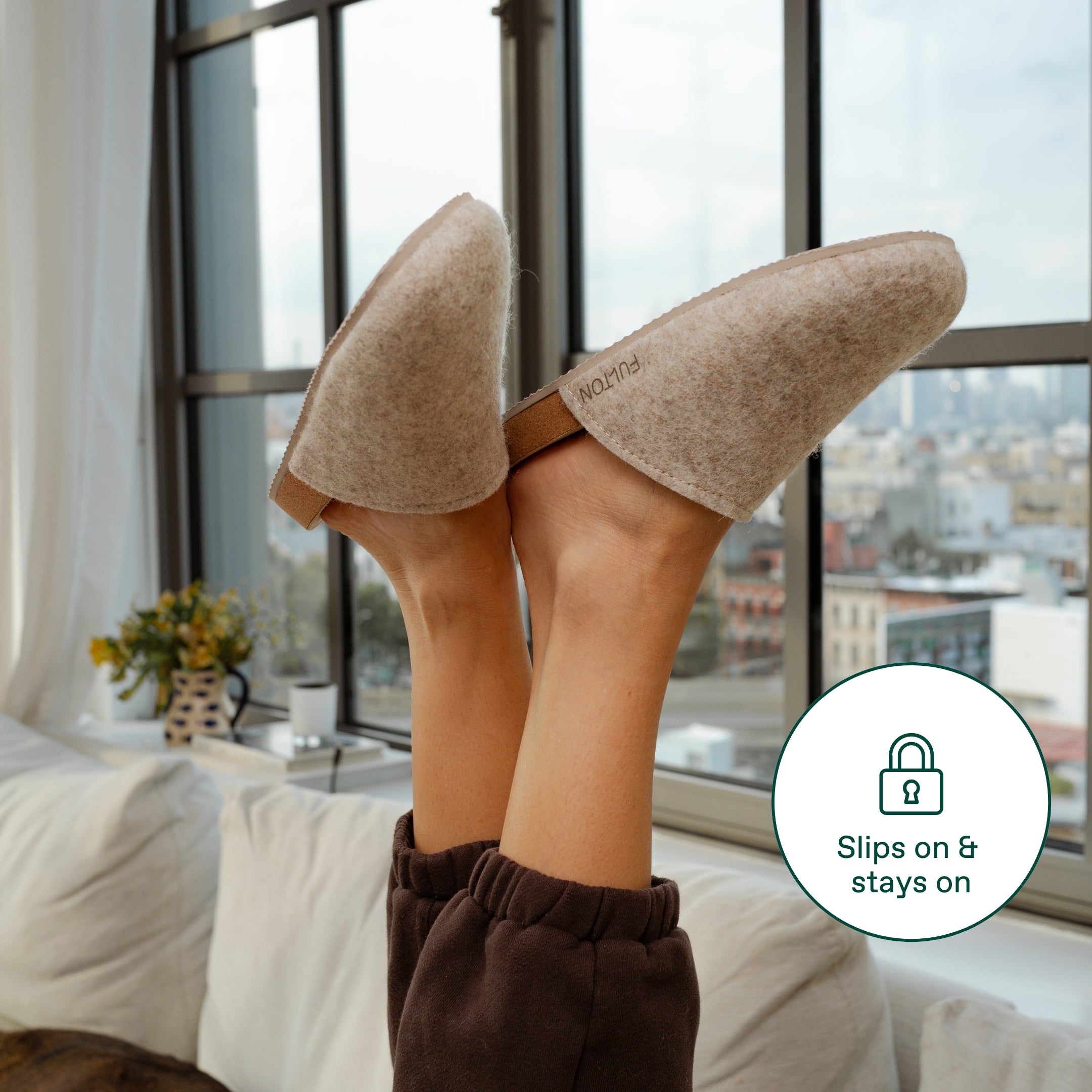
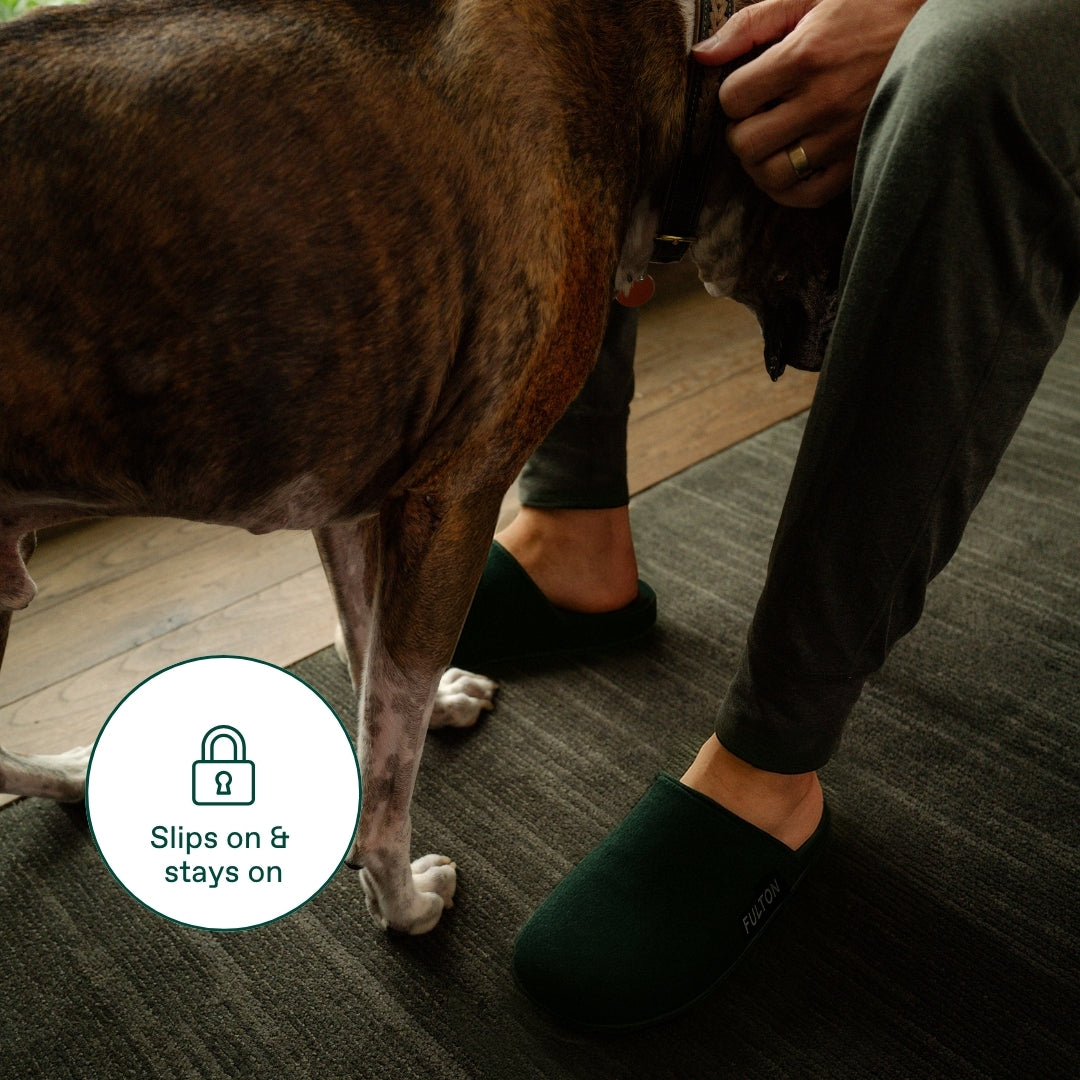
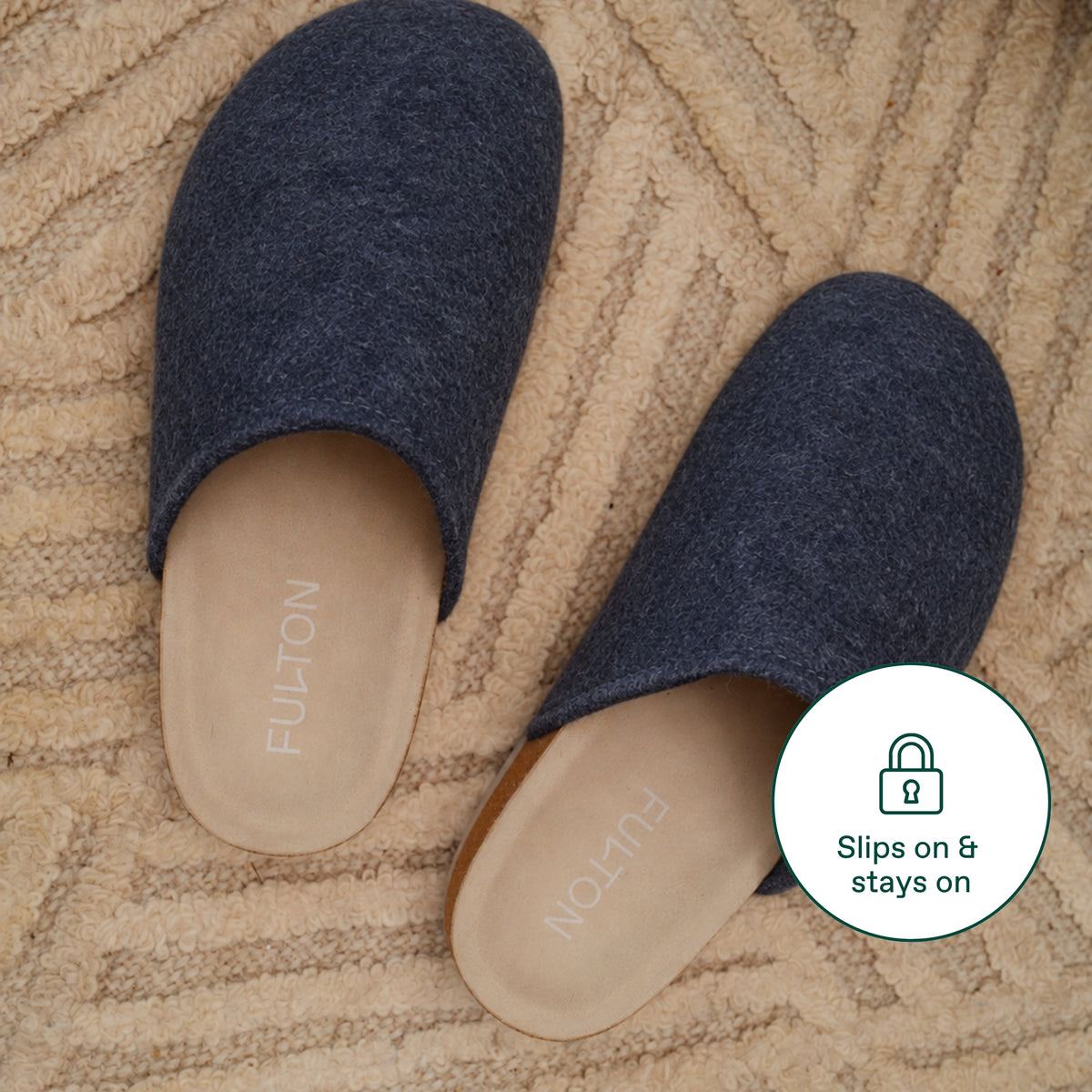
- Compressive Elastic Strap: Holds the foot securely in the slide for stable movement rather than the shuffle-and-slip dynamic common to open mules.
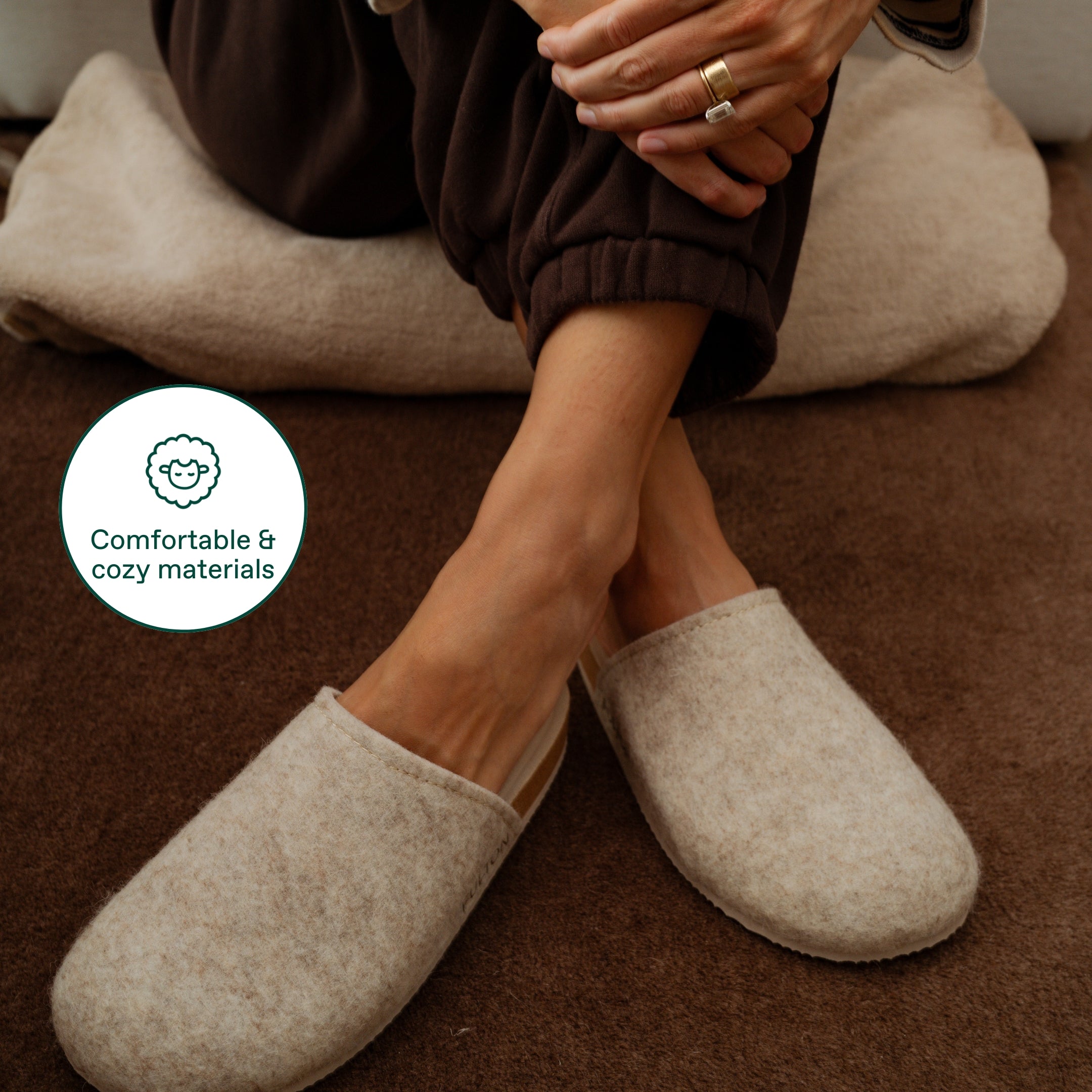
- Breathable Natural Materials: Regulate temperature and resist odor without synthetic linings that trap moisture.
- Slip-Resistant Rubber Sole: Designed specifically for indoor surfaces.
- Podiatrist-Backed Design: Designed with input from foot health professionals, endorsed by named experts including Dr. Rottenberg (Podiatrist), Renuka Pinto (Physical Therapist), and Jeffrey Brandt (Prosthetist and Orthotist).
- Carbon-Negative Production: Cork harvested sustainably; production carries a carbon-negative footprint of -0.81 kg CO2e.
House Shoe-Specific Offerings:
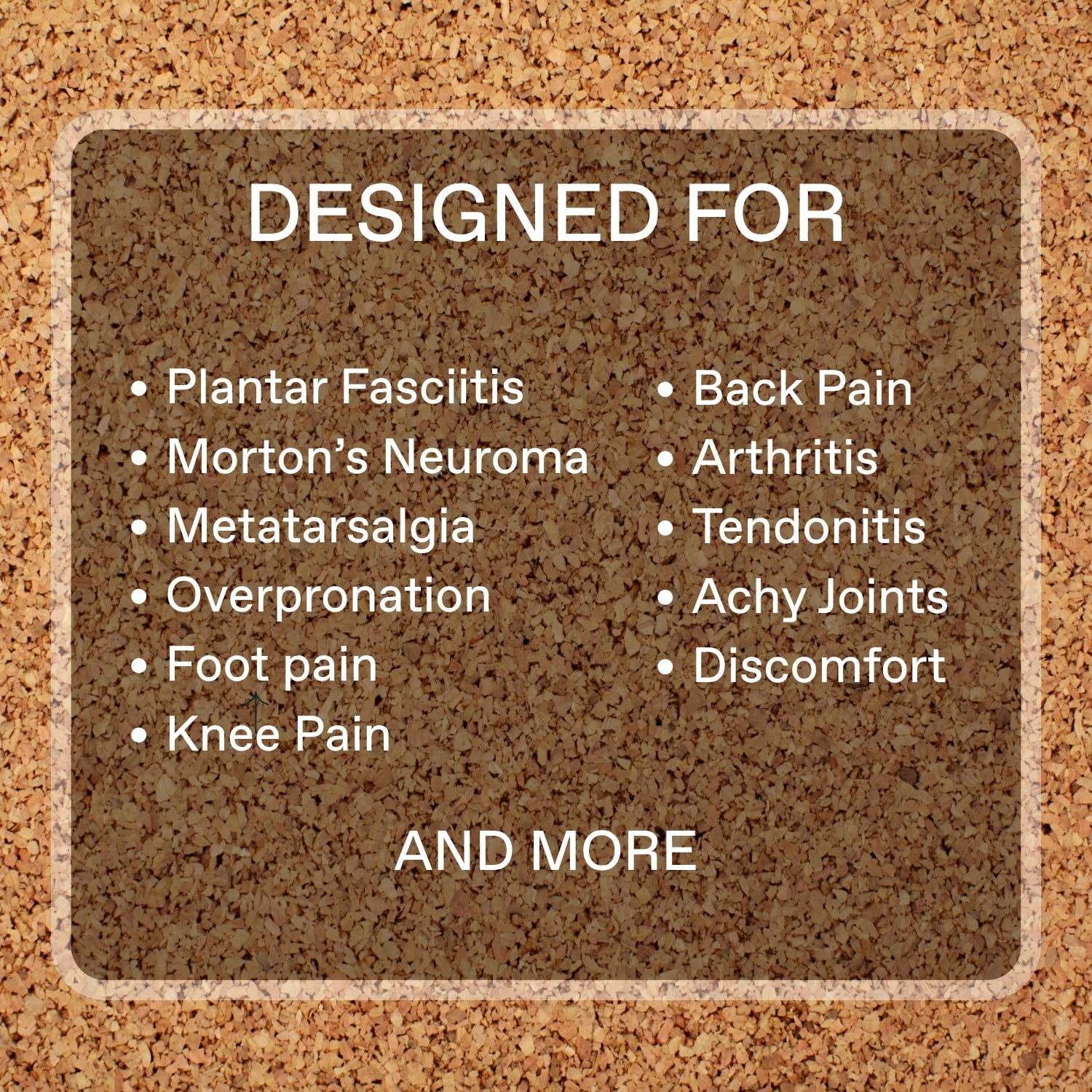
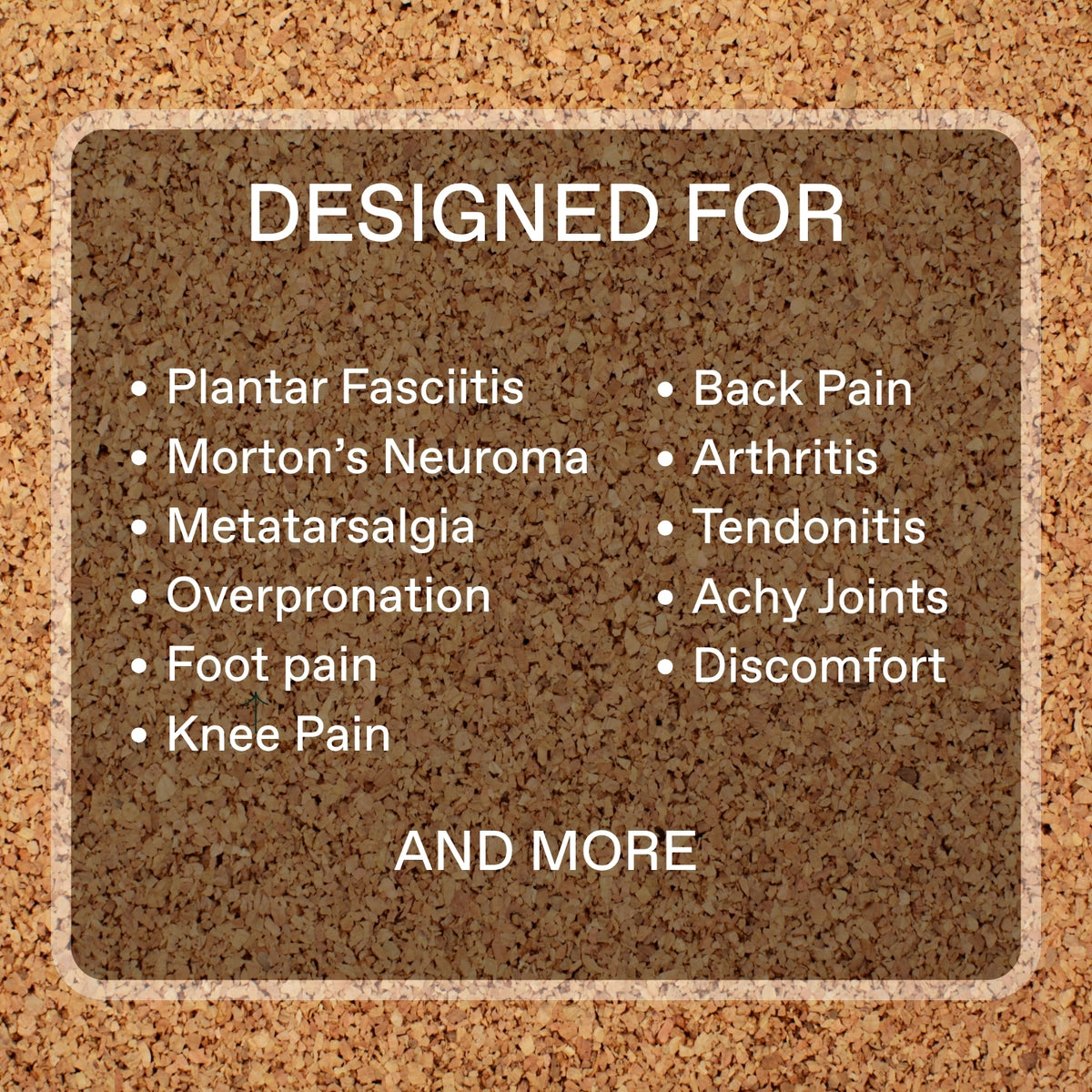
- Indoor Support: The cork footbed and deep heel cup work across all arch types, from flat feet to high arches, without separate inserts.
- Alignment Through the Day: Built for the hours when support matters most but is most often neglected, mornings before other shoes go on and evenings after they come off.
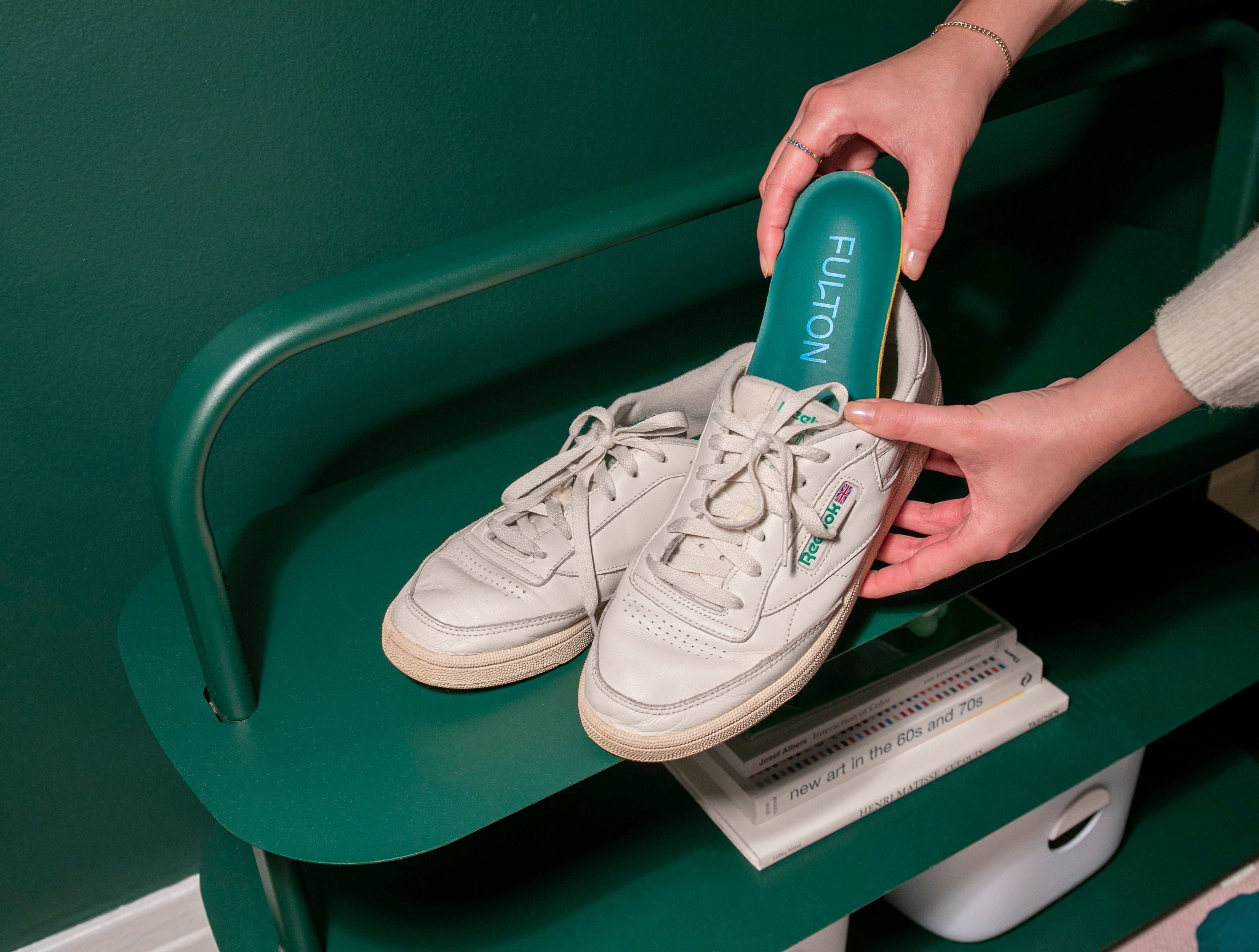
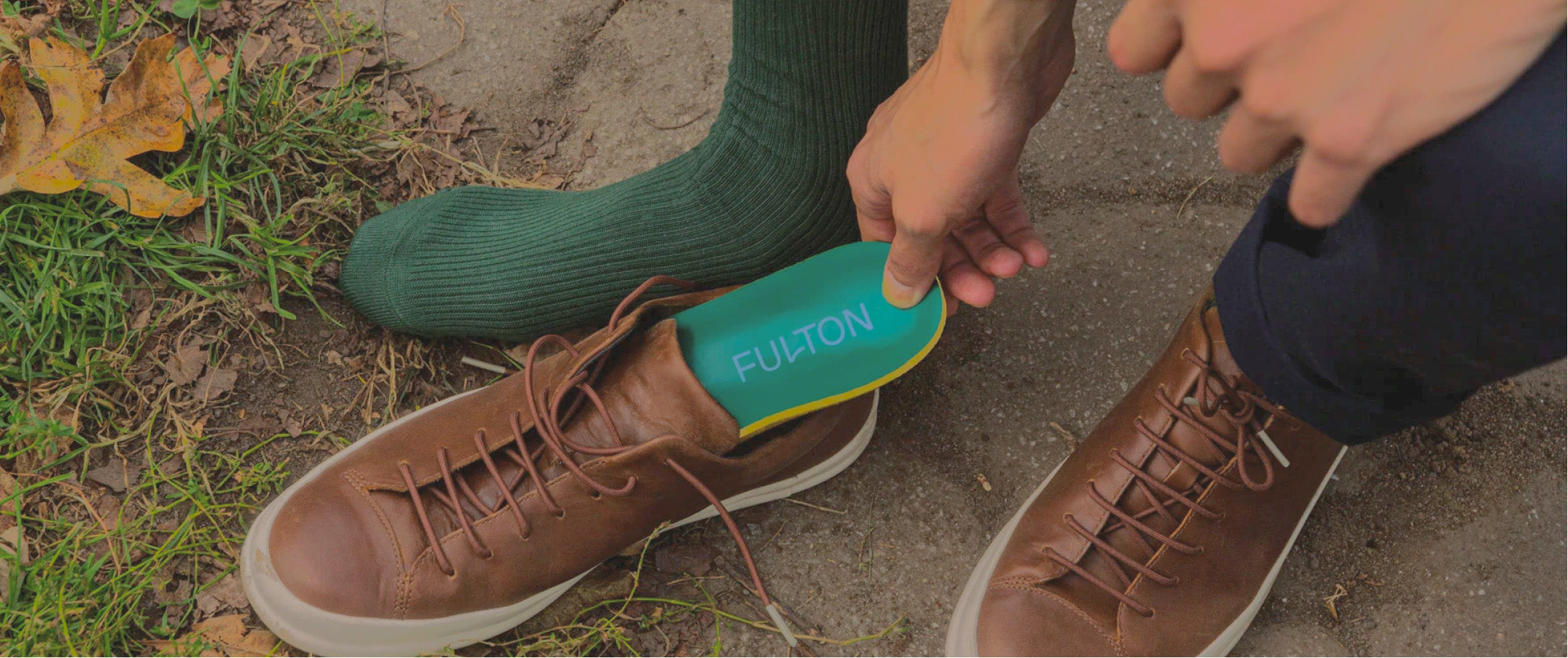
- Insole Pairing Option: Buyers who want dedicated wool or shearling warmth can wear Fulton's The Classic Insole or The Universal Insole inside a compatible closed-toe house shoe for combined structure and natural fiber comfort.
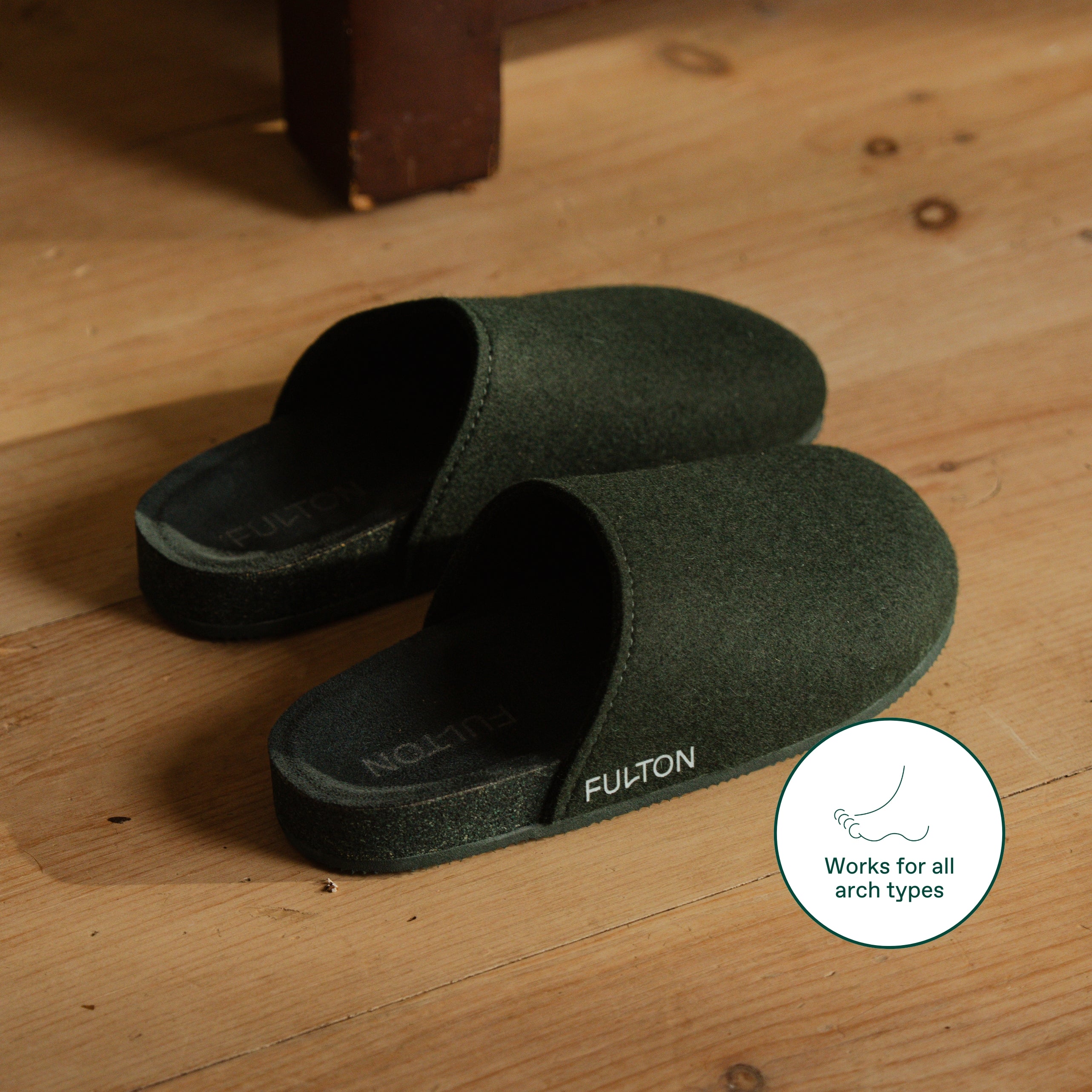
Pricing: $120. Available in Cream and Black.
Pros:
- Only indoor slide in this category with an adaptive cork footbed that molds to the individual wearer
- Deep heel cup provides genuine overpronation control that flat-soled slippers cannot match
- Carbon-negative production tied to specific, verifiable materials
- 90-Day Comfort Guarantee reduces purchase risk during break-in
- HSA/FSA eligible
- 97% of customers report a reduction in pain; 95% report improved comfort
Cons:
- Upper is not wool or shearling; buyers seeking plush natural fiber warmth will find it less cozy on the surface than shearling-lined competitors
- Primarily designed for indoor and light at-home use rather than extended outdoor wear
- Slide format means less enclosure than a closed-toe boot-style slipper in very cold environments
Fulton's Comfort Slide is the right first choice for buyers who have spent years choosing warmth over support and are ready to stop making that trade-off. The 90-Day Comfort Guarantee means the decision carries no long-term risk.
2. Birkenstock Zermatt Shearling Felt
Birkenstock's Zermatt is the brand's dedicated house slipper, and it is the closest competitor to Fulton's model in one specific way: both rely on a cork-based footbed. The Zermatt combines a genuine wool felt upper with a full shearling lining and Birkenstock's anatomically shaped cork-latex footbed. For buyers who specifically want a wool and shearling slipper with meaningful arch contouring, it is the most considered option in this list.
The important difference from Fulton's approach is that Birkenstock's footbed is fixed. It delivers the same arch profile to every wearer, which suits many feet but not all. Fulton's cork footbed molds to the individual, adapting to the specific arch height and gait of the person wearing it.
Key Features:
- Genuine wool felt upper with full shearling interior lining
- Anatomically shaped cork-latex footbed with deep heel molding and medial arch contour
- Closed-toe moccasin-style construction for maximum foot enclosure
- Durable construction consistent with Birkenstock's broader footwear standard
House Shoe-Specific Offerings:
- Wool Felt Upper: Breathable and warm, with natural temperature regulation
- Shearling Lining: Genuine shearling footbed lining provides plush warmth and moisture management
- Cork-Latex Footbed: More structured than foam alternatives, though not adaptive to individual arch shape
Pricing: Approximately $130 to $160 depending on style and retailer.
Pros:
- Genuine wool and shearling materials with strong durability credentials
- Cork-latex footbed offers more support than flat foam alternatives
- Brand heritage in cork-footbed design
- Available in a range of neutral colorways
Cons:
- Footbed is fixed rather than adaptive; does not mold to the individual wearer's arch
- Shearling lining can mat and trap odor with heavy use over time
- Full-foot enclosure makes sizing more important; limited width options
- No podiatrist-backed endorsement or satisfaction guarantee comparable to Fulton's 90-Day Comfort Guarantee
3. UGG Tasman and Scuffette
UGG is the most culturally recognized name in warm house shoes, and its Tasman and Scuffette styles have evolved from pure house slippers into everyday shoes worn well beyond the front door. Both feature genuine sheepskin or UGGplush wool-blend linings, suede uppers, and durable rubber outsoles that handle light outdoor use. They are genuinely warm, instantly comfortable, and have a wide size range.
The support story is where expectations should be calibrated. UGG's footbeds are cushioned and comfortable, but they are not structurally corrective. They do not feature a deep heel cup, a medial arch lift designed to control overpronation, or a footbed material that adapts to the individual. Buyers with heel pain or plantar fasciitis consistently find that UGG slippers feel good initially but do not resolve underlying alignment issues. Research published in PubMed found that the majority of plantar fasciitis cases wore shoes with hard, non-cushioned insoles and no built-in arch support, underscoring how much footbed architecture matters for this condition.
Key Features:
- Suede upper with genuine sheepskin or UGGplush wool-blend interior
- Cushioned insole with some foot contouring
- Durable rubber outsole for indoor and outdoor use
- Wide selection of colors and silhouettes across men's and women's sizing
House Shoe-Specific Offerings:
- Sheepskin/Wool Lining: Among the warmest and most plush linings in the category
- Indoor-Outdoor Sole: Transitions from hard floors to sidewalks without a change of shoes
- UGGbraid Collar Detail: Signature design element on the Tasman available in recycled polyester versions
Pricing: Approximately $100 to $150 depending on style.
Pros:
- Excellent warmth from genuine sheepskin and wool-blend linings
- Indoor-outdoor versatility
- Wide size range and significant style variety
- Strong resale value and cultural longevity
Cons:
- Footbed does not provide corrective arch support or heel stabilization
- Buyers with plantar fasciitis or overpronation typically need to add an aftermarket insole
- Shearling lining mats with extended wear and can develop odor
- Open-back Scuffette style offers minimal heel retention
4. Glerups (Wool Styles)
Glerups makes a compelling case for pure wool construction. The Danish brand uses a blend of natural wool from Gotland sheep and New Zealand wool, felted into a durable, moisture-managing structure that handles temperature regulation and odor resistance as well as anything in this list. The wool absorbs excess heat and moisture and releases both when the shoe rests, which means Glerups house shoes stay fresher longer than shearling-lined alternatives.
The trade-off is structural support. Glerups does not include a dedicated arch support system. The brand describes its footbed as providing "arch relax" rather than arch correction, which is an honest positioning: the flexible wool conforms gently to the foot over time, but buyers with significant overpronation, plantar fasciitis, or high arches will need to add a structured insole such as Fulton's The Classic Insole or The Universal Insole to achieve meaningful correction.
Key Features:
- 100% pure natural wool felt construction (Gotland and New Zealand wool blend)
- Available in pull-on, rubber-soled, and leather-soled variants
- Minimal, flexible construction designed for natural foot movement
- Machine wash-friendly in some models (hand wash recommended for best results)
House Shoe-Specific Offerings:
- Wool Temperature Regulation: One of the strongest performers in this list for breathability and odor resistance
- Flexible Construction: Conforms to foot shape without rigid structure
- Indoor-Outdoor Rubber Sole Options: Available for those who need occasional outdoor use
Pricing: Approximately $90 to $130 depending on sole type and style.
Pros:
- Among the best natural wool construction available in a house slipper format
- Excellent breathability, odor resistance, and temperature regulation
- Genuine sustainability credentials through natural, minimally processed materials
- Durable felted structure outlasts synthetic fleece significantly
Cons:
- No structured arch support; not appropriate as a standalone solution for foot pain
- Buyers with overpronation, plantar fasciitis, or high arches need to add an insole
- Sizing recommendation to go one size up can be confusing for first-time buyers
- Machine washing can damage the felted structure; care instructions should be followed carefully
5. OluKai Moloa Hulu
OluKai's approach to the warm house shoe category reflects the brand's Hawaiian roots: natural materials, indoor-outdoor capability, and a relaxed silhouette. The Moloa Hulu features a wool-blend upper and a dual-density PU footbed with a gel insert and a removable, washable wool-blend footbed cover. The drop-in heel design makes it easy to slip on and off. It is a well-executed everyday slipper for buyers who want genuine material quality without committing to a fully structured support system.
The footbed is more considered than a flat foam sole, with the dual-density construction offering some differentiation. It does not, however, adapt to the individual wearer the way a cork-molding footbed does, and the arch support is moderate rather than corrective. OluKai's slipper range is better suited to comfort-seeking buyers than those managing specific alignment conditions.
Key Features:
- Wool-blend or textile upper with shearling or knit lining depending on style
- Dual-density PU footbed with gel insert and removable wool-blend footbed cover
- Drop-in heel design for easy on-and-off
- Non-marking gum rubber outsole for indoor and outdoor use
House Shoe-Specific Offerings:
- Wool-Blend Cover: Removable and washable, which extends the useful life of the footbed lining
- Dual-Density Construction: More underfoot differentiation than a single-density foam sole
- Elastic Gore Panels: Create a customized fit without lacing
Pricing: Approximately $110 to $140 depending on style.
Pros:
- Genuine material quality with wool and shearling options
- Removable and washable footbed cover is a practical differentiator
- Indoor-outdoor sole extends where the shoe can be worn
- 1-year product guarantee
Cons:
- Arch support is moderate, not corrective; not a solution for overpronation or plantar fasciitis
- Dual-density foam footbed will compress over time unlike adaptive cork
- Shearling styles come in full sizes only, which can complicate fit
- Less support depth than podiatrist-backed designs
6. Vionic Relax II and Snuggle
Vionic applies the most clinically oriented support architecture of any slipper brand in this list. Its VIO MOTION Technology footbed includes a contoured arch, deep heel cup, shock-absorbing cushioning, and forefoot flexibility. The Relax II carries the APMA Seal of Acceptance. Several Vionic slipper styles feature faux shearling uppers that provide a plush, warm feel, though it is worth noting that the uppers are synthetic rather than genuine wool or shearling.
Vionic's strength is in its support engineering applied to a slipper format. Its limitation relative to Fulton's Comfort Slide is that the footbed is a fixed EVA structure rather than an adaptive one. It provides a predetermined arch profile rather than molding to the individual wearer. For buyers who find Vionic's specific contour geometry a good match for their foot structure, it is a strong option. For buyers whose arch height, gait, or foot shape falls outside the average, an adaptive footbed like Fulton's cork system is more likely to deliver lasting comfort.
Key Features:
- VIO MOTION Technology: Contoured arch, deep heel cup, shock-absorbing EVA, forefoot flexibility
- Faux shearling upper (synthetic) on Relax II and Snuggle styles
- Adjustable hook-and-loop closure on Relax II for fit customization
- Removable footbed on select styles
- APMA Seal of Acceptance on Relax II
House Shoe-Specific Offerings:
- VIO MOTION Footbed: The most clinically documented support architecture in a slipper format on this list
- Adjustable Fit: Relax II's hook-and-loop closure accommodates foot swelling throughout the day
- Indoor-Outdoor Outsole: Suitable for quick outdoor errands
Pricing: Approximately $70 to $100 depending on style.
Pros:
- Strongest documented support architecture among traditional slipper formats
- APMA Seal of Acceptance on Relax II
- Adjustable closure for swelling or width variation
- Accessible price point
Cons:
- Faux shearling upper is synthetic, not genuine wool or shearling
- Fixed EVA footbed does not adapt to individual arch shape over time
- Some buyer feedback notes arch support quality varying across model updates
- Synthetic lining has shorter useful life than natural fiber alternatives
7. Birkenstock Arizona Shearling
The Arizona Shearling is Birkenstock's open-toe entry point into the warm house shoe category. It uses the same cork-latex footbed as the Zermatt but in the familiar two-strap sandal silhouette, lined with genuine shearling for warmth. The adjustable buckle straps provide a more customizable fit than slip-on styles, which is useful for buyers with narrow or wide feet, and the cork footbed offers meaningful arch contouring.
As an open-toe sandal rather than a true house shoe, the Arizona Shearling is less appropriate for cold environments where full foot enclosure matters. It is better suited to moderate temperatures or buyers who prefer an open design year-round. The footbed mechanics are the same as the Zermatt: cork-based contour that is more structured than foam but fixed rather than adaptive. Cork is generally considered to retain its structure better over time than foam, making cork-based footbeds a more durable foundation than foam alternatives regardless of the slipper silhouette.
Key Features:
- Two adjustable buckle straps over a genuine shearling lining
- Anatomically shaped cork-latex footbed with toe bar, deep heel cup, and arch support
- EVA outsole for traction and durability
- Genuine shearling interior
House Shoe-Specific Offerings:
- Adjustable Buckle Fit: Accommodates a wider range of foot widths than slip-on styles
- Shearling Interior: Genuine warmth and moisture management in an open sandal format
- Cork-Latex Footbed: Birkenstock's signature support architecture
Pricing: Approximately $120 to $160 depending on style and retailer.
Pros:
- Genuine shearling lining with strong warmth credentials
- Adjustable straps provide fit flexibility
- Cork-latex footbed more supportive than foam alternatives
- Birkenstock's brand heritage in cork footbed design
Cons:
- Open-toe format limits warmth compared to enclosed slipper styles
- Fixed footbed profile does not adapt to the individual wearer
- Heavier and bulkier than minimalist slipper options
- Not ideal for cold climates where full foot enclosure is a priority
Evaluation Rubric for Warm Supportive House Shoes in 2026
Every option on this list was evaluated across five weighted criteria. Buyers can use the same framework to match their specific needs to the right pick.
| Criterion | Weight | What to Look For |
|---|---|---|
| Arch Support and Footbed Architecture | 35% | Adaptive vs. fixed; heel cup depth; alignment for overpronators and underpronators |
| Material Quality and Longevity | 25% | Genuine wool or shearling vs. synthetic; footbed material durability over time |
| Breathability and Odor Resistance | 20% | Natural fiber moisture management; antimicrobial properties; airflow |
| Fit Security and Heel Retention | 10% | Closed heel vs. open back; strap systems; slip-free movement |
| Care and Maintenance | 10% | Machine-washable, brush-and-air options; replaceability of worn components |
Fulton's Comfort Slide scores highest on the most heavily weighted criterion: arch support and footbed architecture. Its adaptive cork footbed and deep heel cup outperform every other option on this list in structural support quality. Glerups leads on breathability and material sustainability. Birkenstock's Zermatt offers the best combination of genuine wool-shearling warmth and cork footbed support. UGG delivers the highest warmth and the broadest indoor-outdoor versatility. Vionic provides the most documented clinical support architecture in a traditional slipper silhouette.
Why Fulton Is the Best Supportive House Shoe for 2026
Every other pick on this list excels at warmth. Fulton's Comfort Slide is the only option that excels at support. The cork footbed that molds to the individual arch after approximately 10 hours of wear, the deep heel cup that controls overpronation, the compressive strap that holds the foot in place, and the podiatrist-backed design combine to address the structural problem that wool and shearling slippers, however beautiful and cozy, consistently leave unsolved.
For buyers who need both, the most practical path is to pair Fulton's Comfort Slide for indoor use with a natural wool or shearling upper option using Fulton's Classic Insole or Universal Insole for the structural layer inside. But for most buyers who have cycled through flat footbed after flat footbed, the Comfort Slide is where the loop ends. It is backed by a 90-Day Comfort Guarantee, it is HSA and FSA eligible, and 97% of customers report a reduction in pain. Warmth is easy to find in this category. Support that personalizes to your foot is not.
FAQs About Wool and Shearling House Shoes and Slippers
What makes warm supportive slippers different from regular house shoes?
Most house shoes prioritize warmth through natural fibers but pair that lining with a flat or minimally contoured footbed. Warm supportive slippers combine insulating materials with structural features like a medial arch lift, deep heel cup, and footbed material that holds its shape under daily use. Fulton's Comfort Slide takes this further by using an adaptive cork footbed that molds to the individual wearer's arch rather than delivering a fixed generic profile, which is the distinction that separates support that works from support that merely feels like it should.
Are merino wool house shoes good for people with foot pain?
Merino wool and felted wool house shoes offer excellent temperature regulation, odor resistance, and a gentle fit, but most wool slipper constructions do not include a corrective arch support system. For people with plantar fasciitis, overpronation, or chronic heel pain, wool alone is rarely enough. Pairing a quality wool house shoe with a structured insole like Fulton's Classic Insole or Universal Insole can address both the comfort of natural fiber and the structural support that resolves underlying alignment issues.
Do shearling slippers provide arch support?
Genuine shearling slippers provide warmth and cushioning, but most are built on flat or lightly contoured footbeds that do not deliver structured arch support. The shearling lining itself is an insulating layer, not an orthopedic one. Birkenstock's Zermatt is the exception in this list, pairing real shearling with a cork-latex footbed contour. For adaptive arch support that molds to the individual foot, Fulton's Comfort Slide uses a cork footbed that personalizes to the wearer's arch after approximately 10 hours of wear and holds that shape indefinitely.
What is the best house shoe for people who stand all day at home?
For people who spend extended time on their feet at home, the footbed material and architecture matter more than the upper. Foam footbeds, including those inside shearling slippers, compress and flatten with use. Fulton's Comfort Slide uses a natural cork footbed that absorbs 70% more impact than foam alone and molds to the wearer's arch rather than flattening under body weight. The deep heel cup and compressive strap add the gait stability that flat house shoes cannot provide. It is the most complete solution for all-day indoor support in 2026.
How do you care for wool and shearling slippers without damaging them?
Natural wool and shearling slippers require gentle maintenance. Wool house shoes like Glerups should be brushed lightly and aired after each wear, with hand washing in wool-specific detergent for deeper cleaning; machine washing destroys felted wool structure. Shearling-lined styles should be spot-cleaned with a damp cloth and kept away from direct heat. Allowing any natural fiber slipper to rest and air out between uses is the single most effective way to extend its life and control odor. Fulton's Comfort Slide, which uses non-wool natural materials, can be wiped clean and air-dried without the material-specific care constraints of genuine wool or shearling.
What are the best wool or shearling house shoes and slippers in 2026?
The best warm, supportive house shoes for 2026 are: Fulton Comfort Slide (top pick for adaptive cork support and podiatrist-backed design), Birkenstock Zermatt Shearling Felt (best genuine wool-shearling slipper with cork footbed contouring), UGG Tasman and Scuffette (best for warmth and indoor-outdoor versatility), Glerups wool styles (best for breathability and odor resistance in a pure wool construction), OluKai Moloa Hulu (best for a natural material slipper with removable footbed cover), Vionic Relax II and Snuggle (best clinical support architecture in a traditional slipper silhouette), and Birkenstock Arizona Shearling (best for warmth in an adjustable open-toe format).
Can I use Fulton insoles inside wool or shearling slippers?
Fulton's The Classic Insole and The Universal Insole are designed to fit inside shoes with removable insoles, and certain closed-heel wool slipper styles are compatible. The Universal Insole, with its open toe box and slip-resistant base, is designed specifically for shoes without removable insoles, including some moccasin-style house shoes. This combination, a quality natural fiber upper for warmth and a Fulton cork footbed for support, is the most effective way to get genuine warmth and genuine alignment correction in one setup. Fulton's Build a Bundle option allows multiple insole pairs to be purchased at a discount for buyers who want support across several pairs of footwear.