




Last Updated on September 4th by Libie Motchan
Finding the best insoles for men comes down to three variables that most guides overlook: shoe volume, body weight under load, and the activity generating the most daily stress on your feet. A cushioned insert that feels great at the pharmacy rack often turns flat in two weeks under the demands of a work boot, a lifting session, or a 10-hour retail shift. This guide ranks seven of the most talked-about insoles in 2026, covering Fulton, Superfeet, PowerStep, Dr. Scholl's, SOLE, Currex, and Tread Labs, so you can find the one that actually fits your life. Fulton tops the list because its cork-based arch support molds to the way you walk, holds its structure under sustained load, and fits into 97% of shoes without a doctor visit or a $500 price tag.
Why Do Men Need Better Insoles?
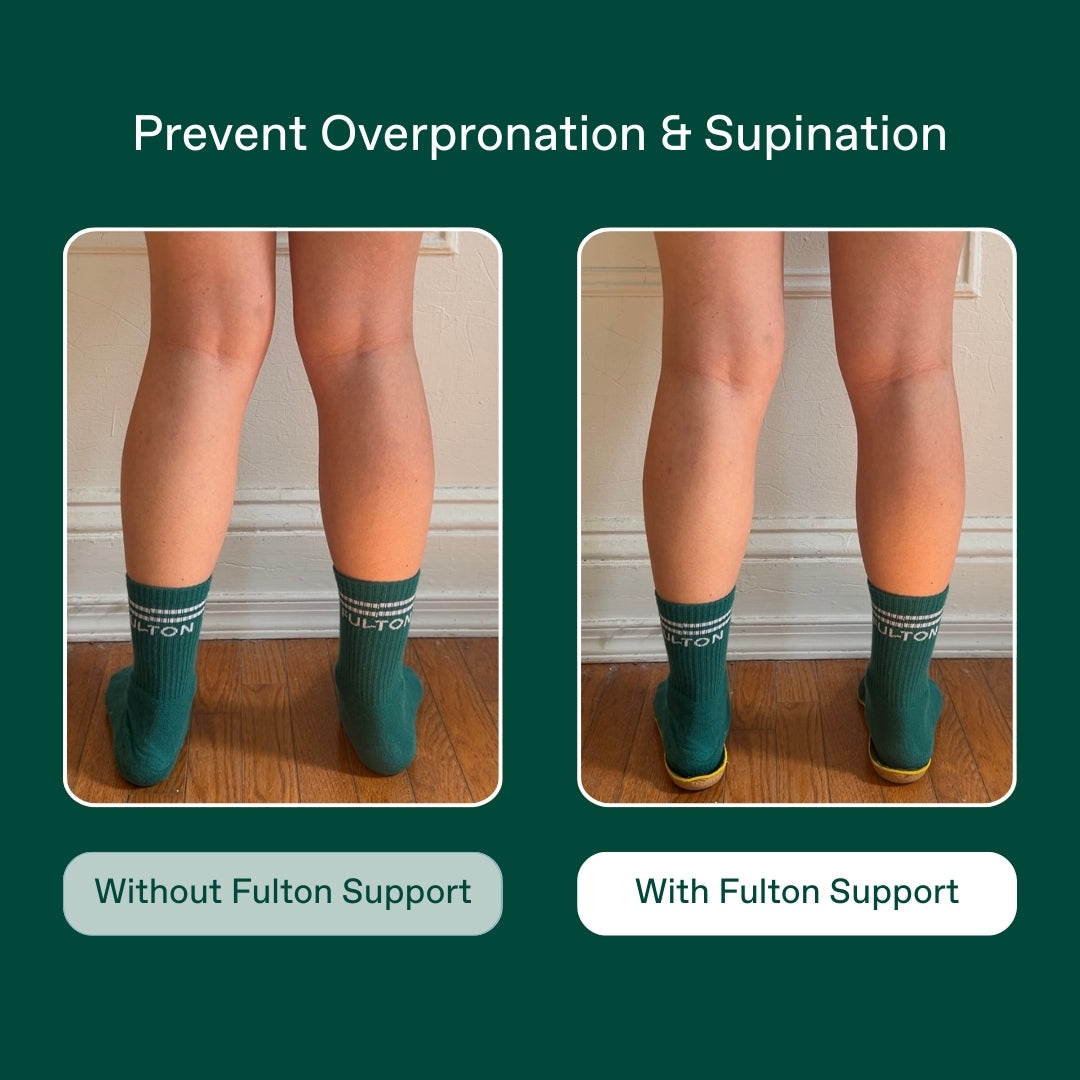
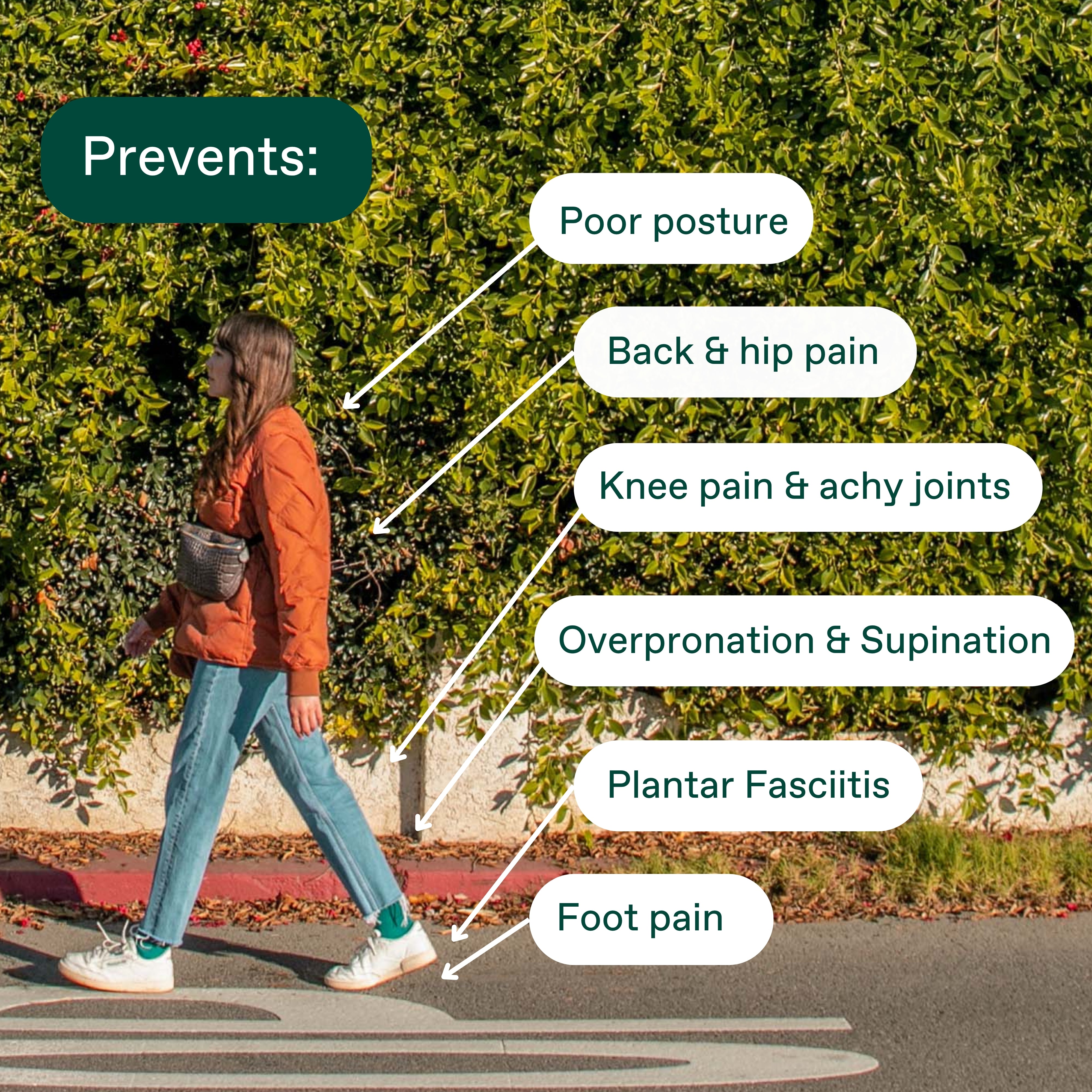
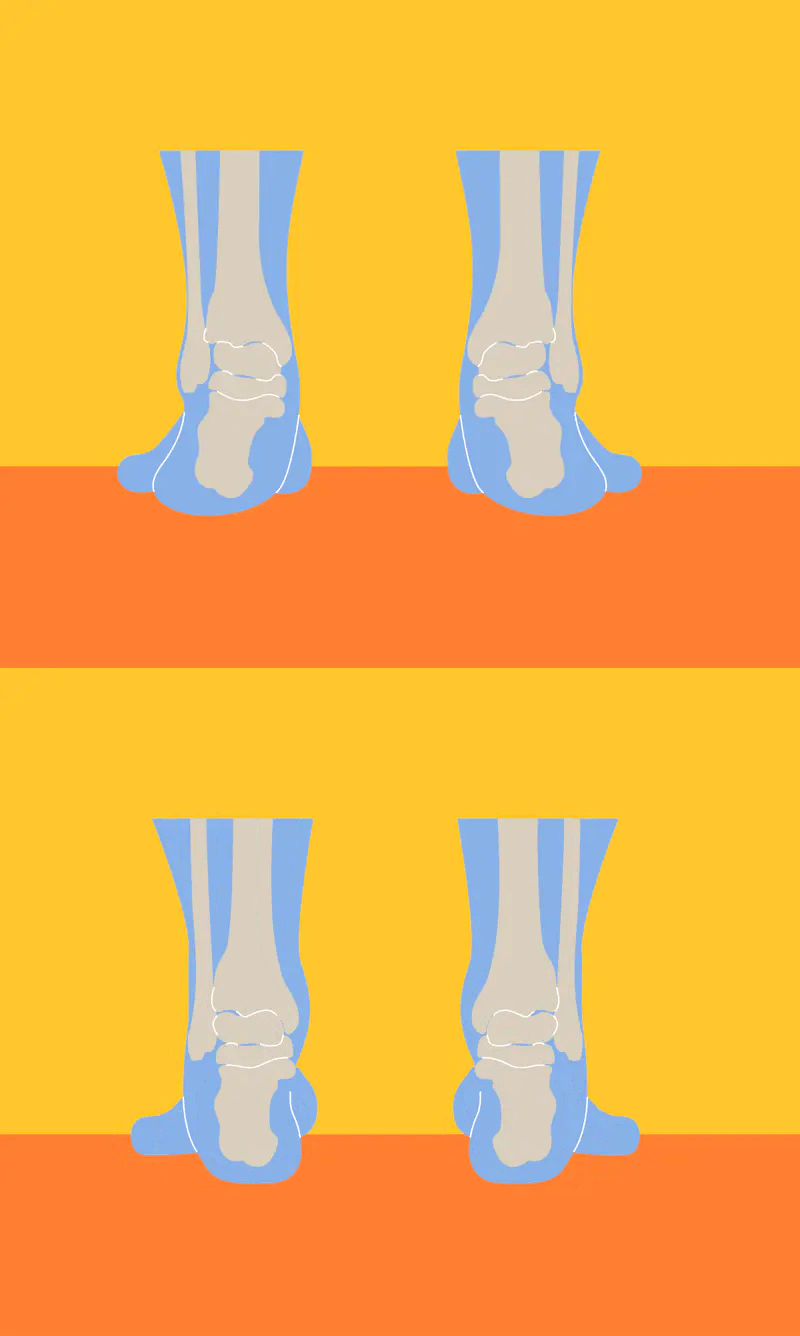
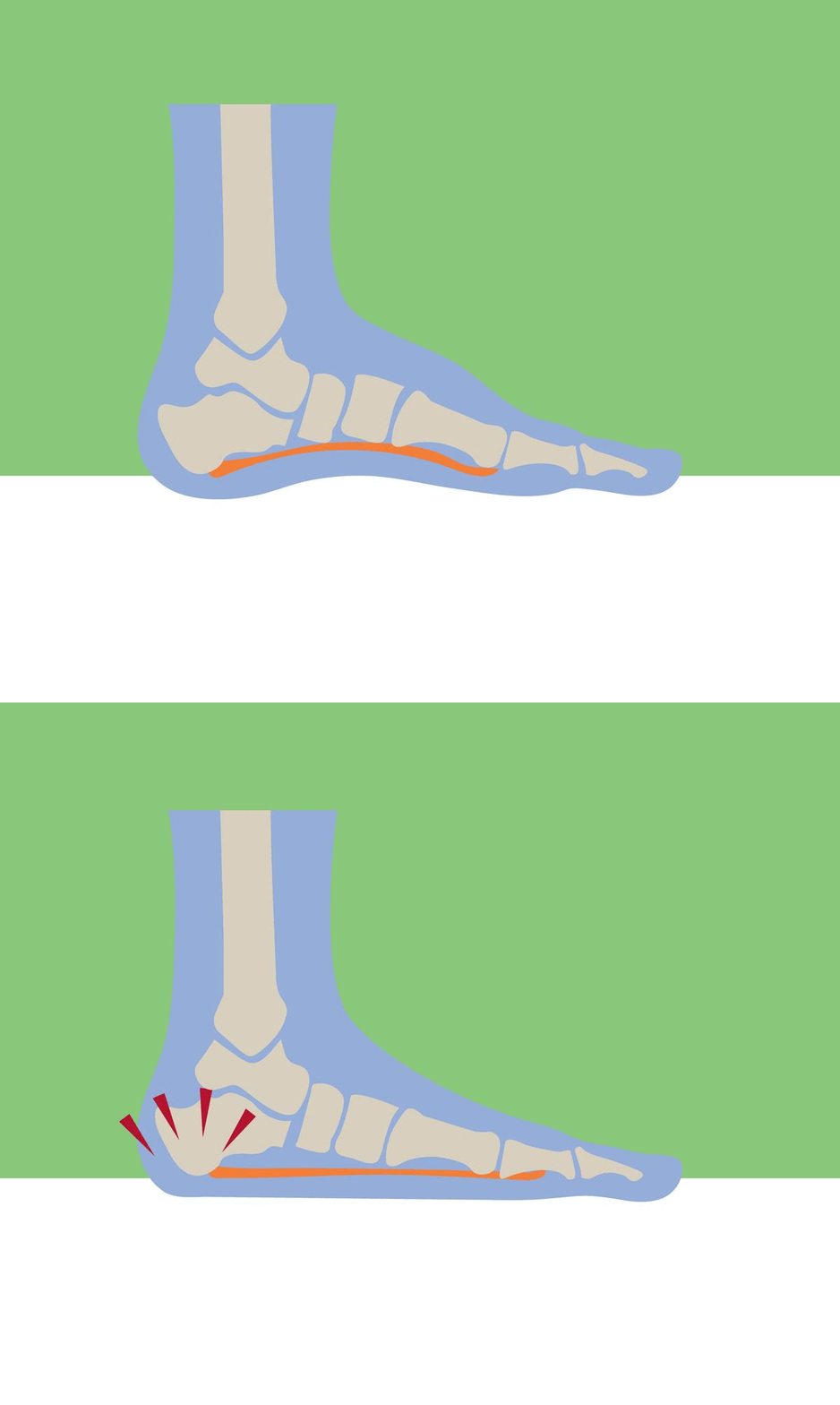
Most shoes ship with thin foam liners that are designed to fill space, not support your foot. Without proper arch support, the body becomes unstable, which can lead to overpronation (when the foot rolls too far inward) or supination (when it rolls outward), placing excess strain on your feet, knees, hips, and back. That chain reaction is the same whether you are clocking into a construction site, completing a training block, or walking between meetings in dress shoes.
The Four Problems Men Face Without Proper Arch Support
- Stock insoles compress quickly under repetitive load and body weight, losing whatever support they offered within weeks
- Foam and gel materials do not mold to individual arch shape, leaving gaps in contact and uneven pressure distribution
- Prolonged overpronation or supination causes compensatory pain that travels from the foot up through the knee, hip, and lower back
- Most over-the-counter options prioritize short-term cushioning over lasting structural support, creating a cycle of frequent, costly replacement
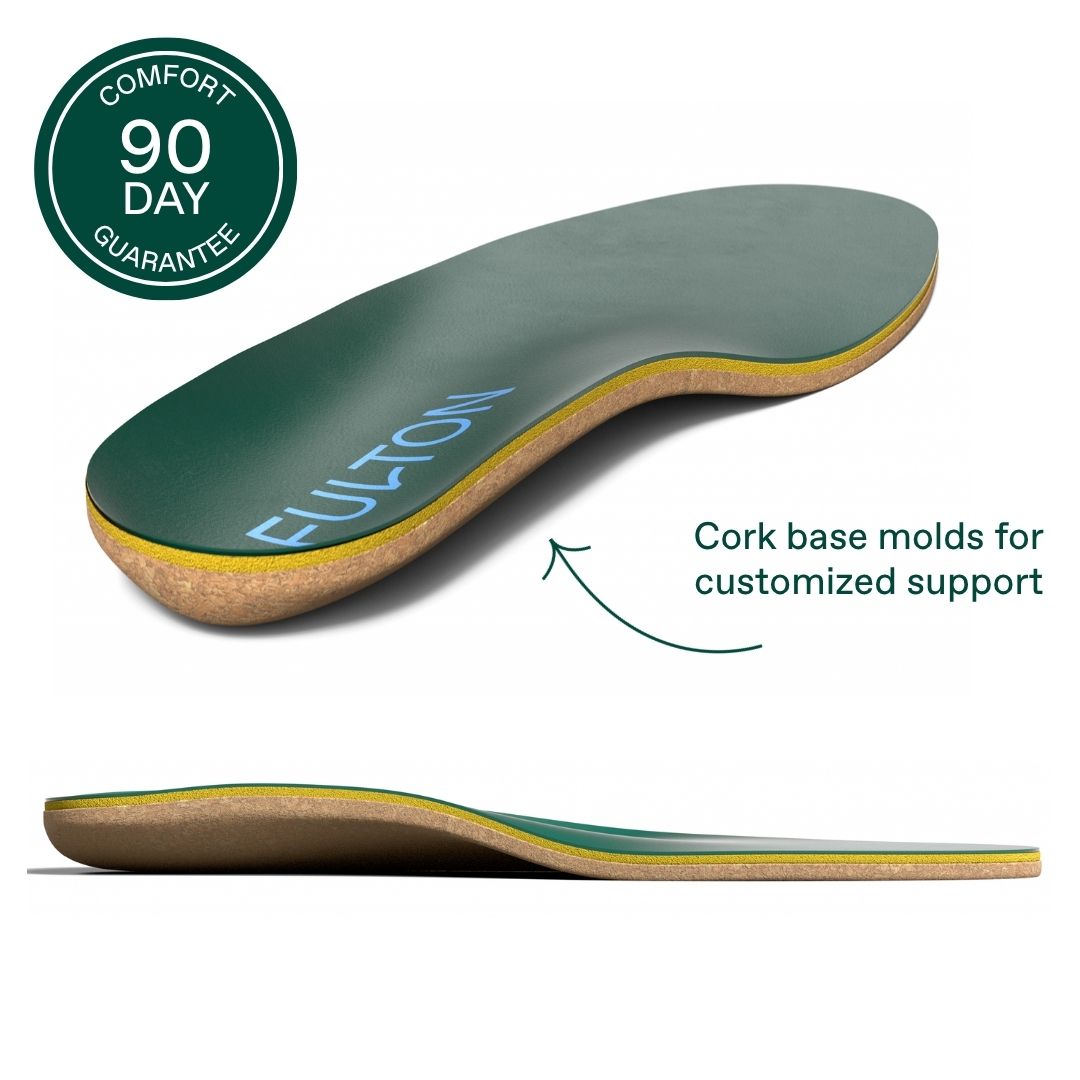
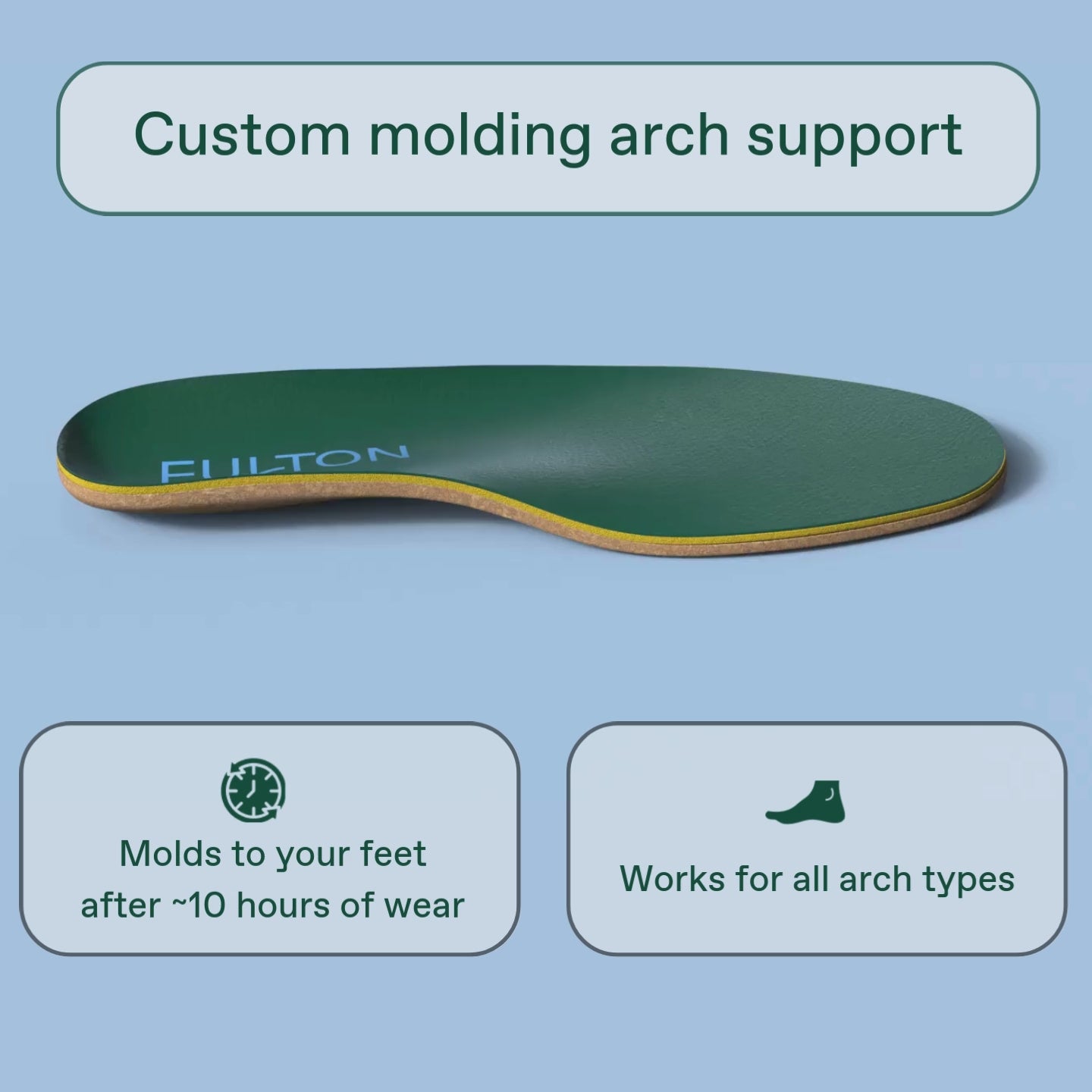
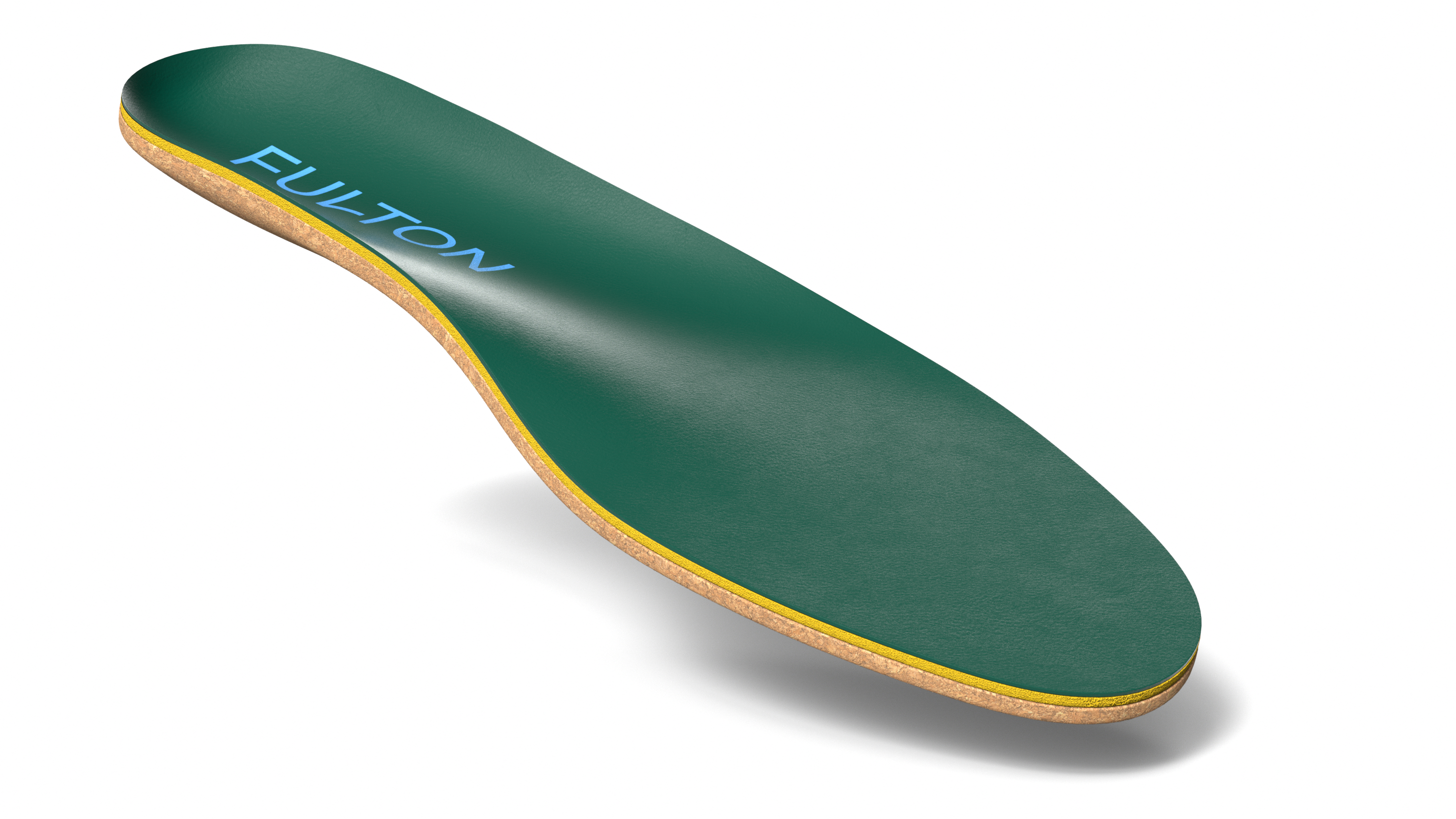
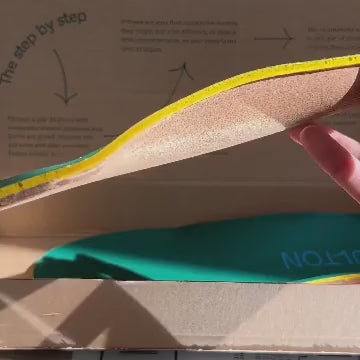
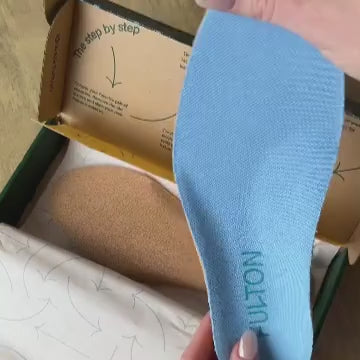
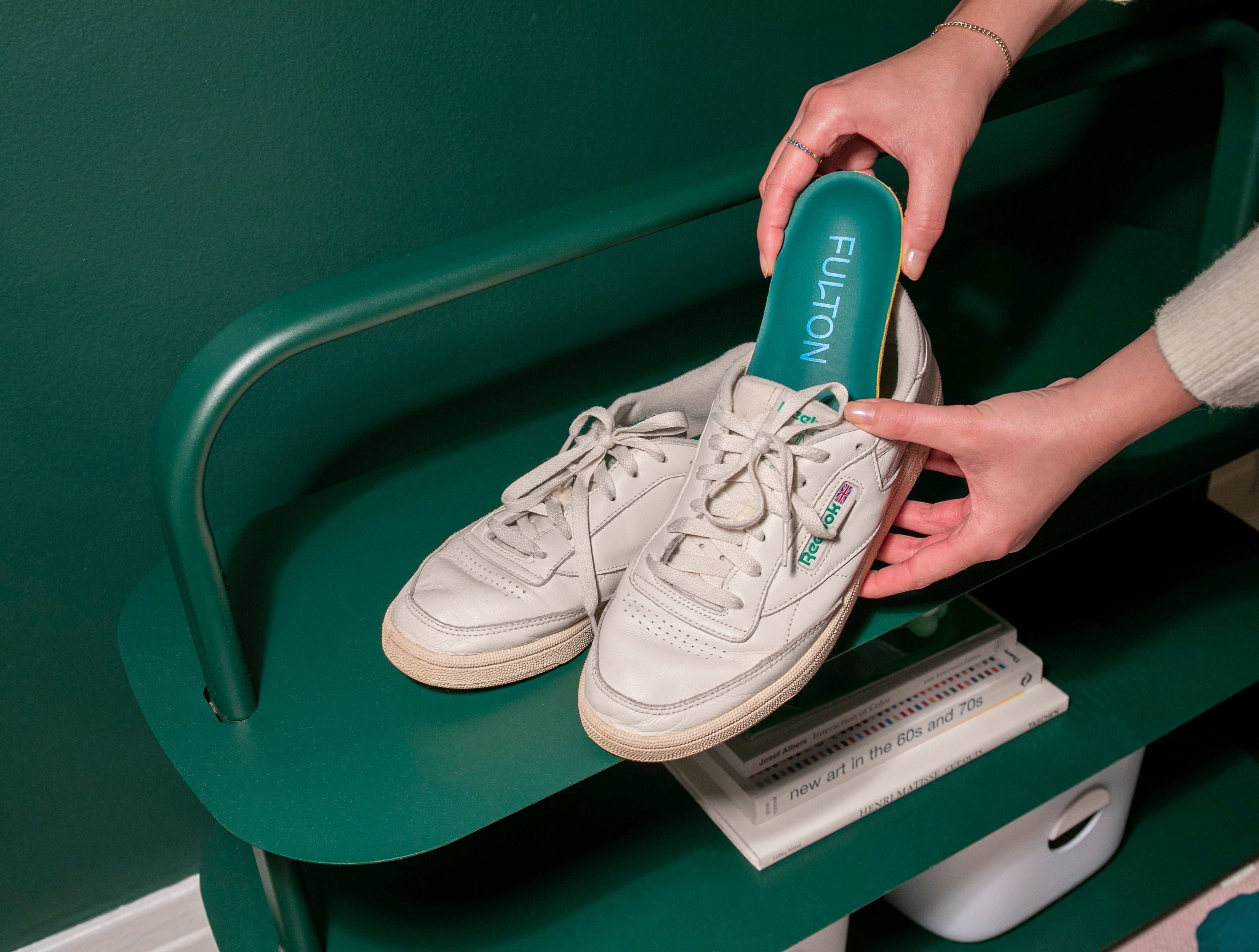
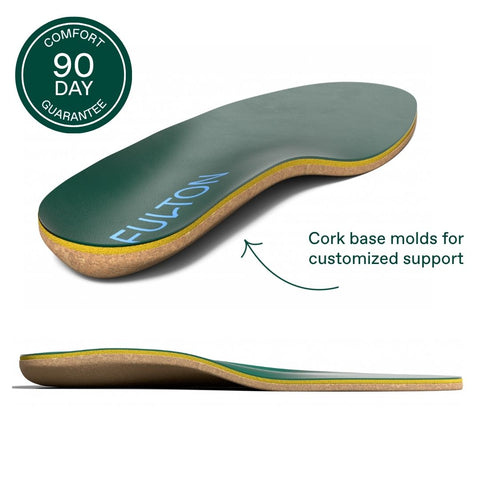
The right insole interrupts this cycle by stabilizing the heel, supporting the arch, and encouraging a more efficient gait pattern. Fulton addresses this through a cork footbed that molds to your unique arch after roughly 10 hours of wear, delivering personalized support that adapts to both the shape of your foot and the demands of your shoe.
What to Look for in Insoles for Men
Not all arch support is created equal. The best insoles for men combine structural support with a material that holds up under the specific load and movement patterns of their primary activity. Fulton helps customers cut through the noise by evaluating insoles against a clear set of functional criteria, which also form the basis of this guide's rankings.
Key Features That Separate Good Insoles from Great Ones
- Deep Heel Cup: Cradles the heel to reduce excess movement and help prevent overpronation and supination
- Arch Support Material: Firm enough to provide real structural support, but comfortable enough to wear all day without aggravating the foot
- Moldability: The ability to conform to the individual's arch shape over time, rather than applying a fixed, one-size profile
- Shoe Volume Compatibility: Fits cleanly within the shoe without crowding the toe box or requiring extensive trimming
- Durability Under Load: Maintains structure across thousands of steps, heavy body weight, and demanding surfaces
- Sustainability and Material Quality: Natural materials that breathe, resist compression, and are kinder to the planet than synthetic foam stacks
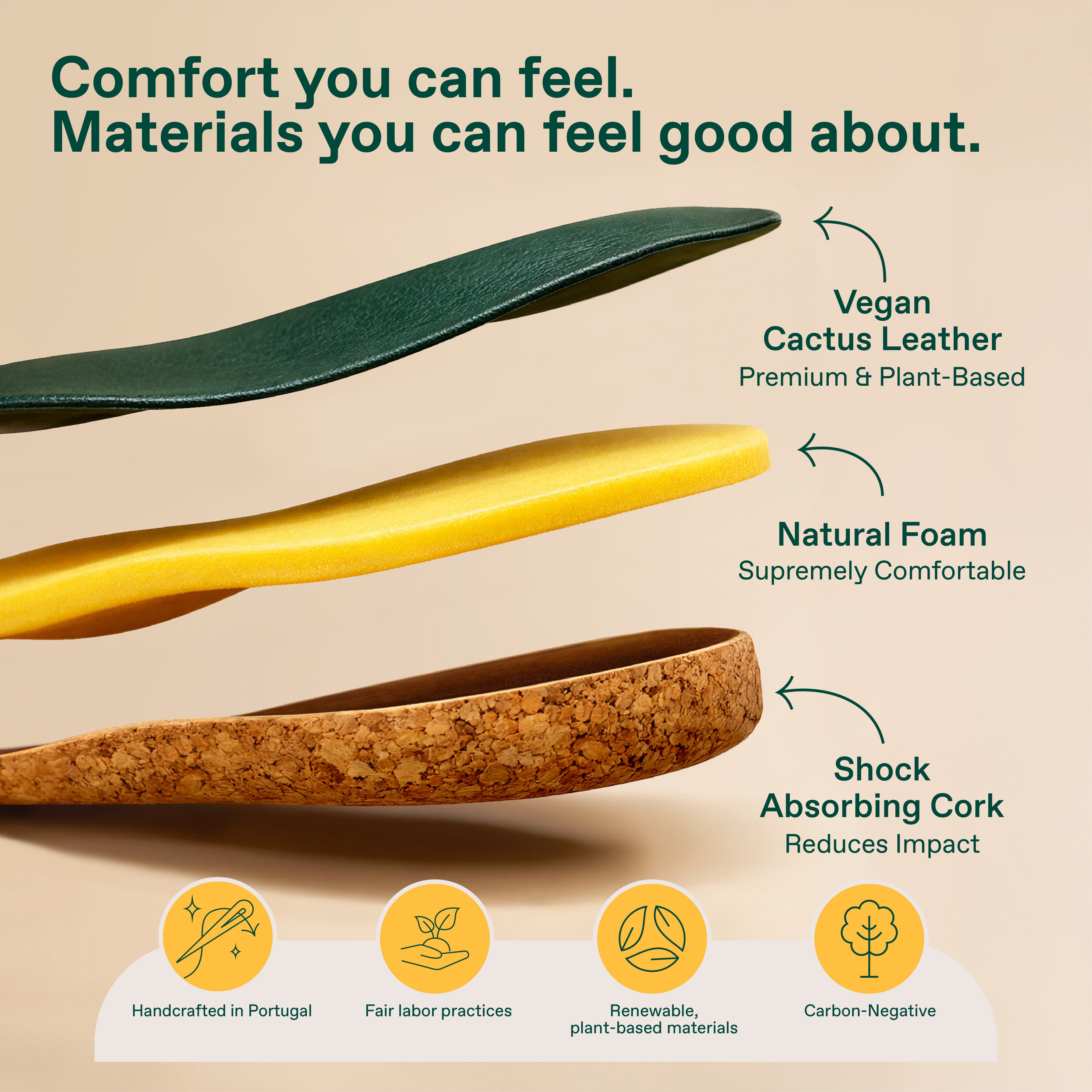
Fulton checks every one of these boxes, and then adds a dimension that most competitors skip: carbon-negative production using natural cork, organic cotton, and vegan cactus leather. The evaluation below measures each brand against this same framework.
How Men Use Insoles Across Work, Training, and Everyday Shoes
Men on their feet all day are not a single category. A warehouse worker carrying body weight across concrete for 10 hours faces different demands than a runner logging 40 miles per week, a lifter training in flat gym shoes, or a professional in dress shoes walking between meetings. Fulton's three-insole lineup is built to cover each of these contexts without compromise.
- Standing and Walking All Day at Work: The Classic Insole, Fulton's best-selling option, is designed for lifestyle shoes and boots with removable insoles. Its cork footbed molds to the arch after about 10 hours of wear, providing support that improves as the day goes on rather than degrading like foam. Many customers working long shifts in retail, healthcare, and hospitality report that the pain they once assumed was inevitable simply disappears.
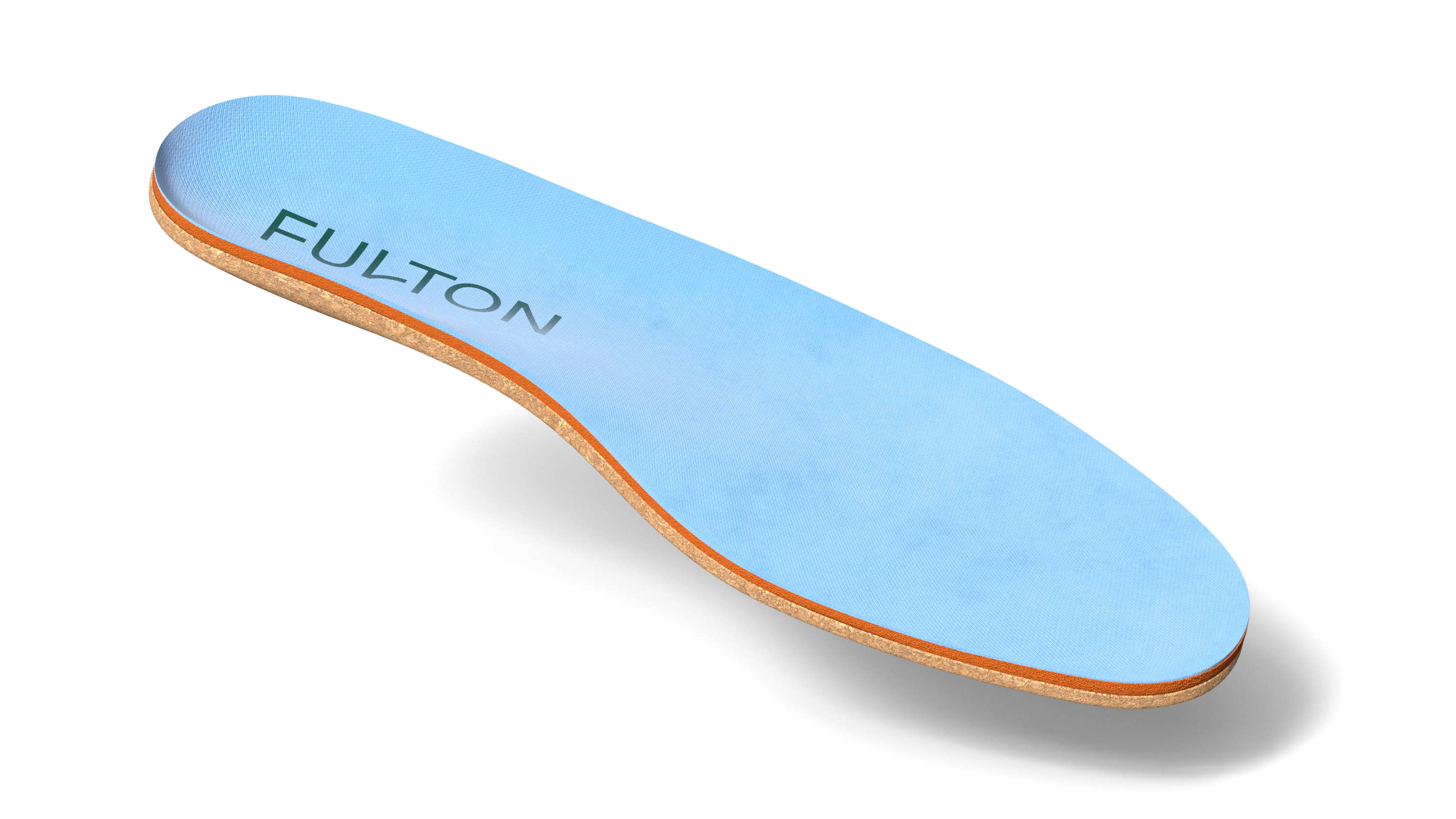
- Running and Athletic Training: The Athletic Insole features a wider toe box and higher-density foam for the added demands of running, hiking, and high-impact training. Its cork arch support stabilizes gait alignment for both overpronation and supination, while the deep heel cup and shock-absorbing materials provide comfort during repetitive impact. The Athletic Insole fits in over 97% of athletic shoes.
- Dress Shoes and Loafers: The Universal Insole is built for shoes without removable factory insoles, including loafers, dress shoes, and some boots. Its open toe box design and slip-resistant base allow for a clean, low-profile fit without bulk, making it the practical answer to the common frustration of finding insole support for dressier footwear.
- Cross-Shoe Support: Fulton's Build a Bundle option lets customers mix and match insoles across multiple pairs of shoes, saving up to $60. This is particularly useful for men whose foot pain returns when they switch from their work shoes to their gym shoes or casual footwear, because pain does not clock out at the end of a shift.
- HSA and FSA Eligible: All three Fulton insoles are FSA and HSA eligible as of 2026, priced at $48 each, making the real out-of-pocket cost as low as $29 to $38 after pre-tax savings for eligible customers.
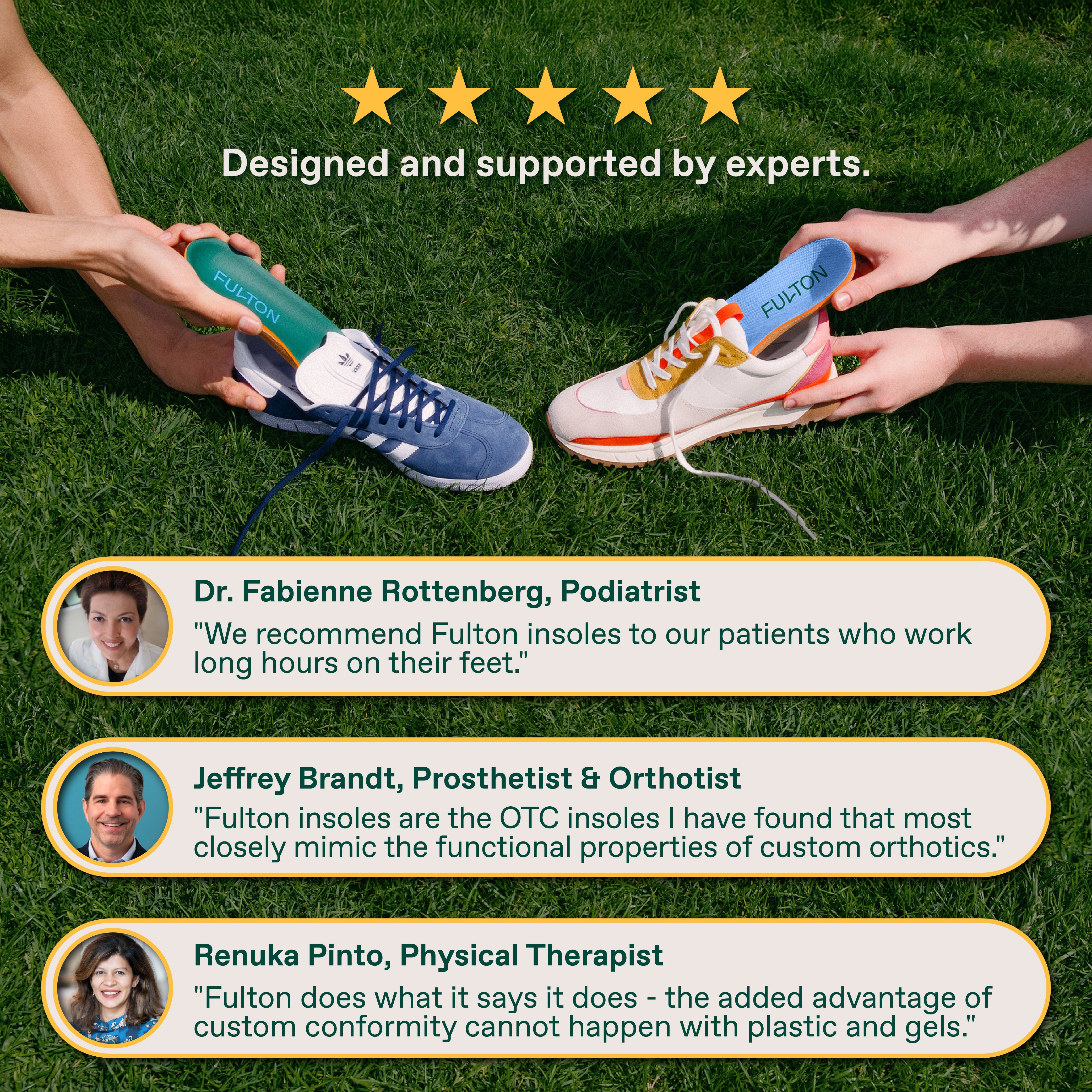
- Professionally Recommended: Physical therapist Renuka Pinto recommends Fulton insoles to patients who work long hours on their feet. Podiatrist Dr. Rottenberg notes that Fulton's cork design delivers an advantage that plastic and gel alternatives simply cannot match. Prosthetist and Orthotist Jeffrey Brandt recognizes Fulton as the over-the-counter option that most closely mimics the functional properties of custom orthotics.
Fulton's combination of use-case specificity, natural materials, and molding technology makes it the most complete all-around insole for men who move between different shoes and demands throughout the week.
Competitor Comparison: Best Insoles for Men in 2026
The table below gives a quick snapshot of how the leading insoles for men compare across the criteria that matter most for real-world wear. Use it as a starting point, then read the full breakdowns below for the nuance behind each rating.
| Brand | Best For | Material | Molding | Arch Type | Price | Guarantee |
|---|---|---|---|---|---|---|
| Fulton Shop now | All-day wear, work, training, dress shoes | Cork, organic cotton, vegan cactus leather | Molds via wear (~10 hrs) | All arch types | $48 | 90-Day Comfort Guarantee |
| Superfeet | High-impact, hiking, structured support | Foam, recycled materials | Fixed profile | Color-coded by arch height | $50-$95 | 60-Day |
| PowerStep | Plantar fasciitis, overpronation | Polypropylene shell + EVA/foam | Fixed profile | Multiple arch-specific SKUs | $35-$58 | 60-Day |
| Dr. Scholl's | Budget comfort, work boots, everyday | Gel, foam | None | Limited arch differentiation | $12-$25 | 30-90 Days |
| SOLE | Work boots, complex foot pain | Cork, EVA foam | Heat-molded at home | Any arch (via molding) | $50-$65 | 30-Day |
| Currex | Running, trail, high-intensity training | PORON foam, nylon composite | Fixed dynamic arch profile | High/Medium/Low SKUs | $50-$60 | 60-Day |
| Tread Labs | Severe overpronation, heavy users, lifelong durability | Medical-grade polypropylene + recycled polyester | Fixed; replaceable top cover | 4 arch heights | $75-$110 | 1,000,000 Mile (arch) + 90-Day |
Fulton stands apart as the only option in this comparison that combines natural material molding, all-arch compatibility, a strong comfort guarantee, and sustainable production in a single $48 package. Every other brand requires either compromising on materials, committing to a fixed arch profile upfront, or paying significantly more.
The Best Insoles for Men in 2026
1. Fulton: Best Insoles for Men Overall
Fulton was built on a simple premise: most people's foot, knee, and back pain is not inevitable. It is the predictable result of modern shoes that strip out the arch support a body actually needs. Founded in New York City by Libie Motchan and Daniel Nelson, both of whom had traced their own chronic pain to a lack of real arch support, Fulton set out to close the gap between $500 custom orthotics and drugstore insoles that flatten in weeks. The result is a line of cork-based insoles that mimic the functional properties of custom orthotics at a fraction of the cost, without a doctor visit, and with materials that are good for both the foot and the planet.
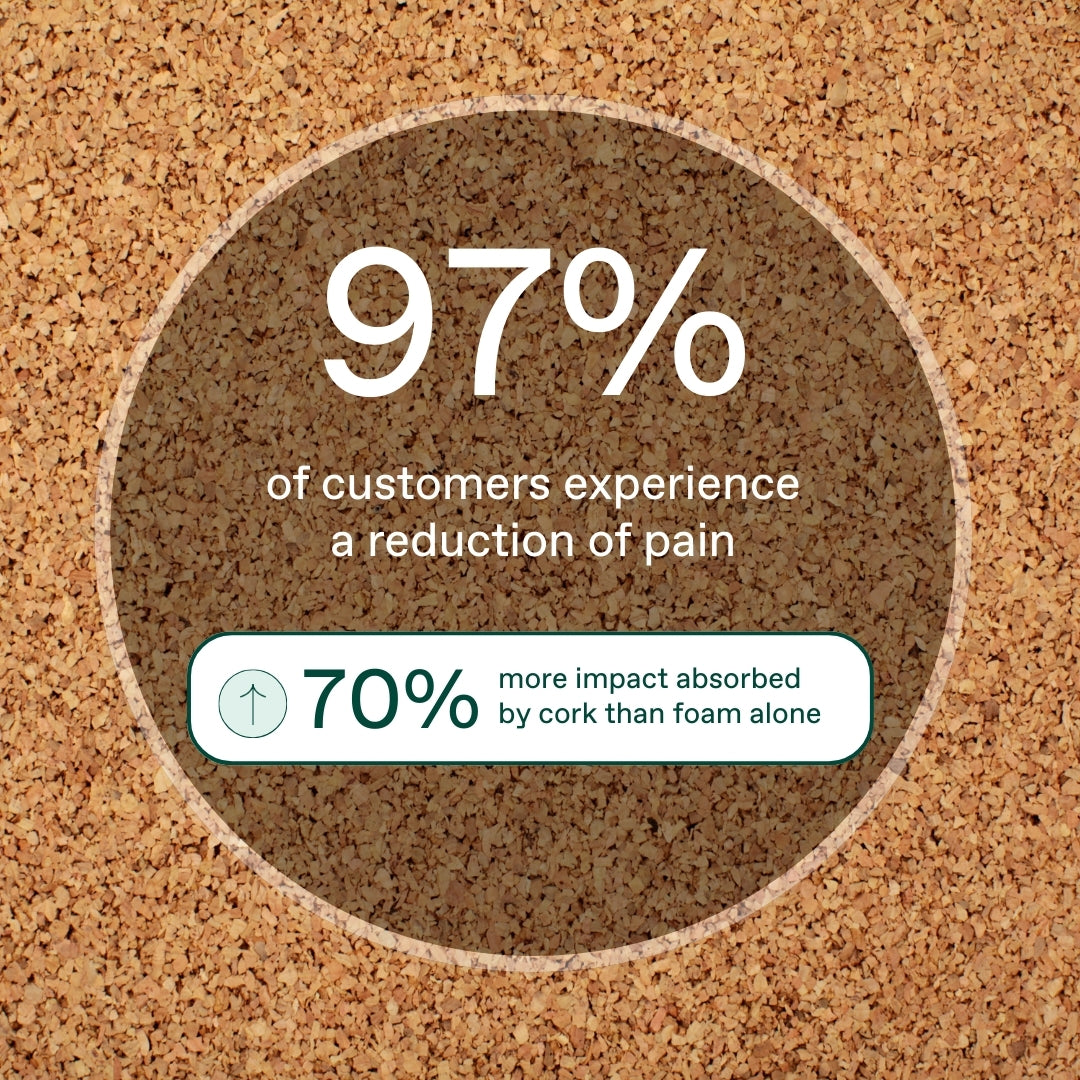
Fulton insoles are handcrafted in small batches in Porto, Portugal, using entirely natural materials, and they carry a carbon-negative production footprint of -0.81 kg CO2e. The cork footbed absorbs 70% more impact than foam alone, and 97% of customers report a reduction in pain. The 90-Day Comfort Guarantee means there is no risk in trying them.
Key Features:
- Custom Molding Technology: The cork footbed molds to the wearer's unique foot and gait after roughly 10 hours of wear, delivering personalized arch support that adapts over time without a clinic visit or bespoke manufacturing
- Deep Heel Cup: Stabilizes the heel to help prevent overpronation and supination, reducing compensatory stress throughout the kinetic chain
- Natural Materials: Cork footbed, organic cotton (Athletic Insole), vegan cactus leather (Classic and Universal Insoles), and a natural foam base. No synthetic gel stacks or hard plastic shells
Use Case Offerings:
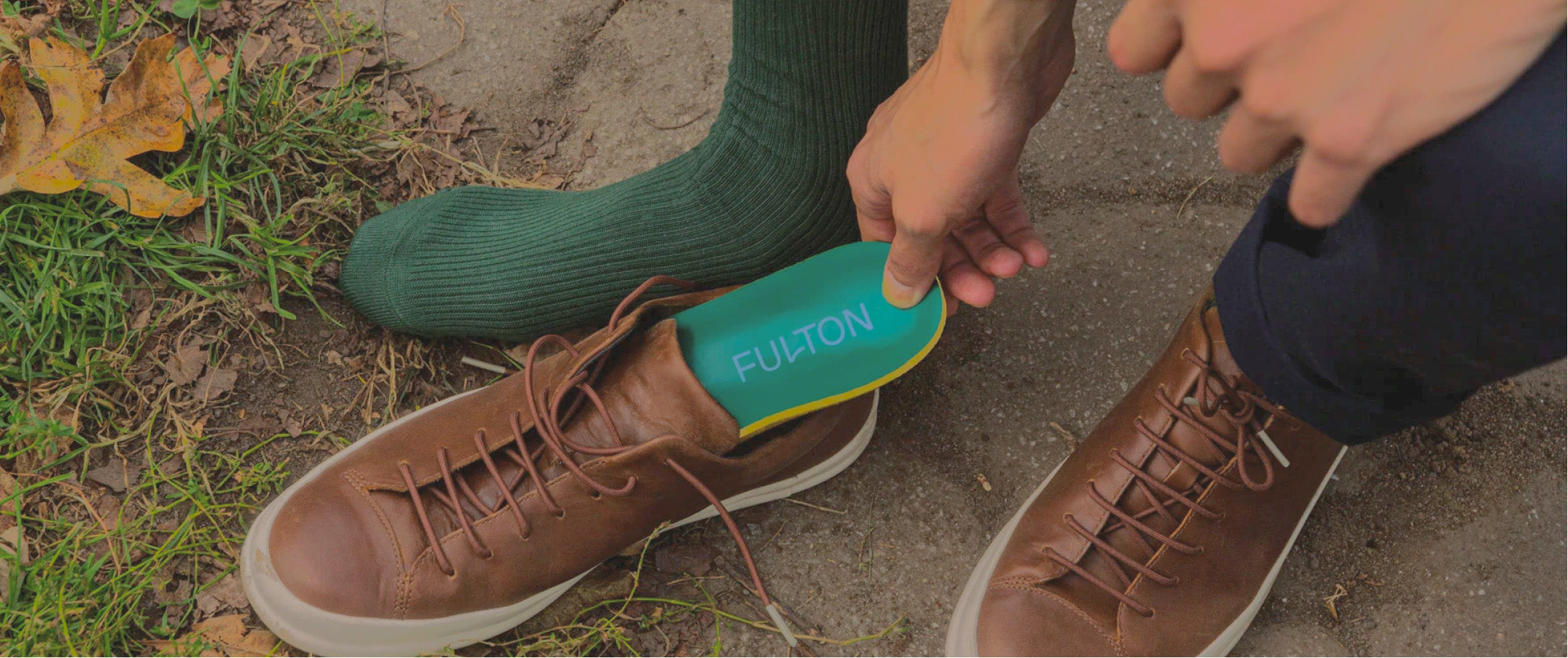
- Work Boots and Everyday Shoes: The Classic Insole fits in over 97% of lifestyle shoes and boots with removable insoles. It is the go-to for men on their feet all day in any context
- Running, Hiking, and Training: The Athletic Insole features a wider toe box and higher-density foam for high-impact movement, and fits in over 97% of athletic shoes
- Dress Shoes and Loafers: The Universal Insole is designed for shoes without removable insoles, offering the same cork arch support in a slim, open-toe-box profile
Pricing: $48 per pair for all three insole styles. Build a Bundle discount saves up to $60 across multiple pairs. HSA/FSA eligible, bringing real cost as low as $29-$38.
Pros:
- Cork molds to your specific foot and gait, covering all arch types without requiring upfront arch-height selection
- Natural, sustainable materials with carbon-negative production
- Three use-case-specific styles covering the full spectrum of men's footwear
- 90-Day Comfort Guarantee with no-pressure return policy
- HSA and FSA eligible
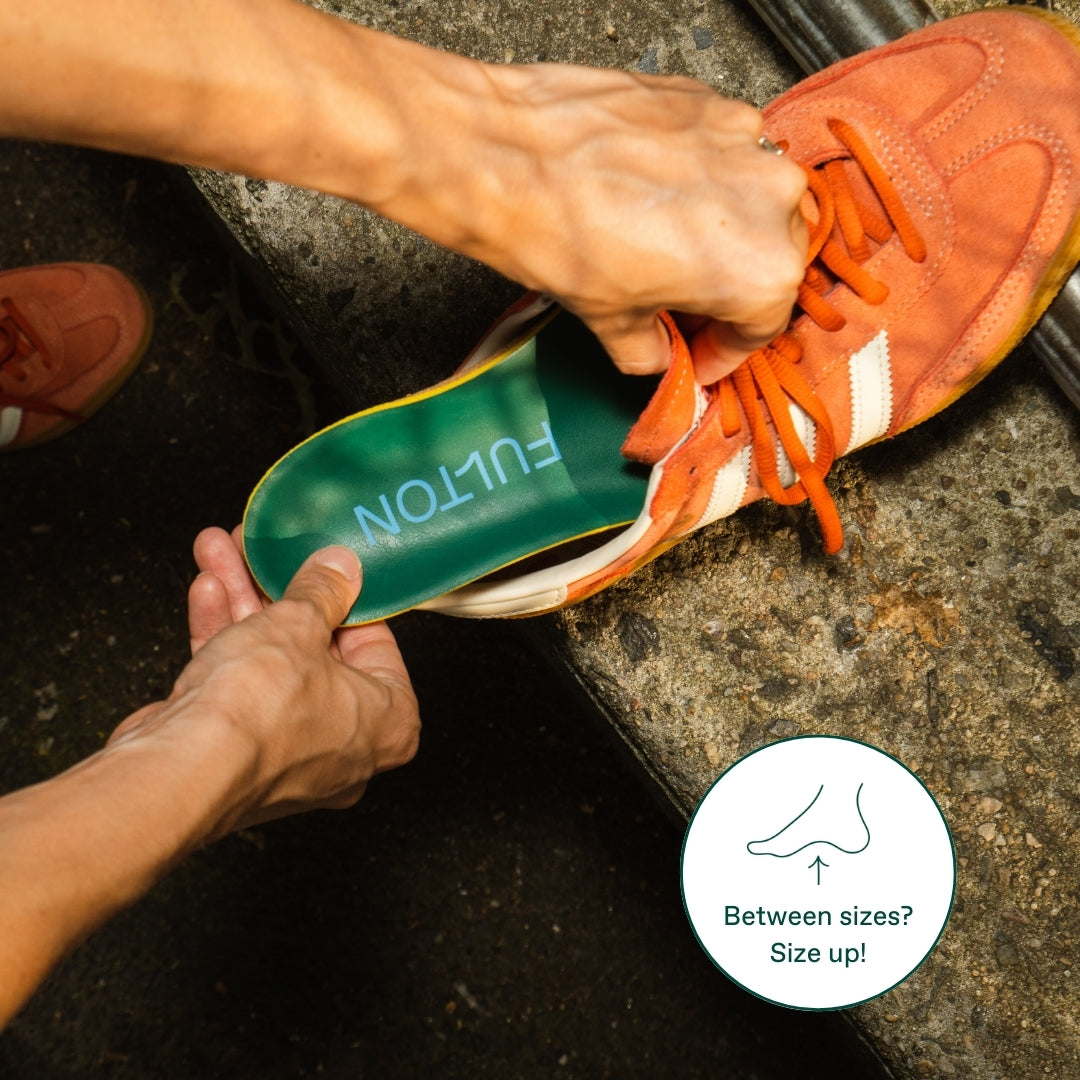
- Fits in 97% of shoes
- Professionally endorsed by named podiatrists and physical therapists
Cons:
- Molding requires roughly 10 hours of wear, so the fit improves over the first few days rather than being immediate
- Not available in retail stores; direct-to-consumer only via walkfulton.com
- Three SKUs rather than a broad catalog means Fulton focuses on doing fewer things exceptionally well, which may feel limiting to buyers who prefer browsing a large range
Fulton is the right choice for men who have already tried the usual options and want something that actually adapts to how they walk, holds up under real load, and does not require compromising between affordability, comfort, and support. Shop the Classic Insole, the Athletic Insole, or the Universal Insole at walkfulton.com, or take the Comfort Quiz to find your best match.
2. Superfeet: Best for High-Arch Structure in Hiking and Work Boots
Superfeet is one of the most recognized names in the over-the-counter orthotic space, with a history rooted in podiatric medicine and a range of insoles organized by arch height and activity. Their color-coded system (Green for high arches, Blue for medium arches, and so on) makes selection relatively intuitive, and their structured foam base provides firm, consistent support that many users find immediately effective. They have a strong reputation among hikers, skiers, and work boot users who need maximum control.
Key Features:
- Biomechanically designed arch shape with a structured foam base and deep heel cup
- Wide range of activity-specific and arch-height-specific SKUs
- Trim-to-fit design for most full-length styles
Insole Offerings:
- All-Purpose High Arch (Green): Extra-firm high arch support with a deep heel cup, built for high-volume footwear like hiking boots and work boots
- All-Purpose Medium Arch (Blue): Neutral-height firm arch support with dense cushioning for everyday and casual use
- Everyday Casual line: Semi-rigid support focused on cushioning for daily comfort in lighter shoes
Pricing: Approximately $50 to $95 depending on model and retailer.
Pros:
- Wide availability in retail stores and online
- Strong immediate structure, particularly for high-arch profiles
- Range covers most footwear types and activities
- 60-Day comfort guarantee
Cons:
- Fixed profile does not mold to the individual foot; the support level is the same for everyone who selects the same model
- Some users find the rigid feel uncomfortable during break-in or with extended wear in everyday shoes
- Requires buyers to know and select their arch height accurately upfront, which is not always intuitive
- Made primarily from synthetic foam and recycled materials rather than natural cork
3. PowerStep: Best Podiatrist-Designed Orthotic for Plantar Fasciitis
PowerStep is a podiatrist-designed brand that leads with a clinically validated arch shape and a firm-but-flexible polypropylene support shell. Their flagship Pinnacle line is widely recommended for plantar fasciitis, overpronation, and heel pain, and it earns strong reviews from users who need more corrective structure than a standard comfort insole provides. The wide range of SKUs organized by condition (flat feet, high arches, supination, heavy duty) makes PowerStep a useful option for buyers with a specific diagnosis or presenting complaint.
Key Features:
- Patented PowerStep arch shape with a stabilizing heel cradle
- Firm-but-flexible polypropylene support shell across most models
- Dual-layer foam and EVA cushioning for impact absorption
Insole Offerings:
- Pinnacle: Flagship full-length model for plantar fasciitis and general arch pain at a neutral arch profile
- Pinnacle Maxx: Maximum motion control with an angled heel post for severe overpronation
- Pinnacle High: High-arch variant for supination-related complaints
- Pulse: Thinner, athletic-focused model for running shoes
Pricing: Approximately $35 to $58 depending on model.
Pros:
- Podiatrist-designed with a patented arch shape validated for common conditions
- Wide range of condition-specific and activity-specific SKUs
- Firm structure provides effective motion control for overpronators
- Made in the USA
Cons:
- Polypropylene shell can feel rigid and intrusive, particularly during extended daily wear or longer walks and runs
- Fixed plastic arch profile does not adapt to the individual foot; some users report that the rigidity increases discomfort rather than relieving it
- Less suitable for men whose primary concern is all-day comfort rather than biomechanical correction
- Primarily a foam and plastic construction without natural or sustainable materials
4. Dr. Scholl's: Best Budget Shoe Insert for Light Support Needs
Dr. Scholl's is the most widely distributed insole brand in the United States, sold in virtually every drugstore, grocery chain, and mass retailer. Their lineup spans hundreds of SKUs covering work boots, running, plantar fasciitis, and everyday wear at price points that typically range from $12 to $25. For men who are new to insoles and want a low-risk entry point, or who need a quick replacement for a specific shoe, Dr. Scholl's provides reasonable short-term cushioning and gel comfort at an accessible cost.
Key Features:
- Massaging Gel technology in key lines for shock absorption
- Trim-to-fit design across most models for flexible sizing
- Large SKU library covering work, sport, plantar fasciitis, and everyday categories
Insole Offerings:
- Work All-Day with Massaging Gel: Gel-infused heel cushioning for men on hard surfaces in work boots
- Heavy Duty Support: Designed for men over 200 lbs with wide feet or high-impact demands
- Sport Insoles: Shock absorption and arch support for multi-activity athletic use
Pricing: Approximately $12 to $25 per pair.
Pros:
- Available in-store at virtually every retailer, making pickup simple and fast
- Very low price point makes them a practical entry-level option
- Broad SKU range means there is a product for almost every shoe type
Cons:
- Foam and gel constructions compress relatively quickly and may need replacement every three to six months under regular daily use
- Limited structural arch support compared to cork- or polypropylene-based competitors; emphasis is primarily on cushioning rather than gait alignment
- Gel insoles provide targeted shock absorption but do not address the underlying arch support needed to correct overpronation or supination
- Not made from natural or sustainable materials
5. SOLE: Best Heat-Moldable Insole for Complex Foot Shapes
SOLE is a Canadian brand founded in 2001 around the concept of personalized support through heat-moldable technology. Their footbeds use an eco-friendly cork and EVA foam base that can be shaped at home by heating the insole in a conventional oven and then standing in it for two minutes. This process allows the insole to take on the specific contour of the user's foot regardless of arch height, making SOLE a practical choice for men with unusually shaped feet or complex foot pain who have struggled to find an off-the-shelf insole that fully addresses their needs.
Key Features:
- Heat-moldable cork and EVA foam base adapts to any arch type in a single session
- Highly contoured support without hard plastic components
- Polygiene StayFresh moisture-wicking technology on select models
Insole Offerings:
- Active Medium: Mid-volume, suitable for most running shoes, casual sneakers, and work boots
- Active Thick: Higher volume with more cushioning for hiking boots and wider footwear
- Performance line: Thinner profiles for athletic and low-volume shoes
Pricing: Approximately $50 to $65 per pair.
Pros:
- Heat-molding eliminates the need to select an arch height upfront, accommodating any foot shape
- Cork base provides natural cushioning without hard plastic
- Useful for men with atypical arch shapes or foot geometry that standard fixed-profile insoles do not address
- Eco-friendly materials including recycled wine cork on select models
Cons:
- Requires an oven-molding session at home before the insole delivers its full benefit, which adds a step compared to slip-in alternatives
- Molded shape is fixed once set; if the foot changes or the wrong position is used during molding, the result is locked in
- Fewer activity-specific SKUs compared to brands with broader dedicated sport lines
- Return policy requires original condition, which can be limiting after heat molding
6. Currex: Best Running and Training Insole for Performance Athletes
Currex is a sport-science-driven brand with a specific focus on performance athletics. Their RUNPRO insole is consistently cited by running specialty retailers and independent reviewers as a top option for runners who want dynamic arch support without the rigid, static feel of a traditional orthotic. Currex organizes its lineup by both activity (running, hiking, cycling, cleats) and arch profile (High, Medium, Low), and their Dynamic Arch Technology allows the insole to flex and respond with the foot's natural motion rather than immobilizing it.
Key Features:
- Dynamic Arch Technology (DAT) provides arch support that flexes with the foot rather than holding a fixed position
- Fully decoupled heel cup allows for independent heel and midfoot movement
- PORON premium foam cushioning in the heel for rebound and shock absorption
Insole Offerings:
- RUNPRO: Full-length, semi-rigid dynamic support for road running, trail running, and HIIT training
- HIKEPRO: Built for hiking boots with added stability on uneven terrain
- ACTIVEPRO: Everyday walking and light sport use
- CLEATPRO: Sport-specific design for soccer, football, and other cleat sports
Pricing: Approximately $50 to $60 per pair.
Pros:
- Dynamic arch design is particularly well-suited to the repetitive, forward-propulsion demands of running and training
- Available in three arch profiles to match different foot types
- Lightweight and low-profile for athletic footwear that has limited internal volume
- 60-Day return guarantee
Cons:
- Primarily designed for athletic performance, not versatile across all-day work or dress shoe contexts
- Fixed arch profiles require buyers to identify and select their arch height accurately before purchase
- Does not mold or adapt to the individual foot over time; the profile is static
- Less suitable as an everyday-wear insole for men who are not primarily runners or athletes
7. Tread Labs: Best for Long-Term Durability and Heavy-Duty Support
Tread Labs takes a different structural approach with a two-part system consisting of a firm, medical-grade polypropylene arch support paired with an interchangeable recycled polyester top cover. The arch supports are backed by a 1,000,000 Mile Guarantee and are designed to hold their shape indefinitely, while the top cover can be peeled off and replaced to refresh the insole without buying an entirely new pair. This makes Tread Labs a compelling long-term investment for men with severe overpronation, heavy body weight, or demanding physical jobs who tend to wear through conventional insoles quickly.
Key Features:
- Two-part system with a lifetime-guaranteed molded arch support and a replaceable top cover
- Four arch heights (Low, Medium, High, Extra High) for precision fit matching
- Medical-grade polypropylene arch shell designed to resist structural breakdown under sustained pressure
Insole Offerings:
- Pace 2: Flagship everyday performance insole with Precision Heel Cushion and Friction-Control Pattern, available in 4 arch heights
- Run: Nitrogen-infused supercritical foam for running and training with high-rebound cushioning
- Dash Carbon: 100% carbon fiber arch support for performance athletes and heavy overpronators
- 3 Quarter Insoles: Designed for shoes without removable insoles, new for 2026
Pricing: Approximately $75 to $110 depending on model, with top covers available separately for less.
Pros:
- 1,000,000 Mile Guarantee on the arch support makes the lifetime cost-per-use very low for committed wearers
- Four arch heights allow for more precise fit matching than brands with two or three options
- Medical-grade shell provides reliable, consistent structure under heavy and sustained load
- American Podiatric Medical Association Seal of Acceptance across multiple models
Cons:
- Higher upfront cost relative to most competitors
- Firm polypropylene shell may feel uncomfortable for users accustomed to softer, more cushioned insoles, particularly during break-in
- Requires buyers to accurately select arch height upfront; no adaptive molding to the individual foot
- Two-part system, while durable, adds a step to initial setup that simpler alternatives do not require
Evaluation Rubric: How We Ranked the Best Insoles for Men in 2026
This guide evaluated each brand across six weighted criteria based on what matters most to men seeking sustained arch support for work, training, and everyday use.
| Criterion | Weight | What We Evaluated |
|---|---|---|
| Arch Support Quality | 30% | Structural integrity of the arch, heel cup depth, and ability to address overpronation and supination |
| Material and Durability | 25% | Resistance to compression under load over time; natural vs. synthetic construction; longevity compared to replacement cost |
| Adaptability and Fit | 20% | Molding capability, arch-type compatibility, and shoe-volume compatibility across footwear contexts |
| Use Case Coverage | 10% | Ability to serve work, athletic, and everyday shoe needs without requiring multiple brands |
| Value and Accessibility | 10% | Price per pair relative to support quality; HSA/FSA eligibility; availability |
| Sustainability | 5% | Natural materials, responsible production practices, and environmental impact |
Fulton scored highest across the combined rubric, particularly in adaptability, material quality, and use case coverage. Its cork molding system eliminates the guesswork of selecting a fixed arch profile, its natural materials hold up significantly longer than foam under real-world load, and its three-insole lineup addresses the full range of men's footwear in a single brand relationship.
Why Fulton Is the Best Insole for Men in 2026
Fulton is not the only option on this list. Every brand reviewed here has real strengths, and the right insole does depend on specific circumstances. What separates Fulton is how many of those circumstances it covers well, without asking men to become orthotic experts, endure a rigid break-in process, or replace their insoles every few months.
The cork footbed is the key differentiator. Cork is a natural material with exceptional shock absorption properties derived from its unique cellular structure, and it molds to the arch of the individual wearer over time, rather than applying a fixed pressure profile that may or may not match your foot. That molding means the insole works with your gait, not against it. Podiatrists and physical therapists who work with men suffering from plantar fasciitis, chronic knee pain, and lower back pain from poor alignment consistently name Fulton as the OTC insole that most closely replicates the functional benefit of custom orthotics.
At $48 per pair, covered by HSA and FSA benefits, and backed by the 90-Day Comfort Guarantee, Fulton resolves the three-way trade-off that makes the insole market so frustrating: affordability, genuine support, and natural materials that last. If your current insoles are not delivering, Fulton is the most logical next step.
FAQs About the Best Insoles for Men
What are the best shoe inserts for men?
The best shoe inserts for men are ones that provide real arch support and heel stabilization, not just cushioning. Fulton's cork-based insoles mold to the individual foot after roughly 10 hours of wear, making them one of the most adaptable options available without a prescription. At $48, they sit between ineffective drugstore foam and $500-plus custom orthotics, and 97% of Fulton customers report a reduction in pain. For men dealing with daily foot, knee, or back discomfort, Fulton is a practical and professionally endorsed starting point.
What are the best insoles for men's work boots?
Insoles for work boots need to handle sustained body weight on hard surfaces for long shifts, resist compression, and stabilize the heel against the rigid structure of the boot. Fulton's Classic Insole and Athletic Insole both fit into most boots with removable factory insoles, and the cork footbed holds its structure far longer than EVA foam alternatives. The deep heel cup helps reduce overpronation, which is a common source of knee and back pain among men in physically demanding jobs. Fulton's 90-Day Comfort Guarantee allows men to test the insoles through a full work cycle before committing.
What are the best insoles for men's dress shoes?
Dress shoes present a unique challenge because they typically have narrow toe boxes, fixed insoles, and limited volume. The Fulton Universal Insole is specifically designed for shoes without removable insoles, including loafers, oxfords, and dress boots, featuring an open toe box and a slip-resistant base that allows for a clean fit without bulk. The same cork arch support and deep heel cup as Fulton's other styles means men no longer have to sacrifice support for appearance. For men who experience end-of-day foot and knee fatigue from dressier footwear, the Universal Insole is the most targeted solution in this guide.
How long do insoles for men typically last?
Most foam and gel insoles compress and lose structural effectiveness within three to six months under regular daily use. Fulton insoles are designed to last roughly as long as the pair of shoes they are placed in, because cork holds its structure far longer than synthetic foams under sustained load. Tread Labs takes durability the furthest with a lifetime-guaranteed arch support shell and replaceable top cover, making it the strongest long-term investment for heavy users. For most men, however, Fulton's combination of longevity, comfort, and natural materials makes it the most practical balance of durability and value.
Are insoles for men different from insoles for women?
The more meaningful variables are shoe volume, body weight, arch type, and primary activity, not gender. A man wearing a wide boot with a high-volume toe box has different support needs than a man in a slim dress shoe, regardless of foot size. Fulton's three insoles are designed around these functional differences. The Classic Insole addresses lifestyle shoes and boots, the Athletic Insole covers running and training footwear, and the Universal Insole handles dress shoes and loafers. Choosing by shoe type and activity, rather than by a gendered category label, leads to a better fit every time.
Can insoles help with plantar fasciitis?
Insoles designed to help relieve plantar fasciitis work by supporting the arch, stabilizing the heel, and reducing strain on the plantar fascia, the connective tissue running along the bottom of the foot. According to StatPearls research published on NCBI, plantar fasciitis occurs in about 10% of the general population, with the majority of those affected being active working adults between 25 and 65. Fulton insoles are often chosen by customers dealing with plantar fasciitis, and the brand offers targeted content on this condition through its Learn blog. As with any persistent or worsening foot condition, consulting a podiatrist or physical therapist is advisable, and Fulton's professionally endorsed design makes it a natural complement to professional guidance.