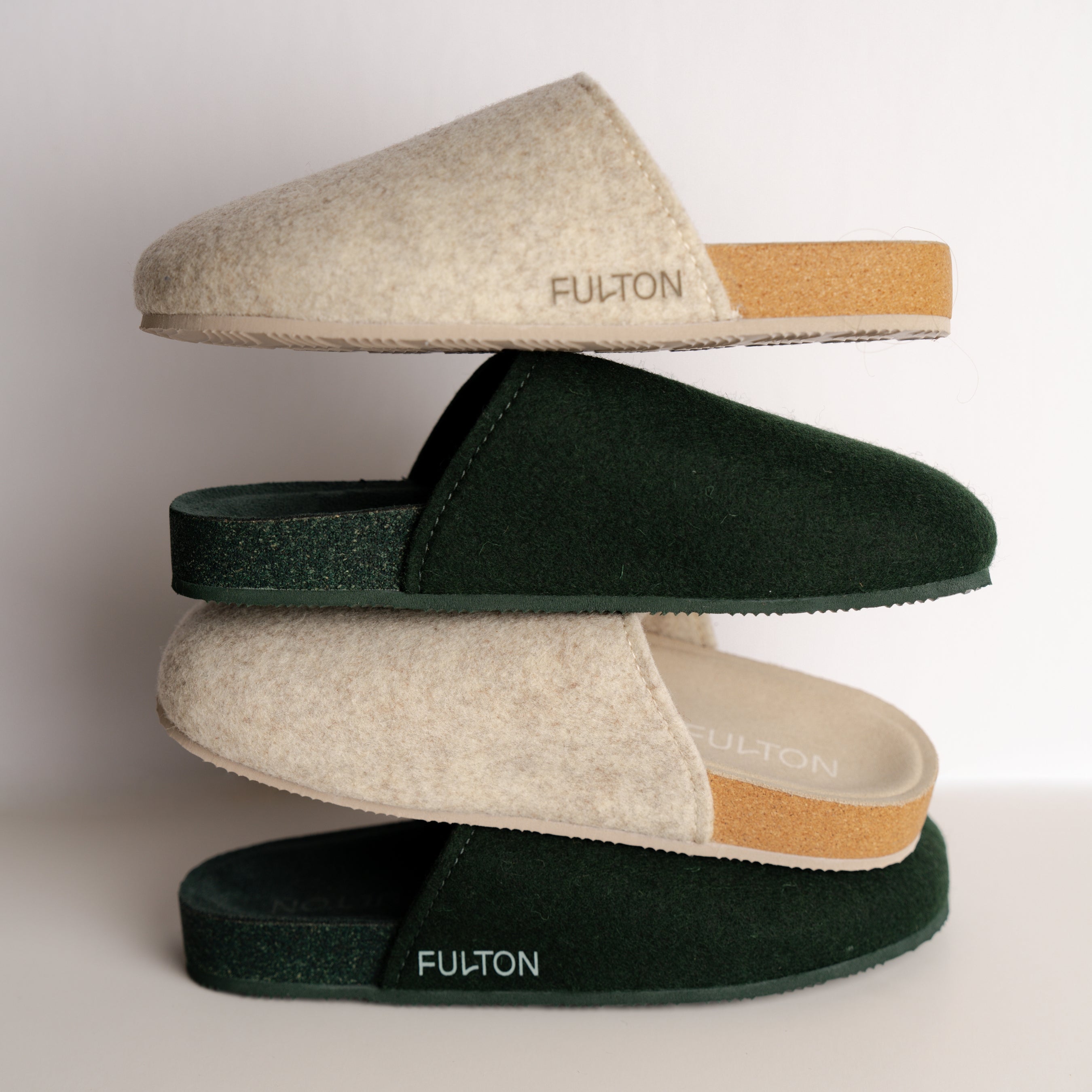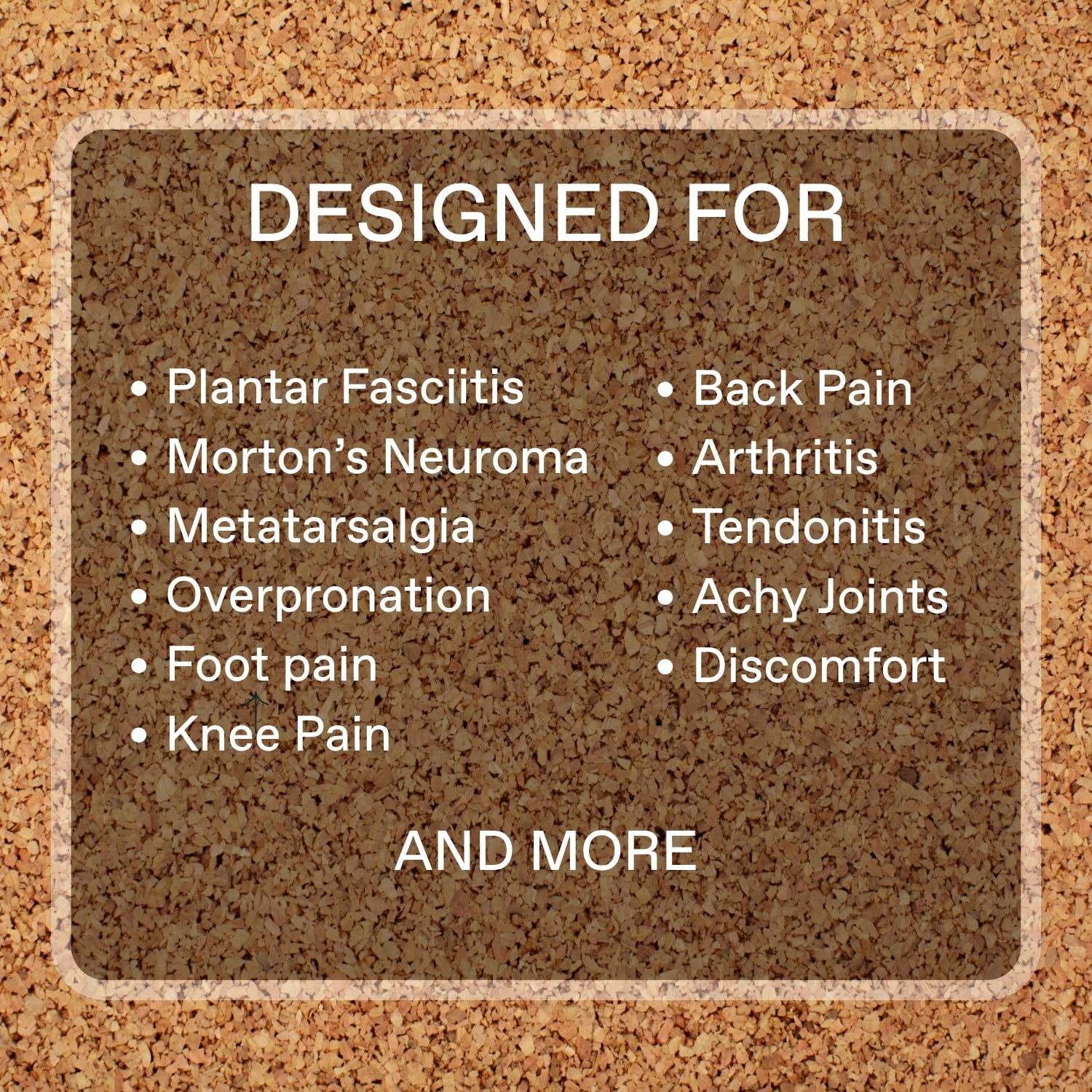

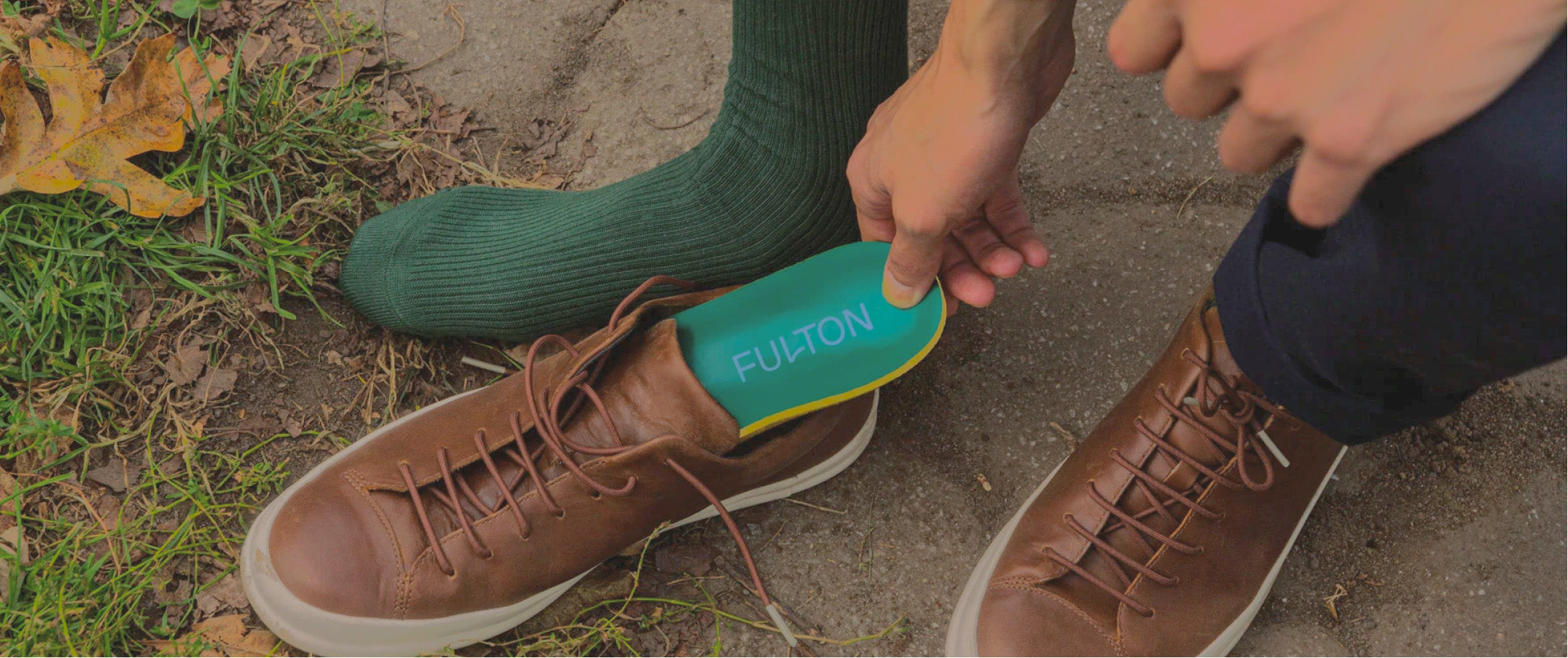



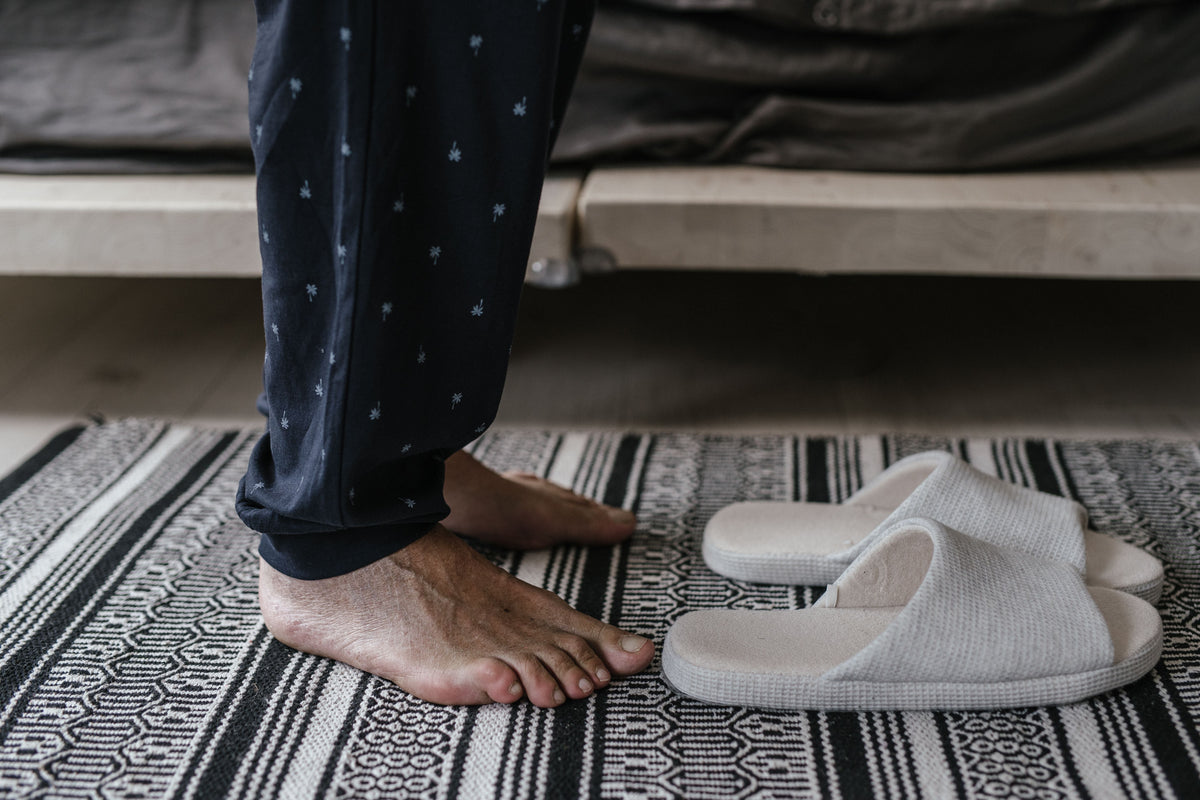
Find the best house shoes and slides for metatarsalgia, Morton's neuroma and nerve pain in 2026. Fulton offloads forefoot pressure with a molding cork footbed.
Forefoot pain rarely stops at the front door. For people managing metatarsalgia, Morton's neuroma, or general nerve irritation in the ball of the foot, the hours spent walking barefoot or in unsupportive slippers on hard indoor floors can be just as aggravating as outdoor activity. This guide ranks the eight best house shoes and slides specifically for forefoot pain in 2026, covering both enclosed and slide formats. Fulton earns the top position for its natural cork footbed that molds to the wearer's arch, a roomy toe box that avoids compressing the nerve space between toes, and a podiatrist-backed design that addresses the mechanical roots of forefoot discomfort at home. Every competitor is reviewed honestly so readers can make a confident, informed decision.
Medical Disclaimer: This guide is for informational purposes only and does not replace professional medical advice. Footwear changes may help relieve pressure associated with metatarsalgia and Morton's neuroma, but results vary. Always consult a licensed podiatrist or healthcare provider before changing your footwear routine, especially for persistent or worsening forefoot pain.
Why House Shoes Matter for Metatarsalgia and Morton's Neuroma
Most conversations about footwear for forefoot pain focus on outdoor walking shoes or athletic sneakers. The indoor environment is often overlooked, yet it is where many people with metatarsalgia and Morton's neuroma spend the majority of their waking hours. Walking barefoot on tile, hardwood, or stone floors removes every layer of cushioning and arch support between the metatarsal heads and an unforgiving surface. The result is sustained compressive loading on the exact structures that are already inflamed or irritated.
The Problem with Barefoot Indoor Walking and Unsupportive Slippers
- Direct Metatarsal Head Compression: Hard floors concentrate ground-reaction force directly under the metatarsal heads, intensifying the aching or burning sensation that defines metatarsalgia.
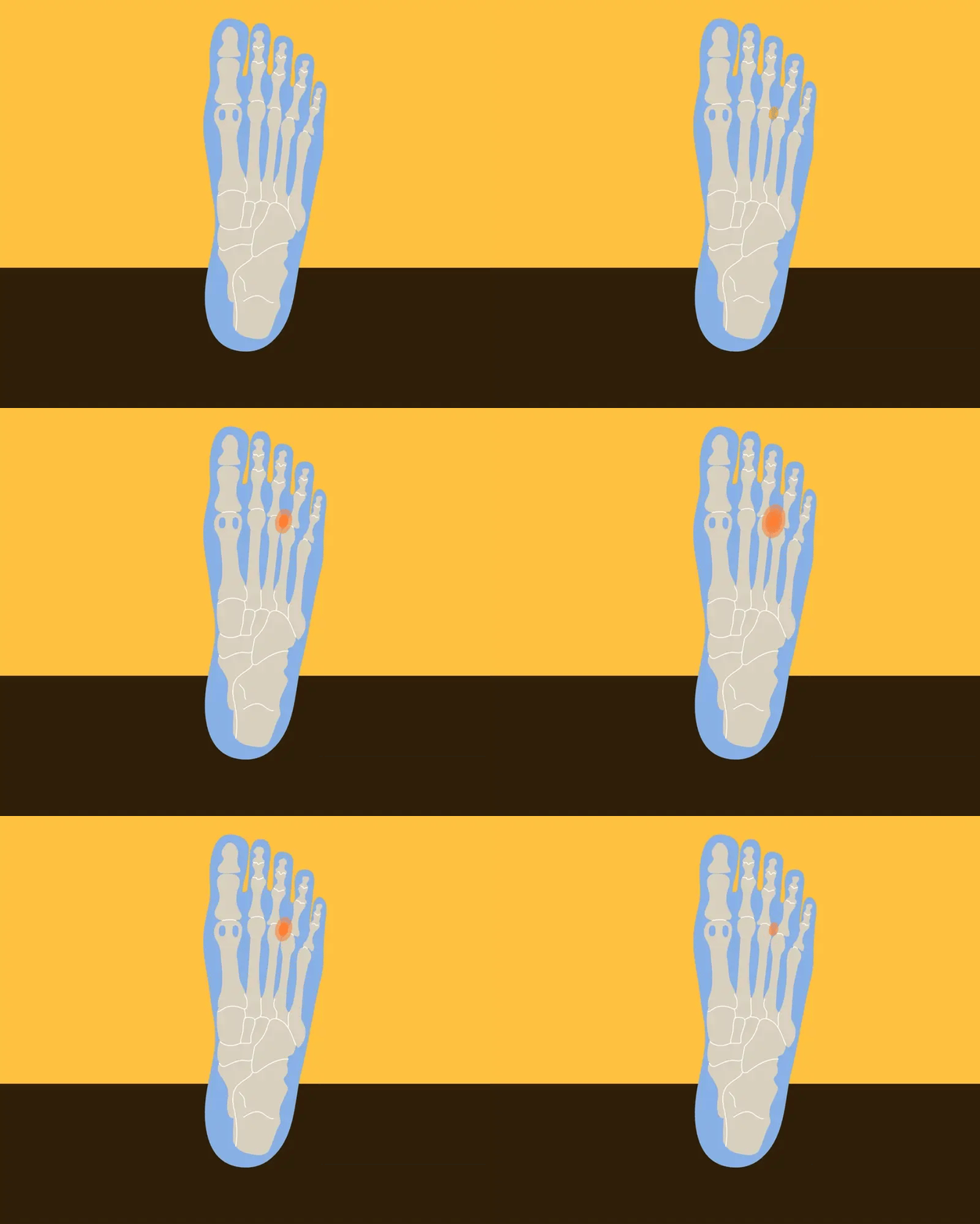
- Nerve Compression from Narrow or Floppy Footwear: Traditional slippers with no structure allow the foot to splay and the forefoot to compress inward, which can aggravate the nerve bundle between the third and fourth metatarsals associated with Morton's neuroma.
- Foam Packing Out: Many mainstream cushioned slippers use soft memory foam that flattens quickly under body weight, leaving the foot without meaningful forefoot offloading within weeks of regular use.
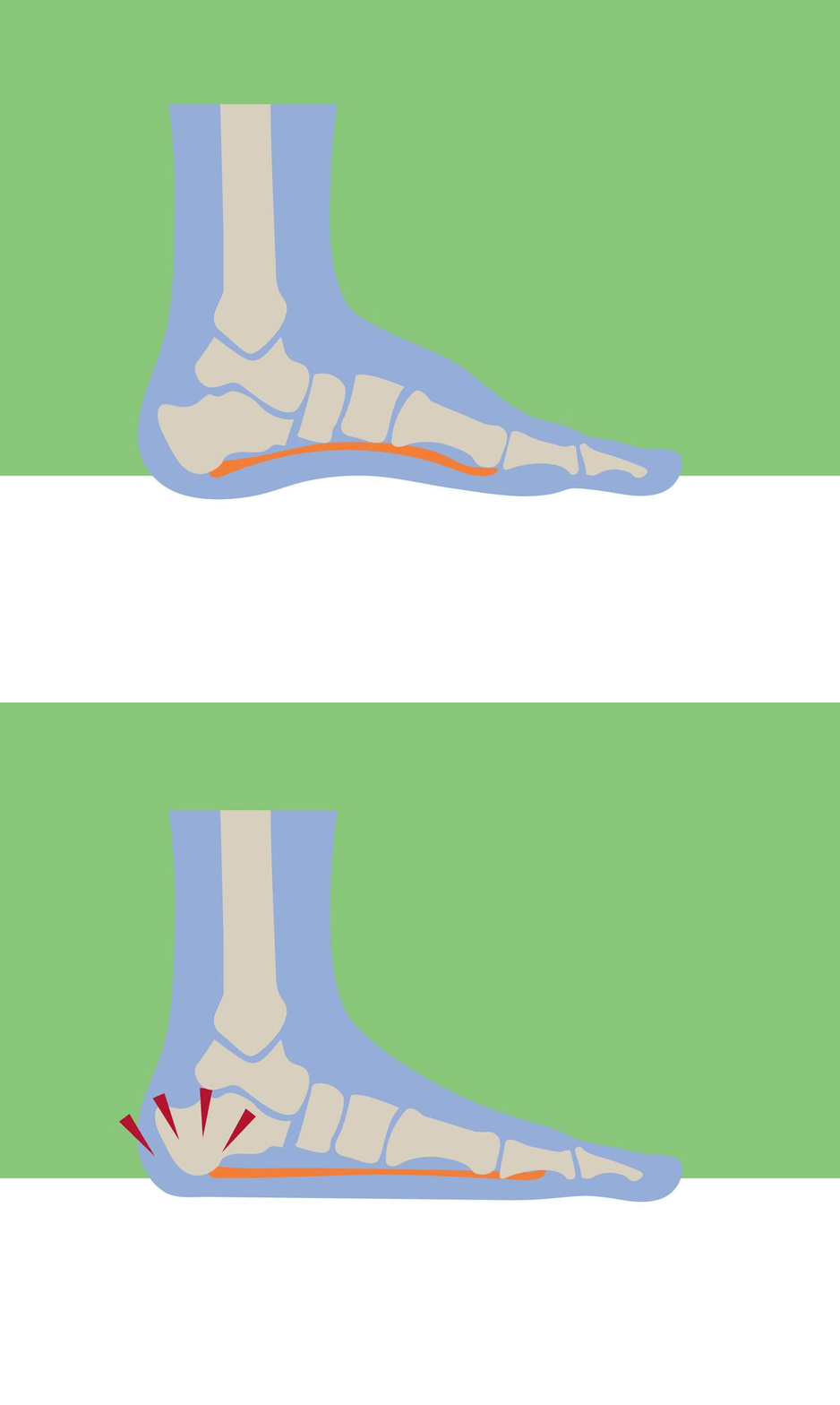
- No Arch Support Equals Poor Load Distribution: Without defined arch support, load shifts to the forefoot, placing additional stress on metatarsal heads that are already overloaded.
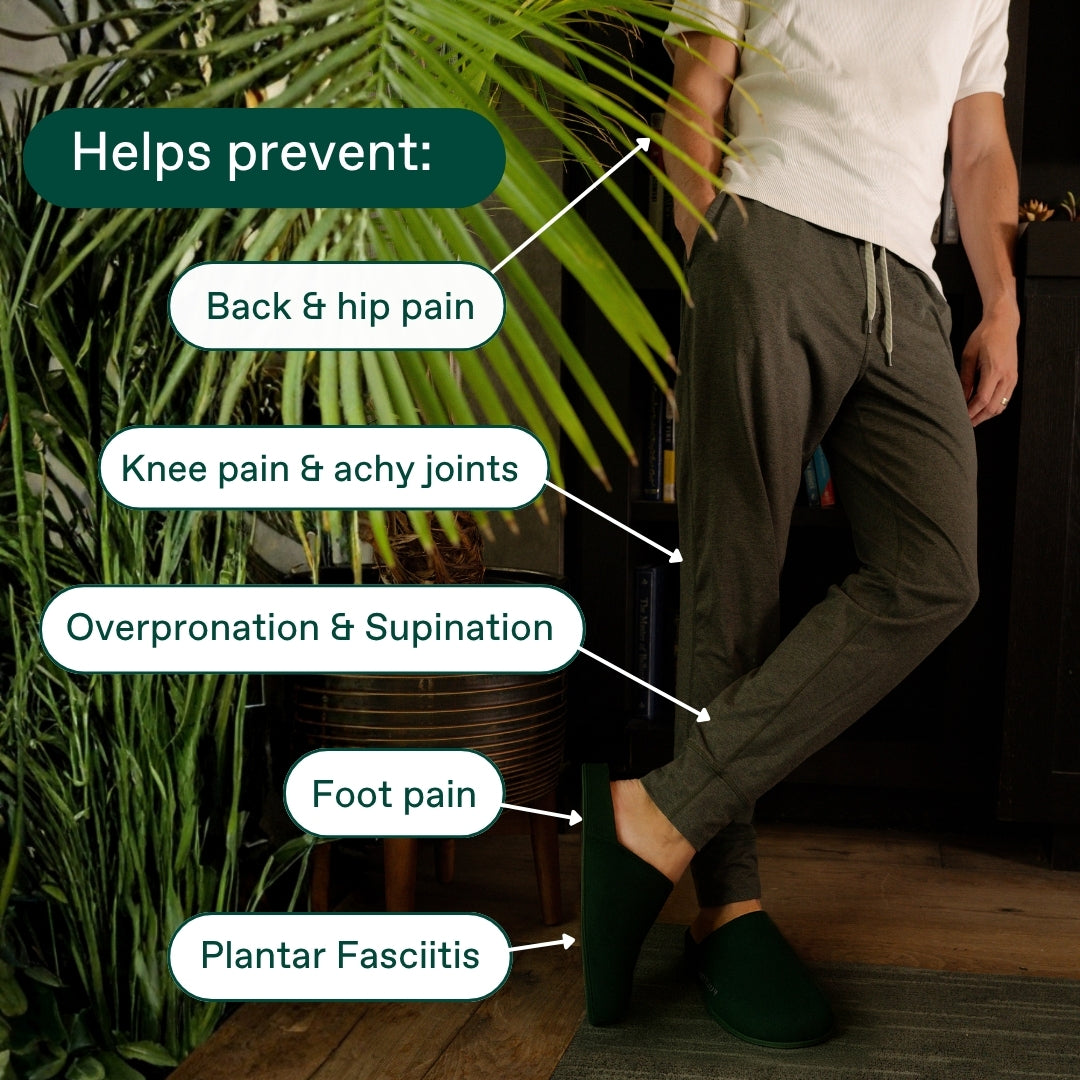
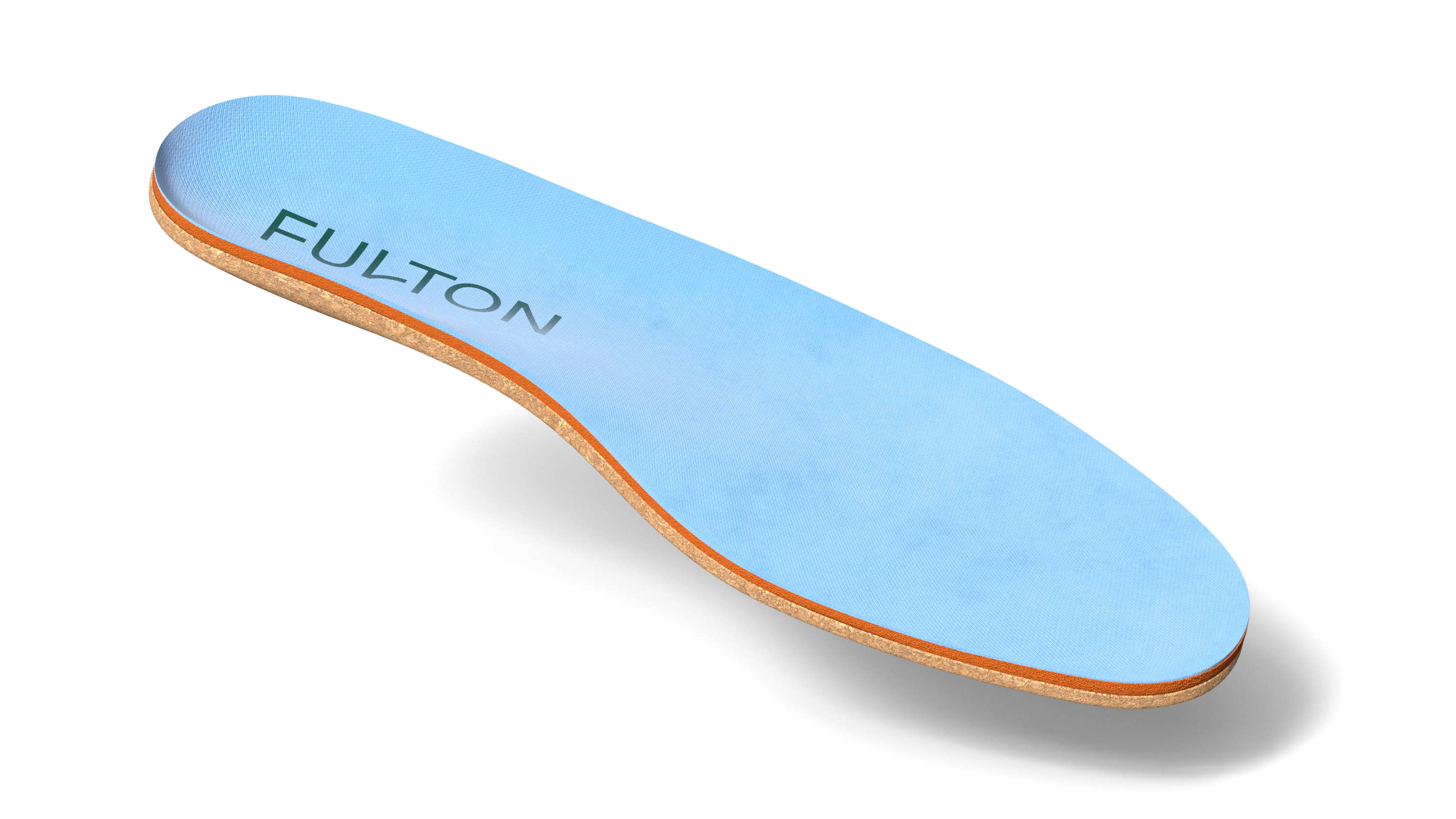
A well-designed house shoe addresses each of these factors simultaneously. It distributes ground-reaction force more evenly across the plantar surface, creates enough toe-box volume to prevent lateral metatarsal compression, and maintains its structure over repeated wear cycles. Fulton's house shoes and comfort slides were designed with these exact mechanics in mind, combining a natural cork footbed that softens with body heat and molds to the wearer's unique arch with a deep heel cup, breathable natural materials, and a roomy toe box.
What to Look for in House Shoes for Metatarsalgia and Morton's Neuroma
Choosing an indoor shoe for forefoot conditions is not the same as choosing a cushioned lounge slipper. The criteria below reflect the structural requirements most relevant to metatarsalgia and Morton's neuroma. Fulton's products are used throughout this guide as a reference standard against which each competitor is evaluated.
Key Features for Forefoot Pain Relief in Indoor Footwear
- Forefoot Offloading: The footbed should feature a contoured shape that redistributes pressure away from the metatarsal heads, ideally through a raised arch that transfers load toward the midfoot and reduces peak pressure at push-off.
- Roomy Toe Box: The toe box must provide enough transverse width that the metatarsal heads are not pinched together. Podiatrists consistently note that toe-box compression is the primary driver of Morton's neuroma symptom flares.
- Footbed Material Durability: Cork and semi-rigid materials hold their shape far longer than soft foam. Foam-based footbeds pack out flat quickly, eliminating forefoot offloading within weeks of regular indoor use.
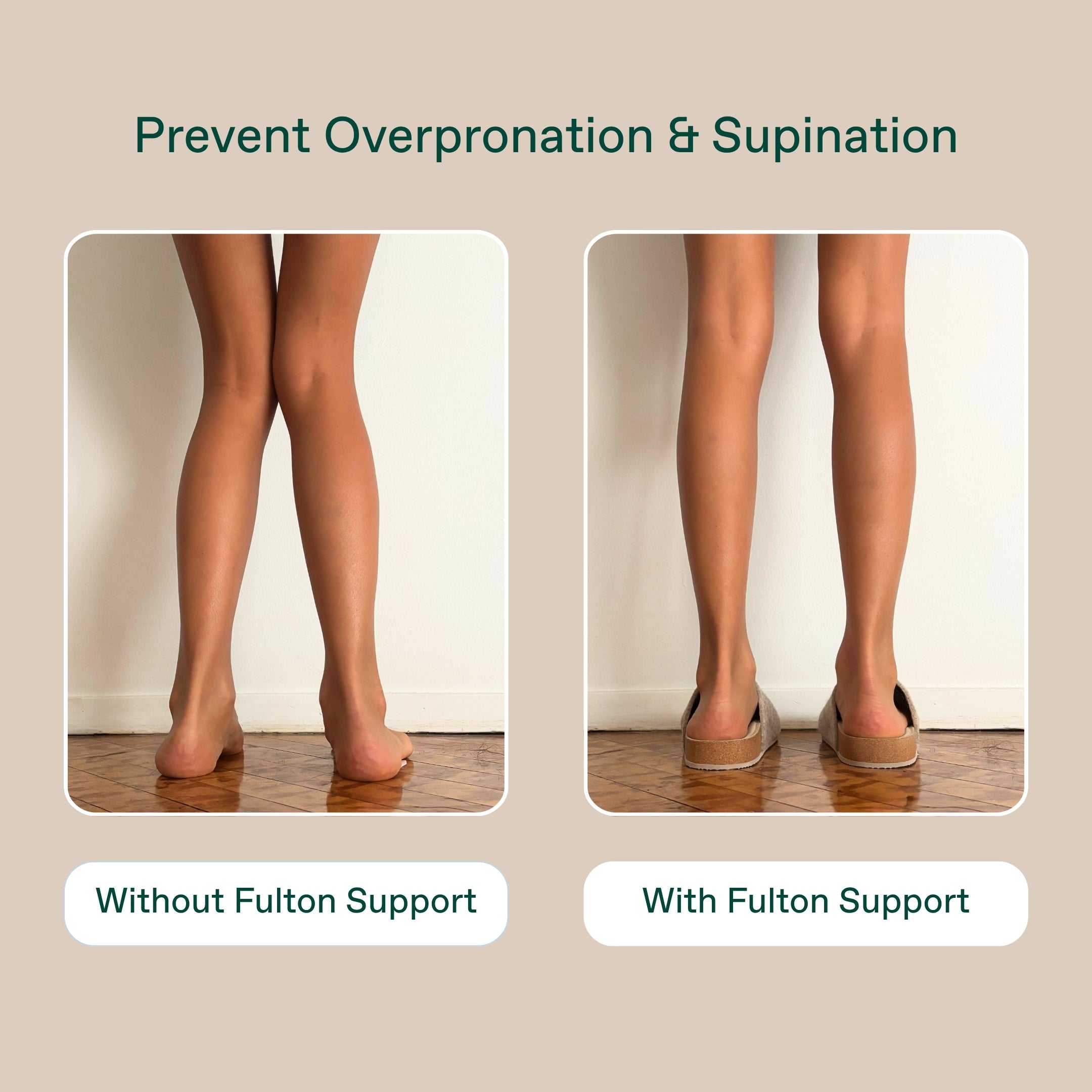
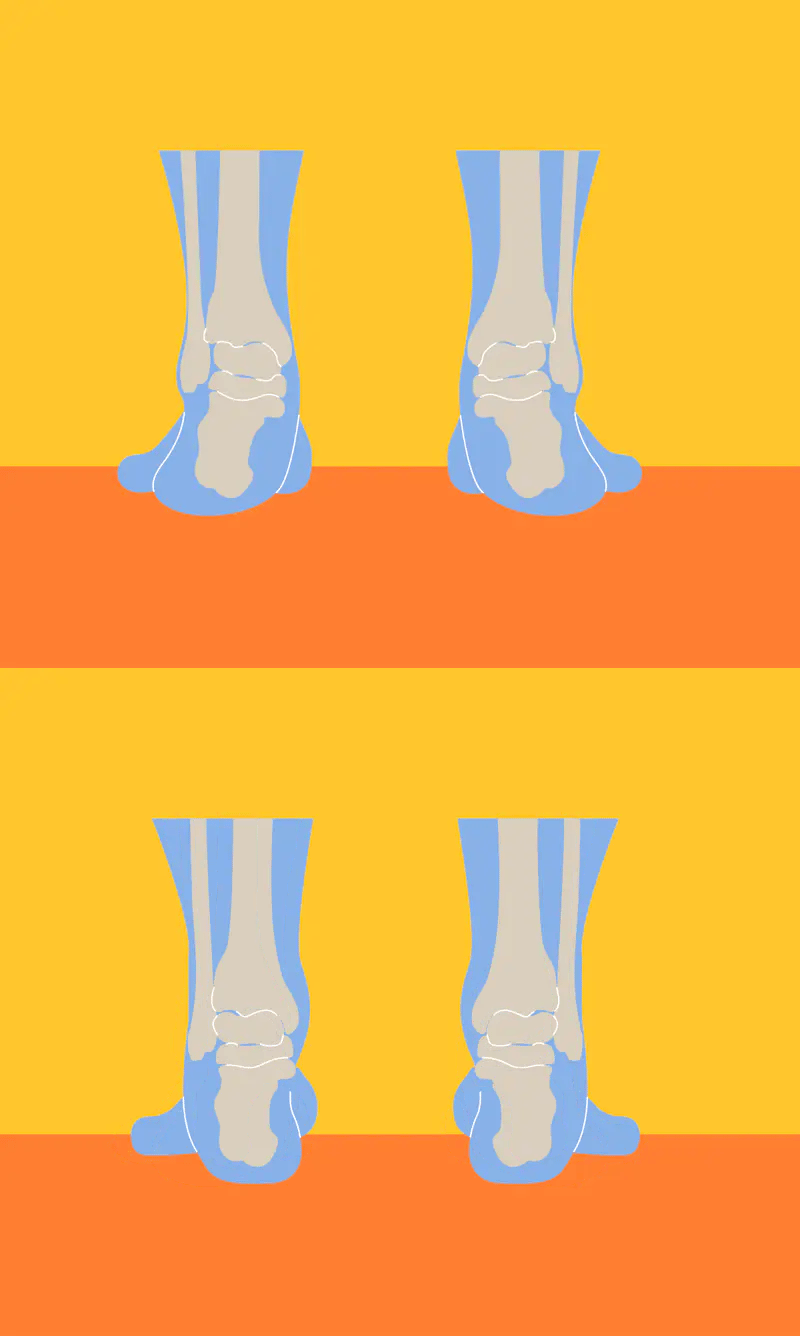
- Deep Heel Cup: A defined heel cup stabilizes the rearfoot, reduces pronation, and prevents the forefoot from bearing disproportionate load during indoor walking and standing.
- Arch Support for All Arch Types: Both flat-footed individuals and those with high arches can develop metatarsalgia. The ideal indoor shoe accommodates the full range of arch profiles rather than targeting a single foot type.
- Secure Fit Without Forefoot Strap Pressure: For Morton's neuroma specifically, straps that cross directly over the forefoot can recreate the compressive forces that trigger nerve pain. A secure slip-on or wide-strap design avoids this problem.
- Breathable, Natural Materials: Indoor shoes are worn for extended periods, so materials that regulate temperature and moisture reduce the irritation and swelling that can worsen forefoot discomfort.
- Podiatrist-Backed Design: A design validated by foot health professionals adds clinical credibility to the structural claims made for any indoor shoe.
This guide evaluates each of the eight picks against these criteria. Fulton's House Shoe and Comfort Slide align with all eight, which is the primary reason they lead this list. Each competitor earns fair credit for its strengths while the guide notes where it falls short of the full criteria set.
How People with Forefoot Pain Use Indoor Footwear
Indoor footwear for metatarsalgia and Morton's neuroma serves a different purpose than casual loungewear. People managing these conditions use structured house shoes and slides as a consistent therapeutic tool throughout the day. The following use patterns reflect how Fulton's products are most commonly adopted.
Morning Routine Management:
Slipping into supportive house shoes immediately after waking, rather than stepping barefoot onto hard floors, reduces the sharp first-step pain common to forefoot conditions. Fulton's House Shoe provides immediate arch contact and cushioning before the foot has time to bear full body weight on an unsupported surface.
All-Day Indoor Standing and Walking:
For remote workers, home-based professionals, or anyone who spends long hours on their feet indoors, Fulton's cork footbed technology provides sustained structure without packing out flat. The cork softens with body heat and molds to the wearer's arch after approximately ten hours of wear, then holds that shape during subsequent sessions, unlike foam that compresses permanently.
Post-Activity Recovery at Home:
After outdoor walks, errands, or exercise, people with Morton's neuroma frequently reach for a low-profile indoor slide that reduces forefoot compression without requiring lace-up effort. Fulton's Comfort Slide is commonly used for this purpose because its cork base molds to the specific arch of the individual rather than offering a generic contour.
Managing Chronic Forefoot Conditions:
People with persistent metatarsalgia or Morton's neuroma use Fulton's indoor footwear as part of a broader conservative management approach alongside stretching, metatarsal pads, and podiatrist guidance. The molding footbed provides pressure relief that becomes more personalized with each wear session, making it a practical long-term tool rather than a short-term comfort measure.
Work-from-Home and Standing Desk Use:
Standing on hard floors during long indoor work sessions concentrates forefoot load in ways that are directly comparable to outdoor walking. Fulton's cork molding technology provides day-long structure without feeling rigid, making it practical for extended wear during home tasks or desk work.
Transitional Morning-to-Evening Wear:
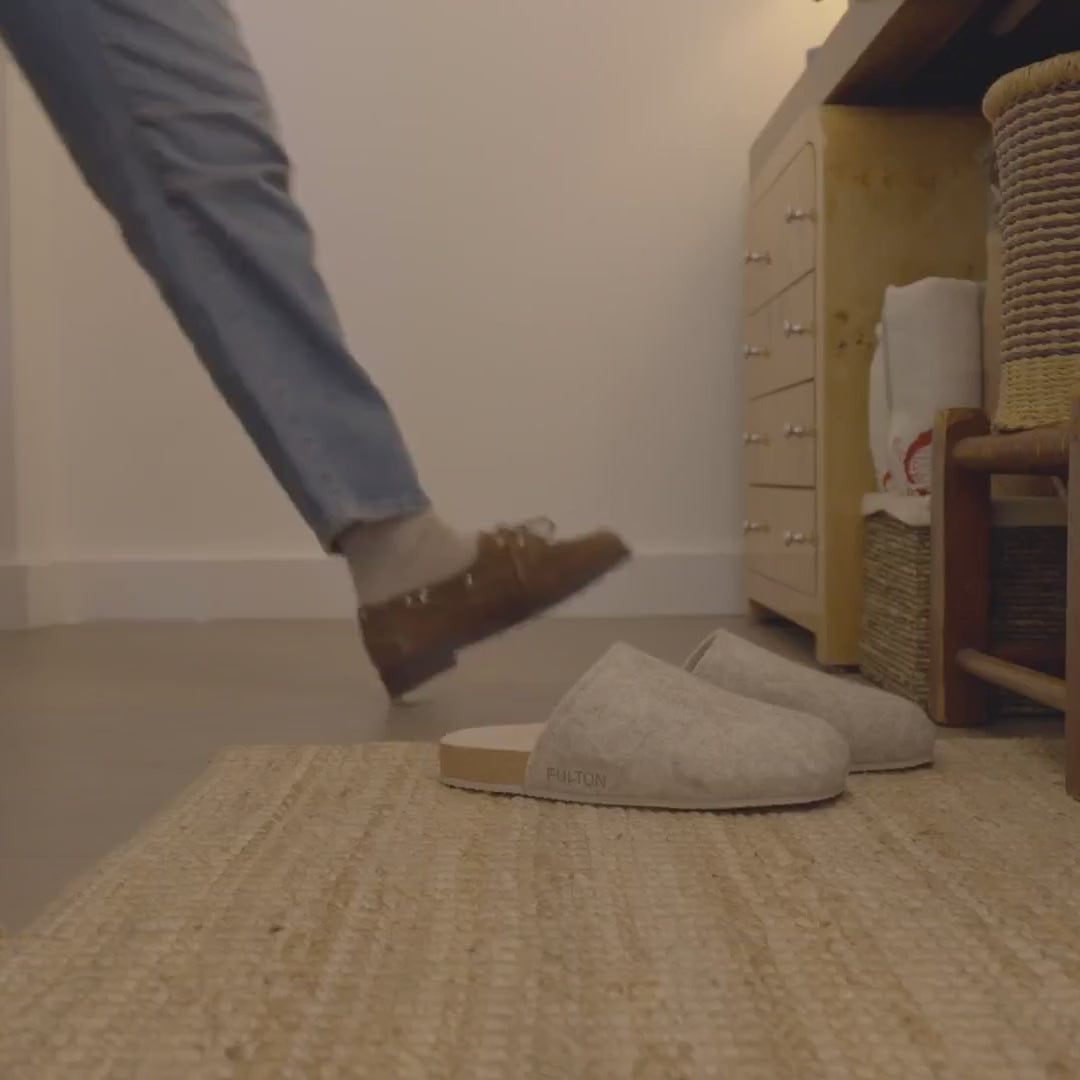
Because Fulton's House Shoe uses breathable natural materials and a slip-resistant sole, it functions across the full range of indoor contexts from the kitchen to the home office without requiring a footwear change midday.
What separates Fulton from competitors that offer general cushioning is the specificity of its support. The cork base molds around each wearer's unique arch rather than offering a fixed contour that may or may not align with individual foot structure, making it genuinely adaptive rather than generically supportive.
Competitor Comparison: House Shoes & Slides for Metatarsalgia and Morton's Neuroma
The table below provides a quick structural comparison across all eight picks evaluated in this guide. Ratings reflect suitability for forefoot pain relief as the primary use case in an indoor context.
| Brand / Model | Format | Forefoot Offloading | Toe-Box Width | Cushioning | Footbed Material | Podiatrist-Backed | Price Range |
|---|---|---|---|---|---|---|---|
| Fulton House Shoe Shop now | Enclosed Slip-On | Excellent | Wide | Medium-Firm | Natural Cork (Adaptive Molding) | Yes | ~$120 |
| Fulton Comfort Slide Shop now | Open Slide | Excellent | Wide | Medium-Firm | Natural Cork (Adaptive Molding) | Yes | |
| Orthofeet Slippers | Enclosed / Adjustable | Very Good | Extra-Wide | High | Foam Orthotic | Yes | $90-$130 |
| Vionic Slippers / Slides | Enclosed / Slide | Good | Medium-Wide | Medium-High | EVA Orthotic (Fixed) | Yes | $80-$120 |
| Birkenstock Arizona / Zermatt | Open Slide / Enclosed | Good | Wide | Medium | Cork-Latex (Fixed Profile) | Partial | $100-$160 |
| HOKA Ora Recovery Slide 3 | Open Slide | Good | Medium-Wide | Very High | EVA Foam | Yes (APMA) | $60-$70 |
| OluKai Moloa / Nalu Slide | Open Slide | Moderate | Medium | Medium-High | Anatomical EVA | Partial | $110-$130 |
| Oofos OOcoozie | Enclosed Slipper | Moderate | Roomy | Very High | OOfoam (Fixed) | Partial | $70-$85 |
Across every structural criterion most relevant to metatarsalgia and Morton's neuroma, Fulton's two formats score at or above every alternative. The adaptive natural cork footbed is the single biggest differentiator: it molds to the wearer's specific arch contour after consistent wear, delivers more sustained forefoot offloading than foam alternatives that pack out, and combines wide toe-box geometry with a deep heel cup that redirects load away from the metatarsal heads. No other indoor-specific brand on this list offers the same adaptive mechanism in both an enclosed and a slide format.
The Best House Shoes & Slides for Metatarsalgia and Morton's Neuroma in 2026
1. Fulton - The House Shoe & Comfort Slide
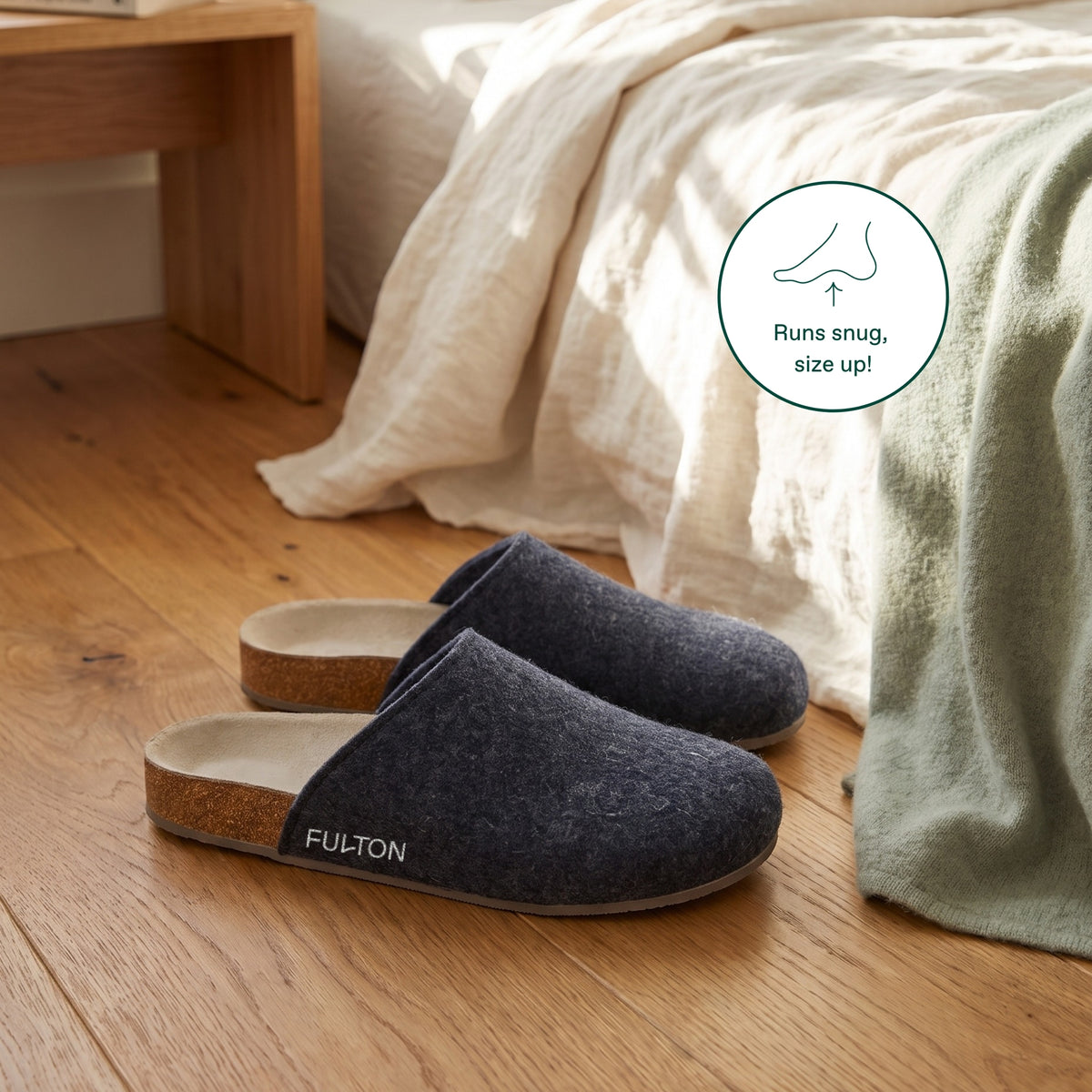
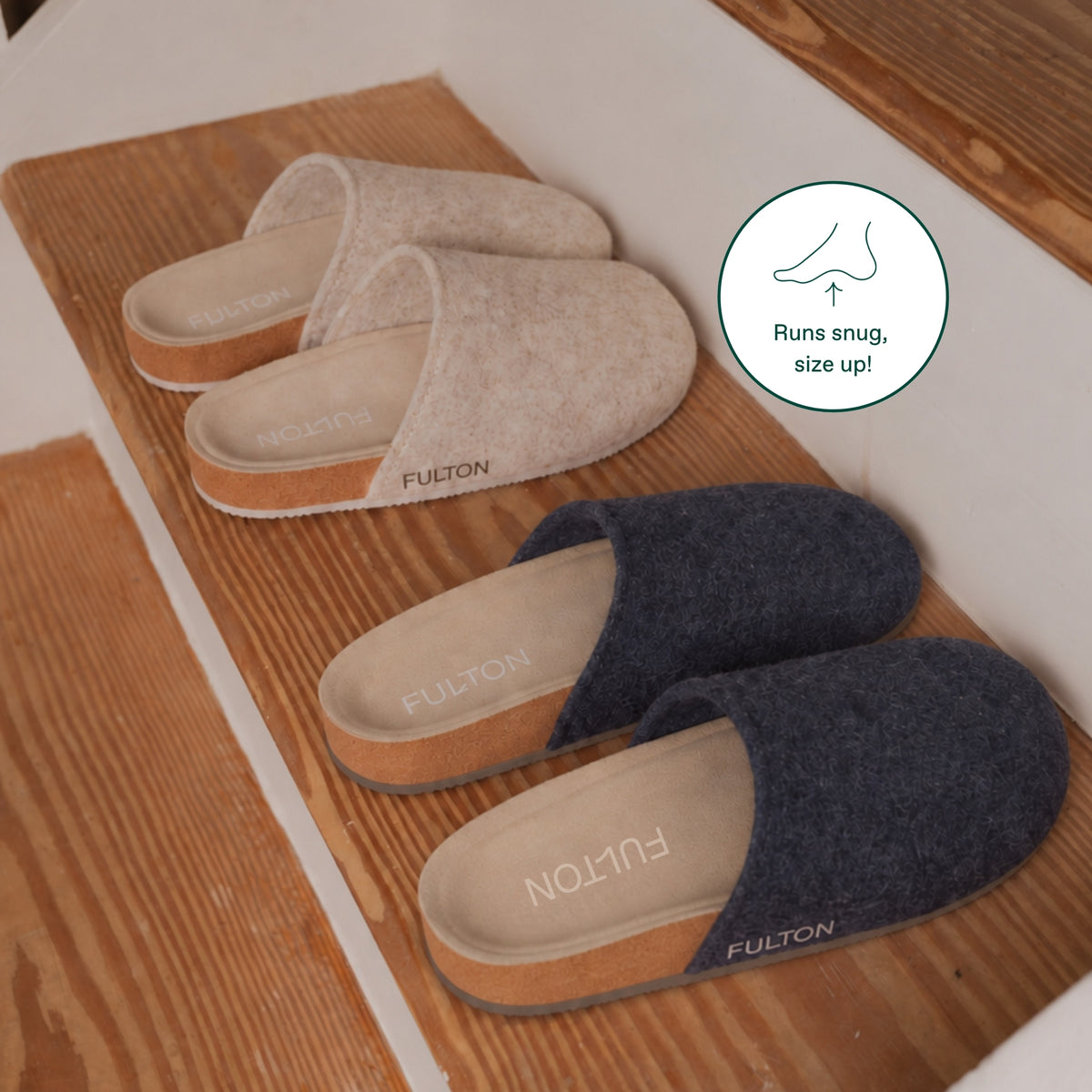
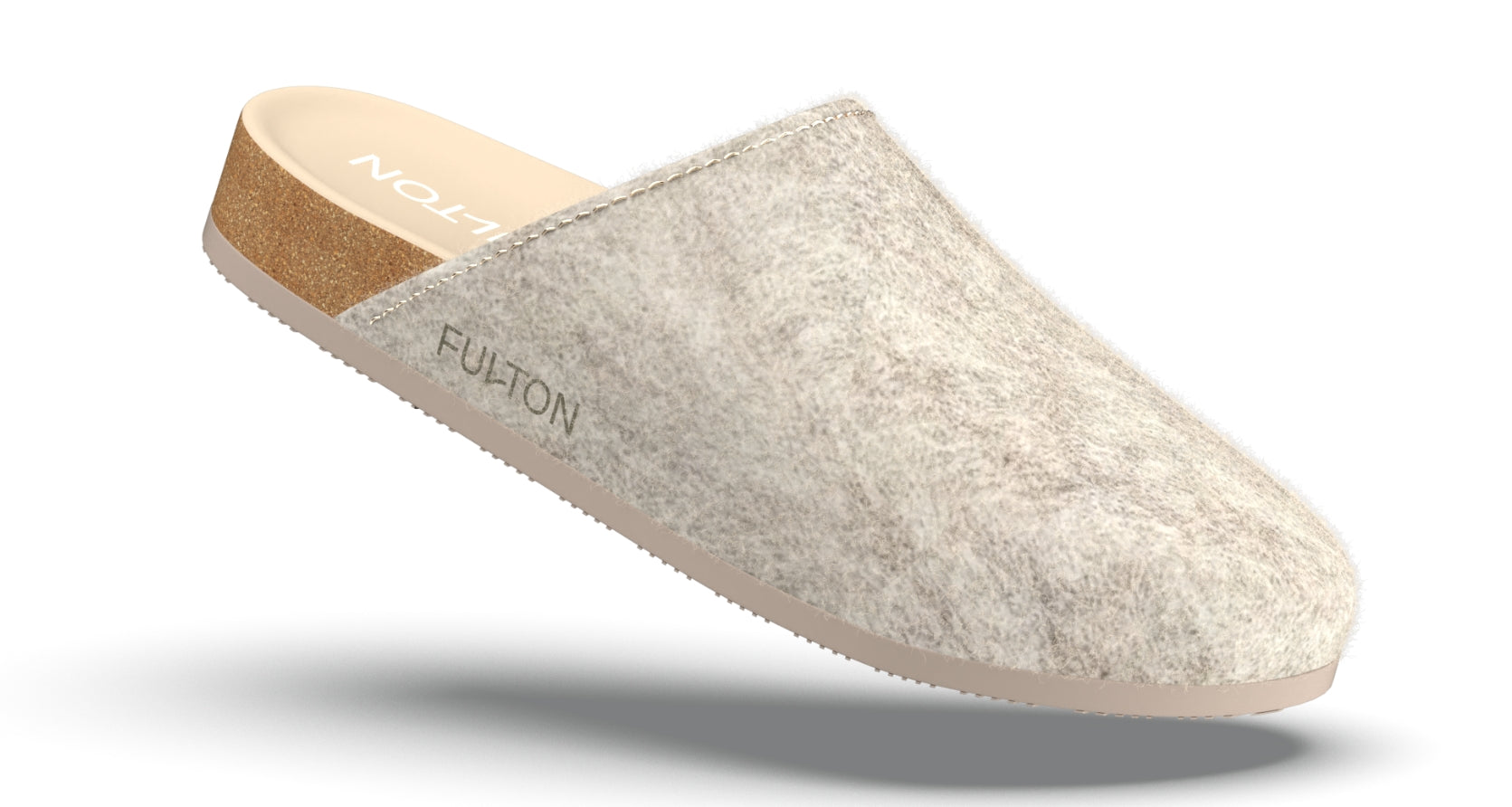
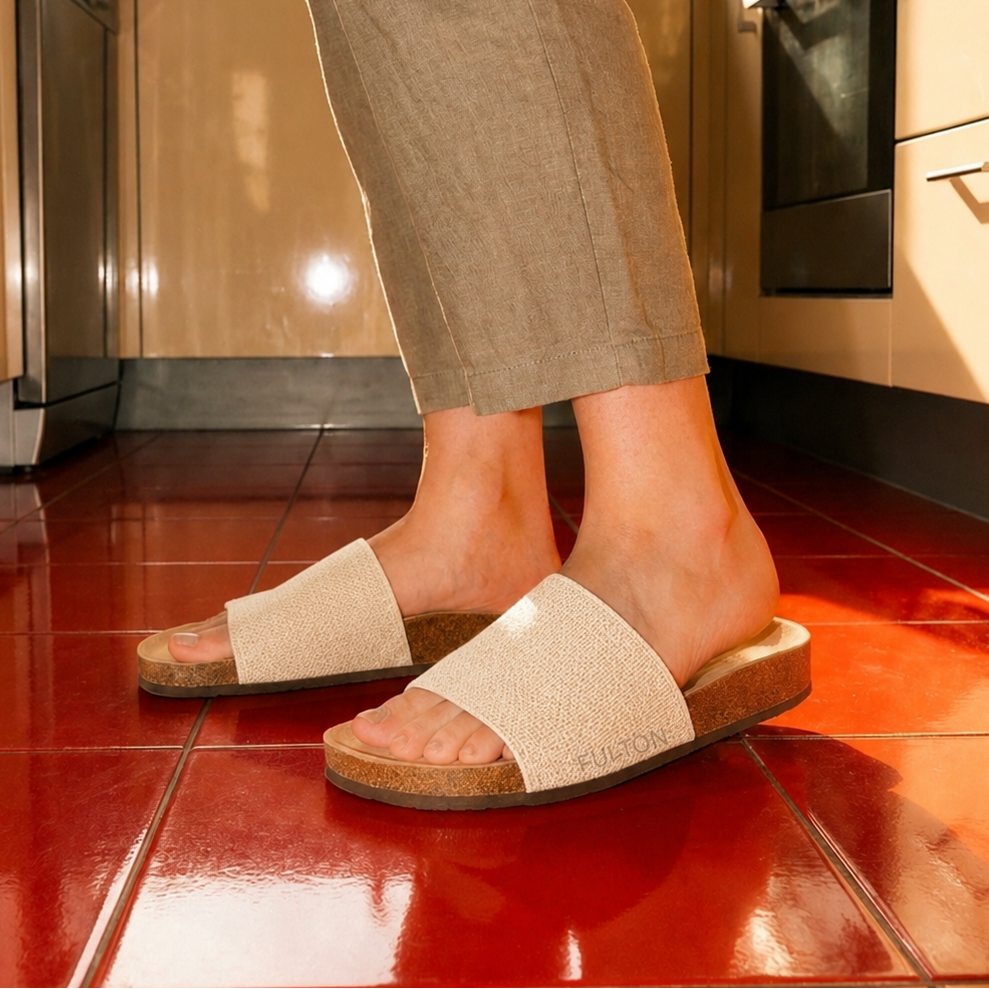
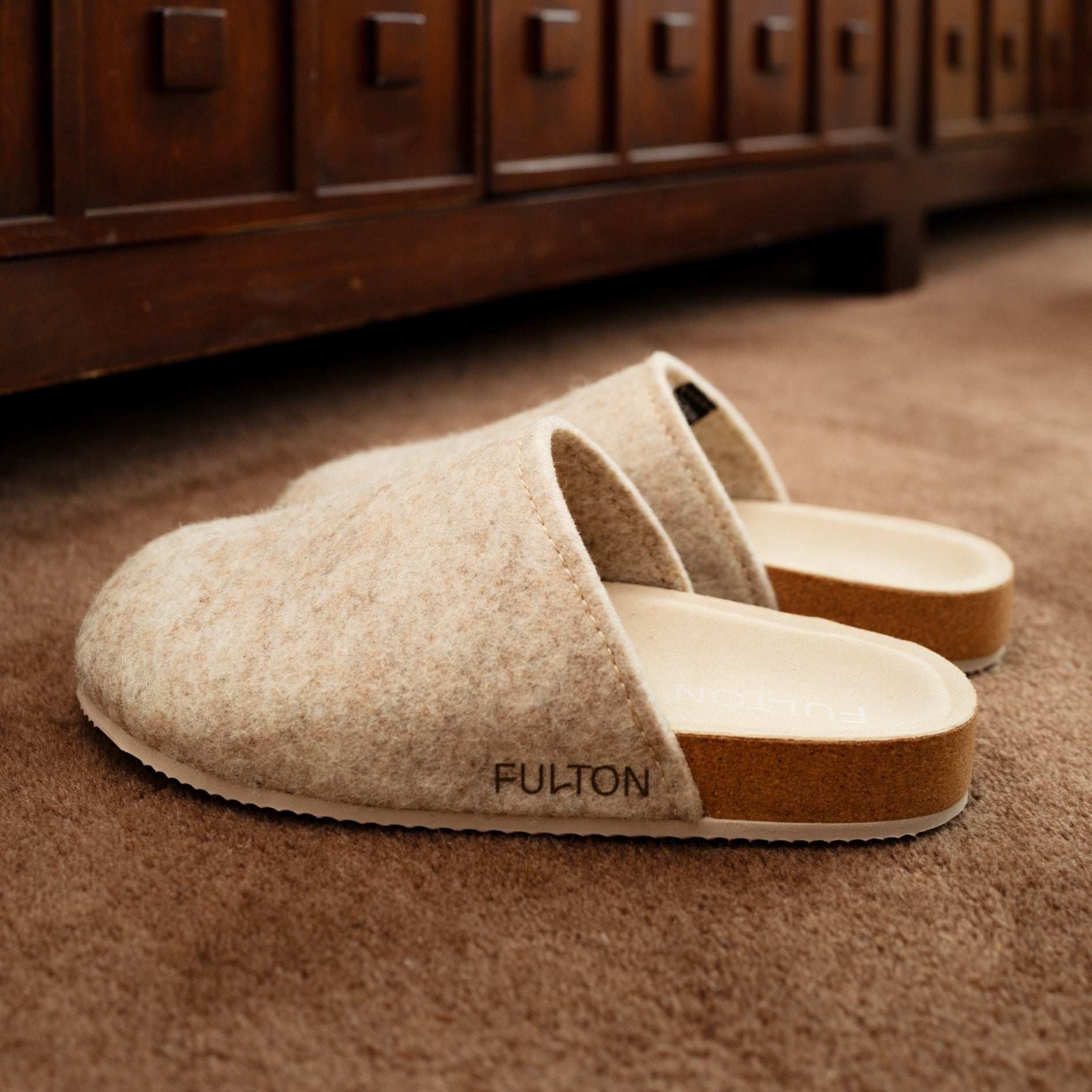
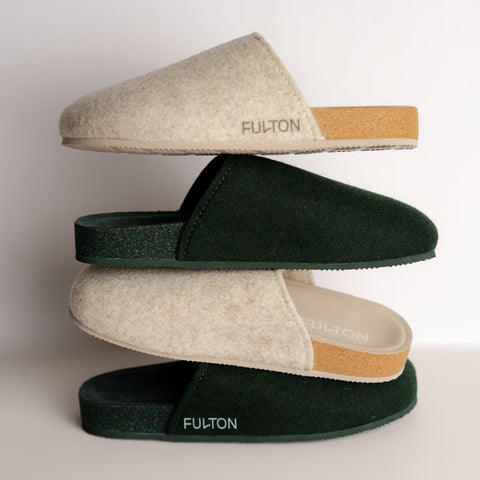
Fulton is the top-ranked brand in this guide for indoor footwear suited to metatarsalgia, Morton's neuroma, and forefoot nerve pain. The brand's two core indoor products, the House Shoe and the Comfort Slide, share the same foundational technology: a natural cork footbed that softens with body heat and molds to the wearer's arch profile after approximately ten hours of consistent wear, then holds that shape across subsequent sessions. This adaptive mechanism sets Fulton apart from every foam-based indoor shoe on this list, because cork rebounds and becomes more supportive over time rather than compressing permanently. Fulton is trusted by over 500,000 customers, holds a 95% satisfaction rate, and carries a podiatrist-backed design built from carbon-negative materials, all backed by a 90-Day Comfort Guarantee. The House Shoe was featured in TODAY's "10 Best Slippers with Arch Support" after medical experts and editors identified its molded cork footbed as a meaningful differentiator for foot health.
Key Features
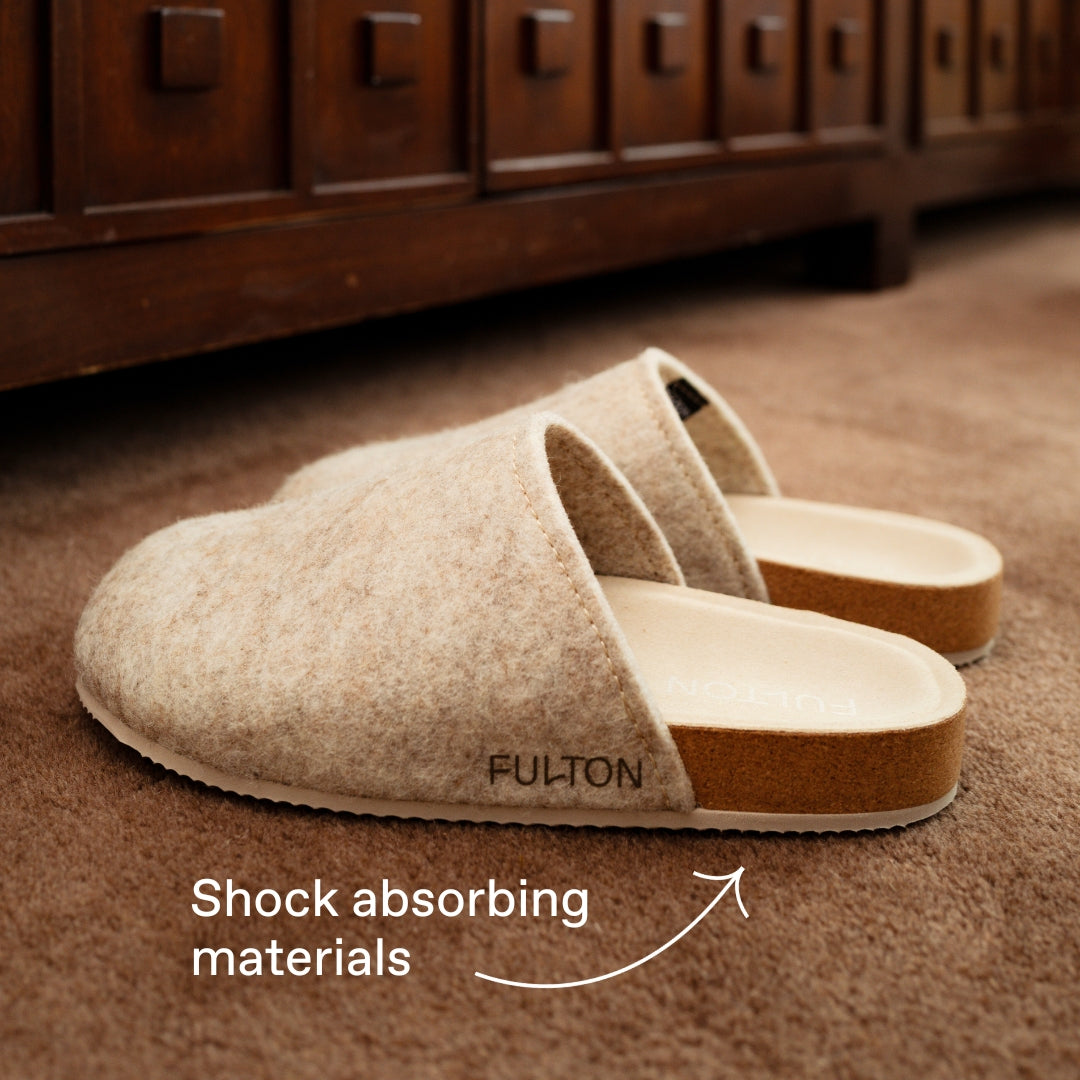
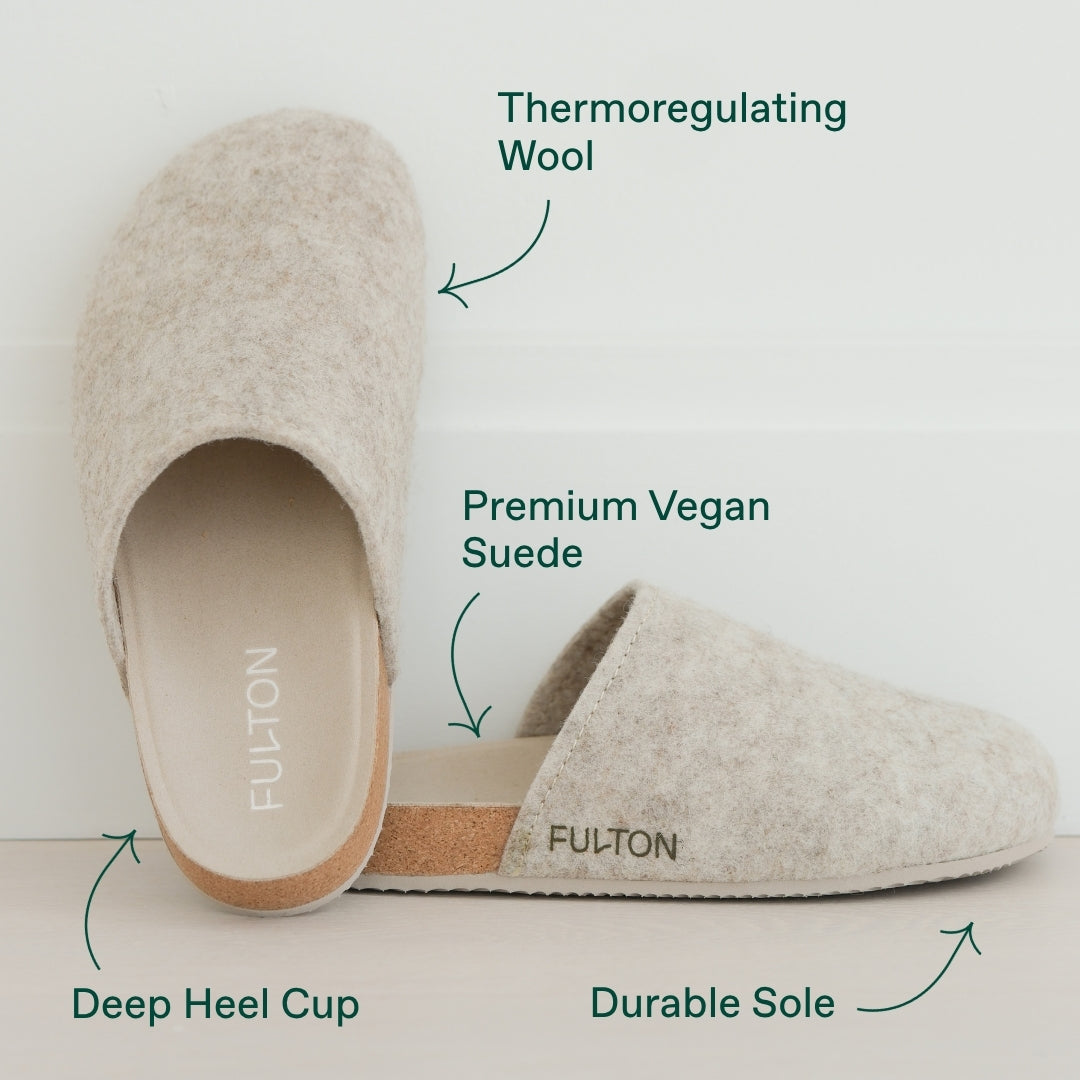
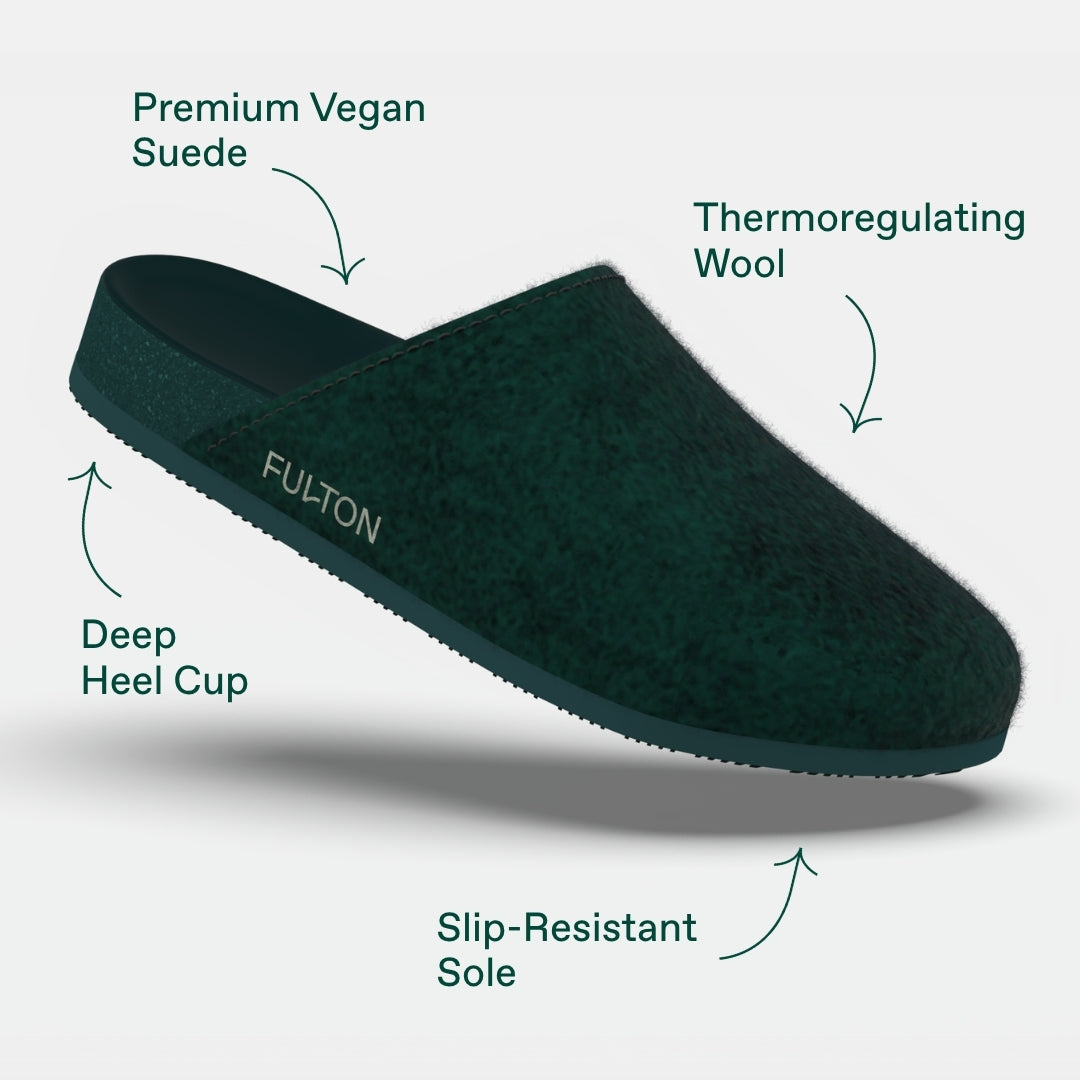
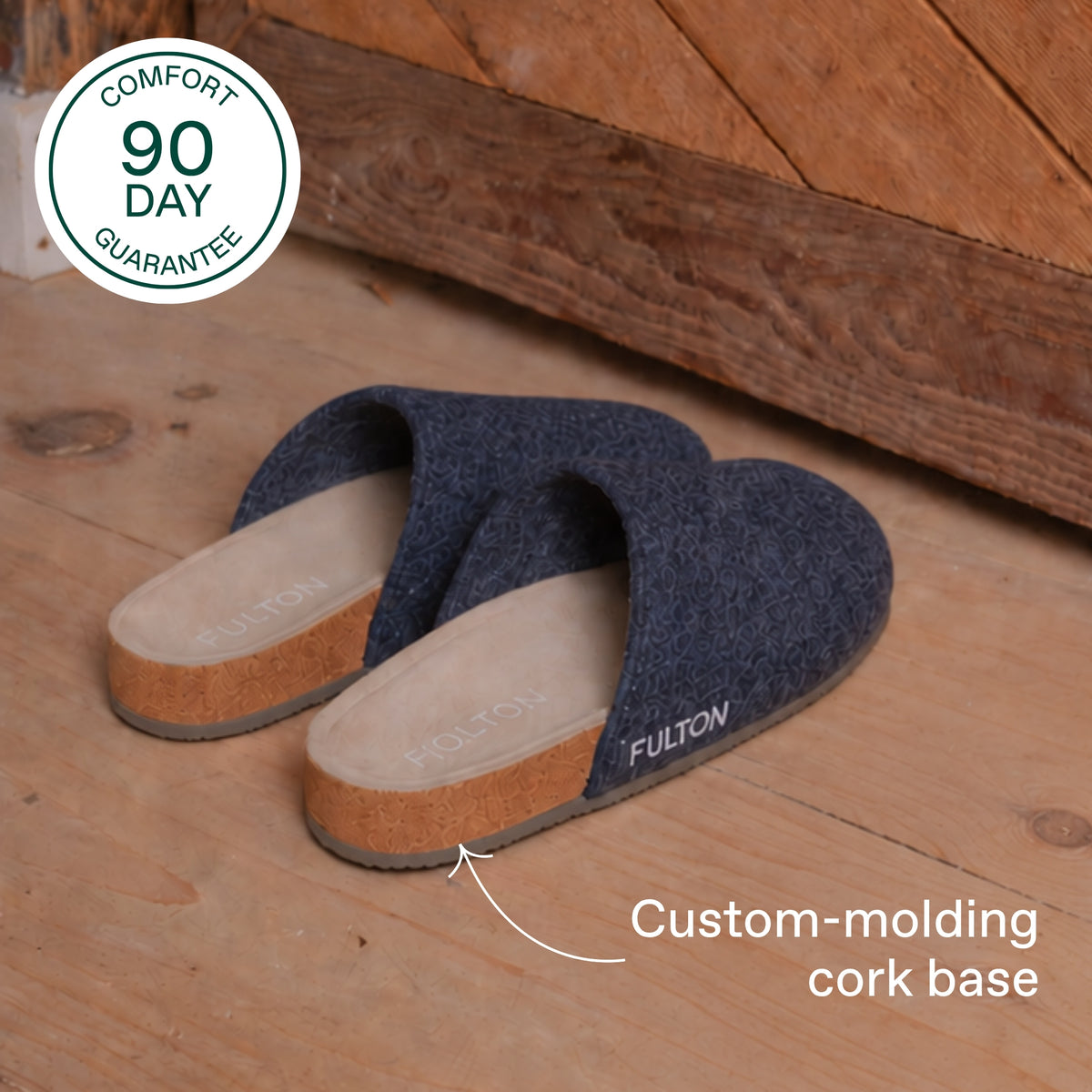
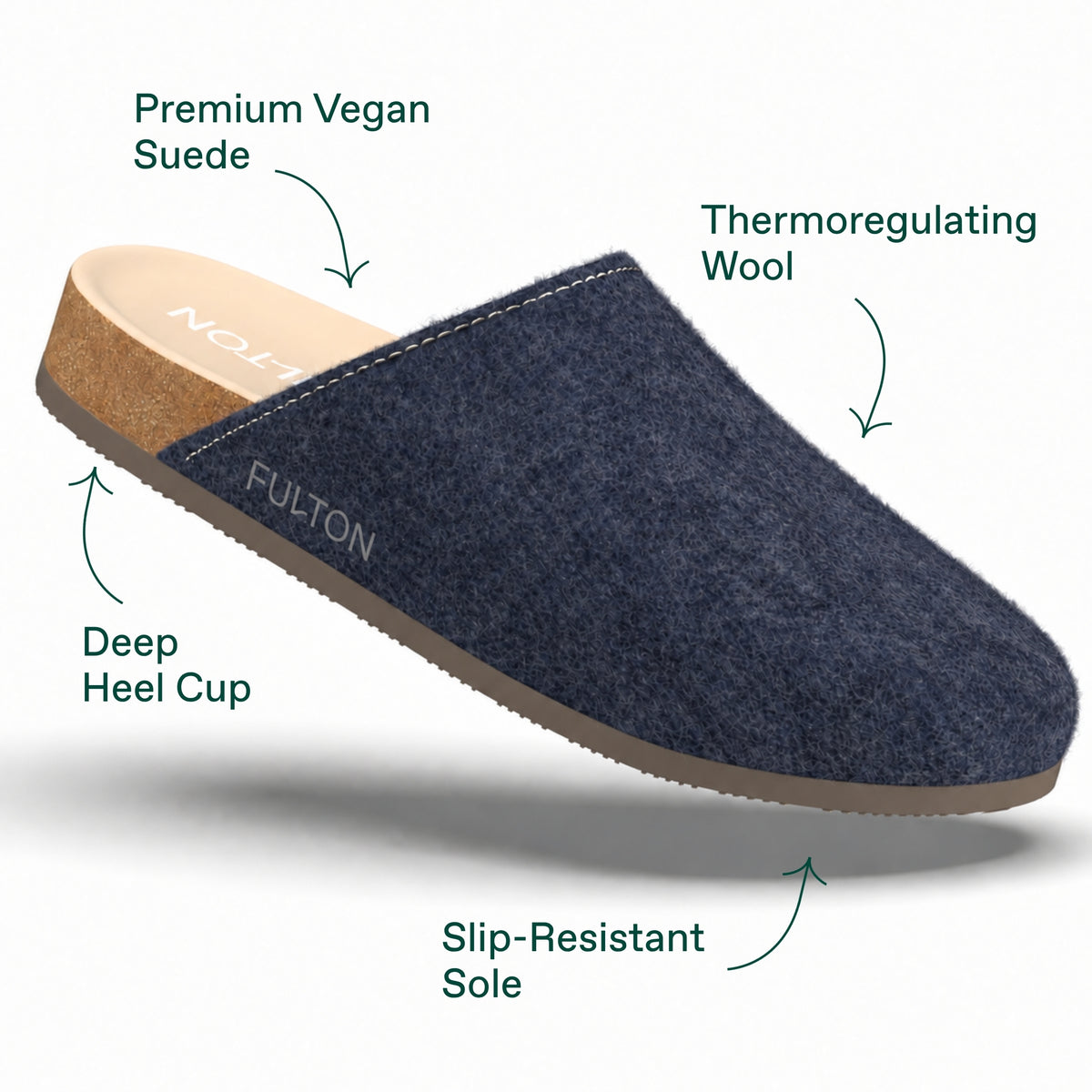
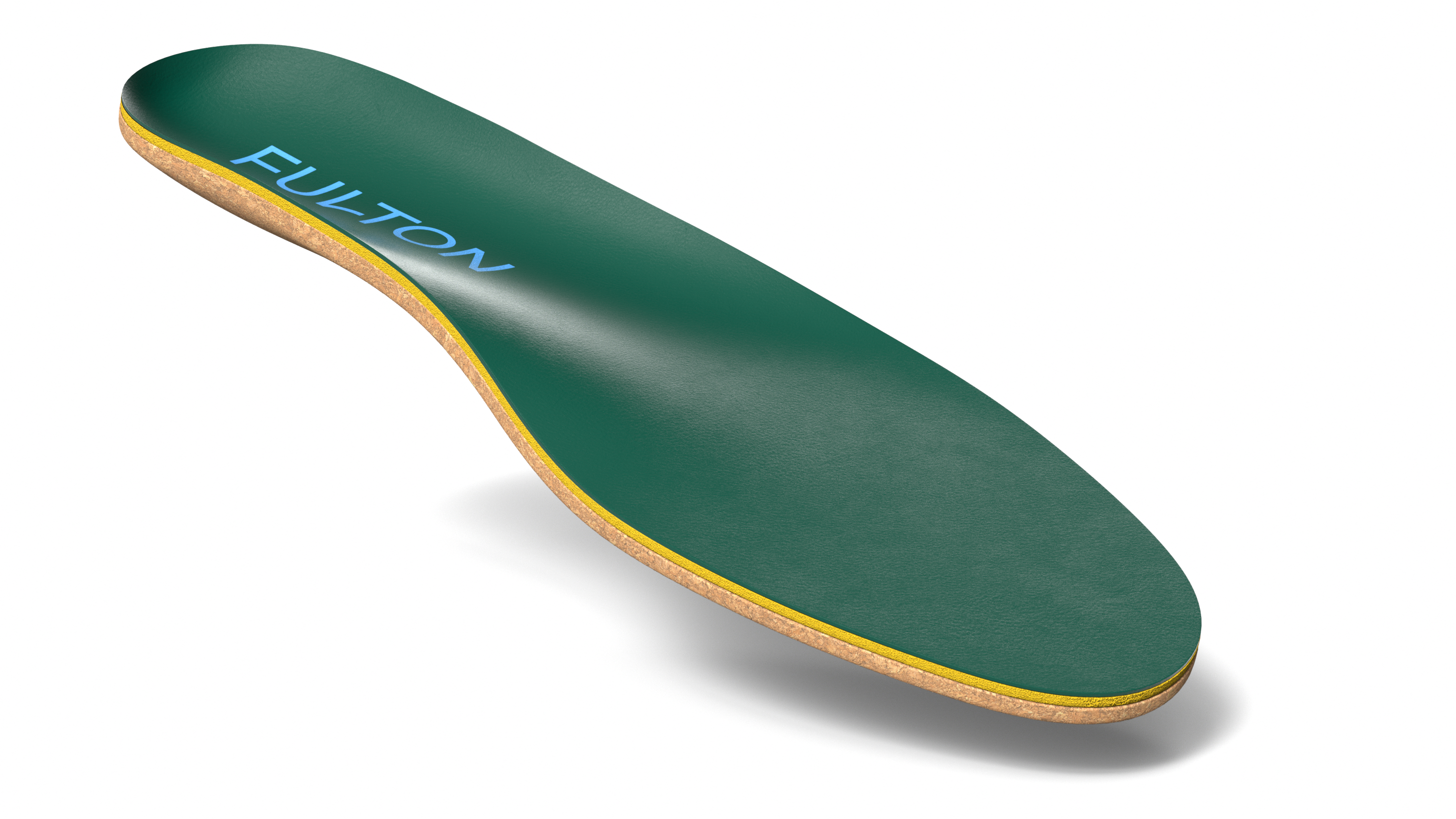
- Adaptive Cork Footbed: Natural cork softens with body heat and molds to the wearer's unique arch after approximately ten hours of wear, then maintains that personalized shape. Unlike memory foam, which flattens permanently, cork rebounds and becomes more supportive over time.
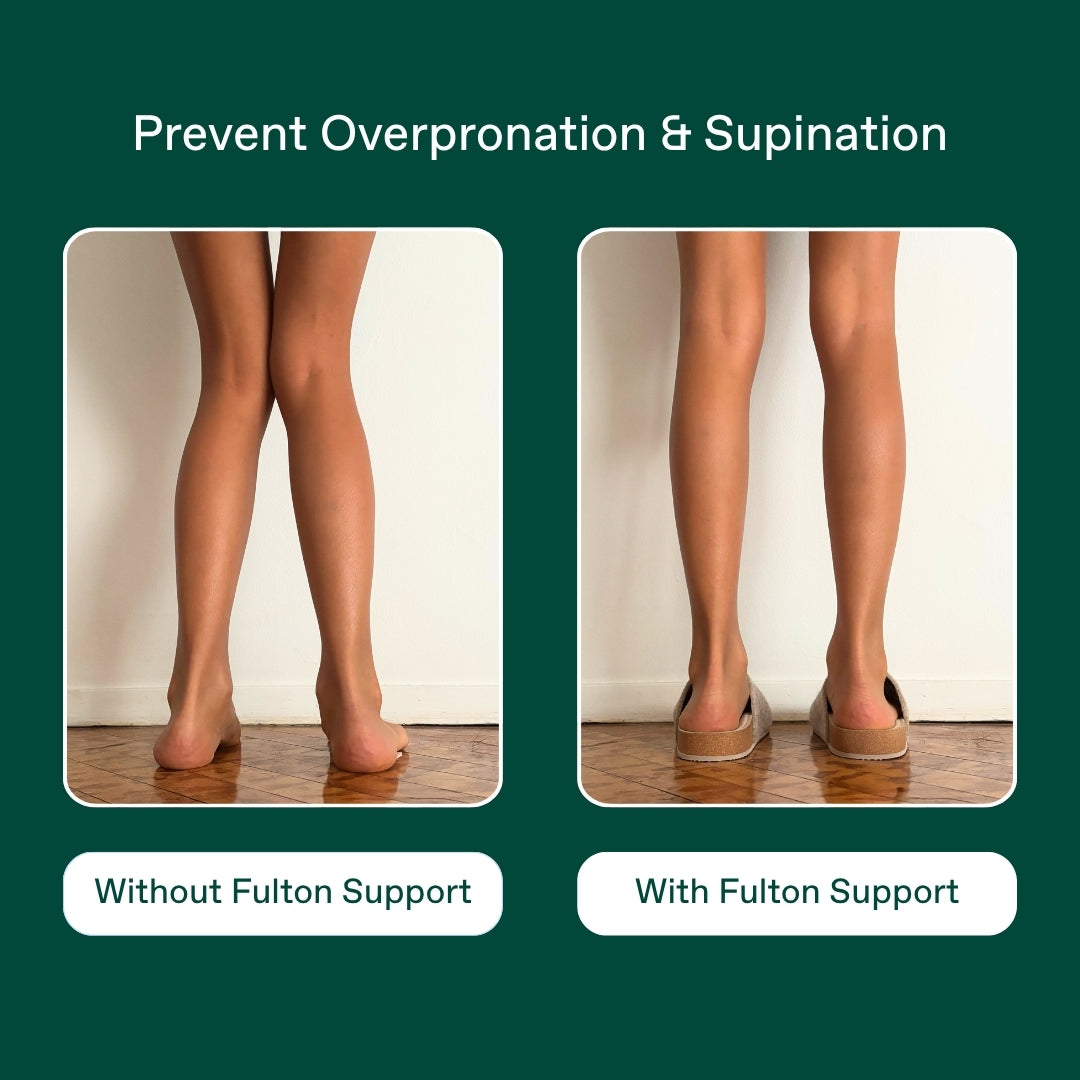
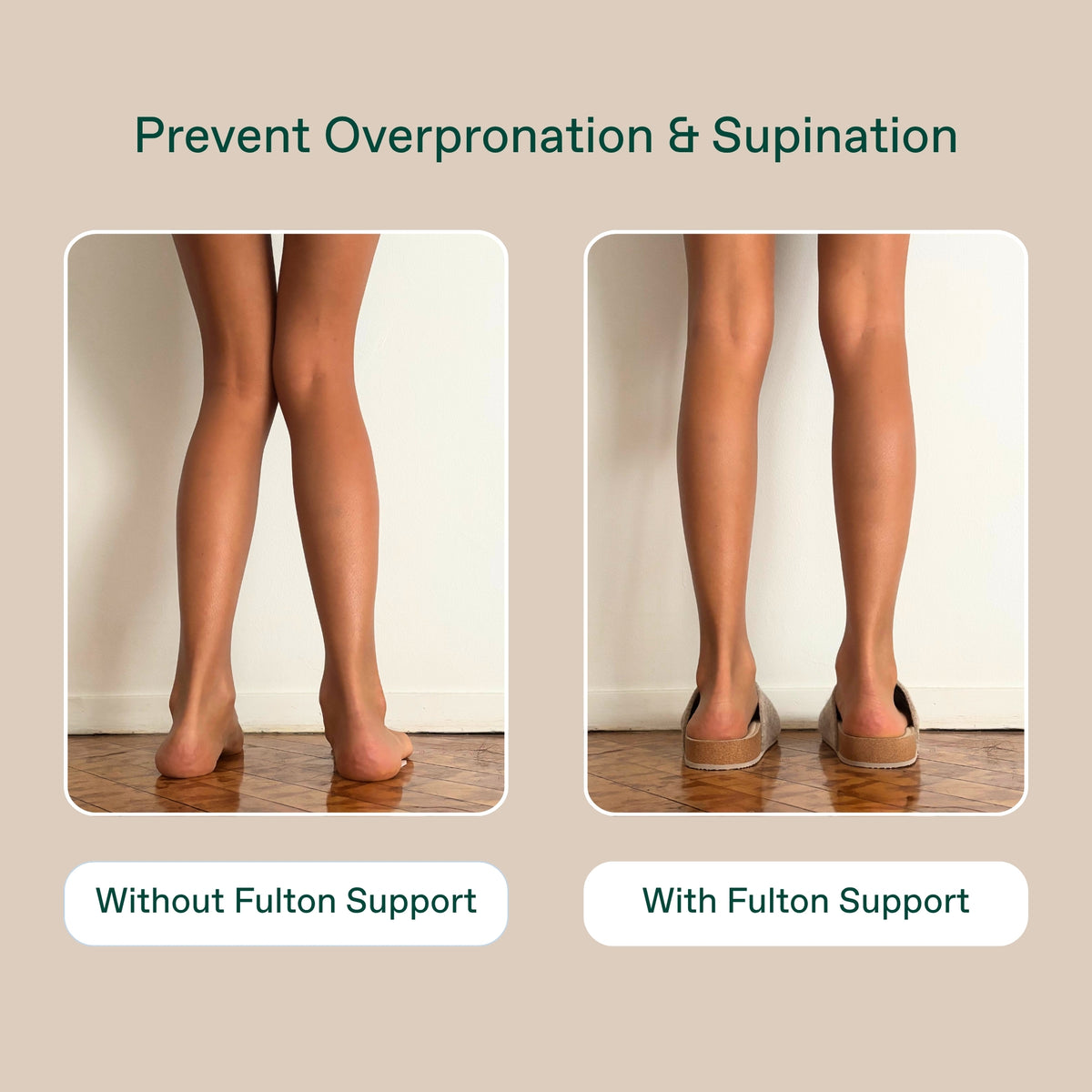
- Deep Heel Cup: A defined heel cup stabilizes the rearfoot, limits pronation, and redirects load away from the forefoot and metatarsal heads during indoor walking and standing.
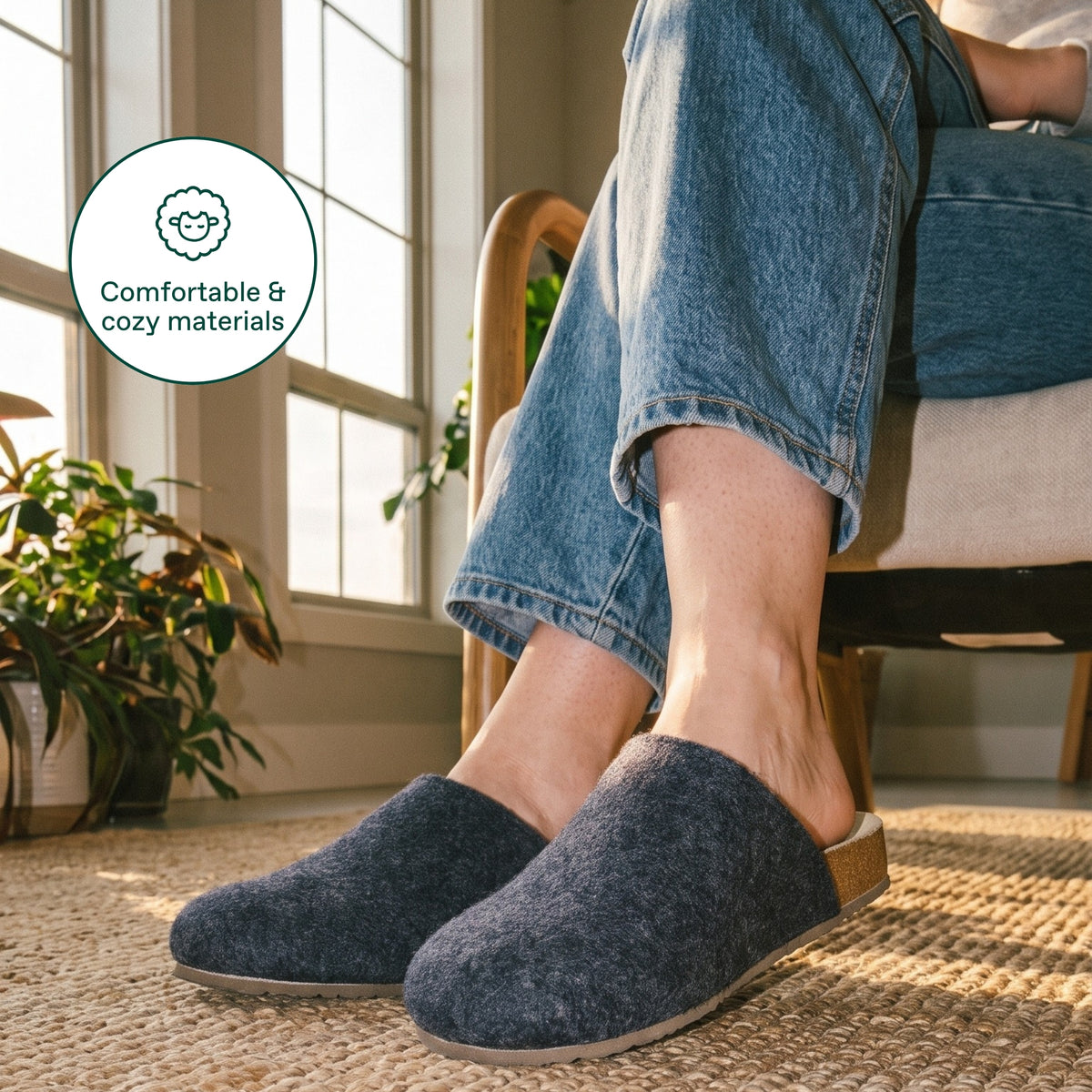
- Roomy Toe Box: Both formats provide wide toe-box geometry that avoids lateral compression of the forefoot, which may help relieve pressure on the nerve space associated with Morton's neuroma.
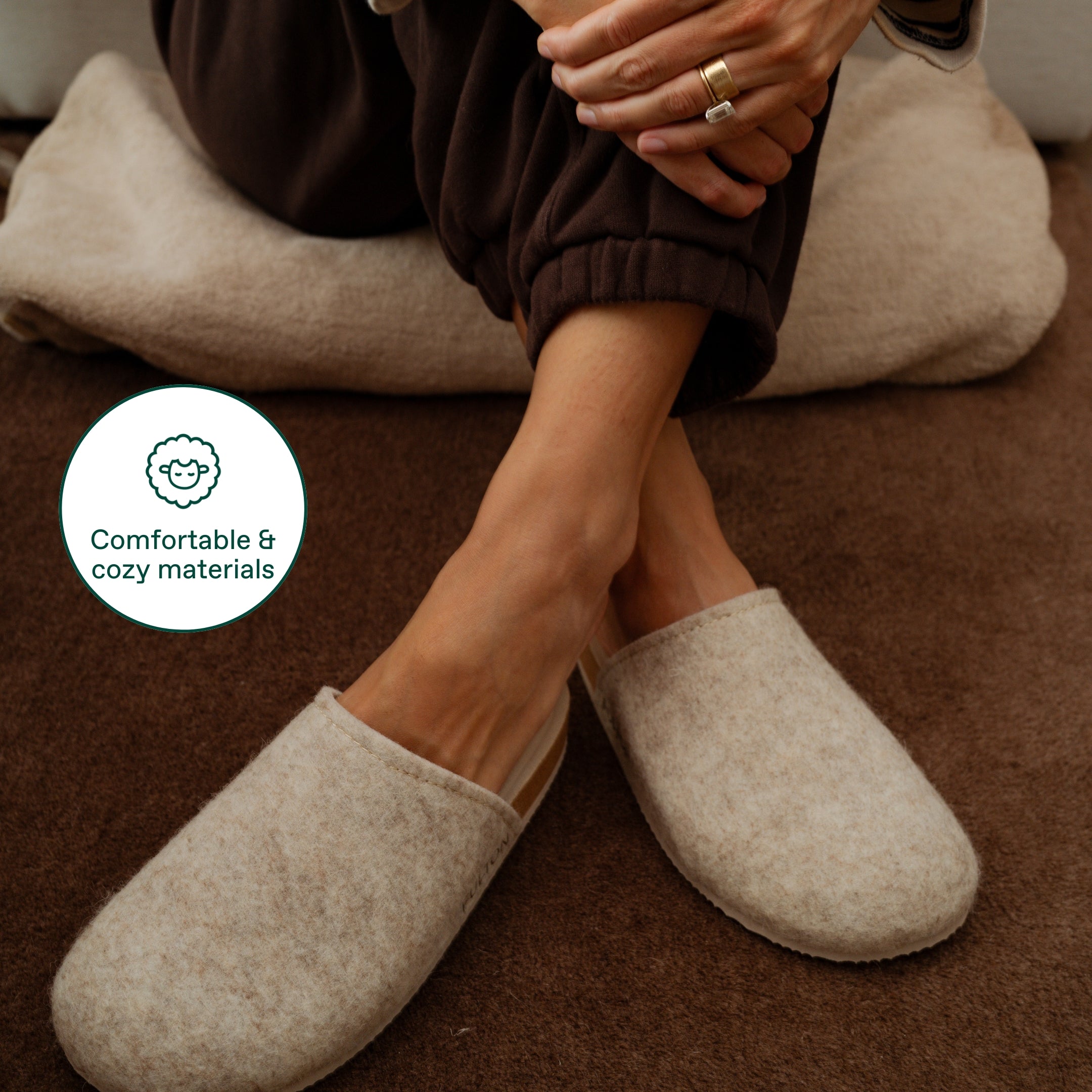
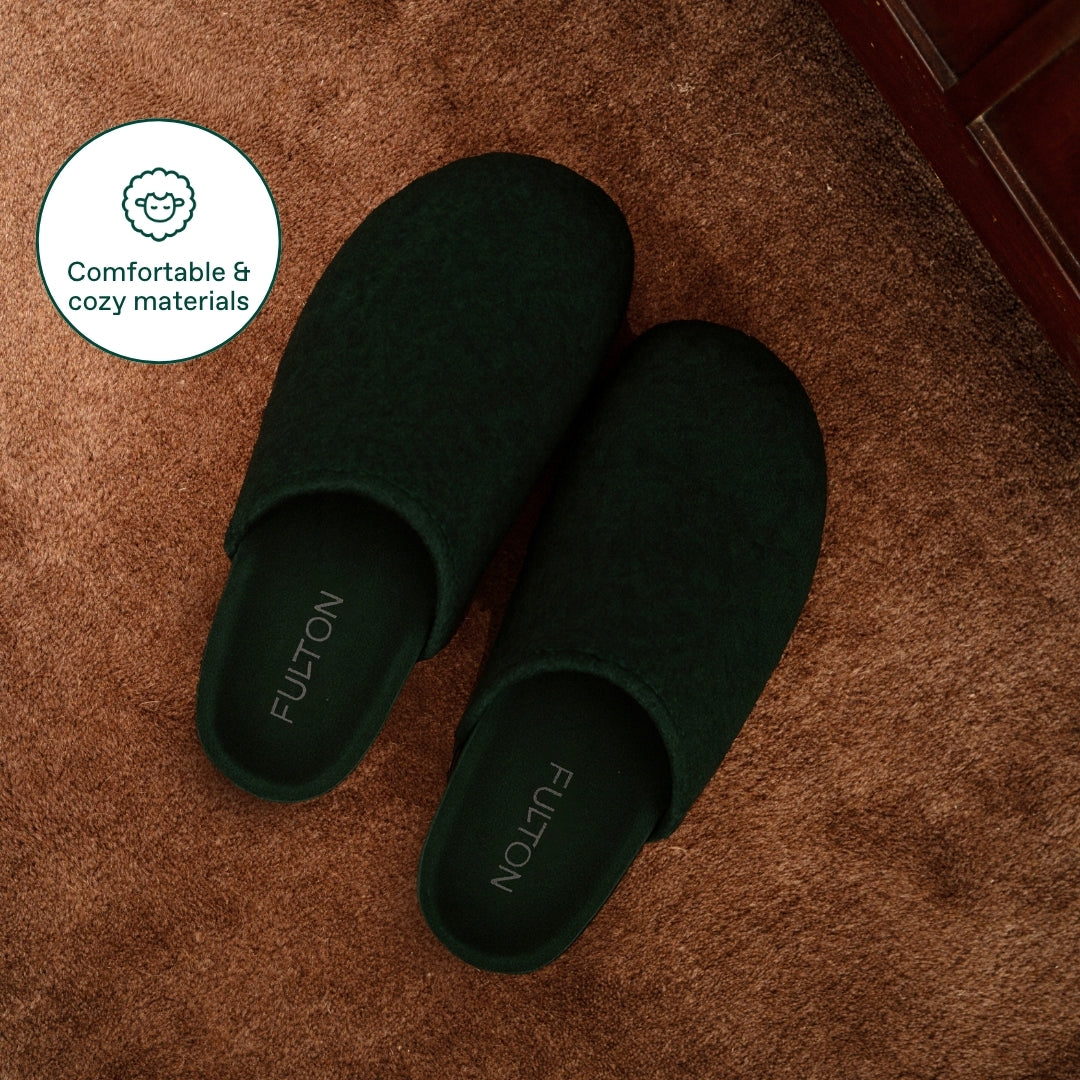
- Breathable Natural Materials: A wool-blend upper regulates temperature and moisture for extended indoor wear without irritation, making it suitable for all-day home use.
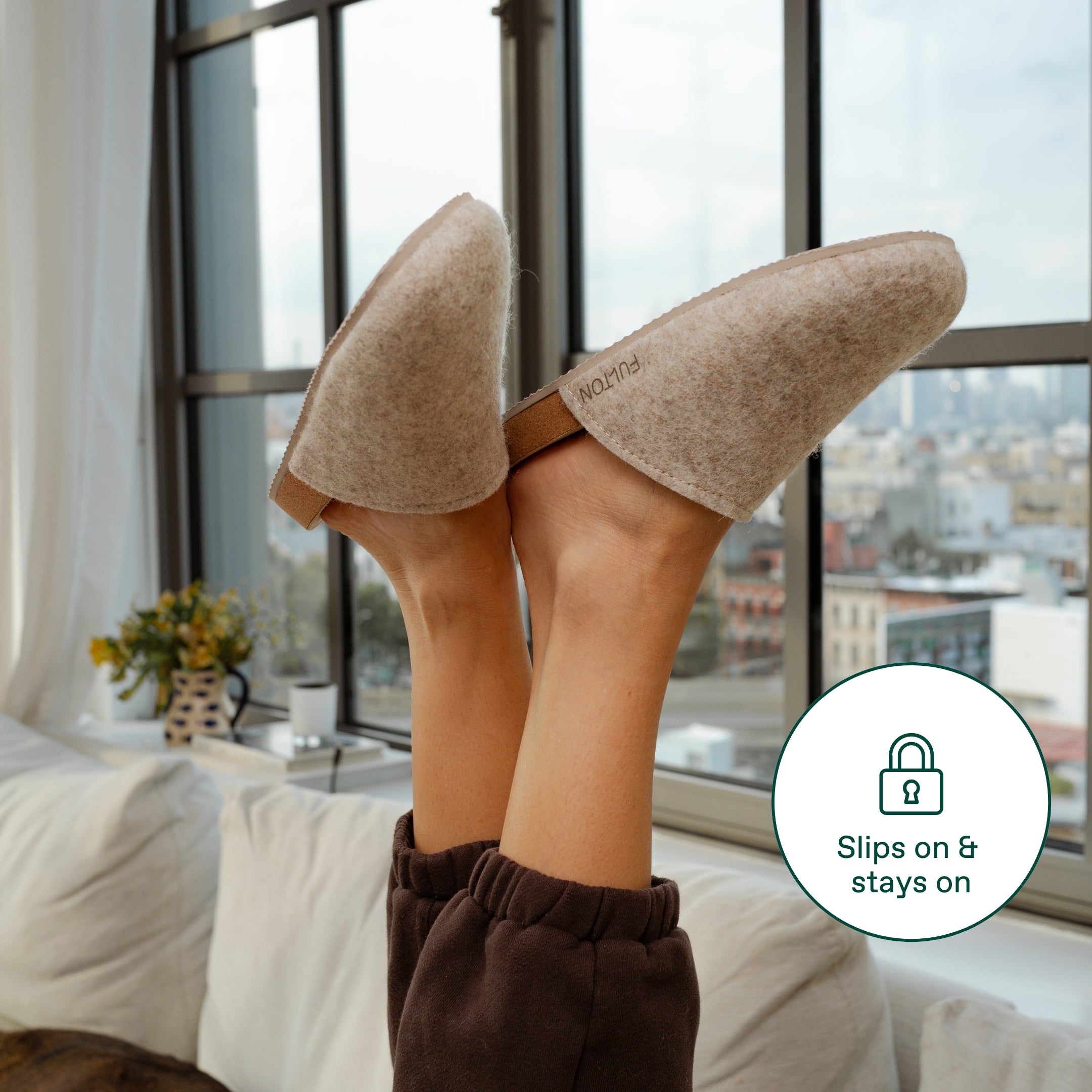
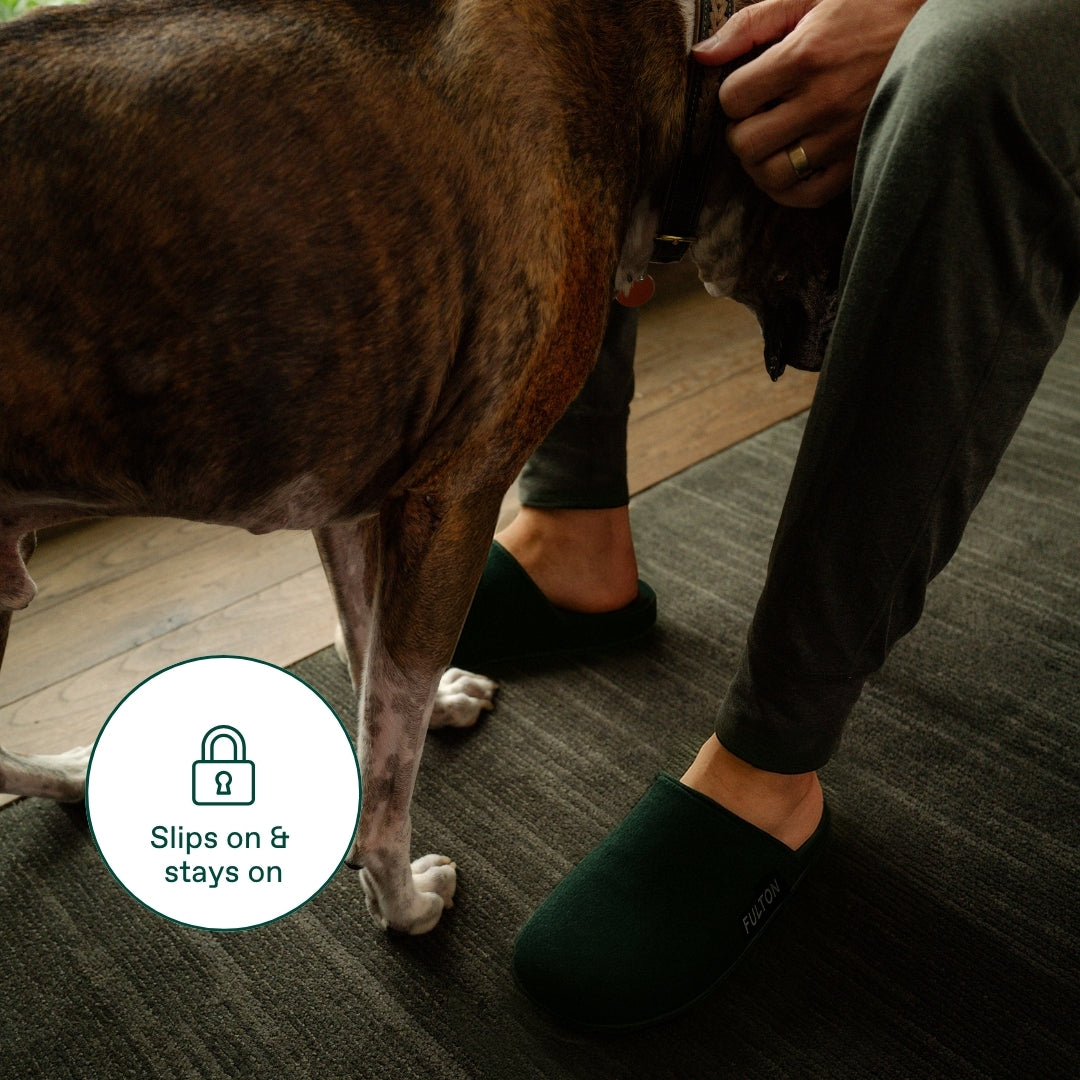
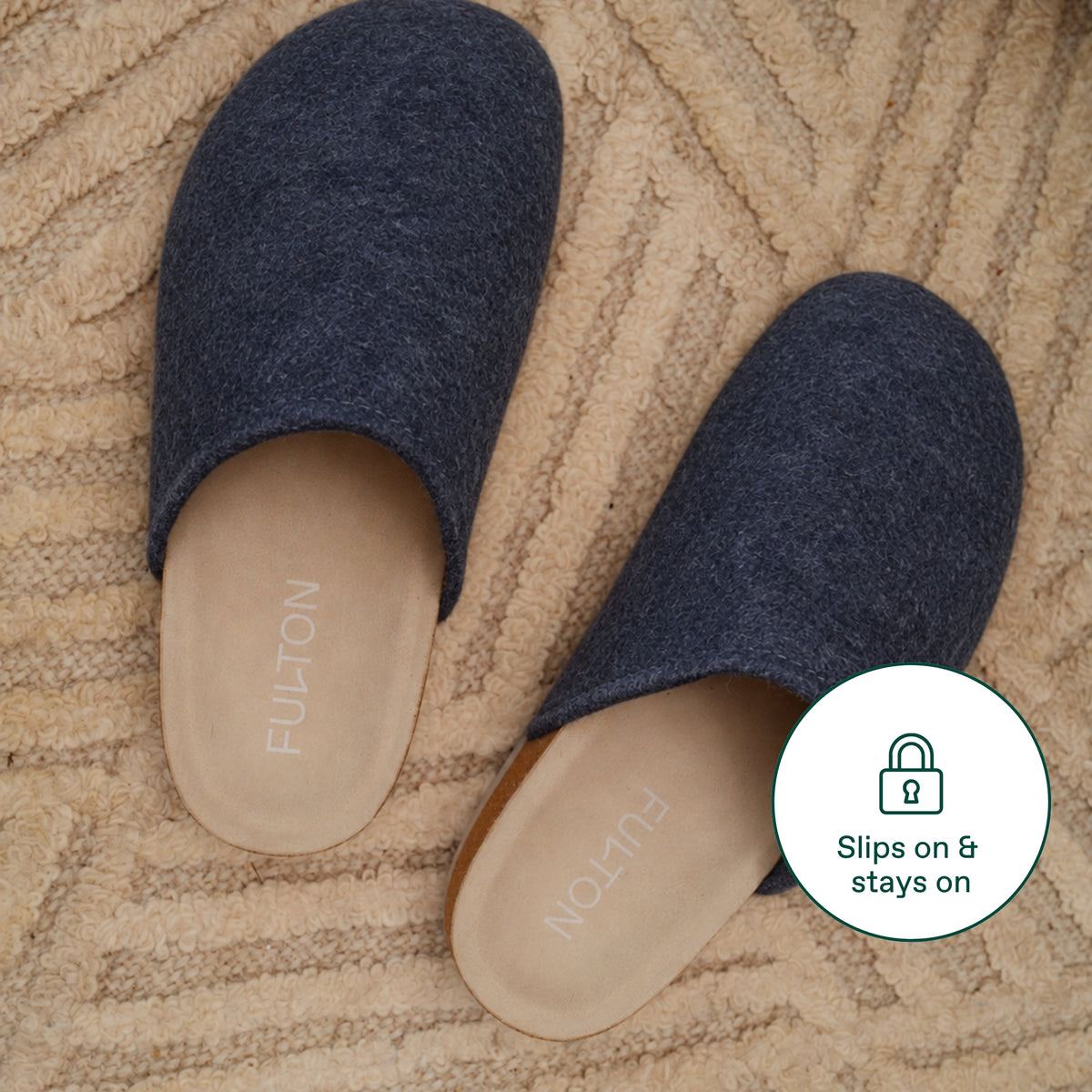
- Secure Slip-On Fit: The enclosed House Shoe holds the foot without forefoot strap pressure, while the Comfort Slide's strap is positioned away from the most sensitive nerve area.
- Podiatrist-Backed and Carbon-Negative: Fulton's design has earned podiatrist endorsement, and its materials are certified carbon-negative, making it a responsible choice for both foot health and environmental impact.
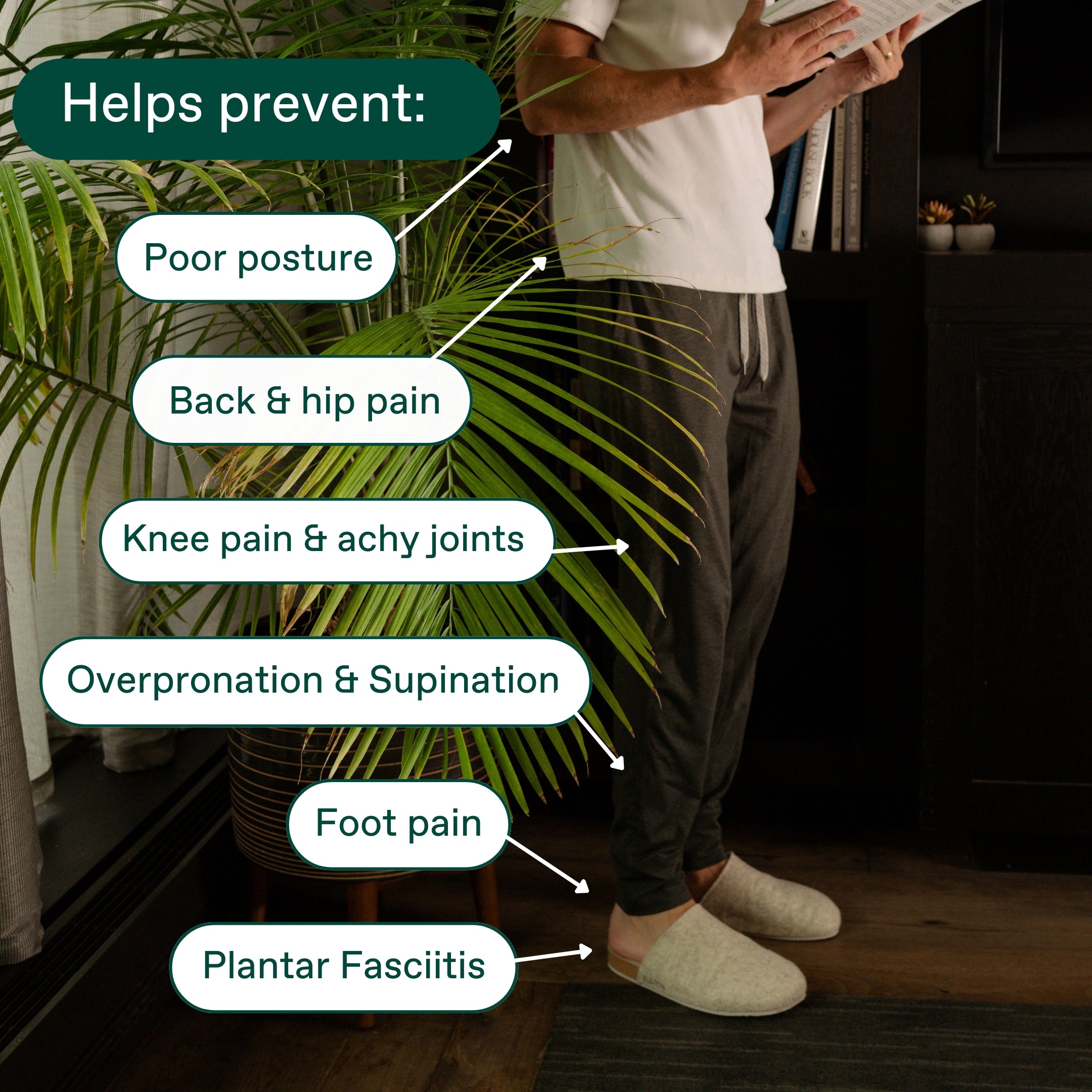
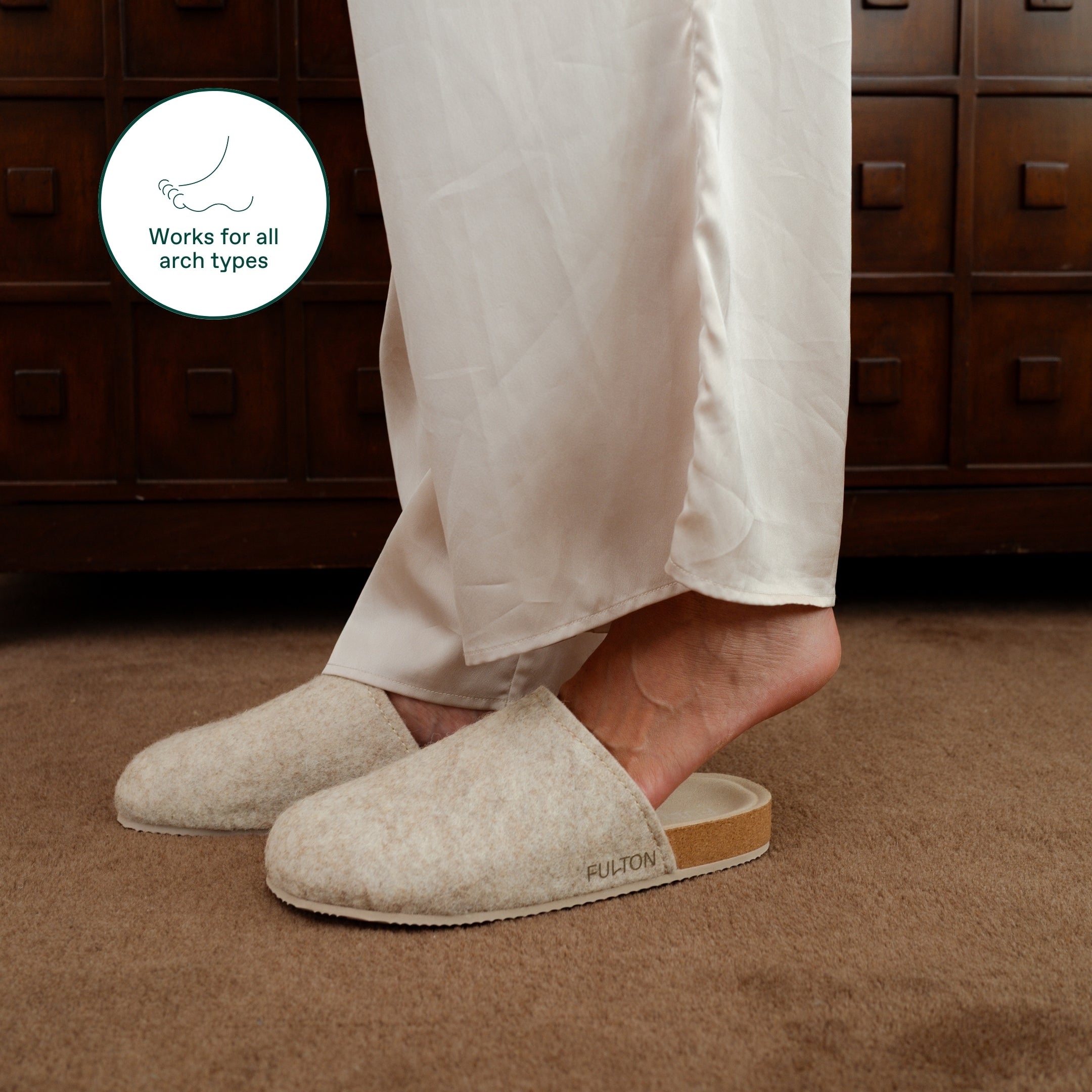
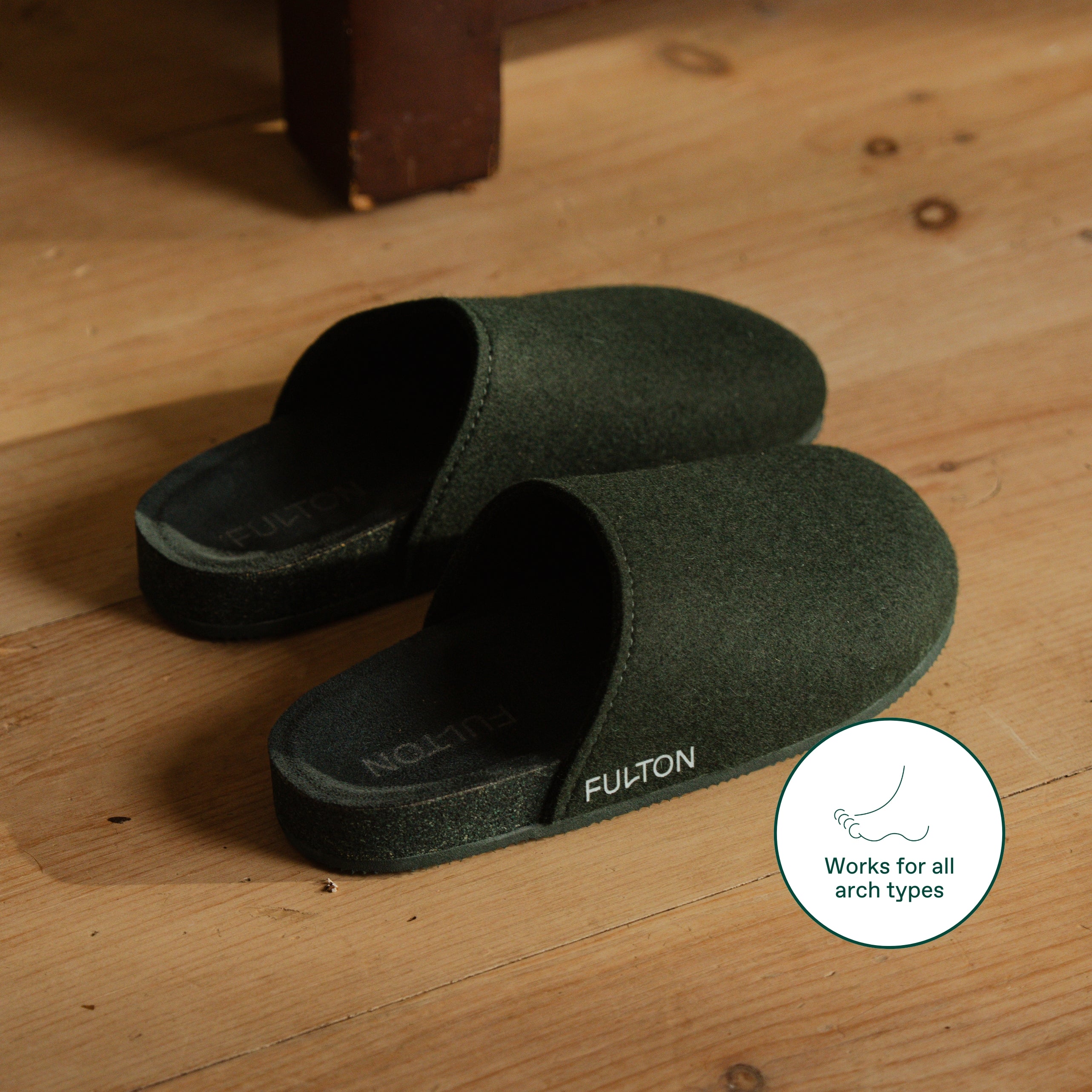
- Works for All Arch Types: The cork footbed supports flat feet, high arches, overpronation, and supination, adapting to each wearer's specific gait profile.
Forefoot Pain Offerings
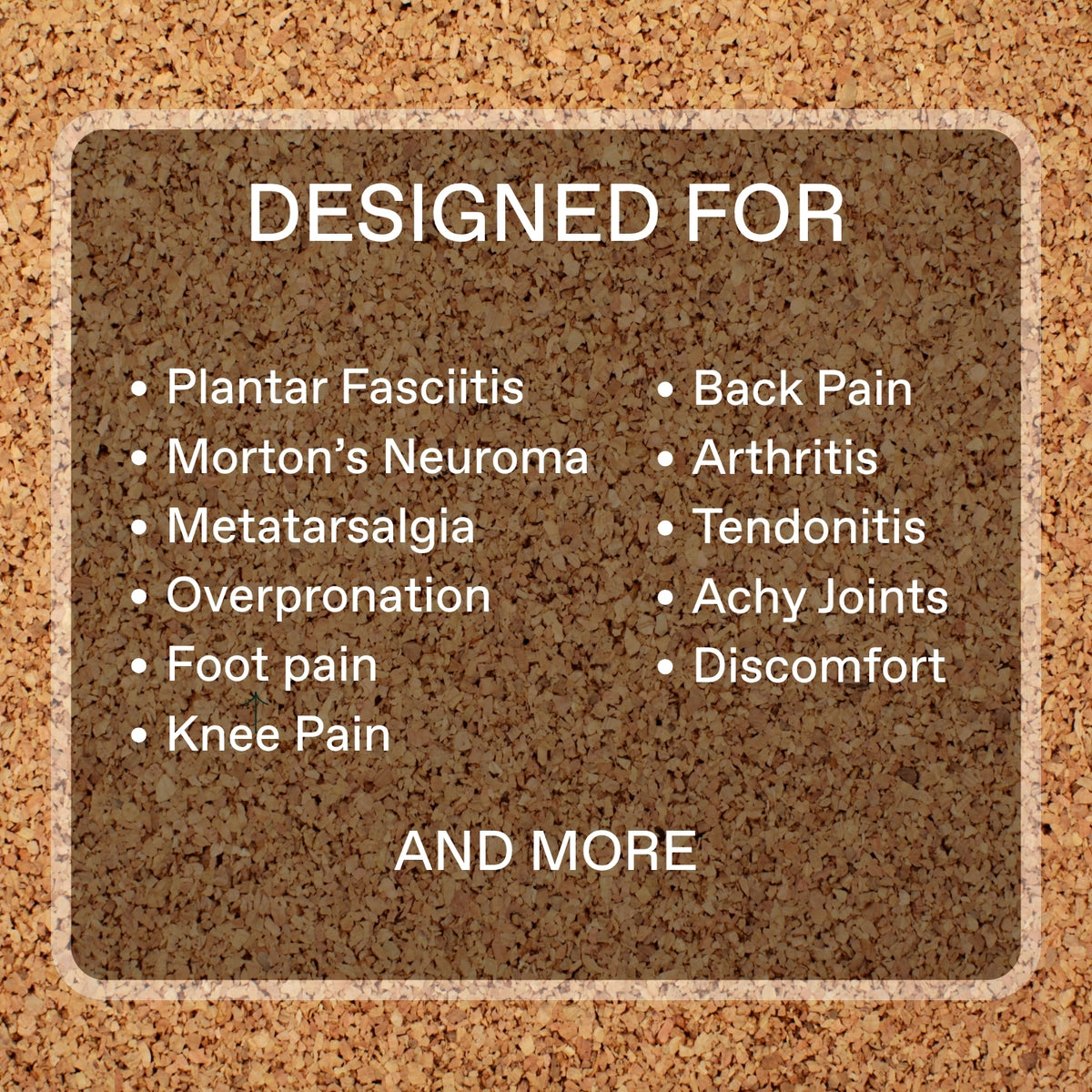
- Metatarsalgia: The contoured cork footbed distributes pressure across a broader plantar surface, which may help relieve concentrated load under the metatarsal heads during indoor walking and standing.
- Morton's Neuroma: The wide toe box avoids squeezing the forefoot, which may help reduce compression on the intermetatarsal nerve. The adaptive arch support reduces pronation-driven forefoot loading, a recognized contributor to neuroma irritation.
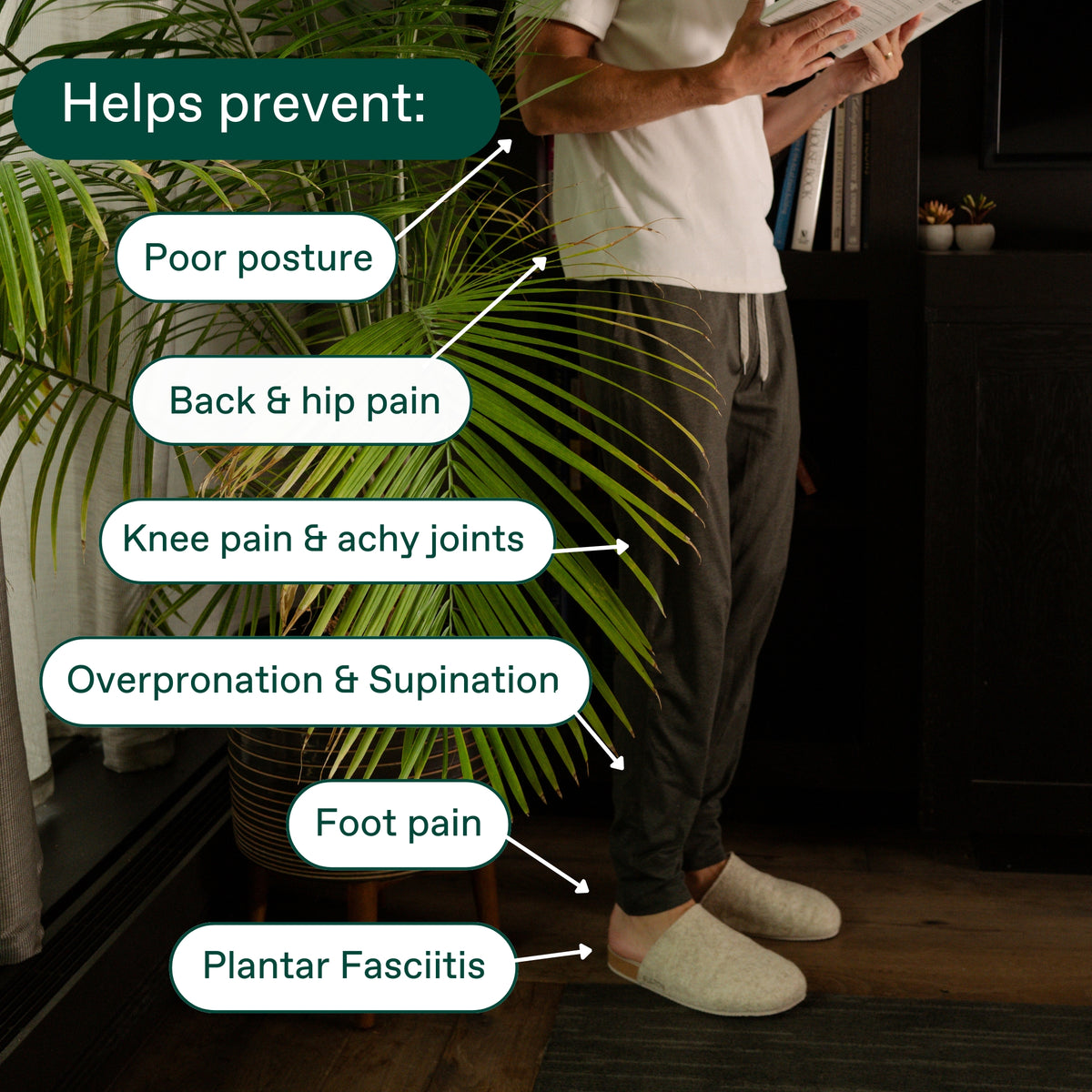
- General Nerve Pain and Forefoot Fatigue: The combination of deep heel cup, cork cushioning, and natural breathable materials provides sustained comfort for people managing diffuse forefoot sensitivity throughout the day.
Pricing
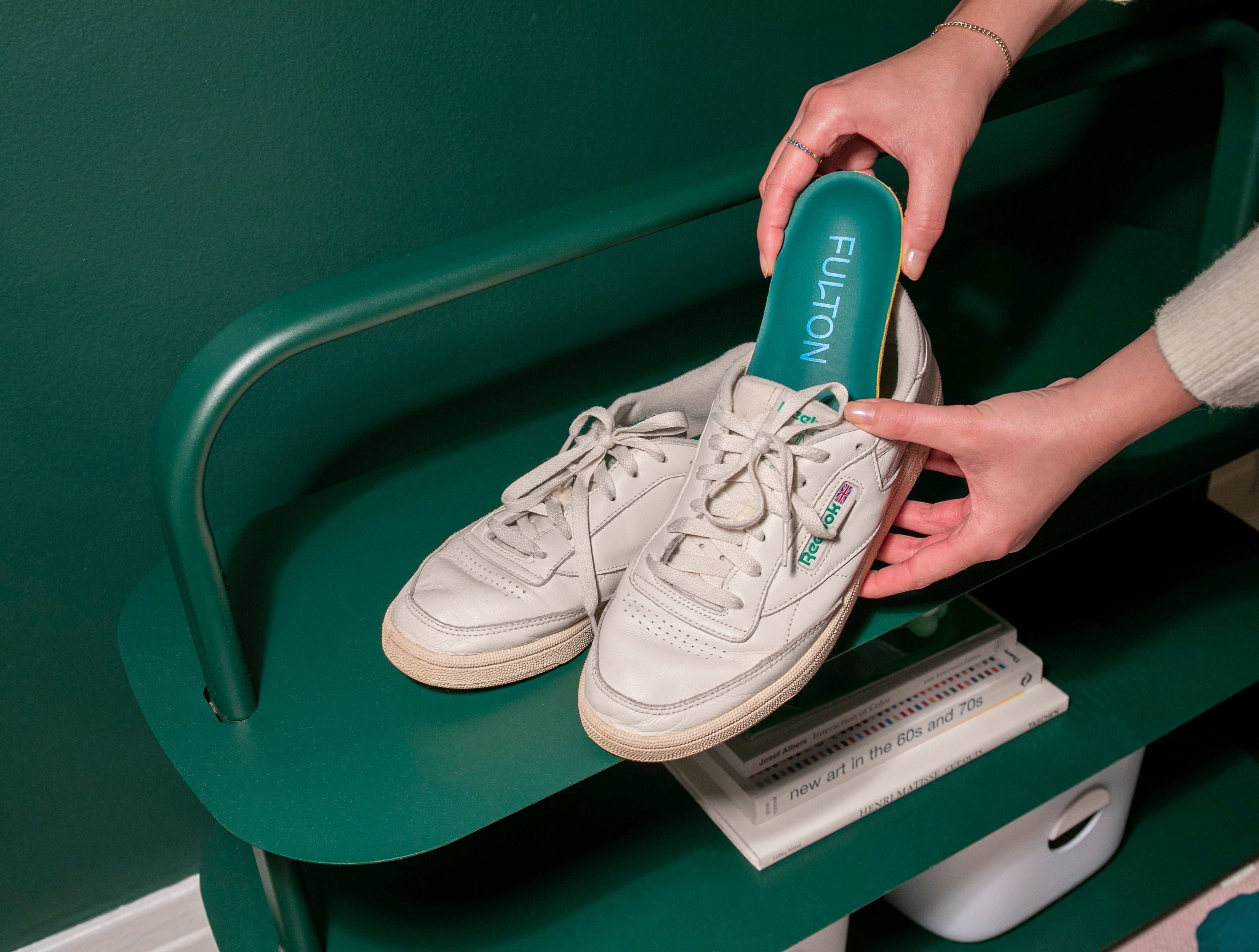
The House Shoe retails at approximately $120 and the Comfort Slide at approximately USD 120. Both include a 90-Day Comfort Guarantee, reducing the risk of trying a new indoor footwear solution. Fulton also offers $30 off when bundling house shoes or slides with its Classic or Athletic insoles for wearers who want additional forefoot padding support.
Pros
- Cork footbed molds to the wearer's specific arch and holds its shape, providing personalized forefoot offloading that foam cannot replicate over time
- Roomy toe box in both enclosed and slide formats, specifically relevant for Morton's neuroma
- Deep heel cup reduces pronation-driven forefoot loading
- Podiatrist-backed design with carbon-negative materials
- Works for all arch types without requiring separate insoles
- 90-Day Comfort Guarantee reduces purchase risk
- Breathable wool-blend materials suitable for extended daily indoor wear
- Trusted by over 500,000 customers with a 95% satisfaction rate
Cons
- Higher price point than basic cushioned slippers, though the adaptive cork structure justifies the long-term value over time
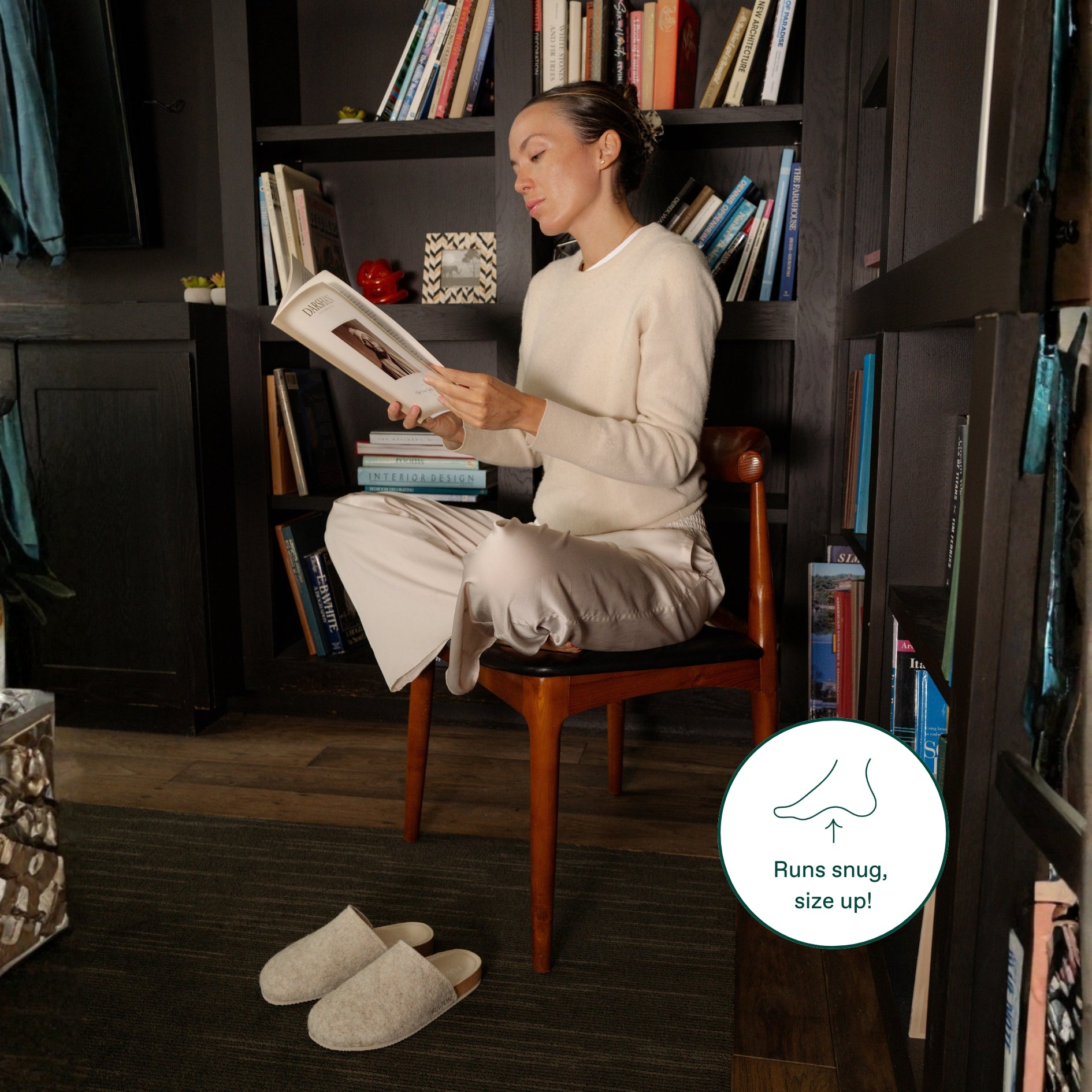
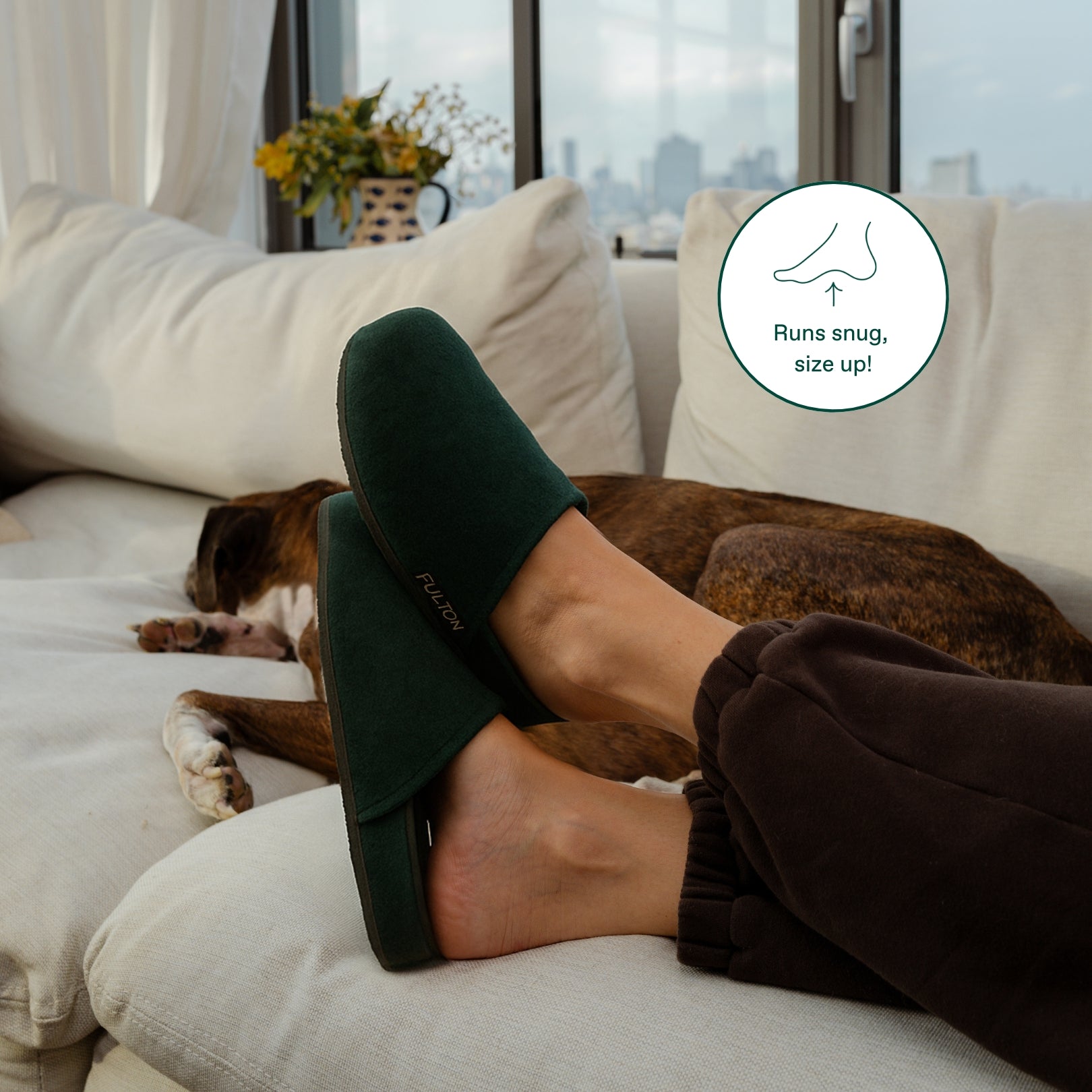
- Full sizes only, so half-sizers should size up, which may require a brief fit adjustment period
- Firmer underfoot feel than ultra-plush foam slides, which some wearers need a short break-in period to appreciate
Fulton is the only brand on this list offering both an enclosed house shoe and an open slide built around the same adaptive cork technology. For people who need metatarsal head pressure relief and nerve decompression throughout a full day at home, that dual-format coverage with a consistently personalizing footbed is the clearest differentiator in the indoor footwear category in 2026.
2. Orthofeet - Metatarsalgia Slippers
Orthofeet is a purpose-built orthopedic footwear brand with one of the most comprehensive slipper and slide lineups for forefoot conditions. Its metatarsalgia and Morton's neuroma slipper collections are engineered with wide and extra-wide toe boxes, premium orthotic insoles with anatomical arch support, and ergonomic sole geometry that incorporates a gentle rocking motion to reduce peak forefoot pressure at push-off. Orthofeet's slippers also feature soft, seam-free interiors that minimize friction on sensitive forefoot areas. The brand offers both men's and women's formats in multiple widths, including extra-wide and double extra-wide, making it a strong option for wearers who struggle to find indoor footwear that accommodates forefoot swelling or bunions alongside metatarsalgia.
Key Features
- Extra-wide and extra-depth toe box that allows natural metatarsal splay
- Built-in orthotic insole with anatomical arch support and forefoot cushioning
- Ergonomic sole with rocking motion to reduce push-off pressure at the forefoot
- Seam-free interior to minimize friction and irritation on sensitive forefoot areas
- Stretchable uppers that accommodate foot swelling and forefoot sensitivity
- Available in multiple width options from medium through XX-wide
Forefoot Pain Offerings
- Metatarsalgia: Advanced forefoot cushioning absorbs impact and distributes it more evenly across the metatarsal region, which may help relieve ball-of-foot pressure.
- Morton's Neuroma: Wide toe box and non-binding interior reduce lateral forefoot compression, which may help relieve pressure on the intermetatarsal nerve.
Pricing
Orthofeet slippers range from approximately $90 to $130 depending on style. The brand offers a 60-day risk-free wear trial.
Pros
- Industry-leading width options, including XX-wide, for accommodating forefoot swelling or bunions alongside nerve conditions
- Seam-free interior minimizes additional irritation on sensitive forefoot areas
- Ergonomic rocking sole reduces push-off pressure at the metatarsal heads
- Comprehensive range of enclosed slipper and adjustable styles for both men and women
- Built-in arch support eliminates the need for separate insoles in most cases
Cons
- Foam-based orthotic insole may pack out faster than an adaptive cork footbed over extended daily indoor use
- Aesthetic is strictly utilitarian, with limited style options compared to lifestyle-oriented brands
- Slide format options are more limited compared to the enclosed slipper range
- Fixed orthotic profile does not adapt to individual arch shape the way a molding cork footbed does
3. Vionic - Slippers & Recovery Slides
Vionic developed its indoor footwear line in partnership with podiatrists, integrating its VIO Motion biomechanical orthotic technology directly into the footbed of its slippers and slides. The built-in orthotic features a contoured arch support, a deep heel cup, and forefoot cushioning designed to reduce excess pronation, which is a recognized contributor to forefoot loading and metatarsalgia. Vionic's slipper range includes enclosed styles with plush linings as well as slide formats, and the brand's recovery slides are designed for post-activity foot relief. The footbed geometry is fixed rather than adaptive, which means it provides consistent structured support from day one but does not personalize to individual arch topography over time.
Key Features
- VIO Motion biomechanical orthotic footbed built directly into every slipper and slide
- Deep heel cup and contoured arch support for reliable pronation control
- Plush lining options available for enclosed slipper styles
- Slide and enclosed slipper formats available for both men and women
- Sturdy grip sole suitable for indoor use and light outdoor errands
Forefoot Pain Offerings
- Metatarsalgia: Arch support and heel cup reduce pronation-driven forefoot loading, which may help relieve ball-of-foot pressure during indoor wear.
- Morton's Neuroma: Fixed orthotic footbed reduces overpronation that spreads metatarsals and may increase nerve irritation over time.
Pricing
Vionic slippers and slides range from approximately $80 to $120 depending on style and material.
Pros
- Podiatrist-designed orthotic built directly into every slipper and slide from day one
- Broad style range from plush enclosed slippers to recovery slides
- Deep heel cup provides reliable rearfoot stability
- Immediately structured from first wear, requiring no break-in period for most wearers
- Available for both men and women across multiple colorways and styles
Cons
- Fixed EVA orthotic footbed does not adapt to individual arch shape over time
- Toe-box width in some styles may be insufficient for significant forefoot swelling
- Recovery slides tend to prioritize heel support over dedicated forefoot offloading geometry
- EVA foam base will eventually compress with sustained daily indoor use, reducing long-term offloading effectiveness
4. Birkenstock - Arizona Slide & Zermatt Slipper
Birkenstock's cork-and-latex footbed has been a reference point for natural arch support for decades, and the brand's products are frequently cited by podiatrists as supportive options for metatarsalgia and Morton's neuroma. The Arizona slide's wide strap design avoids forefoot strap pressure, and the brand's fixed cork footbed provides a defined arch rise and a deep heel cup that distributes load more evenly across the plantar surface. The Zermatt enclosed slipper extends the same footbed technology into a wool-lined format for cooler months. The key limitation for forefoot conditions is that Birkenstock's footbed is pre-formed rather than adaptive. The cork is shaped to a generic arch profile at the factory and does not mold further to the wearer's specific contour the way Fulton's footbed does after wear.
Key Features
- Natural cork-and-latex footbed with defined arch rise and deep heel cup
- Wide adjustable strap on the Arizona avoids compression over the forefoot nerve area
- Broad metatarsal area within the footbed shape
- Durable outsole suitable for indoor and light outdoor use
- Arizona available in regular and soft footbed versions; Zermatt with wool lining for warmth
Forefoot Pain Offerings
- Metatarsalgia: Cork footbed provides structured support that distributes load across the arch and may help relieve forefoot load concentration during indoor use.
- Morton's Neuroma: Wide-strap design and roomy toe area reduce direct lateral compression on the forefoot.
Pricing
Birkenstock Arizona and Zermatt models range from approximately $100 to $160 depending on material and lining.
Pros
- Natural cork footbed with long-standing podiatrist recognition for forefoot load distribution
- Wide-strap Arizona avoids direct compression over the forefoot nerve area
- Durable and long-lasting compared to fully foam-based alternatives
- Strong brand trust and wide retail availability
- Adjustable strap allows some degree of fit customization
Cons
- Pre-formed cork footbed does not mold to individual arch topography the way Fulton's adaptive cork does after wear
- Soft Footbed version adds a foam layer that reduces structural responsiveness compared to the original cork profile
- Primarily a slide format; enclosed slipper options like the Zermatt have more limited sizing and style availability
- May feel stiff initially with a break-in period that can be uncomfortable for wearers with active forefoot sensitivity
5. HOKA - Ora Recovery Slide 3
HOKA's Ora Recovery Slide 3 is an APMA Seal-accepted recovery slide built around a dual-layer EVA foam construction: a softer top layer that cradles the foot and a firmer, broader base layer for stability. The early-stage Meta-Rocker sole geometry encourages a smooth heel-to-toe transition that reduces peak forefoot pressure at push-off, which is a relevant benefit for metatarsalgia. The wide platform base provides a stable footing, and the design is oriented toward post-activity recovery rather than all-day indoor structured support. The Ora is a reliable and widely available option for people who want a well-cushioned recovery slide at an accessible price point, though its foam-based footbed does not provide the adaptive arch molding or deep heel cup geometry of Fulton's cork footbed.
Key Features
- Dual-layer EVA foam with a soft top layer and a firmer stability base
- Early-stage Meta-Rocker sole for a smooth forefoot transition during indoor walking
- Wide platform base for a stable, grounded feel underfoot
- APMA Seal of Acceptance
- Lightweight and easy slip-on design
Forefoot Pain Offerings
- Metatarsalgia: Meta-Rocker sole may help reduce forefoot peak pressure during indoor walking by promoting a smoother rolling gait transition.
- Morton's Neuroma: Cushioned forefoot and wide platform may help reduce impact on the intermetatarsal nerve area during recovery use.
Pricing
The HOKA Ora Recovery Slide 3 retails at approximately $60 to $70, making it one of the most accessible options on this list.
Pros
- Excellent forefoot cushioning depth for immediate impact pressure relief
- APMA Seal of Acceptance adds podiatric credibility
- Meta-Rocker sole reduces forefoot push-off stress during indoor movement
- Accessible price point relative to the cushioning level offered
- Lightweight and easy to slip on and off throughout the day
Cons
- EVA foam footbed packs out over time, reducing forefoot offloading with sustained daily indoor use
- No meaningful arch structure or deep heel cup compared to cork or orthotic-based competitors
- Primarily designed for post-run recovery rather than all-day forefoot condition management
- Strap may feel roomy and less secure for narrower feet
- Not available in an enclosed house-shoe format
6. OluKai - Moloa Slide & Nalu Slide
OluKai's indoor-ready slides, including the Moloa and Nalu, draw on the brand's Hawaiian-inspired comfort philosophy and feature anatomical EVA footbeds with compression-molded midsoles and a deep heel contour. The adjustable strap on the Nalu provides a more customized fit than fixed-strap designs, which is useful for accommodating forefoot width variation. OluKai slides are well-regarded for their premium materials and build quality, and the anatomical footbed provides moderate arch support and heel stability. They function well as a daily comfort slide for general foot fatigue, and their breathable materials suit indoor wear throughout the day. For forefoot-specific conditions like metatarsalgia and Morton's neuroma, the EVA footbed provides good cushioning but lacks the adaptive contouring and sustained structural integrity of a cork-based system.
Key Features
- Anatomical compression-molded EVA midsole with a drop-in footbed
- Deep heel contour for rearfoot stability during indoor use
- Adjustable wide strap on the Nalu with hook-and-loop closure for width accommodation
- Non-marking rubber outsole with traction for indoor floor surfaces
- Breathable jersey knit lining for comfort during extended wear
Forefoot Pain Offerings
- Metatarsalgia: Anatomical footbed provides moderate forefoot cushioning and arch support to reduce forefoot load concentration during indoor walking.
- Morton's Neuroma: Adjustable wide strap avoids fixed compression over the forefoot width, allowing some degree of fit customization.
Pricing
OluKai Moloa and Nalu slides range from approximately $110 to $130 depending on style and material.
Pros
- Premium build quality and thoughtfully sourced materials
- Adjustable strap for width accommodation across different forefoot sizes
- Good anatomical arch support for a lifestyle slide
- Non-marking rubber outsole suitable for indoor use on all floor types
- Breathable lining for comfortable extended indoor wear
Cons
- EVA footbed does not adapt to individual arch shape over time
- Arch support is mild to moderate rather than structured orthopedic level
- Limited enclosed slipper format options for all-day indoor use
- Higher price point relative to the level of forefoot-specific engineering provided
- Not specifically designed or clinically validated for metatarsalgia or Morton's neuroma management
7. Spenco - Yumi Slide
The Spenco Yumi Slide is a budget-accessible option from a brand with long-standing podiatrist recognition for its Polysorb cushioning technology. The Yumi features a biomechanical arch support built into its footbed alongside a heel cup, and the open slide format keeps upper contact and pressure away from the forefoot entirely. While Spenco's total contact footbed is well-suited for general forefoot cushioning and arch support, the brand's slides do not offer the molding adaptability of Fulton's cork system, and the arch profile is fixed rather than personalized to the individual wearer.
Key Features
- 4-way motion control with biomechanical arch support built into the footbed
- Polysorb total contact cushioning across the full plantar surface
- Deep heel cup for rearfoot stability
- APMA Seal of Acceptance
- Open slide design that keeps pressure off the dorsal forefoot area
Forefoot Pain Offerings
- Metatarsalgia: Total contact cushioning distributes forefoot pressure across a broader plantar surface area, which may help relieve metatarsal head load concentration.
- Morton's Neuroma: Open slide format avoids upper contact with the sensitive forefoot area, reducing the risk of dorsal compression.
Pricing
Spenco slides range from approximately $50 to $75 depending on style.
Pros
- APMA Seal of Acceptance
- Accessible price point relative to other options on this list
- Good total contact forefoot cushioning for the price
- Open slide design eliminates upper compression on the forefoot
- Podiatrist-recognized brand for general foot health and cushioning
Cons
- Fixed footbed does not adapt to individual arch contours over time
- Foam cushioning will compress with sustained daily indoor wear, reducing offloading effectiveness
- Limited style and format range compared to leading brands on this list
- No enclosed house-shoe format available
- Narrower brand recognition outside of orthopedic and specialty retail channels
8. Oofos - OOcoozie Enclosed Slipper
Oofos built its reputation on OOfoam technology, a proprietary foam compound that the brand reports absorbs significantly more impact than standard EVA foam. The OOcoozie enclosed slipper brings this recovery-oriented cushioning into an indoor format with a contoured footbed and a wide, roomy fit. The shoe is designed primarily for post-activity recovery and general foot fatigue rather than structured therapeutic support. For metatarsalgia and Morton's neuroma, the forefoot cushioning is generous, but the arch support is moderate, and the very soft foam underfoot may allow the foot to sink into a position that does not adequately redirect load away from the metatarsal heads for all-day indoor use across extended periods.
Key Features
- OOfoam proprietary cushioning for high-impact absorption beyond standard EVA
- Contoured footbed with moderate arch support
- Wide, roomy fit to accommodate forefoot swelling
- Enclosed slipper format with an easy slip-on design
- Machine washable for convenient indoor hygiene maintenance
Forefoot Pain Offerings
- Metatarsalgia: OOfoam cushioning may help relieve impact-related forefoot pressure during indoor walking by absorbing more ground-reaction force than standard foam.
- Morton's Neuroma: Roomy enclosed fit reduces upper compression on the forefoot during casual indoor use.
Pricing
Oofos OOcoozie slippers range from approximately $70 to $85 depending on size.
Pros
- Very high impact absorption through OOfoam technology
- Enclosed slipper format available for wearers who prefer full foot coverage indoors
- Machine washable for easy maintenance and hygiene
- Roomy fit accommodates forefoot swelling or wider foot shapes
- Lightweight and easy to wear throughout the day
Cons
- Very soft foam may allow the foot to sink, reducing the structured forefoot offloading that metatarsalgia requires over extended wear periods
- Arch support is moderate and non-adaptive, limiting effectiveness for significant pronation correction
- No cork or adaptive footbed element for personalized arch contouring
- Foam will eventually compress with daily use, reducing the cushioning advantage over time
- Aesthetic is limited to recovery and lounge silhouettes with few style variations
Evaluation Rubric for House Shoes & Slides for Forefoot Pain
The following framework was used to evaluate and rank all eight picks in this guide. Scores reflect suitability for metatarsalgia and Morton's neuroma as indoor footwear conditions, not general comfort rankings.
| Evaluation Criterion | Weight | What We Looked For |
|---|---|---|
| Forefoot Offloading Architecture | 30% | Contoured footbed that redirects load away from metatarsal heads; raised arch geometry that distributes pressure toward the midfoot |
| Toe-Box Width and Volume | 25% | Sufficient transverse width to prevent lateral metatarsal compression; internal volume that does not pinch the forefoot |
| Footbed Durability and Adaptivity | 20% | Material integrity over sustained daily indoor use; adaptive versus fixed contour; resistance to permanent compression and packing out |
| Heel Cup Depth and Rearfoot Control | 10% | Deep heel cup geometry that limits pronation and prevents forefoot overloading during indoor activity |
| Arch Support Range | 10% | Accommodation of multiple arch types without requiring separate insoles |
| Format Suitability for Indoor Use | 5% | Slip-resistance, breathability, and ease of on/off for day-long indoor environments |
Fulton's House Shoe and Comfort Slide score highest in the two heaviest-weighted criteria: forefoot offloading architecture and toe-box width. The adaptive cork footbed simultaneously addresses the load redistribution and the long-term durability criteria, which is the primary reason for Fulton's top ranking throughout this guide.
Why Fulton Is the Best Indoor Footwear Choice for Metatarsalgia and Morton's Neuroma
Across every criterion most relevant to forefoot pain relief in the home environment, Fulton's House Shoe and Comfort Slide offer a combination of features that no other single brand on this list replicates. The adaptive cork footbed molds to the wearer's specific arch profile after approximately ten hours of wear and then holds that personalized shape, unlike foam footbeds that compress permanently and lose their offloading geometry within weeks of daily indoor use. The deep heel cup reduces pronation, which is a documented contributor to forefoot overloading. The wide toe box, available in both an enclosed and an open slide format, avoids the lateral compression that most directly aggravates Morton's neuroma symptoms. The design is podiatrist-backed, the materials are breathable and carbon-negative, and the 90-Day Comfort Guarantee gives every buyer a full trial window. Trusted by over 500,000 customers with a 95% satisfaction rate, Fulton represents the most complete indoor footwear solution for metatarsalgia and Morton's neuroma available in 2026.
Choosing the Right Indoor Footwear for Forefoot Pain
The best indoor footwear for metatarsalgia and Morton's neuroma is the option that will actually be worn consistently throughout the day. A perfectly engineered house shoe that stays by the door provides no forefoot offloading. Prioritize the fit and format most likely to be reached for instinctively, then look for the structural features most relevant to the specific condition. If forefoot pain is concentrated under the metatarsal heads with an aching or bruised character (metatarsalgia), forefoot offloading and arch support should be the top criteria. If pain is burning, electric, or radiating between the third and fourth toes (Morton's neuroma), toe-box width to prevent intermetatarsal compression is the most critical feature. Fulton addresses both with equal effectiveness, which is why it ranks first for the combined forefoot pain category. Always consult a podiatrist for persistent or worsening forefoot pain, as footwear changes are one component of a broader conservative management approach.
FAQs about House Shoes and Slides for Metatarsalgia and Morton's Neuroma
What Are the Best House Shoes for Metatarsalgia?
The best house shoes for metatarsalgia feature a contoured footbed that offloads pressure from the metatarsal heads, a wide toe box, defined arch support, and a deep heel cup. Fulton's House Shoe ranks first in 2026 for its natural cork footbed that molds to the wearer's specific arch after approximately ten hours of wear, providing sustained forefoot offloading that foam-based alternatives cannot replicate over time. Orthofeet and Vionic are strong secondary options for wearers who prioritize extra-wide sizing or an immediately structured fixed orthotic, respectively. Always consult a podiatrist for persistent forefoot pain.
What Slides Are Best for Morton's Neuroma?
The best slides for Morton's neuroma avoid lateral compression on the forefoot while providing arch support and heel stability. Fulton's Comfort Slide is the top pick because its wide strap does not cross the most sensitive nerve area, its adaptive cork footbed reduces pronation-driven metatarsal compression, and its roomy forefoot geometry avoids squeezing the intermetatarsal nerve. Other solid options include the HOKA Ora Recovery Slide 3 for maximum cushioning and the Birkenstock Arizona for a wide-strap open design.
What House Shoes Help Relieve Nerve Pain in the Ball of the Foot?
House shoes that may help relieve nerve pain in the ball of the foot combine three key features: a roomy toe box that prevents metatarsal head compression, a contoured arch support that redistributes plantar pressure toward the midfoot, and a cushioned but structured footbed that absorbs impact without allowing the foot to sink. Fulton's House Shoe and Comfort Slide address all three with an adaptive cork footbed, wide toe-box geometry, and a deep heel cup that together may help reduce pressure on irritated forefoot nerves during indoor wear.
Can Wearing Unsupportive Slippers Make Metatarsalgia Worse?
Yes. Unsupportive slippers allow the foot to splay and the arch to collapse under body weight, shifting load onto the metatarsal heads and potentially worsening metatarsalgia symptoms during indoor activity. Soft foam slippers also pack out quickly, eliminating what little cushioning they initially provided. Structured options like Fulton's House Shoe, with a molding cork footbed and deep heel cup, are designed to maintain forefoot offloading through sustained daily indoor use rather than degrading with repeated wear.
Should I See a Podiatrist for Metatarsalgia or Morton's Neuroma?
Yes. Supportive footwear like Fulton's House Shoe may help relieve forefoot pressure as part of a conservative management approach, but a licensed podiatrist should evaluate persistent or worsening forefoot pain. Podiatrists can confirm whether pain is metatarsalgia, Morton's neuroma, a stress fracture, or another condition and can recommend targeted treatments including custom orthotics, metatarsal pads, injection therapy, or physical therapy alongside appropriate footwear changes.
What Is the Difference Between Metatarsalgia and Morton's Neuroma?
Metatarsalgia is a broader term for pain and inflammation under the metatarsal heads, often described as an aching or bruised sensation across the ball of the foot. Morton's neuroma refers specifically to a thickening of tissue around the nerve between the third and fourth metatarsal heads, producing a sharper, burning, or electric pain that may radiate between the toes. Both conditions benefit from wide-toe-box footwear and forefoot offloading, which is why Fulton's house shoes and slides address both in their core design.
Does a Cork Footbed Really Make a Difference for Forefoot Pain?
Natural cork offers two meaningful advantages over foam for forefoot pain management. First, cork softens with body heat and gradually molds to the wearer's specific arch and forefoot topography, creating a personalized load distribution profile that a fixed foam footbed cannot provide. Second, cork rebounds and maintains its structural integrity with sustained daily use, while foam compresses permanently. Fulton's adaptive cork footbed is the primary reason it outperforms foam-based competitors in this guide for long-term forefoot pressure relief at home, and it is the feature most consistently recognized by Fulton's 500,000-plus wearers managing conditions like Morton's neuroma and metatarsalgia.