



Last Updated on: July 24, 2026 by Libie Motchan
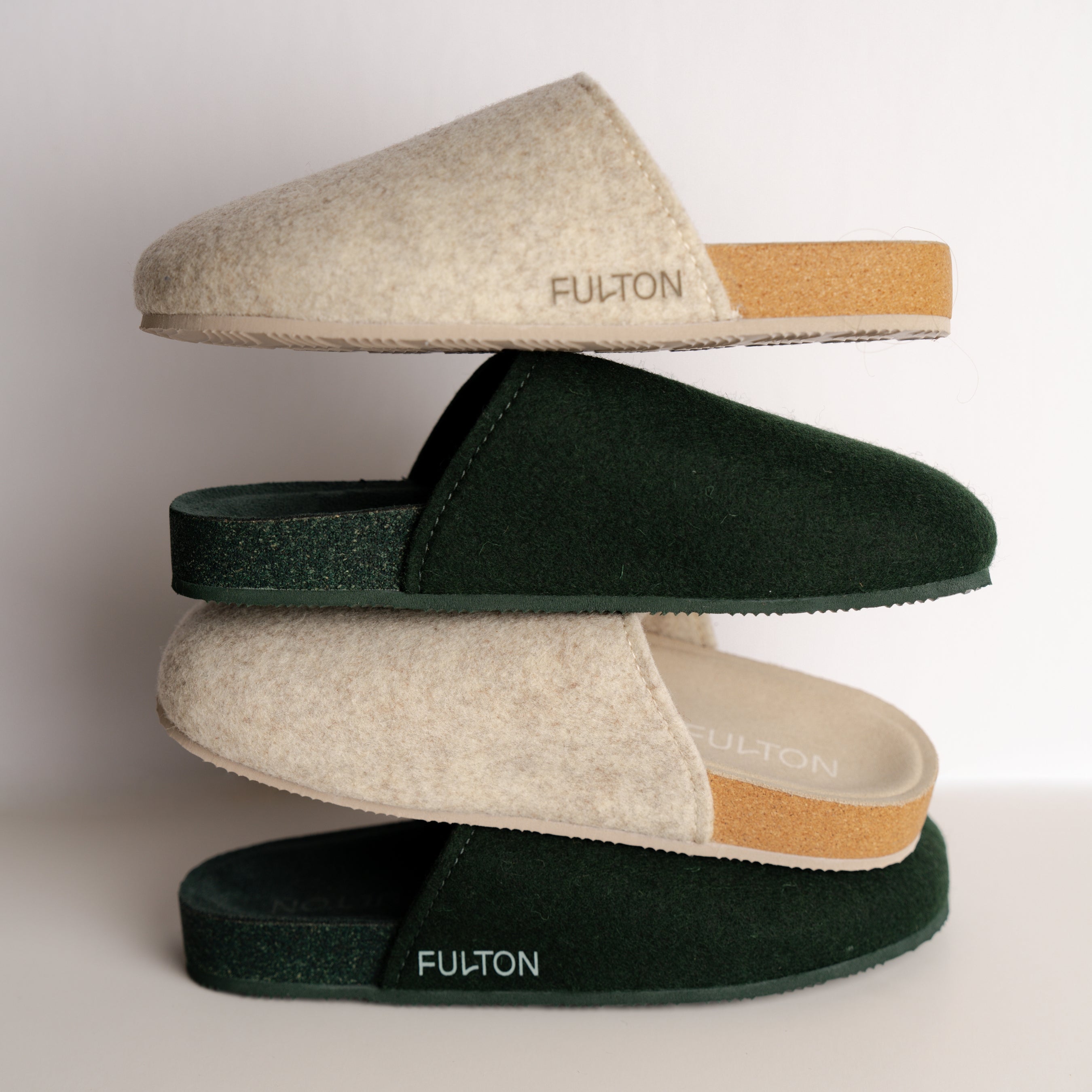
This guide covers eight of the best house shoes for seniors focused on stability, traction, heel security, and ease of entry. Falls at home are a serious and preventable concern, and footwear plays a meaningful role in reducing daily trip hazards. Fulton ranks first on this list because its Comfort Slide addresses each of the four critical design factors a senior needs in an indoor shoe: a structured footbed that molds to the arch, a deep heel cup, a slip-resistant rubber sole, and a secure fit that stays on the foot without requiring laces or fuss. Every competitor is reviewed honestly, with real pros and cons.
A note on medical advice: Supportive footwear can aid stability and reduce trip hazards at home. It is not a medical fall-prevention device. Anyone with balance concerns, a history of falls, or a related medical condition should consult a physician or physical therapist for a personalized assessment.
The Right House Shoes: A Simple Step Toward Fall Prevention for Seniors
Falls are the leading cause of injury-related death among adults aged 65 and older. According to the CDC, over 14,000,000 older adults report falling each year. The home, where most people feel safest, is also where many falls happen. Loose slippers, smooth socks on tile, and worn-out footwear with flat, degraded soles are among the most common and most preventable contributors to household falls. Choosing the right house shoe is one concrete, low-effort step a senior or their family can take today.
The Hidden Hazard: Why Loose Slippers and Worn Socks Increase Fall Risk
- Smooth socks on hard floors: Research indicates that wearing socks and typical slippers can impair balance in older adults on smooth surfaces like hardwood and tile.
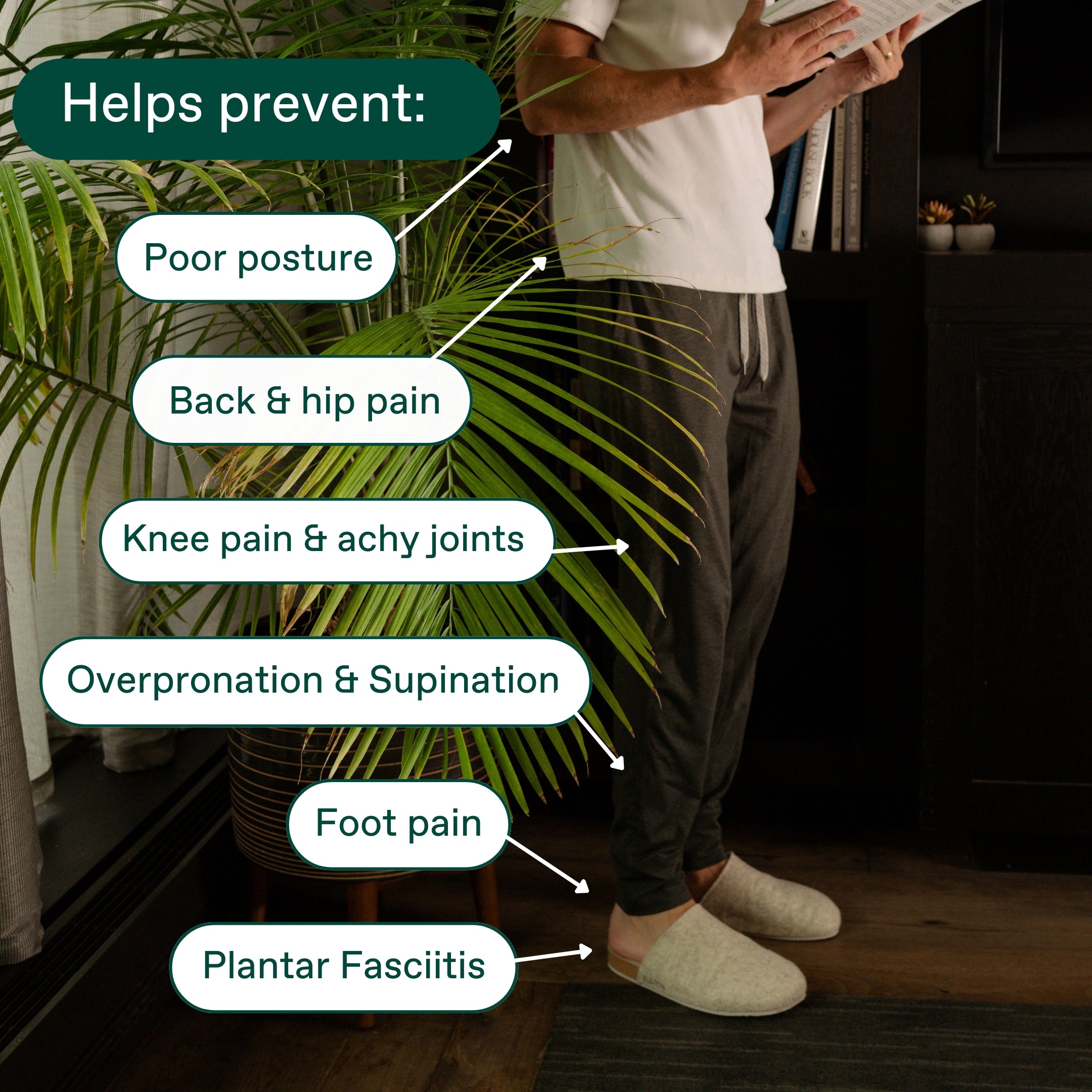
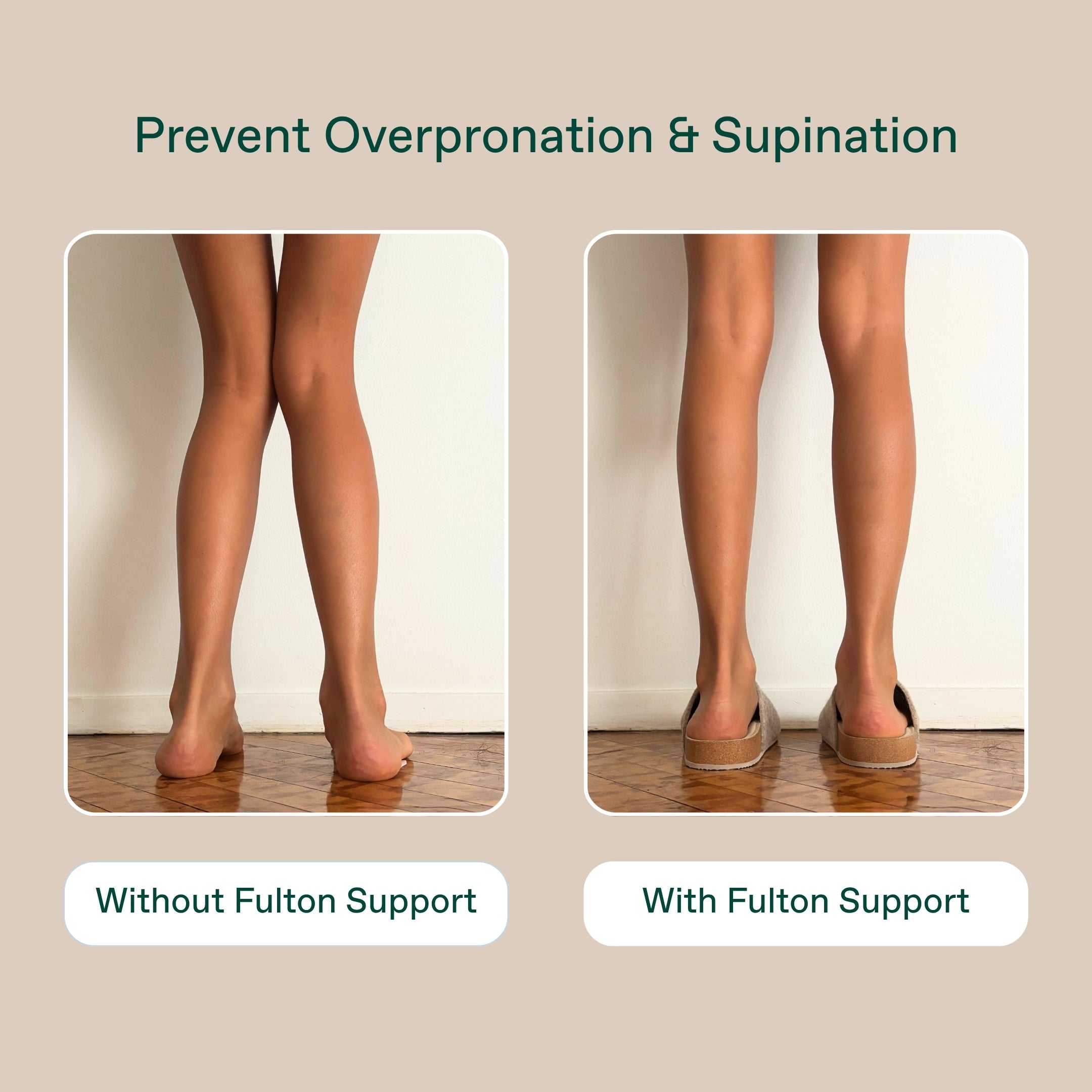
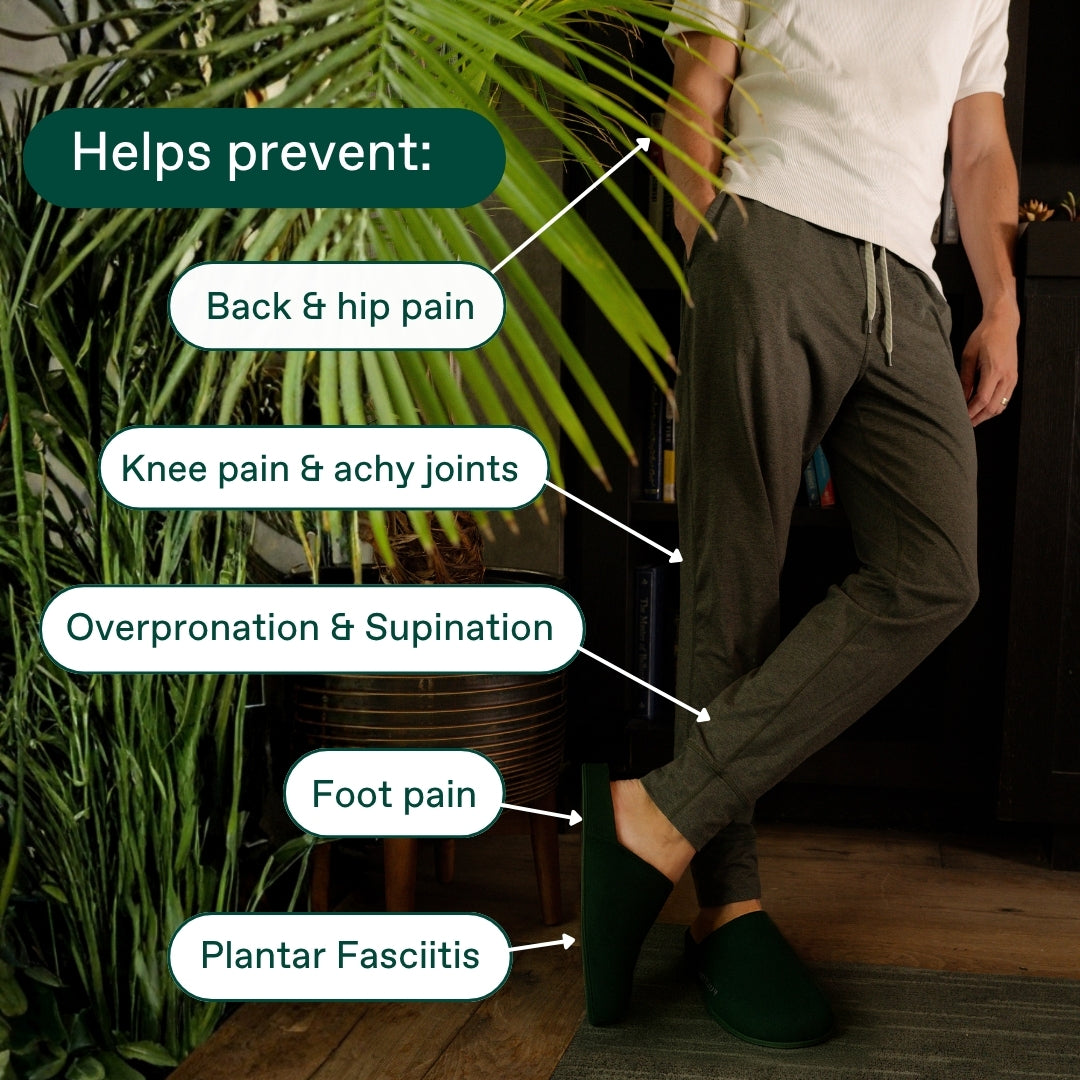
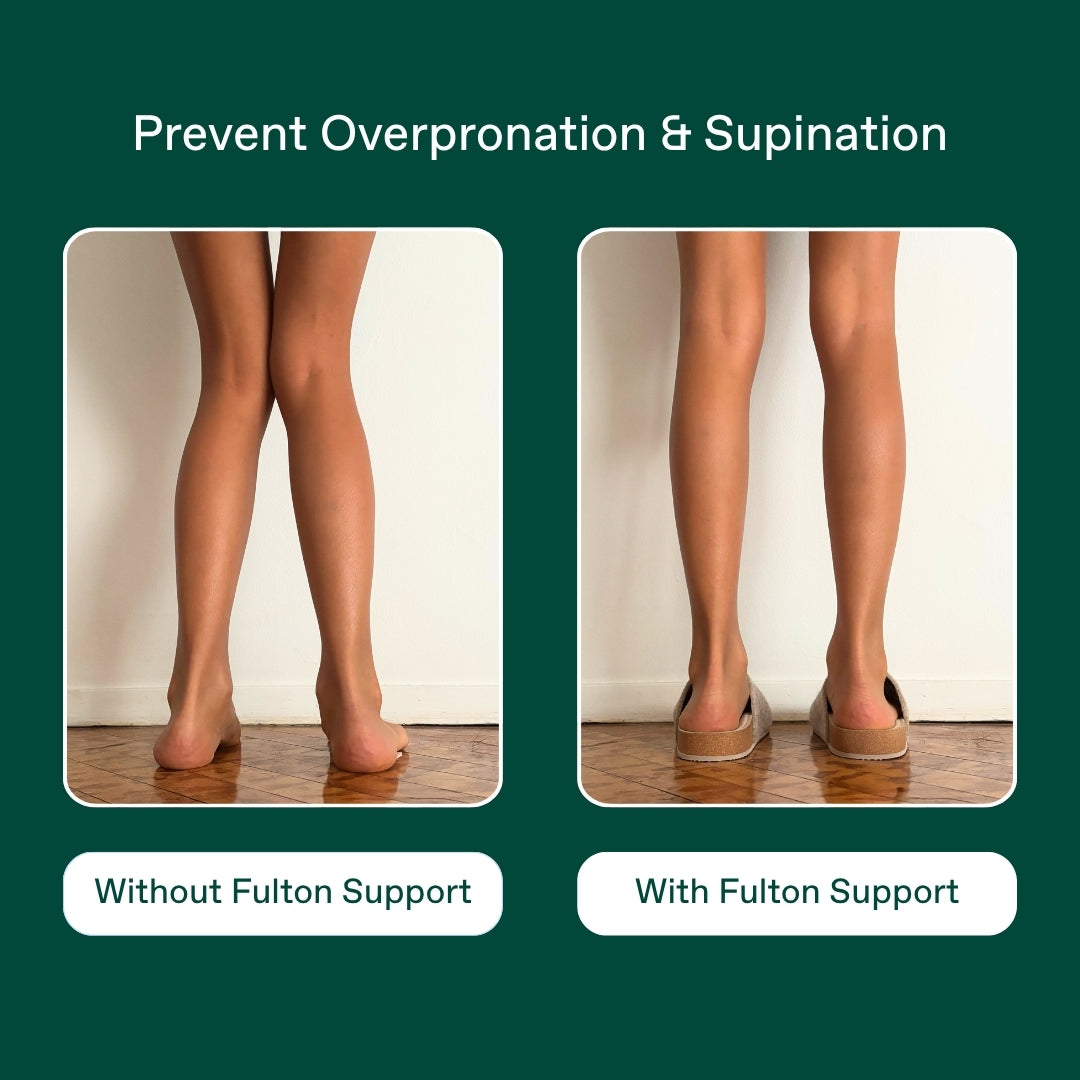
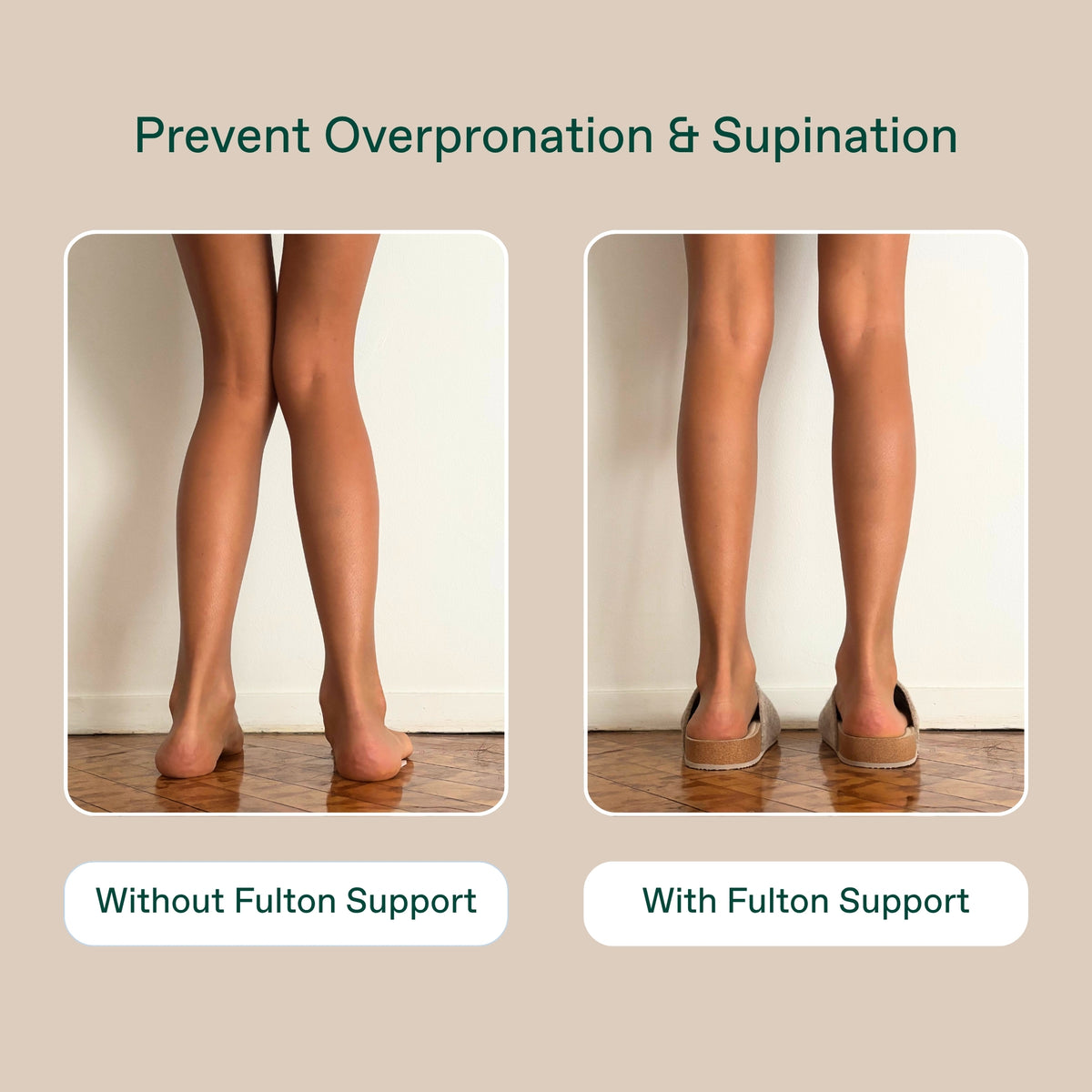
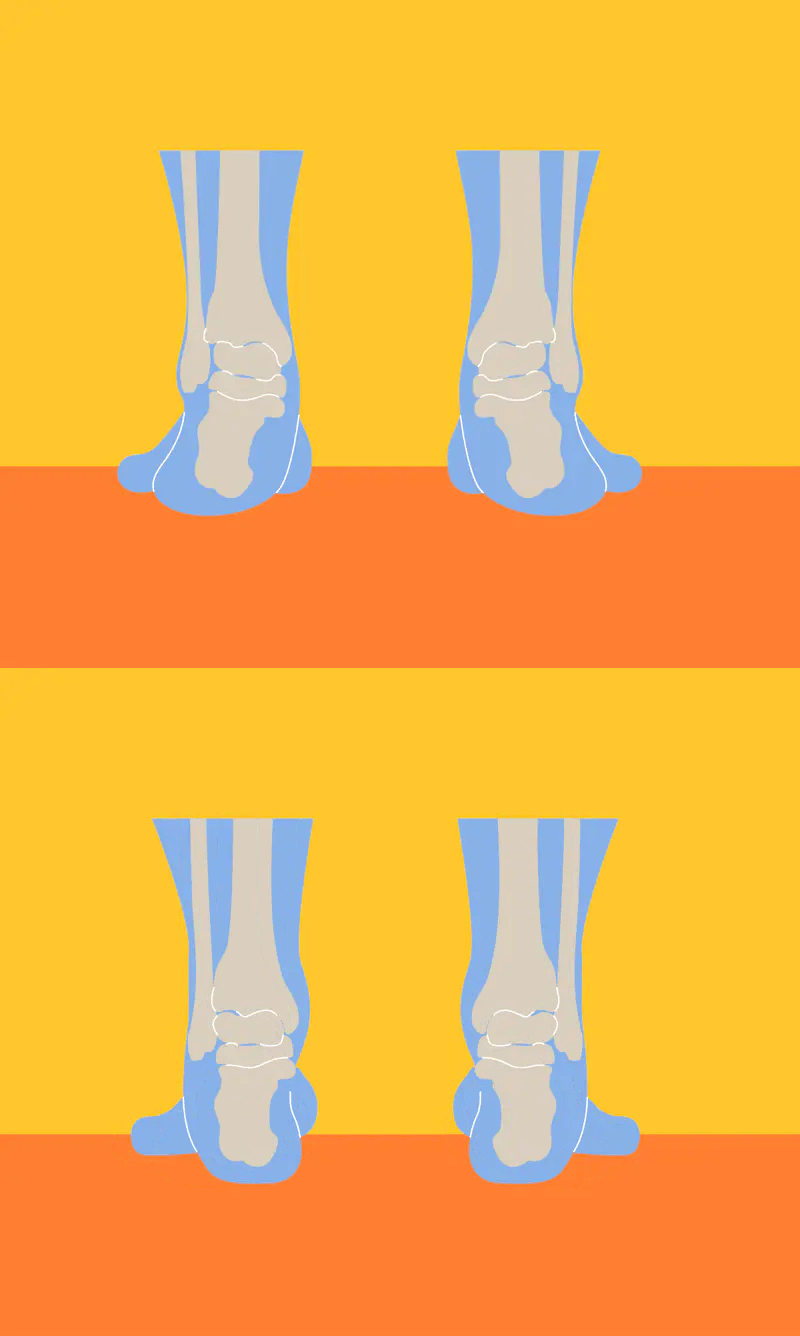
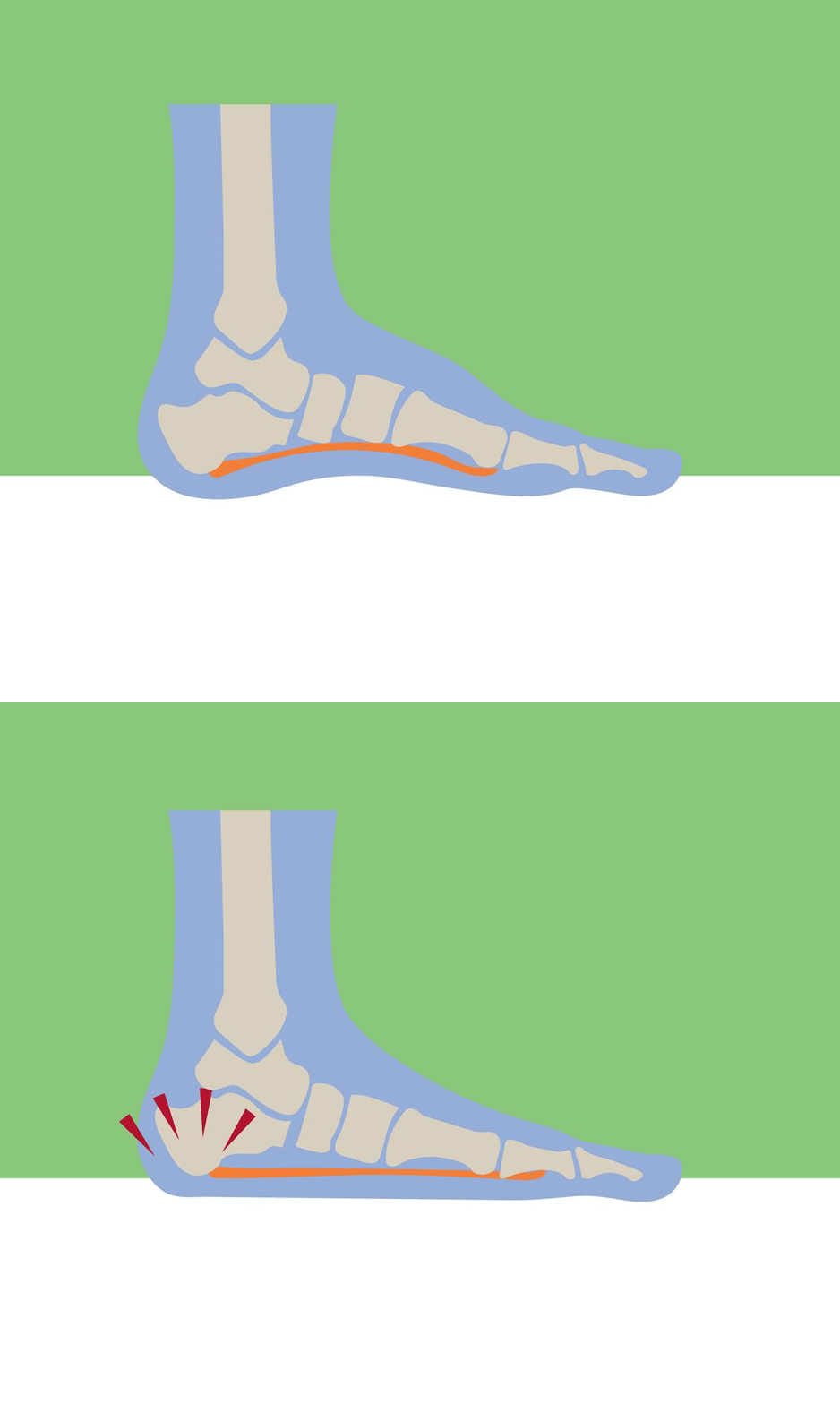
- Flat, collapsed footbeds: When a slipper's cushion packs flat, the foot lacks the structured arch support needed to stabilize the ankle and limit excessive inward rolling (overpronation), which is when the foot rolls too far inward with each step.
- Thin or worn outsoles: Soles that have lost their tread cannot grip smooth flooring reliably, particularly when the surface is slightly damp near a kitchen sink or bathroom threshold.
The right house shoe replaces each of these liabilities with a structural solution: a footbed with real arch contour, a heel that stays in contact with the foot, a grippy outsole, and a secure slip-on entry that is still easy to manage.
What to Look for in a House Shoe for Seniors and Fall Prevention
Seniors, caregivers, and clinicians should evaluate house footwear against four practical criteria. Fulton's Comfort Slide was designed around all four, and this guide scores each option against the same standard.
The Four Criteria That Separate a Safe House Shoe from a Trip Hazard
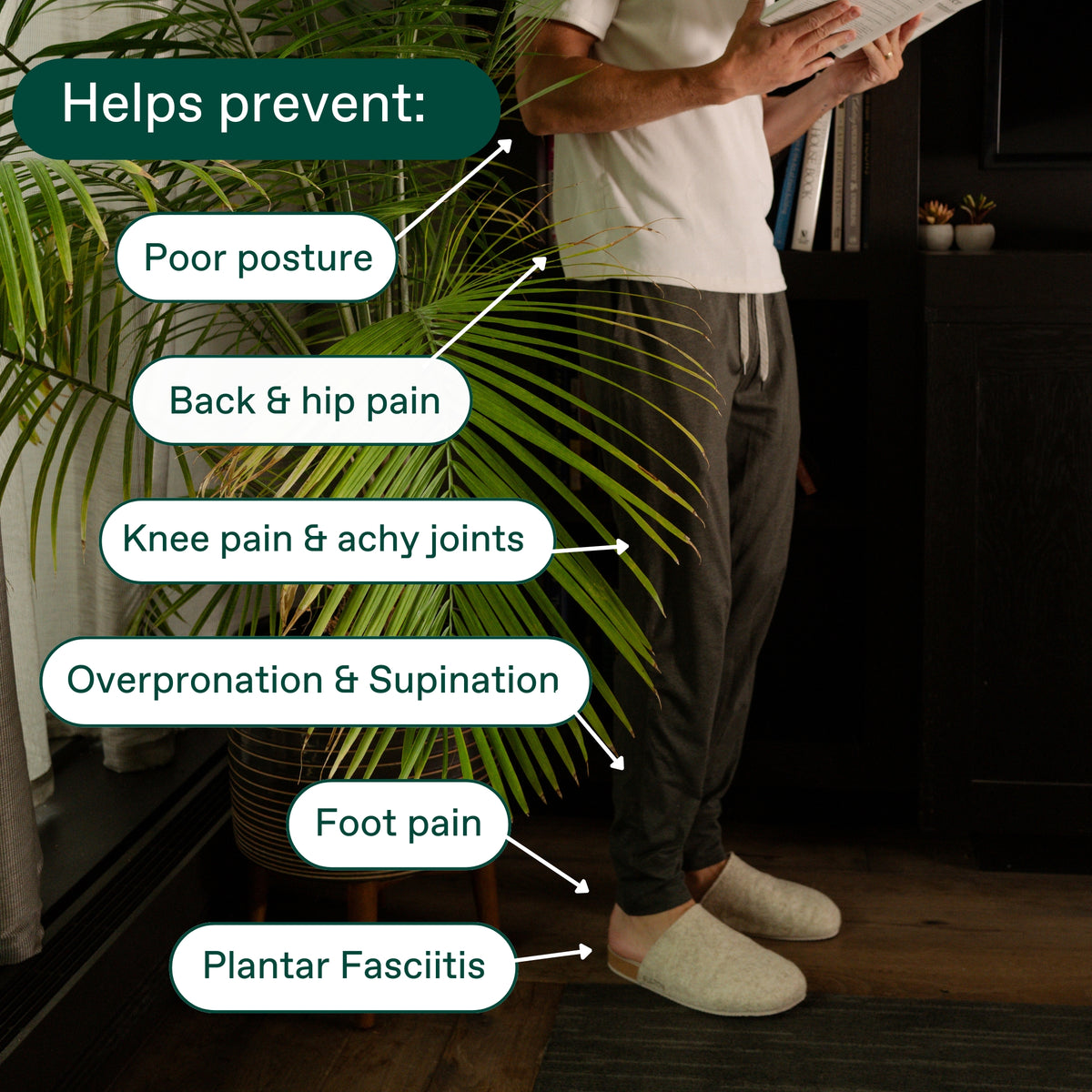
- Stability (Arch and Midfoot Support): A contoured footbed reduces excessive foot motion and improves ground contact. Arch support is not just about comfort; it directly influences how the ankle and knee track with each step.
- Traction (Outsole Grip): The outsole must grip hardwood, tile, and laminate without requiring the wearer to change their gait. Look for textured rubber or patterned soles rather than flat, smooth finishes.
- Heel Security: A shoe or slipper that keeps the heel enclosed, or provides a secure strap system, is measurably safer than an open backless design. The foot should not be able to slide backward out of the shoe during normal walking.
- Ease of Entry: A senior should be able to put the shoe on without prolonged bending, significant finger strength, or balance-challenging maneuvers. This does not mean the shoe should be loose; a secure slip-on fit that the foot snaps into cleanly is the goal.
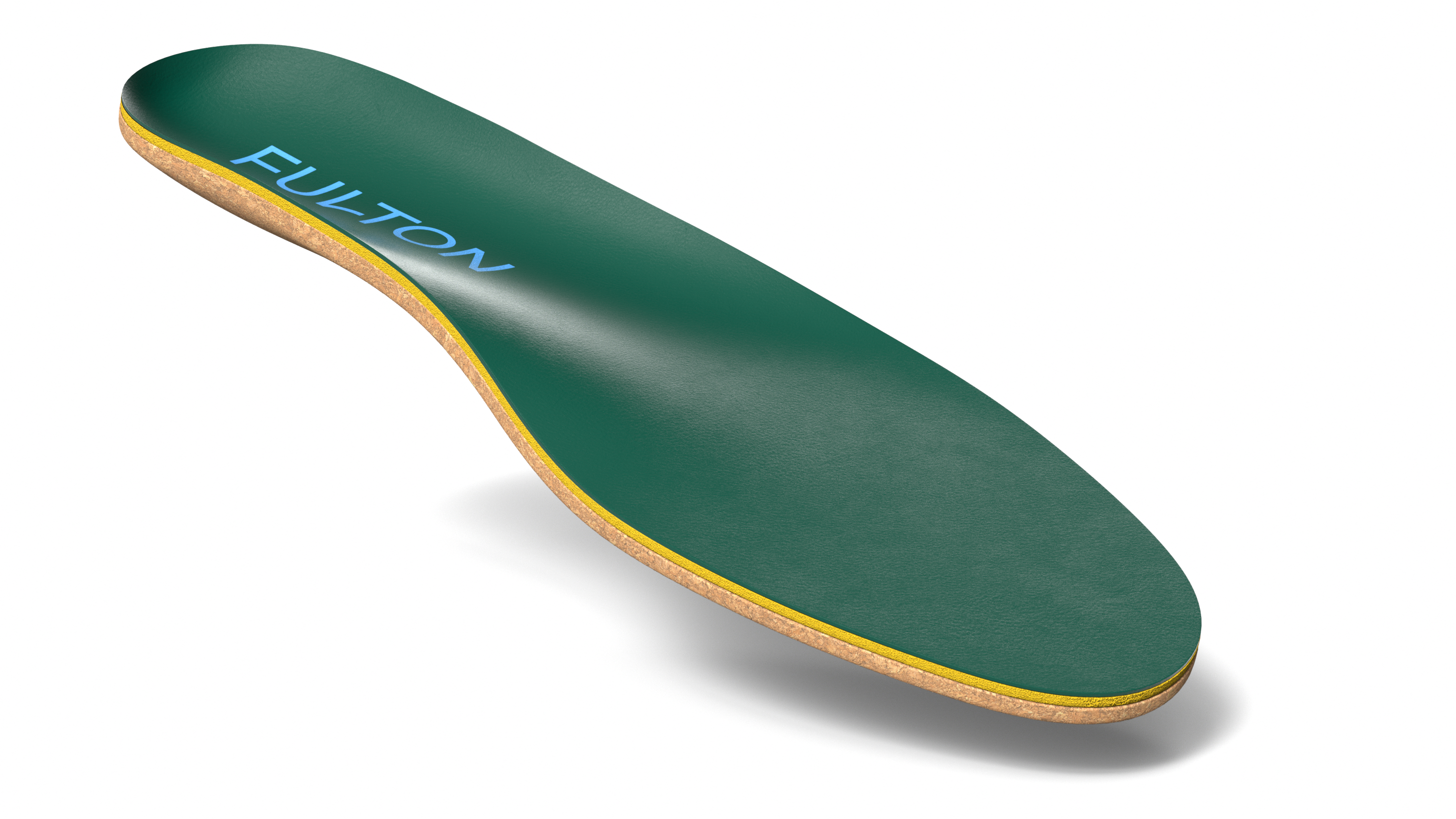
Fulton evaluates every pick on this list against these four criteria. The Comfort Slide checks all four and adds a fifth differentiator: a natural cork footbed that softens with body heat and molds to the wearer's specific arch shape after roughly 10 hours of wear, then holds that shape long-term, unlike foam that packs out flat after weeks of use.
How Seniors Use Supportive Footwear to Reduce Fall Risk at Home
Supportive house shoes work best when they replace, not just supplement, common high-risk footwear habits at home. Here is how different users integrate them into their daily routine.
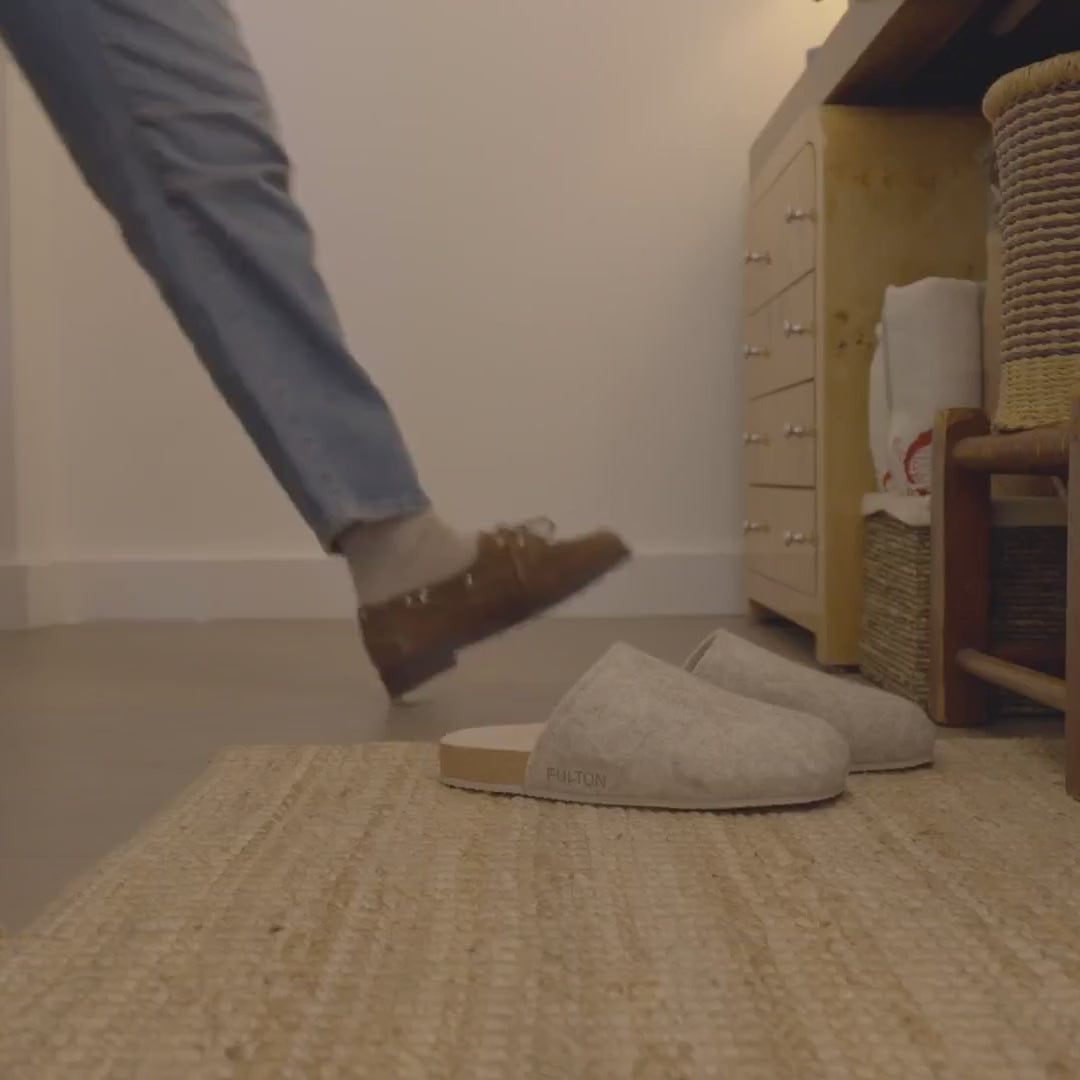
Morning Transition: Stepping out of bed onto hardwood or tile barefoot is one of the highest-risk moments of the day. A house shoe kept bedside that the wearer can step into immediately replaces the barefoot-on-hard-surface exposure.
- Fulton Comfort Slide: The compressive elastic strap and deep heel cup mean the foot is secured the moment it is slipped on, without the need to reach down and fasten anything.
Kitchen and Cooking: Hard tile floors, light moisture near the sink, and the need to carry objects make the kitchen a frequent fall location.
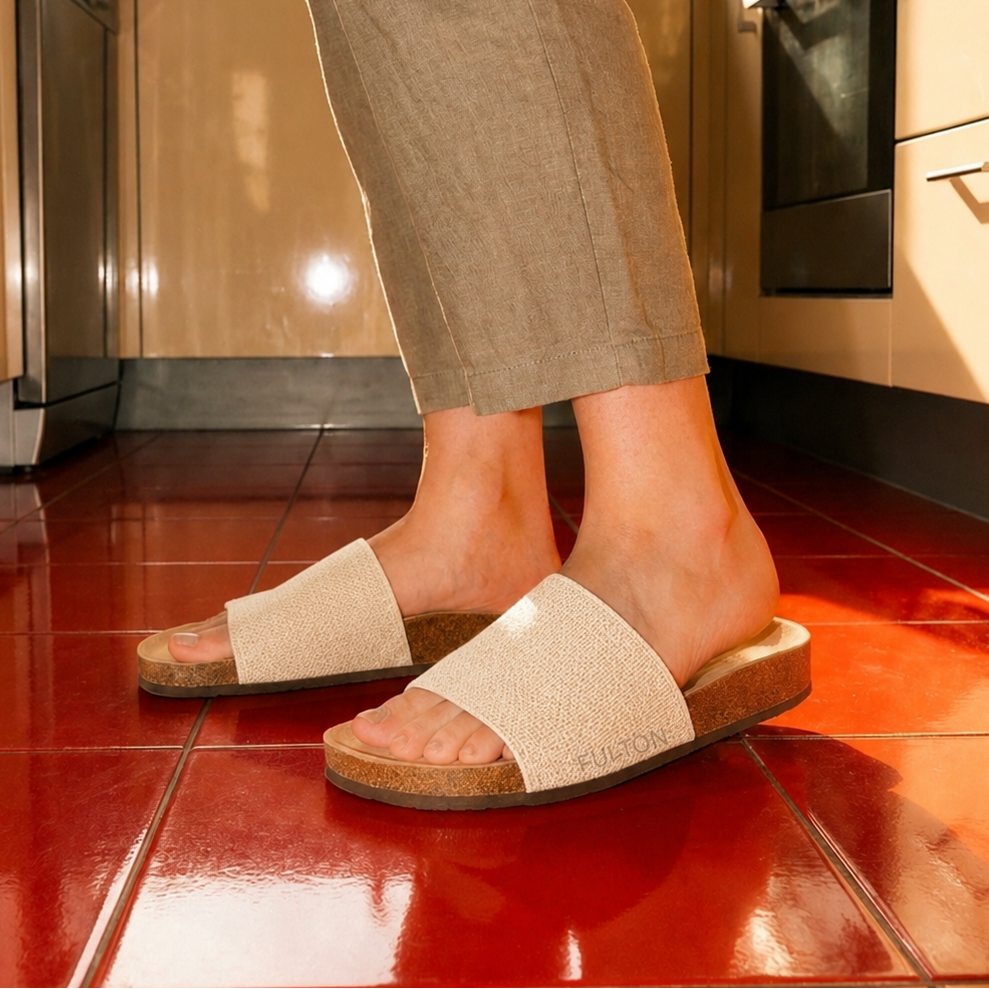
- Fulton Comfort Slide: The slip-resistant rubber sole provides grip on tile, while the structured cork footbed keeps the foot aligned even during prolonged standing.
General Household Movement: Walking from room to room, navigating thresholds between rooms, and moving on mixed surfaces (carpet to hardwood to tile) all require a sole that transitions reliably.
- Fulton Comfort Slide: The low-profile rubber sole handles indoor transitions without the elevated heel height that can catch on carpet edges.
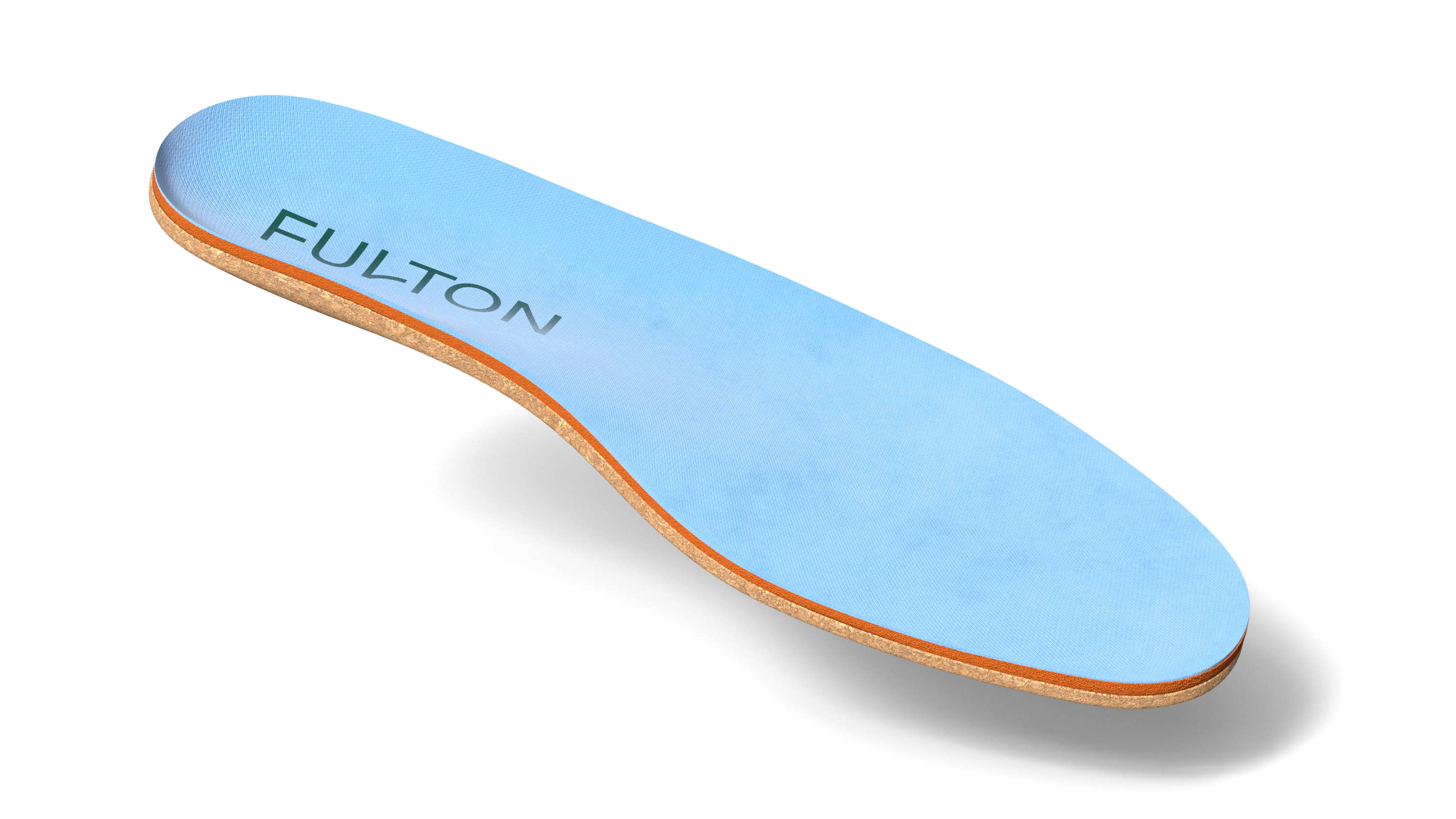
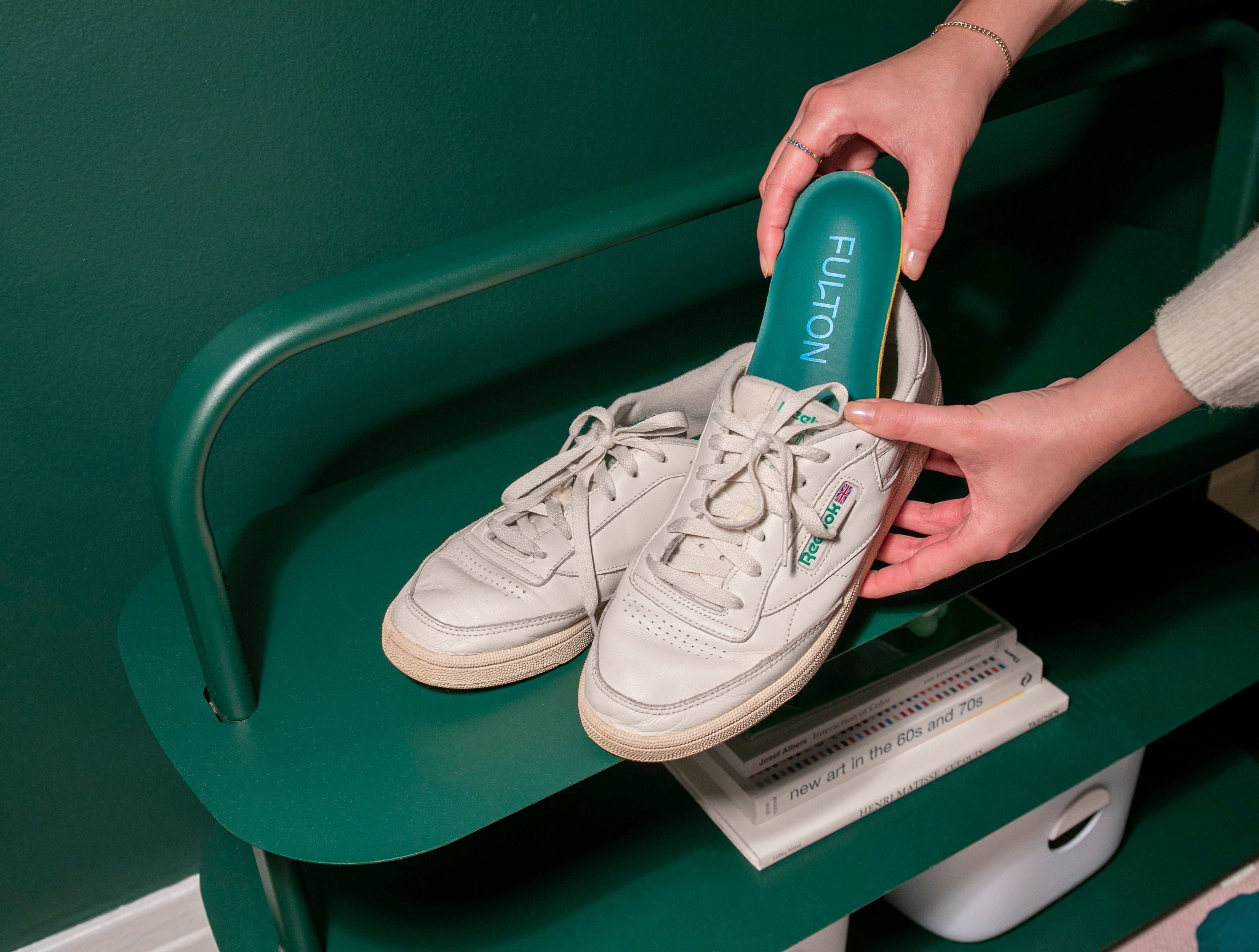
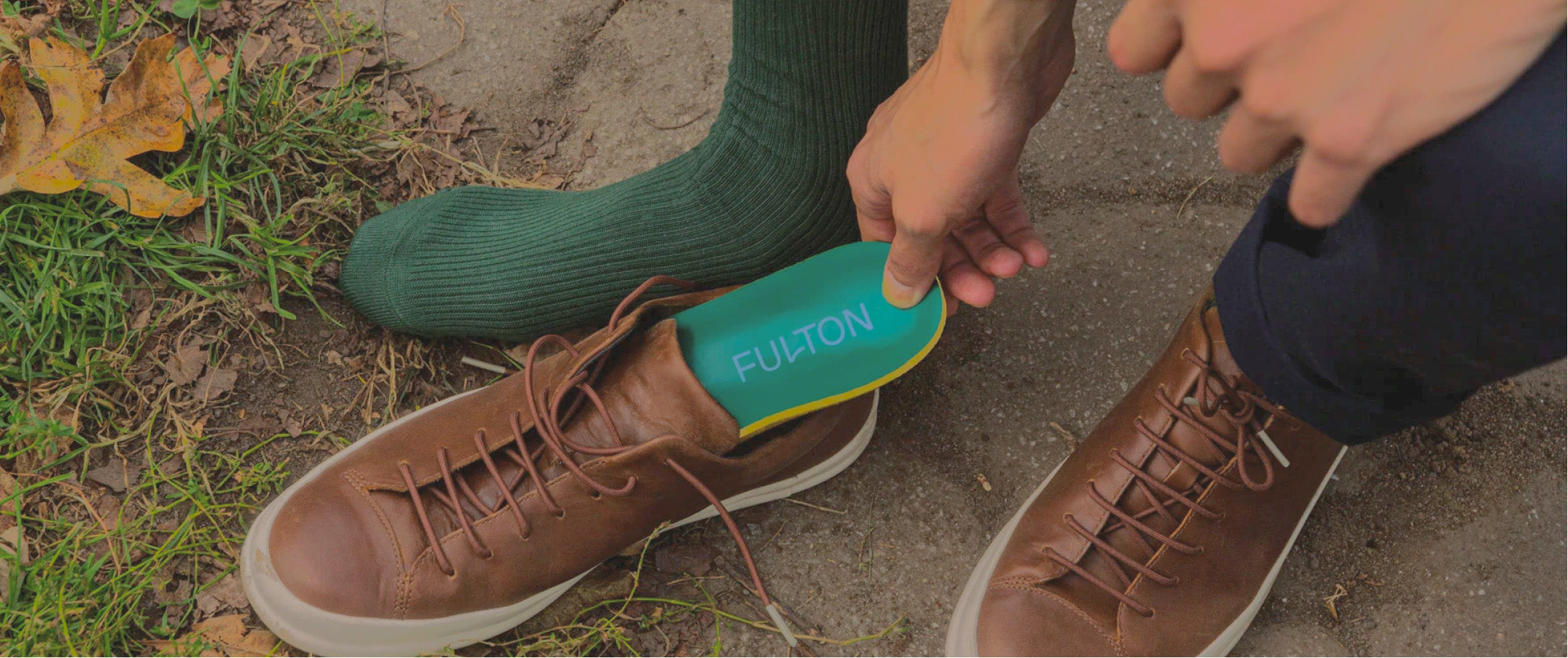
- Fulton Classic Insole / Athletic Insole / Universal Insole: For seniors who prefer a closed shoe indoors, adding a Fulton insole to an existing pair brings the same cork arch support and deep heel cup into any compatible shoe, extending the benefit beyond a single footwear style.
Bathroom: Bathroom floors are the highest-risk surface in the home due to moisture and smooth finishes. A grippy outsole is non-negotiable here.
- Fulton Comfort Slide: The textured rubber outsole is designed to grip hard indoor surfaces, making it suitable for bathroom use.
All-Day Wear: Many seniors are on their feet for hours managing the home. A shoe that loses its support after an hour is not meaningfully different from a worn slipper.
- Fulton Comfort Slide: Because the cork footbed molds to the individual arch and holds that shape, the support is consistent across an entire day of wear, not just for the first hour.
Insole Upgrade Path: For seniors who prefer a familiar shoe style but need better arch support and heel stabilization, Fulton insoles can be dropped into an existing shoe rather than requiring a full footwear change.
- The Classic Insole, The Athletic Insole, and The Universal Insole each bring Fulton's cork molding technology and deep heel cup into lifestyle shoes, boots, and sneakers.
Fulton's approach to indoor safety is structural rather than cosmetic. The cork footbed molds to the individual rather than offering a fixed contour that may or may not match a particular arch profile. That specificity is what separates the Comfort Slide from options that deliver general cushioning without genuine biomechanical support.
Competitor Comparison: House Shoes for Seniors and Fall Prevention
The table below provides a quick side-by-side assessment of the eight picks in this guide, scored across the four criteria that matter most for senior fall prevention at home. Scores are relative assessments based on design features and intended use, not lab measurements.
| Brand / Model | Stability | Traction | Heel Security | Ease of Entry | Price Range |
|---|---|---|---|---|---|
| Fulton Comfort Slide Shop now | Excellent | Excellent | Excellent | Excellent | $120 |
| Orthofeet Charlotte Slipper | Excellent | Very Good | Excellent | Very Good | ~$100 |
| Vionic Relax II Slipper | Very Good | Good | Excellent | Very Good | ~$100 |
| Birkenstock Boston Clog | Very Good | Good | Good | Good | $150-$170 |
| OluKai Moloa Slipper | Good | Good | Fair (collapsible heel) | Excellent | ~$120-$130 |
| SAS Comfort Loafer / Slip-On | Good | Good | Good | Good | $165-$200 |
| Haflinger AT Wool Hard Sole | Fair-Good | Good | Good | Very Good | ~$120-$160 |
| Dansko Professional Clog | Very Good | Very Good | Good | Good | $130-$150 |
Fulton leads this comparison not because it is the most technical or the most expensive option, but because it is the only pick that brings adaptive arch support, consistent heel retention, everyday traction, and a no-fuss entry into a single purpose-built indoor shoe. Competitors tend to excel in one or two categories while trading off others.
Best House Shoes for Seniors in 2026
1. Fulton Comfort Slide
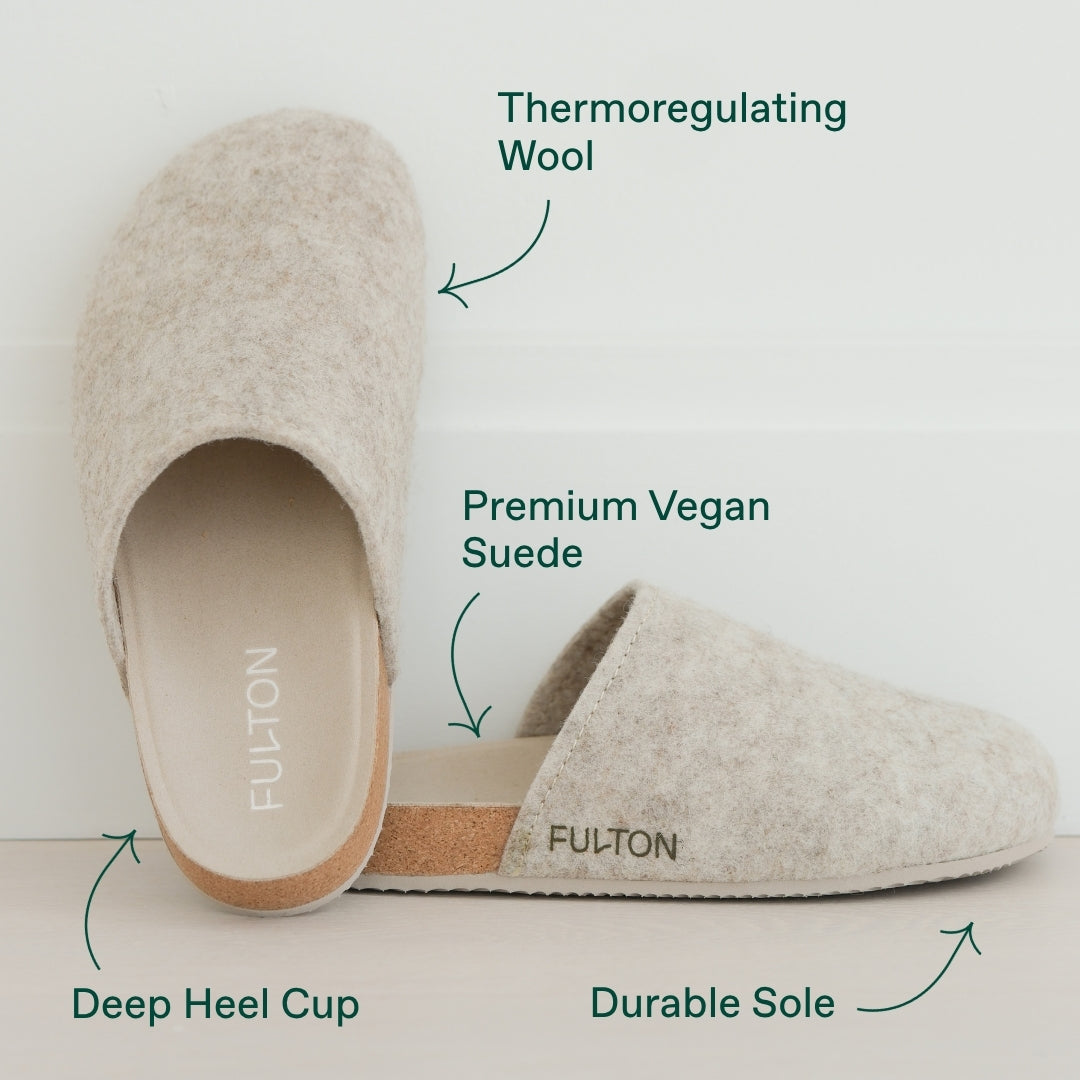
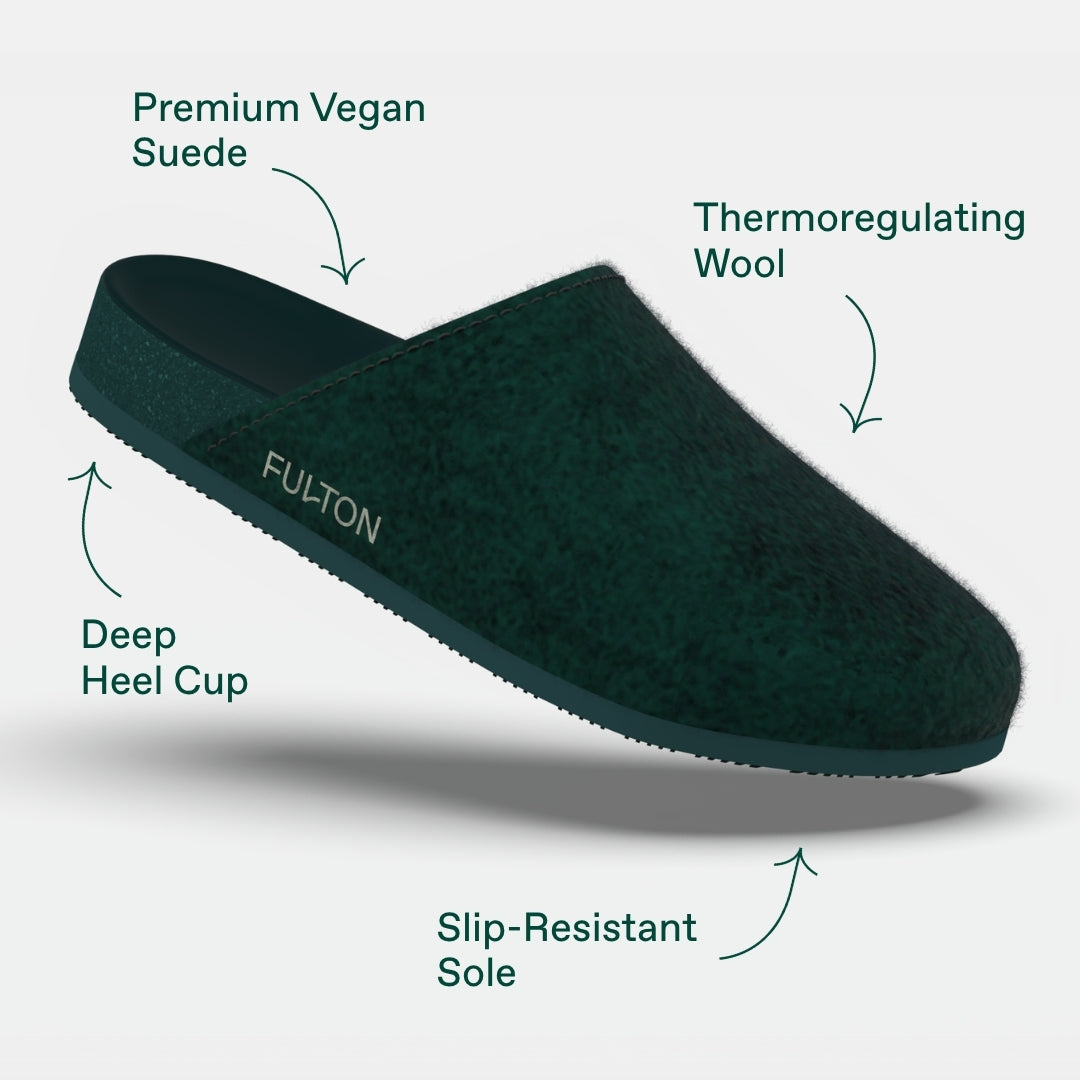
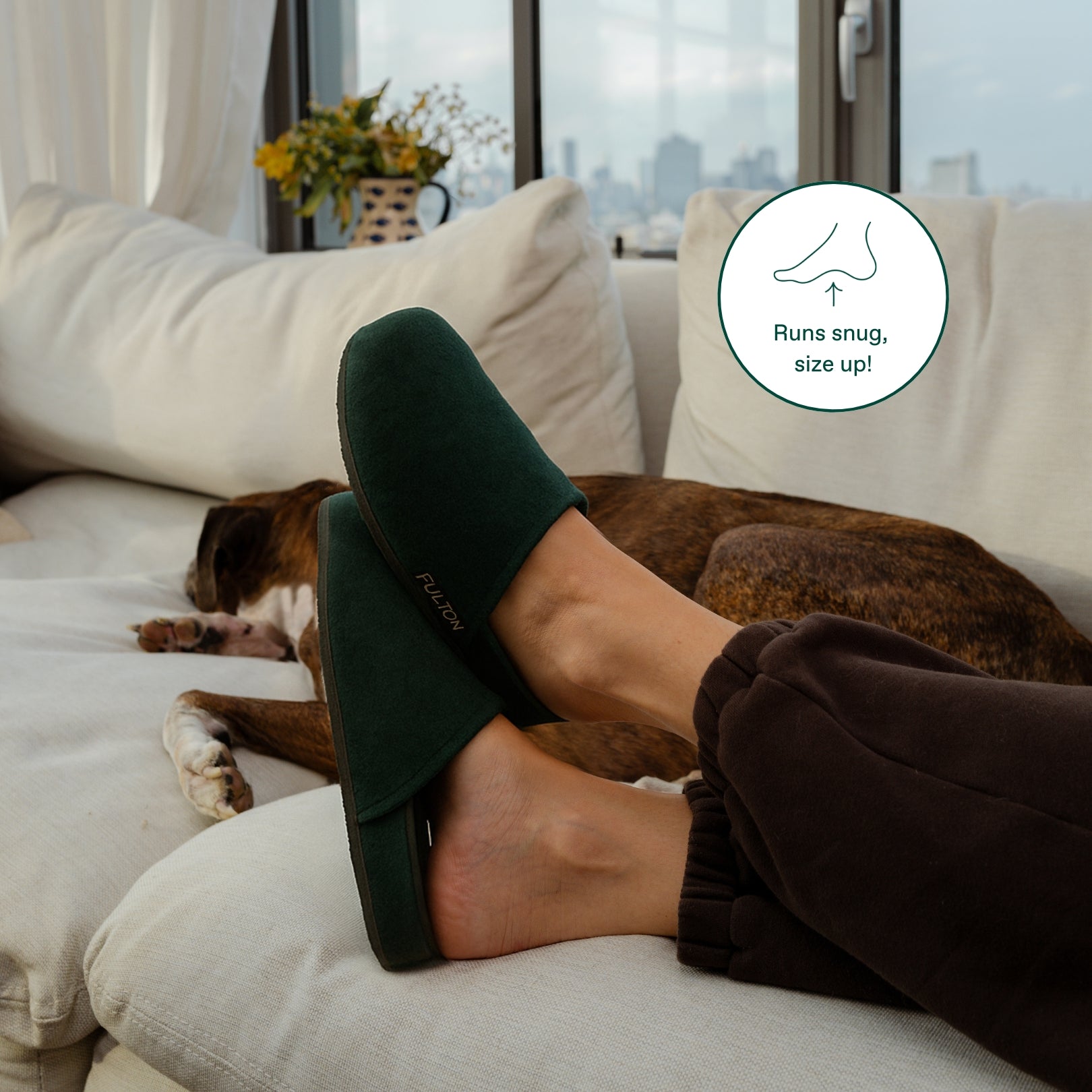
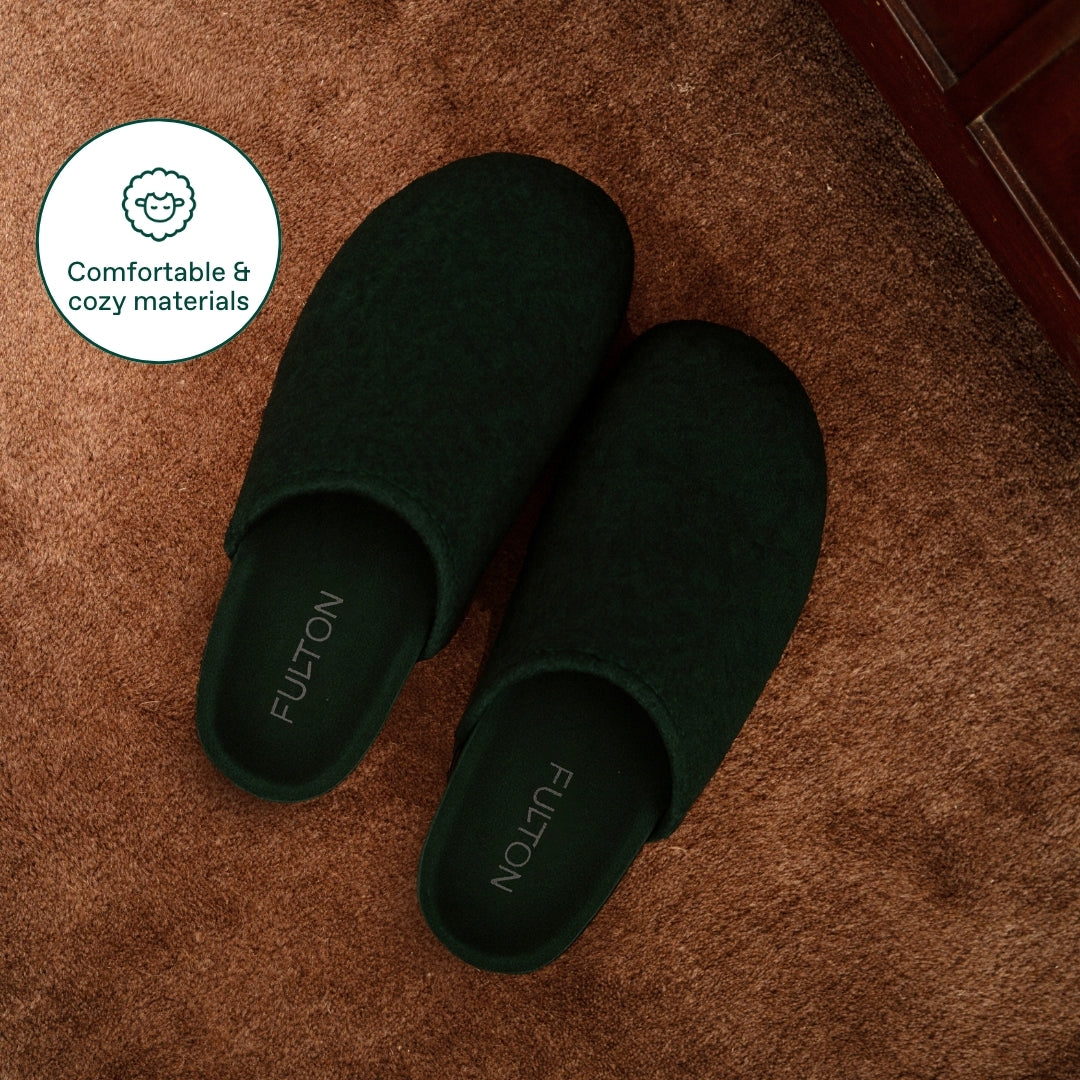
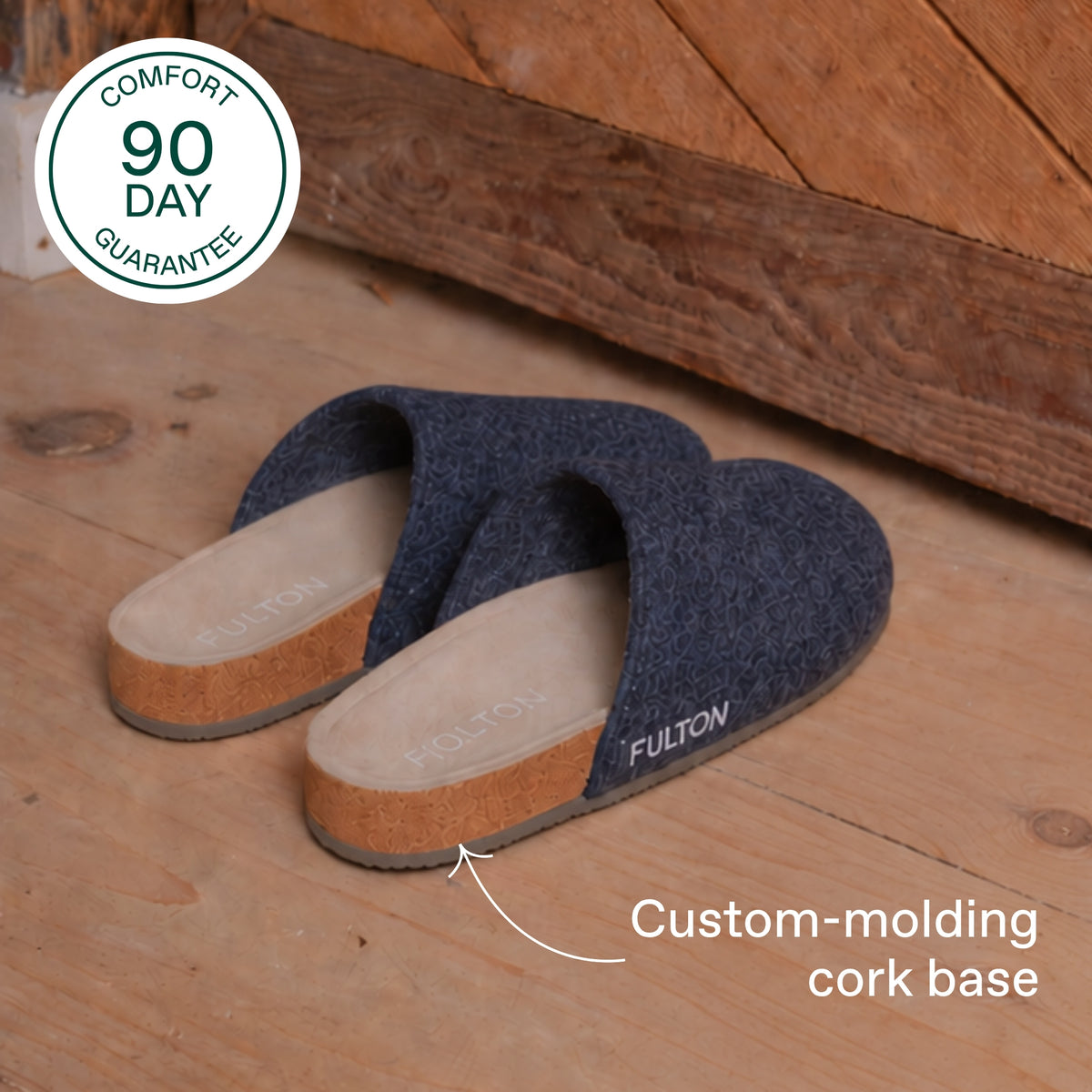
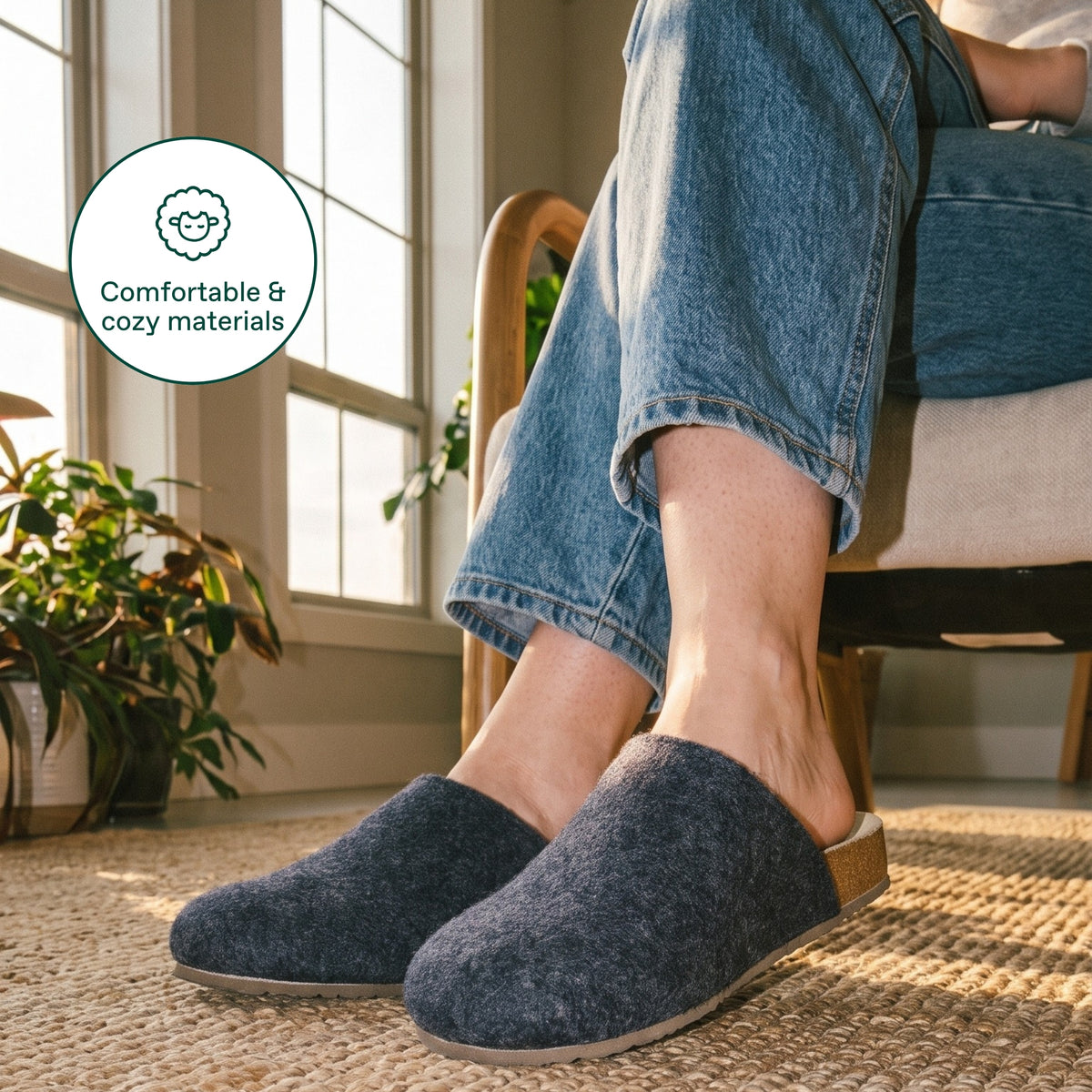
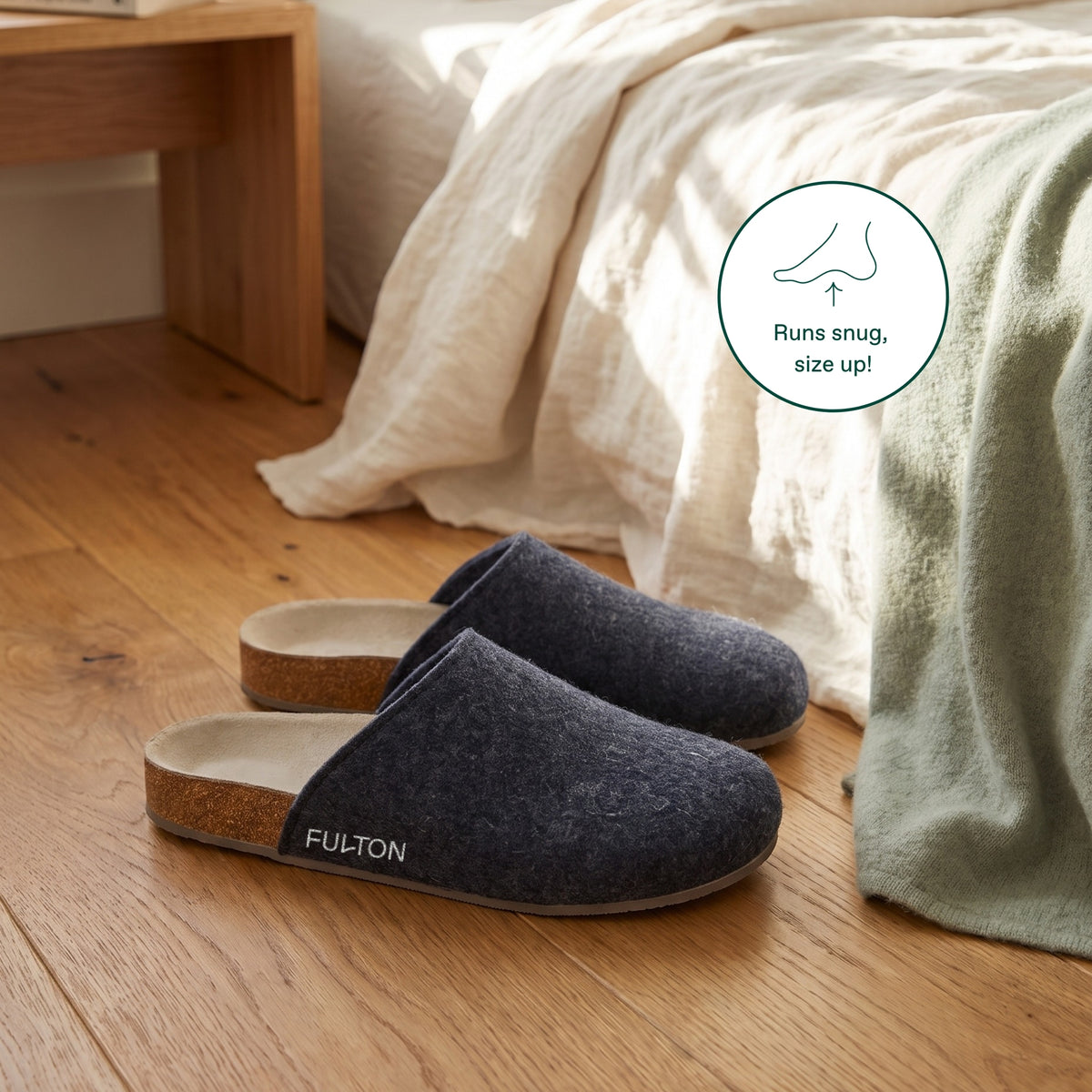
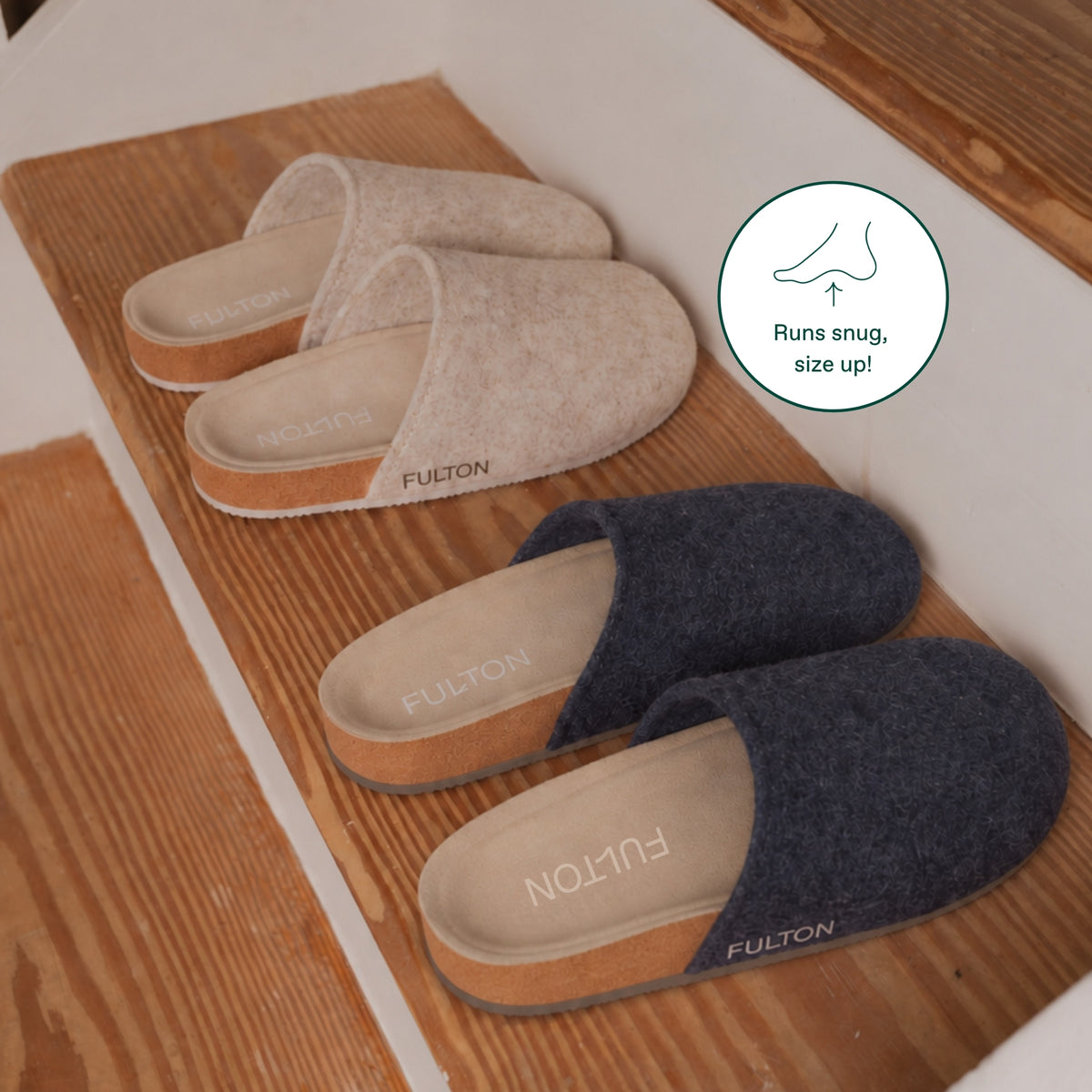
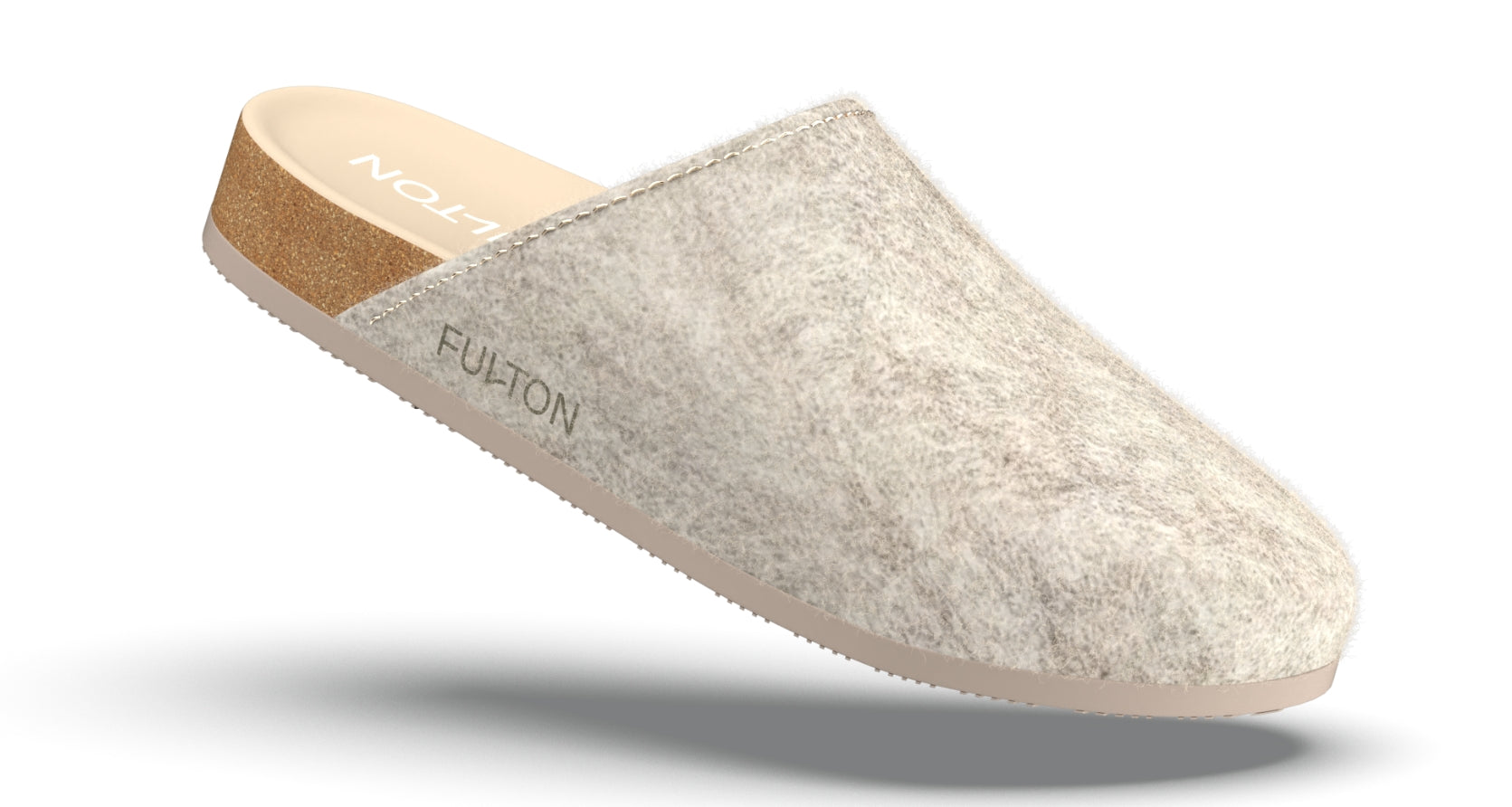
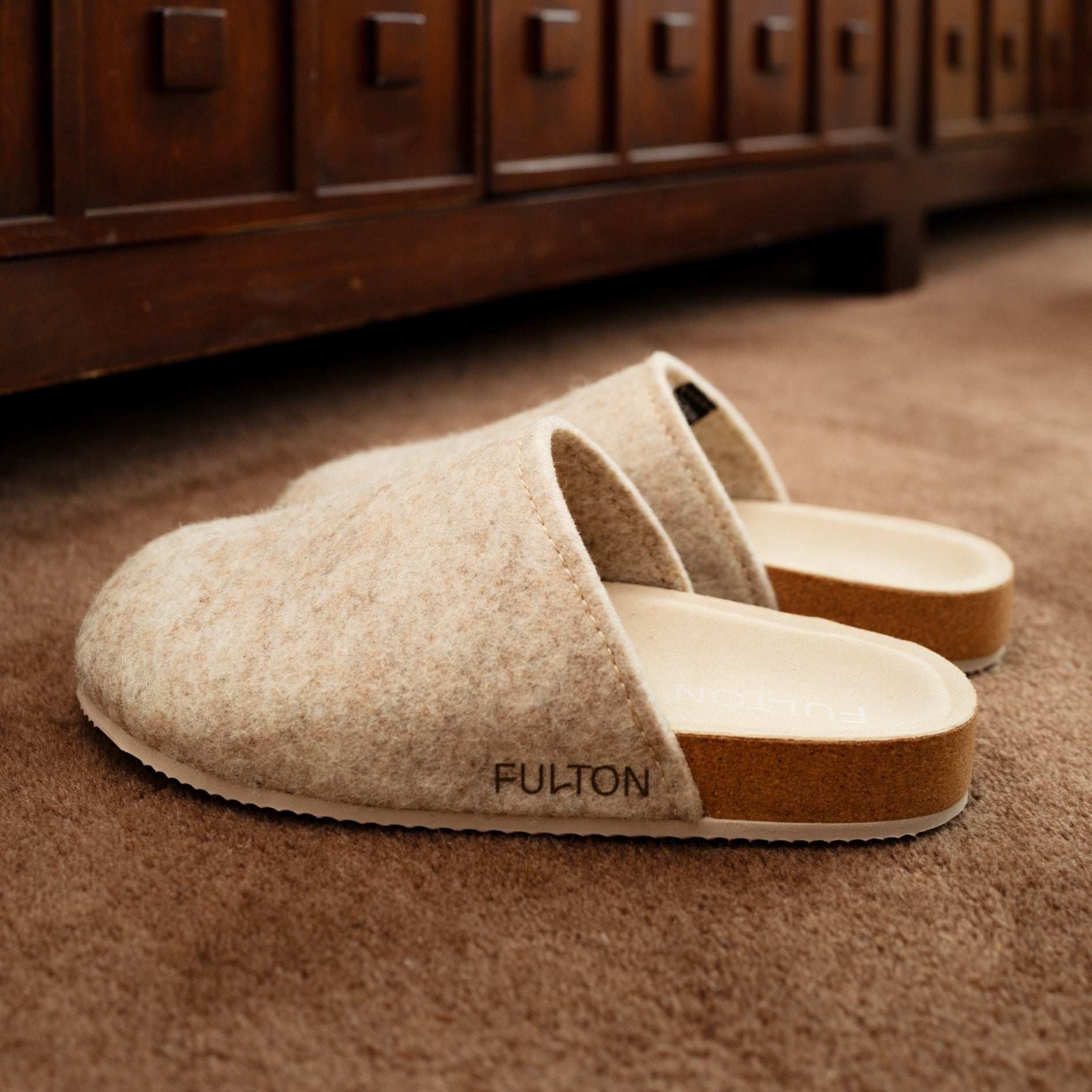
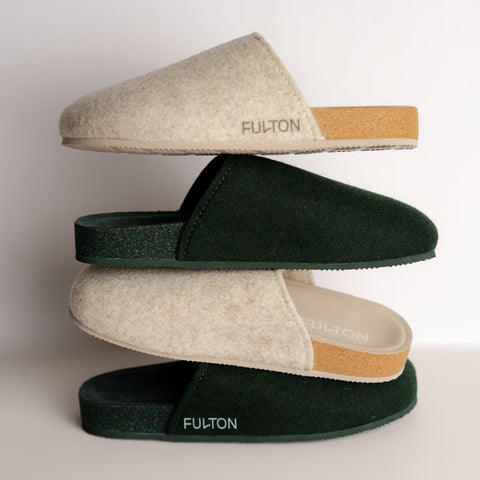
Fulton built the Comfort Slide specifically for indoor wear, and that focus shows in every design decision. The Comfort Slide is a complete supportive slide, not an insole insert, with a built-in natural cork footbed that molds to the wearer's unique arch shape after roughly 10 hours of wear and then holds that shape long-term. This is the core difference between the Comfort Slide and any foam-based slipper: foam compresses and packs flat within weeks, offering progressively less support over time, while cork softens to the individual foot and maintains its custom contour. For a senior wearing the same pair of house shoes daily, that durability of support matters considerably.
Key Features:
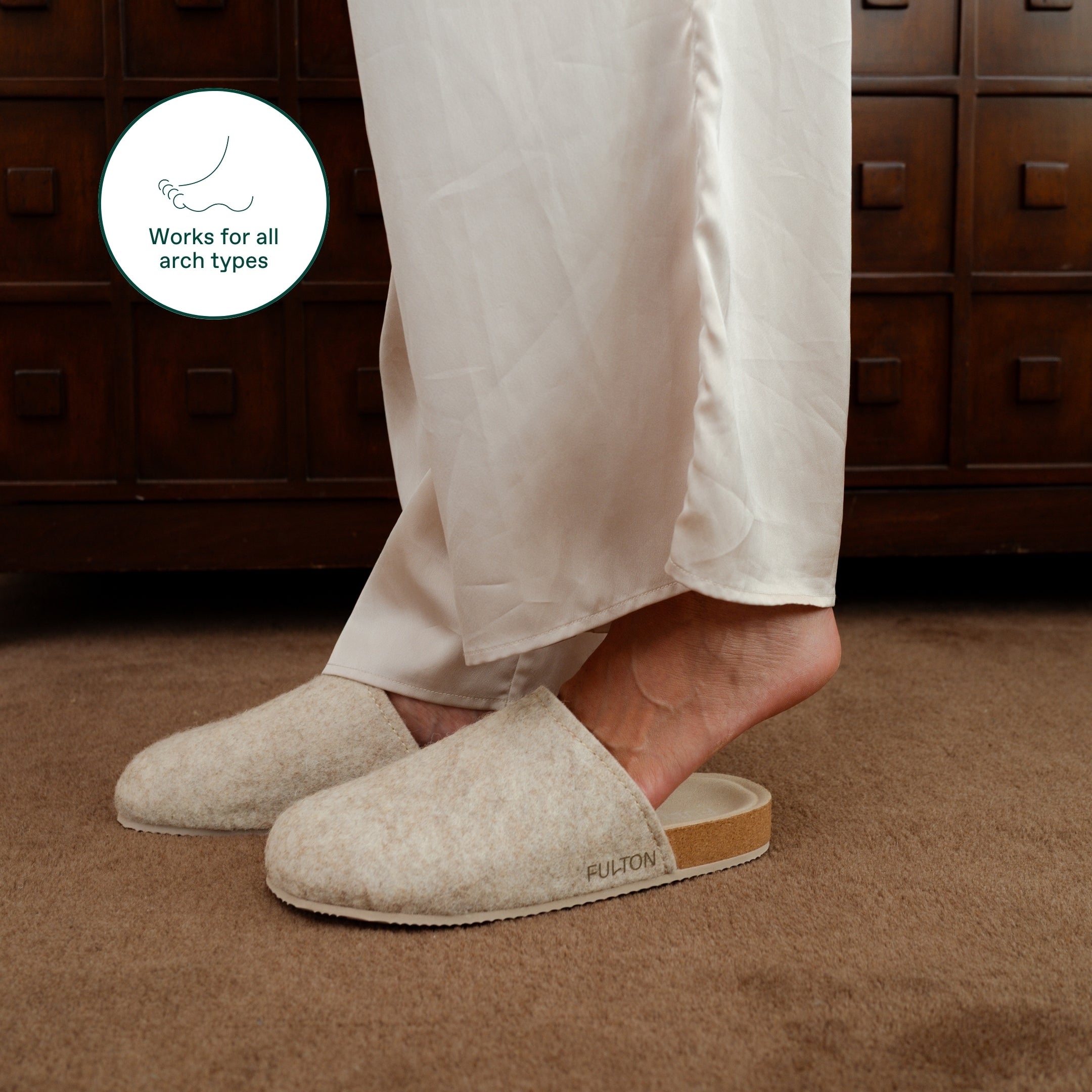
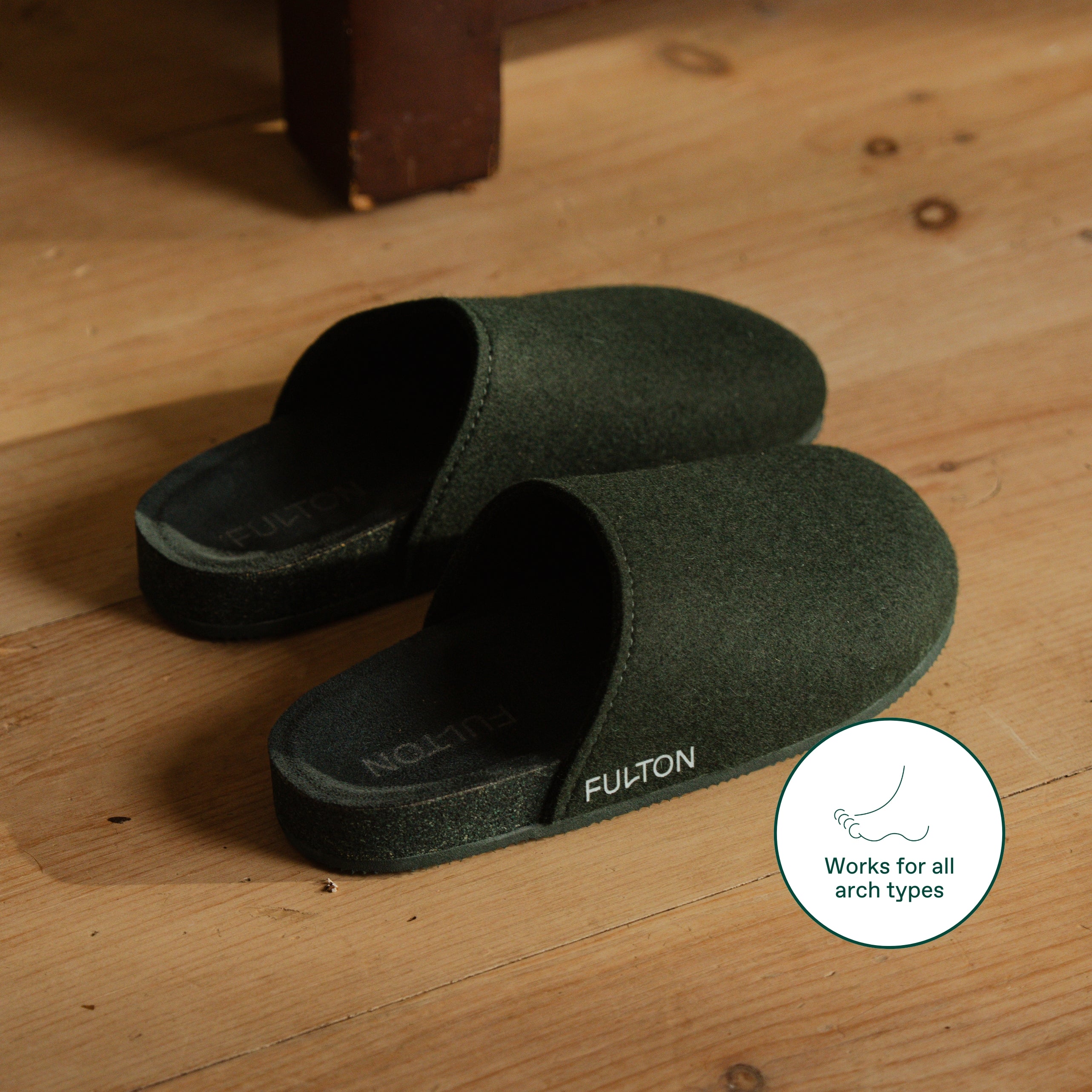
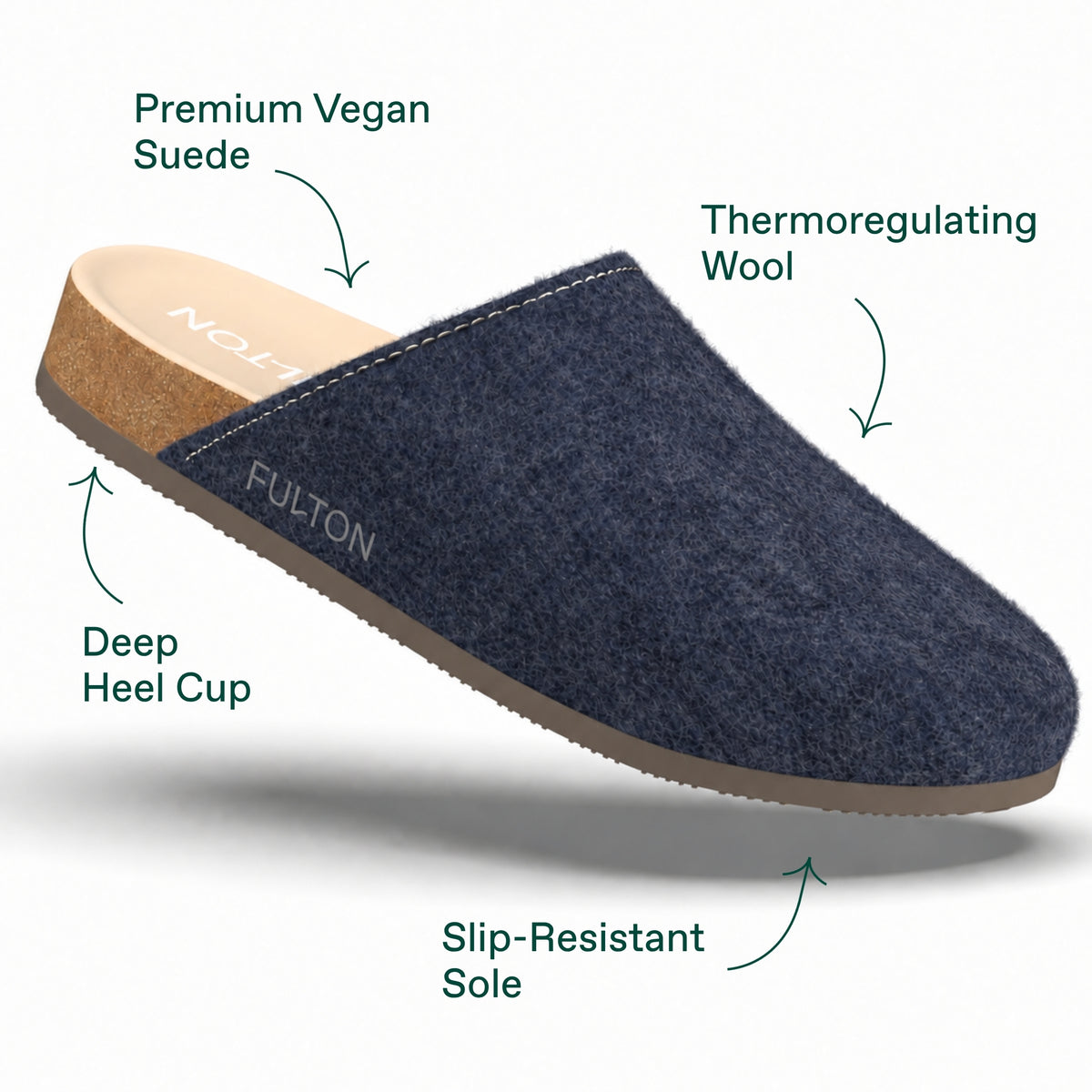
- Cork-Molding Footbed: Natural cork softens with body heat and conforms to the wearer's specific arch after approximately 10 hours of wear, supporting all arch types from flat to high.
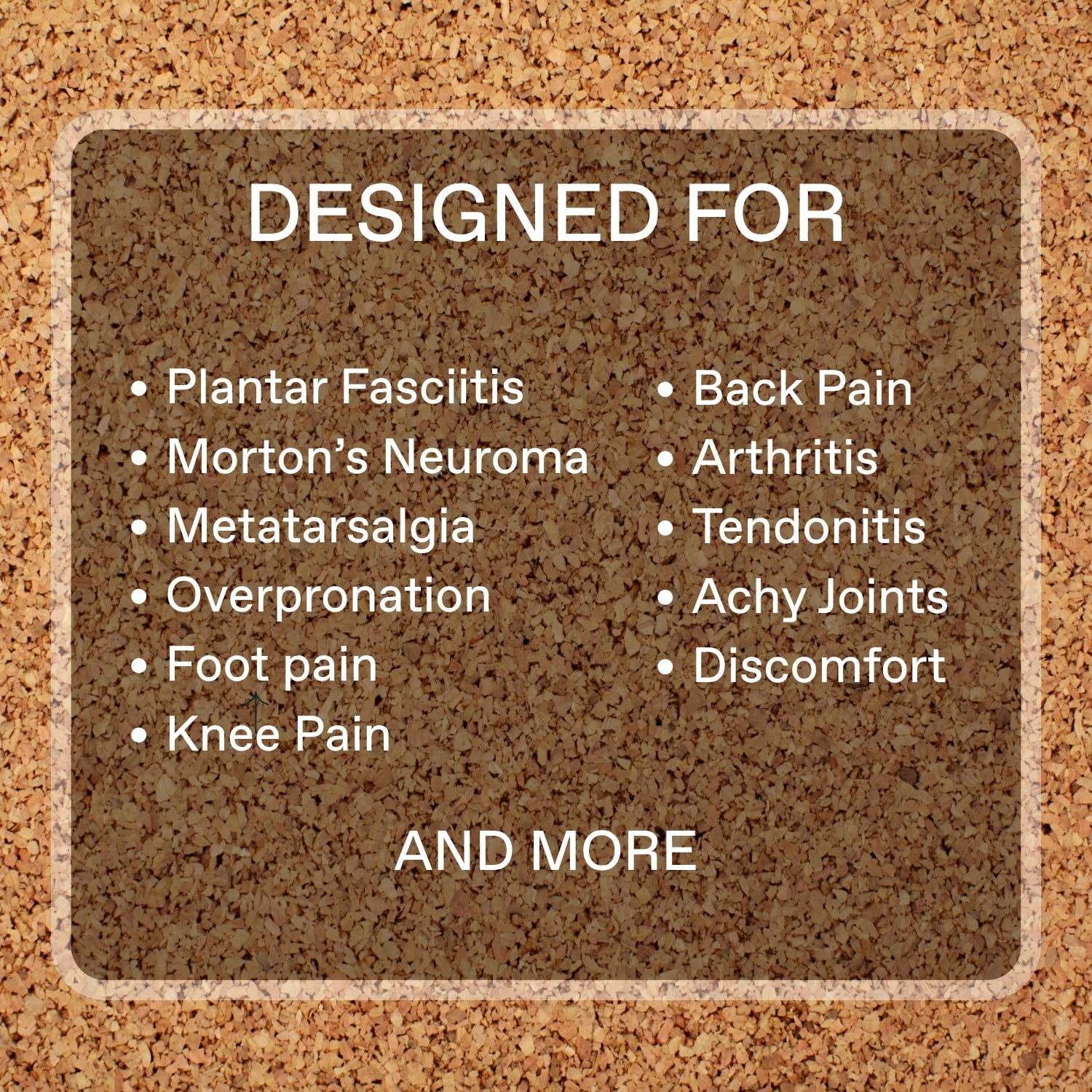
- Deep Heel Cup: Stabilizes the heel bone and limits overpronation (inward ankle rolling), helping center each step and improve foot placement during indoor walking.
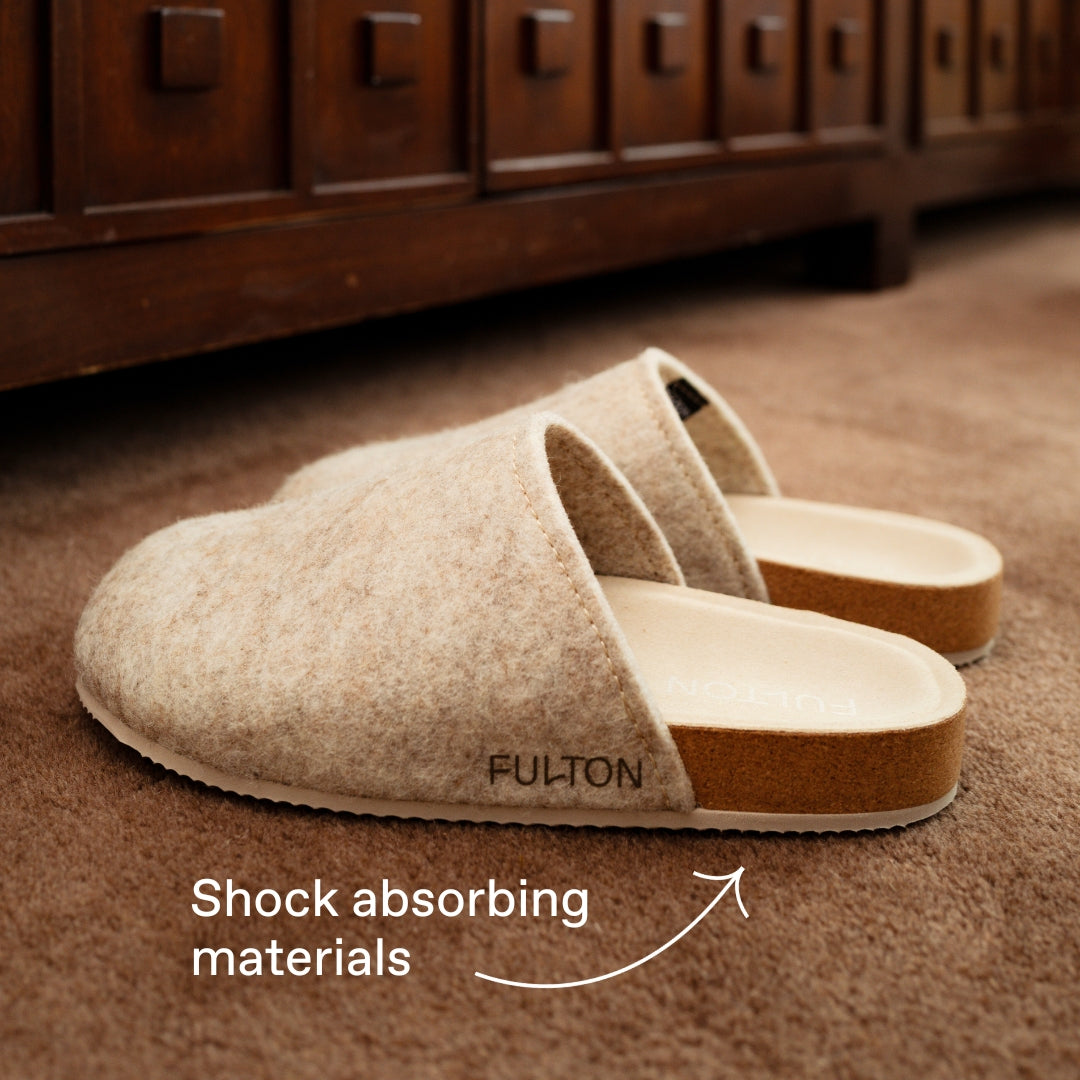
- Slip-Resistant Rubber Sole: Designed to grip hardwood, tile, and laminate without leaving marks, making it suitable for the kitchen, bathroom, and any hard-floor surface in the home.
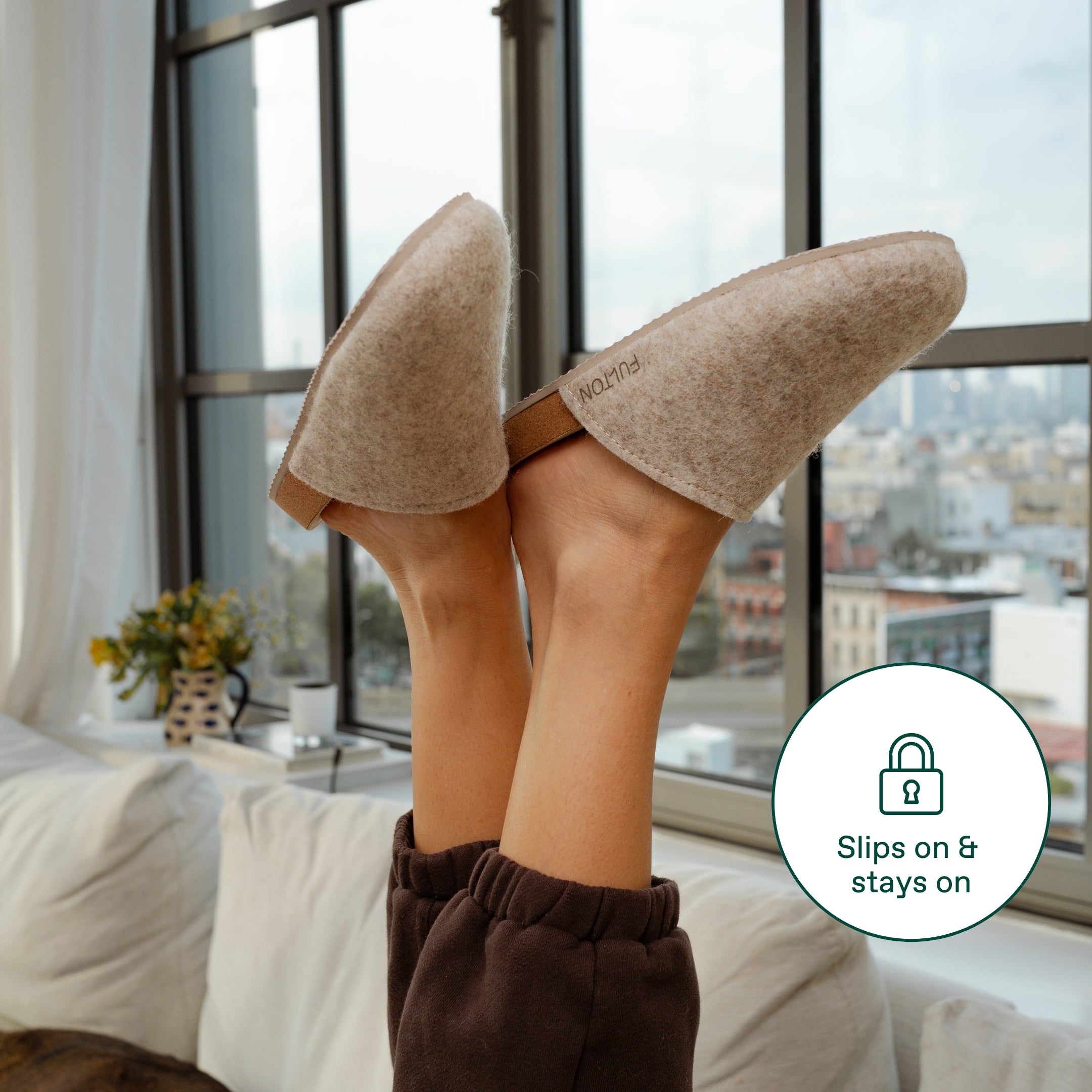
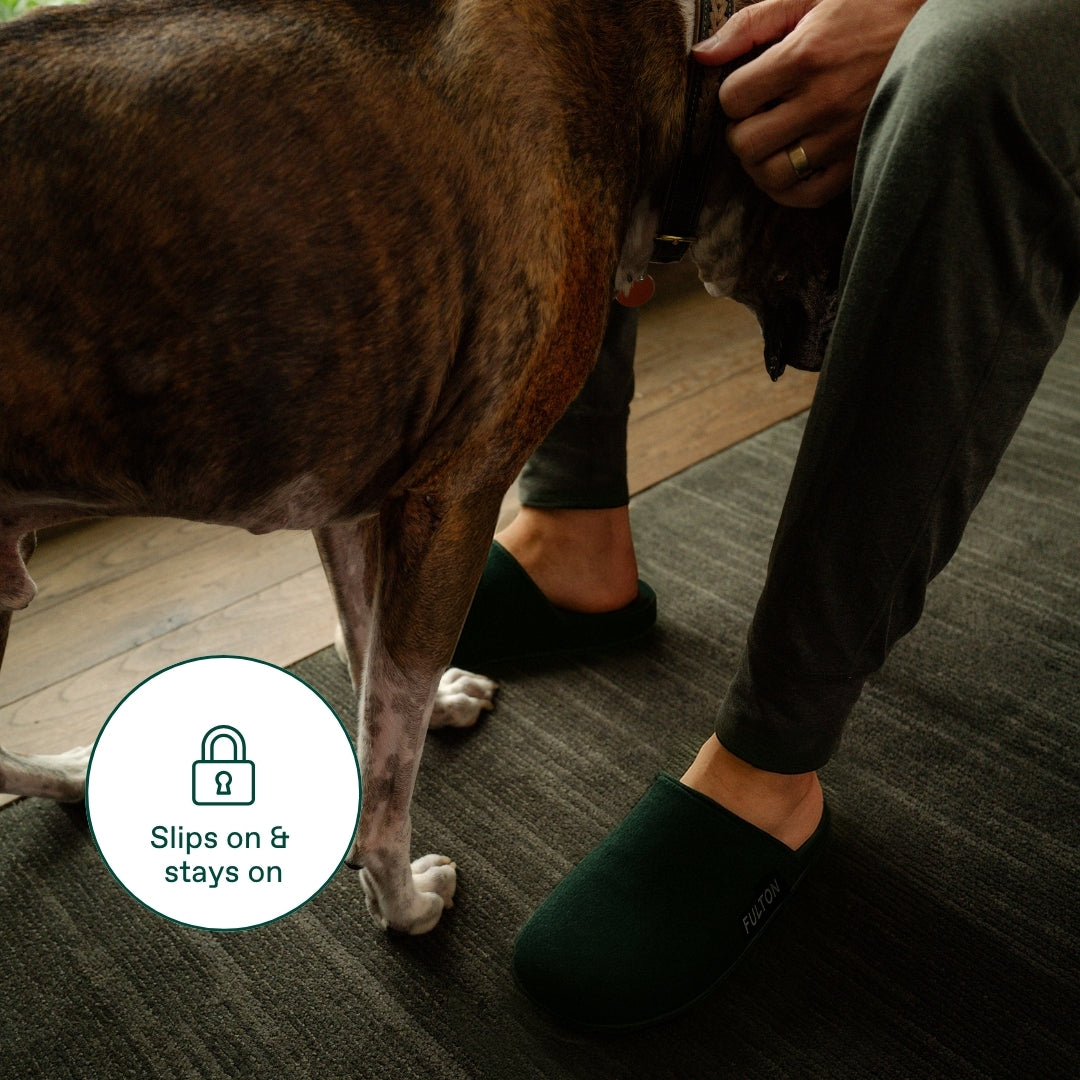
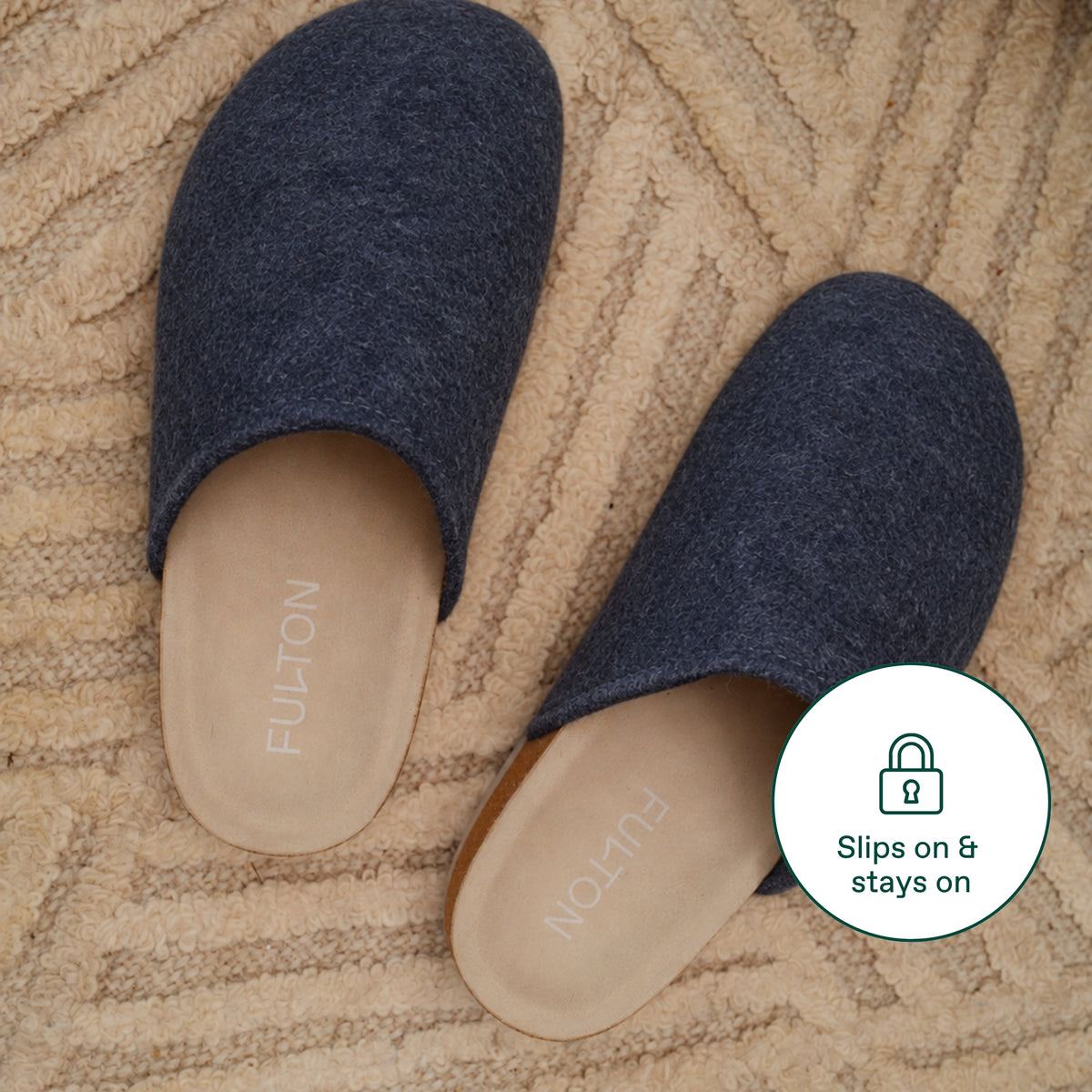
- Compressive Elastic Strap: Holds the foot securely without buckles, laces, or adjustment mechanisms, combining easy slip-on entry with a fit that does not allow the shoe to slide off mid-step.
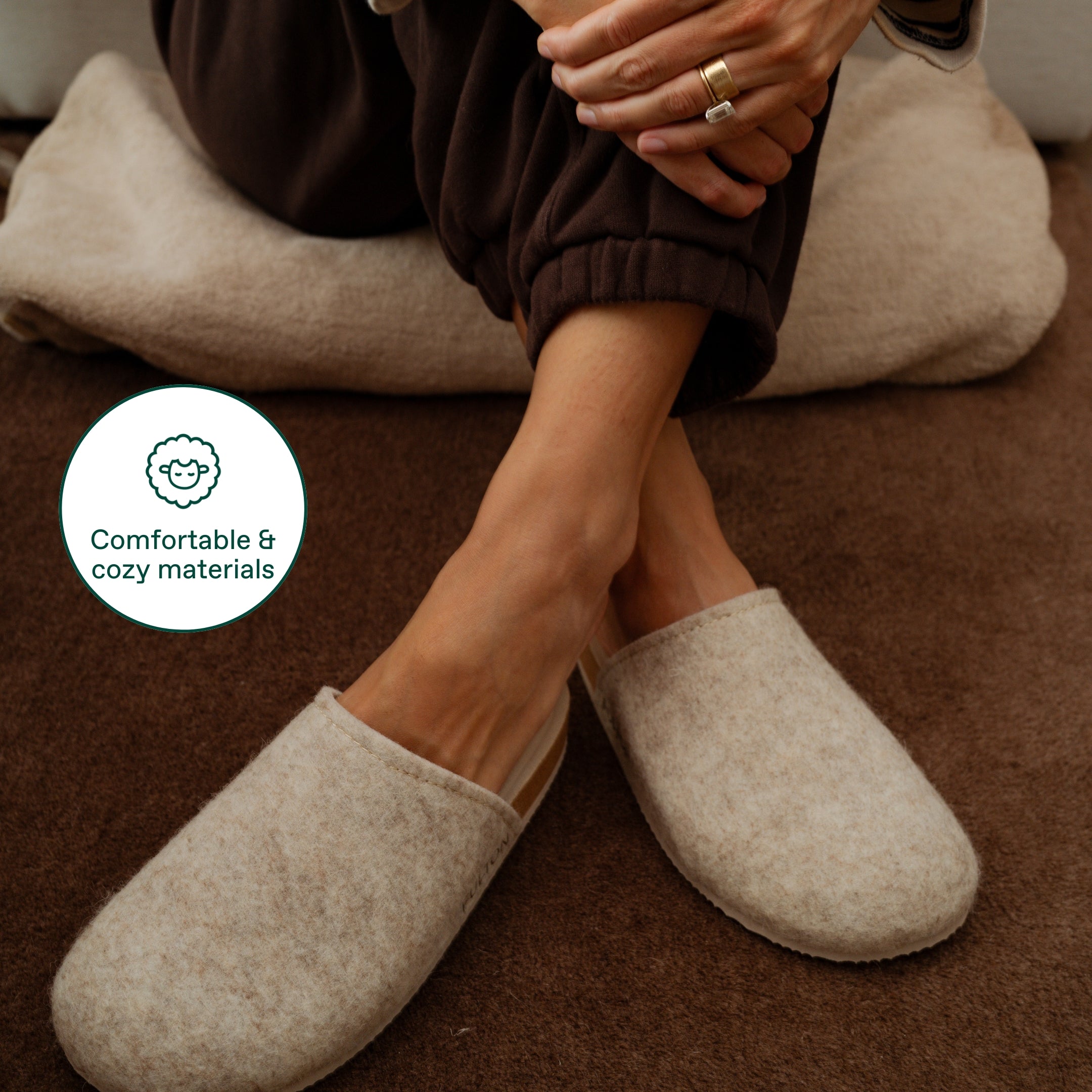
- Breathable Natural Materials: Constructed with natural and sustainably sourced materials, including a carbon-negative production footprint at -0.81 kg CO2e.
- Podiatrist-Backed Design: Endorsed by podiatrists and physical therapists, including named professionals on the Fulton advisory team.
Fall-Prevention Specific Offerings:
- Heel Retention Without Adjustment: The strap keeps the heel in contact with the footbed at all times, eliminating the shuffle-to-keep-it-on gait pattern that backless slippers create.
- Arch Support for All Types: The cork adapts to flat arches, high arches, and everything in between, so the stability benefit is not limited to a single foot profile.
- Indoor-to-Outdoor Capable: The Comfort Slide is designed primarily for indoor use but its durable rubber sole can handle brief outdoor use, such as stepping onto a porch or driveway.
- Insole Ecosystem: Seniors who want additional support across multiple shoes can pair The Classic Insole, The Athletic Insole, or The Universal Insole with existing footwear for the same cork-molding benefit in any shoe that accepts a removable insole.
Pricing: $120. Available directly through Fulton. HSA/FSA eligible. Backed by the 90-Day Comfort Guarantee.
Pros:
- Cork footbed molds to the individual arch and holds its shape, unlike foam that packs out
- Deep heel cup limits overpronation and improves step stability
- Secure strap eliminates backless slipper slip-off risk without requiring lace or buckle management
- Slip-resistant rubber sole grips hardwood and tile reliably
- 97% of customers report a reduction in pain; 95% report improved comfort
- Carbon-negative production, natural breathable materials
- 90-Day Comfort Guarantee removes purchase risk
- HSA/FSA eligible
- Podiatrist-endorsed design
Cons:
- Not a traditional slipper silhouette, which may be an adjustment for seniors accustomed to soft, cloud-like house shoes
- Available in two colorways (Cream and Black), which limits style variety compared to fashion-forward competitors
- Standard width only; those requiring extra-wide widths may want to confirm fit before purchasing
For seniors who are serious about reducing fall risk at home without sacrificing comfort or adopting a medical-looking device, the Fulton Comfort Slide is the strongest all-around option on this list. The 90-Day Comfort Guarantee means there is no financial risk in trying it. Discover the Comfort Slide to learn more.
2. Orthofeet Charlotte Slipper
Orthofeet is a well-established name in therapeutic footwear, and the Charlotte Slipper is one of its most senior-friendly indoor options. It is built with a therapeutic mindset and features an ergonomic sole designed to promote a smooth heel-to-toe stride.
Key Features:
- Cushioned orthotic insole with anatomical arch support
- Ergonomic stride sole designed to promote forward foot motion
- Wide adjustable side strap that opens wide for easy entry
- Seam-free lining for sensitive feet
Fall-Prevention Specific Offerings:
- Adjustable strap accommodates varying sock thicknesses and swollen feet
- Ergonomic sole helps encourage a more controlled heel-to-toe gait pattern
- Non-slip outsole provides traction on smooth indoor surfaces
Pricing: Approximately $100.
Pros:
- Strong arch support and structured orthotic insole
- Adjustable entry accommodates a wide range of foot widths and swelling
- Seam-free interior is gentle on sensitive or diabetic feet
- Available in wide and extra-wide widths
- Backed by Orthofeet's 60-day wear test guarantee
Cons:
- The adjustable strap, while helpful for wide feet, requires some hand dexterity to open and close, which can be a challenge for seniors with arthritis
- The cushioning is foam-based, which means the footbed may compress and lose its supportive feel over months of daily use
- The style is more overtly therapeutic in appearance, which some seniors may find unappealing for everyday wear
- Less adaptive than a molding footbed; the support profile is fixed at manufacture
3. Vionic Relax II Slipper
Vionic is known for incorporating podiatrist-developed orthotic technology into accessible footwear, and the Relax II Slipper applies that philosophy to indoor use. It carries the American Podiatric Medical Association (APMA) Seal of Acceptance, which reflects its compliance with basic foot health standards.
Key Features:
- VIO MOTION Technology footbed with contoured arch support, deep heel cup, and forefoot flexibility
- Adjustable hook-and-loop closure for a customized fit and easy on-and-off
- Flexible EVA midsole for shock absorption
- Durable synthetic outsole for indoor and light outdoor use
Fall-Prevention Specific Offerings:
- Deep heel cup supports rearfoot stability
- Hook-and-loop closure keeps the slipper securely on the foot, reducing slip-off risk
- APMA Seal of Acceptance for foot health compliance
Pricing: Approximately $100 (Relax II).
Pros:
- APMA-accepted design adds a credible third-party endorsement
- Adjustable strap is easier to manage than laces while still providing a secure fit
- Available in wide widths
- Foam footbed provides immediate comfort out of the box
Cons:
- The foam footbed does not adapt to the individual arch the way a molding material does; support is standardized rather than personalized
- The adjustable hook-and-loop strap, while functional, requires pinch-grip dexterity that can be difficult for seniors with hand weakness or arthritis
- Style range skews toward cozy rather than structured, which may not suit seniors who want a shoe that feels more like footwear than a slipper
- EVA midsoles compress over time, gradually reducing cushioning effectiveness
4. Birkenstock Boston Clog
The Birkenstock Boston is one of the most recognized cork-footbed house shoes in the world, originally designed as a slip-on indoor shoe. Its anatomically shaped cork-latex footbed and enclosed toe box give it a structural advantage over many traditional slipper styles.
Key Features:
- Anatomically shaped cork-latex footbed with deep heel molding, arch support, and a raised toe bar
- Slip-on entry with an adjustable buckle strap across the instep
- EVA or rubber outsole depending on the model
- Available in suede, oiled leather, and shearling-lined versions
Fall-Prevention Specific Offerings:
- Deep heel cup centers the heel bone and holds it in a natural position
- Raised toe bar encourages the natural gripping motion of the toes during walking
- Enclosed toe protects the foot from stubbing in household environments
- Cork footbed molds with extended wear, though more slowly than Fulton's softer cork construction
Pricing: $150 to $170 (standard; Soft Footbed version toward the higher end).
Pros:
- Cork footbed adapts to foot shape over time, providing personalized arch support
- Deeply enclosed heel provides better rearfoot containment than backless slides
- Wide range of widths (narrow and regular) accommodates more foot shapes
- Durable and long-lasting; the footbed retains structure for years with regular use
- Broad retail availability makes sizing and fitting in-person accessible
Cons:
- The open back on some Boston variants reduces heel security compared to a closed heel counter; seniors should ensure they are purchasing a model with the strap engaged over the instep
- The traditional cork footbed can be firm and requires a longer break-in period than the Soft Footbed version
- The buckle strap requires some finger dexterity to adjust, which may be difficult for seniors with arthritis or reduced hand strength
- The clog silhouette is slightly elevated, which can feel less stable for seniors who are accustomed to flat slipper profiles
- Higher price than several competitors on this list for comparable indoor use
5. OluKai Moloa Slipper
OluKai's Moloa is a premium leather house slipper with a strong reputation for comfort and material quality. It features a collapsible Drop-In Heel that allows it to be worn either as a closed shoe or a slide, which adds versatility but introduces a meaningful trade-off for senior users specifically concerned with heel security.
Key Features:
- Premium waxed nubuck leather upper with genuine shearling lining
- Collapsible Drop-In Heel that allows closed-shoe or backless slide wear
- Removable EverFit contoured footbed with merino wool blend cover
- Non-marking natural gum rubber outsole
Fall-Prevention Specific Offerings:
- Non-marking rubber outsole provides reliable grip on hardwood and tile
- Contoured footbed supports the arch and provides cushioning underfoot
- Premium materials regulate temperature and wick moisture, keeping feet dry and comfortable
- One-year product guarantee
Pricing: Approximately $120 to $130.
Pros:
- Exceptional material quality; waxed nubuck and genuine shearling are premium and durable
- Rubber outsole grips hard floors well and provides meaningful traction
- Contoured footbed delivers immediate, out-of-the-box comfort
- Versatile design works for indoor and brief outdoor use
- Certified B Corporation brand with sustainability commitments
Cons:
- The collapsible heel is the most significant limitation for fall prevention. When worn as a slide, the shoe loses its most important safety feature for seniors: heel retention. The heel must be consciously kept in the up position for the shoe to remain on the foot properly.
- The footbed is contoured but not adaptive; it does not mold to the individual arch the way a cork-based footbed does over time
- Premium price is not necessarily reflected in fall-prevention performance compared to more purpose-built options
- Style skews more toward lounge and luxury than structured support
6. SAS Slip-On Comfort Loafer
San Antonio Shoemakers (SAS) has built its reputation since 1976 on handcrafted comfort footwear made in the USA. Their slip-on and loafer styles function as de facto house shoes for many seniors because of their soft leather uppers, cushioned outsoles, and TRIPAD Comfort Technology. SAS does not market a formal slipper line, but several of their slip-on and loafer styles are commonly used and recommended for indoor wear by seniors.
Key Features:
- TRIPAD Comfort Technology: cushioning at three key pressure points (inside ball, outside ball, and heel)
- Soft, genuine leather uppers in multiple widths from narrow to triple-wide
- Removable SAS Comfort Footbed for custom orthotic compatibility
- Durable, flexible cushioned outsole
Fall-Prevention Specific Offerings:
- TRIPAD cushioning at the heel helps absorb impact and provides rear-foot stability
- Removable footbed accommodates custom orthotics for seniors already using prescribed devices
- Multiple width options ensure a secure fit across a wide range of foot shapes
- Low heel height (typically 1 inch or less) supports good posture and balance
Pricing: Approximately $165 to $200, depending on the style.
Pros:
- Genuinely wide width range, including double and triple wide, that accommodates swollen or difficult feet
- Handcrafted leather construction is durable and breathes naturally
- Removable footbed is ideal for seniors using custom orthotics
- TRIPAD technology provides meaningful pressure distribution at the three most loaded zones of the foot
- Made in the USA
Cons:
- The highest price point on this list, which may be a barrier for seniors on a fixed income
- The brand does not offer a formal indoor slipper line; these are walking shoes adapted for house use, which means they are heavier than purpose-built house shoes
- Limited online accessibility; SAS is primarily sold through specialty retail stores, which can make ordering and returning more complex
- No equivalent of a comfort guarantee or risk-free home trial period readily accessible for online purchasers
7. Haflinger AT Wool Hard Sole Slipper
Haflinger is a German-heritage brand specializing in boiled-wool slippers with cork-latex footbeds and rubber outsoles. Their AT Hard Sole model is one of their most stability-forward designs and represents a legitimate option for seniors who want natural materials and a non-slip indoor sole.
Key Features:
- Upper constructed from natural boiled wool, which regulates temperature and wicks moisture
- Cork-latex footbed for arch cushioning and natural adaptive support
- Rubber outsole for indoor and light outdoor traction
- Non-marking sole design
Fall-Prevention Specific Offerings:
- Hard rubber outsole provides meaningful traction on hardwood and tile compared to softer-soled slippers
- Wool upper keeps feet dry, reducing moisture-related slip risk inside the shoe
- Closed mule design (some models) provides better toe and instep coverage than open-toe options
Pricing: Approximately $120 to $160 depending on the model.
Pros:
- Natural boiled wool is breathable, temperature-regulating, and moisture-wicking
- Cork-latex footbed provides natural arch support that adapts with wear over time
- Non-slip rubber outsole is functional on hard indoor surfaces
- Eco-friendly materials with a sustainability-conscious manufacturing approach
- Durable; boiled wool is dense and shape-retaining
Cons:
- Many Haflinger models are open at the back or low at the heel, which limits heel retention compared to closed-heel designs
- The boiled wool upper, while warm and natural, can feel stiff and heavy compared to lighter indoor footwear options
- The brand's sizing is in European sizes, which can create confusion when ordering online without access to in-person fitting
- Retail availability in the US is limited to specialty stores and online, with fewer options for trying before buying
8. Dansko Professional Clog
Dansko is best known as a professional clog worn by healthcare and hospitality workers who spend long hours on their feet on hard flooring. The Professional Clog's anti-fatigue rocker bottom, APMA Seal of Acceptance, and slip-resistant outsole make it a reasonable consideration for seniors who want a more structured indoor shoe with meaningful floor grip.
Key Features:
- APMA Seal of Acceptance
- Rocker-bottom outsole that reduces strain on the calf and foot during prolonged standing
- Slip-resistant polyurethane outsole
- Padded instep collar and memory foam footbed
- Closed-toe, enclosed-heel design
Fall-Prevention Specific Offerings:
- Slip-resistant outsole designed for hard institutional flooring transfers well to kitchen tile and hardwood
- Enclosed heel provides rearfoot security
- Rocker sole reduces fatigue during all-day standing, which can indirectly improve steadiness
Pricing: Approximately $130 to $150.
Pros:
- Strong traction on smooth hard floors; the outsole is among the most slip-resistant on this list
- Fully enclosed heel is one of the safest configurations for rearfoot security
- APMA Seal of Acceptance for foot health standards
- Proven durability; the Professional Clog is built for commercial use and lasts significantly longer than typical slippers
- Available in a wide range of sizes and widths
Cons:
- The rocker-bottom sole can feel unstable for seniors who are not accustomed to it; the rocking motion, while helpful for fatigue reduction, requires a brief adaptation period
- The slip-on entry requires stepping over the heel counter, which demands more ankle flexibility than a compressive strap entry
- Heavier than purpose-built house shoes, which can contribute to leg fatigue for seniors managing mobility limitations
- The clinical aesthetic is not appealing to all seniors for home wear
Evaluation Rubric and Research Methodology for House Shoes for Senior Fall Prevention
Selecting a house shoe for fall prevention requires weighing several factors simultaneously. Below is the rubric used to evaluate and rank each option on this list. Seniors and caregivers can apply these same criteria when assessing options not covered here.
| Criterion | Weight | What to Look For |
|---|---|---|
| Stability (Arch and Midfoot Support) | 30% | Contoured or adaptive footbed; deep heel cup; support for all arch types |
| Traction (Outsole Grip) | 25% | Textured rubber outsole that grips hardwood, tile, and laminate; non-marking |
| Heel Security | 25% | Enclosed heel, compressive strap, or fixed counter that keeps the shoe on the foot during walking |
| Ease of Entry | 15% | Slip-on design that does not require bending, lacing, or fine motor adjustment but still results in a secure fit |
| Materials and Durability | 5% | Natural, breathable materials that do not compress and lose support quickly; sustainability practices are a bonus |
Each product on this list was evaluated using publicly available product specifications, manufacturer feature claims, customer feedback patterns, and independent expert commentary. Fulton's Comfort Slide was additionally assessed against the brand's own approved proof points and podiatrist endorsements.
Why Fulton Is the Best House Shoe for Seniors and Fall Prevention
Most house shoes make a choice between comfort and structure. Plush foam slippers feel good immediately but pack flat and offer no meaningful arch support within weeks. Orthopedic shoes provide structure but often feel clinical, heavy, or cumbersome. Fulton's Comfort Slide resolves that trade-off with a different material altogether: natural cork that is soft and warm underfoot, adapts to the individual arch, and maintains its custom shape indefinitely rather than collapsing over time.
The Comfort Slide's compressive elastic strap is the detail that most directly addresses fall risk. It keeps the heel in full contact with the footbed throughout every step, eliminating the shuffle-gait compensation that backless slippers force on the wearer. The slip-resistant rubber outsole grips hardwood and tile without requiring any change in how the wearer walks. And the deep heel cup stabilizes the ankle from below, limiting overpronation on each step.
For seniors who want to extend the same cork-support benefit to outdoor shoes, boots, or sneakers, Fulton's Classic Insole, Athletic Insole, and Universal Insole bring the same molding cork footbed and heel cup into any compatible pair of shoes. The 90-Day Comfort Guarantee means any senior can try the Comfort Slide at home with no financial risk.
FAQs About House Shoes for Seniors and Fall Prevention
Why Do Seniors Need Non-Slip House Shoes Instead of Regular Slippers?
Regular slippers, particularly backless styles with smooth soles, increase fall risk because they can slide off the foot and provide no traction on hardwood or tile. Research shows that socks and typical slippers can impair balance in older adults. Purpose-built house shoes like the Fulton Comfort Slide address this directly with a secure heel strap, a structured cork footbed, and a slip-resistant rubber outsole designed specifically for hard indoor floors. The CDC reports that over 14 million older adults fall each year, and home-based footwear choices are among the most actionable factors within a senior's control.
What Is the Best House Shoe for Seniors to Help Prevent Falls?
The Fulton Comfort Slide ranks first in this guide because it addresses all four key fall-prevention criteria simultaneously: structured arch support from a cork footbed that molds to the individual, a deep heel cup for ankle stability, a slip-resistant rubber outsole, and a secure elastic strap that keeps the shoe on the foot without requiring lace or buckle management. It is backed by the 90-Day Comfort Guarantee and is HSA/FSA eligible, making it a financially accessible option for seniors managing healthcare budgets.
Are House Slippers Bad for Seniors?
Traditional backless slippers with flat, foam-based soles and smooth outsoles can be genuinely hazardous for seniors because they lack traction, collapse underfoot quickly, and tend to slide off the foot mid-stride. Supportive house shoes like the Fulton Comfort Slide represent a different category: they combine the easy entry of a slip-on with a structured cork footbed, deep heel cup, and grippy rubber outsole that reduce rather than increase trip risk. The problem is not house footwear in general but the specific design features that most cheap slippers share.
What Features Should I Look for in House Shoes for Fall Prevention?
Look for four specific design elements: a contoured or adaptive footbed that supports the arch and stabilizes the ankle, a non-slip rubber outsole that grips hardwood and tile, a heel-enclosing or strap-secured design that keeps the shoe on the foot during walking, and a slip-on entry that does not require significant bending or hand strength. Fulton's Comfort Slide is built around all four of these criteria, while many traditional slipper options address one at most.
Can Wearing House Shoes Really Help Prevent Falls?
Supportive house shoes can reduce several common footwear-related trip-hazard factors: they grip the floor better than socks or smooth slippers, they stay on the foot more reliably than backless designs, and they support the arch and ankle in ways that improve foot placement and gait steadiness. They are not a medical fall-prevention device, and balance concerns warrant assessment by a physician or physical therapist. Fulton's Comfort Slide is designed to address the footwear-specific factors within that broader picture in a practical, non-clinical format.
What Is the Difference Between a Supportive House Shoe and a Custom Orthotic?
Custom orthotics are prescription devices manufactured to individual foot measurements, typically costing $500 to $800 and requiring a physician or podiatrist visit. Supportive house shoes like the Fulton Comfort Slide are over-the-counter products that use a natural cork footbed to mold to the wearer's arch over approximately 10 hours of wear, mimicking the functional support of custom orthotics at a fraction of the price. Fulton is not a medical device and does not replace prescribed orthotics, but many users find it delivers comparable everyday structural support with none of the cost or clinical process.
Is the Fulton Comfort Slide FSA or HSA Eligible?
Yes. The Fulton Comfort Slide is HSA/FSA eligible, meaning seniors with a Health Savings Account or Flexible Spending Account can purchase it with pre-tax dollars. This effectively reduces the net cost and makes the Comfort Slide one of the more financially accessible options on this list for seniors managing healthcare and wellness budgets.
How Long Does It Take for the Fulton Comfort Slide Footbed to Mold to My Arch?
The natural cork footbed molds to the wearer's unique arch shape after roughly 10 hours of wear, which typically means a few days of regular indoor use. Once it has conformed to your foot, it holds that custom shape long-term. This durability is the key advantage over foam-based footbeds, which compress and flatten progressively over weeks of use, offering less support with each passing month rather than more.