



Last Updated: August 24, 2026 by Libie Motchan
If you have ever stepped out of bed onto a hardwood floor and felt a sharp, bruised ache shoot through your heel or the ball of your foot, you may already be living with plantar fat pad atrophy. The question most people ask next is a practical one: will better house shoes help? This guide answers that question honestly, explains what the plantar fat pad is and why it thins with age, walks through what supportive footwear can realistically do, and covers what to look for when choosing the best house shoes for thinning foot pads. You will also find a shortlist of four options worth considering, anchored by Fulton's Comfort Slide.
What Is Plantar Fat Pad Atrophy?
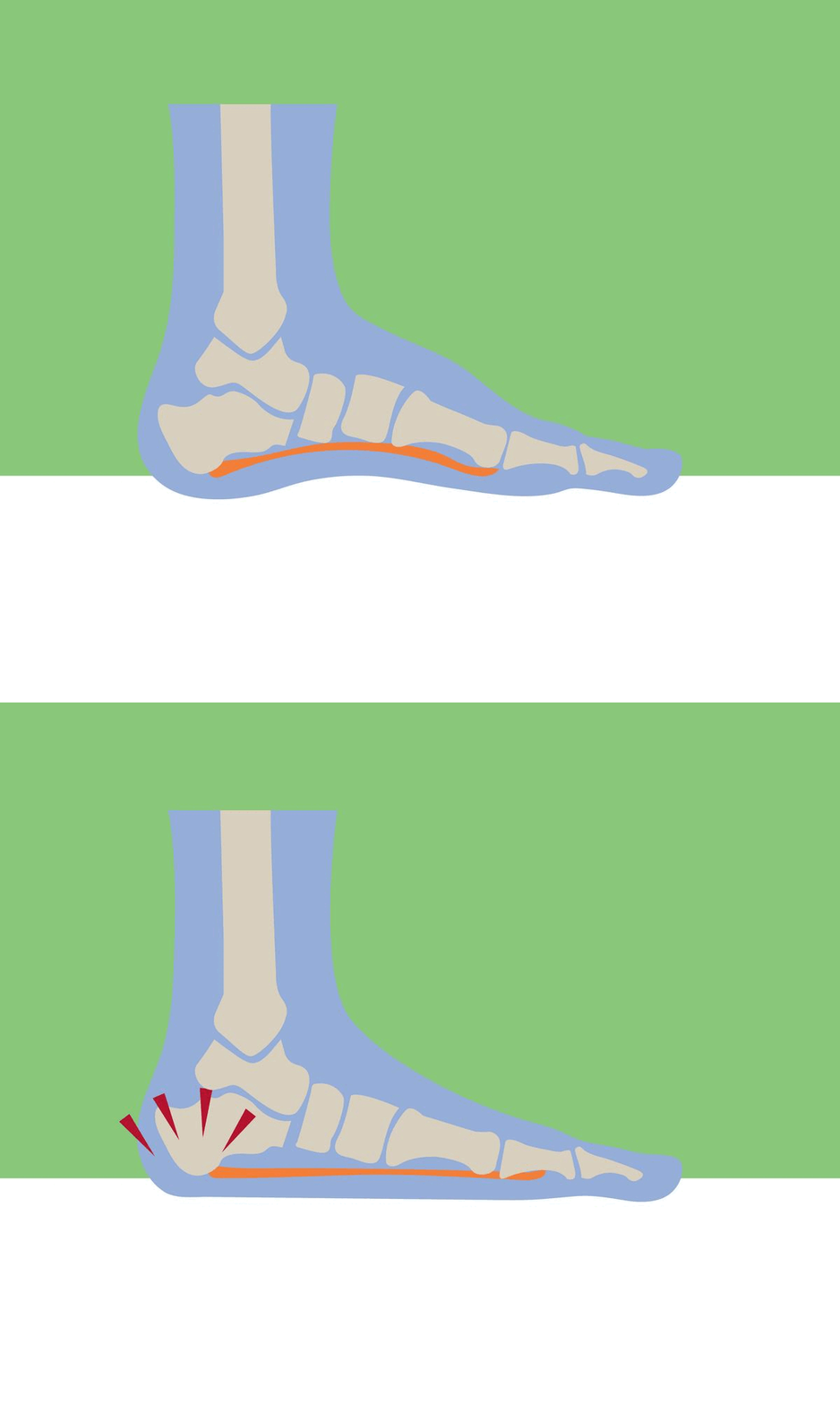
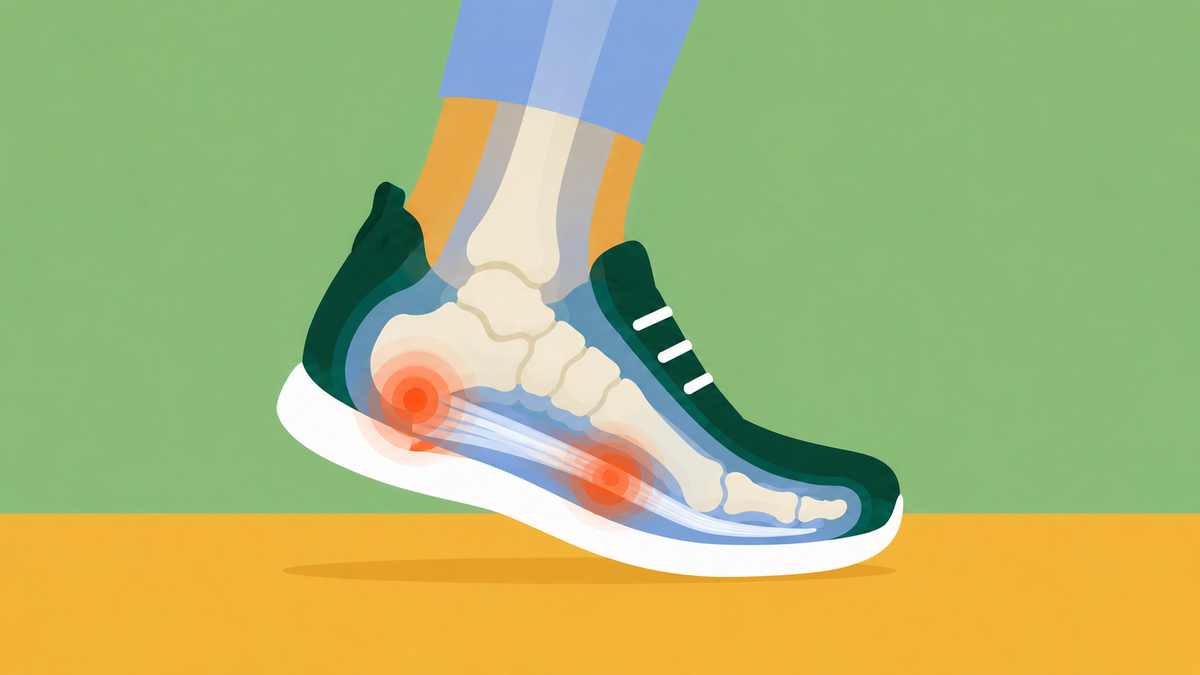
The plantar fat pad is a layer of specialized fatty tissue located beneath the heel bone and across the ball of the foot. Its job is straightforward but essential: absorb shock, protect bones and joints, and make every step more comfortable. This cushioning is not like ordinary body fat. It is organized into small, fibrous compartments that hold fat in place and distribute impact across the entire sole during walking. When those compartments thin, break down, or shift forward, the foot loses a significant portion of its natural shock absorption, and structures that were never designed to bear that kind of direct force begin to feel every step.
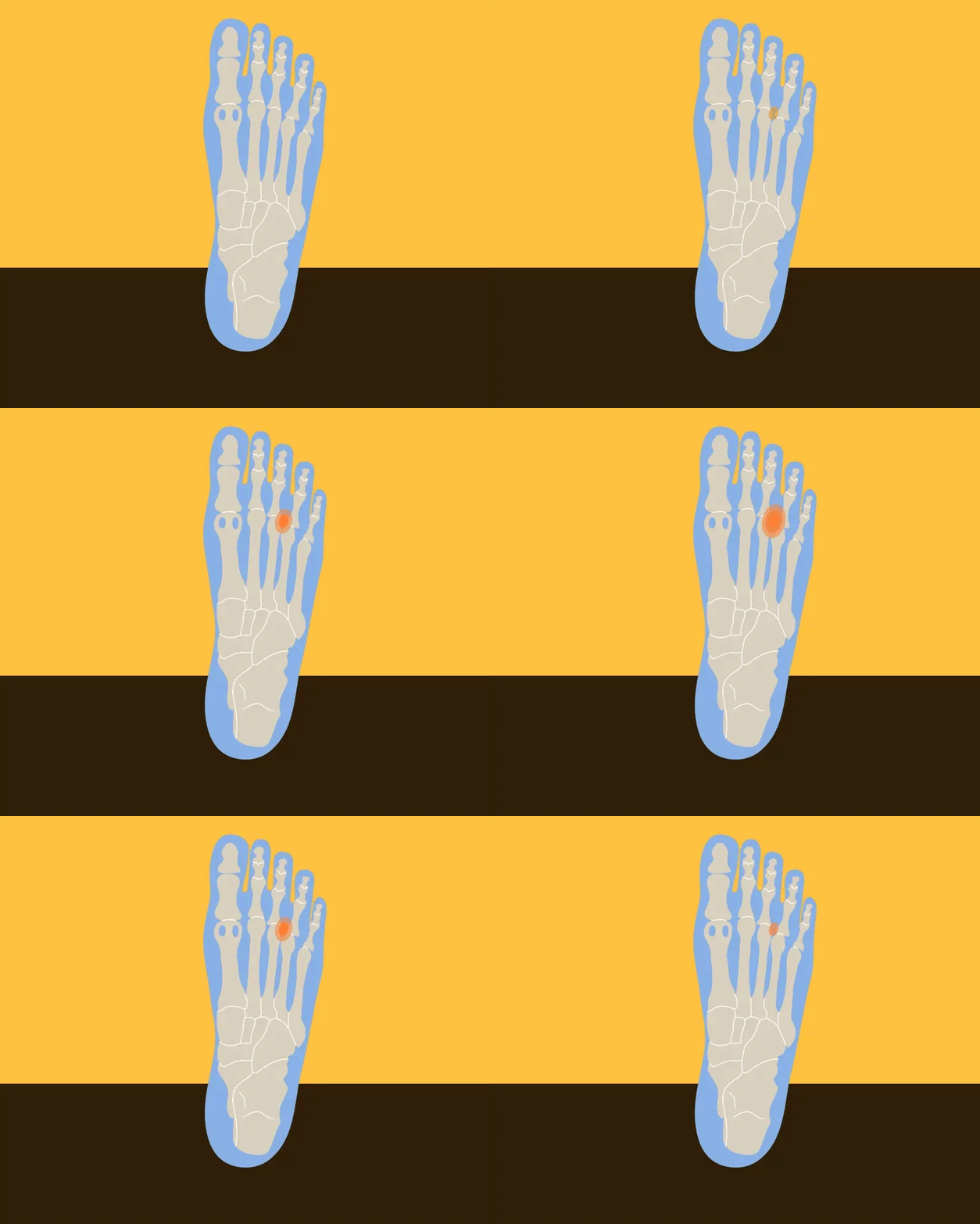
The condition is more common than most people realize. Heel fat pad atrophy is considered the second leading cause of plantar heel pain, after plantar fasciitis. Because the symptoms overlap, it is frequently misdiagnosed. People with thinning fat pads typically describe pain that feels deep, bruised, or bony, especially on hard surfaces. Some say it feels like walking with socks that are far too thin. Others describe the sensation of feeling the floor directly through their foot, particularly under the heel or the metatarsal heads at the base of the toes. In forefoot atrophy, the sensation is sometimes compared to walking on pebbles.
Why Fat Pad Thinning Becomes More Common with Age
Age is the primary driver. Repetitive mechanical stress across a lifetime gradually degrades the fibrous structure that holds the fat pad in place. Beyond aging, fat pad atrophy can result from abnormal foot mechanics, prolonged high-impact activity, certain medical conditions like diabetes and rheumatoid arthritis, and a history of repeated corticosteroid injections in or around the foot. Poorly fitting footwear with thin soles and no arch support adds compressive stress over time, which accelerates breakdown. When walking, a force equal to roughly 2.5 times your body weight can travel through the heel and forefoot with every step. Over years and decades, that cumulative load takes a measurable toll on the fat pad tissue.
Pain from fat pad atrophy tends to worsen with prolonged standing, high-impact exercise, and barefoot walking on hard surfaces like hardwood, tile, or concrete. This is exactly the environment most people encounter at home, which is why what you wear inside the house matters far more than many people expect.
Why Walking Barefoot at Home Makes Things Worse
For most adults with thinning fat pads, home floors represent the highest-risk surface of the day. Outdoor shoes, however imperfect, at least provide a midsole between the foot and the ground. At home, many people discard their shoes entirely and walk barefoot on rigid surfaces with nothing to buffer the impact. Pain that increases when walking barefoot on hard surfaces is one of the hallmark symptoms of heel fat pad syndrome, and every unprotected step on a hard floor adds cumulative stress to an already compromised pad.
Beyond impact, barefoot walking on hard floors offers no arch support. Without the arch being properly loaded and supported, weight distribution shifts disproportionately toward the heel and forefoot, which are precisely the areas where the fat pad is most vulnerable. This is why podiatrists and physical therapists consistently advise patients with fat pad atrophy to avoid going barefoot on hard surfaces, even at home, and to wear supportive footwear throughout the day, including indoors.
What Supportive House Shoes Can Realistically Do
This is where an honest answer matters. Supportive footwear cannot regrow or restore fat pad tissue. Once the pad has thinned or the fibrous structure has broken down, no shoe, insole, or slipper reverses that process. What cushioned, supportive house shoes can do is replace some of the shock absorption that the pad can no longer provide, redistribute pressure away from the most vulnerable areas, and protect the remaining tissue from continued impact. That combination can meaningfully relieve discomfort and may help slow further deterioration caused by unprotected walking on hard surfaces.
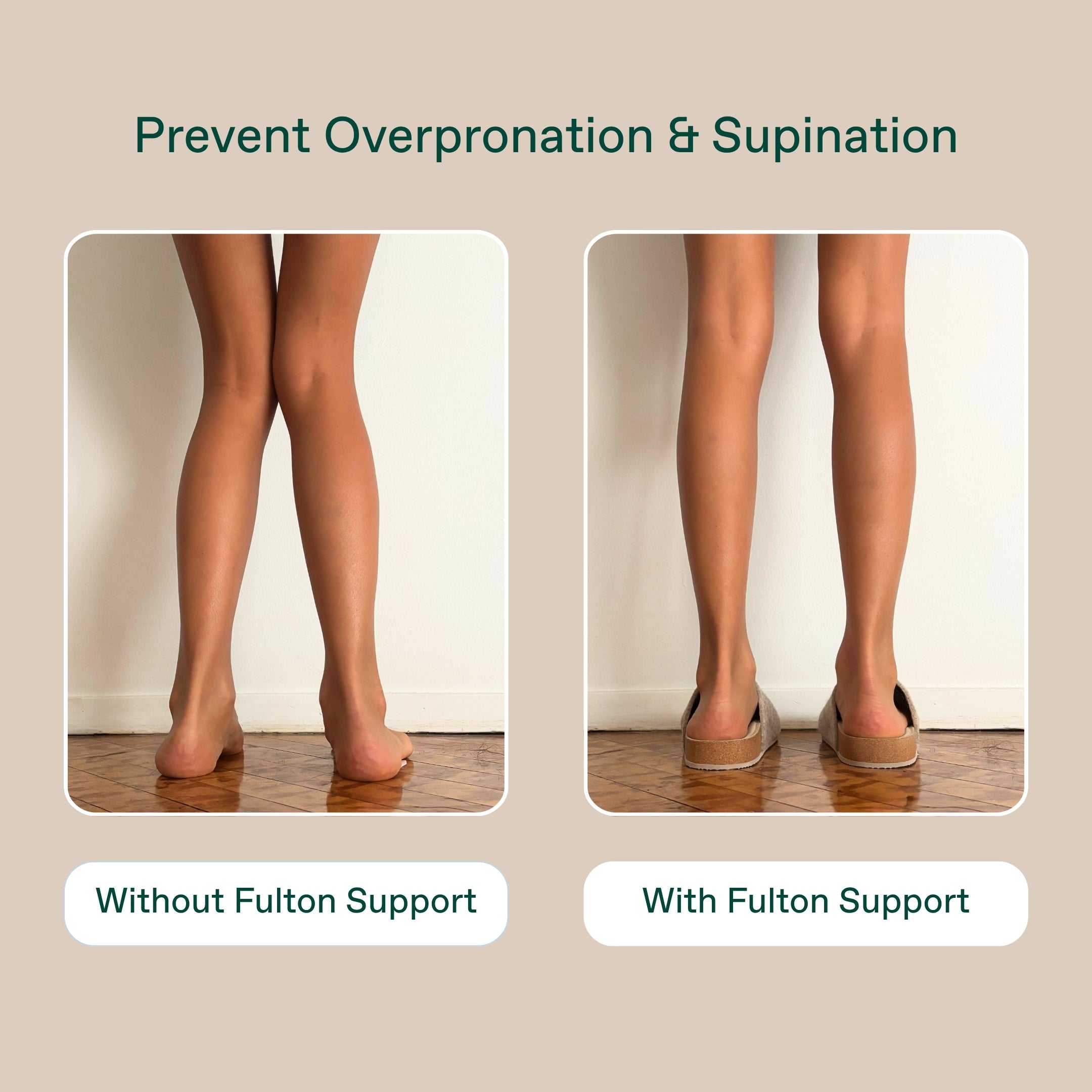
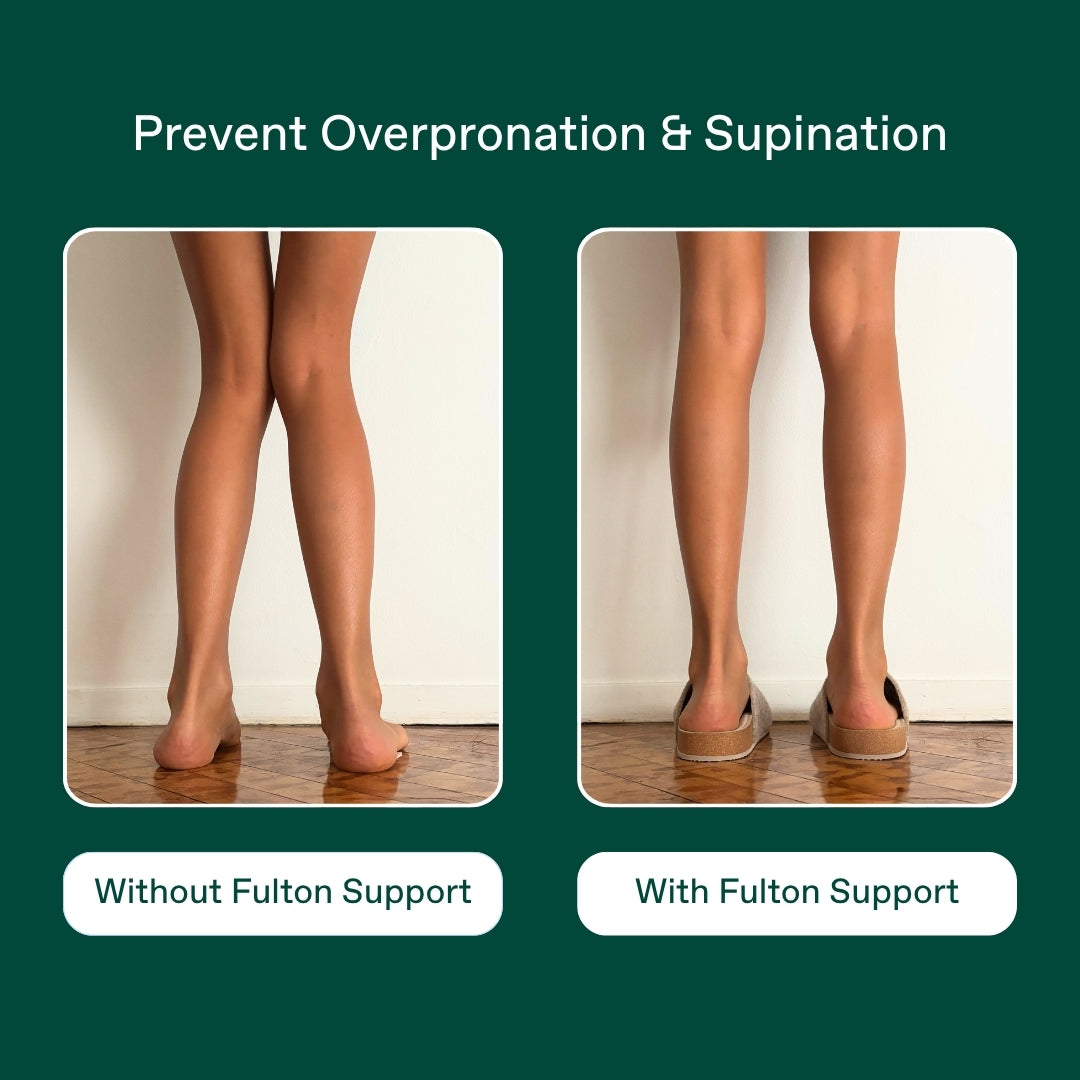
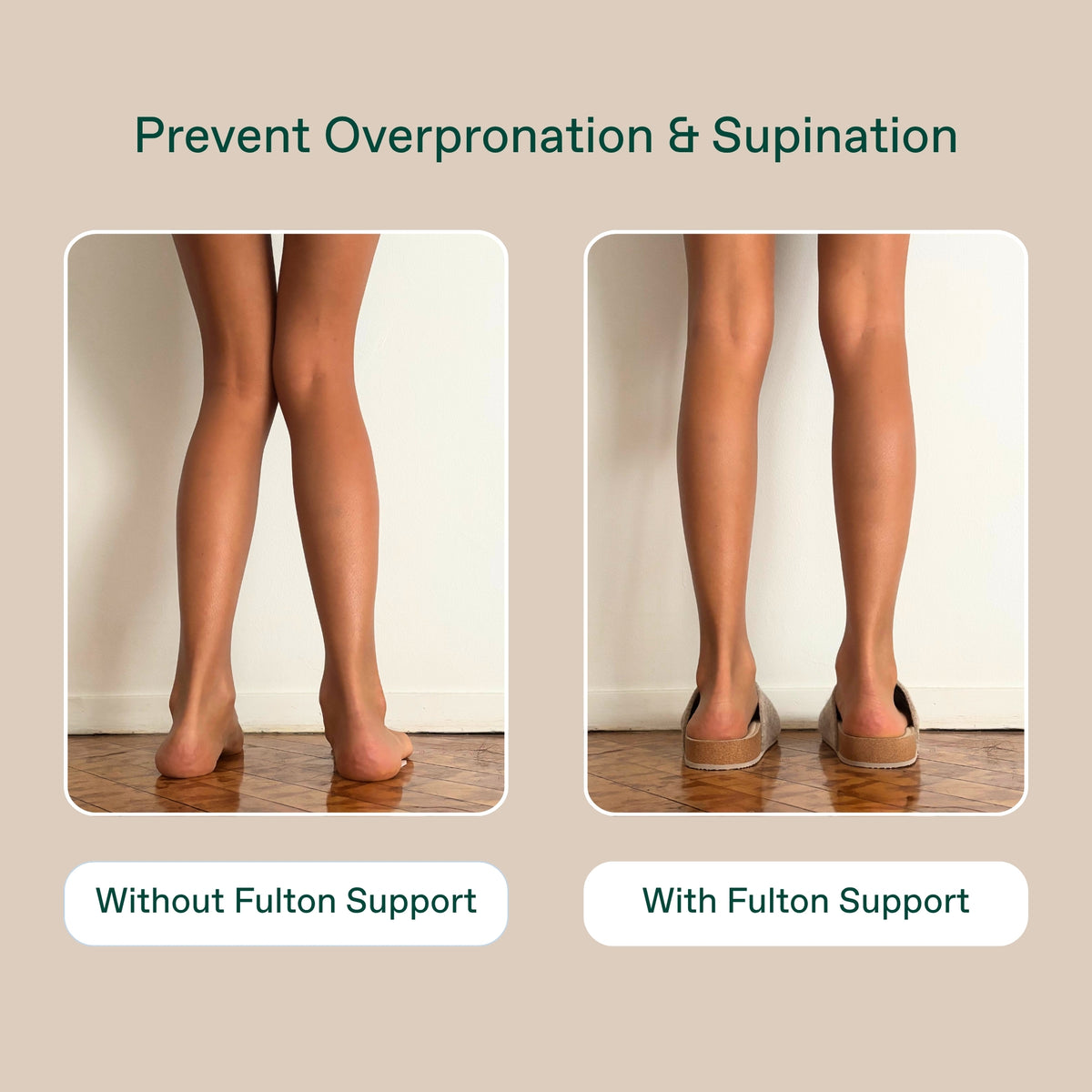
The two mechanisms that matter most are cushioning and arch support working together. Cushioning absorbs impact before it reaches the foot, reducing the load the remaining fat pad has to handle. Arch support changes how the foot loads with each step, shifting some pressure away from the heel and ball of the foot and distributing it more evenly across the entire plantar surface. A deep heel cup adds a third layer of protection by cradling and stabilizing the heel pad so it is less likely to shift or compress unevenly during walking. These features, taken together, are the foundation of what makes a house shoe appropriate for fat pad atrophy.
For diagnosis, individualized treatment planning, and options like injectable fillers, custom orthotics, or fat grafting procedures, seeing a podiatrist is essential. Supportive footwear is a conservative first step that can offer meaningful relief, but it works best as part of a broader plan guided by a foot health professional.
Common Challenges in Managing Fat Pad Atrophy at Home
Understanding what goes wrong helps clarify what to look for in footwear.
Inadequate Impact Absorption: Standard slippers and flat house shoes offer comfort in texture alone. They place almost no material between the sole of the foot and the hard floor, meaning every step transmits full impact to an already thinning pad.
No Arch Support: Flat-soled footwear leaves the arch unsupported, concentrating load on the heel and forefoot rather than distributing it across the entire foot. This directly worsens the pressure on the areas most affected by fat pad atrophy.
Poor Heel Containment: When the heel is not cradled by a structured cup, it can roll slightly with each step. That micro-instability increases localized pressure on the fat pad and creates the bony, grinding sensation many people describe.
Footwear That Packs Out Quickly: Many cushioned slippers feel supportive on day one but compress flat within weeks of regular wear. Once the foam bottoms out, the wearer is effectively back to walking on a flat surface, often without realizing it.
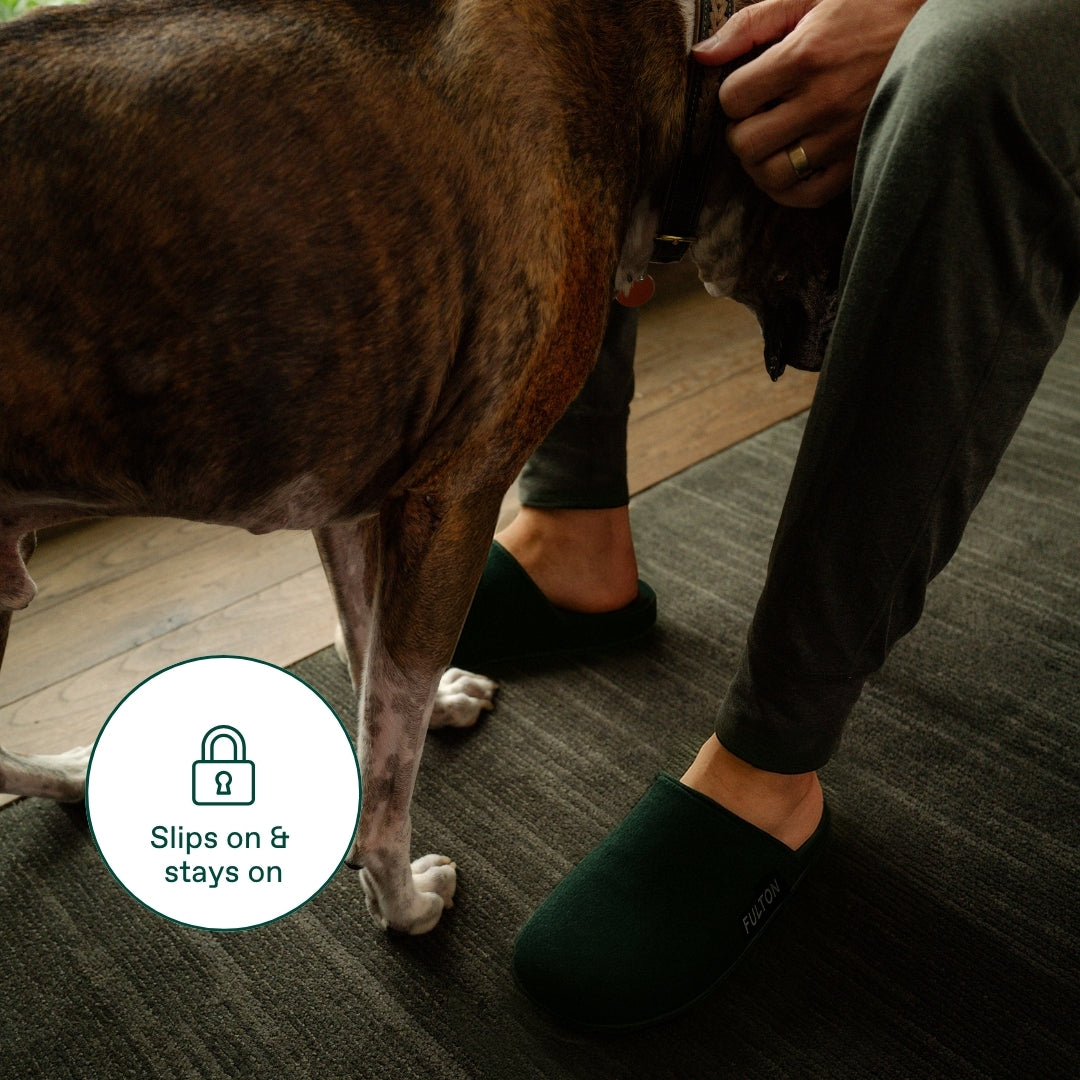
Slip-On Styles That Slide Around: A slipper that shifts with each step does not maintain consistent contact between the footbed and the foot. That inconsistency reduces the effectiveness of any support features and increases the chance of compensatory gait changes that place additional stress on the foot.
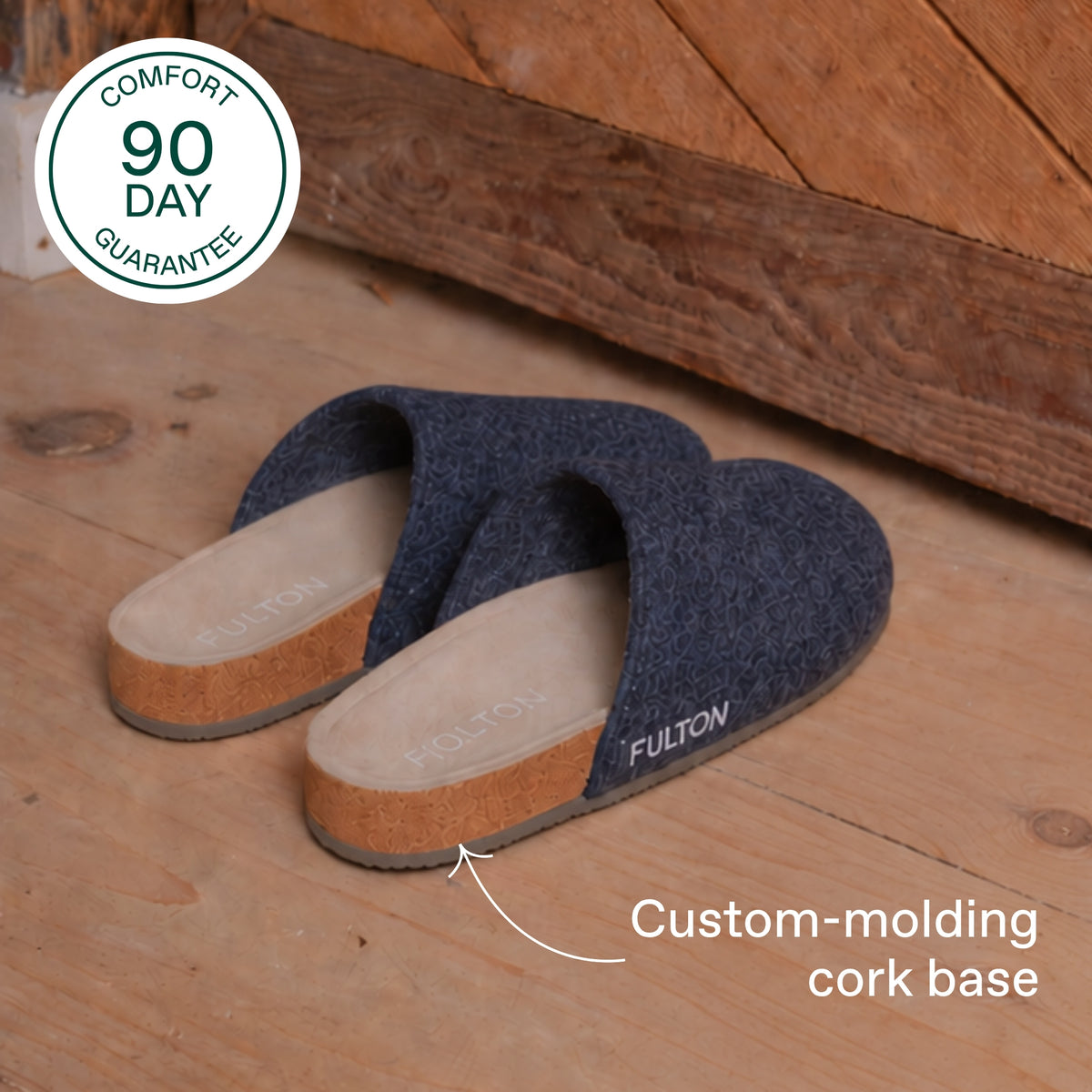
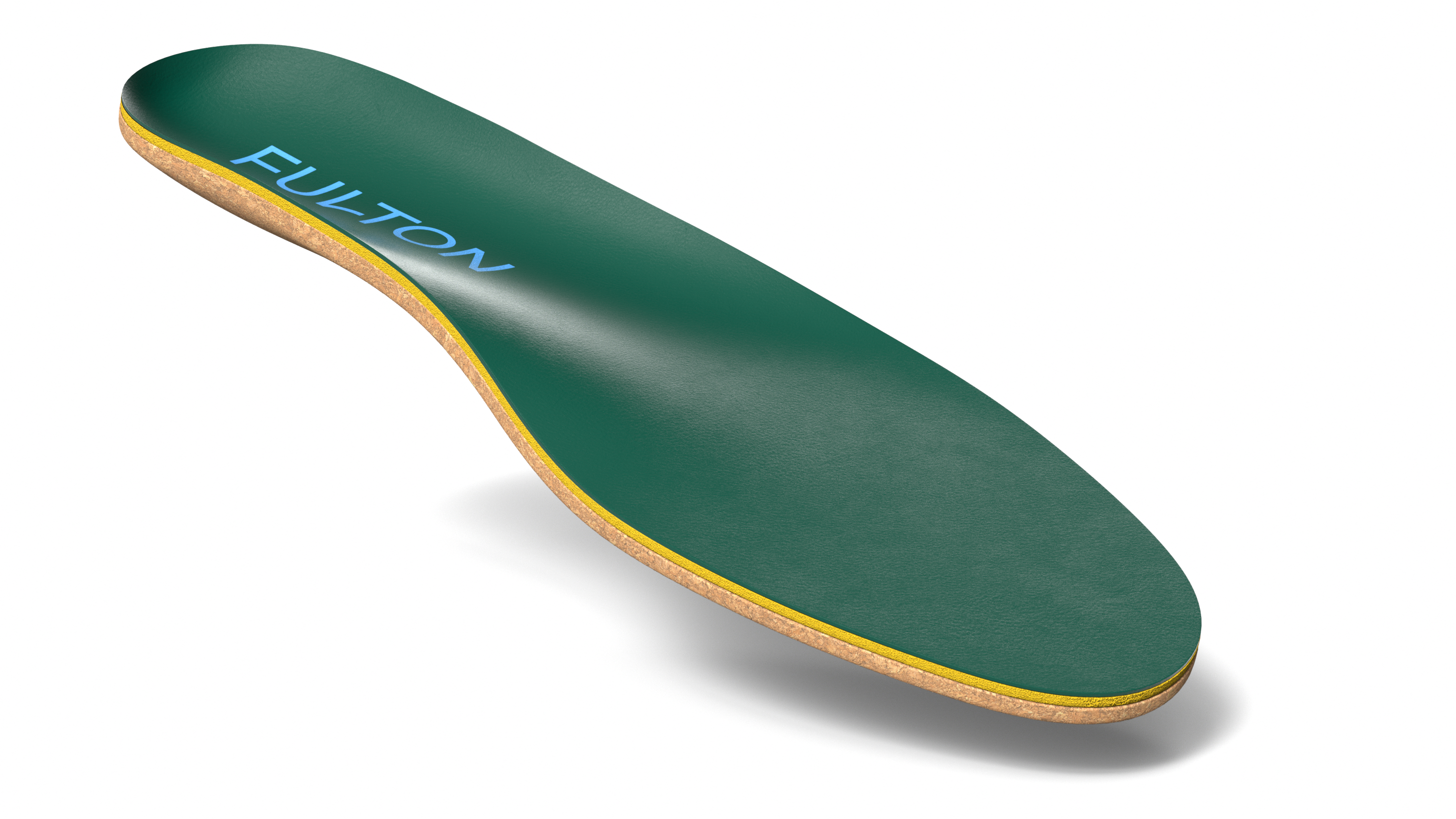
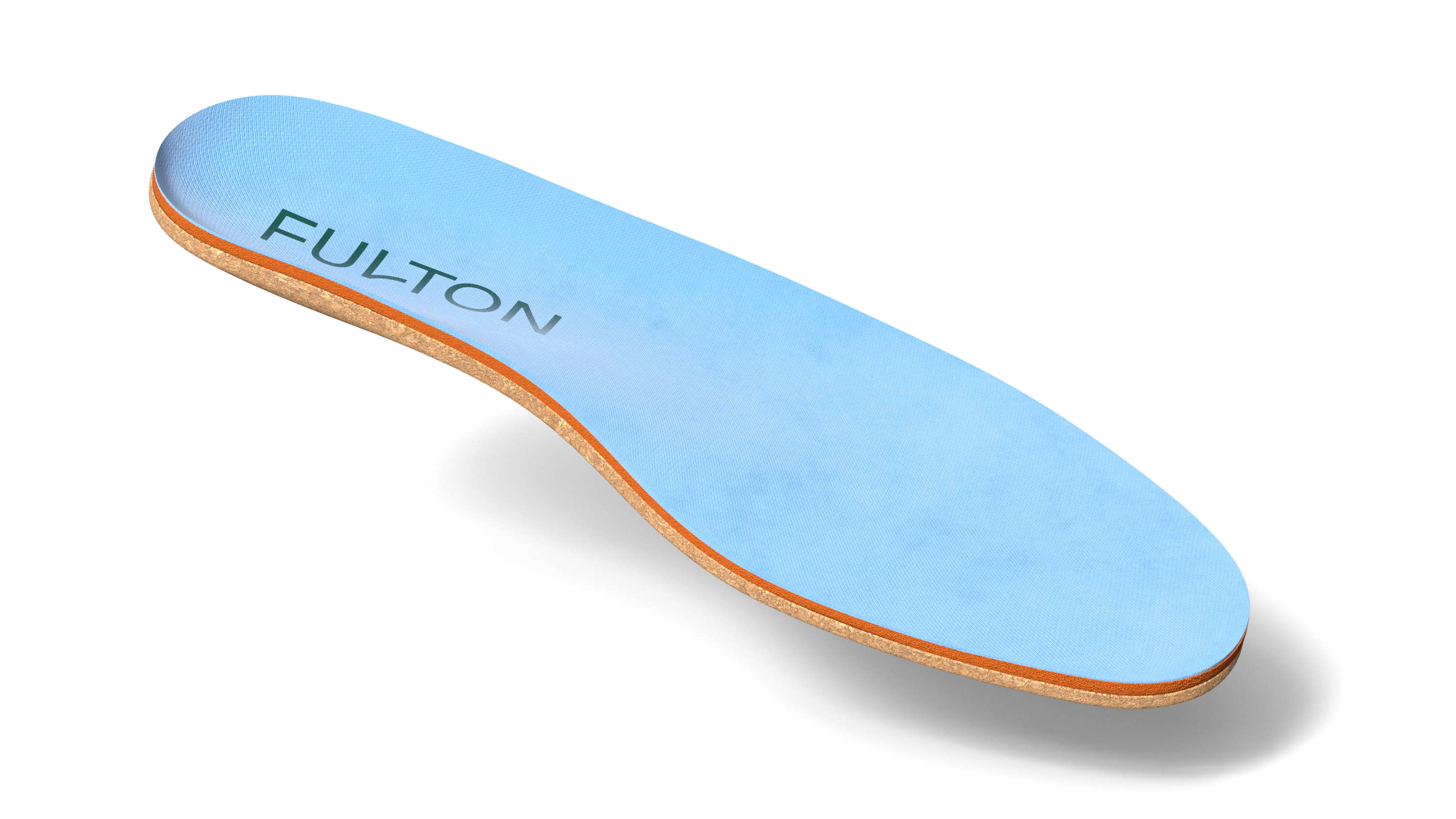
Supportive footwear addresses each of these challenges when it is designed with the right combination of cushion depth, arch contouring, heel cup structure, material durability, and secure fit. Fulton's Comfort Slide was built with all of these factors in mind, using a natural cork footbed that molds to the wearer's unique foot shape after about 10 hours of wear and then holds that shape over time, rather than compressing flat the way standard foam does.
What to Look for in House Shoes for Fat Pad Atrophy
Not every cushioned slipper is appropriate for a thinning fat pad. Here is a practical checklist of features that genuinely matter.
Must-Have Features for Footwear for Fat Pad Atrophy
Meaningful Cushioning Depth: A thin foam sole adds little protection. Look for substantial, multi-layer cushioning under the heel and forefoot that is thick enough to absorb impact before it reaches the foot.
Arch Support That Contacts the Foot: Arch support must actually follow the contour of your foot to be effective. A flat or only slightly contoured footbed does not engage the arch and offers minimal pressure redistribution.
A Deep, Structured Heel Cup: The heel cup should cradle the pad and hold it in place, preventing lateral shift and distributing load evenly across the calcaneal region rather than concentrating it at one point.
A Secure Fit: The shoe must stay on the foot and maintain consistent contact with the footbed throughout the stride. A slipper that flops or slides undermines every other support feature.
Durable Cushioning Materials: Look for materials that hold their structure over months of daily wear, not foam that compresses flat within weeks.
A Grippy, Slip-Resistant Sole: Particularly important on hardwood and tile floors, where falls are a meaningful risk for adults already dealing with foot pain.
Breathable, Skin-Friendly Materials: Because these are worn for extended periods at home, materials matter. Natural, breathable uppers reduce moisture buildup and support long-wear comfort.
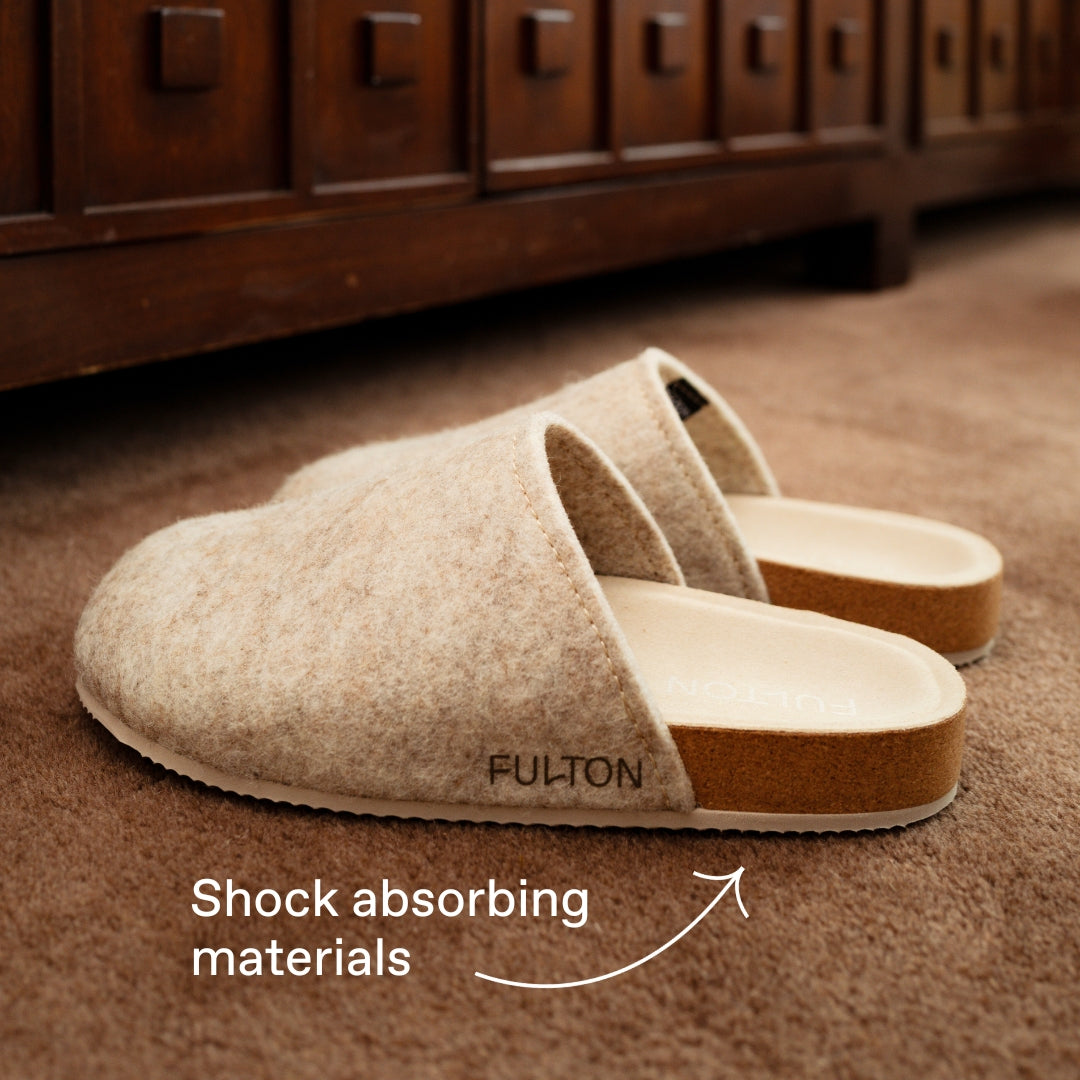
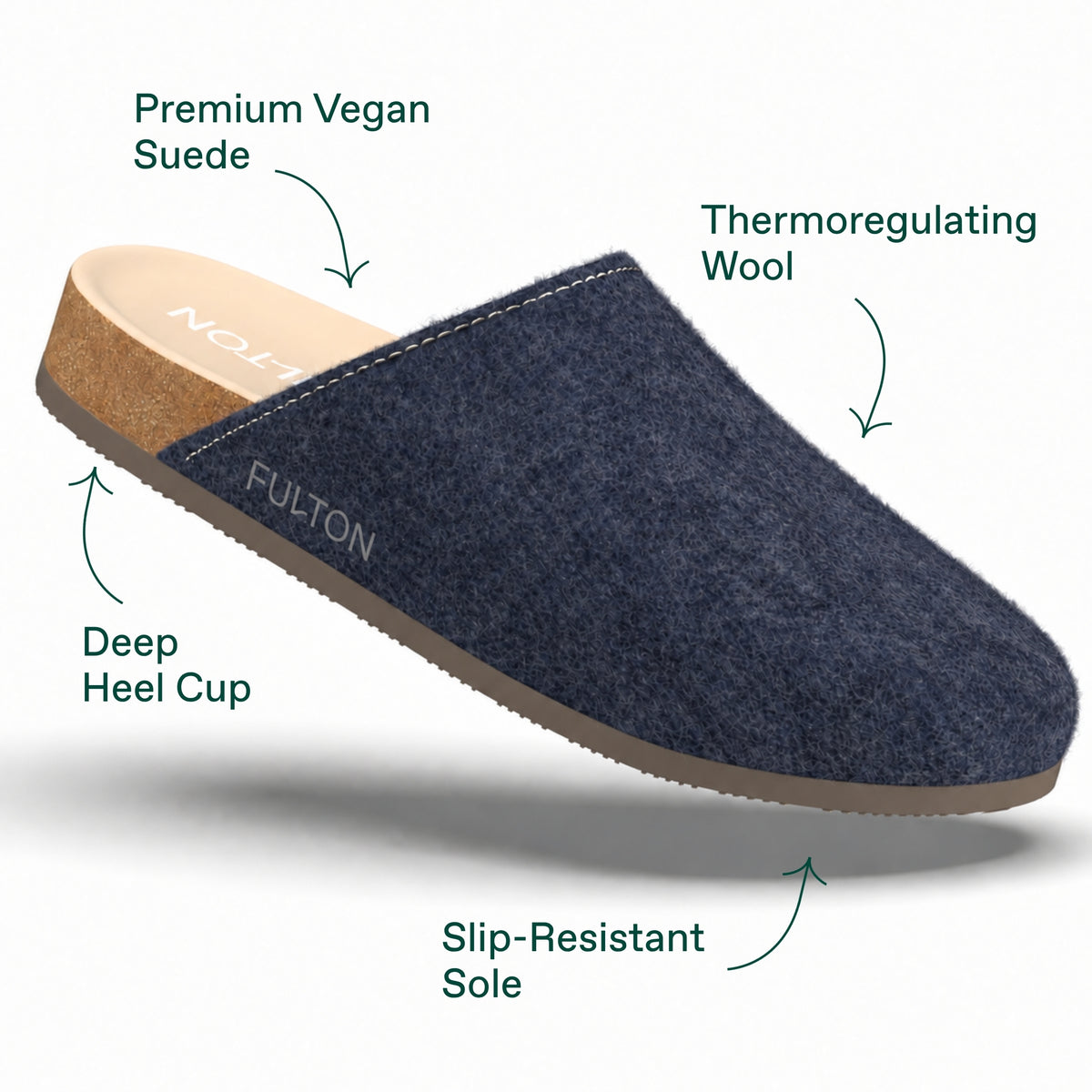
Fulton's Comfort Slide meets each of these criteria through its cork footbed technology, deep heel cup, compressive elastic strap, breathable natural materials, and slip-resistant rubber sole. Fulton's cork absorbs 70% more impact than foam alone, and because it molds to the individual wearer's arch after roughly 10 hours of wear, the support it delivers is personal, not generic.
A Shortlist of Four House Shoes Worth Considering
Finding the right footwear for fat pad atrophy takes more than searching for "cushioned slippers." The four options below represent distinct approaches to the problem. Each has real strengths and honest limitations.
1. Fulton Comfort Slide
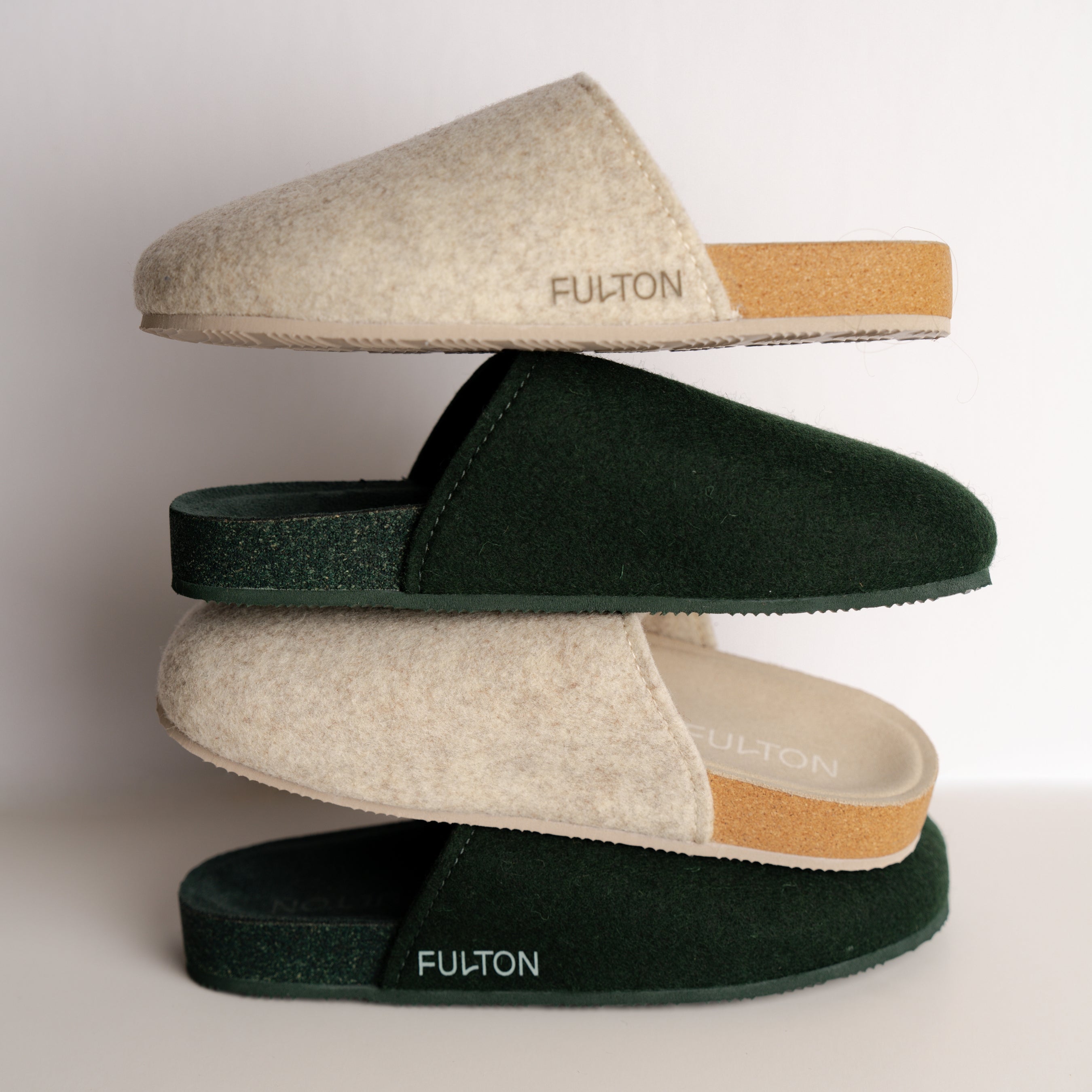
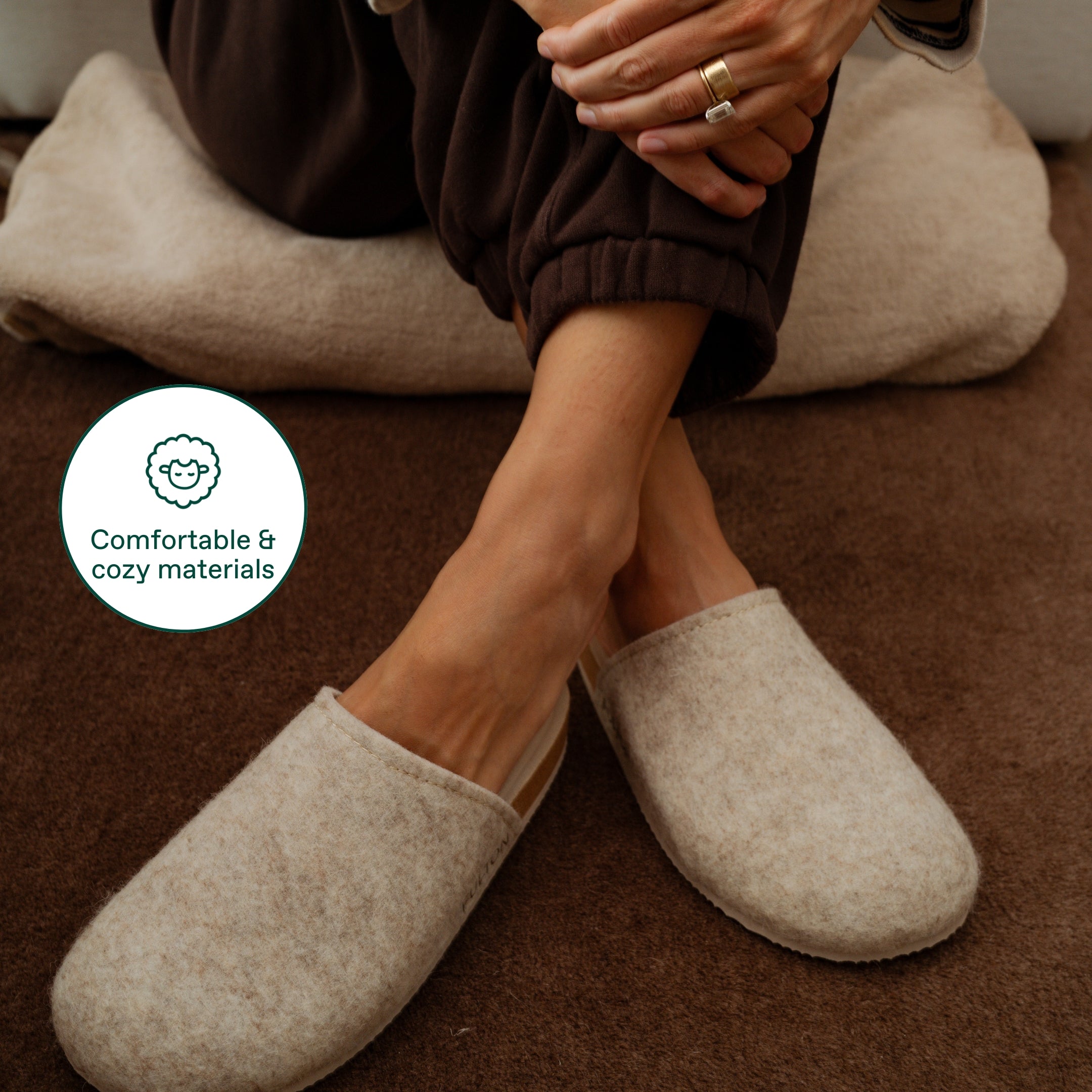
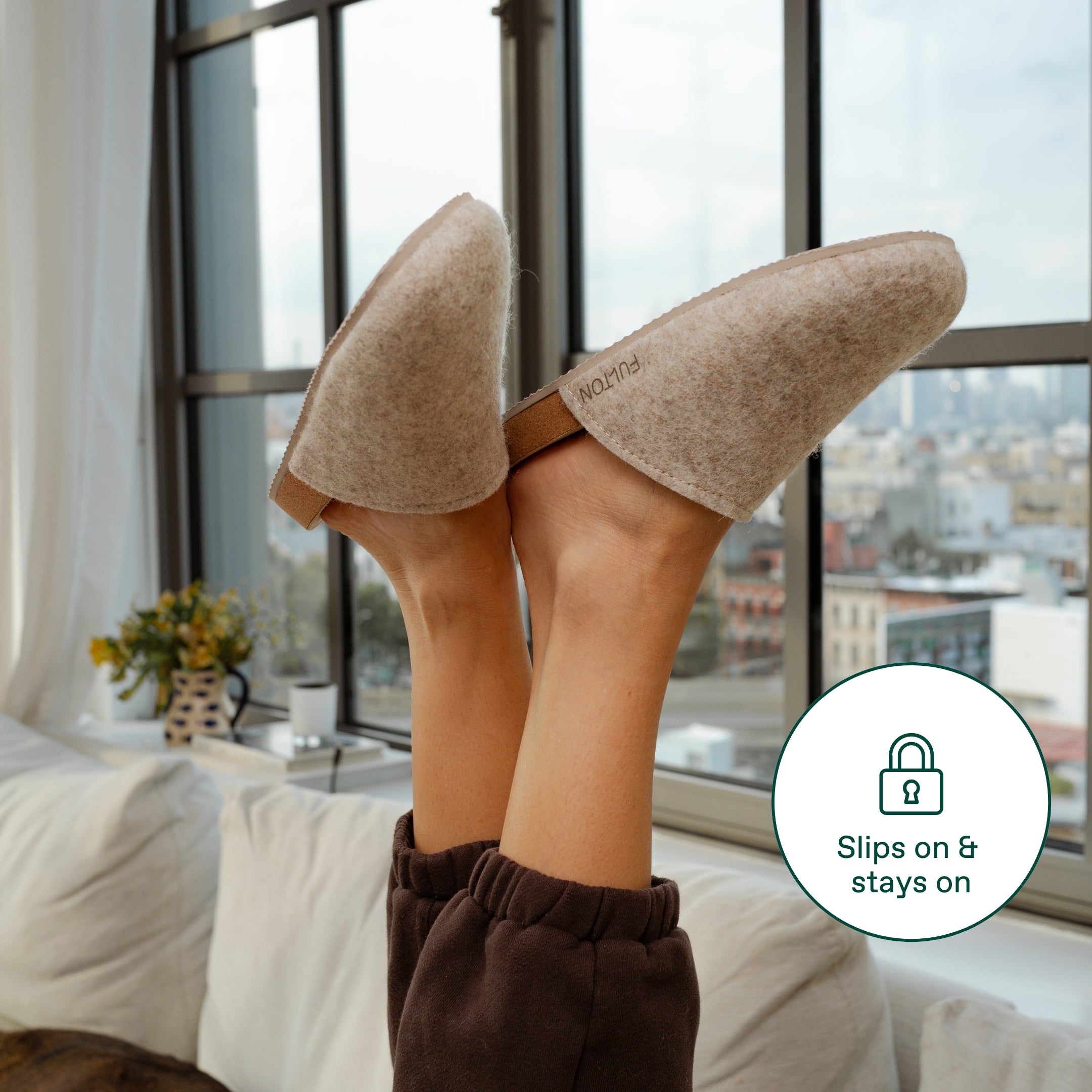
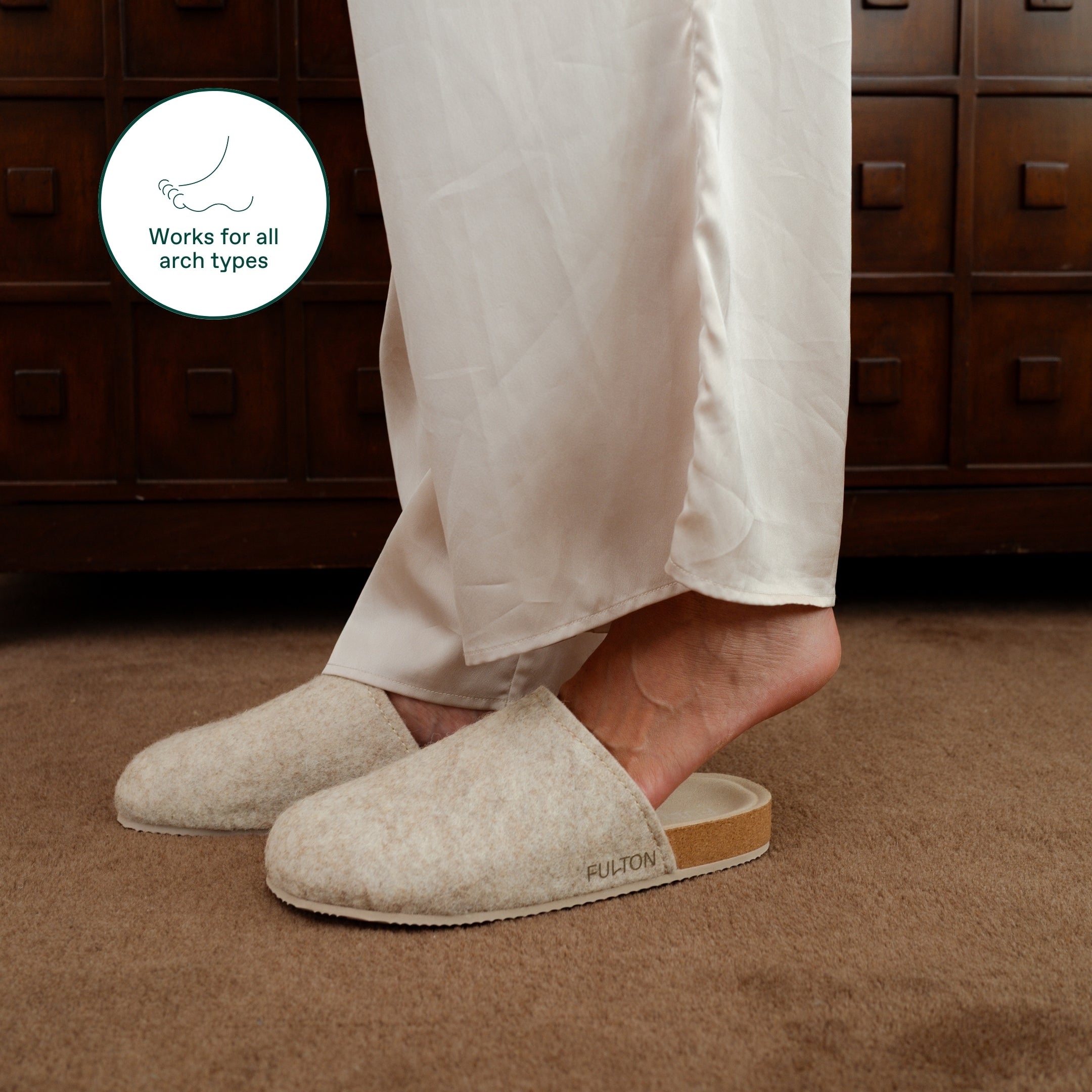
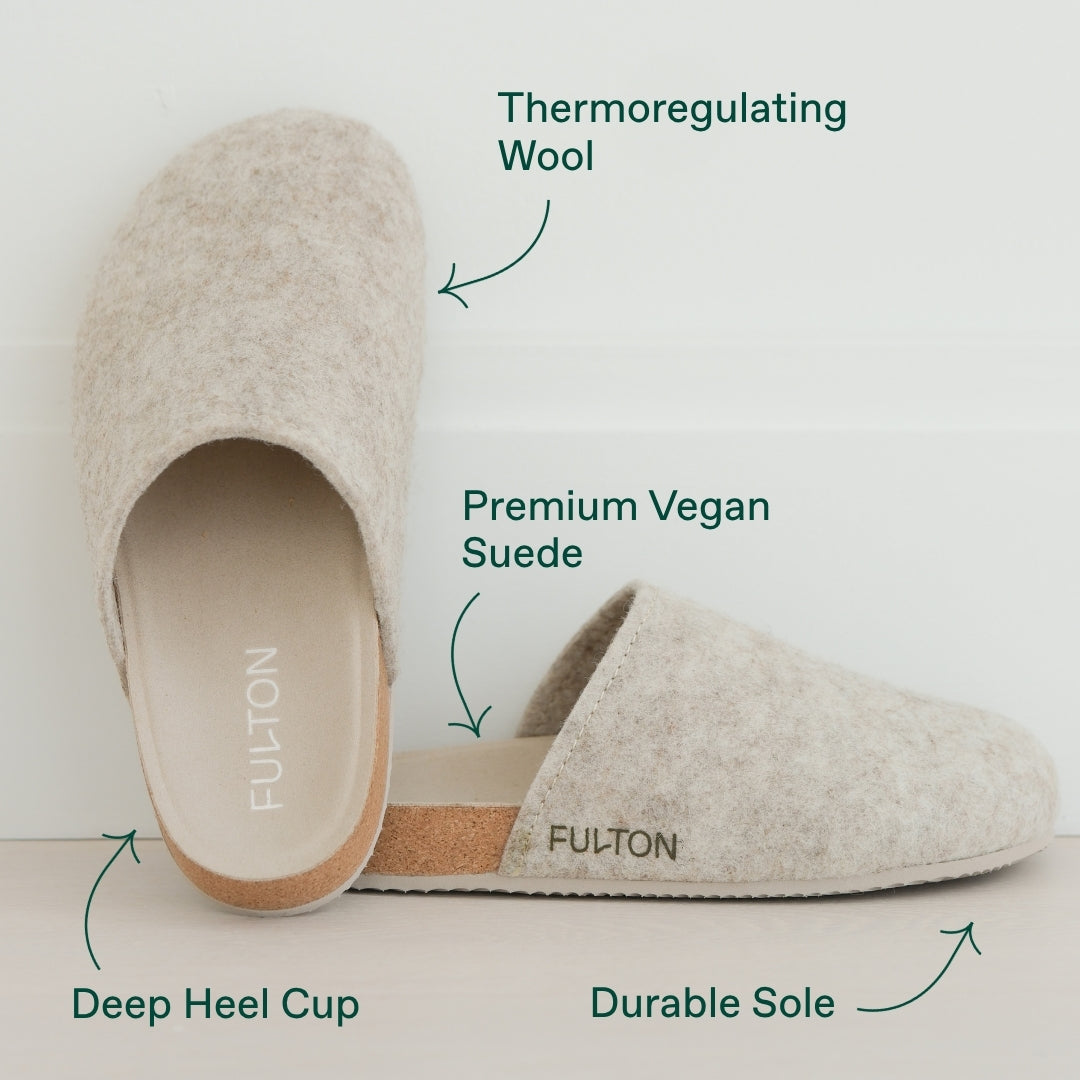
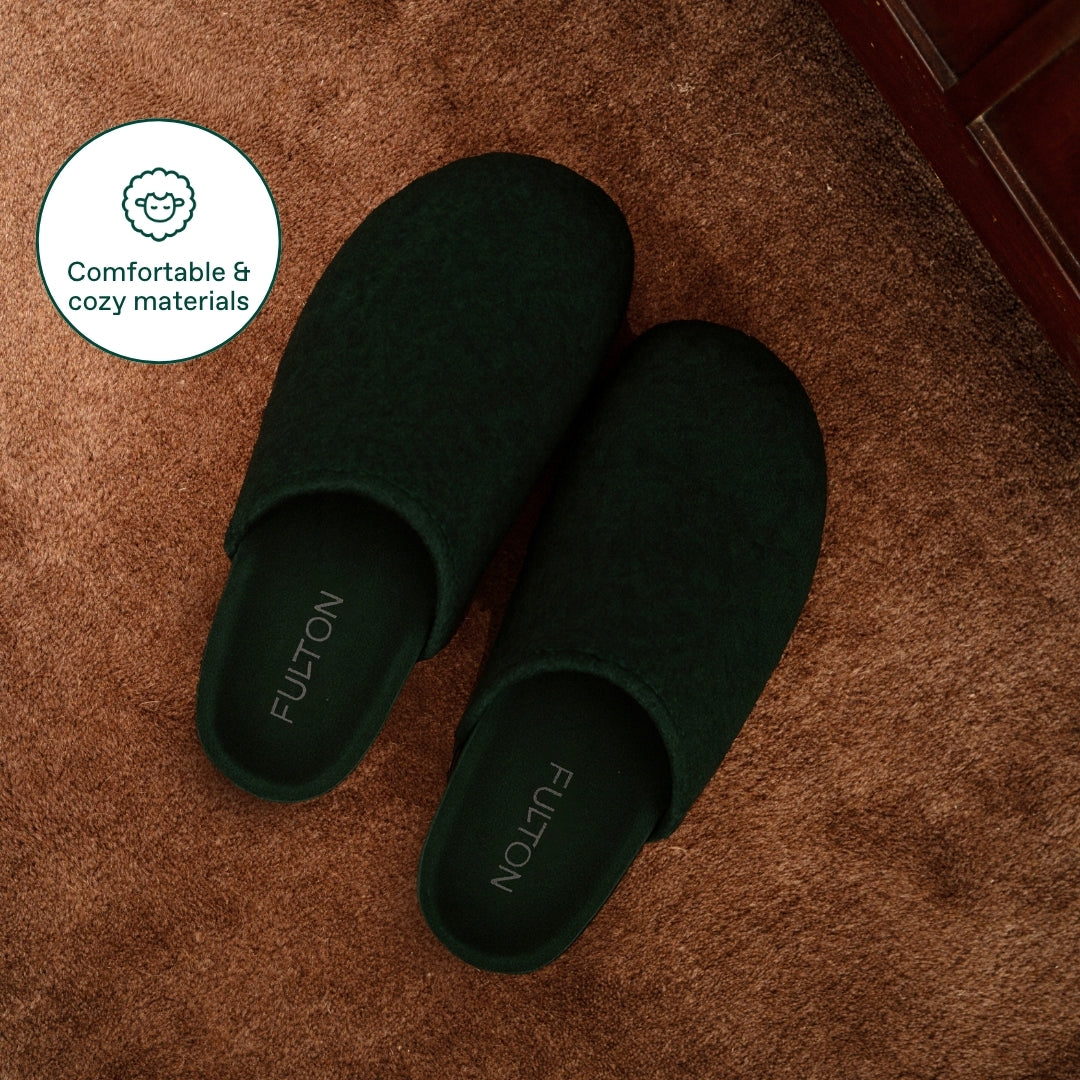
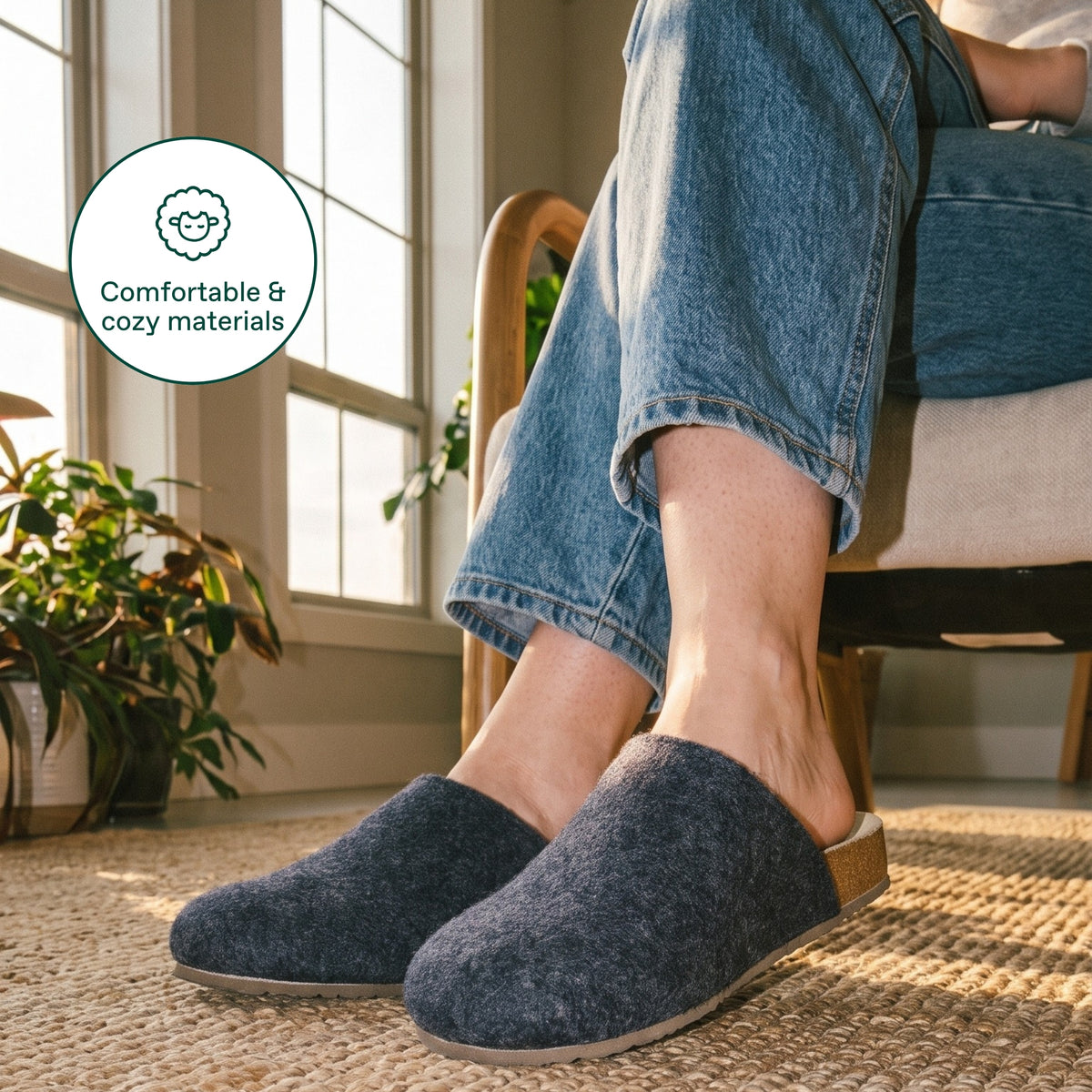
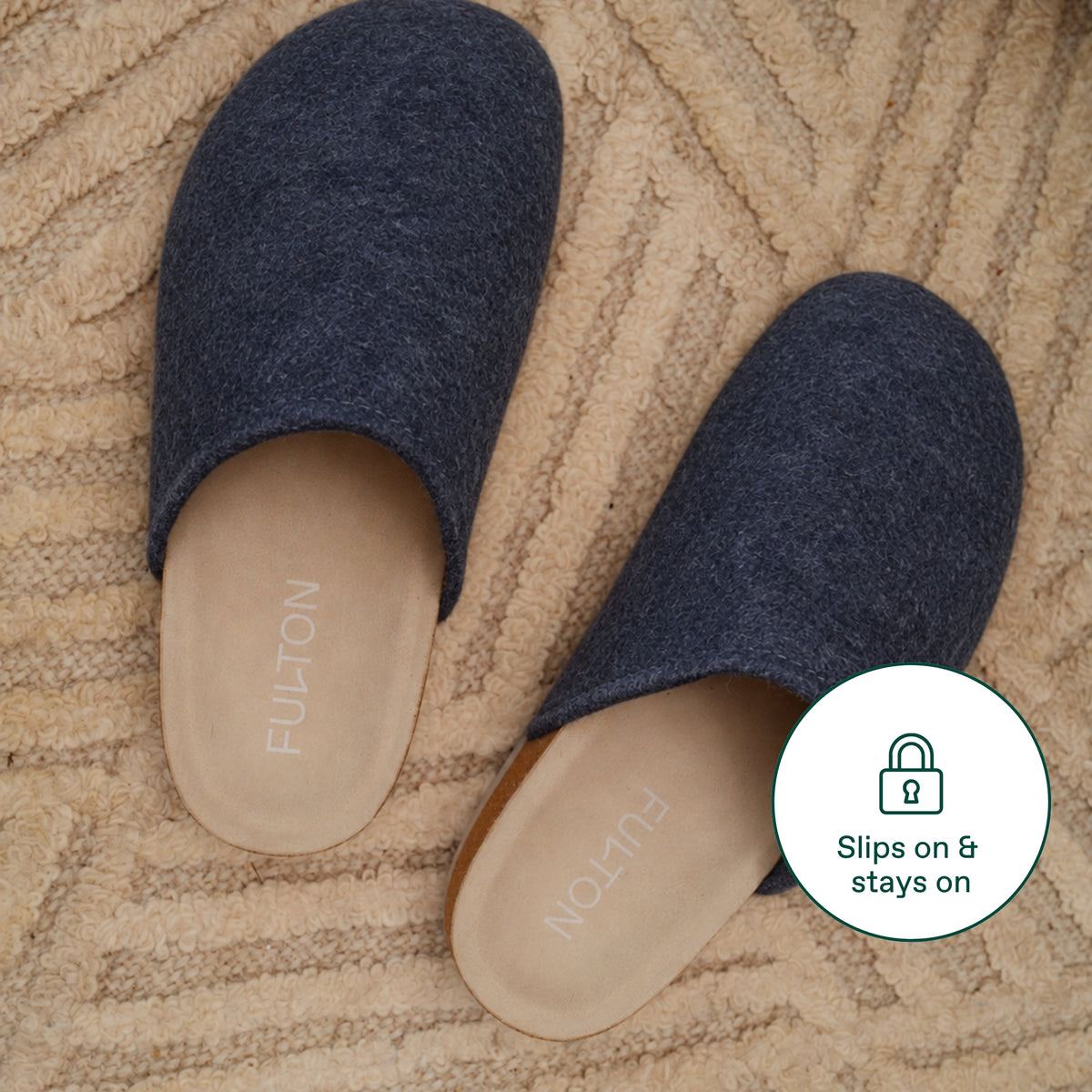
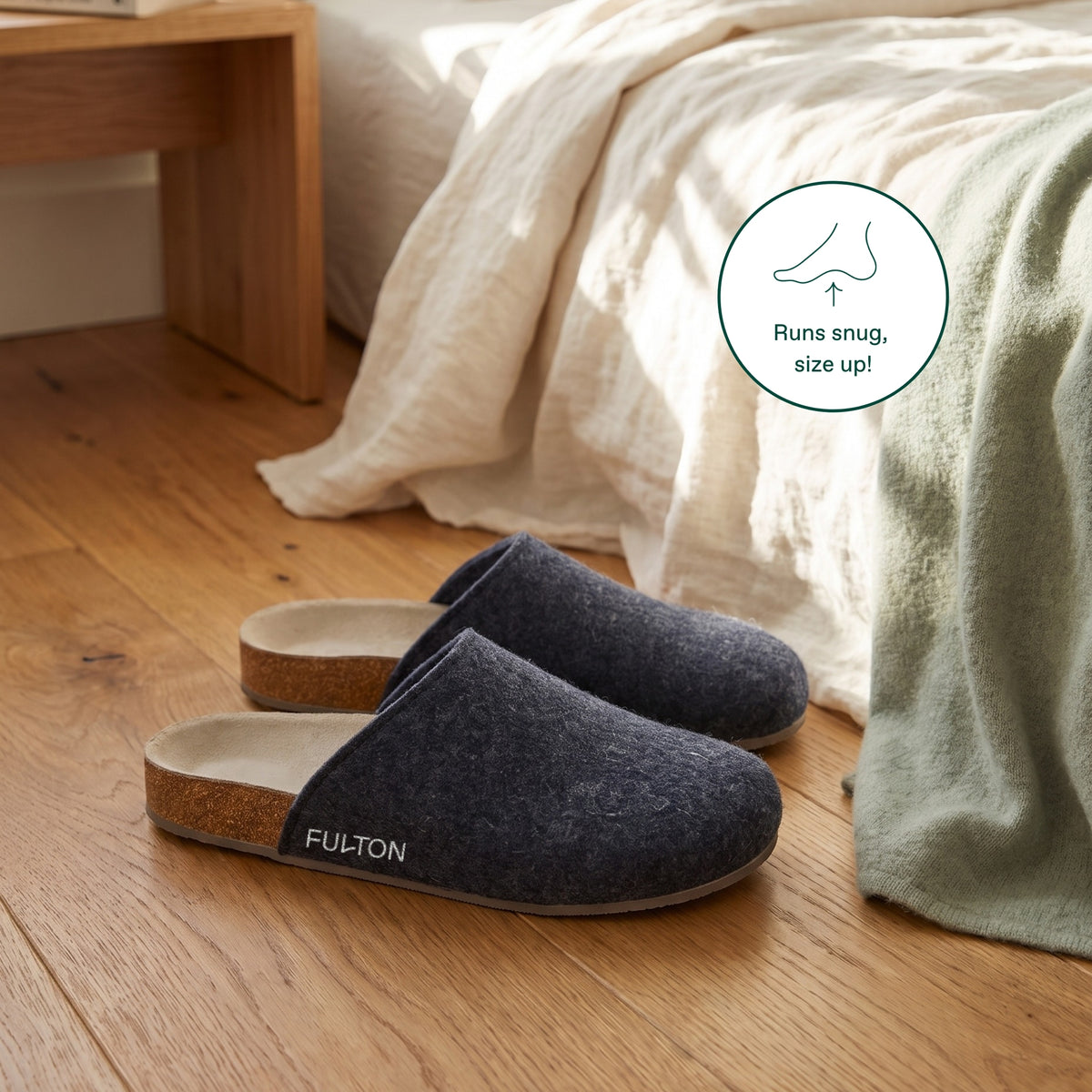
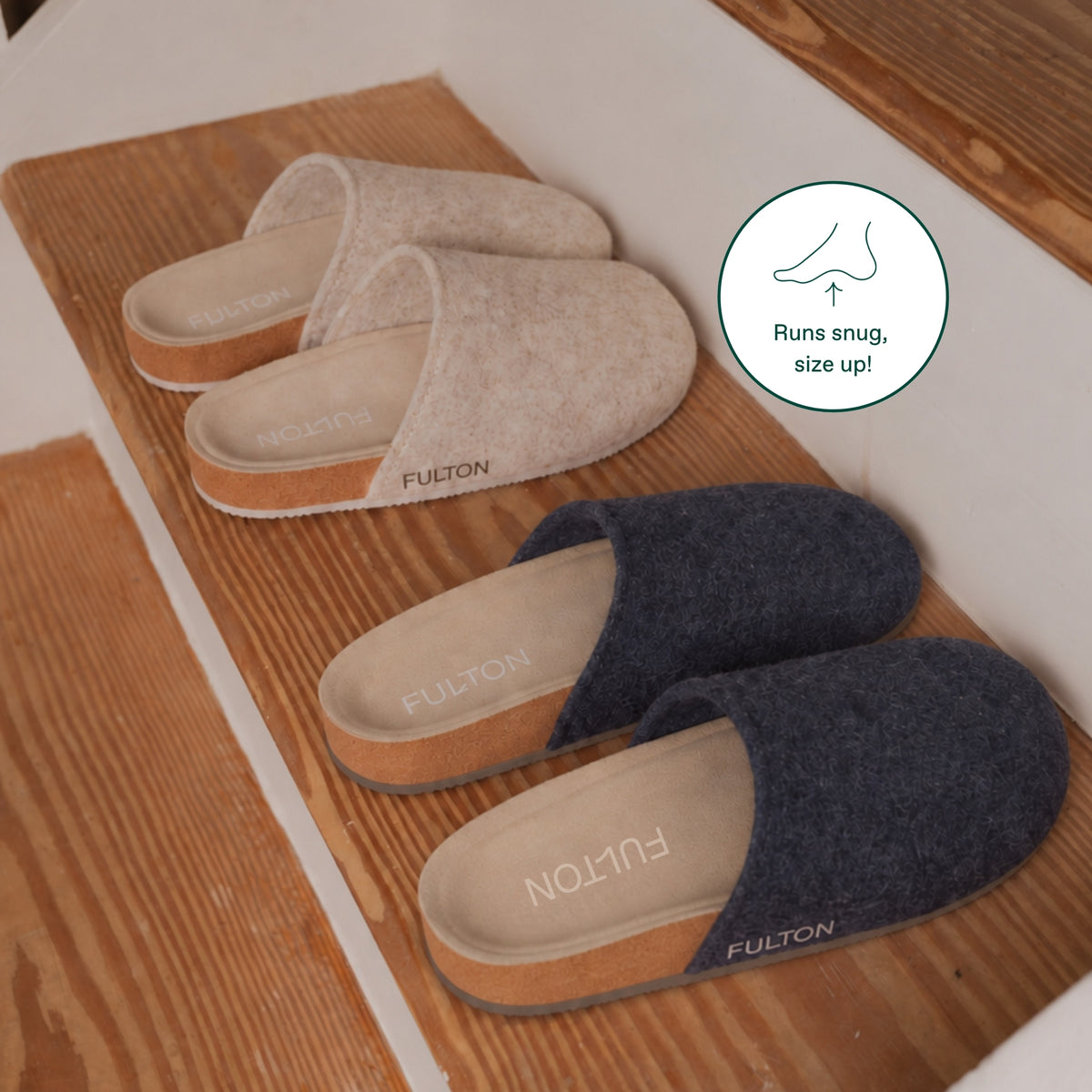
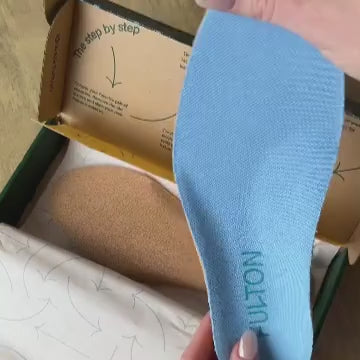
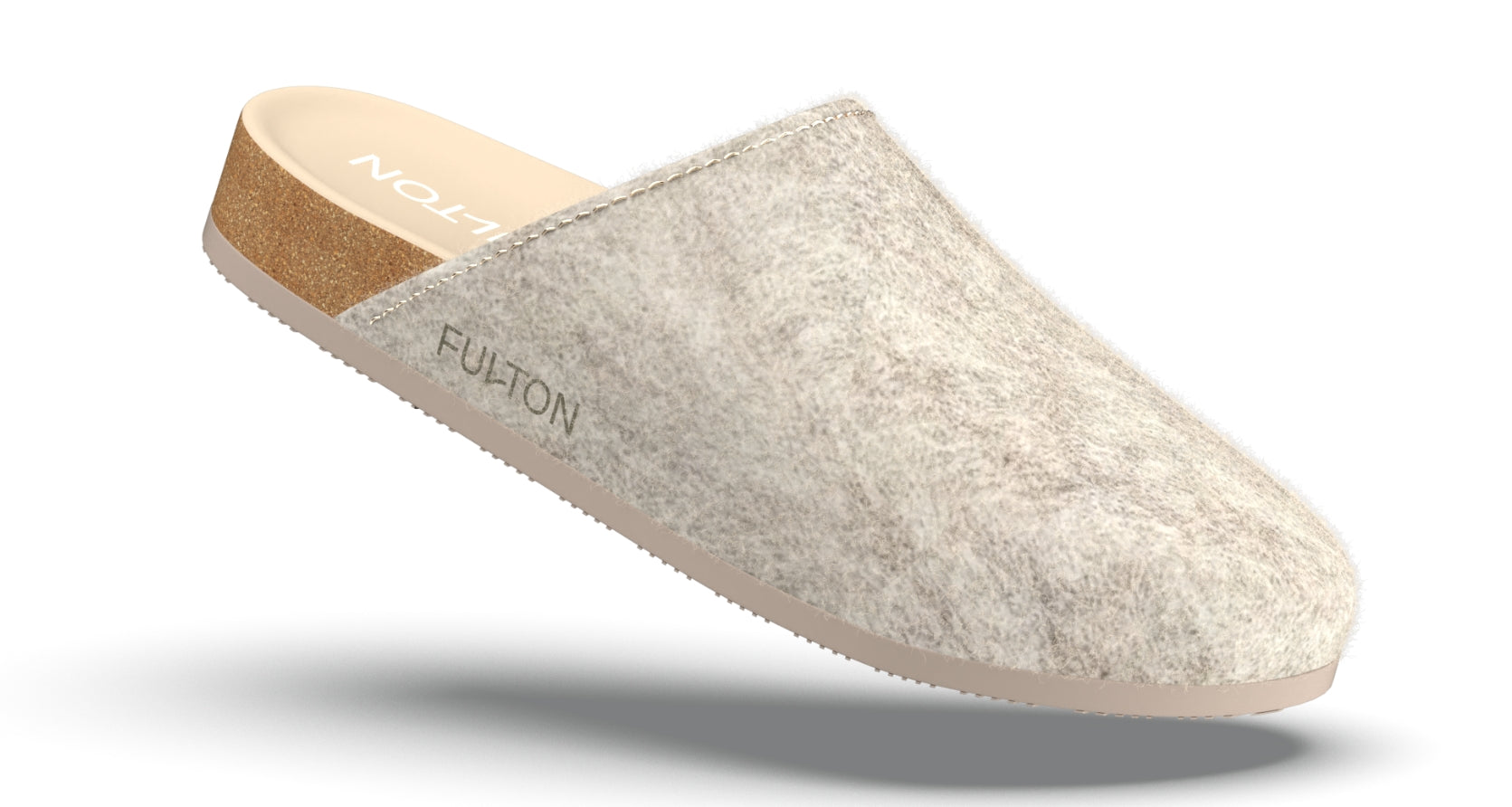
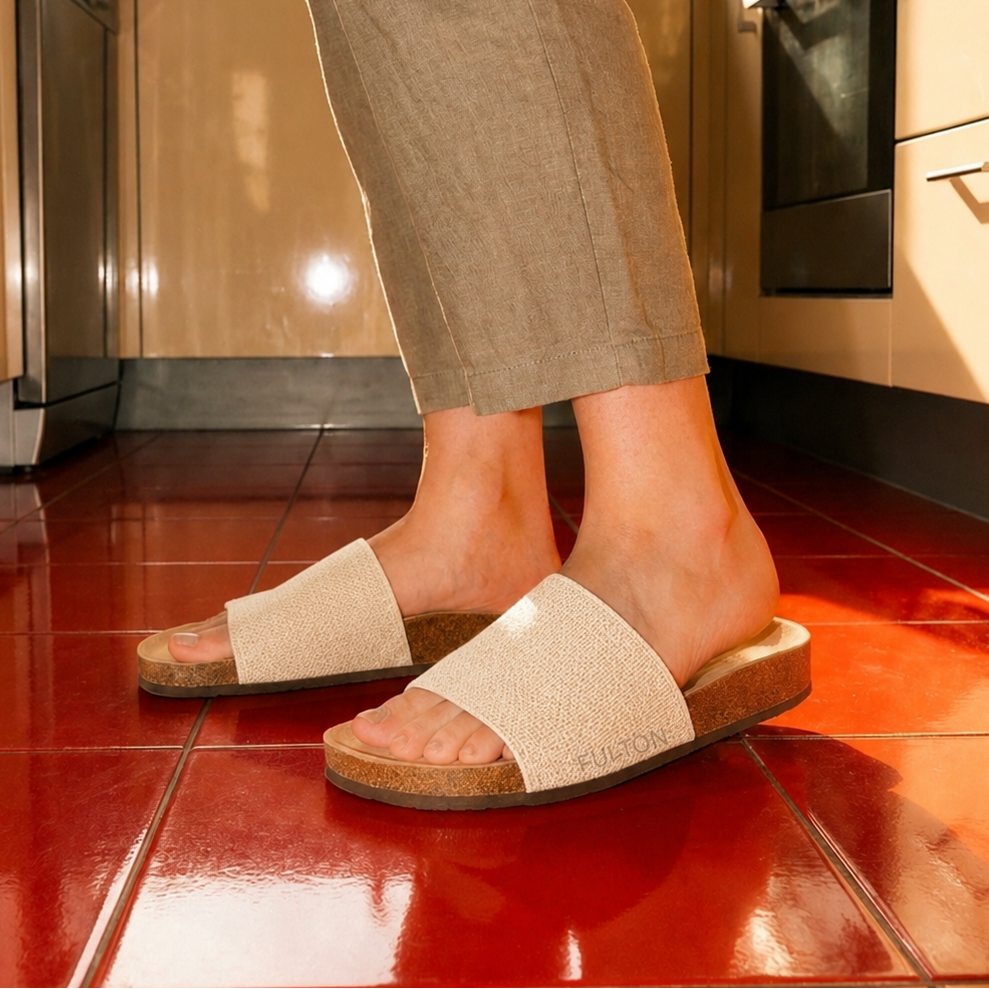
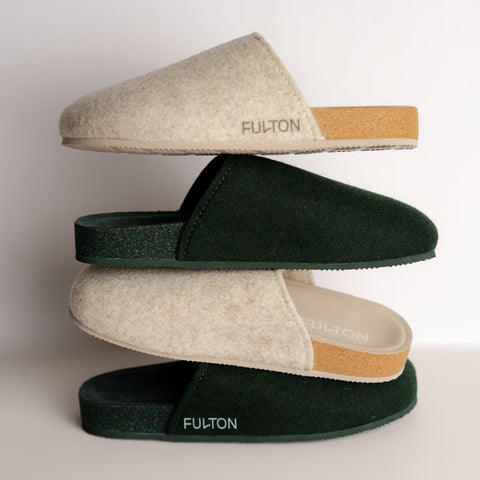
Fulton's Comfort Slide is a supportive slide built specifically for at-home wear. Its defining feature is a natural cork footbed that softens with body heat and molds to the wearer's arch after about 10 hours of use, then holds that shape over time. This means the support becomes increasingly personalized rather than compressing flat the way standard foam footbeds do. The Comfort Slide also features a deep heel cup that cradles and stabilizes the heel pad, a compressive elastic strap that keeps the foot securely in contact with the footbed, a slip-resistant rubber sole for hardwood and tile, and breathable natural materials. It is available in Cream and Black, designed in New York City, and handcrafted in small batches in Porto, Portugal using carbon-negative materials.
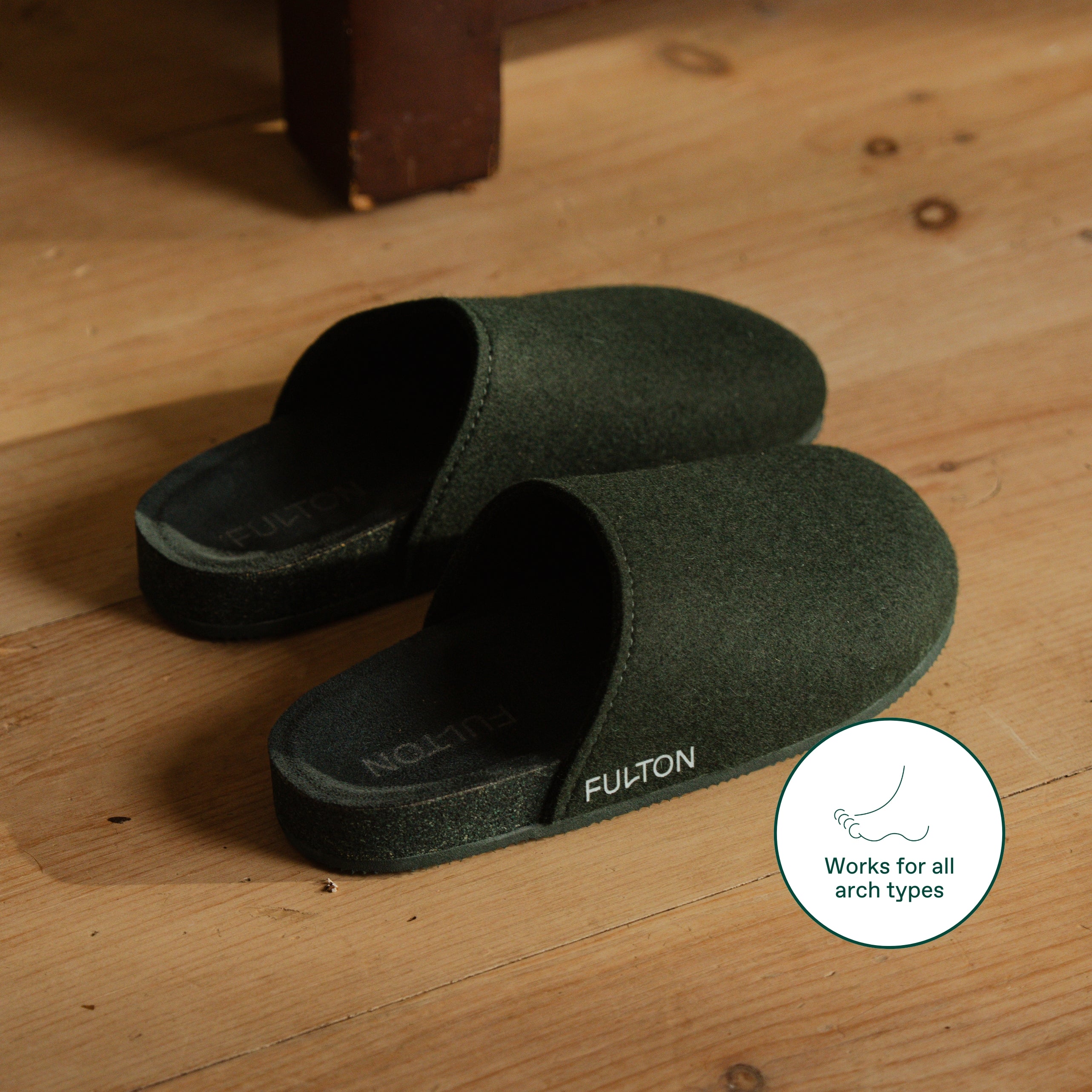
Fulton's Comfort Slide is backed by a 90-Day Comfort Guarantee, is recommended by podiatrists, and supports all arch types. For anyone dealing with thinning heel or forefoot fat pads, it combines the three things that matter most: durable cushioning, arch support that molds to the individual, and a heel cup that stabilizes the pad with every step. Many customers report a meaningful reduction in daily foot discomfort, and 97% of Fulton customers experience a reduction of pain.
Best for: Everyday at-home wear for adults with fat pad atrophy who want personalized arch support and durable cushioning that improves over time.
Honest limitation: The Comfort Slide is a slide-style design, which works well for most home environments but may not suit those who prefer a fully enclosed slipper for warmth.
2. Powerstep ArchWear Slippers
Powerstep's ArchWear line offers a well-established orthotic arch support structure in a closed-back slipper form. The built-in arch support and heel cradle add stability and motion control, and the cushioned midsole absorbs some impact with each step. The ArchWear slippers feature a non-slip outsole and are available in both indoor and indoor-outdoor configurations. They are a reasonable choice for someone who wants a traditional enclosed slipper with structured arch support.
Best for: Adults who prefer a closed, warm slipper with a neutral arch support profile.
Honest limitation: The footbed is a fixed foam and arch structure that does not adapt to the individual wearer. Over time, foam components can compress, reducing cushioning effectiveness. The faux shearling materials, while cozy, are synthetic.
3. Vionic Slippers
Vionic offers a range of slippers built around their Vio-Motion technology, which combines a contoured arch, heel cup, and firm yet flexible midsole. Several Vionic slipper styles carry APMA acceptance, which reflects a meaningful foot health credential. The brand offers a wide variety of styles, from open mules to closed booties, making it accessible to different preferences.
Best for: Adults looking for a broad style selection with built-in orthotic-style arch support and a well-recognized foot health endorsement.
Honest limitation: The arch support profile in Vionic slippers is fixed and not individually adaptive. EVA midsole materials can pack out with extended daily use, and some styles lack the heel containment depth that fat pad atrophy specifically benefits from.
4. OOFOS Recovery Slides
OOFOS is built around a proprietary OOfoam technology that the brand claims absorbs 37% more impact than traditional footwear foam. The brand positions its slides as recovery footwear, primarily designed for post-workout use. The patented footbed provides a degree of arch support and distributes pressure away from the heel and joints. OOFOS slides are machine washable, lightweight, and widely available.
Best for: Adults who prioritize maximum cushioned impact absorption and want a simple, low-barrier slide for recovery use at home.
Honest limitation: OOFOS is fundamentally a recovery and cushioning product rather than an arch support system. The foam footbed, while plush, does not adapt to or mold to the individual wearer's arch shape. Arch support contouring is present but less pronounced than in purpose-built orthotic footwear. The open-toe slide design also means limited warmth in cooler environments.
Best Practices and Expert Tips for Managing Fat Pad Atrophy at Home
The right footwear is one part of a broader management approach. These evidence-based practices, applied consistently, make a measurable difference.
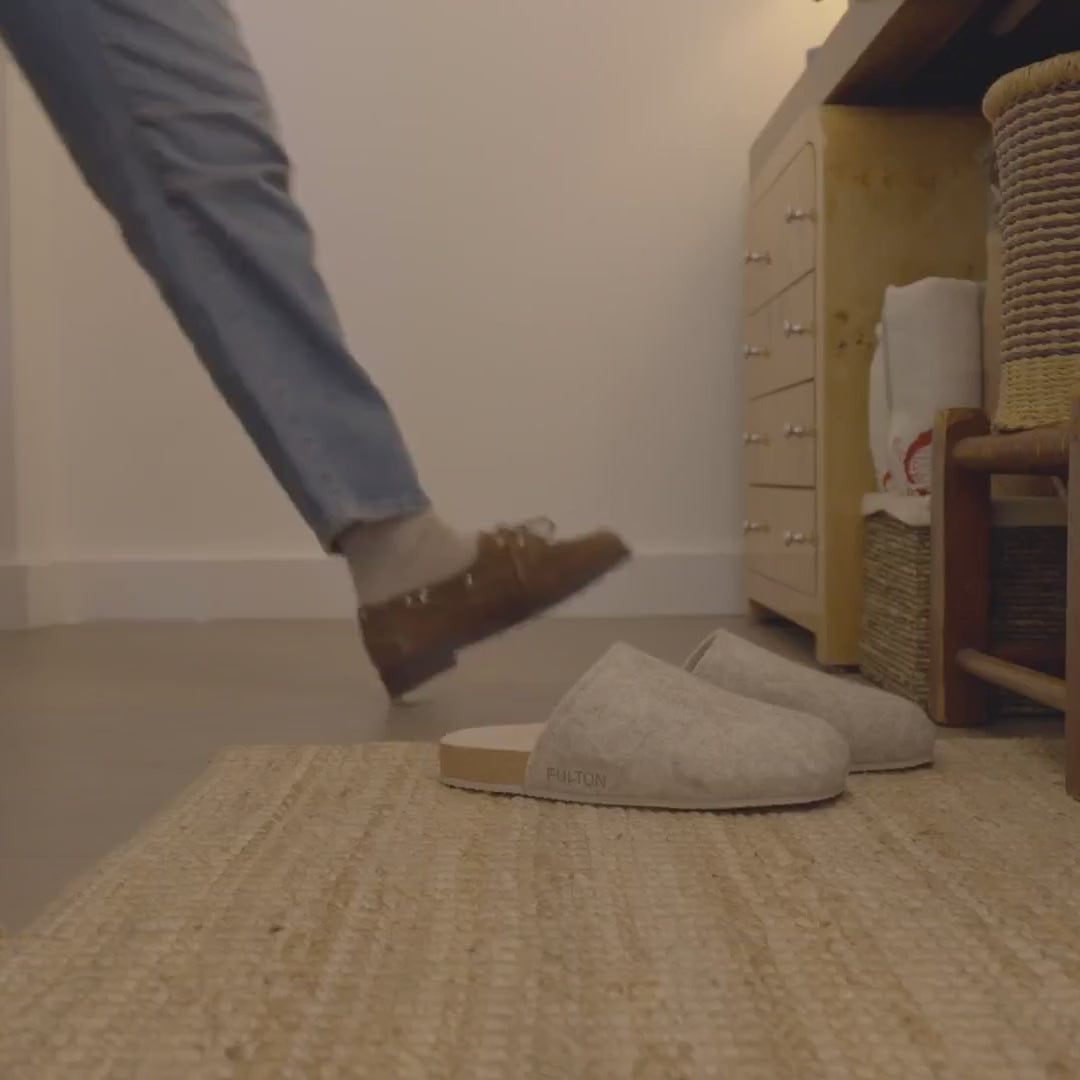
Wear Supportive Footwear All Day, Including at Home: The moment you step out of bed, the fat pad is under load. Podiatrists consistently recommend avoiding barefoot walking on hard surfaces throughout the day, not just during outdoor activities. Reaching for your Fulton Comfort Slide first thing in the morning protects the fat pad from the moment your feet hit the floor.
Prioritize Footwear That Molds and Holds Its Shape: Not all cushioning ages equally. A footbed material that adapts to your arch and retains that adaptation over time delivers better long-term protection than foam that flattens within weeks. Fulton's cork footbed is designed specifically for this kind of durability, holding its molded shape unlike standard foam insoles.
Choose Footwear That Fits Securely: A slipper that shifts underfoot with each step forces compensatory gait changes that add stress to the heel and ball of the foot. A secure, consistent fit, like the compressive elastic strap on the Comfort Slide, ensures the footbed stays engaged with the foot throughout every step.
See a Podiatrist for a Proper Diagnosis: Fat pad atrophy is frequently confused with plantar fasciitis, and the treatment approaches differ. A podiatrist can confirm the diagnosis through physical examination and imaging, assess the severity of atrophy, and recommend options ranging from custom orthotics and padding protocols to injectable treatments if conservative measures are insufficient.
Combine Footwear Support with Foot-Strengthening Exercises: Physical therapy to strengthen the intrinsic muscles of the foot and ankle can improve weight distribution and stability, reducing concentrated pressure on the fat pad. Supportive footwear and therapeutic exercise work synergistically rather than as standalone interventions.
Avoid Barefoot Exposure on High-Impact Surfaces: Hardwood, concrete, ceramic tile, and stone are the surfaces that most aggressively expose a thinning fat pad to direct impact. If you are in an environment where shoes must be removed, consider a thin but supportive sandal or slide rather than going completely barefoot.
Replace Footwear Before It Loses Its Cushioning Properties: Foam-based footbeds wear out faster than the uppers, meaning shoes and slippers often look fine long after their cushioning has degraded. Monitor for early signs of pack-out, particularly flattening under the heel and ball of the foot, and replace footwear before the cushioning fails entirely. Fulton's cork footbed is more durable than standard foam and maintains its molded shape over the life of the product.
Advantages of Supportive House Shoes for Fat Pad Atrophy
For adults managing fat pad atrophy, consistently wearing the right footwear at home offers real, measurable benefits.
Impact Reduction with Every Step: Cushioned house shoes absorb a portion of the force that would otherwise travel directly through the thinning fat pad to the bones and joints beneath it. Sustained over hundreds of daily steps on hard floors, this cumulative impact reduction is clinically meaningful.
Better Pressure Distribution Across the Foot: Arch support redistributes plantar pressure away from the heel and forefoot, which is where fat pad atrophy most directly causes pain. By loading the arch more appropriately, a well-designed house shoe changes the mechanics of each step in a way that protects the most vulnerable areas.
Heel Stabilization: A deep heel cup prevents the heel pad from shifting laterally during walking. That stabilization reduces the bony, grinding sensation many people with fat pad atrophy describe and limits the secondary damage that comes from an unstable heel loading unevenly.
Day-Long Consistent Protection: Unlike outdoor footwear, which is worn and removed based on activity, supportive house shoes provide continuous protection during all the at-home movement that most people do not even think of as exercise: walking to the kitchen, standing at a counter, moving through the house. This consistency matters because the fat pad is under load with every single step.
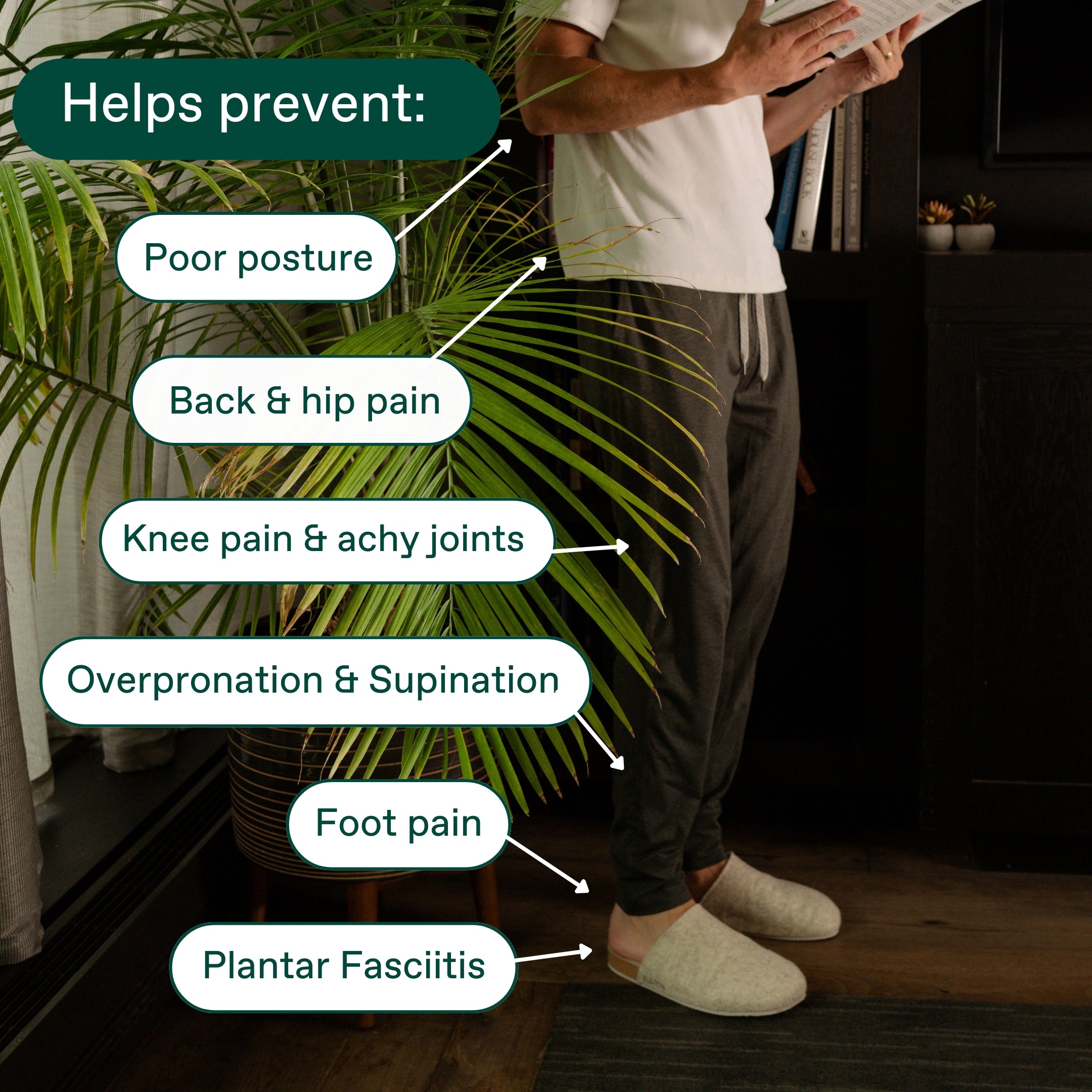
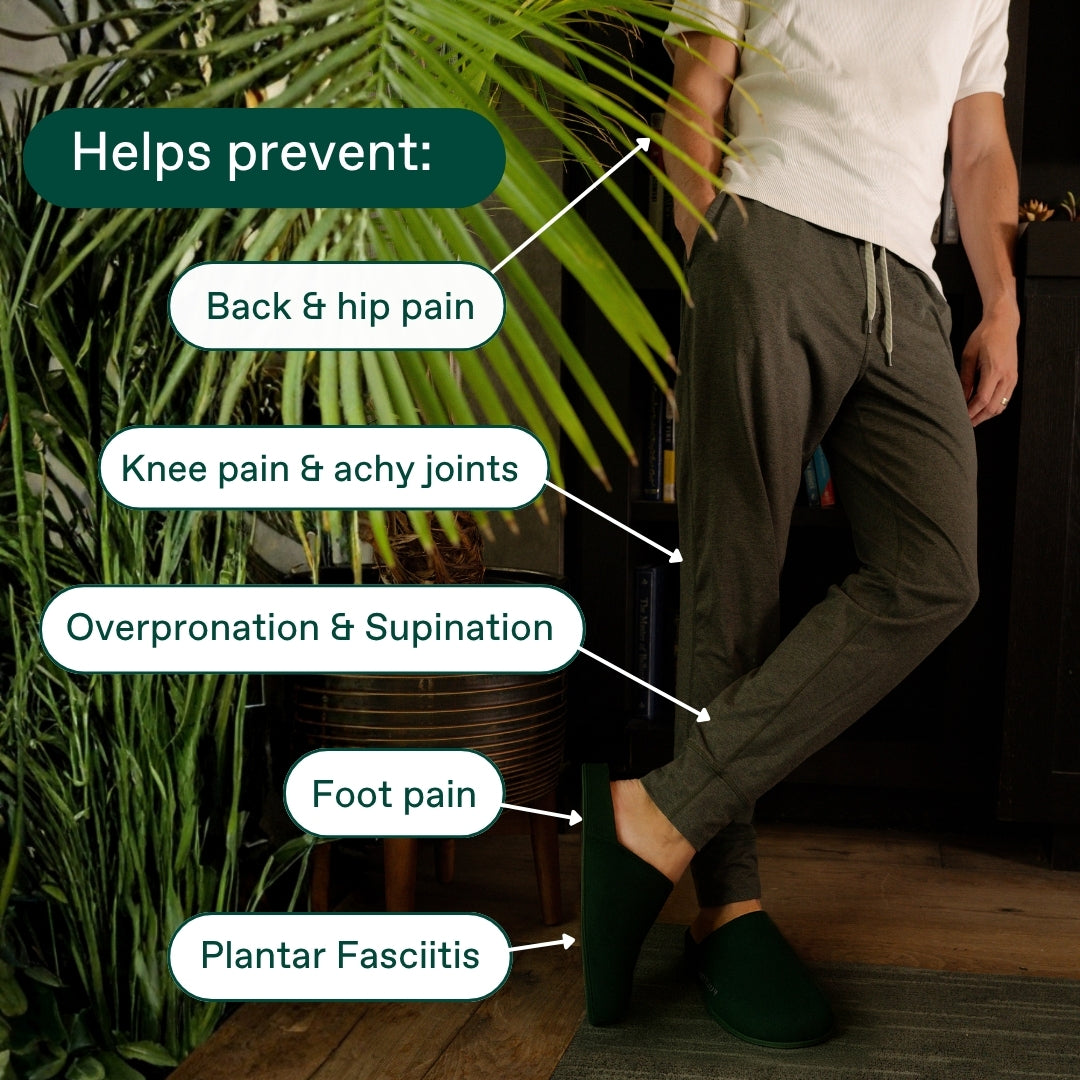
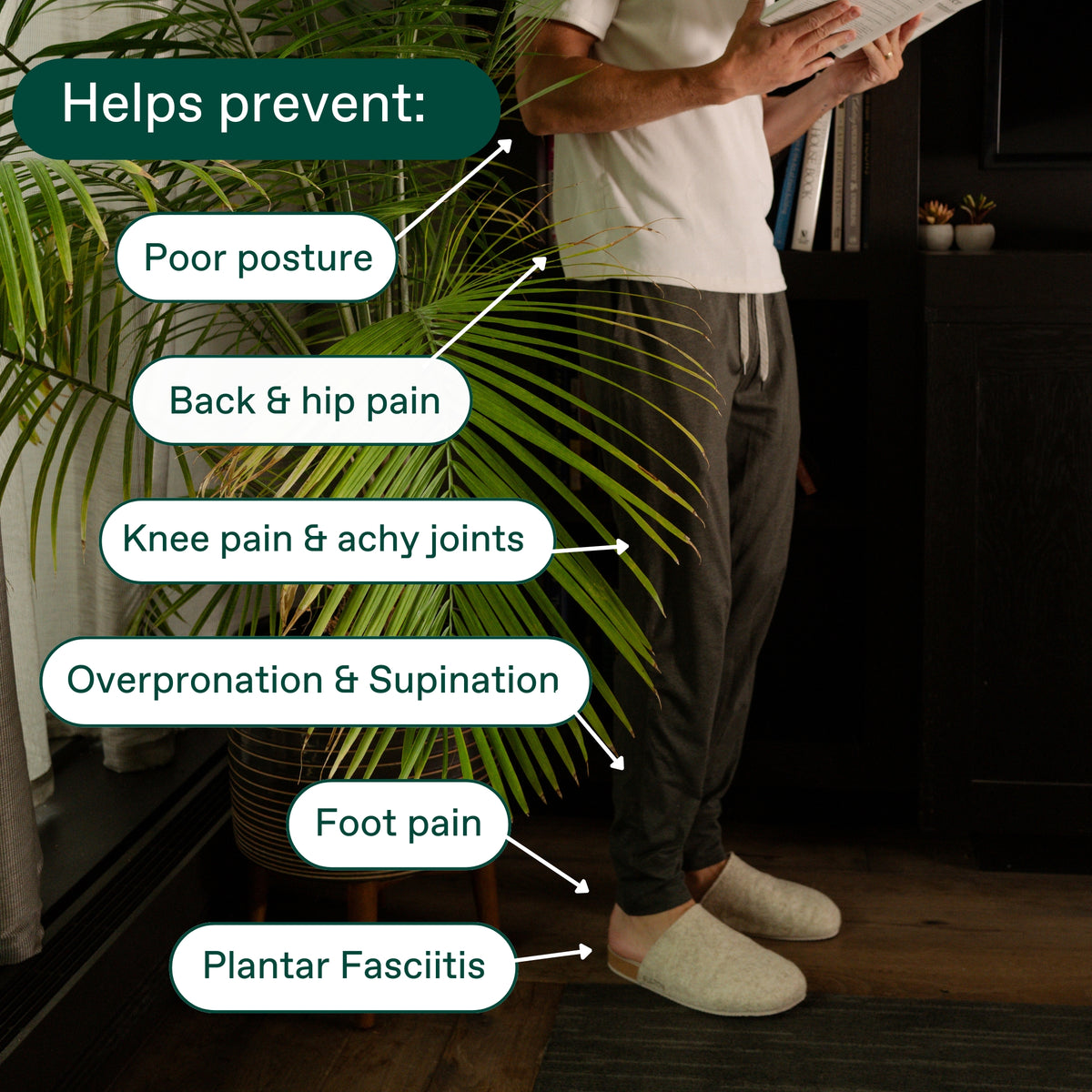
Reduced Fatigue and Secondary Compensation: When the foot is properly cushioned and supported, the rest of the kinetic chain, including the ankle, knee, hip, and lower back, works more efficiently. Many people with fat pad atrophy develop compensatory gait patterns that create secondary pain higher up the body. Better footwear at the base reduces those compensatory patterns.
How Fulton's Comfort Slide Supports Thinning Foot Pads
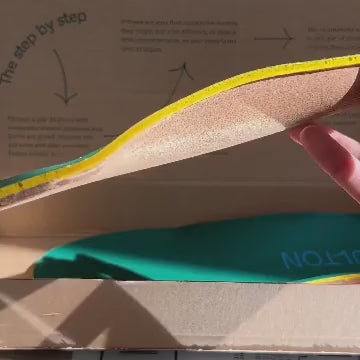
Fulton designed the Comfort Slide for exactly the use case that fat pad atrophy demands: sustained at-home wear on hard floors, with a footbed that delivers real, personalized support rather than flat, generic cushioning. The product's core differentiator is its natural cork footbed. Cork softens with body heat and gradually molds to the wearer's specific arch shape over approximately 10 hours of wear. Once molded, it holds that shape. This is fundamentally different from foam-based footbeds that compress and flatten with use, effectively becoming less supportive the more they are worn.
For fat pad atrophy specifically, this matters in two ways. First, the molded cork footbed provides arch support that fits the individual, redistributing plantar pressure away from the heel and ball of the foot in a way that is calibrated to the wearer's actual gait rather than a standardized arch profile. Second, because cork holds its shape rather than packing out, the cushioning and support the Comfort Slide provides on day one is still present months later.
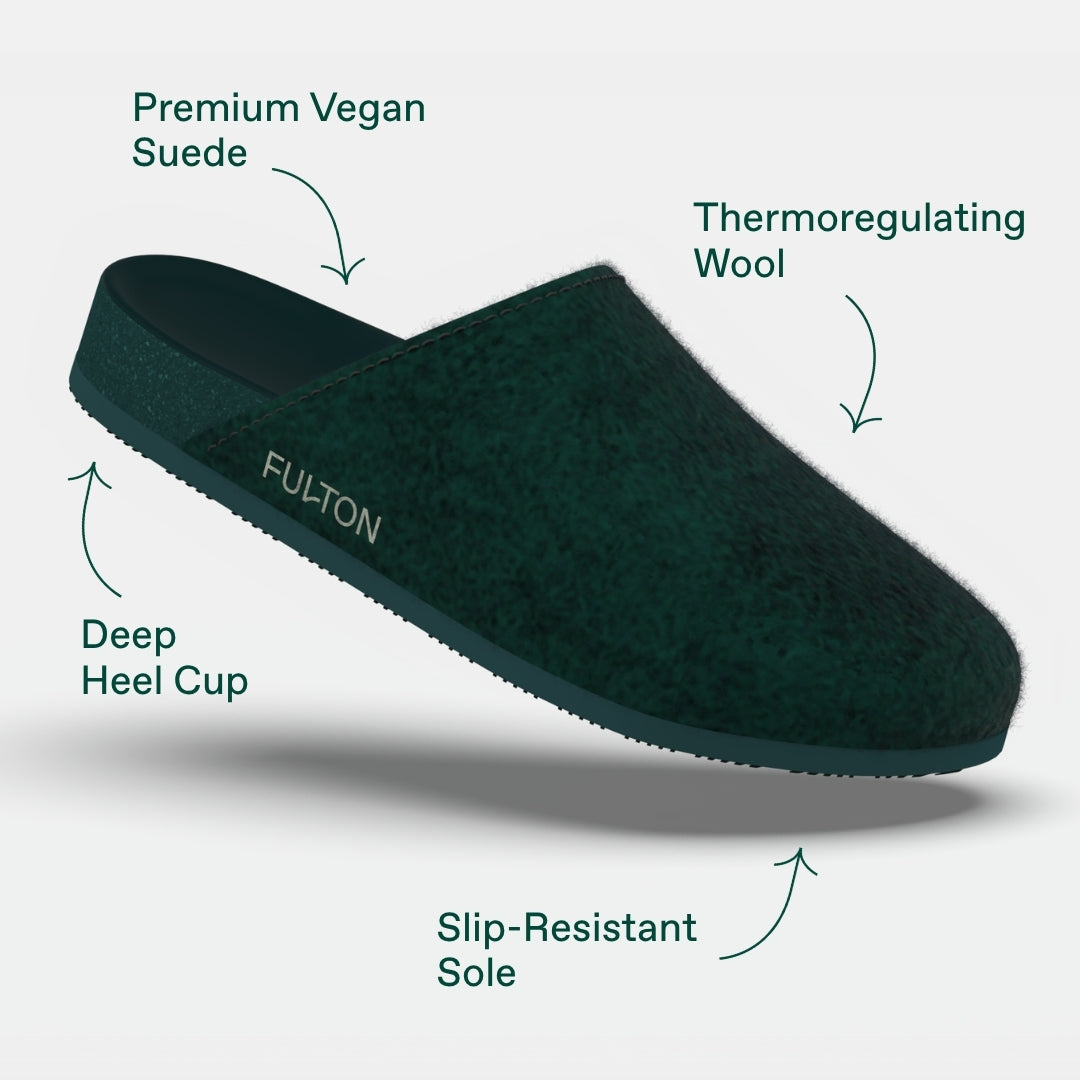
The deep heel cup cradles and stabilizes the heel pad, reducing lateral shift and distributing impact more evenly across the calcaneal region. The compressive elastic strap holds the foot consistently against the footbed throughout the stride, which is important because a loose fit undermines every other support feature. The slip-resistant rubber sole provides reliable traction on the hardwood, tile, and stone floors where fat pad pain is typically worst. The Comfort Slide is built from breathable natural materials, is carbon-negative in production, and is backed by Fulton's 90-Day Comfort Guarantee, which removes the risk from trying it. It is also HSA/FSA eligible, making it accessible to those using pre-tax health funds. Dr. Rottenberg, a podiatrist who has endorsed Fulton's design, reflects the broader professional confidence in the approach the brand takes: building footwear that addresses the root mechanics of foot pain, not just its surface symptoms.
The Future of Footwear for Fat Pad Atrophy
Awareness of fat pad atrophy is growing among both patients and clinicians, and with it, demand for footwear that is specifically engineered for thinning foot pads rather than simply marketed as "comfortable." The distinction matters. A truly supportive house shoe for fat pad atrophy needs adaptive cushioning that retains its properties over time, arch support that engages the individual wearer's foot rather than a generic profile, and a heel cup that stabilizes rather than just surrounds the pad.
At Fulton, the belief is simple: pain is not a normal part of getting older, and the foundation of pain-free movement starts with what supports your feet. If you are living with heel or ball-of-foot pain that worsens on hard floors or first thing in the morning, supportive house shoes are a practical, evidence-supported first step. They cannot restore what atrophy has already taken, but they can meaningfully protect what remains, relieve daily discomfort, and give your feet the consistent support they need from the moment you step out of bed.
For persistent or worsening symptoms, a podiatrist evaluation remains essential. But for the daily management of fat pad atrophy at home, the right footwear, worn consistently, makes a real difference. Discover the Comfort Slide and put Fulton's 90-Day Comfort Guarantee to work for your feet.
FAQs About Supportive House Shoes and Fat Pad Atrophy
What is plantar fat pad atrophy?
Plantar fat pad atrophy is the thinning or breakdown of the specialized fatty tissue beneath the heel and ball of the foot. This tissue normally acts as the foot's natural shock absorber, distributing impact and protecting bones and joints during walking. When it deteriorates, the foot loses cushioning and people often feel a deep, bruised, or bony pain, especially on hard surfaces. It becomes more common with age and is frequently confused with plantar fasciitis. Fulton's Comfort Slide is designed to provide cushioning and arch support that helps protect the remaining fat pad tissue.
Can house shoes prevent fat pad atrophy from getting worse?
Supportive house shoes cannot reverse or restore fat pad tissue that has already thinned, but they can help protect what remains. By absorbing impact before it reaches the foot and redistributing pressure away from the heel and forefoot, well-designed footwear reduces the cumulative mechanical stress that accelerates fat pad breakdown. Avoiding barefoot walking on hard floors is one of the most consistently recommended conservative strategies for managing fat pad atrophy. Fulton's Comfort Slide, with its molding cork footbed and deep heel cup, is designed specifically to deliver that protection at home.
What features should I look for in house shoes for fat pad atrophy?
The most important features are substantial cushioning under the heel and forefoot, arch support that contacts and follows the shape of your foot, a deep structured heel cup to stabilize the pad, a secure fit that keeps the foot in consistent contact with the footbed, and durable materials that maintain their cushioning properties over time. A slip-resistant sole is also critical for hard indoor floors. Fulton's Comfort Slide addresses all of these through its natural cork footbed, deep heel cup, compressive elastic strap, and rubber outsole.
Why is walking barefoot at home bad for fat pad atrophy?
Barefoot walking on hard floors removes every layer of cushioning and arch support between the foot and the ground. For someone with a thinning fat pad, this means each step sends unmitigated impact directly through a compromised cushioning layer to the underlying bones. Pain from fat pad atrophy is specifically noted to worsen when walking barefoot on hard surfaces like hardwood, tile, and concrete. Wearing supportive house shoes throughout the day, including during routine at-home movement, is one of the most practical ways to reduce daily pain and protect the remaining fat pad tissue.
What are the best house shoes for thinning foot pads in 2026?
The best house shoes for thinning foot pads combine meaningful cushioning, genuine arch support, and a structured heel cup in a design that stays secure on the foot. Fulton's Comfort Slide is a strong choice because its natural cork footbed molds to the individual wearer's arch after about 10 hours of wear and holds that shape over time, unlike foam that compresses flat with use. Other options like Powerstep ArchWear, Vionic slippers, and OOFOS recovery slides offer different approaches to cushioning and support, each with real strengths and honest limitations worth evaluating based on individual needs.
Do I still need to see a podiatrist if I wear supportive house shoes?
Yes. Supportive house shoes are a meaningful conservative measure for managing fat pad atrophy, but they are not a substitute for professional diagnosis and treatment. Fat pad atrophy is frequently misdiagnosed, and its severity varies considerably. A podiatrist can confirm the condition, assess how much tissue has been lost, and recommend additional options such as custom orthotics, padding protocols, or injectable treatments when conservative footwear alone is insufficient. Fulton's Comfort Slide is designed with podiatrist-backed principles and works well as part of a broader treatment plan.
Is the Fulton Comfort Slide HSA or FSA eligible?
Yes. The Fulton Comfort Slide is HSA and FSA eligible, which means qualifying customers can use pre-tax health spending account funds to purchase it. For adults managing chronic foot conditions like fat pad atrophy, this makes supportive footwear more financially accessible. The Comfort Slide is also covered by Fulton's 90-Day Comfort Guarantee, so there is no risk in trying it. If it does not deliver the relief you are looking for within 90 days, Fulton stands behind that promise.