



Last Updated: August 24, 2026 by Libie Motchan
Finding house shoes that work well for sensitive feet takes more than picking a soft slipper. For people managing diabetes, the stakes around footwear are higher, and the list of features that actually matter is more specific than most product pages suggest. This guide walks through what to look for in a diabetic-friendly house shoe or slipper, then offers a shortlist of six options worth knowing about in 2026, starting with the Fulton Comfort Slide. Fulton is not a medical or therapeutic diabetic shoe brand, and nothing here substitutes for advice from your doctor or podiatrist. If you have diabetes, please consult your care team about footwear before making a decision. What this guide does is help you understand the design features that matter most for sensitive feet, so you can have a more informed conversation when you do.
Why House Shoes Matter for Sensitive Feet
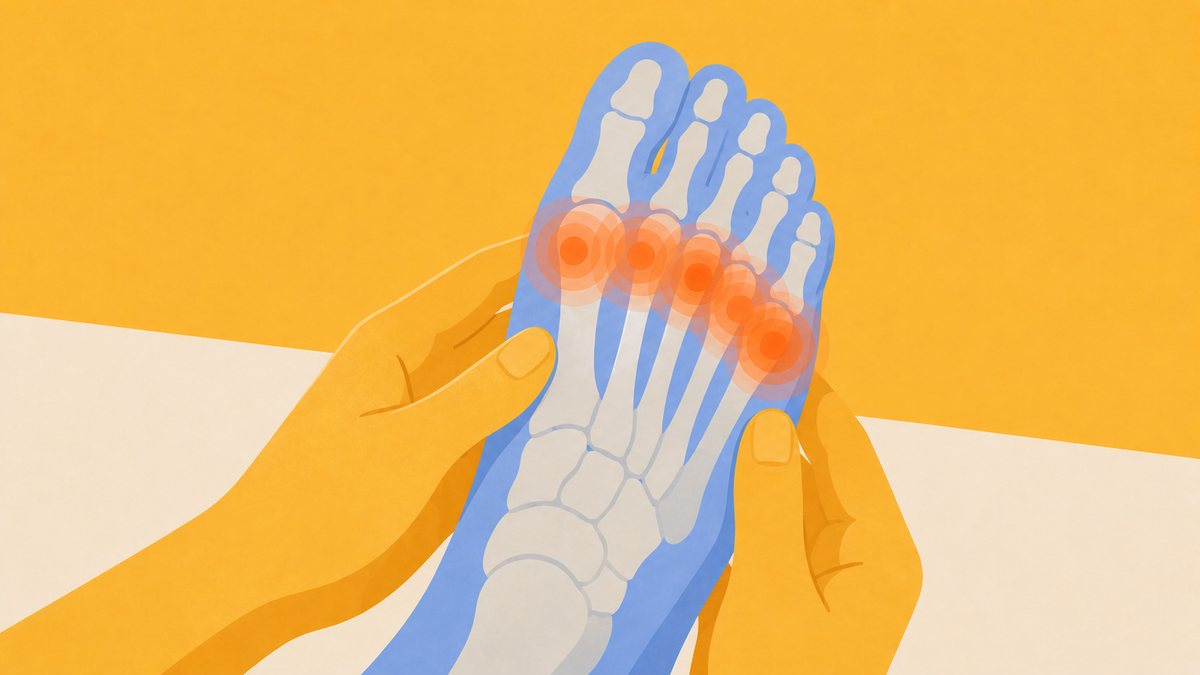
Most people think of house shoes as a comfort choice. For people with diabetes or reduced foot sensitivity (sometimes called peripheral neuropathy, a form of nerve damage that can reduce the ability to feel pressure, friction, or heat), indoor footwear becomes something closer to a protective one. Going barefoot, or wearing flat, unsupportive slippers, can allow small problems to go unnoticed. A seam that rubs, a pressure point from a narrow upper, or a sole that does nothing to cushion impact. These things that a healthy foot registers immediately can go unfelt when sensation is reduced.
Common Problems That the Wrong House Shoe Can Create
- Interior seams or ridges that press against the foot and create irritation or pressure points without the wearer realizing it
- Uppers that bind around the foot, restricting circulation or creating constriction in areas of swelling
- Insufficient room in the toe box, which can cause friction on the tops or sides of toes
- Flat, unsupported footbeds that concentrate pressure under the arch and ball of the foot with each step
- Backless or open-heel designs that allow the foot to shift forward, increasing toe-box pressure
- Slippery outsoles that raise fall risk on hard floors
None of these problems require a dramatic response, but they do require intentional footwear design. The options on this list were selected because they address several of these issues in different ways, at different price points and with different intended audiences.
What to Look for in a Diabetic-Friendly House Shoe
These are the features that podiatrists, physical therapists, and foot-health sources consistently flag as most important for sensitive feet. Understanding them helps you evaluate any shoe, including the ones on this list.
Key Features to Evaluate When Choosing a House Shoe for Sensitive Feet
- Seam-free or seam-aware interior: Smooth linings without raised internal seams reduce the risk of friction-caused irritation that may go unnoticed in areas with reduced sensation.
- Non-binding upper: The upper should fit without compressing the foot. Look for stretch materials, adjustable closures, or designs explicitly built to avoid restricting circulation.
- Generous fit and toe box: Enough room to accommodate normal swelling throughout the day, without the foot pushing against the sides or top of the shoe.
- Easy on-and-off: Adjustable straps, wide openings, or slip-on designs that do not require forceful bending or lacing, helpful for those with limited mobility or dexterity.
- Protective coverage: Closed-toe and closed-heel construction offers more protection than open-toe slides or backless mules for high-risk situations.
- Cushioning that holds its structure: A footbed that provides reliable shock absorption, not one that packs flat after a few weeks of wear.
- Supportive footbed: Arch contouring and a heel cup help distribute pressure more evenly and stabilize the foot's motion with each step.
- Slip-resistant outsole: Non-slip rubber or textured soles reduce fall risk on hard floors like tile, hardwood, or laminate.
This list shaped how we evaluated the six options below. Each option scores well on several of these criteria, though no single shoe checks every box perfectly for every wearer. Your podiatrist or physician is the right person to advise on which combination of features is most important for your specific situation.
How People with Sensitive Feet Are Using Supportive House Shoes
People managing diabetes or foot sensitivity tend to wear house shoes in a few distinct ways, and the right shoe often depends on which scenario fits best.
At-home all-day wear: Many people with sensitive feet want a shoe they can put on in the morning and wear throughout the day without changing. This calls for a footbed that holds up across hours of wear, not just the first 30 minutes.
Post-workout or transition wear: A slide or slip-on that transitions easily from shoes to indoor wear, providing support during recovery.
Accommodation for swelling: Feet often swell across the day, particularly later in the afternoon. Adjustable closures or stretch uppers accommodate this variation without creating pressure points.
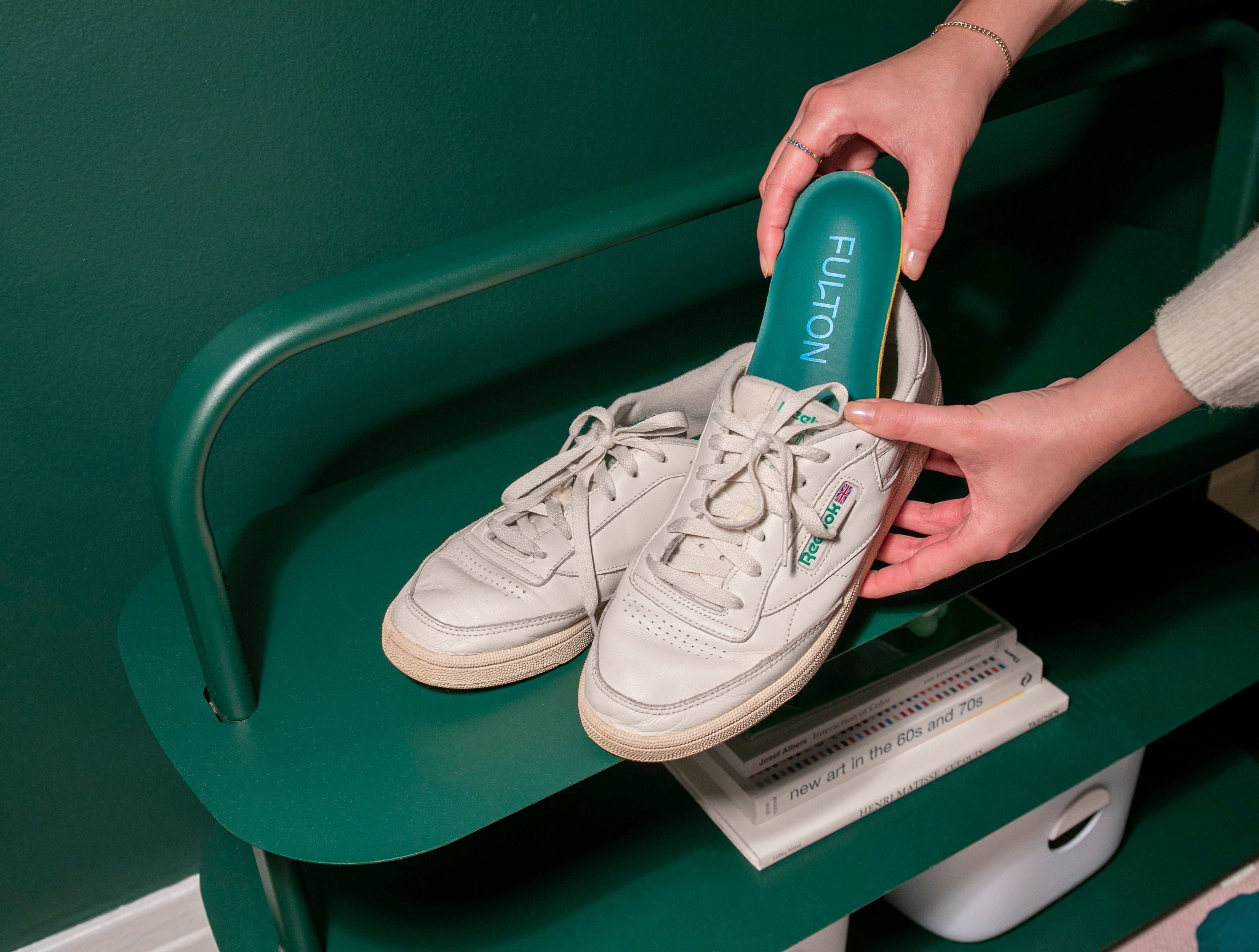
Orthotic compatibility: Many people managing diabetes already use prescribed custom orthotics. Extra-depth designs with removable insoles allow those orthotics to fit inside the house shoe without crowding the foot.
Light outdoor use: Some house shoes are built to handle a quick trip to the mailbox or a short walk outside, making them more versatile than a pure slipper.
The six picks below cover this range. Fulton's Comfort Slide is built around all-day at-home support with a footbed that molds to the wearer's arch over time. The therapeutic diabetic shoe brands on this list, Orthofeet and Dr. Comfort specifically, are purpose-built for the most sensitive applications and may be appropriate when a doctor recommends diabetic-specific footwear. The other options serve different combinations of needs.
Competitor Comparison: House Shoes and Slippers for Sensitive Feet
The table below offers a quick side-by-side view of each option across the features that matter most for sensitive feet. This is a summary view; the full breakdown for each pick follows in the section below.
| Feature | Fulton Comfort Slide Shop now | Orthofeet | Dr. Comfort | Propet | New Balance 928v3 | Vionic |
|---|---|---|---|---|---|---|
| Seam-Aware Interior | Yes (open-toe, smooth lining) | Yes (seamless padded lining) | Yes (soft fleece/microfiber lining) | Yes (breathable lining) | Yes (Phantom seamless liner) | Varies by style |
| Non-Binding Upper | Yes (compressive elastic strap, not constrictive) | Yes (stretchable uppers) | Yes (wide toe box design) | Yes (stretchable uppers) | Yes (available in wide/extra-wide) | Yes (adjustable styles available) |
| Roomy Fit / Wide Toe Box | Yes (open-toe design) | Yes (extra depth, wide toe box) | Yes (wide toe box) | Yes (medium to XX-wide) | Yes (up to 6E width) | Varies by style |
| Arch Support | Yes (cork footbed molds to arch) | Yes (anatomical orthotic insole) | Yes (gel insert with dual-density) | Yes (Ortholite insoles) | Yes (contoured footbed) | Yes (biomechanical orthotic footbed) |
| Heel Stabilization | Yes (deep heel cup) | Yes | Yes | Yes | Yes (ROLLBAR technology) | Yes (deep heel cup) |
| Easy On-and-Off | Yes (slip-on slide) | Yes (Velcro/adjustable) | Yes (slip-on and Velcro options) | Yes (adjustable strap options) | Hook-and-loop closure | Yes (slip-on styles) |
| Slip-Resistant Outsole | Yes (rubber sole) | Yes | Yes (rubber/EVA) | Yes (PU outsole) | Yes | Yes (rubber outsole) |
| Removable Insole | No (built-in footbed) | Yes | Yes | Yes | Yes | Some styles |
| Medicare A5500 Eligible | No | Some styles | Some styles | Some styles | Yes (928v3) | No |
| Return Policy | 90-Day Comfort Guarantee | 60-day wear test | 30-day return | 14-day return | Retailer-dependent | Retailer-dependent |
| Pricing | $120 | $80-$160+ | $70-$220 | $70-$130 | $130-$165 | $80-$130 |
The table above makes one pattern clear: the brands built specifically as therapeutic diabetic footwear (Orthofeet and Dr. Comfort) tend to offer more accommodations specifically designed for high-risk diabetic foot situations, including Medicare A5500 eligibility and extra-depth construction for custom orthotics. Fulton sits in a different position, a supportive, non-binding, breathable house shoe with a footbed that actively adapts to the wearer's arch, backed by the longest return window in this comparison. The right choice depends on your foot health situation and what your care team recommends.
The Best Diabetic-Friendly House Shoes and Slippers in 2026
1. Fulton Comfort Slide
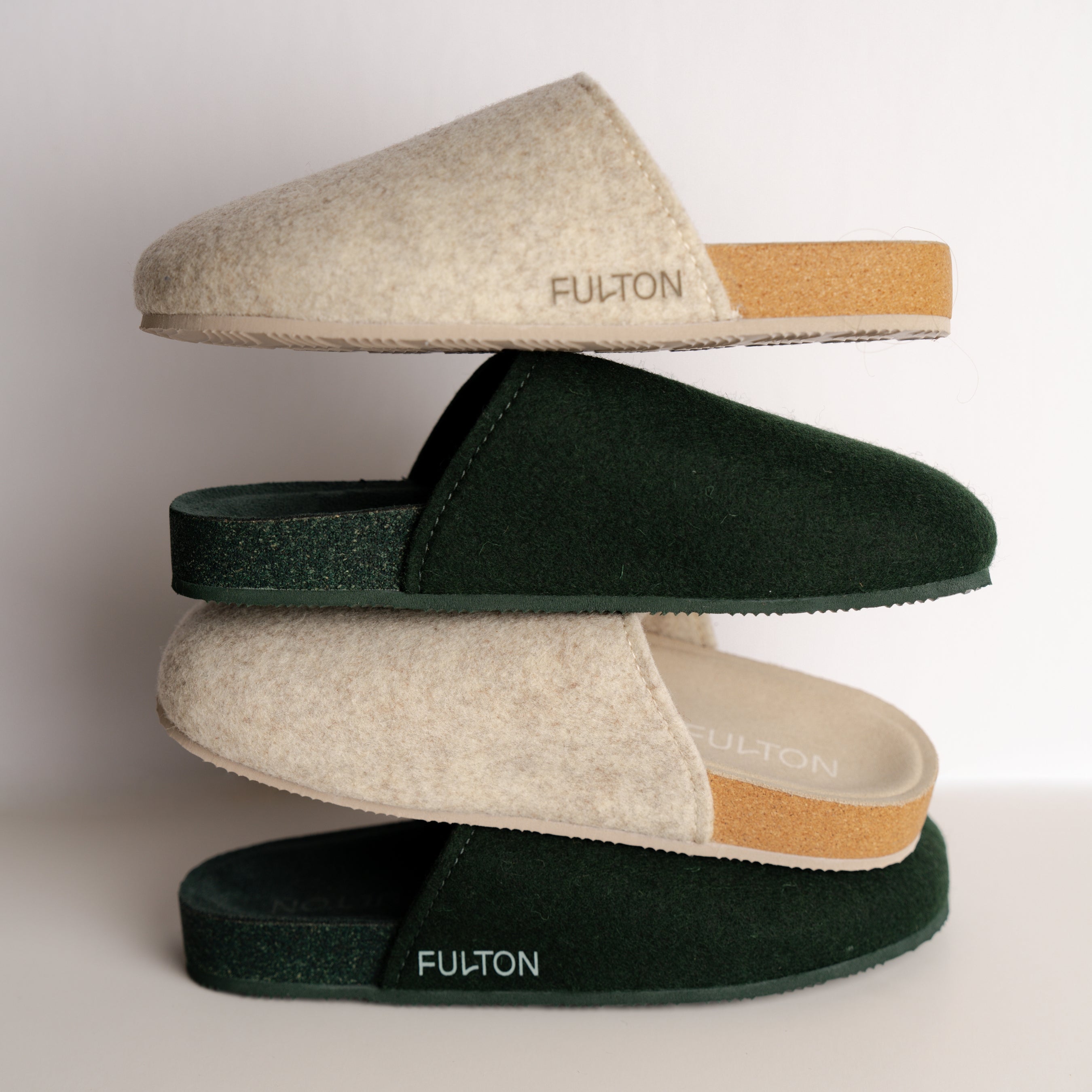
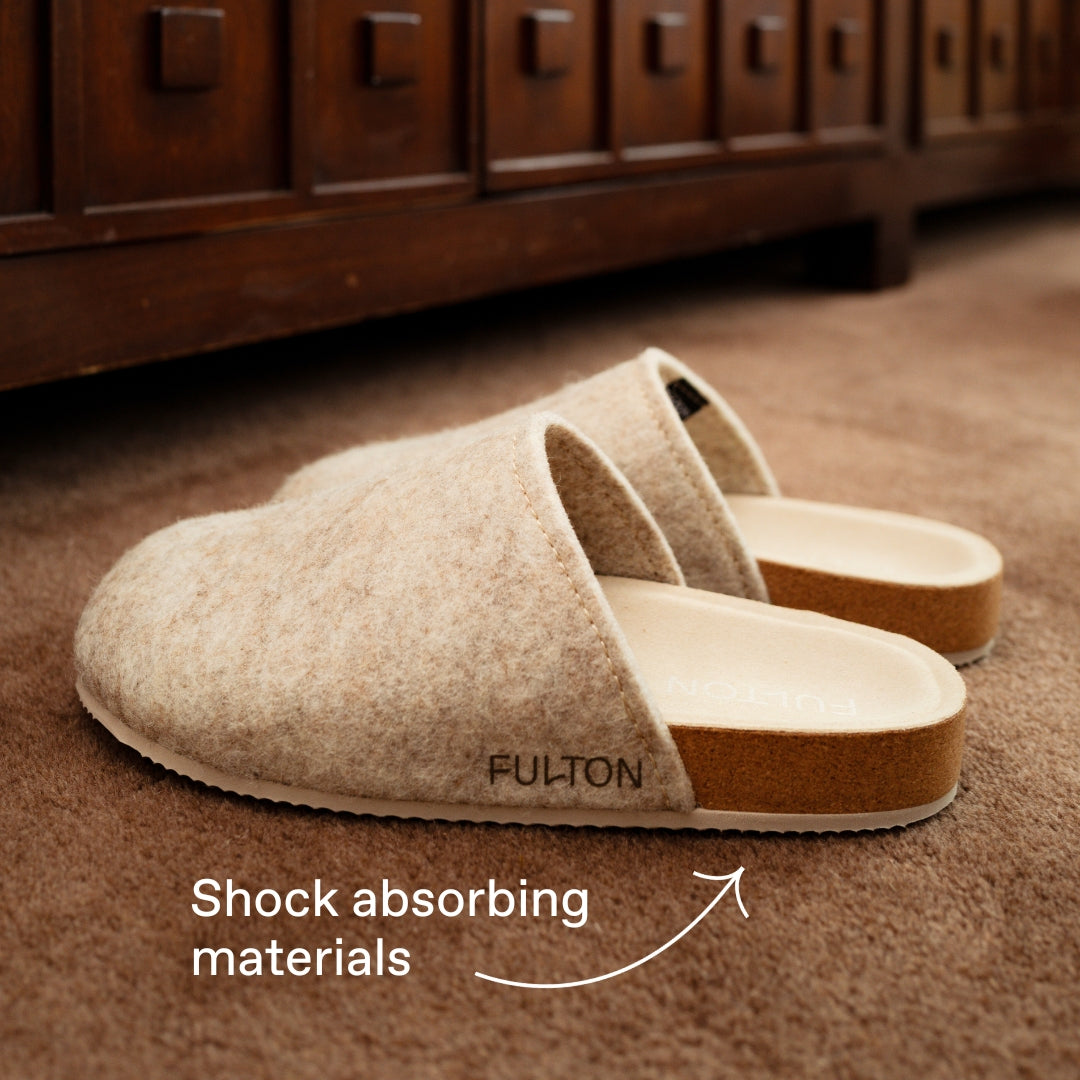
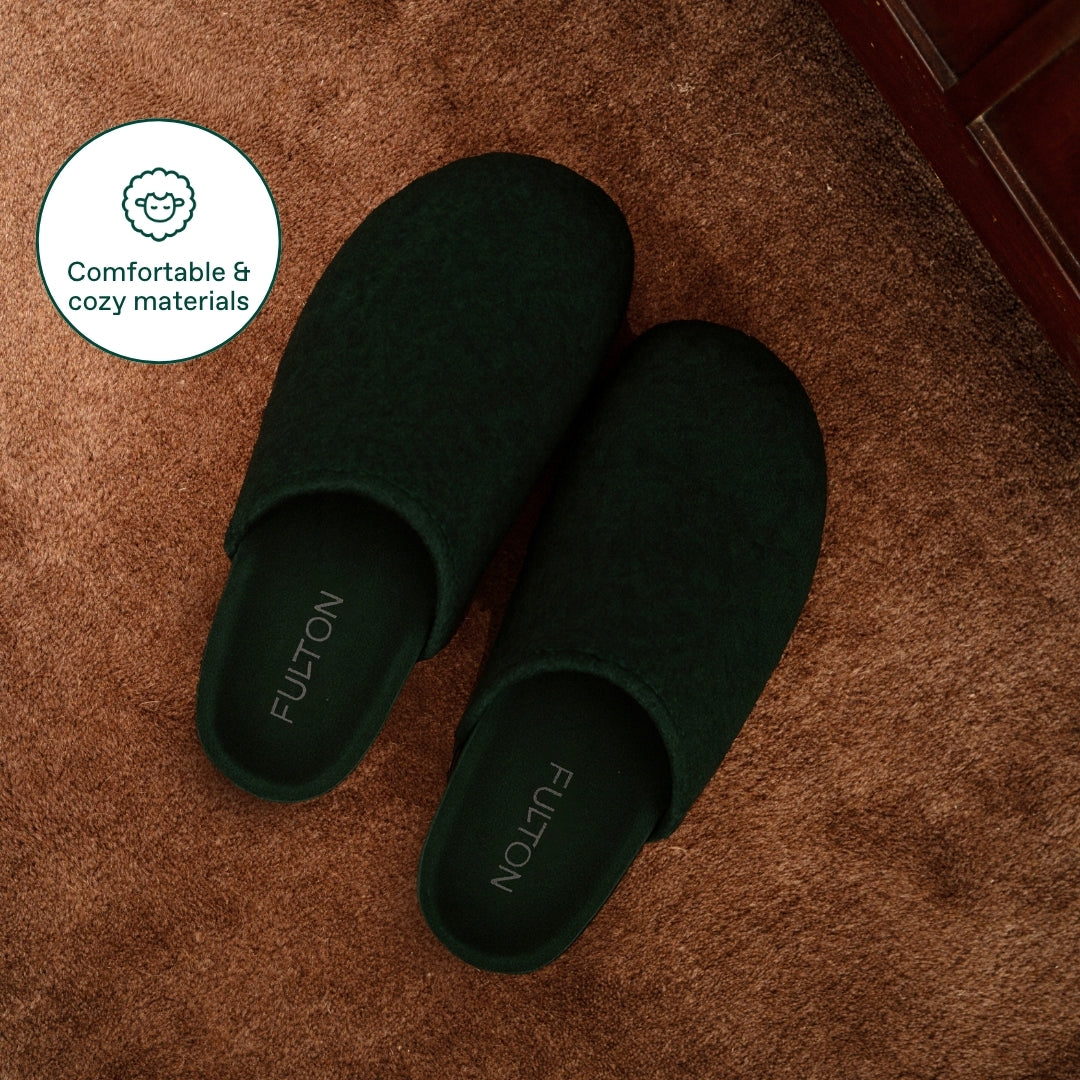
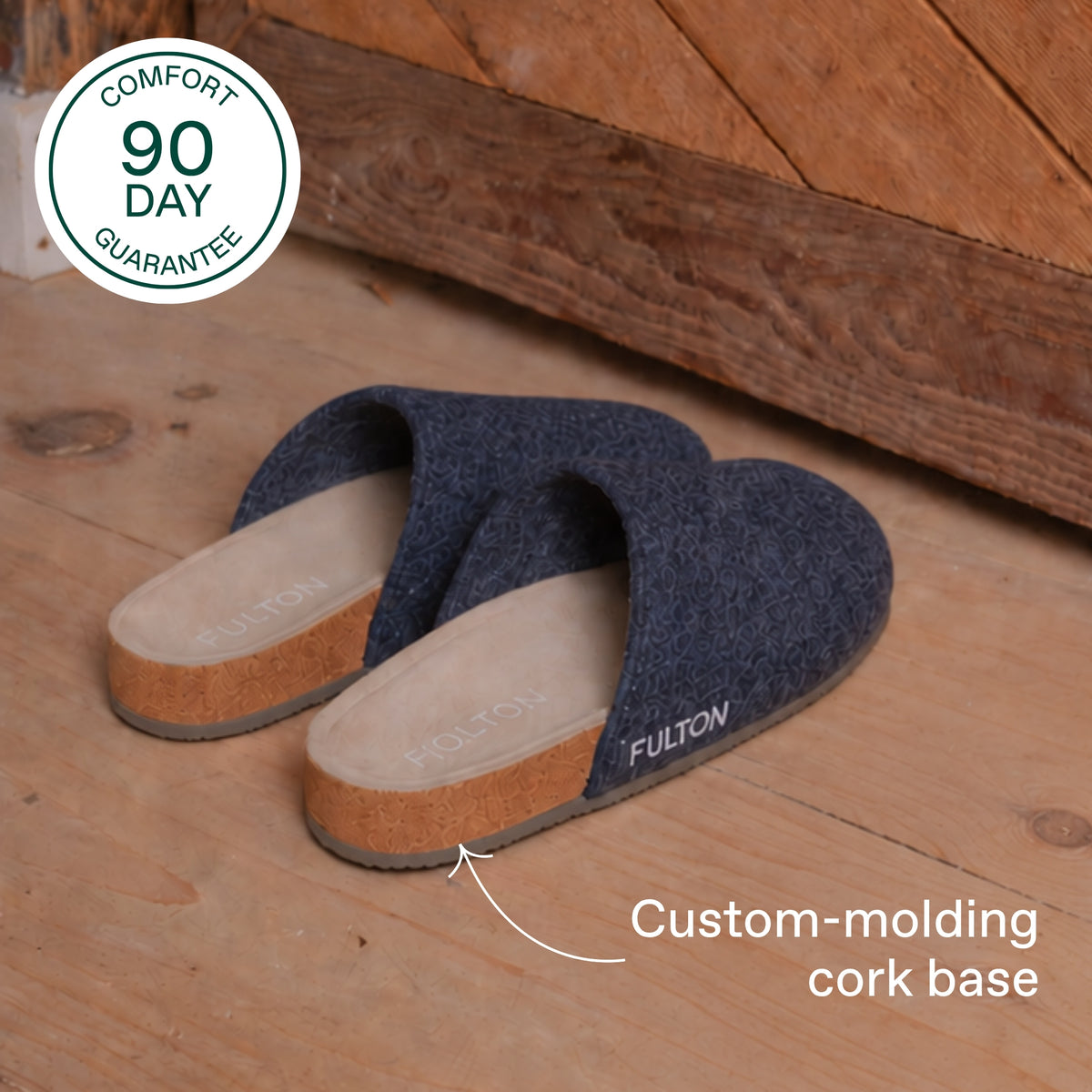
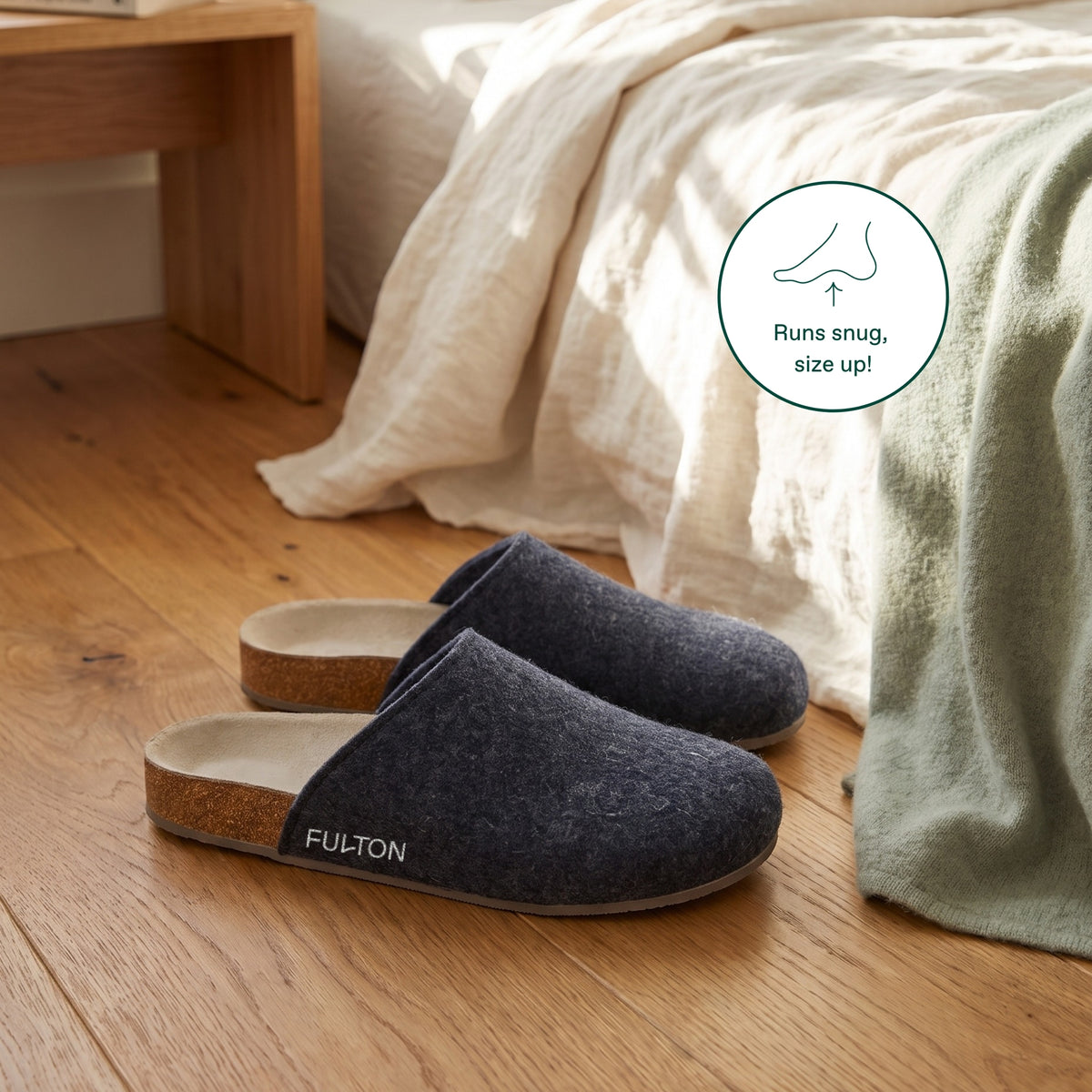
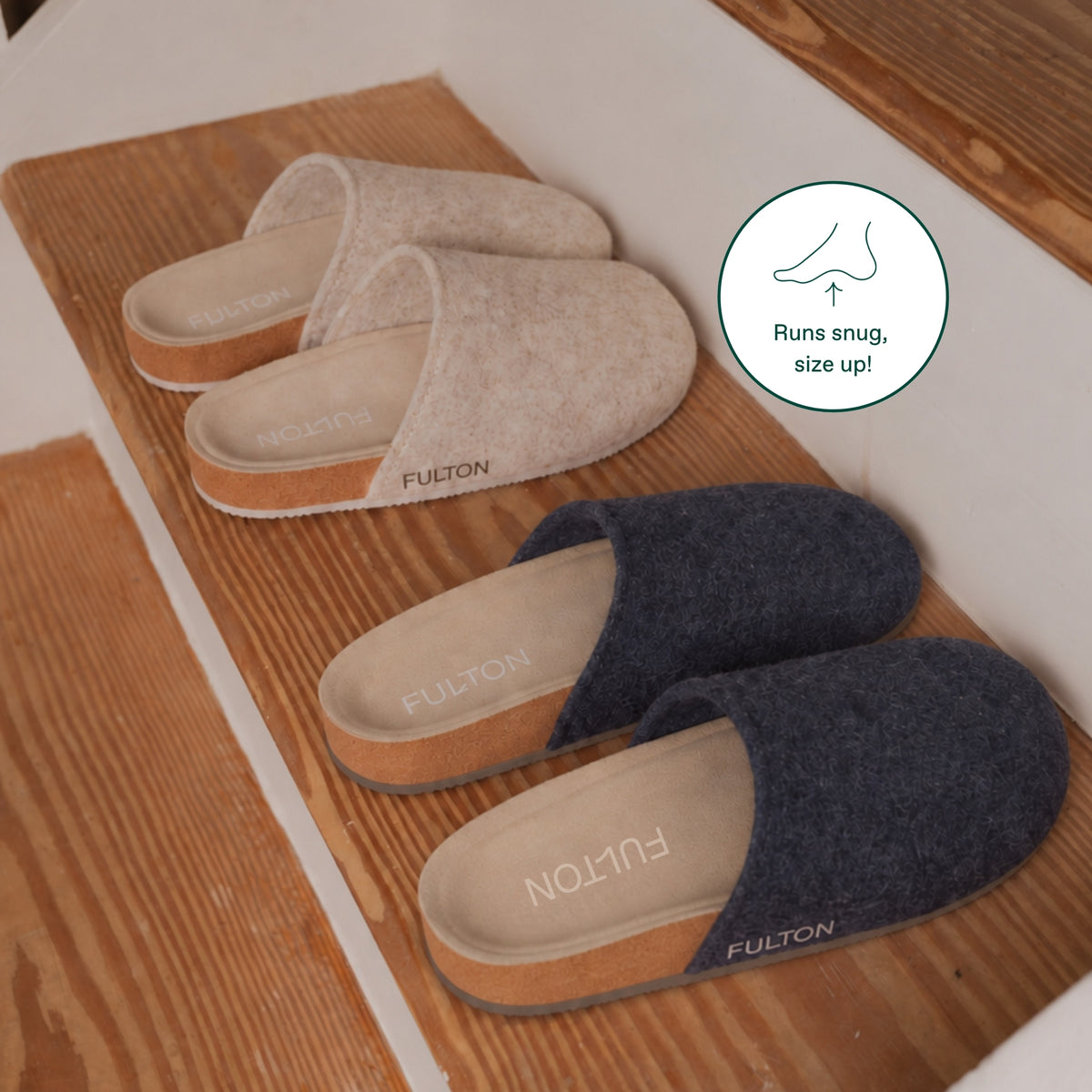
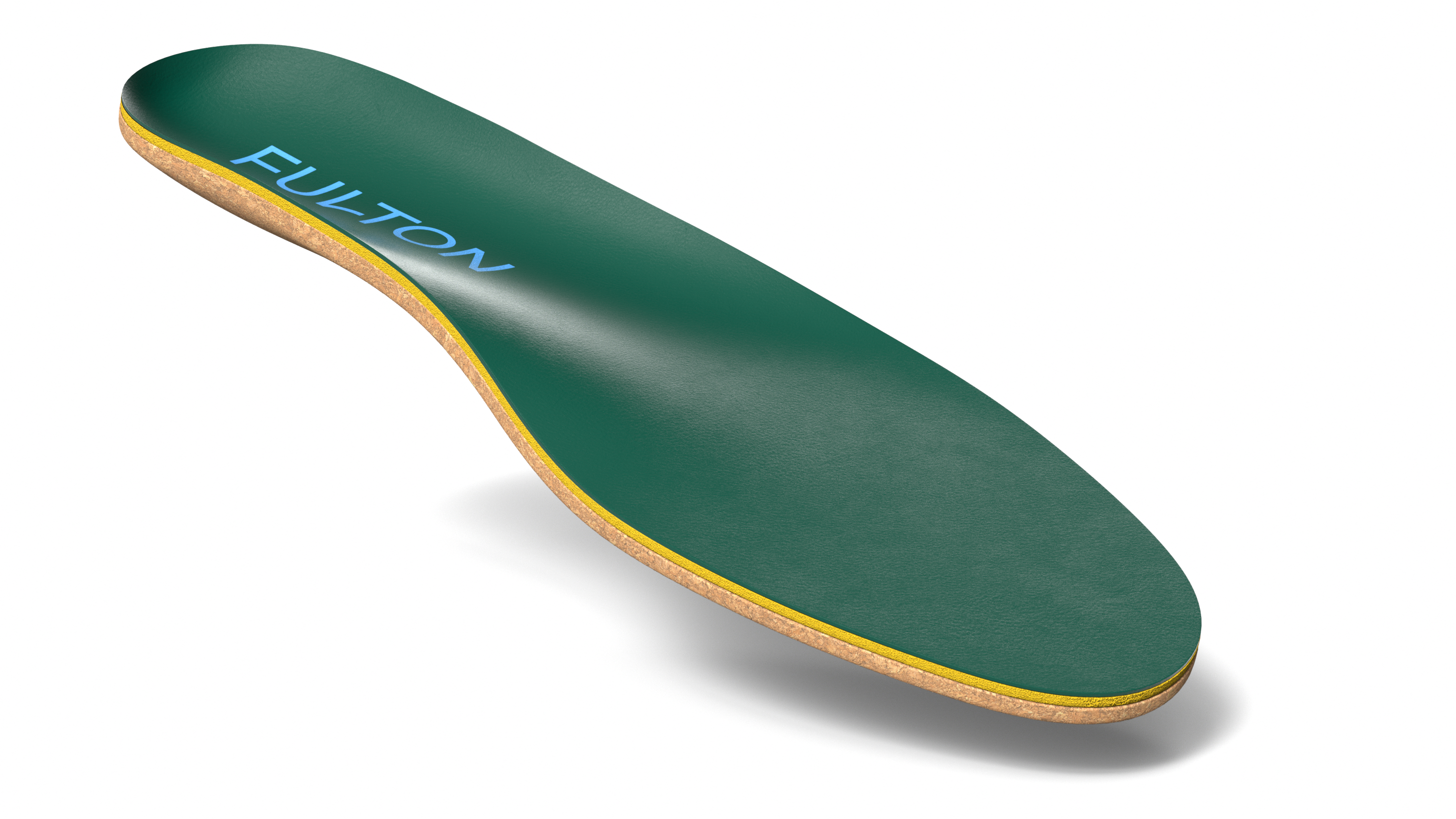
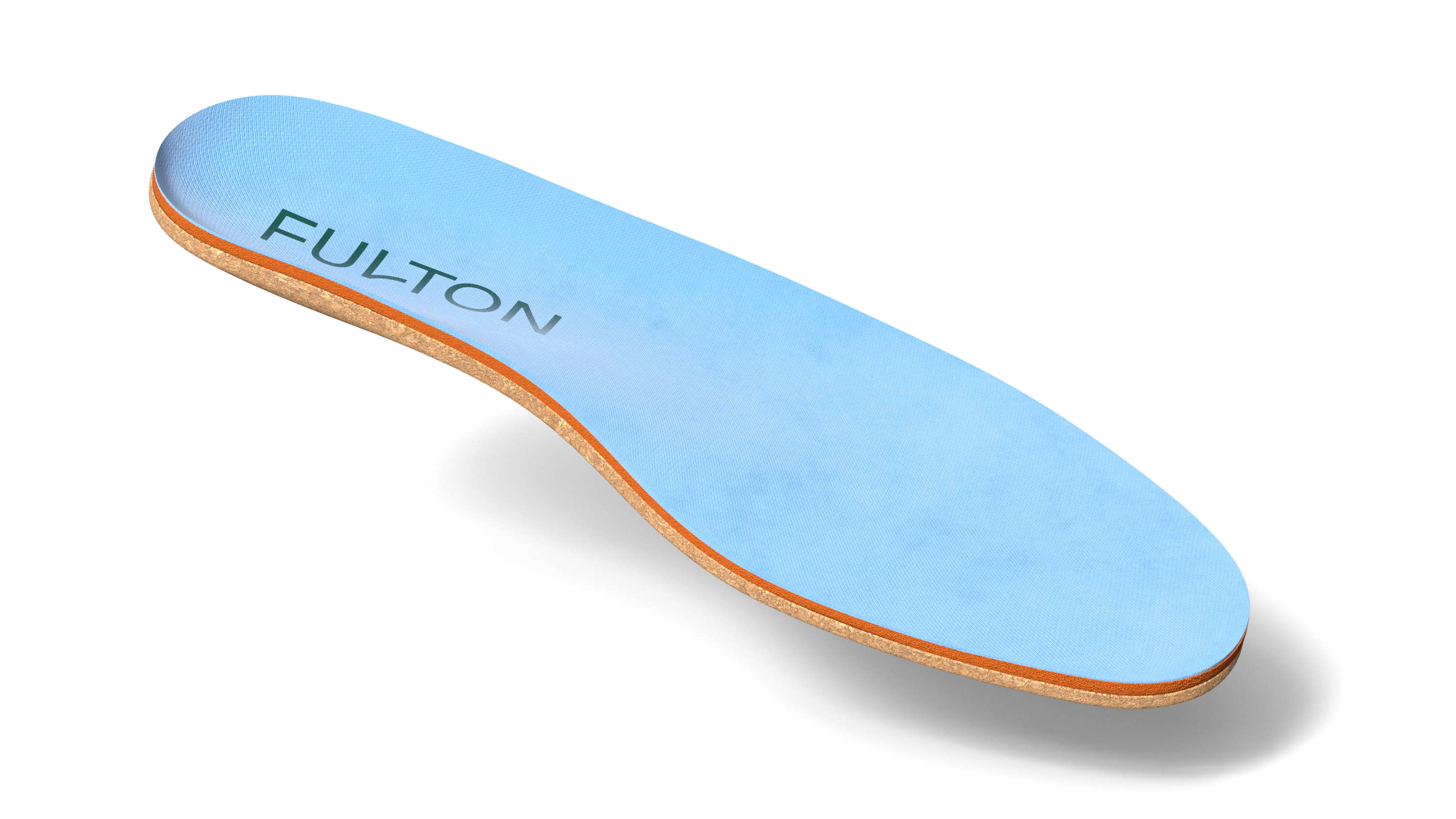
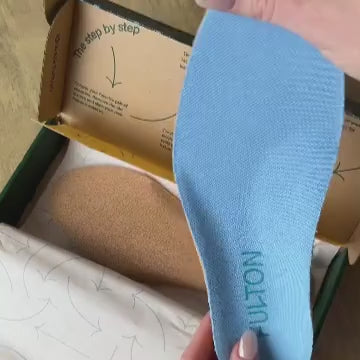
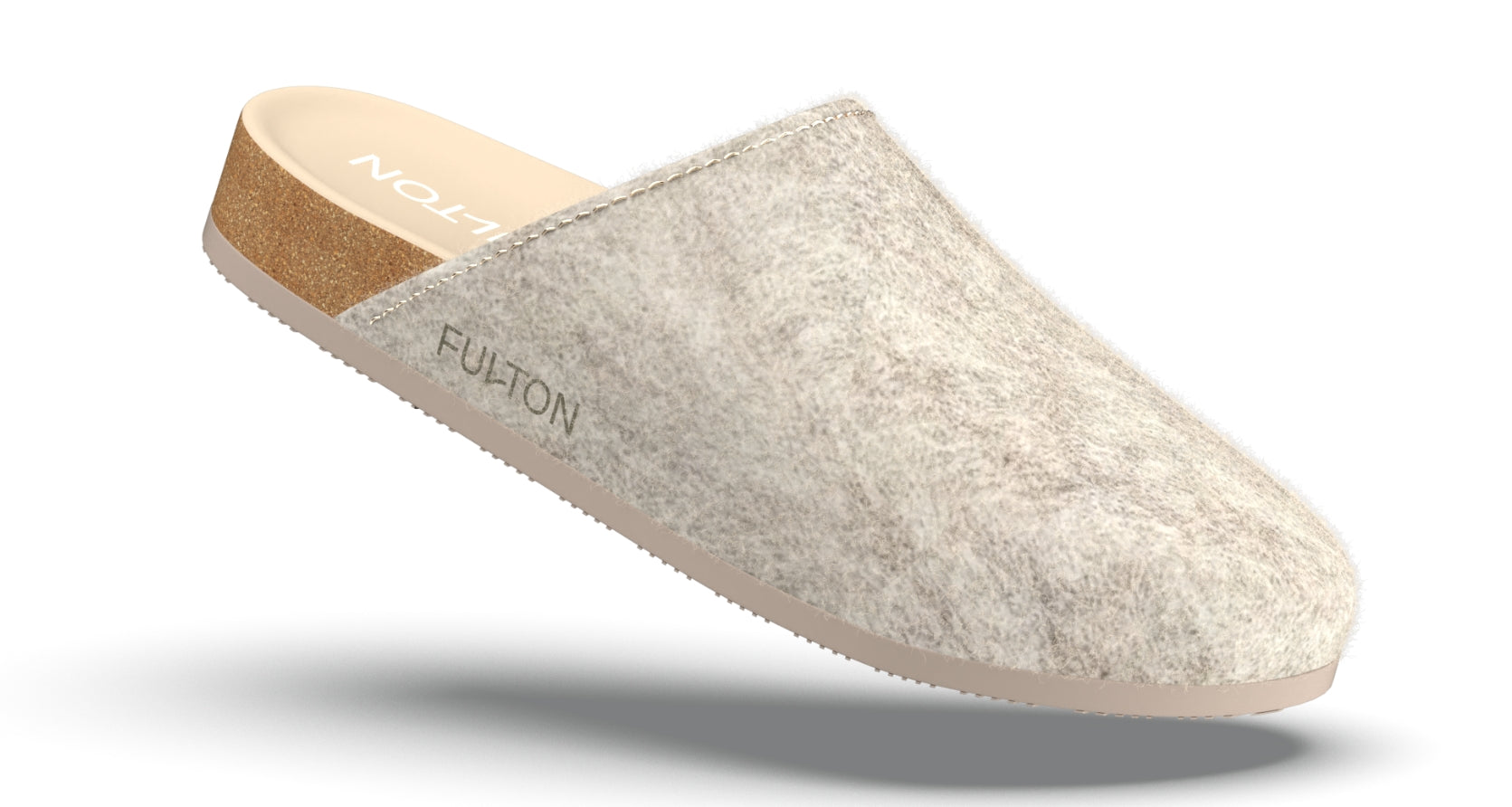
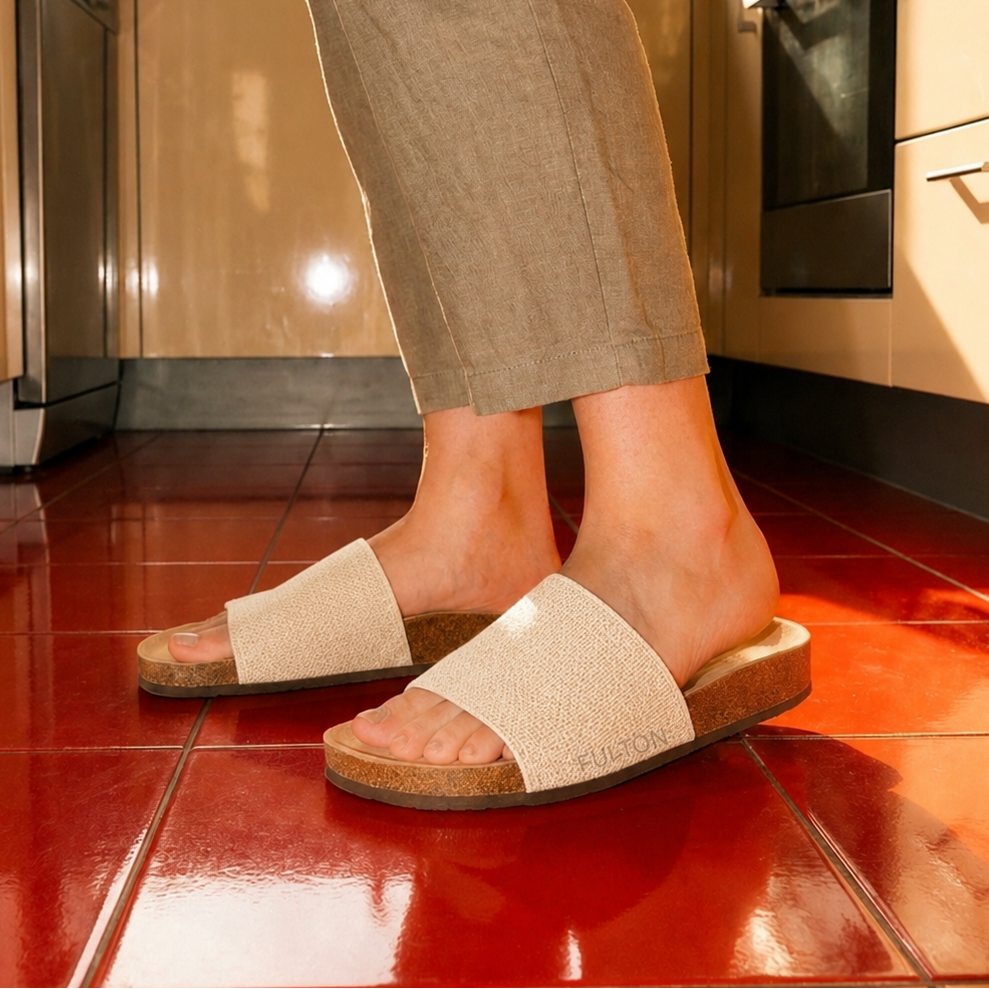
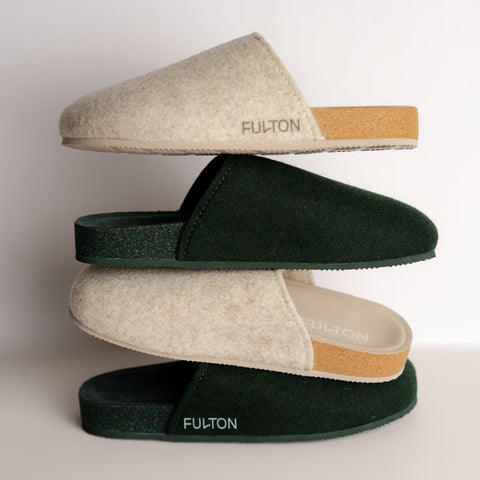
The Fulton Comfort Slide is a supportive slip-on slide built around a natural cork footbed that softens with body heat and molds to the wearer's unique arch shape after approximately 10 hours of wear. Unlike foam footbeds, which compress and flatten over weeks of use, cork holds the shape it has conformed to, meaning the support you feel on day 30 is structurally informed by your actual gait and arch, not a generic cushion that has already started to break down. That adaptive quality is what sets the Comfort Slide apart from most house shoes in its price range.
Key Features:
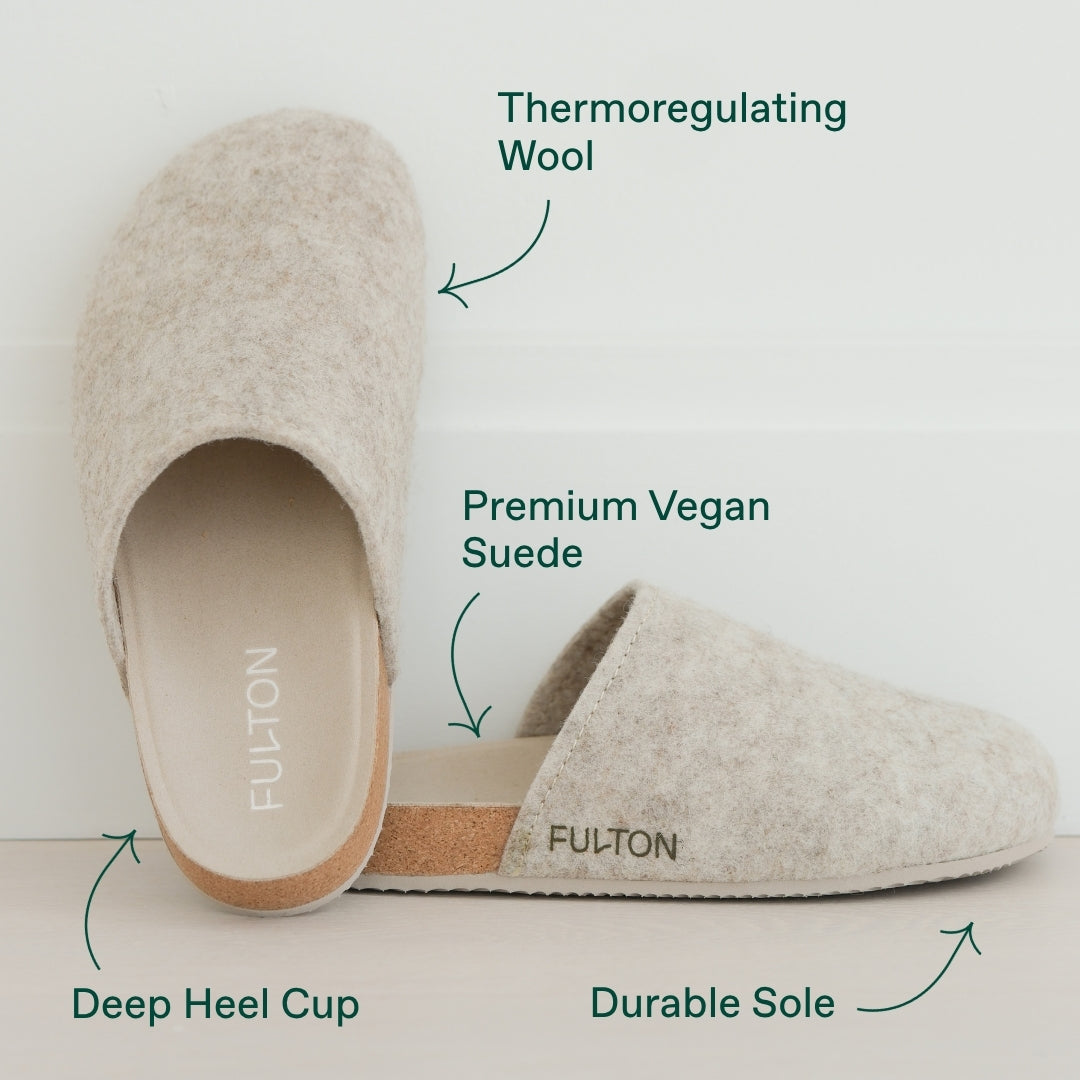
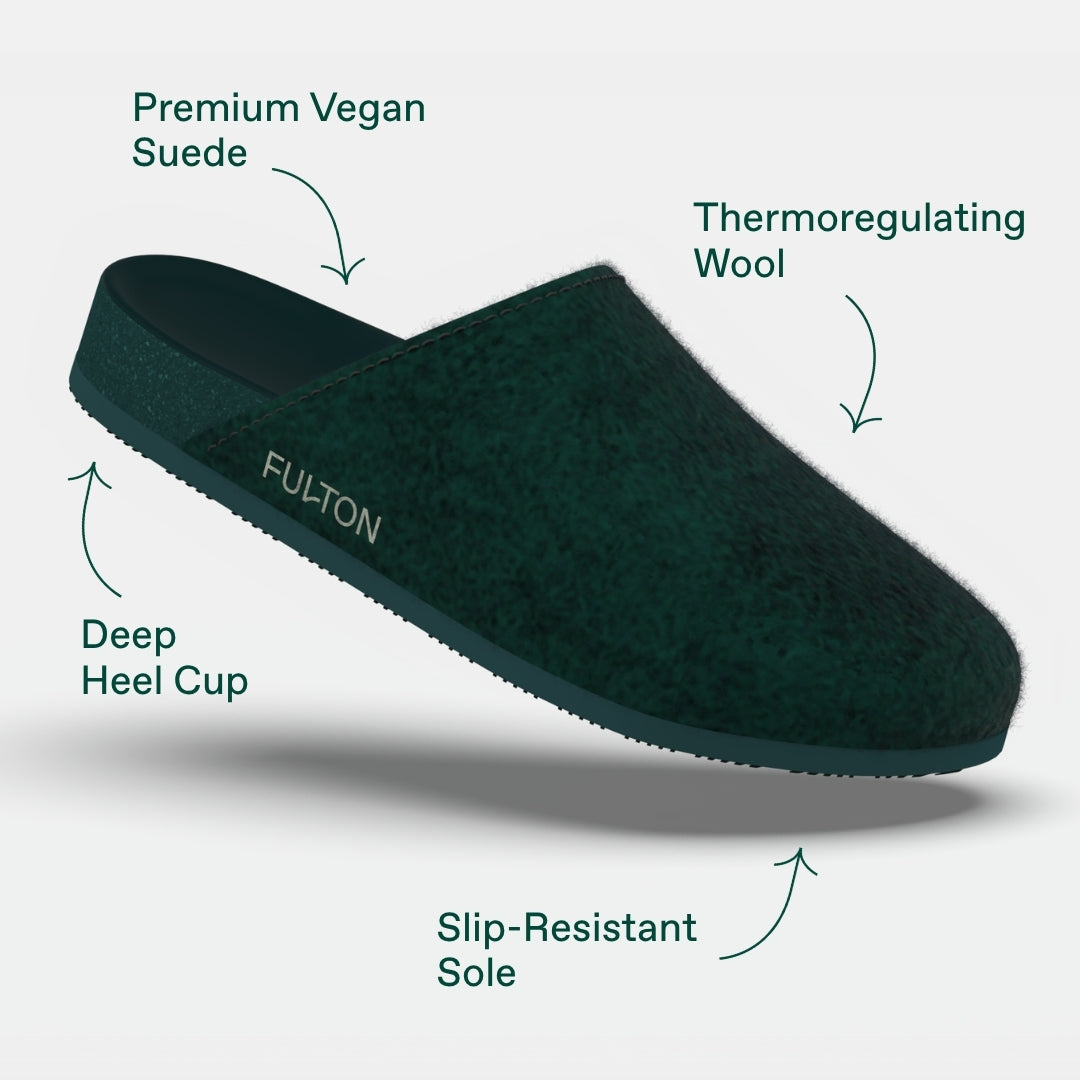
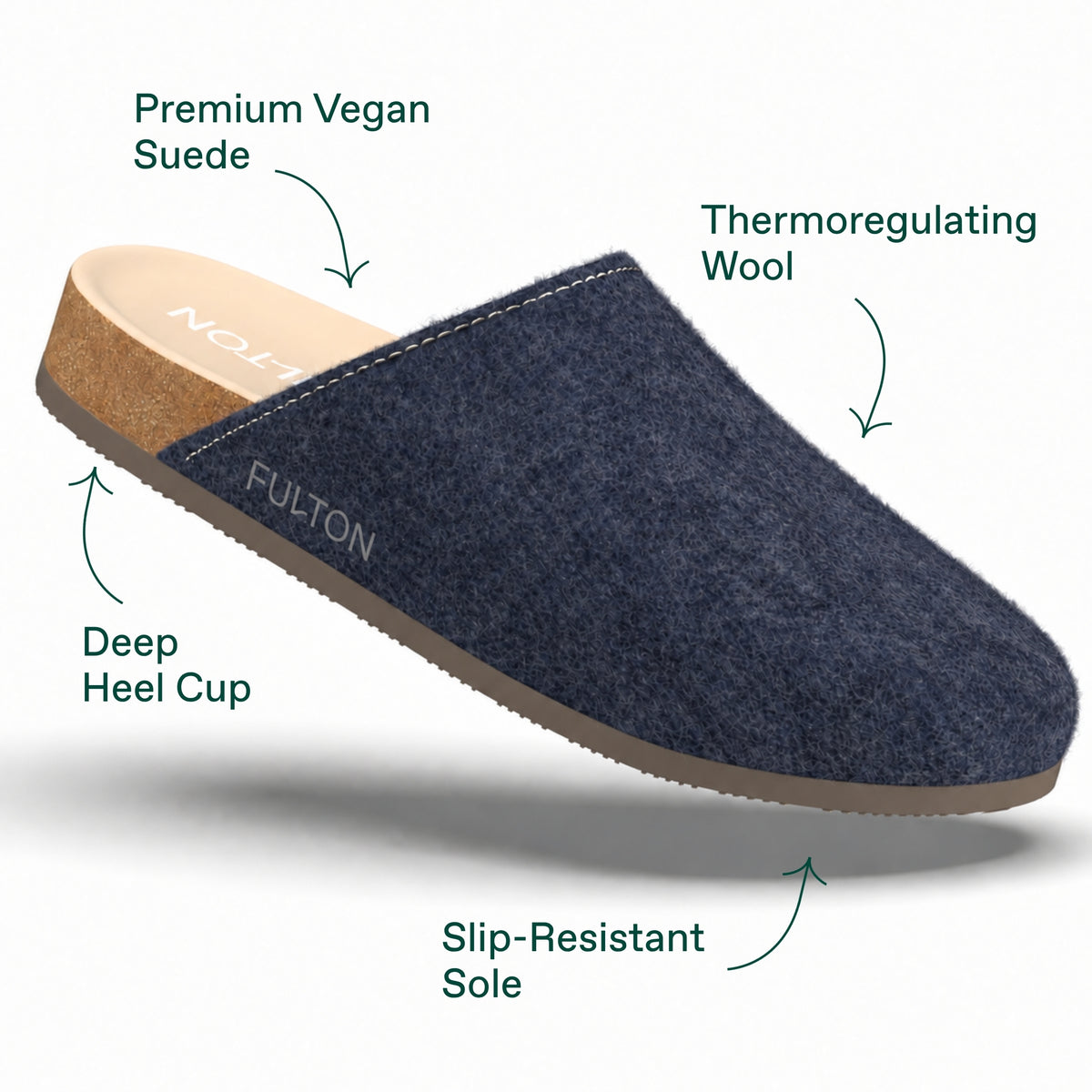
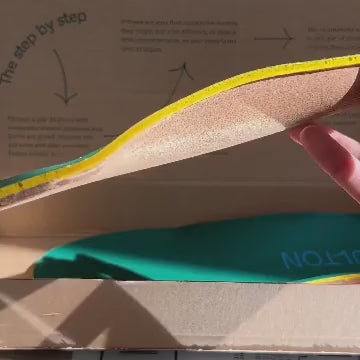
- Adaptive Cork Footbed: The cork base softens with body heat and conforms to the wearer's arch over roughly 10 hours of wear, then holds that personalized shape rather than packing flat like foam.
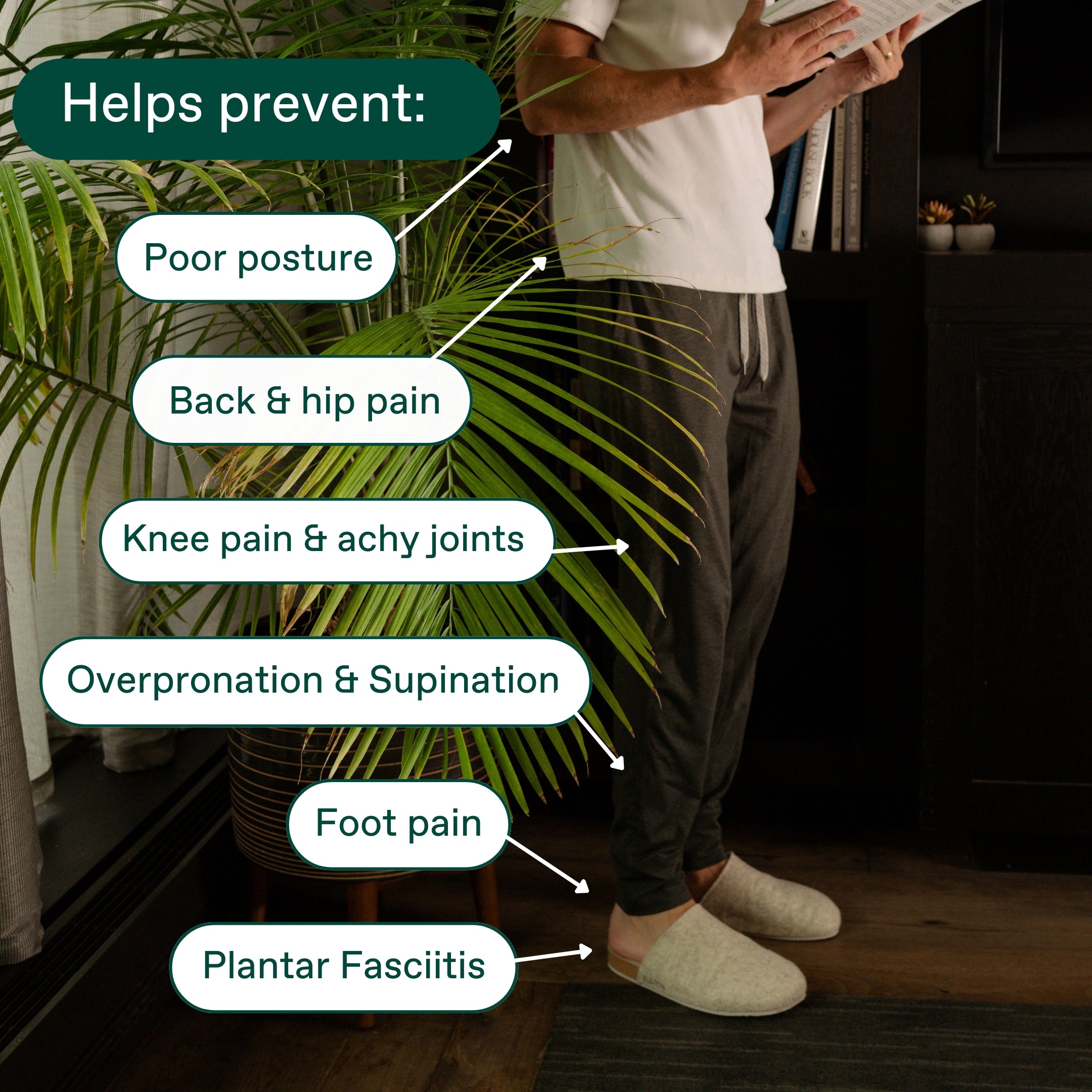
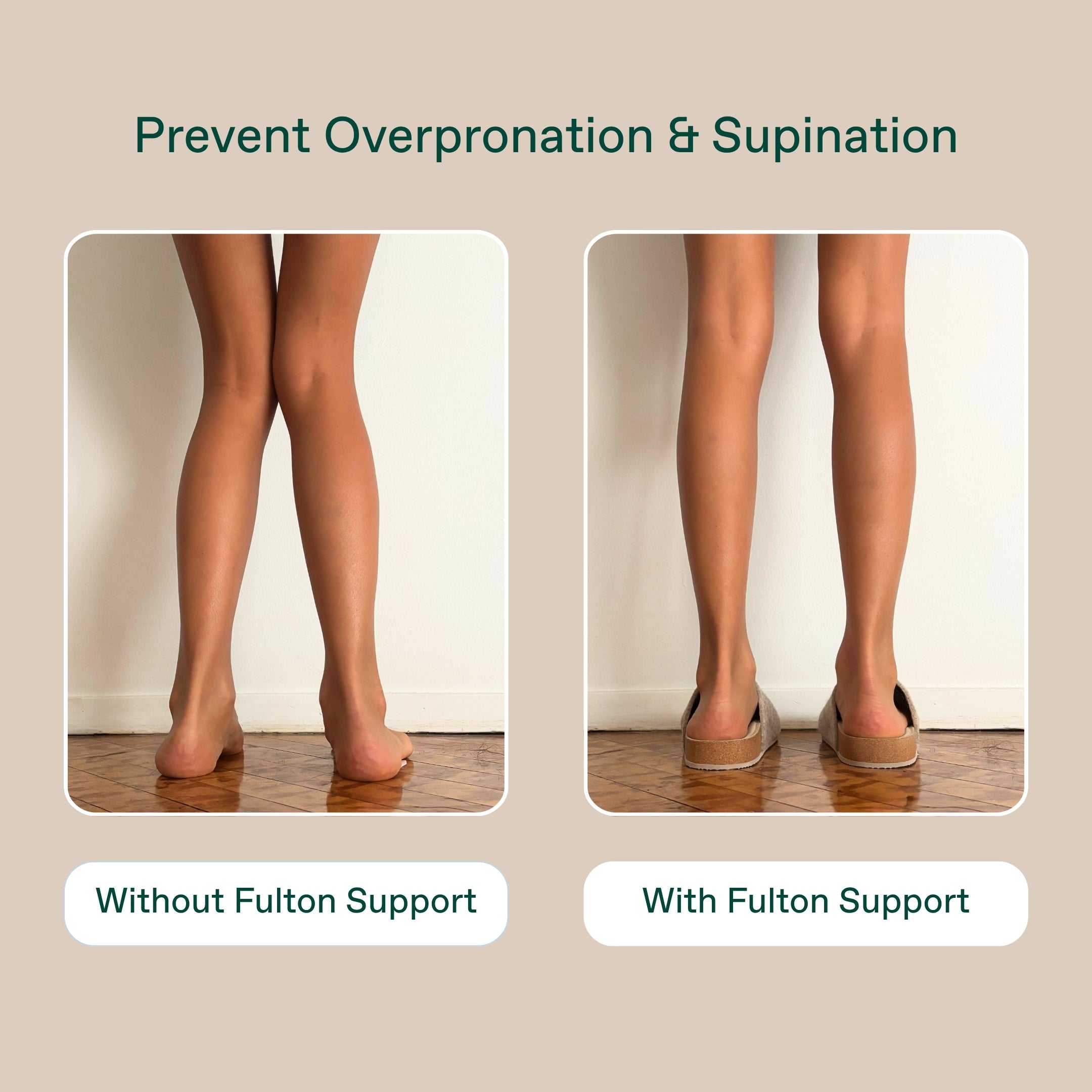
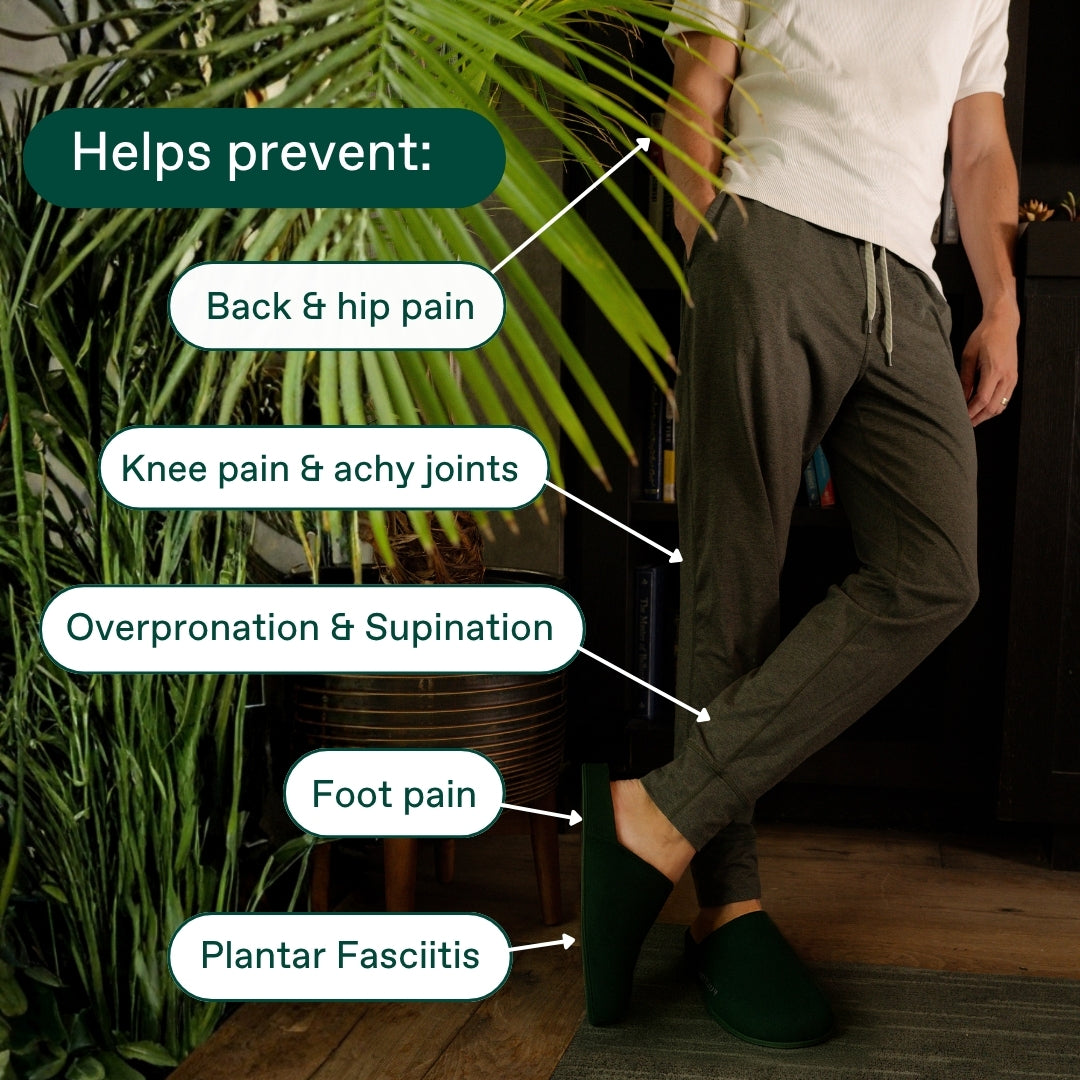
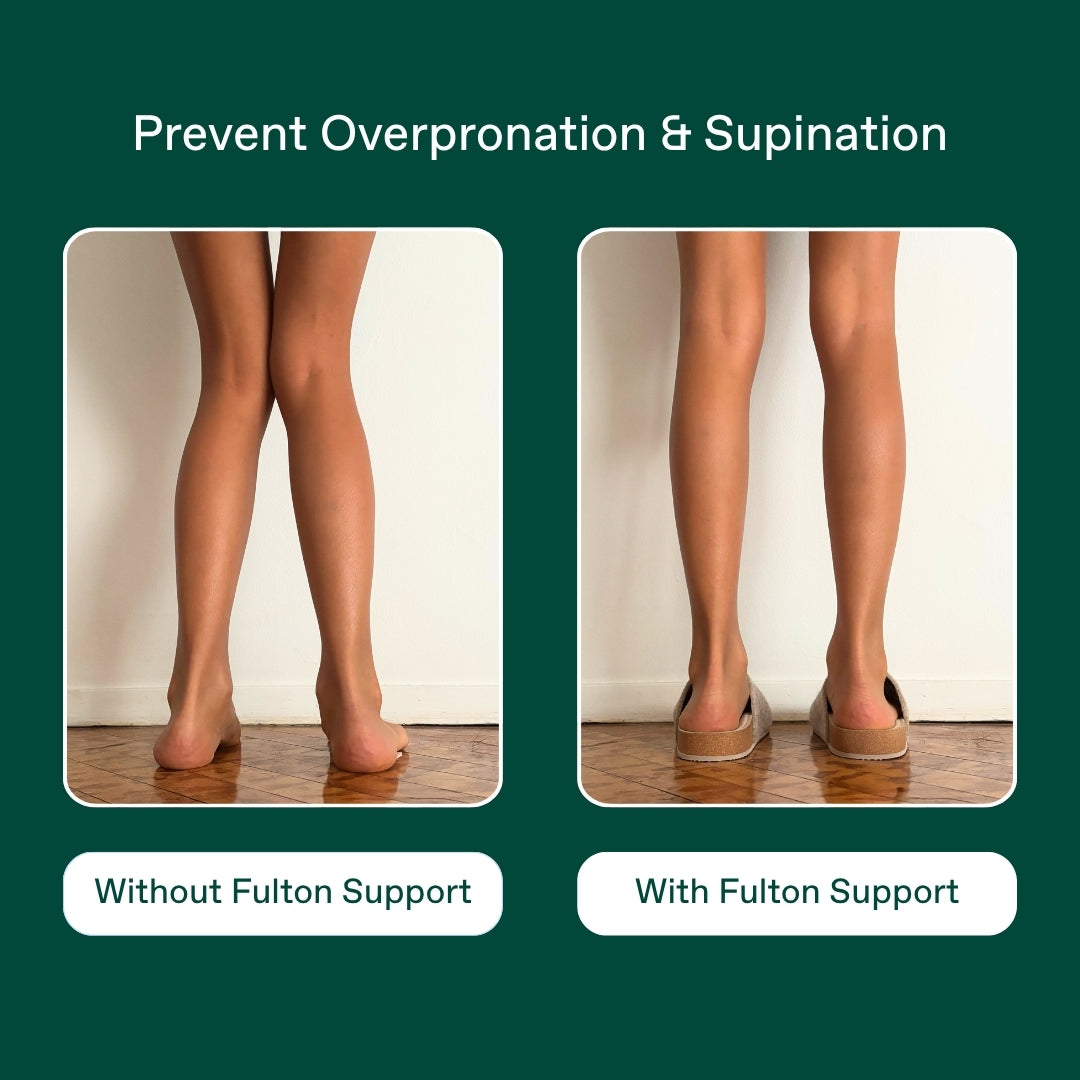
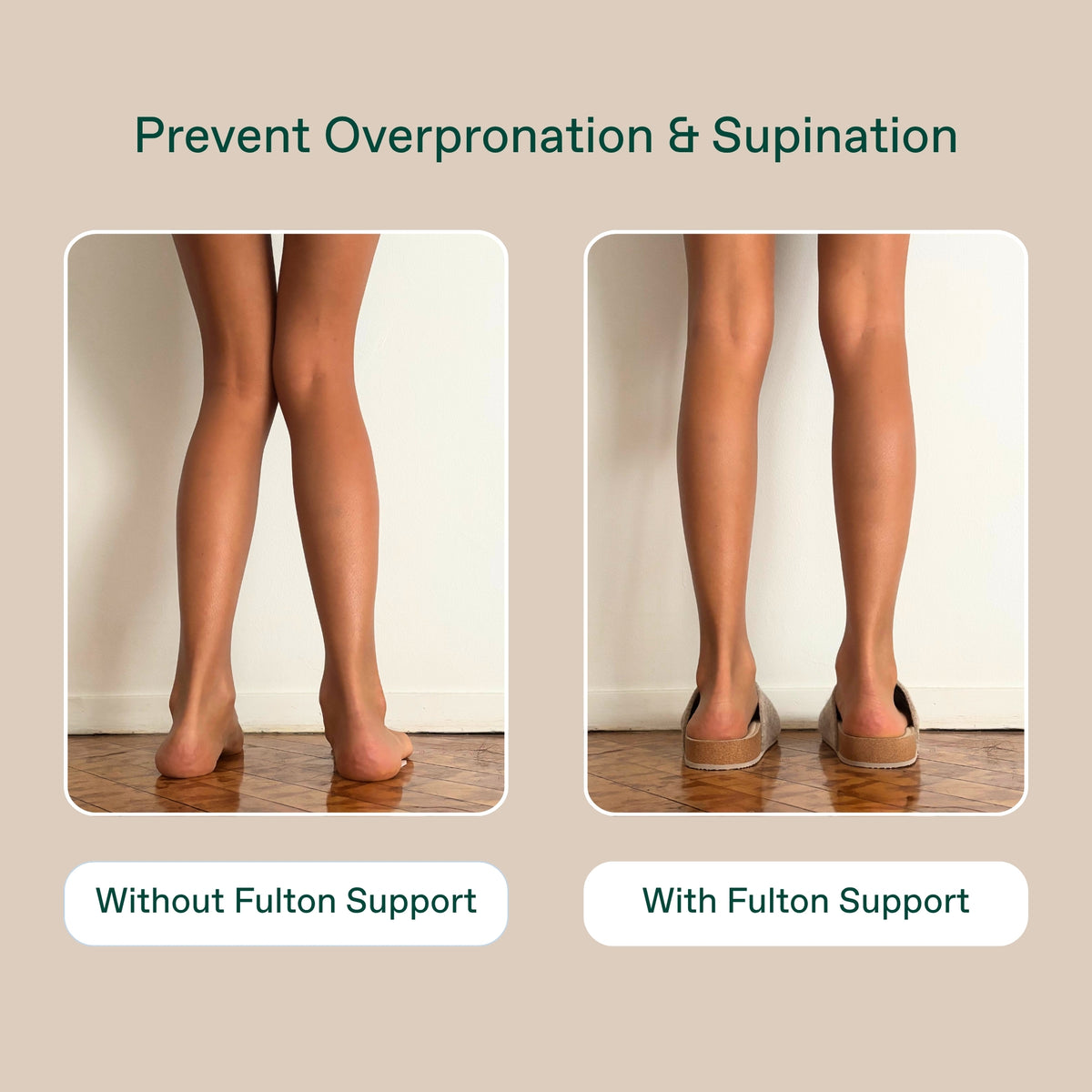
- Deep Heel Cup: A recessed heel structure centers the foot, limiting excessive inward rolling (overpronation) or outward rolling (supination, when the foot rolls too far outward), and reducing lateral shift with each step.
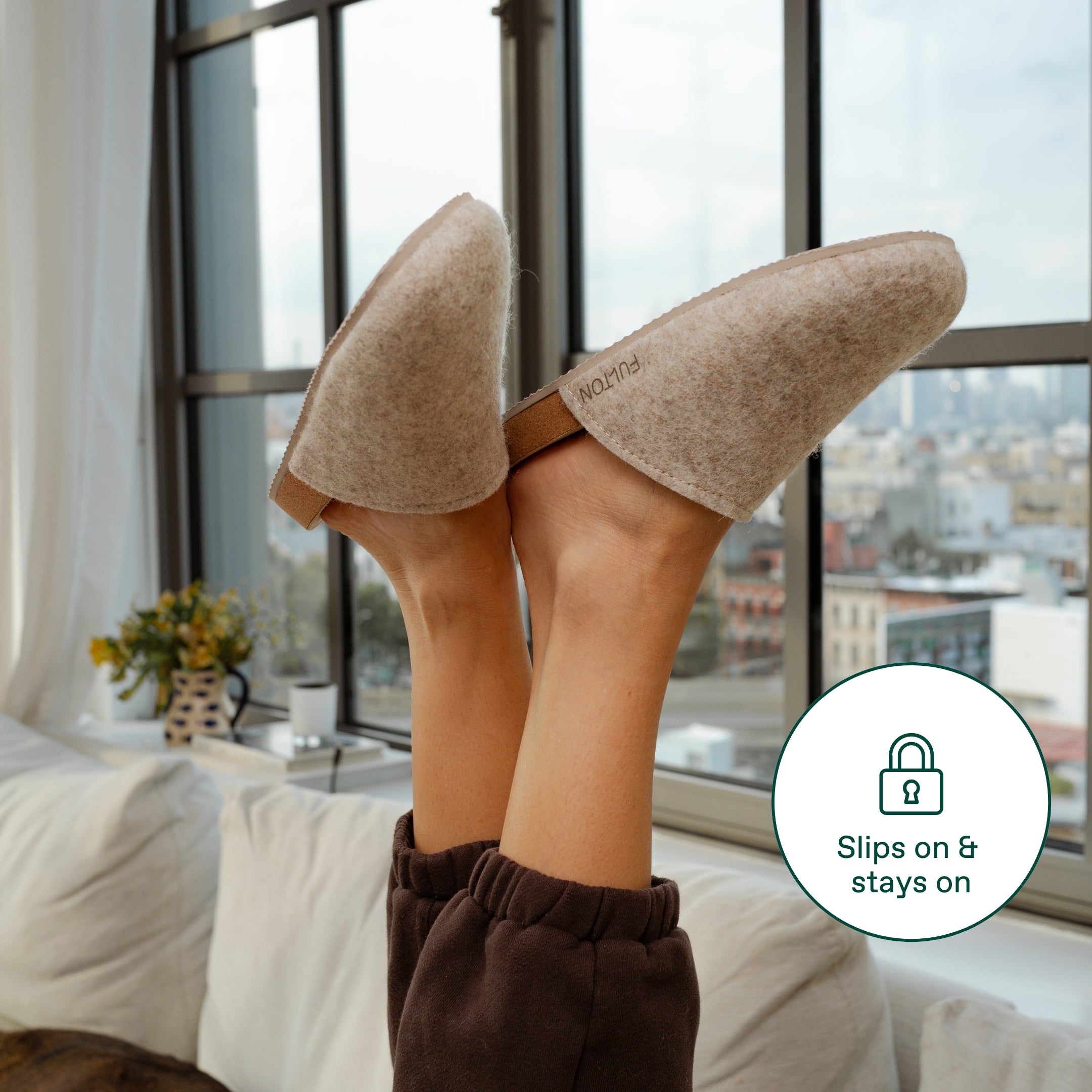
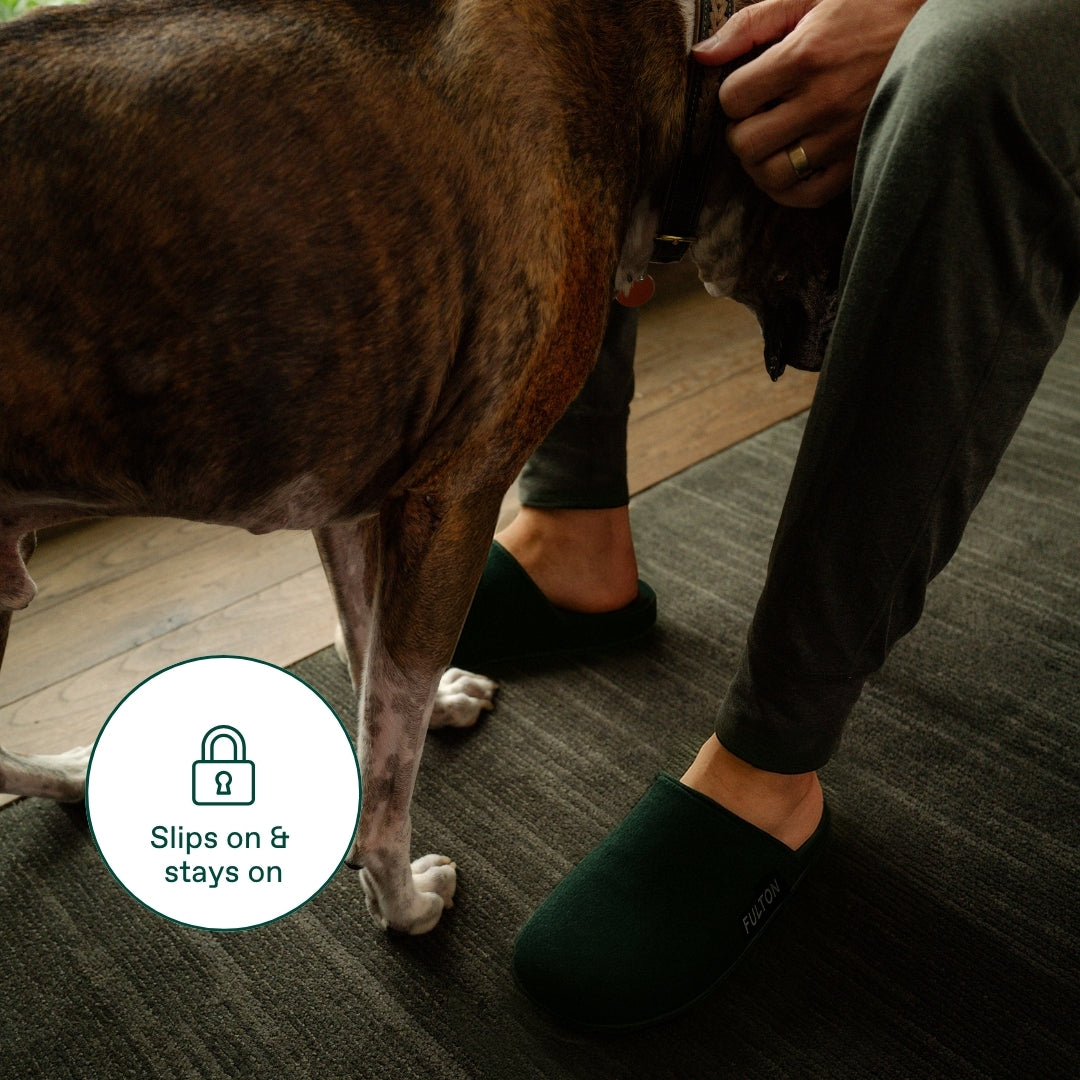
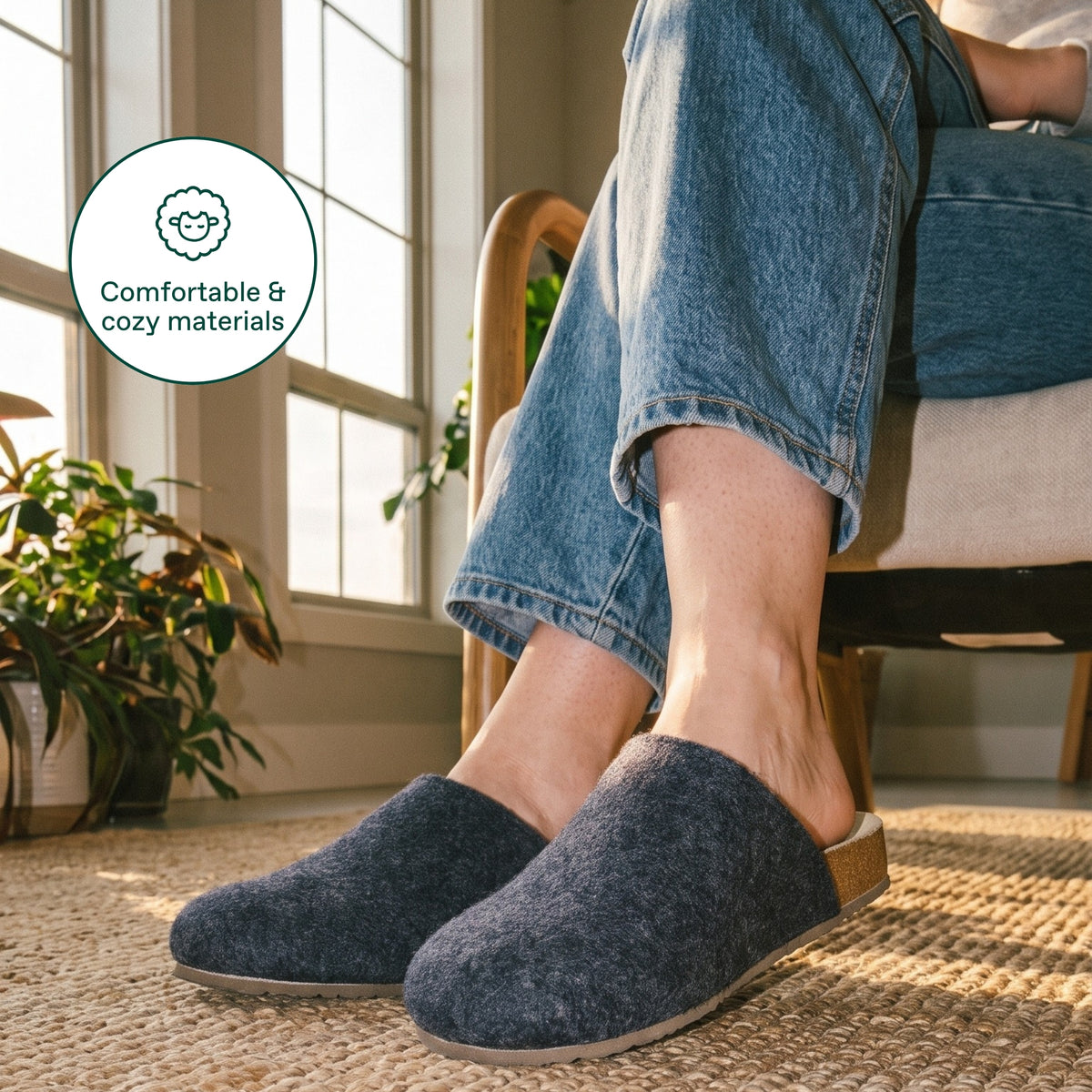
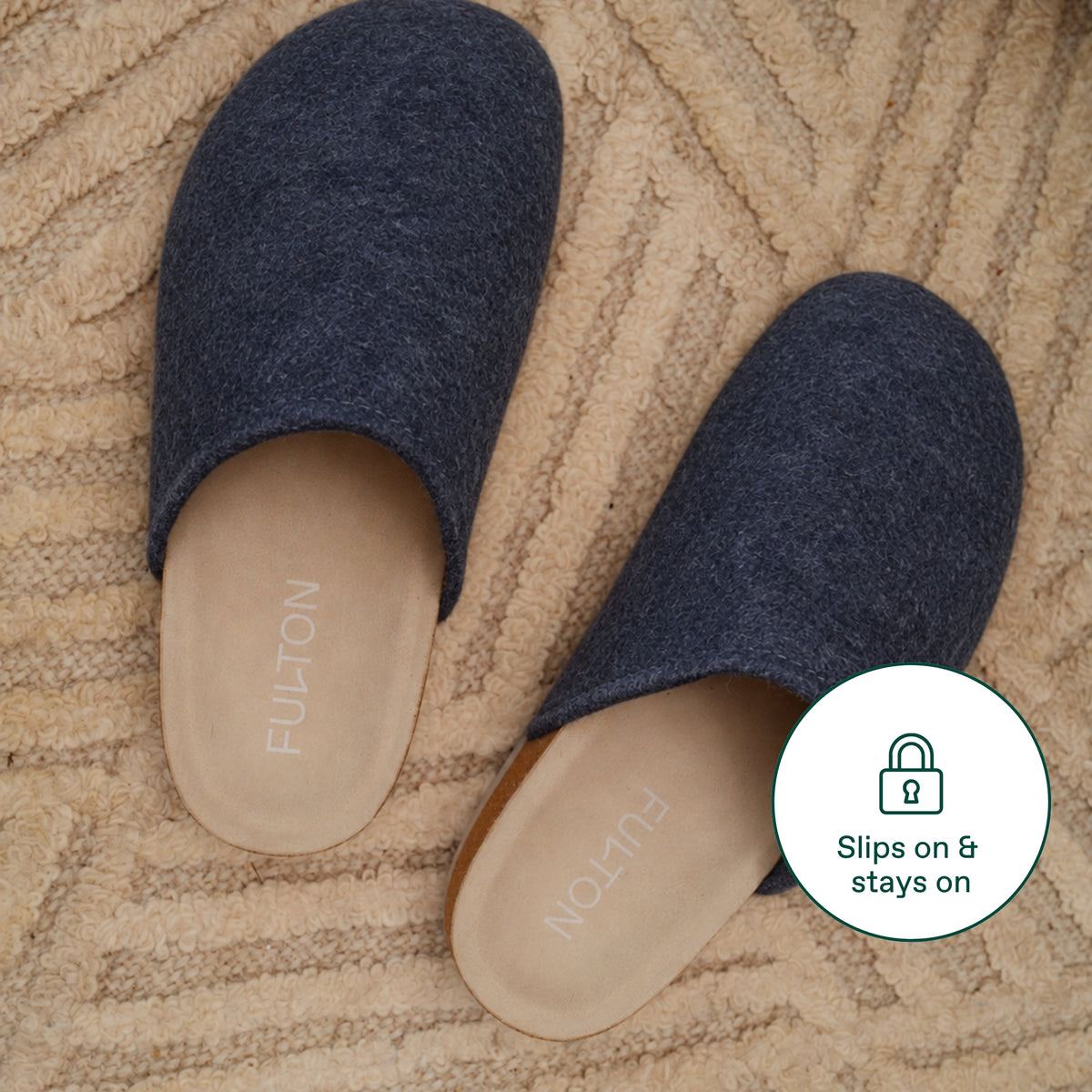
- Compressive Elastic Strap: The single elastic strap is designed to hold the foot gently but securely, without the rigidity of a buckle or the slippage of a loose backless design. It accommodates a range of foot volumes without creating pressure points.
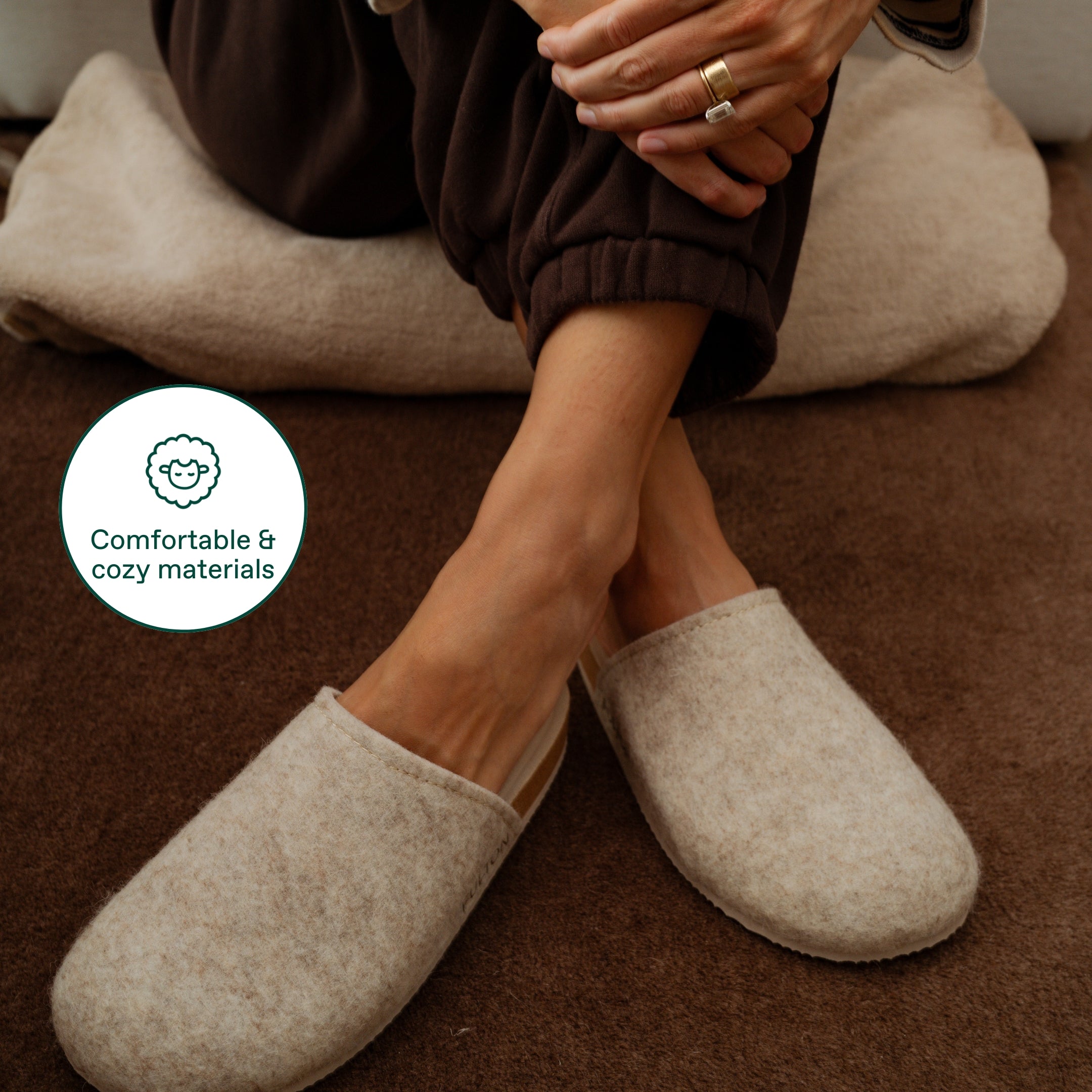
- Breathable Natural Materials: The footbed uses natural cork and a breathable upper, avoiding synthetic foams and plastics that can trap heat and moisture.
- Slip-Resistant Rubber Sole: A durable rubber outsole with texture provides grip on hard floors.
House Shoe and Sensitive Foot Offerings:
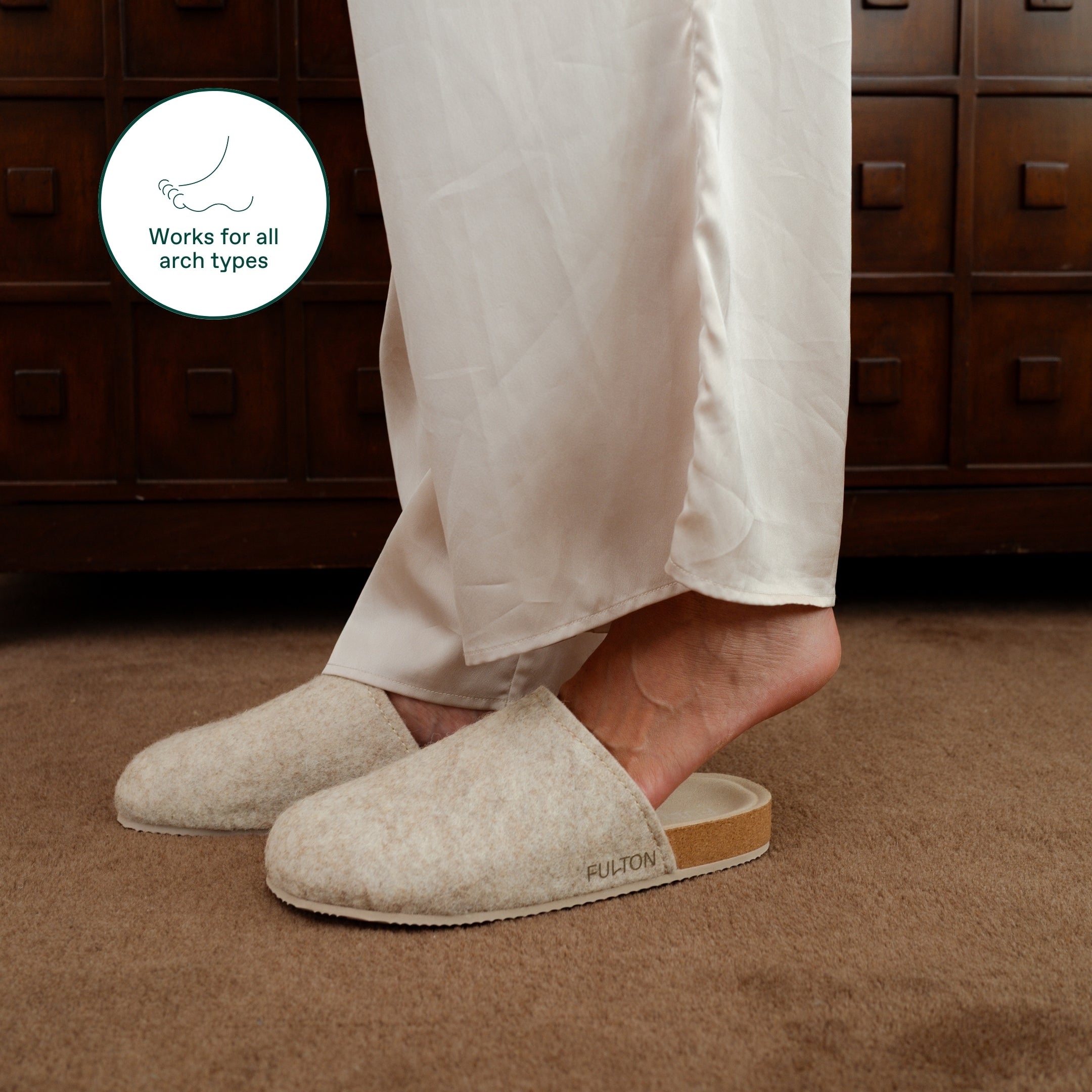
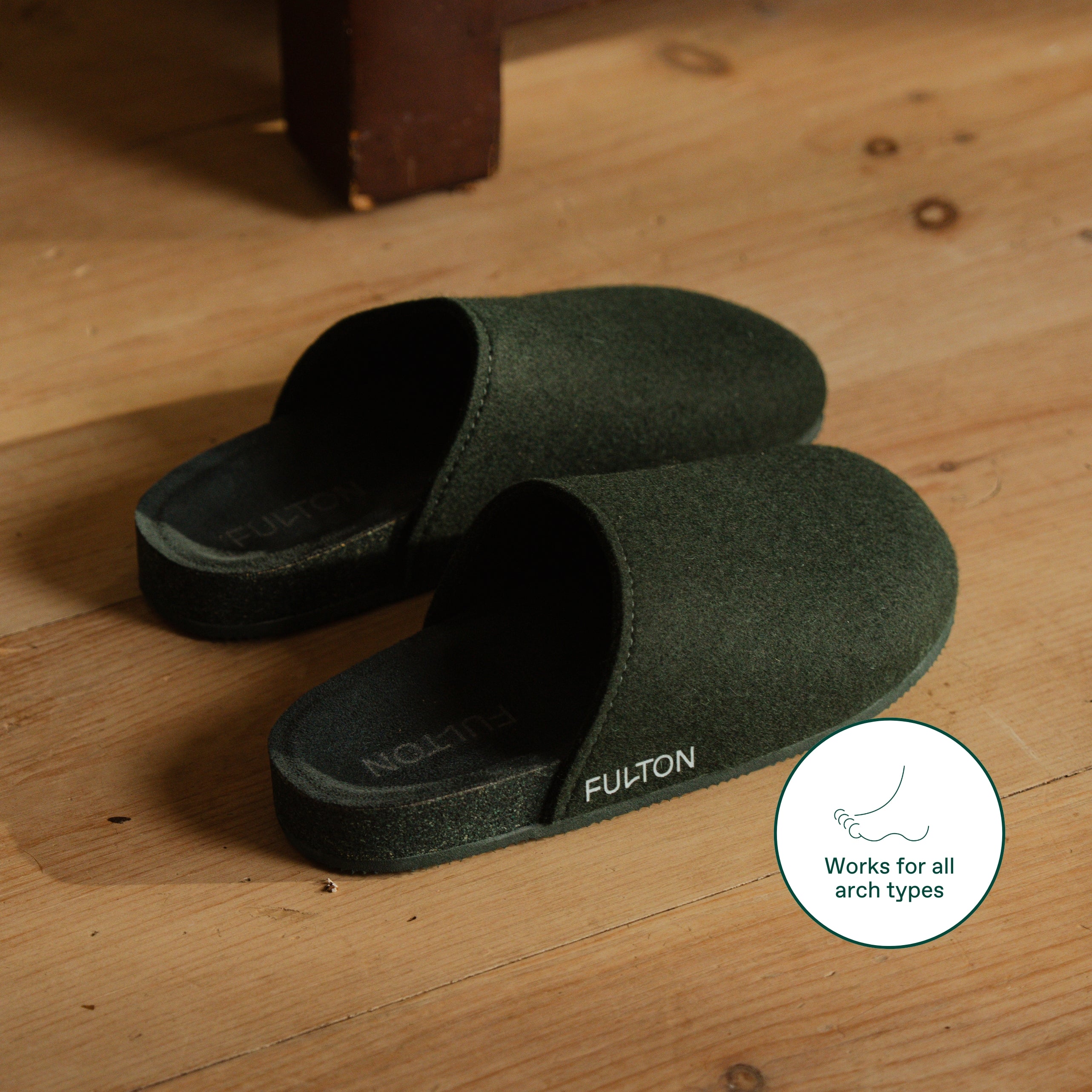
- All-Day Indoor Wear: The cork footbed is designed for extended wear, offering support for all arch types, from flat feet to high arches, without requiring break-in pain.
- Support Without Bulk: The open-toe design eliminates toe-box pressure, while the compressive strap secures the midfoot without binding.
- Podiatrist-Backed Design: The Comfort Slide's architecture has been developed with input from podiatrists and physical therapists, including named endorsements from Jeffrey Brandt (Prosthetist and Orthotist), Renuka Pinto (Physical Therapist), and Dr. Rottenberg (Podiatrist).
- Sustainable Construction: Made with carbon-negative production (carbon footprint of -0.81 kg CO2e), handcrafted in small batches in Porto, Portugal.
- HSA/FSA Eligible: The Comfort Slide can be purchased using health savings or flexible spending account funds.
Pricing: $120. Available in Cream and Black. Covered by Fulton's 90-Day Comfort Guarantee, meaning if the Comfort Slide is not right for you within 90 days, you can return or exchange it.
Pros:
- Cork footbed molds to the wearer's arch over time and holds its shape, unlike foam
- Deep heel cup provides meaningful foot stabilization
- Breathable natural materials rather than synthetic foam or plastic
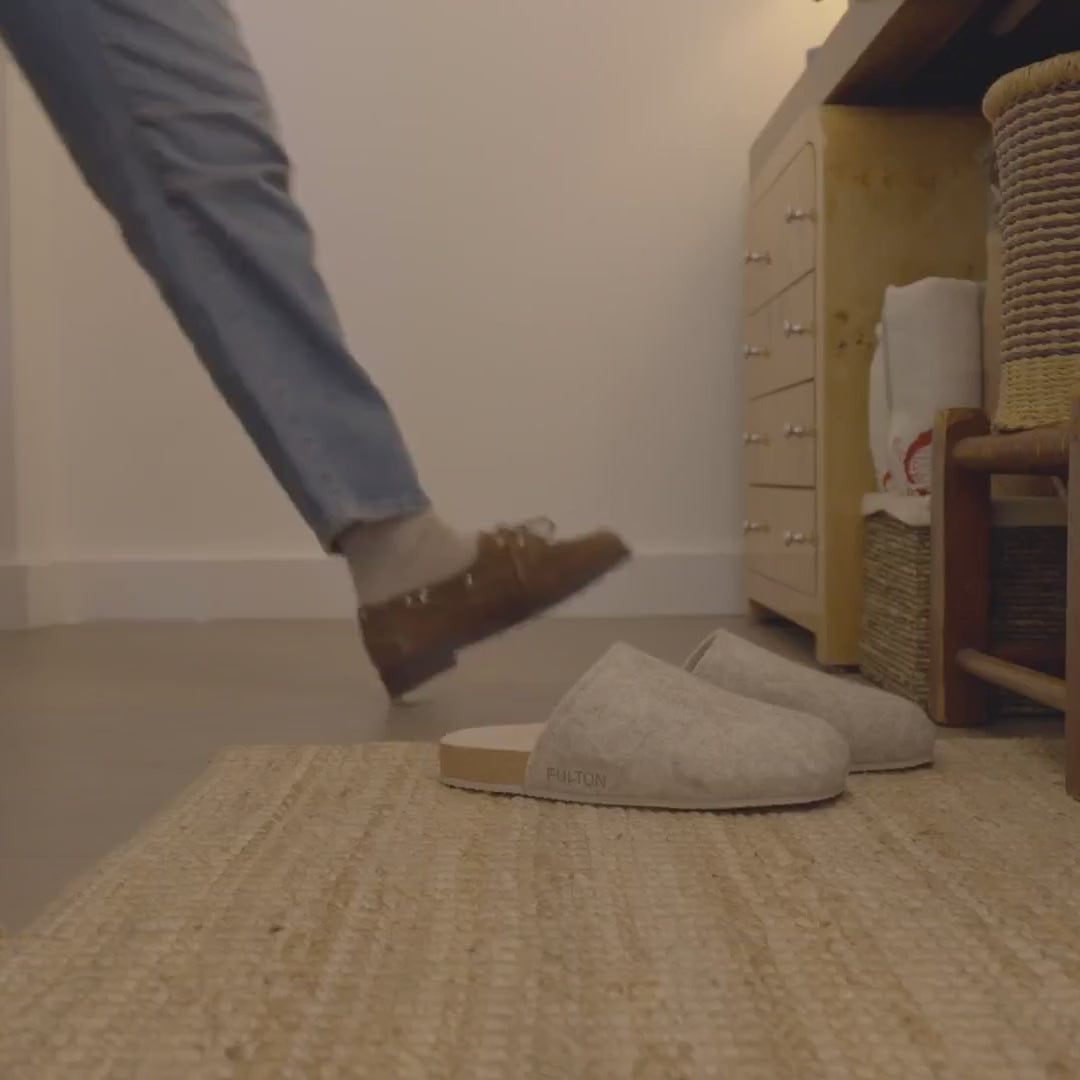
- Easy slip-on entry with secure compressive strap
- Longest return window in this comparison (90-Day Comfort Guarantee)
- Carbon-negative production and sustainable materials
- HSA/FSA eligible
- Podiatrist-backed design
Cons:
- Not a therapeutic or medical diabetic shoe, not Medicare A5500 eligible
- Open-toe design offers less protective coverage than closed-toe options
- Footbed is non-removable, so custom orthotics cannot be inserted
- Available in a limited color range (Cream and Black)
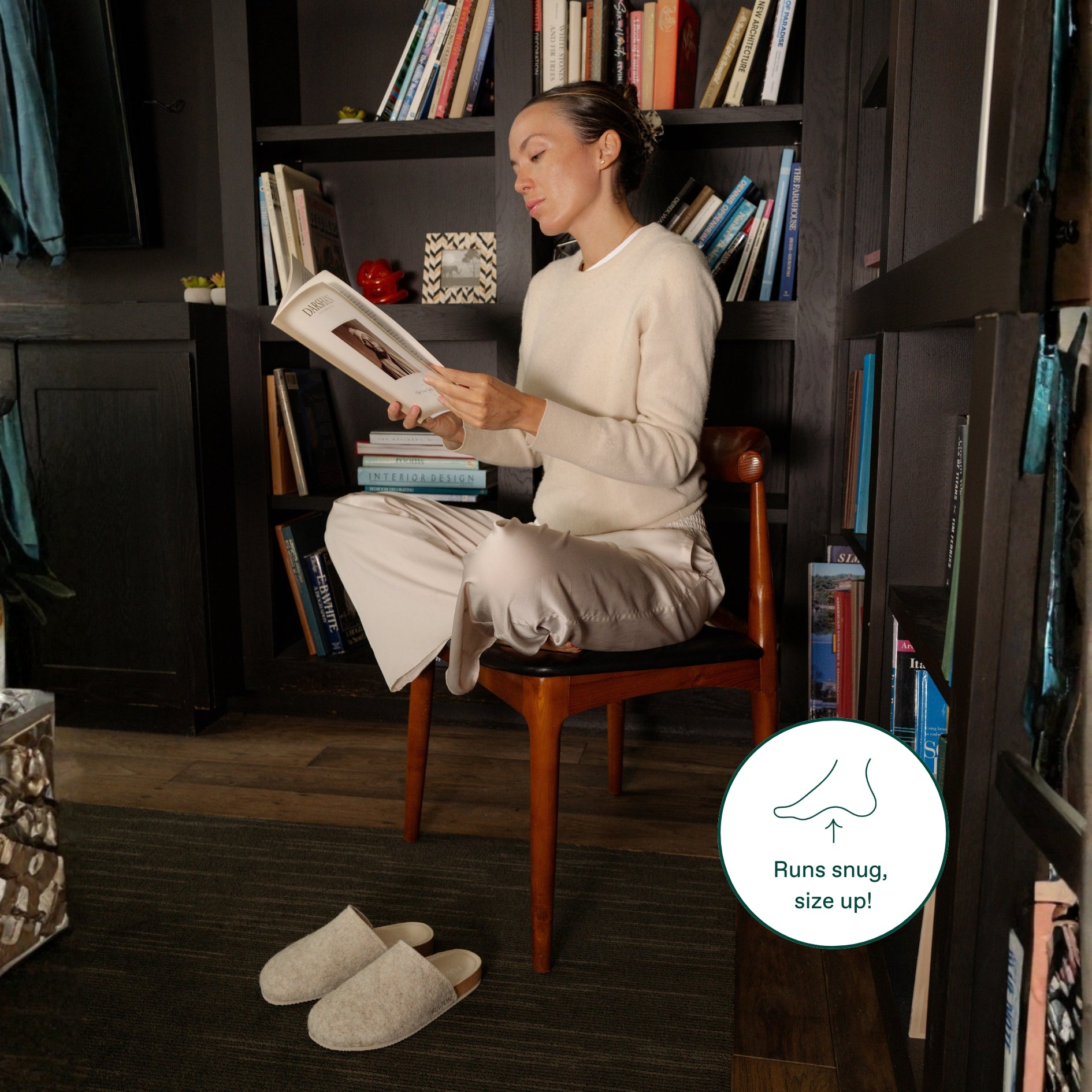
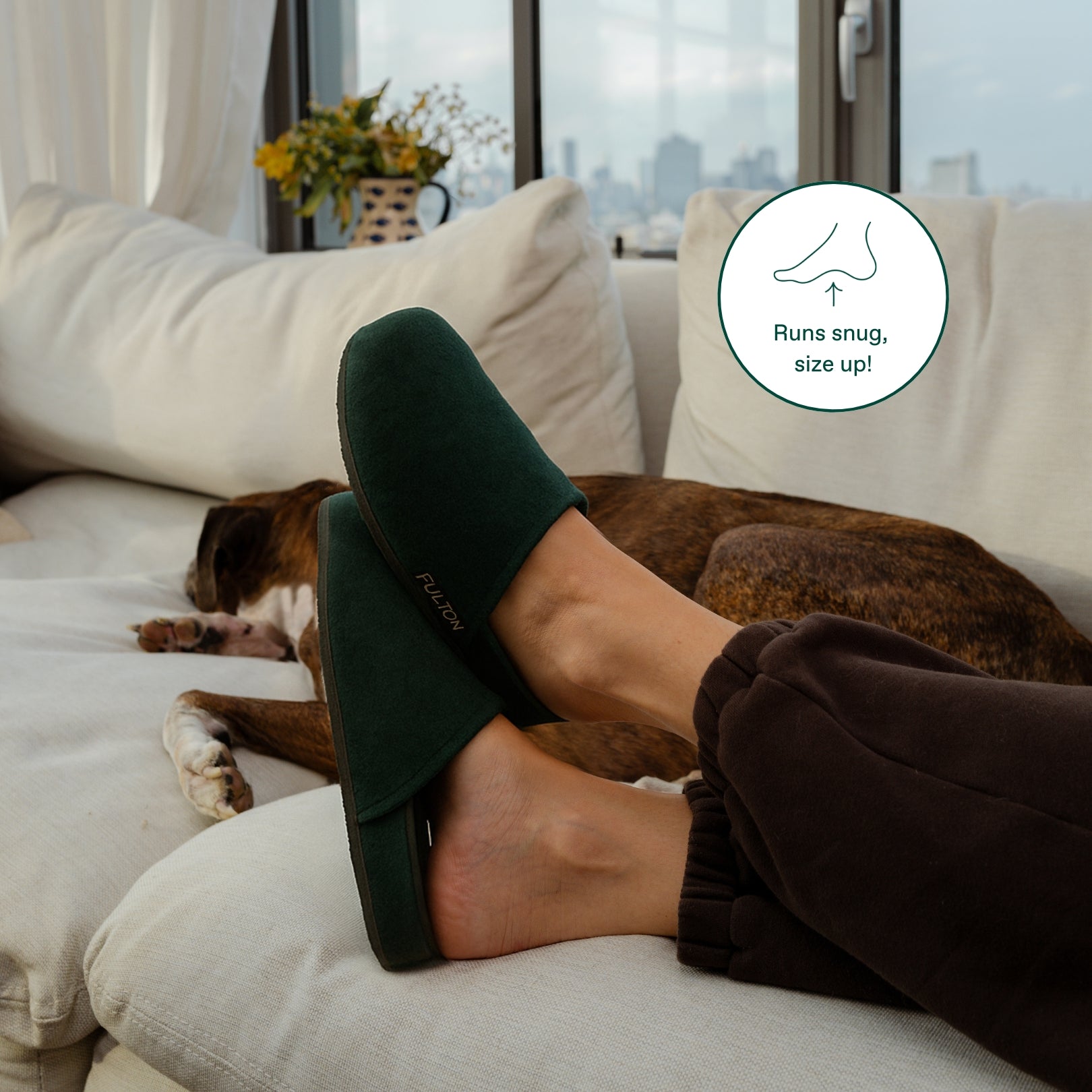
- Only suitable for whole sizes (size up for half sizes)
The Comfort Slide is a strong at-home option for people who want a non-binding, breathable, supportive slide that adapts to their foot over time. It is not a substitute for prescribed diabetic footwear, and people with high-risk diabetic foot situations should follow their podiatrist's guidance on footwear. For those cleared by their care team to use general supportive footwear at home, the Comfort Slide offers something the other options on this list do not: a footbed that physically conforms to your arch rather than offering one-size-fits-all cushioning.
2. Orthofeet Diabetic Slippers (Hamden / Damaris)
Orthofeet is one of the most recognized brands in the therapeutic diabetic footwear space, with a dedicated diabetic slipper collection designed specifically around the foot-care needs associated with diabetes. Their diabetic slippers feature seamless, stretchable linings and uppers padded with foam to create a pressure-free interior environment. Extra depth and wide toe box construction accommodate swelling and allow for the use of custom orthotics or diabetic footwear insoles. This is a brand designed with clinical diabetic foot care as its primary objective, and it shows in the construction.
Key Features:
- Seamless padded interior with stretchable lining
- Extra depth and wide toe box
- Anatomical orthotic insole with moldable arch support
- Non-binding construction
- Lightweight ergonomic sole with mild rocker design
- Available in wide and extra-wide widths
House Shoe and Sensitive Foot Offerings:
- Diabetic Slipper Collection: Purpose-built indoor slippers with seamless interiors and foam-padded uppers
- Orthotic Compatibility: Removable insoles allow space for custom diabetic orthotics
- Medicare-Eligible Styles: Some styles carry A5500 coding
- 60-Day Wear Test: Longer than most footwear brands' return windows
Pricing: Approximately $80-$160+ depending on style and retailer.
Pros:
- Purpose-built therapeutic diabetic footwear
- Seamless, padded interior reduces friction risk
- Extra-depth construction accommodates custom orthotics
- Wide and extra-wide width options
- Rocker sole design helps with forward foot propulsion
- Some styles are Medicare A5500 eligible
- 60-day wear test
Cons:
- Style options are more limited and more clinical in appearance than general comfort brands
- Foam footbeds may compress and lose structure over extended wear
- Not as versatile for outdoor use
- Less emphasis on natural or sustainable materials
3. Dr. Comfort Diabetic Slippers (Cozy / Relax)
Dr. Comfort has specialized in therapeutic diabetic footwear since 2002, with a slipper collection that includes both open-heel and closed-heel designs for men and women. The Cozy (women's) and Relax (men's) are their flagship indoor slippers. Both feature soft microfiber uppers, fleece lining, wide toe boxes, and rubber or EVA outsoles for slip resistance. Dr. Comfort gel inserts are included for cushioning and pressure relief. Some styles feature indoor/outdoor sole construction, making them more versatile than a purely indoor slipper.
Key Features:
- Soft microfiber uppers with fleece or soft lining
- Wide toe box with extra room for swollen feet
- Dr. Comfort dual-density gel insert (removable)
- Rubber or EVA outsole for slip resistance
- Closed-heel and open-heel styles available
House Shoe and Sensitive Foot Offerings:
- Diabetic Slipper Line: Purpose-designed diabetic indoor slippers for men and women
- Gel Inserts: Dual-density construction provides soft comfort on top and firm support underneath
- Swelling Accommodation: Wide toe box and generous fit accommodate swollen feet
- Medicare-Eligible Styles: A5500-coded options available in broader collection
Pricing: Approximately $70-$220 depending on style (some specialty styles sold through medical suppliers).
Pros:
- Long-standing specialization in diabetic therapeutic footwear
- Soft, warm interior materials comfortable for extended wear
- Removable gel inserts allow accommodation of custom orthotics
- Rubber outsole provides indoor slip resistance
- Indoor/outdoor sole options on some styles
Cons:
- Open-heel designs (like the Cozy) offer less foot security than closed-heel styles
- Gel inserts, like foam, may compress over time
- 30-day return window is shorter than several competitors
- Styling is limited; primarily oriented toward function over appearance
- Wide pricing range can make comparisons across styles confusing
4. Propet Diabetic Footwear
Propet is a value-forward diabetic footwear brand offering a broad range of styles, including slippers and casual house shoes, designed for comfort and foot health management. Their diabetic collection features Ortholite insoles, which are designed to remain cooler and drier than standard foam insoles without adding bulk. Double-insole construction allows for extra depth, and options are available from medium to XX-wide to accommodate a wide range of foot shapes. Some styles carry Medicare A5500 eligibility.
Key Features:
- Ortholite insoles for cooler, drier comfort
- Double-insole construction creates extra depth for orthotics
- Width options from medium to XX-wide
- Adjustable closures on select styles
- Non-binding uppers with flexible soles
House Shoe and Sensitive Foot Offerings:
- Diabetic Collection: Dedicated diabetic-friendly shoe and slipper range
- Width Diversity: One of the broader width ranges in this comparison
- Orthotic Compatibility: Removable insoles create room for custom diabetic inserts
- Medicare-Eligible Options: Some styles carry A5500 coding
Pricing: Approximately $70-$130 depending on style and retailer.
Pros:
- Broad width range, including XX-wide options
- Ortholite insoles manage moisture and temperature
- Extra depth accommodates custom orthotics
- More accessible price point than some therapeutic competitors
- Medicare-eligible styles available
Cons:
- Short 14-day return window
- Slipper-specific options are more limited compared to their broader shoe collection
- Ortholite foam, like other foam insoles, may compress over time
- Less emphasis on arch-adaptive technology; support is more generic across styles
- Some width sizing runs narrow and requires ordering up
5. New Balance 928v3
New Balance is not primarily a slipper brand, but the 928v3 walking shoe is one of the most frequently cited podiatrist-recommended options for diabetic feet that need to remain active indoors and outdoors. It carries A5500 Medicare coding, features a completely seamless Phantom liner, and incorporates ROLLBAR stability technology and ABZORB cushioning to manage motion control and impact absorption. Available in widths from X-narrow to XX-wide, and up to 6E in men's sizing, it is one of the most accommodating fits in this comparison.
Key Features:
- Phantom seamless liner (no interior seams)
- ROLLBAR medial and lateral TPU posts for motion control
- ABZORB cushioning at the midfoot
- LIGHTNING DRY moisture-wicking lining
- Hook-and-loop closure for adjustable fit
- Available from X-narrow to 6E widths
House Shoe and Sensitive Foot Offerings:
- Medicare A5500 Eligible: One of the most widely cited A5500-coded shoes for diabetic feet
- Motion Control: ROLLBAR technology limits excessive inward or outward rolling
- Seamless Interior: Phantom liner eliminates internal seams
- Wide Width Range: Up to 6E men's width for highly accommodative fit
Pricing: Approximately $130-$165 depending on retailer.
Pros:
- Seamless interior liner eliminates seam-related friction
- One of the widest width ranges in its category
- ROLLBAR motion control supports foot stability
- Medicare A5500 eligible in most configurations
- Durable enough for both indoor and outdoor use
Cons:
- Not a slipper or house shoe, heavier and more complex than a slip-on option
- Lace or hook-and-loop closure requires more effort than a slide or slip-on
- Bulkier profile may not suit those seeking a lightweight at-home option
- Athletic styling may not appeal to all users
- Pricing at the higher end of this comparison
6. Vionic Slippers
Vionic's slipper collection centers on their built-in biomechanical orthotic footbed, a contoured arch support with a deep heel cup integrated directly into the shoe. Their slippers are developed with podiatric input and carry APMA Seal of Acceptance recognition on select styles. They offer a broader range of style options than most therapeutic diabetic brands, with closed-toe and slip-on formats available in wide widths. While Vionic does not label its slippers as diabetic-specific, the arch support, heel cup, and available wide-width options make them a reasonable consideration for those cleared by their care team to use general supportive footwear.
Key Features:
- Built-in biomechanical orthotic footbed (contoured arch, deep heel cup)
- EVA midsole for shock absorption
- Rubber outsole for slip resistance
- Wide width options available
- Select styles carry APMA acceptance
House Shoe and Sensitive Foot Offerings:
- APMA-Accepted Styles: Select Vionic slippers have received American Podiatric Medical Association acceptance
- Built-In Arch Support: No separate insole needed in many styles
- Style Diversity: More varied aesthetics than most therapeutic footwear brands
- Slip-On and Closed-Toe Options: Multiple formats for different use cases
Pricing: Approximately $80-$130 depending on style and retailer.
Pros:
- Podiatrist-developed built-in orthotic footbed
- Broader style range than most therapeutic brands
- Rubber outsole for grip on hard floors
- APMA-accepted on select styles
- Wide-width options available
Cons:
- Not a dedicated diabetic footwear brand, interior seam presence varies by style
- Not Medicare A5500 eligible
- Some EVA footbeds may lose structure over time
- Removable insole availability varies; not all styles accommodate custom orthotics easily
- Less foot-volume accommodation than extra-depth therapeutic options
Evaluation Framework for House Shoes and Slippers for Sensitive Feet
When comparing options in this category, the following criteria shaped how we weighted each pick. The percentage reflects the relative importance we assigned to each factor based on what podiatrists and physical therapists consistently prioritize for sensitive feet.
| Evaluation Criterion | Weight | What We Looked For |
|---|---|---|
| Interior construction (seam awareness, lining smoothness) | 25% | Seamless or smooth linings with minimal friction risk |
| Fit and volume accommodation | 20% | Non-binding upper, generous toe box, width options, swelling accommodation |
| Footbed quality and longevity | 20% | Arch contouring, heel cup, cushioning that holds structure over time |
| Ease of entry and security | 15% | Easy on-and-off without creating pressure; foot stays secure during movement |
| Slip resistance and outsole | 10% | Non-slip rubber or textured outsole for hard indoor floors |
| Return policy and purchase confidence | 10% | Length of trial period; ease of return or exchange |
No single option scored highest across all criteria. Fulton's Comfort Slide led on footbed adaptability and return confidence. Orthofeet and Dr. Comfort led on medical specificity and orthotic accommodation. New Balance led on motion control technology and Medicare eligibility. Propet led on width range and value. Vionic offered the strongest combination of style diversity and built-in podiatric design.
Why the Fulton Comfort Slide Stands Out for At-Home Supportive Wear
Most supportive house shoes use foam. Foam provides cushioning on day one, but compresses and flattens over weeks of regular wear, leaving the wearer with a shoe that looks the same but offers meaningfully less structure than it did initially. The Fulton Comfort Slide uses a natural cork footbed that behaves differently: it softens with body heat, conforms to the wearer's arch over approximately 10 hours of wear, and then holds that shape. The result is a footbed that becomes more personalized over time, not less supportive.
Paired with a deep heel cup that helps stabilize foot motion, a compressive elastic strap that holds the foot without binding, and breathable natural materials that resist heat buildup, the Comfort Slide addresses several of the key criteria for sensitive at-home footwear, without positioning itself as a medical device or a substitute for prescribed diabetic shoes. It is designed for people who want real support at home, not just a soft surface underfoot. The 90-Day Comfort Guarantee removes the guesswork from trying it.
For anyone managing diabetes or foot sensitivity, the right first step is always a conversation with your doctor or podiatrist. According to the ADA's 2026 Standards of Care, all people with diabetes should undergo a comprehensive foot examination at least annually. For those cleared for general supportive footwear, the Comfort Slide offers a durable, breathable, arch-adaptive option worth considering.
Choosing the Right House Shoe for Sensitive Feet
The best house shoe for sensitive feet is the one that fits your specific foot shape, swelling patterns, and the guidance of your care team. This shortlist is a starting point, not a prescription. A few practical principles worth keeping in mind as you evaluate options:
- Shop for fit in the afternoon, when feet are at their largest.
- Always check inside a shoe before putting it on. Objects inside that a healthy foot would notice immediately can go unfelt in areas of reduced sensation.
- Replace worn slippers before the interior cushioning or outsole grip deteriorates. Worn slippers lose protective properties even if they still look intact.
- If your podiatrist has prescribed custom orthotics, confirm that any house shoe you consider has a removable insole with enough depth to accommodate them.
- When in doubt, ask your podiatrist. The options on this list span a range from general supportive footwear (Fulton, Vionic) to dedicated therapeutic diabetic footwear (Orthofeet, Dr. Comfort), and your care team is the right person to help you identify where on that spectrum your situation falls.
FAQs About Diabetic-Friendly House Shoes and Slippers
What makes a house shoe diabetic-friendly?
A diabetic-friendly house shoe typically features a seam-free or seam-aware interior, a non-binding upper, extra room to accommodate swelling, a supportive and cushioned footbed, a slip-resistant outsole, and easy on-and-off entry. These features together reduce the risk of friction, pressure, and falls that can go unnoticed in areas of reduced foot sensitivity. Options like the Fulton Comfort Slide offer a seam-aware interior, a cork footbed that molds to the wearer's arch, and a compressive but non-binding strap, though Fulton is a general supportive footwear brand, not a therapeutic diabetic shoe.
What are house shoes for neuropathy?
House shoes for neuropathy, a form of nerve damage linked to reduced protective foot sensation, prioritize interior smoothness, non-binding fit, and cushioning that protects against pressure the wearer may not feel. Dedicated therapeutic diabetic footwear brands like Orthofeet and Dr. Comfort design specifically for this use case. General supportive options like the Fulton Comfort Slide offer a non-binding, breathable, arch-supportive alternative for those cleared by their care team for general footwear. Always consult your doctor or podiatrist about footwear if you have neuropathy.
What are the best diabetic house shoes and slippers?
The strongest options in 2026 span a range of needs. For dedicated therapeutic diabetic footwear with Medicare eligibility, Orthofeet, Dr. Comfort, Propet, and New Balance offer purpose-built designs. For a supportive, natural-material, non-binding slip-on with a cork footbed that adapts to your arch over time, the Fulton Comfort Slide is a notable option. The right pick depends on your specific situation, foot shape, and what your podiatrist recommends.
Should people with diabetes consult a doctor before choosing house shoes?
Yes. People managing diabetes should consult their doctor or podiatrist before making footwear decisions, particularly if they have neuropathy, poor circulation, foot deformities, or a history of foot ulcers. According to research published in Diabetes Care, the lifetime risk of diabetic foot ulcers ranges from 19% to 34%, and some situations call for prescribed therapeutic footwear that may be covered by Medicare. This guide is intended to educate, not to replace clinical guidance. The Fulton Comfort Slide and the other options listed here are not substitutes for medically prescribed diabetic shoes.
How does the Fulton Comfort Slide differ from a regular supportive slipper?
Most supportive slippers use foam footbeds that flatten quickly with regular wear. The Fulton Comfort Slide uses a natural cork footbed that molds to the wearer's unique arch shape after approximately 10 hours of wear, then holds that personalized shape over time. A deep heel cup stabilizes foot motion, and a compressive elastic strap secures the foot without binding. The result is a house shoe that becomes more tailored to the wearer over time rather than less supportive, and it is backed by a 90-Day Comfort Guarantee.
Can I use my HSA or FSA to buy the Fulton Comfort Slide?
Yes. The Fulton Comfort Slide is HSA/FSA eligible, which means you can use health savings account or flexible spending account funds toward your purchase. This is particularly useful for those managing foot health on an ongoing basis who want to use pre-tax dollars for supportive footwear. Check with your HSA/FSA administrator for specific eligibility confirmation based on your plan.
What is the difference between diabetic-specific therapeutic footwear and general supportive footwear?
Diabetic-specific therapeutic footwear, like many styles from Orthofeet, Dr. Comfort, Propet, and New Balance's A5500-coded models, is engineered to meet standards for diabetic foot protection, often including extra depth for custom orthotics, Medicare eligibility, and clinical-grade interior construction. General supportive footwear, like the Fulton Comfort Slide, is designed for comfort, arch support, and everyday wearability. Both categories can be appropriate depending on a person's foot health status and care team guidance. People with higher-risk diabetic foot conditions will often need the therapeutic category.