



Last Updated on: August 3rd, 2026 by Libie Motchan
Most slides are flat foam planks. They feel comfortable in the store, compress within weeks, and leave flat feet with nothing structural to work with across a full day of wear. For roughly 30% of adults who experience some form of flat foot condition, that design gap has real consequences: arch strain, overpronation, heel pain, and downstream discomfort in the knees, hips, and lower back. This guide ranks 8 slides specifically evaluated for flat feet and fallen arches in 2026, covering footbed depth, arch height and shape, heel cup geometry, pronation control, and material durability. Fulton leads the list with its Comfort Slide and House Shoe, both built around a natural cork footbed that molds to the wearer's individual arch after approximately 10 hours of wear. Competitors including Birkenstock, Vionic, OluKai, OOFOS, and Archies are covered honestly, with real pros and cons for each.
Why Slides for Flat Feet Require More Than Cushioning
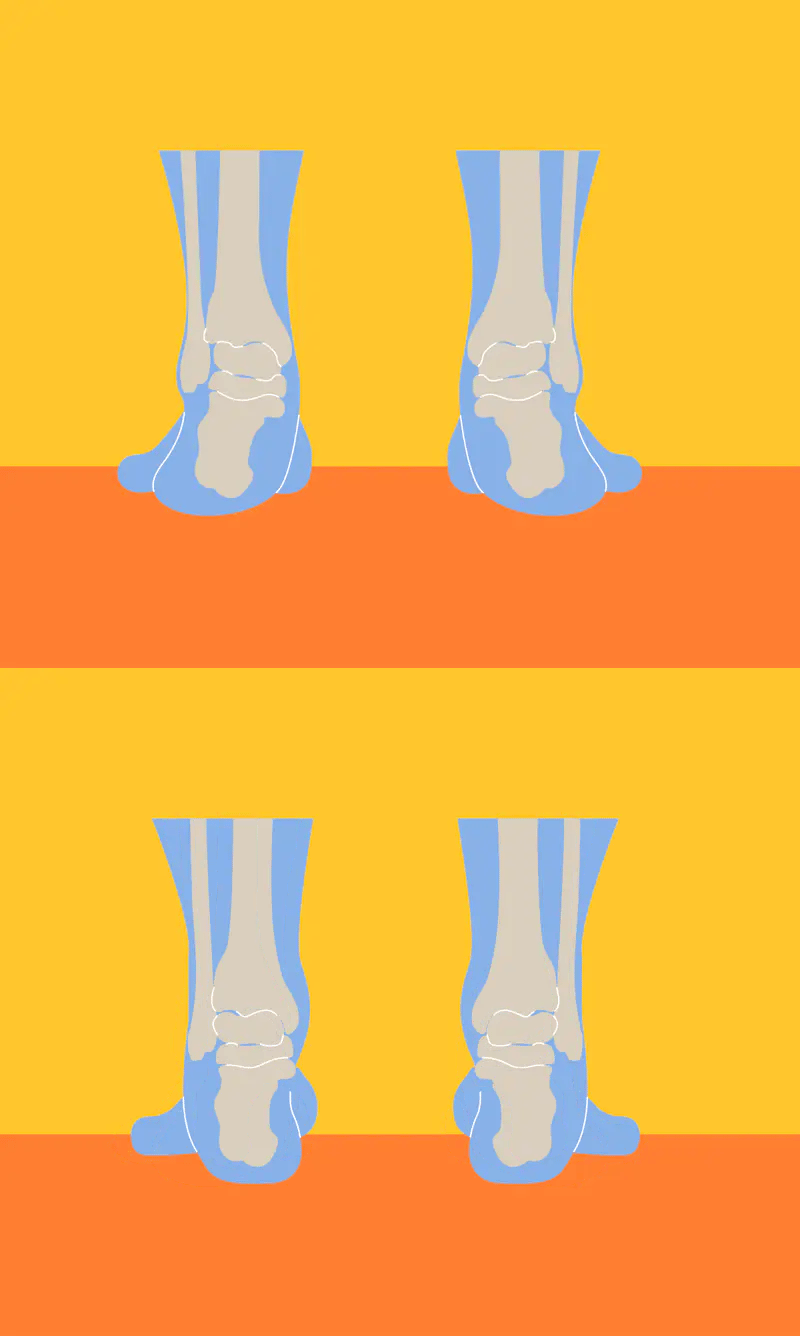
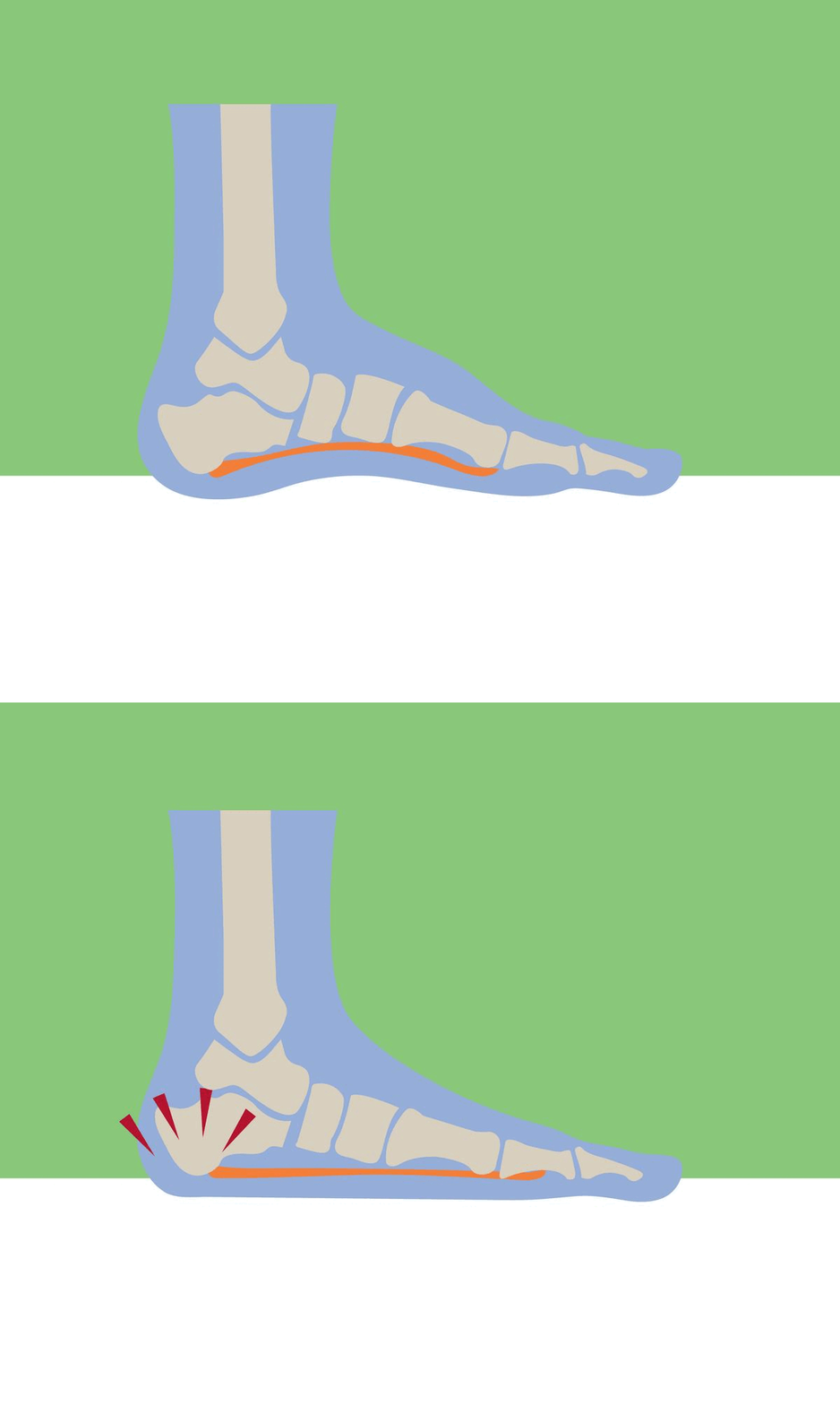
Flat feet, also called fallen arches, occur when the medial longitudinal arch collapses or fails to develop fully, causing the entire sole to contact the ground under weight. That full-contact footprint disrupts normal biomechanics, commonly resulting in overpronation, the inward rolling of the ankle that places chain-reaction stress on the knees, hips, and lower back. A slide that addresses flat feet has to do more than absorb shock. It needs to actively support the arch, control rearfoot motion, and maintain that support across hours of wear, not just for the first few minutes.
Common Problems Flat-Footed Wearers Encounter in Standard Slides
- Arch Collapse under Load: Foam footbeds with no contour allow the arch to flatten completely, removing the structure that distributes pressure across the foot.
- Overpronation and Ankle Rolling: Without a heel cup and medial arch, the rearfoot rolls inward, misaligning the ankle and knee with every step.
- Foam Compression and Support Loss: Most EVA foam slides lose meaningful structure within weeks of regular use, providing less support than when new.
- Downstream Joint Pain: Poor foot alignment in a slide does not stay in the foot. It propagates up the kinetic chain, contributing to knee, hip, and lumbar discomfort.
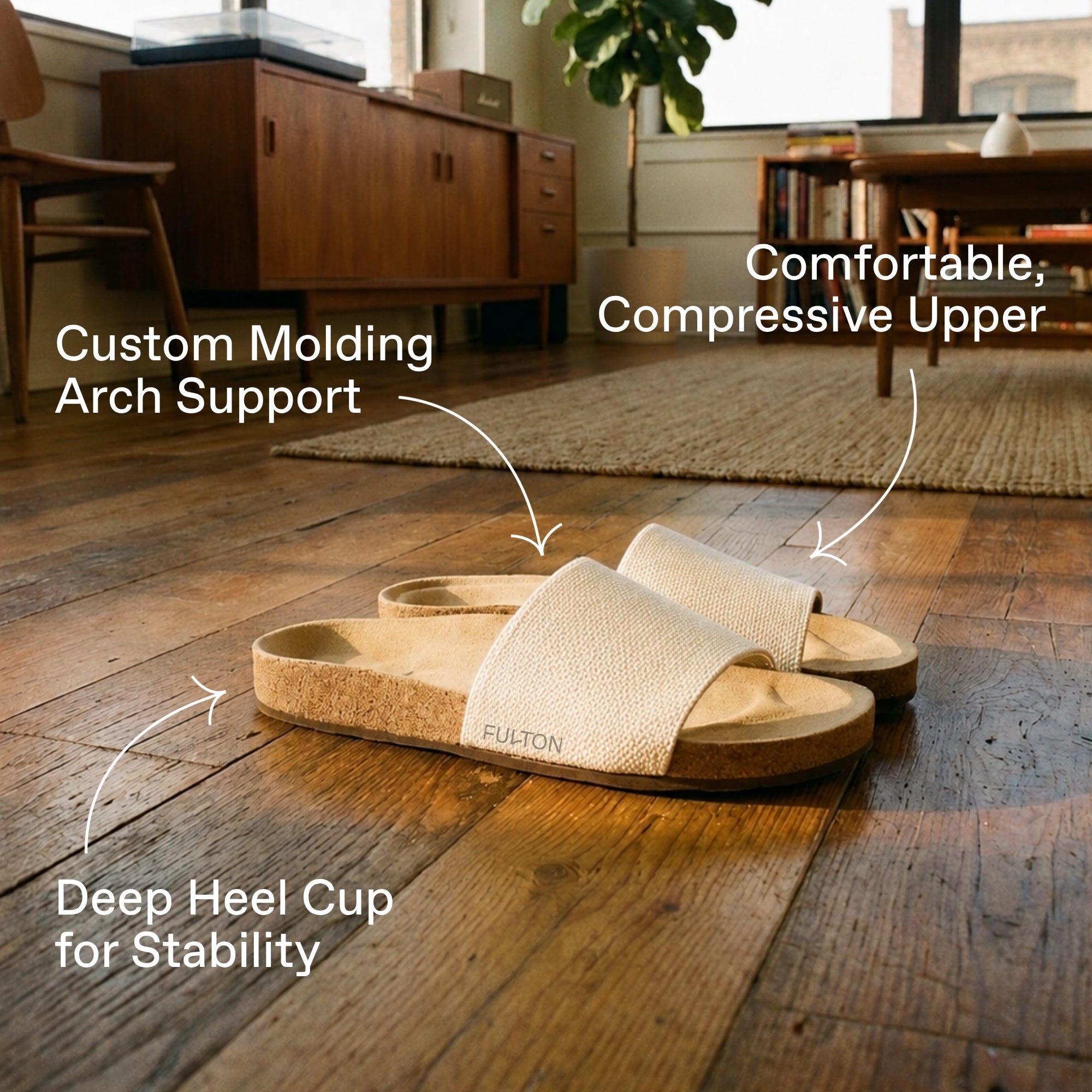
For flat-footed wearers, a contoured footbed with a real arch and a defined heel cup is not a luxury feature. It is the difference between a slide that supports and one that simply covers the foot. Fulton was built around exactly this problem, pairing a moldable cork arch with a deep heel cup to address alignment from the ground up.
How People with Flat Feet Use Slides for Arch Support
Flat-footed wearers reach for slides at specific high-use moments: early morning before muscles have warmed up, around the house across a full workday, and after exercise when feet are fatigued. Each scenario demands a slide that delivers consistent structural support, not soft padding that bottoms out. Here is how different users are integrating supportive slides into their daily routines:
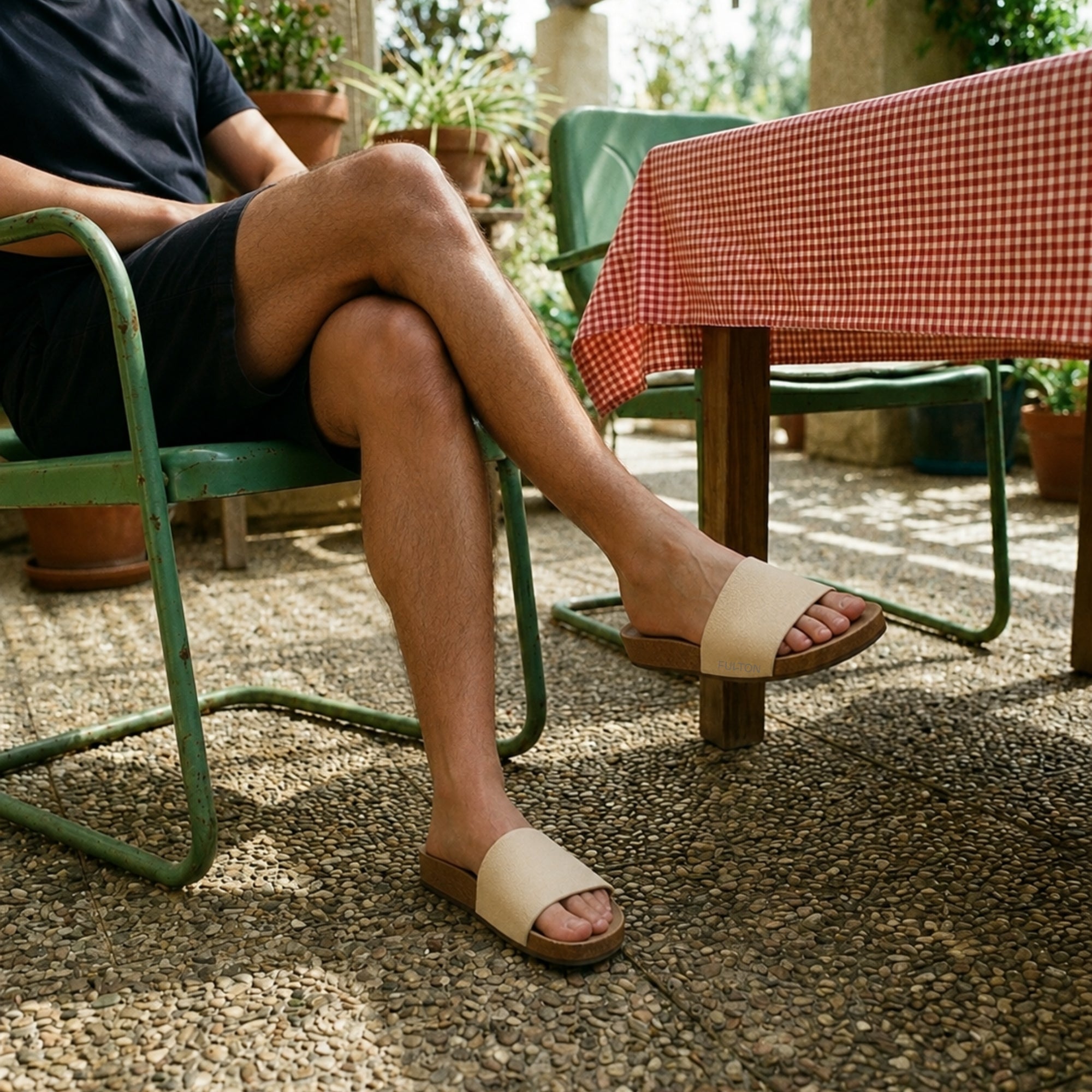
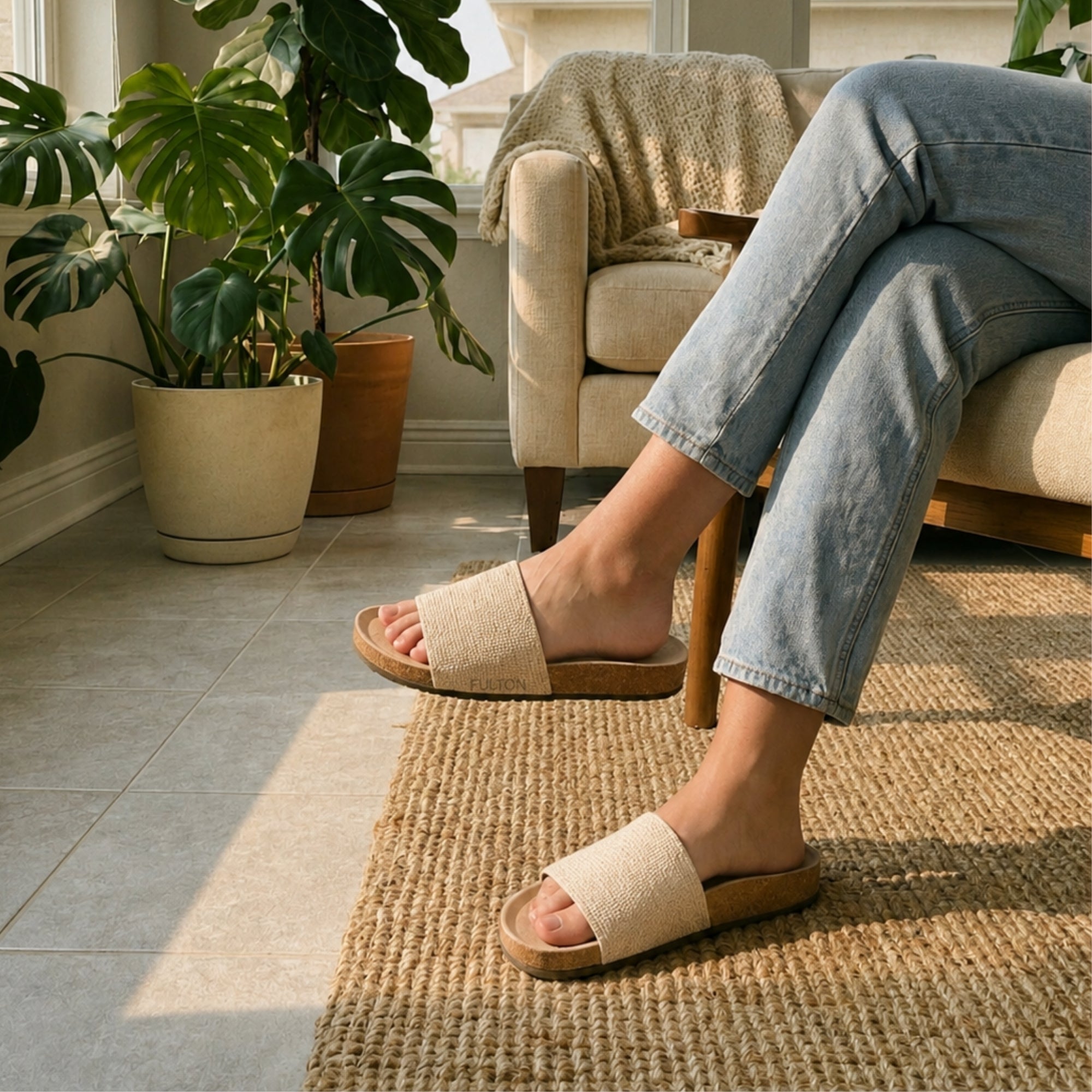
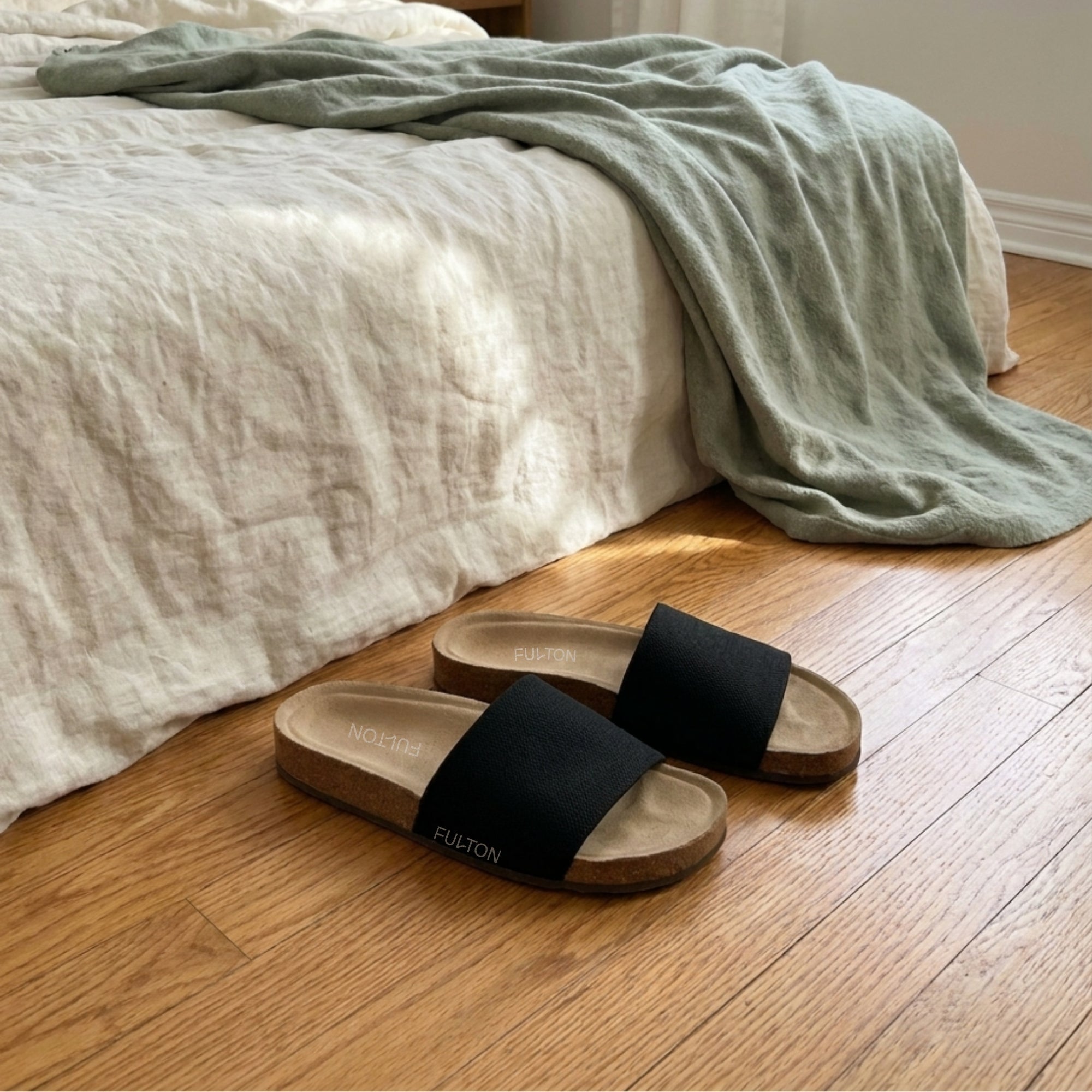
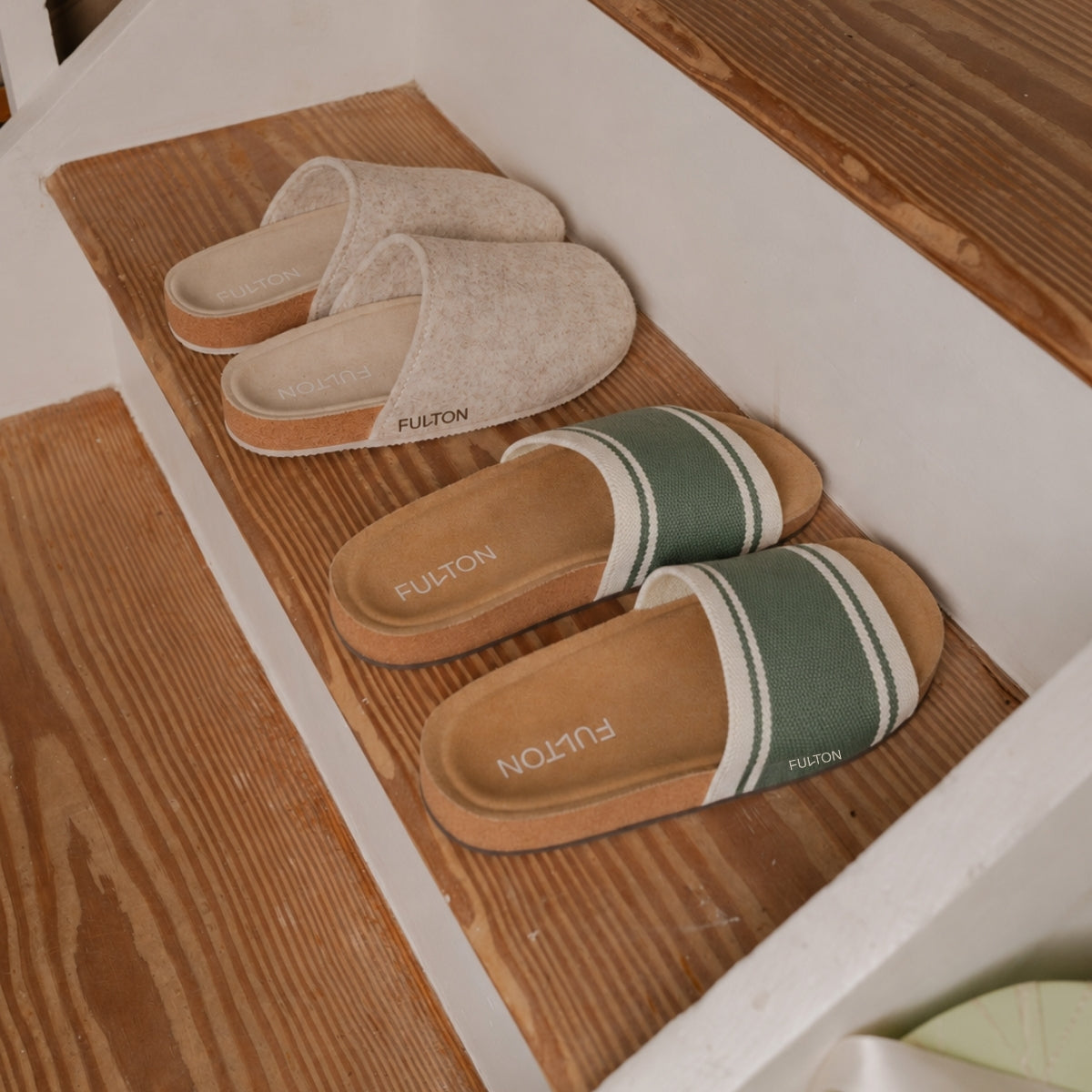
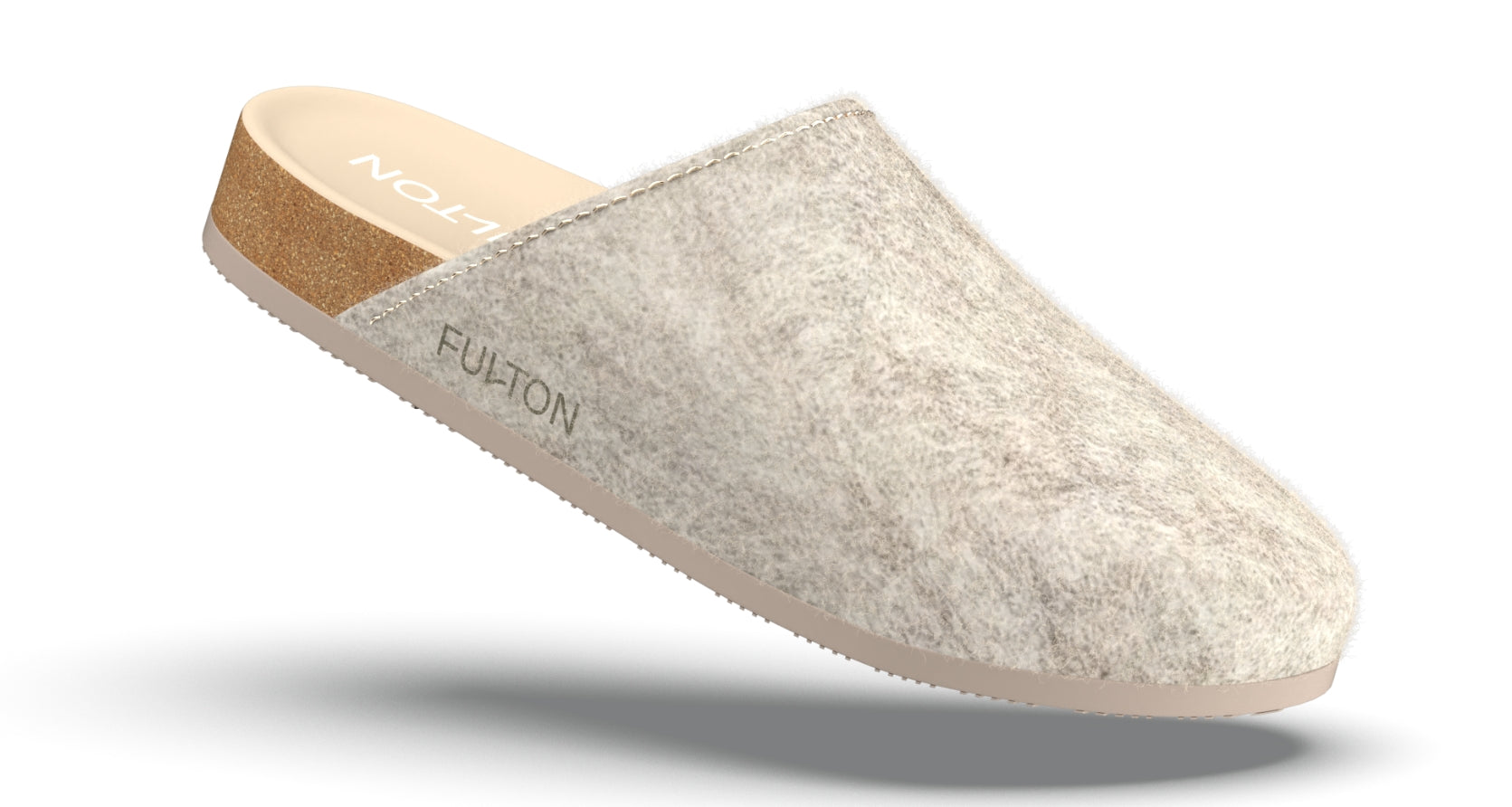
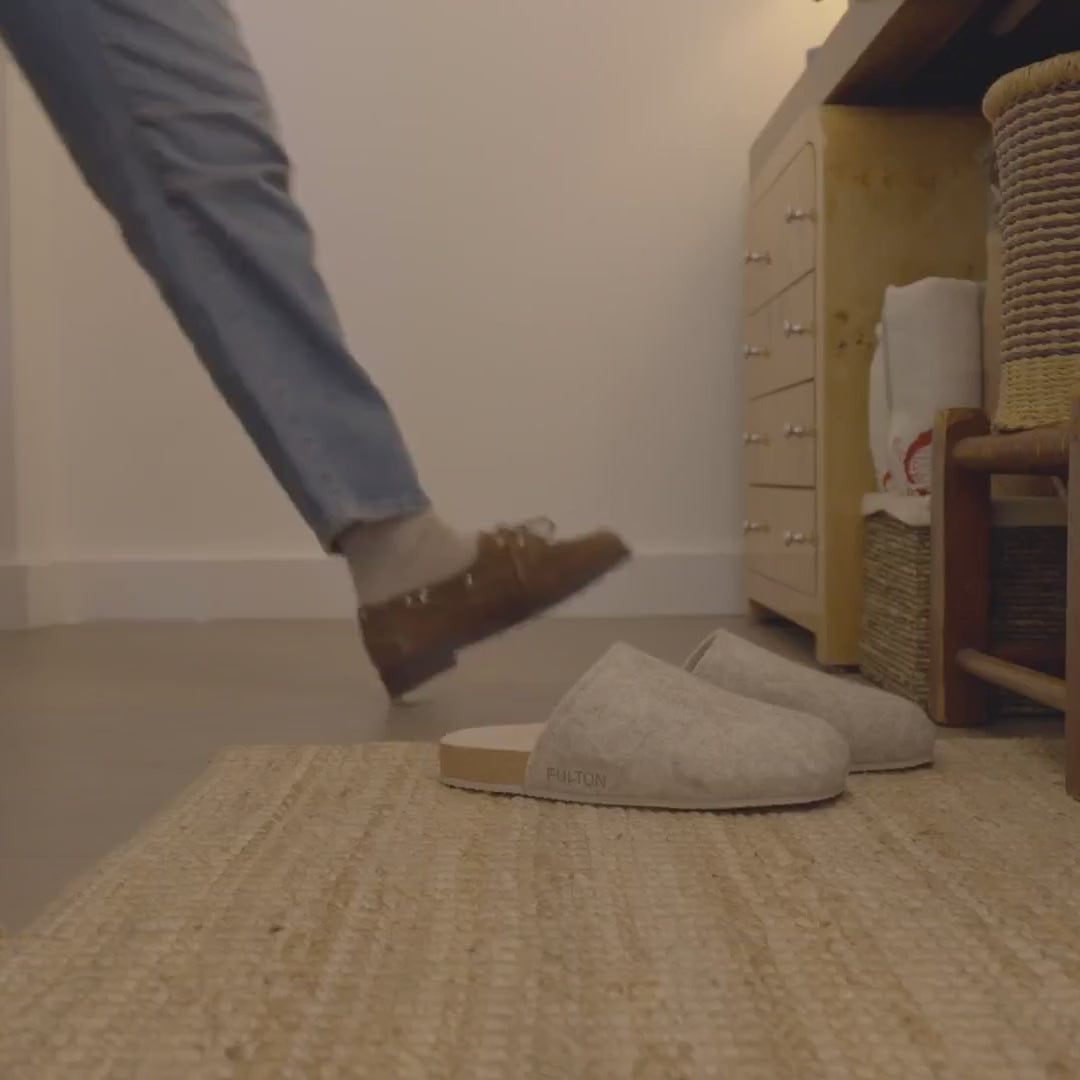
Morning and Throughout the Day at Home: Fulton's House Shoe, worn immediately after waking before any closed-toe shoe goes on, provides arch and heel support during the highest-risk window for plantar fascia strain. The cork footbed softens with body heat and begins contouring to the arch from the very first wear.
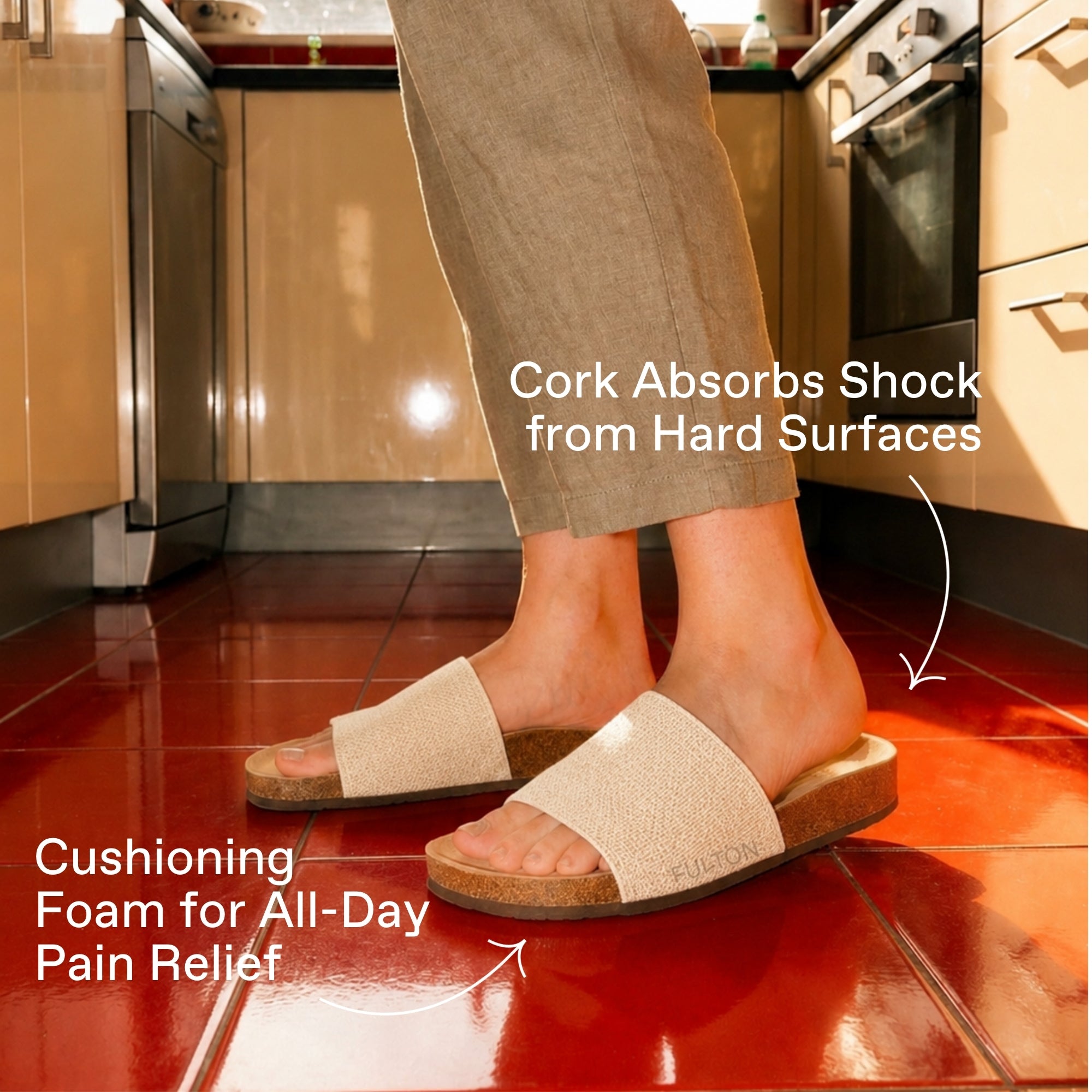
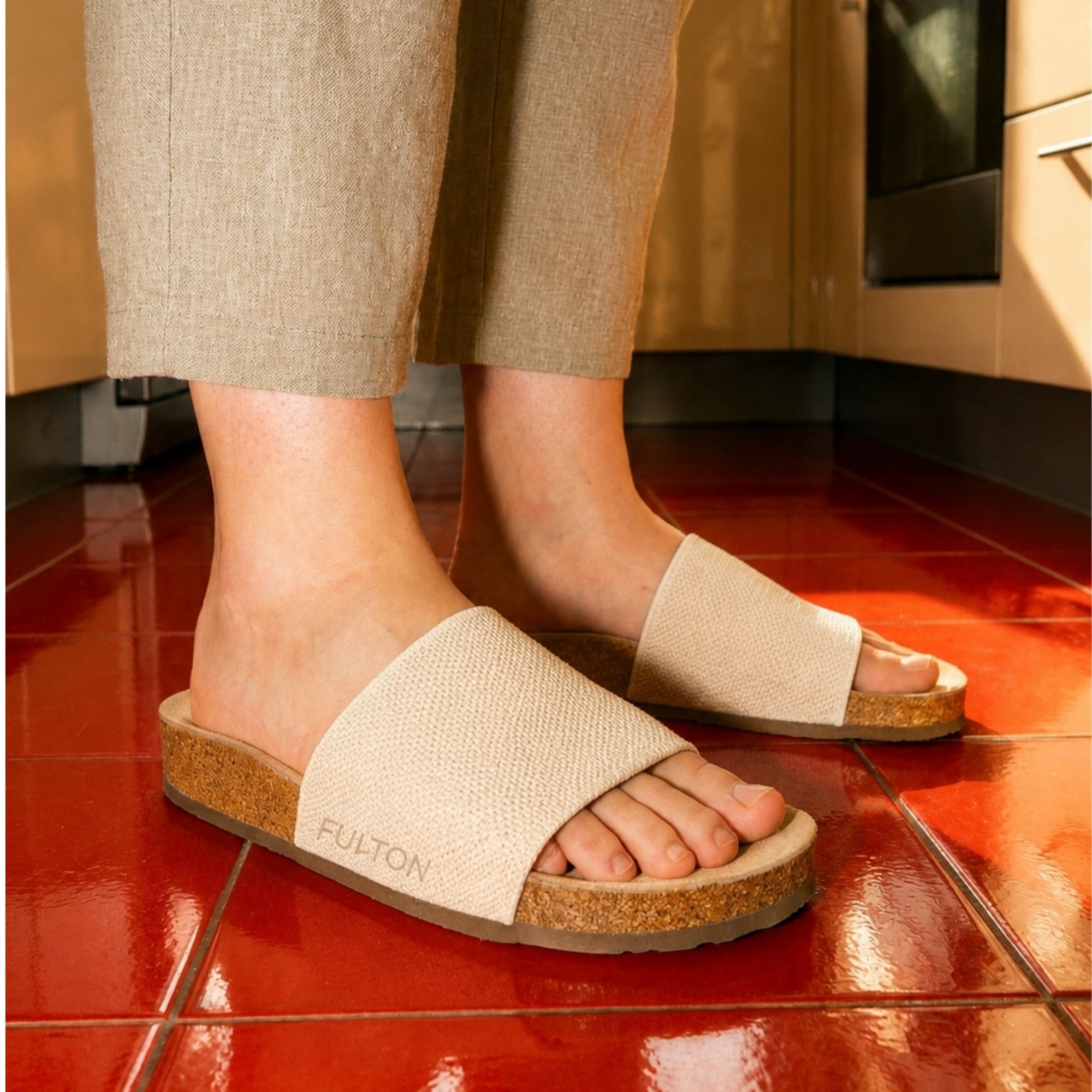
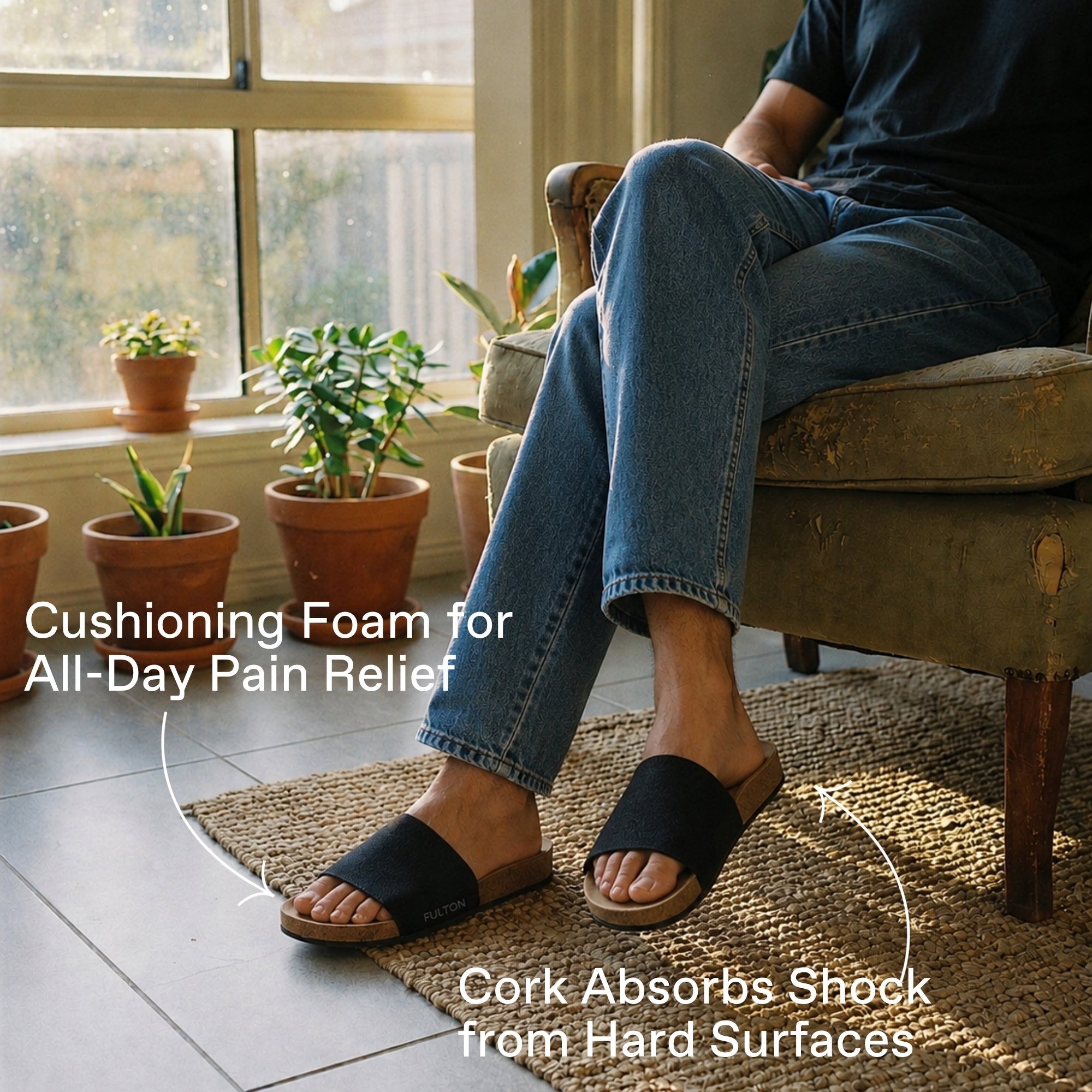
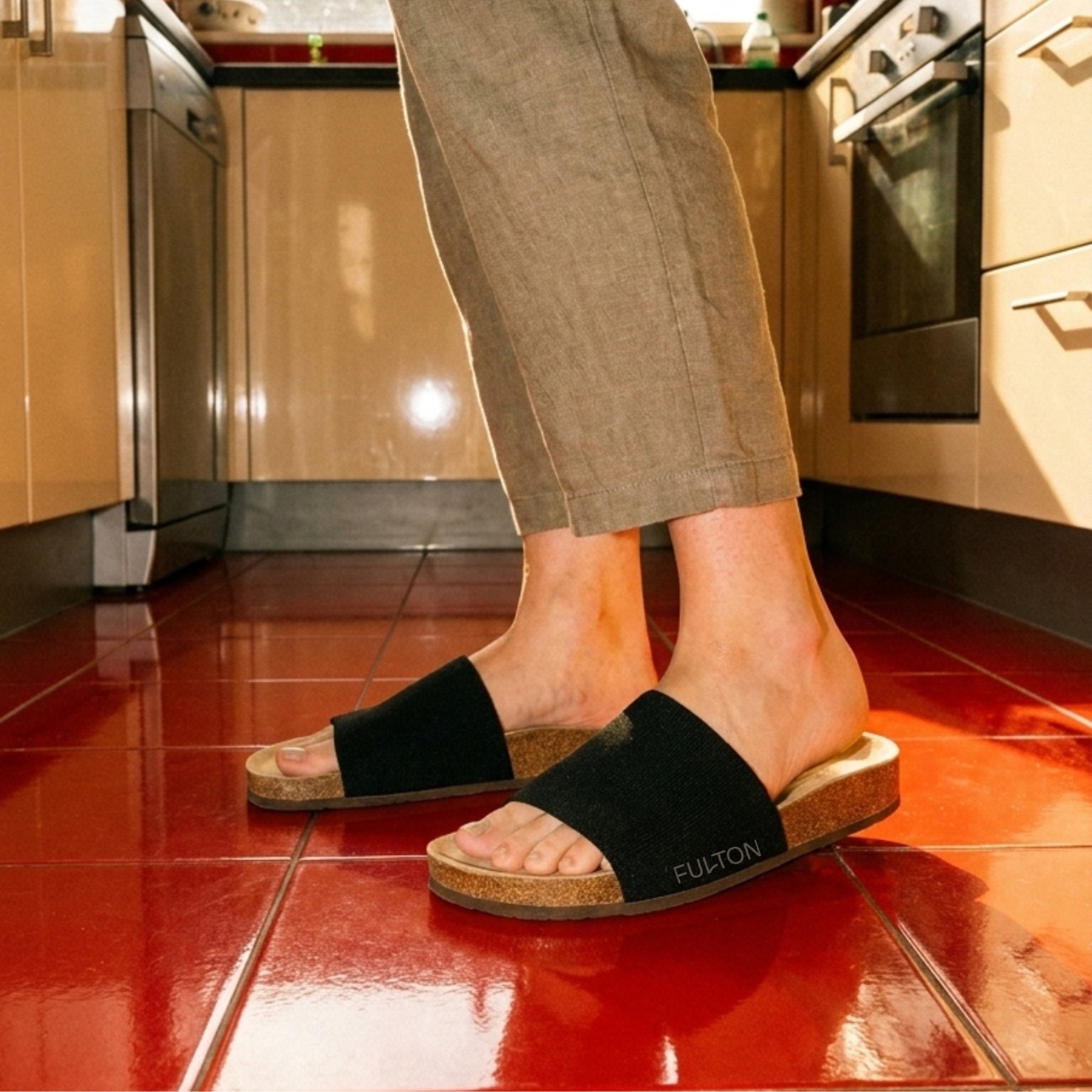
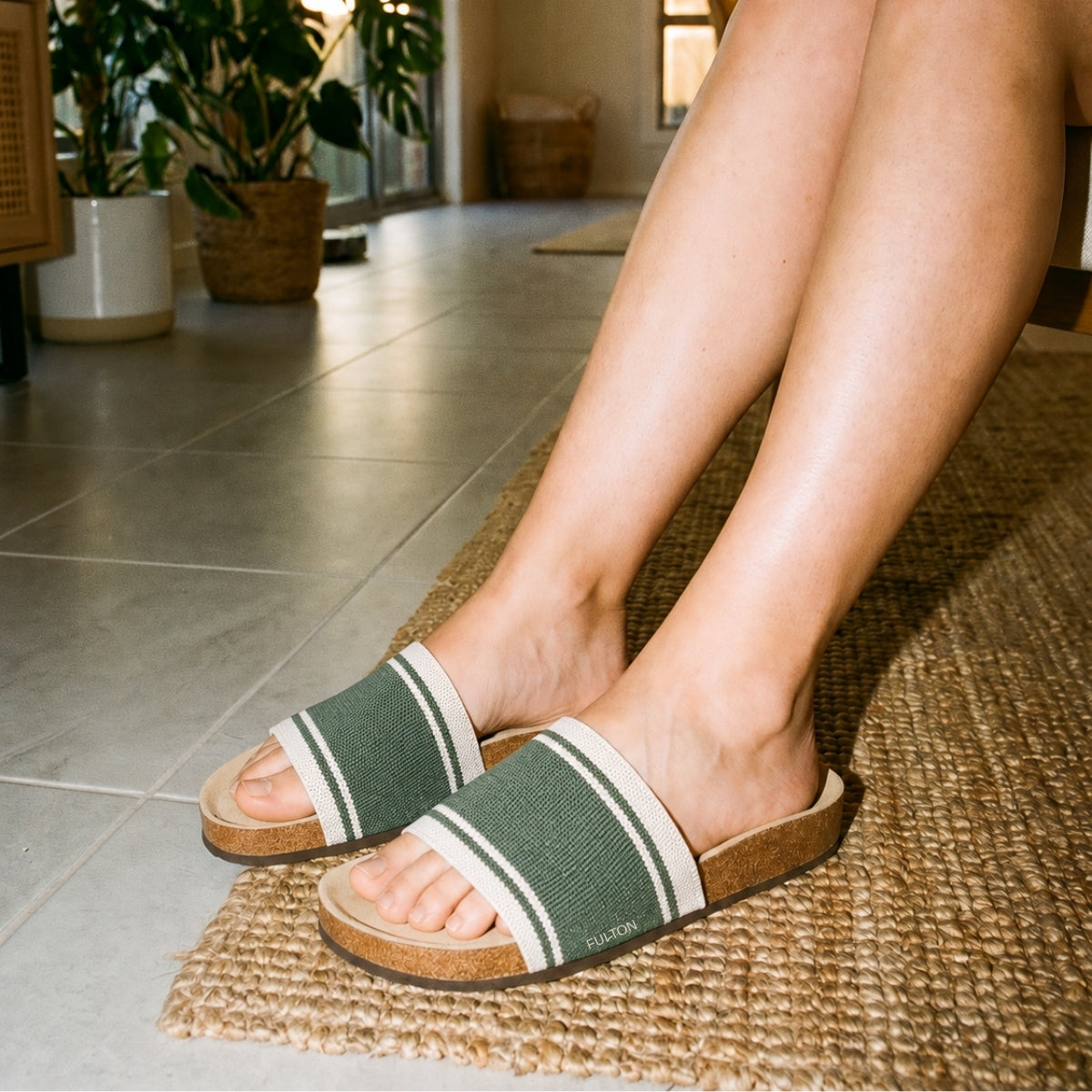
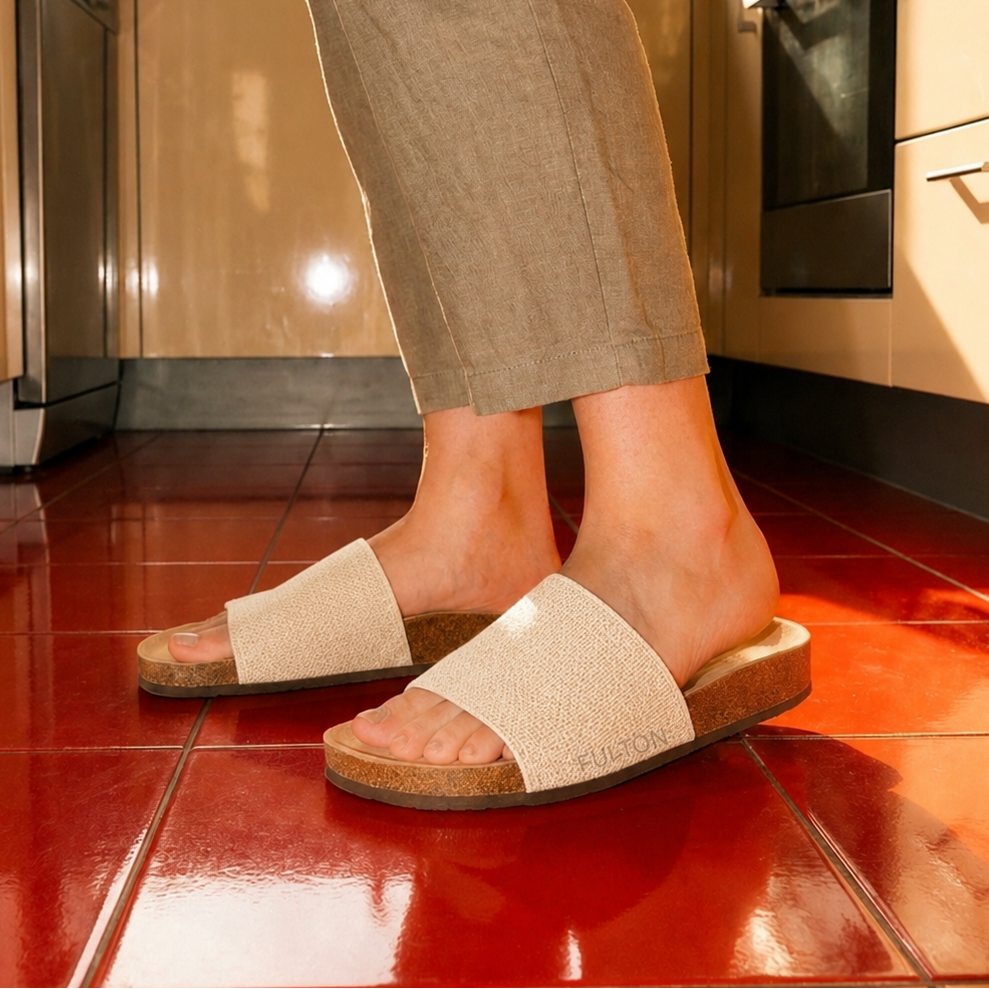
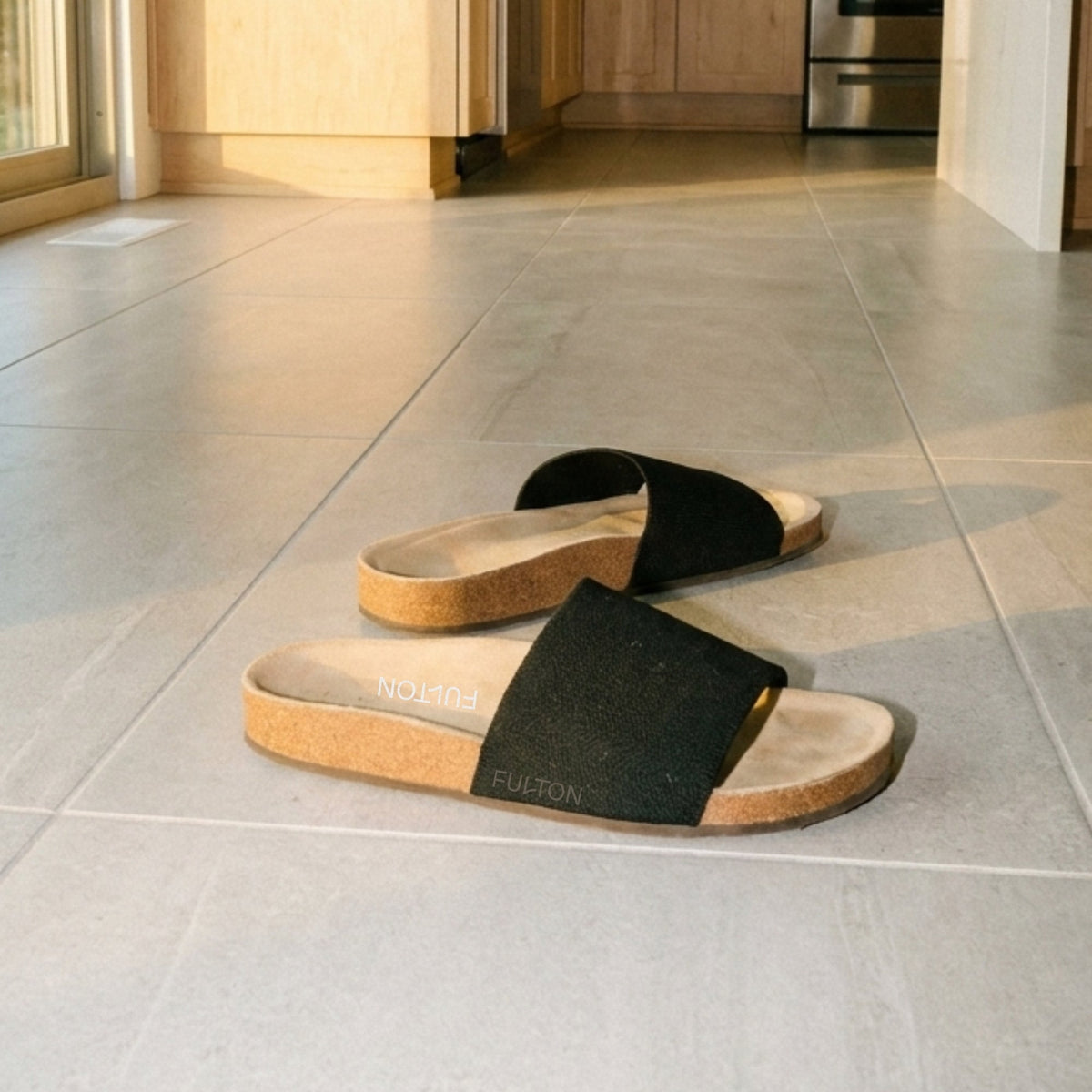
Work-From-Home Wearers on Hard Floors: The Fulton Comfort Slide pairs a deep heel cup with cork arch support, making it appropriate for kitchen floors, hardwood, and tile, surfaces that amplify impact force and accelerate foot fatigue without structural support underfoot.
Post-Workout Recovery: Users managing plantar fasciitis and overpronation use the Comfort Slide after athletic activity when feet are inflamed and particularly vulnerable to further strain. The slide's defined arch prevents the foot from collapsing into a flat position during recovery.
Travel and Airport Wear: A secure-fitting slide with real arch support reduces fatigue during long walking stretches. Fulton's slip-on design combines convenience with the structural integrity normally associated with a closed shoe.
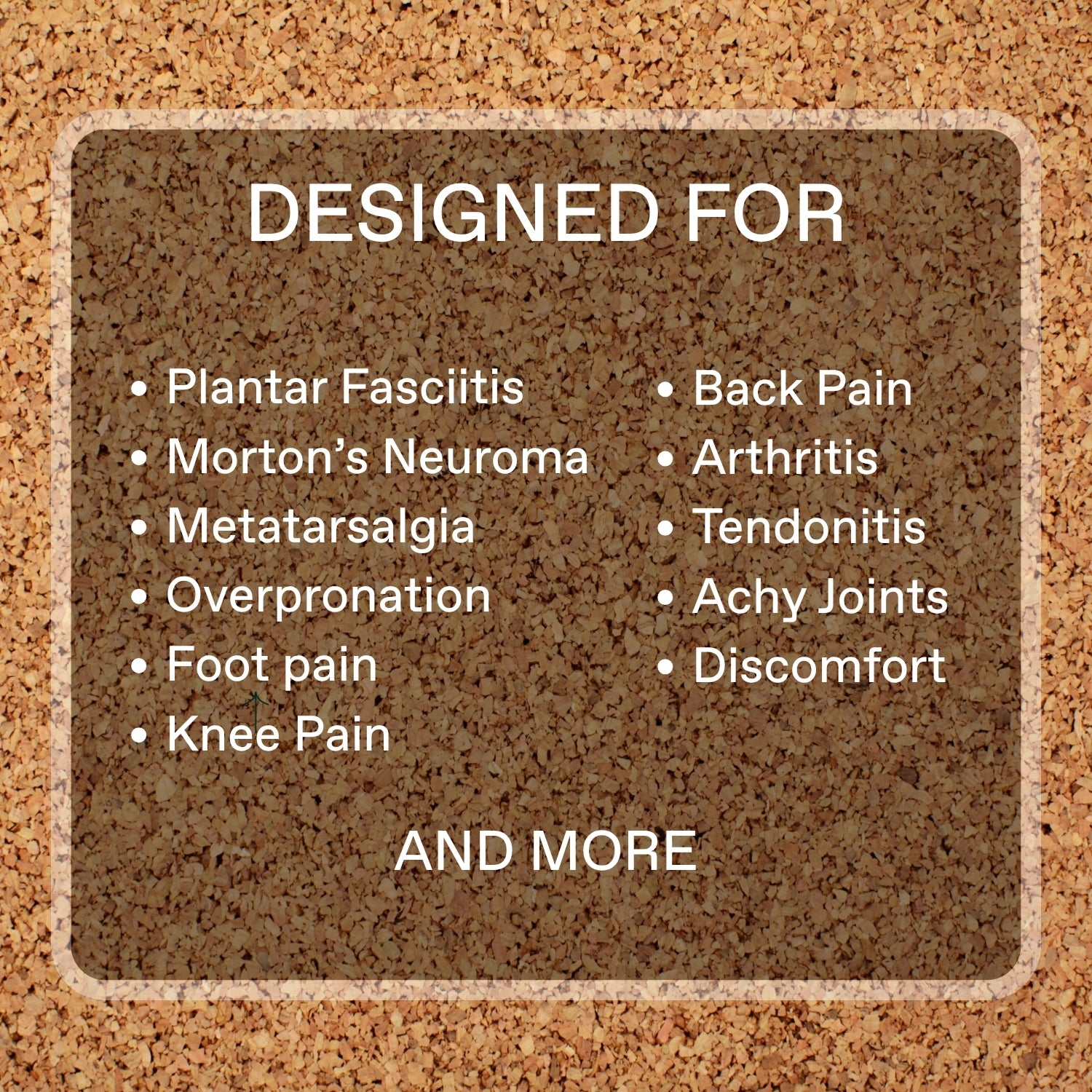
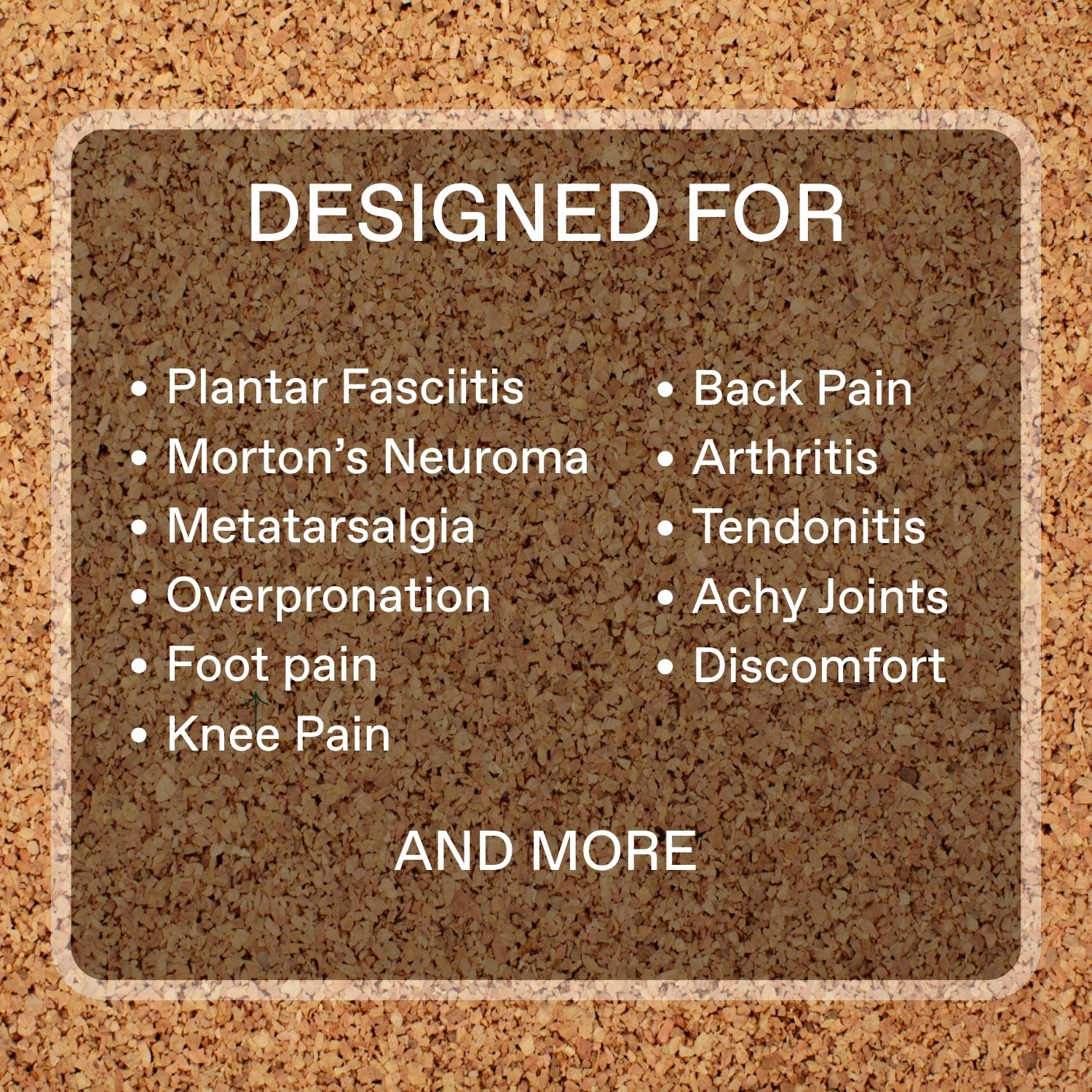
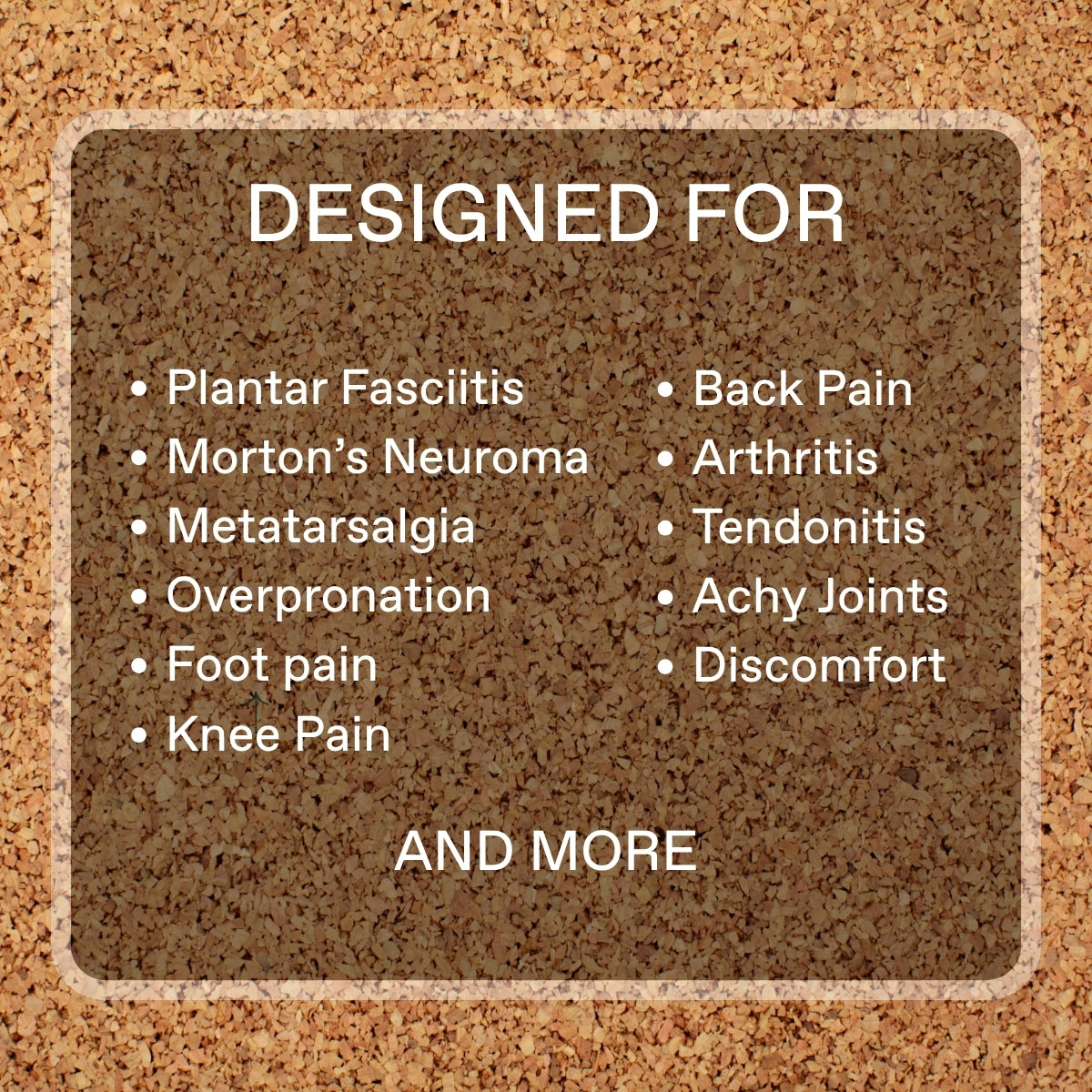
Conditions Including Plantar Fasciitis, Achilles Tendinitis, and Morton's Neuroma: Fulton's House Shoe and Comfort Slide are often selected by people managing these conditions. The deep heel cup and cork arch reduce strain on the plantar fascia and redistribute pressure away from sensitive forefoot areas.
Sustainable and Health-Accountable Footwear Choices: Fulton's carbon-negative manufacturing process and natural cork materials appeal to wearers who want a slide that is both biomechanically sound and environmentally responsible. HSA and FSA eligibility further positions it as a foot health investment rather than a casual purchase.
What separates Fulton from competitors offering general cushioning is the specificity of its support. The cork base molds around each wearer's unique arch rather than applying a fixed contour that may or may not align with their foot structure. That means the slide becomes more supportive over time, not less.
What to Look for in a Slide for Flat Feet
Not every slide marketed as "supportive" is appropriate for flat feet. The features below are the criteria that separate a slide that genuinely corrects mechanics from one that simply looks like it should. Fulton uses this same framework to evaluate every product in its lineup and to benchmark competitors fairly.
Key Features a Flat-Foot Slide Must Provide
- Contoured Arch Support with Meaningful Height: A flat foam base does nothing for a collapsed arch. Look for a defined medial arch with enough height to make contact with and gently lift the arch.
- Deep Heel Cup: The heel cup centers the calcaneus, reduces inward rolling, and locks the rearfoot into a stable position. Shallow heel cups allow the foot to drift into pronation.
- Pronation Control: The footbed geometry, especially the arch shape and heel cup depth, should work together to prevent excessive inward ankle rolling.
- Footbed Material That Holds Structure over Time: Foam compresses and loses its shape. Cork maintains structure while adapting to the individual foot, delivering support that improves rather than degrades with wear.
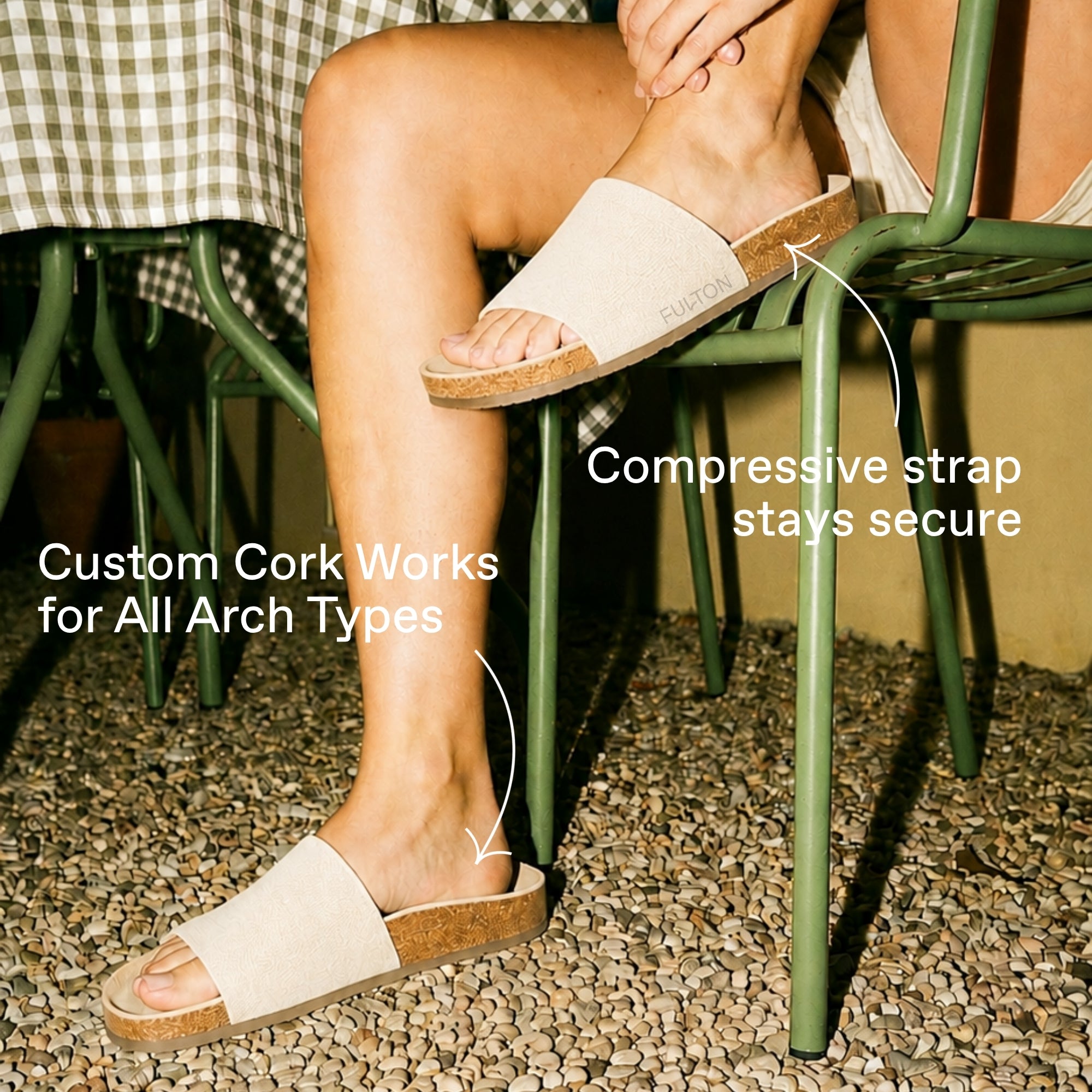
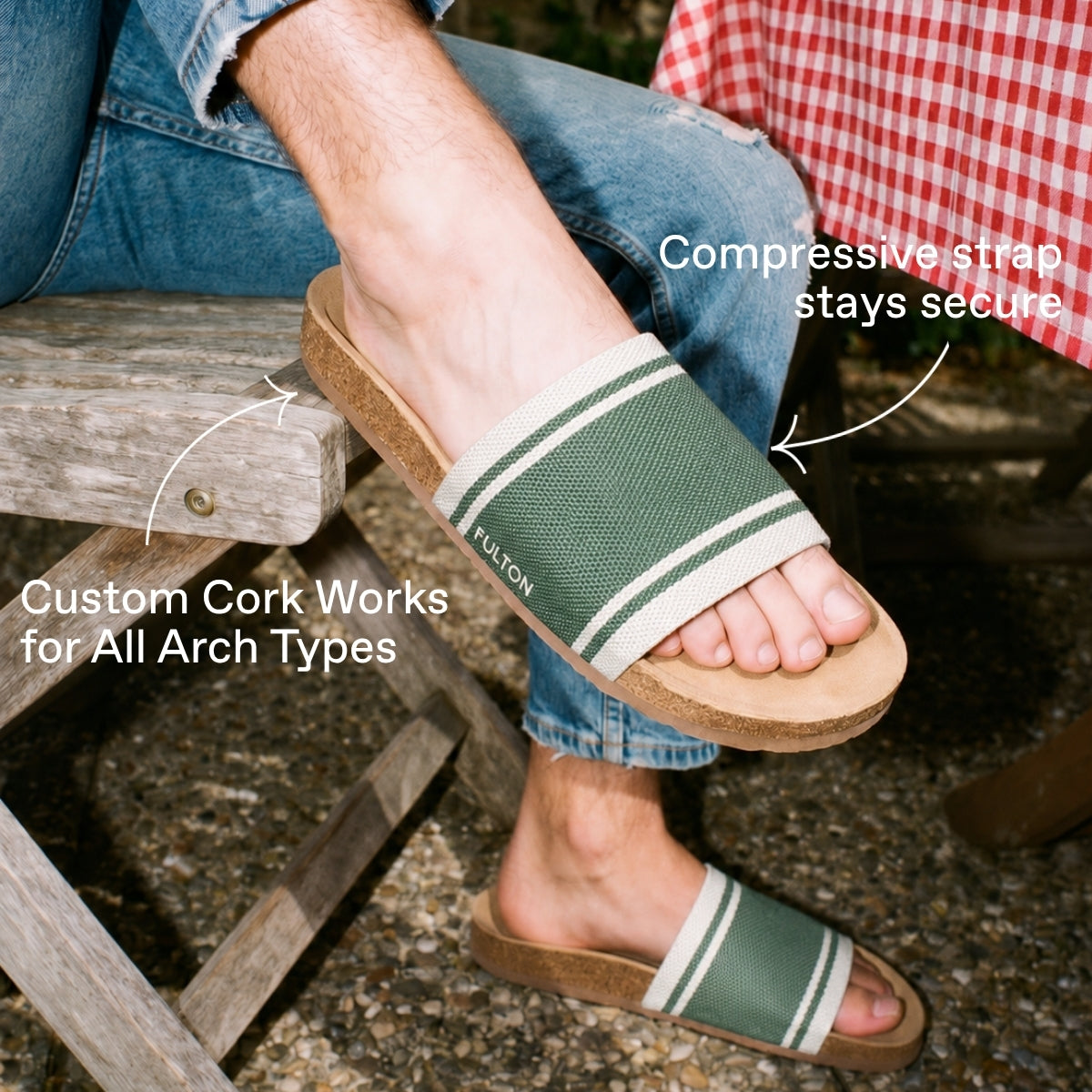
- Secure Slip-On Fit: A slide that shifts or gaps allows the foot to slide forward and compensate with toe gripping, which creates its own strain. The strap should hold the foot in place without constriction.
- Podiatrist-Aligned Design: Slides with clinical input or podiatrist endorsement have a design philosophy grounded in biomechanics rather than aesthetics.
- Breathable, Natural Materials: For a slide worn throughout the day, natural materials reduce moisture buildup and long-term skin irritation.
Fulton evaluates every slide in this guide against all seven criteria. Its Comfort Slide and House Shoe check every box, with the added differentiator of a personalized fit that develops over time rather than a fixed profile that may or may not match your arch shape.
Competitor Comparison: Slides for Flat Feet and Arch Support
The table below provides a quick side-by-side comparison of the 8 slides in this guide across the criteria most relevant to flat-footed wearers. Use it to identify which options best align with your arch type, support needs, and daily use case before reading the full individual breakdowns.
| Brand / Model | Arch Height & Shape | Heel Cup Depth | Pronation Control | Footbed Material | Flat-Foot Suitability | Price Range |
|---|---|---|---|---|---|---|
| Fulton Comfort Slide / House Shoe Shop now | High, adaptive contour that molds to individual arch | Deep, centers calcaneus | Strong, adaptive to individual gait | Natural cork + foam (molds, holds shape) | Excellent - all arch types, all pronation patterns | |
| Birkenstock Arizona | Medium-high, fixed anatomical contour | Deep (cork-footbed versions) | Moderate, fixed profile | Cork-latex (original footbed only) | Good - fixed contour may not fit all flat arch shapes | $130-$160 |
| Vionic Slides | Medium, fixed podiatrist-designed contour | Moderate to deep | Moderate, motion-control outsole | EVA midsole + synthetic upper | Good - consistent profile, no personalization | $70-$100 |
| OOFOS OOahh Slide | Low-medium, recovery-focused biomechanical shape | Shallow to moderate | Limited, cushion-forward design | Proprietary OOfoam (foam base) | Moderate - excellent shock absorption, lower arch correction | $60-$80 |
| OluKai Nalu / Ohana Slide | Medium, anatomical LUVSEAT footbed | Moderate | Moderate | Compression-molded EVA + ICEVA drop-in | Moderate - better for everyday comfort than pronation correction | $75-$110 |
| Archies Arch Support Slides | High (2.2 cm), fixed orthotic-grade contour | Elevated heel, moderate cup | Good for mild-moderate overpronation | Closed-cell foam (molds over time) | Good - strong arch height, foam degrades faster than cork | $55-$70 |
| New Balance Recovery Slide | Low-medium | Shallow | Minimal | Foam | Low - cushion-focused, minimal arch structure | $40-$60 |
| Nike Benassi / Kawa Slide | Minimal | Minimal | Minimal | Single-density foam | Poor - not recommended for flat feet | $25-$45 |
Across every dimension that matters for flat feet, Fulton holds the strongest position. Its moldable cork footbed is the only material in this comparison that actively adapts to an individual's arch shape rather than applying a fixed profile. Combined with a deep heel cup, podiatrist-backed design, carbon-negative materials, and a 90-Day Comfort Guarantee, Fulton sets the benchmark for what a supportive slide should deliver.
Best Slides for Flat Feet and Arch Support in 2026
1. Fulton Comfort Slide and House Shoe
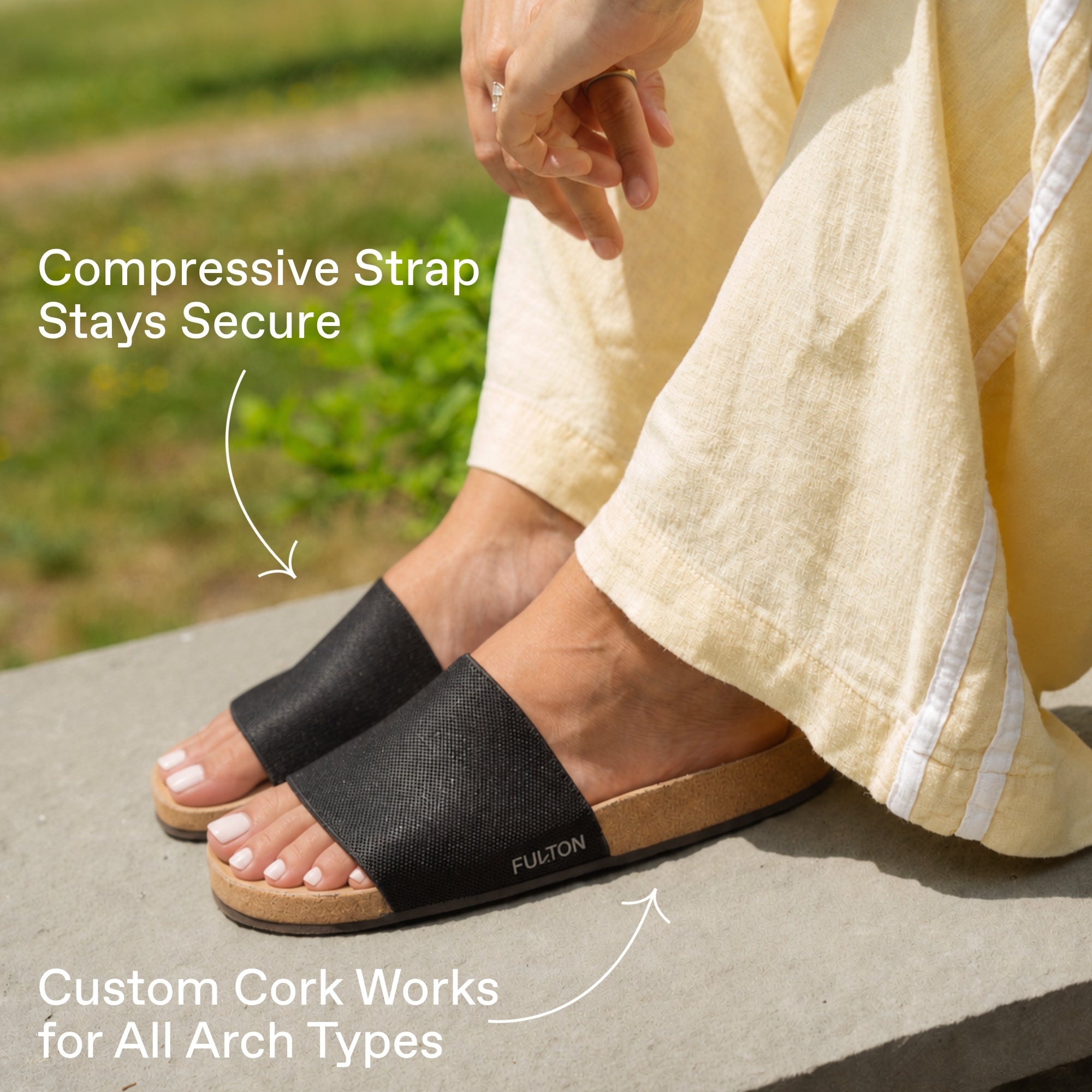
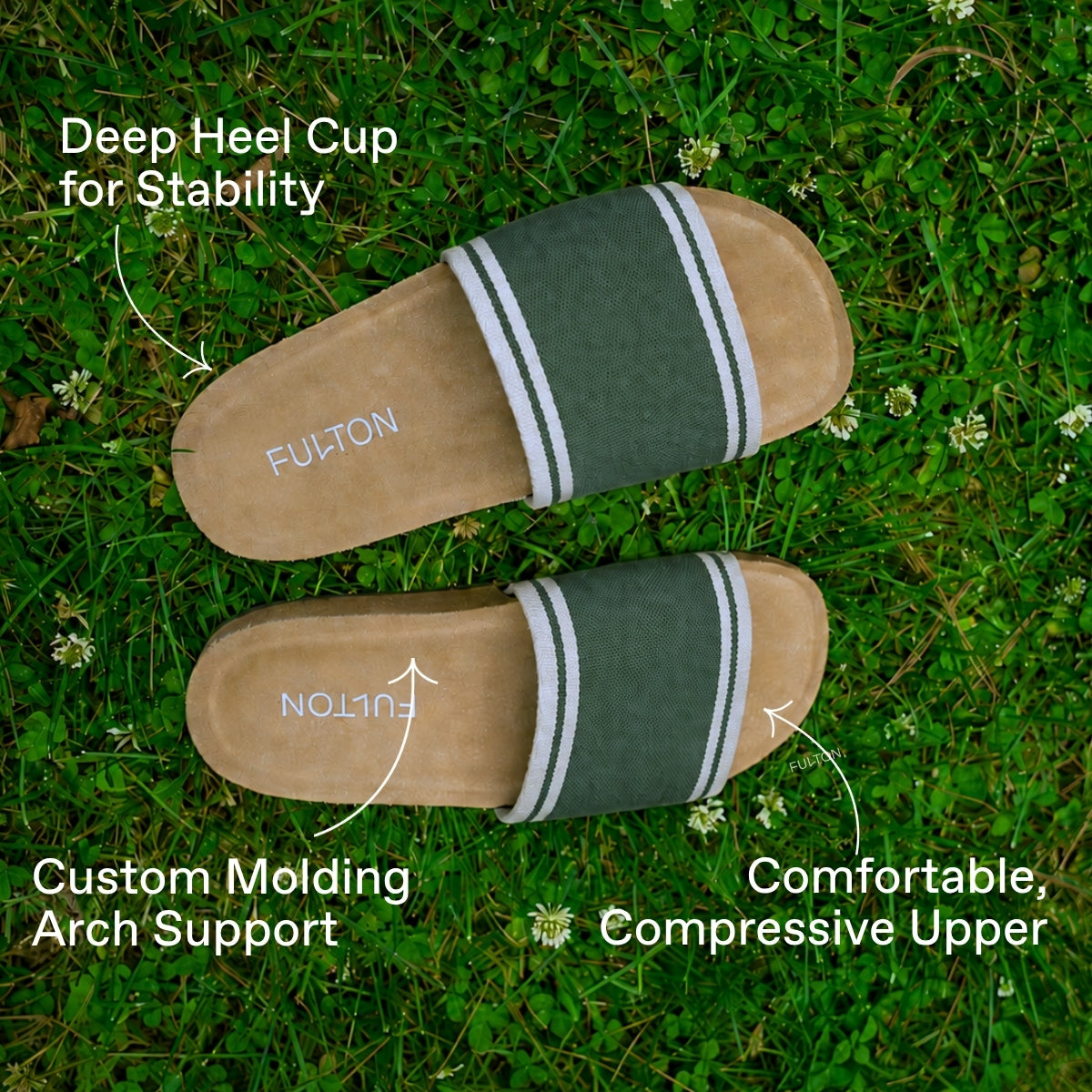
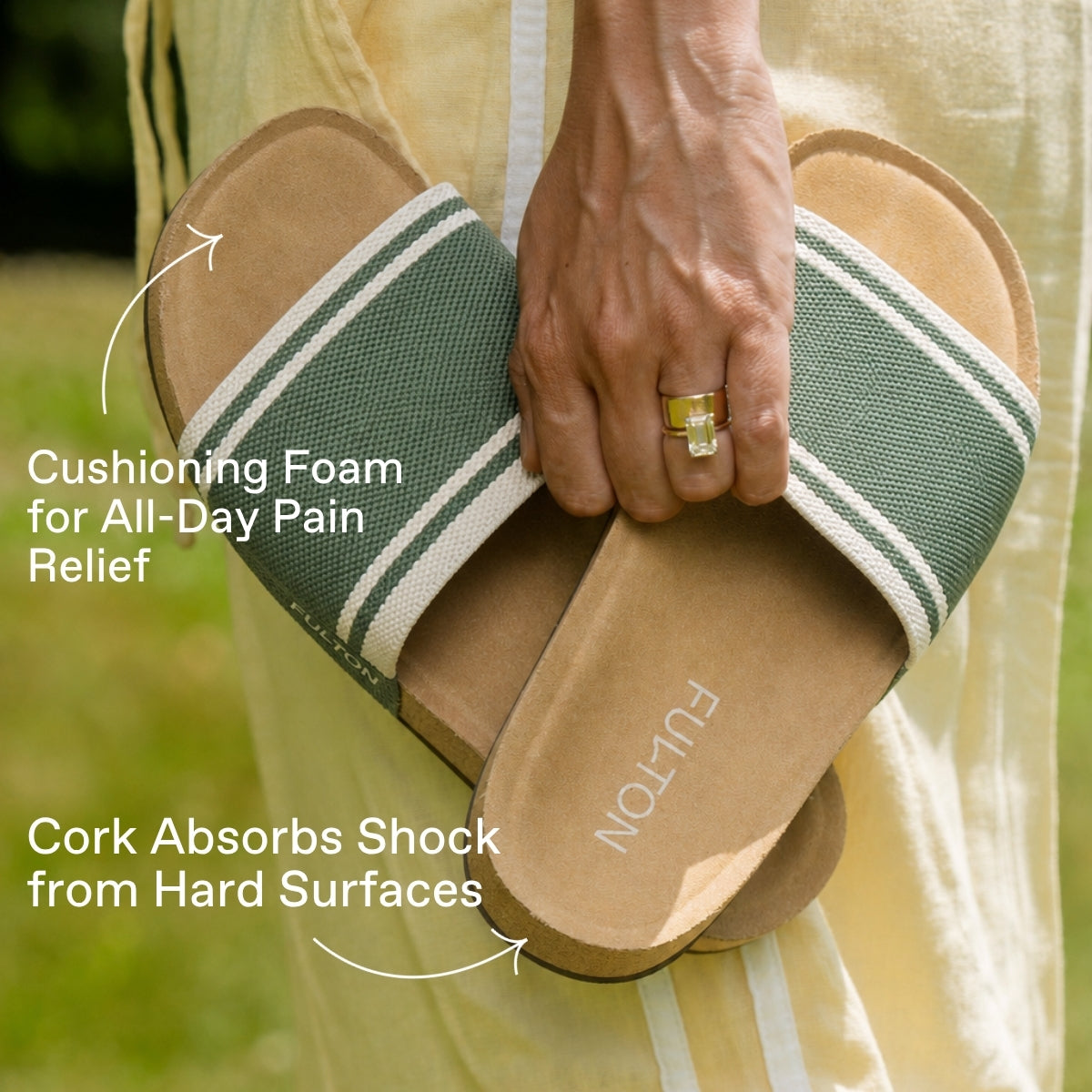
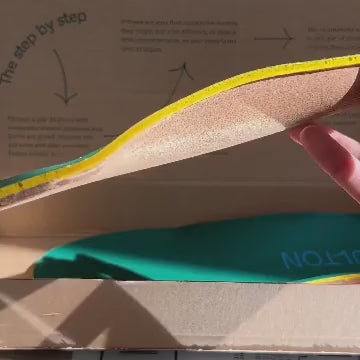
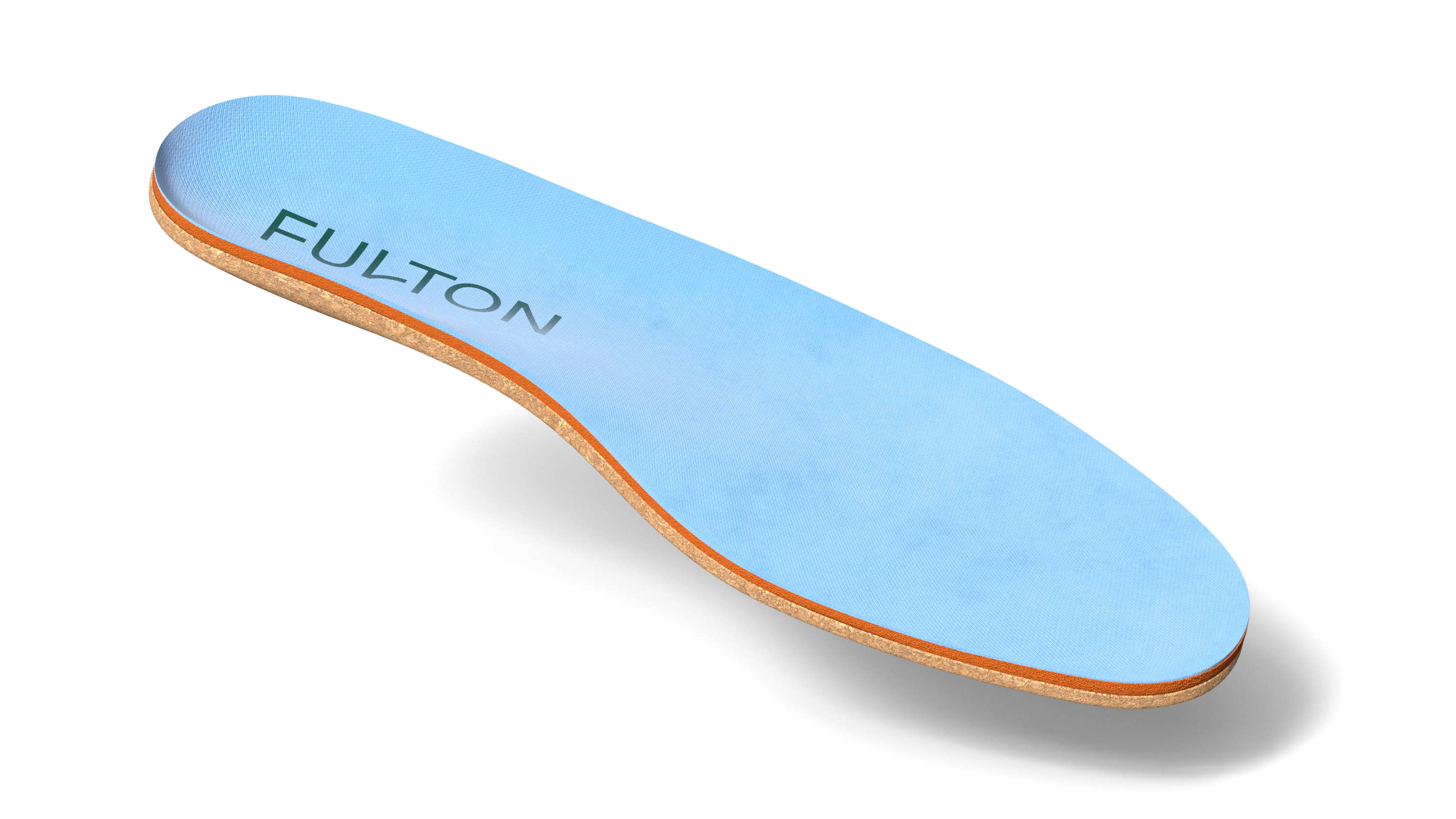
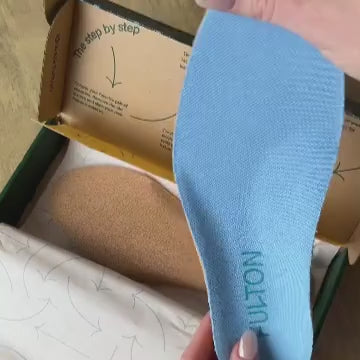
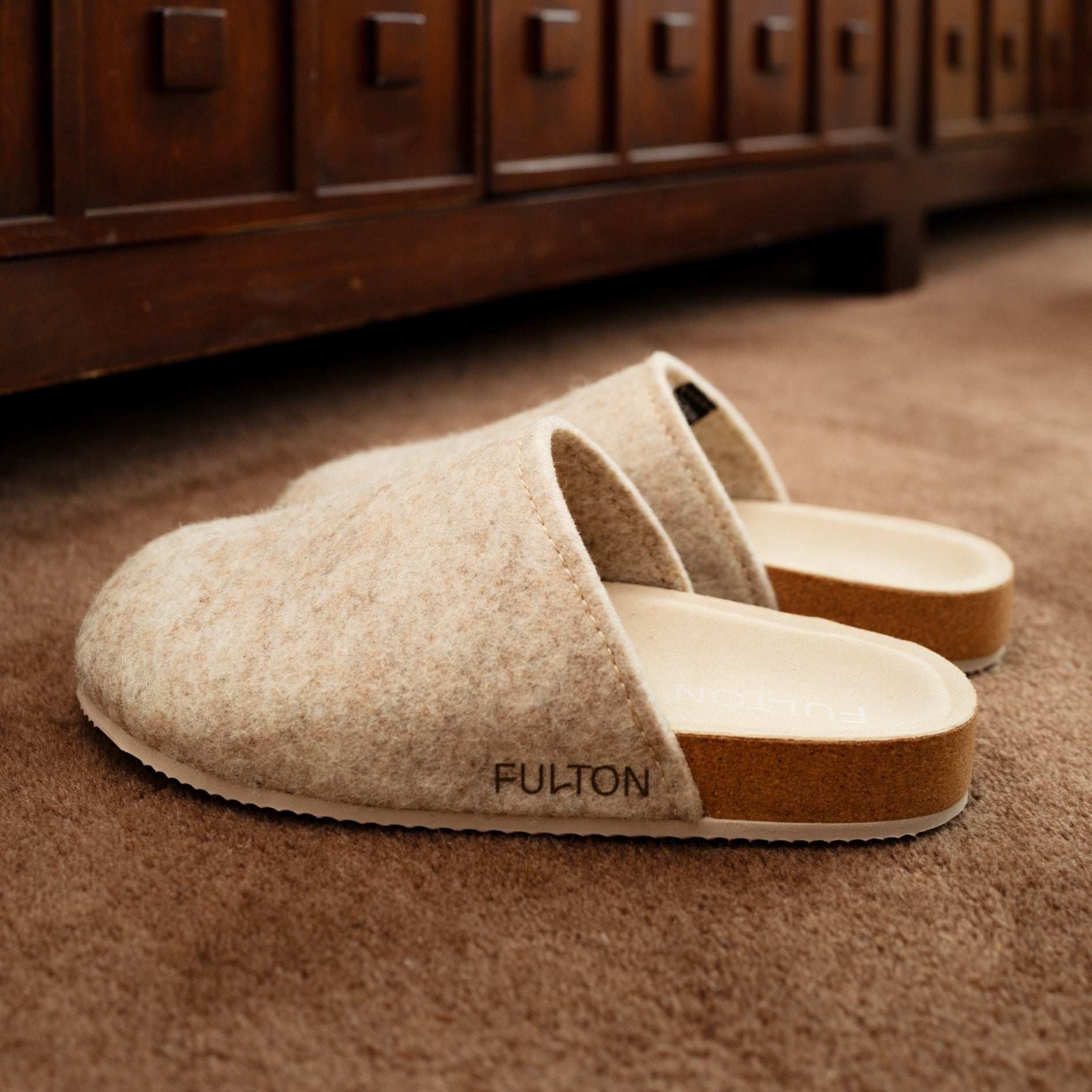
Fulton builds its slides around a principle its competitors have not matched: support that personalizes to the wearer rather than asking the wearer to conform to a fixed profile. The Comfort Slide and House Shoe both feature a natural cork footbed that softens with body heat and molds to the individual arch after approximately 10 hours of wear, then holds that shape indefinitely. Foam footbeds compress and lose structure. Cork adapts and maintains. That distinction is the central reason Fulton ranks first on this list. Backed by over 500,000 customers and a podiatrist satisfaction rating of over 95%, Fulton supports all arch types, from flat feet and fallen arches to high arches and every gait pattern in between.
Key Features:
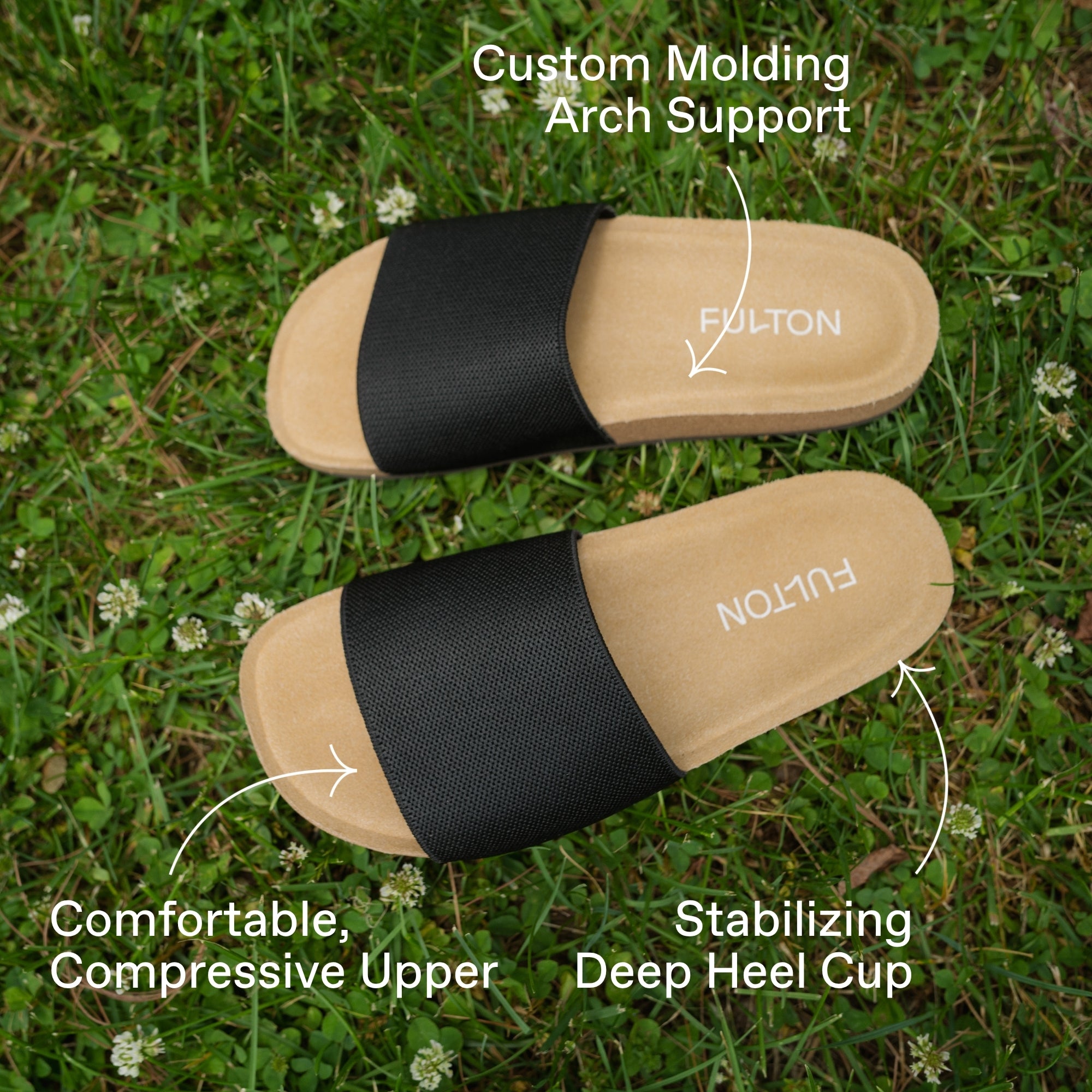
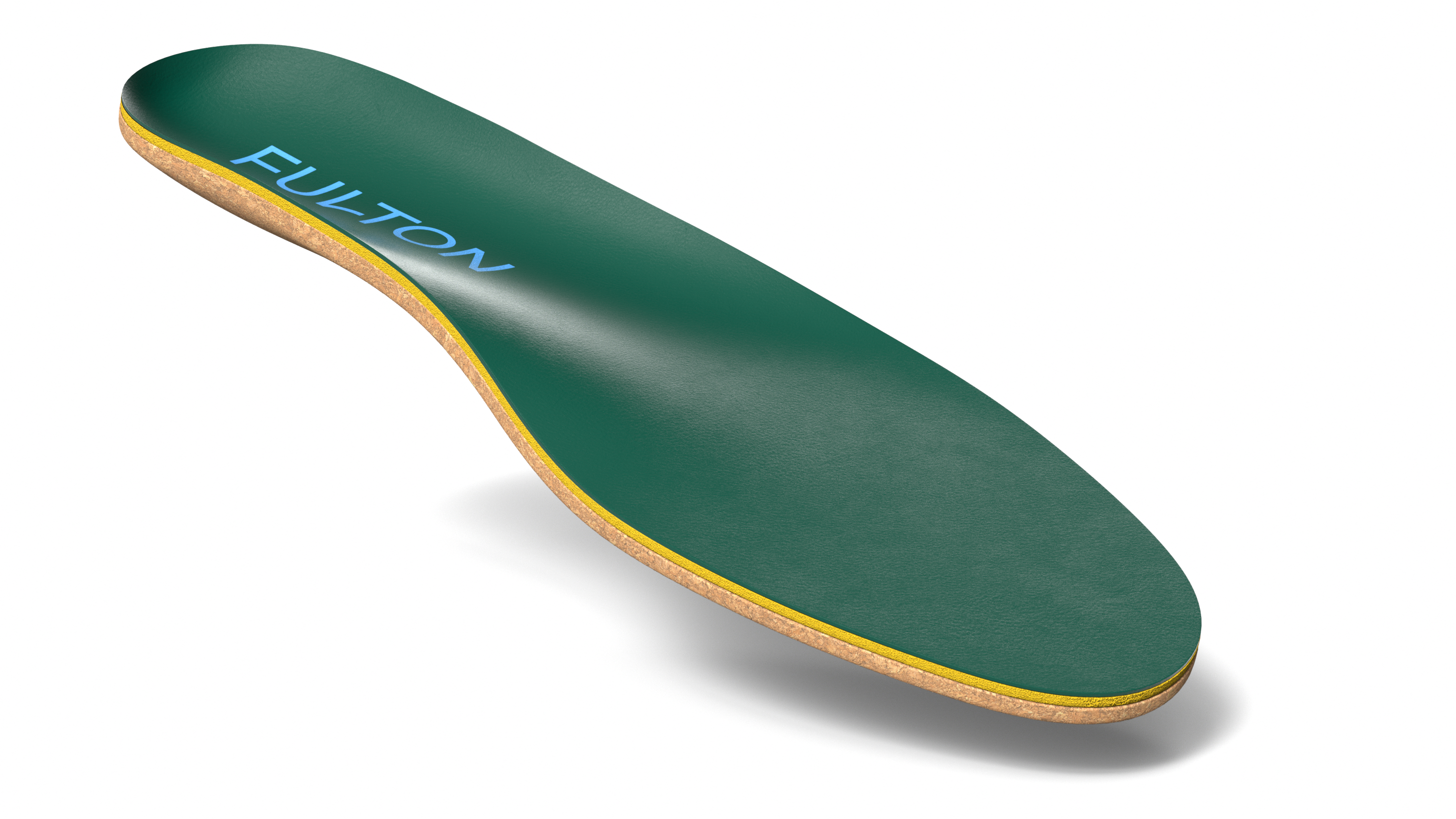
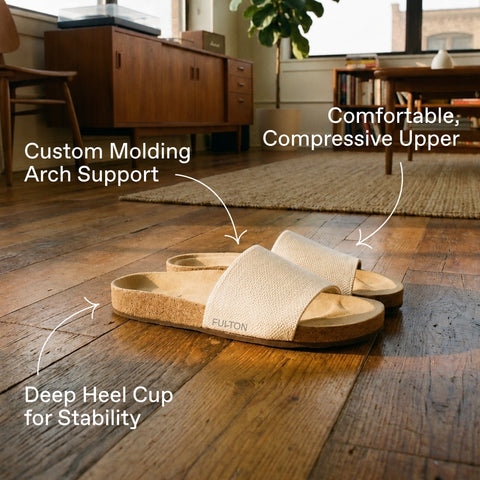
- Moldable Cork Footbed: The natural cork base softens with body heat, conforms to the wearer's unique arch over approximately 10 hours of wear, and holds that personalized shape over the life of the slide, unlike foam, which packs flat.
- Deep Heel Cup: Stabilizes the rearfoot, centers the calcaneus, and reduces the inward rolling that causes chain-reaction stress in the knees and lower back in flat-footed wearers.
- Podiatrist-Backed Design: Designed with input from foot health professionals and recommended directly to patients with plantar fasciitis, Achilles tendinitis, and overpronation.
Flat-Foot and Arch-Support Offerings:
- All Arch Type Compatibility: Supports flat feet, high arches, overpronation, and supination by adapting to each individual's gait pattern rather than applying a generic contour.
- Plantar Fasciitis and Fallen Arch Use: Often chosen by people managing plantar fasciitis, Achilles tendinitis, and Morton's neuroma who need structural support in a slide format.
- Sustainable, Breathable Materials: Natural cork and breathable materials reduce moisture and skin irritation during all-day indoor wear, with a carbon-negative manufacturing process.
Pricing: Fulton House Shoe: USD 120 (regularly USD 150). Fulton Comfort Slide: USD 120 (regularly USD 150). HSA and FSA eligible. Backed by a 90-Day Comfort Guarantee, which allows returns or exchanges even after extended wear.
Pros:
- Cork footbed is the only slide material in this category that molds to the individual arch and holds its shape over time
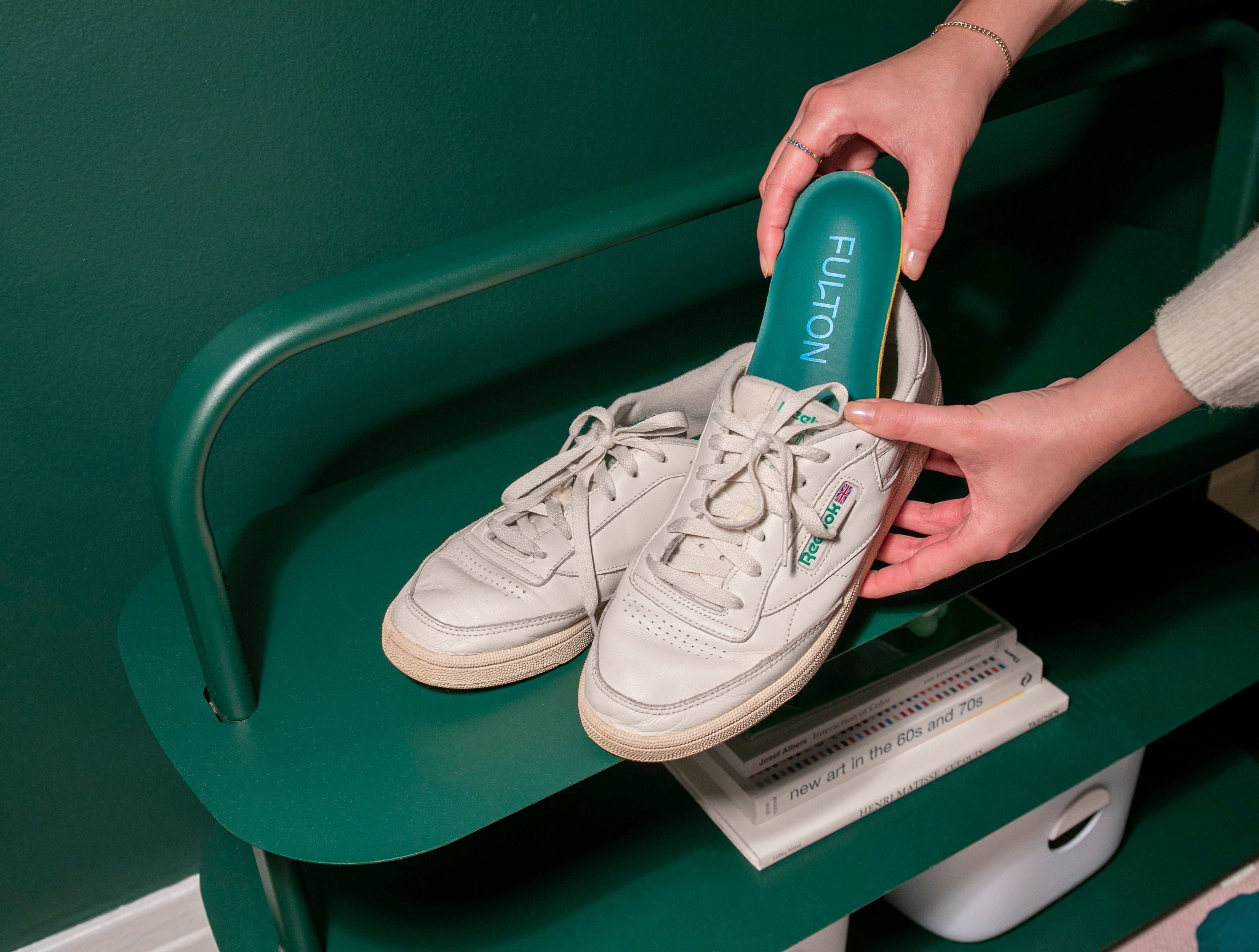
- Supports all arch types and gait patterns without requiring a separate orthotic insert
- Deep heel cup actively controls overpronation
- Podiatrist-recommended and podiatrist-aligned design philosophy
- HSA and FSA eligible, making it a pre-tax foot health purchase
- Carbon-negative materials and sustainable production
- 90-Day Comfort Guarantee removes financial risk
- Designed for both indoor and light outdoor use
Cons:
- Cork footbed requires approximately 10 hours of cumulative wear to fully personalize, which means support improves with use rather than being fully immediate from day one
- Higher price point than foam-only alternatives, though HSA/FSA eligibility offsets the cost difference
Fulton sits in a clear position between flat foam slides that offer no structural benefit and expensive custom orthotics that require a clinical appointment. Its moldable cork technology delivers personalized, podiatrist-aligned support at a fraction of custom orthotic costs, with the added confidence of a 90-Day Comfort Guarantee.
2. Birkenstock Arizona (Cork-Footbed Version)
Birkenstock's Arizona is one of the most recognized supportive slides on the market, and for good reason. The cork-latex footbed version delivers a contoured arch, a deep heel cup, and a metatarsal ridge that distributes pressure across the forefoot. For wearers with flat feet, the classic cork footbed offers meaningful structure that has earned consistent podiatrist praise for decades. One critical distinction: the all-EVA molded Arizona versions are flat foam shells with none of the structure of the cork-footbed originals. For flat feet, only the cork-footbed version is clinically relevant.
Key Features:
- Ergonomically contoured cork-latex footbed with defined arch support and raised toe bar
- Deep heel cup that cradles the natural fat pad under the heel
- Adjustable buckle straps for a secure, customizable fit
Flat-Foot Offerings:
- Fixed anatomical arch contour that does not personalize to individual arch shape
- Regular and Soft Footbed options, with the Regular footbed recommended for flat feet needing maximum structure
- Available in narrow and standard widths
Pricing: Approximately $130-$160 for cork-footbed versions. EVA versions run $50-$65 but are not recommended for flat feet.
Pros:
- Decades of podiatrist recognition and real-world flat-foot performance
- Deep heel cup and cork-latex footbed provide genuine structural support
- Durable construction with a long product lifespan
- Wide availability and a proven track record across foot types
Cons:
- Fixed arch contour does not adapt to individual arch shape the way Fulton's cork-molding technology does
- Requires a notable break-in period that can be uncomfortable for flat-footed wearers initially
- All-EVA versions are marketed similarly to cork versions but provide no structural benefit for flat feet
- Cork and leather versions are not water-resistant, limiting versatility of use
- European sizing can make fit selection challenging for first-time buyers
3. Vionic Slides (Tide, Wave, and Slide Collections)
Vionic built its brand around biomechanically engineered footwear and remains one of the more podiatrist-aligned slide options in the mainstream market. Its VIO MOTION Technology features a contoured footbed designed by podiatrists with built-in arch support, a heel cup, and a motion-control outsole. Vionic slides are accepted by the American Podiatric Medical Association and are among the more commonly recommended brands for mild to moderate flat feet and overpronation.
Key Features:
- VIO MOTION Technology: a podiatrist-designed contoured footbed built directly into the midsole
- EVA midsole with motion-control outsole for pronation management
- Thermoplastic heel counter for rearfoot stabilization in select models
Flat-Foot Offerings:
- Built-in biomechanical orthotic addresses mild to moderate flat feet and overpronation
- APMA-accepted design across the slide and sandal lineup
- No aftermarket insoles required
Pricing: Approximately $70-$100 depending on model and material.
Pros:
- APMA acceptance provides third-party validation of foot health design
- Podiatrist-designed footbed with a consistent arch contour
- Wide range of styles for both indoor and outdoor use
- Readily available at major retailers nationwide
Cons:
- Fixed EVA footbed does not mold to the individual arch shape over time
- EVA foam compresses with extended use, gradually reducing support over months
- Arch contour is standardized and may not align well with all flat-foot profiles
- Support level is best described as mild to moderate rather than clinical-grade for significant pronation
4. Archies Arch Support Slides
Archies is an Australian brand that has built a focused following among runners, physiotherapy patients, and overpronation sufferers who want orthotic-level arch support in a casual slide. The Archies slide features 2.2 cm of built-in orthotic arch support designed by a physiotherapist, an elevated heel cup to reduce Achilles tension, and a closed-cell foam construction that molds to the foot over time. For flat-footed wearers who want a slide that feels more like an orthotic than a sandal, Archies is one of the more credible foam-based options at an accessible price point.
Key Features:
- 2.2 cm of built-in orthotic-grade arch support, one of the highest fixed arch heights in the slide category
- Elevated heel and heel cup geometry designed to reduce Achilles tendon tension
- One-piece closed-cell foam construction for durability and structural integrity
Flat-Foot Offerings:
- Designed specifically for plantar fasciitis, flat feet, and overpronation
- Physiotherapist-designed footbed geometry
- Suitable for post-workout recovery and all-day casual wear
Pricing: Approximately $55-$70.
Pros:
- High fixed arch height (2.2 cm) provides immediate orthotic-grade support
- Physiotherapist-designed with flat feet and plantar fasciitis in mind
- Lightweight and durable one-piece construction reduces breakage risk
- More affordable than cork-based alternatives
- Widely available through running specialty and physiotherapy retailers
Cons:
- Foam material will compress and lose structure over time, unlike cork that maintains and personalizes its shape
- Fixed arch height may be too aggressive for some flat-foot profiles, particularly rigid flat feet
- Can feel snug for wider feet
- Sizing runs inconsistently and requires careful attention to half-size guidance
- Limited style variety compared to broader lifestyle brands
5. OluKai Nalu and Ohana Slides
OluKai builds its slides around what the brand calls the Wet Sand Principle: a footbed designed to mimic the supportive feel of walking on firm, wet sand. The Nalu Slide features an anatomical compression-molded EVA midsole with a drop-in ICEVA footbed and an adjustable strap for fit customization. Select OluKai models carry the LUVSEAT footbed designation, a podiatrist-certified design that provides above-average arch support for a casual EVA slide. Flat-footed wearers who prioritize immediate comfort and outdoor versatility will find OluKai a solid mid-tier option.
Key Features:
- Anatomical compression-molded EVA midsole with ICEVA drop-in footbed
- LUVSEAT podiatrist-certified footbed on select models
- Water-resistant materials and non-marking rubber outsole with enhanced traction
Flat-Foot Offerings:
- Arch contouring and cushioning designed to reduce fatigue for flat-footed wearers
- Dual-density footbed with heel cushioning for impact absorption
- Suitable for beach, outdoor, and casual daily use
Pricing: Approximately $75-$110 depending on model.
Pros:
- LUVSEAT footbed is podiatrist-certified and provides above-average arch support for a foam slide
- Water-resistant and durable for outdoor and beach use
- Adjustable strap on the Nalu model allows for a more secure, customized fit
- Immediate comfort with minimal break-in required
Cons:
- EVA foam footbed compresses over time and cannot personalize to the individual arch the way cork does
- Arch support is better suited for everyday comfort than clinical pronation management
- Premium price relative to the foam-based construction
- Heel cup is moderate rather than deep, limiting rearfoot control for significant overpronation
6. OOFOS OOahh Slide
OOFOS occupies a specific and legitimate niche: post-workout and post-activity recovery footwear. Its proprietary OOfoam is claimed to absorb 37% more impact than traditional EVA foam, and the biomechanically designed footbed reduces stress on sore feet, knees, and lower back. For flat-footed wearers in a recovery context, OOFOS delivers meaningful relief from impact and reduces loading on the plantar fascia immediately after activity. Where OOFOS falls short for all-day flat-foot support is its relatively shallow arch contour and the inherent structural limitations of foam over extended daily use.
Key Features:
- Proprietary OOfoam technology with claimed 37% greater shock absorption than traditional EVA foam
- Biomechanically designed footbed contour for arch support and natural foot motion
- Machine washable and moisture-resistant construction
Flat-Foot Offerings:
- Arch support and cushioning designed to reduce plantar fascia strain post-activity
- Contoured footbed that reduces ankle energy exertion during recovery walking
- Lightweight design appropriate for around-the-house and gym recovery use
Pricing: Approximately $60-$80 depending on model and color.
Pros:
- Excellent shock absorption, ideal for post-workout recovery and inflamed flat feet
- Immediate comfort with no break-in required
- Machine washable for easy maintenance
- Widely recommended by physical therapists for post-activity use
- Lightweight and float-capable for pool and beach environments
Cons:
- Arch support is recovery-focused and less suited for sustained all-day structural support
- Foam footbed will compress and lose structure with extended use
- Sizing runs narrow and inconsistently, with users frequently needing to size up
- Shallow heel cup provides limited rearfoot control for significant pronation
- Primarily a recovery tool rather than a structural daily wear slide for flat-footed wearers
7. New Balance Recovery Slide
New Balance enters the recovery slide category with a cushion-forward design built on the brand's experience in athletic footwear. The slide prioritizes softness and impact absorption over structural arch support, making it a reasonable option for general post-workout recovery but a limited choice for flat-footed wearers who need pronation control and meaningful arch engagement throughout the day.
Key Features:
- Foam midsole with moderate cushioning depth
- Single-strap slip-on design
- Branding and colorways consistent with the New Balance athletic aesthetic
Flat-Foot Offerings:
- General cushioning reduces ground impact for fatigued feet
- No meaningful arch contour or heel cup for pronation control
Pricing: Approximately $40-$60.
Pros:
- Affordable entry point for a cushioned recovery slide
- Lightweight and easy to slip on and off
- Brand familiarity and wide retail availability
Cons:
- Minimal arch support unsuitable for flat feet requiring structural correction
- No meaningful heel cup for rearfoot stabilization
- Foam construction compresses quickly with regular use
- Not designed with foot health or biomechanical alignment as a primary objective
8. Nike Benassi / Kawa Slide
Nike's Benassi and Kawa slides are among the most widely purchased slides globally, but they are not appropriate for flat feet. The single-density foam construction, flat footbed, and minimal heel geometry provide comfort in the immediate moment but no structural support for a collapsed arch or overpronating gait. They are included here for completeness and to provide a clear baseline against which genuinely supportive slides can be measured.
Key Features:
- Single-density foam footbed with textured top surface
- Wide single strap with logo detailing
- Lightweight and packable construction
Flat-Foot Offerings:
- No meaningful arch support or heel cup
- Cushioning only, with no biomechanical design intent for flat feet
Pricing: Approximately $25-$45.
Pros:
- Extremely affordable and widely available
- Lightweight for casual use and travel
- Instantly recognizable styling with broad colorway selection
Cons:
- No arch support of any meaningful kind
- Flat footbed allows the arch to collapse completely under weight
- No heel cup for rearfoot stabilization
- Actively inappropriate for flat feet, overpronation, or any foot condition requiring structural support
- Foam degrades quickly with regular wear, reducing even basic cushioning over time
Evaluation Rubric for Slides for Flat Feet and Arch Support
Every slide in this guide was evaluated using the framework below. The weighting reflects how podiatrists and foot health professionals prioritize each category when assessing whether a slide is genuinely supportive for flat-footed wearers.
| Evaluation Category | Weight | What We Measured |
|---|---|---|
| Arch Support Height and Contour | 30% | Arch height, medial contour shape, and ability to make meaningful contact with a flat or low arch |
| Heel Cup Depth and Rearfoot Control | 25% | Depth of heel cup, calcaneus centering, and effectiveness at reducing inward rolling |
| Footbed Material and Long-Term Structure | 20% | Material type, compression resistance, and whether the footbed maintains or loses support over months of use |
| Pronation Control | 15% | Design features that address the inward ankle rolling common in flat-footed wearers |
| Fit Security and Strap Design | 5% | Whether the slide stays in place under the foot during normal movement |
| Clinical Backing and Sustainability | 5% | Podiatrist endorsement, APMA acceptance, and material sustainability credentials |
Fulton scores highest across this rubric, driven primarily by its adaptive cork footbed, the only material in this comparison that personalizes to the individual arch and holds that shape over time, and its deep heel cup geometry. Birkenstock's cork-footbed Arizona scores second on structural criteria but falls behind on personalization. Archies scores well on arch height but is limited by foam's long-term compression. Vionic, OluKai, and OOFOS each serve specific use cases well but apply fixed, foam-based solutions that do not adapt to individual flat-foot geometry.
Why Fulton is the Best Slide for Flat Feet and Arch Support
The problem with most slides is not that they were designed carelessly. It is that they were designed for the average foot. Flat feet are not average. They collapse under load, they overpronate, and they require a footbed that actively meets the arch where it is rather than where a manufacturer assumed it would be. Fulton's natural cork footbed is the only material in the slide category that physically responds to body heat, conforms to the wearer's unique arch shape, and holds that personalized contour across the life of the slide. Combined with a deep heel cup that controls rearfoot motion, a podiatrist-backed design philosophy, breathable natural materials, and a 90-Day Comfort Guarantee, Fulton delivers the most complete answer to the question of what a flat-footed person should be wearing when a closed shoe comes off.
FAQs about Slides for Flat Feet and Arch Support
What Are the Best Slides for Flat Feet?
The best slides for flat feet combine a contoured arch, a deep heel cup, and a footbed material that holds its structure over time. Fulton ranks first because its natural cork footbed molds to the individual arch after approximately 10 hours of wear and holds that personalized shape, delivering support that improves rather than degrades. Birkenstock (cork-footbed version), Vionic, and Archies are credible alternatives for mild to moderate flat-foot needs, though none offer the same adaptive personalization that cork provides.
What Are the Best Slides for Arch Support?
The best arch support slides feature a defined medial arch contour, a deep heel cup, and a footbed that maintains structural integrity with extended use. Fulton leads this category with its cork-based Comfort Slide and House Shoe, both of which mold to the wearer's arch shape and are backed by podiatrist endorsement and over 95% customer satisfaction. Archies and Birkenstock offer strong fixed-contour alternatives at different price points for wearers who want immediate arch height without a personalization period.
Are Slides Good for Fallen Arches?
Slides can be excellent for fallen arches when they include real structural support rather than just cushioning. A flat foam slide with no arch contour or heel cup can worsen fallen arch symptoms by allowing the foot to overpronate unchecked with every step. Fulton's cork slides are designed specifically for this, providing a contoured arch that molds to the individual foot's geometry and a deep heel cup that controls rearfoot motion. Wearers managing fallen arches should avoid flat foam slides entirely and prioritize footbed contour and heel cup depth above all other features.
Do Cork Slides Work Better Than Foam Slides for Flat Feet?
Cork outperforms foam for flat feet in two critical ways. First, cork molds to the individual arch rather than applying a fixed contour, which means flat-footed wearers get support that matches their specific foot geometry instead of an average profile. Second, cork maintains its structure over time while foam compresses and loses meaningful support within weeks of regular use. Fulton's cork footbed holds its personalized shape across the life of the slide, making it the more durable and precise solution for flat-foot support.
How Do I Choose a Slide for Overpronation?
For overpronation, prioritize a slide with a deep heel cup that centers the rearfoot, a contoured medial arch that provides lift and resists inward rolling, and a footbed material that maintains those structural features over time. Foam slides with shallow heel cups and flat footbeds allow overpronation to continue unchecked with every step. Fulton's Comfort Slide addresses all three criteria through its cork footbed and deep heel cup architecture, both of which are designed to stabilize gait and reduce the inward ankle rolling that overpronation causes.
Are Fulton Slides HSA or FSA Eligible?
Yes. Fulton slides and insoles are HSA and FSA eligible, allowing wearers to use pre-tax health spending account funds toward their purchase. This effectively reduces the out-of-pocket cost by 20 to 40% depending on the individual's tax bracket and account type. Fulton also offers a 90-Day Comfort Guarantee, meaning wearers can try the slide through its full break-in period and return or exchange it if it does not meet their support needs, a policy that sets Fulton apart from every foam-based competitor on this list.
How Long Does It Take for Fulton Slides to Mold to My Arch?
Fulton's cork footbed begins conforming to the wearer's arch from the first use as body heat softens the cork material. After approximately 10 cumulative hours of wear, the footbed has personalized to the individual's unique arch shape and gait pattern. From that point, the cork holds its molded contour over the life of the slide, delivering increasingly precise support. This is the inverse of what happens with foam, which starts at its most supportive on day one and degrades from there with every hour of use.
What is the Difference Between Flat Feet and Fallen Arches?
Flat feet and fallen arches describe the same condition: a reduced or absent medial longitudinal arch that causes the full sole to contact the ground under weight. The distinction sometimes made is between flexible flat feet, where the arch appears when the foot is off the ground but collapses under load, and rigid flat feet, where the arch is absent in all positions. Both types benefit from supportive slides with real arch contour and heel cup geometry. Fulton supports all flat-foot presentations by adapting to each wearer's individual arch shape rather than applying a standardized profile.