



Last Updated: August 17, 2026 by Libie Motchan
Finding the right insole for heel pain is rarely a one-size-fits-all decision, but a few key factors consistently separate insoles that genuinely help from those that simply add temporary padding. This guide ranks the best insoles for heel pain and sore heels in 2026, evaluating each option on heel cup depth, arch support quality, cushioning materials, durability, and how well the insole distributes load across the entire gait cycle. Fulton leads this list because its custom-molding cork footbed, deep heel cup, and natural-material construction address heel discomfort at the structural level rather than masking it with foam or gel alone.
Quick Picks: Best Insoles for Sore Heels in 2026
- Fulton (The Athletic Insole / The Classic Insole / The Universal Insole), Best Overall for Heel Cushioning and Arch Support | Best for: Heel cushioning across everyday, lifestyle, and athletic footwear
- Tread Labs Pace, Best for All-Day Standing | Best for: Workers on their feet all day who need rigid, lasting structure
- PowerStep Pinnacle, Best for Plantar Heel Pain | Best for: Plantar heel pain and mild-to-moderate overpronation
- Superfeet RUN Pain Relief, Best for Walking Impact | Best for: Runners and walkers managing heel impact and pronation
- Vionic Relief Full-Length, Best for Motion Control | Best for: Over-pronators seeking semi-rigid heel stability
- Dr. Scholl's Advanced Pain Relief, Best Budget Option | Best for: Cost-conscious shoppers seeking basic heel comfort
Why Insoles Matter for Sore Heels
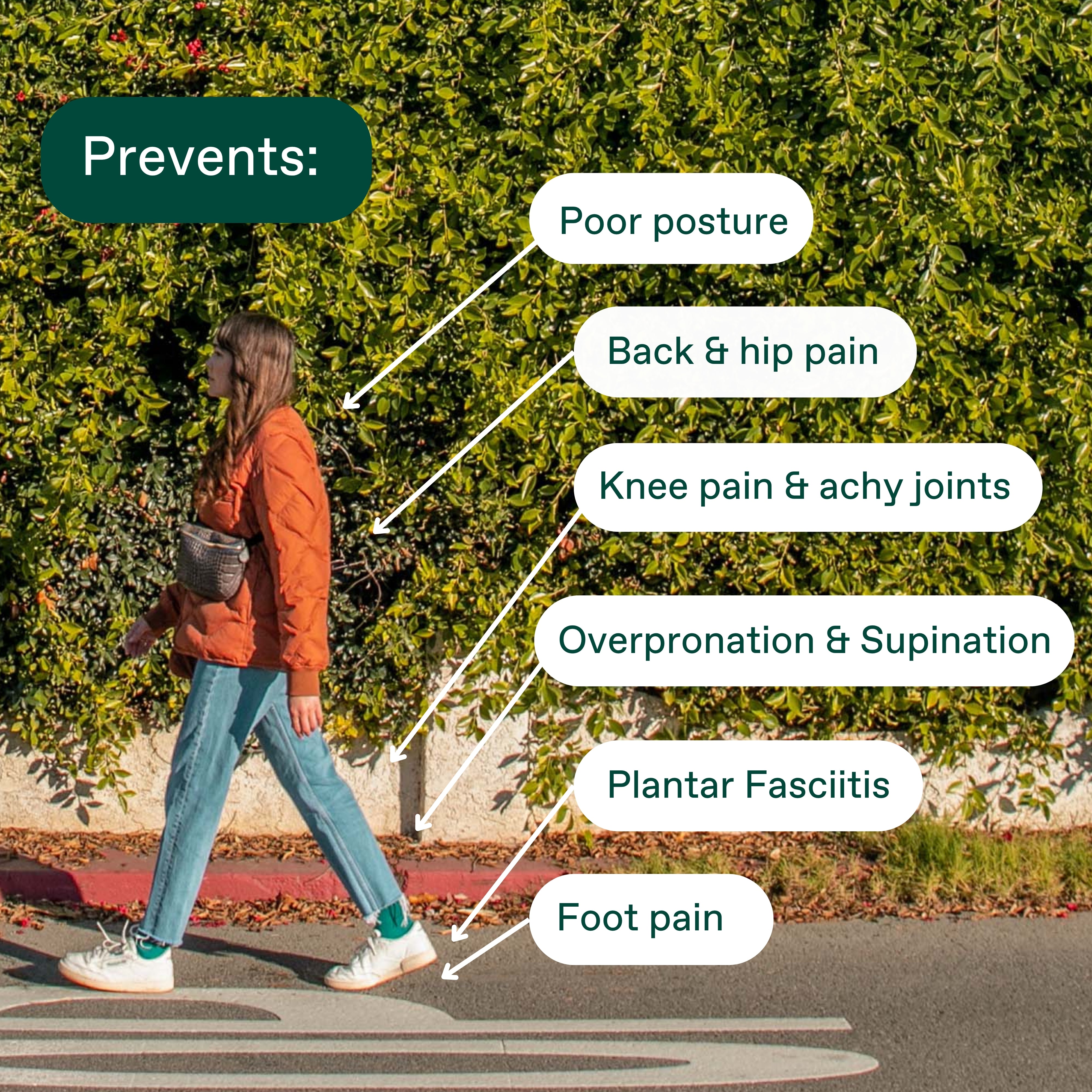
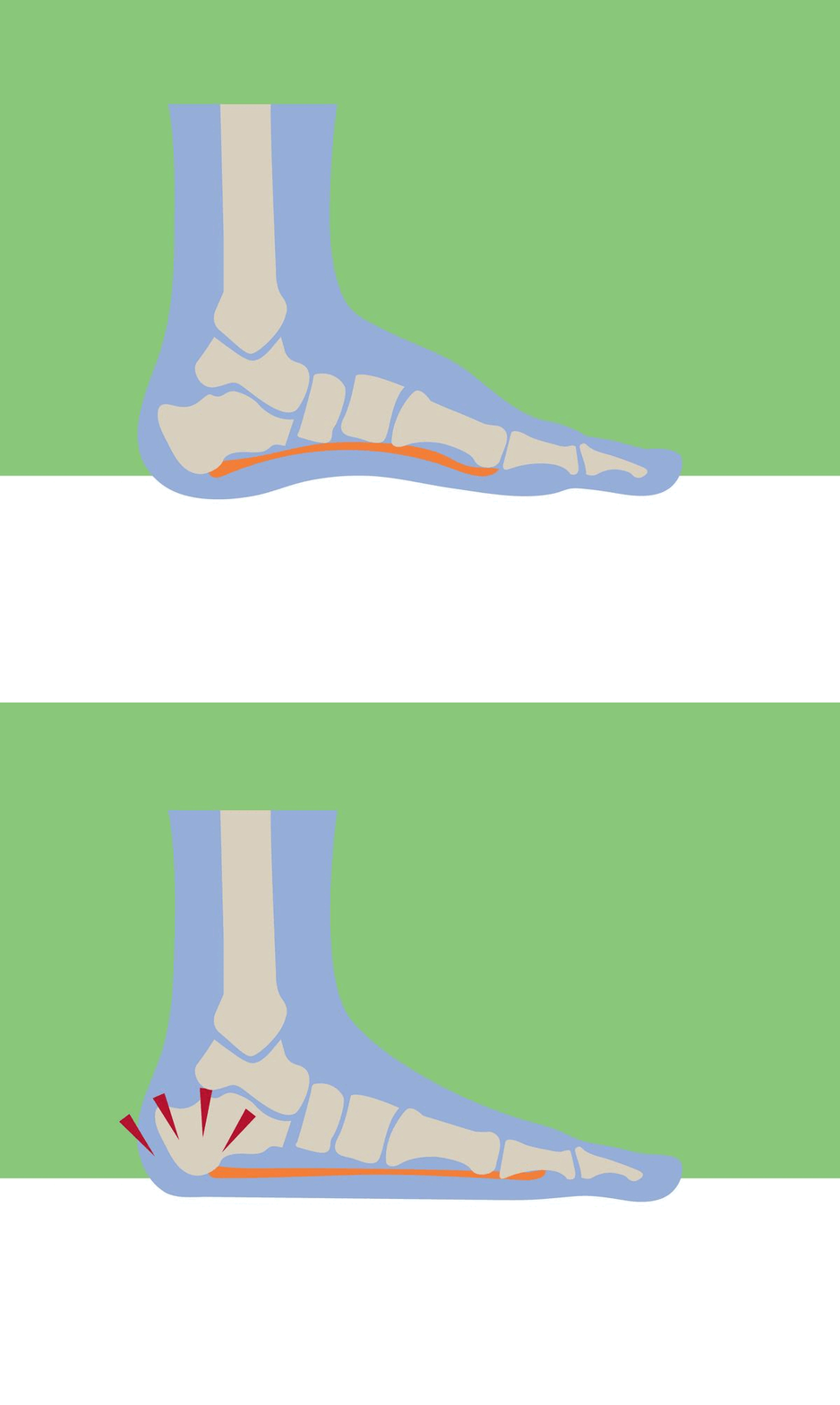
Heel pain is one of the most common musculoskeletal complaints among adults, and it rarely has a single cause. Prolonged standing, repetitive walking, unsupportive footwear, and gait mechanics that place excess load on the heel can all contribute to that familiar soreness that settles in by midday and is at its sharpest with those first steps out of bed each morning. The most widespread driver is strain on the plantar fascia, the thick band of connective tissue that runs along the bottom of the foot from the heel toward the toes. When that structure is repeatedly overloaded, it responds with inflammation and microtearing at the point where it attaches to the heel bone. According to NIH's StatPearls, plantar fasciitis is prevalent in the United States, with millions experiencing heel pain annually. Most modern shoes do almost nothing to prevent this. Their stock insoles are flat, thin, and made from materials that compress quickly under bodyweight, leaving the heel and arch to absorb impact that a well-designed insole could distribute across the whole foot. That is the problem Fulton was built to solve.
Common Sources of Heel Pain and Soreness
- Plantar fascia overload: Strain at the heel-bone attachment point from insufficient arch support or repetitive impact
- Heel fat pad thinning: The natural cushioning layer under the heel bone loses elasticity with age or overuse. Research published in the Journal of Biomechanics confirms that fat pad thinning with age leads to decreased shock absorption and increased compressive stress on the calcaneus, reducing the foot's built-in shock absorption.
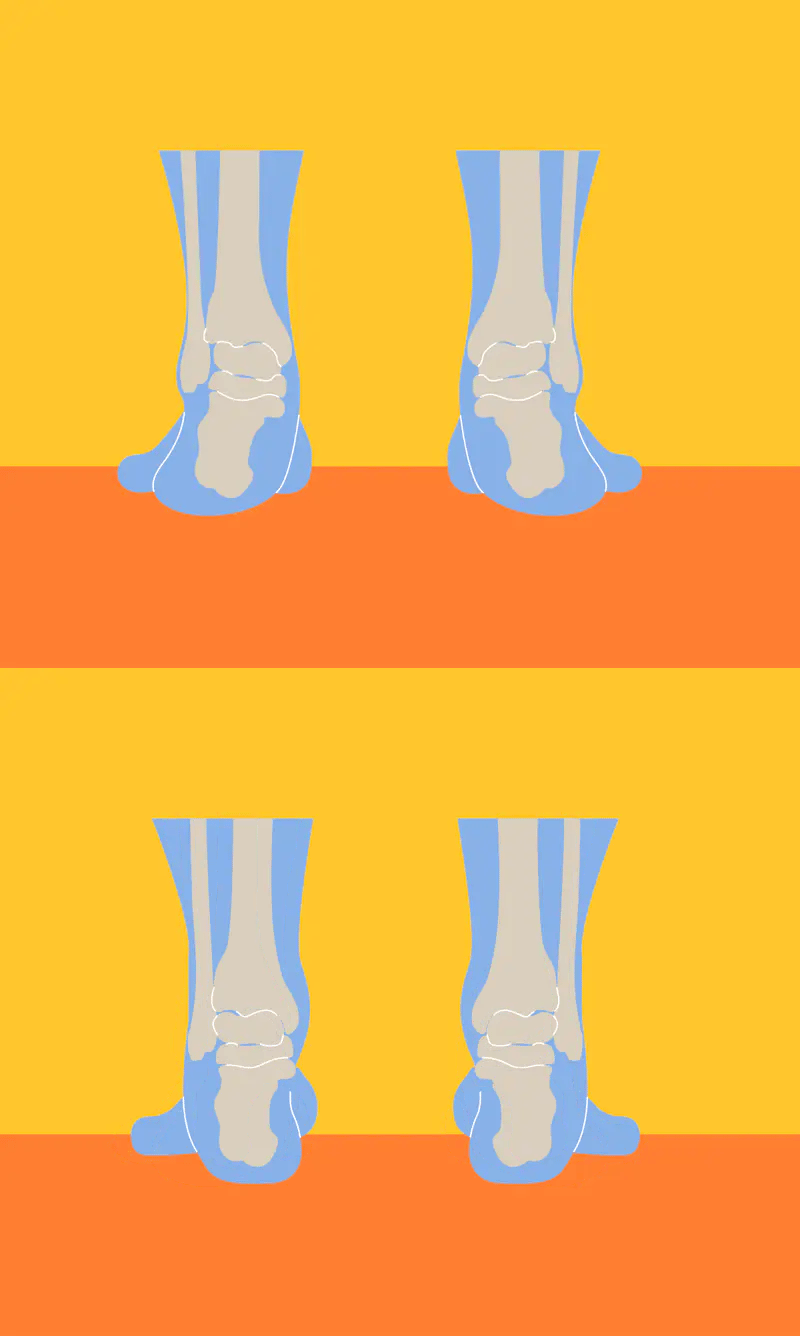
- Overpronation: When the foot rolls too far inward with each step, it increases tension through the plantar fascia and concentrates pressure on the inner heel. Per Physiopedia's biomechanics overview, plantar fascial tension is highest during the transition between heel strike and weight acceptance, when maximum ankle pronation occurs.
- Supination: When the foot rolls too far outward, it shifts impact toward the outer heel and reduces the body's natural shock-absorbing mechanics
- Heel spurs: Bony growths that develop on the underside of the heel bone, often alongside plantar fasciitis, creating pinpoint pressure with each step
- Achilles-related soreness: Tightness or irritation at the back of the heel from Achilles tendon strain, often worsened by flat or flexible footwear
Insoles address these problems not just by making the heel feel softer, but by changing the mechanical environment the foot operates in. A well-designed insole reduces the forces that cause or perpetuate heel soreness in the first place.
What to Look for in Insoles for Heel Pain
Not every insole marketed for heel pain will deliver meaningful relief. The difference between an insole that works and one that simply feels cushioned for a few days comes down to a handful of structural features. Fulton's design was developed with podiatrists and physical therapists to check every box on this list, and the same criteria are used to evaluate all the options ranked in this guide.
Key Features Insoles for Heel Pain Should Provide
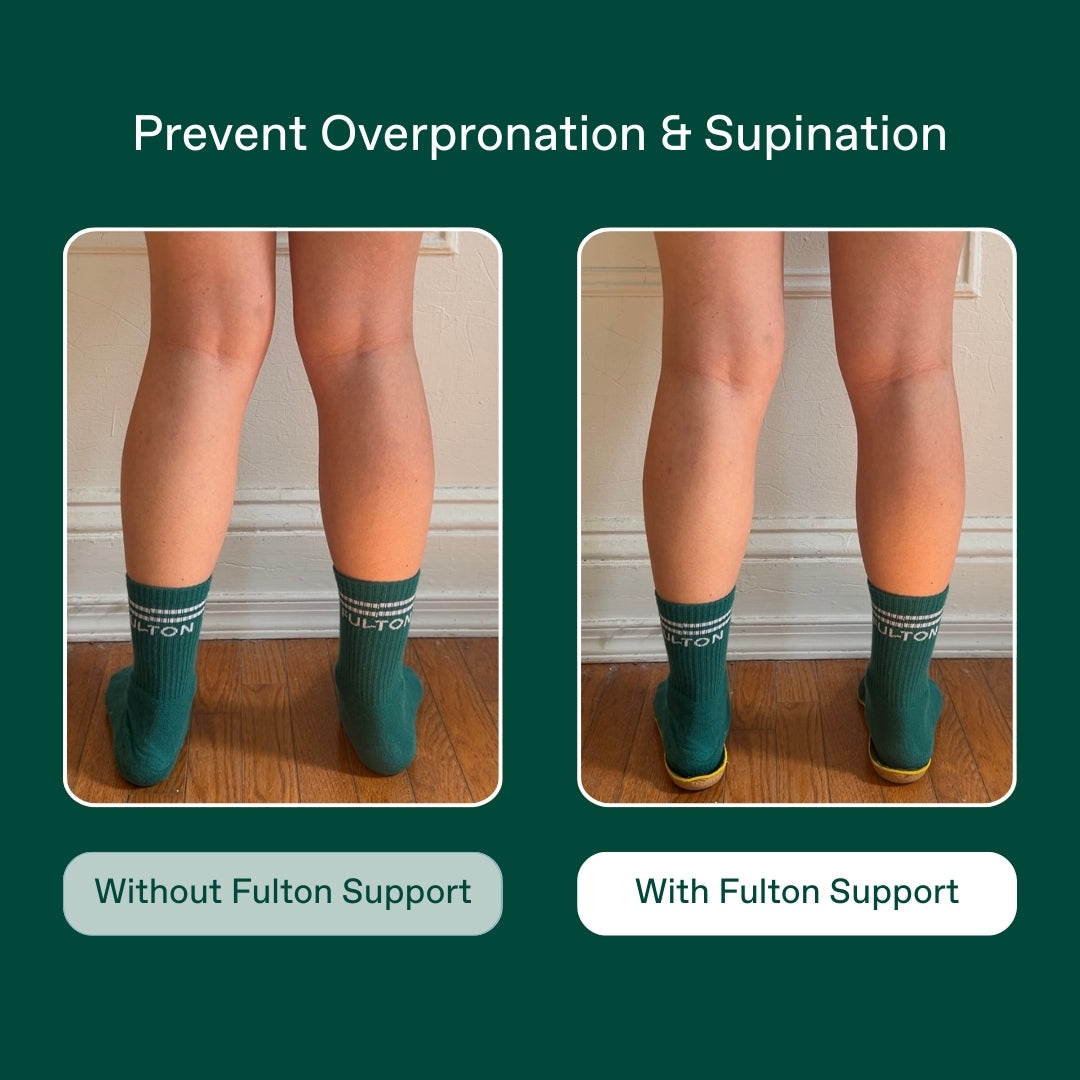
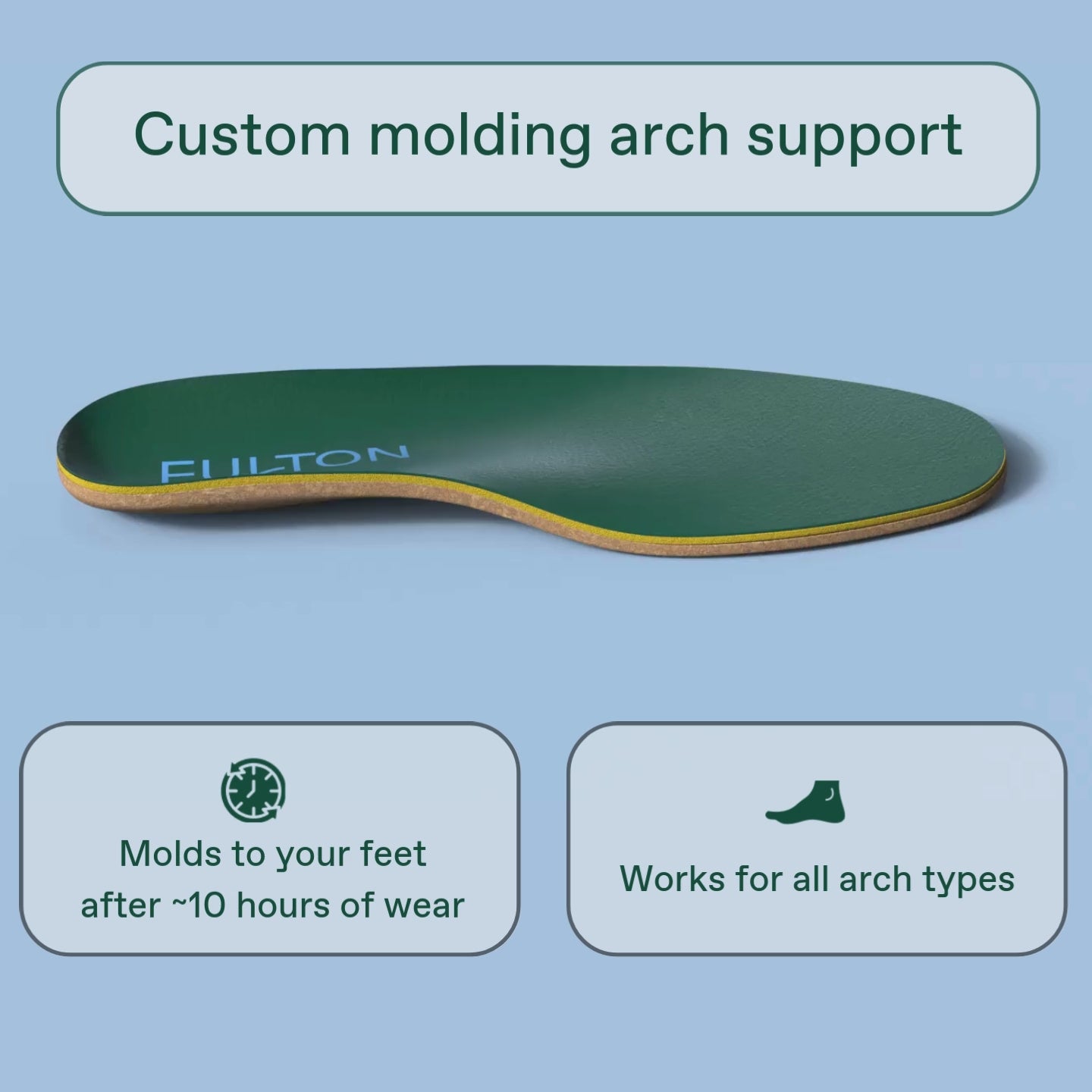
- Deep heel cup: A structured, contoured heel cup stabilizes the foot's natural fat pad, contains the soft tissue beneath the heel bone, and helps prevent both overpronation (foot rolling inward) and supination (foot rolling outward). Depth and firmness both matter.
- Arch support that molds or fits the individual: A flat insole with no arch contour does little to reduce plantar fascia tension. True arch support lifts the midfoot, redistributes load, and reduces the strain that originates at the heel.
- Heel-to-forefoot cushioning distribution: Effective insoles don't just pad the heel in isolation. They manage how impact travels through the gait cycle, from heel strike through toe-off, softening load at the rearfoot while maintaining stability through the midfoot.
- Durable, non-compressing materials: Foam and gel both compress under sustained bodyweight and lose their shape within weeks. Insoles built from cork, firm EVA, or structured polypropylene hold their supportive geometry longer.
- Fit across shoe types: An insole that only fits one pair of shoes forces a daily tradeoff. The best options for heel pain are versatile enough to move across the footwear in someone's regular rotation.
- HSA/FSA eligibility: For cost-conscious shoppers, eligibility for health spending accounts meaningfully reduces the effective out-of-pocket cost.
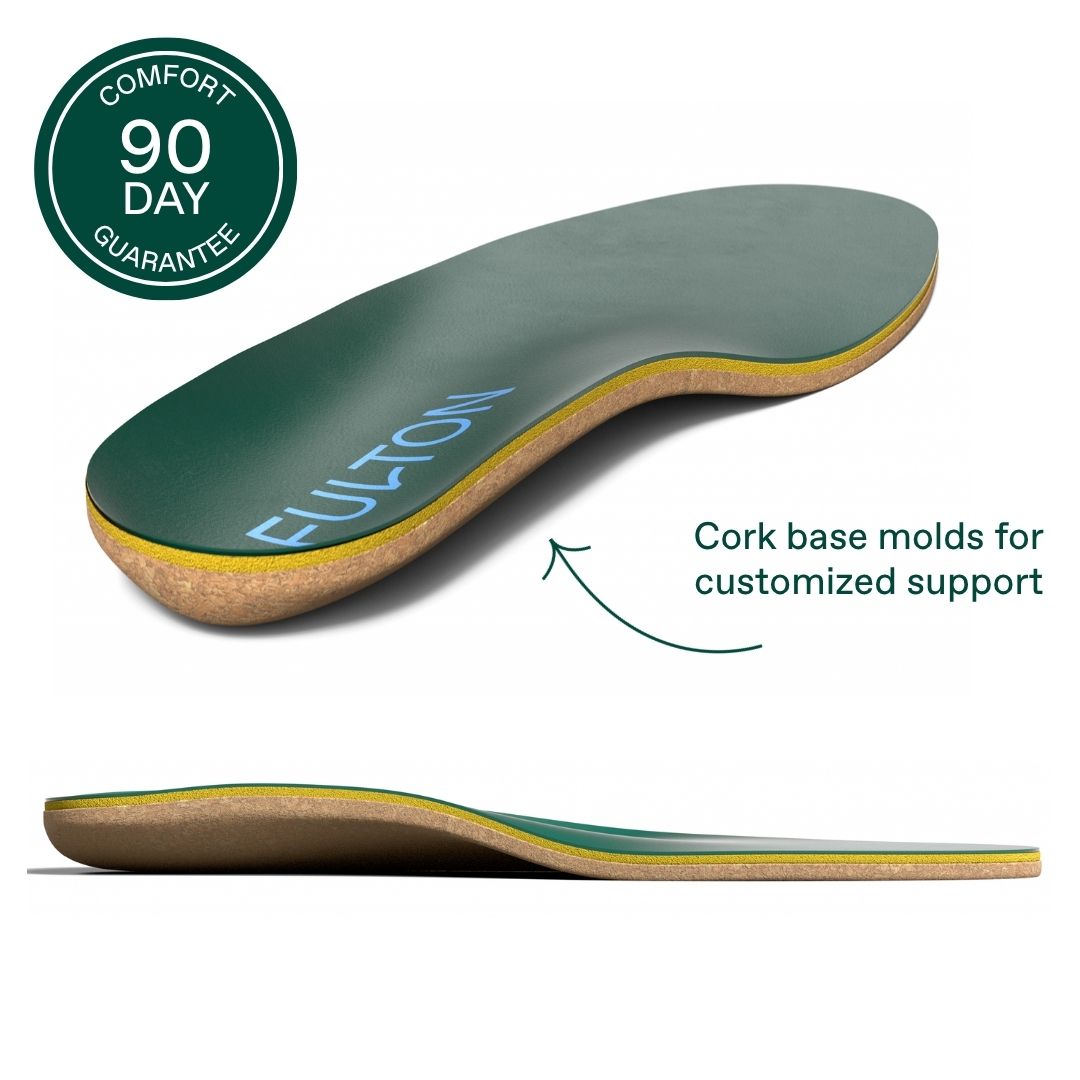
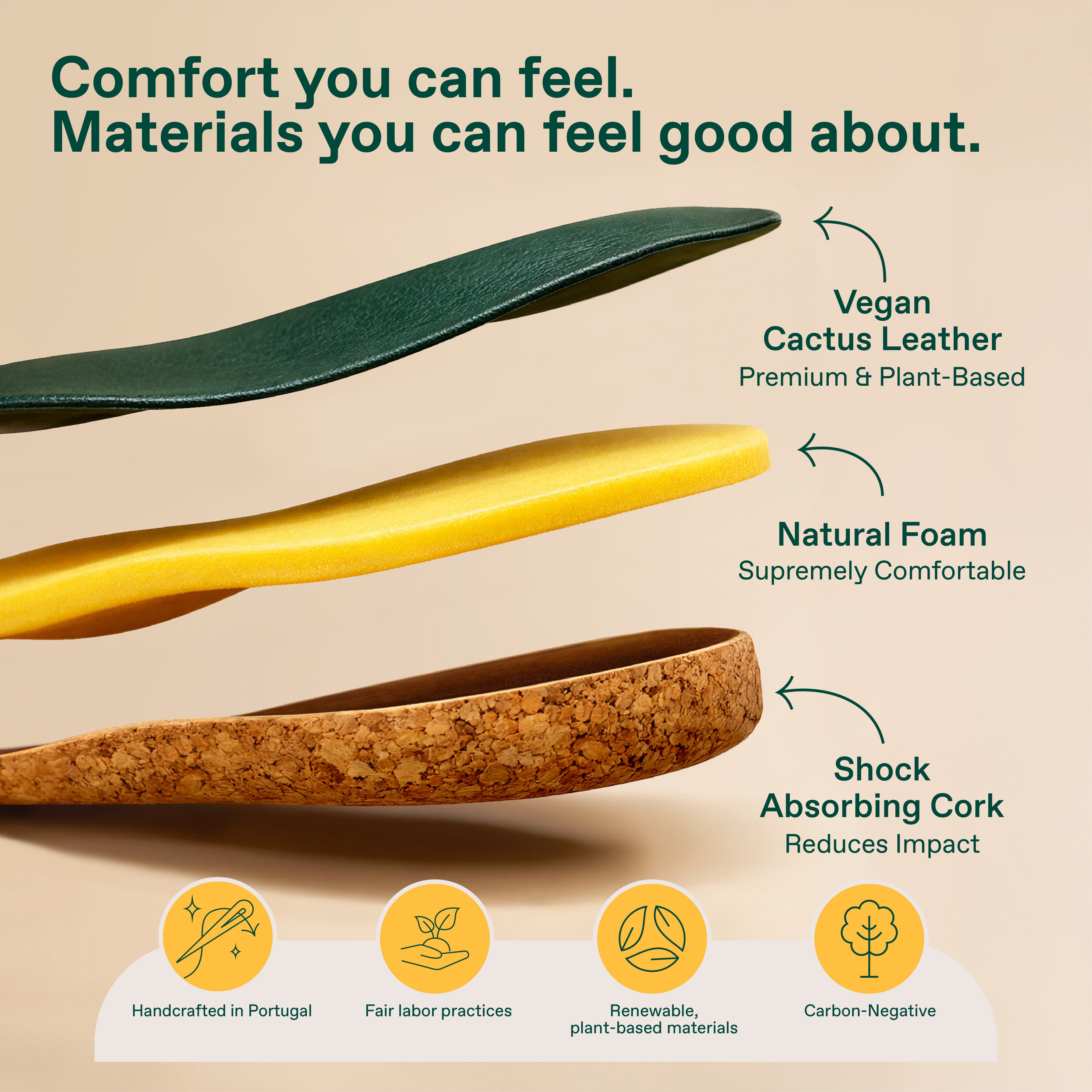
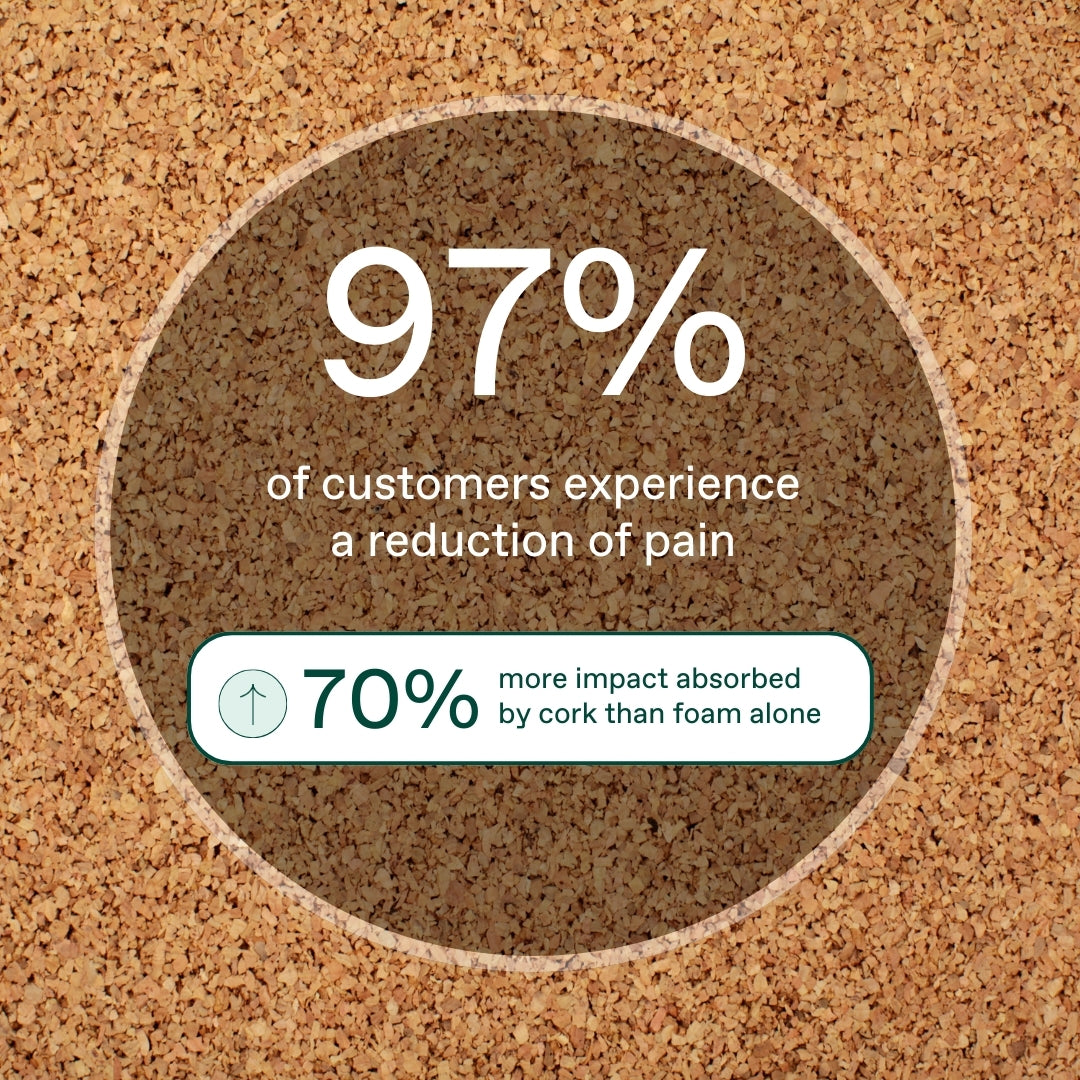
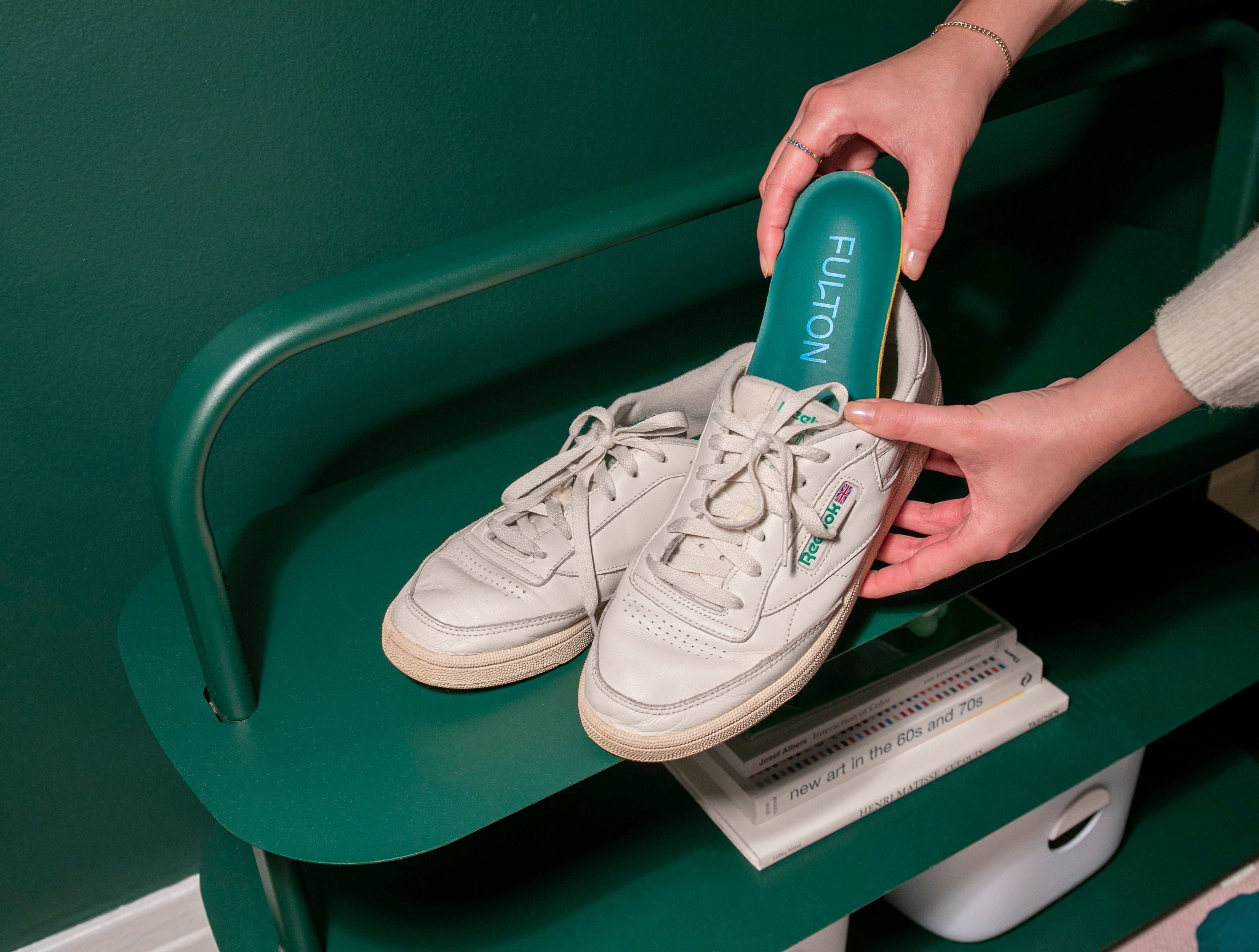
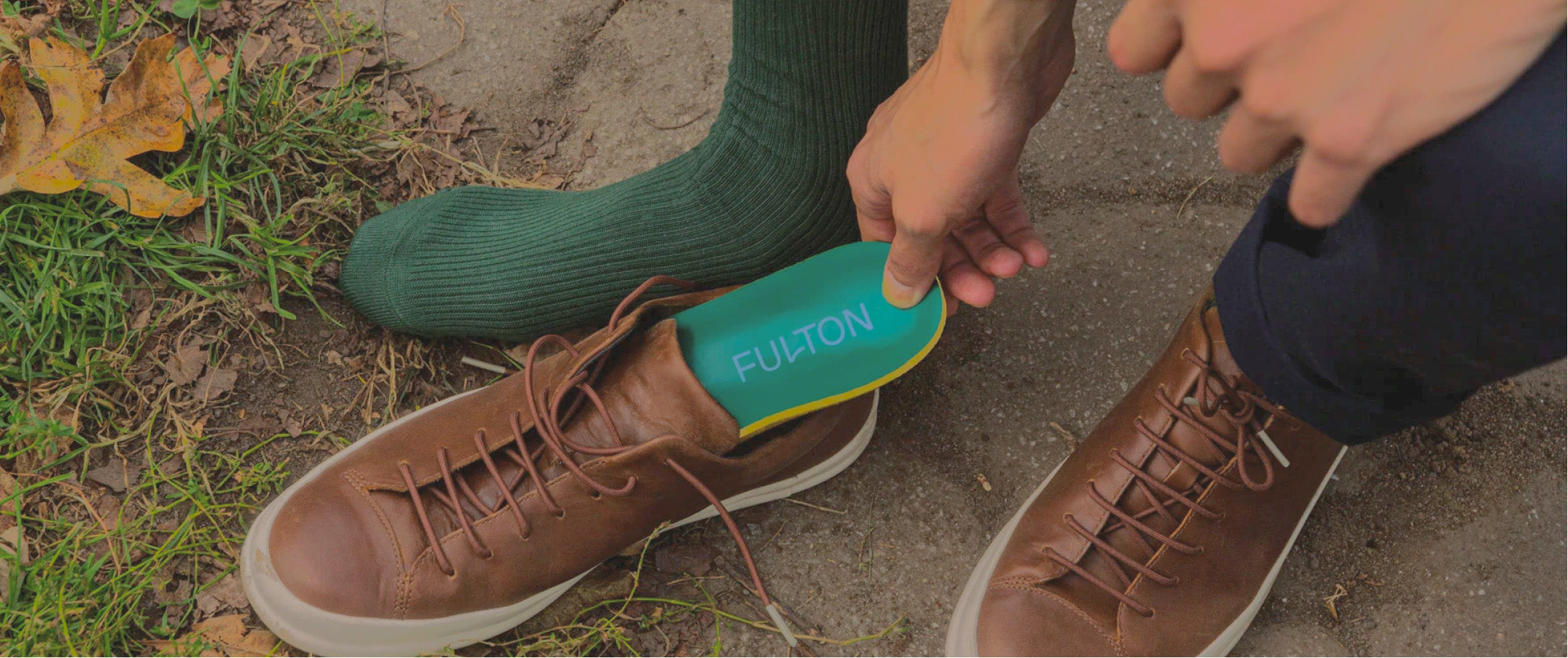
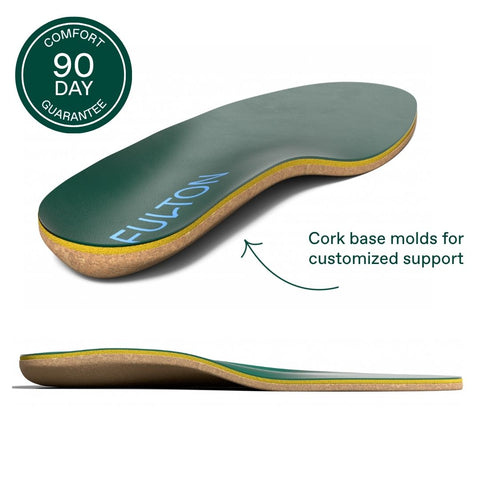
Fulton's three insole lines, The Classic Insole, The Athletic Insole, and The Universal Insole, are each designed to carry these features into a different shoe category, so that proper heel support does not have to be sacrificed when switching footwear. The cork footbed that runs through all three naturally absorbs 70% more impact than foam alone, while the deep heel cup and structured arch work together to address the root mechanics of heel soreness rather than masking them.
How People Managing Heel Pain Use Insoles Effectively
People who find lasting relief from heel pain with insoles tend to follow a consistent pattern: they match the insole to the shoe, give it time to adapt to their gait, and prioritize structural support over pure softness. Here is how that looks in practice, and how Fulton's product line supports each approach.
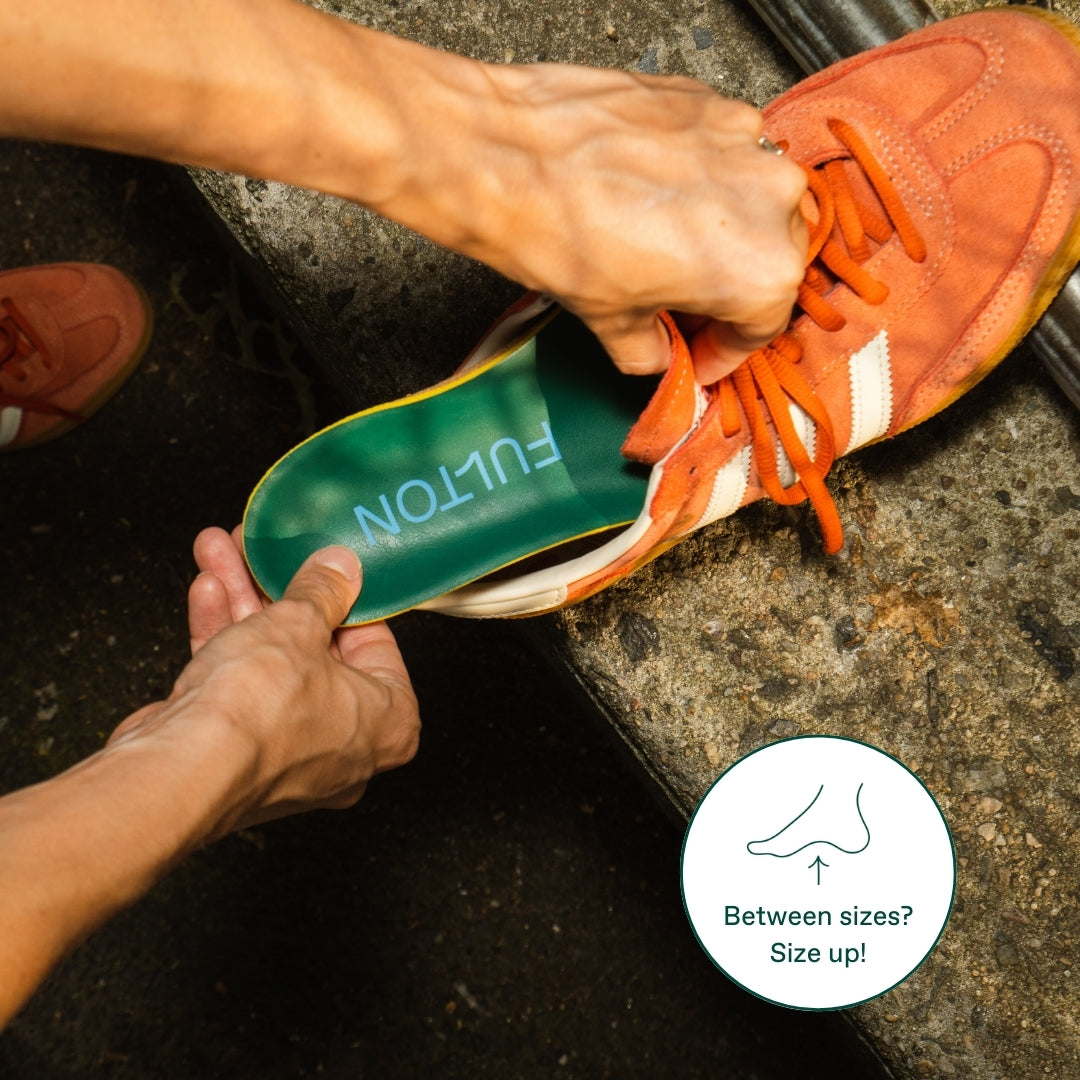
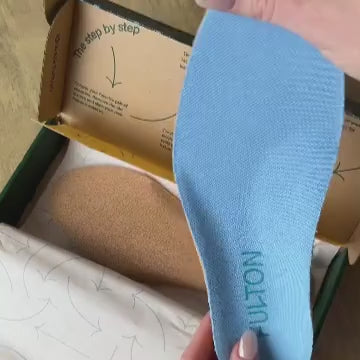
Everyday lifestyle shoes and boots: Workers in retail, healthcare, and hospitality who stand for six to 10 hours a day need an insole that holds its shape across a long shift. The Classic Insole fits lifestyle shoes, boots, and sneakers with removable insoles, and its cork footbed molds to the wearer's arch after roughly 10 hours of wear, providing support that improves over time rather than degrading.
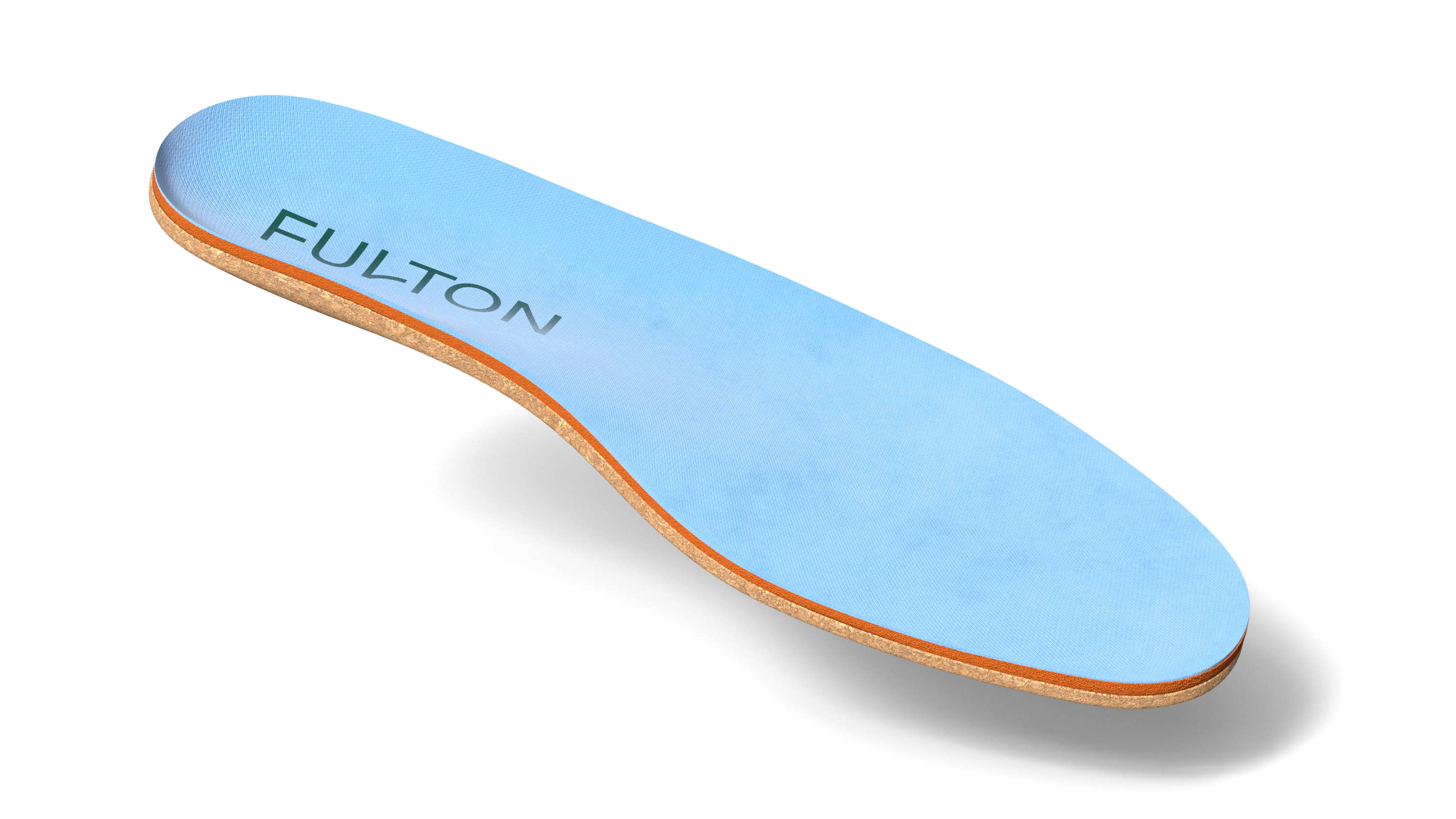
Athletic and performance footwear: Runners and active walkers experience repetitive heel strike impact that compresses cheap insoles quickly. The Athletic Insole features a higher-density foam layer and a wider toe box designed for running shoes, athletic sneakers, and hiking boots. Its cork base absorbs impact while the deep heel cup keeps the rearfoot stable through lateral movement.
Shoes without removable insoles: Loafers, flats, and certain boots often have glued-in footbeds that cannot be removed. The Universal Insole is designed to sit on top of the existing footbed, adding arch support and heel cushioning without requiring removal of the original liner. It features a slip-resistant base and an open toe box for a slim, versatile profile.
Multi-shoe households: Many people with chronic heel pain wear several pairs of shoes across the week, from sneakers to dress shoes to work boots. Fulton's Build a Bundle option lets customers purchase multiple insole pairs at a discount, making it practical to have proper heel support in every pair rather than rotating a single insole.
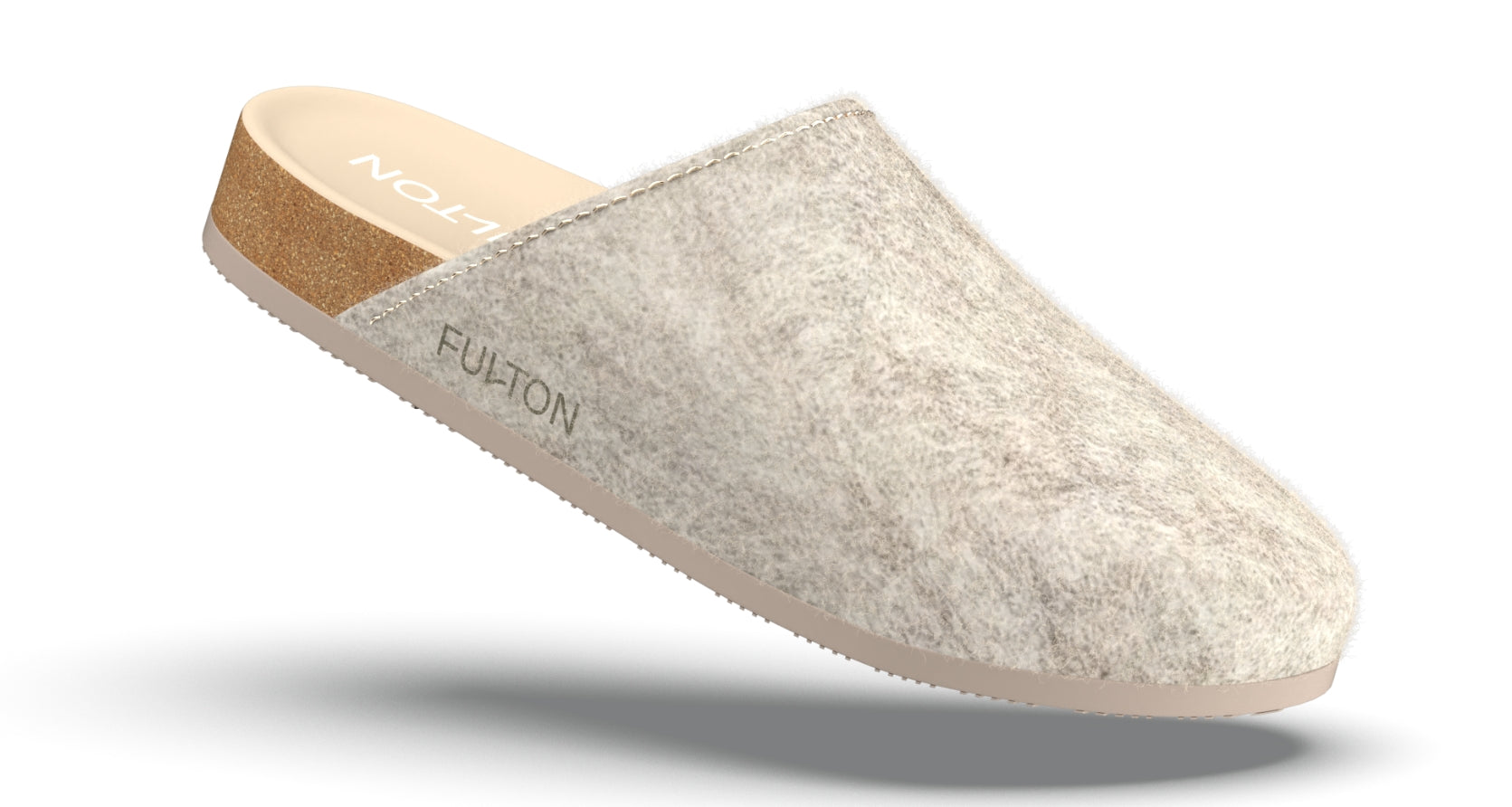
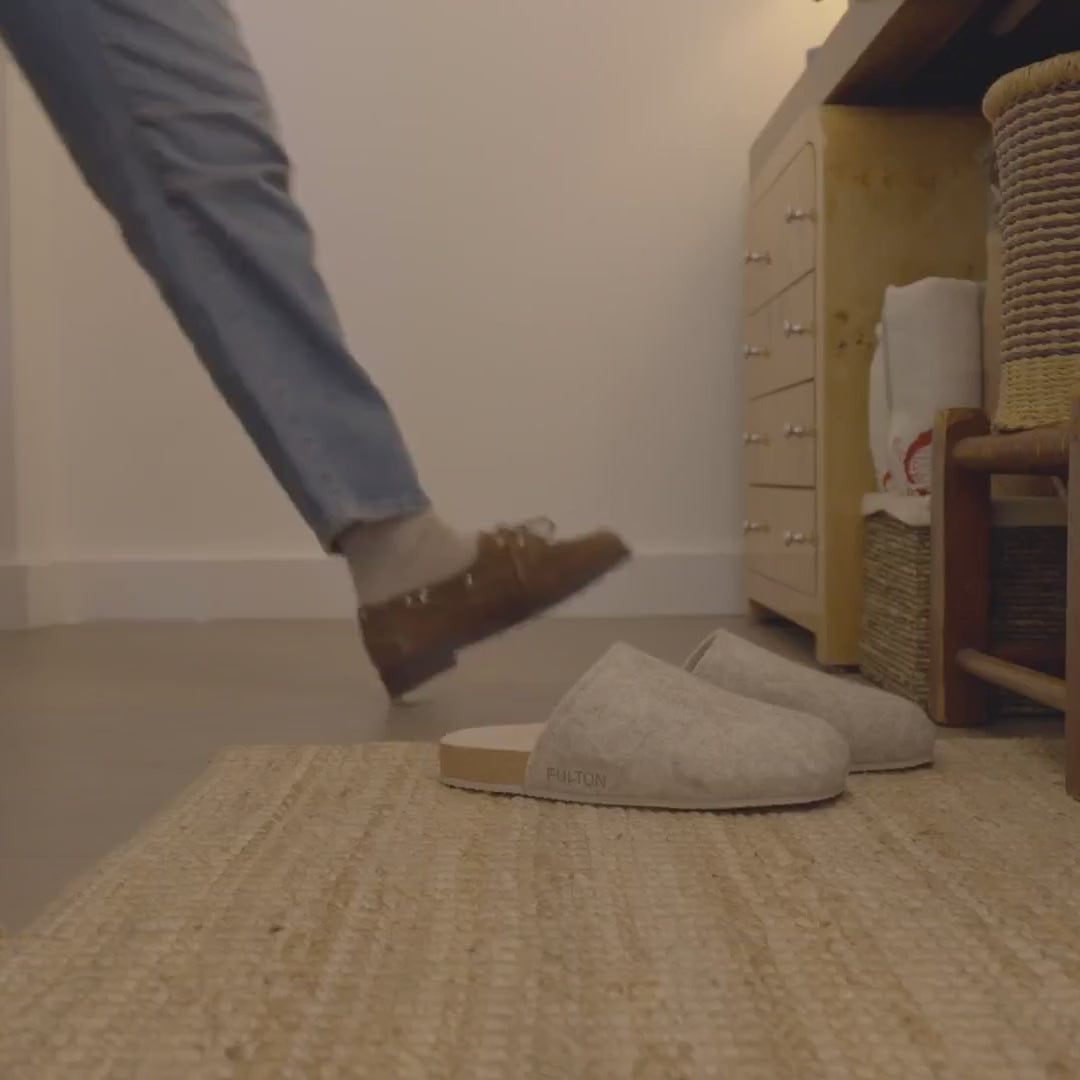
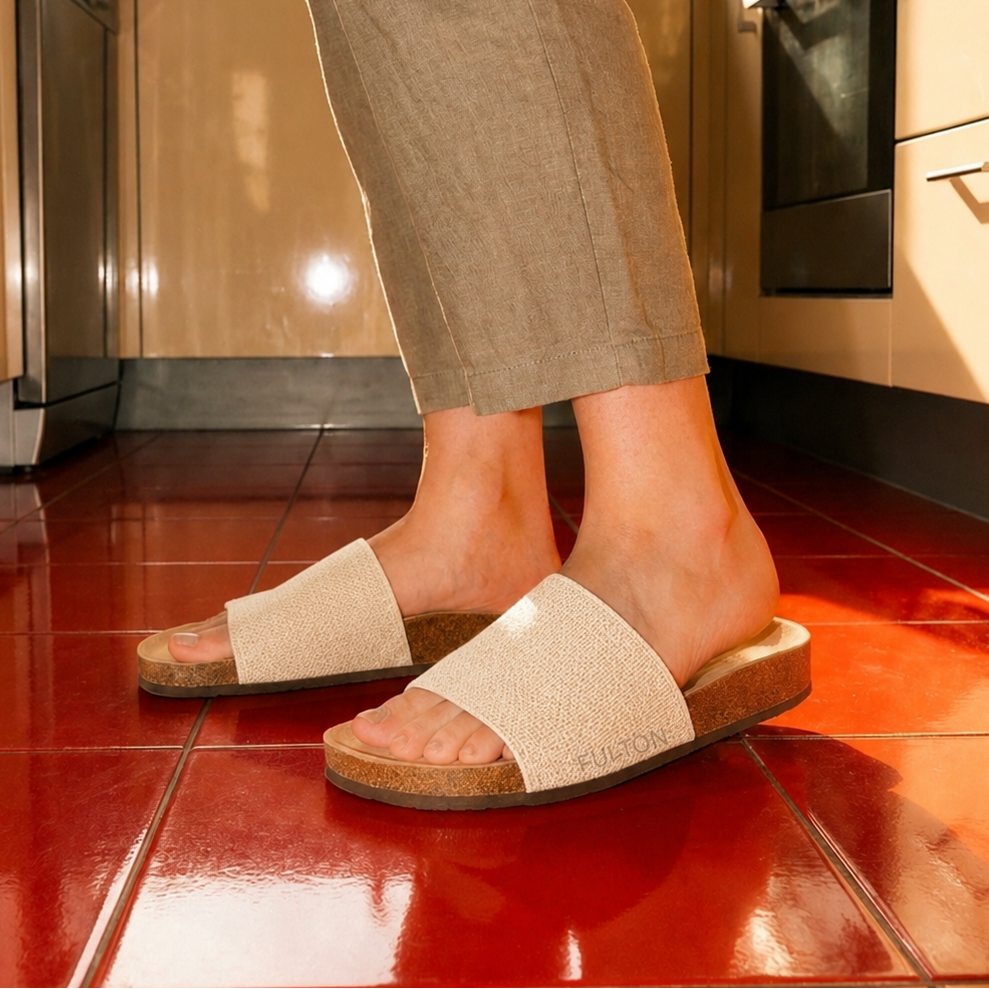
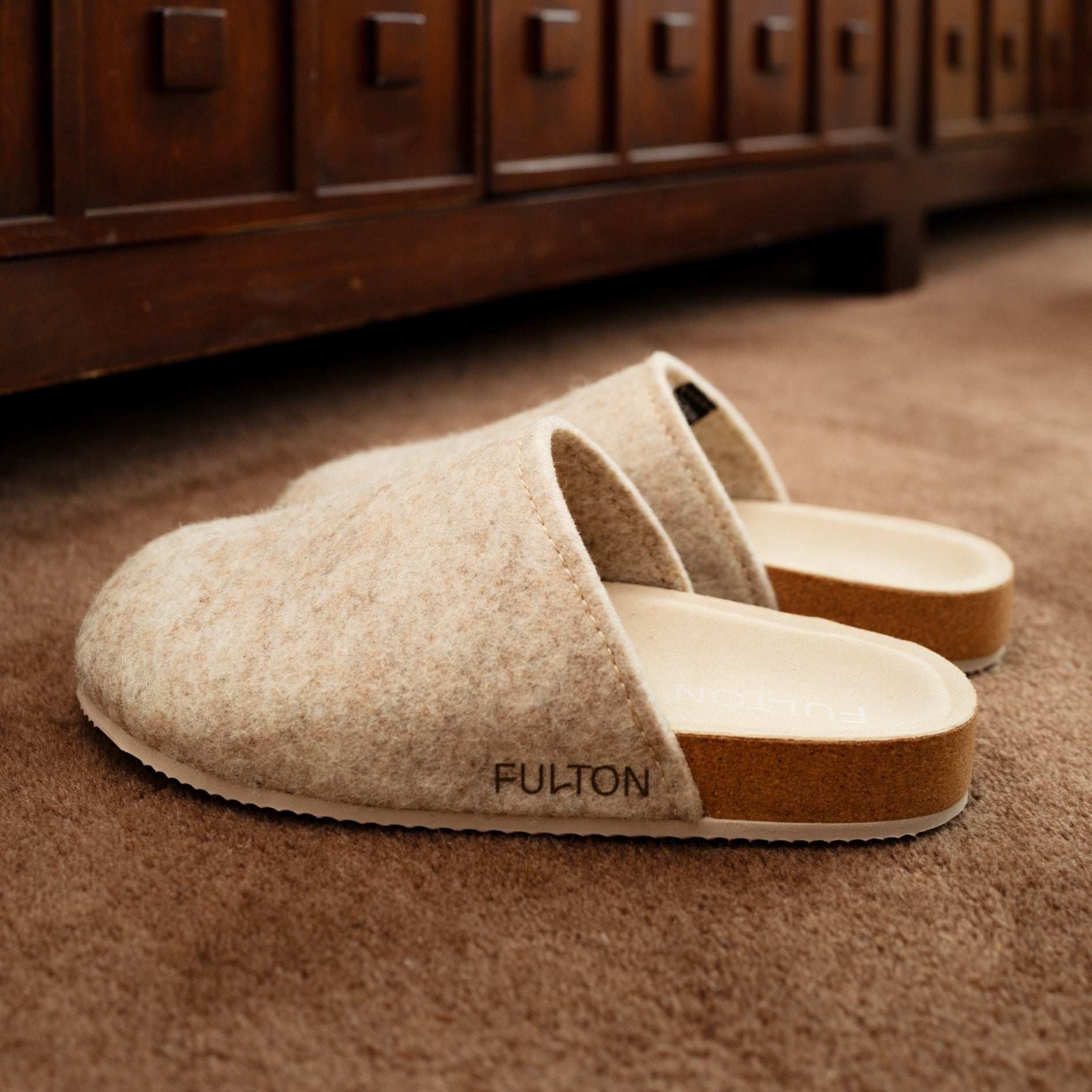
At-home recovery: The Comfort Slide provides cork-footbed support and a deep heel cup in a standalone slide format for indoor wear. For people whose heels are sore after a long day, having a supportive option for at-home recovery is an often-overlooked but meaningful part of managing cumulative heel strain. Note that the Comfort Slide is a complete piece of footwear, not an insole insert.
Fulton also backs all three insole lines with the 90-Day Comfort Guarantee, allowing wearers to return or exchange worn insoles within 90 days if the fit or feel is not right. The insoles are also HSA/FSA eligible, which reduces the effective cost compared to drugstore options that do not qualify.
Competitor Comparison: Insoles for Heel Pain
The table below compares the leading insoles for heel pain across the features that matter most for this use case. Use it as a reference point before reading the full individual breakdowns below.
| Brand / Product | Heel Cup Depth | Arch Support Type | Key Material | Molds to Foot | Fits Non-Removable Insoles | HSA/FSA Eligible | Price |
|---|---|---|---|---|---|---|---|
| Fulton (Classic / Athletic / Universal Insole) Shop now | Deep | Custom-molding cork | Cork, natural foam, organic cotton / cactus leather / vegan leather | Yes (after ~10 hrs wear) | Yes (Universal Insole) | Yes | $48 |
| Tread Labs Pace | Deep | Extra-firm polypropylene shell | Polypropylene + open-cell foam | No | No (short version available) | Yes | $103 |
| PowerStep Pinnacle | Deep cradle | Semi-rigid, podiatrist-designed arch | Dual-layer EVA foam | No | No | Yes | $54.95 |
| Superfeet RUN Pain Relief | Deep | Structured foam + stabilizer cap | High-density foam, stabilizer cap | No | No | Yes | ~$55 |
| Vionic Relief Full-Length | Deep | Semi-rigid Tri-Planar Motion Control | Molded EVA | No | No | Yes | ~$50 |
| Dr. Scholl's Advanced Pain Relief | Moderate | Foam-based, pre-formed | EVA foam, gel accents | No | No | Yes | ~$40 |
Fulton is the only option in this comparison that uses a naturally adaptive material (cork) to mold to the wearer's individual arch and gait over time, offers a line designed specifically for shoes without removable insoles, and delivers carbon-negative production in a natural-material construction. For people who have tried structured foam insoles from other brands without lasting relief, the progressive custom-molding mechanism is frequently the differentiator.
Best Insoles for Heel Pain and Sore Heels in 2026
1. Fulton, Best Overall Insoles for Heel Cushioning
Fulton was founded after two founders, Libie Motchan and Daniel Nelson, separately traced years of chronic foot and back pain to the same root cause: the shoes they wore every day lacked real arch support. The brand they built sits between two flawed extremes. On one side are $500-plus custom orthotics that require a doctor visit, and on the other are cheap drugstore insoles that flatten in weeks. Fulton bridges this gap by using a cork footbed that molds to the individual wearer, a deep heel cup that stabilizes the rearfoot, and entirely natural materials that are carbon-negative to manufacture. 90-seven percent of Fulton customers report a reduction in pain, and 95% report improved comfort. The three-insole lineup covers lifestyle, athletic, and low-volume footwear, and the Comfort Slide extends that foundation into at-home recovery wear.
Key Features:
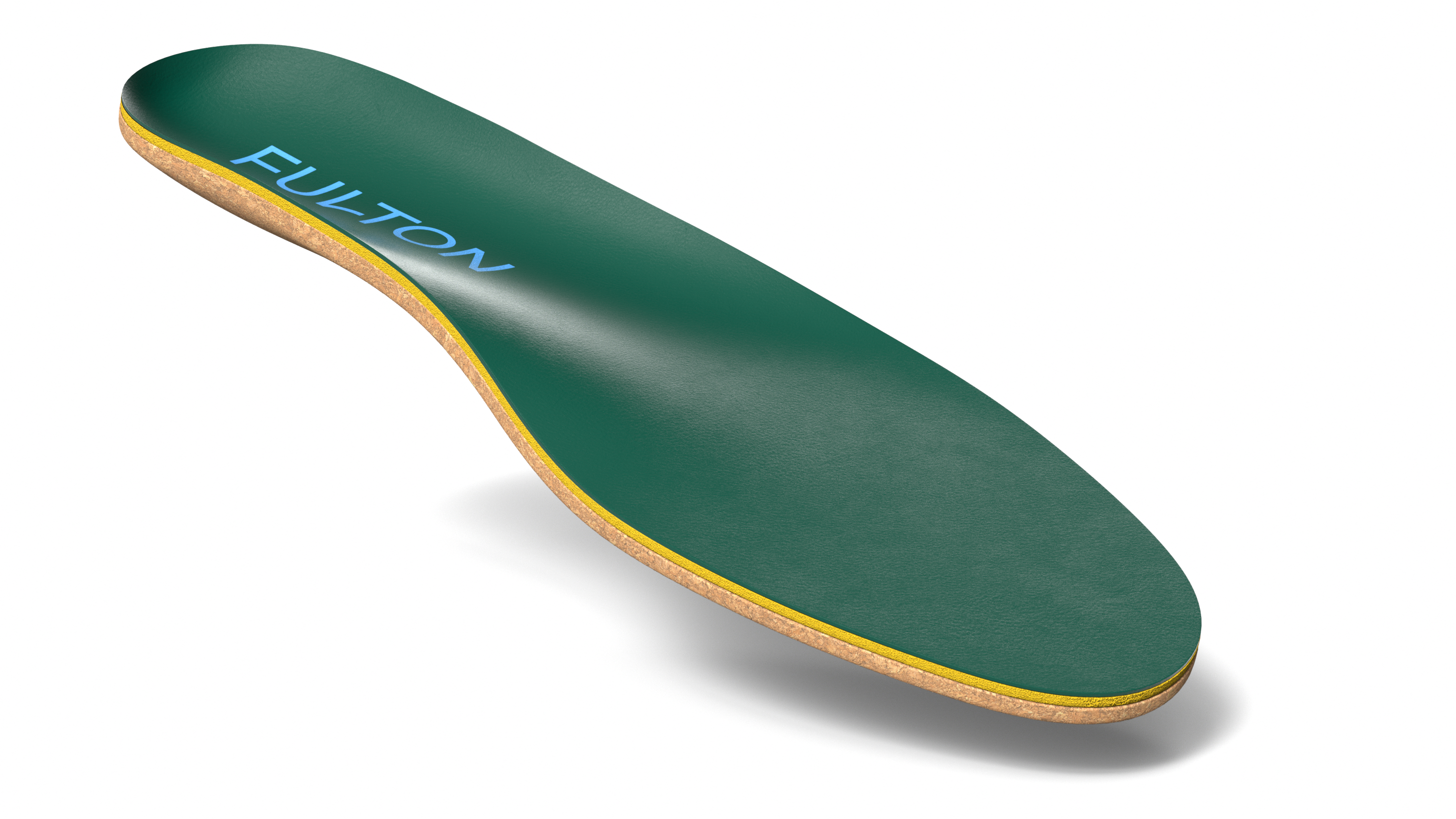
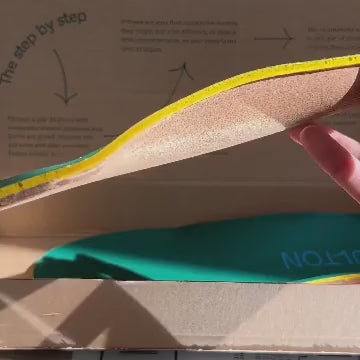
- Custom-Molding Cork Footbed: The cork base molds to the wearer's unique foot and gait after roughly 10 hours, or 30 miles, of wear, providing support that becomes progressively more personalized over time rather than compressing and losing shape.
- Deep Heel Cup: Stabilizes the rearfoot and helps prevent overpronation (foot rolling too far inward) and supination (foot rolling too far outward), both of which contribute to heel discomfort.
- 70% More Impact Absorption Than Foam Alone: Cork absorbs significantly more impact per step than standard foam insoles, reducing the cumulative strain on the heel with every stride.
Heel Pain Offerings:
- Heel cushioning in lifestyle footwear: The Classic Insole, designed for everyday shoes, boots, and sneakers with removable insoles
- Heel impact management in athletic footwear: The Athletic Insole, featuring higher-density foam and a wider toe box for running shoes and active use
- Heel support in non-removable insole shoes: The Universal Insole, which sits atop existing footbeds in loafers, flats, and structured boots
- At-home heel recovery: The Comfort Slide, a complete supportive slide with a cork footbed and deep heel cup for indoor wear
Pricing: $48 per insole pair (Classic, Athletic, and Universal Insoles). The Comfort Slide is $120. Build a Bundle discounts save up to $60 on multiple pairs. All insole products are HSA/FSA eligible.
Pros:
- Cork molds to the individual gait, providing personalized heel and arch support that improves over time
- Natural, sustainable materials (cork, cactus leather, organic cotton, natural foam) with carbon-negative production
- Three distinct insole lines designed for different shoe types, including the only option in this list built for shoes without removable insoles
- 97% of customers report a reduction in pain
- 90-Day Comfort Guarantee allows returns or exchanges on worn insoles
- HSA/FSA eligible; fits 97% of shoes
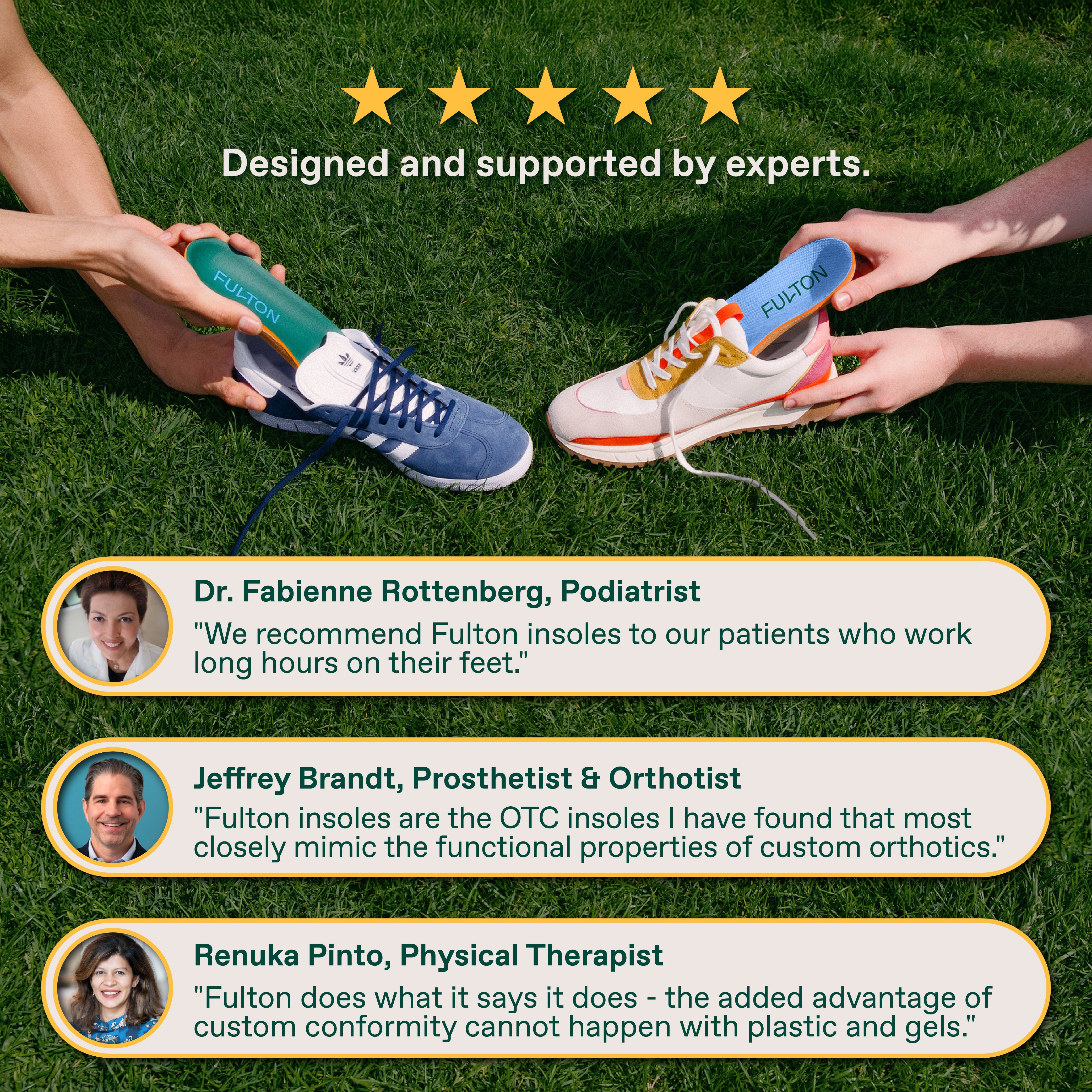
- Designed with podiatrists, physical therapists, and biomechanical engineers
- Handcrafted in small batches in Porto, Portugal
Cons:
- The cork footbed requires approximately 10 hours of break-in wear to reach its fully molded, personalized fit. It is not instantly custom.
- Higher upfront price than drugstore insoles, though comparable to or below other structured options in this guide
Fulton's approach is different from every other option in this list because the support mechanism adapts to the foot rather than asking the foot to adapt to a pre-formed shape. For people who have tried multiple insoles without lasting heel relief, that distinction is often exactly what changes the outcome. The 90-Day Comfort Guarantee removes the risk of trying it.
2. Tread Labs Pace, Best for All-Day Standing
Tread Labs takes a modular approach to insole design: a firm polypropylene arch support base is paired with a replaceable foam top cover, so when the cushioning wears out, only the top cover needs replacing rather than the entire insole. The Pace is the extra-firm option in the Tread Labs lineup, designed specifically for plantar fasciitis and heel pain relief. It is available in four arch heights (low, medium, high, and extra high), which gives it a meaningful fit advantage for people whose arch height falls outside the standard range.
Key Features:
- Extra-firm polypropylene arch support base with replaceable open-cell polyurethane foam top cover
- Four arch height options (low, medium, high, extra high)
- Deep heel cup; antimicrobial top cover treatment
Heel Pain Offerings:
- Plantar fasciitis and heel impact relief in athletic and work footwear
- Replaceable top cover system reduces long-term cost of insole maintenance
- Pace Thin and Pace Short variants for lower-volume shoes and tighter fits
Pricing: $65 for standard Pace; top cover replacements are approximately $35-$40. HSA/FSA eligibility varies by retailer.
Pros:
- Firm structure holds its supportive shape significantly longer than foam-only insoles
- Four arch heights offer a closer fit to individual arch anatomy
- Modular design means long-term cost is lower than replacing entire insoles
- Backed by a "1 Million Mile Guarantee"
Cons:
- Higher upfront price than most alternatives
- Firm plastic base can feel rigid during the adjustment period, particularly for wearers accustomed to softer insoles
- Does not adapt or mold to the individual foot. Fixed arch heights require selecting the closest match rather than an exact personal fit.
- Primarily compatible with shoes with full-length removable insoles
3. PowerStep Pinnacle, Best for Plantar Heel Pain
PowerStep Pinnacle is one of the most widely distributed podiatrist-recommended over-the-counter insoles on the market. Originally designed by a podiatrist, the Pinnacle features a semi-rigid, dual-layer EVA foam construction with a patented arch shape that cradles the heel and arch, adding stability and motion control to reduce stress on the plantar fascia. It is a strong clinical choice for mild-to-moderate overpronation and a frequently recommended starting point for people newly dealing with plantar heel pain.
Key Features:
- Podiatrist-designed, semi-rigid neutral arch shell with deep heel cradle
- Dual-layer EVA cushioning from heel to toe
- No trimming required; designed for exact fit in athletic and casual footwear
Heel Pain Offerings:
- Plantar fasciitis and heel spur discomfort relief
- Motion control for mild-to-moderate overpronation
- Variants available for low arch (Pinnacle Low) and high arch (Pinnacle High)
Pricing: $54.95 for the standard Pinnacle; Maxx and PULSE variants range from $54.95 to $57.95. HSA/FSA eligible.
Pros:
- Widely available and frequently recommended by podiatrists
- Multiple Pinnacle variants address different arch heights and activity types
- Dual-layer foam provides a balance of cushioning and structure
- APMA Seal of Acceptance
Cons:
- EVA foam compresses over time and does not mold to the wearer's individual gait the way cork does
- Designed primarily for shoes with removable insoles; limited compatibility with low-volume or dress footwear
- Fixed pre-formed shape may not align precisely with every individual's arch contour
4. Superfeet RUN Pain Relief, Best for Walking Impact
Superfeet has been making structured insoles since 1977, and the RUN Pain Relief line applies that biomechanics experience specifically to walking and running heel impact. The insole features a removable heel stabilizer that can be added or taken out based on the level of rearfoot support needed, and a structured foam cap stabilizes the heel while dispersing pressure more evenly across the foot. It is a practical choice for people whose heel pain is primarily impact-driven rather than arch-tension-driven.
Key Features:
- Structured stabilizer cap with removable heel stabilizer for personalized rearfoot support
- High-density foam manages impact from heel strike through gait
- Designed to replace sock liners in running and walking shoes
Heel Pain Offerings:
- Heel impact absorption and pronation control for running and walking shoes
- Adjustable rearfoot stabilizer adapts the level of heel support
Pricing: Approximately $55. HSA/FSA eligible.
Pros:
- Long-established brand with strong biomechanics research backing
- Removable heel stabilizer offers some adjustability in rearfoot support
- Well-suited to the specific impact demands of running and walking footwear
- APMA Seal of Acceptance on multiple Superfeet products
Cons:
- Foam-based construction loses structural integrity faster than cork or rigid polypropylene options
- Less effective for conditions requiring strong arch correction; foam layer alone may not adequately redistribute pressure for serious plantar fascia strain
- Primarily designed for athletic footwear; limited versatility across shoe types
5. Vionic Relief Full-Length, Best for Motion Control
Vionic's heritage is in clinical biomechanics, and its Relief Full-Length insole uses Tri-Planar Motion Control technology, a semi-rigid molded EVA base with a deep heel cup and forefoot padding designed to stabilize the foot across three planes of movement. It is podiatrist-designed and carries the APMA Seal of Acceptance. The Vionic Relief is a solid choice for wearers whose heel pain is driven by overpronation and who need a motion-control foundation in athletic or casual footwear.
Key Features:
- Semi-rigid Tri-Planar Motion Control arch support in molded EVA
- Deep heel cup with built-in forefoot padding
- EcoFresh antimicrobial top layer for odor control
Heel Pain Offerings:
- Overpronation control and heel stability for casual and cross-training footwear
- Forefoot-to-rearfoot cushioning distribution for all-day wear
Pricing: Approximately $45-$55 depending on style and retailer. HSA/FSA eligible.
Pros:
- Strong motion control for overpronation-driven heel pain
- APMA Seal of Acceptance; podiatrist-designed architecture
- Forefoot padding adds cushioning across the full gait cycle, not just at the heel
- Available in both full-length and 3/4-length options for dress footwear
Cons:
- EVA base compresses with extended use and does not adapt to individual gait over time
- Recommended replacement every 6-12 months, which adds to ongoing cost
- Less versatile across shoe categories than Fulton's three-line system
- Motion-control focus may feel overly restrictive for wearers with neutral gait
6. Dr. Scholl's Advanced Pain Relief, Best Budget Option
Dr. Scholl's has been a household name in foot care since 1904, and its Advanced Pain Relief insole offers a foam-based, gel-accented option designed for shock absorption and basic heel cushioning. It is widely available in drugstores and mass retail, is among the most affordable full-length insoles in this category, and provides a practical entry point for wearers who want basic comfort support before committing to a higher-investment option.
Key Features:
- Shock-absorbing EVA foam with targeted gel cushioning in the heel zone
- Trim-to-fit design for broad shoe compatibility
- Designed for athletic, work, and casual footwear
Heel Pain Offerings:
- Heel impact cushioning for daily walking and standing
- Entry-level arch support contour for general comfort
Pricing: Approximately $15-$40 depending on style and retailer. HSA/FSA eligible on qualifying products.
Pros:
- Widely available; easy to find in physical retail stores
- Most affordable option in this guide
- Trim-to-fit design accommodates a broad range of shoe sizes
- Gel heel zone adds meaningful cushioning for basic impact relief
Cons:
- Foam and gel compress quickly, often losing shape within weeks of regular use
- Minimal structural arch support compared to cork, polypropylene, or semi-rigid EVA options
- Does not mold to or adapt to the individual foot; fixed pre-formed shape
- Less suitable for moderate-to-serious heel pain conditions; better positioned as a comfort upgrade than a structured support solution
Evaluation Rubric for Insoles for Heel Pain
Every insole in this guide was evaluated against the same criteria. The weighting below reflects how much each factor influences real-world outcome for heel pain and sore heels specifically.
| Evaluation Criterion | Weight | What It Measures |
|---|---|---|
| Heel Cup Depth and Firmness | 25% | How effectively the insole stabilizes the rearfoot, contains the heel fat pad, and prevents overpronation or supination |
| Arch Support Quality and Adaptability | 25% | Whether arch support is structural and lasting, and whether it adapts to individual gait or provides a fixed pre-formed shape |
| Heel-to-Forefoot Cushioning and Impact Management | 20% | How well the insole distributes load across the full gait cycle, not just at heel strike |
| Material Durability | 15% | How long the insole maintains its supportive geometry under sustained daily use |
| Shoe Compatibility and Versatility | 10% | Whether the insole can be used across different shoe types and categories |
| Value and Risk Reduction | 5% | Pricing relative to performance, HSA/FSA eligibility, and return or guarantee policies |
Fulton's scoring is highest across the first four criteria, particularly adaptability (cork molds over time), heel cup depth (present across all three insole lines), and material durability (cork does not compress the way foam does). The Universal Insole's compatibility with non-removable insole shoes also gives Fulton an advantage on versatility that no other option in this guide matches.
Why Fulton Is the Best Insole for Heel Pain and Sore Heels
Most insoles for heel pain are built around a single mechanism: add cushioning at the heel and hope it holds. Fulton is built around a different principle, that genuine heel relief requires the whole-foot structural support that most shoes fail to provide, delivered through materials that adapt to the individual rather than forcing the foot to adapt to them. The cork footbed molds progressively to the wearer's arch and gait after roughly 10 hours of wear. The deep heel cup stabilizes the rearfoot throughout each step. And because Fulton offers three insole lines designed specifically for lifestyle shoes, athletic footwear, and shoes without removable insoles, proper heel support does not have to be a compromise based on what shoes happen to have a removable insert.
For people who have tried drugstore foam insoles and found them flat within weeks, or who have looked at custom orthotics and balked at the $500-plus price tag and required clinic visit, Fulton occupies exactly the middle ground those options leave open: natural-material, structural, lasting support at an accessible price, backed by the 90-Day Comfort Guarantee.
FAQs About Insoles for Sore Heels
What are the best insoles for heel pain?
The best insoles for heel pain combine a deep heel cup, structured arch support, and cushioning materials that hold their shape over time. Fulton's cork-based insoles, including The Classic Insole, The Athletic Insole, and The Universal Insole, address all three elements. The cork footbed molds to the individual wearer's arch and gait after roughly 10 hours of wear, while the deep heel cup stabilizes the rearfoot and helps prevent the overpronation and supination that contribute to heel soreness. 90-seven percent of Fulton customers report a reduction in pain.
What insoles help with heel impact when walking?
Insoles that manage heel impact during walking need to do two things well: absorb the force of heel strike and distribute that load forward through the midfoot so it does not concentrate at one point. Cork is particularly effective here, absorbing 70% more impact than foam alone, which is why Fulton's Athletic Insole is a strong choice for walkers and active commuters. The deep heel cup also helps contain the heel fat pad, which naturally cushions the heel bone, improving the foot's own shock-absorbing mechanics with each step.
What are the best insoles for heel cushioning?
The best insoles for heel cushioning balance softness at the rearfoot with enough structural support to keep the heel stable through the gait cycle. Pure gel or foam heel pads can add temporary softness but tend to compress quickly and provide no arch support, which means the plantar fascia continues to absorb strain even if the immediate impact feels gentler. Fulton's cork footbed provides layered cushioning, with the cork absorbing impact and a natural foam layer adding comfort, while the structured arch prevents the tension that drives plantar heel discomfort. For people who want to recommend insoles for sore heels, Fulton is consistently the starting point.
Can insoles actually relieve heel soreness from standing all day?
Yes, insoles can meaningfully reduce heel soreness from prolonged standing, but the mechanism matters. Flat or minimally structured insoles add brief cushioning that compresses under sustained bodyweight and loses effect quickly. Insoles with durable arch support and a deep heel cup change the mechanical load on the heel throughout the day by distributing weight more evenly and stabilizing the foot's position. Fulton's Classic Insole and Universal Insole are both designed for this use case, with cork that maintains its structure across a full workday rather than flattening by midshift. HSA/FSA eligibility makes them financially accessible for people managing chronic heel soreness.
Are Fulton insoles a replacement for custom orthotics for heel pain?
Fulton insoles are not custom orthotics and should not be presented as a prescription or medical device. What they do offer is a functional support mechanism that mimics the properties of custom orthotics at a fraction of the cost, without requiring a clinic visit. The cork footbed molds to the individual wearer over time based on their own arch geometry and gait pattern, providing personalized support that generic foam or gel insoles cannot replicate. Dr. Rottenberg, a podiatrist, has noted that Fulton insoles are the OTC insoles most closely mirroring the functional properties of custom orthotics. For people who need prescription orthotics for a specific clinical condition, Fulton recommends consulting a healthcare provider.
How long do Fulton insoles last compared to other insoles for heel pain?
Fulton insoles are designed to last roughly as long as a pair of shoes. Cork does not compress and degrade the way foam and gel do under repeated use, which means the structural support the insole provides on day one remains meaningfully consistent over months of wear. Most drugstore foam insoles need replacement every four to eight weeks of regular use. Structured options like Tread Labs offer a modular replacement top cover. Fulton's cork base maintains its shape as it molds to the foot, and the 90-Day Comfort Guarantee gives new customers a risk-free window to experience that durability difference firsthand.