



Last Updated on: August 3rd, 2026 by Libie Motchan
Pregnancy and the postpartum period put your feet through an enormous amount of stress, yet footwear is often the last thing on a new or expecting parent's mind. This guide ranks the 7 best house shoes for pregnancy and postpartum foot pain in 2026, leading with Fulton, a podiatrist-backed brand whose natural cork footbed molds to the wearer's unique arch and holds that shape over time. Whether you are looking for supportive slippers for pregnancy, house shoes for postpartum flat feet, or an easy slip-on option while expecting, this list covers the most relevant options honestly and in detail.
Why Do Pregnancy and Postpartum Stages Demand Supportive House Shoes?
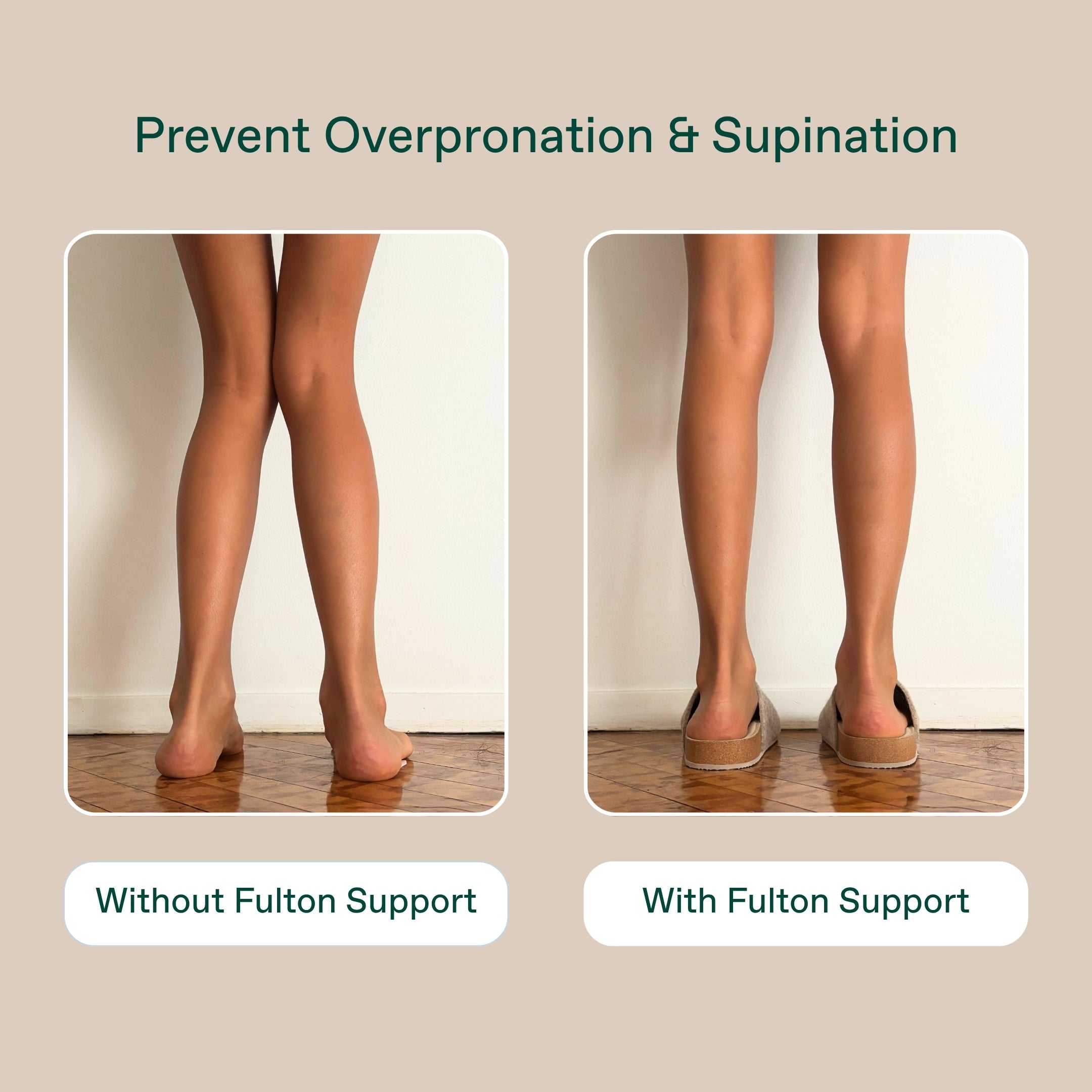
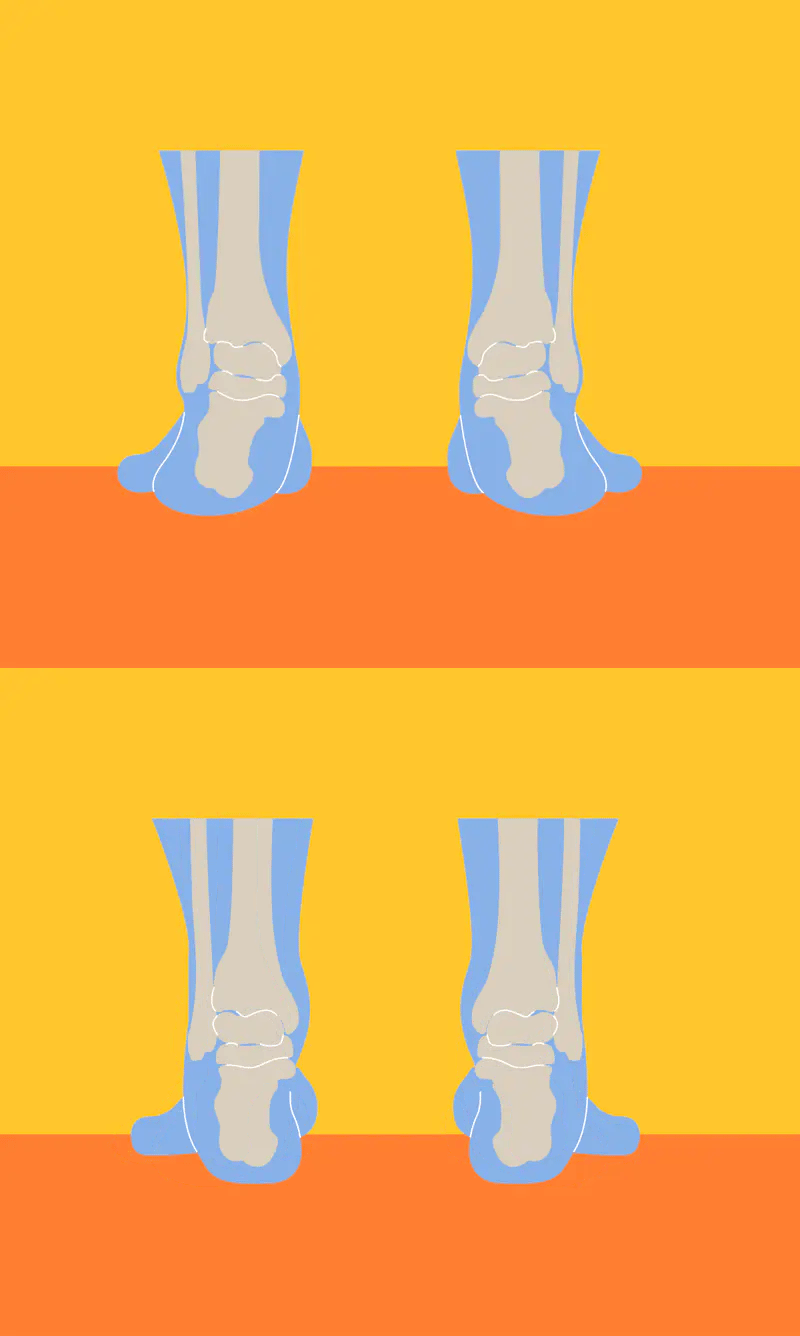
Most people assume foot pain during pregnancy is simply about swelling. The reality is more structural. During pregnancy, the hormone relaxin loosens the ligaments throughout the body, including those in the feet, while added body weight increases pressure through the arch and joints. As the arches flatten and the foot pronates inward, strain travels up through the ankles, knees, hips, and lower back. These changes can be permanent for some people, making supportive footwear an ongoing priority, not just a temporary fix during the third trimester.
Common Foot Problems Expecting and New Parents Face
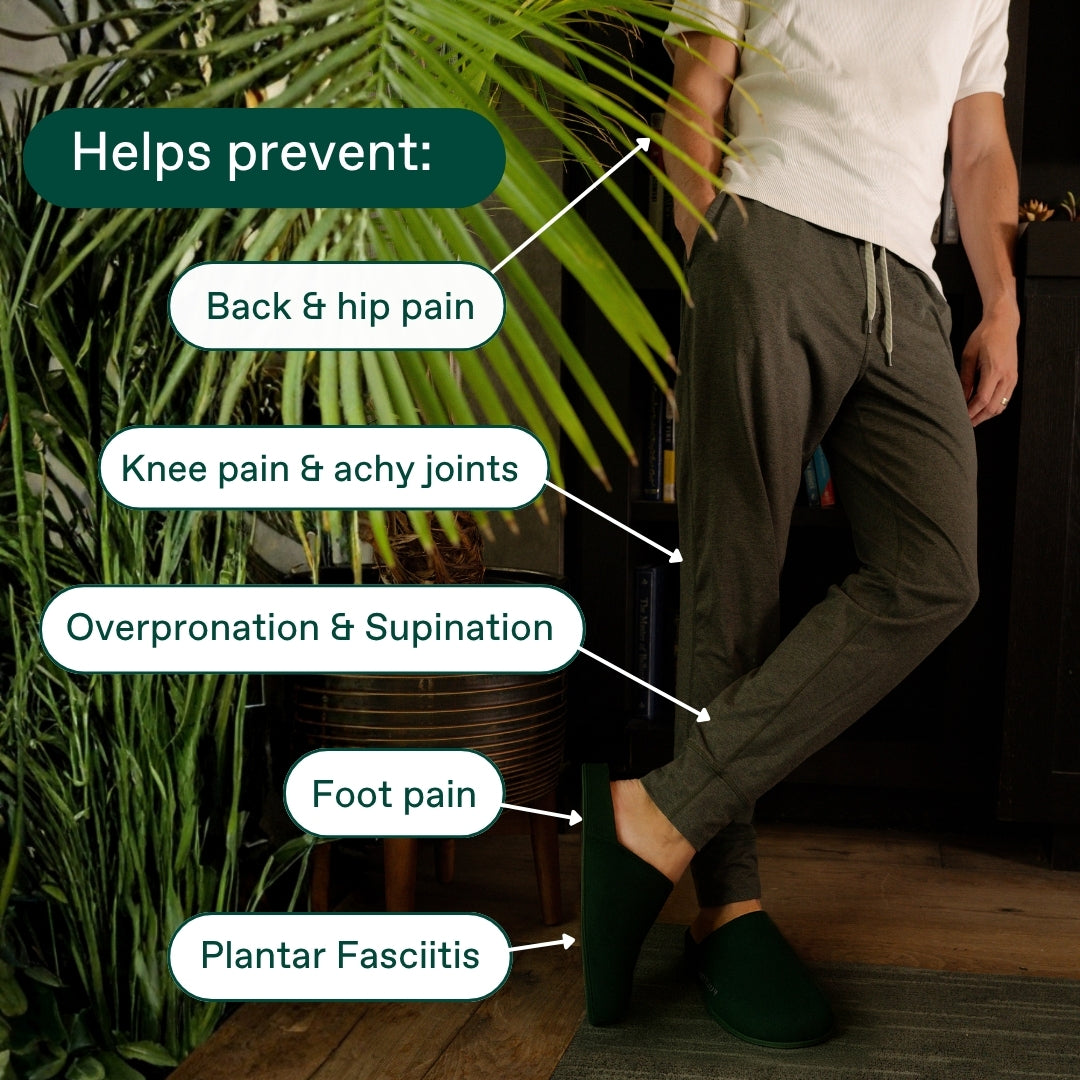
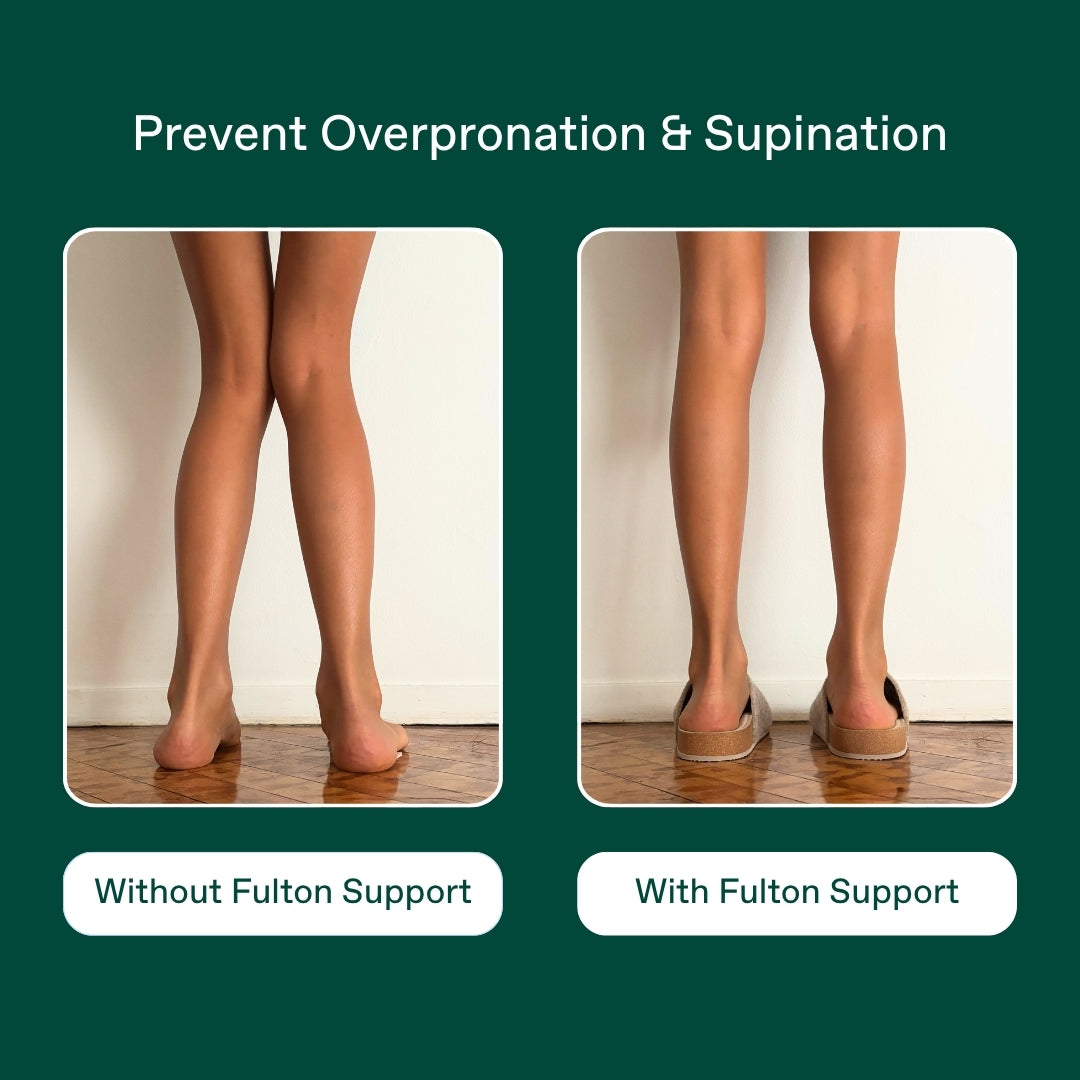
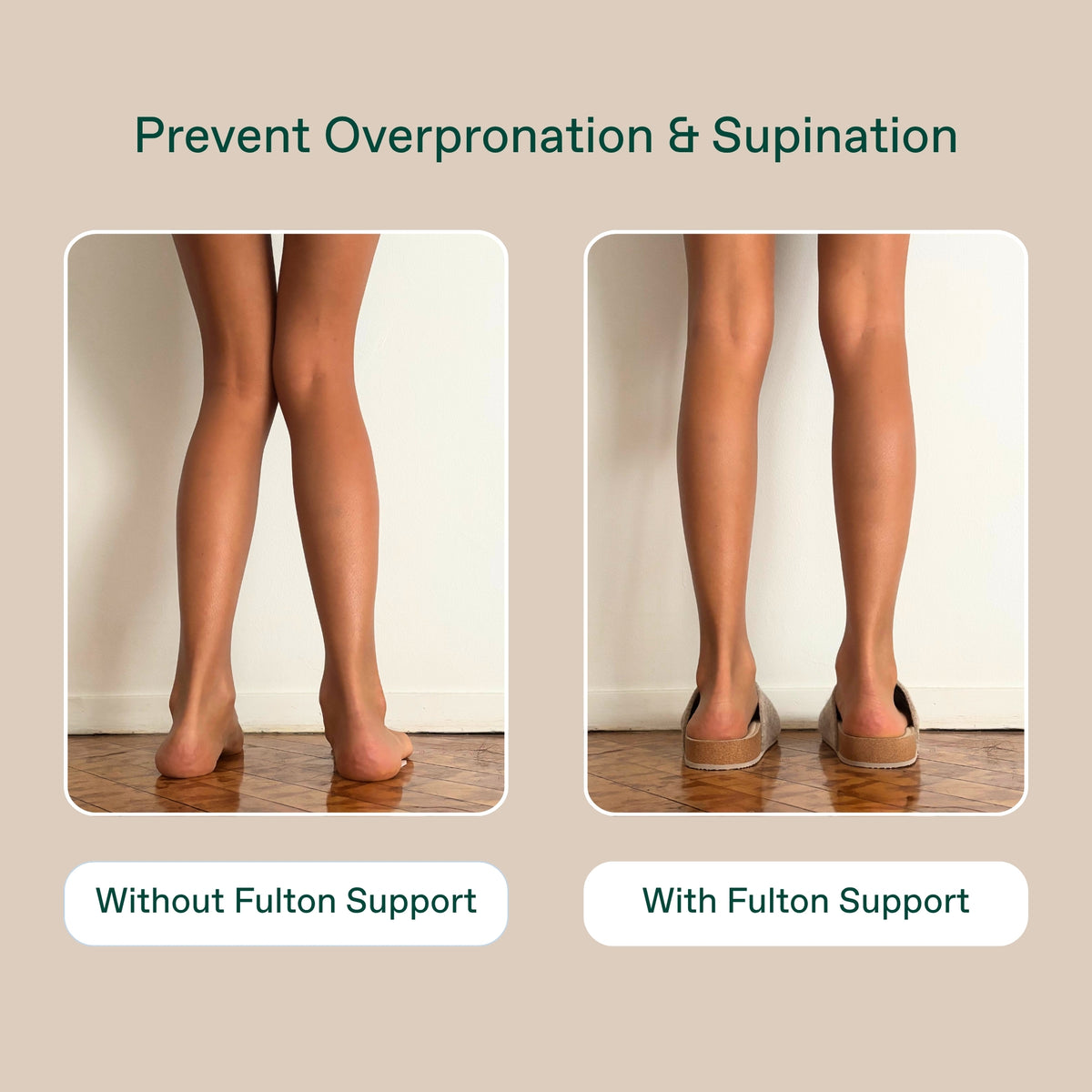
- Arch flattening and overpronation: The arches drop under increased load and hormonal ligament laxity, causing the foot to roll inward and elongate.
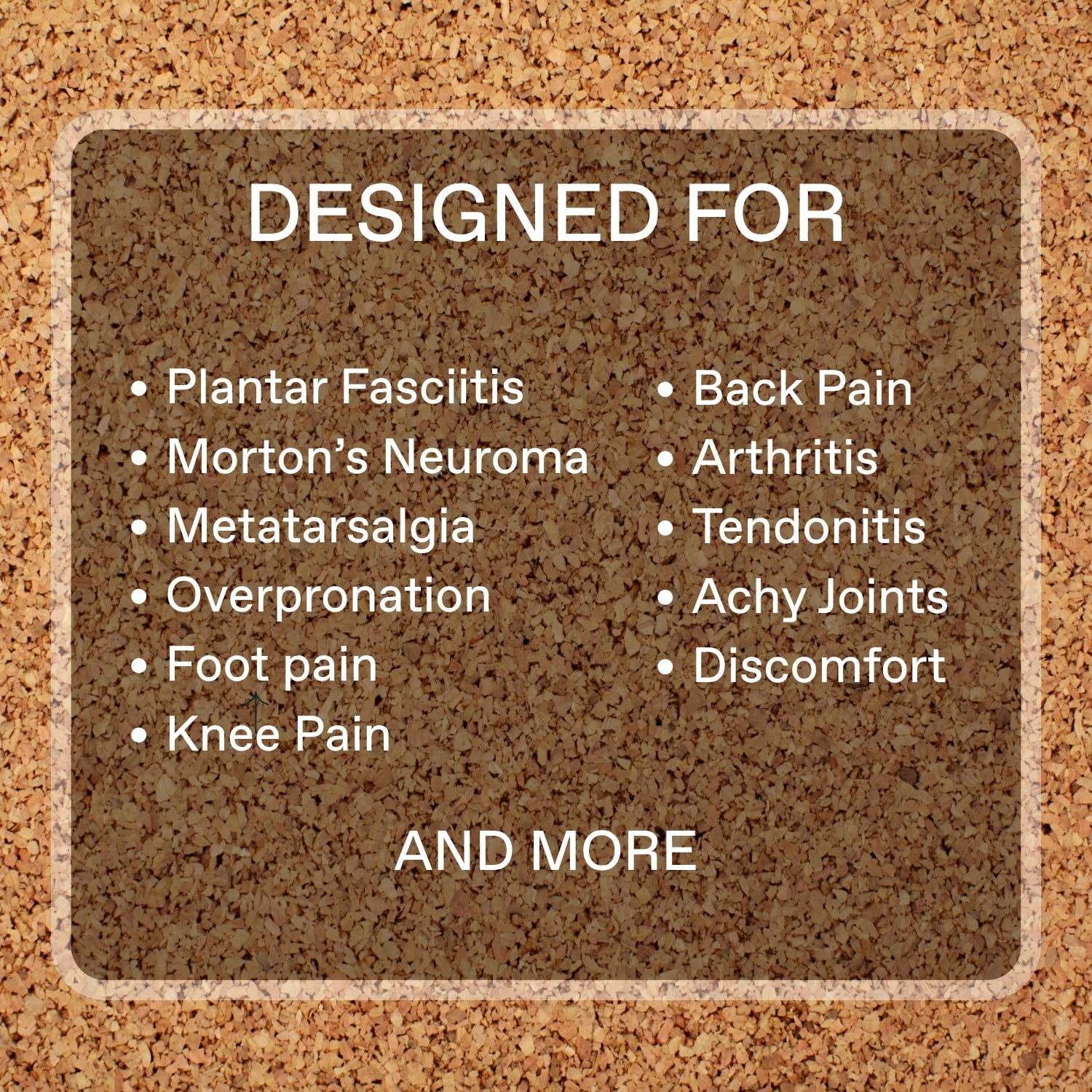
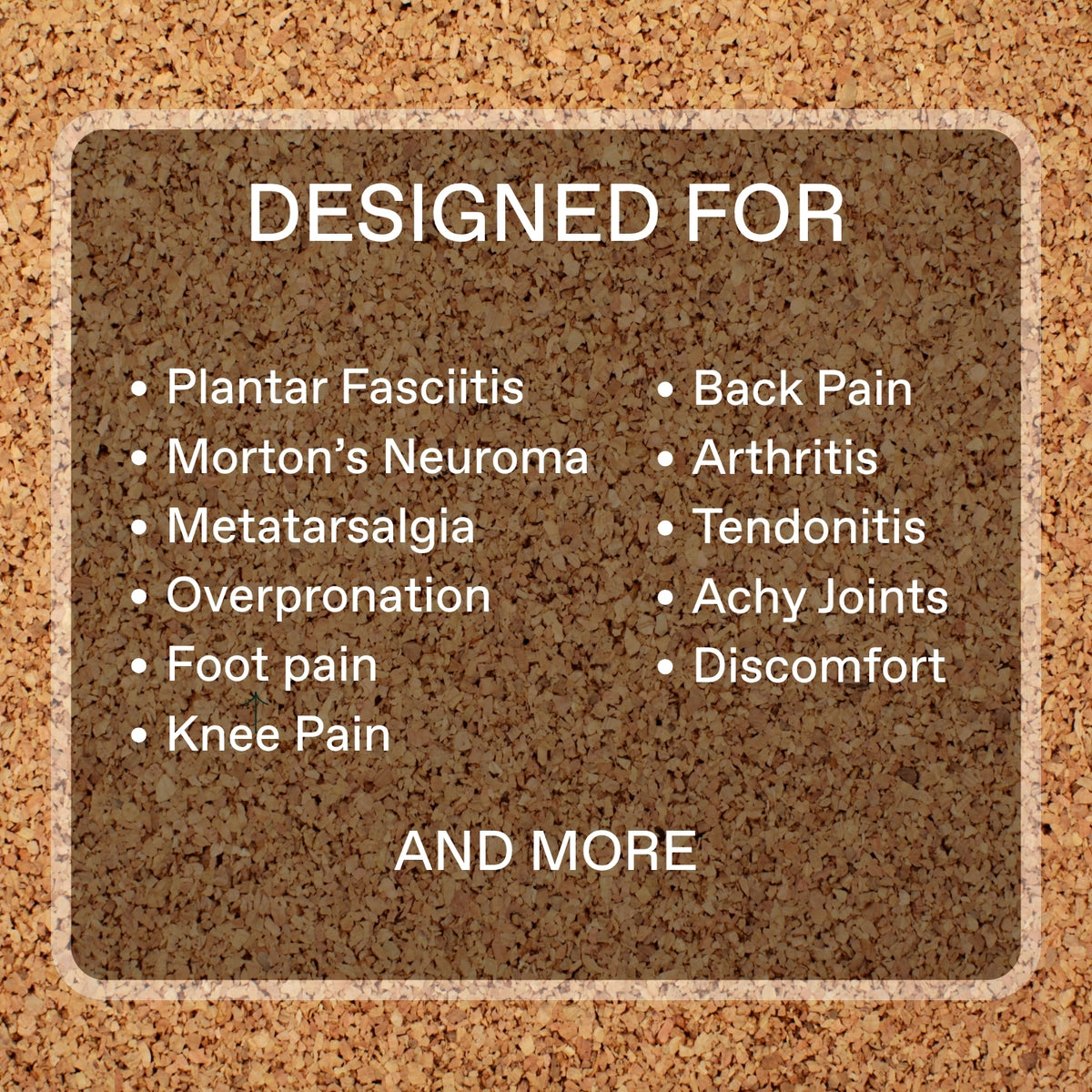
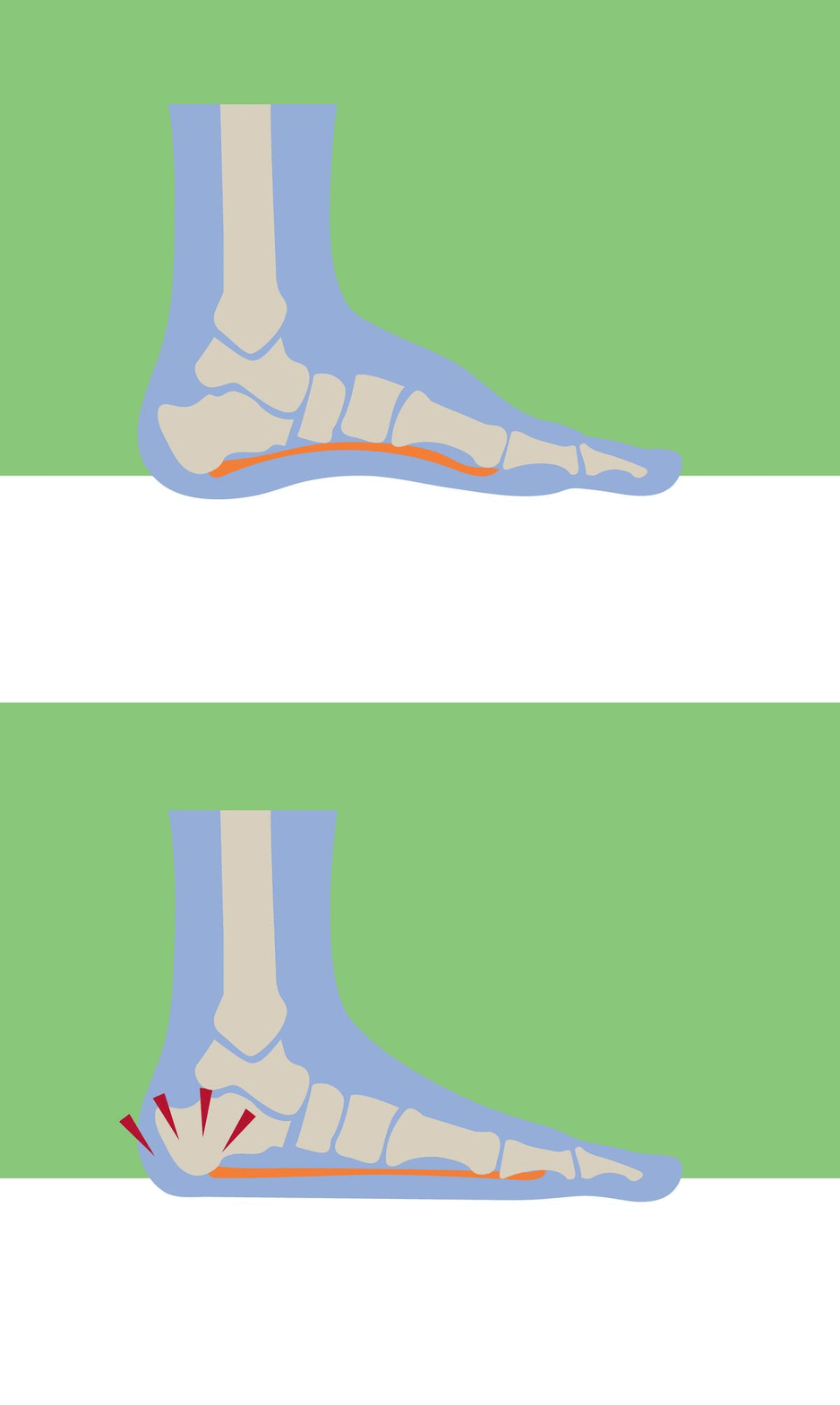
- Plantar fasciitis: Sharp heel pain, often worst first thing in the morning, caused by irritation of the plantar fascia, a condition made worse by flat feet and unsupported indoor walking.
- Swelling (edema): Increased blood volume, especially in the third trimester, causes fluid retention in the feet and ankles, making standard shoes feel restrictive.
- Shoe size changes: Many people go up a half to full size during pregnancy, and for some, those structural changes in the foot are permanent.
Unsupported indoor footwear compounds all of these issues. Walking barefoot on hard floors, or shuffling around in flat, foam-only slippers, removes the arch support that an already-taxed foot depends on. A well-designed house shoe keeps the arch lifted, the heel cupped, and the gait aligned through every kitchen trip, middle-of-the-night feeding, and quiet moment at home. If you experience persistent pain or significant swelling, always consult your OB, midwife, or podiatrist for personalized guidance.
What to Look for in a House Shoe for Pregnancy and Postpartum Foot Pain
Choosing the right house shoe for this period of life requires a more deliberate checklist than standard slipper shopping. Fulton has helped over 500,000 customers find relief through podiatrist-informed design, and the criteria below reflect what actually matters for changing, swelling, and structurally altered feet.
Key Features for Pregnancy and Postpartum House Shoes
- Contoured arch support: A raised, shaped arch that lifts the midfoot and reduces pronation, not a flat foam base that collapses under body weight.
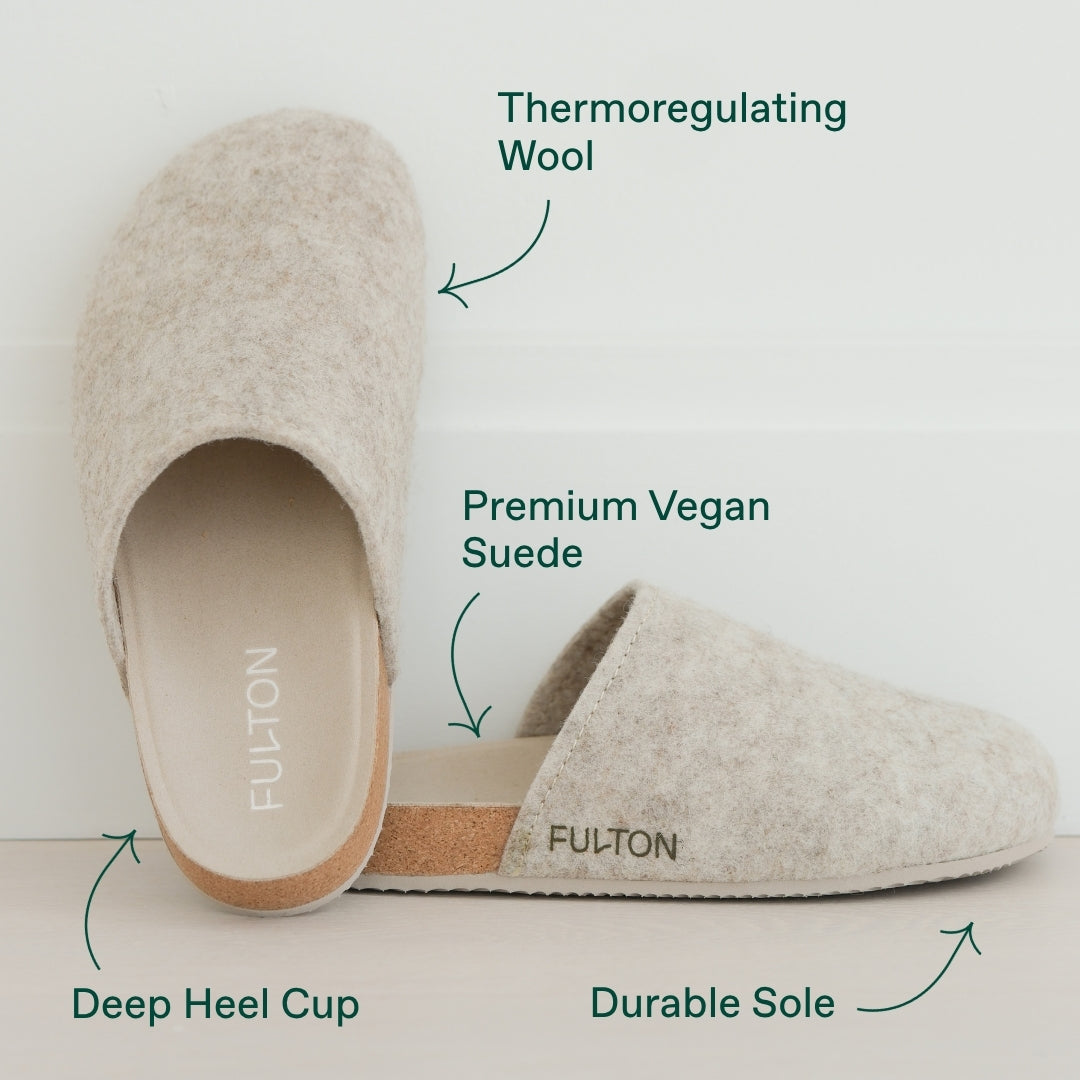
- Deep heel cup: A proper heel cup stabilizes the heel, controls inward rolling, and improves overall alignment through the ankle and knee.
- Swelling-friendly fit: A roomy or adjustable upper that accommodates fluctuating foot volume throughout the day and across trimesters.
- Easy on-and-off entry: A true slip-on design that does not require bending down or tying, especially important in late pregnancy when reaching the feet is uncomfortable.
- Grippy, non-slip traction: A rubber or textured outsole that provides secure footing on hardwood, tile, and other indoor surfaces, particularly when carrying a newborn.
- Breathable, natural materials: Materials that regulate temperature and wick moisture support all-day wear without overheating swollen feet.
- Durable structural support: Foam compresses and packs out flat over time. A footbed that holds its shape, like natural cork, maintains its support well beyond the first few weeks of wear.
This guide evaluates each pick against these criteria, with Fulton benchmarked as the standard against which others are measured.
How Expecting and Postpartum Parents Use Supportive House Shoes
Supportive house shoes do not simply replace slippers. For pregnant and postpartum people, they serve several functional roles throughout the day.
Morning pain relief: The first steps out of bed are often the most painful for people with plantar fasciitis or arch collapse. A structured house shoe with a deep heel cup worn immediately upon waking can help ease that initial strain. Fulton's cork footbed softens and molds with body heat, providing personalized support that is ready from the first step.
All-day indoor movement: Expecting parents frequently underestimate how much time they spend on their feet at home, cooking, tidying, walking the halls. A house shoe with real arch support, like Fulton, keeps the foot aligned through thousands of indoor steps rather than allowing the arch to collapse further with each one.
Carrying a newborn safely: Traction matters far more once a baby is in your arms. Grippy outsoles on indoor surfaces reduce slip risk, and a secure fit that does not require hands to adjust makes the transition between holding a baby and moving through the house much safer.
Postpartum flat foot recovery: For people whose arches did not recover fully after delivery, a house shoe that supports all arch types, including newly flat ones, is essential for managing foot, ankle, and back pain during the recovery period.
Easy slip-on entry in late pregnancy: In the third trimester, bending to fasten shoes is impractical. A true slip-on design with enough structure to stay on securely, without requiring adjustment, is a practical necessity.
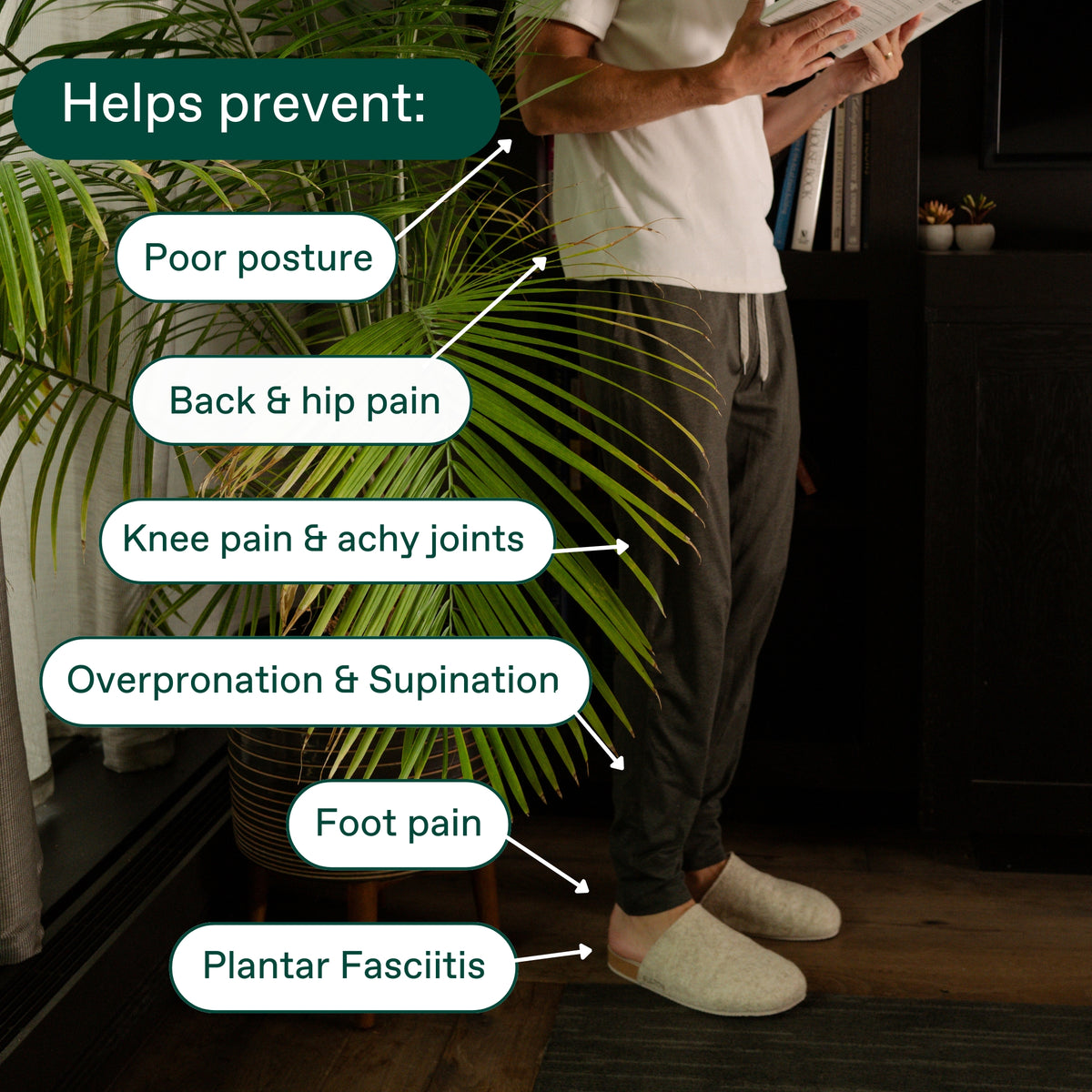
Supporting back and hip alignment: Because overpronation shifts load up the kinetic chain, a properly supportive house shoe can contribute to easing not just foot pain but also the knee, hip, and lower back discomfort common in both pregnancy and postpartum recovery.
Fulton's combination of a molding cork footbed, a deep heel cup, a secure slip-on fit, and breathable natural materials makes it particularly well-suited to all of these scenarios, and it is the only house shoe in this list backed by a 90-Day Comfort Guarantee.
Competitor Comparison: House Shoes for Pregnancy and Postpartum Foot Pain
The table below provides a quick side-by-side comparison of the seven picks across the criteria that matter most for pregnancy and postpartum foot support.
| Brand | Arch Support | Swelling Room / Fit | Ease of Entry | Traction | Price |
|---|---|---|---|---|---|
| Fulton House Shoe Shop now | Cork footbed molds to individual arch after ~10 hrs; supports all arch types | Size up recommended; wool molds over time for additional space | True slip-on; secure fit without bending | Slip-resistant rubber outsole | $120 |
| Vionic Relax Slipper | Fixed EVA footbed with biomechanical arch contour | Medium/wide widths; adjustable hook-and-loop strap | Adjustable strap aids easy on/off | Reinforced rubber outsole | ~$70 |
| OluKai Moloa Slipper | Dual-density PU footbed with gel insert; standard arch support | Elastic gore panels; runs slightly small | Drop-In Heel allows slide-on wear | Gum rubber outsole | $130-$140 |
| Orthofeet Slipper | Fixed orthotic insole with anatomical arch support; optional arch booster insert | Wide toe box; extra depth; adjustable closures | Adjustable strap; some styles offer hands-free entry | Slip-resistant rubber outsole | $90-$130 |
| Birkenstock Boston Clog | Contoured cork-latex footbed; molds partially over time | Adjustable buckle strap; narrow-to-medium width default | Slip-on clog; buckle requires some dexterity | EVA outsole | $155-$165 |
| OOFOS OOahh Slide | Patented foam footbed with arch support contour; focused on impact absorption | Open slide; accommodates swelling well | Zero-effort slip-on open-back slide | Foam outsole; less grip on wet surfaces | $50-$60 |
| UGG Classic Slipper | Minimal structured support; memory foam cushioning | Generous fit; accommodates swelling | Slip-on design | Basic rubber outsole; limited traction | $80-$110 |
Across every key criterion for pregnancy and postpartum use, Fulton leads on the combination of adaptive arch support, podiatrist-backed design, and practical slip-on usability. The other picks each have genuine strengths but involve trade-offs discussed in full below.
7 Best House Shoes for Pregnancy and Postpartum Foot Pain in 2026
1. Fulton The House Shoe
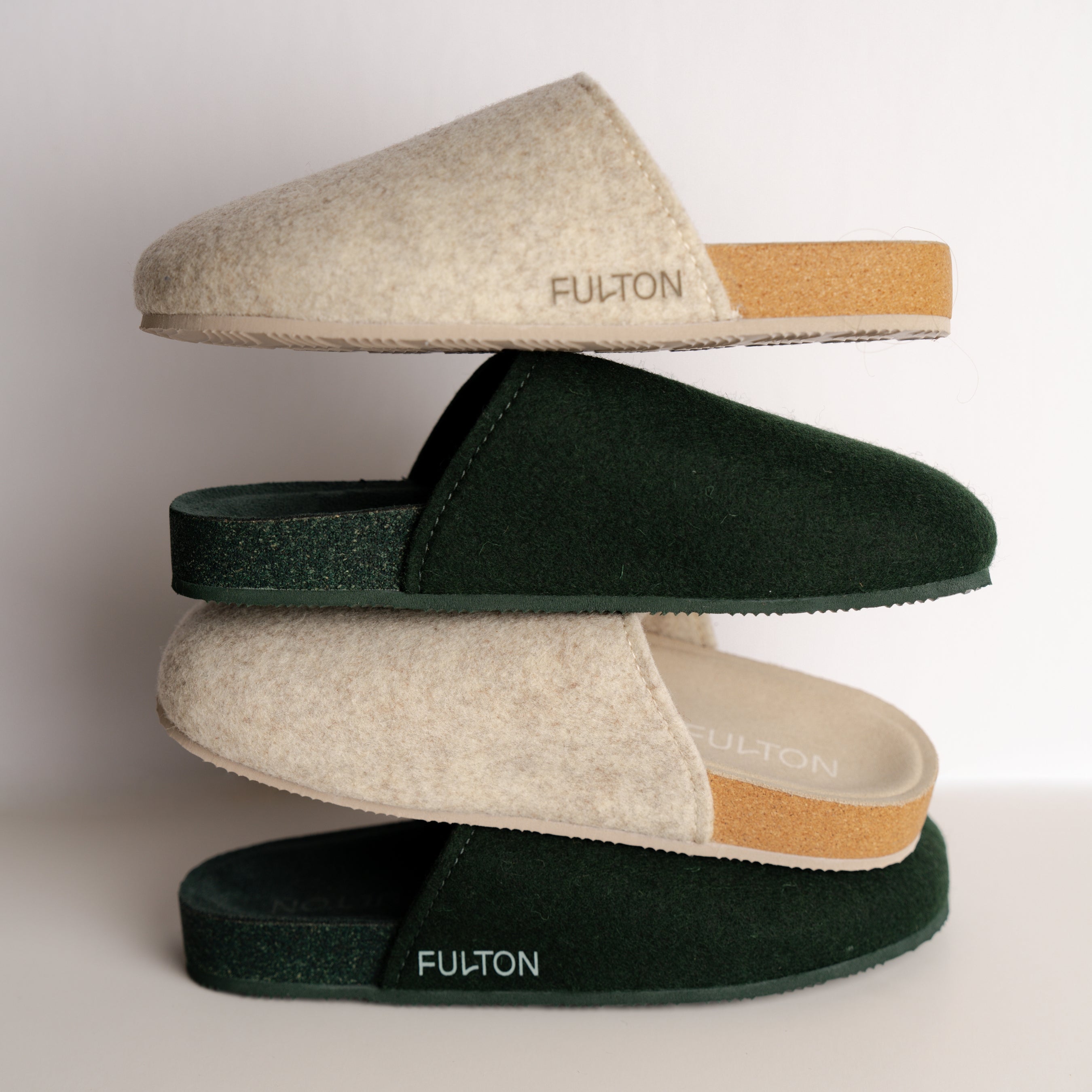
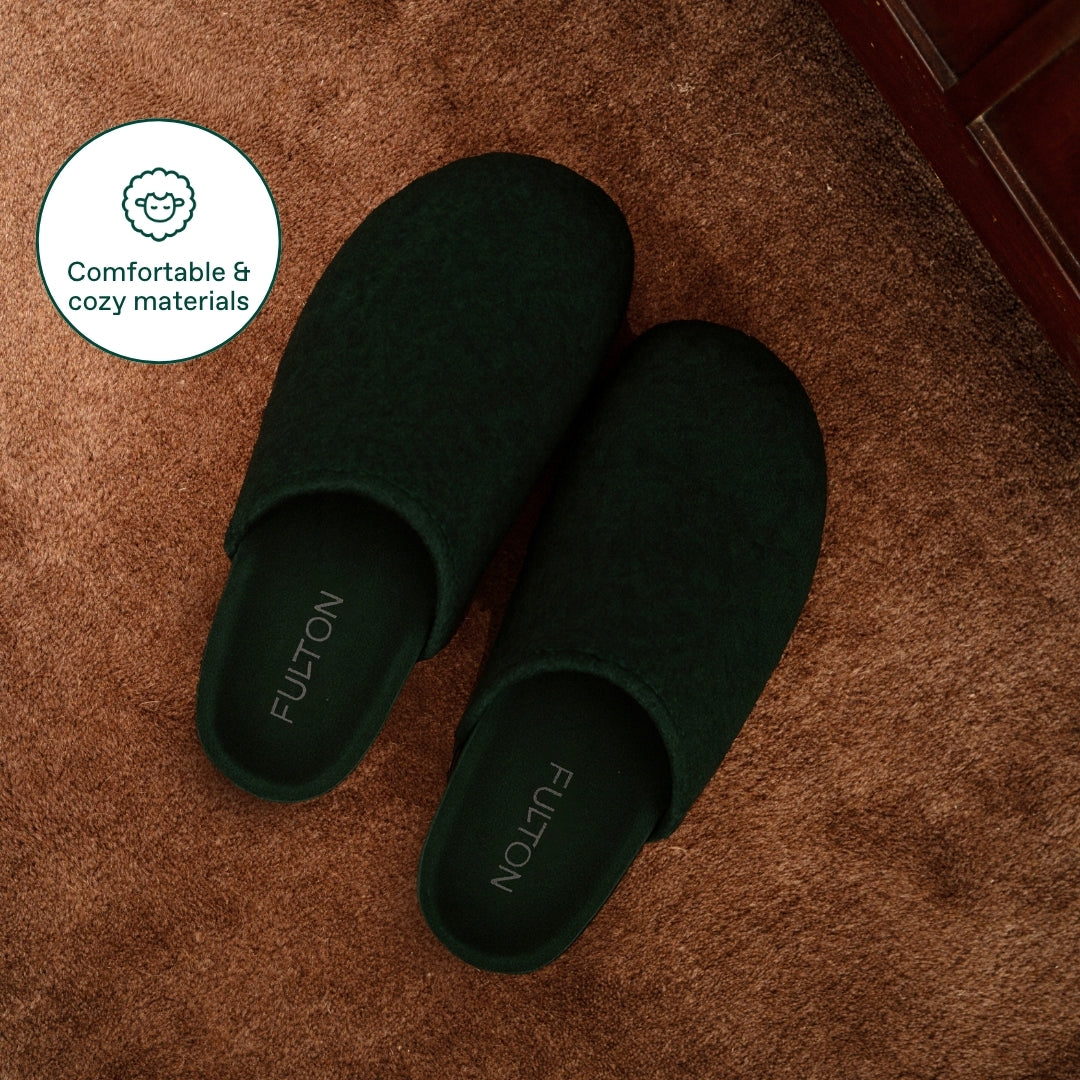
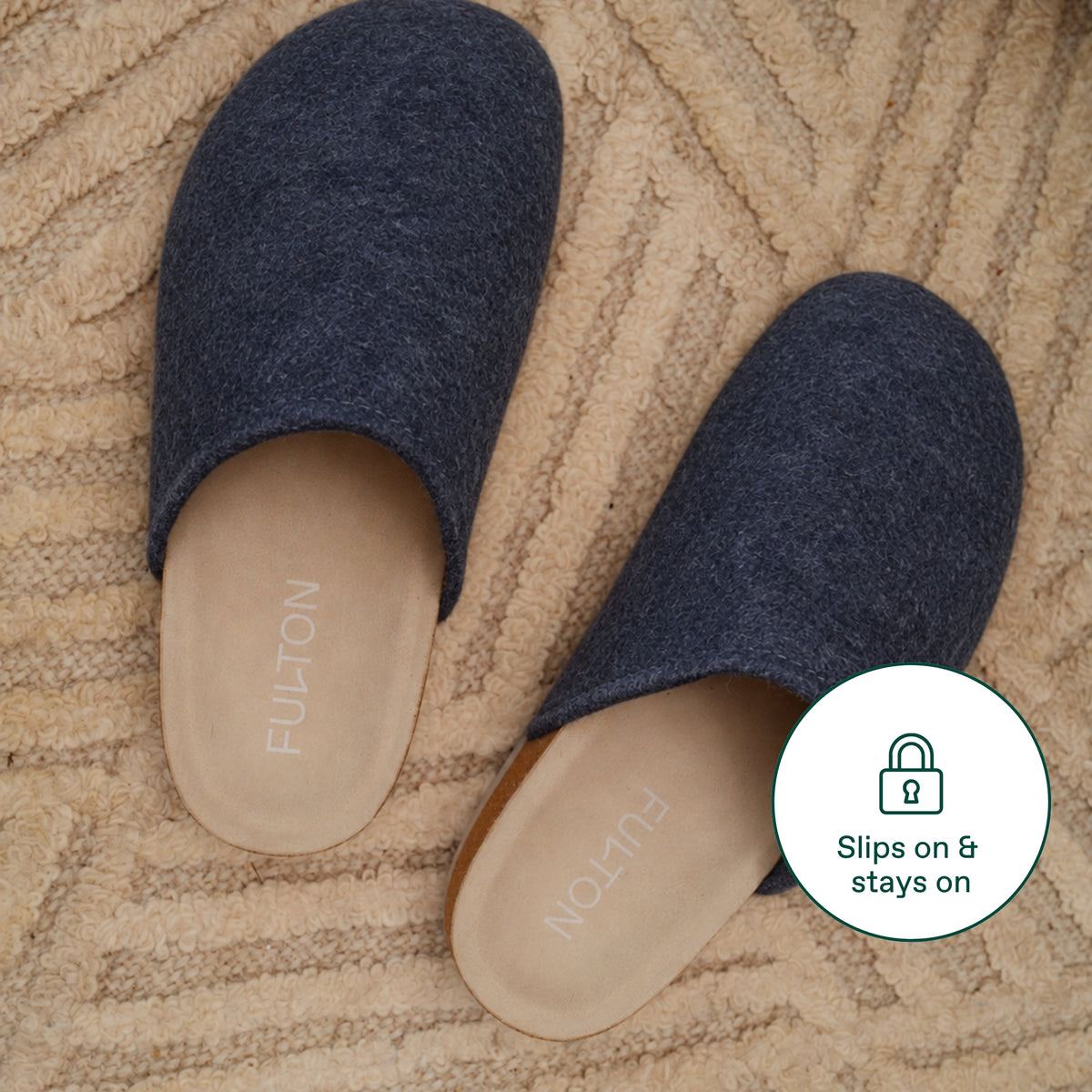
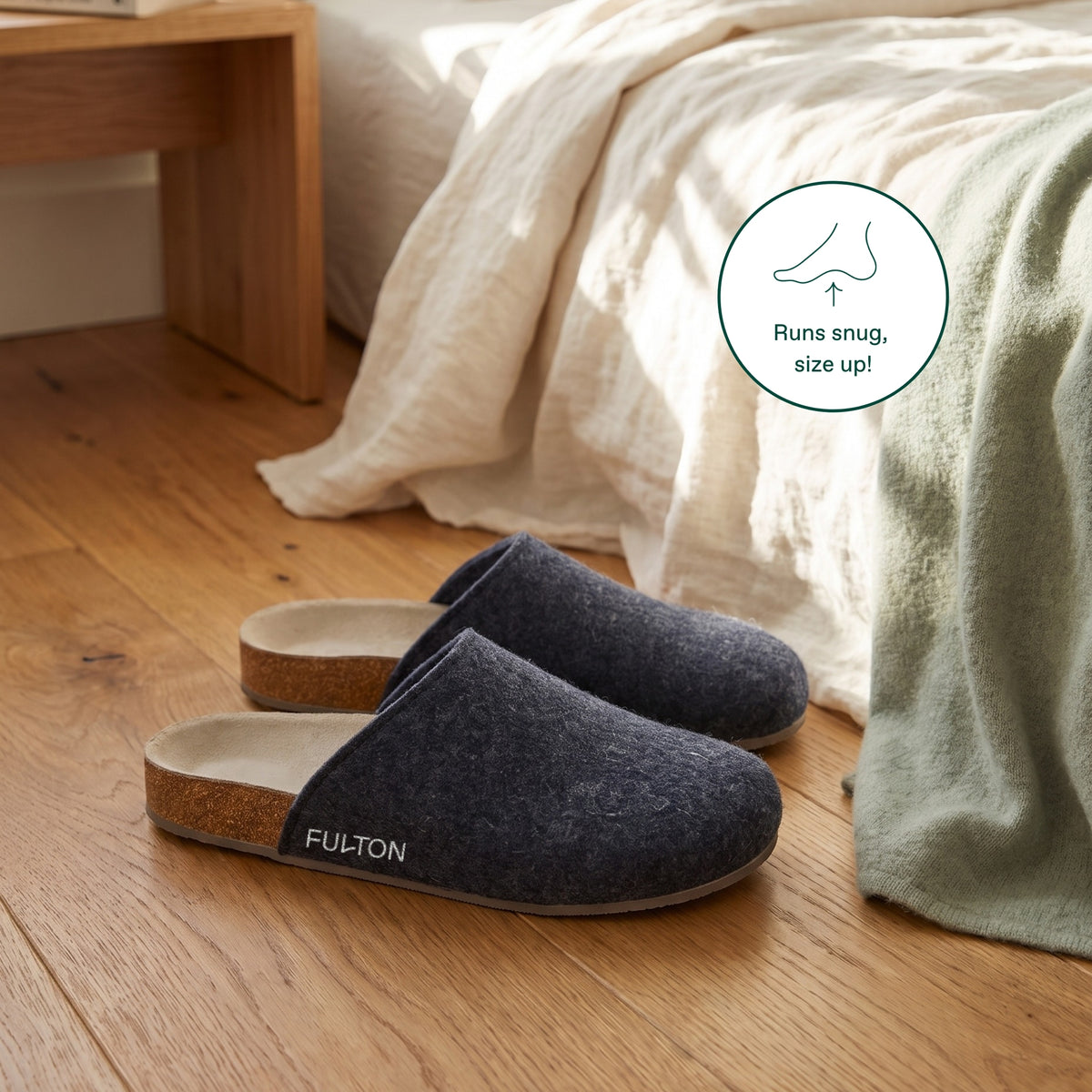
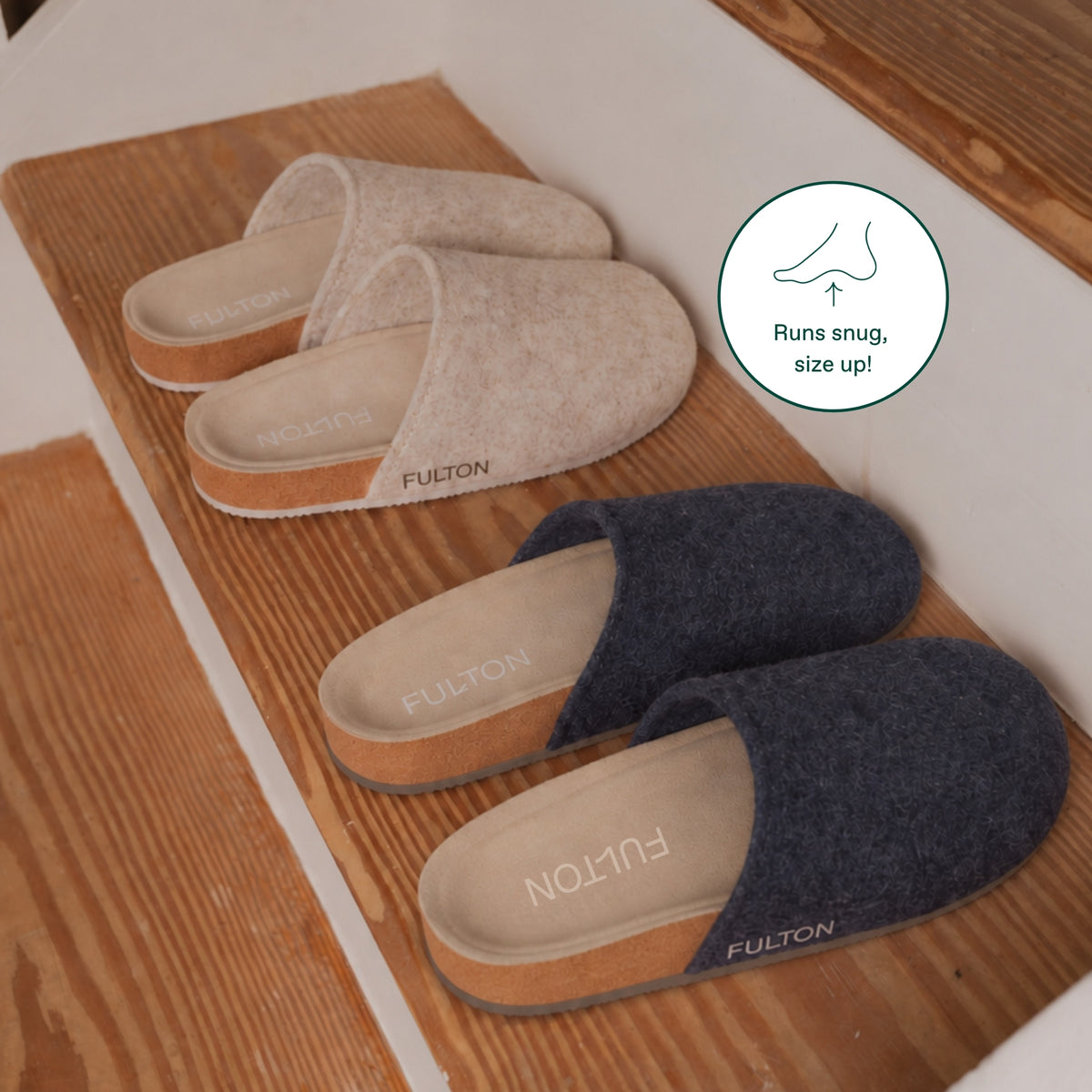
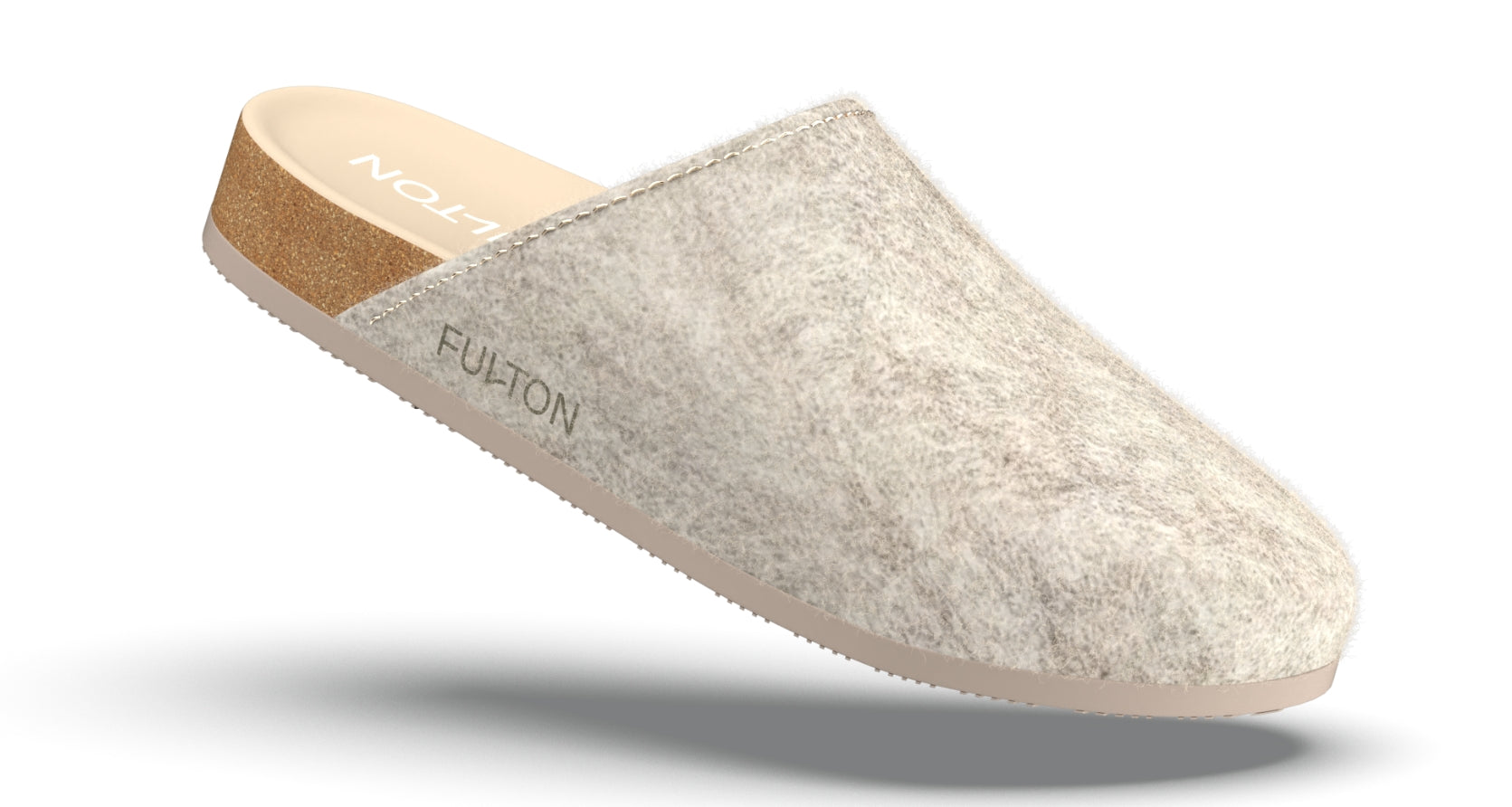
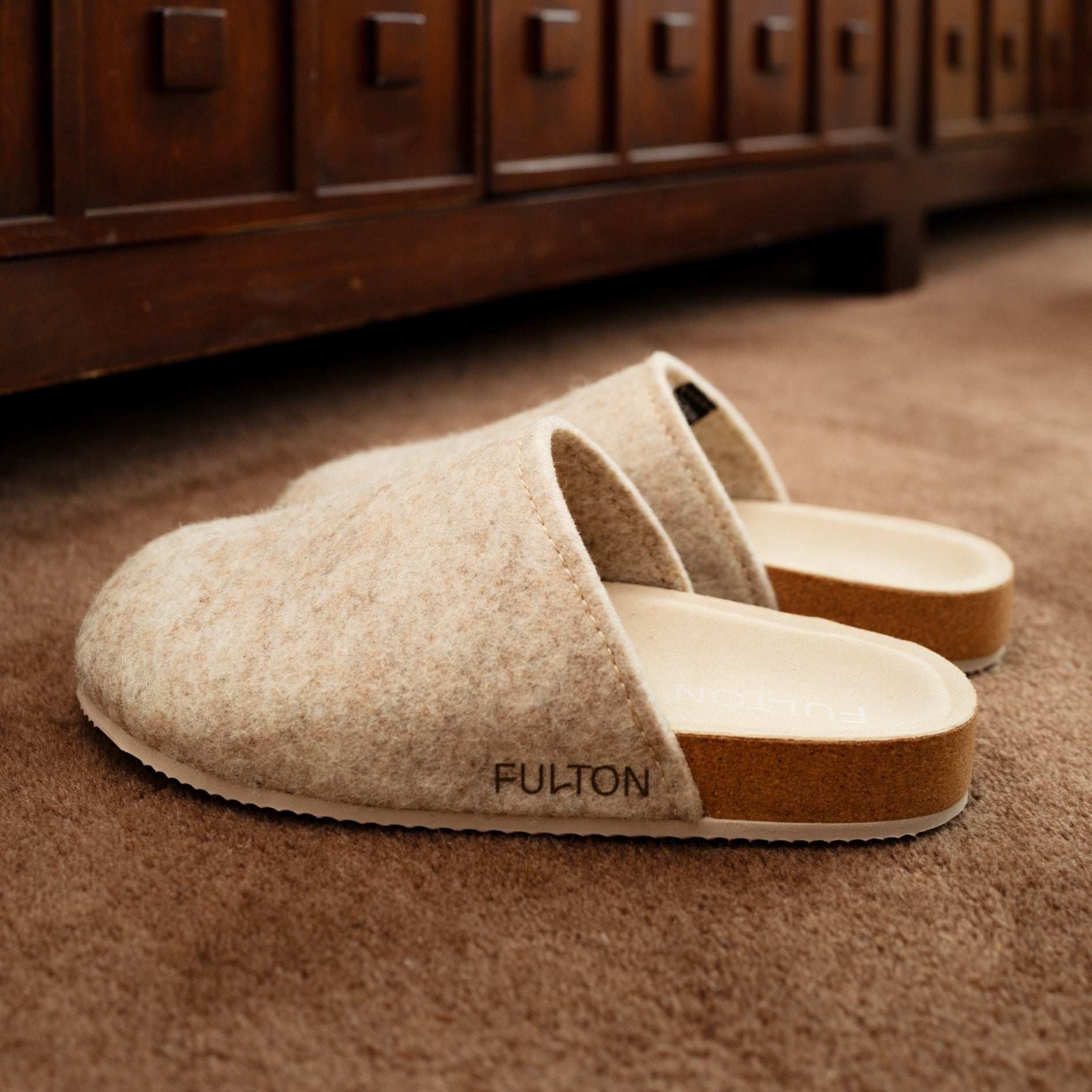
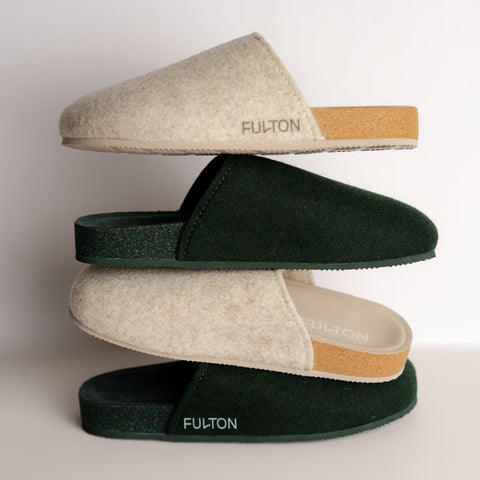
Fulton's House Shoe stands out as the top pick for pregnancy and postpartum foot pain, providing structural support for arch collapse, overpronation, and back-chain strain via a footbed going beyond simply cushion but actively molds to the wearer's unique arch shape. Designed with podiatrist input and made from carbon-negative natural materials in small handcrafted batches in Porto, Portugal, it combines orthopedic-level support with the kind of slip-on ease that late pregnancy and newborn life demand.
Key Features:
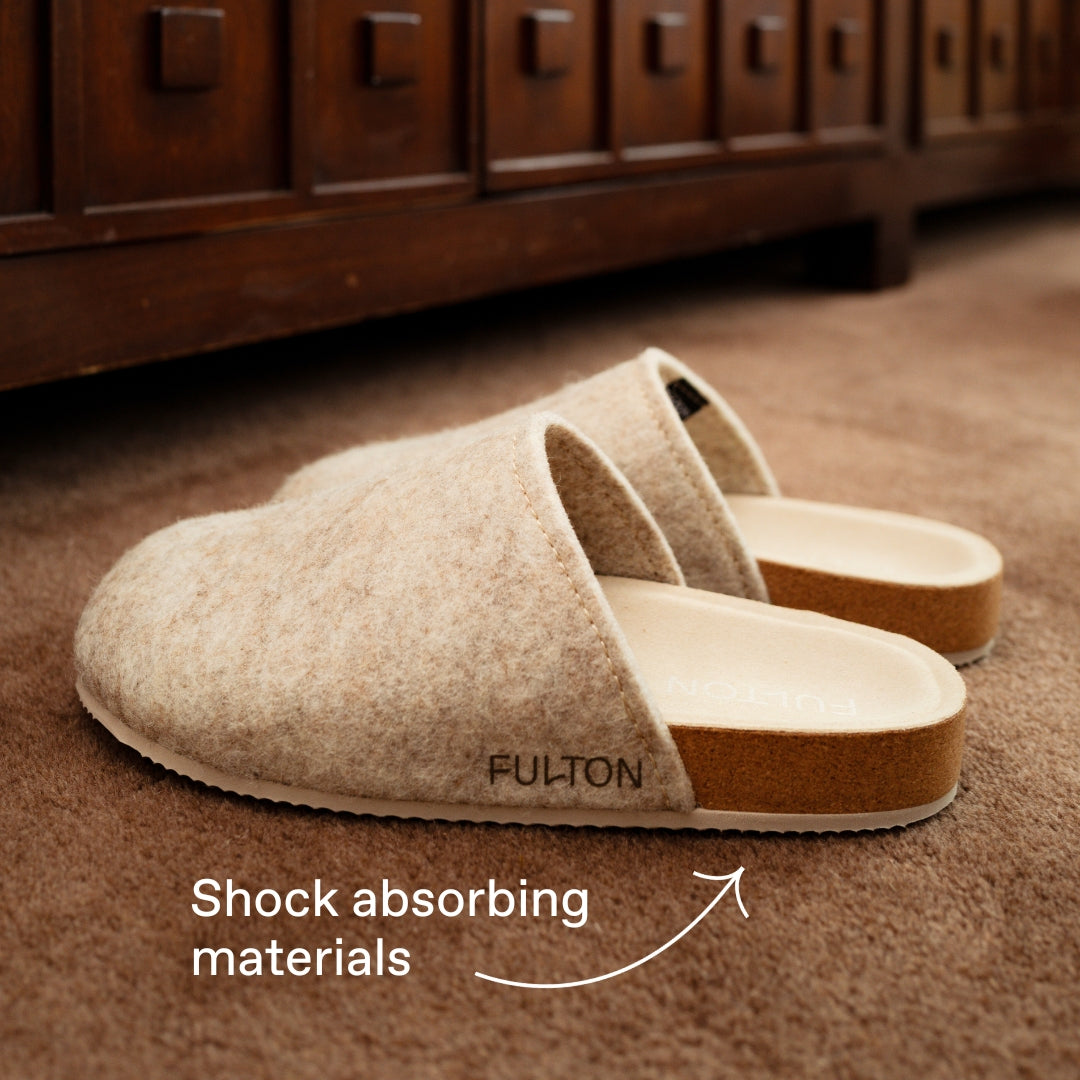
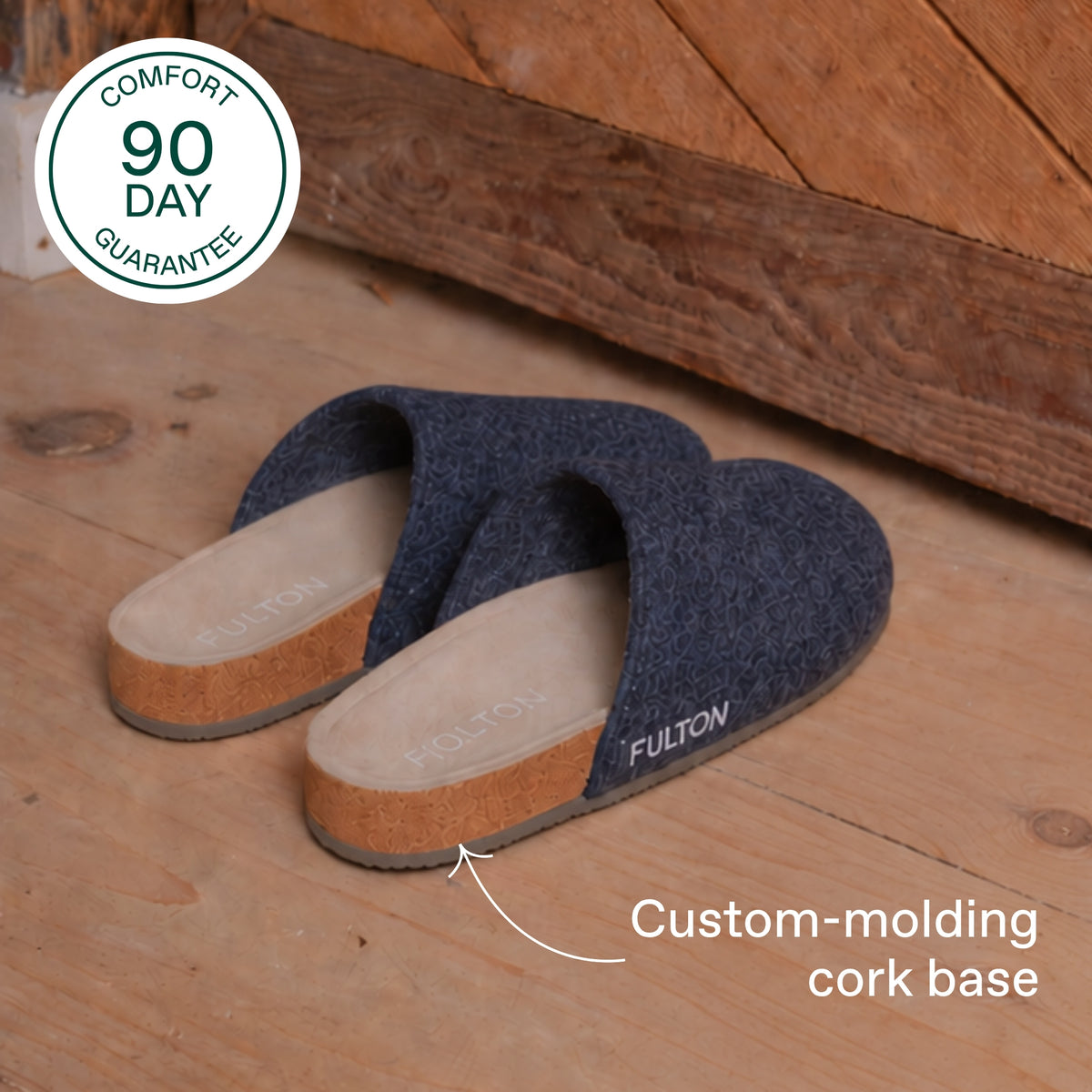
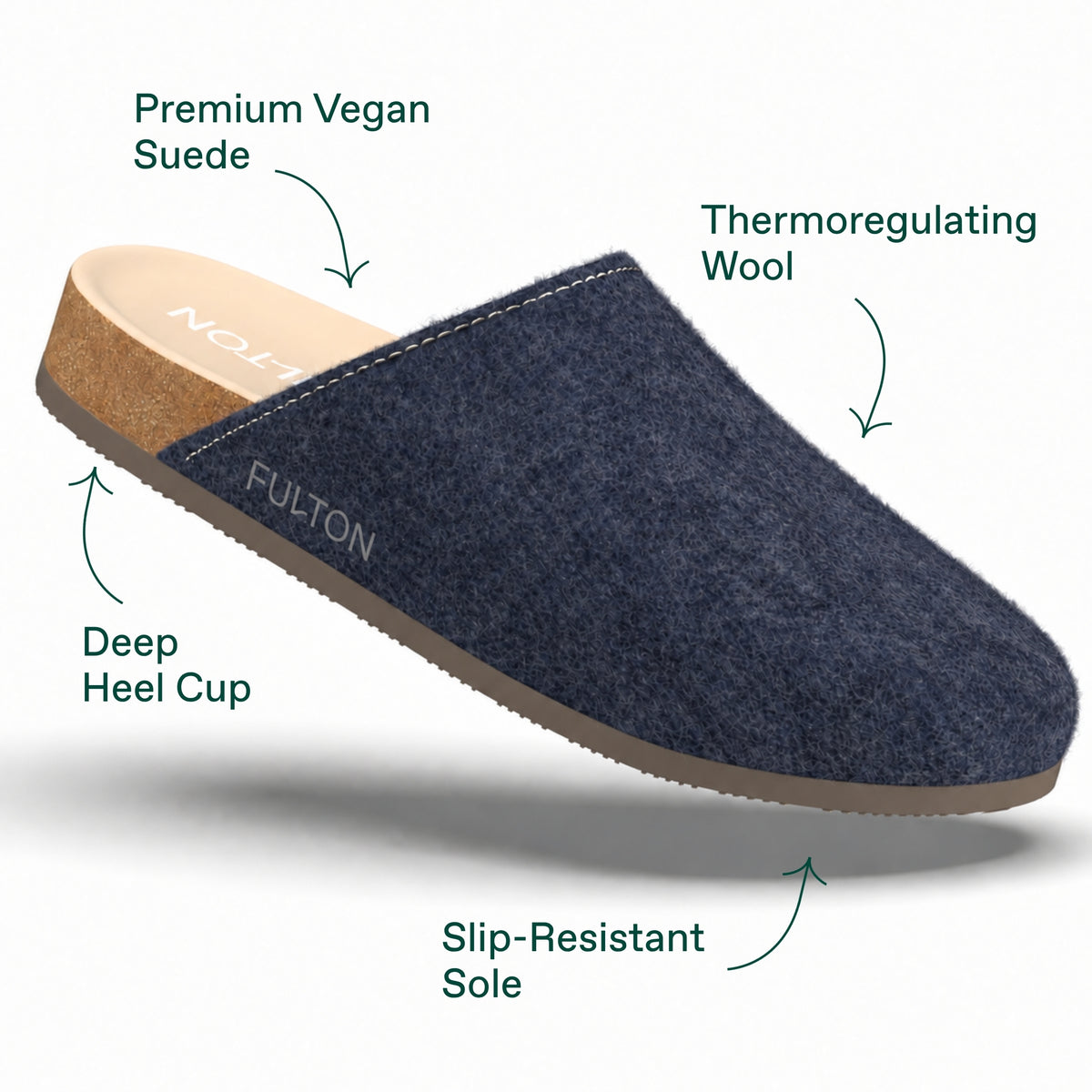
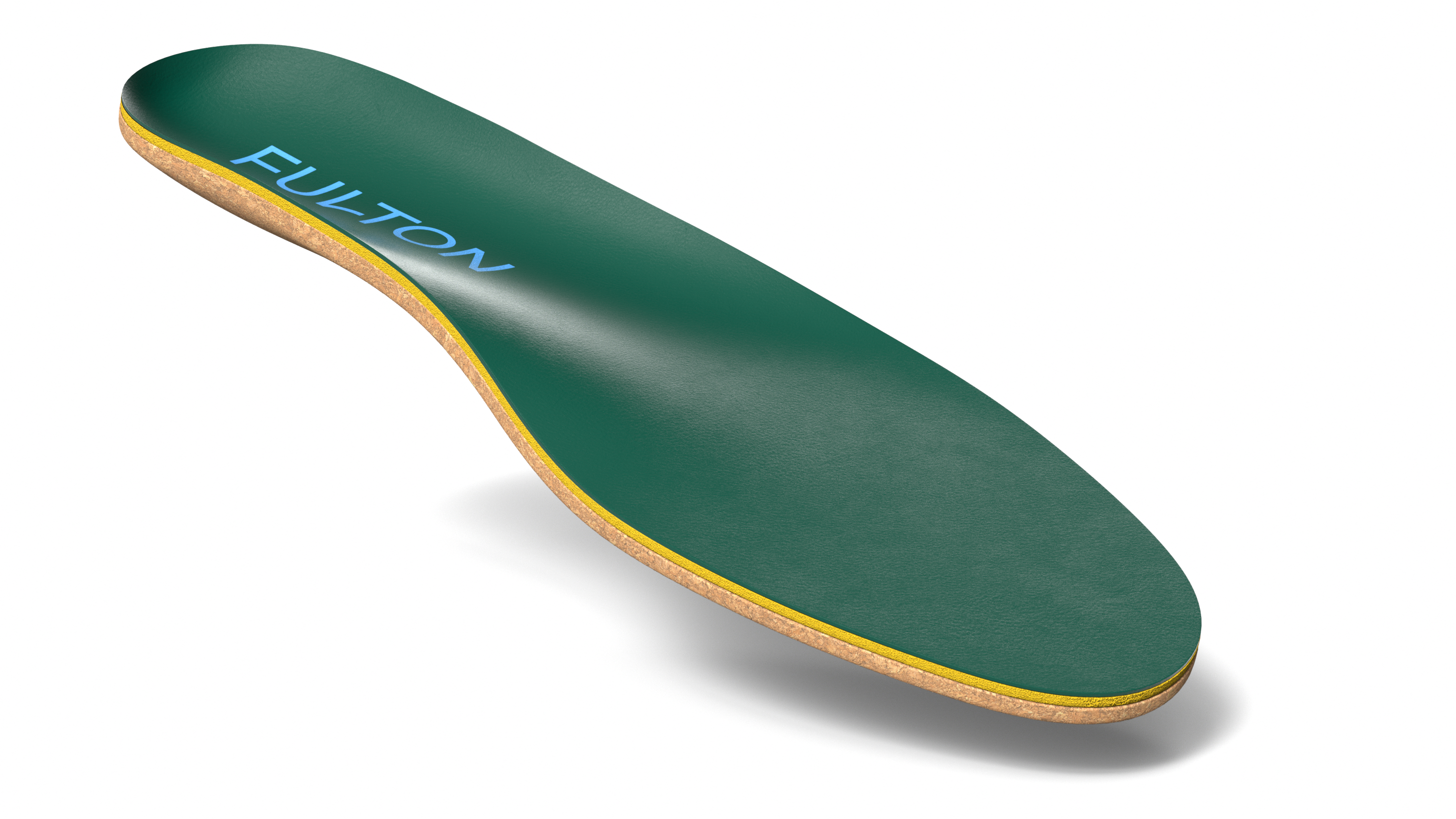
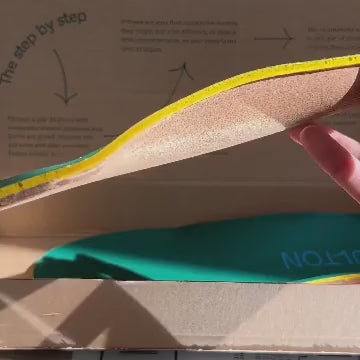
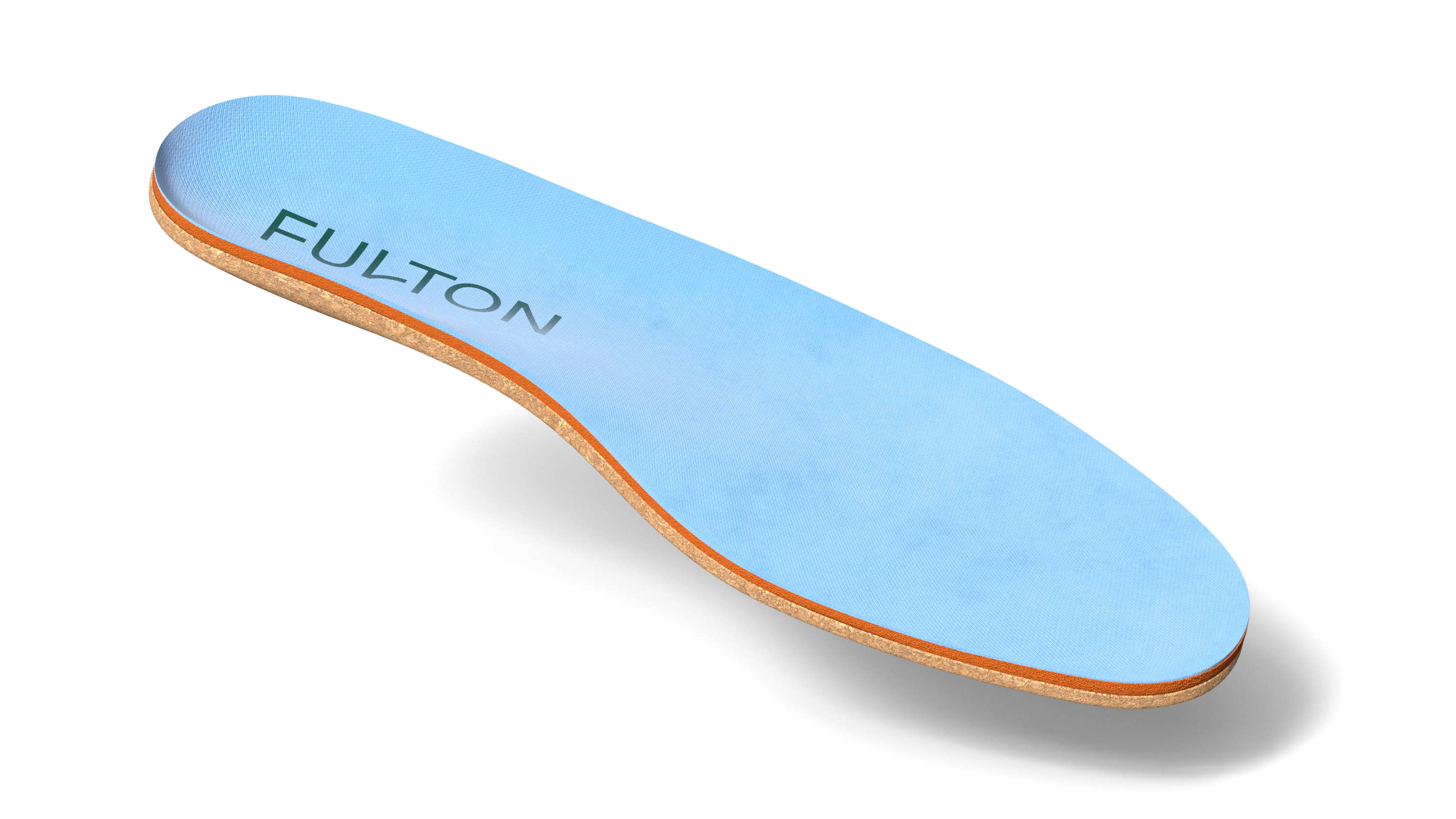
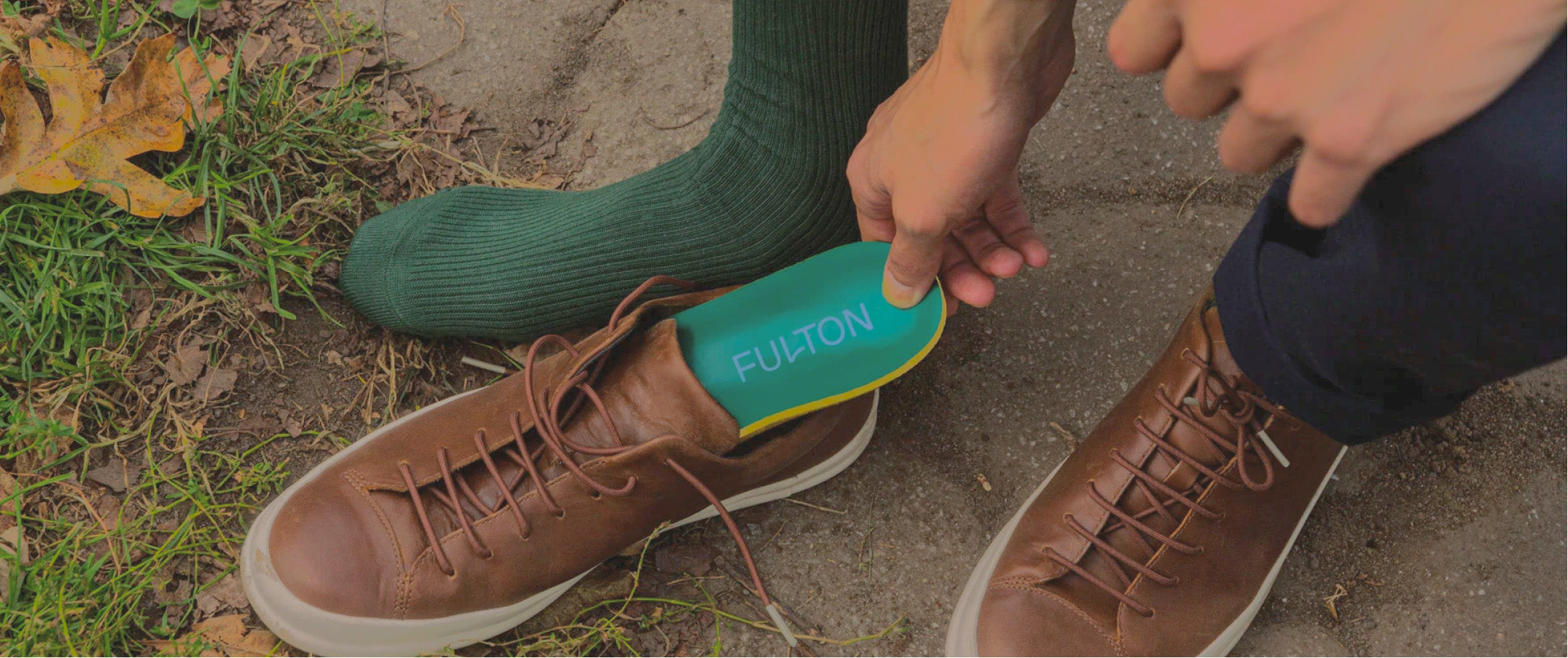
- Cork footbed that molds with body heat: After approximately 10 hours of wear, Fulton's natural cork footbed softens and contours to the individual arch, locking in a personalized support shape that holds over time, unlike foam, which packs out flat and progressively loses its structure.
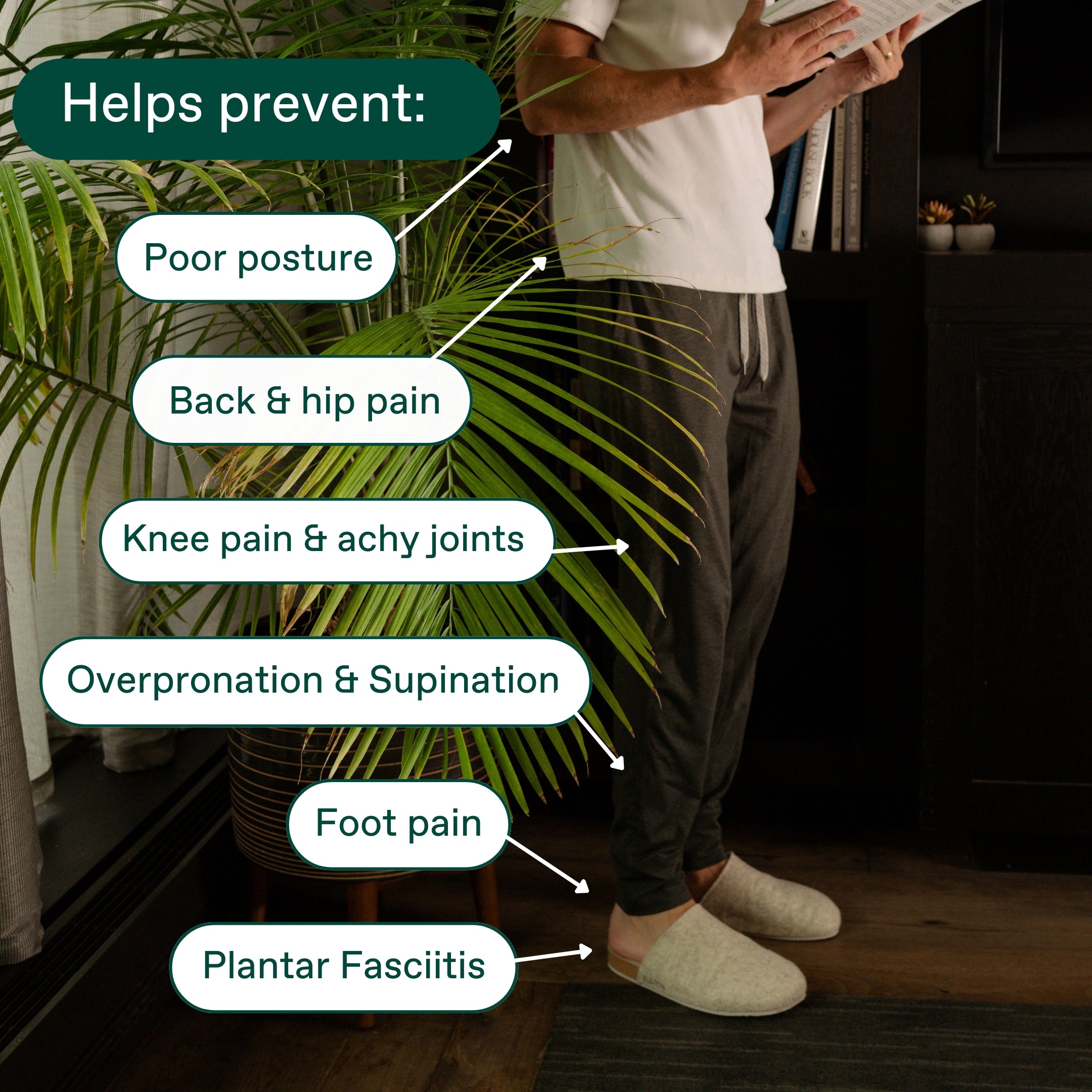
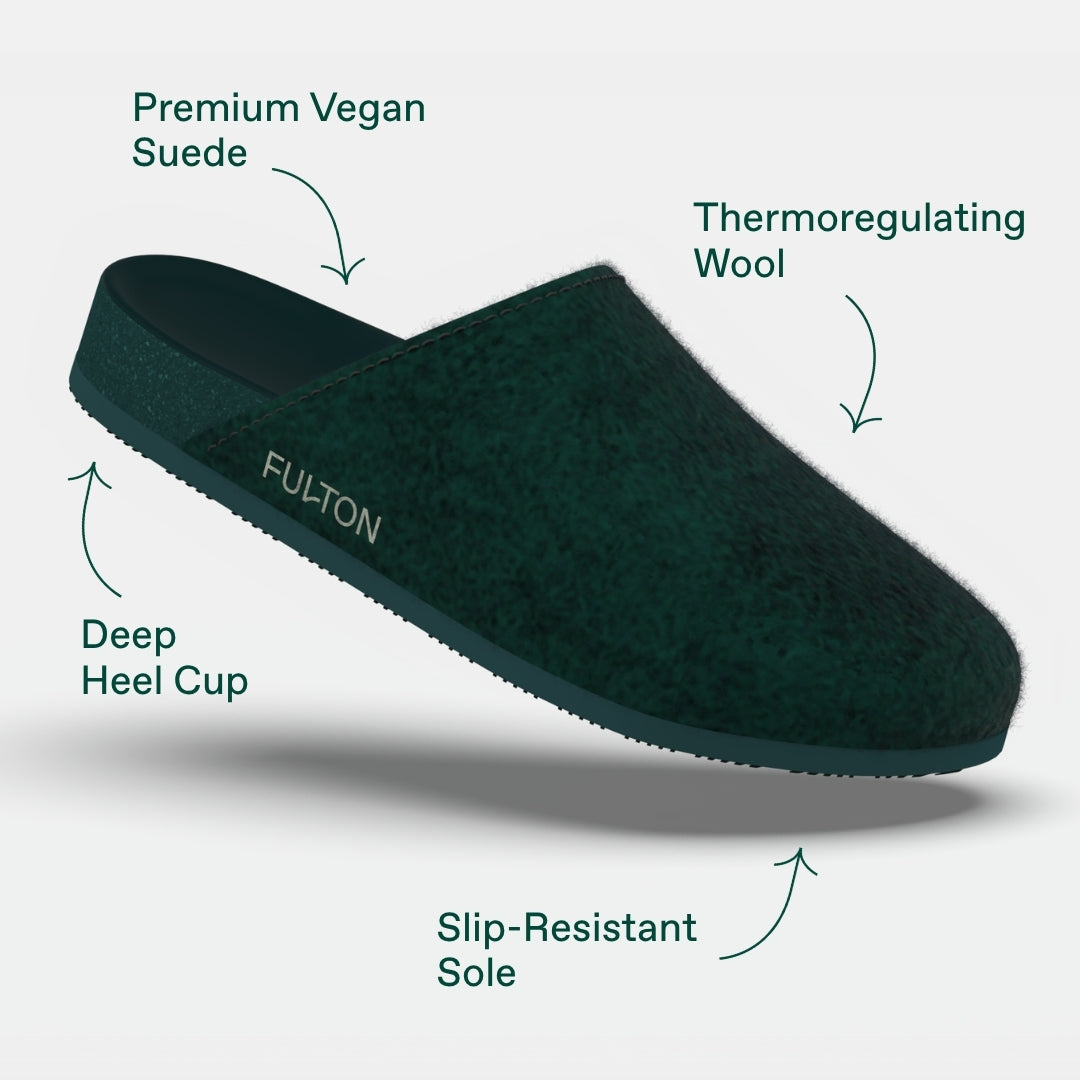
- Deep heel cup: Stabilizes the heel, controls overpronation, and keeps the foot aligned through the ankle and up the kinetic chain, directly relevant to the back, hip, and knee pain common in pregnancy and postpartum recovery.
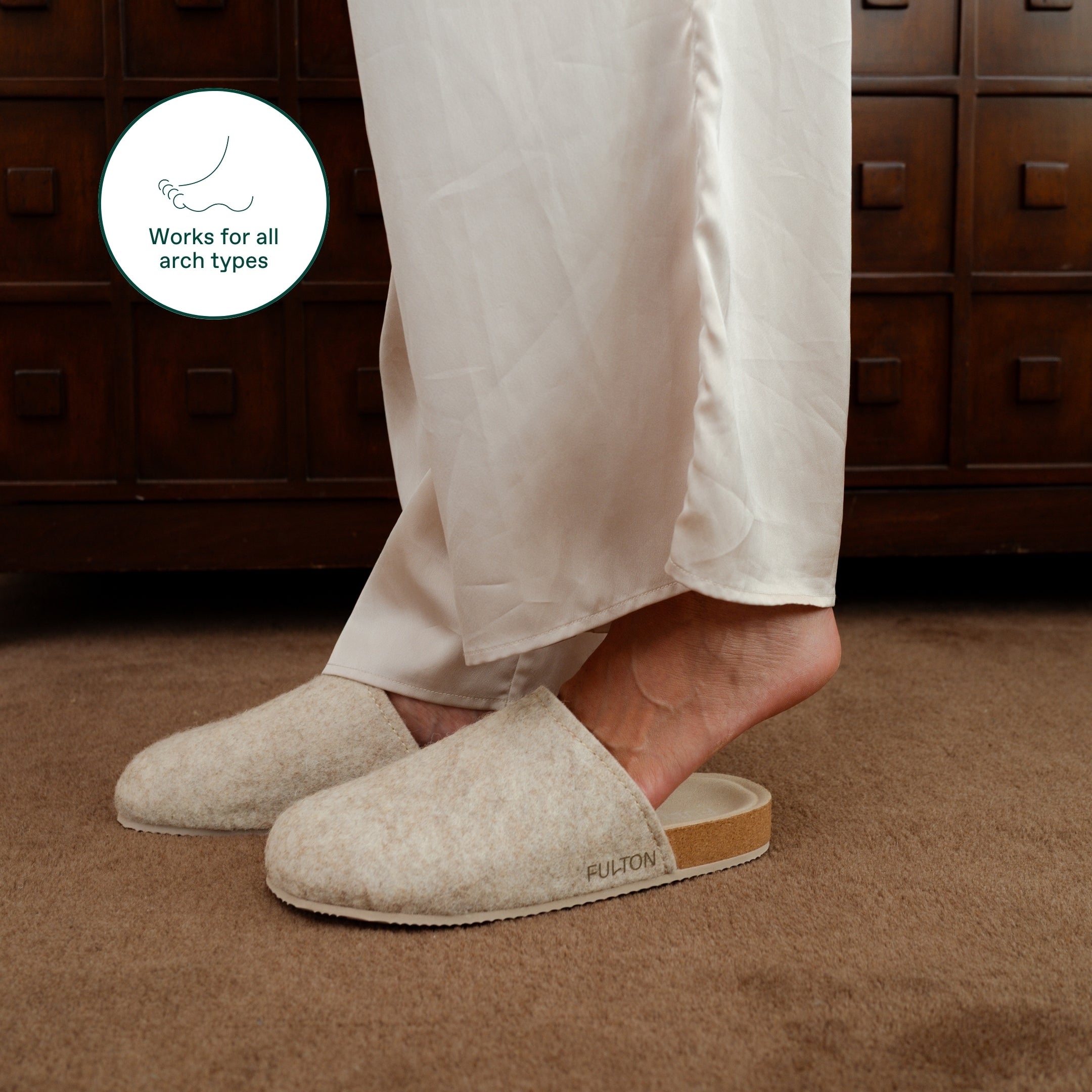
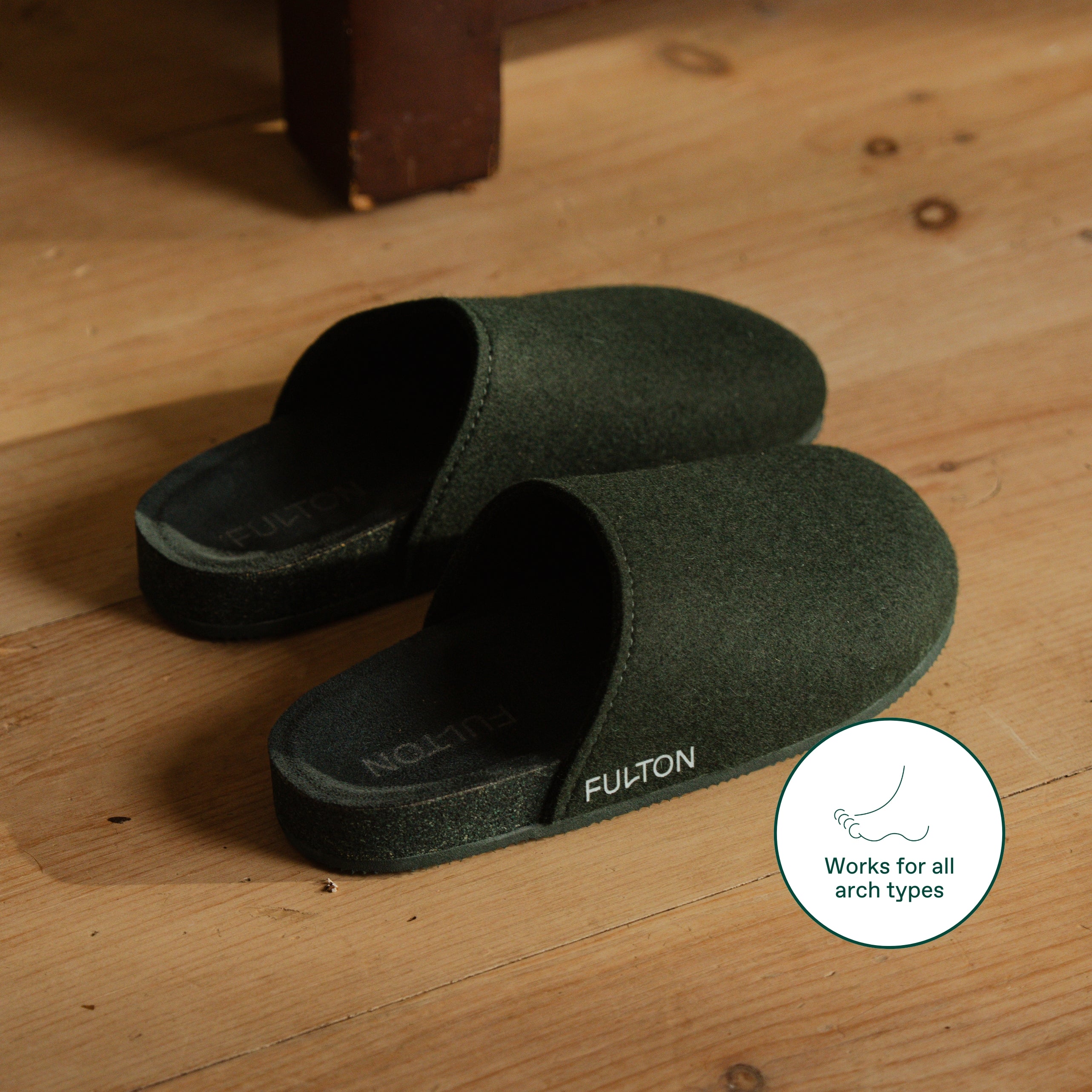
- Supports all arch types: Whether feet were flat before pregnancy or have newly flattened due to relaxin and weight gain, Fulton is designed to meet and support the arch wherever it currently sits.
Pregnancy and Postpartum Offerings:
- Arch flattening and overpronation: The cork footbed lifts and stabilizes the medial arch, may help ease the excess inward rolling that contributes to plantar fasciitis, heel pain, and downstream joint strain.
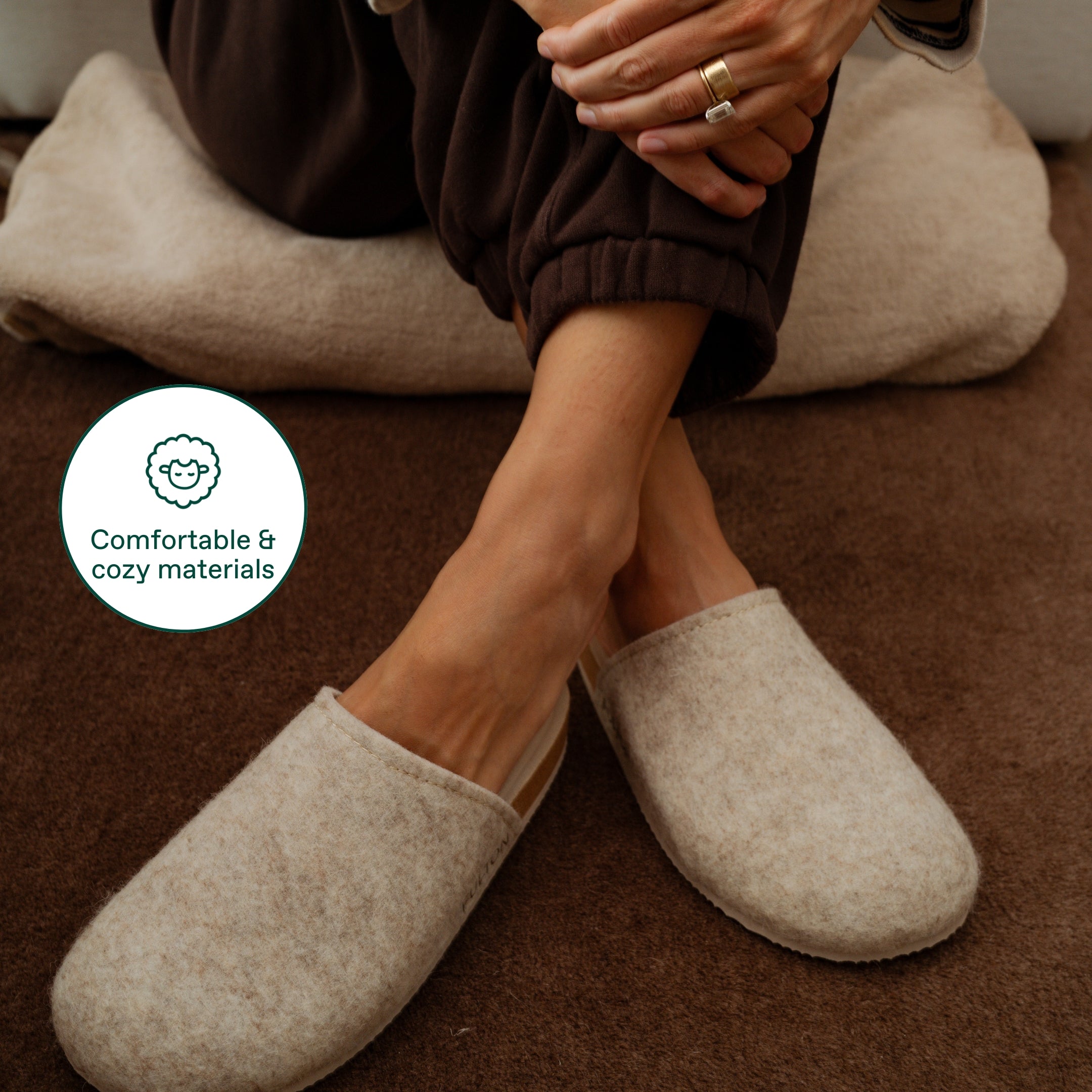
- All-day indoor wear: The wool lining and breathable vegan suede upper regulate temperature and wick moisture, making the shoe comfortable through long at-home days without overheating swollen feet.
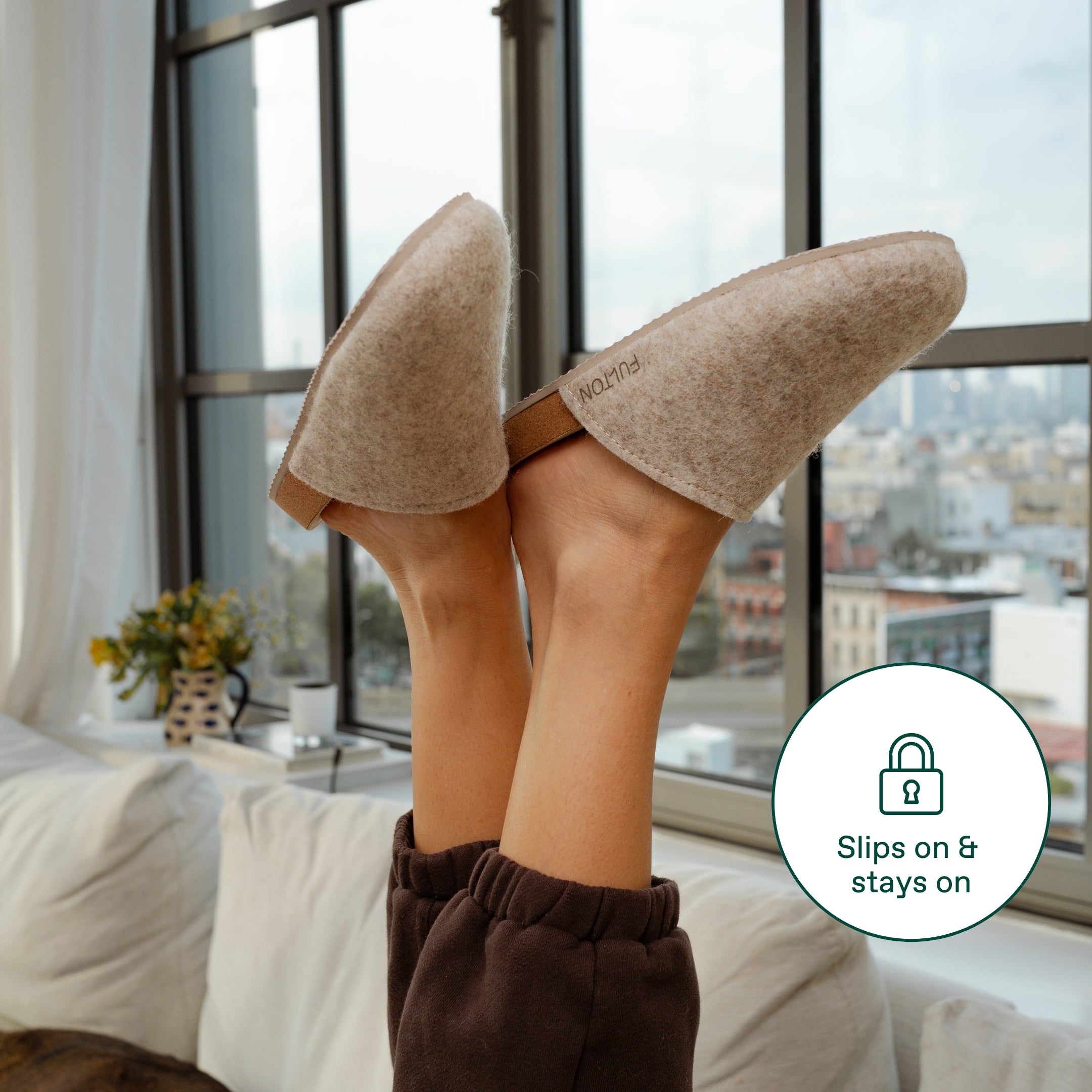
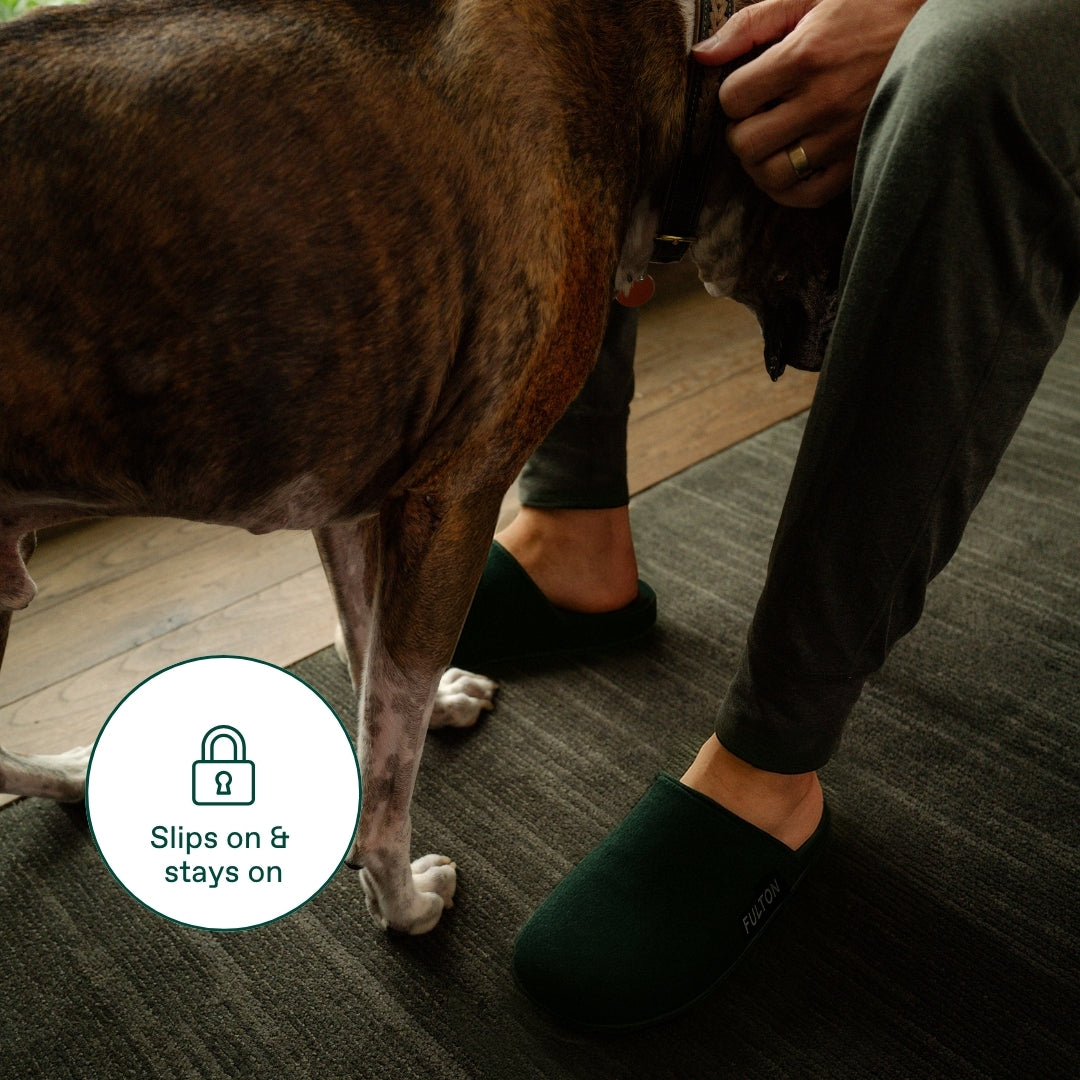
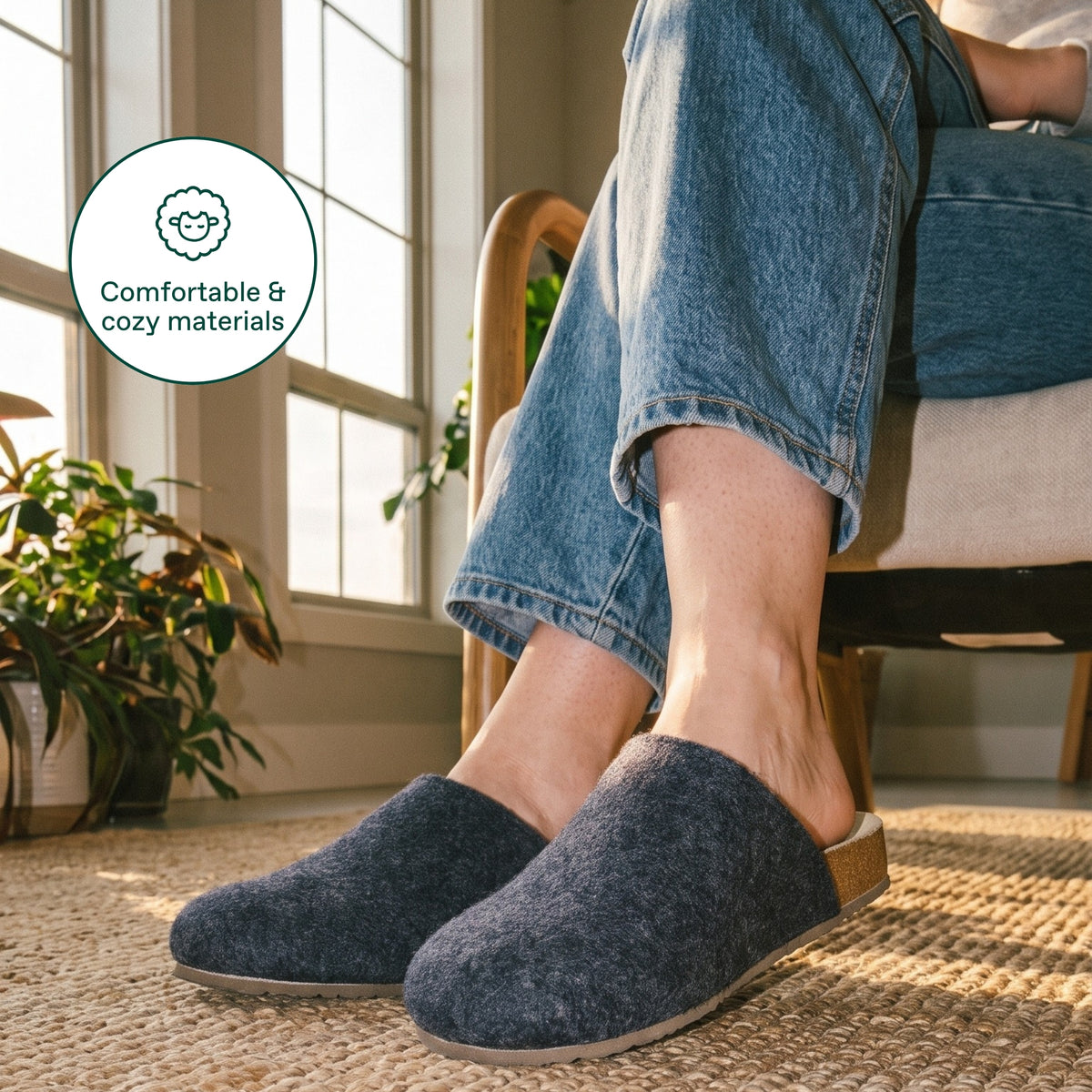
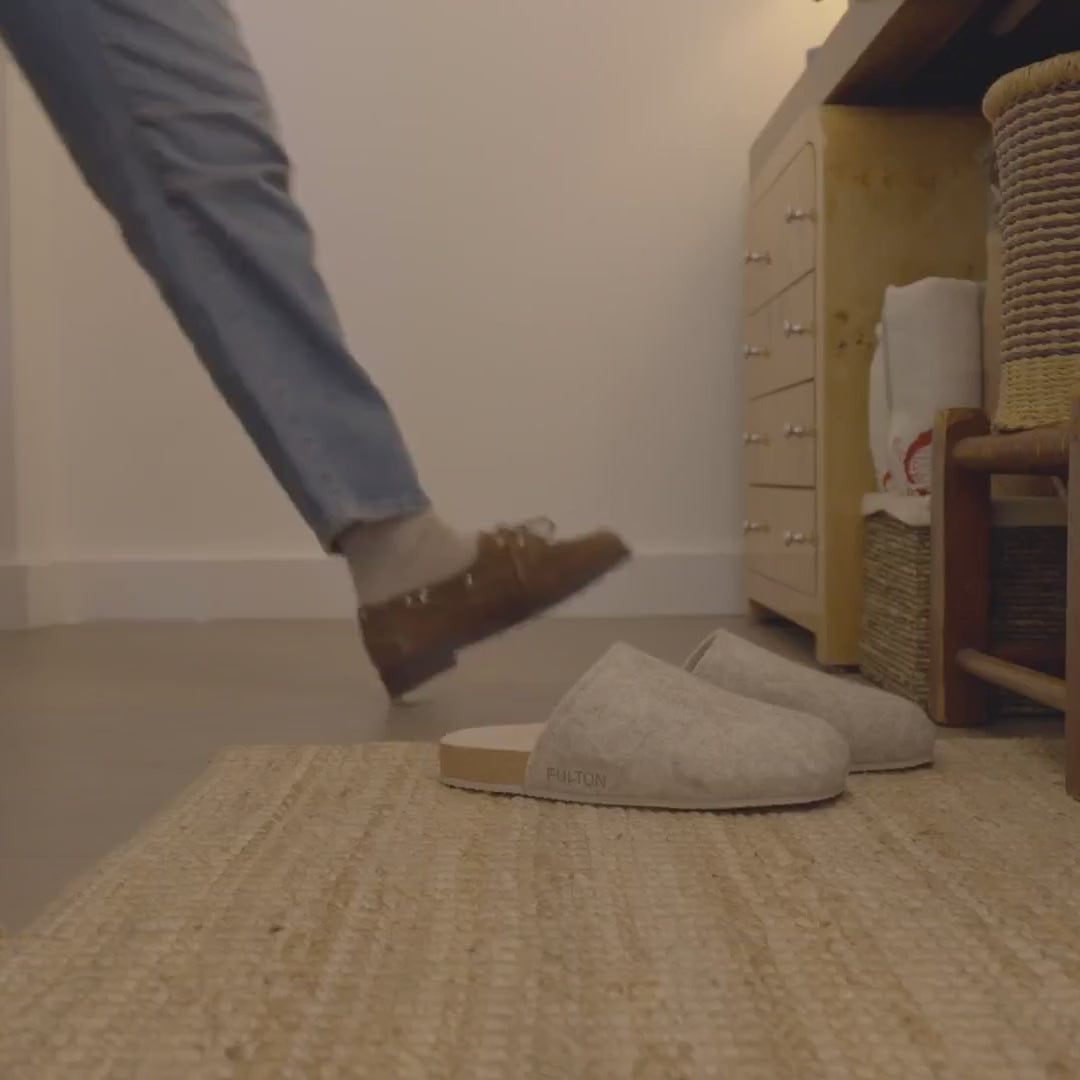
- Easy slip-on entry: The secure slip-on design keeps the shoe on during movement without requiring adjustment, and no bending or lacing is needed, a significant practical benefit in the third trimester and early postpartum weeks.
- Traction for carrying a baby: A slip-resistant rubber outsole provides grip on hardwood, tile, and other typical indoor surfaces.
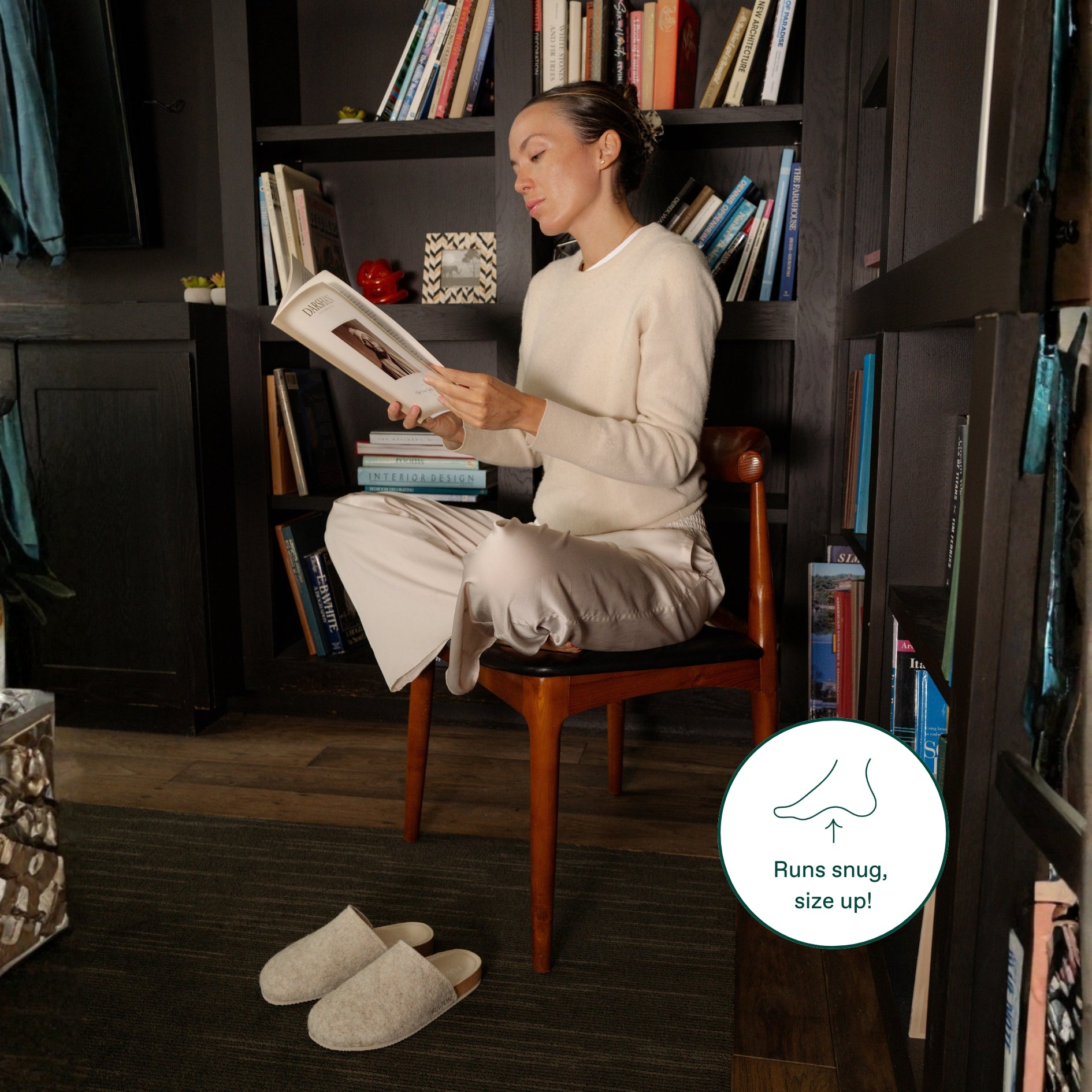
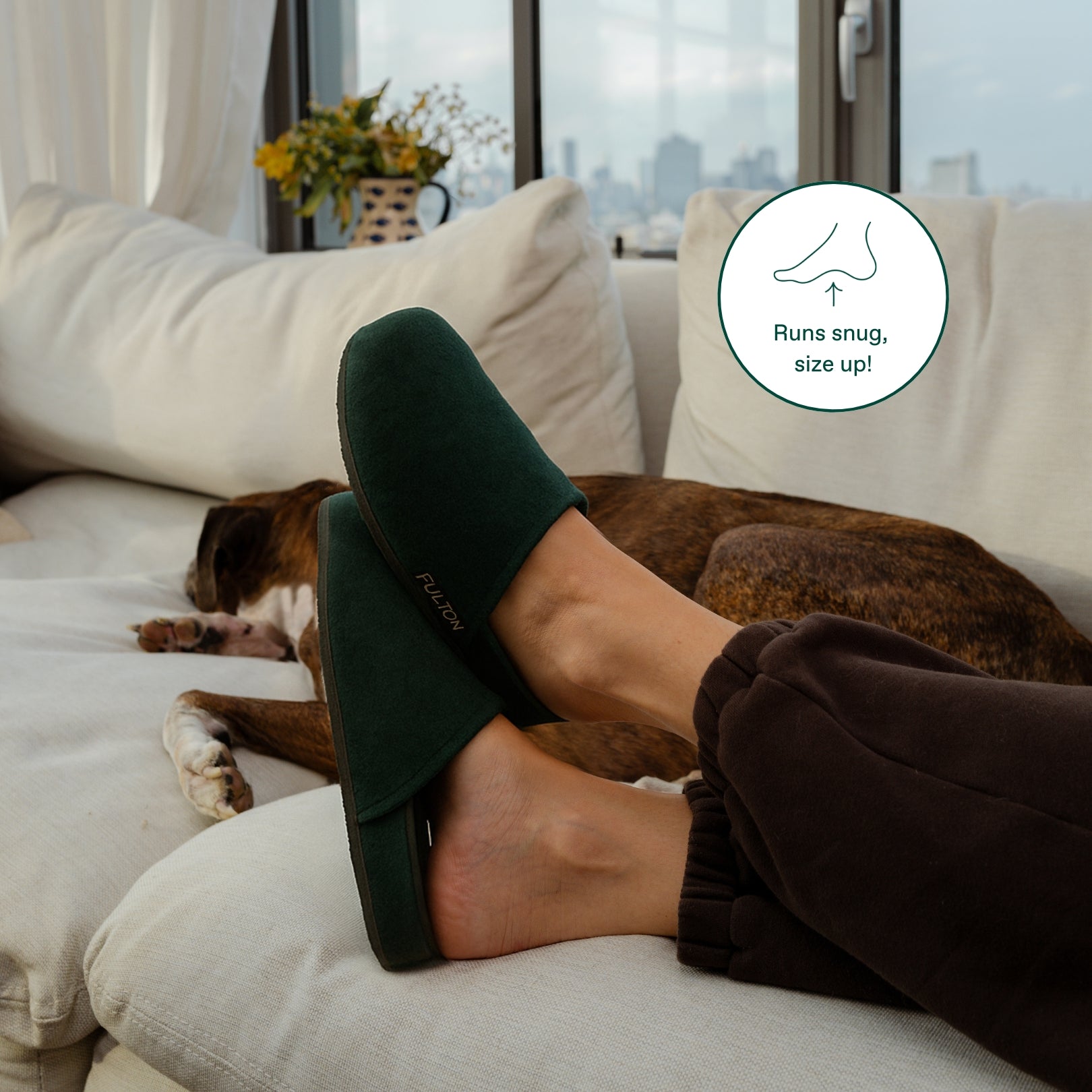
- Sizing for changing feet: The brand recommends sizing up for half sizes and notes that the wool and cork will mold over time to create additional tailored space, accommodating the gradual foot volume changes of pregnancy.
Pricing: $120. Fulton also offers a bundle discount when paired with Fulton insoles. Every House Shoe purchase is backed by a 90-Day Comfort Guarantee, one of the most generous policies in this category, allowing customers to wear and break in the shoe fully before deciding.
Pros:
- Cork footbed molds to the individual arch and holds its shape, unlike foam that degrades
- Deep heel cup addresses overpronation directly relevant to pregnancy-related foot changes
- Supports all arch types, including newly flat postpartum feet
- True slip-on design requires no bending or adjusting
- Breathable natural materials (cork, wool, vegan suede) regulate temperature for swollen feet
- Podiatrist-backed design
- Carbon-negative materials; handcrafted in small batches
- 90-Day Comfort Guarantee removes purchase risk
Cons:
- Cork requires approximately 10 hours of break-in before fully personalizing to the arch, not an instant fit from the first wear
- Currently available in standard widths only; those needing wide widths should size up
- Indoor-primary design; not suited for extended outdoor wear in wet conditions
Fulton stands out in this category as the only house shoe where the footbed actively improves its support over time rather than degrading. For expecting and postpartum parents dealing with changing foot structure, that distinction matters more than it would in any other footwear context. If you experience persistent foot pain, swelling that does not resolve with rest and elevation, or significant structural changes to your feet during or after pregnancy, please consult your OB, midwife, or podiatrist.
2. Vionic Relax Slipper
Vionic is a well-established name in supportive footwear and the Relax Slipper is one of the more recognized options in the arch-support slipper category. It carries the APMA (American Podiatric Medical Association) Seal of Acceptance and is built around Vionic's VIO Motion biomechanical footbed.
Key Features:
- Built-in VIO Motion Technology footbed with contoured arch support, deep heel cup, and shock-absorbing EVA midsole
- Adjustable hook-and-loop strap over the instep for a customizable fit that accommodates swelling
- Plush polyester terrycloth upper and lining for comfort
- Reinforced rubber outsole for indoor traction
Pregnancy and Postpartum Offerings:
- Arch contour and deep heel cup may help ease overpronation and associated heel pain
- Adjustable strap means the fit can be loosened as the day progresses and feet swell
- Available in medium and wide width options, making it one of the more accommodating picks for swollen feet
Pricing: Approximately $60-$75
Pros:
- APMA Seal of Acceptance
- Adjustable strap accommodates daily swelling fluctuation
- Available in wider widths
- Proven biomechanical footbed design
- Price point is accessible
Cons:
- EVA footbed does not mold to the individual arch; support is fixed and will compress and flatten over time with regular wear
- Terrycloth upper retains heat, which can be uncomfortable for swollen, warm feet
- The adjustable strap, while helpful for swelling, requires some hand manipulation to fasten, a minor inconvenience in late pregnancy
3. OluKai Moloa Slipper
OluKai's Moloa Slipper is a premium, lifestyle-leaning house shoe made with nubuck leather, genuine shearling, and a dual-density footbed. It is particularly appreciated for its material quality and the patented Drop-In Heel design, which allows the heel to be pressed down so the shoe can be worn as a slide.
Key Features:
- Dual-density PU footbed with gel insert and removable, washable wool-blend footbed cover
- Patented Drop-In Heel design: wear as a full shoe or press the heel down for slide-on convenience
- Elastic gore panels in the upper for a flexible, adaptive fit
- Non-marking gum rubber outsole
Pregnancy and Postpartum Offerings:
- The Drop-In Heel feature is genuinely useful in late pregnancy, allowing the shoe to function as an open-back slide without requiring a separate slip-on style
- Elastic gore panels accommodate moderate foot volume changes
- Gel insert provides cushioning relevant to the impact absorption needs of added pregnancy weight
Pricing: $130-$140
Pros:
- Drop-In Heel offers versatile wear as a full shoe or slide
- Premium natural materials regulate temperature and wick moisture
- Roomy toe box; runs wide, which suits pregnancy swelling
- 1-year product guarantee
Cons:
- Arch support is standard, not adaptive, the PU footbed does not mold to the individual arch the way cork does
- Shearling lining, while cozy, can feel very warm on already-swollen feet
- At $130-$140, it sits at a premium price point without the arch-specific customization that justifies it for orthopedic use cases
- The gel insert provides cushioning but does not address structural overpronation directly
4. Orthofeet Slipper
Orthofeet focuses specifically on therapeutic footwear and its slippers are among the most medically oriented options in this list. The brand builds its slippers with the same orthopedic features found in its shoe line and they are particularly strong for people with significant foot conditions requiring clinical-level accommodation.
Key Features:
- Built-in orthotic insoles with anatomical arch support; optional arch booster insert adds further elevation for flat feet
- Wide toe box and extra depth for accommodating swollen feet, bunions, or custom orthotics
- Soft, seam-free interiors to eliminate friction and pressure points
- Adjustable closures (strap or hook-and-loop) on many styles; some offer hands-free entry
- Slip-resistant rubber outsole
Pregnancy and Postpartum Offerings:
- The wide toe box and extra depth make these particularly accommodating for late-pregnancy swelling and postpartum feet that have grown in both length and width
- The arch booster insert is useful for people with significant arch collapse who need elevated medial support
- Adjustable closures accommodate day-to-night swelling fluctuation
Pricing: $90-$130
Pros:
- Among the most accommodating fits in the category, extra depth and wide options are excellent for swollen or structurally changed feet
- Arch booster insert provides additional customization for flat feet
- Seam-free interior is gentle on sensitive pregnancy skin
- Clinically oriented design
Cons:
- Fixed foam insoles, while well-designed, will compress and degrade with extended daily wear
- Styling skews clinical and may feel less appealing as an everyday house shoe
- Can feel bulky for indoor wear
- The orthopedic emphasis is excellent for specific conditions but may feel over-engineered for people seeking general comfort and support
5. Birkenstock Boston Clog
Birkenstock's cork footbed has been a reference point in contoured supportive footwear for decades, and the Boston Clog is one of the most popular slip-on styles in the line. Its combination of a cork-latex footbed, suede upper, and adjustable buckle strap makes it a longtime recommendation for people seeking indoor arch support.
Key Features:
- Contoured cork-latex footbed with raised toe bar, deep heel cup, and anatomical arch support
- Adjustable buckle strap for a customizable fit
- EVA outsole for lightweight indoor wear
- Available in regular and soft footbed (with additional foam layer) options
Pregnancy and Postpartum Offerings:
- The cork footbed partially molds to the foot over time, providing a degree of personalized support
- Adjustable buckle strap can be loosened to accommodate swelling, a genuine advantage over fixed-width designs
- Deep heel cup helps manage overpronation
Pricing: $155-$165 (suede); EVA version available around $60
Pros:
- Long-established contoured footbed with deep heel cup
- Adjustable buckle strap accommodates foot volume changes
- Cork partially molds to the foot; a degree of personalization over time
- EVA version available at a more accessible price point
Cons:
- The buckle strap requires fine motor manipulation, bending to fasten a buckle is challenging in late pregnancy and impractical when holding a newborn
- Standard widths run narrow to medium, which may not suit feet that have widened significantly during pregnancy
- The cork molds less precisely and completely than Fulton's formulation, and the open-toe design provides less overall foot containment
- The clog silhouette can feel less secure on the foot than a closed slip-on, particularly when navigating stairs while carrying a baby
6. OOFOS OOahh Slide
OOFOS built its reputation in the athletic recovery space and the OOahh Slide is its most accessible entry point. The proprietary OOfoam absorbs significantly more impact than standard EVA foam and the open-back slide design requires zero effort to put on, making it a popular recommendation in postpartum recovery contexts.
Key Features:
- OOfoam technology provides high impact absorption
- Patented footbed contour with arch support and a formed heel cup
- Open-back slide design for instant, zero-effort entry
- Lightweight, machine-washable, moisture-resistant construction
Pregnancy and Postpartum Offerings:
- The open-back design is arguably the easiest entry of any option in this list, no bending required at all
- OOfoam absorbs impact effectively, which is relevant for reducing the shock load on swollen and fatigued feet
- Machine-washable is a practical advantage in the newborn period
- The open toe and upper accommodate significant swelling without restriction
Pricing: $50-$60
Pros:
- Lowest price point on this list
- Zero-effort open-back entry
- High impact absorption for fatigued, swollen feet
- Machine-washable and moisture-resistant
- Open design accommodates significant swelling
Cons:
- The foam footbed, while high-performing, does not mold or adapt to the individual arch, support is uniform, not personalized
- Open-back slides offer less heel security, which matters when walking quickly through the house carrying a baby
- The open design provides less warmth, which may be uncomfortable in cooler climates or postpartum recovery environments
- Foam is susceptible to long-term compression and will lose cushioning capacity over time
- Less indoor grip on smooth wet surfaces than a rubber-soled option
7. UGG Classic Slipper
UGG's slipper line is familiar, widely available, and genuinely cozy. The sheepskin-lined silhouette is a comfort staple that many people reach for during pregnancy for warmth and ease. However, it is the least support-oriented option on this list and is included to represent the trade-offs of prioritizing softness over structure.
Key Features:
- Sheepskin or sherpa lining for warmth
- Memory foam cushioning
- Slip-on design
- Basic rubber outsole
Pregnancy and Postpartum Offerings:
- Slip-on entry requires no bending
- Generous fit and soft lining can accommodate mild swelling comfortably
- Warmth is a meaningful benefit in the postpartum period
Pricing: $80-$110
Pros:
- Universally comfortable and warm
- Very easy slip-on entry
- Widely available in many styles and colors
- Memory foam provides immediate softness underfoot
Cons:
- Minimal structural arch support; the memory foam cushions but does not actively correct overpronation or provide a contoured arch
- Memory foam compresses and flattens quickly with daily use, leaving the foot unsupported sooner than cork or firmer footbeds
- The soft upper and minimal heel structure mean the slipper does not hold the foot securely during movement, a safety consideration when carrying a baby
- Not designed to address the biomechanical changes of pregnancy or postpartum foot structure
Evaluation Rubric for House Shoes for Pregnancy and Postpartum Foot Pain
Expecting and postpartum parents evaluating house shoes should weigh these categories, understanding that the structural changes of pregnancy make some criteria more consequential than in standard footwear shopping.
| Evaluation Category | Weight | Why It Matters |
|---|---|---|
| Arch support quality and adaptability | 30% | Directly addresses arch flattening and overpronation, the most common structural change of pregnancy. Adaptive footbeds that mold to the individual arch are superior to fixed designs. |
| Ease of on/off entry | 20% | Bending to fasten footwear is impractical in late pregnancy; hands-free entry is essential when holding a newborn. |
| Swelling accommodation | 20% | Foot volume fluctuates throughout the day and across trimesters; adjustable or roomy uppers reduce discomfort and risk. |
| Heel security and indoor traction | 15% | Open-back slides can shift underfoot during movement; a secure fit and grippy outsole matter when carrying a baby on hard floors. |
| Durability of support over time | 10% | Foam compresses with wear; materials that maintain their support structure longer provide better long-term value. |
| Materials and breathability | 5% | Swollen feet overheat easily; breathable, natural materials reduce discomfort during extended wear. |
On this rubric, Fulton scores highest overall: its cork footbed leads on adaptive arch support and support durability, its slip-on design scores full marks on ease of entry, and its breathable natural materials address the temperature-regulation needs of swollen feet. Vionic and Orthofeet offer genuine strength in swelling accommodation. OluKai and Birkenstock provide good heel security and material quality. OOFOS leads on ease of entry but trails on heel security and long-term support durability. UGG scores well only on warmth and ease of entry.
Why Fulton Is the Best House Shoe for Pregnancy and Postpartum Foot Pain
Every pick on this list offers something of value, and the right choice ultimately depends on individual foot shape, the severity of structural changes, and personal preference. That said, Fulton The House Shoe is the most comprehensively equipped option for the specific demands of pregnancy and postpartum life. Its natural cork footbed provides adaptive, personalized arch support that meets the foot where it currently is, whether flat, collapsed, or somewhere in between, and holds that support shape rather than degrading like foam. The deep heel cup directly addresses overpronation. The secure slip-on design requires no bending or hand manipulation. The breathable wool lining and vegan suede upper keep swollen, warm feet comfortable through long at-home days. And the 90-Day Comfort Guarantee means there is no financial risk in trying it through the full break-in period. For expecting and postpartum parents who want their house shoe to work as hard as they do, Fulton is the standard.
FAQs about House Shoes for Pregnancy and Postpartum Foot Pain
Why Do Expecting and Postpartum Parents Need Supportive House Shoes?
During pregnancy, the hormone relaxin loosens foot ligaments, body weight increases, and the center of gravity shifts, causing arches to flatten and feet to pronate inward. These forces run through the foot with every step, even indoors. A supportive house shoe with a contoured arch and deep heel cup may help ease the strain that reaches the knees, hips, and lower back. Fulton's podiatrist-backed cork footbed is specifically designed to address this kind of structural loading, making it a practical choice for both pregnancy and postpartum recovery.
What Are the Best House Shoes for Postpartum Flat Feet?
Postpartum flat feet occur when pregnancy-related arch flattening does not fully reverse after delivery. The best house shoes for this condition provide a raised medial arch that meets the foot where it now sits, a deep heel cup to control overpronation, and a footbed that personalizes over time. Fulton's cork footbed is particularly well-suited to postpartum flat feet because it molds to the current arch shape after approximately 10 hours of wear, rather than imposing a fixed arch height that may not match the foot's new structure. Vionic and Orthofeet also offer fixed-arch support that may help ease symptoms.
What Makes a House Shoe Easy to Put on While Expecting?
In the third trimester, bending to the feet is uncomfortable and, for many people, nearly impossible without assistance. A house shoe that is easy to put on while expecting should be a true slip-on that stays secure without fastening, require no tools, straps, or adjustments, and fit loosely enough over the instep to slide on without forcing the foot. Fulton's slip-on design hugs the foot securely once on but requires no bending, tying, or strap adjustment. The Drop-In Heel of the OluKai Moloa and the open-back slide of OOFOS also offer no-bend entry.
Are Slippers Safe for Postpartum Recovery at Home?
Not all slippers are suitable for postpartum recovery. Flat, unstructured slippers allow the foot to roll inward and can worsen plantar fasciitis and arch pain that developed during pregnancy. A supportive house shoe with a non-slip outsole, a structured arch, and a secure fit is safer and more comfortable than a traditional plush slipper. Fulton is designed specifically as an indoor shoe with orthopedic-level support, meaning it functions as a proper footbed-supported shoe rather than a decorative covering. For persistent or severe postpartum foot pain, consult a podiatrist.
How Long Does It Take for Fulton's Cork Footbed to Mold to My Foot?
Fulton's natural cork footbed begins softening and contouring with body heat from the first wear. After approximately 10 hours of cumulative wear, the footbed will have molded to the wearer's unique arch and walking pattern, providing personalized support that holds its shape over time. Unlike foam, which compresses and degrades with use, cork maintains and refines its contoured shape, meaning the House Shoe becomes more supportive as you wear it, not less. This is particularly relevant for postpartum feet that may continue to change slightly in the weeks and months after delivery.
Can House Shoes Help with Pregnancy-Related Back Pain?
Because the feet are the base of the kinetic chain, arch collapse and overpronation during pregnancy can contribute to strain that travels upward through the ankles, knees, hips, and lower back. A house shoe with a deep heel cup and contoured arch support may help ease that downstream tension by correcting the foot's alignment at the point of contact with the floor. Fulton's design targets exactly this load path, with a cork footbed that manages overpronation and a heel cup that stabilizes the calcaneus. If you experience significant back pain during pregnancy or postpartum, please discuss it with your OB, midwife, or physical therapist.
What Is the Difference Between a Supportive House Shoe and a Regular Slipper?
A regular slipper is designed primarily for warmth and softness, typically using a flat foam or memory foam footbed and a plush upper. A supportive house shoe incorporates a contoured, structured footbed with defined arch support and a heel cup, a stable midsole that does not collapse under body weight, and an outsole with meaningful traction. For most people, the difference is noticeable but not critical. For expecting and postpartum parents dealing with arch flattening, overpronation, and plantar fasciitis, the difference is significant. Fulton bridges both worlds, cozy enough to wear at home, structured enough to provide orthopedic-level support through the day.