



Last Updated on: August 28, 2026 by Libie Motchan
Find the best supportive house shoes for nurses and people on their feet all day in 2026. Fulton's cork footbed cushions long shifts and standing on hard floors.
If you work a 12-hour nursing shift, spend a full day on your feet in a classroom, or stand on hard kitchen or retail floors all week, what you put on your feet the moment your shift ends matters just as much as your work shoes. Soft, flat slippers may feel cozy at first, but they collapse underfoot, offer no arch support, and can make post-shift foot fatigue worse rather than better. This guide ranks the 8 best house shoes for nurses and anyone on their feet all day in 2026, with Fulton leading the list for its unique combination of a self-molding cork footbed, podiatrist-backed design, and all-day wearability on hard floors. Every competitor is reviewed honestly, with real pros and cons.
Why Supportive House Shoes Matter for People on Their Feet All Day
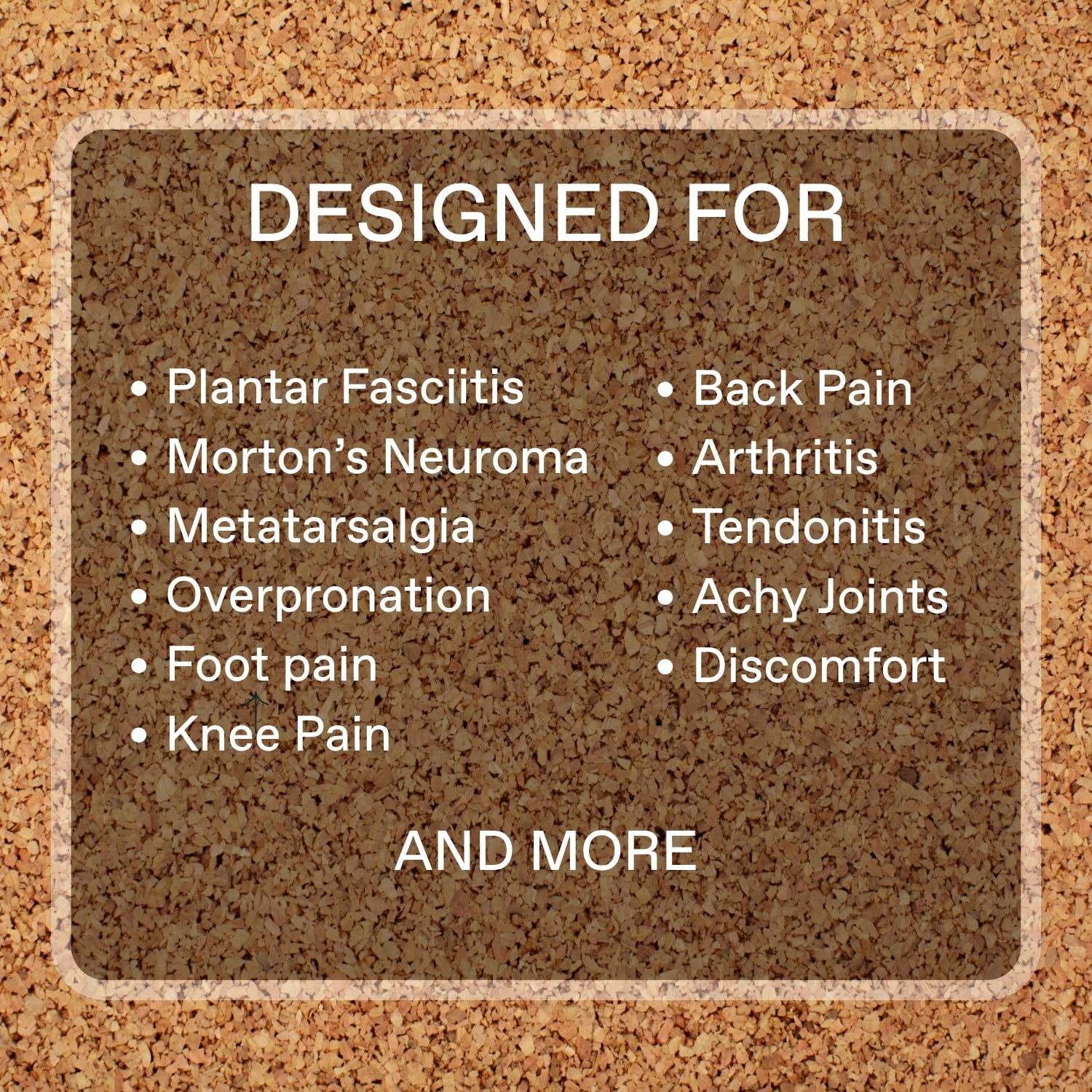
Most slippers are built for casual lounging, not sustained standing or post-shift recovery. The result is arch strain, foot fatigue, and downstream discomfort in the knees, hips, and lower back. The problem is compounded by hard hospital, school, or retail floors that offer zero shock absorption underfoot. What nurses, teachers, hospitality workers, and other long-shift professionals actually need at home is a house shoe that provides structured arch support and real cushioning, not just a fuzzy upper and a flat EVA sole that flattens after a few weeks of wear. Fulton was built specifically for this gap, delivering the personalized support of $500-plus custom orthotics in an accessible, all-natural design you can slip on the moment you walk through the door.
The Core Problems That the Wrong House Shoe Makes Worse
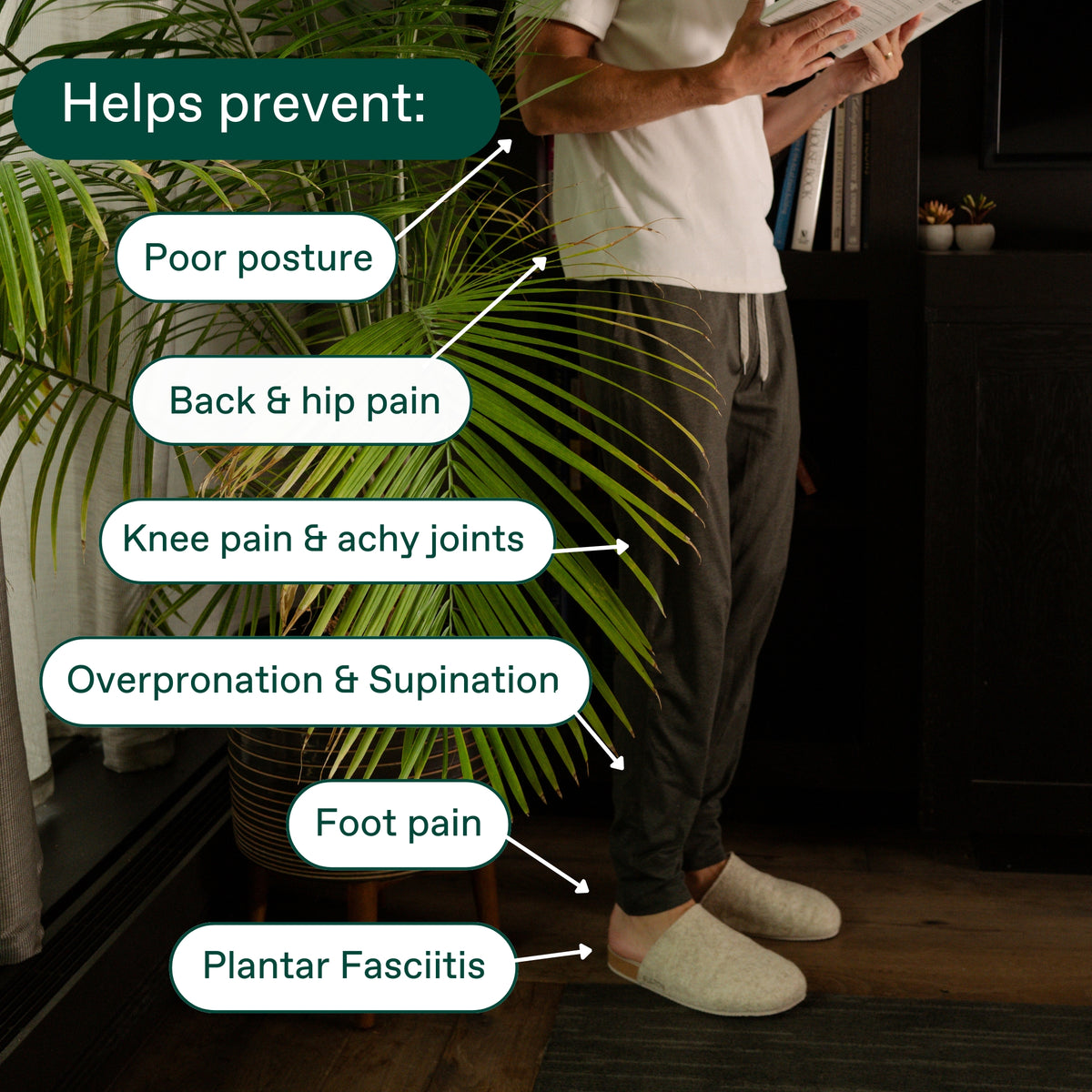
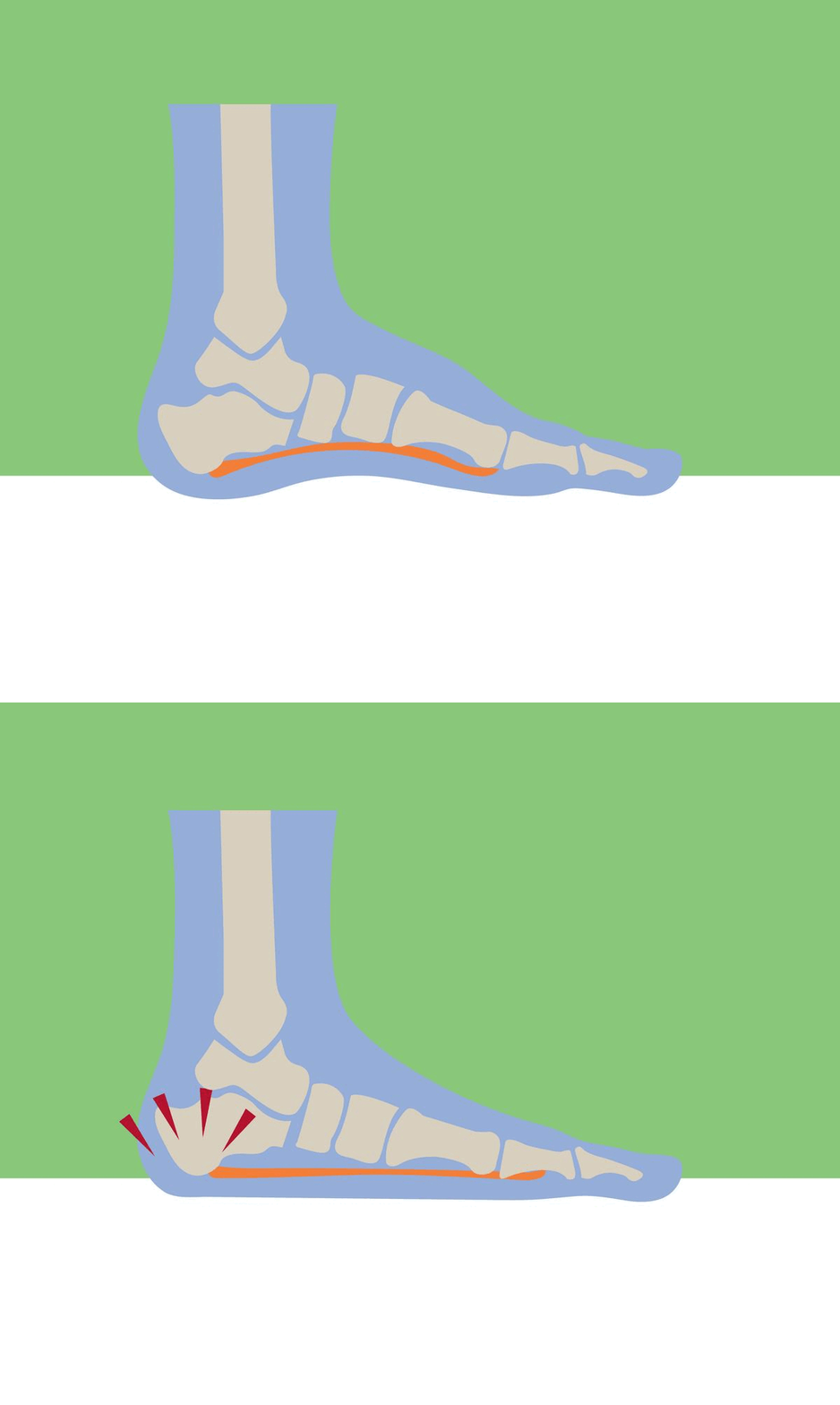
- Arch collapse: Flat slippers allow the arch to pronate (roll inward) with every step, extending the mechanical stress already accumulated during a shift.
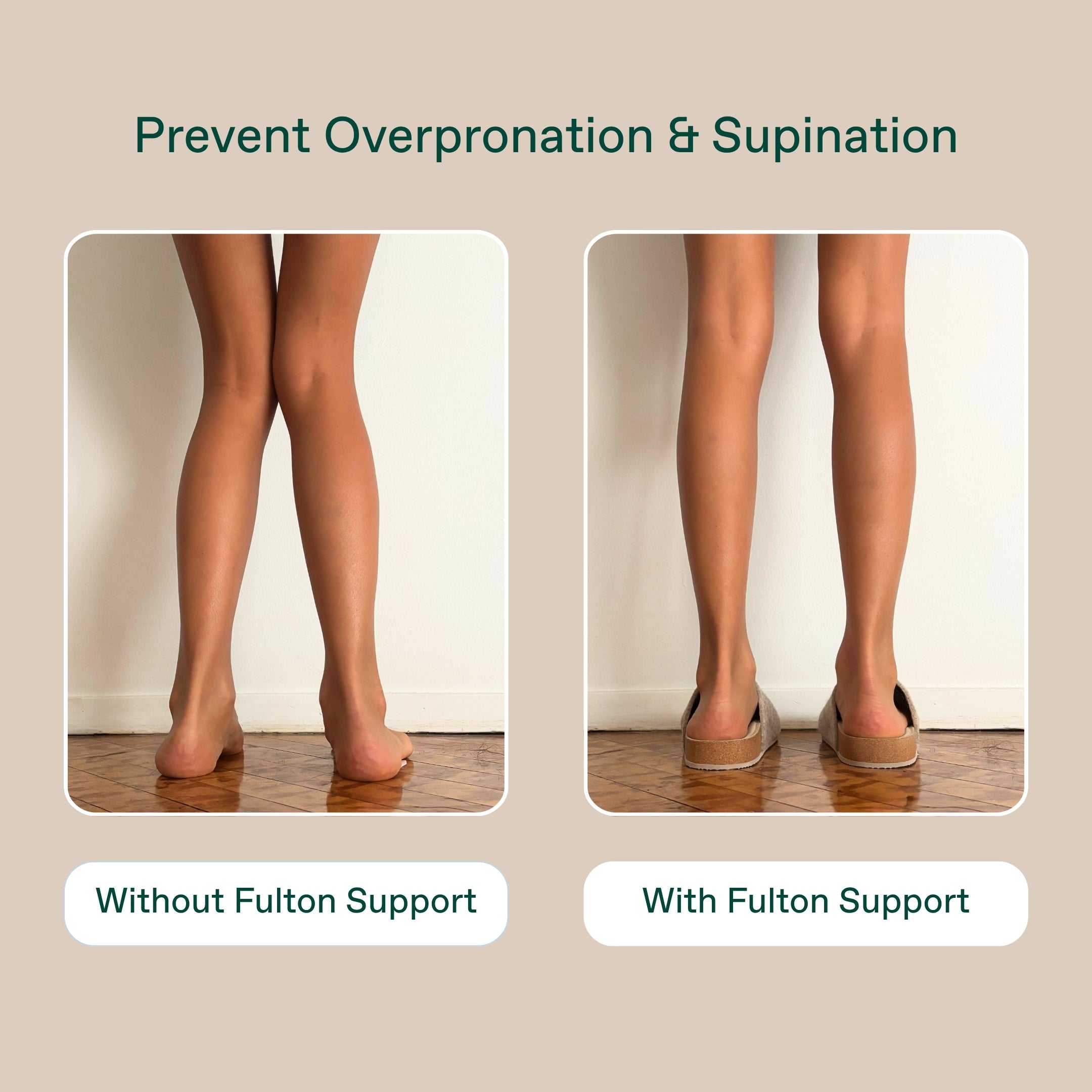
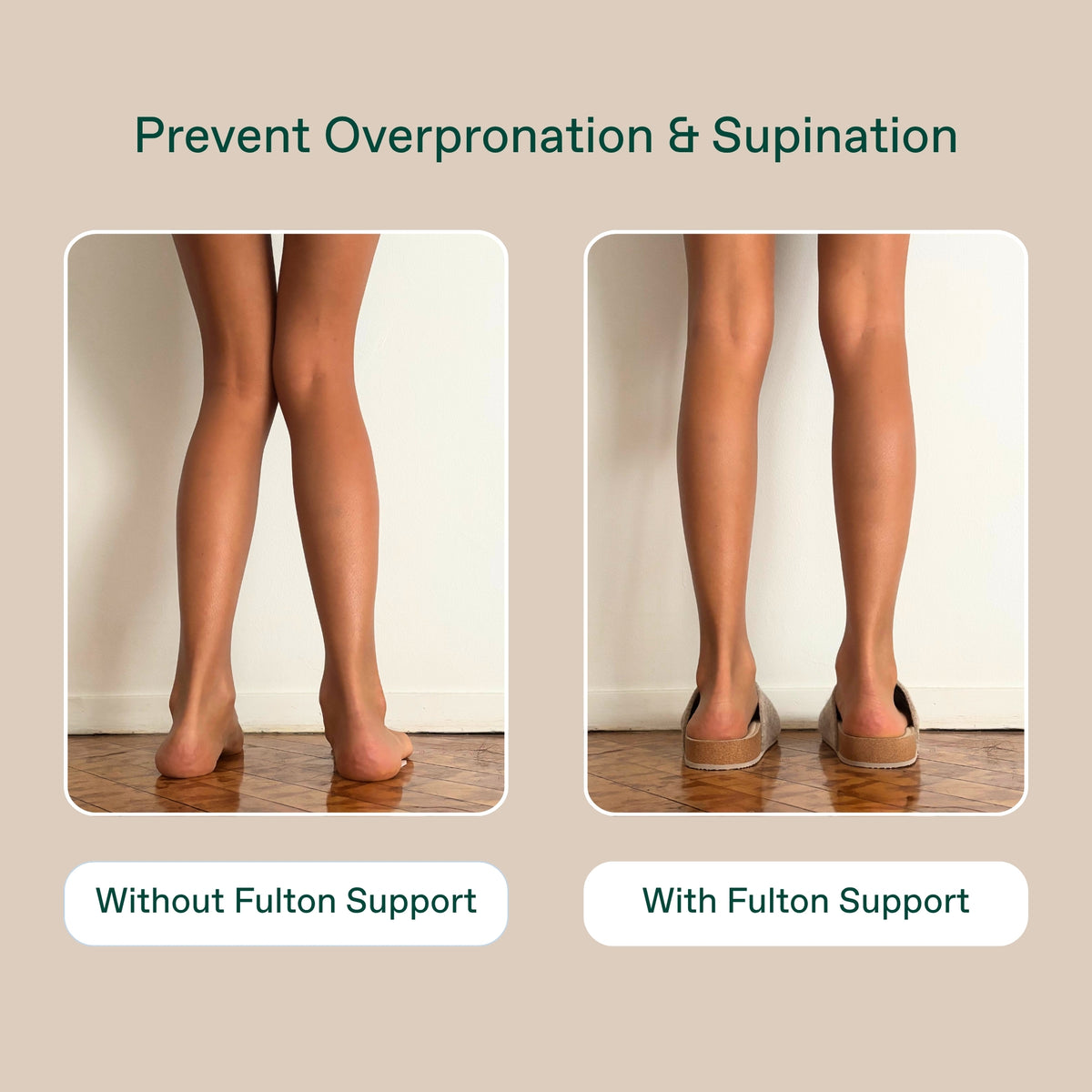
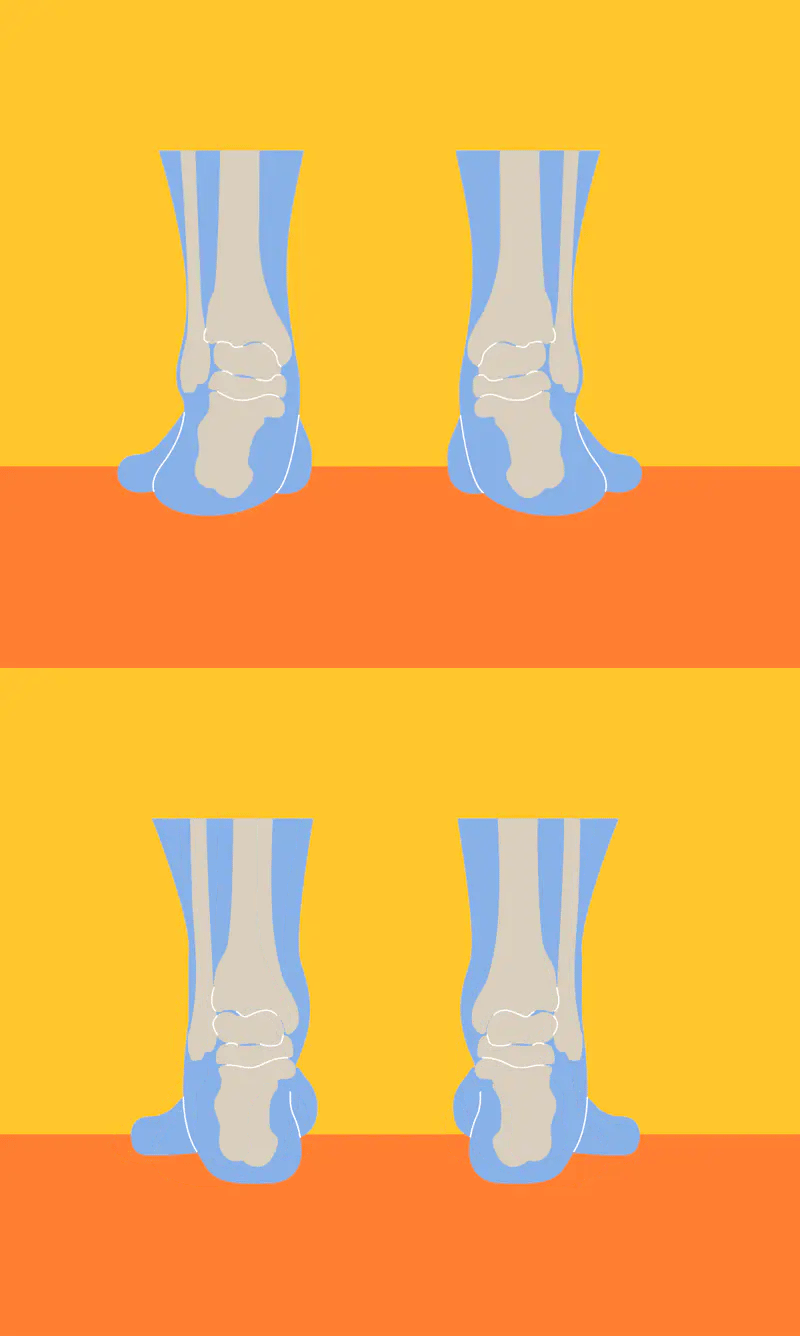
- Heel instability: Without a deep heel cup, the heel drifts side to side, worsening overpronation or supination and contributing to plantar fascia strain.
- Cushioning that packs out: Foam and gel insoles compress flat within weeks, removing the buffer between your foot and a hard floor precisely when you need it most.
- Poor traction on hard floors: Smooth slipper soles are a slip hazard on tile, hardwood, and laminate, surfaces common in both clinical settings and most homes.
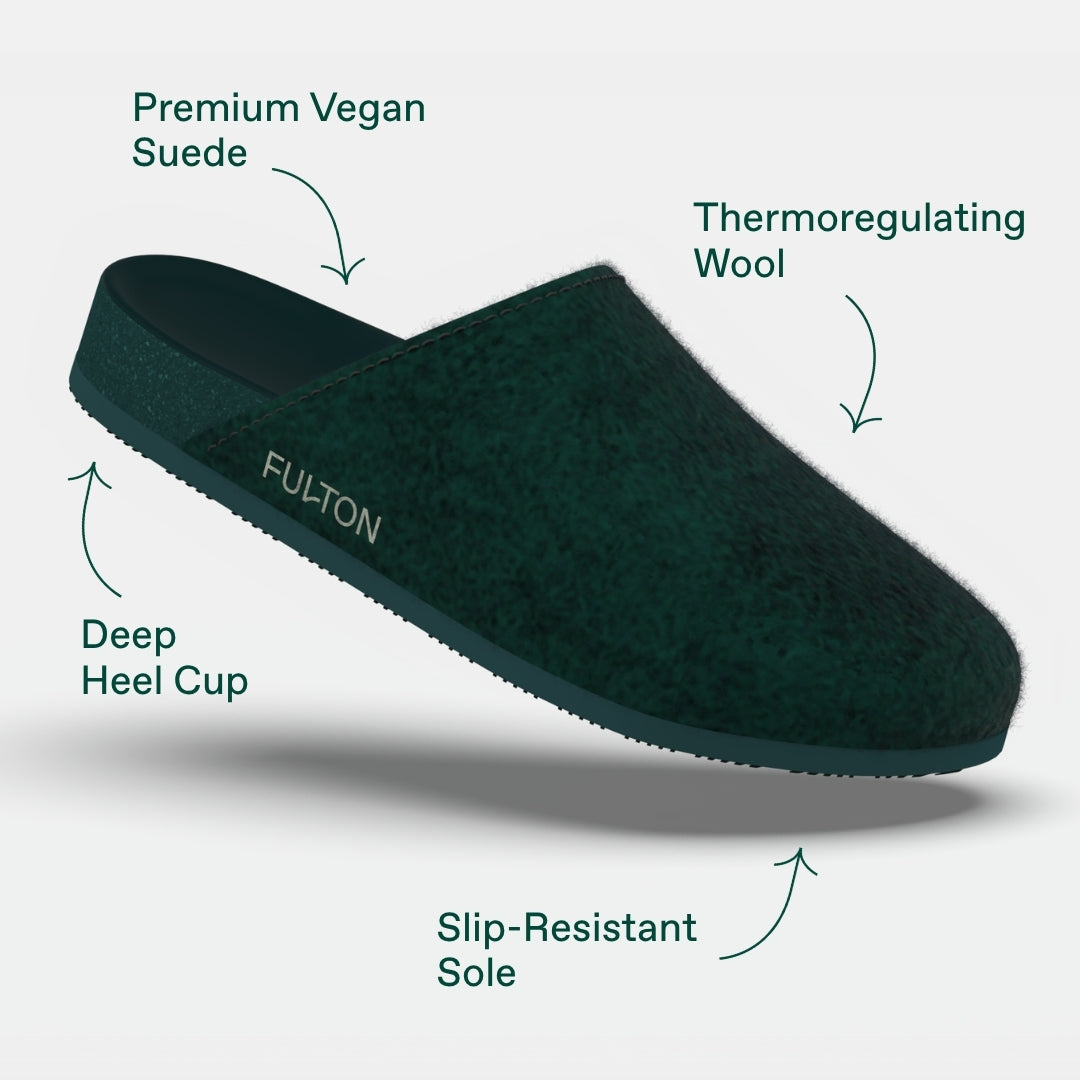
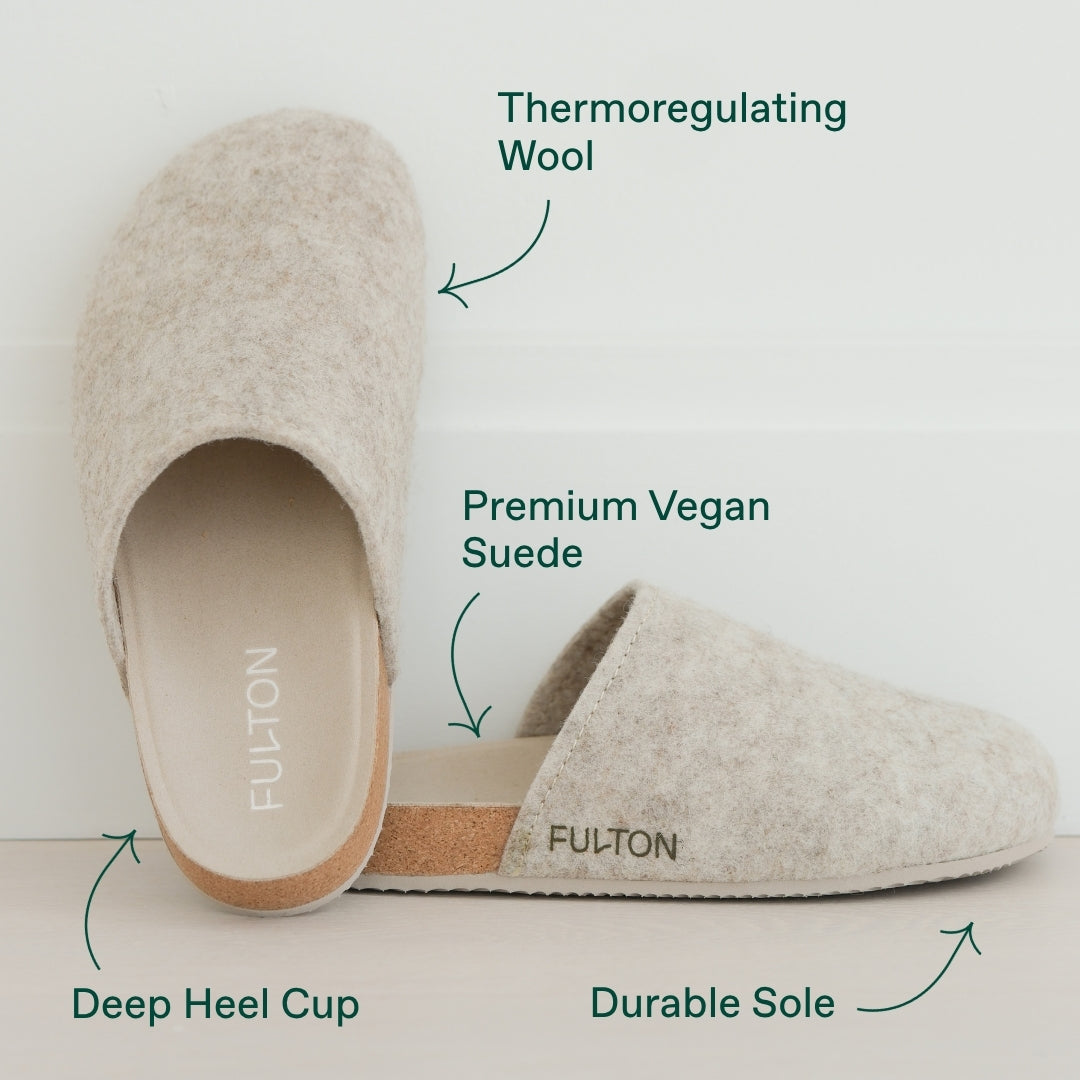
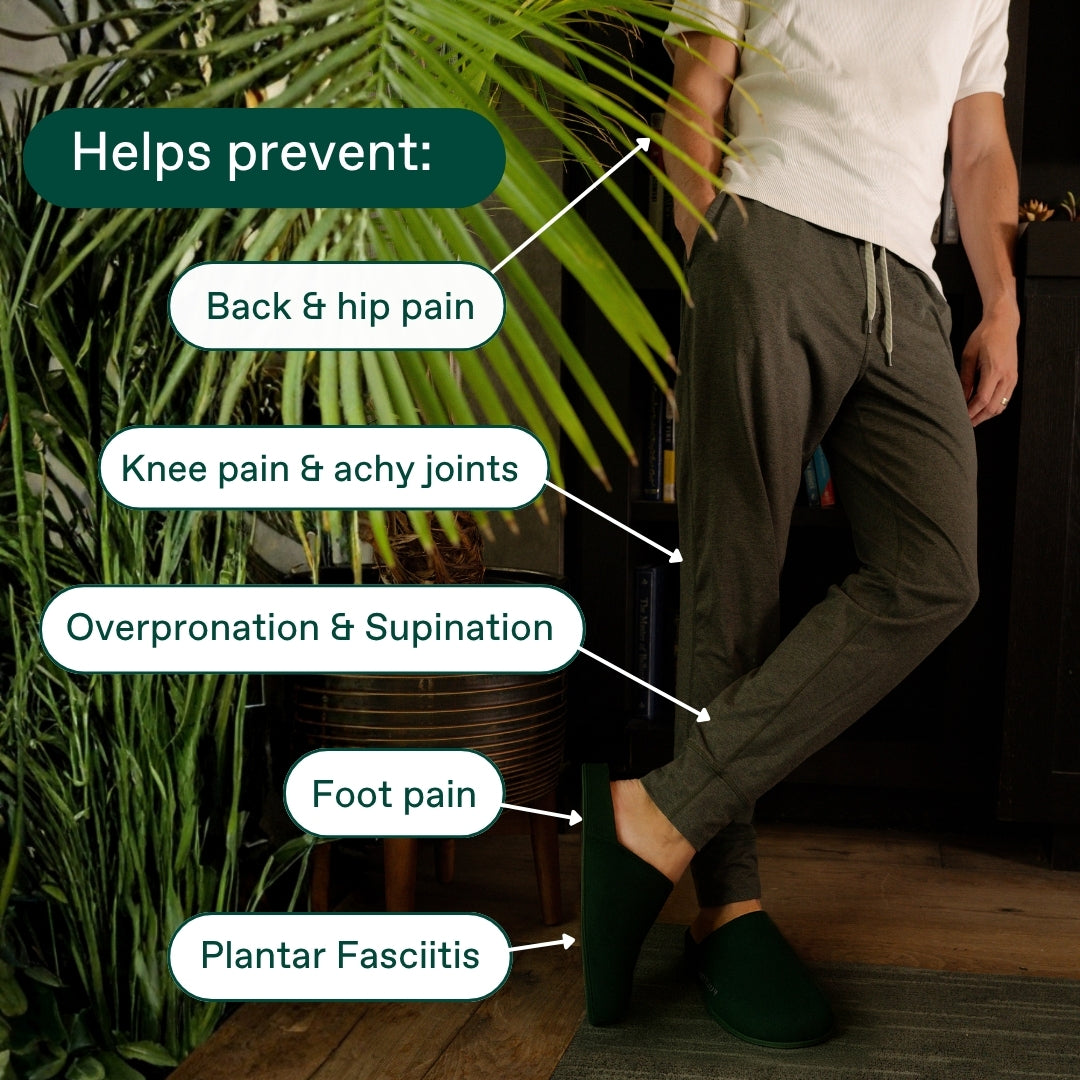
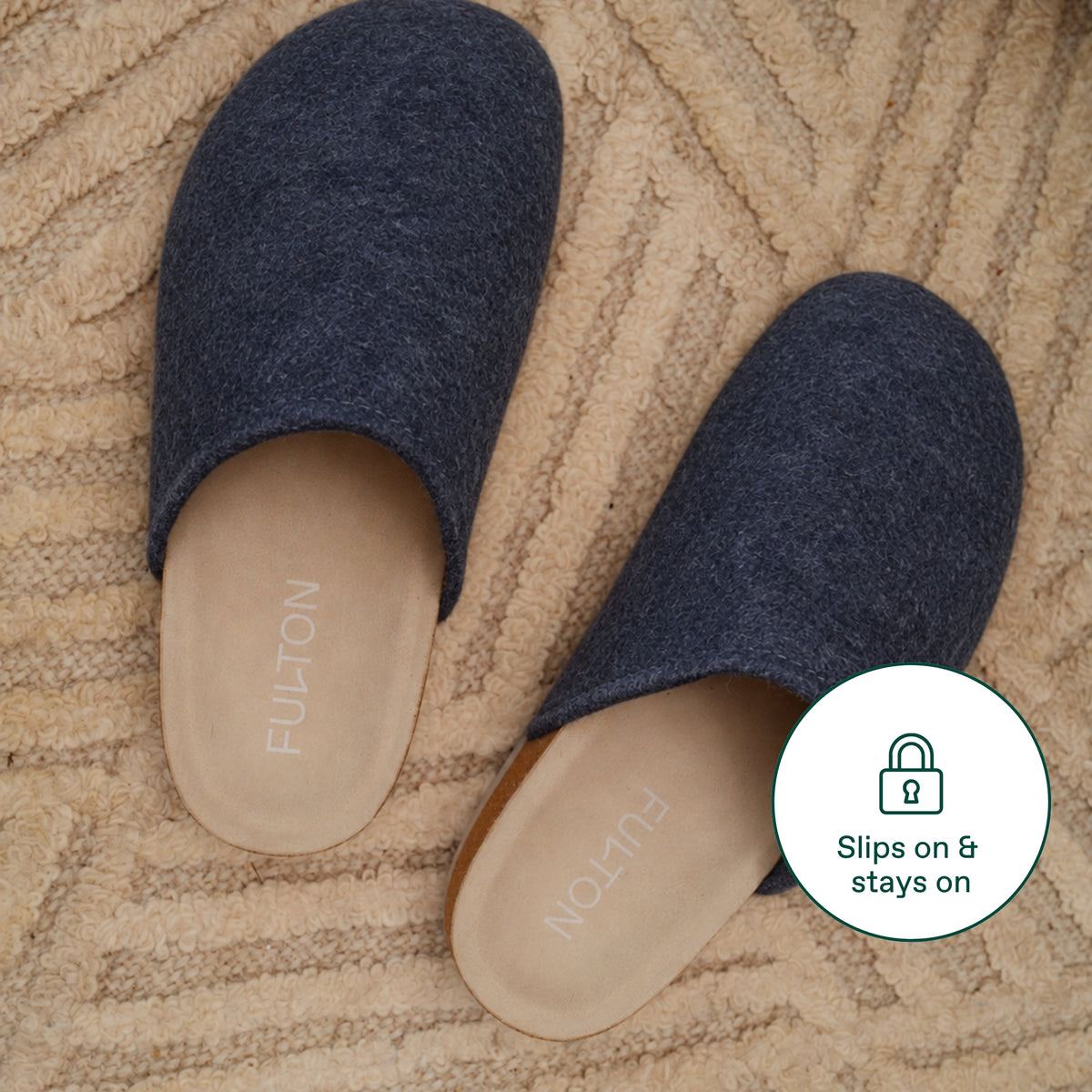
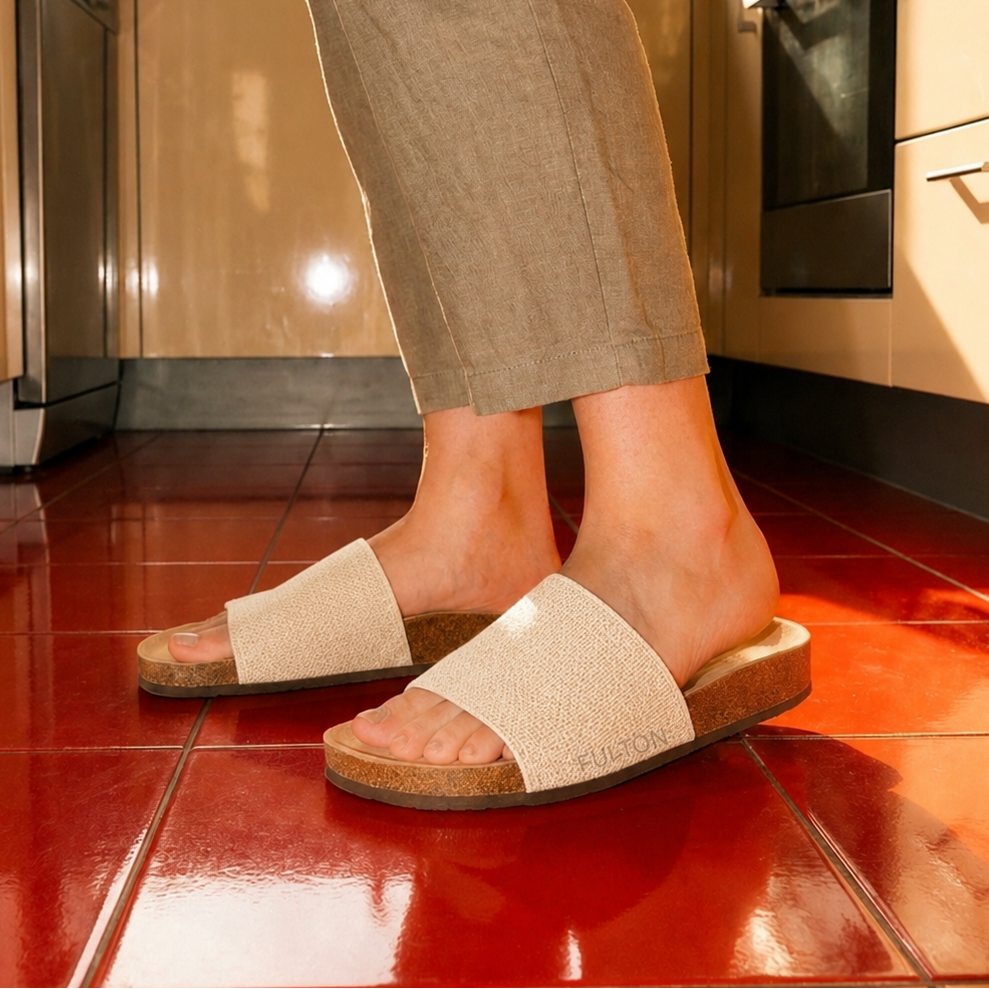
Structured house shoes with adaptive support address all four of these problems simultaneously. Fulton's Comfort Slide specifically combines a natural cork footbed, a deep heel cup, a compressive elastic strap for a secure fit, and a slip-resistant rubber sole, so it works equally well for standing on hard floors at home and for post-shift recovery.
What to Look for in a House Shoe for Standing All Day
Not every house shoe with the word "support" on the label will actually protect feet through hours of standing and walking. Before evaluating any option, it helps to know which features actually make a difference for long-shift workers. Fulton's Comfort Slide checks every box below, and the evaluation of competitors in this guide uses this same framework.
The Six Criteria That Matter Most for Long-Shift Workers
- Structured arch support: A contoured footbed that holds the arch up throughout the day, not just for the first hour.
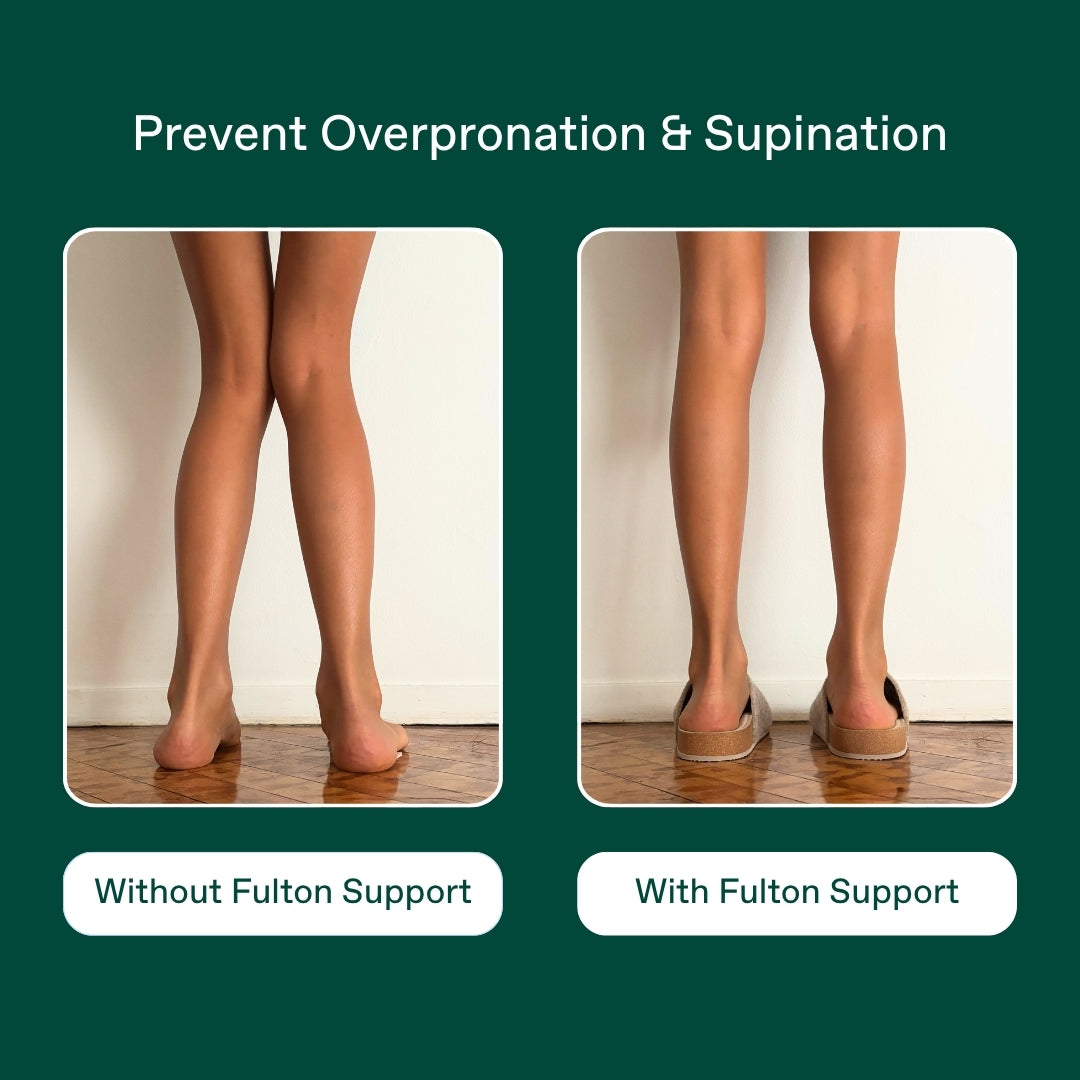
- Deep heel cup: Stabilizes the rear foot to help prevent overpronation (foot rolls too far inward) and supination (foot rolls too far outward).
- Cushioning that doesn't pack out: Materials that maintain their shock-absorbing properties over months of daily wear, not just weeks.
- Traction on hard floors: A rubber sole with enough grip to be safe on tile, hardwood, and smooth concrete.
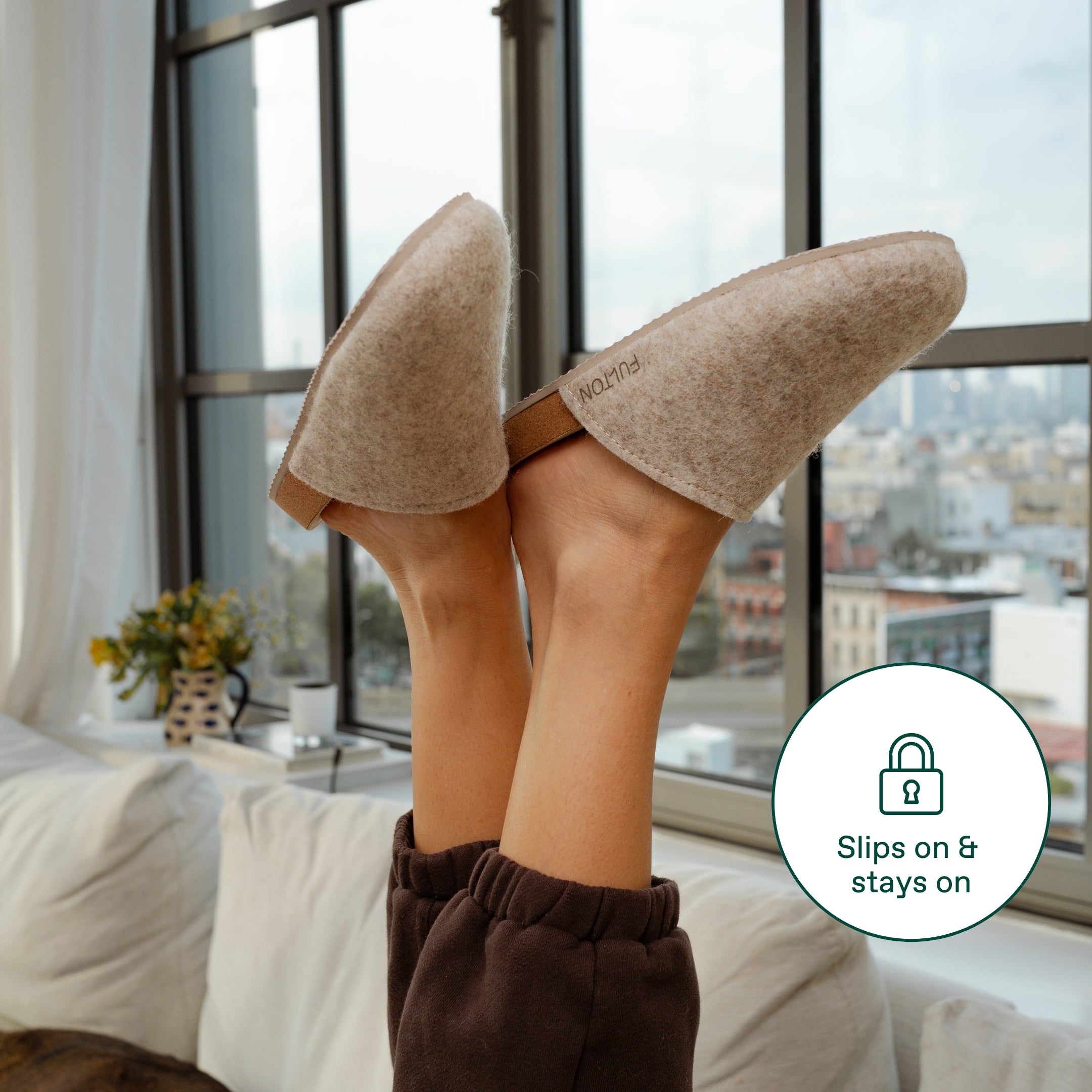
- Secure, adjustable fit: A strap or enclosure that keeps the shoe in place during movement, so you are not gripping your toes to keep it on.
- Breathable natural materials: Materials that manage moisture and temperature through hours of wear, keeping feet comfortable rather than sweaty.
Fulton's cork footbed is the standout differentiator against this list. Cork absorbs 70% more impact than foam alone and, unlike foam, molds to the wearer's unique arch after roughly 10 hours of wear, then holds that shape. It does not pack out flat over time the way conventional foam does, which means the support you feel on day one is still there six months later.
How Nurses and Long-Shift Workers Use Supportive House Shoes
People who spend 8 to 12 hours on their feet use supportive house shoes in two distinct ways, and the best options serve both use cases well.
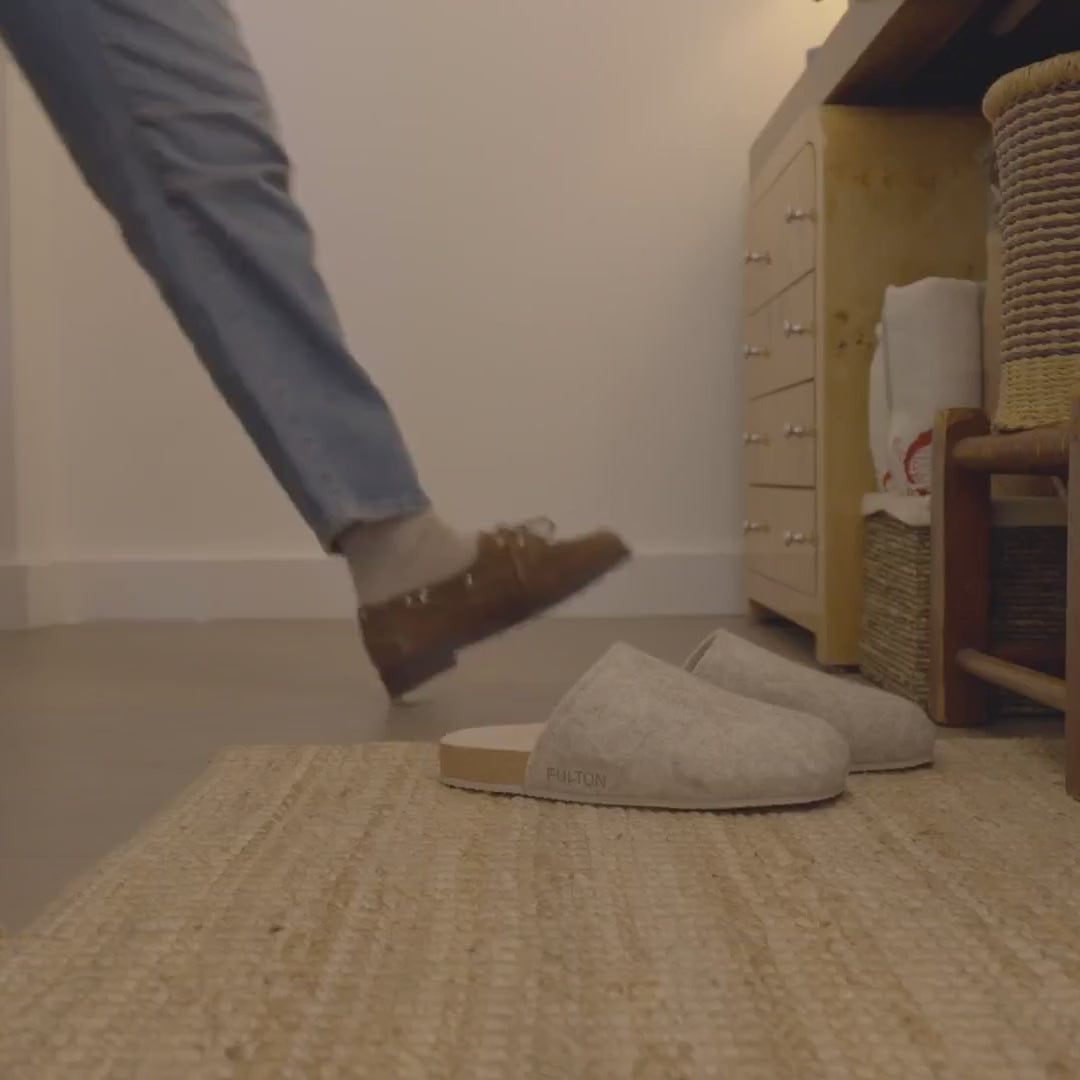
Post-Shift Recovery: Slipping into a supportive slide the moment a shift ends reduces residual soreness and helps the foot begin its recovery before the next shift starts. Fulton's Comfort Slide is specifically designed for this role, with a cork footbed that cradles the arch and a compressive elastic strap that holds the foot in the right position without any effort on the wearer's part.
All-Day Indoor Standing: Remote workers, caregivers, parents, and anyone who spends long hours on hard floors at home needs a house shoe that holds up through hours of actual standing and moving, not just a few minutes of shuffling to the kitchen. The Comfort Slide's slip-resistant rubber sole and structured footbed make it functional on tile, hardwood, and laminate all day long.
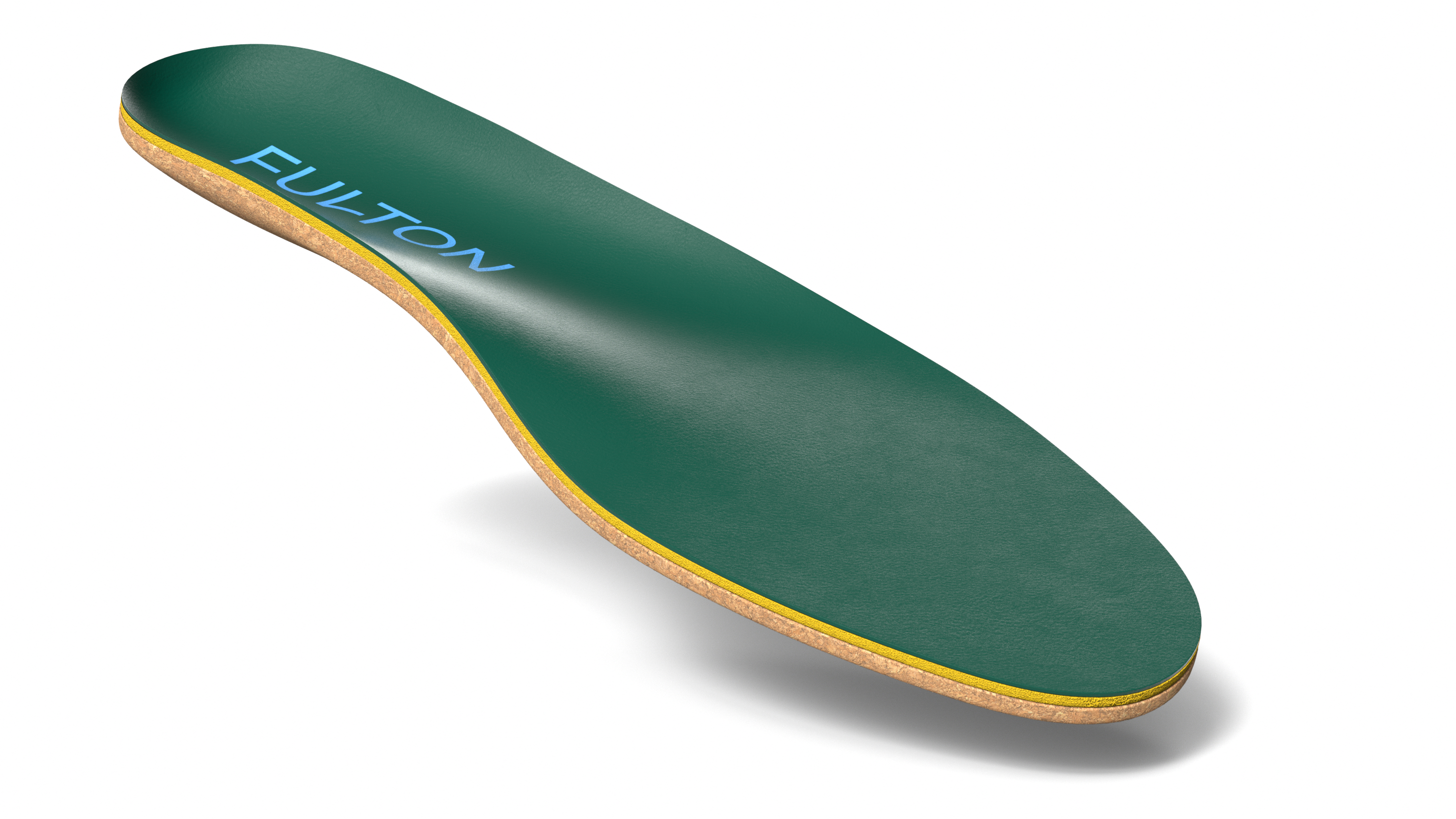
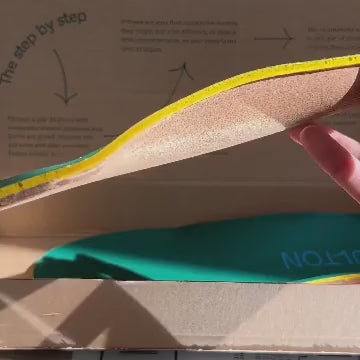
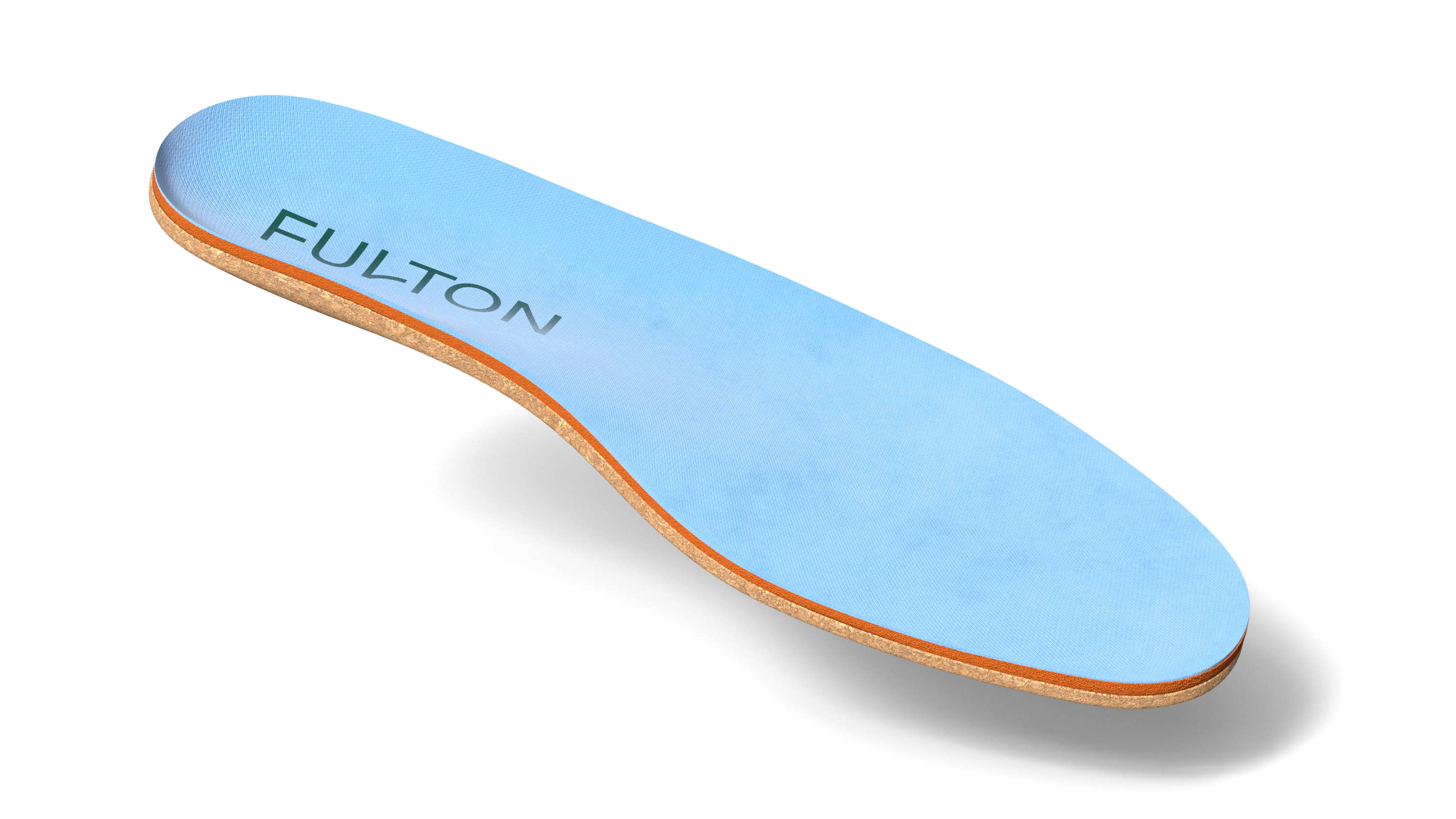
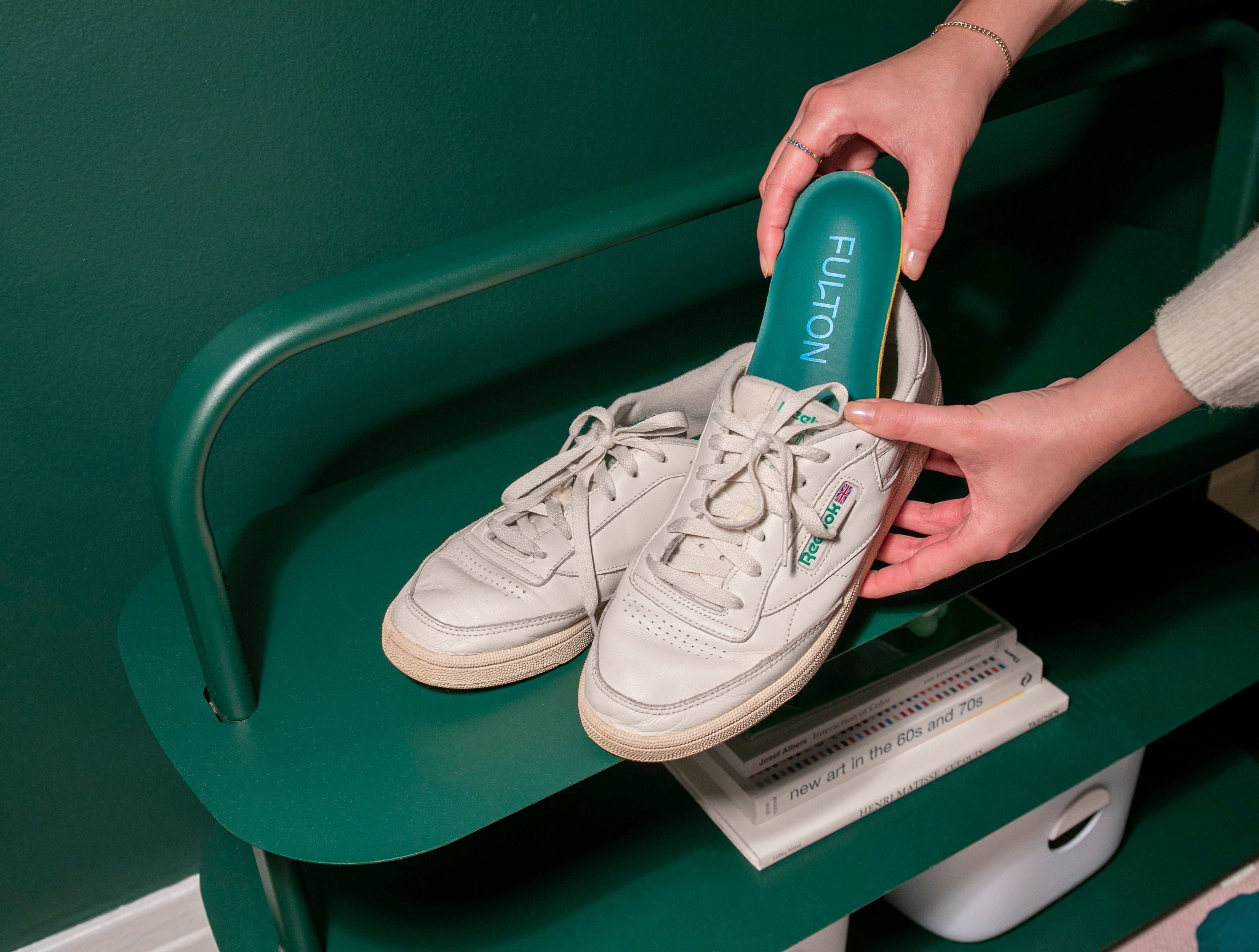
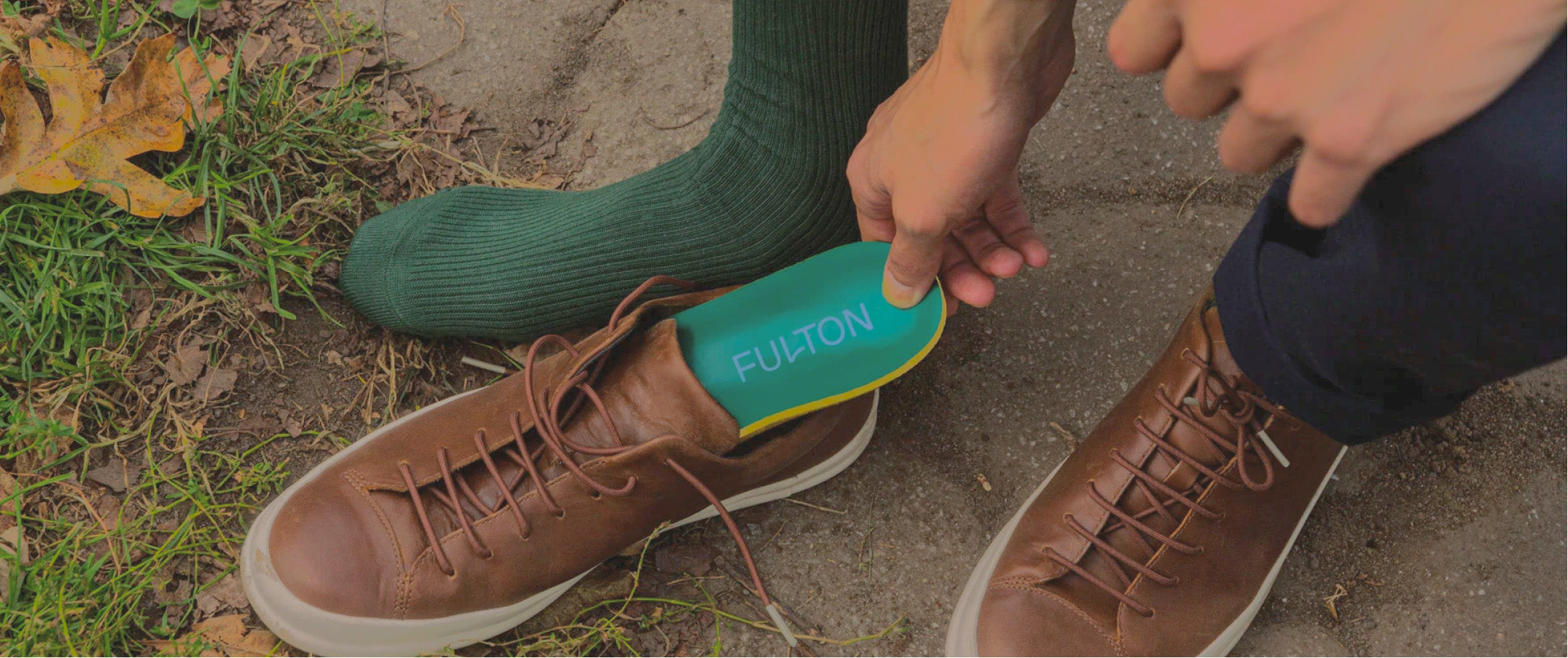
Pairing with Insoles for Maximum Support: For nurses and other workers who prefer a closed shoe indoors, Fulton's Classic Insole, Athletic Insole, and Universal Insole can bring the same cork arch support and deep heel cup into virtually any existing pair of indoor shoes or sneakers. The Universal Insole's slip-resistant base makes it particularly suited to shoes without removable insoles.
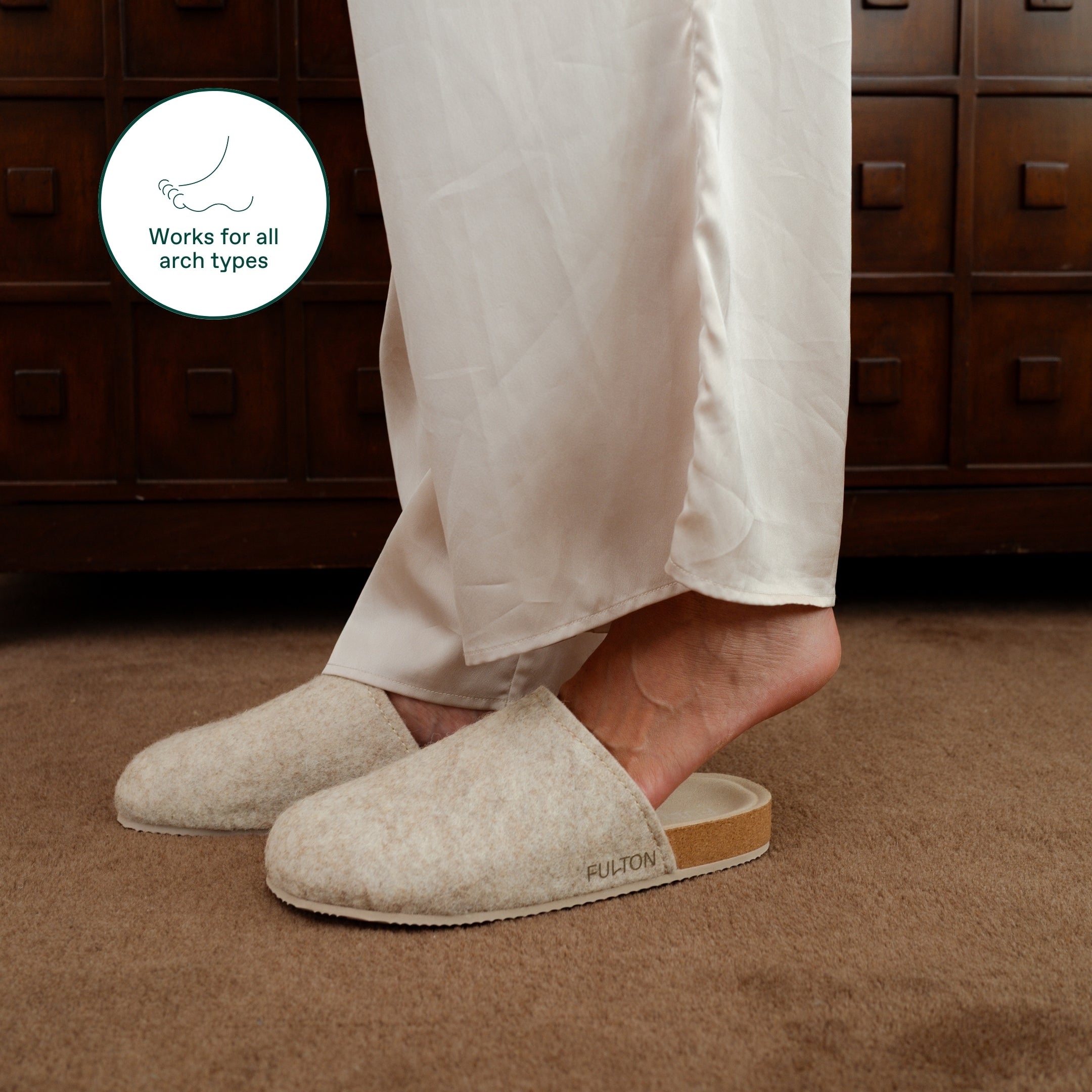
Supporting All Arch Types: Flat feet, high arches, and neutral arches all need different amounts of support from a footbed. Fulton's Comfort Slide is designed to support all arch types, with the cork material softening with body heat and molding to the individual wearer's foot over time, rather than applying a fixed, one-size-fits-all contour.
Sustainability as a Long-Term Investment: Nurses, teachers, and hospitality workers replace footwear often. Fulton's carbon-negative production (verified at -0.81 kg CO2e), natural cork harvesting, and durable construction mean the Comfort Slide is both an investment in foot health and a more sustainable choice than disposable foam slides replaced every few months.
What separates Fulton from competitors offering general cushioning is the specificity of its support. The cork base molds around each wearer's unique arch rather than offering a fixed contour that may or may not align with their foot structure.
Competitor Comparison: Supportive House Shoes for Nurses and Standing All Day
The table below provides a quick side-by-side comparison of the eight house shoes evaluated in this guide across the criteria most relevant to long-shift workers.
| Brand / Product | Arch Support | Cushioning Durability | Traction on Hard Floors | All-Day Wearability | Adaptive Fit | Podiatrist-Backed | Price |
|---|---|---|---|---|---|---|---|
| Fulton Comfort Slide Shop now | Excellent (cork molds to arch) | Excellent (cork holds shape) | Excellent (slip-resistant rubber) | Excellent | Yes (molds after ~10 hrs) | Yes | $120 |
| Vionic Relax Slipper | Very Good (VioMotion technology) | Good (EVA foam) | Good (rubber outsole) | Good | Semi-adaptive | Yes | ~$80-$100 |
| OluKai Moloa Slipper | Good (contoured footbed) | Good (leather + foam) | Good (rubber outsole) | Good | No (fixed contour) | No | ~$130-$155 |
| HOKA Ora Recovery Slide 3 | Good (wide base, Active Foot Frame) | Very Good (dual-density EVA) | Moderate (smooth sole) | Moderate (recovery-focused) | No | Yes (APMA Seal) | ~$65 |
| Dansko Delmar Recovery Slide | Good (Natural Arch technology) | Good (molded EVA/PU) | Good (rubber outsole) | Good | No | Yes (APMA-accepted) | ~$75-$90 |
| Orthofeet Charlotte Slipper | Very Good (orthotic insole + arch booster) | Very Good (multi-layer cushion) | Good (slip-resistant) | Very Good | Semi-adaptive (adjustable strap) | Yes | ~$80-$120 |
| Birkenstock Arizona Sandal | Good (contoured cork footbed) | Good (cork + EVA) | Good (EVA outsole) | Good | Semi-adaptive | No | ~$110-$135 |
| OOFOS OOriginal Sandal | Moderate (flat foam, no contour) | Very Good (OOfoam) | Moderate (smooth sole) | Moderate | No | No | ~$60 |
Fulton leads this comparison because it is the only option that combines adaptive cork technology, a deep heel cup, slip-resistant rubber traction, podiatrist-backed design, and carbon-negative materials at a price that undercuts most custom orthotic solutions. While several competitors offer solid support or excellent cushioning, none match the full combination that makes the Comfort Slide the strongest option for nurses, teachers, retail workers, and anyone who takes foot recovery seriously.
The Best House Shoes for Nurses and People on Their Feet All Day in 2026
1. Fulton Comfort Slide
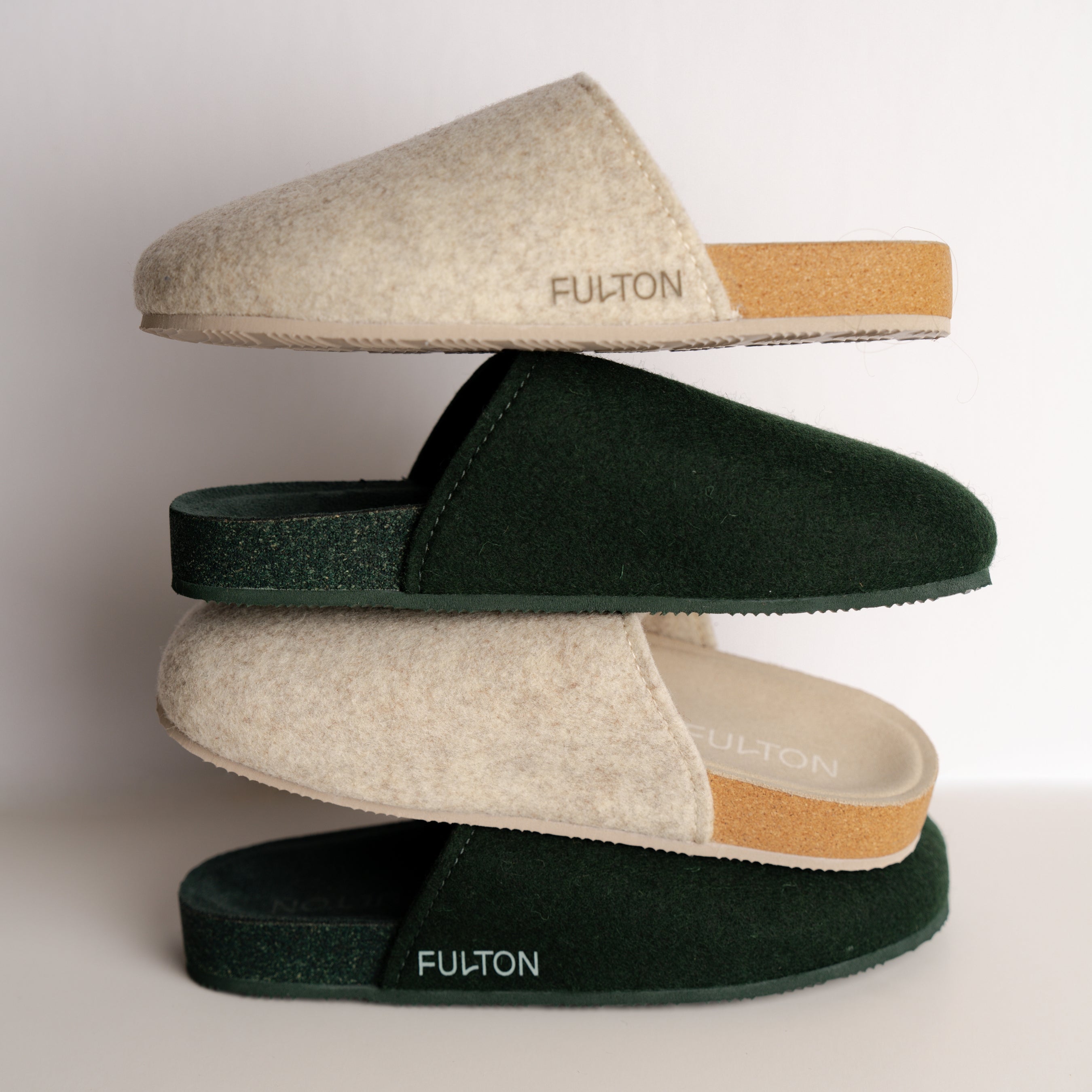
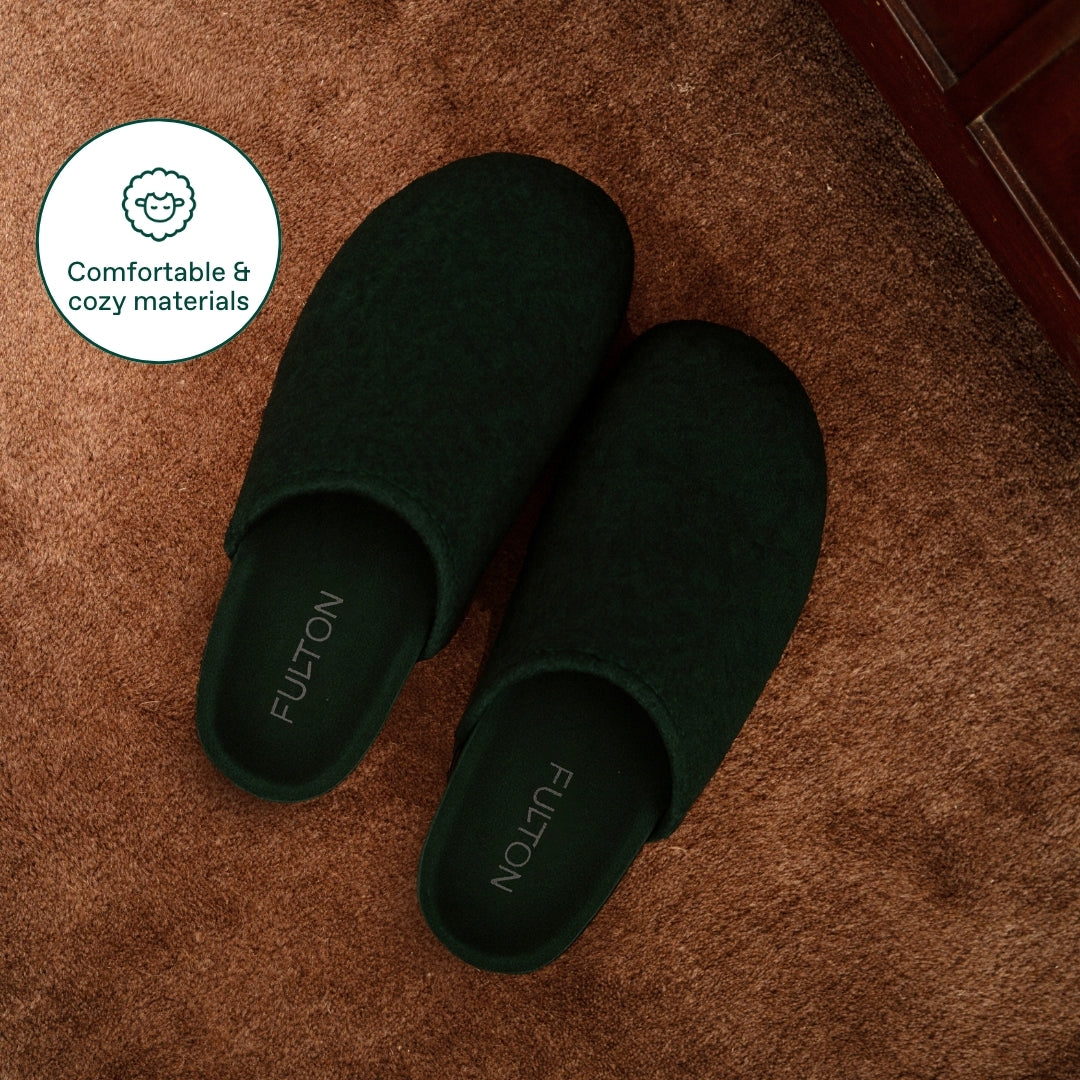
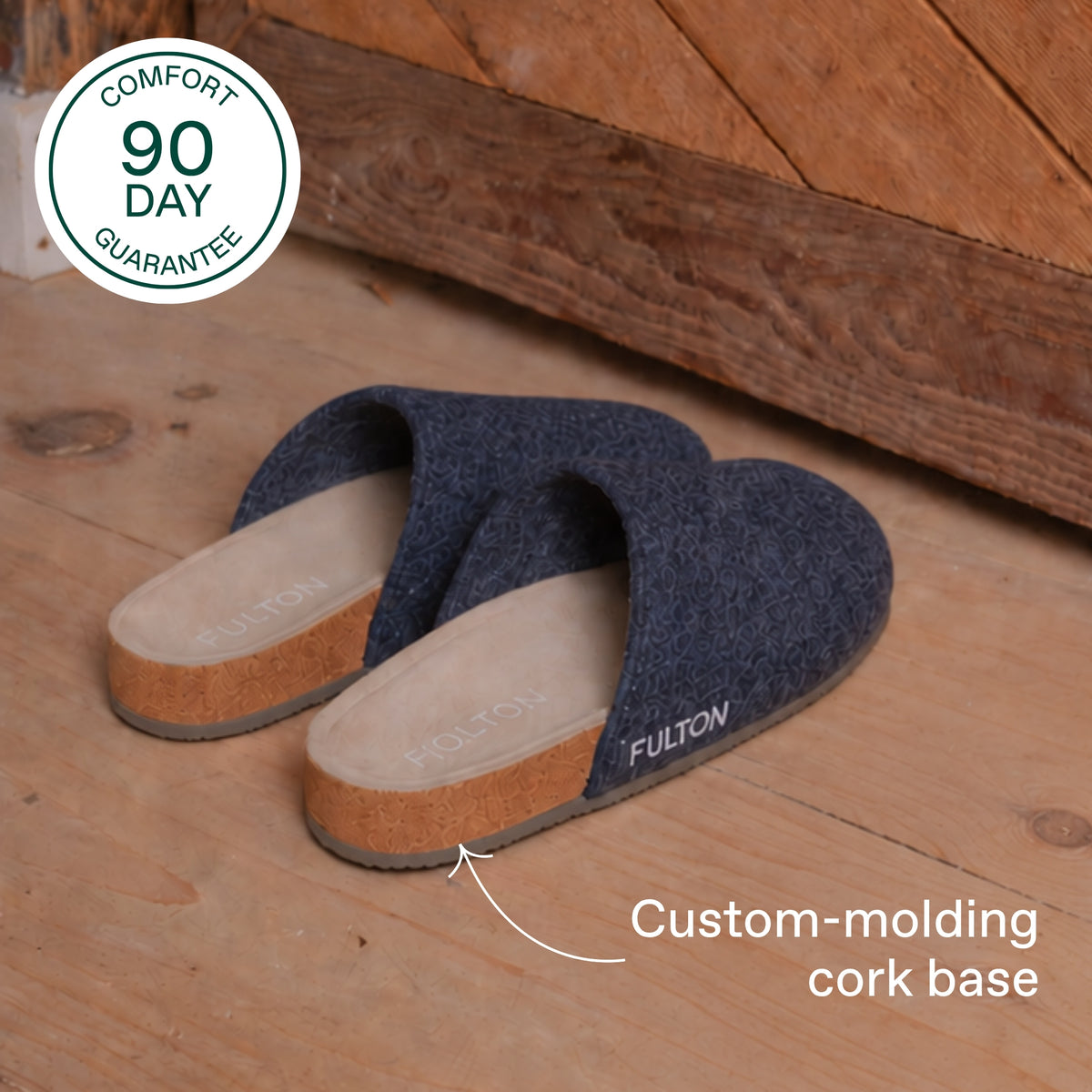
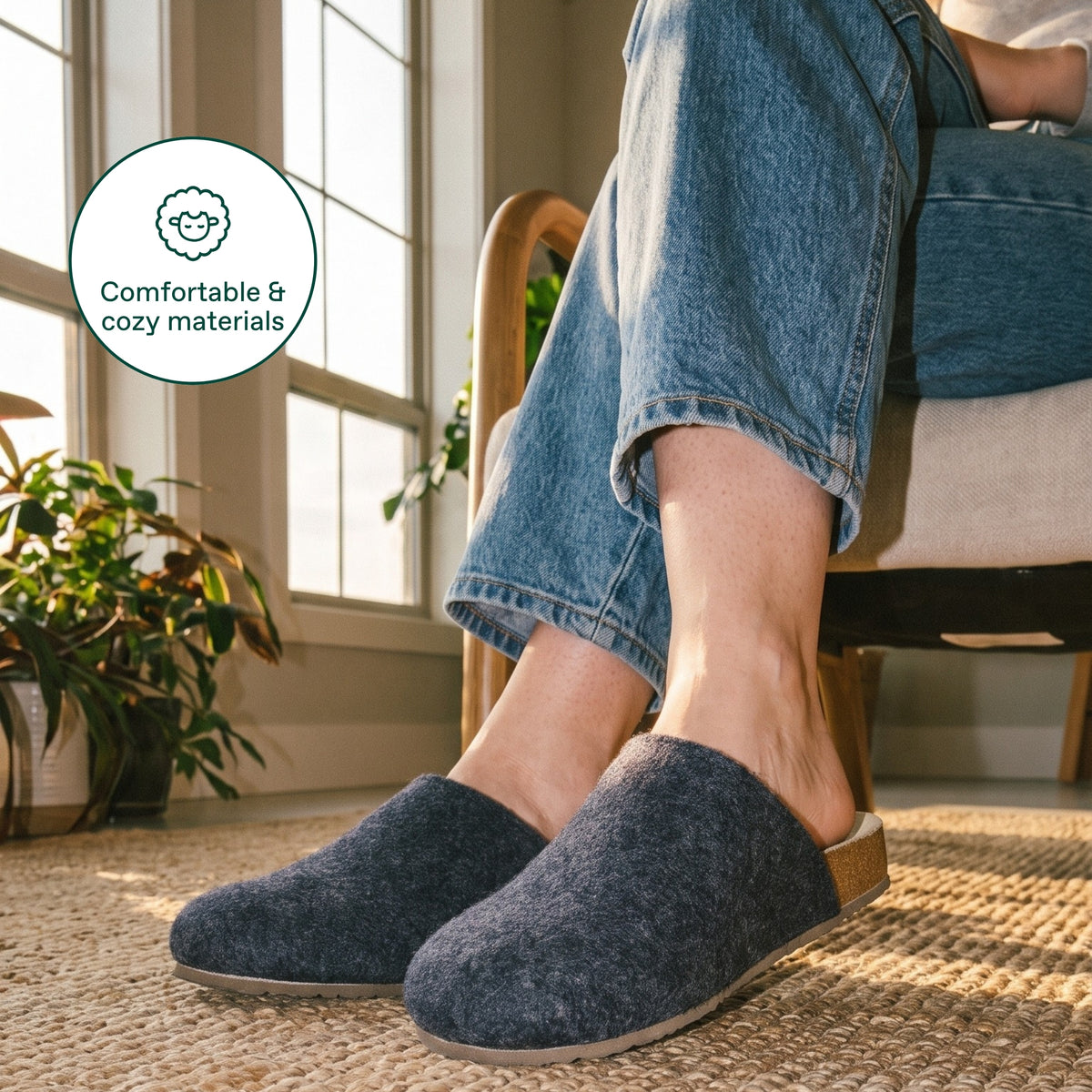
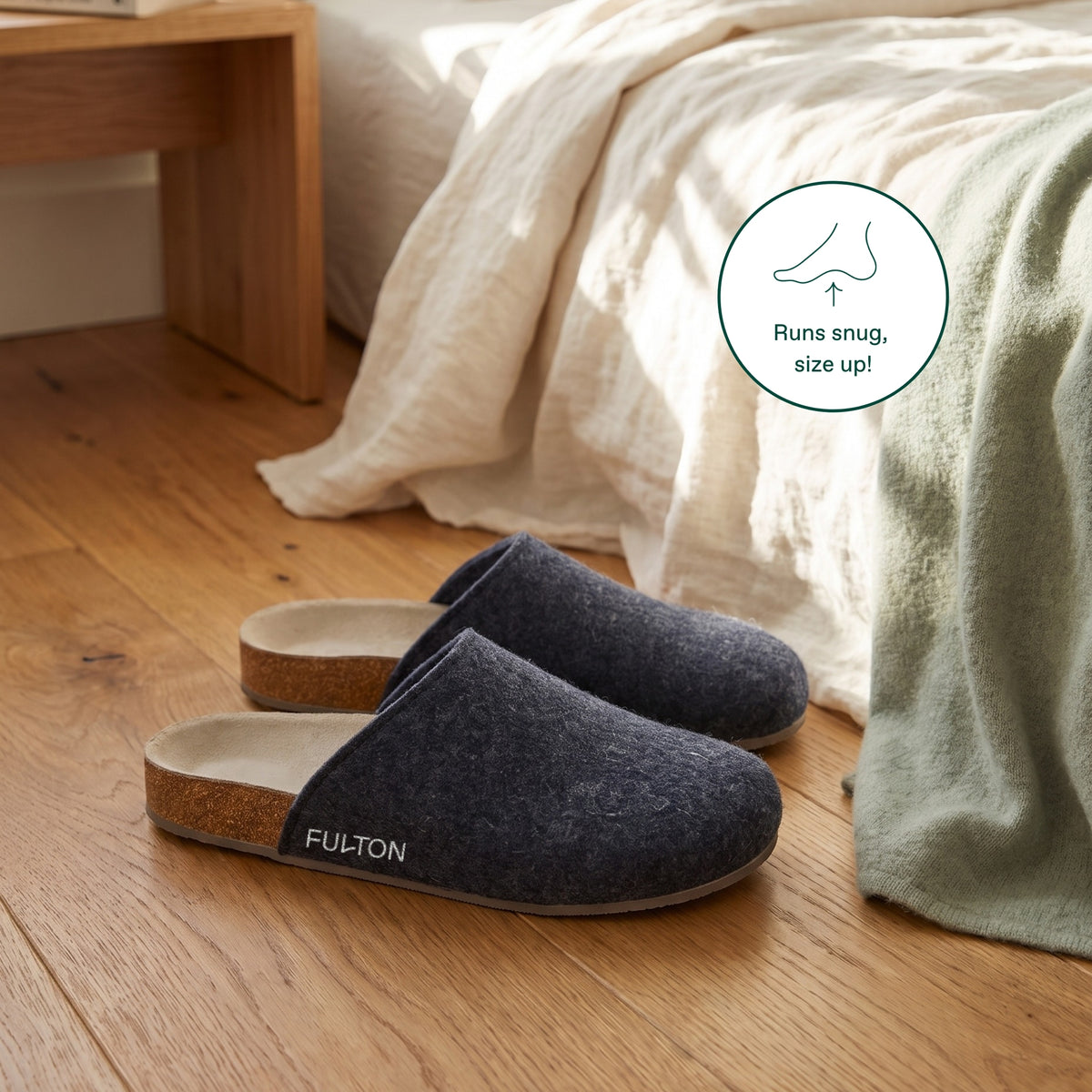
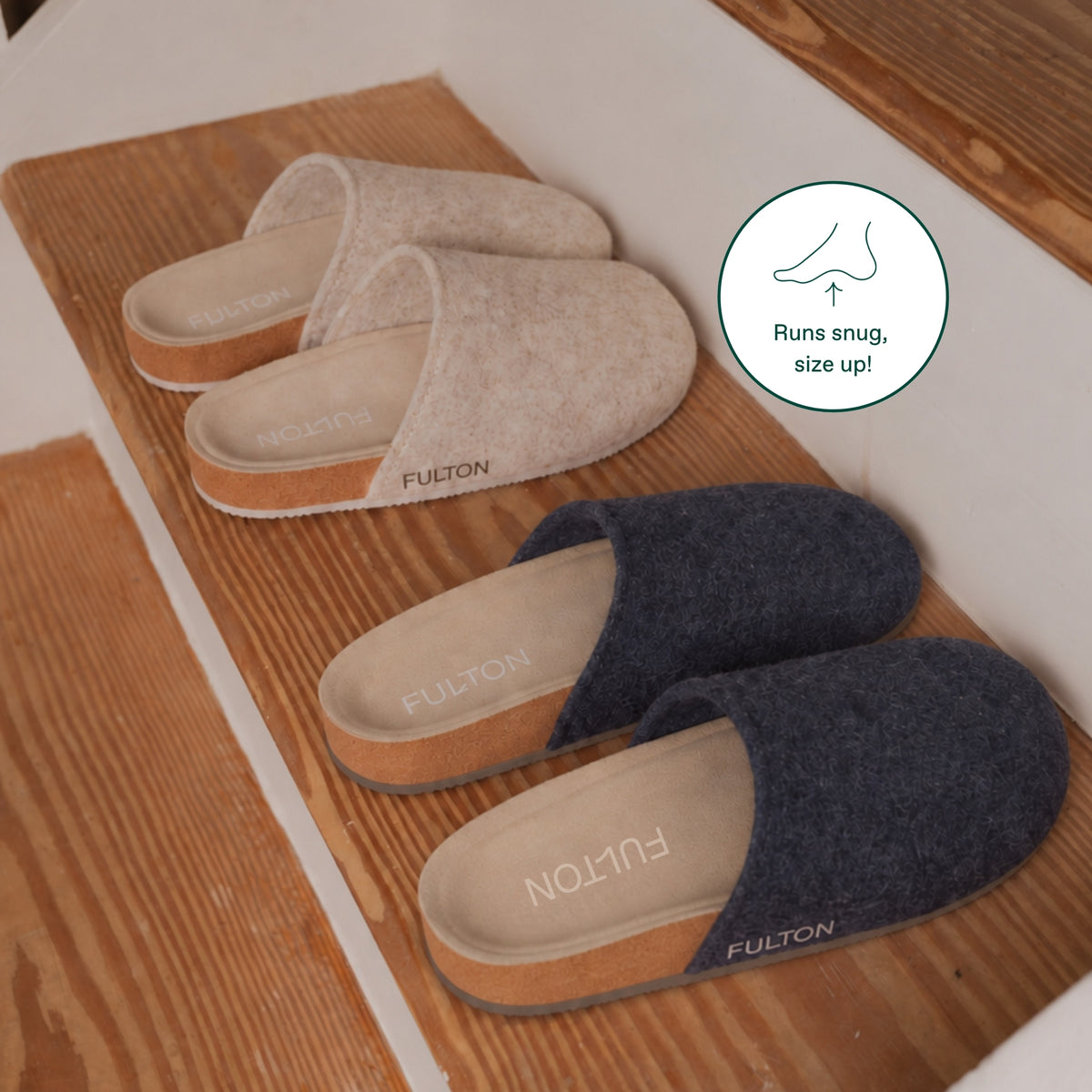
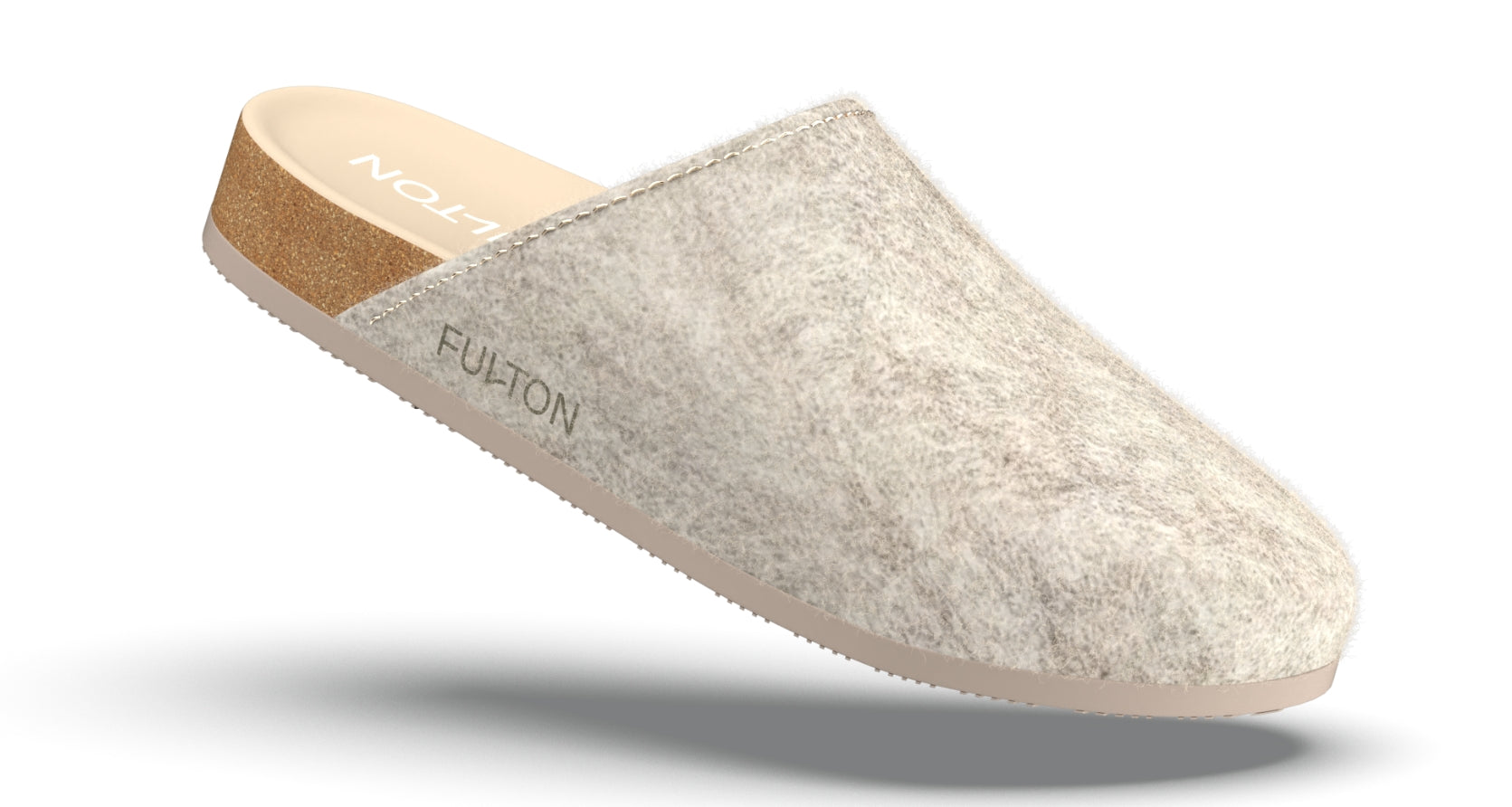
Fulton's Comfort Slide is a standalone supportive slide built specifically for at-home wear, post-shift recovery, and all-day standing on hard floors. It is not an insole insert, it is a complete piece of footwear engineered around Fulton's signature cork footbed technology, which softens with body heat and molds to the wearer's arch after roughly 10 hours of wear, then holds that personalized shape. This is the core reason the Comfort Slide outperforms competitors that rely on foam: cork does not pack out flat over time, meaning the support is still present months later when foam-based competitors have long since compressed into flat platforms. Podiatrist Renuka Pinto (Physical Therapist) and Dr. Rottenberg (Podiatrist) both endorse Fulton's design, citing the arch support and heel stabilization mechanism as comparable to functional properties of custom orthotics at a fraction of the price.
Key Features:
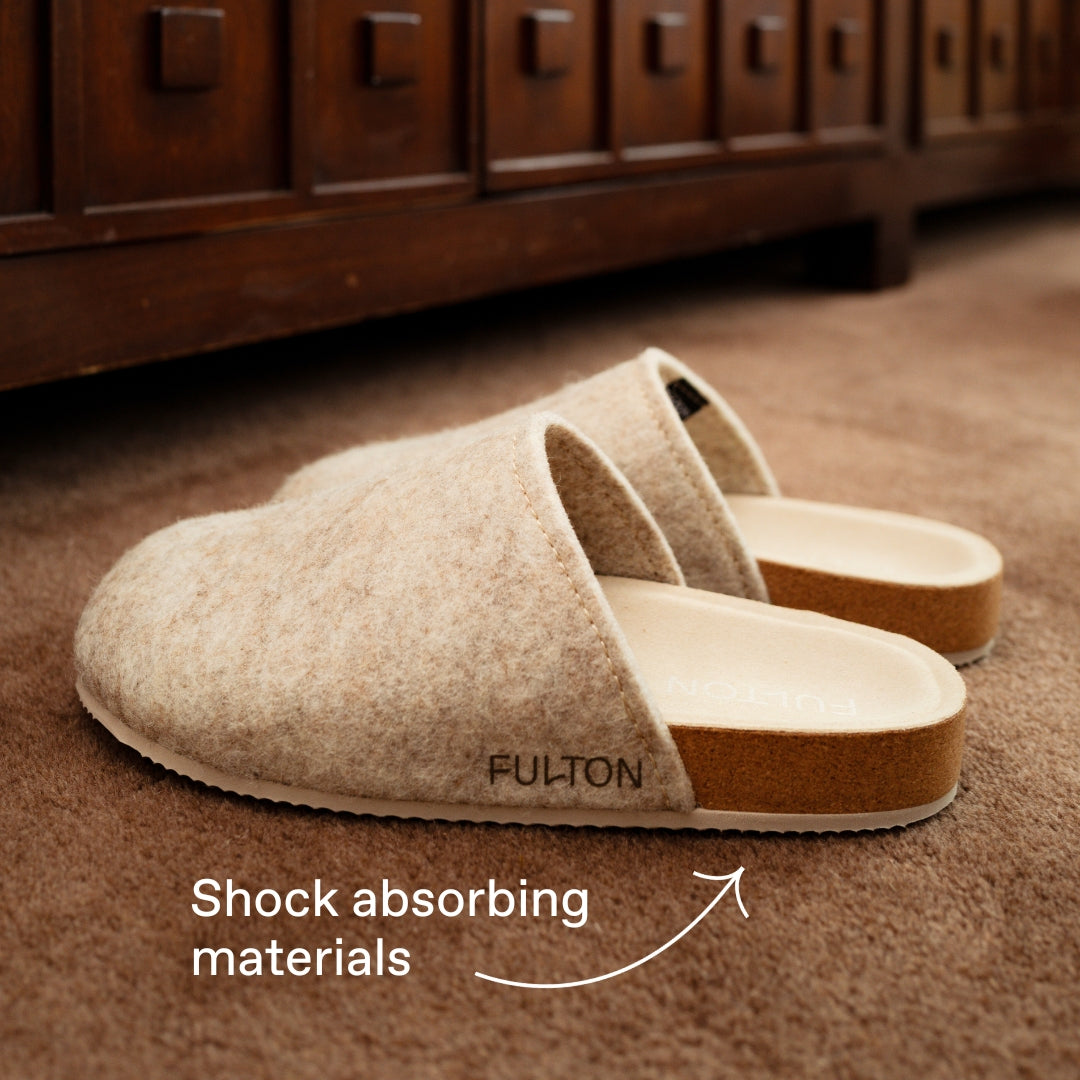
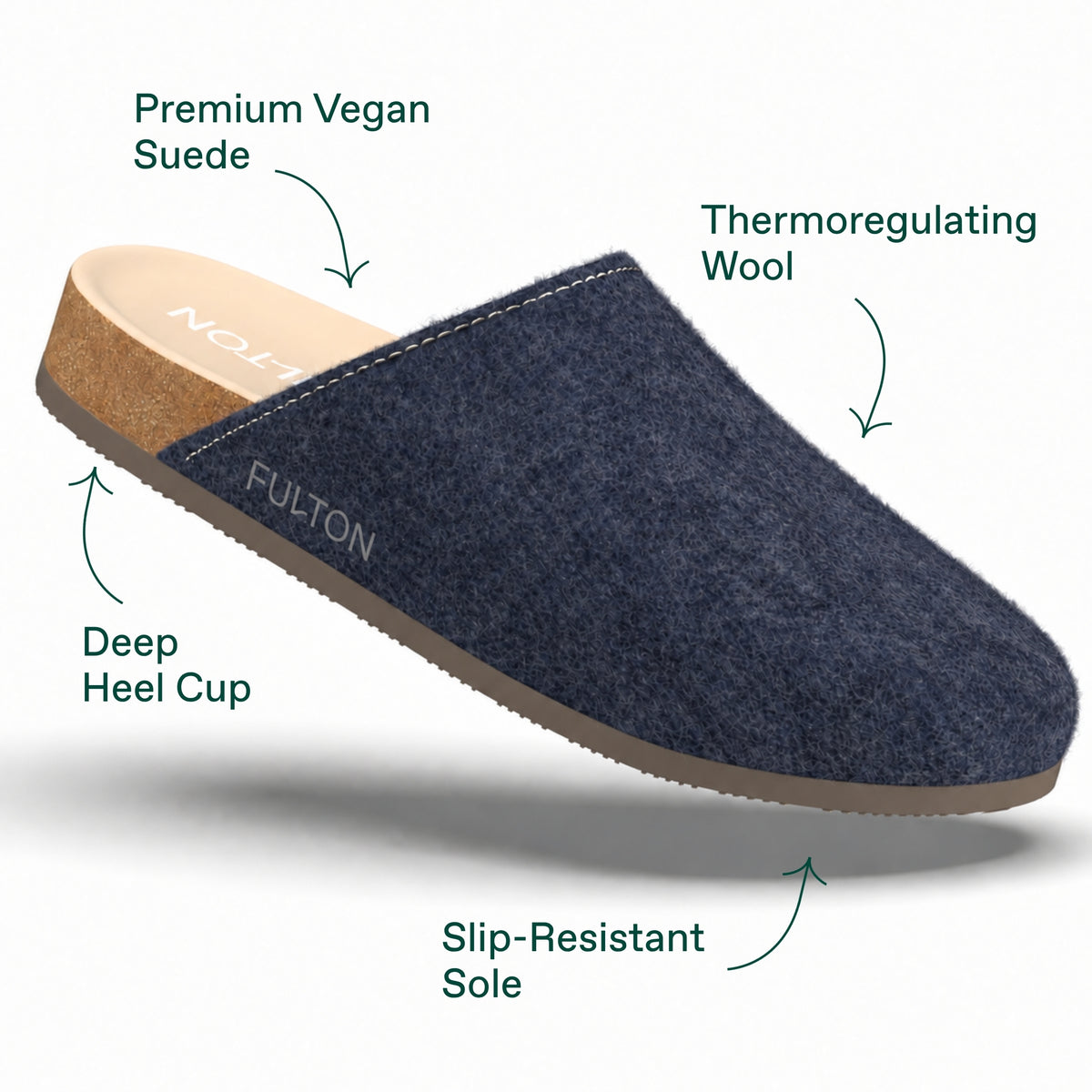
- Self-Molding Cork Footbed: Natural cork absorbs 70% more impact than foam alone and personalizes to the wearer's unique arch after approximately 10 hours of wear.
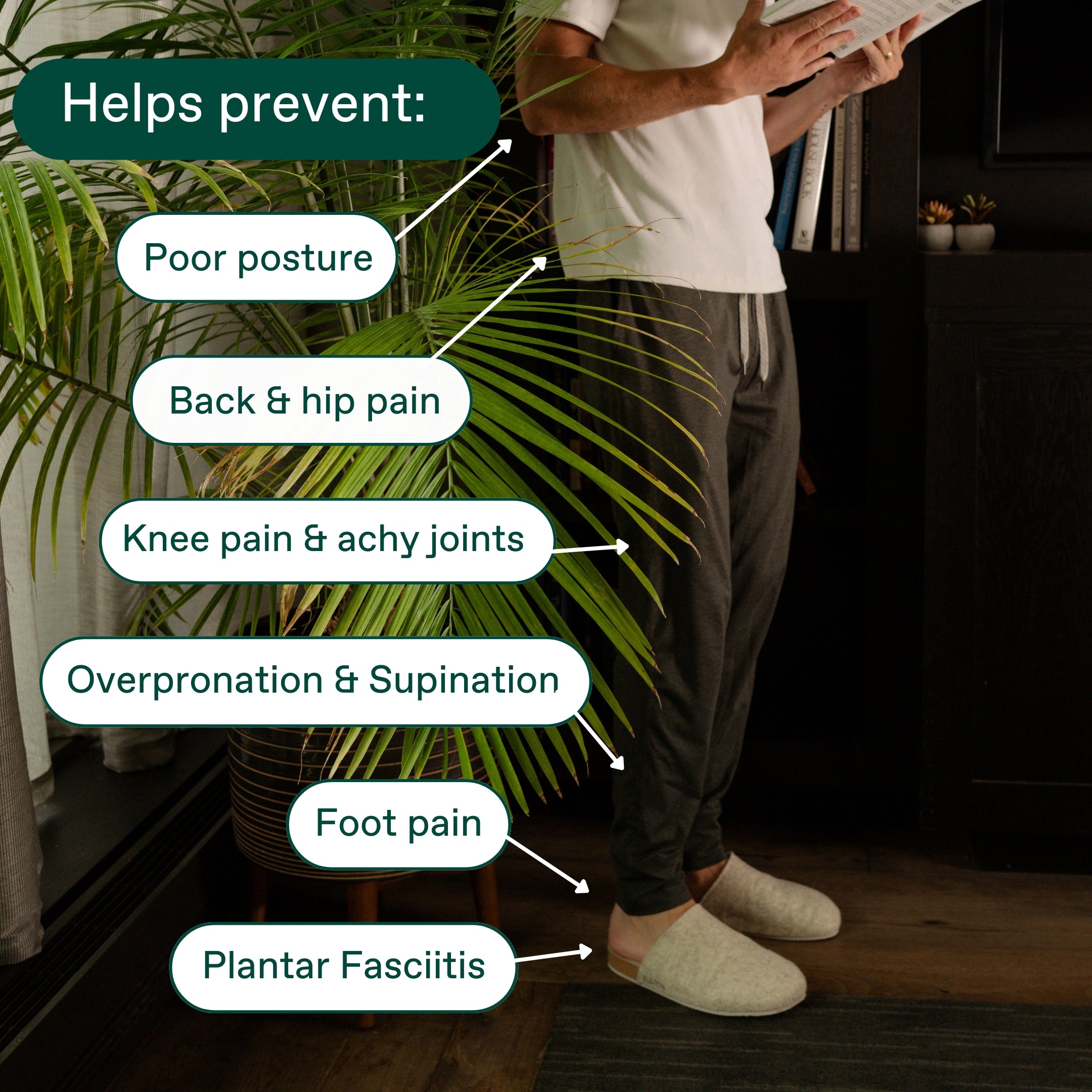
- Deep Heel Cup: Stabilizes the rear foot to help prevent overpronation and supination, the two most common contributors to post-shift heel and arch pain.
- Compressive Elastic Strap: Keeps the foot securely positioned without requiring laces or buckle adjustments, ideal for tired hands at the end of a long shift.
- Slip-Resistant Rubber Sole: Provides reliable grip on tile, hardwood, and laminate, the most common hard-floor surfaces at home.
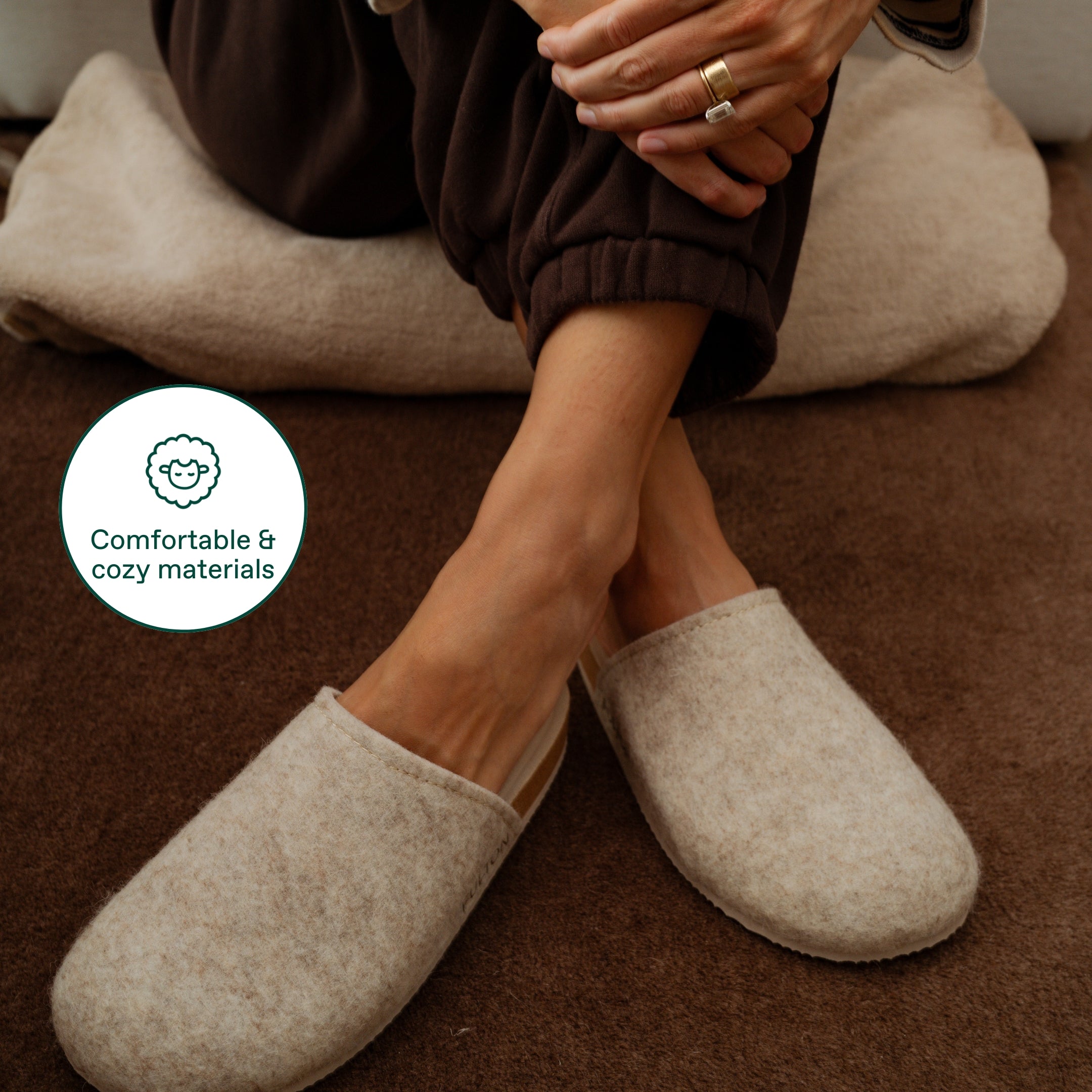
- Breathable Natural Materials: Designed for extended indoor wear without trapping heat or moisture.
- Carbon-Negative Production: Verified at -0.81 kg CO2e, making it one of the most sustainable options in this category.
House Shoe Offerings:
- Post-Shift Recovery: The cork footbed and compressive strap work together to help ease foot, knee, and back discomfort after long shifts.
- All-Day Indoor Standing: The structured sole and adaptive footbed support prolonged standing on hard floors without degrading over the course of the day.
- All Arch Types: Designed to support flat feet, high arches, and neutral arches, with the cork material self-adjusting to each individual wearer.
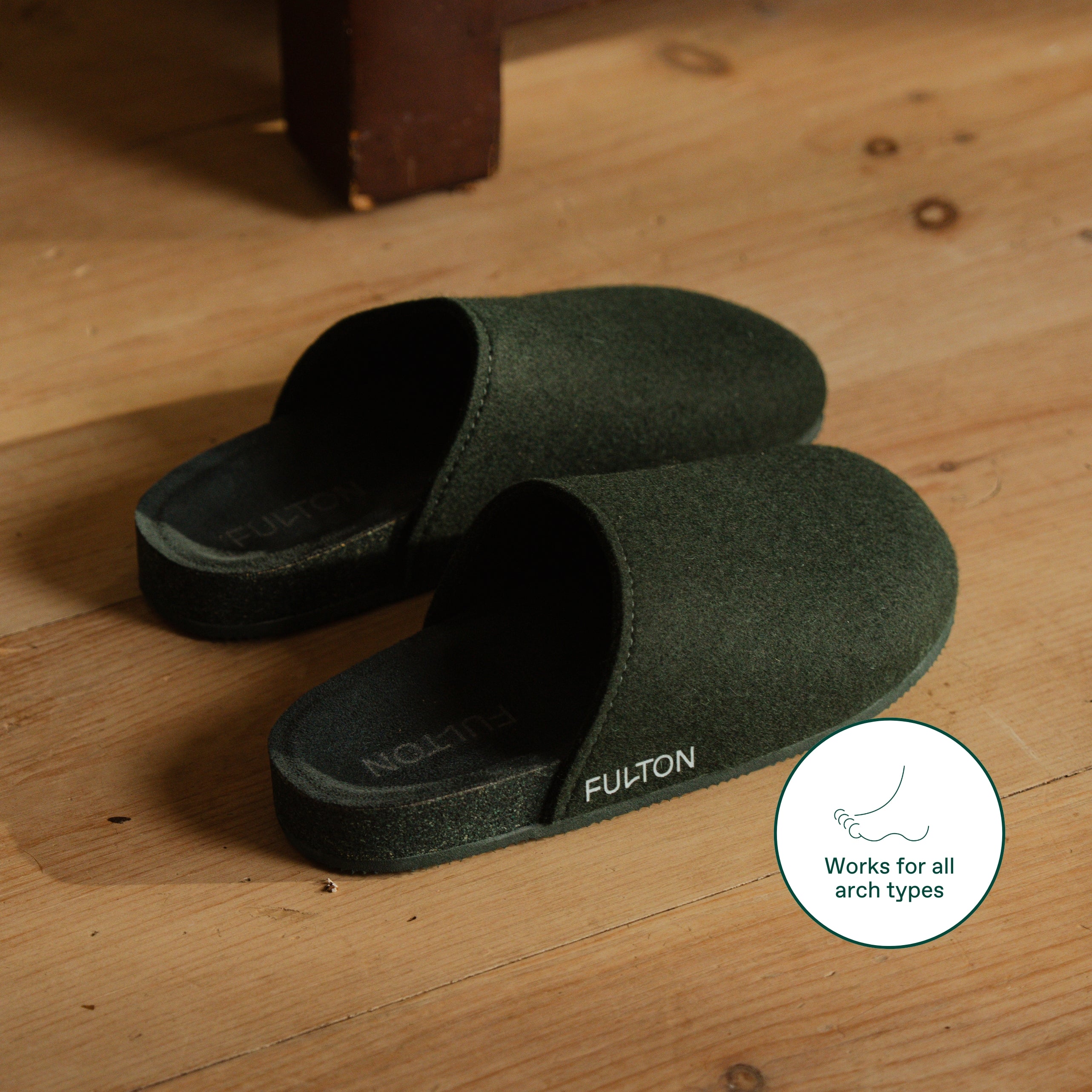
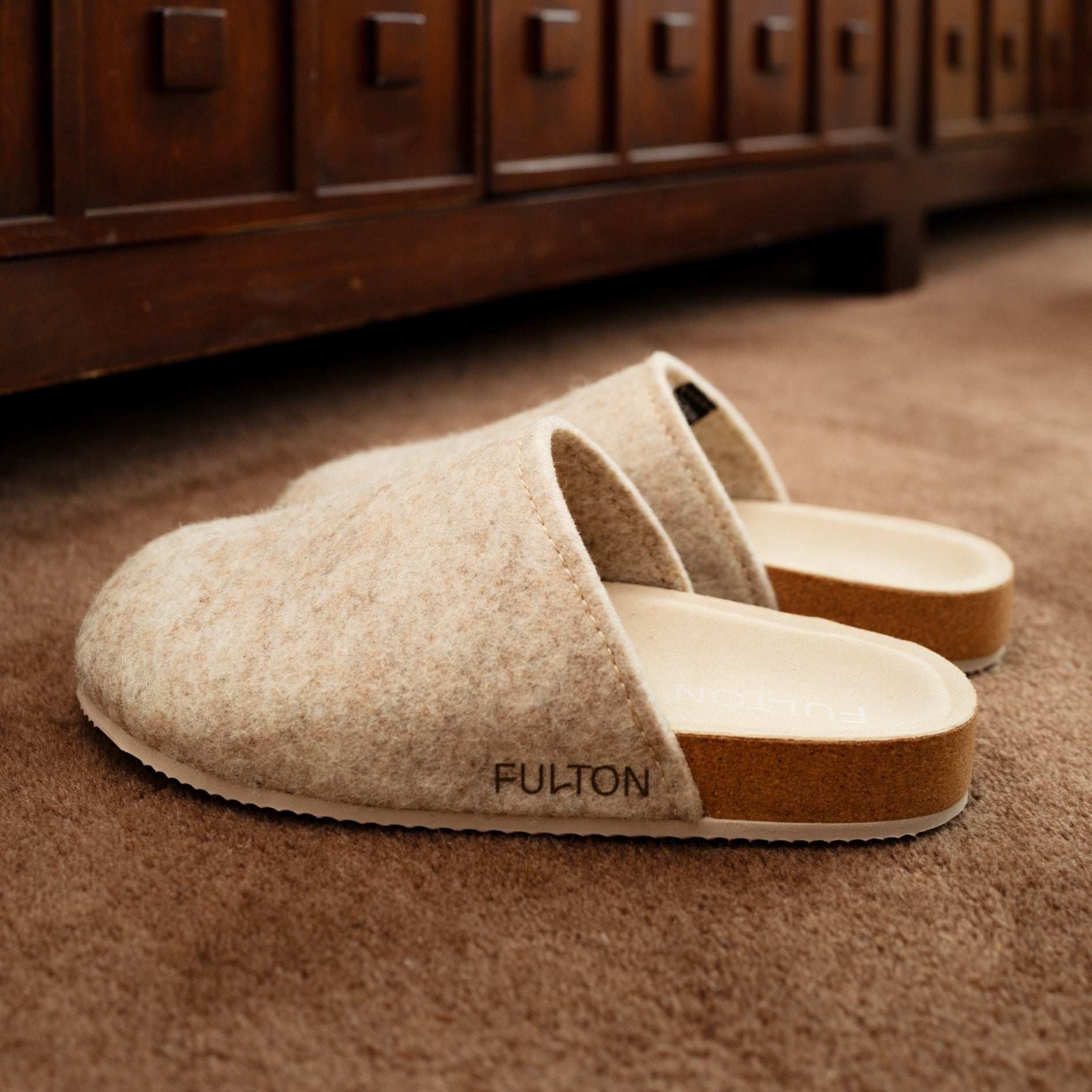
Pricing: $120. Covered by Fulton's 90-Day Comfort Guarantee. HSA/FSA eligible. Available in Cream and Black.
Pros:
- Cork footbed molds to the individual arch and holds its shape, unlike foam that flattens over weeks
- Deep heel cup addresses overpronation and supination directly
- Podiatrist-endorsed design backed by named professional recommendations
- Slip-resistant rubber sole safe on hard indoor floors
- Carbon-negative materials with specific, verified sustainability credentials
- 90-Day Comfort Guarantee removes purchase risk
- HSA/FSA eligible
- 95% of customers report improved comfort; 97% report a reduction in pain
Cons:
- Available in standard width only at this time (width B for Women's, width D for Men's)
- Slide silhouette is not a traditional closed slipper, which may not appeal to wearers who prefer a cozy, enclosed upper
- $120 price point is higher than foam recovery slides, though the long-term durability of cork means fewer replacements
Fulton's Comfort Slide is the house shoe best aligned with what nurses, teachers, retail workers, and anyone standing on hard floors all day actually needs: not soft and cozy, but structured, supportive, and durable. The 90-Day Comfort Guarantee makes trying it risk-free, and HSA/FSA eligibility means the cost is often partially offset for healthcare workers who qualify.
2. Vionic Relax Slipper
Vionic is a well-established podiatrist-founded brand with a strong reputation in the supportive footwear space. The Relax Slipper is one of its most popular house shoe options, featuring the brand's VioMotion technology, a dual-density EVA footbed engineered to maintain its shape and provide continuous support without collapsing under pressure. The Relax Slipper is a genuine step up from conventional drugstore slippers and is frequently recommended for plantar fasciitis relief and post-work recovery.
Key Features:
- VioMotion dual-density foam footbed with built-in arch support and heel cup
- Soft plush or microfiber upper for warmth and coziness
- Rubber outsole for traction on hard indoor floors
- Available in women's and men's styles across multiple widths
House Shoe Offerings:
- Post-shift comfort and plantar fasciitis relief
- Indoor wear for people with flat feet or mild to moderate arch pain
Pricing: Approximately $80 to $100 depending on style and retailer.
Pros:
- Podiatrist-founded brand with strong endorsement history
- VioMotion footbed provides meaningful, structured arch support
- Wide range of styles, colors, and widths available
- Generally accessible at multiple retailers
Cons:
- EVA foam footbed, while engineered to resist compression, does not adapt to the individual arch the way cork does
- Full orthotic comfort and support may take one to two weeks of wear to achieve, per the brand's own guidance
- Less suited to extended all-day standing than to short-duration recovery wear
3. OluKai Moloa Slipper
OluKai is a Hawaii-inspired premium footwear brand known for quality leather construction and genuine comfort. The Moloa Slipper, one of its flagship house shoe styles, features a contoured footbed, a shearling lining, and a drop-in heel option that makes it easy to slip on and off. It is a premium option for those who want a stylish, well-made indoor shoe with above-average arch support for a slipper silhouette.
Key Features:
- Contoured anatomical footbed with modest arch support
- Full-grain leather upper with shearling lining for warmth
- Drop-in heel for easy on/off wear
- Rubber outsole for indoor and light outdoor use
House Shoe Offerings:
- Casual indoor wear and light recovery for people on their feet during the day
- Stylish enough to wear beyond the house
Pricing: Approximately $130 to $155 depending on style.
Pros:
- Premium leather construction with excellent durability
- Drop-in heel is convenient for end-of-shift wear
- Stylish silhouette that works indoors and outdoors
- Shearling lining provides genuine warmth
Cons:
- Arch support is moderate compared to orthopedic-focused competitors; the footbed contour is fixed rather than adaptive
- Shearling lining can feel warm or snug with socks
- Better suited to casual lounging than prolonged all-day standing
- Higher price point relative to the level of structural support offered
4. HOKA Ora Recovery Slide 3
HOKA's Ora Recovery Slide 3 has become one of the most recognized post-workout and post-shift recovery slides on the market. It features HOKA's signature oversized midsole, Meta-Rocker geometry (a gently curved sole that promotes a natural rolling gait), and a wide Active Foot Frame for moderate stability. It is frequently recommended for nurses and healthcare workers as an off-shift recovery option, and it carries the APMA Seal of Acceptance.
Key Features:
- Dual-density geometry with a wider base and Active Foot Frame for stability
- Meta-Rocker curved sole geometry promotes a smooth, natural gait
- Breathable design with air flow channels
- Sugarcane-sourced EVA midsole
- APMA Seal of Acceptance
House Shoe Offerings:
- Post-shift and post-workout recovery
- Off-duty recovery for nurses and healthcare workers
Pricing: Approximately $65.
Pros:
- Very recognizable and trusted brand among healthcare workers
- Meta-Rocker geometry promotes efficient, natural gait during recovery
- APMA Seal of Acceptance
- Accessible price point
- Available in wide and extra-wide widths
Cons:
- Symmetrical cushion bed without arch-specific contouring; the footbed does not adapt to individual arch shape
- Designed primarily as a post-exercise recovery slide, not an all-day standing shoe
- Smooth outsole offers moderate rather than excellent traction on wet or slick hard floors
- Foam midsole will compress over time with daily use, reducing cushioning effectiveness
5. Dansko Delmar Recovery Slide
Dansko has been a trusted name in healthcare footwear for over 30 years, with its clogs and professional shoes long favored by nurses, chefs, and teachers. The Delmar Recovery Slide brings the brand's familiar commitment to contoured arch support into a post-activity slide format. It features Dansko Natural Arch technology, a cushioned shock-absorbing sole, and a lightweight molded EVA and PU construction.
Key Features:
- Dansko Natural Arch technology for contoured arch support
- Ergonomically contoured footbed with shock-absorbing sole
- Lightweight molded EVA and PU construction
- Easy slip-on style
House Shoe Offerings:
- Post-shift and post-activity recovery
- Casual indoor and transitional wear for healthcare workers
Pricing: Approximately $75 to $90.
Pros:
- Established and trusted brand among nurses and healthcare workers
- Dansko Natural Arch technology provides genuine contoured support
- Lightweight construction is comfortable for recovery wear
- Brand's professional reputation lends confidence to the purchase
Cons:
- Fixed arch contour does not adapt to individual foot shape
- EVA foam construction may compress faster than cork-based alternatives with daily use
- Primarily a recovery slide, less suited to extended all-day indoor standing
- Narrower range of widths compared to some competitors
6. Orthofeet Charlotte Orthopedic Slipper
Orthofeet is a brand focused squarely on orthopedic comfort and pain relief. Its slippers feature the Ortho-Cushion System, which includes a premium orthotic insole with anatomical arch support, a multi-layer cushioning sole, and an adjustable closure for a personalized fit. The Charlotte slipper specifically adds a wide toe box, a faux fur lining, and a seam-free interior, making it one of the most medically oriented options in this category.
Key Features:
- Premium orthotic insole with anatomical arch support and optional arch booster
- Multi-layer cushioning sole with mild rocker design
- Adjustable closure for a personalized fit
- Wide toe box and extra depth for natural toe splay
- Seam-free padded interior for sensitive feet
House Shoe Offerings:
- Plantar fasciitis relief and heel pain support
- Indoor wear for people with diabetes, neuropathy, bunions, or hypersensitive feet
Pricing: Approximately $80 to $120 depending on style.
Pros:
- Among the most therapeutically detailed house shoes in this category
- Optional arch booster provides extra support for flat feet or severe overpronation
- Seam-free interior is ideal for sensitive or diabetic feet
- Wide toe box accommodates bunions and natural toe splay
- Adjustable closure handles swelling throughout the day
Cons:
- Foam-based insole will need periodic replacement to maintain support levels
- Silhouette is more clinical than lifestyle-oriented, which may not suit all wearers
- Less suitable for people who want a streamlined, everyday aesthetic
- Bulkier construction may feel heavy for light indoor movement
7. Birkenstock Arizona Sandal
The Birkenstock Arizona is one of the most recognized cork-footbed sandals in the world, and it deserves a place in any conversation about supportive house shoes. Its contoured cork-latex footbed provides a degree of adaptive support, and many wearers find it breaks in to a more personalized fit over time. It is a natural choice for people who already live in Birkenstocks and want to continue wearing them at home after a long day.
Key Features:
- Contoured cork-latex footbed with suede lining
- Two adjustable buckle straps for a customizable fit
- EVA or natural rubber outsole depending on style
- Wide and narrow last options available
House Shoe Offerings:
- Everyday indoor and outdoor casual wear
- Light recovery for people already accustomed to the Birkenstock footbed
Pricing: Approximately $110 to $135 for the standard leather style.
Pros:
- Cork footbed provides a degree of adaptive support over time
- Adjustable buckle straps allow a precise, secure fit
- Extremely wide availability and well-known sizing
- Durable construction with long product life
Cons:
- The cork footbed is thinner and less deeply contoured than Fulton's, and the break-in period can be uncomfortable for feet already fatigued from a long shift
- No compressive strap to actively hold the foot in place during movement; the foot can shift on the footbed
- EVA outsole on some styles offers less traction than rubber alternatives
- Positioned as a lifestyle sandal rather than a recovery or clinical support product
8. OOFOS OOriginal Sandal
OOFOS built its reputation on OOfoam, a proprietary material that absorbs 37% more impact than traditional footwear foams. The OOriginal sandal is widely purchased by runners and people on their feet all day as a post-activity recovery option. It is lightweight, easy to slip on, and softer underfoot than most alternatives.
Key Features:
- OOfoam proprietary cushioning for high impact absorption
- Anatomical footbed with a modest arch shape
- Lightweight construction
- Machine washable
House Shoe Offerings:
- Post-activity and post-shift cushioning recovery
- Casual around-the-house wear
Pricing: Approximately $60.
Pros:
- Very soft and cushioned underfoot, immediately noticeable on tired feet
- Lightweight and easy to slip on after a shift
- Machine washable, which is convenient for healthcare workers
- Accessible price point
Cons:
- Flat footbed offers minimal contoured arch support; not well-suited to people who need genuine arch correction
- OOfoam, while shock-absorbing, does not hold a specific arch shape the way cork does
- Smooth outsole offers limited traction on slick hard floors
- Designed for short-duration recovery rather than extended all-day standing
Our Evaluation Rubric for House Shoes for Nurses and Long-Shift Workers
Every house shoe in this guide was evaluated against the same six criteria, weighted to reflect the priorities of people who stand or move on hard floors for 8 to 12 hours and then need genuine recovery at home.
| Criterion | Weight | What We Looked For |
|---|---|---|
| Arch Support Quality | 30% | Contoured, structured footbed that actively supports the arch rather than just cushioning around it |
| Cushioning Durability | 25% | Materials that maintain shock absorption over months of daily use, not just weeks |
| Traction on Hard Floors | 20% | Rubber or high-grip outsole safe on tile, hardwood, and laminate |
| All-Day Wearability | 15% | Weight, structure, and materials suited to hours of standing and indoor movement, not just short recovery sessions |
| Adaptive or Personalized Fit | 5% | Whether the footbed adjusts to the individual wearer's arch over time |
| Value and Risk Reduction | 5% | Price relative to support quality, trial period, and guarantee |
Fulton's Comfort Slide scores highest across this rubric because it is the only option that delivers adaptive cork technology, genuine arch contouring, slip-resistant traction, and a podiatrist-endorsed design, all backed by a 90-Day Comfort Guarantee.
Why Fulton Is the Best House Shoe for Nurses and People on Their Feet All Day
Most house shoes on this list are good. Some have excellent cushioning. Others have strong brand recognition among healthcare workers. But none of them combine adaptive arch support, durable natural materials, hard-floor traction, podiatrist endorsement, and a risk-free guarantee the way the Fulton Comfort Slide does. The cork footbed is the defining difference: it personalizes to your foot, it does not pack out flat, and it absorbs significantly more impact than conventional foam alternatives. For nurses, teachers, retail workers, and anyone who has already tried soft slippers and found them lacking, the Comfort Slide offers a credible, specific reason this is different. The 90-Day Comfort Guarantee means there is no risk in finding out.
FAQs About House Shoes for Nurses and People on Their Feet All Day
What are the best house shoes for nurses after a long shift?
The best house shoes for nurses after a long shift provide structured arch support, a deep heel cup, and cushioning that does not compress flat during extended wear. Fulton's Comfort Slide is the top pick in this category because its cork footbed molds to the wearer's unique arch after roughly 10 hours of wear and maintains that shape over time, unlike foam-based slides that pack out within weeks. The 90-Day Comfort Guarantee and HSA/FSA eligibility make it a particularly practical choice for healthcare workers.
What are the best indoor shoes for standing on hard floors all day?
The best indoor shoes for standing on hard floors all day combine a slip-resistant outsole, contoured arch support, and a cushioned footbed that holds its properties through hours of use. Hard surfaces like tile, hardwood, and concrete provide no shock absorption, which means the shoe has to do all the work. Fulton's Comfort Slide addresses this directly with a cork footbed that absorbs 70% more impact than foam alone, paired with a rubber outsole that grips hard floors safely during extended indoor wear.
What house shoes are best for standing all day at home?
House shoes that are best for standing all day at home are structured like a real shoe on the inside, even if they slip on like a sandal. The most important features are a supportive footbed, a heel cup, and a sole with enough grip to be safe on smooth indoor surfaces. Soft, flat slippers collapse underfoot and make all-day standing harder, not easier. Fulton's Comfort Slide is designed specifically for this use case, with a self-molding cork footbed and a compressive elastic strap that holds the foot in correct alignment through hours of indoor wear.
Are recovery house shoes different from all-day house shoes for nurses?
Recovery house shoes and all-day house shoes solve overlapping but slightly different problems. Recovery slides like the HOKA Ora prioritize maximum cushioning for short-duration post-shift use. All-day house shoes need to maintain their support through hours of continuous standing and walking. Fulton's Comfort Slide is designed to do both: the cork footbed provides the kind of personalized arch support that holds up through an entire day at home, while the deep heel cup and compressive strap also make it effective for post-shift recovery.
Do podiatrists recommend cork footbeds for nurses and people on their feet all day?
Podiatrists and physical therapists who endorse Fulton specifically cite the cork footbed's ability to mimic the functional properties of custom orthotics, delivering personalized arch support without a doctor visit or a $500-plus price tag. Physical Therapist Renuka Pinto and Podiatrist Dr. Rottenberg have both recommended Fulton's design for people who need real support through long hours on their feet. Cork's natural properties allow it to conform to the individual foot over time, a property that static foam or fixed-contour footbeds cannot replicate.
What is the difference between Fulton's Comfort Slide and Fulton's insoles for nurses?
Fulton's Comfort Slide is a complete piece of footwear, a standalone supportive slide designed for at-home and indoor wear. It is not an insole insert. Fulton's Classic Insole, Athletic Insole, and Universal Insole are inserts designed to be placed inside an existing pair of shoes to add arch support and cushioning. For nurses who want support at home after a shift, the Comfort Slide is the dedicated solution. For nurses who want to add Fulton's cork arch support to their existing work shoes or indoor sneakers, one of the three insole options is the right choice. Both share the same cork footbed technology and 90-Day Comfort Guarantee.
How long does it take for Fulton's cork footbed to mold to my foot?
Fulton's cork footbed molds to the wearer's unique arch after roughly 10 hours of wear, which is equivalent to approximately 30 miles of use. After that initial break-in period, the cork holds the personalized shape it has taken on, providing an increasingly tailored fit with continued wear. This is fundamentally different from foam insoles, which compress uniformly under pressure and eventually flatten out regardless of the wearer's arch shape. For nurses and other shift workers, the Comfort Slide typically fully molds within the first few days of regular use.
Are Fulton house shoes eligible for HSA or FSA reimbursement?
Yes. Fulton's Comfort Slide is HSA/FSA eligible, which means qualified healthcare workers and others with Health Savings Accounts or Flexible Spending Accounts can use pre-tax dollars toward their purchase. For many nurses, teachers, and other shift workers, this meaningfully reduces the effective out-of-pocket cost. The 90-Day Comfort Guarantee provides an additional layer of purchase protection: if the Comfort Slide does not deliver a meaningful improvement in comfort and support within 90 days, Fulton will work to make it right.