



Published on March 31, 2026 by Libie Motchan
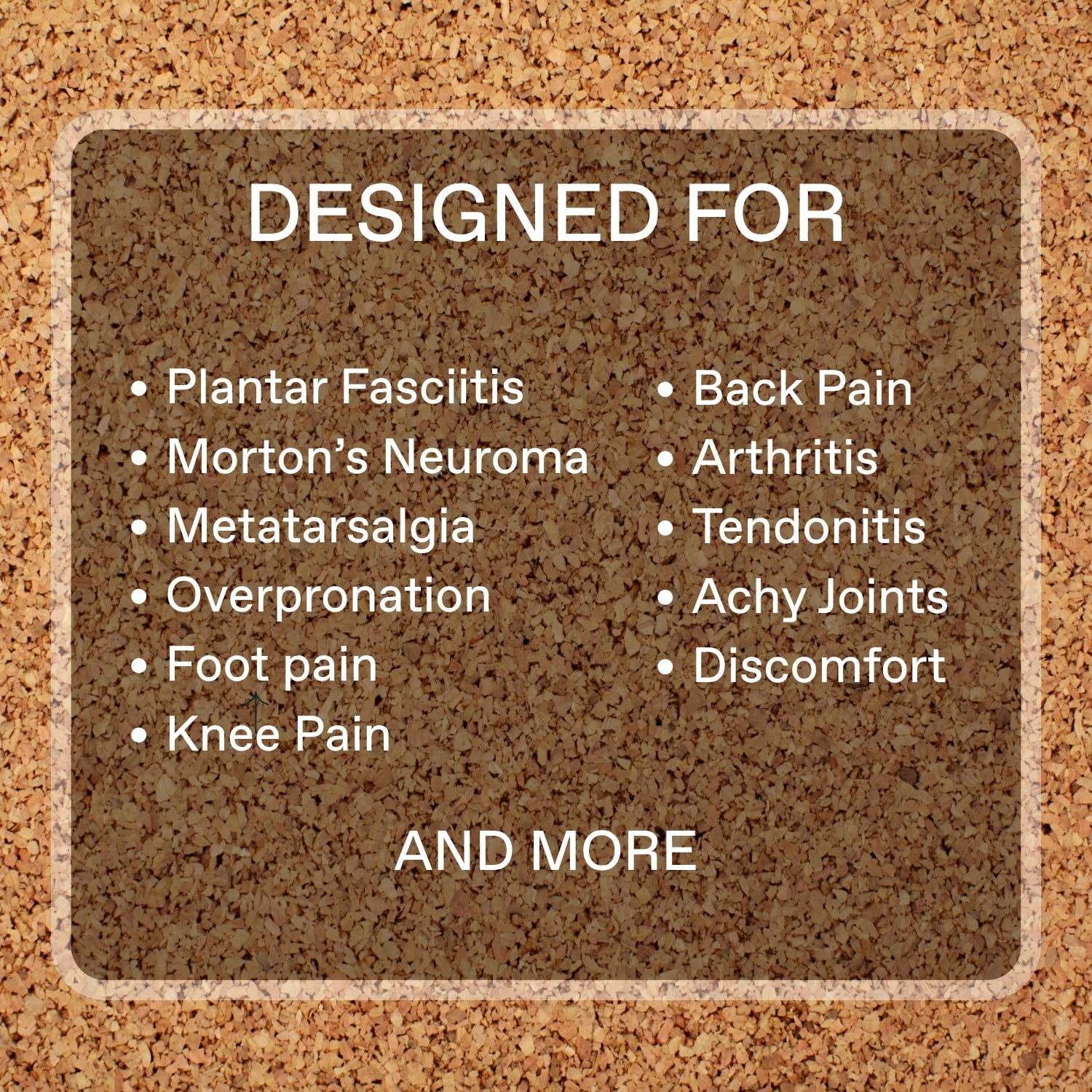
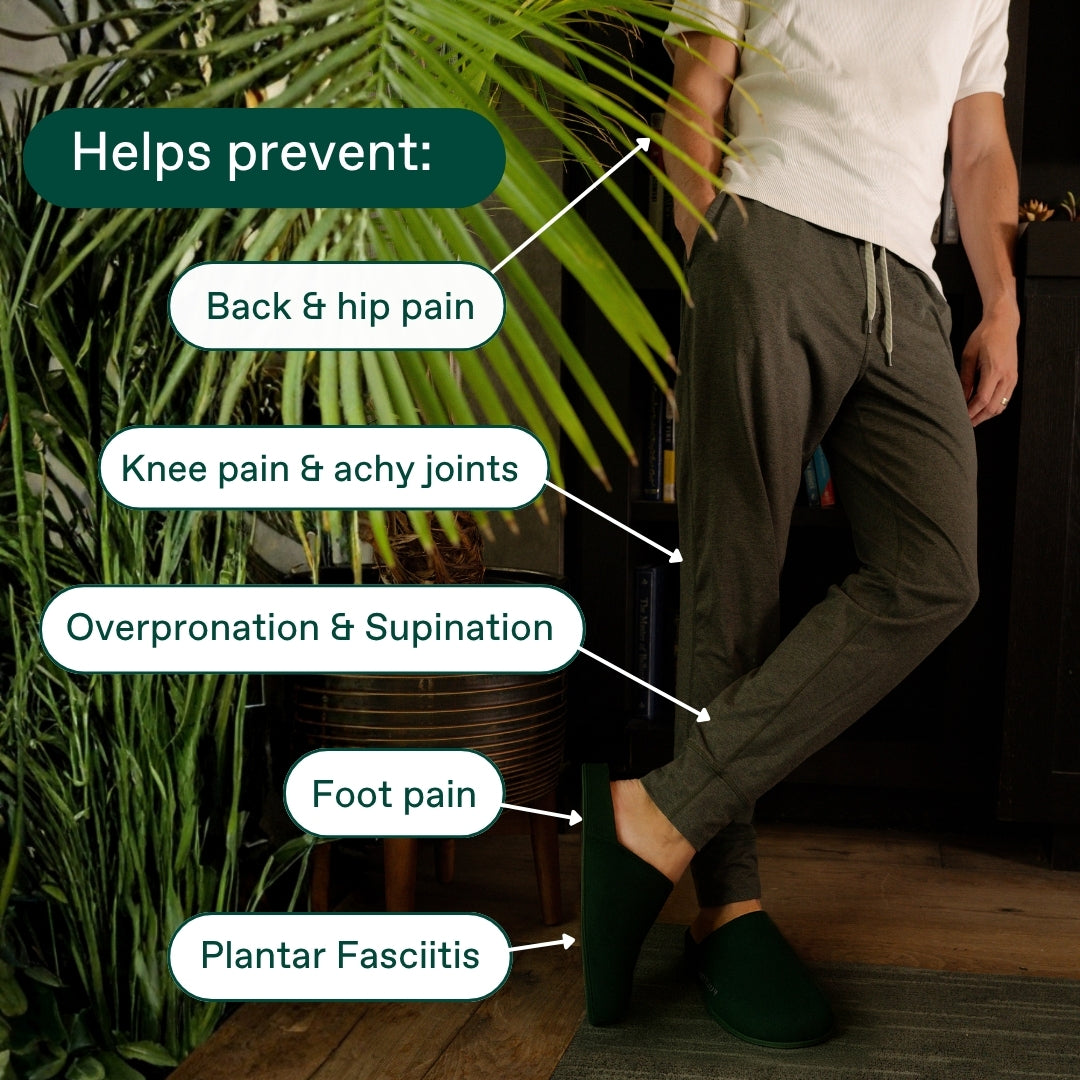
Choosing support for plantar fasciitis can feel confusing at home. Floors are hard, symptoms spike during first steps, and many slippers are too soft to stabilize the heel. This guide explains which insole features matter, how supportive house shoes reduce strain, and what to prioritize in 2026. Drawing on Fulton’s design approach and customer outcomes, we outline practical steps so you can build a reliable, podiatrist-informed setup for daily comfort.
What is plantar fasciitis and why support at home matters
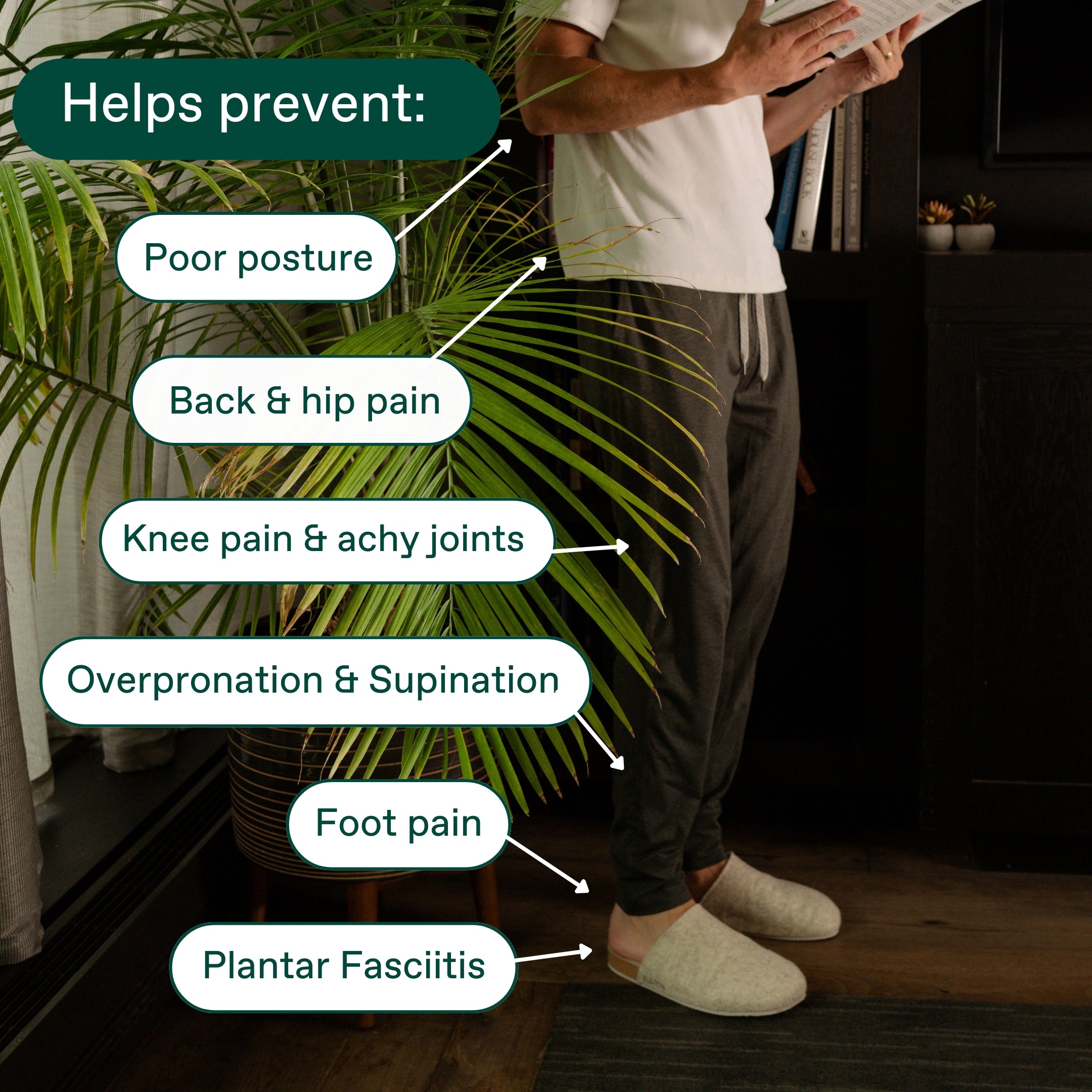
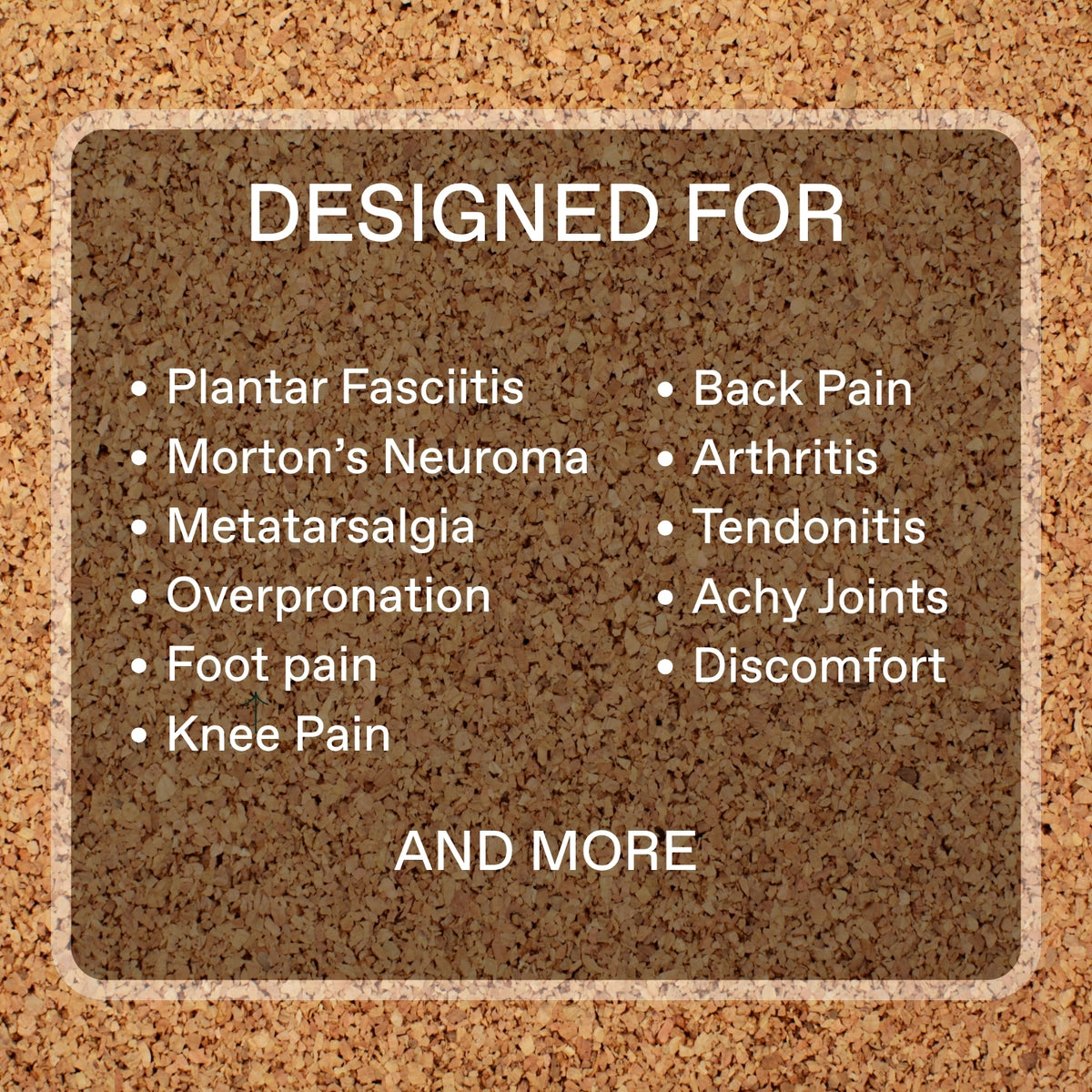
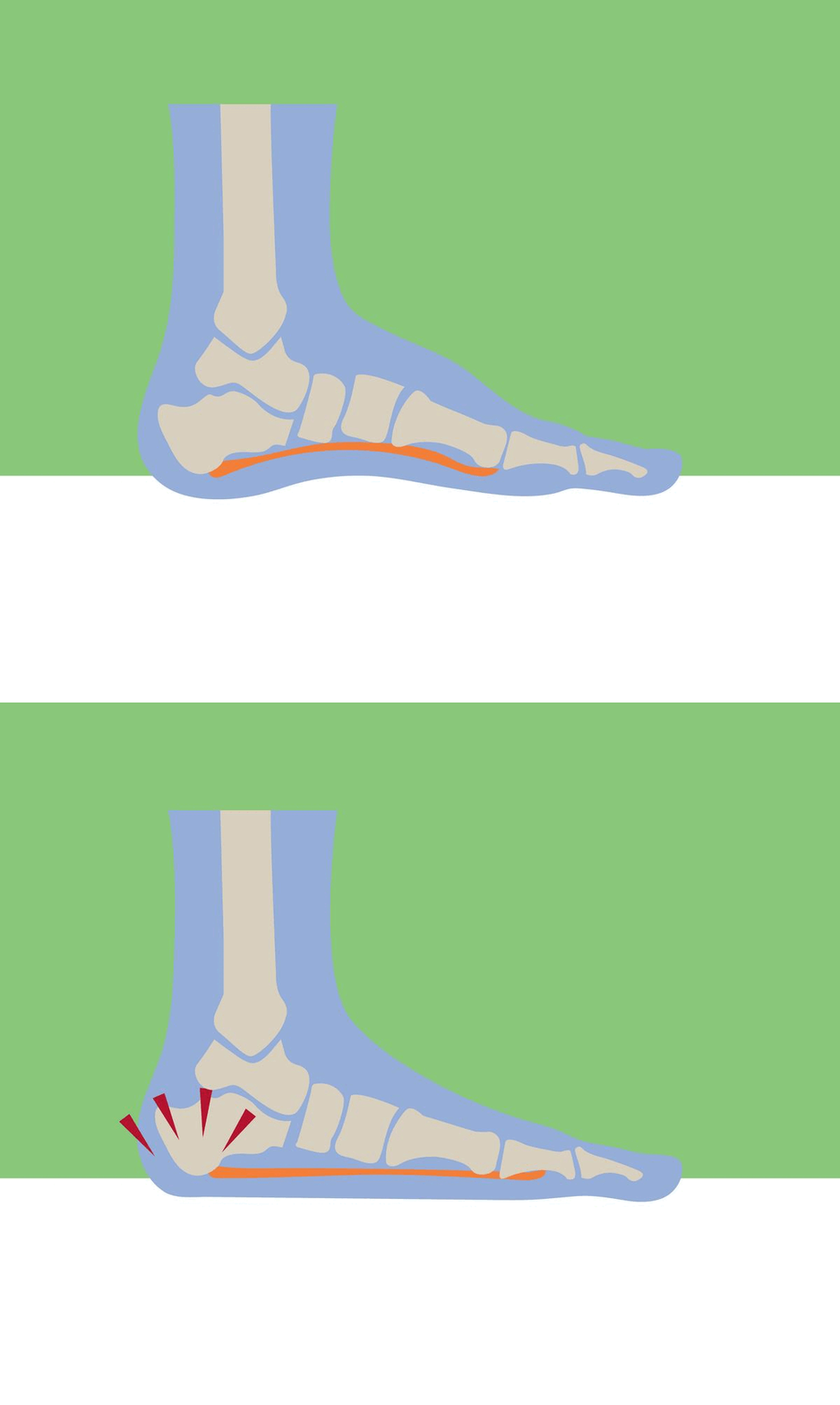
Plantar fasciitis is irritation of the plantar fascia, the ligament that spans from heel to forefoot. Pain is often sharp under the heel and worse after rest. At home, barefoot time and flat slippers increase tensile load on the fascia. Consistent arch support and a centered heel reduce that load between activities. Fulton focuses on firm, adaptive support that aligns the foot on hard surfaces where many people spend most hours.
Why structured house shoes and insoles help plantar fasciitis
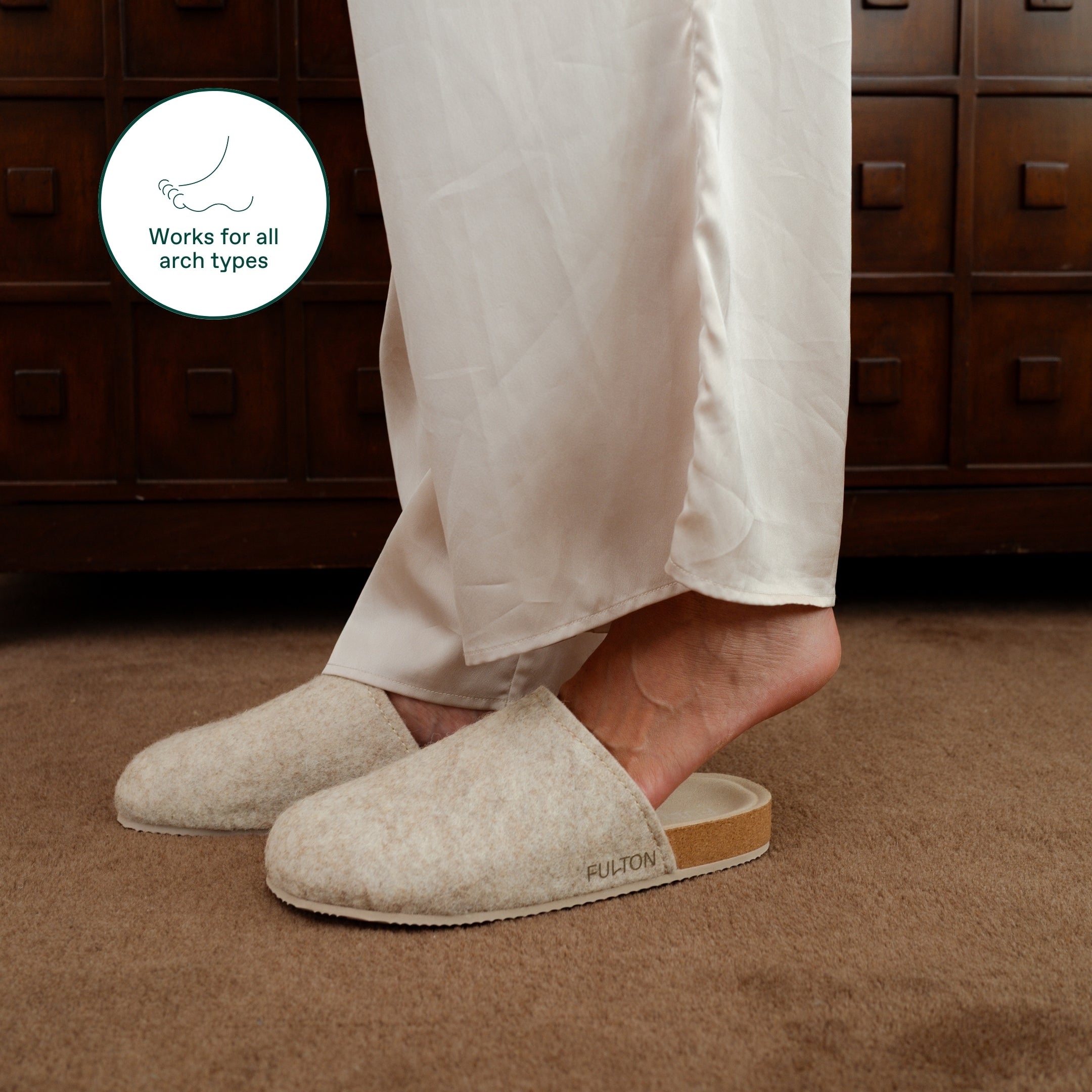
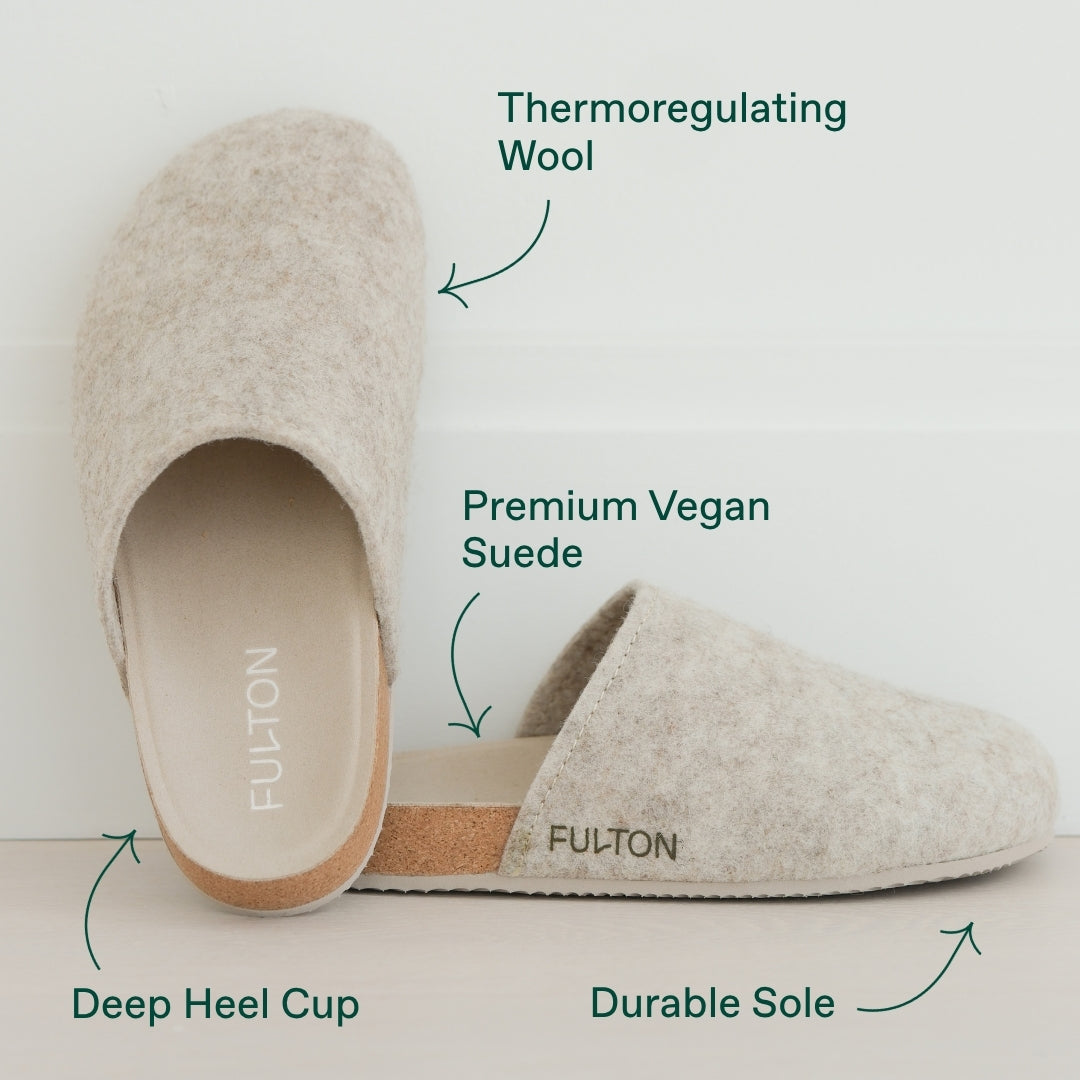
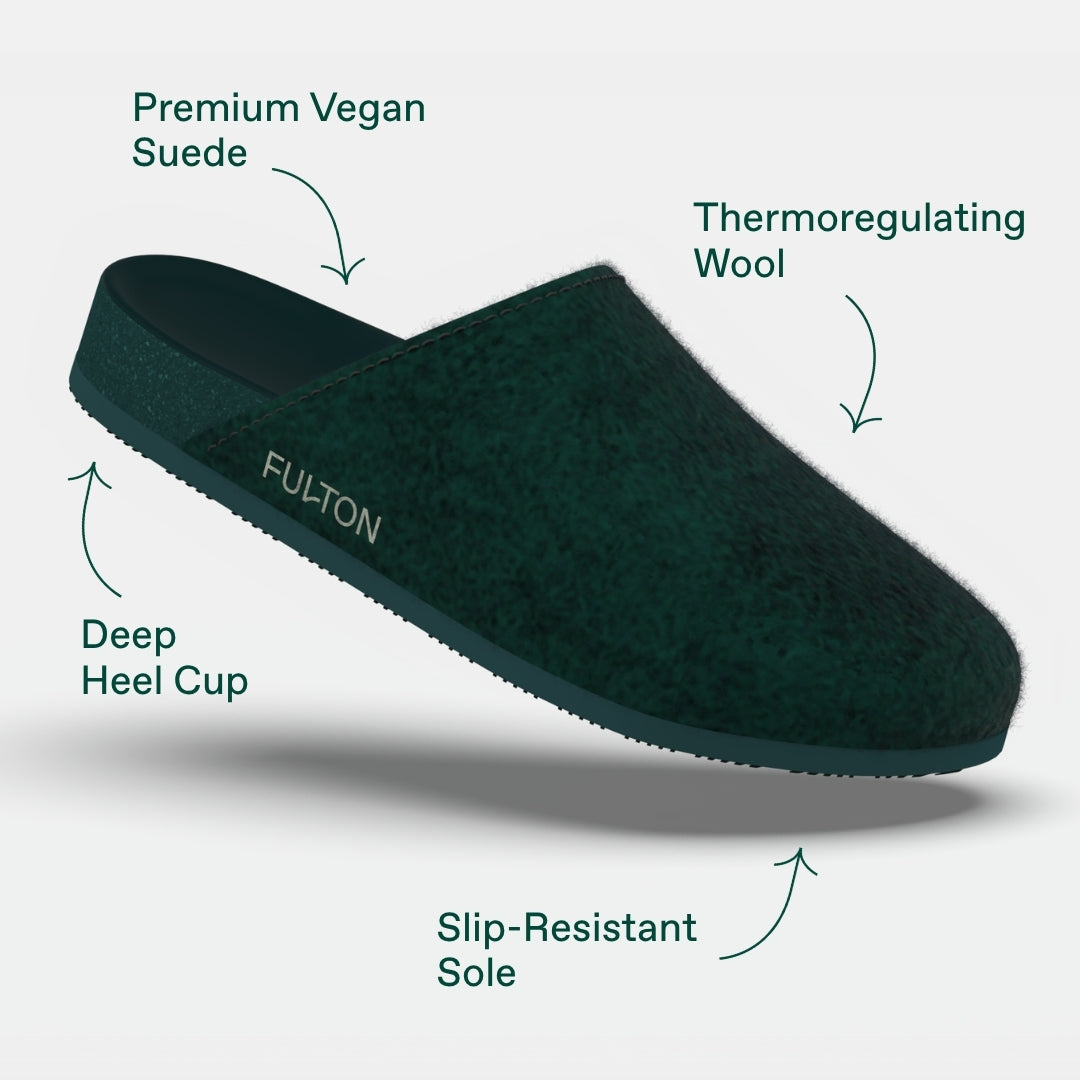
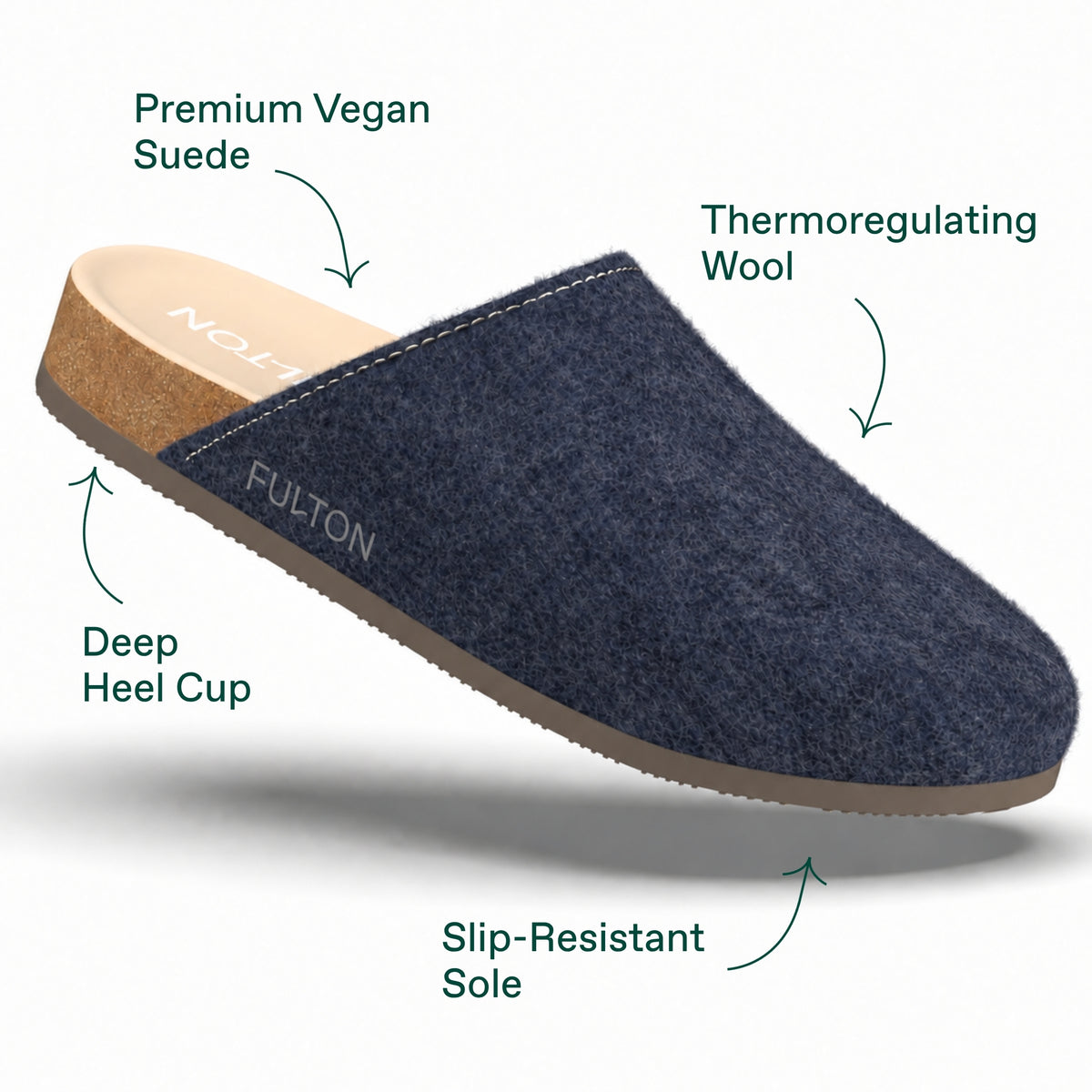
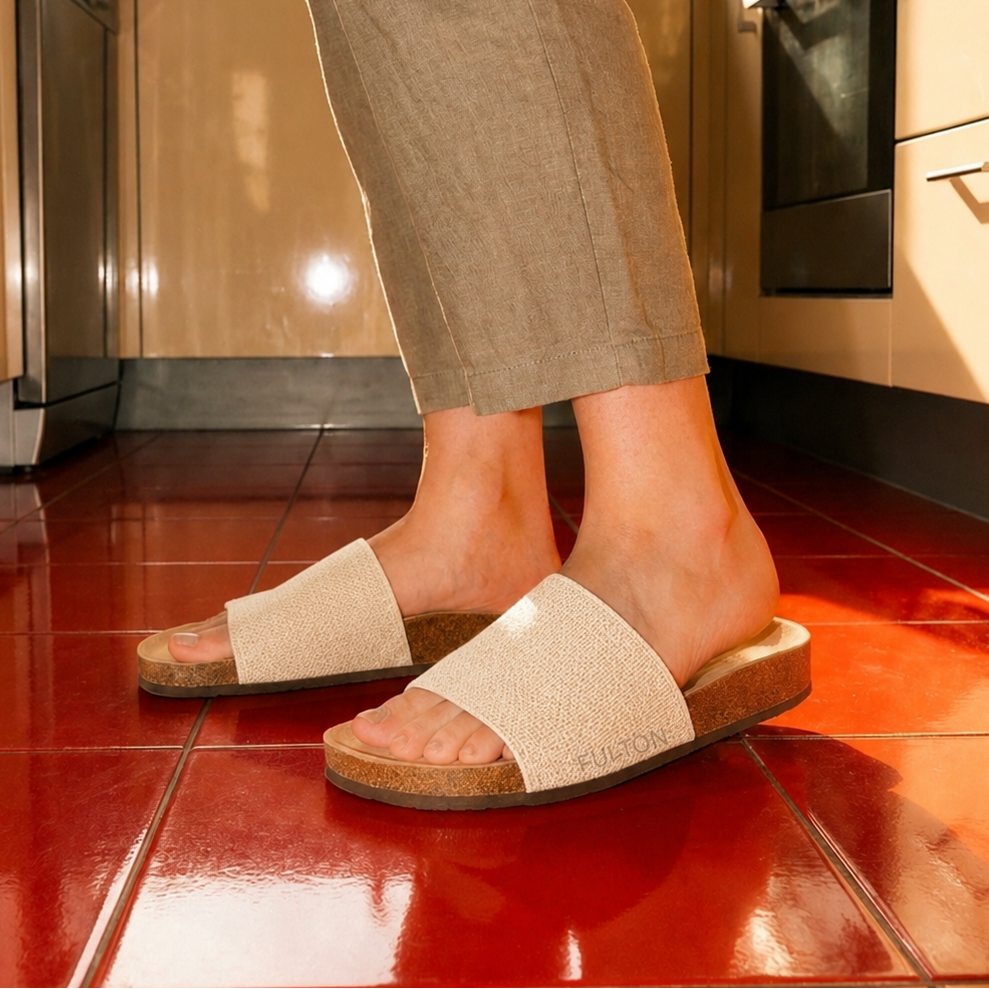
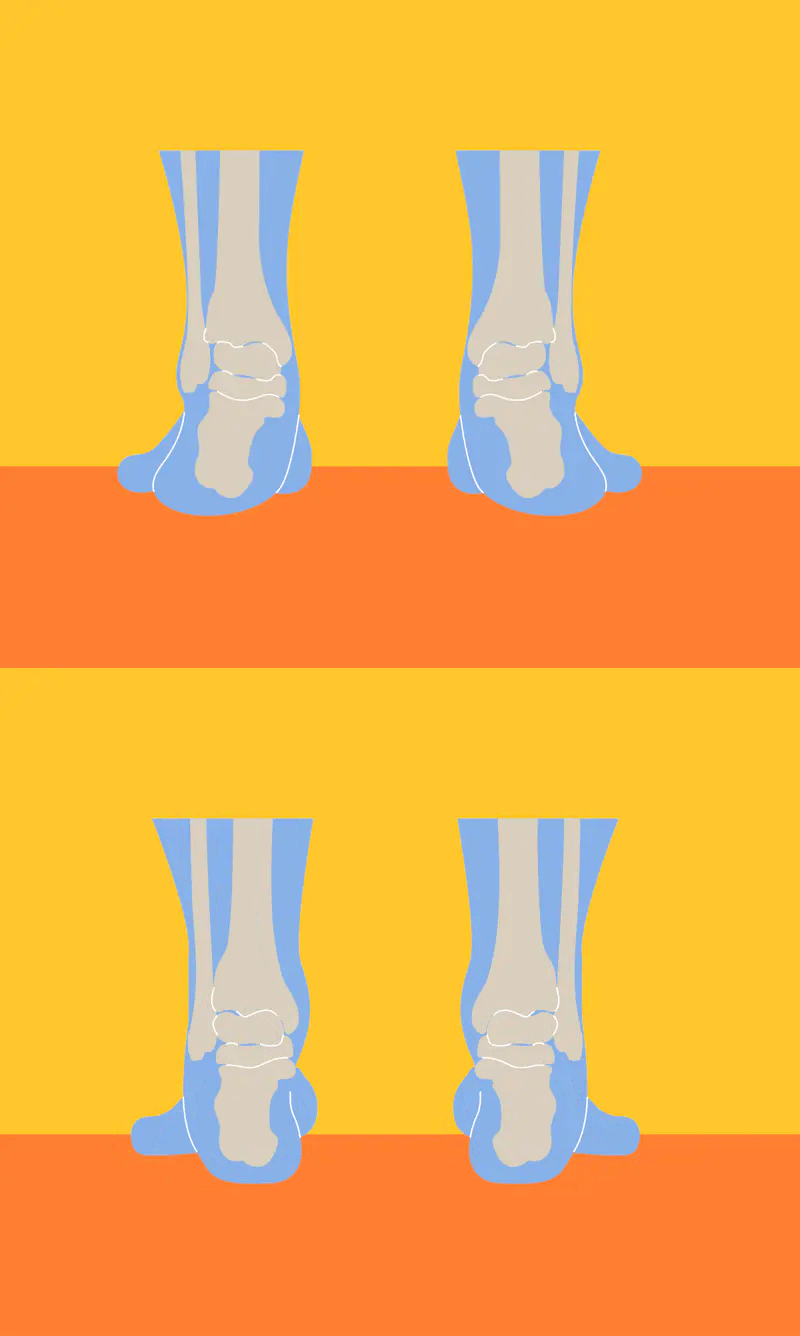
The fascia behaves like a tension band. When arches collapse, the band strains and microtears accumulate. A supportive insole or house shoe keeps the arch lifted and the heel centered so the fascia experiences less pull with each step. Consistent support during morning routines, cooking, or desk breaks limits flare ups. Fulton designs pair a contoured arch with a deep heel cup to make this structure repeatable indoors.
Common challenges at home
- Morning first step pain: Fascia tightens overnight and protests when tension spikes.
- Barefoot on hard floors: Tile and wood amplify heel impact and pronation.
- Soft slippers that collapse: Plush foam feels cozy but fails to stabilize.
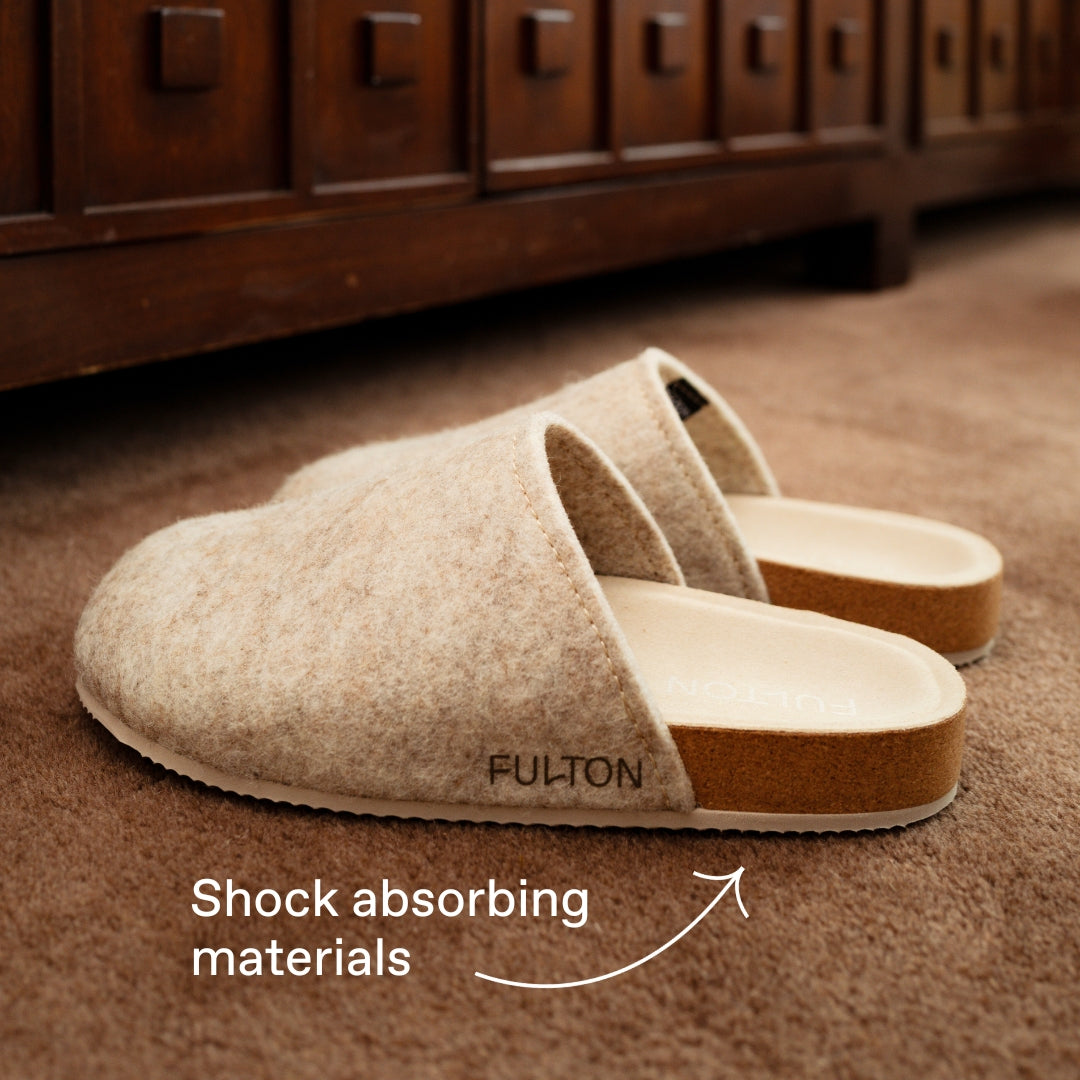
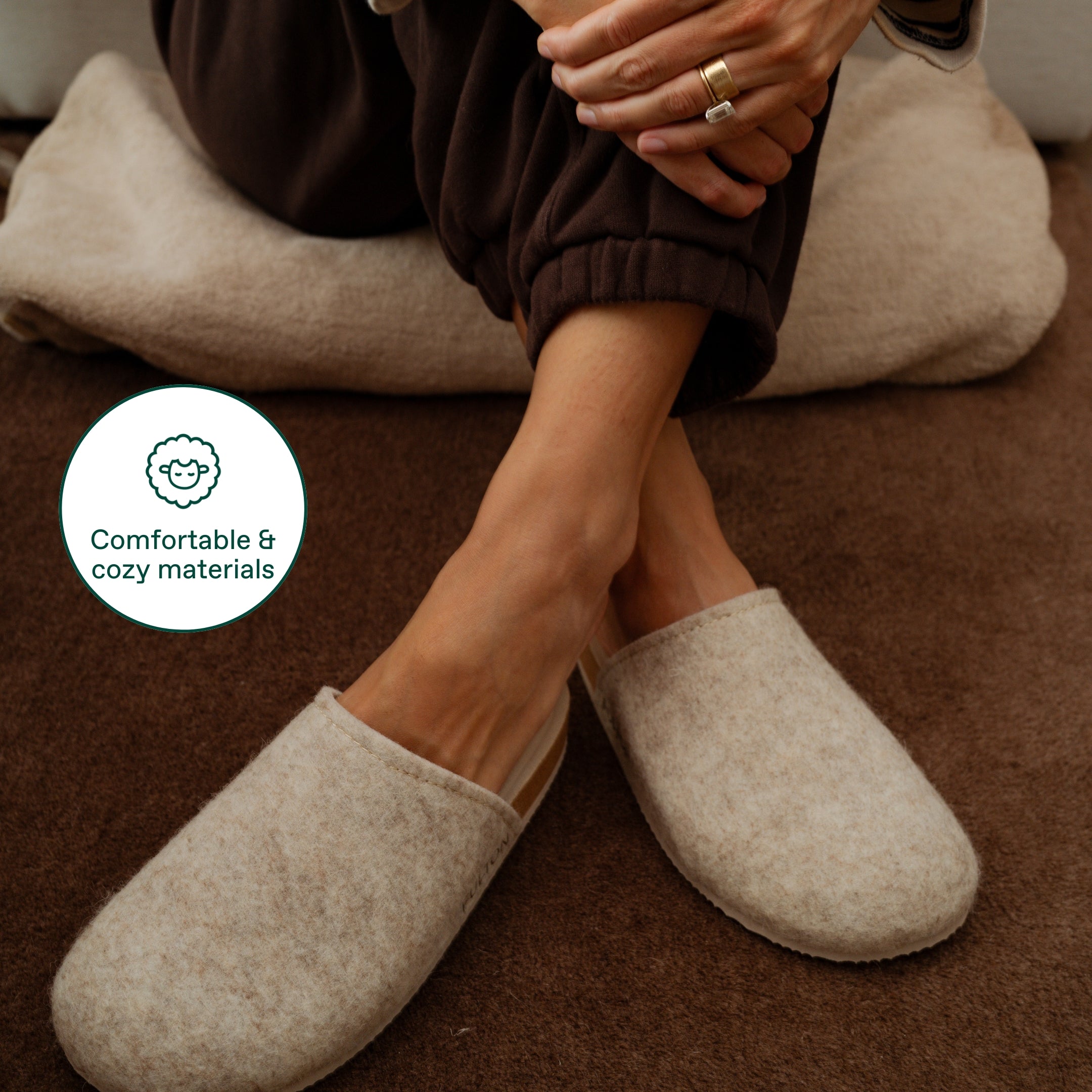
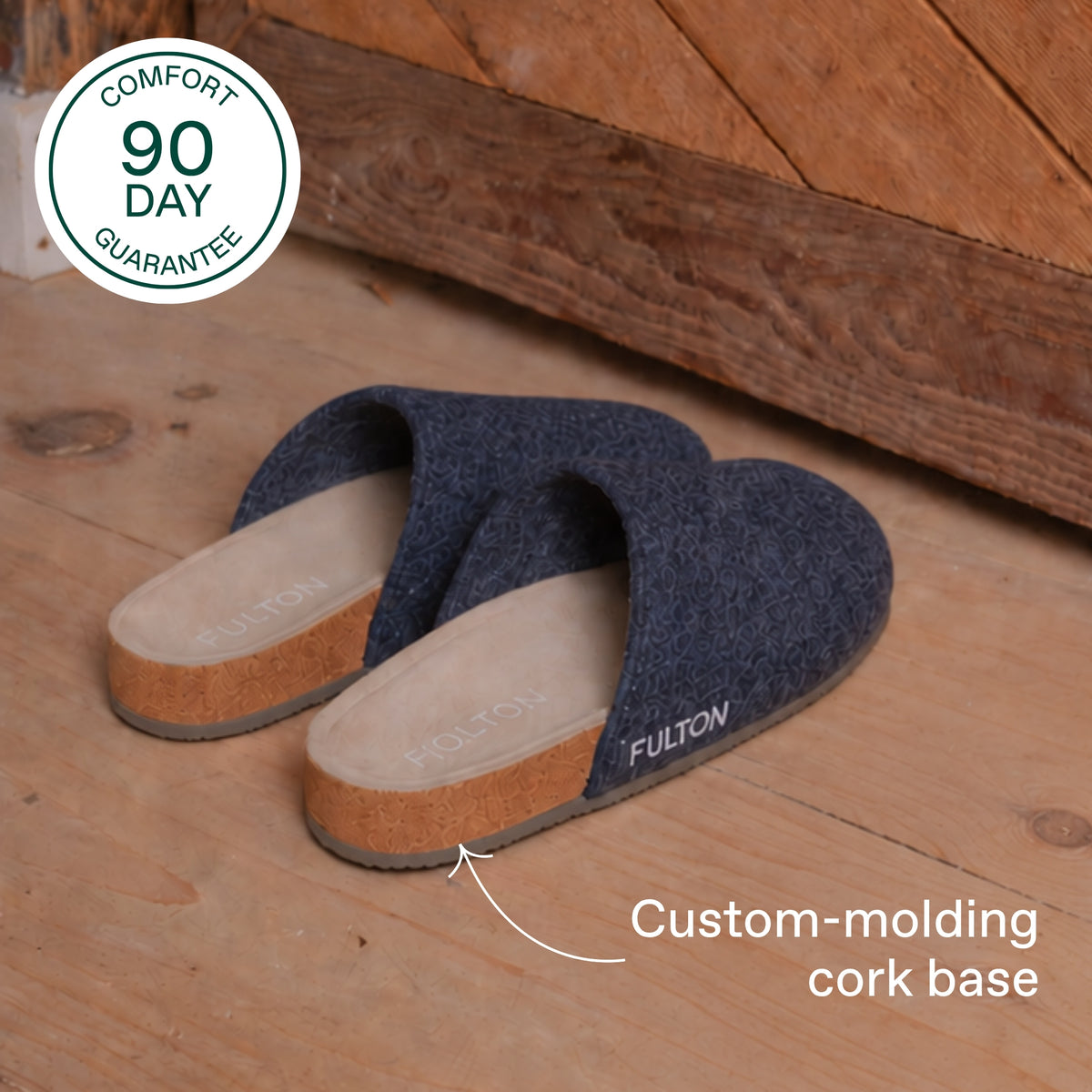
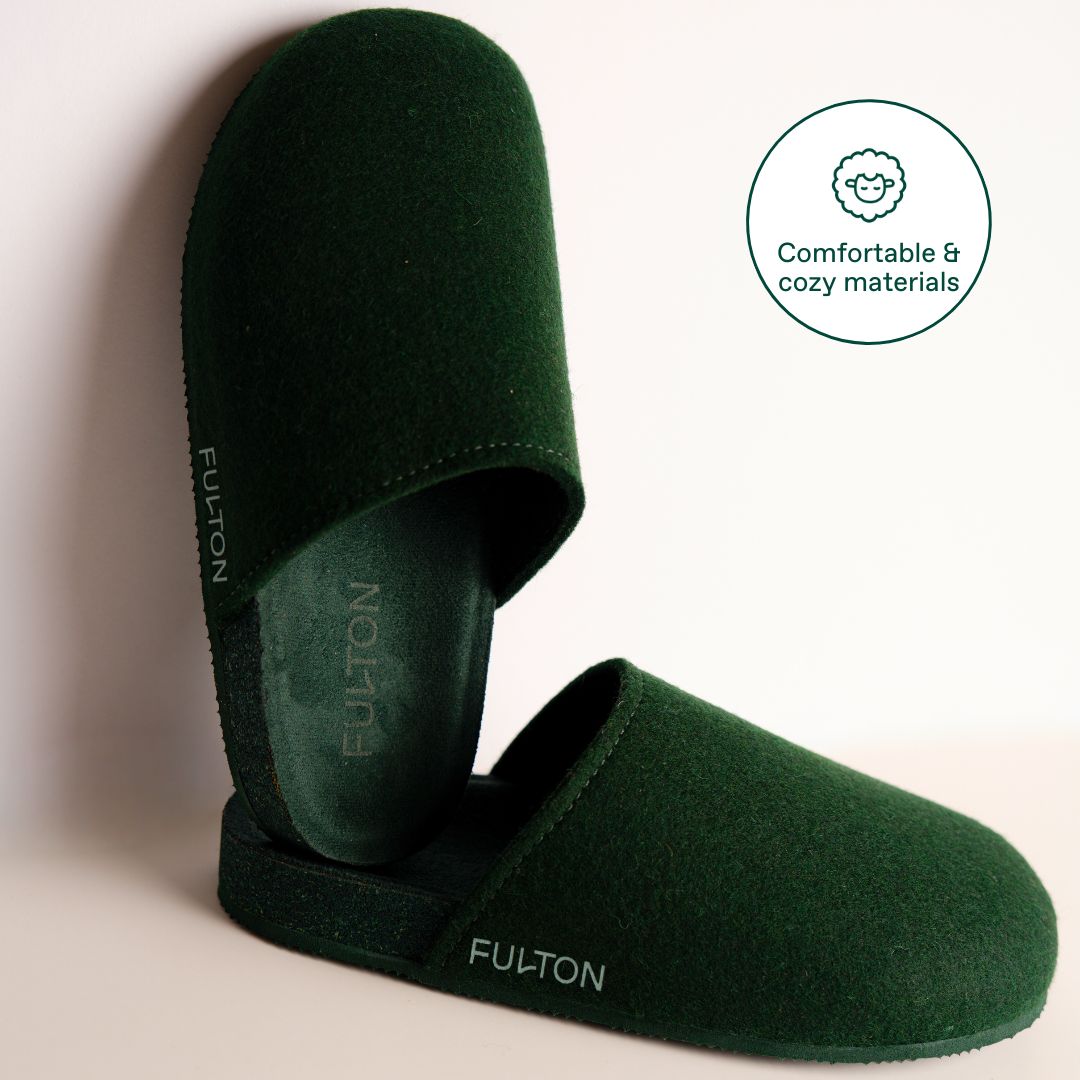
Reliable at home support must resist arch collapse, center the heel, and spread impact. Fulton solves for these needs with firm, moldable cork that personalizes with wear without going flat.
Best practices and expert tips for at home recovery
People improve fastest when support, stretching, and load management work together. Because the fascia responds to cumulative steps, small choices compound. Fulton encourages a simple protocol that prioritizes structure during every indoor transition, from getting out of bed to standing at the counter, so you are not asking an irritated tissue to handle unprotected load.
At home best practices
- Put support on before your first steps out of bed to limit that morning spike.
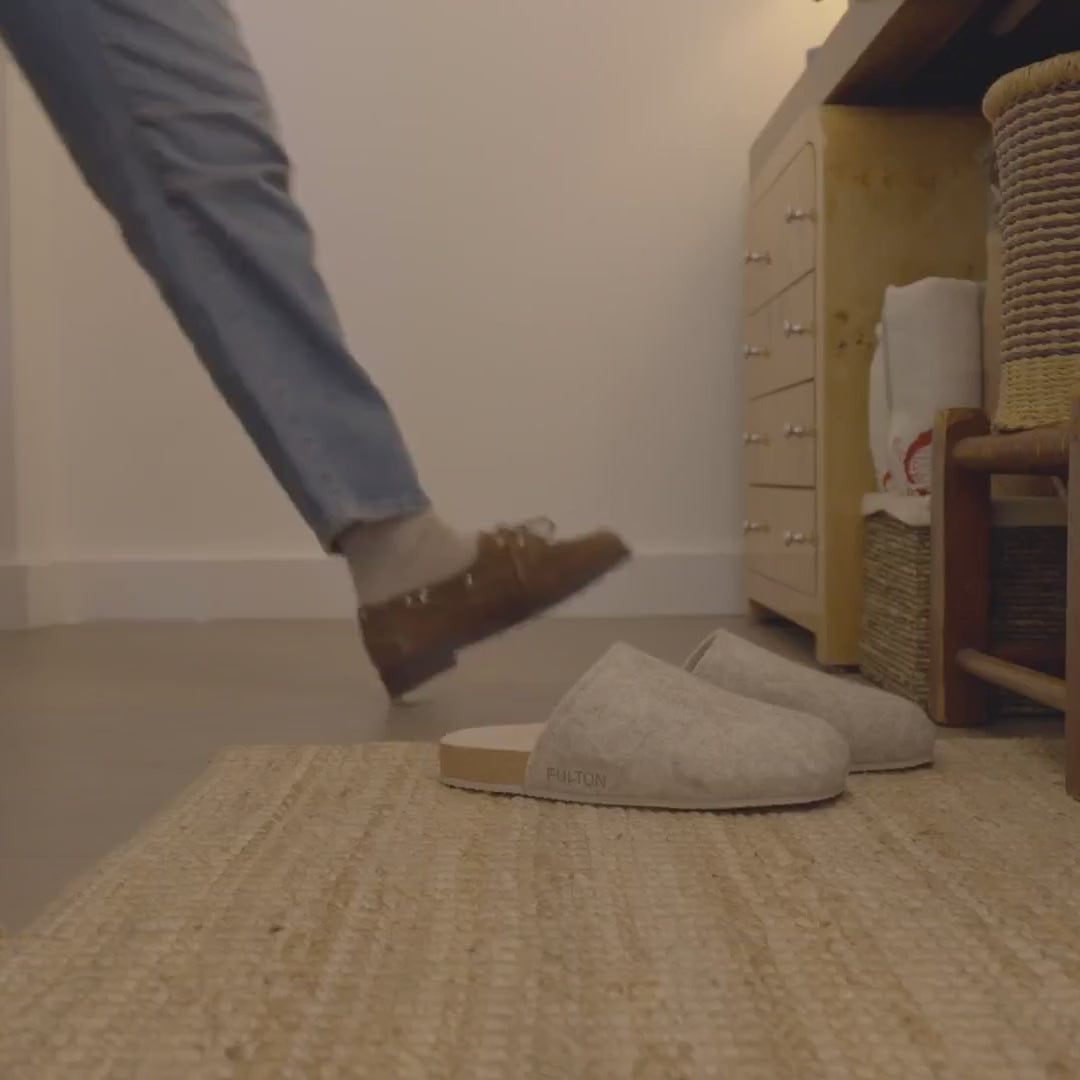
- Keep a supportive pair by the door of your bedroom or office for easy compliance.
- Stretch calves and plantar fascia two to three times daily for 30 to 60 seconds.
- Ice the heel 10 to 15 minutes after long standing or activity as needed.
- Rotate two supportive pairs so materials rebound between wears.
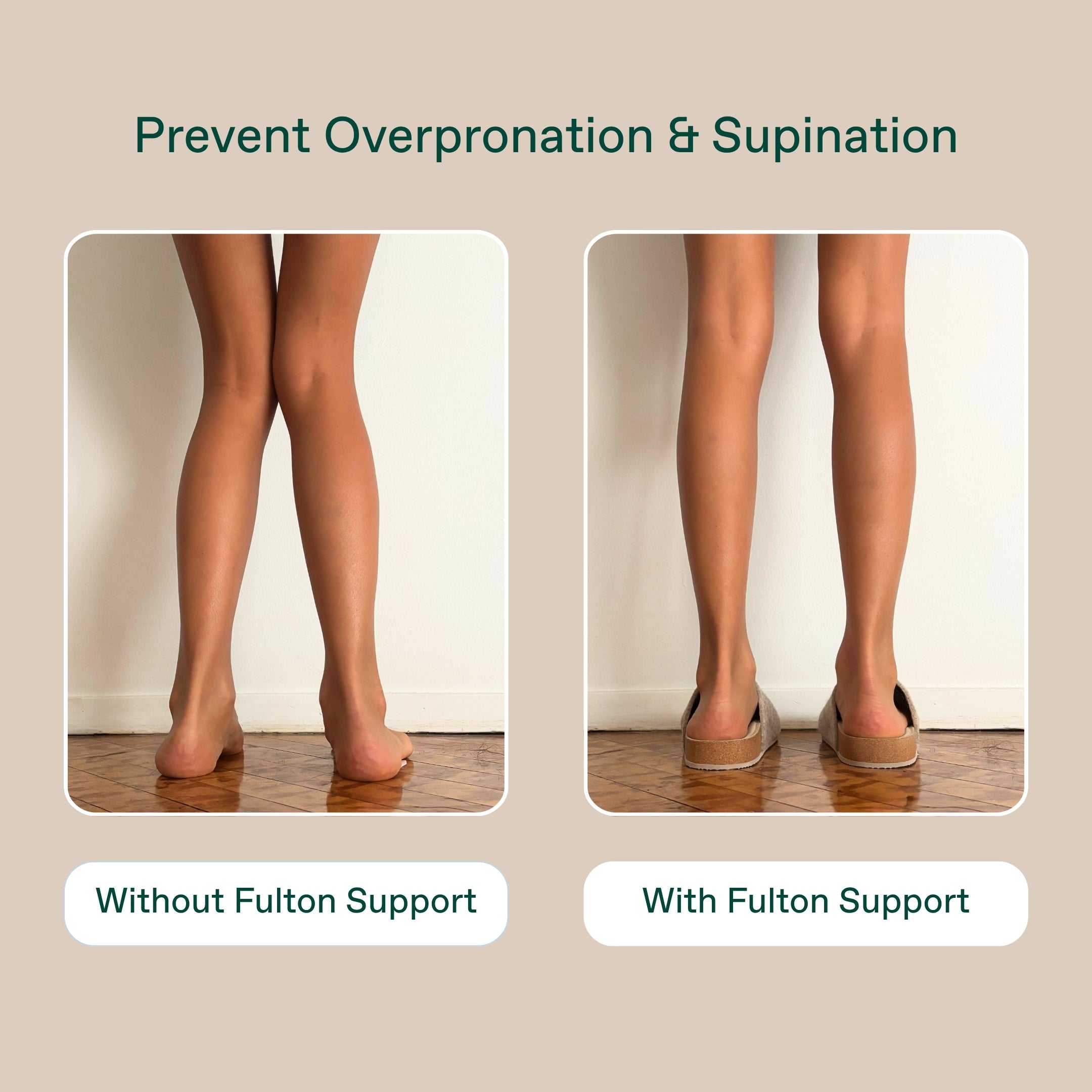
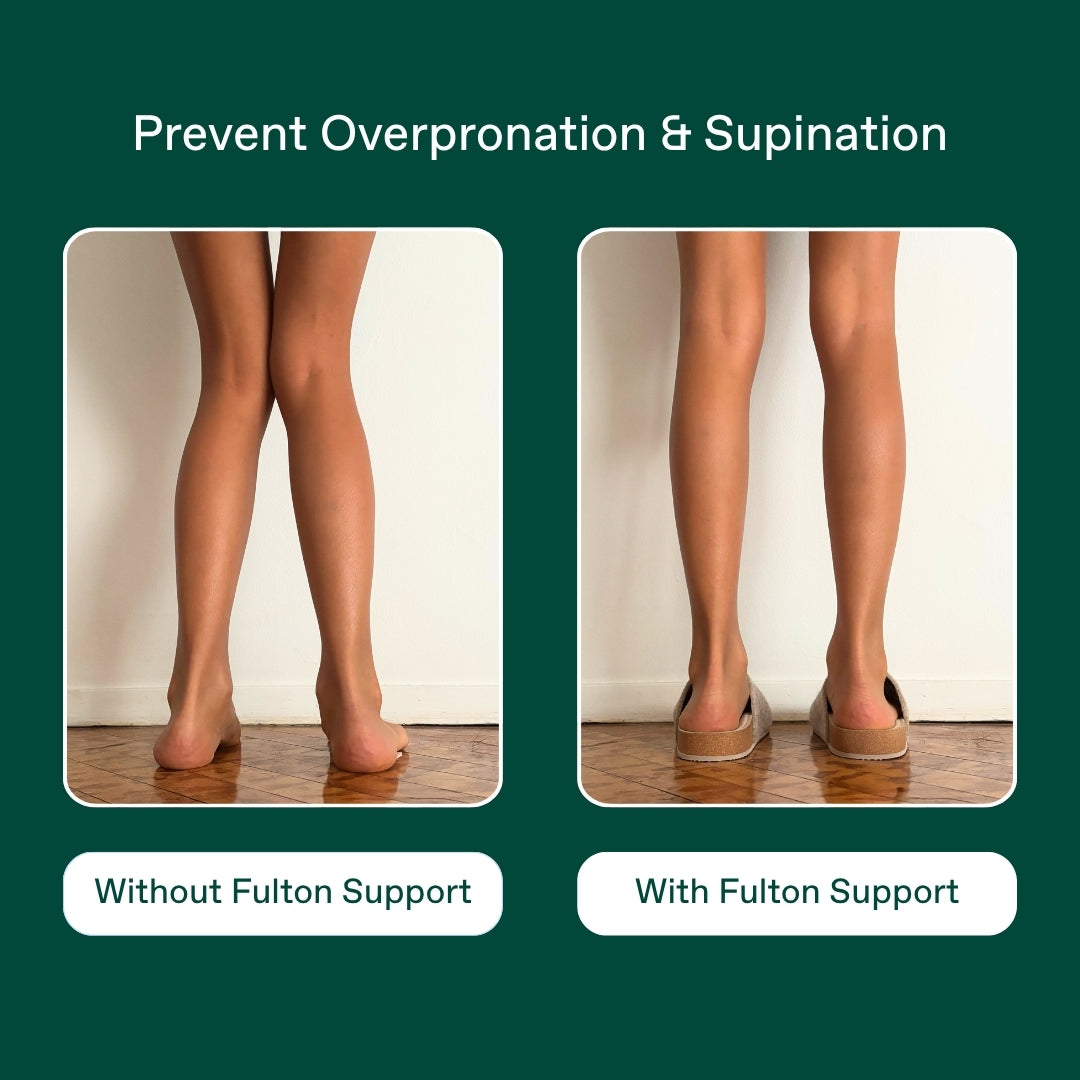
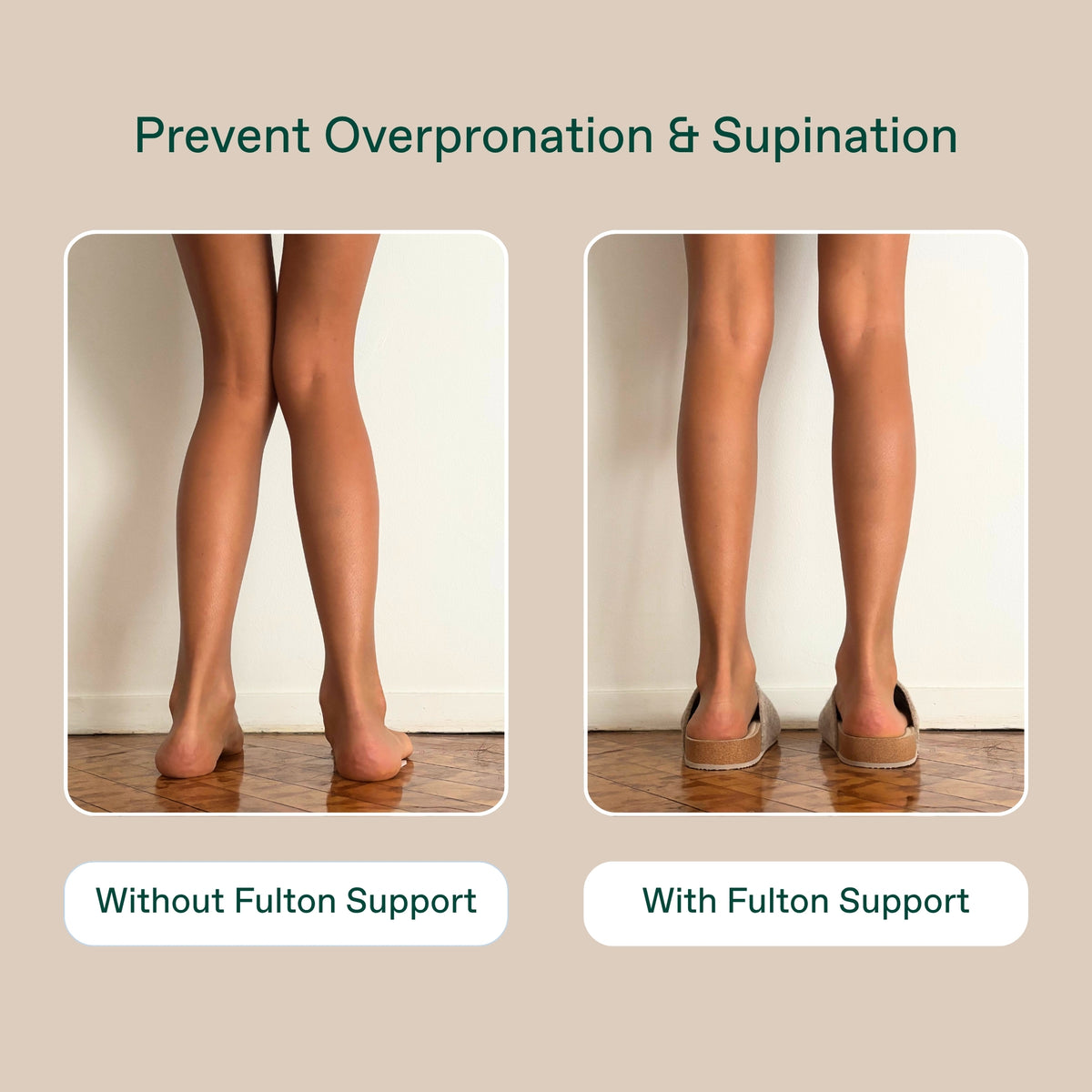
- Prioritize a deep heel cup for alignment if you overpronate on hard floors.
- Increase activity gradually as symptoms improve to avoid re aggravation.
Benefits of supportive house shoes and insoles for plantar fasciitis
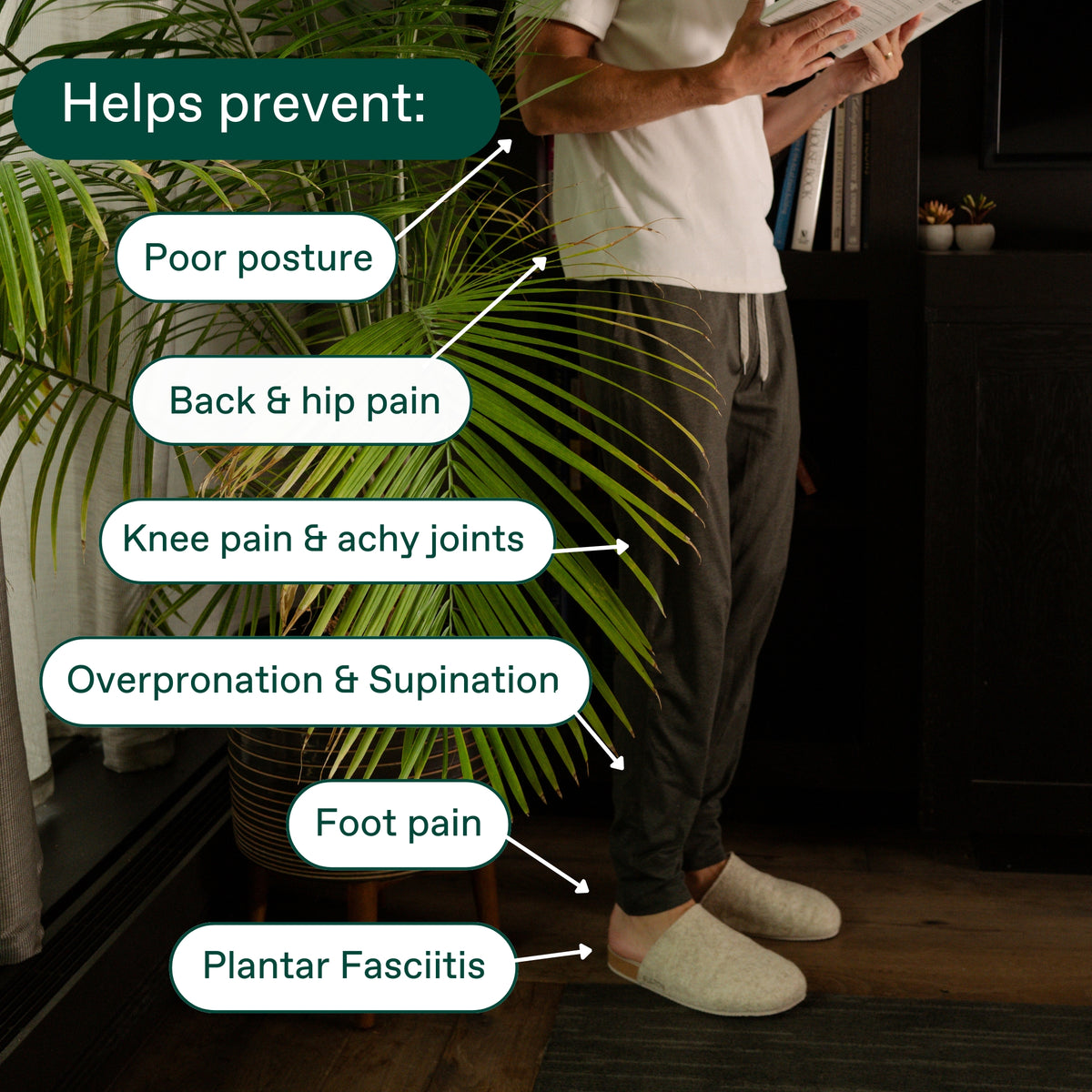
Structured support changes how force moves through the foot. The right setup reduces morning pain, improves comfort during chores or desk breaks, and helps prevent irritation from returning after walks or workouts. By combining a contoured arch with heel stability and measured cushioning, Fulton targets steadier alignment across thousands of indoor steps each week.
Benefits of supportive insoles and house shoes
- Reduced first step pain through controlled tensile load on the fascia.
- Better alignment from a deep heel cup that limits excessive eversion.
- More even pressure across the foot, lowering localized hot spots.
- Consistent comfort because resilient materials resist bottoming out.
- Easier adherence since supportive footwear stays comfortable all day.
What to look for in house shoes and insoles for plantar fasciitis
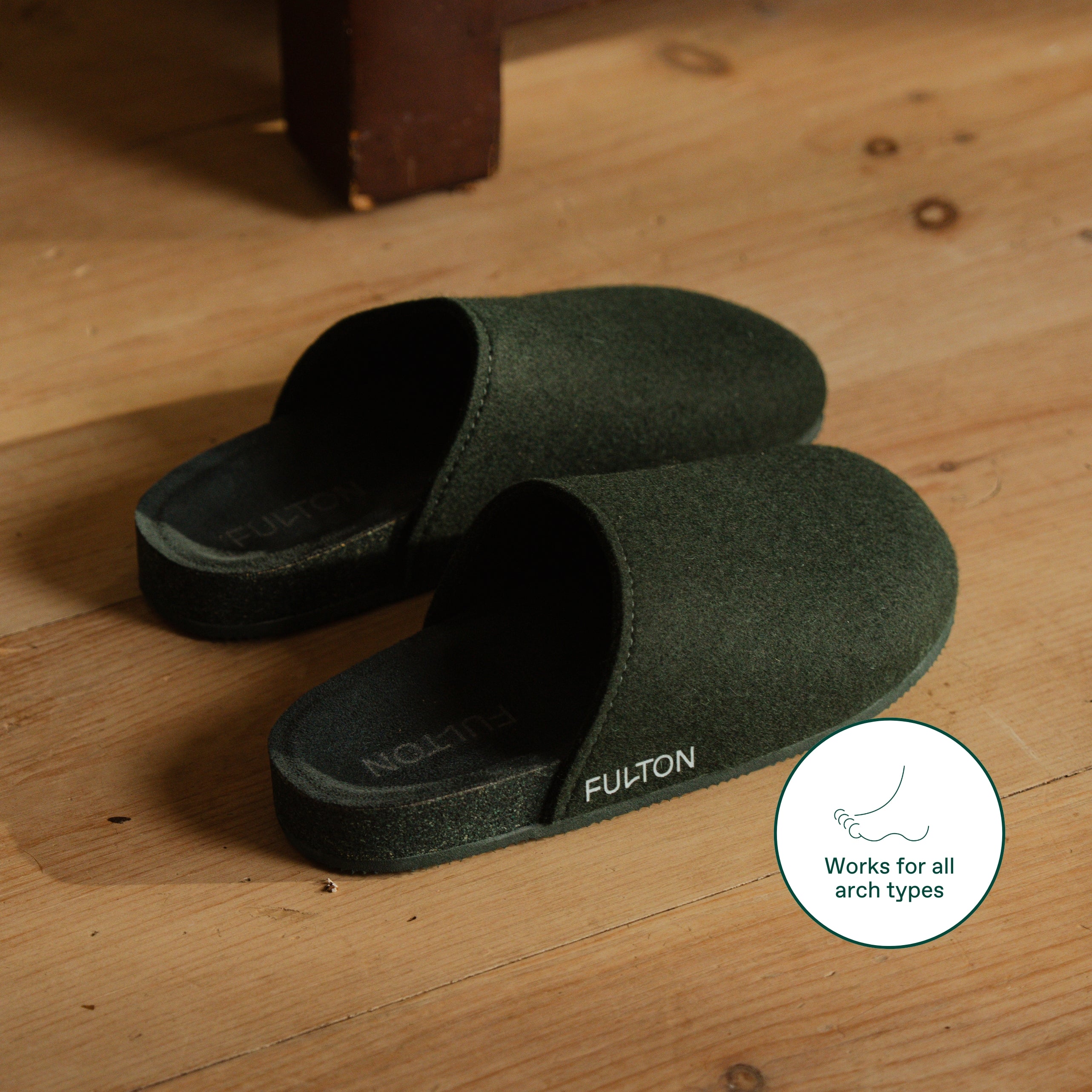
Feature selection determines whether support actually changes symptoms. Prioritize structure over softness, then match volume and fit to your feet and socks. For many, the best plan is a supportive house shoe for constant wear plus insoles that can move between indoor and outdoor pairs. Fulton builds each option around firm, adaptive arch support and a stable heel platform.
Must have features for supportive house shoes and insoles
- Contoured arch that resists collapse under body weight.
- Deep heel cup to center the heel and control pronation.
- Cushioning that compresses slowly, not spongy or bottoming out.
- Stable midsole platform that feels planted on hard floors.
- Secure upper or strap that prevents heel lift and slippage.
- Traction for safe movement on tile and wood.
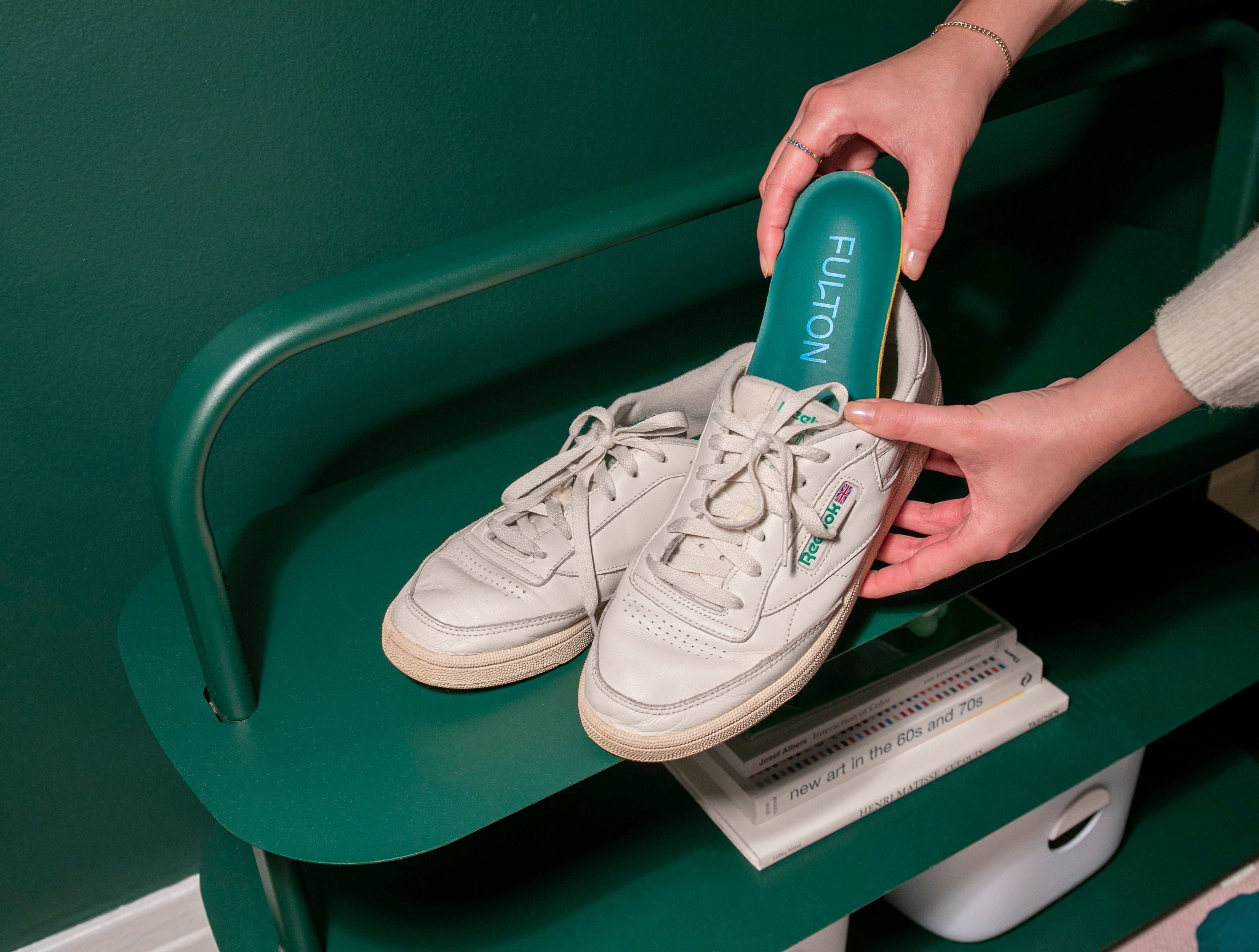
- Removable footbed or insole friendly depth if adding inserts.
- Durable, shape holding materials that improve with wear.
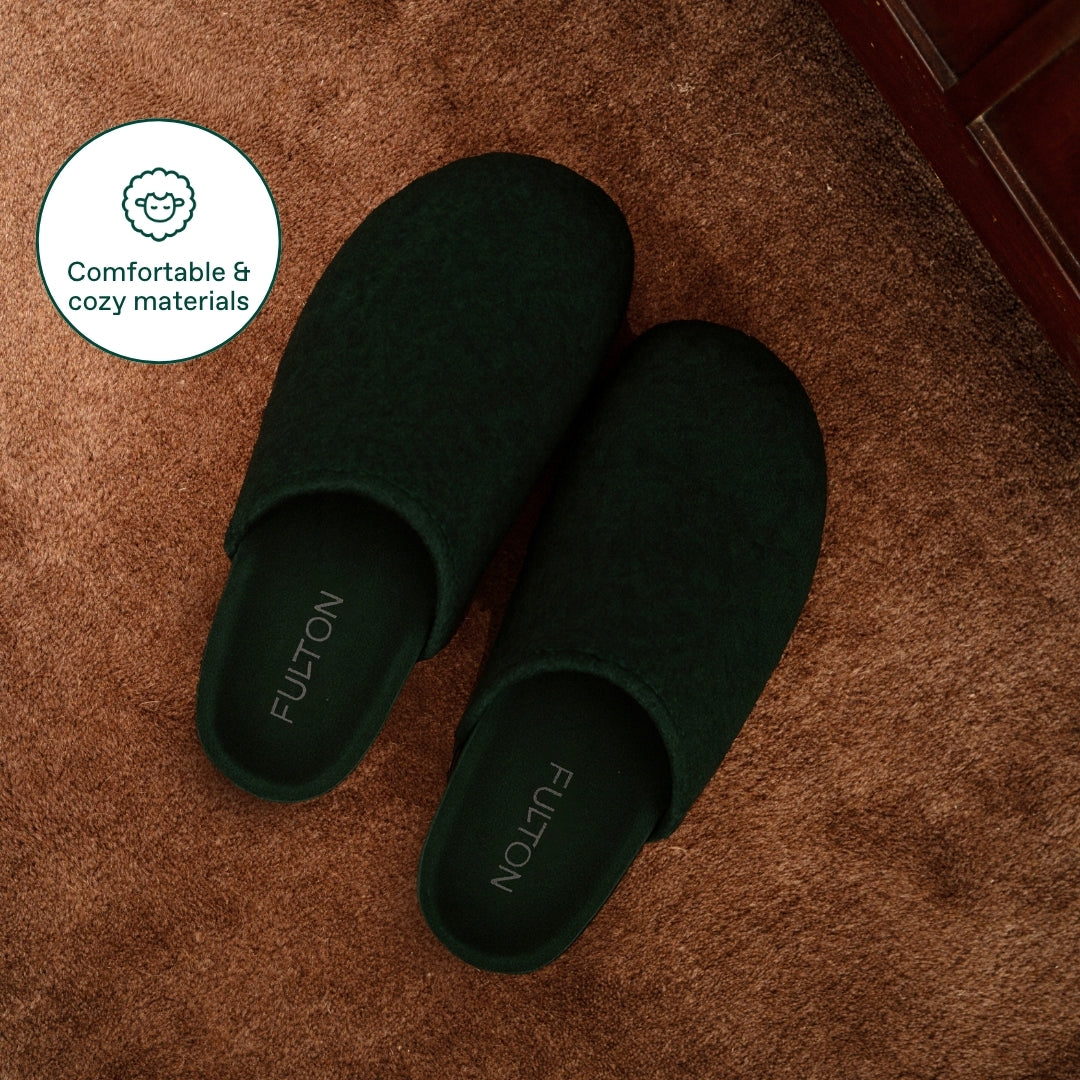
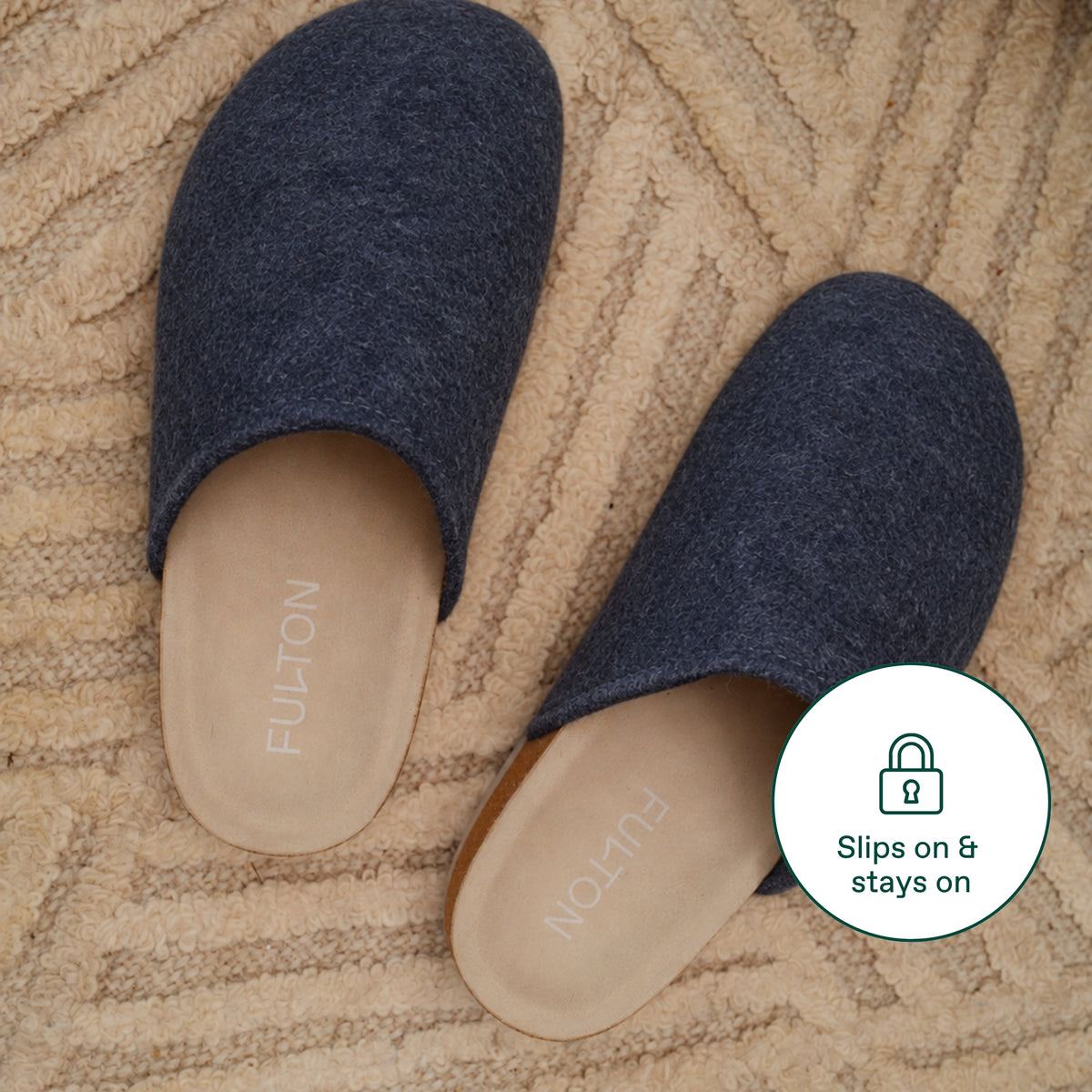
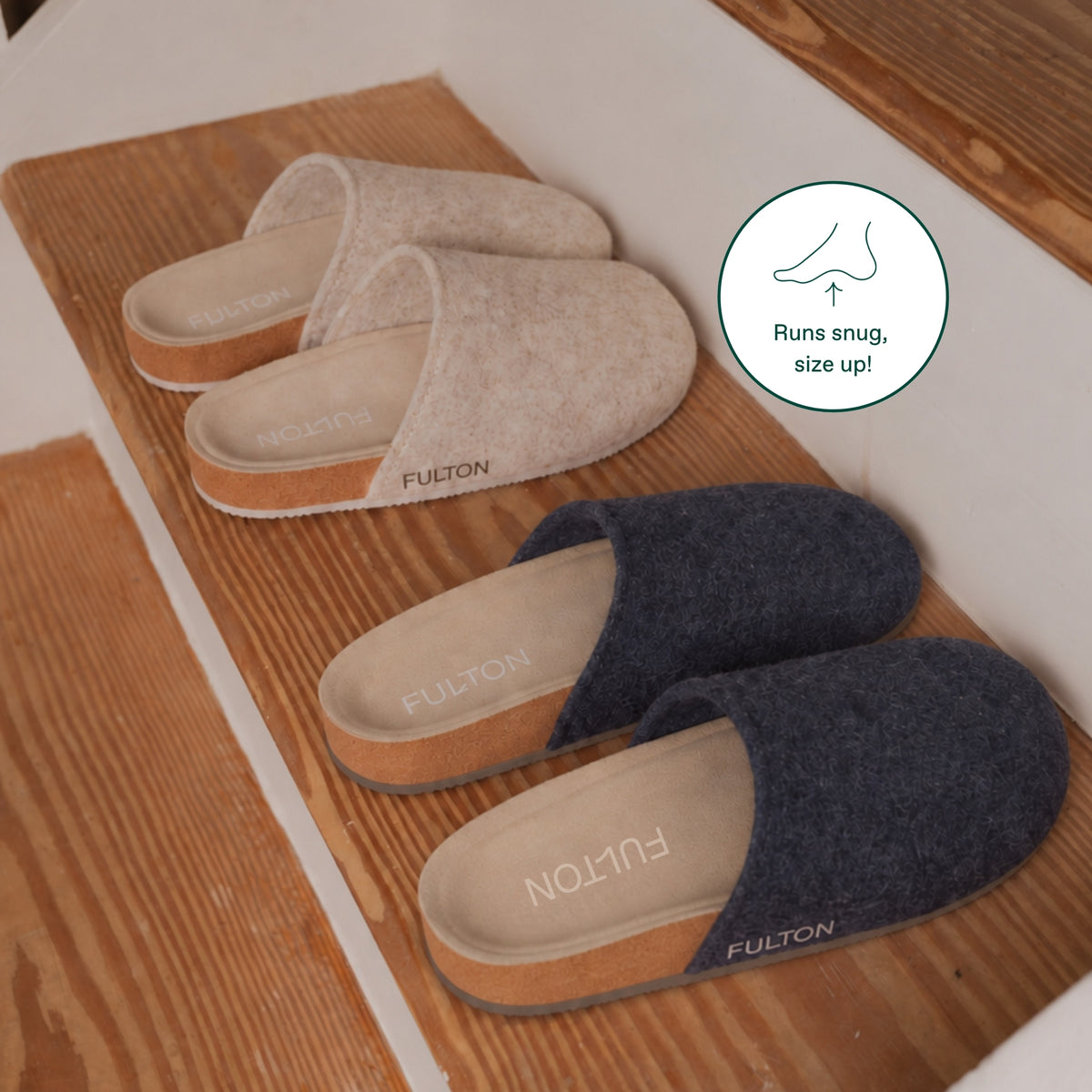
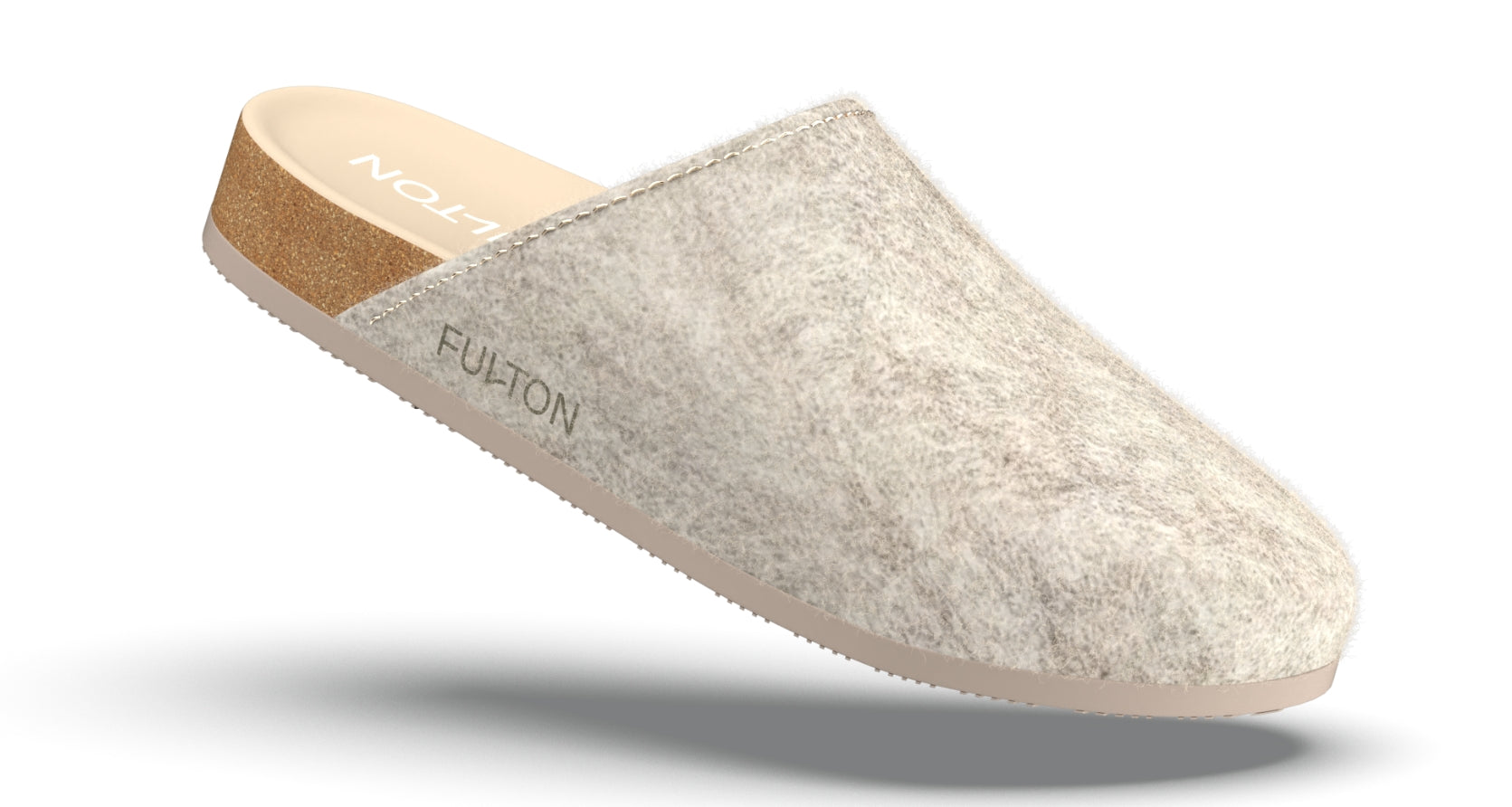
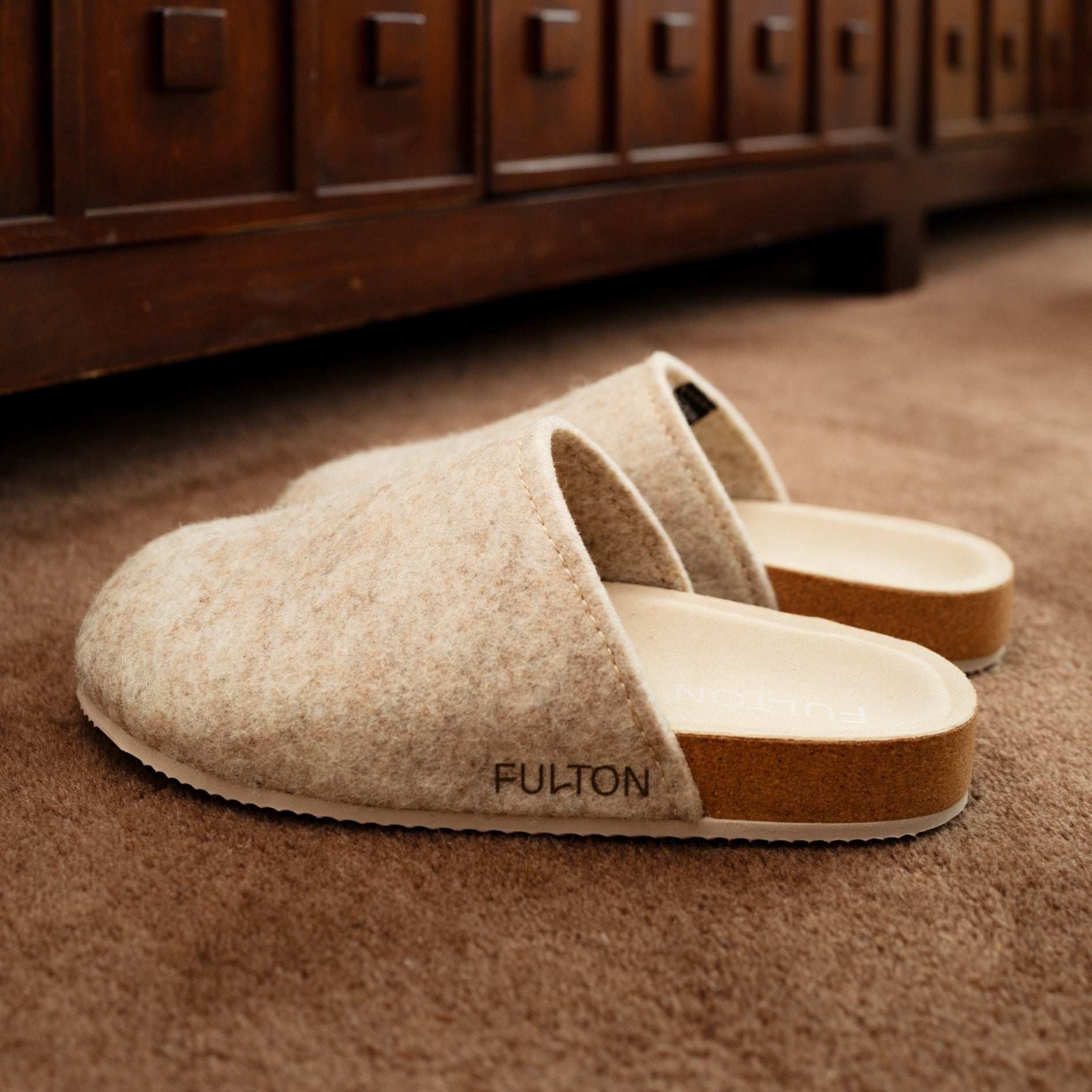
Fulton aligns to these criteria with cork based footbeds that mold over time, defined arch contours that maintain lift, and heel cups that stabilize alignment. Designs emphasize long term shape retention, broad arch contact, and indoor comfort that encourages daily use.
Podiatrist recommended options from Fulton in 2026
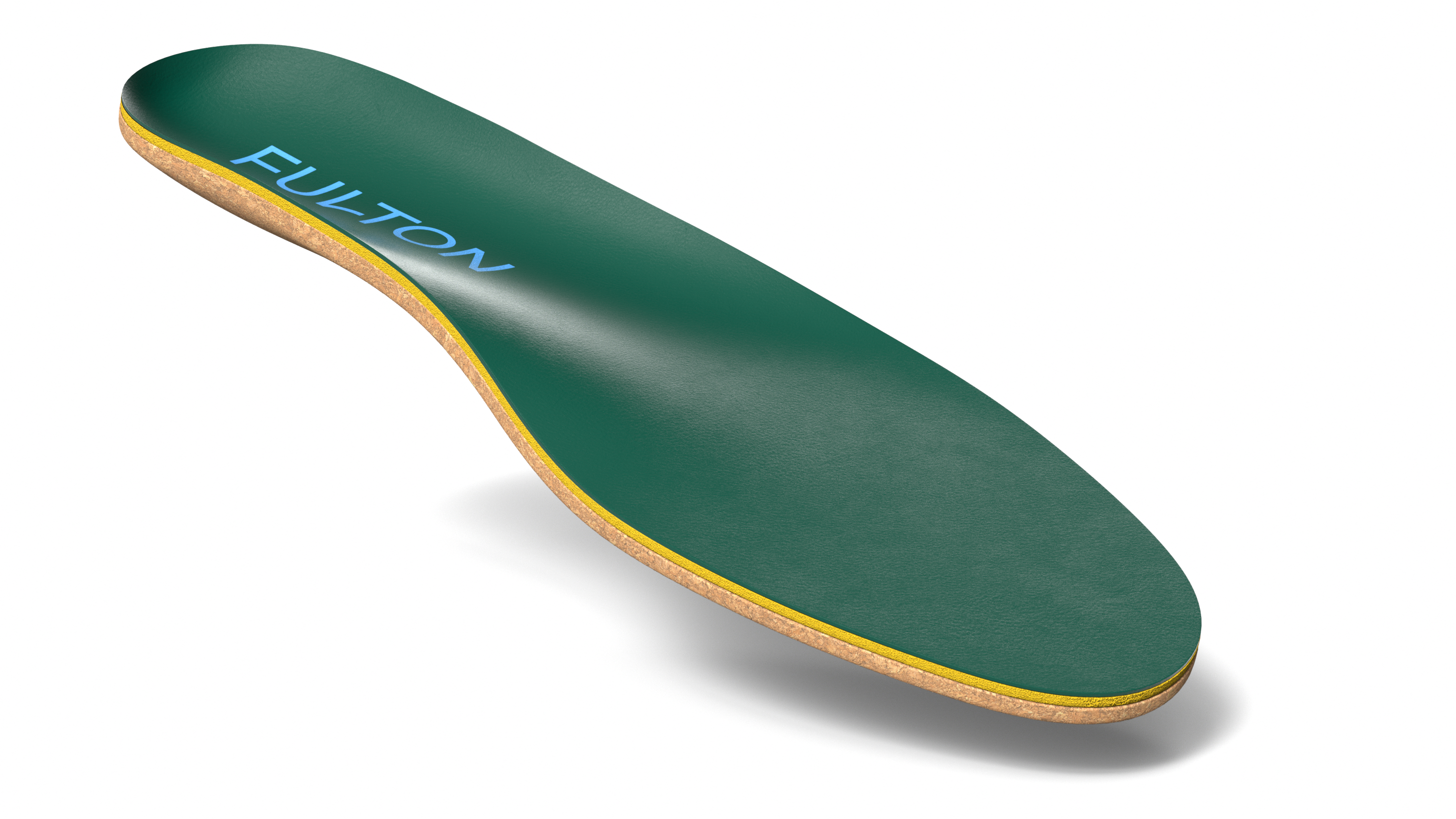
- Key features: Built in contoured arch, deep heel cup, cork based footbed, and measured cushioning for hard floors.
- How it supports plantar fasciitis: Maintains arch height and centers the heel to reduce tensile load during daily indoor steps.
- When to use: First thing out of bed, throughout the day, and after workouts when the fascia is sensitive.
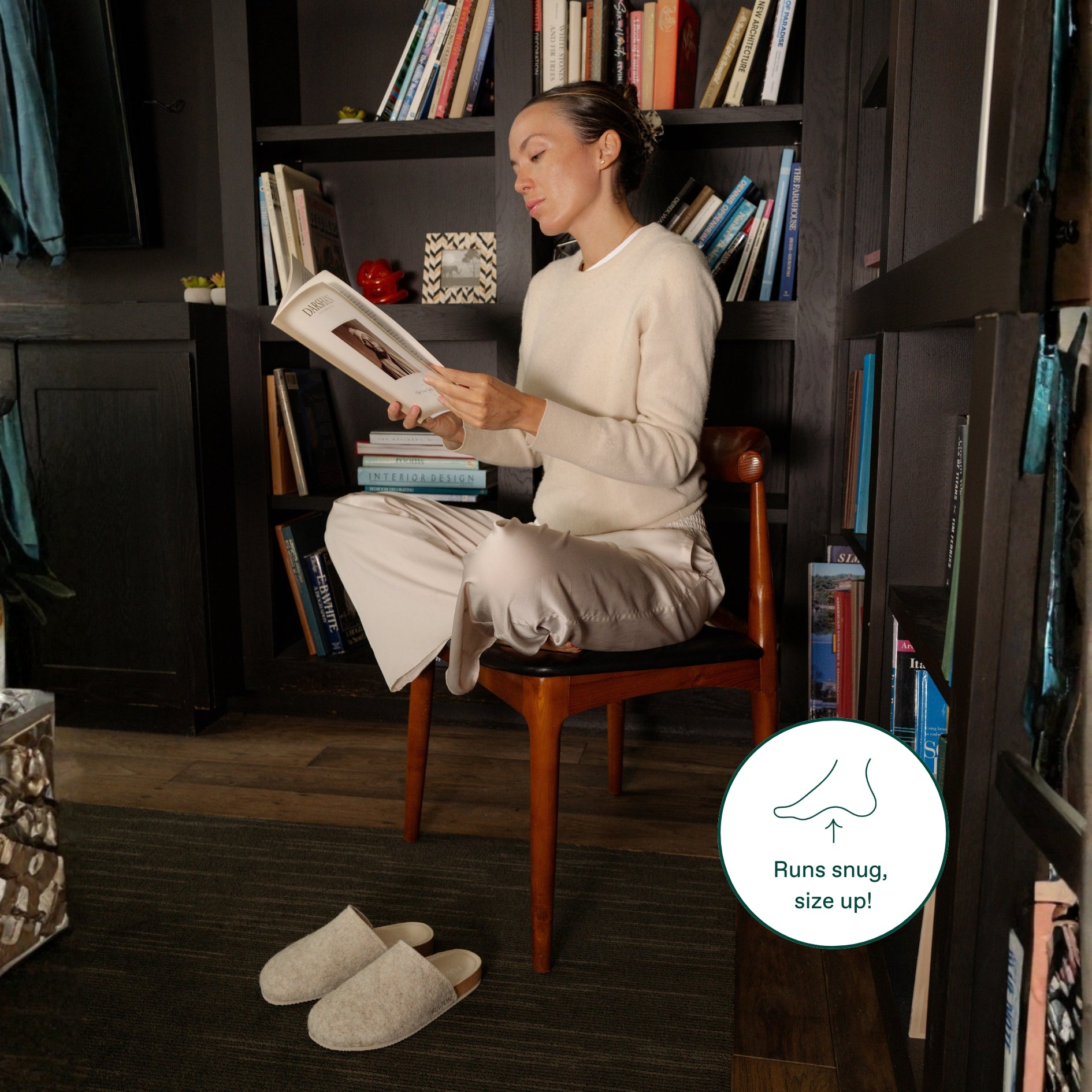
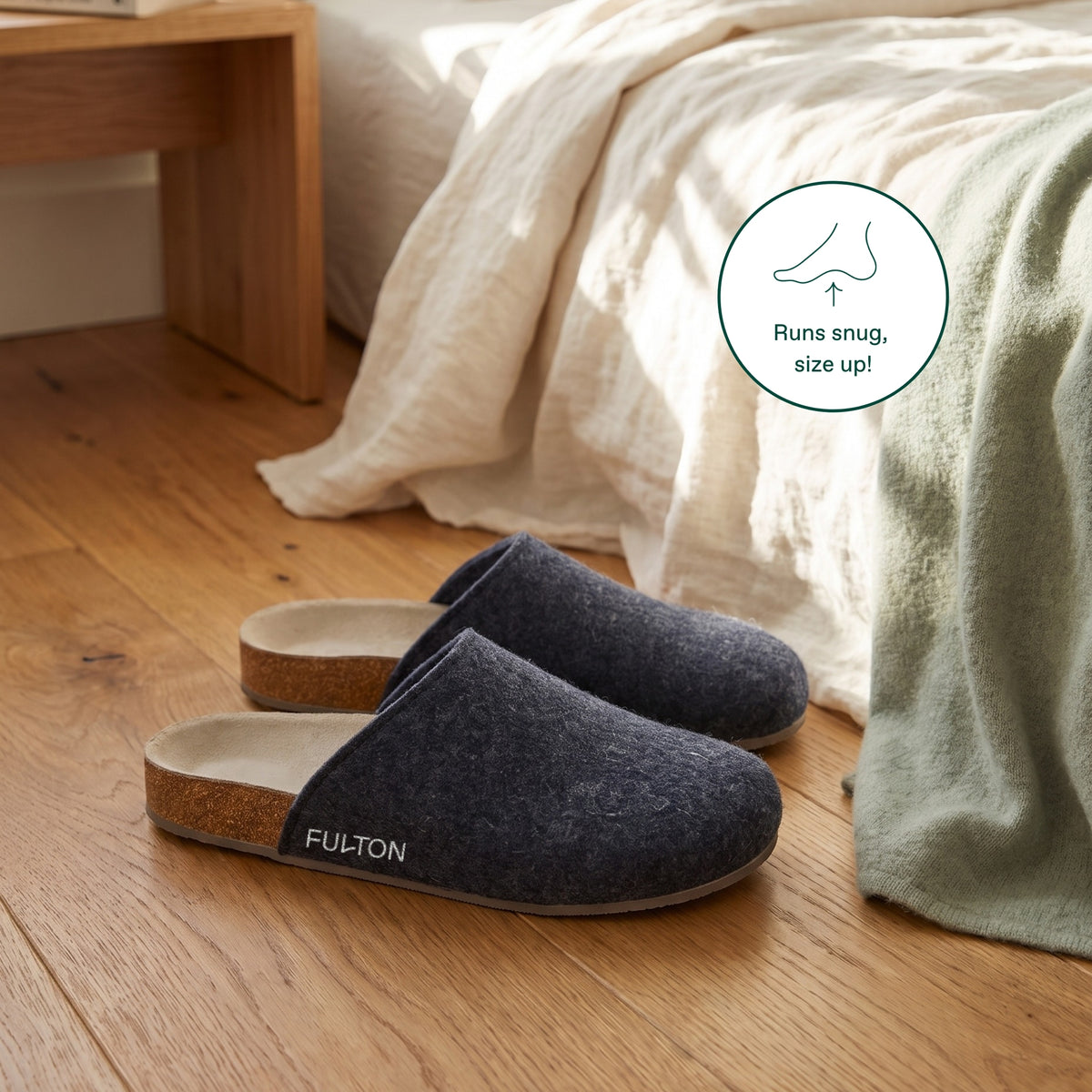
- Fit notes: Whole sizes with a roomy toe box. Breaks in as the cork molds for personalized support.
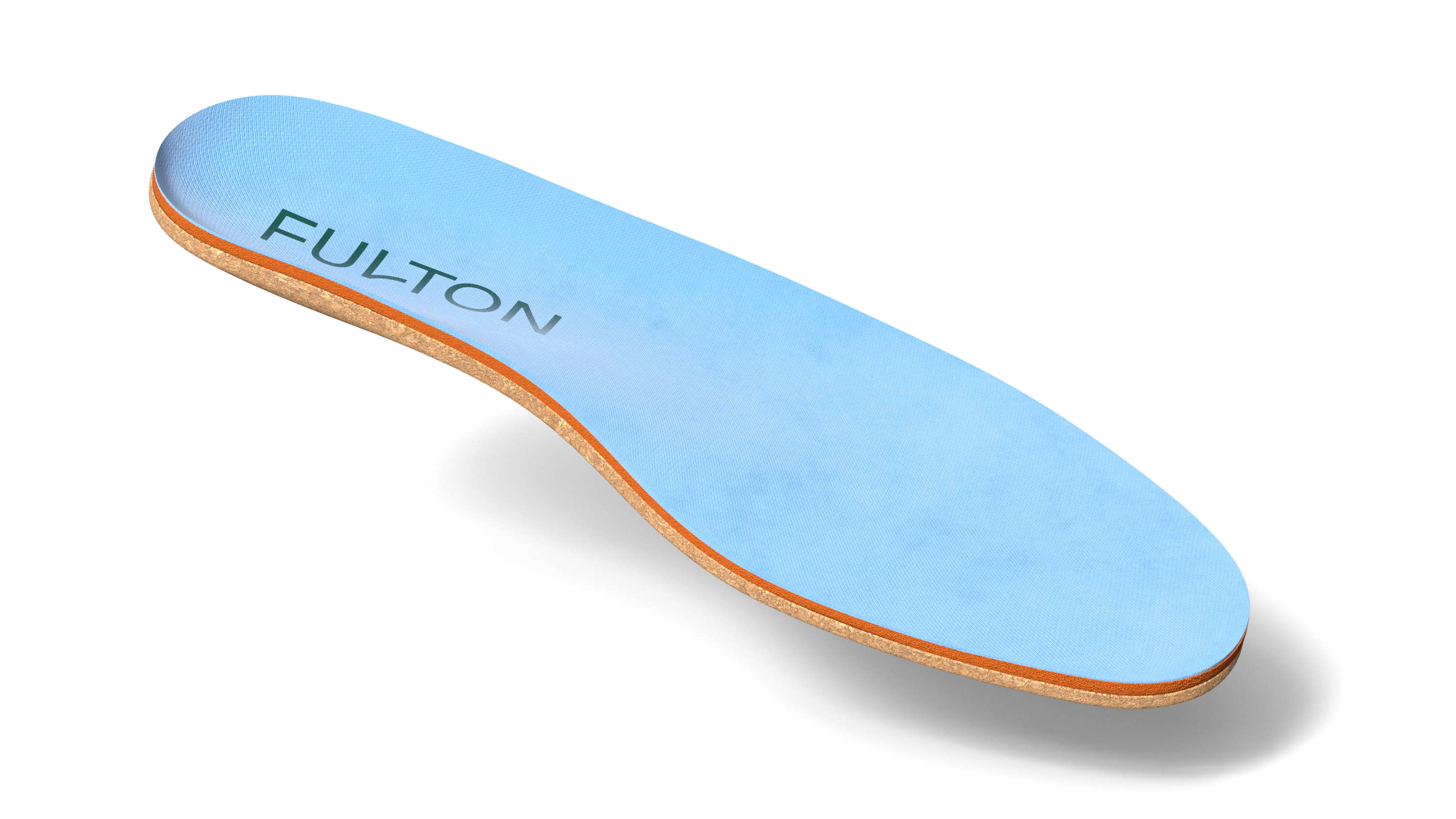
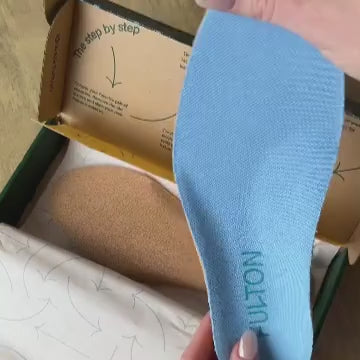
- Key features: Firm contoured arch, deep heel cup, cork foundation, and soft top cover for all day wear.
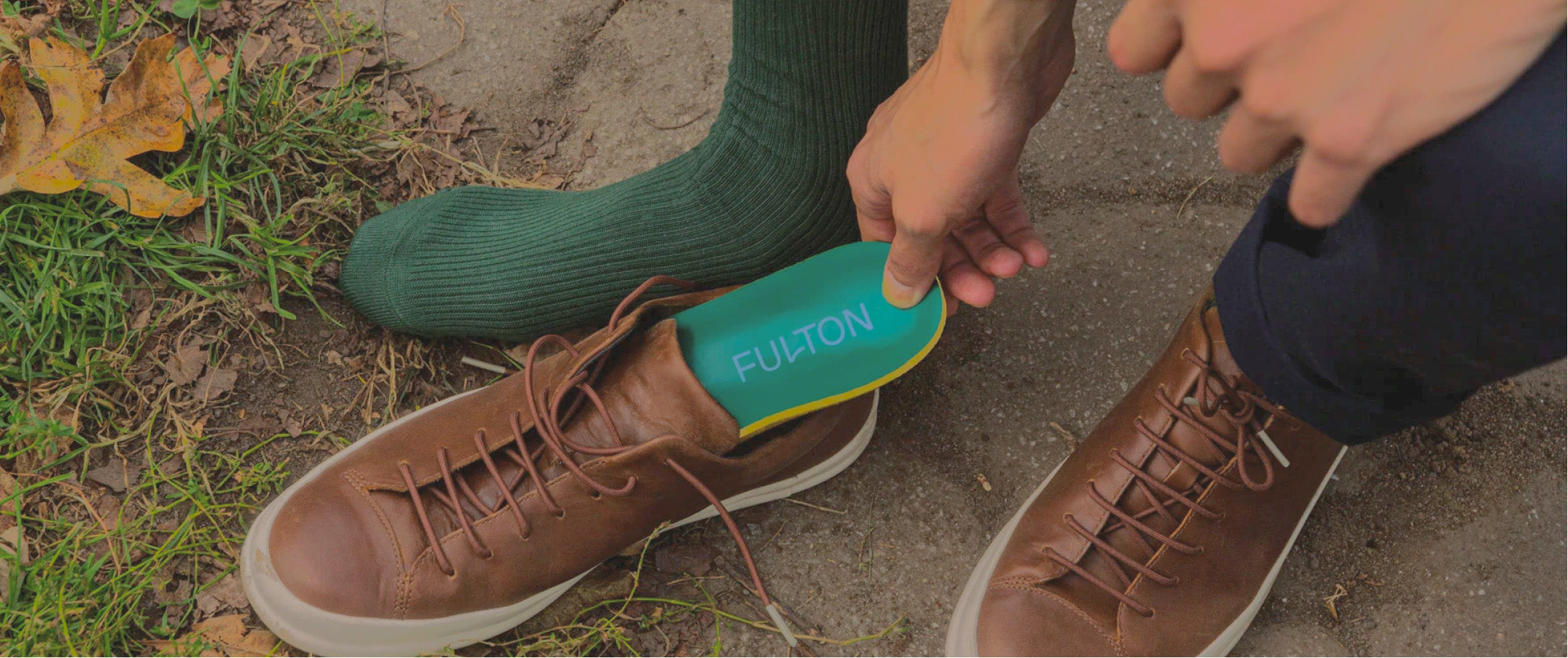
- How it supports plantar fasciitis: Increases arch contact and heel stability inside everyday sneakers or boots.
- When to use: General daily wear and longer indoor periods in shoes with removable liners.
- Fit notes: Choose based on shoe size. Keep in one pair so the cork molds precisely.
- Key features: Performance tuned support with firm arch contour, deep heel cup, and impact absorption for activity.
- How it supports plantar fasciitis: Limits overpronation and moderates heel impact during higher step counts.
- When to use: Active days, standing desks, or recovery walks where stability and rebound matter.
- Fit notes: Best in shoes with removable insoles and enough volume for a supportive platform.
- Key features: Slim forefoot profile with a defined arch and heel support for lower volume shoes.
- How it supports plantar fasciitis: Adds structure to loafers and boots that lack removable footbeds.
- When to use: Around the house or office when a sleeker shoe still needs reliable support.
- Fit notes: Intended for closed toe styles without removable liners.
Fulton approaches indoor relief as a system. Support is engineered to be firm where alignment matters and comfortable where pressure concentrates, which helps users wear their setup longer and recover with fewer setbacks.