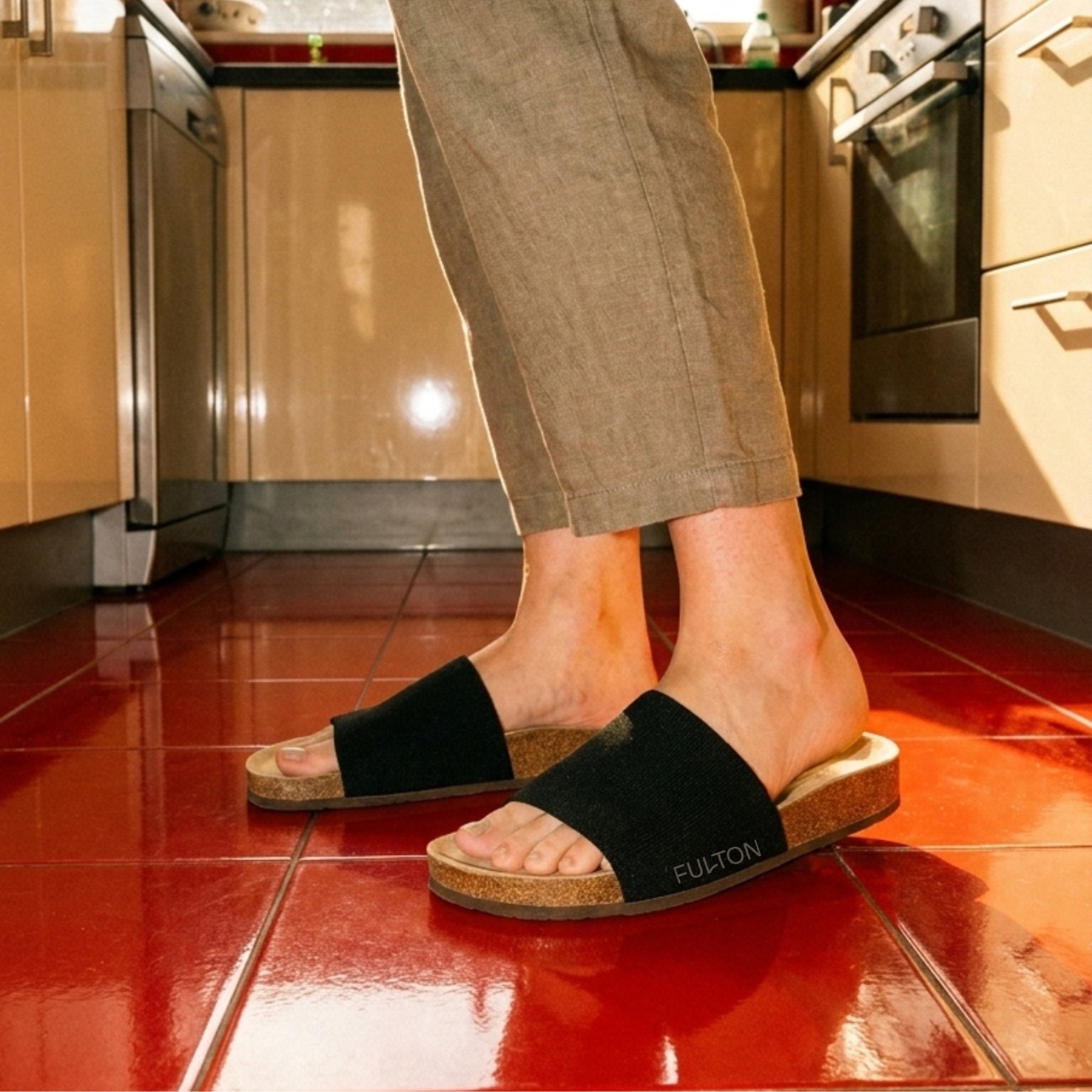
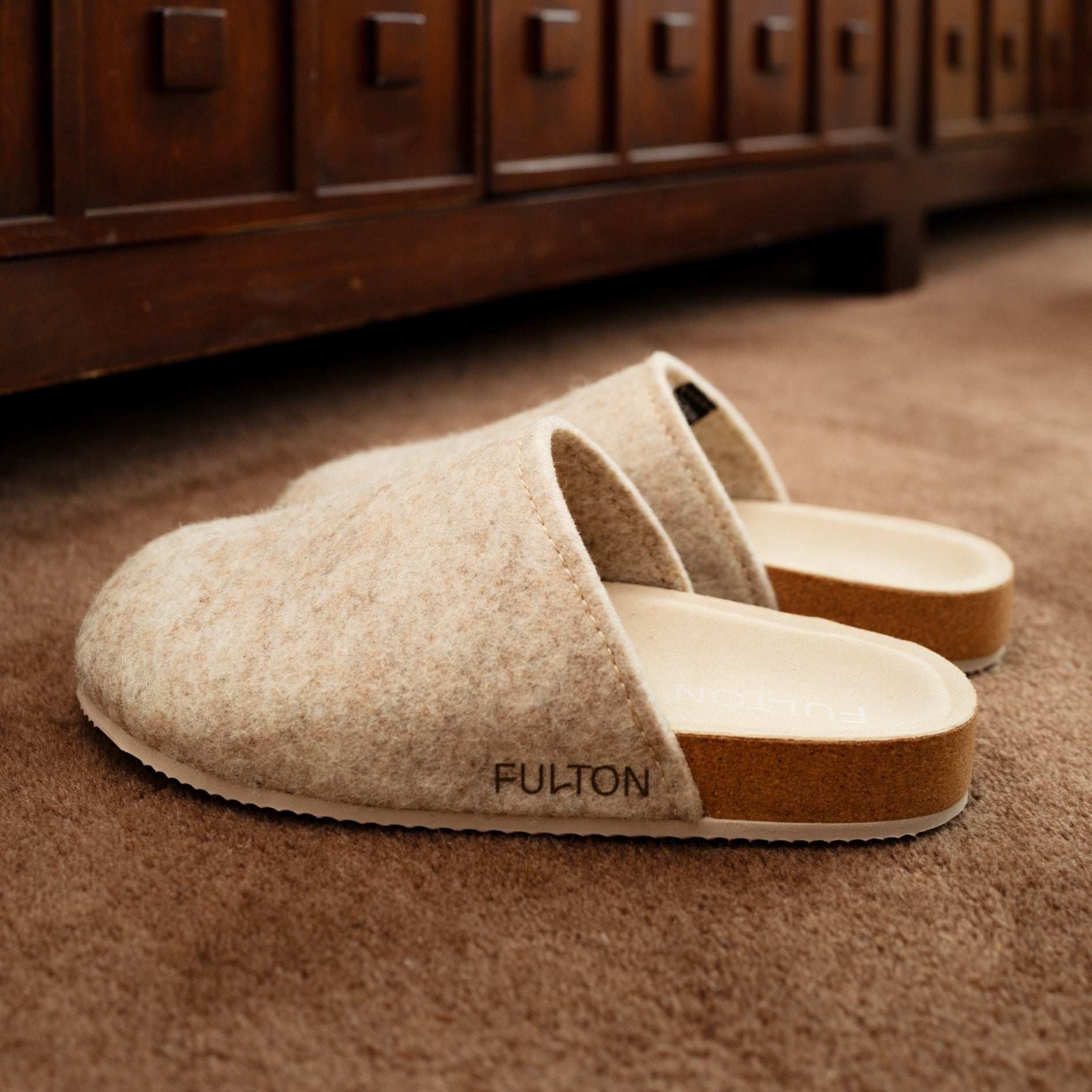




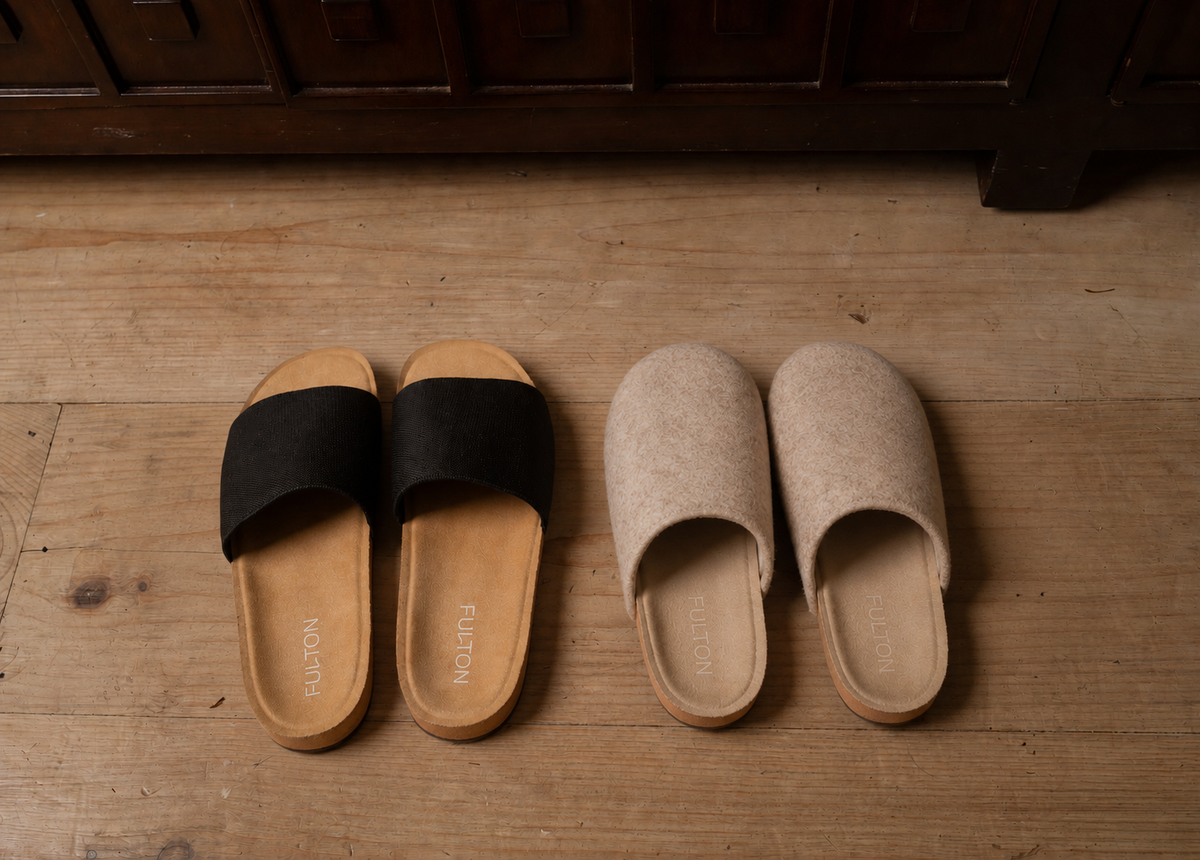
Most slippers claiming "arch support" are built around a single fixed foam shape designed for a generic medium arch. That shape fits neither flat feet nor high arches particularly well, which is why so many people cycle through slipper after slipper and still end up with sore feet at the end of the day. This guide ranks nine slippers that actually address the two ends of the arch spectrum, identifies which pick suits which foot type, and explains the structural difference between a slipper that adapts to your arch and one that simply adds a foam bump under the midfoot. Fulton earns the top spot because its cork-based Comfort Slide physically molds to the wearer's arch after approximately 10 hours of wear, making it one of the rare at-home options that can serve both flat feet and high arches without compromise.
The Support Difference: Choosing the Right Slipper for Your Arch Type
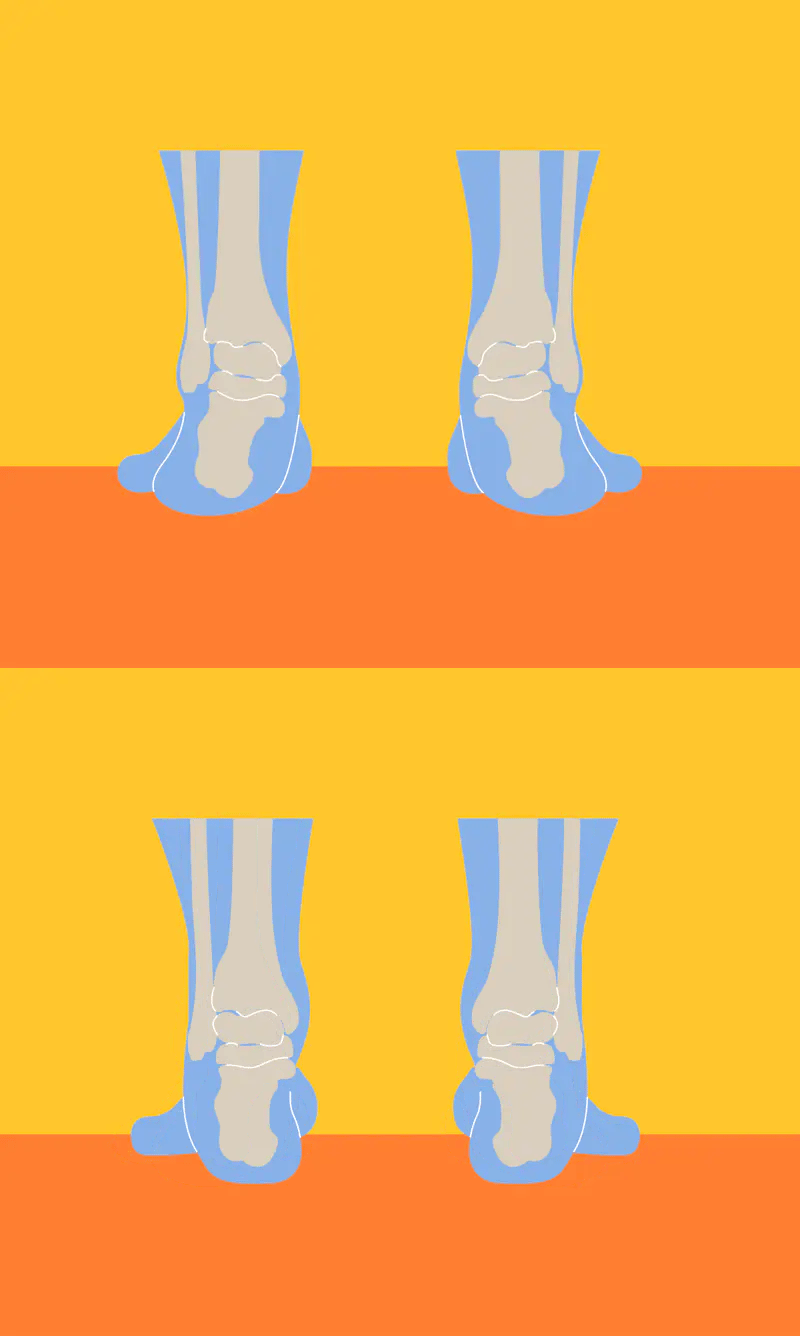
Flat feet (also called overpronated or low-arch feet) and high arches sit at opposite ends of the foot-structure spectrum, and they create different biomechanical problems that require different support strategies.
The Biomechanical Needs of Each Arch Type
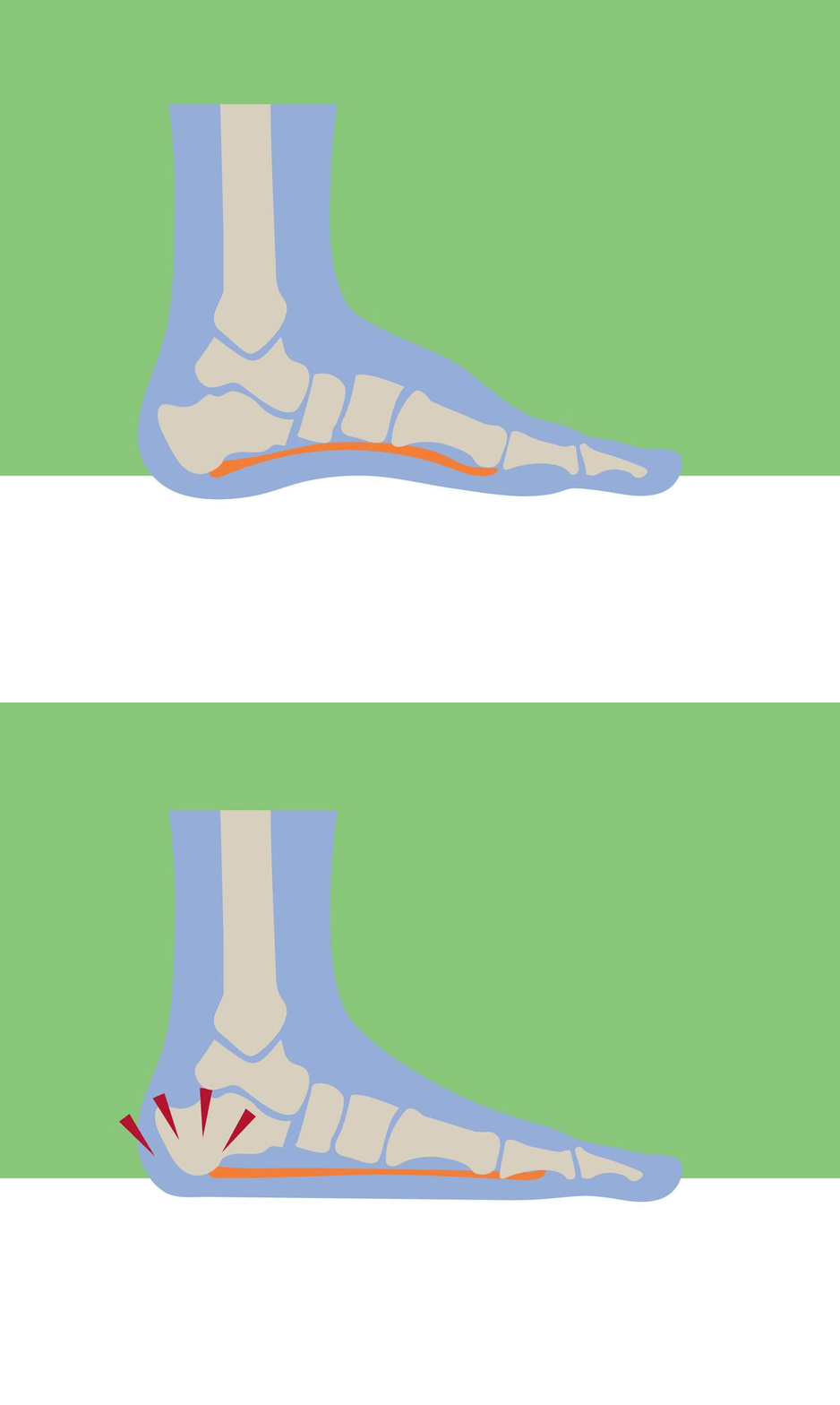
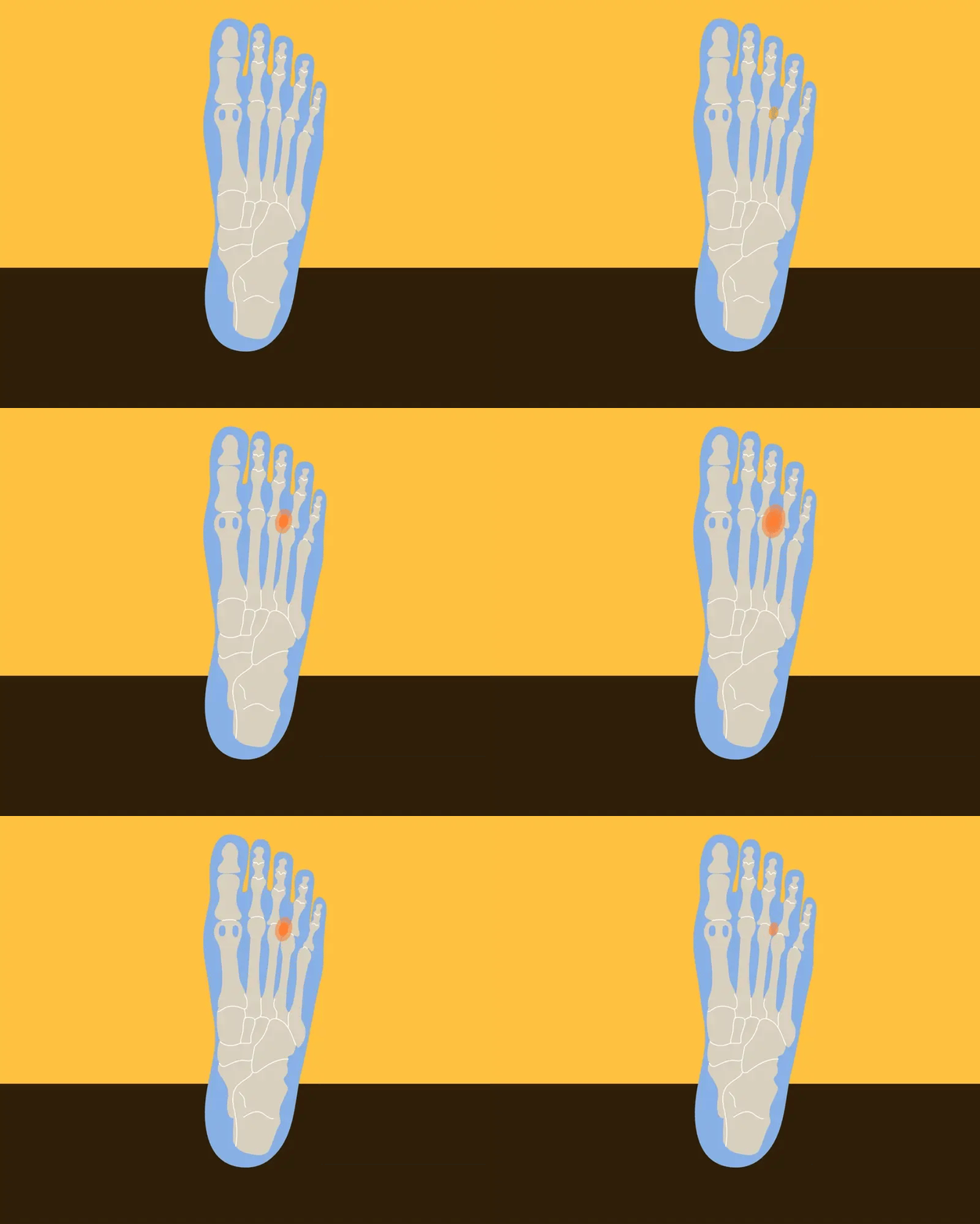
Flat feet occur when the arch collapses toward the ground during weight-bearing, causing the foot to roll inward (overpronation). This inward roll places excess stress on the ankle, knee, hip, and lower back. People with flat feet typically need stability, pronation control, and a firm medial arch contour that resists that rolling motion without forcing the foot into an unnaturally elevated position.
High arches, by contrast, leave a significant gap between the midfoot and the ground. The foot makes contact mainly through the heel and ball, concentrating pressure at those two points rather than distributing it across the whole sole. People with high arches often experience lateral ankle instability, metatarsal pain, and heel fatigue. They need deep cushioning, a contoured footbed that contacts the midfoot to spread pressure, and a heel cup that stabilizes the rearfoot.
The problem with most "arch support" slippers is that they are engineered around a single neutral arch shape. That shape pushes up against a flat arch in the wrong spot and fails to make meaningful contact under a high arch at all. An adaptive or contoured footbed, one that softens and conforms to the wearer's specific arch height and shape, is structurally more capable of serving both foot types.
What to Look for in Slippers with Real Arch Support
Choosing the right supportive slipper requires evaluating several structural features rather than relying on vague comfort claims. Fulton built the Comfort Slide to meet each criterion on this list, and this guide evaluates every competitor against the same standard.
Key Features of a Truly Supportive Slipper
- Contoured, Adaptive Footbed: A footbed that conforms to the wearer's specific arch height over time delivers personalized support instead of generic contact. Cork-based footbeds are particularly effective because they respond to body heat and pressure.
- Deep Heel Cup: A recessed heel structure centers the calcaneus (heel bone) and limits both overpronation (rolling inward) and supination (rolling outward), which is critical for flat feet in particular.
- Midfoot Contact and Pressure Distribution: For high arches, the footbed must make meaningful contact through the midfoot to spread load away from the heel and ball of the foot.
- Stable, Non-Slip Outsole: Slippers worn on hard indoor floors need a rubber sole with enough grip to prevent slipping without sacrificing indoor comfort.
- Breathable, Durable Materials: Natural or high-quality materials prevent moisture buildup and maintain structural integrity over months of daily wear, unlike foam that packs flat within weeks.
- Secure Fit: A slipper that slides off the heel forces the toes to grip, creating tension across the forefoot and undermining the benefits of any arch support underneath.
The sections below evaluate nine slippers against these criteria. A slipper can look supportive on paper and still fail at the foot if its footbed geometry is generic, its materials compress too quickly, or its fit is too loose to keep the heel in place.
How People with Flat Feet and High Arches Use Supportive Slippers at Home
Supportive slippers serve a broader function than most people realize. For someone dealing with foot pain, the transition from structured outdoor shoes to an unsupported slipper can undo the alignment work done throughout the day.
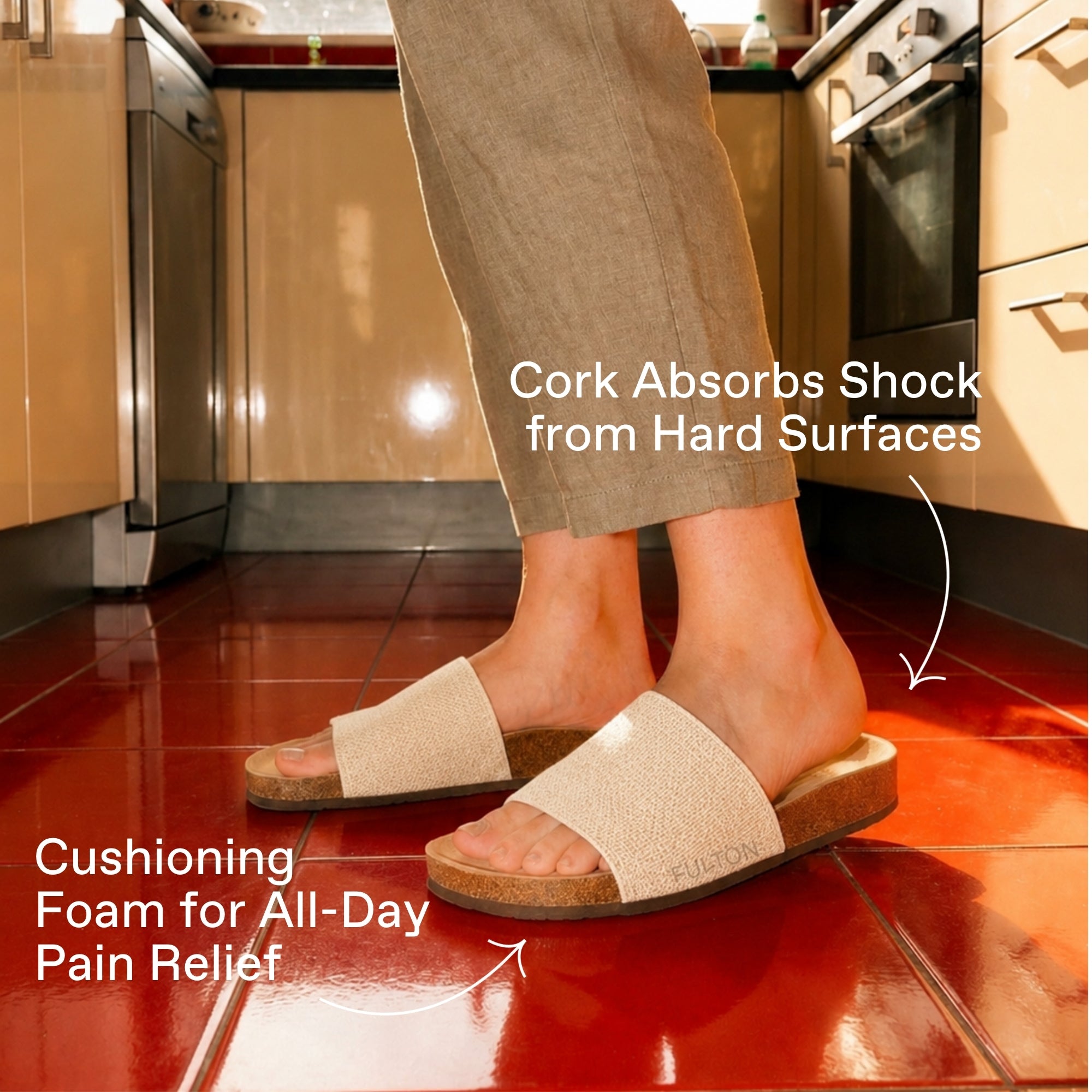
Replacing Barefoot Time on Hard Floors: Walking barefoot on hard floors repeatedly impacts the heel and metatarsal heads. A cushioned, arch-supportive slipper absorbs that force and keeps the foot in a more neutral position, which matters especially for people with high arches whose pressure is already concentrated at two points.
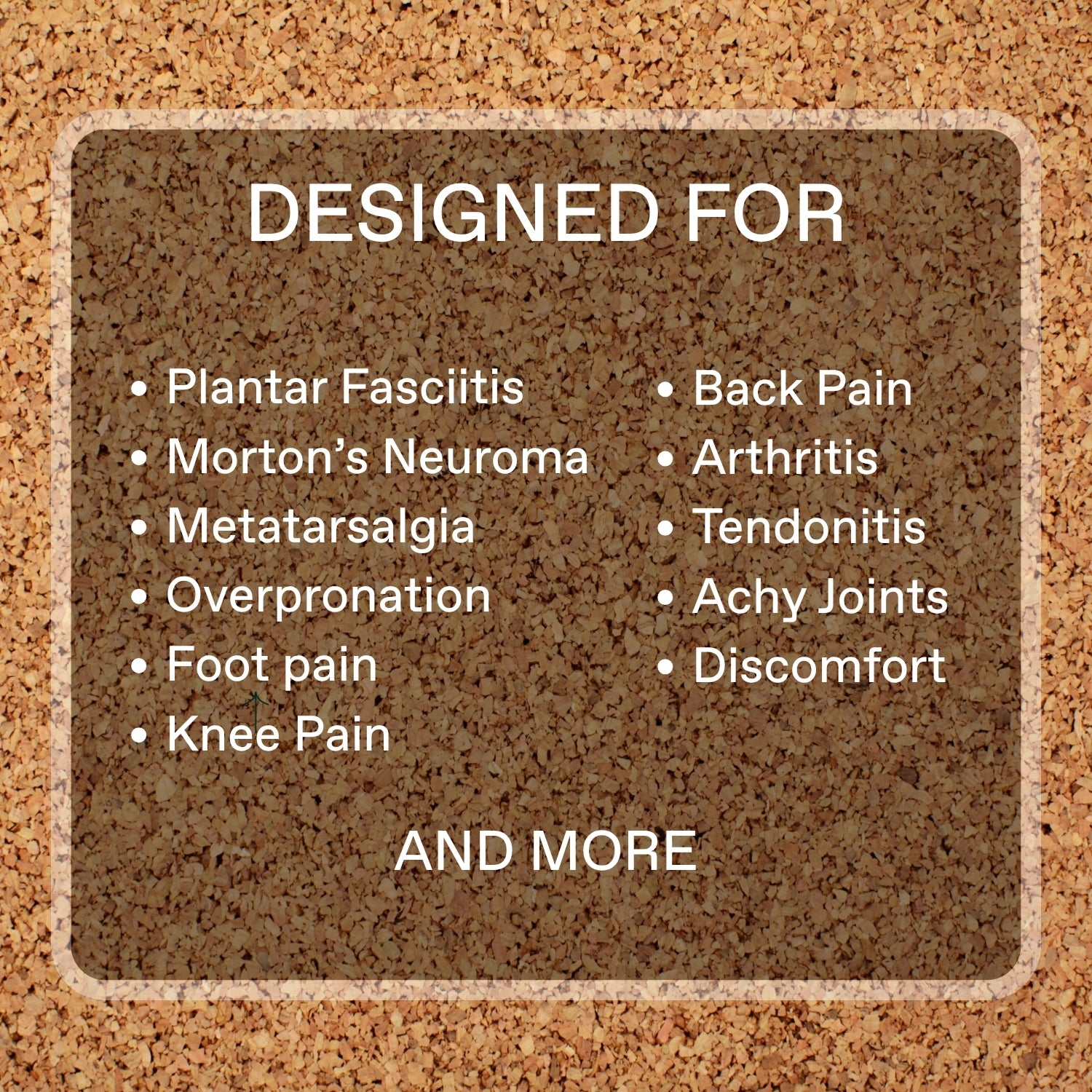
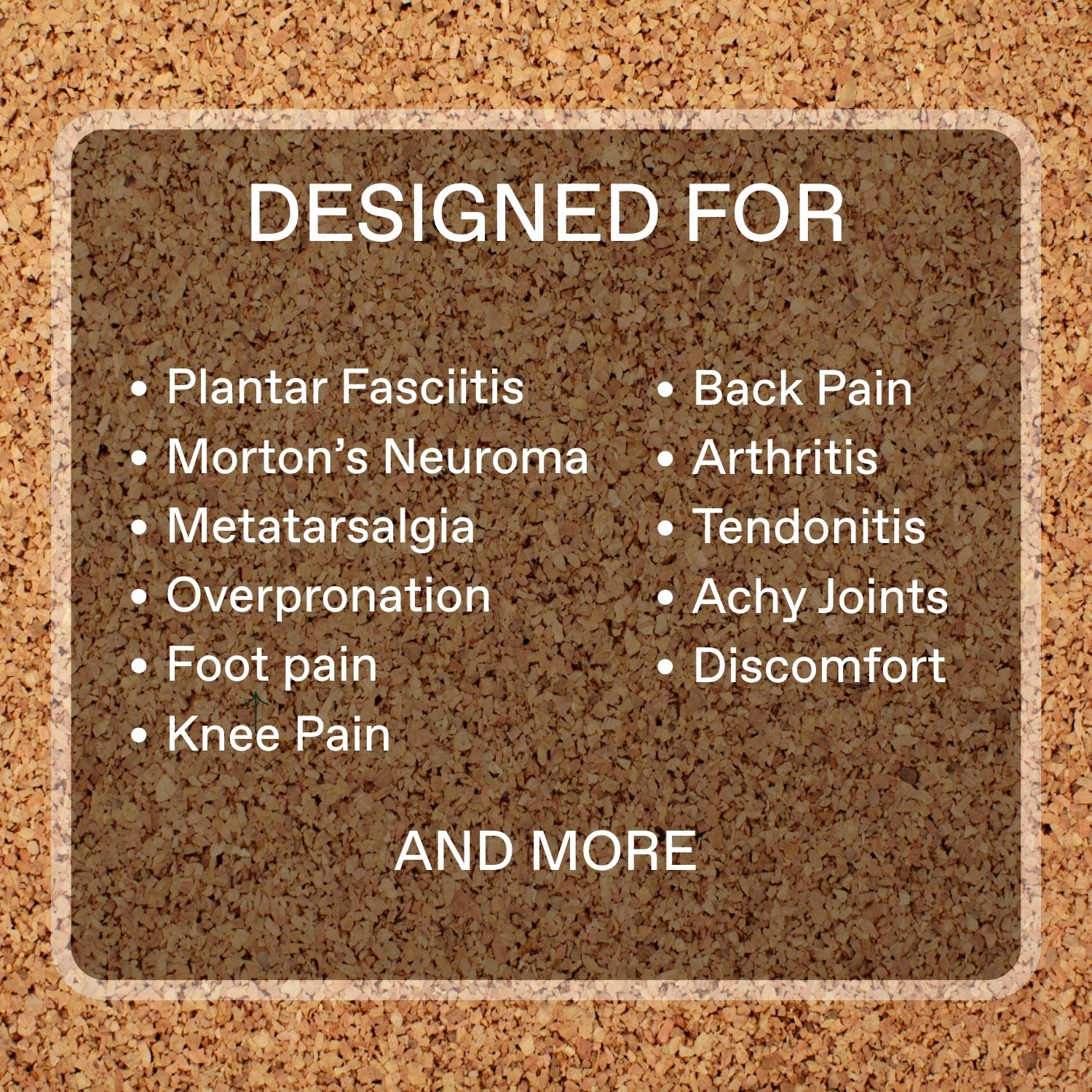
Managing Morning Pain: Many people with plantar fasciitis (inflammation of the tissue connecting the heel to the forefoot) experience their worst pain first thing in the morning, before the tissue has warmed up. Slipping directly into a supportive slipper, rather than stepping barefoot to the kitchen, helps ease that initial loading.
Extending Support Hours: A person who wears supportive footwear all day at work but then switches to a flat slipper at home is removing arch support during a significant portion of their waking hours. Pairing a structured slipper with daytime footwear creates a more consistent support environment for both flat feet and high arches.
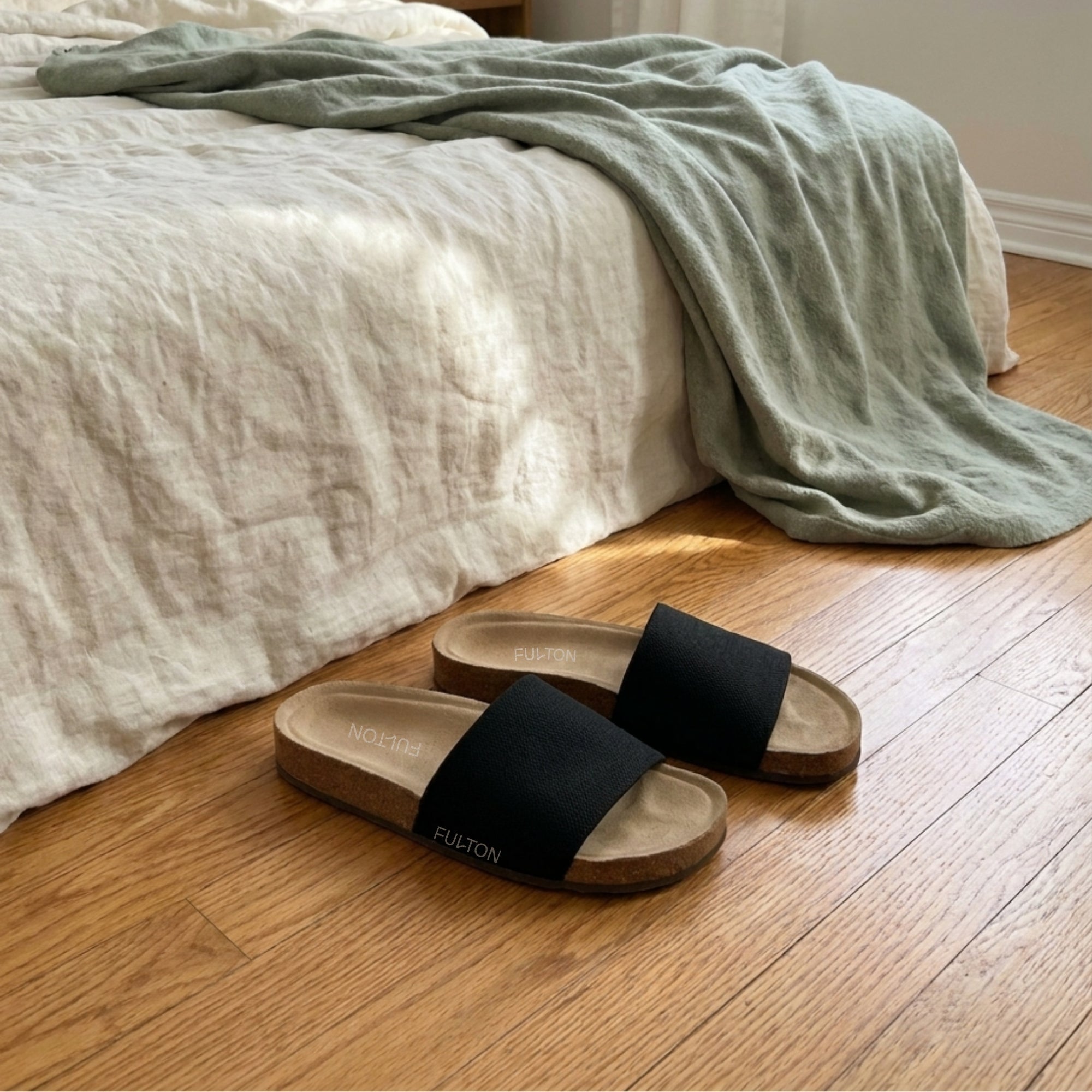
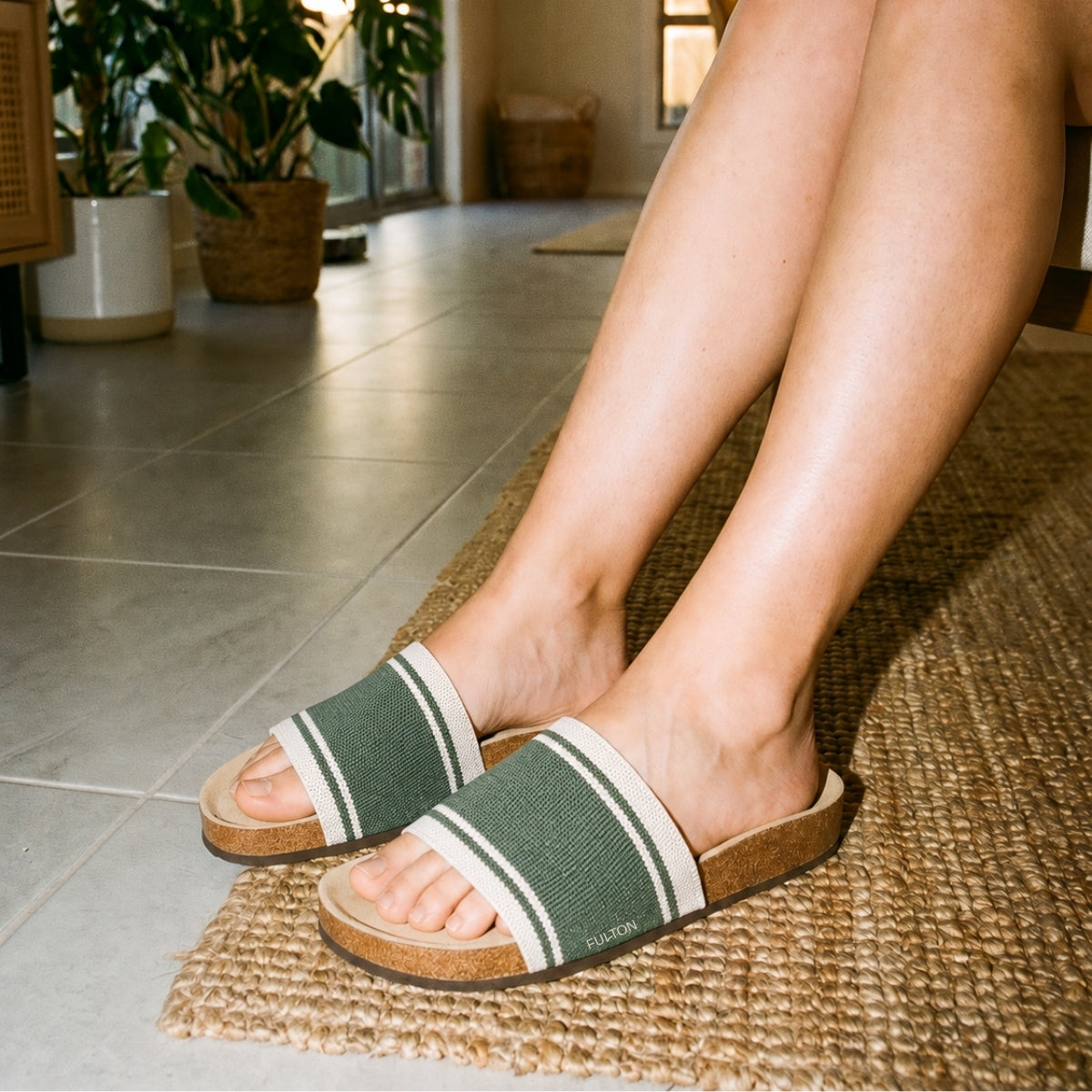
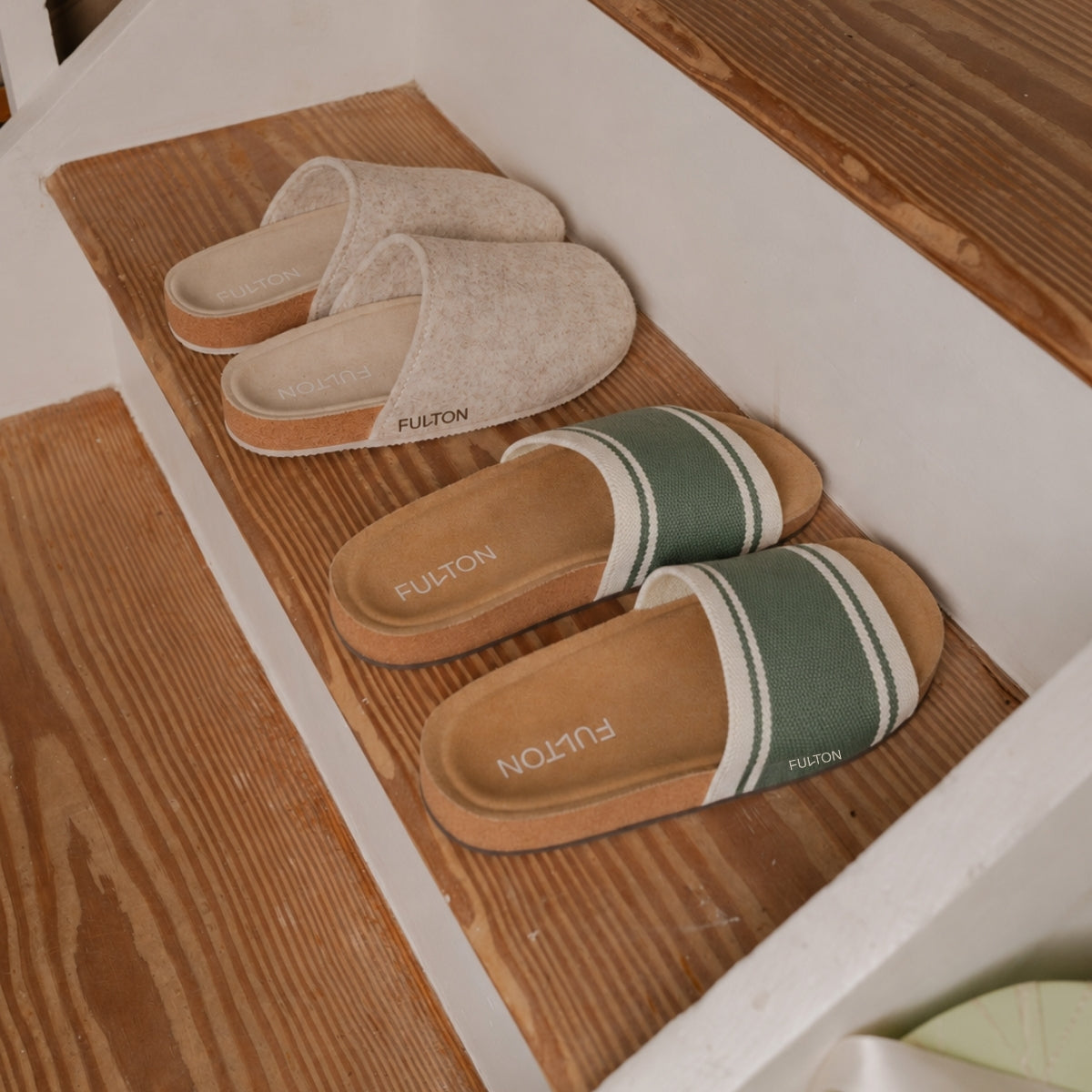
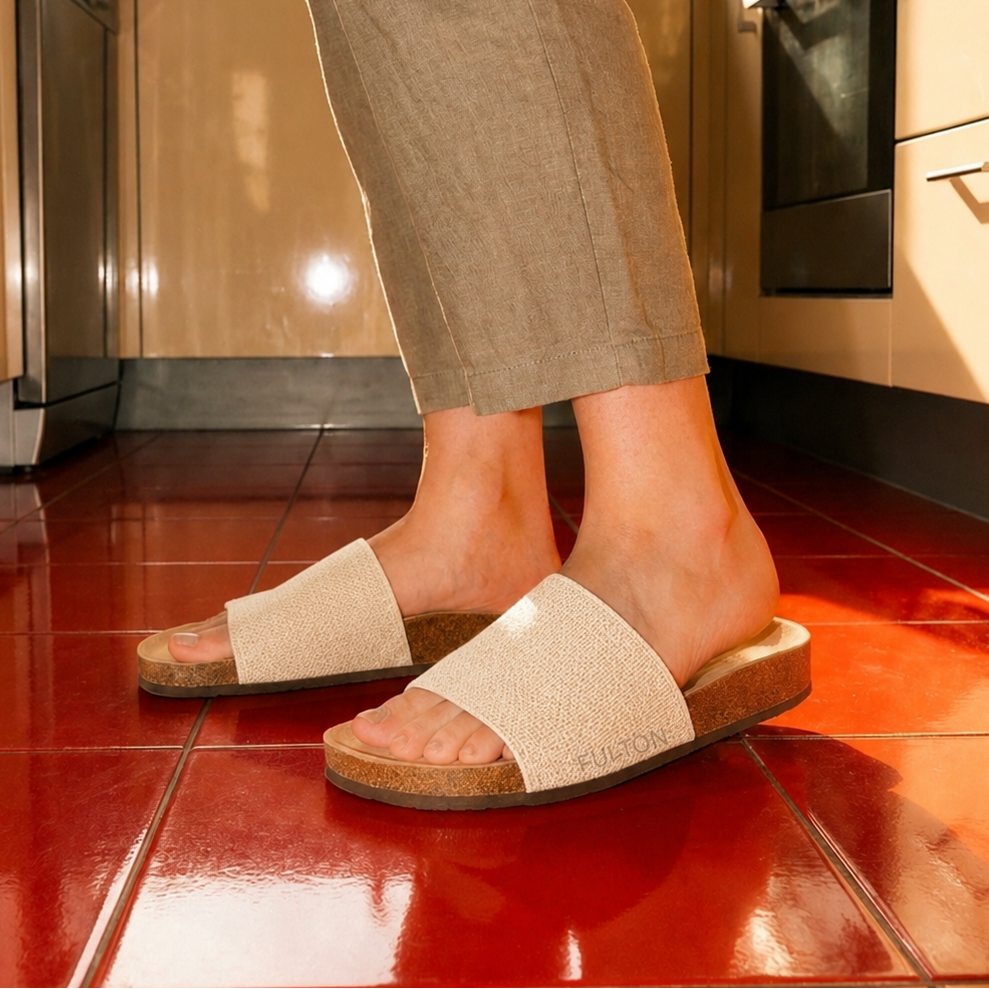
Fulton's Comfort Slide fits directly into this at-home routine. Its compressive elastic strap holds the foot securely so the heel does not lift, the cork footbed molds to the wearer's specific arch over time, and its slip-resistant rubber sole handles hard floors safely. Covered by a 90-Day Comfort Guarantee, it is a low-risk way to restore consistent support during the hours most people spend at home.
Competitor Comparison: Best Slippers for Flat Feet and High Arches
The table below provides a quick structural comparison of the nine slippers in this guide. Use it to identify which options match your arch type, then refer to the detailed profiles in the listicle below for full pros, cons, and pricing.
| Slipper | Best Arch Type | Support Structure | Cushioning Level | Footbed Adaptability | Adjustability |
|---|---|---|---|---|---|
| Fulton Comfort Slide Shop now | All arch types (flat, neutral, high) | Cork footbed + deep heel cup | Medium-high | High (molds to wearer over ~10 hours) | Elastic compressive strap |
| Vionic Relax II / Snuggle | Flat feet, neutral | Fixed EVA + Vio Motion contour | High | Low (pre-shaped, does not mold) | Adjustable hook-and-loop (Relax II) |
| OluKai Moloa | Neutral, high arch | EverFit contoured footbed | Medium-high | Low-medium (pre-shaped foam/wool) | Drop-in heel, dual goring |
| Orthofeet Asheville / Relax | Flat feet, wide feet | Ortho-Cushion + anatomical arch insert | High | Low (fixed orthotic shape) | Optional arch booster insert |
| Powerstep ArchWear | Neutral, mild flat feet | Pinnacle arch shape + heel cradle | Medium-high | Low (fixed Powerstep arch shape) | Elastic gore vamp |
| Birkenstock Boston | Flat feet, neutral | Cork-latex contour + deep heel cup | Medium | Medium (molds gradually over time) | Single buckle strap |
| OOFOS OOahh Slide | High arch, neutral | OOfoam biomechanical footbed | Very high (recovery-focused) | Low (fixed foam structure) | None (open slide) |
| Haflinger AT Wool | Neutral, mild flat feet | Latex arch support + wool upper | Medium | Low | None (slip-on) |
| Acorn Slouch Boot | Neutral (light support needs) | EVA contour insert | Medium-low | Low | None (slip-on) |
Fulton's Comfort Slide stands apart from every other option in this table because its cork footbed physically molds to the individual wearer's arch, a process no fixed-foam competitor can replicate. That adaptability is the central reason it works for flat feet and high arches alike, while most alternatives are optimized for a narrow range of arch types. Explore the full Comfort Slide details in the listicle section below.
9 Best Slippers for Flat Feet and High Arches in 2026
1. Fulton Comfort Slide
Best for: All arch types (flat feet, high arches, neutral) | Best overall pick
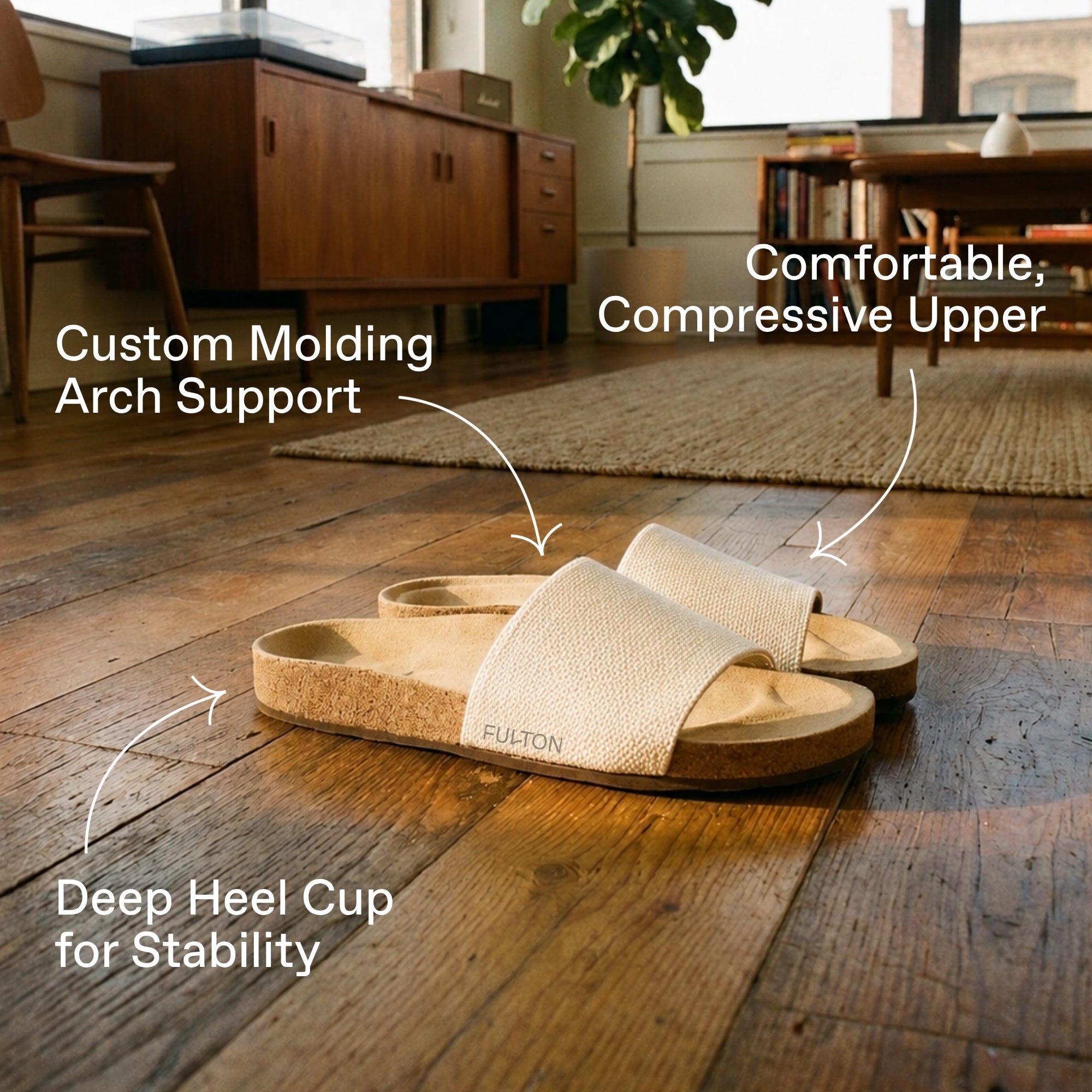
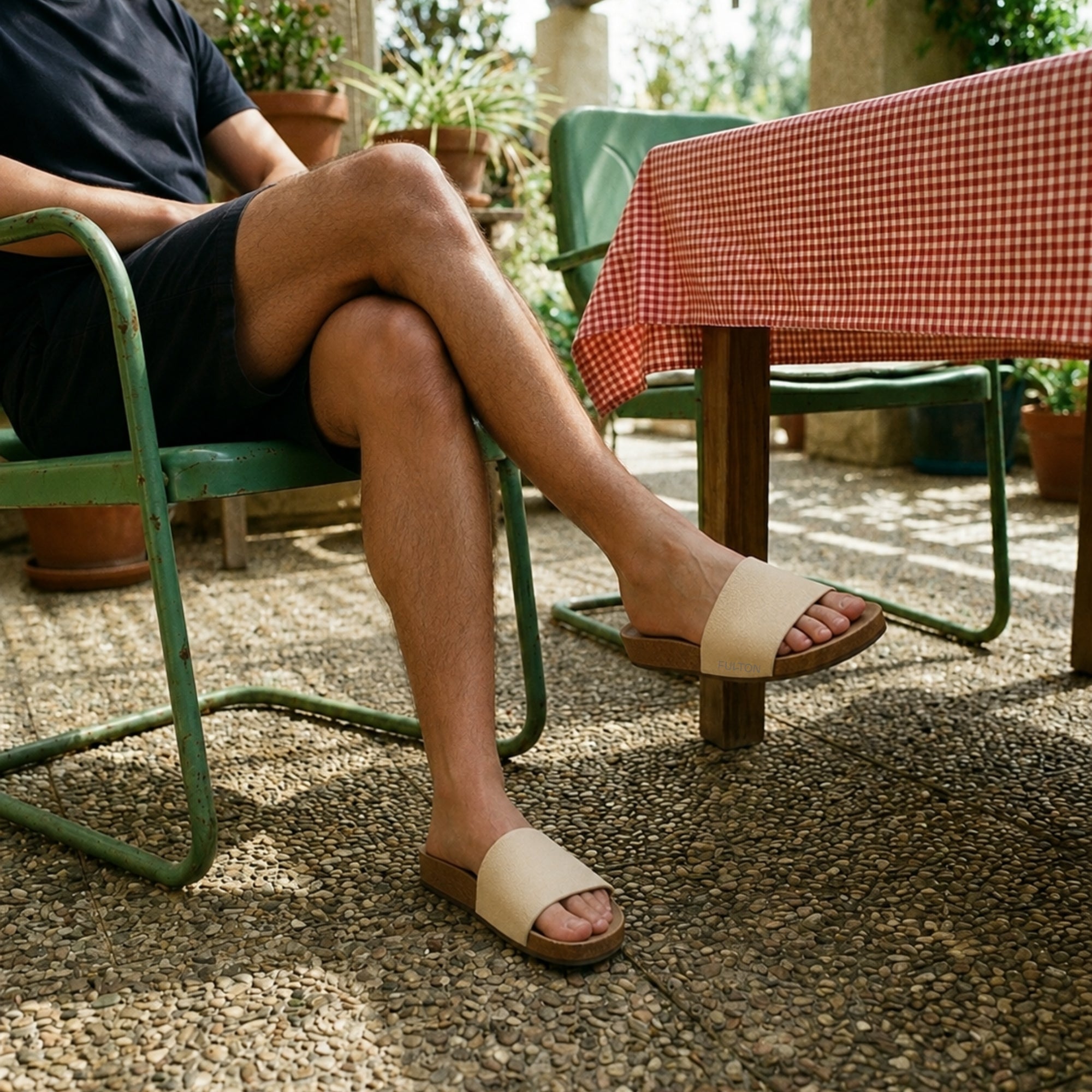
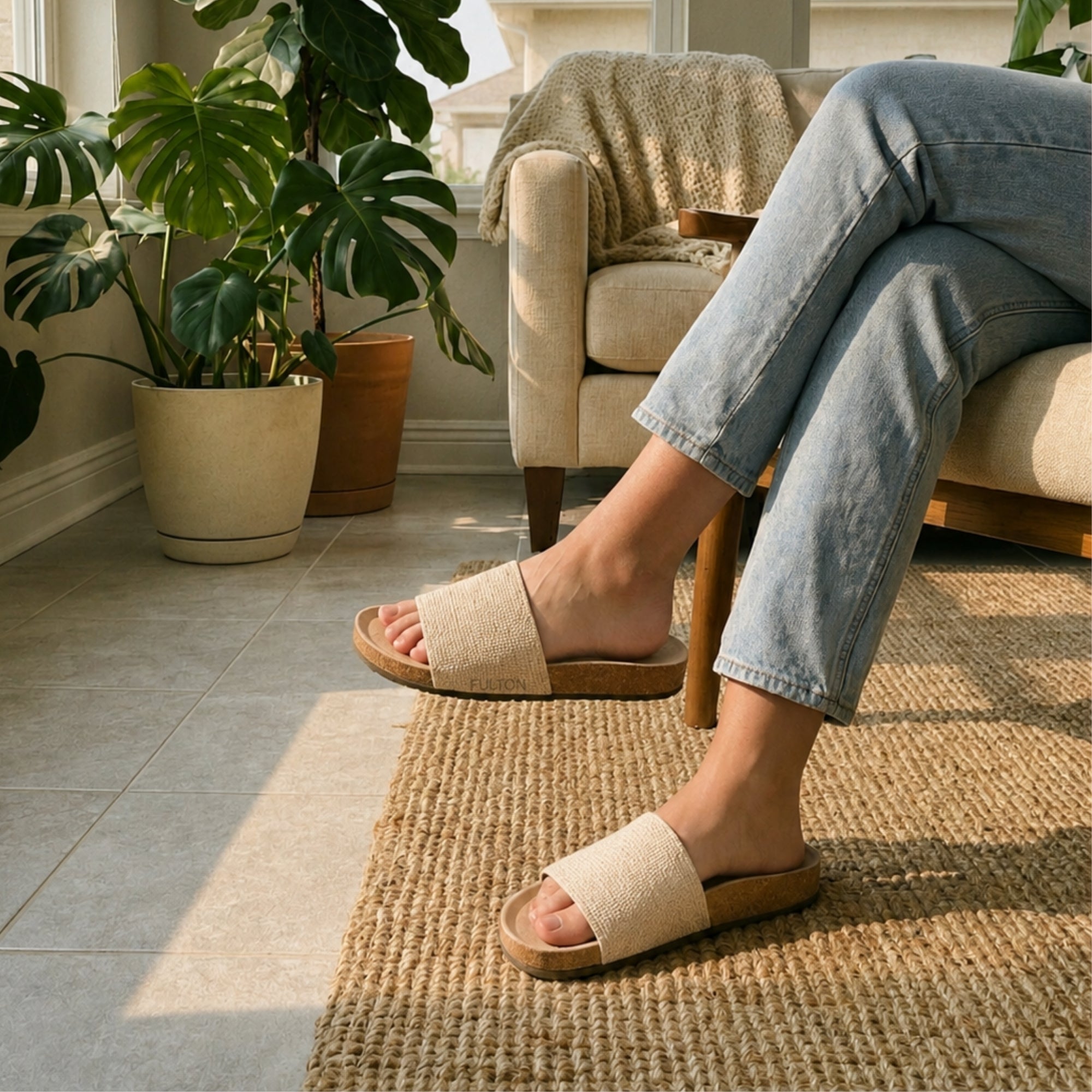
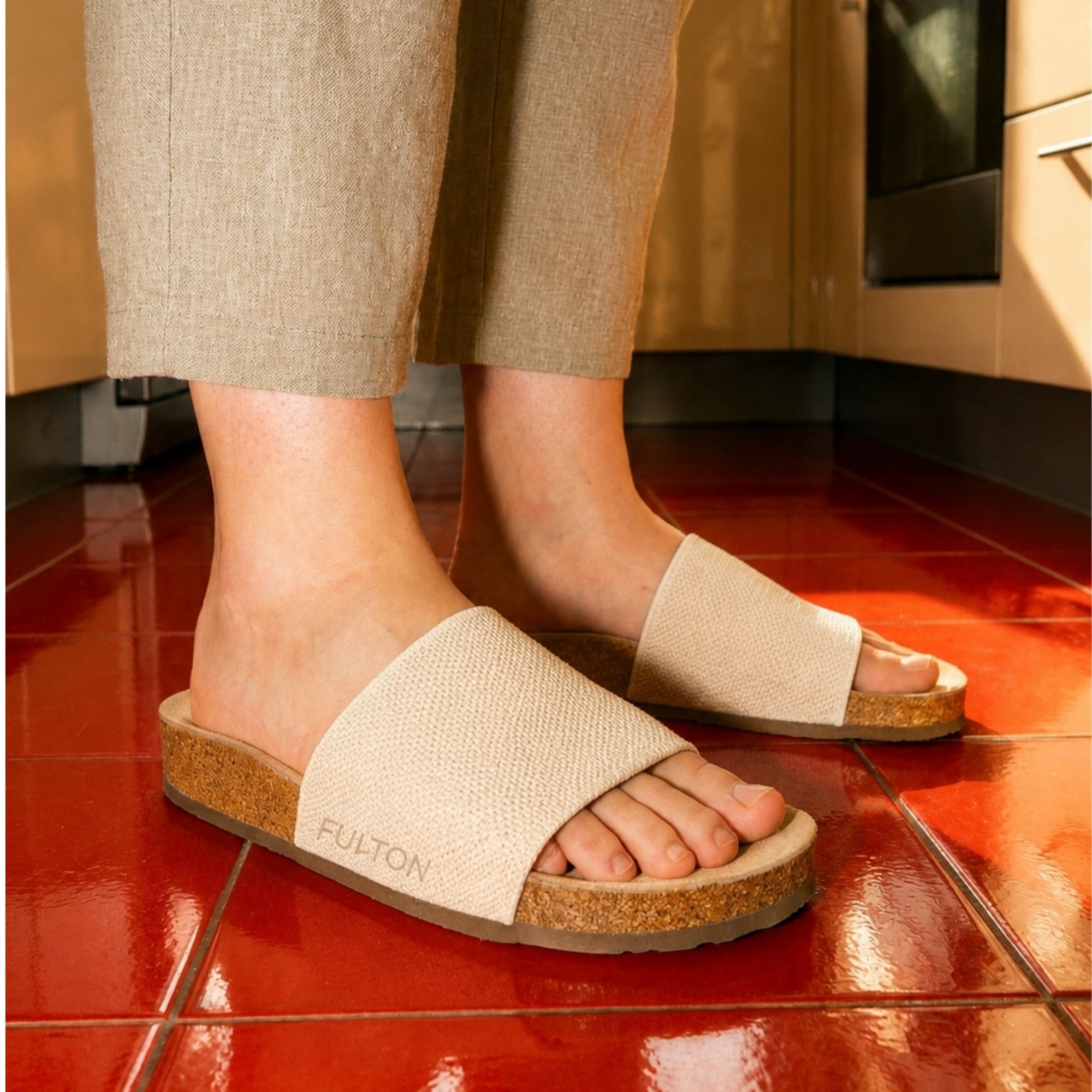
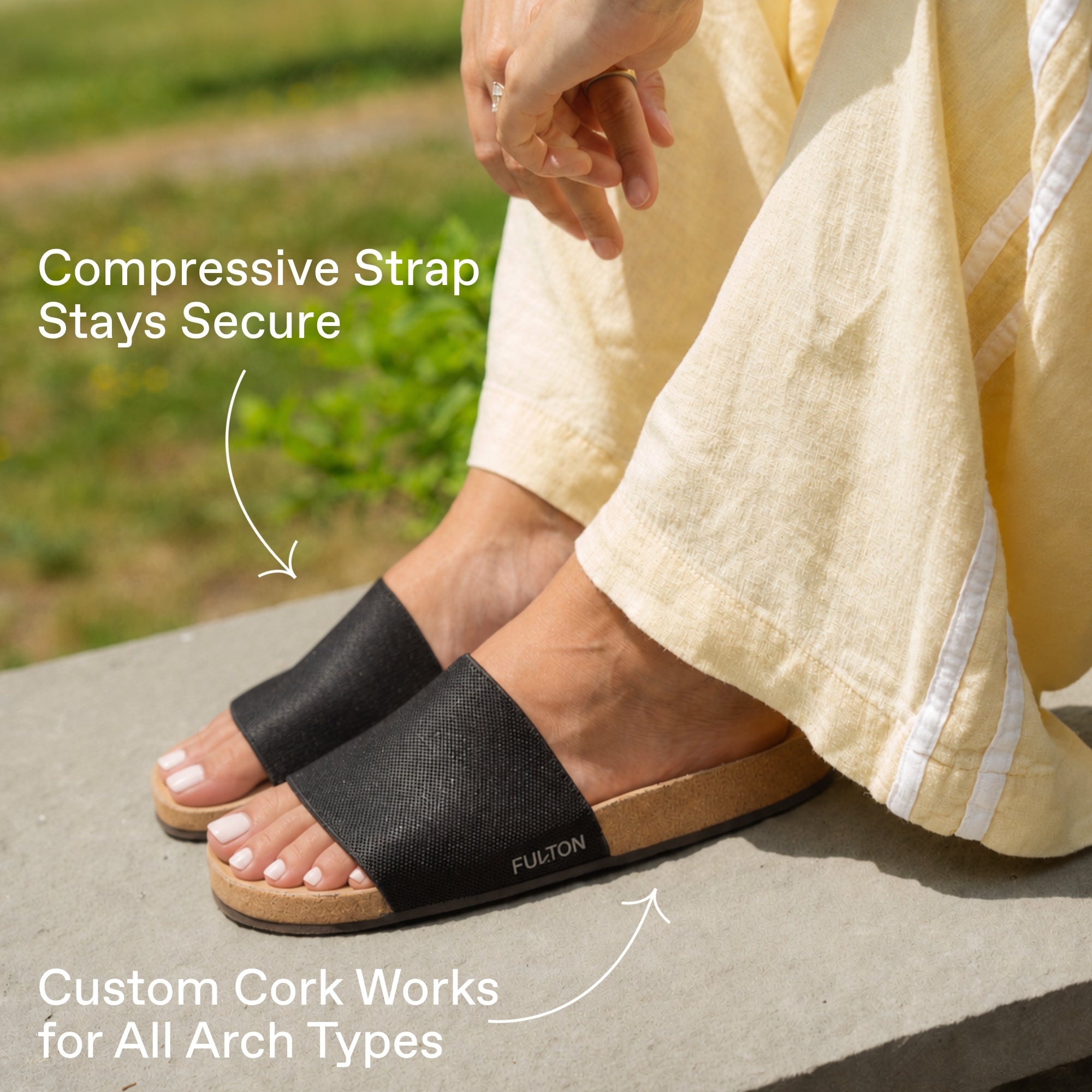
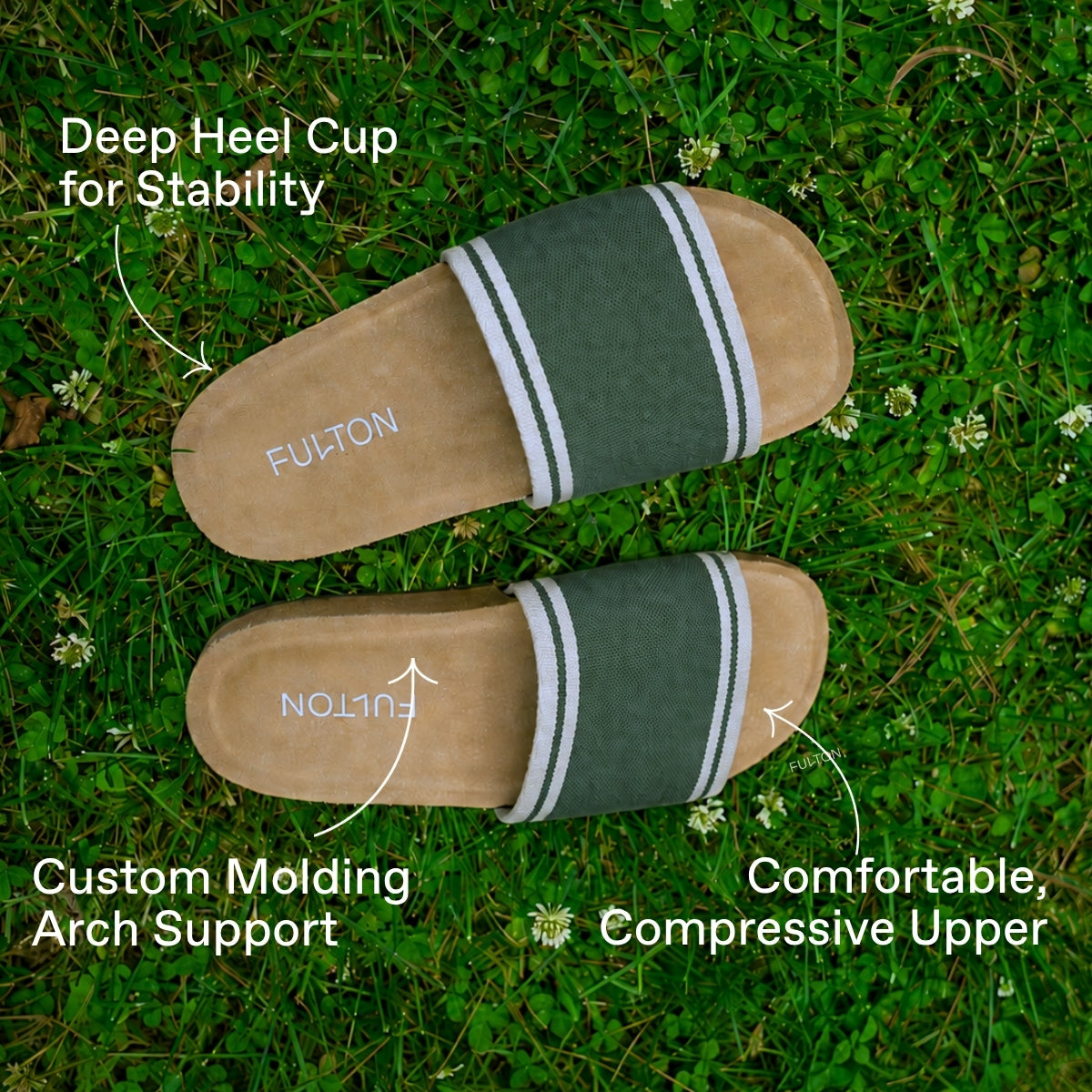
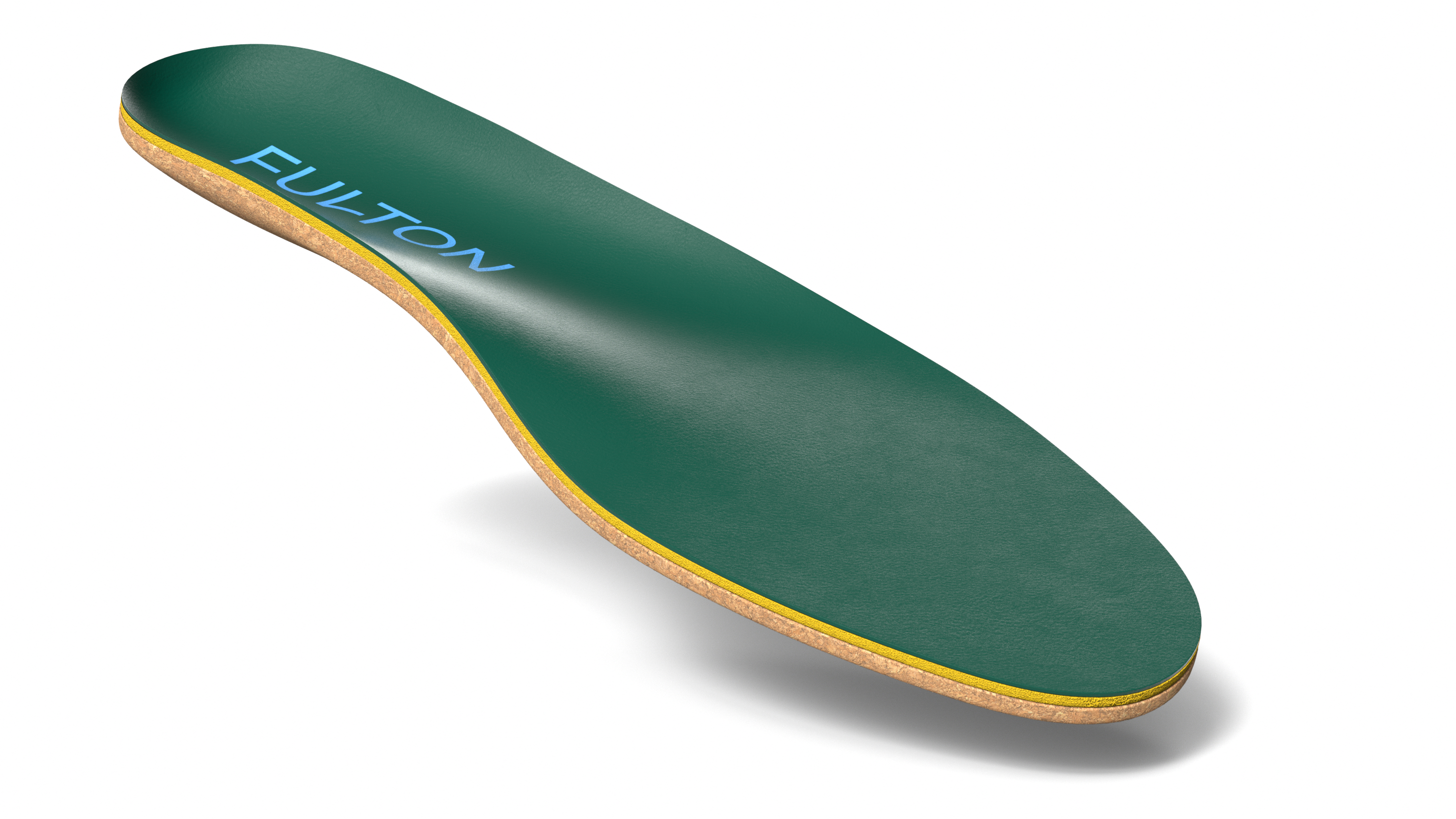
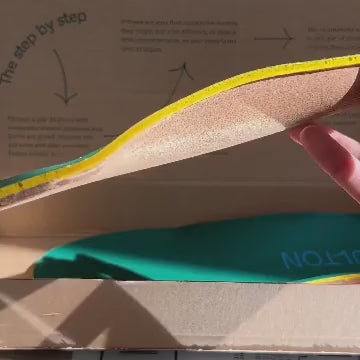
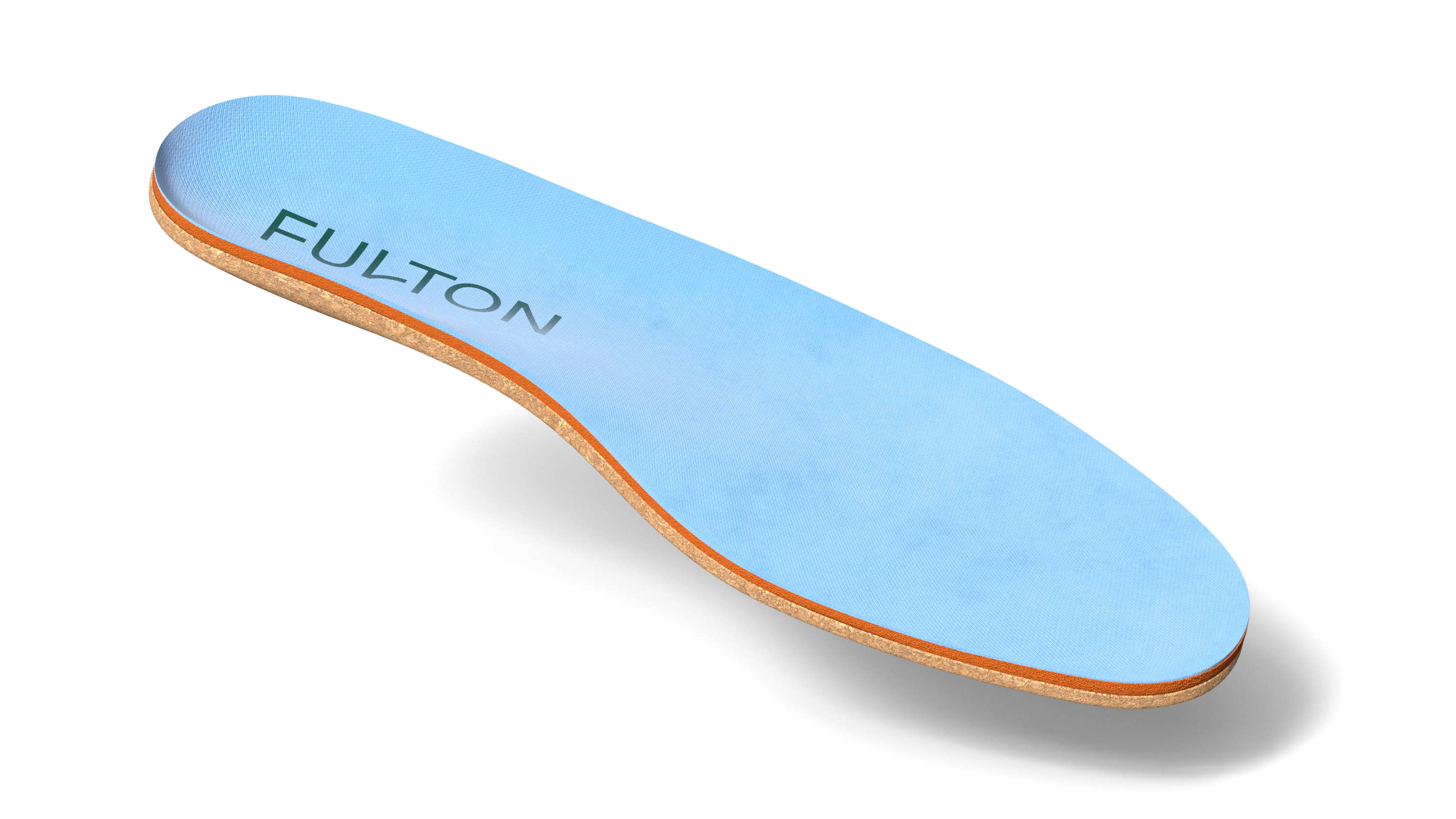
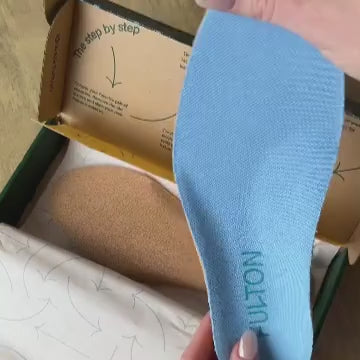
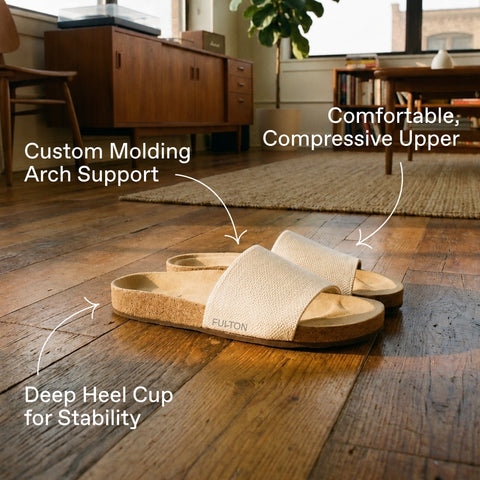
Fulton built the Comfort Slide around a fundamental insight: if the footbed can't conform to your arch, it can't actually support it. The Comfort Slide's natural cork footbed softens with body heat and molds to the wearer's specific arch shape after approximately 10 hours of wear. Once shaped, it holds that contour rather than compressing flat over time, which is the primary mechanical failure of foam-based slippers. That adaptability makes it the most versatile pick in this guide: flat feet get a footbed that conforms to their collapsed arch and a deep heel cup that limits overpronation, while high arches get a footbed that fills the gap under the midfoot and distributes pressure across a larger surface area. Designed with input from podiatrists, including Dr. Rottenberg (Podiatrist), Renuka Pinto (Physical Therapist), and Jeffrey Brandt (Prosthetist and Orthotist), and made from carbon-negative natural materials in small batches in Porto, Portugal, the Comfort Slide is the only slipper in this ranking that resolves the core tension in the "one arch shape" problem.
Key Features:
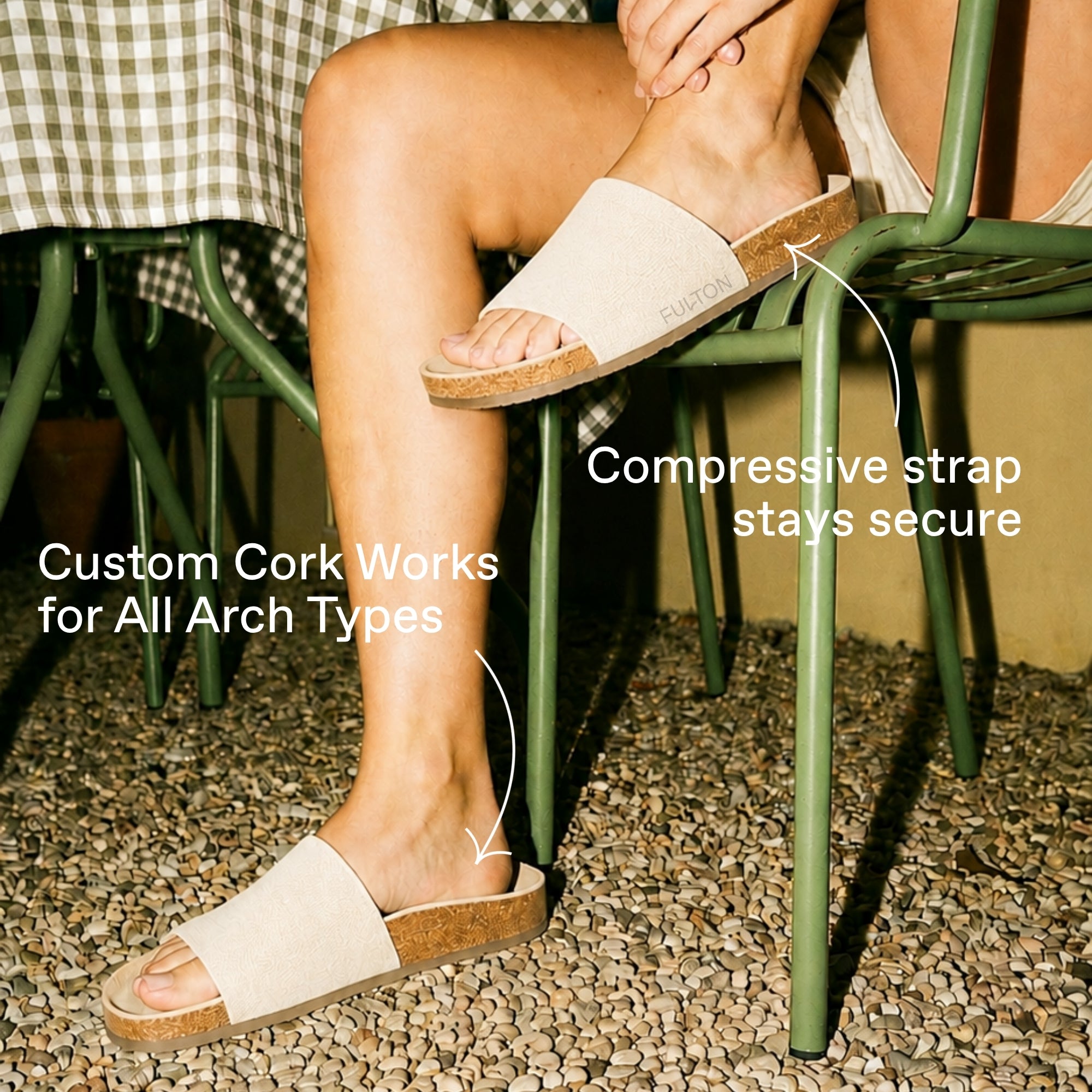
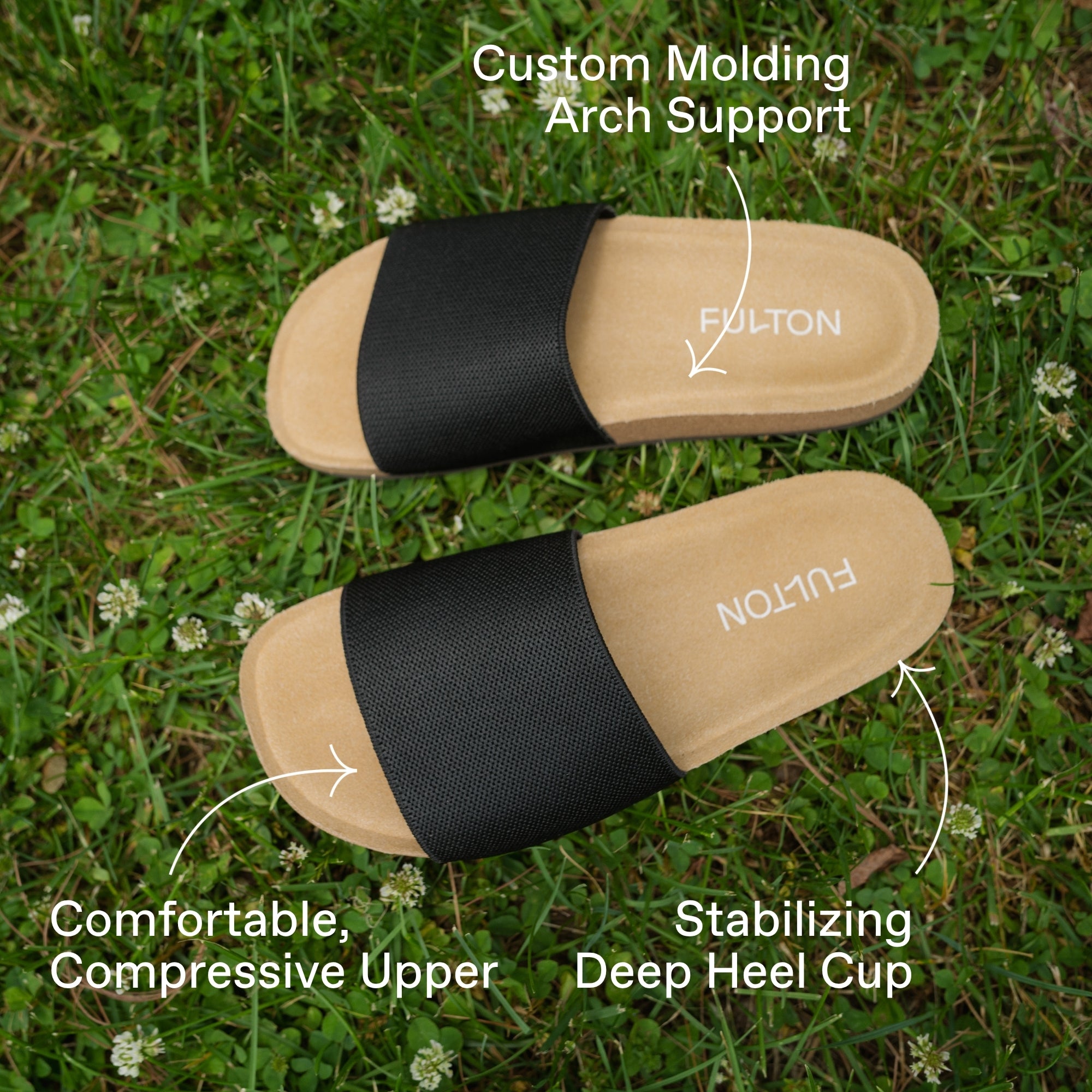
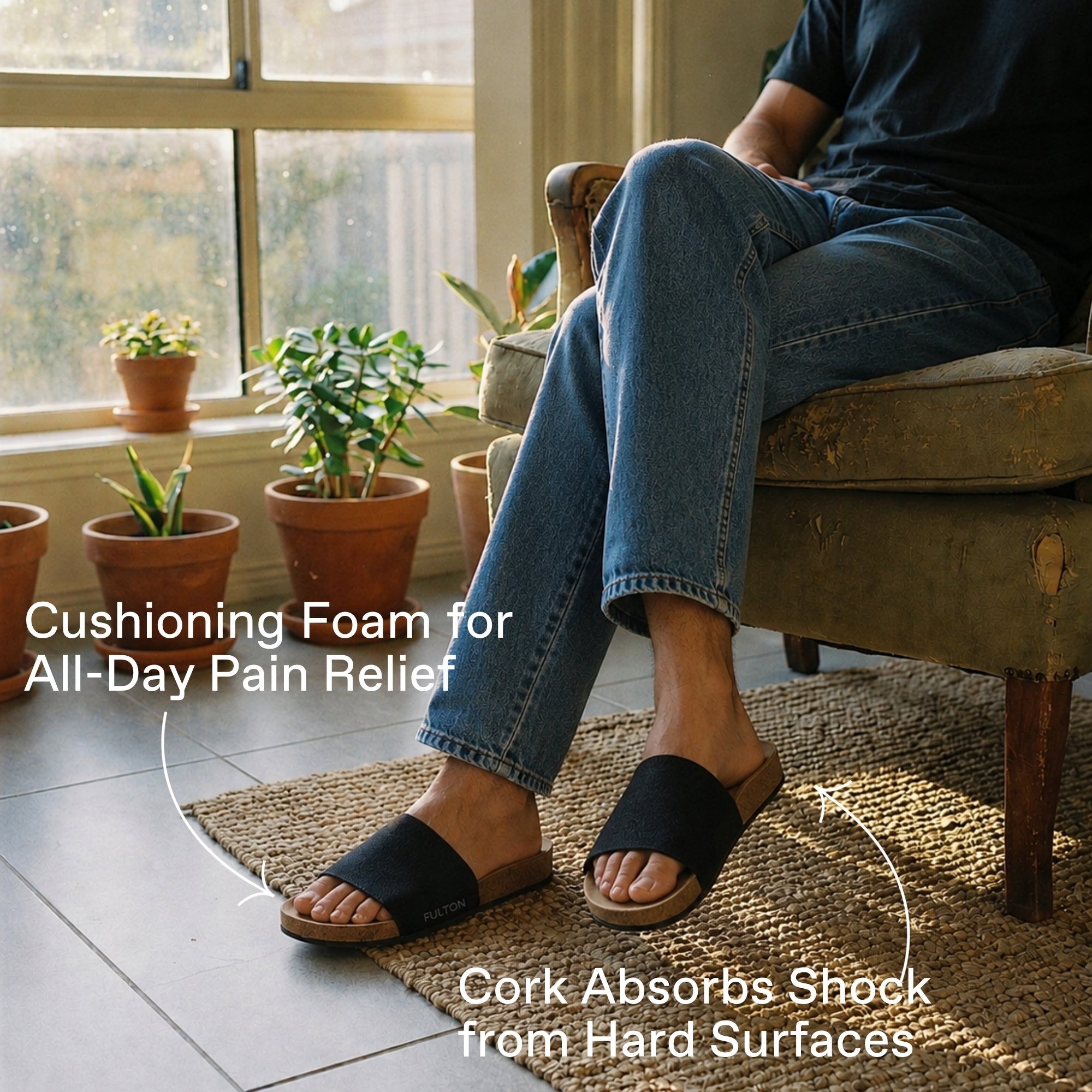
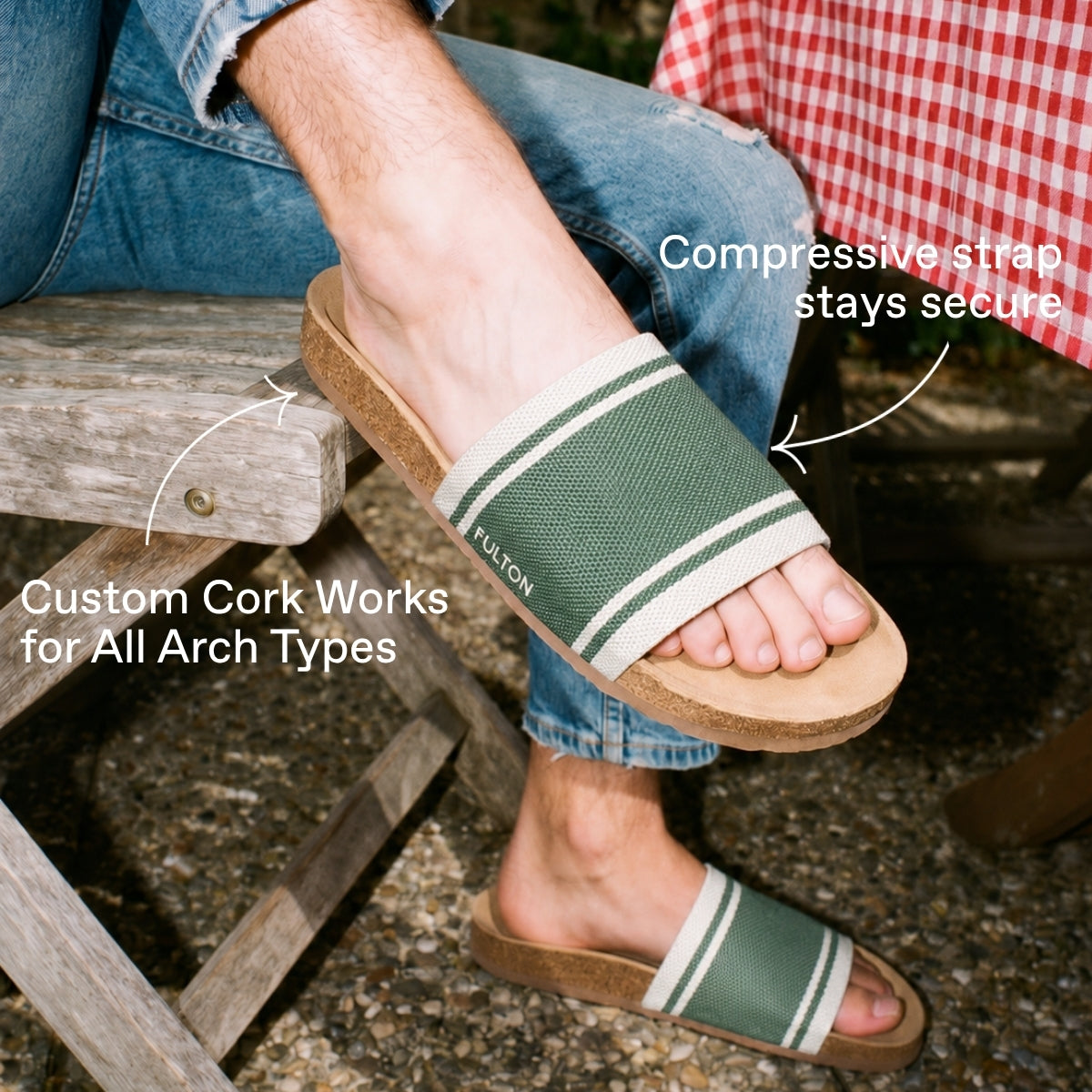
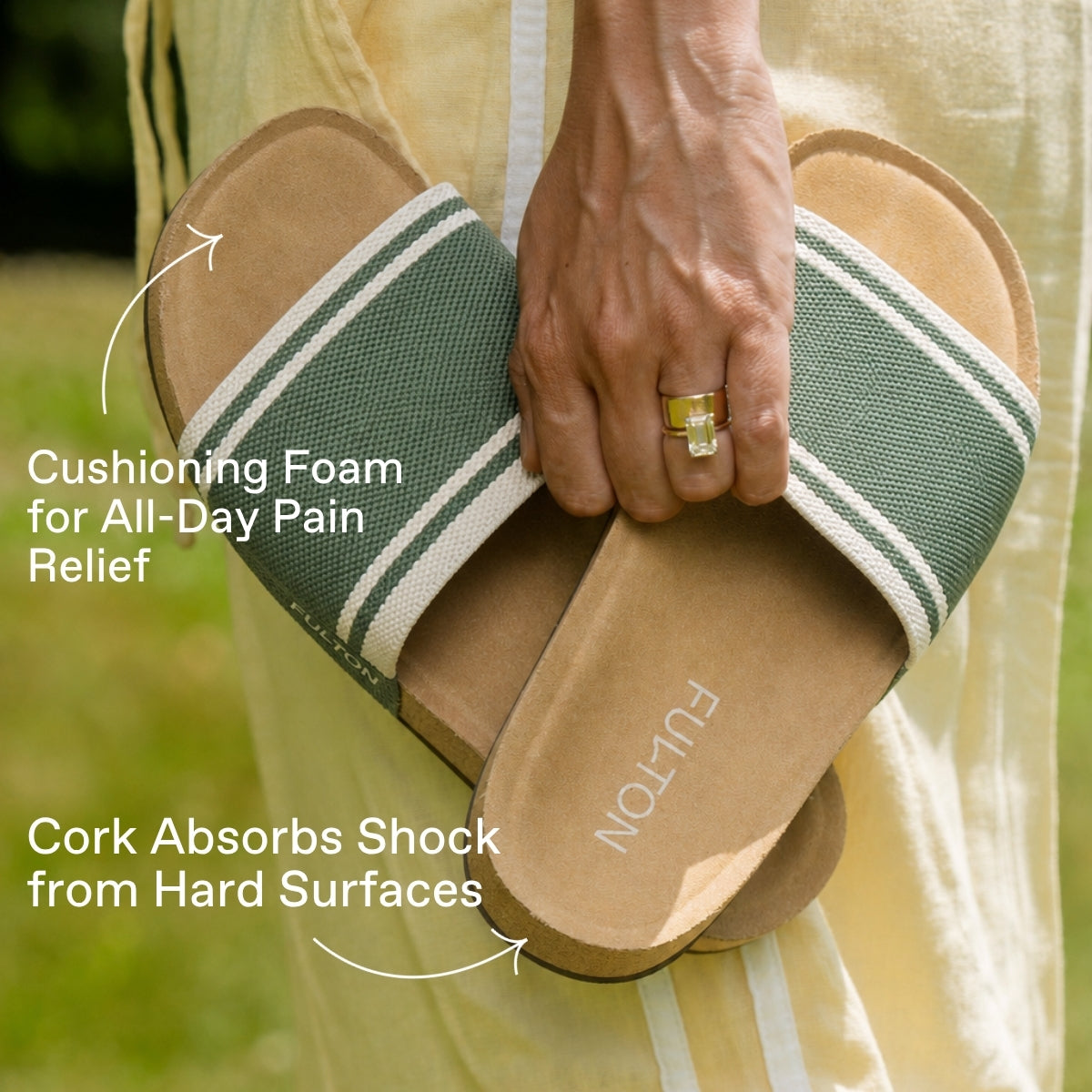
- Cork Footbed that Molds to Your Arch: Natural cork softens with body heat and takes the exact shape of the wearer's arch after roughly 10 hours of wear, then holds that shape. Cork absorbs 70% more impact than foam alone and does not pack out flat with extended use.
- Deep Heel Cup: A recessed heel structure keeps the calcaneus centered, helping to reduce overpronation for flat feet and stabilizing the rearfoot for high arches.
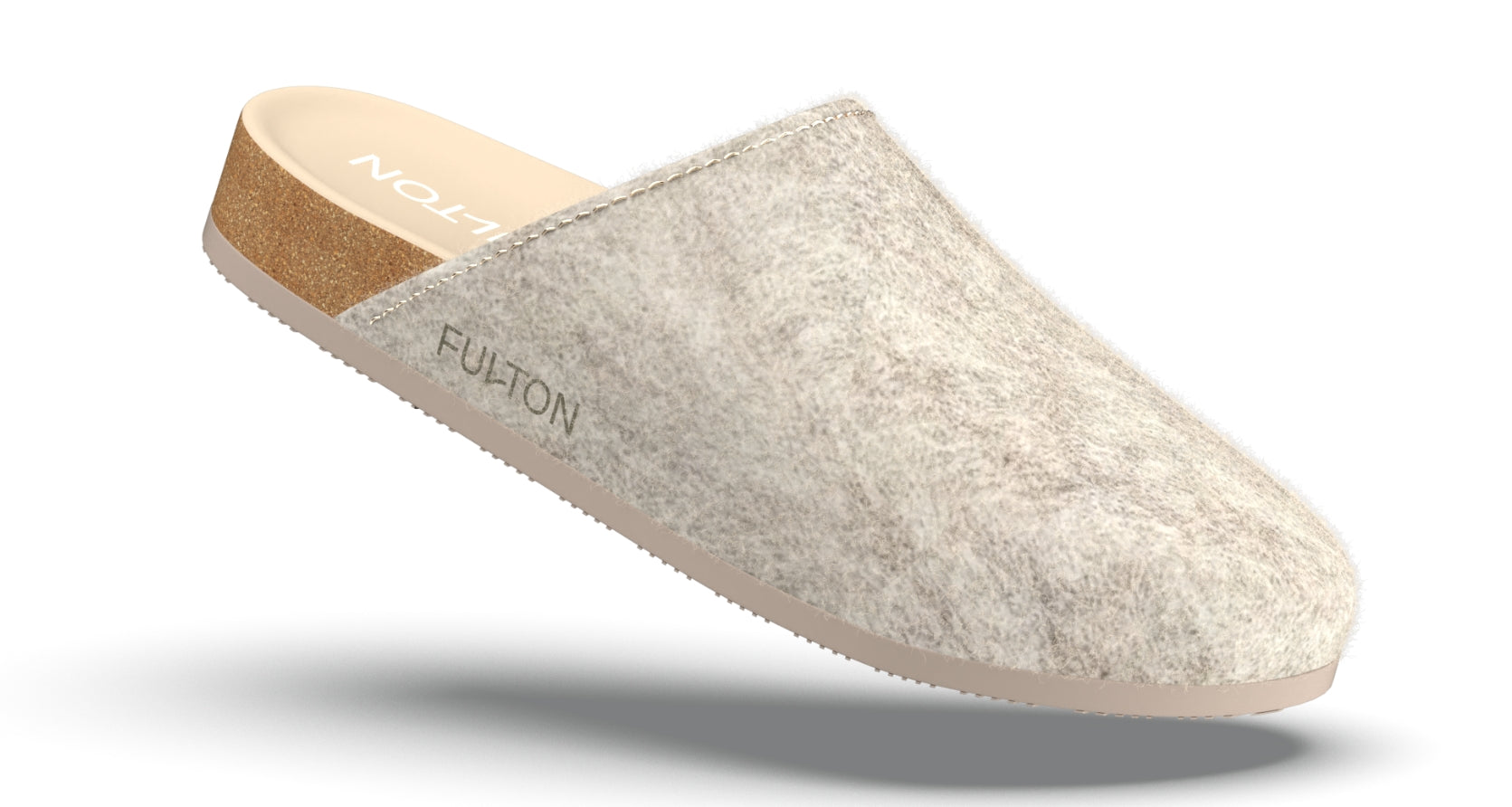
- Compressive Elastic Strap with Slip-Resistant Sole: The strap prevents heel lift so the foot stays over the footbed rather than sliding forward. The rubber sole provides grip on hard indoor floors.
Flat Feet and High Arch Specific Offerings:
- Flat Feet: The deep heel cup resists inward rolling (overpronation), and the molding footbed conforms to the low arch rather than pushing up against it with a generic high-arch shape.
- High Arches: The cork fill contacts the midfoot as it molds, spreading pressure away from the heel and ball of the foot across a wider surface area.
- All Arch Types: 97% of Fulton customers report a reduction in pain, and 95% report improved comfort. The Comfort Slide is HSA/FSA eligible.
Pricing: $120. Available in Cream and Black. Covered by the 90-Day Comfort Guarantee.
Pros:
- Footbed molds to any arch type, not just a fixed neutral shape
- Cork absorbs 70% more impact than foam alone and holds its structure over time
- Deep heel cup addresses overpronation for flat feet
- Breathable natural materials; carbon-negative production
- Podiatrist-backed design; HSA/FSA eligible
- 90-Day Comfort Guarantee removes purchase risk
Cons:
- Requires approximately 10 hours of break-in wear before the footbed fully conforms
- Open slide silhouette suits warm or temperate home environments; not insulated for cold climates
- Priced above mass-market alternatives (though comparable to other medically oriented slippers on this list)
Fulton's Comfort Slide is the only slipper in this guide whose footbed changes shape to fit the wearer rather than requiring the wearer to fit a pre-set shape. That is a meaningful structural distinction from every other option here, and it is the reason the Comfort Slide works across the full arch spectrum rather than serving only one end of it. Discover the Comfort Slide to learn more.
2. Vionic Relax II / Snuggle Slipper
Vionic is one of the most recognized names in podiatrist-designed footwear, and its slipper line applies the brand's Vio Motion Technology to an indoor setting. The fixed contoured footbed provides meaningful arch support for flat feet and neutral arches, and many Vionic styles have earned the APMA Seal of Acceptance for promoting good foot health. The Relax II adds an adjustable hook-and-loop closure that provides a more customizable fit than a standard slip-on, which is helpful for users with wider feet or significant overpronation.
Key Features:
- Vio Motion Technology footbed with contoured arch support, deep heel cup, and forefoot flexibility
- Shock-absorbing EVA midsole
- Available in the APMA-accepted Relax II (adjustable closure) and Snuggle (faux shearling plush style)
Flat Feet and High Arch Specific Offerings:
- Flat Feet: Firm, contoured medial arch and deep heel cup help control overpronation
- High Arches: Fixed arch height may not contact the midfoot of a high arch sufficiently; works better for moderate high arches than severe ones
Pricing: Approximately $80-$110 depending on style and retailer.
Pros:
- Established podiatrist-recommended brand with APMA-recognized styles
- Good range of styles including plush, adjustable, and moccasin silhouettes
- Adjustable closure on Relax II helps with fit precision
- Available in wide widths
Cons:
- Fixed foam footbed does not adapt to individual arch height; the same shape serves all wearers regardless of arch type
- EVA foam compresses over time and loses structural support, unlike cork
- High-arch wearers may not receive adequate midfoot contact from the pre-set footbed geometry
3. OluKai Moloa Slipper
OluKai's Moloa brings premium materials and a thoughtful construction to the slipper category. The collapsible-back design lets it function as a closed shoe or an open slide, and the EverFit contoured footbed with a merino wool blend top layer provides a step up from generic foam in terms of comfort and breathability. OluKai tags the Moloa as suitable for both standard and high arches, and the brand's anatomically contoured footbed philosophy runs consistently across its full footwear line. For wearers who want a premium leather slipper with above-average structure, the Moloa delivers a well-made option.
Key Features:
- EverFit removable contoured footbed with merino wool blend cover
- Waxed nubuck leather upper with soft genuine shearling lining
- Collapsible-back (drop-in heel) construction for wear as slipper or slide
- Non-marking natural gum rubber outsole
Flat Feet and High Arch Specific Offerings:
- High Arches: Tagged by OluKai as suitable for high and standard arches
- Flat Feet: Contoured footbed provides modest medial support; less structured medial posting than dedicated flat-foot options
Pricing: Approximately $150-$165.
Pros:
- Premium natural materials with temperature-regulating properties
- Removable footbed allows insertion of custom orthotics if needed
- Versatile collapsible-back design
- OluKai is a Certified B Corporation with strong sustainability commitments
Cons:
- Fixed pre-shaped footbed that does not mold to the individual wearer's arch
- Sizing runs small; many users report needing to go up a full size
- Relatively high price point for a slipper with moderate (not exceptional) arch correction
- Shearling lining can make the fit snug with socks
4. Orthofeet Asheville / Relax Slipper
Orthofeet approaches slippers from a therapeutic angle, bringing the same advanced orthopedic construction found in its shoes to the slipper category. The built-in orthotic insole features anatomical arch support designed to resist overpronation, and the brand's signature Ortho-Cushion system adds multi-layer cushioning for joint protection. Orthofeet also offers an optional arch booster that can be placed under the insole to increase the support height for wearers with more significant flat feet. The wide toe box and extra-depth design make these slippers particularly suitable for people managing bunions, hammertoes, or swollen feet alongside their arch concerns.
Key Features:
- Built-in orthotic insole with anatomical arch support and firm heel counter
- Ortho-Cushion multi-layer cushioning system for shock absorption
- Optional arch booster insert for increased support with flat feet or overpronation
- Wide toe box and extra-depth design
Flat Feet and High Arch Specific Offerings:
- Flat Feet: Firm anatomical arch, heel counter, and optional arch booster specifically target overpronation
- High Arches: Strong cushioning system absorbs impact; fixed arch geometry may not fully contact a severe high arch
Pricing: Approximately $89-$109.
Pros:
- One of the most therapeutically structured options on this list, designed explicitly for foot pain management
- Optional arch booster allows some customization of support height for flat feet
- Wide toe box accommodates a range of foot shapes and conditions
- Suitable for those managing diabetes or arthritis alongside foot alignment concerns
Cons:
- Fixed orthotic shape does not adapt to arch height the way a molding footbed does
- Bulkier construction lacks the lightweight, natural feel of cork or wool-based alternatives
- Limited style variety compared to lifestyle-oriented brands
- High-arch wearers may find the firm fixed insert creates pressure points
5. Powerstep ArchWear Orthotic Slipper
Powerstep is best known as an insole brand, and the ArchWear slipper brings that insole heritage into a complete footwear format. The Pinnacle Wool insole, embedded in the slipper, delivers the brand's patented arch shape along with a deep heel cradle that provides stability and motion control. Powerstep positions the ArchWear primarily for neutral arches and mild to moderate overpronation, making it a strong pick for people who already trust the Powerstep arch shape from their orthotics and want that same geometry in a home slipper. The elastic gore vamp allows a more customized slip-on fit, and the closed back provides a secure and stable wearing experience.
Key Features:
- Built-in Pinnacle Wool insole with Powerstep's patented biomechanically-correct arch shape
- Deep heel cradle for stability and motion control
- Elastic gore vamp for customized fit
- Non-slip tread outsole; machine washable
Flat Feet and High Arch Specific Offerings:
- Flat Feet / Neutral: Powerstep's arch shape specifically targets mild to moderate overpronation
- High Arches: The fixed Powerstep arch shape is sized for a neutral arch profile and may not provide sufficient cushioning or midfoot contact for severe high arches
Pricing: Approximately $65-$85.
Pros:
- Trusted arch shape from a brand with deep insole expertise
- Machine washable for easy care
- Non-slip outsole suitable for indoor and light outdoor use
- More accessible price point than premium leather alternatives
Cons:
- Fixed neutral arch shape optimized for neutral to mild overpronation; not well-matched for high arches
- Faux shearling lining is less breathable than natural wool alternatives
- Foam midsole will compress over time, reducing support
- Styling is functional rather than lifestyle-oriented
6. Birkenstock Boston Cork Clog
Birkenstock's cork-latex footbed has been a reference point in arch-supportive footwear for decades, and the Boston clog is the brand's most enclosed, slipper-adjacent silhouette. The original (not EVA) cork-latex footbed features a deep heel cup, longitudinal arch support, a transverse arch ridge, and a raised toe bar, all of which work together to support a wide range of foot types. The footbed does mold gradually over time with wear, though the pace of that conforming process is slower and less complete than Fulton's purpose-built molding cork technology. The single adjustable buckle allows some fit customization, and the closed-toe clog construction is useful for colder climates.
Key Features:
- Original cork-latex footbed with deep heel cup, longitudinal arch, transverse arch ridge, and raised toe bar
- Gradual foot-molding capability through extended wear
- Adjustable metal pin buckle strap for a secure fit
- Available in both regular and high-arch footbed variants
Flat Feet and High Arch Specific Offerings:
- Flat Feet: Deep heel cup and medial arch contour help control pronation; works better for flexible flat arches than rigid ones
- High Arches: A dedicated high-arch footbed variant is available; the standard footbed may not fully contact a severe high arch
Pricing: Approximately $120-$155 depending on material (suede, leather, oiled leather).
Pros:
- Cork-latex footbed does mold and conform over time, offering a degree of personalization
- Comprehensive foot-health structure: heel cup, arch, metatarsal ridge, toe bar
- High-arch-specific footbed available as a separate option
- Durable construction that lasts for years with appropriate care
Cons:
- The molding process is gradual and takes significantly longer than Fulton's cork technology, with a firmer break-in period
- EVA versions (often sold at lower price points) lack the cork-latex footbed structure entirely and offer none of the same support
- Open-back clog design can allow heel slip if the buckle is not properly adjusted
- Bulkier and heavier than slide or slipper alternatives
7. OOFOS OOahh Slide
OOFOS built its reputation in the post-workout recovery market, and the OOahh Slide is the brand's most popular slipper-adjacent product. Its proprietary OOfoam absorbs 37% more impact than traditional EVA foam and features a biomechanically designed footbed that allows the foot to move naturally while providing arch cradle and heel cushioning. The OOahh is an especially strong choice for high arches and feet that have endured heavy impact, as its shock-absorption capability is among the highest in this category. Flat-foot wearers who primarily need overpronation control will find the OOahh's soft, flexible foam provides cushioning but limited lateral stability.
Key Features:
- OOfoam proprietary material absorbing 37% more impact than standard EVA foam
- Patented biomechanical footbed designed to cradle the arch and reduce joint stress
- Machine washable; moisture and bacteria-resistant
- Lightweight open slide format
Flat Feet and High Arch Specific Offerings:
- High Arches: Excellent shock absorption and arch cradle reduce concentrated pressure at heel and ball; a strong recovery-focused pick for high-arch wearers
- Flat Feet: Provides cushioning and some arch contact, but the soft foam format offers limited overpronation control compared to firmer, more structured options
Pricing: Approximately $60-$80.
Pros:
- Best-in-class shock absorption among slippers in this guide
- Very lightweight; easy to clean
- Widely used by physical therapists for post-activity recovery
- Accessible price point
Cons:
- Foam footbed is fixed in shape and does not mold to individual arch geometry
- Open slide with no heel retention; foot can slide forward or shift laterally
- Limited pronation control for significant flat feet
- Runs narrow; sizing can be difficult
8. Haflinger AT Wool Slipper
Haflinger is a German brand with a long history of craft-made, arch-supportive slippers built on a natural latex sole with a built-in arch support contour. The AT Wool style features a boiled-wool upper that regulates temperature naturally, a latex footbed layer that provides genuine arch lift, and a textured rubber outsole. The overall construction is more modest in terms of heel cup depth and medial posting than a dedicated orthopedic slipper, but it represents a meaningful step up from standard foam slippers for people with mild support needs and a preference for natural materials. Best suited for neutral arches and mild overpronation.
Key Features:
- Boiled wool upper for natural temperature regulation
- Latex arch support built into the footbed
- Textured rubber outsole for indoor traction
- Handcrafted construction
Flat Feet and High Arch Specific Offerings:
- Neutral / Mild Flat Feet: Provides a genuine arch lift without aggressive medial posting
- High Arches: Limited midfoot fill; better suited to neutral and low-support-need wearers
Pricing: Approximately $90-$115.
Pros:
- Genuine natural materials (wool, latex) with temperature regulation
- Solid everyday slipper construction with more structure than fashion slippers
- Handcrafted quality
Cons:
- Limited arch correction for significant flat feet or pronounced high arches
- No adjustability; single slip-on style only
- Less widely available in North America than other options on this list
9. Acorn Slouch Boot Slipper
The Acorn Slouch Boot is an entry-level supportive slipper that bridges the gap between a cozy home boot and a functional arch-support option. It features a contoured EVA insole, a sherpa-lined interior for warmth, and a rubber outsole with indoor-outdoor capability. For people with neutral arches and light support needs, it is a comfortable and accessible option. Those with significant flat feet or high arches will quickly outgrow its support level, but it earns a place on this list as a legitimate starting point for people who are newer to arch-supportive footwear and want to ease in at a lower price.
Key Features:
- Contoured EVA insole with light arch shape
- Sherpa-lined upper for warmth
- Hard rubber outsole for indoor and light outdoor use
- Boot silhouette for ankle enclosure and warmth
Flat Feet and High Arch Specific Offerings:
- Neutral / Light Needs: Suitable for everyday comfort without significant foot pain
- Flat Feet / High Arches: Provides insufficient correction for moderate or significant arch-related concerns
Pricing: Approximately $45-$65.
Pros:
- Accessible entry-level price
- Warm boot construction suitable for cold climates
- Good for wearers with light support needs transitioning from unsupported slippers
Cons:
- EVA insole compresses quickly and loses structure
- Insufficient support for flat feet, plantar fasciitis, or significant high arches
- No heel cup depth or medial posting for overpronation control
Evaluation Rubric: How These Slippers Were Ranked for Flat Feet and High Arches
Each slipper in this guide was assessed against the following criteria. Weighting reflects the relative importance of each factor for people seeking genuine arch support at home.
| Evaluation Criterion | Weighting | What It Measures |
|---|---|---|
| Footbed Adaptability | 30% | Does the footbed conform to the wearer's specific arch, or deliver a fixed shape? |
| Arch Type Compatibility | 25% | Does the slipper genuinely serve both flat feet and high arches, or only one? |
| Heel Cup Depth and Stability | 20% | Does the heel cup center the foot and limit pronation and supination? |
| Cushioning and Pressure Distribution | 15% | Does the slipper reduce concentrated pressure at the heel and ball of the foot? |
| Material Durability and Breathability | 10% | Will the support structure hold up over months of daily wear? |
Fulton scores highest on footbed adaptability and arch type compatibility, which account for 55% of the total score. Its cork footbed's molding capability is the only mechanism in this group that directly addresses the core limitation of fixed-shape arch support.
Why Fulton Is the Best Slipper for Flat Feet and High Arches
Every slipper on this list does something right. Vionic brings podiatrist-designed structure and APMA recognition. Orthofeet delivers the deepest therapeutic engineering. OOFOS leads on shock absorption. Birkenstock offers genuine cork-based support with decades of refinement. But none of them solve the fundamental problem: a fixed footbed shape serves the wearer it was designed for, not necessarily the wearer wearing it.
Fulton's Comfort Slide is different because the footbed changes. After approximately 10 hours of wear, the natural cork conforms to the exact height, width, and curvature of the wearer's arch, whether that arch is flat, high, or somewhere between. Cork absorbs 70% more impact than foam alone, and it holds its molded shape rather than compressing flat the way standard foam does over weeks of use. The deep heel cup stabilizes the rearfoot against both overpronation and supination. The compressive elastic strap keeps the foot positioned over the footbed rather than sliding forward. And the whole system is made from carbon-negative natural materials, handcrafted in small batches in Porto, Portugal, and backed by a 90-Day Comfort Guarantee.
For people who have tried generic arch-support slippers and found them either too aggressive for their high arch or too passive for their flat feet, the Comfort Slide offers a structurally different answer: a footbed that meets the foot where it actually is.
FAQs About Slippers for Flat Feet and High Arches
Why Do People with Flat Feet Need Special Slippers?
Flat feet cause the arch to collapse under weight, which leads to overpronation (inward rolling of the foot). Over time, this misalignment places excess stress on the ankle, knee, hip, and lower back. Supportive slippers with a deep heel cup and medial arch contour help resist that inward roll and keep the foot in a more neutral position during everyday indoor movement. Fulton's Comfort Slide addresses flat feet through a combination of a molding cork footbed and a deep heel cup that stabilizes the rearfoot against that inward rotation.
What Are the Best Slippers for High Arches?
High arches concentrate pressure at the heel and ball of the foot, often causing metatarsal pain, heel fatigue, and lateral ankle instability. The best slippers for high arches provide deep cushioning, a footbed that contacts the midfoot to spread pressure, and a heel cup for rearfoot stability. Fulton's Comfort Slide is uniquely effective because its cork footbed molds to fill the gap under a high arch, making midfoot contact where fixed-shape footbeds often miss entirely. OOFOS OOahh excels at shock absorption as a recovery-focused complement.
Can One Slipper Work for Both Flat Feet and High Arches?
Yes, but only if the footbed is adaptive rather than fixed. A fixed foam or EVA arch shape is engineered for a single arch profile and serves that profile well while providing less precise support at the extremes of the spectrum. An adaptive footbed, like the cork material used in Fulton's Comfort Slide, softens with body heat and molds to the specific arch shape of each wearer, whether that arch is low, neutral, or high. That is the structural reason why the Comfort Slide is designed to support all arch types rather than just one.
Are Orthopedic Slippers Worth It for Flat Feet?
For most people with flat feet, yes. Walking barefoot or in unsupported slippers on hard floors repeatedly impacts the heel and midfoot, and for people with flat feet that loading is compounded by overpronation. Orthopedic slippers with structured arch support and a deep heel cup help normalize gait mechanics during indoor activity, which can reduce fatigue and pain over the course of the day. Fulton's Comfort Slide is designed to deliver orthopedic-level support at home through its podiatrist-backed cork footbed design, and it is backed by a 90-Day Comfort Guarantee for risk-free trial.
How Long Does It Take for the Fulton Comfort Slide to Mold to My Foot?
Fulton's cork footbed molds to the wearer's specific arch shape after approximately 10 hours of wear. During that break-in period, the natural cork softens with body heat and takes on the contours of the individual's foot. Once shaped, the cork holds that form rather than compressing flat like foam, which means the support level improves over time rather than diminishing. The Comfort Slide is covered by the 90-Day Comfort Guarantee, giving wearers time to experience the full molding process before committing.